
Fire trucks are often seen racing through red lights with sirens blaring, but what does this really mean? Can fire trucks legally run red lights? This question is fundamental for firefighting enthusiasts, young aspiring firefighters, and professionals in emergency services. Understanding the legal framework and protocols that allow fire trucks to navigate intersections is crucial for both safety and community awareness. In this guide, we will dive deep into four essential chapters that outline the legal framework and emergency response protocols, the responsibilities of emergency vehicle operators, the impacts on traffic and public safety, and finally, the guidelines and extensive training provided to firefighters to ensure safe emergency driving. Join us as we unravel the intricacies behind this critical aspect of fire services and appreciate the significant balance between urgency and safety.
Red Lights, Real-Time Judgments: How Fire Trucks Navigate Intersections Under Law and Protocol
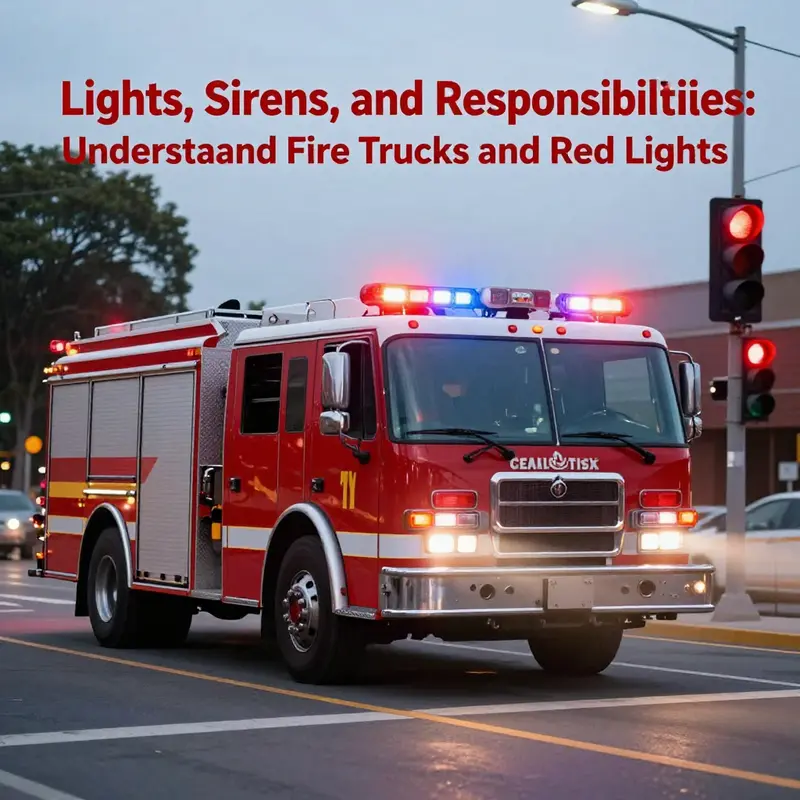
When the sirens begin to wail and the lights flash, the clock becomes both a ally and a threat. In the heat of an emergency, minutes feel like lifelines. Fire trucks, built to carry water, gear, and responders to the scene, must often move through intersections under conditions that test both nerve and judgment. The popular image that “fire trucks run red lights” simplifies a far more complex reality. The reality rests on a careful balance: the legal permission to proceed through red signals when warranted, countered by strict rules that demand vigilance, restraint, and accountability. This balance is not a rumor or a rumor or a tactic; it is a structured framework designed to save lives while minimizing harm to others in the path of an urgent response. The framework rests on three pillars: the legal authorization to disregard traffic controls when responding, the operational protocols that govern intersection navigation, and the ongoing training and accountability that ensure those privileges are exercised with due regard for safety.
Legally, the privilege to disregard certain traffic controls is real, but it is not a blanket exemption. In many jurisdictions, emergency vehicles can proceed through red lights when responding to emergencies, provided the driver demonstrates due regard for safety. This concept, sometimes summarized as operating with safety as a condition of a legal exception, translates into real on-road behavior. The operator must slow to a safe speed, scan for oncoming traffic, pedestrians, and unexpected obstacles, and only enter the intersection when the way is clear. The legal basis for this practice is codified in various state laws. In California, for example, the relevant provisions recognize that an operator may disregard traffic control devices if the maneuver can be performed safely and without creating a hazard. New York and Texas offer parallel statutory language that grants emergency vehicles similar leeway, but with a similar caveat: safety first, even when time is critical. These statutes reflect a common philosophy—that the fastest route to the scene should not come at the expense of unacceptable risk to the public.
Yet the right to proceed through a red signal is not an invitation to reckless speed. It is a call to disciplined speed. The moment the apparatus tires into the intersection is the moment the operator shifts from a race against time to a calculation of risk and opportunity. This calculation is not a solitary act by a lone driver. It is embedded in a broader system of protocols and training that shape how each intersection is approached, how the vehicle is driven, and how decisions are communicated to other road users.
Emergency response protocols provide the procedural backbone for these decisions. They typically begin long before the truck reaches the intersection. Sirens and flashing lights are used to alert other drivers to yield and to create a corridor of safety. The approach to an intersection is deliberate: the driver slows, scans, and makes a judgment call based on a synthesis of visibility, weather, traffic density, and the presence of pedestrians or vulnerable road users. When visibility is compromised by glare, weather, or complex urban layouts, the driver may pause to reassess even if the path appears clear at first glance. The NFPA’s standards for automotive fire apparatus emphasize this approach. Operators are trained to analyze the situation in real time rather than relying on the mere fact that they can pass through a red light. The emphasis is on judgment born of training, experience, and a duty to protect all road users.
The intersection is one of the most perilous environments in which emergency vehicles operate. It is a convergence of unpredictability: drivers who misjudge speed, cyclists who slip into the crosswalk, or vehicles that might not yield as expected. These factors create a high-risk layer beneath the urgency of the moment. The practical result is a culture that treats red lights not as a free pass but as a conditional permission, subject to ongoing assessment. This is why the protocol often requires a complete stop if visibility is obstructed or if conditions demand a more cautious approach. The goal is not to erase risk but to manage it in a way that prioritizes life across the spectrum of potential harm.
The accountability landscape adds another dimension to the discussion. Even when legally permitted, running a red light comes with high stakes. If an accident occurs, the agency and the individual driver can face legal liability, internal investigations, and public scrutiny. Investigations typically examine whether the operator followed both state law and departmental protocols. A key question in any such review is whether the action was justified given the real-time conditions at the intersection. This is not a bureaucratic formality; it is about ensuring that the emergency response remains principled and disciplined. In a notable urban incident from 2022, a fire truck collided with a pedestrian at a red light, triggering a review of training and oversight procedures. The episode underscored the necessity of clear, enforceable standards and transparent accountability to maintain public trust and ensure ongoing improvement.
To understand how these elements cohere, it helps to consider the practical realities on the ground. Firefighters are trained to approach the complexity of an intersection with a reflexive caution blended with a strategic willingness to adapt. They are not passive participants in a legal fiction; they are active decision-makers who must weigh competing imperatives in the moment. This is where the NFPA’s Standard 1917, which governs automotive fire apparatus, becomes especially consequential. The standard does not simply validate a privilege; it codifies a discipline of practice. It requires operators to assess the situation, integrate information from multiple sources, and make decisions that are informed by experience and evidence rather than bravado or haste. Real-time judgment emerges as a core competency, not an afterthought. In practice, this means that an operator might choose to bypass a red light in a controlled, deliberate, and safety-conscious manner, but also stop, verify, and be prepared to abort the passage if new conditions arise that render the risk unacceptable. The standard’s emphasis on cautious decision-making acknowledges the truth that intersections are the single most common site for fatal collisions involving emergency vehicles.
The social contract surrounding emergency vehicle operation also frames expectations. The public understands that speed can save lives, but only when speed is paired with responsibility. This dual expectation helps maintain social license for these life-saving activities. It also inspires ongoing public education about how to respond when an emergency vehicle approaches. Pedestrian and driver behavior at intersections is a critical piece of this ecosystem. Drivers who see approaching emergency vehicles are taught to pull to the right, stop where safe, and listen for further directions from responders. Cyclists and pedestrians are educated about the need to yield and to avoid stepping suddenly into the path of an approaching unit. When the public entrusts responders with extraordinary privileges, it creates a mandate for precision, restraint, and transparent accountability in return.
The best practice, then, is not to view red lights as a blue-print for speed but as a test of judgment. The driver’s ability to assess—at a glance—whether it is safe to proceed is the fulcrum of legitimate red-light running. This is not a metaphor but a description of how decision-making unfolds in the real world. The intersection becomes a problem to solve under time pressure, rather than a scene of simple compliance with law. In that sense, the practice is both a legal and a moral crafting of safe action under stress. The difference between reckless driving and justified, life-saving action rests on a culture of discipline—one that prioritizes the safety of the entire community while recognizing the urgency of the mission. The integrity of that culture is reinforced through targeted training, rigorous reviews, and a willingness to adapt protocols as data and circumstances evolve.
For readers who want to explore the governance of these systems more deeply, the concept of unified command in emergencies offers a useful lens. In many large-scale incidents, multiple agencies work under a coordinated framework that aligns objectives, resources, and response timing. This approach does not diminish the autonomy of individual operators; instead, it situates their actions within a broader, mission-driven tapestry of decision-making. The emphasis is on ensuring that each action taken by a fire unit harmonizes with the overall incident plan, minimizing chaos and redundancy while maximizing the effective use of time. As one might expect, such integration enhances safety by reducing the chance that a single decision will create a cascading problem. The cross-agency coordination aspect is a reminder that the privilege to disregard traffic controls is not exercised in isolation but as part of a system designed to protect the vulnerable and to sustain a rapid, yet controlled, response.
The public-facing dimension of this topic—how to talk about red lights in a way that is accurate, responsible, and compassionate—also matters. Journalists, policymakers, and community members often seek quick narratives about what is permissible and what is not. The truth is more nuanced: there is a legal latitude, but it is bounded by safety, training, and accountability. This nuance matters for residents who live near busy corridors, for drivers who must share the road with emergency units, and for the responders themselves, who operate under intense scrutiny. When communities understand the conditions under which red lights may be run, they are better prepared to respond constructively to incidents, to participate in safety efforts, and to support continuous improvement in emergency response practices.
The chapter’s synthesis, then, rests on a simple, enduring idea: the privilege to pass through a red light is a tool, not a loophole. It exists to shorten the time to critical interventions, but it does not authorize carelessness. The intersection is the proving ground where speed and safety converge, where the law’s permission and a department’s protocols converge with real-world decisions made under pressure. The better the training, the more robust the protocols, and the stronger the accountability mechanisms, the more consistently those moments of choice will preserve life without compromising the safety of others. The aim is not to celebrate the ability to run red lights but to honor the responsibility that accompanies that ability. The result is a system in which emergency responders can deliver help swiftly and with integrity, and the public can trust that every decision at the intersection is governed by a shared standard of care.
For further context on the operational and regulatory frameworks that shape these practices, see the broader discussion on unified command in emergencies, which illustrates how cross-agency coordination reinforces safety and effectiveness in critical moments. Unified Command in Emergencies.
External resource: https://www.nfpa.org/Code-Updates/NFPA-1917-Standard-for-Automotive-Fire-Apparatus
Red Lights, Rapid Response: The Tightrope of Emergency Vehicle Privilege and Responsibility
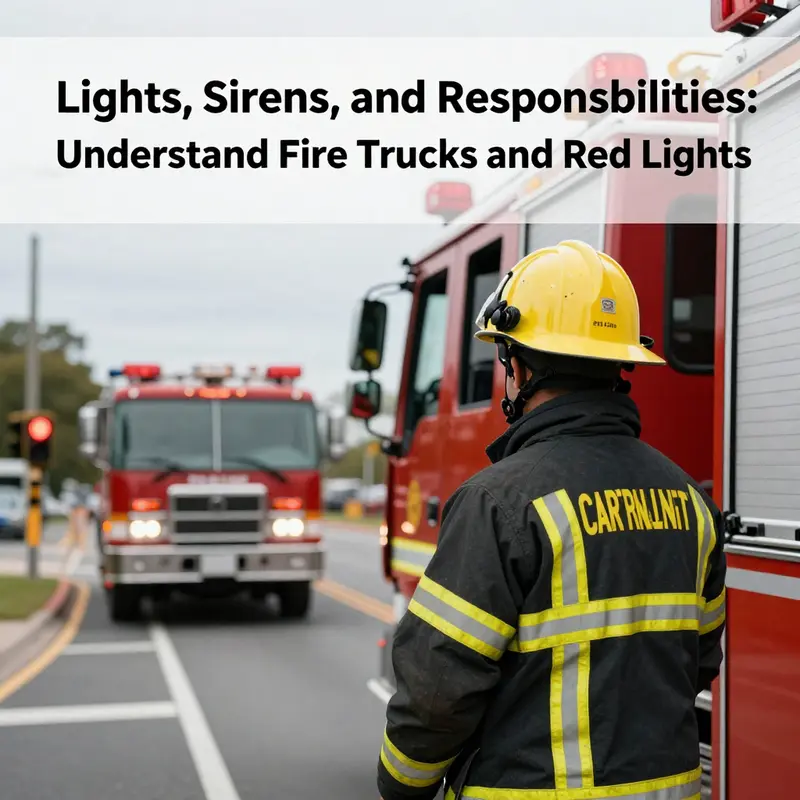
When a fire engine bursts from a station with its lights strobing and its siren wailing, the city seems to narrow to a line between danger and salvation. The question that lingers in brains and on public lips is simple, yet charged with nuance: can fire trucks legally run red lights? The answer is yes, under strict conditions that balance speed with public safety. This is not a license to ignore traffic laws, but a carefully bounded permission granted to save lives and protect property in moments where delay could be catastrophic. The city’s traffic patterns, the angles of intersections, and the presence of pedestrians create a web of risk that every emergency responder must navigate with disciplined restraint. The privilege to proceed through red signals is tethered to vigilance, sound judgment, and institutional expectations that place public safety at the core of every fast move through a crosswalk or a congested intersection.
The legal framework behind this privilege rests on a straightforward premise: when a responder activates emergency lights and sirens, the aim is to reach the scene as swiftly as possible. Yet that freedom is never unlimited. Each jurisdiction recognizes that a red light is a traffic control device designed to prevent harm. The moment an operator elects to disregard a signal, they enter a zone where time saved must be weighed against the potential for a collision. The operating principle is extreme caution. Drivers must slow, scan, and only move through an intersection when it is safe to do so. This is not a ceremonial exception; it is a carefully controlled maneuver governed by laws, regulations, and departmental policies that demand accountability if harm occurs.
Among the most challenging aspects of this practice is the balance between urgency and prudence. Fire crews are trained to push forward in life-threatening situations—a house ablaze, a patient in a critical state, a crash with potential for further harm. The driver’s hands must stay on the wheel with an aggressive calm: accelerate when the path is clear, but brake smoothly if sightlines are compromised or if the cross-traffic pattern is unclear. The vehicle’s size compounds risk. A typical fire apparatus cannot stop on a dime, and its turning radius can create hazards in lanes that appear empty from a distance but conceal bikes, pedestrians, or inattentive motorists. It is precisely this risk calculus that makes the decision to enter an intersection a moment of heightened responsibility rather than a routine maneuver.
Sirens and flashing lights are not mere theatrics. They are part of a communication system aimed at altering the behavior of others on the road. The moment the emergency lights flare and the siren begins its wail, drivers should recognize the approaching threat and yield. Yet even with widespread awareness, interpretation varies. A red light may be a signal to stop for a single moment or to proceed with caution if the intersection is completely clear. Police units often have distinct protocols, but fire apparatus follow a parallel logic: announce, assess, and proceed only when there is a reasonable certainty that the path is clear. This triad—announce, assess, proceed—forms the core of safe emergency movement through red signals. It is a choreography learned through hours of training, practiced in drills, and refined after each incident in rigorous reviews that seek to improve future outcomes.
The idea that emergency vehicles can “bypass” traffic laws is true only in the sense that they can operate in a mode that is different from ordinary driving. They do not operate outside responsibility. In fact, the responsibility is intensified by public expectations and legal standards. An operator who misjudges an intersection risks charges, credential suspension, or more severe penalties if negligence contributes to injury or death. Departments emphasize a culture of safety that extends beyond the engine bay. The paramedics, the driver, the officer in charge, and the communications specialists all share responsibility for ensuring that each response minimizes risk to the public while maximizing the speed of arrival at the scene. In practical terms, this means thorough pre-event checklists, ongoing scenario-based training, and continual critique of performance under real or simulated conditions. The emphasis is not on speed for its own sake but on speed with safety in mind, a combination that has saved countless lives when time becomes a critical factor.
Public safety is the ultimate objective. The public, for its part, bears responsibility, too, in how they respond to emergencies. Pedestrians and drivers must be prepared to yield promptly, to stop when required, and to avoid attempting risky overtakes around a gleaming apparatus racing toward danger. Cyclists and pedestrians in particular can be startled by the sudden presence of a big vehicle and may misjudge the safe moment to cross. This is why the operator’s decision to push through a red signal is inseparable from the broader ecosystem of road users who must anticipate such maneuvers. The best outcomes arise when there is a shared mental model: emergency vehicles declare their intent through audible and visual signals, road users recognize the need to yield, and the responders err on the side of caution when sightlines are compromised by weather, glare, or dense traffic. The result is a dynamic equilibrium in which urgency and safety reinforce each other rather than compete.
The training that prepares operators for these high-stakes choices is extensive and rigorous. It includes classroom study of traffic laws, field drills that simulate congested urban intersections, and after-action reviews that dissect every movement through a red light. A key element is decision timing: how long to wait at the threshold before entering, how to interpret the actions of drivers several lanes away, and how to adjust speed to maintain control of the apparatus while reducing disruption to surrounding traffic. Instructors stress the need for continuous scanning—head turns that reveal oncoming vehicles, pedestrians stepping onto crosswalks, or vehicles that appear to be accelerating to beat the light. The goal is to cultivate a disciplined instinct: when to slow, when to proceed, and when to re-evaluate the situation entirely. This is not about erasing risk; it is about managing risk with a professional, evidence-based approach.
In parallel with field training, there is a substantial emphasis on command and coordination. Emergency scenes are rarely the work of a lone operator; they require a chain of communication that aligns objectives, assigns tasks, and supports safety decisions. Dispatch centers coordinate pre-arrival information, traffic control devices, and other responding units to reduce the odds of conflict at intersections. This systemic approach is reinforced by protocols that mandate situational awareness from the moment the call is received through the final clearance of the scene. Even decisions that occur within the cab—whether to press ahead through a red light or to pause and reassess—are informed by ongoing communications with the incident commander and with other responding units. In this sense, the privilege to run red signals is inseparable from a culture of teamwork and shared accountability. It is a reminder that every move through a red light is a collective choice, subject to review and improvement through professional scrutiny.
A further dimension is the evolving technology that supports safer responses. Some intersections feature signal preemption which temporarily alters traffic light timing to favor the emergency vehicle. While not universal, these tools can reduce conflicts by creating a clearer corridor for the responder. The presence or absence of such devices influences how an operator plans entry into an intersection. In environments without preemption, the emphasis shifts to timing, visibility, and the continuous assessment of cross-traffic behavior. Regardless of technology, the operator’s judgment remains the hinge on which safety turns. Even with modern aids, human vigilance—constant observation, prudent speed, and a readiness to stop if the scene looks uncertain—remains indispensable. The technology can assist, but it does not replace the fundamental obligation to act with care.
The normative framework surrounding emergency vehicle operation is not identical across every city or state. Local regulations, departmental policies, and court interpretations collectively shape what is permissible and what is prosecutable. This is why people often hear the phrase that “fire trucks don’t stop at red lights.” The phrase is a shorthand that highlights a core capability; the longer, more precise truth is that responders operate under a mandate to preserve life and property with a careful regard for others. If a response is marked by reckless disregard, the department may impose discipline, and the individual operator may face civil or criminal consequences. The consequences are not mere penalties; they are part of a broader commitment to accountability that undergirds public trust in the emergency response system. When communities understand this balance—the urgency to reach the scene and the obligation to do so safely—the system works more effectively and with fewer missed opportunities to save lives.
For those who wonder how these principles translate into daily practice, the answer lies in the small, deliberate choices made every time a red light would normally require a stop. The driver evaluates line-of-sight, traffic density, and the behavior of other road users. They consider weather, road conditions, and the potential for pedestrians to appear suddenly from between vehicles. They communicate their approach with the officer and the crew, adjusting the speed to maintain control of the vehicle and to minimize disruption to the rest of the flow. They slow to a cautious pace, sometimes stopping entirely if the risk seems elevated, and they proceed only when it is safe to do so. This is a constant negotiation: speed versus safety, urgency versus prevention of harm, and public expectation versus professional obligation. It is a demanding standard, but it is the standard that keeps communities safer in moments of extraordinary risk.
In closing, the practice of running red lights in emergencies is not a bold exception to the law but a carefully managed capability embedded in professional training, strict procedures, and a culture of safety. It is about honoring the life at the center of every call and recognizing that speed is a means to an end, not the end itself. To understand this distinction is to recognize the sophisticated balance that defines modern emergency response. The operator’s responsibility extends beyond the cab and into the shared streetscape—into the decisions of drivers who yield, the vigilance of pedestrians who remain aware, and the strategic coordination that brings a team from the station to the scene with speed and care. When that balance holds, red lights become a signal of hope rather than a risk, and every second gained can translate into lives saved and disasters mitigated. See how these challenges are addressed in ongoing discussions about fire command systems and the ways teams adapt to the evolving landscape of urban response by visiting resources that explore overcoming challenges in fire command systems.
External resource: For a detailed formal framework on how emergency vehicles run red lights and the safety obligations that accompany this privilege, refer to the National Fire Protection Association guidelines updated in 2023: https://www.nfpa.org/News-and-Research/Publications/Code-Update/2023/When-emergency-vehicles-run-red-lights
When the Light Turns Red: The Delicate Balance of Emergency Priority and Public Safety
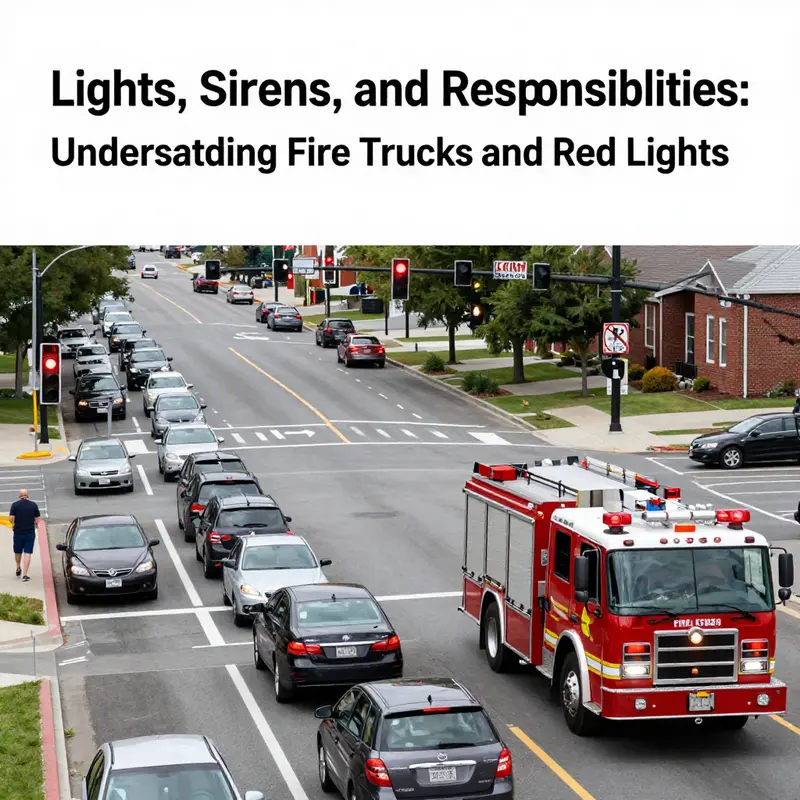
When the light turns red, a fire truck does not simply ignore the signals. It operates within a tightly defined framework that recognizes urgency while insisting on safety. The ability to proceed through a red light is not a license to accelerate recklessly; it is a carefully regulated exception that rests on training, discipline, and a constant assessment of risk. In the heat of an emergency, every second can count. Yet the responsibility to protect bystanders and other road users never vanishes. Firefighters and operators must thread a path between speed and caution, speed and safety, speed and accountability. The result is a dynamic, high stakes routine that blends sirens, lights, and human judgment into a coordinated act of public service rather than a reckless sprint through intersections. The core idea is straightforward: when responding to an urgent call, the goal is to reach the scene as quickly as possible while ensuring that crossing traffic yields and the path ahead is clear. That balance is not achieved by force of will alone. It emerges from a sequence of actions built into every mission, from the moment the alarm sounds to the moment the crew dismounts at the incident. The difference between a life saved and a life lost can hinge on a driver recognizing that running a red light is a calculated decision, not a casual choice. It is this mindset that governs how emergency vehicles negotiate intersections in real time, and it is the same mindset that informs public expectations about how those vehicles should behave when seconds are the only currency available. At its core, the policy is simple but exacting: emergency lights and sirens establish priority, but the operator must slow down, scan, and proceed only when the intersection is clearly safe. This practice hinges on a continuous loop of perception and action. The driver uses the siren and flashing lights to alert other road users, then relies on a visual sweep of cross streets, turning lanes, pedestrians, and cyclists to confirm that the path ahead will not produce a collision. In busy urban corridors, this constant vigilance is non negotiable. The science of perception in a moving vehicle tells us that human reaction times, even when humming with urgency, are fallible. The emergency vehicle enters the intersection at a speed that minimizes its own stopping distance while maximizing the time available for others to respond. In the most challenging moments, the emergency responder must simultaneously manage vehicle dynamics, traffic flow, and the unpredictable actions of drivers who may misread the vehicle’s speed or misjudge the distance closing from behind. The practice is not about bending the rules; it is about applying them more intelligently under pressure. The phrase we often hear about these moments is a shorthand for a broader principle: the right to move through a red light comes with the obligation to do so safely. That obligation is reinforced by training, regulatory guidance, and a culture of accountability that treats each mission as an opportunity to protect lives as well as to protect the public from harm caused by misjudgment. The safety framework includes specific steps: the crew slows to a controlled pace, the driver performs a brief but deliberate survey of the intersection, and any decision to proceed is made only if no vehicle is mounting the approach or attempting to turn through the gap. The operator may use the vehicle’s position relative to other traffic and pedestrians, the speed of oncoming vehicles, and even the status of nearby intersections to determine whether the path is clear. In practice, this routine is supported by a suite of signals designed to reduce ambiguity for other drivers. The emergency mode relies on more than a loud siren and a bright beacon. It depends on a system of electronic alerts, enhanced lighting, and, in some places, advanced technology that can communicate the approaching vehicle with nearby traffic signals and other road users. These tools help others understand that the emergency vehicle is approaching and that normal expectations about traffic flow should be adjusted accordingly. Yet with these tools comes the burden of responsibility. The same data that helps a driver gauge safety can also tempt riskier behavior if misapplied. Inattention or impatience from other drivers can create blind spots, misinterpret the urgency, or fail to yield in time. It is here that the risk of running red lights becomes most acute. Studies have consistently shown that intersections remain the point of greatest danger for emergency vehicle operations. Right-angle collisions, rear-end crashes, and side impact incidents are disproportionately clustered around traffic signals that are ignored or misread. The potential consequence is not only harm to the responders and occupants of the emergency vehicle but also to pedestrians and motorists who may be forced into sudden evasive maneuvers. The public safety calculus thus rests on a shared expectation: emergency personnel must deliver rapid response while the driving public must respond with predictable, patient behavior. To reduce risk, many jurisdictions deploy mitigation strategies that extend beyond the immediate moment of crossing an intersection. One avenue is the deployment of emergency mode systems that create clearer signals for other drivers. These systems can include electronic preemption for traffic signals, enhanced lighting that makes the approaching vehicle more conspicuous, and audible cues that complement the siren. In some cities, cutting-edge approaches extend further into the realm of vehicle technology. Vehicle-to-infrastructure communication allows an approaching emergency vehicle to relay its status and trajectory to nearby traffic signals, giving signals more autonomy to clear intersections preemptively. In addition, some urban centers are exploring real-time data sharing that helps both responders and drivers anticipate crossings at high risk times. The intent is not to replace human judgment but to augment it with timely, accurate information that helps everyone move more coherently through the urban flow. The mitigation narrative is not complete without acknowledging the role of training and accountability. Firefighters are taught to treat every call as a test of precision, not as a license to speed with abandon. They practice high precision driving, develop situational awareness, and rehearse how to react when a factor in the environment changes in an instant. When a mishap occurs, the consequences can be severe, and the legal and professional stakes are high. Reckless driving even in an emergency context can attract criminal charges or professional discipline, including loss of license. The public emphasis on safety remains a constant through this delicate balance between urgency and caution. The public education component stresses a single, consistent message: yield to emergency vehicles and give them space to pass, even as you hope that vehicles in your own neighborhood never need to rely on such a delicate balance. The broader social contract here is clear. The public relies on rapid response to fires, medical emergencies, and other urgent incidents, while also trusting that responders will move through the streets with deliberate care to minimize harm to others. This trust is earned through visible behaviors on the street, through transparent protocols, and through ongoing training that emphasizes both speed and safety. The philosophy behind this approach is echoed in the concept of integrated emergency response, where a coordinated system of command and control ensures that decisions about crossing red signals come from a shared understanding of the incident’s needs, risks, and potential consequences. This is not a solo act by a single driver but a disciplined, collective effort across responding agencies. The practical implications extend into how cities design and manage their streets. Traffic engineers and public safety officials collaborate to optimize signal timing, ensure adequate clearance intervals, and consider emergency vehicle preemption in areas with dense pedestrian activity or complex arterial routes. In some jurisdictions, this collaboration has given rise to formal protocols for when and how an emergency vehicle may pass through red lights, always with the caveat that safety remains first. A broader societal question flows from all this: how do communities sustain trust when the right to pass through red lights is exercised at times? The answer lies less in absolutes and more in accountability, transparency, and continuous improvement. Public information campaigns help drivers understand what to expect when an emergency vehicle approaches and what they must do to contribute to a safer crossing. For responders, the question is how to maintain mastery of a challenging skill set that blends driving technique, perception, and ethical responsibility. This is where the concept of unified command in emergencies becomes relevant. When multiple agencies converge on a major incident, a unified approach helps ensure that decisions about routing, crossing, and interception are made through a consolidated operational lens. The idea is to avoid competing instructions that could confuse other road users and to present a single, coherent front to the public. If we consider the full arc of an emergency response, from the moment the alarm sounds to the moment the team reaches the scene and begins life saving work, the decision to run a red light is embedded in a larger framework of process, policy, and public expectation. It is a decision made within a culture of safety that acknowledges the inherent risk of intersection traversal and nonetheless believes that the potential benefits of rapid arrival often outweigh those risks when proper safeguards are in place. The tension between speed and safety is not easily resolved, but it can be managed through continuous learning, technology adoption, and thoughtful policy design. For instance, some jurisdictions have addressed this tension through strategies described in overcoming challenges in fire command systems, a framework that emphasizes coordination and safety as inseparable partners in emergency response. This kind of approach helps ensure that when red lights are commanded to yield, they yield with a plan, not an impulse. It also reinforces the responsibility that accompanies that privilege. Public trust hinges on visible proof that every crossing of a red signal is performed with restraint, vigilance, and accountability. The chapter that follows will continue to explore how emergency response intersects with traffic management, but the central idea remains constant: fire trucks are not above the law, yet they operate under a specialized legal and ethical framework that recognizes the unique pressures of life threatening events. In practice, this means that heroic speed does not erase the duty to consider others on the road, and the best outcomes arise when drivers, responders, and bystanders contribute to a shared, prudent rhythm on the streets. For readers who want additional context beyond road behavior, the National Highway Traffic Safety Administration offers authoritative guidance on emergency vehicles and related safety practices that underpin these protocols. External reference: https://www.nhtsa.gov/vehicle-safety/emergency-vehicles
Running Red Lights with Purpose: Training, Law, and the Realities of Emergency Driving for Fire Responders
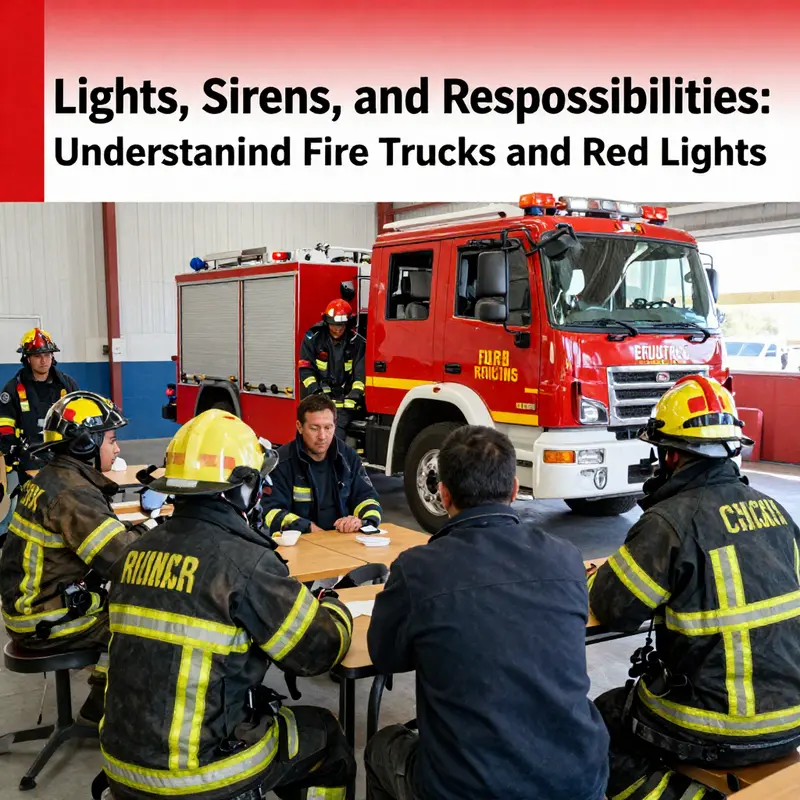
On the surface, the image is arresting: a fire engine surging toward an intersection, lights flashing, siren wailing, drivers pulling to the side as the world seems to accelerate around them. Yet the action is not a cinematic sprint. It is a heavily regulated, carefully trained, and deeply consequential maneuver. Firefighters do not traverse every red light with abandon; they operate under a rigorous framework designed to save lives while preserving public safety. The chapter you’re about to read traces the delicate balance between urgency and caution, showing how laws, training, and judgment intersect in the real world of emergency driving. This is not a gloss on bravado but a study of how swift action becomes safe action through discipline, technology, and coordinated decision making. When a fire truck reaches a red light, the decision to proceed rests on more than instinct. It rests on a complex blend of statutory allowances, departmental policies, and the firefighter’s own training to assess risk in the blink of an eye. In many jurisdictions, a red light becomes a temporary, conditional permission to advance, provided certain conditions are met: the emergency is genuine, the lights and sirens are active, the driver has a clear view, and the intersection can be navigated without endangering others. This is the essential premise behind the legal framework that governs emergency driving in the United States and Canada. The exact rules vary by state or province, but the common thread is a professional duty to act with both urgency and responsibility. Some places emphasize a “reasonable belief” that it is safe to proceed; others require that no one on the roadway would be endangered by entering the intersection. The Uniform Vehicle Code and comparable traffic laws codify these expectations, creating a baseline that every officer and firefighter learns at the academy and tests under the stress of live driving. Even with this framework, the privilege to run red lights is not a loophole. It is a responsibility that sits on the driver’s shoulders, supported by the apparatus and the team behind the scenes. A single miscalculation can cascade into harm for civilians and responders alike. This understanding threads through the training tape and the daily routines of shift work. The practical heart of emergency driving lies in perception and control—how to slow down without losing time, how to scan the intersection while maintaining speed, and how to position the vehicle so that the approach remains predictable to others on the road. Training programs, such as Emergency Vehicle Operation Courses, teach the craft of defensive driving in high-stress environments. Students learn to balance quick decision making with distance management, to read the weather of the road as well as the road itself, and to anticipate the unpredictable actions of other drivers. The phrase often used in training rooms—“look, listen, decide”—encapsulates the rhythm of the fire fighter’s approach to moving through intersections. Look for cross-traffic, pedestrians, and cyclists; listen for oncoming vehicles that could alter the safe passage window; decide whether proceeding is prudent given the current traffic patterns and the posted environment. These habits become second nature through repetition and scenario-based practice, where every potential hazard is rehearsed until the response becomes almost instinctive. The modern apparatus itself reinforces careful driving. Most fire vehicles now carry GPS-based routing and predictive alerts that help drivers anticipate when a signal is about to change or when a neighboring street invites a potential conflict. This technological support does not replace judgment; it augments it, providing another source of information about the dynamic world around the vehicle. Even with these tools, the driver remains tethered to a responsibility that must be exercised with restraint. In episodes where time is of the essence, the driver may have to choose between rapid acceleration through an intersection and a safer, slower approach that preserves life by preventing a collision. The stakes are high, and the data reflect that reality. The National Highway Traffic Safety Administration has tracked emergency vehicle crashes for years, and the numbers carry a sober message. In 2023, more than one in six fire department crashes involved a red-light violation, underscoring that running red lights—while legal in specific contexts—carries measurable risk. This is the paradox at the core of emergency driving: speed saves lives, but speed also invites harm if misjudged. Departments with a commitment to safety increasingly highlight alternatives that reduce the need to run red lights. The emphasis shifts toward using sirens to alert in advance, reducing speed near intersections, and yielding to oncoming traffic whenever possible. Route planning and pre-incident knowledge of traffic patterns can minimize the need to push through a red light, especially in dense urban environments where the margins between success and tragedy are slim. Nevertheless, the occasional red-light crossing remains essential in some emergencies, where every second can determine whether a life is saved or lost. When that moment arrives, the driver’s decision is shaped by a standard of care that threads through policy and practice. If an intersection is already clear and the risk of crossing is low, proceeding may be justified. If there is any doubt about the safety of the crossing, the prudent choice is to wait, even if doing so reduces immediate response time. The difference between a swift, safe crossing and a dangerous misstep is often measured in a few seconds and a careful scan that leaves no blind corner unchecked. This is why experience matters as much as certification. Firefighters build their judgment through repeated exposure to varied traffic environments, from quiet suburban streets to multi-lane urban corridors. The aim is not to normalize risk but to institutionalize disciplined risk management. Within this framework, coordination matters. Emergency responses often involve multiple agencies, and the timing of crossing decisions can depend on the flow of traffic and the evolving scene. A unified command approach helps ensure that road users understand the priorities and that the incident scene remains controllable as the apparatus advances. For readers seeking a deeper look into how agencies synchronize their actions during crises, a concise overview of Unified Command in Emergencies provides a useful context for understanding the broader system in which emergency driving operates. Unified Command in Emergencies. This emphasis on coordination does not diminish the individual driver’s accountability. Instead, it reinforces that the right to cross a red light is bounded by the same ethical and legal standards that govern every other operation. If a crash occurs because a driver failed to observe proper procedure, the consequences can be severe: criminal charges, loss of license, and professional censure. This accountability frame fosters a culture where safety is never negotiable, even in the face of a narrative that emphasizes urgency. The deliberate practice of EVOC and the careful integration of technology and policy together create a system that is resilient under pressure. Firefighters learn to interpret and apply the law with a disciplined respect for public safety. They also learn that the privilege to run red lights is part of a larger mission: to reduce the overall harm that an emergency can cause. The imperative is not to chase time at any cost, but to manage time so that help arrives quickly and without creating a new hazard. In that sense, the question “Can fire trucks run red lights?” becomes less about a binary yes or no and more about a dynamic balance—between speed and safety, between urgency and restraint, between individual judgment and collective accountability. The best practice scripts for emergency driving emphasize this harmony. They teach that even when a red light should be treated as a permissible part of the emergency response, the driver still must slow, scan, and proceed only when the intersection is clear and the approach is controlled. The overarching goal remains consistent: every response should save lives and protect property while maintaining the trust of the public. The chapter on safety and training would be incomplete without acknowledging the human factor—the firefighter behind the wheel who must interpret the scene, apply the rules, and sometimes override instinct with caution. Some moments will demand bold action; others require restraint. The soft skills of situational awareness—the ability to read the energy of a street, to listen for siren direction in a crowded intersection, and to communicate intent with other road users—are as critical as the hard skills of vehicle handling and signal interpretation. As departments continue to refine their tactics, they increasingly incorporate lessons from accidents and near-misses into ongoing training. This continuous learning helps normalize a culture of safety, where discipline becomes a habit and courage becomes a measured response to risk. The continuous thread through all these considerations is the shared objective: to balance urgency with responsibility so that every emergency response reduces harm rather than compounds it. In the end, fire trucks can lawfully pass through red lights when responding to emergencies, but this authority is never license for recklessness. It is a carefully regulated tool, supported by rigorous training, robust governance, and a professional ethic that treats public safety as a sacred duty. For readers, the takeaway is not that red lights should be ignored, but that when they are traversed, it is with the highest standards of judgment, preparation, and accountability. The chapter underscores a truth that is easy to overlook in the moment of crisis: speed lights the path to saving lives, but safety keeps the path intact for those who need help most. For further context on overarching emergency vehicle safety guidelines, the National Highway Traffic Safety Administration provides official resources that contextualize these practices within broader road safety standards. https://www.nhtsa.gov/vehicle-safety/emergency-vehicles
Final thoughts
In conclusion, the ability of fire trucks to run red lights is not merely a privilege but a critical component of their emergency operations. It is governed by a complex legal framework that prioritizes public safety while acknowledging the urgency of emergency situations. Firefighters and emergency personnel carry the weight of responsibility to ensure that their swift action does not compromise safety. By comprehensively understanding these responsibilities and the training they undergo, we as a community can appreciate the fine balance that enables efficient emergency response while ensuring traffic safety. As we cheer on our local heroes racing to save lives, let’s remember the importance of caution and respect on our roads.