
Imagine the rush of a fire truck racing through the city, lights flashing and sirens blaring, on its way to a fire. An essential factor in this urgent journey is the ability to quickly navigate traffic. Have you ever wondered how fire trucks manage to keep the streets clear? Enter the fascinating world of traffic signal preemption systems. This article invites fire truck enthusiasts, aspiring firefighting professionals, and emergency service experts to delve into the technology that allows fire trucks to effectively change traffic signals. From the fundamentals of how these systems function to their impact on response times, we’ll uncover all the intricate details. Together, let’s explore the advantages and limitations of this crucial technology, ensuring you come away with a holistic understanding of how fire trucks change traffic lights.
Clearing the Way: The Hidden Mechanics Behind Emergency Traffic Light Preemption
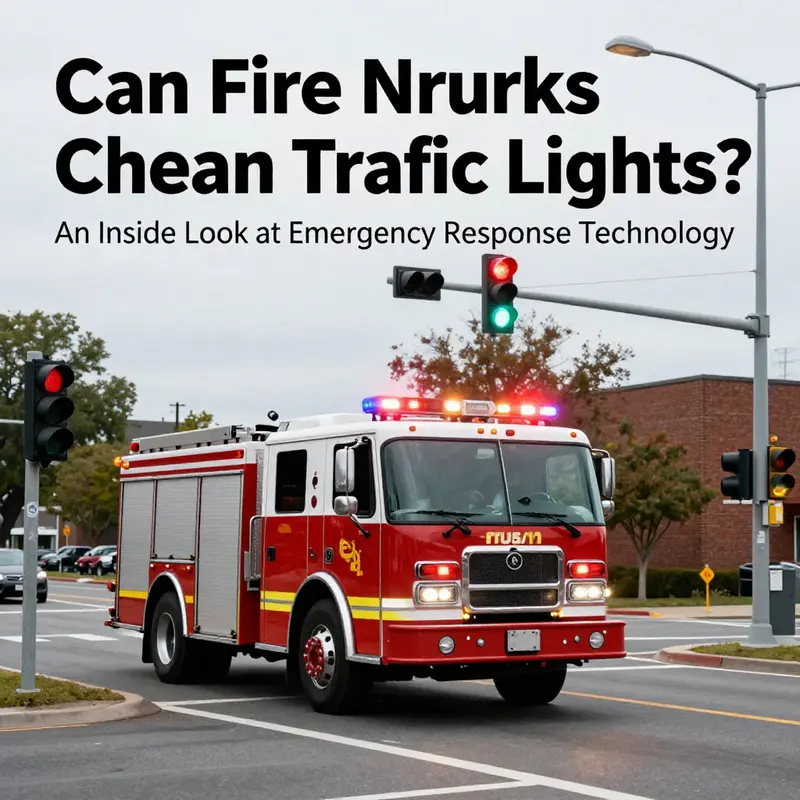
When a fire truck speeds toward an intersection, the city’s streets do not simply yield to a loud siren or a flashing beacon. Behind the scenes, a carefully engineered system sits at the intersection, orchestrating a temporary shift in the traffic pattern that prioritizes emergency responders without asking other drivers to guess what comes next. This is the essence of traffic signal preemption for emergency vehicles. It is not about spraying direct control over every light from a distance, but about listing a signal to the local controller that an urgent procession is arriving. The result is a green light for the vehicle’s path and a red light for cross-traffic, a momentary corridor designed to minimize delay, reduce risk, and accelerate life-saving action. As a chapter in the broader exploration of how fire fleets influence urban traffic, the preemption mechanism sits at the intersection of technology, policy, and street-level behavior. It starts with a simple premise: speed matters most when the way is clear, and clear is a function of timely, reliable signaling rather than brute force on the gas pedal. Through this lens, preemption becomes less a single device and more a philosophy of how modern cities can harmonize safety with mobility. The city’s traffic signal controller, the quiet brain of the intersection, is wired to listen for a very particular invitation. When a fire truck approaches, the vehicle transmits a signal—digital codes, radio beacons, or other standardized cues—through a device mounted on the apparatus. The exact mechanism can vary by system, but the logic remains constant: detect, validate, actuate. The controller, in turn, receives this preemption cue and instantly changes the light cycle to favor the emergency vehicle’s travel direction. The cross-traffic red, the approaching lane green, and the pedestrians temporarily redirected by the change in phase—all of this is a carefully bounded exception, not a wholesale rewrite of the traffic rules. The key point often gets lost in the lore of emergency responses: the light itself is not altered by the truck. The preemption signal acts as a request, and the signal controller adjudicates that request against safety rules, sensor data, and the needs of other travelers. In the best cases, this result is a smooth, almost cinematic glide through the intersection rather than a halt-and-go squeeze play. The mechanics, when viewed in a single breath, feel almost intimate. A fire engine bears a transceiver or a set of transmitters designed to emit a distinctive, recognizable cue. The intersection’s controller, configured to recognize that cue, treats it as a directive for the immediate path ahead. It is not a single flash of a light or a single blink of a siren; it is a curated signal that travels through a tightly integrated chain of equipment—onboard devices, detection systems, controllers, and, ultimately, the public-facing display at the intersection. The sophistication of this chain varies. Some systems lean on GPS and vehicle location data to determine the approach trajectory and urgency. Others rely on infrared communication channels, where a heat- or light-based beacon on the truck communicates with receivers at the traffic control cabinet. Acoustic sensing, though less common today, can augment detection by listening for siren patterns while the vehicle’s own signals reinforce its presence. Radio-based preemption, using specialized frequencies, remains a robust option across many jurisdictions. Each technology carries its own strengths and caveats. GPS offers precise location data that can align the green signal with the vehicle’s actual position and speed, but it can be challenged by urban canyons or multipath signals around tall buildings. Infrared signaling can provide fast, line-of-sight communication, yet it demands a clear optical path and resilient hardware. Acoustic systems can complement other cues in noisy environments but may risk ambiguity in dense urban soundscapes. Radio-based schemes tend toward reliability and standardized communication but require appropriate spectrum management and protective measures against interference. In practice, many intersections employ a hybrid approach, combining several technologies to improve robustness. The control logic is designed not merely to flip a switch but to coordinate with timing plans, phase sequences, and pedestrian signals. The objective is not to eliminate cross-traffic completely—safety remains the highest priority—but to grant the emergency vehicle a green corridor with minimal delay and risk. The preemption event triggers a cascade of orders that reallocate the intersection’s priority, then gracefully returns to normalcy once the vehicle has cleared. This transition is purposefully bounded to prevent cascading effects on nearby intersections or longer-than-necessary disruptions to the flow of traffic. The broader implication is that the urban network becomes capable of dynamic adaptation. It is not a rigid grid but a living system that can stretch and bend in response to real-time needs. When a fire truck uses preemption, the city’s infrastructure demonstrates a form of smart safety in action. The practical benefits are tangible. The most obvious gain is reduced delays for emergency responders. Every second saved on the way to the scene can translate into lives saved, injuries mitigated, and critical interventions delivered sooner. Beyond the direct impact on a single mission, preemption contributes to more reliable response times across the system. In dense downtowns or during peak hours, a well-designed preemption network can ease reliability by avoiding stop-and-go bottlenecks that accumulate as vehicles idle through red phases. The cumulative effect is a smoother, more predictable travel experience for everyone, even for those who are not part of the emergency convoy. The science behind these systems is complemented by a growing corpus of real-world results. In one major urban initiative, real-time signaling adjustments connected to a city-scale traffic management platform demonstrated substantial improvements in emergency vehicle arrival times. While the precise figures vary with city layout and congestion patterns, reports have shown reductions of nearly half in some corridors under specific conditions. These outcomes do not occur by luck. They emerge from careful planning, rigorous testing, and ongoing calibration of both hardware and software. At the heart of the discussion lies a policy framework that governs how preemption is permitted, who can issue a request, and how the public streets are managed when a green corridor is granted. The ethical dimension—how to balance the urgent needs of responders with the rights and safety of other road users—drives standardization efforts and training programs for dispatchers, drivers, and traffic engineers. It also highlights the importance of maintenance and reliability. A preemption system is only as trustworthy as its least frequent fault. Faults can arise from misdetection, signal loss, or environmental interference. A single misread signal could theoretically create unsafe conditions; therefore, redundancy and verification steps are built into many designs. The most resilient configurations incorporate fail-safes that require a vehicle to be within a defined range or line of sight before a green signal is issued, and they ensure that the default state is safe if any component fails. In addition, the modernization of cities through these capabilities prompts new avenues for public education. Drivers and pedestrians benefit from clear, consistent signaling that explains why a light changes in the middle of their approach. Messaging at crosswalks, integration with audible cues for pedestrians in sensitive environments, and well-placed signage help minimize confusion. The objective is not to overwhelm road users with complexity but to deliver a transparent, predictable cueing that aligns with the fast rhythm of emergency response. The broader narrative is that preemption is a small but potent chapter in the larger story of urban safety and efficiency. It sits within a continuum of smarter signal systems, sensor fusion, and adaptive control strategies that increasingly power city streets. When viewed through this lens, the preemption mechanism is a study in disciplined engineering: a focused tool designed to clear a path for critical urgency while preserving as much normal traffic flow as possible. For readers who want a deeper dive into the modeling and policy decisions behind these systems, there is a growing body of research that explores the optimal control policies for emergency vehicle preemption. This literature delves into how to balance competing objectives, how to model uncertainties, and how to ensure that preemption remains a safety-first feature rather than a source of new risk. If one seeks a practical takeaway, it rests on the idea that the preemption system is not a weapon but a calibrated instrument. It requires coordination among field personnel, city planners, and maintenance teams, all of whom must share a common understanding of when and how the system should be engaged. In this sense, the preemption mechanism becomes a microcosm of modern urban governance: a technology-enabled process that can save time, reduce danger, and elevate the performance of an entire transportation network without sacrificing safety or accountability. For those curious about the practical, on-the-ground aspects of how these systems are taught and implemented, a look at professional training resources and field manuals can be illuminating. These materials emphasize test scenarios, verification steps, and common failure modes so that when a real emergency unfolds, the response remains calm, coordinated, and safe. To connect this discussion to ongoing conversations about emergency responsiveness and city design, consider exploring more about public-facing narratives and safety culture at firetruck.space/blog/. This internal resource offers perspectives on training, operations, and the broader context of how departments prepare for and integrate advanced signaling into their everyday mission. As the urban fabric evolves, the ability to clear a path through the streets without compromising the experience of everyday travelers becomes a defining characteristic of a responsive, responsible city. The technical elegance of preemption systems—where a single, well-timed cue can unlock a corridor through a busy intersection—reflects a broader commitment to making public safety more efficient without sacrificing the predictability and safety that drivers rely on. In sum, fire trucks and other emergency vehicles do not “turn on” traffic lights at will. They request a green path through a combination of signals and controller logic designed to verify urgency and maintain safety. The result is a controlled, temporary privilege that prioritizes human life and reduces the friction that can slow a critical response. If cities continue to invest in the reliability, interoperability, and resilience of these systems, the net effect will be a more agile emergency response network, a more efficient urban flow, and a clearer demonstration that technology can serve public safety in precise, accountable ways. External resources can provide further depth on policy and modeling for emergency vehicle preemption, grounding these technical descriptions in rigorous analysis: https://www.researchgate.net/publication/357685658ATrafficSignalControlPolicyforEmergencyVehicles_Preemption.
Directing the City’s Flow: How Fire Trucks Secure Green Lights Through Modern Signal Preemption
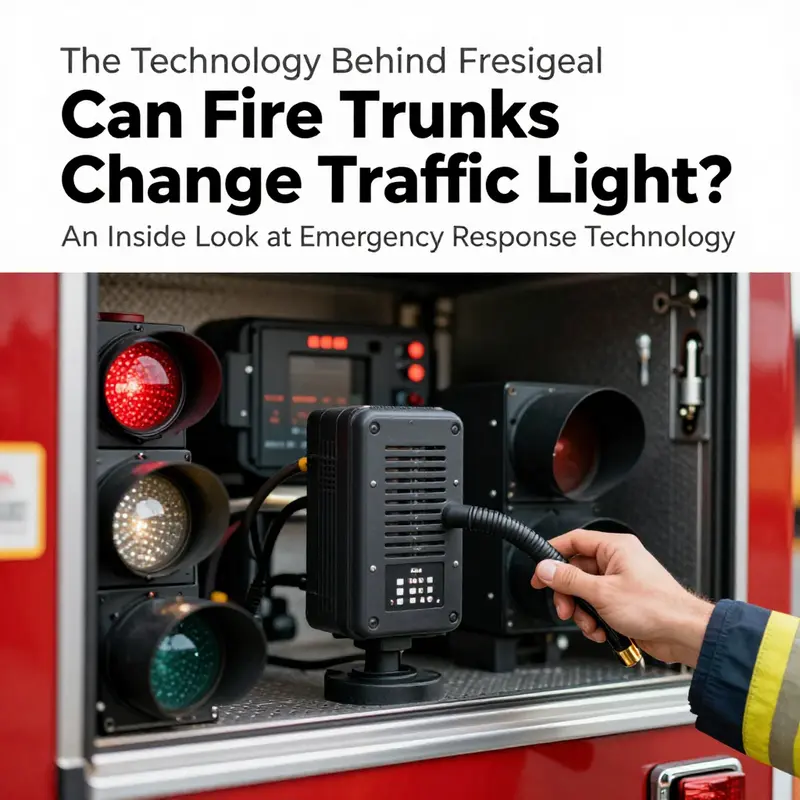
When people ask whether a fire truck can change a traffic light, the quick answer is nuanced: the goal is not to alter the light at will, but to request a green path through a coordinated system that treats emergency vehicles as high-priority travelers. At intersections, the traffic signal preemption systems are designed to detect the approach of an emergency vehicle and respond in a way that clears a safe corridor. The result is a smoother, faster passage for responders and a reduced chance of congestion or conflict with cross traffic. This capability hinges on a layered blend of wireless signaling, precise positioning, and integration with the city’s traffic backbone. It is not a discretionary override available to any driver; it is a carefully engineered sequence that preserves safety and predictability for all road users. The heart of the matter rests on three linked ideas: a reliable vehicle-based transmitter, a responsive intersection controller, and a governing framework that ties the two into the broader urban traffic network. The sequence begins long before a siren reaches an intersection. As a fire truck advances, its built-in transmitter sends a coded beacon that announces its identity, location, speed, and direction. This signal travels through a near-field wireless channel, typically leveraging advanced short-range communication protocols or cellular vehicle-to-everything technology. The message is not a general invitation to all cars; it is a targeted instruction set that only the receiving controllers at intersections understand and trust. The device may use a portable, rugged transmitter or be integrated into the vehicle’s onboard systems, but the intent is uniform: to let the city know that an emergency path is imminent and that standard vehicle behavior must yield to safety demands. The point of the signal is not to commandeer the street in a dramatic fashion, but to trigger a carefully orchestrated change in the signal sequence that creates a clear, unobstructed corridor for the approaching unit. What arrives at the intersection is not a light switch in the hands of a driver but a trusted protocol that the controller recognizes and executes with precise timing. In this framework, the intersection’s brains—the signal controller—must interpret the incoming data and decide how to respond. The most common response is a preemption sequence that makes the light for the fire truck’s approach green while simultaneously holding or switching other directions to red. This is done with deliberation to minimize risk: a green for the emergency vehicle, a red for conflicting streams, and, depending on local policies, a brief hold to high-priority pedestrians and bicycles that may be crossing or turning. The legal and safety guardrails surrounding this process are strict by design. Preemption is reserved for verified emergency operations, and the systems are designed to fail safely. If data is delayed or corrupted, the controller defaults to the standard cycle, which reduces the potential for misinterpretation and maintains predictable behavior for all road users. Yet when everything aligns—the vehicle signal is detected, the controller interprets the preemption intent, and the intersection’s timing logic accommodates the request—the result is a dramatic improvement in response times. A fire truck can pass through an intersection without stopping, shaving crucial minutes from travel time that may be the difference between life and death. This capability has evolved beyond simple line-of-sight awareness into a sophisticated ecosystem that blends wireless reliability with real-time positioning. Modern preemption systems rely on a dual-layer approach: on-vehicle transmission and intersection-level processing, underscored by networked data exchange. On the vehicle side, the transmitter broadcasts a unique identifier along with a snapshot of its GPS-derived coordinates, direction, and velocity. This is not just a raw location ping; it is a context-rich message that enables the controller to anticipate the vehicle’s trajectory and assign a green phase with precision. On the intersection side, the controller receives this information and uses a preemption algorithm to adjust the signal cycle. The change is not instantaneous chaos; it is a controlled reconfiguration of the traffic phases. The green phase for the incoming vehicle is extended or initiated, while the conflicting directions are redirected to red. The crosswalks and pedestrian signals remain synchronously managed so that people on foot have the same predictable information about when to cross. The clarity of this sequence reduces the possibility of abrupt stops or sudden surges in braking—both of which can create safety risks in high-stress traffic environments. In practice, this technology is part of a broader urban choreography that includes timing plans, vehicle location data, and system health checks. A preemption event is treated as a high-priority intervention within the city’s control plane, a moment when the normal rhythm of the network temporarily yields to the immediacy of an emergency response. The elegance of the system lies in its reliability and its interoperability. Fire departments, police, and medical responders rely on a shared language of data and timing, allowing different agencies to operate within the same traffic universe. The adherence to standards ensures that an approaching unit in one district can preempt signals in another, provided the necessary permissions and protocol validations exist. This is not magic but a disciplined integration of hardware, software, and policy that respects the safety of all roadway users while granting speed and protection to those in harm’s way. The technology is continually refined. A growing emphasis on GPS-based preemption systems reflects a shift toward server-centric models that streamline deployment and maintenance. In this arrangement, real-time GPS coordinates of the fire truck can be transmitted through a mobile app or an integrated cloud-based service that communicates with the traffic signal controller. The server acts as a trusted intermediary, consolidating data from multiple vehicles and providing ubiquitous control for the intersection network. The benefits are tangible: faster deployments, easier upgrades, and greater visibility into system performance. The server-centric approach also opens doors to more sophisticated use cases. When a fire truck is en route, the central server can forecast the optimal arrival window at multiple intersections, coordinating across a corridor to minimize disruption and reduce the risk of secondary incidents caused by sudden traffic shifts. The same framework can feed into smarter, more adaptive traffic management strategies, where the preemption sequence is tuned not only to the closest vehicle but to the broader pattern of movement in a neighborhood or district. A city that embraces these dynamics often extends signals’ reach through direct vehicle-to-infrastructure communication, enabling applications that go beyond simple preemption. Direct communication between emergency vehicles and signal controllers—through networks that support C-V2X technology—renders preemption even more reliable. This direct link shortens the path between sensor data and decision-making, bypassing potential bottlenecks in intermediate data processing. It also opens possibilities for enhanced safety features, such as collision avoidance at intersections or more responsive coordination with adaptive traffic management that can ease congestion in non-emergency periods by rerouting traffic in anticipation of a corridor being cleared. The promise of such systems sits at the intersection of technology and public policy. Interoperability across jurisdictions requires standardized signal preemption protocols, compatible hardware, and coordinated training so that responders and traffic engineers share an aligned mental model of how the system should behave under stress. In practice, the components of a preemption ecosystem include not only the transmitter and controller but also the underlying network, fault-tolerant software, and a governance framework that ensures privacy, security, and reliability. The result is a city that can respond to emergencies more quickly while preserving orderly traffic flow and predictable behavior for pedestrians. For those who want to see the human side of these developments, the work of modern command centers and field crews illustrates how preemption is exercised in real time. The communication among responders, dispatchers, and street-level controllers is an essential part of the safety net, ensuring that every decision aligns with the real-world conditions of an incident scene. The relationship between technology and practice here is symbiotic: the better the devices and networks perform, the more confidence engineers gain in allowing the system to carry heavier loads of traffic during peak periods or in complex urban environments. The literature and professional practice increasingly emphasize robust testing, continuous monitoring, and contingency planning. When preemption fails or is delayed, the default signal cycle resumes, and pedestrians and drivers are guided by conventional rules with additional caution. This design principle—steady defaults plus graceful degradation—helps protect safety without over-relying on any single component. As with any powerful tool, there are limits and responsibilities. The system is designed to aid emergency responders, not to enable reckless behavior by non-emergency vehicles. Operators must be trained to maintain situational awareness, understand when preemption is active, and anticipate the sudden transitions that can occur at busy intersections. Communities are encouraged to maintain transparent communication about how these systems work, addressing concerns about reliability, privacy, and the potential for misuse. The best guidance comes from a steady integration of theory, field experience, and continuous improvement. For readers who want to explore the engineering and policy dimensions in greater depth, a comprehensive external resource provides a detailed overview of emergency-vehicle topics and the technologies that support them. overcoming challenges in fire command systems marks one accessible waypoint for practitioners seeking practical insights about how preemption systems are designed, deployed, and tested in varied urban contexts. This chapter connects the technical threads to the lived realities of fast-moving emergencies, showing how a city’s traffic signals can be both gatekeepers and enablers of rapid, safe response. In sum, fire trucks do not “change” traffic lights in the sense of flipping them at will. They trigger a tightly controlled, standardized preemption process that relies on precise data, trusted communication, and a shared commitment to safety. When implemented well, signal preemption becomes a quiet backbone of emergency response—a way to bend the urban tempo just enough to save lives while keeping the rest of the city moving with clarity and predictability. For those seeking a deeper technical grounding, the literature on signal preemption and emergency-vehicle networks offers a thorough foundation and a relevant roadmap for future enhancements. It highlights the ongoing evolution toward more integrated, intelligent, and resilient urban systems. See external resources for a fuller technical treatment: https://www.sciencedirect.com/topics/engineering/emergency-vehicle
Fire Vehicle Preemption and Emergency Traffic Signal Priority
When a fire truck approaches an intersection, it does not rewrite traffic laws. It engages a preemption system that temporarily adjusts the signal plan to favor the route. The intersection controller recognizes a preemption request via transponders or RFID/loop sensors, and extensions of the green phase or immediate switches to green for the fire lane are implemented while cross-traffic is held briefly on red. This coordinated interaction between vehicle, controller, and road network aims to shorten the route and reduce overall response time while maintaining safety. The technology is designed to prevent exploitation by non-emergency traffic through strict authorization and verification. Real-time dynamic control across corridors allows multiple intersections to adapt collectively, creating a green corridor that improves predictability and speeds emergency travel without causing gridlock. Effective preemption depends on robust hardware, software, maintenance, and clear operating procedures shared among fire departments and traffic engineers. Public messaging and driver education help manage expectations and prevent unsafe maneuvers at intersections.
Sirens, Signals, and Safe Corridors: The Subtle Mechanics of Fire Trucks and Traffic Lights
In urban life, the arrival of a fire truck at a congested intersection often feels like a breach in the ordinary order of traffic. Cars drift to the side, pedestrians pause, and a sudden hush falls over the crosswalks. Yet what is happening at the moment of urgency is less a rewriting of the light itself than a carefully choreographed collaboration between vehicle, signal, and procedure. Fire trucks do not directly change traffic lights by flipping a switch or overriding a controller with raw power. Instead, they ride a specialized system designed to request priority at the moment of need. This system, broadly understood as traffic signal preemption, acts as a communications bridge between the approaching emergency vehicle and the intersection’s controller. The result is a green lane for the fire truck and a red one for cross-traffic, all within a tight, safety-driven window. The mechanics behind this arrangement are intricate enough to require rigorous standards, yet practical enough to function in busy city streets under the pressure of real-time decision making. The chapter that follows considers not only what these systems do, but how they shape the experience of driving, riding, and responding to emergencies in a way that makes the road network more forgiving for those who must use it during crises.
The core idea of preemption can be traced to a straightforward premise: when an emergency vehicle approaches an intersection, its priority must be established promptly and reliably. A fire truck typically carries a transmitter that emits a recognized signal as it nears a signalized junction. The intersection, equipped with a receiver and a programmable controller, detects this unique signal and interprets it as a request for priority. The controller then shifts the light cycle so that the lane from which the emergency vehicle is coming receives a green signal, while the cross-street and pedestrian indications switch to red for the duration of the truck’s progress through the intersection. The exact sequence can vary from one jurisdiction to another and from one vendor to another, but the fundamental logic remains stable: grant an uninterrupted path for the vehicle in transit while keeping predictable, safe limits for the other road users. It is important to emphasize that this mechanism is reserved for emergency vehicles with the proper authorization. It does not empower ordinary vehicles to alter traffic signals, nor does it provide blanket green waves for any incoming car. The purpose is not to bypass the traffic system, but to synchronize it with life-and-death urgency.
From a practical standpoint, the ability of a fire truck to obtain priority hinges not just on a single device, but on a well-maintained ecosystem. The truck itself carries a transmitter, often integrated with emergency lighting and siren systems, that radiates a signal understood by the intersection’s controller. The controller, in turn, must possess the appropriate receiver and logic to interpret the preemption request. The system then executes a sequence designed to reduce conflicts and minimize delay. In its most reliable form, the sequence aligns the fire truck’s approach with a green light in its direction, while red lights curb traffic from intersecting vectors. Pedestrian phases may adjust accordingly, or continue as permitted by safety constraints. The steps can feel invisible to the casual observer, yet they require precise timing and dependable hardware. Any misalignment—such as a misread signal or a delayed response—can compromise safety, so ongoing calibration, testing, and maintenance are essential.
The effects of preemption extend beyond the moment of a siren-drawn pass through an intersection. Because the system actively reduces the likely stopping points for the fire truck, it can trim several minutes off response times in dense urban cores. Faster clearance through intersections means firefighters can reach the seat of a fire, medical emergency, or other hazard more quickly, which in turn can influence outcomes for those needing urgent assistance. Yet the relationship is not purely mechanical. The presence of a flashing beacon or the sight of a looming apparatus can provoke a reflexive response from drivers that is independent of the light cycle itself. Some motorists instinctively slow down or halt when they see a flashing emergency light, even if the signal ahead is still green. This behavioral element underscores why standards governing emergency vehicle lighting are so important. They help modulate driver expectations, reduce confusion, and support the smoother operation of preemption systems across a city’s diverse driving population.
The lighting on the fire truck itself plays a complementary role in safety and efficiency, even though the lights do not alter the signal in the way a preemption device does. Modern fire apparatus increasingly employ LED-based warning lights and high-mounted beacons. These lights improve visibility over traffic backlogs, city blocks, and rolling crowds, making the vehicle conspicuous from greater distances and through complex intersections. The high mounting position helps the lights cut through line-of-sight obstructions—bumpers, vehicles, and roadside clutter—so that drivers ahead can detect the approach earlier. With LEDs, the visual impact is not merely about brightness; it is also about speed of activation, energy efficiency, and reliability in varied weather conditions. LEDs consume less power and have longer lifespans than older incandescent systems, reducing maintenance cycles and ensuring that the vehicle remains highly visible when urgency demands it. In a city where every second counts, these optical characteristics matter: the sooner a suitable segment of traffic recognizes a hazard and yields, the closer the responding unit comes to the scene, and the safer everyone becomes in the process.
But with these capabilities come a set of limitations that remind us the system is a human-made compromise between speed, safety, and accountability. On the one hand, large light bars and tall beacons can increase wind resistance and produce more aerodynamic drag, which in turn can affect fuel economy and ride comfort on fast emergency runs. The physical installation of these lighting systems may require roof reinforcement or other structural considerations; improper mounting risks compromising the integrity of the vehicle and its ability to resist the stresses of high-speed travel and robust operation. On the other hand, the presence of conspicuous flashing lights can be misread by drivers in heavy traffic. In some situations, excessive or poorly timed flashing might cause confusion or distraction, especially in crowded urban corridors where multiple emergency vehicles may converge for the same incident. These concerns are not theoretical: they guide the design, testing, and deployment of both the lights themselves and the control logic that governs preemption. To address them, fire services and traffic engineers rely on recognized standards and best practices that cover how lights should behave, how signals should respond to a priority request, and how drivers should be trained to interpret the emergency vehicle’s presence.
The relationship between the vehicle, the signal, and the driver becomes especially nuanced when we consider the perception of priority versus actual signal precedence. Fire trucks may enter a preemption state at a green-lit intersection, but nearby drivers may still prepare to stop if the approaching vehicle is perceived as immediate danger. In practice, this behavioral layer matters as much as the hardware layer. Training for drivers and education for the public help align expectations with the operating reality of emergency response. The result is a more predictable pattern of driver behavior that complements the technical reliability of the preemption system. This synergy between hardware reliability and human response helps ensure that the priority pathway remains safe and efficient across a spectrum of road types and traffic conditions. For those who follow the field, the tension between mechanical preemption and human perception is a reminder that technology alone cannot guarantee safety; it must be integrated with training, policy, and ongoing evaluation.
The broader context includes important standards that govern both the lighting on emergency vehicles and the performance expectations of the preemption systems themselves. Organizations that set safety and interoperability guidelines define how lights should be used, how signals should respond to a preemption request, and how to maintain a consistent, recognizable appearance across jurisdictions. These standards help ensure that a defined set of optical cues—color, flash pattern, timing, and mounting—remains legible to the public while preserving the correct operational cadence for emergency responders. For example, the performance, environmental durability, and optical characteristics required for emergency vehicle lighting are specified in widely recognized guidelines that shape how lights are designed and tested. The overarching goal is to support rapid response while keeping interruptions to other road users predictable and safe.
As this topic sits at the intersection of engineering, public safety, and human behavior, it invites a broader reflection on how emergency services balance urgency with accountability. A preemption-enabled intersection is not a blank canvas; it is a carefully engineered point in a network where timing, visibility, and driver decisions converge. The technology must be robust enough to function in rain, fog, or glare, and it must fit into local traffic laws, dispatch protocols, and city planning priorities. The result is a system that, while invisible to most people most of the time, plays a crucial role in the safety and efficiency of urban mobility. A well-implemented preemption regime reduces delays for those who need to reach a scene quickly while preserving predictable behavior for others on the road. In this sense, the question “can fire trucks change traffic lights?” resolves into a more sophisticated answer: they can request priority, not rewrite a city’s light sequences at will. They do so through a collaboration of device, controller, and practiced human response that, when executed well, yields safer and faster emergency outcomes.
For those seeking a deeper understanding of how the challenges of fire command systems intersect with signal preemption and its practical implementation on the ground, see the discussion on overcoming challenges in fire command systems. This contextual link underscores that the orchestration of priority at intersections is part of a larger ecosystem of emergency response logistics, where decisions, devices, and directives must align under pressure. Overcoming challenges in fire command systems.
In sum, fire trucks do not rewrite traffic lights, but they do engage a sophisticated mechanism that grants them priority through preemption. The effect is a carefully managed green corridor for the approaching vehicle and a red corridor for others, designed to reduce risk and speed up critical responses. The visible lights on the trucks—now often LEDs mounted high on the vehicle—amplify this effect by making the apparatus conspicuous well before it reaches the intersection. Yet the success of this arrangement rests on reliable hardware, thoughtful placement, clear standards, and disciplined human behavior. The system works best when all parts of the chain—vehicle, controller, driver, and public—operate with shared expectations and a commitment to safety. When these elements align, the intersection becomes less a battlefield of competing priorities and more a coordinated passage that serves the urgent needs of a city under pressure.
External resource: https://www.sae.org/standards/content/J2361_202304/
Final thoughts
The ability of fire trucks to change traffic lights using preemption systems is not just a fascinating aspect of firefighting technology; it’s a vital component that significantly impacts emergency response operations. This innovative system allows firefighters to navigate complex city traffic, ensuring they can reach emergencies swiftly and save lives. While the technology has clear benefits, understanding its limitations is key for ongoing discussions about safety and efficiency in our urban environments. Knowing how these systems work allows fire truck enthusiasts, aspiring firefighters, and emergency service professionals to appreciate the intricate blend of technology and service that makes firefighting more effective. Let’s celebrate this remarkable advancement in emergency response that not only improves the speed of service but also exemplifies the relentless pursuit of safety in our communities.