
In times of crisis, effective unified command and communication stands as the backbone of successful emergency response. When law enforcement, fire services, EMS, and emergency management work seamlessly together, they can optimize multi-agency collaboration to address emergencies swiftly and efficiently. This cooperative approach not only bridges communication gaps but also enhances public safety, ensuring that every action is coordinated and effective.
As the landscape of emergencies evolves, leveraging real-time collaboration tools becomes increasingly critical. Join us in our upcoming webinar, “Stronger Together: Advancing Unified Command and Communication,” where experts will share best practices and practical insights to empower response teams in achieving greater clarity, confidence, and coordination. Prepare to strengthen your strategies for crisis response, and discover how you can make a transformative impact in your community by mastering unified command and communication.
The Importance of Webinars for Professional Development
Webinars play a crucial role in the professional development of emergency responders by offering accessible platforms for continuous learning, collaboration, and the exchange of best practices. Through these virtual training sessions, responders can significantly enhance their skills and knowledge, particularly in crisis response and multi-agency collaboration.
Enhancing Communication and Coordination
Participating in webinars allows emergency responders to refine their communication strategies, ensuring a unified approach during crises. In the words of Jay Draisin, Chief Product Officer at LeoSight, “Effective response demands seamless coordination between law enforcement, fire, EMS, and emergency management.” This highlights the necessity of unified communication systems that webinars aim to establish.
Cross-Agency Training and Preparedness
These sessions not only enable responders from various disciplines to engage together but also provide them with the opportunity to simulate real-life situations, fostering familiarity with each other’s procedures and protocols. Scott Smith, a seasoned law enforcement officer, emphasizes the webinar’s real-world applicability: “Whether you are preparing for the next large-scale event or looking to streamline and enhance day-to-day collaboration, this session will offer practical takeaways to help you lead with more clarity, confidence and coordination across teams, disciplines, and jurisdictions.”
Knowledge Sharing and Best Practices
Webinars serve as knowledge hubs where responders can share insights, strategies, and lessons learned from previous emergencies. This constant exchange fosters innovation and enhances the collective capacity of agencies involved. For many, attending webinars becomes a vital part of their professional growth, offering practical knowledge to apply in the field.
Integration of Technology in Crisis Response
By introducing responders to innovative technologies like UAVs and real-time collaboration tools, webinars can reshape how emergency services operate. Training sessions often discuss these advanced tools, giving responders the skills necessary to adapt to modern challenges in crisis management.
Building Resilient Professional Networks
Finally, regular participation in webinars fosters strong professional networks, creating a community of support and collaboration among emergency responders. This connectedness is essential in building a resilient workforce capable of facing the complexities of modern emergencies.
In summary, webinars are instrumental in advancing the professional development of emergency responders. They provide critical learning opportunities, enhance communication, promote cross-agency collaboration, share best practices, and ultimately lead to a more robust and efficient response during crises.
Comparative Table of Communication Tools for Unified Command
| Communication Tool | Features | Pros | Cons |
|---|---|---|---|
| Two-Way Radios (LMR) | Direct real-time voice communication | Reliable with dedicated network; suitable for limited cellular coverage | Limited range; some frequencies require licensing |
| Mobile Push-to-Talk Apps | Smartphones as walkie-talkies | Easy to set up; global real-time audio communication | Dependence on internet or cellular networks; potential latency |
| Satellite Communication Devices | Voice/text via satellite networks | Global coverage; functions in remote areas | Higher costs; limited data bandwidth |
| Emergency Alert Systems | Broadcast alerts through various media | Mass outreach; recipients do not need action | One-way communication; depends on existing infrastructure |
| Ham Radio | Utilizes amateur radio frequencies | Resilient long-range communication | Requires licensing and regular practice for proficiency |
| Mesh Network Devices | Peer-to-peer networks without cellular towers | Operate offline; offer encrypted communication | Limited range depending on user density |
| Computer-Aided Dispatch Systems | Integrates dispatch with radio communications | Reduces dispatch steps; enhances interoperability | Complex implementation; requires training |
| Augmented Reality Supported Tools | AR for geotagging and visualization | Enhances spatial cognition; facilitates two-way communication | Requires specialized equipment; learning curve |
| Unified Communication Platforms (C2) | Common platform for all responders | Enhances situational awareness; improves response times | Dependence on technology; potential interoperability issues |
| Emergency Management Software | Emergency notification capabilities | User-friendly; optimized for mobile delivery | Primarily focuses on notification; may lack comprehensive features |
This table summarizes various tools available for communication in unified command situations. Each tool has its unique characteristics, pros, and cons, which should be carefully considered during selection to ensure the best fit for specific emergency response scenarios.
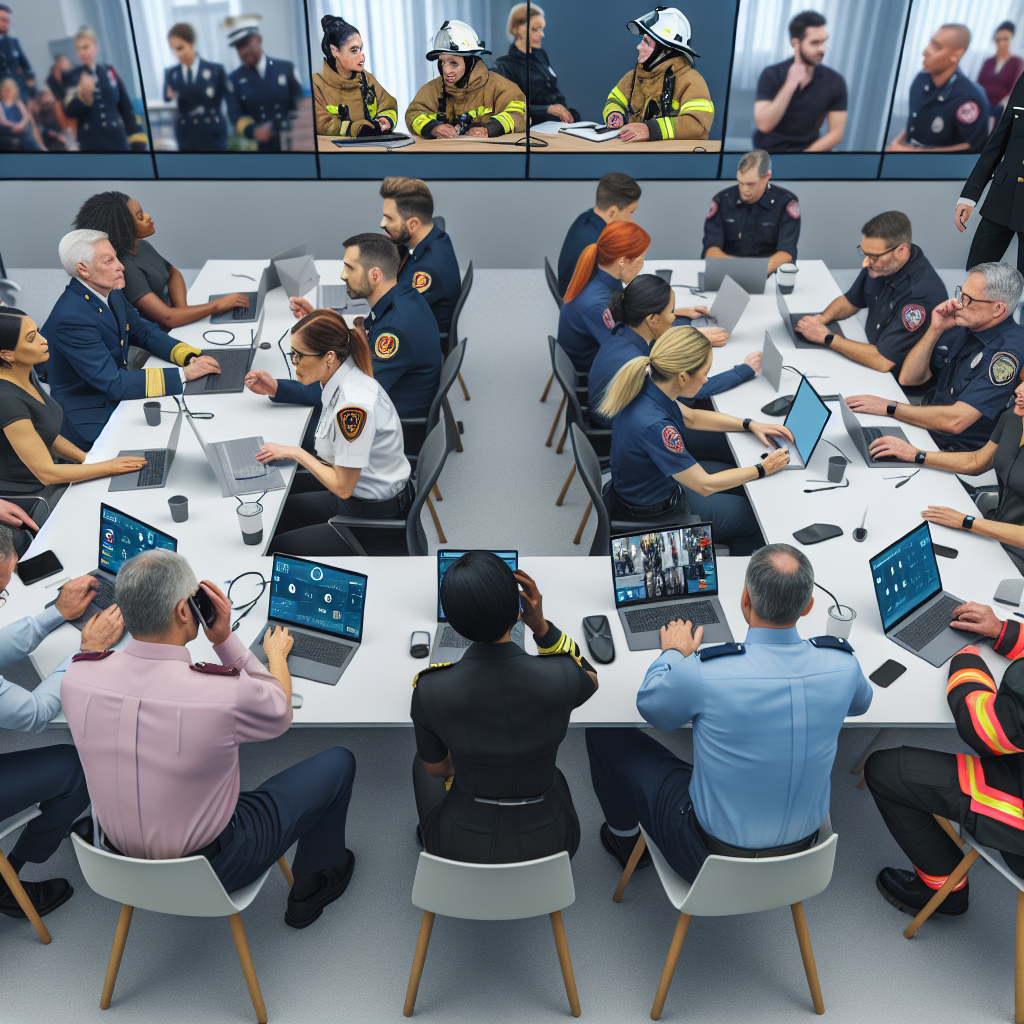
A visual depiction of a multi-agency meeting during an emergency, showcasing various emergency response representatives discussing collaboration and plans.
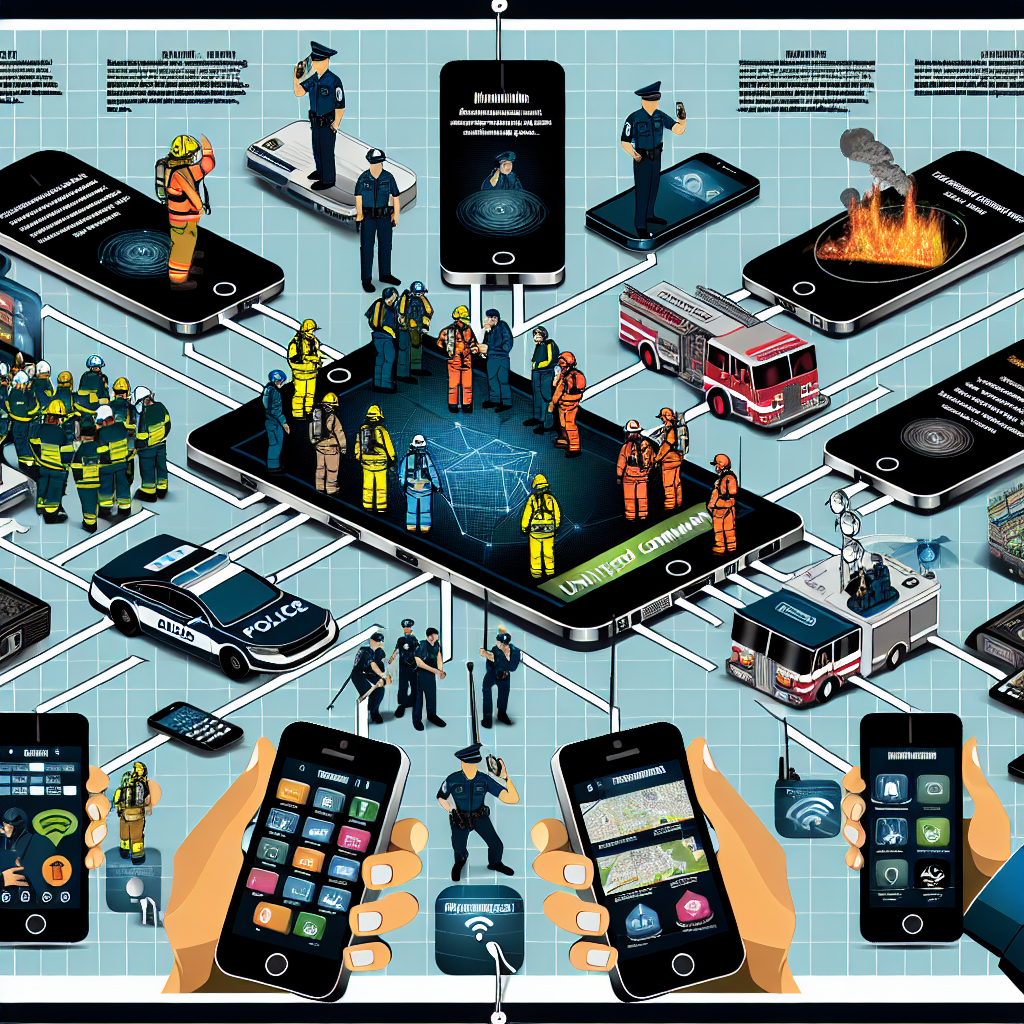
A visual representation of real-time collaboration tools in unified command, illustrating apps, radios, and video conferencing tools.
Best Practices for Unified Command and Communication
Implementing a Unified Command (UC) in emergency management enhances coordination among multiple agencies, ensuring a cohesive and efficient response to incidents. Key best practices include:
- Establish Clear Communication Channels
Develop standardized communication protocols to facilitate seamless information exchange among agencies. This includes using interoperable radio frequencies and shared digital platforms to ensure all parties have real-time access to critical information. - Conduct Joint Training and Exercises
Regular interagency training sessions and realistic simulations help personnel understand each agency’s capabilities and limitations, fostering trust and improving collaborative response efforts. - Develop Pre-Event Agreements and Memoranda of Understanding (MOUs)
Establishing mutual aid agreements and MOUs clarifies roles, responsibilities, and resource-sharing protocols before an incident occurs, leading to a more coordinated and efficient response. - Implement Interoperable Communication Tools
Utilize shared communication systems and platforms to ensure consistent information sharing across agencies, which is crucial for maintaining situational awareness and coordinated action during emergencies. - Foster a Culture of Trust and Cooperation
Encourage personal relationships among agency personnel, establish clear roles and responsibilities, and conduct joint training exercises to build trust and cooperation, which are essential for effective disaster response.
By adhering to these best practices, agencies can enhance their collaborative efforts, leading to more effective and efficient emergency management under a Unified Command structure.
Outcomes and Takeaways from the Unified Command Webinar
The webinar on unified command highlighted several key outcomes and takeaways, emphasizing the benefits of enhanced communication and coordination among different agencies during emergency responses:
- Establishment of Common Objectives and Strategies: Unified command enables all responsible agencies to collaboratively develop a single set of objectives and strategies, ensuring a cohesive and efficient incident response.
- Improved Information Flow and Coordination: By fostering a collective approach, unified command enhances the flow of information and coordination among all involved parties, leading to more effective decision-making and resource allocation.
- Clear Understanding of Joint Priorities and Constraints: Participating agencies gain a comprehensive understanding of each other’s priorities and operational constraints, facilitating smoother collaboration and reducing potential conflicts.
- Preservation of Legal Authorities: Unified command ensures that no agency’s legal authorities are compromised or neglected, maintaining the integrity and jurisdictional responsibilities of each organization.
- Optimization of Agency Efforts: Agencies can perform their respective assignments more effectively under a single Incident Action Plan, reducing duplicative efforts and enhancing overall operational efficiency.
These outcomes underscore the critical role of unified command in promoting seamless communication and coordination among diverse agencies, ultimately leading to more effective and efficient emergency response operations.
Conclusion
In the realm of crisis management, the establishment of unified command and communication is paramount to ensuring efficient and effective responses. During emergencies, the ability of various agencies—law enforcement, fire services, EMS, and emergency management—to work together through a cohesive command structure significantly streamlines operations and eliminates confusion. By fostering collaboration and breaking down communication barriers, unified command enhances crisis response efforts and ultimately serves to protect public safety.
As we have discussed, multi-agency collaboration is crucial in navigating the complexities of emergencies, allowing for the swift allocation of resources and coordinated actions that are vital during critical incidents. To learn more about how to implement these best practices successfully, join us for our upcoming webinar, “Stronger Together: Advancing Unified Command and Communication,” scheduled for November 4, 2025, at 1 p.m. ET. This session will provide invaluable insights from experts that can strengthen your strategies and proficiency in unified command.
The time to prepare for the next crisis is now. Take the initiative to improve your agency’s effectiveness by participating in this essential webinar, and together, we can enhance our community’s resilience through unified command and communication.
Comparative Table of Communication Tools for Unified Command
| Communication Tool | Features | Pros | Cons |
|---|---|---|---|
| Two-Way Radios (LMR) | Direct real-time voice communication | Reliable with dedicated network; suitable for limited cellular coverage | Limited range; some frequencies require licensing |
| Mobile Push-to-Talk Apps | Smartphones as walkie-talkies | Easy to set up; global real-time audio communication | Dependence on internet or cellular networks; potential latency |
| Satellite Communication Devices | Voice/text via satellite networks | Global coverage; functions in remote areas | Higher costs; limited data bandwidth |
| Emergency Alert Systems | Broadcast alerts through various media | Mass outreach; recipients do not need action | One-way communication; depends on existing infrastructure |
| Ham Radio | Utilizes amateur radio frequencies | Resilient long-range communication | Requires licensing and regular practice for proficiency |
| Mesh Network Devices | Peer-to-peer networks without cellular towers | Operate offline; offer encrypted communication | Limited range depending on user density |
| Computer-Aided Dispatch Systems | Integrates dispatch with radio communications | Reduces dispatch steps; enhances interoperability | Complex implementation; requires training |
| Augmented Reality Supported Tools | AR for geotagging and visualization | Enhances spatial cognition; facilitates two-way communication | Requires specialized equipment; learning curve |
| Unified Communication Platforms (C2) | Common platform for all responders | Enhances situational awareness; improves response times | Dependence on technology; potential interoperability issues |
| Emergency Management Software | Emergency notification capabilities | User-friendly; optimized for mobile delivery | Primarily focuses on notification; may lack comprehensive features |
This table summarizes various tools available for communication in unified command situations. Each tool has its unique characteristics, pros, and cons, which should be carefully considered during selection to ensure the best fit for specific emergency response scenarios.
Best Practices for Unified Command and Communication
Implementing a Unified Command (UC) in emergency management enhances coordination among multiple agencies, ensuring a cohesive and efficient response to incidents. Key best practices include:
-
Establish Clear Communication Channels
Develop standardized communication protocols to facilitate seamless information exchange among agencies. This includes using interoperable radio frequencies and shared digital platforms to ensure all parties have real-time access to critical information. -
Conduct Joint Training and Exercises
Regular interagency training sessions and realistic simulations help personnel understand each agency’s capabilities and limitations, fostering trust and improving collaborative response efforts. -
Develop Pre-Event Agreements and Memoranda of Understanding (MOUs)
Establishing mutual aid agreements and MOUs clarifies roles, responsibilities, and resource-sharing protocols before an incident occurs, leading to a more coordinated and efficient response. -
Implement Interoperable Communication Tools
Utilize shared communication systems and platforms to ensure consistent information sharing across agencies, which is crucial for maintaining situational awareness and coordinated action during emergencies. -
Foster a Culture of Trust and Cooperation
Encourage personal relationships among agency personnel, establish clear roles and responsibilities, and conduct joint training exercises to build trust and cooperation, which are essential for effective disaster response.
By adhering to these best practices, agencies can enhance their collaborative efforts, leading to more effective and efficient emergency management under a Unified Command structure.

Outcomes and Takeaways from the Unified Command Webinar
The webinar on unified command highlighted several key outcomes and takeaways, emphasizing the benefits of enhanced communication and coordination among different agencies during emergency responses:
- Establishment of Common Objectives and Strategies: Unified command enables all responsible agencies to collaboratively develop a single set of objectives and strategies, ensuring a cohesive and efficient incident response.
- Improved Information Flow and Coordination: By fostering a collective approach, unified command enhances the flow of information and coordination among all involved parties, leading to more effective decision-making and resource allocation.
- Clear Understanding of Joint Priorities and Constraints: Participating agencies gain a comprehensive understanding of each other’s priorities and operational constraints, facilitating smoother collaboration and reducing potential conflicts.
- Preservation of Legal Authorities: Unified command ensures that no agency’s legal authorities are compromised or neglected, maintaining the integrity and jurisdictional responsibilities of each organization.
- Optimization of Agency Efforts: Agencies can perform their respective assignments more effectively under a single Incident Action Plan, reducing duplicative efforts and enhancing overall operational efficiency.
These outcomes underscore the critical role of unified command in promoting seamless communication and coordination among diverse agencies, ultimately leading to more effective and efficient emergency response operations.
Conclusion
In the realm of crisis management, the establishment of unified command and communication is paramount to ensuring efficient and effective responses. During emergencies, the ability of various agencies—law enforcement, fire services, EMS, and emergency management—to work together through a cohesive command structure significantly streamlines operations and eliminates confusion. By fostering collaboration and breaking down communication barriers, unified command enhances crisis response efforts and ultimately serves to protect public safety.
As we have discussed, multi-agency collaboration is crucial in navigating the complexities of emergencies, allowing for the swift allocation of resources and coordinated actions that are vital during critical incidents. To learn more about how to implement these best practices successfully, join us for our upcoming webinar, “Stronger Together: Advancing Unified Command and Communication,” scheduled for November 4, 2025, at 1 p.m. ET. This session will provide invaluable insights from experts that can strengthen your strategies and proficiency in unified command.
The time to prepare for the next crisis is now. Take the initiative to improve your agency’s effectiveness by participating in this essential webinar, and together, we can enhance our community’s resilience through unified command and communication.
In times of crisis, effective unified command and communication stands as the backbone of successful emergency response. When law enforcement, fire services, EMS, and emergency management work seamlessly together, they can optimize multi-agency collaboration to address emergencies swiftly and efficiently. This cooperative approach not only bridges communication gaps but also enhances public safety, ensuring that every action is coordinated and effective. As the landscape of emergencies evolves, leveraging real-time collaboration tools becomes increasingly critical. Join us in our upcoming webinar, “Stronger Together: Advancing Unified Command and Communication,” where experts will share best practices and practical insights to empower response teams in achieving greater clarity, confidence, and coordination. Prepare to strengthen your strategies for crisis response, and discover how you can make a transformative impact in your community by mastering unified command and communication.
The Importance of Webinars for Professional Development
Webinars play a crucial role in the professional development of emergency responders by offering accessible platforms for continuous learning, collaboration, and the exchange of best practices. Through these virtual training sessions, responders can significantly enhance their skills and knowledge, particularly in crisis response and multi-agency collaboration.
Enhancing Communication and Coordination
Participating in webinars allows emergency responders to refine their communication strategies, ensuring a unified approach during crises. In the words of Jay Draisin, Chief Product Officer at LeoSight, “Effective response demands seamless coordination between law enforcement, fire, EMS, and emergency management.” This highlights the necessity of unified communication systems that webinars aim to establish.
Cross-Agency Training and Preparedness
These sessions not only enable responders from various disciplines to engage together but also provide them with the opportunity to simulate real-life situations, fostering familiarity with each other’s procedures and protocols. Scott Smith, a seasoned law enforcement officer, emphasizes the webinar’s real-world applicability: “Whether you are preparing for the next large-scale event or looking to streamline and enhance day-to-day collaboration, this session will offer practical takeaways to help you lead with more clarity, confidence and coordination across teams, disciplines, and jurisdictions.”
Knowledge Sharing and Best Practices
Webinars serve as knowledge hubs where responders can share insights, strategies, and lessons learned from previous emergencies. This constant exchange fosters innovation and enhances the collective capacity of agencies involved. For many, attending webinars becomes a vital part of their professional growth, offering practical knowledge to apply in the field.
Integration of Technology in Crisis Response
By introducing responders to innovative technologies like UAVs and real-time collaboration tools, webinars can reshape how emergency services operate. Training sessions often discuss these advanced tools, giving responders the skills necessary to adapt to modern challenges in crisis management.
Building Resilient Professional Networks
Finally, regular participation in webinars fosters strong professional networks, creating a community of support and collaboration among emergency responders. This connectedness is essential in building a resilient workforce capable of facing the complexities of modern emergencies.
In summary, webinars are instrumental in advancing the professional development of emergency responders. They provide critical learning opportunities, enhance communication, promote cross-agency collaboration, share best practices, and ultimately lead to a more robust and efficient response during crises.
Comparative Table of Communication Tools for Unified Command
| Communication Tool | Features | Pros | Cons |
|---|---|---|---|
| Two-Way Radios (LMR) | Direct real-time voice communication | Reliable with dedicated network; suitable for limited cellular coverage | Limited range; some frequencies require licensing |
| Mobile Push-to-Talk Apps | Smartphones as walkie-talkies | Easy to set up; global real-time audio communication | Dependence on internet or cellular networks; potential latency |
| Satellite Communication Devices | Voice/text via satellite networks | Global coverage; functions in remote areas | Higher costs; limited data bandwidth |
| Emergency Alert Systems | Broadcast alerts through various media | Mass outreach; recipients do not need action | One-way communication; depends on existing infrastructure |
| Ham Radio | Utilizes amateur radio frequencies | Resilient long-range communication | Requires licensing and regular practice for proficiency |
| Mesh Network Devices | Peer-to-peer networks without cellular towers | Operate offline; offer encrypted communication | Limited range depending on user density |
| Computer-Aided Dispatch Systems | Integrates dispatch with radio communications | Reduces dispatch steps; enhances interoperability | Complex implementation; requires training |
| Augmented Reality Supported Tools | AR for geotagging and visualization | Enhances spatial cognition; facilitates two-way communication | Requires specialized equipment; learning curve |
| Unified Communication Platforms (C2) | Common platform for all responders | Enhances situational awareness; improves response times | Dependence on technology; potential interoperability issues |
| Emergency Management Software | Emergency notification capabilities | User-friendly; optimized for mobile delivery | Primarily focuses on notification; may lack comprehensive features |
This table summarizes various tools available for communication in unified command situations. Each tool has its unique characteristics, pros, and cons, which should be carefully considered during selection to ensure the best fit for specific emergency response scenarios.
Best Practices for Unified Command and Communication
Implementing a Unified Command (UC) in emergency management enhances coordination among multiple agencies, ensuring a cohesive and efficient response to incidents. Key best practices include:
- Establish Clear Communication Channels
Develop standardized communication protocols to facilitate seamless information exchange among agencies. This includes using interoperable radio frequencies and shared digital platforms to ensure all parties have real-time access to critical information. - Conduct Joint Training and Exercises
Regular interagency training sessions and realistic simulations help personnel understand each agency’s capabilities and limitations, fostering trust and improving collaborative response efforts. - Develop Pre-Event Agreements and Memoranda of Understanding (MOUs)
Establishing mutual aid agreements and MOUs clarifies roles, responsibilities, and resource-sharing protocols before an incident occurs, leading to a more coordinated and efficient response. - Implement Interoperable Communication Tools
Utilize shared communication systems and platforms to ensure consistent information sharing across agencies, which is crucial for maintaining situational awareness and coordinated action during emergencies. - Foster a Culture of Trust and Cooperation
Encourage personal relationships among agency personnel, establish clear roles and responsibilities, and conduct joint training exercises to build trust and cooperation, which are essential for effective disaster response.
By adhering to these best practices, agencies can enhance their collaborative efforts, leading to more effective and efficient emergency management under a Unified Command structure.
Outcomes and Takeaways from the Unified Command Webinar
The webinar on unified command highlighted several key outcomes and takeaways, emphasizing the benefits of enhanced communication and coordination among different agencies during emergency responses:
- Establishment of Common Objectives and Strategies: Unified command enables all responsible agencies to collaboratively develop a single set of objectives and strategies, ensuring a cohesive and efficient incident response.
- Improved Information Flow and Coordination: By fostering a collective approach, unified command enhances the flow of information and coordination among all involved parties, leading to more effective decision-making and resource allocation.
- Clear Understanding of Joint Priorities and Constraints: Participating agencies gain a comprehensive understanding of each other’s priorities and operational constraints, facilitating smoother collaboration and reducing potential conflicts.
- Preservation of Legal Authorities: Unified command ensures that no agency’s legal authorities are compromised or neglected, maintaining the integrity and jurisdictional responsibilities of each organization.
- Optimization of Agency Efforts: Agencies can perform their respective assignments more effectively under a single Incident Action Plan, reducing duplicative efforts and enhancing overall operational efficiency.
These outcomes underscore the critical role of unified command in promoting seamless communication and coordination among diverse agencies, ultimately leading to more effective and efficient emergency response operations.
Conclusion
In the realm of crisis management, the establishment of unified command and communication is paramount to ensuring efficient and effective responses. During emergencies, the ability of various agencies—law enforcement, fire services, EMS, and emergency management—to work together through a cohesive command structure significantly streamlines operations and eliminates confusion. By fostering collaboration and breaking down communication barriers, unified command enhances crisis response efforts and ultimately serves to protect public safety.
As we have discussed, multi-agency collaboration is crucial in navigating the complexities of emergencies, allowing for the swift allocation of resources and coordinated actions that are vital during critical incidents. To learn more about how to implement these best practices successfully, join us for our upcoming webinar, “Stronger Together: Advancing Unified Command and Communication,” scheduled for November 4, 2025, at 1 p.m. ET. This session will provide invaluable insights from experts that can strengthen your strategies and proficiency in unified command.
The time to prepare for the next crisis is now. Take the initiative to improve your agency’s effectiveness by participating in this essential webinar, and together, we can enhance our community’s resilience through unified command and communication.
Real-Time Collaboration Tools in Unified Command Scenarios
Effective real-time collaboration tools are essential in emergency management and unified command situations to enhance communication, coordination, and overall crisis response effectiveness. Below are several notable tools designed to support these critical functions:
-
Rave Collaborate
Source: Rave Mobile Safety
Summary: Rave Collaborate is a FedRAMP-authorized tactical crisis management solution tailored for both planned and unplanned events. It offers automated communication of key information, dynamic task management, event-specific access to resources, and extensive recording of responses and actions. The platform ensures that all key resources are easily accessible, enabling teams to make strategic decisions swiftly during critical moments. [ravemobilesafety.com] -
CommandCentral
Source: Motorola Solutions
Summary: CommandCentral is an end-to-end software suite designed for public safety operations. It integrates emergency communications, real-time intelligence, incident management, digital evidence, and community engagement into a unified platform. This consolidation eliminates data silos, reduces response times, and enhances situational awareness, ensuring a cohesive workflow from call handling to case resolution. [callmc.com] -
RapidDeploy’s Radius Mapping Platform
Source: RapidDeploy
Summary: RapidDeploy’s Radius Mapping platform introduces features like ECC Messaging and Critical Incident Boards. ECC Messaging facilitates real-time information exchange across multiple Emergency Communication Centers (ECCs), enhancing coordination during critical incidents. The Critical Incident Board aggregates live video feeds from various sources, providing a comprehensive visual overview of situations to manage resources effectively and respond to emergencies with precision. [rapiddeploy.com] -
Juvare’s Unified Command Platform (UCP)
Source: Juvare
Summary: Juvare’s UCP is a FedRAMP-authorized platform designed for federal agencies to enhance situational awareness and operational efficiency during daily tasks and critical events. It offers data aggregation and information management, enabling proactive notifications, rapid situation assessments, informed decision-making, and interagency collaboration through intuitive workflows. [juvare.com] -
QUICKTEL’s Emergency Communication System
Source: QUICKTEL
Summary: QUICKTEL provides an emergency communication system featuring an Emergency SOS button that initiates instant livestreaming from responders’ body cameras to command centers. This real-time visual feed enhances situational awareness, allowing command staff to observe and assess scenes as they unfold, facilitating swift decision-making and ensuring all responding teams are aligned with the latest information. [quicktelradios.com]
These tools exemplify the integration of advanced technologies to support real-time collaboration in emergency management, significantly improving communication, coordination, and overall effectiveness during crisis response.
Join us for our engaging webinar, “Stronger Together: Advancing Unified Command and Communication,” taking place on November 4, 2025, at 1 p.m. ET (12 p.m. CT, 10 a.m. PT). This informative session will feature experts from the fields of law enforcement, fire services, emergency medical services, and emergency management, sharing invaluable insights on bridging communication gaps and enhancing crisis response.
Participants will learn best practices and practical strategies for effective multi-agency collaboration, empowering teams to respond with greater clarity and confidence. Don’t miss this opportunity to strengthen your skills and capabilities in unified command and communication—register now and take the initiative to elevate your crisis management approach!
Enhanced Strategies for Crisis Communication Technologies
Integrating crisis communication technologies into emergency management is essential for enhancing response efficiency and ensuring public safety. Effective strategies include:
- Developing a Centralized Communication Platform: Establish a unified system that consolidates all communication channels, ensuring consistent and timely information dissemination during emergencies. This approach minimizes misinformation and confusion.
- Leveraging Social Media and Crowdsourcing: Utilize social media platforms to monitor public sentiment, disseminate critical information, and engage with the community. Crowdsourcing can aid in collecting real-time data from affected individuals, enhancing situational awareness.
- Implementing Artificial Intelligence (AI) Tools: Incorporate AI for real-time sentiment analysis, misinformation tracking, and automated messaging processes. AI-powered systems can expedite information dissemination and improve decision-making processes during crises.
- Ensuring Multichannel Communication: Employ various channels, such as social media, email, SMS, and public address systems, to reach diverse audiences effectively. For example, Spartanburg Community College successfully notified over 22,000 individuals within 10 minutes during a tornado emergency.
- Integrating Data Analytics for Decision-Making: Utilize data analytics to monitor key performance indicators and assess outreach effectiveness. Developing real-time dashboards enhances response efforts.
- Establishing Secure and Reliable Communication Channels: Ensure all communication is secure and protected from unauthorized access. Implement end-to-end encryption and high-availability platforms to safeguard sensitive information.
- Conducting Regular Training and Simulations: Regular training of personnel and conducting simulations help to test the effectiveness of communication technologies and protocols, ensuring readiness during actual emergencies.
These strategies significantly enhance crisis communication capabilities, leading to more coordinated and effective emergency responses.
Benefits of Emergency Service Collaboration
Collaboration among emergency services—such as fire departments, EMS, law enforcement, and public health—greatly enhances crisis management. Key benefits include:
- Improved Service Delivery: Coordinated efforts lead to more efficient and effective services for affected communities, reducing redundancy and ensuring comprehensive assistance.
- Enhanced Resource Sharing and Capacity: Pooling resources increases overall response capacity, which is crucial during large-scale events. Agencies pooled their resources during the 2011 floods in Queensland and New South Wales, significantly bolstering local efforts.
- Streamlined Communication and Coordination: Unified protocols and joint training foster better communication, ensuring a cohesive response and minimizing chaos during crises.
- Increased Community Resilience and Support: Collaborative efforts send a strong message of solidarity to affected communities, boosting morale and alleviating pressure on local emergency personnel.
- Enhanced Problem-Solving and Innovation: Collaboration fosters open communication and idea sharing, leading to more effective problem-solving and innovative solutions during crises.
By integrating efforts and resources, emergency services can provide a more robust and effective response to crises, ultimately saving lives and reducing impacts.