
The question of whether fire trucks can use salt water is one that stirs curiosity and concern among fire truck enthusiasts, aspiring firefighters, and professionals in the emergency services field alike. While coastal cities may seem like prime candidates for this alternative water source, the truth reveals a complex interplay of consequences—especially regarding equipment damage, environmental risks, and maintenance issues. This article will explore the technical impacts on fire truck equipment, delve into the challenges faced by urban fire departments trying to adapt to coastal constraints, and analyze environmental considerations. Additionally, we’ll address the maintenance costs tied to salt water exposure and the existing regulatory standards surrounding firefighting protocols. Join us on this journey as we unpack the multifaceted topic of salt water usage in firefighting.
null
null
Coastal Constraints and the Realities of Salt Water for Urban Fire Engines
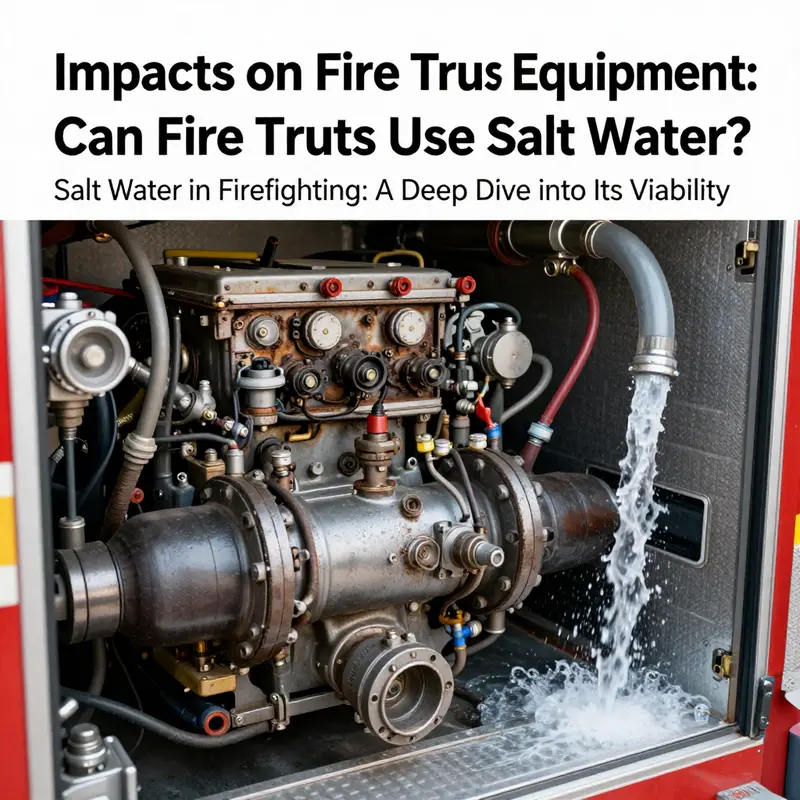
Near the edge of the continent, city fire departments face a practical paradox: the sea is never very far away, yet seawater remains a poor substitute for the water that powers every engine and hydrant in daily service. The idea of pulling from the ocean for firefighting in densely built environments is tantalizing in its simplicity—an abundant resource, a constant supply, a potential hedge against drought. But the moment a department starts weighing seawater as a routine fire-suppressant, the first obvious obstacles rise to the surface. The high salinity that makes seawater so effective at certain industrial applications also makes it extraordinarily corrosive to the metallic heart of a fire engine: the pumps, the fittings, the hoses, the valves, and the couplings that stand between a firefighter and a dangerous blaze. Over time, this corrosion does not merely sour the equipment; it reshapes its reliability and predictability at precisely the moments when performance matters most. The 2026 assessments that have begun to circulate within municipal fleets underscore a harsh reality: repeated exposure to seawater can cause pumps to seize, valves to fail, and hose fittings to become permanently fused. Short-term exposure without proper flushing and maintenance converts into a long-term liability that strains budgets and jeopardizes readiness. In urban areas where waterfront density coexists with aging infrastructure, those risks are magnified by the demand for rapid, dependable responses under tight fire-ground constraints.\n\nThe corrosion mechanisms at play in seawater are well understood in engineering terms, yet they translate into concrete operational decisions on the street. Salt accelerates pit formation on steel components, turning what should be smooth, lubricated interfaces into rough, leak-prone surfaces. It also promotes the growth of deposits and scale inside pumps and valves, diminishing flow, increasing friction, and necessitating more frequent maintenance cycles. In practice, that means more flushing, more cleaning, and more lubrication after each operation involved with saltwater exposure. The cost picture grows quickly: inspections must be more frequent, parts replacement becomes more common, and the downtime required for shop work compounds the time a unit is out of service. For departments already working against tight budgets and fleet utilization pressures, these hidden costs can alter long-term planning and affect the size and distribution of the fleet itself. The trend is clear in coastal jurisdictions that balance the lure of proximity with the realities of hardware wear and tear. It is not simply a matter of selecting a different water source; it is a question of whether the benefits of seawater can offset the persistent maintenance and reliability concerns over the life of a modern firefighting vehicle.\n\nBeyond the equipment, the contest with seawater extends to the physics of extinguishment. Saltwater’s ionic content changes more than just the corrosion profile; it alters the thermodynamics of cooling. Salt raises the boiling point of water and changes its heat-absorption characteristics in ways that complicate traditional firefighting tactics. The practical upshot is a potential delay in achieving rapid heat absorption and steam production once a stream is directed at burning materials. While firefighters readily adapt to a wide range of fire scenarios, the insistence on a predictable cooling curve is fundamental to strategic planning, maximum effectiveness, and safety margins on the fireground. In a dense urban landscape where space is at a premium and fuel loads can be unpredictable, the reliability of suppression streams matters as much as their reach. The salinity adds a further dimension to that reliability, one that public safety agencies weigh carefully when drawing up standard operating procedures, training modules, and equipment replacement cycles. The result is a cautious consensus: seawater is not a default water source for urban engines, and it is rarely considered a viable substitute except in the most extreme, policy-driven contingencies where freshwater is completely unavailable.\n\nEnvironmental consequences also flow from the use of seawater in firefighting. When seawater is deployed over burned areas and mixes with ash, hydrocarbons, and residual debris, the resulting runoff carries salinity inland. Salt-laden runoff can alter soil chemistry, impair vegetation recovery, and complicate post-fire rehabilitation. In coastal zones already contending with delicate ecosystems, even small shifts in soil salinity can hinder plant regrowth and soil microbial processes, potentially delaying ecological resilience after a fire. The concern is not limited to the immediate aftercare of a firefighting operation; it extends to municipal water management and land restoration strategies that communities must implement in the wake of a major incident. The broader environmental calculus thus weighs not only the equipment wear and the tactical implications of saltwater use but also the longer-term health of surrounding landscapes and urban green spaces. In places where drought tightens freshwater supplies, there is a further temptation to stretch available water coalitions by tapping seawater, but this inclination is tempered by the environmental and operational costs entailed.\n\nA coastal city’s water strategy, then, becomes a balancing act. On one side sits the impulse to exploit readily available seawater to augment dwindling freshwater stocks. On the other stands the imperative to protect fleet integrity, ensure consistent fire-ground performance, and minimize environmental disruption. In practice, the professional consensus across many departments is anchored in a hybrid approach: freshwater remains the standard in most firefighting scenarios, seawater is reserved for niche circumstances where specialized adaptation strategies are in place, and even then, only with rigorous safeguards. These safeguards include material choices that resist corrosion, rigorous flushing and decontamination protocols after saltwater exposure, and a willingness to deploy specialized foams or additives designed to minimize the deleterious chemical interactions seawater can impose on equipment. Importantly, this stance acknowledges the limits of current designs and the realities of urban infrastructure, where a single compromised component can undermine an entire response sequence. It is not merely a matter of keeping the metal from rust; it is about maintaining the fidelity of all sub-systems—hydraulic, electrical, and mechanical—that must operate in concert under the most demanding conditions.\n\nIn this context, the design philosophy of fire apparatus—especially in coastal regions—tends toward resilience, predictability, and ease of maintenance. When engineers consider seawater exposure, they evaluate how every interface behaves under corrosive attack, how seals and gaskets perform when salt-laden moisture is present, and how long pumps and valves can endure without costly downtime. The emphasis shifts from “what if seawater works” to “how long can we rely on seawater without excessive maintenance costs, and what protective measures must be implemented to keep the fleet ready?” The practical outcome is a fleet that is optimized for freshwater operations with contingency plans for rare, controlled seawater use. This approach aligns with the broader professional guidance and safety standards that increasingly view seawater as a last-resort option rather than a primary resource. The community policing the boundaries of what is possible is not simply defending equipment; it is preserving the readiness, speed, and precision that districts rely on to protect lives and property.\n\nFor readers who are curious about the technical threads behind these policies, one can explore discussions around how fire apparatus are built to resist corrosion and how maintenance regimes adapt to environmental exposure. The topic also invites reflection on how urban planning intersects with life-safety engineering. A steel framework, seals, and hoses all respond to the same elemental challenges: time, salt, heat, and stress. The more coastal a city is, the more pronounced those interactions become, and the more important it is to design fleets that can withstand that pressure without compromising reliability. The public safety value of freshwater systems is clear, but so too is the fact that the seawater option remains a specialized, carefully managed tool rather than a routine supply. In the final analysis, coastal constraints shape not only where water is drawn from, but how fleets are conceived, cared for, and deployed when every second counts on the fireground. For those seeking deeper technical perspectives on material selection and structural integrity under salt exposure, see the related discussion in steel-fire-apparatus.\n\nExternal resource: For a contemporary synthesis of policy and practice on seawater use in firefighting, see NFPA’s assessment and guidance published in 2025: https://www.nfpa.org/News-and-Research/News/2025/01/Seawater-Use-in-Firefighting
Saltwater on the Front Line: Environmental Risks and Equipment Realities in Firefighting
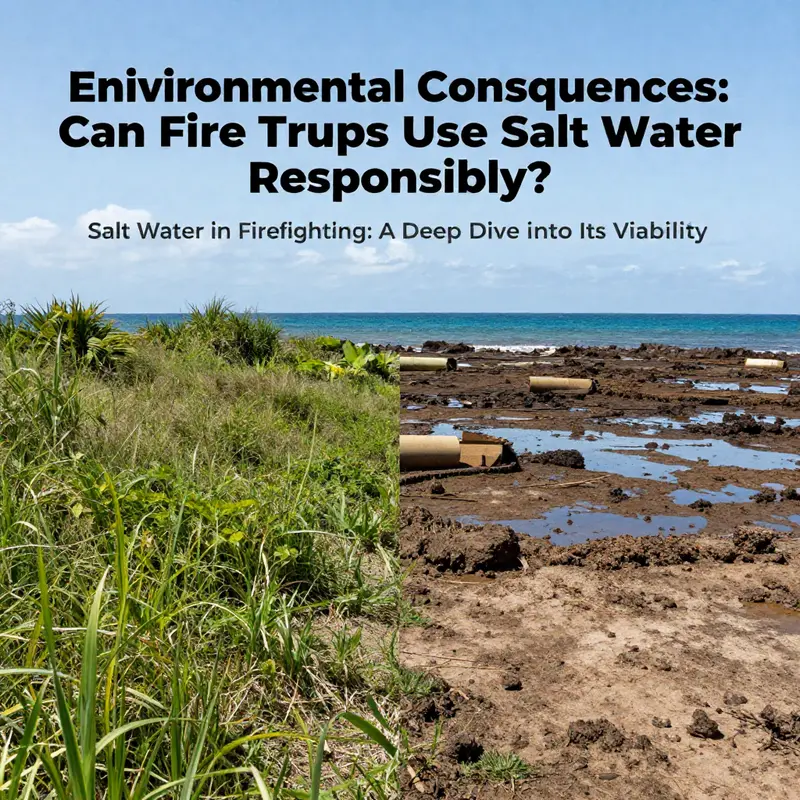
Saltwater on the Front Line evaluates why ocean water cannot replace freshwater in routine firefighting. The analysis covers environmental risks, including soil salinization and potential impacts on groundwater, and equipment challenges from chloride-induced corrosion. In practice, seawater is not a feasible default source; if used only as a last resort, rapid post-incident flushing and maintenance are essential. Fire departments rely on freshwater systems to protect equipment reliability and ecological health, reserving any seawater use for extraordinary circumstances with strict safeguards.
When Seawater Meets the Hose: Maintenance Realities and the Cost of Saltwater Exposure for Fire Trucks
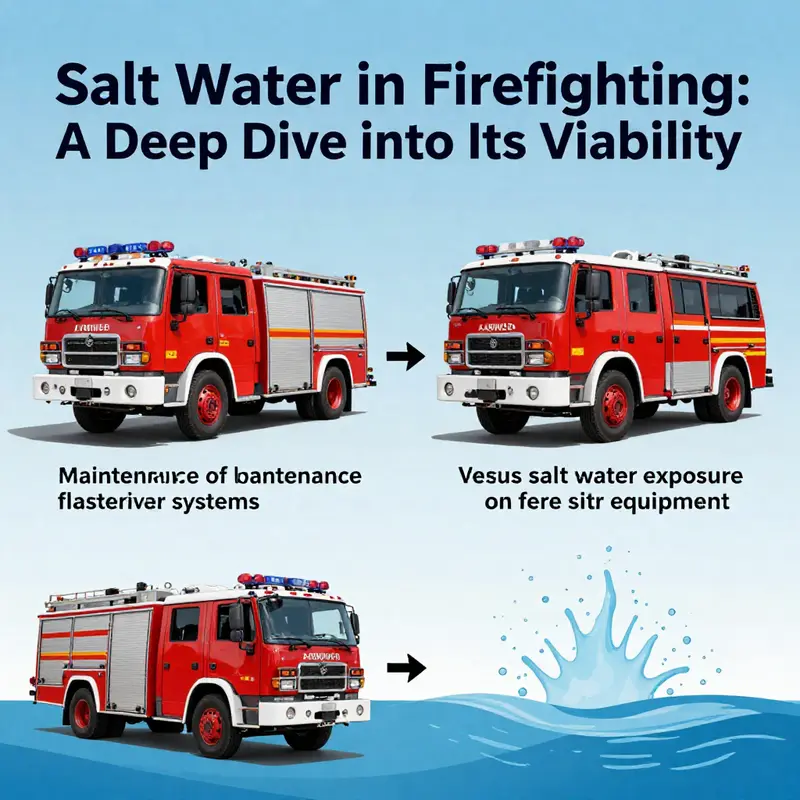
Coastal regions often imagine seawater as an inexhaustible, conveniently available resource for emergencies. In practice, however, the lure of seawater must be weighed against how firefighting equipment is designed, tested, and maintained. Fire apparatus are built and calibrated for freshwater operations, with pumps, valves, hoses, seals, and lubrication regimes chosen to harmonize with non-saline water supplies. In the field, even brief contact with seawater can initiate a cascade of degradation. Chloride ions accelerate electrochemical reactions on metal surfaces, creating tiny pits that can expand under pressure and heat. Over time these pits become sites for rust and leaks, undermining everything from the pump intake to the discharge nozzle. The materials in many pumps and fittings—often steel alloys, aluminum components, bronze elements, and elastomer seals—face distinct corrosion pathways when salted water remains around joints and threads. Corrosion is not always immediately visible; it can erode protective coatings and loosen tolerances in ways that reduce efficiency or lead to sudden failures during a high-demand call. The practical question, therefore, is not simply whether seawater can suppress a blaze—it can—but whether crews can maintain, repair, and rely on equipment that has spent time in a briny environment. This tension sits at the heart of every policy discussion about whether seawater should be treated as a legitimate substitute for freshwater in firefighting scenarios, especially in regions where coasts meet dense urban infrastructure and long-term fleet readiness depends on predictable performance rather than opportunistic water access.
Maintenance protocols quickly become more demanding when seawater enters the tally. Post-operation flushing is more thorough than a routine rinse; it requires careful disassembly of components that may trap brine, meticulous lubrication to counteract salt-induced embrittlement, and, in some cases, the scheduled replacement of seals that become sensitized to chloride exposure. Saltwater does not merely stain metal; it penetrates protective films and accelerates fatigue over time. When the pump—an indispensable lifeline for firefighting operations—spends even a fraction of its service life in saltwater conditions, the risk of pitting-induced leakage or reduced pumping efficiency rises. Hoses and couplings, often designed for freshwater resilience, may develop micro-cracks that propagate under high pressure. The cost calculus changes because labor hours for flushing, inspecting, and re-lubricating extend beyond routine maintenance and can exceed standard wear-and-tear budgets. Fire departments thus face a double burden: the need for more frequent inspections to detect early corrosion and the necessity to maintain larger stocks of seals, gaskets, and corrosion-resistant fittings. These operational costs ripple through scheduling, fleet availability, and the ability to respond to concurrent emergencies. In coastal districts, environmental stewardship surrounding wastewater and brine disposal can entail regulatory compliance costs that further strain budgets. The net effect is a cycle in which seawater exposure heightens downtime and manpower needs, eroding the appeal of seawater as a stopgap solution and prompting agencies to weigh freshwater-origin resilience against brine-related maintenance demands. In this sense, even when seawater is readily accessible, the long-term maintenance burden often dominates the immediate firefighting advantage.
Several studies across different departments crystallize the long-term cost realities. The most consistent finding is that corrosion rarely stays confined to a single component. It migrates through the system as seals fail, threads seize, and micro-pittings coalesce into significant performance concerns. The lifetime of pumps, once a predictable horizon, shortens when salt exposure becomes routine. Each valve, hose, or gasket replaced to counteract brine damage adds to the fleet’s total ownership cost and, over years, raises the average age of the apparatus. Maintenance incidents become more frequent, not only in outright failure events but in the preventive checks required to ensure readiness. In some agencies, a saltwater encounter triggers a cascade of steps—draining and flushing the system, testing pumps under load, performing lubricant changes, and verifying seal integrity. Taken together, these steps extend the maintenance cycle and can delay responses to real emergencies. From an economic standpoint, the uptick in maintenance labor translates into higher staffing requirements, overtime, and a need for specialized chemicals and tools. It is not merely about replacing equipment; it is about sustaining a readiness ecosystem—training crews to recognize corrosion early, maintaining a supply chain for high-grade materials, and planning for more frequent major overhauls. The practical takeaway is clear: seawater exposure imposes a cost-of-doing-business that many departments struggle to absorb without revising procurement and maintenance strategies. For those seeking broader context on how such considerations intersect with fleet composition and market realities, see our overview of fire-trucks-for-sale.
An authoritative voice in the field articulates the dilemma with measured caution. Captain Rafael Mendez of CAL FIRE notes that seawater can suppress flames just as effectively as freshwater under the right conditions, yet the long-term cost to equipment and infrastructure often outweighs the short-term benefit. This perspective reflects a broader understanding that firefighting gear represents a long-horizon investment. Equipment durability hinges on material science—coatings that resist corrosion, seals that resist brine, and alloys that maintain strength in challenging environments. Seawater challenges those choices by accelerating wear at joints, on valve stems, and within pump housings where heat and salt meet fatigue. The quotation underscores a fundamental operational truth: even the most capable water source is only as good as the machine delivering it. When corrosion incapacitates a valve during a critical call or causes a pump to seize, the consequences extend beyond the incident itself. The ecosystem of maintenance, supply chains, and repair capacity becomes the real determinant of whether seawater is a practical complement to freshwater in coastal areas. The sentiment is not a wholesale rejection of seawater; rather, it is a careful accounting of trade-offs. Departments must balance seawater availability with a robust prevention plan to keep corrosion from eroding system reliability. This balance shapes station readiness, budgeting, and even the design of new fleets that prioritize corrosion resistance without sacrificing performance. In that sense, the decision is less about a single chemical challenge and more about engineering a resilient whole capable of withstanding exposure without compromising response capability.
Beyond the technical and financial dimensions lies a broader environmental and municipal reality. Coastal cities wrestle with drought-related constraints on freshwater supplies, complicating how water is used in emergencies. The debate around seawater intersects with concerns about soil salinization and ecological effects if brine residues are not properly contained after firefighting operations. These considerations remind readers that choosing a firefighting water source is not an isolated technical decision but a public policy matter touching budgets, environmental stewardship, and community trust. Practically, when a department weighs seawater exposure, it must also account for downstream tasks: flushing, neutralizing, and disposing of brine residues; inspecting for corrosion across subsystems; and aligning maintenance schedules with the region’s operational tempo. The overarching lesson remains that seawater is not a one-size-fits-all substitute. Its use should be placed within a framework of preventive maintenance that reinforces, rather than undermines, readiness. For many departments, freshwater remains the primary resource, while seawater is considered a contingency measure deployed only after careful assessment of equipment health and environmental implications. The disciplined integration of this approach preserves both the immediate firefighting capability and the long-term vitality of the fleet, ensuring that readiness does not wane when fresh water becomes scarce or brine conditions intensify.
External resource: CAL FIRE Firefighting Equipment Maintenance Guidelines
Regulatory Currents and Corrosion Rules: Why Salt Water Stays Out of Fire Trucks
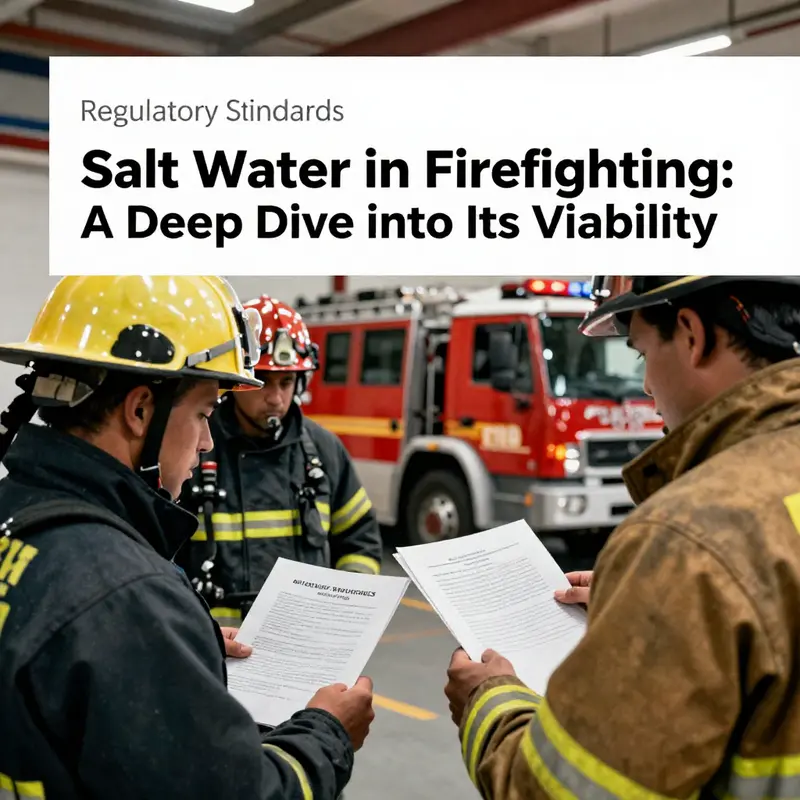
In the regulated world of firefighting, where every drop of water can mean the difference between containment and catastrophe, the question of what counts as acceptable water for fire apparatus never rests. The answer hinges on a careful balance between immediate needs and long-term reliability. Fire departments rely on regulated standards that prioritize equipment longevity, safety, and the integrity of the water supply. The result is a domestic and international consensus that potable water or freshwater from municipal supplies should feed the pumps, hoses, and sprinklers that defend communities. Salt water, by contrast, sits outside the accepted norm not because it is unavailable or because it cannot extinguish some fires, but because its chemistry relentlessly attacks the very tools designed to fight fires. This tension between practicality and preservation is rooted in decades of testing, field experience, and the formal standards created to keep fire apparatus dependable when every moment counts. The governing body most often cited in this context is the NFPA, whose guidelines shape the design, construction, and maintenance of fire apparatus and the water that powers them. According to NFPA standards, specifically the framework that informs the life cycle of a fire engine, the internal systems—pumps, valves, hoses, couplings, and fittings—are chosen and treated to withstand corrosion and wear that are common in potable water environments. The standard emphasizes materials capable of withstanding regular freshwater exposure, while also acknowledging the harsh reality that seawater carries a different, more aggressive set of challenges. The practical upshot is that saltwater use is not a routine option; it is a last resort and strictly regulated when it occurs. In practice, virtually all departments rely on freshwater from municipal sources or onboard tanks for routine firefighting. The chemistry of saltwater, rich in chloride ions and other salts, creates an environment that accelerates corrosion, leads to microbial buildup in some contexts, and promotes galvanic reactions between metals that are often in contact with rubber gaskets and elastomers. This combination is especially menacing for pumps, where seals and bearings depend on precise tolerances, lubricants, and predictable flow paths. Even short exposure to seawater without immediate, thorough flushing can accelerate pitting, rust formation, and the breakdown of protective coatings. The ripple effects are not only mechanical failures but also increased maintenance costs and reduced readiness. A seizing pump, a clogged valve, or a fused hose fitting can leave a crew without a critical tool in a moment of need. The regulatory framework recognizes this risk and therefore discourages saltwater exposure except in extreme circumstances, and even then requires a rapid return to freshwater conditions after use. The emphasis, in other words, is not on chasing an available resource but on preserving the integrity of the fire apparatus and ensuring that, when called, the equipment functions as designed. The rationale behind this stance is straightforward. Saltwater’s architecture of chlorides and other ions accelerates metal degradation, undermines corrosion resistance efforts, and can compromise the probability of maintaining a pristine seal around critical interfaces. The NFPA standards for fire apparatus underscore the need for materials that resist corrosion, but they also acknowledge that freshwater systems reduce the risk of rapid deterioration. This is not simply a theoretical concern. In coastal cities with limited freshwater resources, departments occasionally confront the ethical and operational calculus of whether to deploy saltwater in a pinch. When such a decision is made, the regulation requires stringent procedures: an immediate, thorough flushing of the entire water system with freshwater after the operation, a practice designed to minimize long-term damage and to restore system integrity as quickly as possible. The broader implications extend beyond the truck itself. Saltwater exposure can alter the performance of hydrants, valves, and fittings on the supply side, and, in urban contexts, these effects ripple into the surrounding infrastructure where soil salinization and moisture shifts can threaten vegetation and existing drainage systems. The drought patterns in many urban and peri-urban areas have made freshwater more precious and, paradoxically, seawater even less attractive as a substitute. In places where hydrants are under stress due to drought, the temptation to treat seawater as an available resource might arise, but the systemic risks remain. The regulatory stance, reinforced by field data and the lessons of repeated exposure, is that saltwater use should be minimized and tightly controlled, with a clear framework for post-use flush and inspection. Within this framework, the equipment’s conditioning and maintenance become critical to preserving readiness. The idea that a crew can rely on seawater as an everyday substitute is at odds with the lifecycle costs of corrosion control, part replacement, and the downtime associated with mechanical failures. The line between necessity and risk is narrow, and the standards reflect that. The topic does not exist in a vacuum. It sits at the intersection of equipment design, environmental stewardship, and public safety. The standards help ensure that a city’s firefighting fleet remains a stable, predictable resource rather than a rolling exposure to accelerating wear and tear. They guide procurement decisions, training, and daily maintenance routines so that the water used for a fire is compatible with the machinery that converts it into a deterrent against conflagration. This is true even in coastal regions where seawater is abundant and drought conditions strain freshwater supplies. In such contexts, departments may rely on saltwater only after exhaustive assessments and with explicit post-use flushing protocols. The long-term message is clear: while saltwater is technically capable of delivering cooling effects, its corrosive nature demands disciplined adherence to standards that prioritize equipment longevity and operational readiness. The upshot for fire service leaders is not simply an adherence to rules but a disciplined philosophy that values dependable infrastructure over short-term improvisation. Training programs, maintenance schedules, and procurement strategies all reflect this stance, reinforcing the principle that the best way to keep a fleet usable across decades is to minimize exposure to corrosive environments and to treat saltwater as a last resort, not a routine resource. For those exploring related narratives and delving into the broader ecosystem of firefighting equipment, the Fire Truck Space Blog offers perspectives on how communities adapt to diverse challenges while maintaining readiness and resilience. See the Fire Truck Space Blog for broader discussions about equipment, maintenance, and best practices in the field: Fire Truck Space Blog.
From a policy standpoint, the regulatory framework also intersects with environmental considerations. Coastal cities must navigate water rights, drought resilience, and the protection of local ecosystems when contemplating any deviation from freshwater norms. Saltwater use, even in a regulated emergency, carries risks to soil structure, plant life, and the potential contamination of stormwater systems. These concerns underscore why the NFPA standards emphasize design elements that resist corrosion and why they insist on freshwater as the default operating medium. Practitioners who study the issue discover that the tension between immediate firefighting needs and long-term equipment integrity is not simply about chemistry; it is about governance, funding, and the ongoing challenge of maintaining a fleet that can be trusted when every second counts. The emphasis on freshwater helps ensure that a department’s investments yield durable performance rather than ephemeral gains that could be offset by costly repairs or unexpected downtime. In the end, the regulatory message is consistent: saltwater is not a normal substitute for firefighting water. It is a potential last resort, implemented only under strict controls and followed by immediate remediation measures. This approach aligns with the broader objective of public safety—delivering reliable protection to residents and businesses while maintaining the readiness and longevity of the tools that make such protection possible. For anyone who wants to dig deeper into the standards that govern water quality and apparatus design, the NFPA provides official resources and guidance on the topic. External Resource: https://www.nfpa.org
Final thoughts
In summary, while the idea of using salt water in fire trucks might present an appealing alternative for coastal firefighting, the reality is complex. The corrosive nature of salt water not only endangers essential fire truck components, leading to potentially extensive repair costs but also poses serious environmental threats. Furthermore, ongoing drought conditions in many urban areas mean that even freshwater sources are increasingly unreliable. Therefore, maintaining the highest standards through the use of freshwater systems remains critically vital for operational safety and efficiency. As we advance in fire service technology and strategies, the commitment to safeguarding equipment and the environment must remain a priority, and fire departments must continue to work diligently within existing regulatory frameworks.