
Fire trucks, essential for emergency response, come in various heights tailored to their functions. From standard city engines to towering aerial platforms, understanding these measurements not only intrigues enthusiasts but is crucial for aspiring firefighters and emergency service professionals. This exploration will delve into the typical dimensions of standard fire trucks, the specifications of aerial ladder platforms, and how advancements in technology are influencing these vehicles. Moreover, we’ll analyze the implications of fire truck heights on urban planning and firefighting effectiveness, equipping readers with holistic insights vital for anyone interested in the firefighting world.
How Tall Is a Fire Truck? Navigating Height, Space, and the Engineering Behind Size
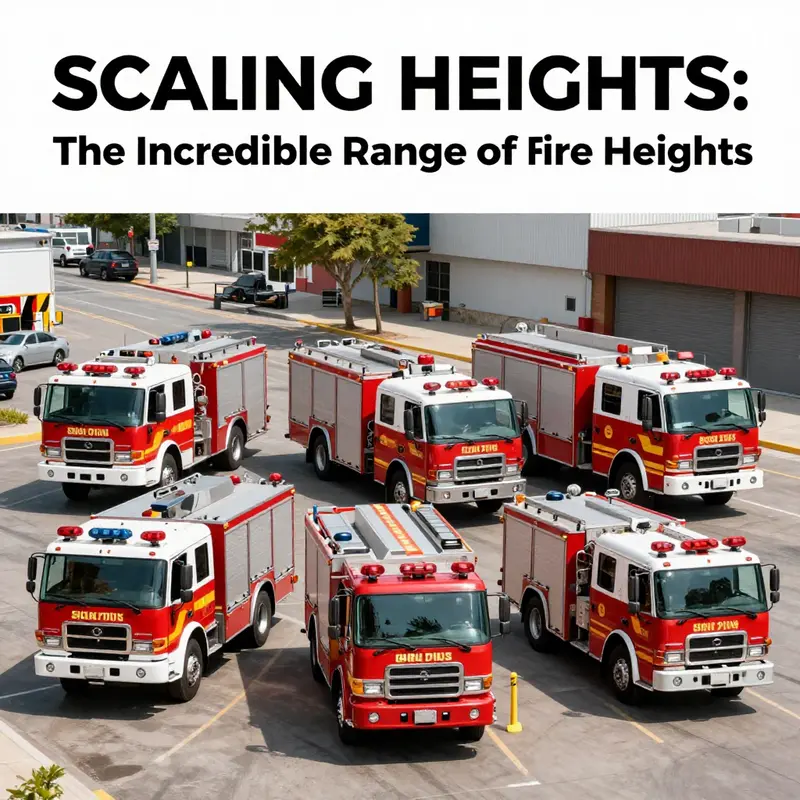
When someone asks how tall a fire truck is, the instinct might be to point to a single measurement. Yet height is more than a number: it is a design choice that reflects function, environment, and the physics of moving heavy gear through urban space. If you stand at the curb and watch a standard pumper roll by, you may notice a compact silhouette that seems almost ordinary next to a tall city block. But the height of that vehicle embodies a deliberate balance. It must be tall enough to carry equipment, long enough to hold water and foam, and stable enough to maneuver on crowded streets without scraping bridges or tipping into tunnels. In short, height is a design center—an axis around which accessibility, safety, and effectiveness rotate in the firefighting mission.
A practical anchor is the height range that governs most conventional fire engines. In several national frameworks, the typical height for a standard, non-aerial unit sits in a defined corridor. For many conventional trucks such as pumpers and water tankers, the height is commonly reported as roughly 3.2 meters to 4.0 meters. This span isn’t arbitrary; it reflects a consensus that a vehicle must clear common urban infrastructure—from the lintel of a doorway in a narrow garage to the underside of a highway overpass—without detours or damage. In practice, a working height near 3.5 meters is often cited as a practical upper limit for standard models. This isn’t to say every city truck conforms to that exact ceiling, but the 3.5-meter target serves fleets navigating dense street grids and balancing capability with clearance.
Within this framework, different fire truck families illustrate how height serves different missions. Pump and rescue vehicles—the workhorses of urban departments—tend to hover in a middle range. They might measure 3.0 to 3.8 meters, with the standard of 3.5 meters proving reliable for day-to-day operations. That height ensures enough room for the crew, hoses, pumps, and protective gear, while still allowing the vehicle to slip through traffic and pass under bridges and through tunnels on the way to a call. Foam trucks follow the same logic; their height adheres to this practical ceiling because their job is to reach the scene swiftly and efficiently without becoming a barrier on the street.
When the job calls for altitude—the ability to reach elevated points—the vehicle’s height is only part of the equation. An aerial ladder truck or platform truck must extend beyond the truck’s own body. The chassis and cab of these units generally sit in the familiar neighborhood of 3.5 to 4.5 meters in height when not extended. Yet the real vertical reach comes from the ladder or platform, which can extend the effective height to well above the vehicle. In general terms, while the body remains within a similar range to standard engines, the aerial mechanism multiplies usable height when needed. In some configurations, equipment can push the overall working height far beyond the street‑level body height, enabling high‑rise rescue and firefighting that would be impossible with a traditional engine.
Not every deployment benefits from a taller vehicle. In operational contexts with restricted road layouts, a lower silhouette translates into safer navigation and faster arrival. Urban centers with narrow streets or tight parking may favor a leaner height within the 3.0 to 3.5 meter window, optimizing ladder access to buildings, loading docks, or rooftop entries without awkward angles or scraping the pavement. The nuance is practical: height is a constraint as much as a capability.
Beyond a single number, the design philosophy of fire apparatus makes height an interconnected thread in a broader system. The shape of the truck’s silhouette—roofline, wheelbase, and the height of its compartments—affects stability, center of gravity, and load distribution. A taller body may carry more water and gear, but it also raises risk in high‑speed maneuvers or turns on uneven pavement. Conversely, a shorter, stouter build can glide through city traffic but may constrain storage and deployment of gear. In many fleets, engineers use modular interiors to balance height, crew space, and equipment, while preserving the clearance needed to pass under bridges and into tight garages.
The regulatory and standards landscape adds another layer of nuance. In several jurisdictions, standards codify a baseline height for standard fire trucks, but permit regional variation. The practical upshot is a familiar range rather than a universal figure. When departments plan new fleets or upgrades, height becomes a central factor in negotiations with suppliers, alongside torque, payload, wheelbase, and braking performance. The result is a family of vehicles that share a common purpose but diverge in vertical footprint to suit local topography, road design, and the built environment.
From the firefighter’s perspective, height matters in a tactile, immediate way. A taller body often signals more equipment and greater reach—but height alone does not guarantee success. The crew must consider whether the ladder or platform can reach the needed height without compromising stability or safety at the platform. When height aligns with the mission—whether to reach a high window, to shield a roof, or to deliver a foam blanket across a storefront—the vehicle’s stature becomes an enabler of rapid, decisive action. Height is a practical language spoken by urban fire services: it communicates capability and constraints quickly under pressure.
For readers curious about how height translates into design, think of it as part of a broader system—the chassis, the body, and the extendable apparatus. The chassis sets the baseline, the body shapes the interior space for crew and gear, and the high‑reach components determine how far the mission can travel upward. Together with urban clearance, this yields a fleet capable of handling a wide spectrum of emergencies while preserving agility in dense streets. Understanding height in this way shows why a fire truck is not merely a vehicle but a compact, engineered platform that translates architectural space into life‑saving capability.
For readers who want to explore further, related discussions on steel fire apparatus and weight distribution show how materials and structure interact with overall height and performance. A final takeaway: the standard city engine generally sits within a compact, urban‑friendly envelope—roughly 3.2 to 4.0 meters, with 3.5 meters acting as a practical ceiling for many common models. When the mission demands reach beyond the street, aerial platforms rise to meet the tallest calls, but their base height remains in a similar neighborhood while their ladders provide the real vertical leverage. And when urban terrain tilts toward tighter confines, fleets may favor a shorter silhouette to keep access and mobility intact. Height, then, is not merely a measurement; it is a calculation—the result of balancing access, reach, stability, and speed to ensure that when a fire is declared, response can be quick, efficient, and safe.
Vertical Reach: Decoding How Tall Fire Trucks Really Are and Why It Matters
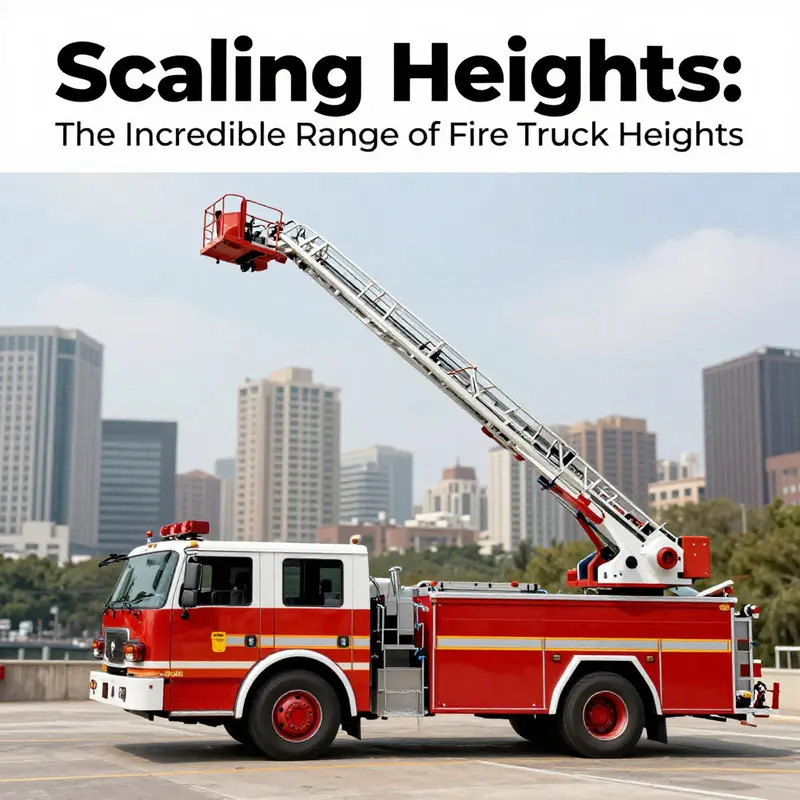
When people ask how tall a fire truck is, they usually expect a single number—a height you can measure with a ruler and file away. Yet the true answer to how tall a fire truck is sits in layers, from the ordinary height of the chassis to the extraordinary reach of its aerial boom. In everyday street operations, a typical fire engine is designed to stay within a height range roughly from 2.7 meters to 4.15 meters (about 8.9 to 13.6 feet). Urban planners and firefighters alike favor designs under 3.5 meters (around 11.5 feet) to ensure reliable passage beneath bridges, through tight alleyways, and past overhead services. But height, in this context, is not a single fixed dimension. It is a spectrum that expands dramatically once a truck leaves the pavement and the platform unfolds toward a fire or a rescue. The height question thus shifts from a simple measurement to a discussion of purpose, geometry, and safety at height. The most pressing distinction is between ground-level reach and aerial reach. Ground-based height governs mobility, access, and clearance, while aerial reach governs the ability to intervene at distance, to project water, foam, or rescue lines to the upper floors or rooflines where flames and smoke threaten the heart of a building. As urban skylines swell and façades grow more intricate, the height conversation must account for both the everyday duties of engine work and the specialized demands of high-rise firefighting. The numbers from fire service literature often crystallize this divide: a broad baseline of conventional engines, a stepped range of mid-to-high-rise platforms, and, at the outer edge, extreme-height apparatus designed for rare, large-scale scenarios. In practice, the bulk of city engines lives near that middle ground, balancing compact form and sufficient reach with the nimbleness needed to navigate crowded streets. The result is a practical, workaday height that keeps responders close to the action, even as the sky becomes part of the battlefield. Yet when a call targets upper stories or distant rooftops, height becomes a weapon in its own right, one that must be deployed with careful attention to stability, operator training, and environmental conditions. This layered approach to height explains why, alongside the base vehicle dimensions, fire departments increasingly rely on a family of aerial devices whose working heights are measured not in the meters of a truck’s body but in the meters of its extended reach. The aerial platform’s maximum height is where the real engineering challenge lies, because it reflects how far crews can go to illuminate, access, and extract. In this sense, the chapter of height begins with a practical baseline and then unfolds into a study of reach. Where a standard fire engine can do much of its job from the ground—spraying water, laying lines, and evacuating occupants—the aerial platform adds a vertical dimension that transcends streets and doorways, letting firefighters operate above the sidewalk with a stable, enclosed work surface. This is where the arithmetic of height becomes a matter of geometry, hydraulics, and balance. The canopy of the boom is what translates length into elevation, and the strength of the supporting structure translates elevation into safe operation. The core elements here are the maximum reach, the design of the boom, and the hydraulic and control systems that govern movement at height. In practical terms, these devices come in several reach categories. A 32-meter platform establishes a comfortable tier for many mid-to-high-rise structures, offering a robust combination of reach and maneuverability for most neighborhoods. Pushing beyond that, a 43-meter class becomes the tool of choice for taller facades and more demanding access points, while an extended variant can exceed 80 meters, addressing the needs of taller commercial towers and high-rise residential complexes. In some regions a handful of platforms reach into the 90s, and the most extreme demonstrations appear to touch or surpass the 100-meter mark. These are not casual numbers; they reflect the geometry and force requirements of long, multi-section booms that must remain controllable even when extended to their limits. The distinction between reach and height also exposes the relationship between the ground vehicle and its lifting system. The base truck’s height remains a fixed constraint, but the maximum working height is derived from the combination of boom length, joint articulation, and the ability to maintain stability under load. A telescoping boom slides sections outward to gain reach, while an articulated boom changes direction and extends in non-linear ways to reach awkward angles without compromising balance. A hybrid design blends both strategies, using segments that telescope and bend in concert. The hydraulic lifting system acts as the power behind the motion, while careful engineering ensures that the center of gravity remains within safe limits as the platform rises. The control system, aided by sensors and feedback loops, modulates movement to counter wind, wind gusts, and the weight of water or rescue gear on the platform. This is where the engineering discipline shines: the same device that stretches to reach a flame must also restrain itself, so that the operator feels secure and the structure never succumbs to instability. Durability enters the conversation as a parallel concern. The bodies and booms of aerial platforms are built from materials engineered to resist corrosion and fatigue. The harsh conditions of firefighting—heat, smoke, moisture, and vibration—demand components that can survive repeated cycles of deployment and repair. This is not a luxury; it is a baseline expectation for any modern platform intended for high-rise work. horsepower and propulsion accompany the lifting system, enabling reliable performance when the platform is fully extended. Engines and hydraulic pumps must supply sufficient power to raise and hold the platform, while the control electronics coordinate with human operators in real time. The integration of mechanical capability with human safety is a central theme in height design. Operators must feel confident as they command the platform toward a balcony, a window, or a rooftop rappel point. The platform’s protective enclosure and railing system provide a secure working area, shielding firefighters from the hazards of elevated work while they deploy hoses, deliver rescue lines, or operate a lighting rig during night operations. In this sense, height is not a raw number but a capability that shapes tactics. The safety architecture—outriggers, ballast, and platform stops—ensures that reach does not come at the expense of safety. The modern aerial platform, therefore, is a careful compromise: maximum elevation achieved only when all systems are aligned, with safeguards that prevent motion beyond the design envelope. Standards and certification reinforce this balance. Fire apparatus producers usually pursue ISO-based quality management and rigorous testing regimes, including independent verifications that components perform under realistic loads. In practice, this means that departments can count on predictable behavior when the platform is extended and that maintenance schedules are designed to preserve performance over years of service. The height story thus weaves together baseline vehicle dimensions, the geometry of the boom, the resilience of materials, and the culture of safety that governs use in the field. It also reminds us that the conversation about height extends beyond the fire service alone. In many warehouses and industrial facilities, smaller, portable aerial devices are tasked with reach and access for non-emergency work. These machines demonstrate that vertical reach has broad utility, a reminder that height is a general capability that can drive efficiency across multiple sectors. The result is a spectrum of height across devices and contexts, from the everyday around-city engine to the towering solutions used in extraordinary rescue scenarios. For readers who want a deeper dive into the technical landscape, specialist publications compare boom types, performance metrics, and safety considerations for aerial fire apparatus, helping fire departments match their architectural realities with the right balance of reach, maneuverability, and lifecycle value. For a concise entry point into these discussions, you can explore the Fire Truck Blog, which gathers industry perspectives and practical evaluations. Fire Truck Blog. This reference is not an endorsement of any single model but a curated lens on how height interacts with cost, training, and response patterns in diverse regions. As cities continue to grow taller and more complex, the height question remains a moving target, shaped by design aspirations and practical constraints alike. A typical ground vehicle will sit under four meters, providing ready access to most incidents in standard streets. Yet the call to higher ground remains ever-present, and the corresponding boom technology translates that call into a controlled, reliable platform. The 32-, 43-, and 82-meter classes capture the majority of needs across urban landscapes, while the tallest, most specialized systems exist to confront the most demanding high-rise environments or complex facilities. The metric, finally, is not simply inches or meters, but the confidence that crews can work at height with precision, speed, and safety when every second counts. External resources help frame this confidence and offer data-backed comparisons that illuminate why height is a critical dimension in modern firefighting. For an in-depth technical overview, consult professional outlets that detail boom types, load management, and performance under real-world conditions.
From Street Level to Skyline Reach: A Practical Height Analysis of Fire Apparatus
When observers watch a fire truck move through an urban corridor, the tall silhouette of its equipment rack and, for some crews, the danger and drama of an elevated reach can seem almost cinematic. Yet the true question most departments and dispatch systems face is practical: how tall is a fire truck, and how does that height influence where it can operate? The answer is not a single number but a spectrum that reflects two principal families of apparatus and the environments they are designed to conquer. On the one hand there are the standard fire trucks—the workhorses of city streets, highways, and suburban arteries. On the other hand there are aerial firefighting vehicles, the specialty platforms engineered to reach high windows, rooftop vents, and other elevated rescue points. These two categories share a fundamental purpose, yet their heights are governed by very different constraints, and those constraints ripple through planning, response times, and even the architecture of the cities they serve.
Standard fire trucks are defined as the agile, multi-purpose apparatus that transports water, pumps, foams, hoses, and crews to the scene. Their height is tightly regulated to ensure compatibility with the everyday fabric of infrastructure: bridges, overpasses, parking structures, and the low-clearance lanes that thread through dense neighborhoods. In most systems, the maximum standard height hovers around 3.5 meters (roughly 11.5 feet). That ceiling is not arbitrary; it is the product of a long-standing balance between the need to carry substantial pumping and storage equipment and the practical realities of street geometry. In many regions, this limit sits a little lower for lighter-duty or urban-centric configurations, often ranging from 2.7 to 3.4 meters. The design intent is clear: keep these vehicles nimble enough to navigate tight turns and crowded avenues while staying clear of the everyday obstacles that pepper the urban landscape. It is worth noting, as a regulatory nuance, that some national frameworks permit slightly higher builds—up to about 4.15 meters—but such exceptions are reserved for specialized, non-standard vehicles and are not representative of the typical city engine that crews rely on for routine calls.
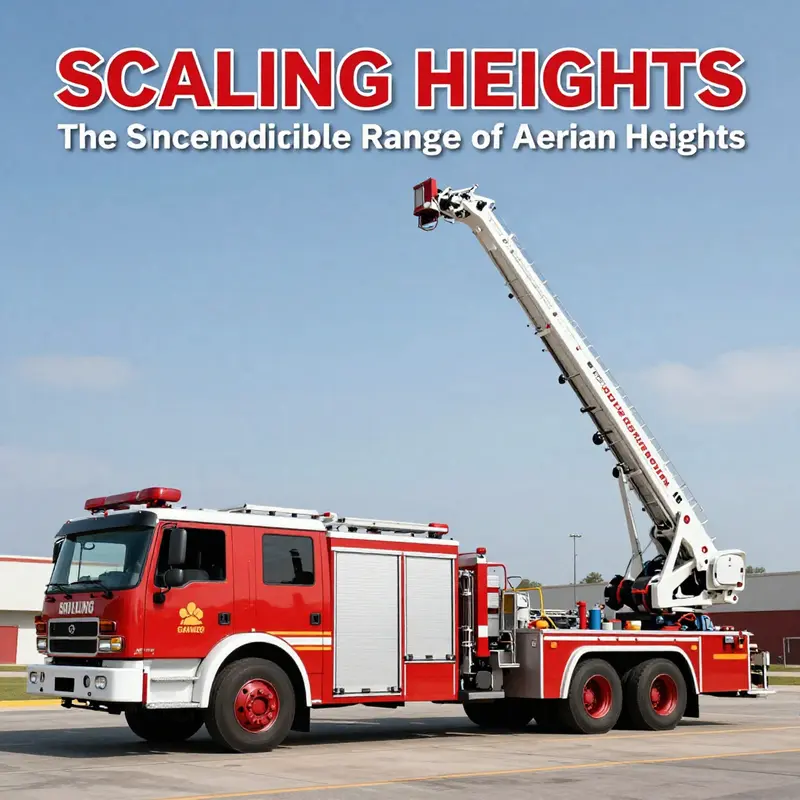
The second broad family—the aerial firefighting vehicles—looks very different in scope and in the geometry of height. These are the ladders, platforms, and articulated booms that extend far beyond the chassis to reach high-rise facades and rescue windows far above street level. The chassis height alone for these vehicles commonly sits between 3.65 and 3.96 meters, a band that already places them well above the typical 3.5-meter standard. But the real story of height unfolds once the ladder or platform extends. Max reach commonly starts in the teens and moves into the tens of meters, with typical configurations spanning from roughly 20 to 40+ meters of vertical extension depending on the model and the mission profile. In other words, the same truck that stands tall on the street can become a giant in the air, transforming urban rescue tactics and the way crews plan their approach to a tall building.
To understand this divergence more plainly, consider the distinction between chassis height and working height. The former is the fixed height of the vehicle itself before any extension is deployed. The latter describes how high the apparatus can effectively reach when needed. Aerial platforms maximize working height not by increasing the base chassis alone but by integrating a telescoping or articulating mechanism that can reliably span dozens of meters above the pavement. Drivers and incident commanders must internalize both figures: the chassis height informs routing and clearance assessments, while the full extension height dictates the feasible lines of attack, rescue options, and the selection of windows or floors that can be reached without repositioning. In practice, crews plan routes around both limits, ensuring that the path to the scene is free from tunnels, underpasses, and parking structures that could trap or damage the apparatus before it ever leaves the street.
This height dichotomy carries substantial implications for how cities are designed and how departments train for emergencies. The straight-line height of the vehicle matters at the point of entry into a district; the aerial reach matters at the point of attack. Fire stations, municipal planning offices, and even civilian building codes increasingly reflect this dual reality. Urban planning now occasionally contemplates designated corridors or “aerial vehicle routes” that can accommodate these towering platforms, aided by height-sensing systems at entry points and pre-clearance checks that help prevent incidents where a vehicle would be forced to abort a mission or retreat because the route cannot accommodate its height. The result is a more deliberate choreography between where a building stands and how a truck can approach it—an alignment that can shave seconds off a response and reduce the risk of a miscalculation under pressure.
The regulatory and practical landscape around height also shapes how departments procure and deploy equipment. Standards bodies emphasize safety, reliability, and interoperability, guiding the design of vehicles so that even when a ladder or platform is fully extended, the system remains within a predictable envelope of safety margins. And while the specifics of local laws and municipal codes will vary, the core principle holds across jurisdictions: height is not merely a measurement; it is a controlling factor in tactic selection and risk management. Dispatch protocols increasingly reflect this reality, guiding units toward routes that respect height constraints and, when those constraints cannot be met, triggering alternative strategies such as water-based or interior attack plans rather than forcing an equipment mismatch that could compromise the operation.
For those who study the market or plan replacements and upgrades, the height conversation also informs maintenance philosophy and training regimes. A standard engine, with its compact profile, rewards speed, fuel economy, and ease of maneuvering. Its design emphasizes maneuverability and reach within familiar city blocks, where the vehicle can approach from angles that avoid height-related bottlenecks. An aerial platform, by contrast, demands a wider assessment: the ability to flex and extend without colliding with adjacent balconies, power lines, or architectural projections. The operator’s training must therefore cover not only the mechanics of the boom but the spatial literacy to estimate margins in crowded environments where every centimeter of clearance matters. This is not a debate about better or worse machinery; it is a conversation about fit for purpose. The urban theater demands different tools for different acts, and height is a principal script writer.
The practical upshot of these dynamics is evident in response planning and in the culture of readiness it fosters. When a call involves a tall structure or a suspected high-rise fire, the operational plan will include a sequence that leverages the extended reach of aerial platforms, with the understanding that the height of the apparatus directly informs which floors can be safely accessed and how windows can be ventilated or windows broken without endangering the crew. Conversely, ordinary fire responses in low-clearance neighborhoods leverage the sturdy, compact profile of standard engines, ensuring fast placement of pumps and rapid hose advancement without the hindrance of a towering silhouette. Citizens experience the difference in service as crews minimize delays caused by geometry: trucks that can slip under bridges, or ones that can span the gap to a distant upper-story window through a controlled, measured extension.
For readers exploring the broader market or contemplating future equipment needs, the distinction matters not only in planning a fleet but in understanding what height means in practice. It is not merely a figure to display in a spec sheet; it is a constraint and an opportunity that shapes routes, tactics, and the very texture of emergency response in a modern city. In the end, the tall ladder and the compact pump truck each play a vital role in building resilience against the unknowns of fire and rescue. One cannot replace the other; both are essential cogs in a municipal safety system, working in harmony with the urban environment and the people who design, deploy, and respond to emergencies.
If you’re researching the practical aspects of acquiring or understanding fire apparatus, you can explore current market options and general vehicle availability at a practical, well-trodden resource like fire-trucks-for-sale. This site offers a window into how departments balance height, cost, and capability across the spectrum of standard and aerial configurations, helping readers appreciate the real-world constraints and choices that shape every fire department’s fleet. https://firetruck.space/fire-trucks-for-sale/
For those seeking a regulatory backbone to ground these considerations, the standards governing automotive fire apparatus provide a detailed framework. They define dimensions, safety margins, and performance requirements that keep height from becoming a barrier to mission success. As a point of reference, the NFPA 1901 standard outlines the expectations for design, construction, and performance of fire apparatus, including how height interacts with stability, reach, and rescue capability. While this chapter does not recreate the standard, it aligns with its emphasis on safety, reliability, and interoperability across diverse environments. To explore the formal regulatory context, see the official standards documentation at NFPA’s website: https://www.nfpa.org/codes-and-standards/all-codes-and-standards/list-of-codes-and-standards/detail?code=1901
Rising Reach: Redefining Fire Truck Heights in the Age of Smarter Aerial Rescue
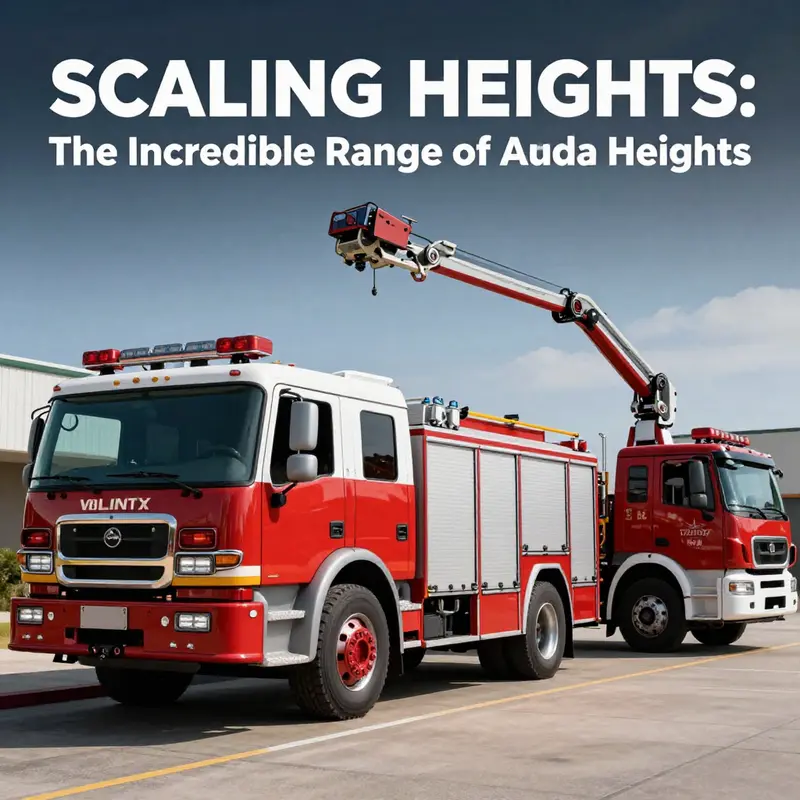
The height of a fire truck is more than a measurement; it is a design philosophy that blends reach, stability, and deployment speed. In traditional fleets, most fire engines sit around 3.0 to 3.8 meters tall, optimized for street clearance and rapid response. As cities grow taller and denser, fire services increasingly rely on taller aerial platforms, modular extensions, and smart stabilization to extend well beyond old norms. Height becomes a spectrum: height, reach, and deployment speed must align with safety, maneuverability, and the realities of urban geometry.
In practice, higher reach demands advanced hydraulics, precise control, and sophisticated sensor feedback. Modern platforms use computer-assisted extension, active stabilization, and real-time limits that keep operators in command as the platform rises toward upper floors. Drones and robotics now augment high-rise operations by providing heat maps, occupancy estimates, and structural assessments while aerial assets work in concert with indoor teams.
Manufacturers increasingly frame height as part of a capability profile rather than a single metric: how tall, how fast, how stable, and how well data, comms, and automation integrate to guide each move. The result is a family of vehicles whose vertical reach is matched by intelligence, connectivity, and interoperability with incident command.
For buyers, the market reflects a shift toward modular, upgradeable designs, remote operation options, and software ecosystems that keep height a future-ready asset. The core question is not only how high a truck can reach but how reliably it can reach the target safely, with predictable handling and sustainable maintenance.
Skyward Reach and Streetwise Planning: How Fire Truck Height Shapes Cities and Emergency Response
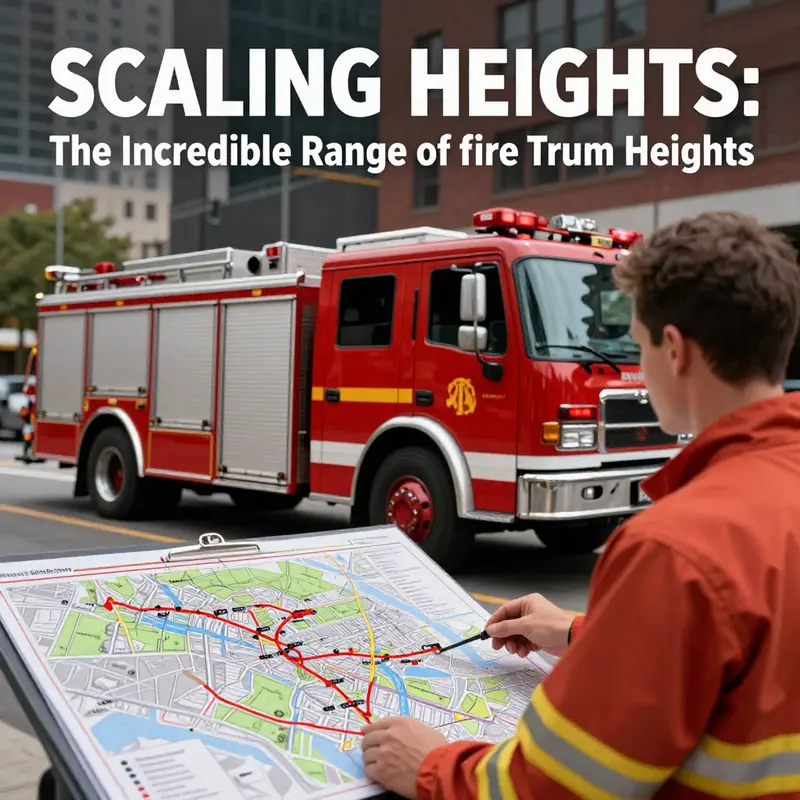
Height is not merely a spec on a spec sheet. It is a living constraint that threads through how a city breathes, moves, and saves lives. Fire departments rely on equipment ranging from compact pumpers to towering aerial platforms. In many urban systems, daily operations hinge on the size of the machines that can squeeze through the fabric. The height of these engines and ladders becomes a practical measure of what a district can reach, how quickly, and what parts of the city must be designed to accommodate that reach. When people watch a fire truck roll by, the machine’s height speaks to a thousand micro-decisions shaping safety, accessibility, and confidence in emergency response. The numbers—2.7 meters, 3.5 meters, or more than 90 meters for high-rise platforms—are not isolated truths. They appear in street widths, bridge clearances, tunnel heights, and the way a city imagines its future.
The common fire apparatus sit within a relatively compact band, from roughly 2.7 meters to about 4.15 meters tall in standard configurations. In practice, many departments aim for around 3.5 meters. That target reflects a balance: tall enough to attack elevated fires and reach upper floors when needed, yet short enough to navigate dense urban cores, narrow lanes, and older infrastructures where clearance is tight. Yet emergency planning also embraces a second horizon: aerial ladder and platform units designed to lift crews to dramatic heights for high-rise firefighting, rescue, and window access that conventional pumps cannot reach. These platforms push the height spectrum to extraordinary ranges, with capabilities that extend beyond ordinary street-level operations. The difference is not simply bigger equals better; it means different routes, staging areas, and planning assumptions for a city’s entire firefighting ecosystem. While daily life for most residents unfolds at street level, the tallest platform edges into the sky, redefining what a city must protect and how it must design its lanes to serve everyone.
Height has practical implications when we consider vertical clearance. A city cannot fight a fire efficiently if its tallest apparatus is blocked by an obstacle that cannot be moved or seen until it is too late. Urban planners face the challenge of ensuring that every bridge, underpass, and overhead structure provides sufficient clearance for large fire trucks. A conservative baseline often cited is approximately 13.5 feet, about 4.1 meters. This is the minimum height that accommodates many taller aerial platforms used to reach upper floors, roof access, or elevated facades. When structures fall short, response times can lengthen as drivers navigate detours or restricted paths. The ripple effects touch hydrant placement, power line alignment, and even street furniture arrangements to avoid collisions with passing equipment. In short, height translates into time, and time translates into lives saved or lost.
Route planning follows clearance considerations. If a city’s street network or topography creates pinch points, tall apparatus may be forced to operate along limited corridors. The result can be longer, more complex routes to a fire site, with delays as crews ascend to the correct floor or stage a rescue. Here, urban design and emergency response intersect in meaningful ways. Street dimensions—widths, turning radii, maneuverability—determine how comfortably a ladder truck can align for a safe ascent. Wider streets, gentler curves, and improved turning geometry are not only about traffic efficiency; they are a public safety investment. Unobstructed access points, predictable traffic patterns, and well-considered loading zones help reduce the time between ignition and successful rescue. When cities plan high-rise development or retrofit aging neighborhoods, height-aware routing becomes a core criterion, aligning road design with firefighting tactics rather than treating it as an afterthought.
Height considerations also enter zoning, building codes, and the wider transportation network. Zoning laws can prioritize access routes that guarantee emergency vehicles a clear path to potential fire zones. Building codes can mandate clearances around openings and approaches to parking structures that may shelter ladder operations or rescue stairwells. The transportation network must be resilient to oversized emergency fleets, meaning strategic turn lanes, truck routes, and avoidance of choke points that could paralyze a street during a response. The aim is a city where the physical environment anticipates the needs of the largest firefighting platforms without compromising regular mobility for others. In practice, this requires collaboration among urban planning, fire service, civil engineering, and traffic management—disciplines that rarely share a single moment, yet must work together to keep streets safe and accessible.
To connect theory with practice, consider how departments and communities explore the apparatus landscape within budget constraints and trade-offs height imposes. As fleets evolve, the market for different kinds of equipment shifts in response to demand. Those curious about current offerings can explore industry catalogs and discussions that weigh how height, reach, and maneuverability influence not just fire suppression but road resilience and safety. For authoritative guidance, professionals can consult standards and best practices from national bodies that help districts calibrate their plans against proven benchmarks. These resources provide frameworks that align urban form with the realities of firefighting height and reach.
Ultimately, the question of how tall a fire truck is cannot be answered in isolation. It requires a broader conversation about what a city is, how it grows, and how it ensures streets remain a living conduit for life-saving action. Height becomes a lens through which to examine the entire urban ecosystem—from the dimensions of a single intersection to the skyline of a district, from day-to-day traffic to crisis response. The numbers matter because they translate into decisions about road width, clearance, and the ways a community invests in safety. When a city aligns its regulations with the realities of emergency equipment, it strengthens the chain of survival for residents, workers, and visitors who depend on rapid, reliable access to help. In that sense, height is not a limit but a design parameter—a measurable cue guiding urban form toward a safer, more responsive future. For those who want to see how theory translates into practice, the broader conversation about available apparatus and fleet planning offers a window into the choices communities make as they balance cost, capability, and daily rhythms of city life. The real story is how height informs planning decisions that keep streets open and ready for action.
Final thoughts
The exploration of fire truck heights reveals much more than mere dimensions. Standard fire trucks operate within the constraints of urban environments, while aerial platforms soar to impressive heights for critical high-rise operations. The continued evolution of fire truck design not only enhances firefighting capabilities but also prompts essential considerations in urban planning. Recognizing these heights and their implications ensures we appreciate the vital role fire trucks play in keeping our communities safe. Whether you’re an enthusiast, an aspiring firefighter, or a seasoned professional, understanding these aspects elevates your knowledge and respect for the firefighting profession.