
Understanding how fast a fire truck can go is not just about numbers; it’s about the intricate balance between speed, safety, and purpose. Fire trucks, varying in design and function, exhibit a fascinating range of maximum speeds influenced by their type, weight, and operational roles. This discussion delves into the mechanisms that limit fire truck speed, exploring performance nuances in different vehicles, regulatory influences, the realities faced in emergency situations, and the modern innovations paving the way for faster emergency responses. Each chapter offers insights that shape our understanding of how firefighting vehicles operate under various circumstances and what the future may hold for these essential machines.
Pace Under Pressure: Understanding Speed, Limits, and Performance in Fire Trucks
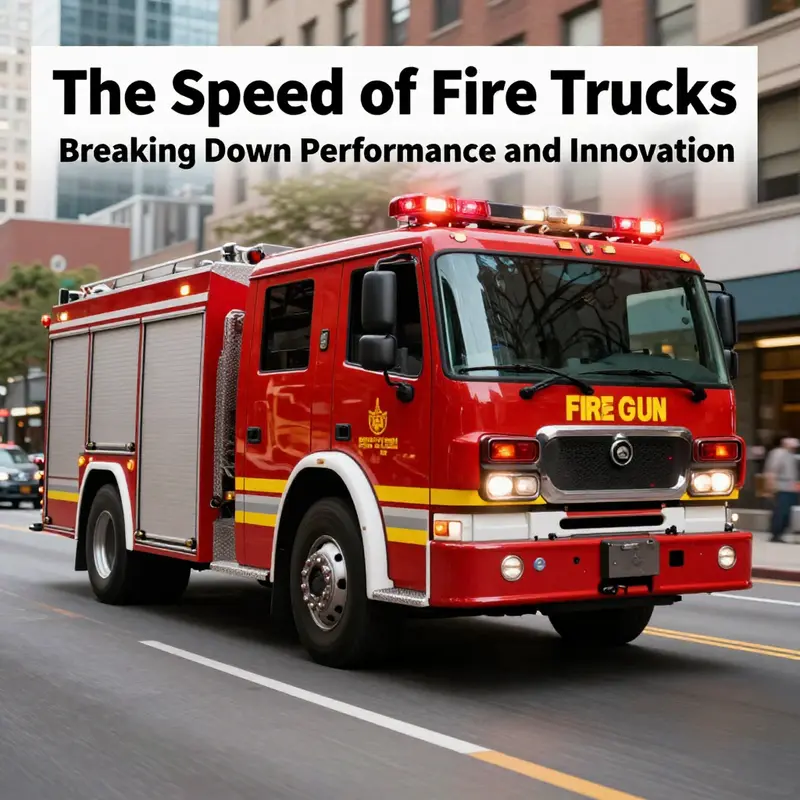
Speed in an emergency is a careful balance between getting to the scene quickly and preserving control on the way there. Fire trucks carry heavy loads—water, hoses, pumps, ladders, and tools. Mass, frame geometry, and braking demands shape how fast a vehicle can safely travel while responding.
Across the fleet, there is a clear division by mission type. Light and medium-duty trucks are built for quick urban response and typically reach 90 to 100 km/h; heavy and large pumpers are heavier and slower, often capped around 80 km/h or less. In contrast, some high-performance or specialized models have been developed to push past standard limits, with top speeds well over 100 km/h in controlled conditions; some can approach 140 km/h in theory. Without naming specific models, this range reflects a spectrum from nimble urban responders to purpose-built speed machines meant for rapid action across varied terrain.
Airport firefighting vehicles, especially rapid intervention vehicles, push the performance envelope. They accelerate from 0 to 80 km/h in under 25 seconds, a feat designed to close the gap to a widening incident. Yet their top speed remains bounded by safety, runway length, and the need for precise handling on slick surfaces and wind-blown zones. In any case, acceleration matters as much as top speed, because a quick ignition of the siren does not help if the truck cannot stop reliably or steer smoothly during saturated conditions.
Even when a vehicle is technically capable of higher speeds, real-world practice is far more conservative. Departments impose policies to operate at or below posted speeds except during emergencies with lights and sirens engaged. In most jurisdictions, the law allows emergency vehicles to exceed speed limits only when responding to a call and using appropriate signaling, but the operator must maintain control, anticipate other road users, and adjust speed to road conditions.
Vehicle size and weight dramatically affect handling. A fully loaded fire truck can weigh more than thirty thousand pounds, about thirteen and a half metric tons. That heft translates into longer stopping distances, especially when brakes are used aggressively from speed or when pavement is wet or icy. The suspension, tires, and traction system must contend with curves and lane changes at high speed, and the risk of rollover or loss of control grows with lateral acceleration. Designers address this with chassis tuning, ballast management, and advanced stability features, but they cannot erase physics.
Even the most carefully engineered apparatus loses some margin when the siren is on and the crew is moving through traffic. Streets are not controlled racetracks, intersections are unpredictable, and pedestrians may step into the roadway with a moment’s notice. Road quality, weather, and visibility all conspire to reduce the feasible speed. In practice, people who answer emergencies see speed bands of roughly seventy to eighty kilometers per hour during straightforward en route travel with lights and sirens, less when there is congestion, and even less in rain, snow, or fog. The goal is not speed at all costs but timely arrival with situational awareness and safety as the guiding principle.
Another factor is the route itself. A highway or wide arterial may let the vehicle travel faster than a narrow city street. But a path with frequent pedestrians, parked vehicles, or sharp corners demands a conservative approach. The trucks must weave around other cars, yield to school buses, and manage oncoming traffic, all while staying within the operational envelope of the vehicle and crew. The equipment load shifts the center of gravity and changes the turning radius; many stations emphasize training in controlled, high-speed maneuvers only in dedicated facilities under supervision. This training ensures that when a real call comes, drivers can execute quick, safe, and decisive actions.
From a logistics standpoint, speed is a lever, not a function. Decisions about which vehicles to deploy—whether to put light, medium, heavy, or specialized units on a response—depend on the nature of the incident and the available route. When departments assess their fleets, they consider not just raw speed but fuel efficiency, acceleration, braking capacity, and durability under mission loads. Procurement challenges often include balancing cost with performance, reliability, and maintenance needs. For readers curious about the market and choices, catalogs like fire-trucks-for-sale offer a spectrum of configurations. Exploring such catalogs helps communities understand what mixes of speed, capacity, and maneuverability fit their urban layouts and budgets.
Standards and guidance from recognized authorities anchor these practical considerations. The NFPA guidelines set minimum requirements for vehicle specs, braking, and stability features to support safe operation during emergency response. Compliance does not guarantee wilder speeds; it supports a baseline of performance while protecting crews and the public. For a deeper dive into standards and safety expectations, see the external resource at NFPA.
External standards reference: https://www.nfpa.org/.
Looking ahead, new drivetrains and lighter materials promise gains without sacrificing payload. Electric propulsion can offer strong torque at low speeds, helping rapid acceleration, yet weight and thermal management must be balanced with mission needs. Advances in simulation, sensor fusion, and control systems can improve stability, especially on uneven surfaces or during sharp lane changes. Still, the governing principle remains: speed is bounded by physics, laws, and the duty to protect crews and the public. Fire fleets will continue to optimize a mix, favoring fast, nimble units for some calls while reserving heavier apparatus for others. The next chapters explore how this balance shapes readiness and response.
From a physics standpoint, speed is a function of power, traction, and inertia. A heavy mass moving through space must overcome rolling resistance and air drag, and each incremental mile per hour requires more energy. The mass also demands more distance to stop, especially when a cross street appears. Braking systems on fire trucks are multi-stage, with cooling and high-grade materials to prevent fade during repeated use. Drivers learn to meter throttle with anticipation, easing into acceleration and using smooth control to minimize weight transfer. Tires are chosen for heat resistance and grip, while suspension tuning keeps handling predictable as the cab leans into turns. In short, horsepower matters, but how that power translates into controlled motion defines speed on the street.
Urban environments demand a different rhythm than rural routes. Narrow streets, tunnel hazards, and crowded intersections turn what looks fast on a wide road into a risky bet in the city. Crews train to exploit moments when traffic parts, while staying defensively aware of pedestrians and cyclists. Weather adds another layer: rain slicks reduce grip; snow and fog blur lines and limit visibility. All these conditions shrink feasible speed well below the theoretical maximum. The psychology of emergency response also matters. Confidence and calm help drivers make faster decisions without compromising safety. It is a discipline that blends engineering, training, and judgment, where speed serves service, not spectacle.
Looking ahead, new drivetrains and lighter materials promise gains without sacrificing payload. Electric propulsion can offer strong torque at low speeds, helping rapid acceleration, yet weight and thermal management must be balanced with mission needs. Advances in simulation, sensor fusion, and control systems can improve stability, especially on uneven surfaces or during sharp lane changes. Still, the governing principle remains: speed is bounded by physics, laws, and the duty to protect crews and the public. Fire fleets will continue to optimize a mix, favoring fast, nimble units for some calls while reserving heavier apparatus for others. The next chapters explore how this balance shapes readiness and response.
External standards reference: https://www.nfpa.org/.
Measured Burst: How Fire Truck Type Determines Real-World Speed and Safety
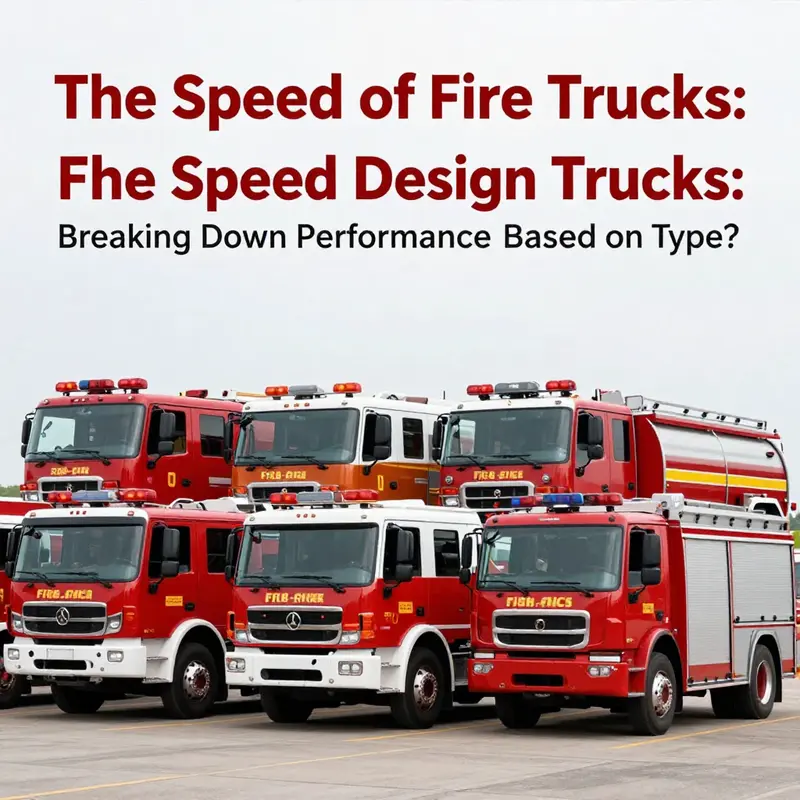
Speed on an urban street behind a siren is not a simple measure of horsepower. It is a function of purpose, mass, and the physics of motion under heavy load. Fire trucks are not built to win a drag race; they are designed to deliver water, tools, and access to a scene while staying controllable. This means that the top speed numbers you see in manufacturer sheets are a starting point, not a guarantee, and they are filtered through training, policy, and the conditions of real roads. The diversity of fire apparatus mirrors the diversity of missions: water supply, high-angle access, technical rescue, rugged terrain, and aircraft emergencies. Because each mission imposes different demands on stability, braking, steering, and power delivery, the speed envelope shifts with each type of vehicle. In practice, the fastest fire apparatus are not necessarily the ones you see cruising on highways; they are the ones tuned for the specific challenges of their assignments.
Engine (Pumper) trucks are at the heart of most urban fires. They must reach the scene, deploy a reliable water stream, and position for hose lines with minimal delay. Their top speed generally lies in the 50 to 65 mph range, equivalent to about 80 to 105 km/h. This range is generous enough for quick ingress, yet conservative enough to preserve stability when loaded with water, pumps, and bulky equipment. Even at these speeds, operators must manage dynamic loads that shift as water tanks discharge. The center of gravity rises when the tank is full, and forward weight shifts during acceleration. This is not mere trivia; it informs the design choices that keep these trucks predictable as they maneuver through tight streets, around corners, and past parked cars. The road, not the badge, sets the pace, and the brakes must be ready to arrest a heavy mass the moment an intersection appears blocked or a driver needs to halt for a traffic collision.
Ladder trucks, often called tillers or aerials, present a different balance of speed and stability. The charts commonly place their top speed in the 45 to 55 mph window, roughly 72 to 88 km/h. The longer wheelbase and the heavy rear-mounted ladder convert potential horsepower into a more deliberate ride. The additional mass toward the rear, plus the articulation required to maneuver tall booms, reduces acceleration and top-end velocity. Yet this design is essential for the purpose of the vehicle: reaching high floors, ventilating structures, and placing elevated personnel where ground access is limited. Operators must temper speed with precision, knowing that a misjudged turn with a loaded ladder can tip a vehicle or compromise its balance when extending the boom. In cities where buildings loom and streets twist, the ladder truck’s strength is in positional accuracy, not raw speed.
Rescue trucks occupy a third tier in the speed spectrum. With a top speed around 40 to 50 mph, or 64 to 80 km/h, they embody the priority of nimbleness and tool access in constrained spaces. Technical rescue means squeezing through debris, reaching victims trapped in vehicles, or working inside damaged structures. The equipment carried—extractors, cutters, stabilization devices, heavy rescue tools—adds mass and shifts the coordinate of balance even further toward careful handling. The result is that rescue units are naturally slower than pumps or aerials, but their configuration emphasizes aggressive maneuvering in tight corners, rapid tool deployment, and the ability to come to a cautious start in cluttered environments. In these scenarios, speed is a means to an access point, not a goal in itself.
Wildland fire engines occupy a different climate altogether, where the terrain and tires define the speed ceiling. These vehicles, built for off-pure-road conditions, commonly top out around 35 to 45 mph, or 56 to 72 km/h. Their purpose is more about traction, stability, and reliability on uneven surfaces, often with four-wheel drive or specialized tires to handle sandy, muddy, or rocky roads. The weight carried in wildland configurations is often less than urban pumpers, allowing for better off-road capability. But even here, speed is a component of strategy, not a substitute for mobility. When engines must cross unpaved corridors, the aim is to reach the fire quickly while preserving control, not to rip across a hillside at highway velocity. The result is a practical compromise that keeps crews safe while enabling fast response in challenging landscapes.
Industrial and Aircraft Rescue and Firefighting (ARFF) trucks occupy another portion of the spectrum. In airports and large industrial settings, these vehicles can reach top speeds up to 70 mph, about 113 km/h, reflecting the need to cover long ramp distances and converge rapidly on aircraft incidents. Yet even with such speed potential, braking systems, tire selection, and stability features play outsized roles in actual performance. ARFF units are built to absorb the demands of airfield runways, where slick surfaces, crosswinds, and long taxiways test both acceleration and deceleration. The runway environment also pushes engineers to prioritize achieving a rapid response with highly reliable braking and stability controls, so that crews can assume control as soon as the truck is at the incident site. In practice, acceleration and deceleration behavior under real conditions remain bounded by safety considerations.
Another dimension emerges in the high-performance corner of the field: specialized or high-capability variants that push the envelope. These include a limited subset of purpose-built machines that can reach speed thresholds beyond standard packages. While the normal operation for most fire response remains centered on stable, predictable motion, these variants demonstrate how design choices can tilt a mission toward speed when warranted by geography, response time requirements, or unique incident types. It is important to note that such models are exceptions, not the rule, and their adoption is carefully weighed against their higher costs, greater mass, and the added risk of operating at speed on public roads.
Airport or rapid response contexts also provide a vivid illustration of speed as a tactical variable. Rapid Intervention Vehicles (RIVs) are specifically engineered to arrive fast. They can accelerate to 80 km/h in short order and sustain safe operation within their design envelope. They demonstrate how the mission profile, road conditions, and the presence of runways, airside traffic, and safety protocols collectively shape the top-end speed. This is not about eliminating limits; it is about aligning speed with controllability, crew endurance, and the likelihood of quick, safe scene assessment.
If we step back from the numbers, a broader truth appears: the published top speeds are theoretical maxima that assume favorable conditions. The real world imposes a tangle of constraints—traffic, weather, road quality, and urban density. Sirens and lights can help drivers navigate through traffic, but they also create noise and confusion that demand careful management of vehicle dynamics. The operator’s training matters just as much as the vehicle’s physical characteristics. The path from driveway to scene is a choreography of route selection, signal preemption where available, and the disciplined use of heavier vehicles in a way that minimizes risk to other road users. In many urban responses, the movement of a team and the rapid deployment of equipment may surpass a marginal gain in top-end speed, because reaching the right location with the right tools often yields a greater impact on outcomes than a few extra miles per hour.
Standards and safety frameworks provide the essential guardrails for this complex equation. The National Fire Protection Association (NFPA) outlines vehicle design and operation standards that shape how speed is incorporated into a larger system of safety. These guidelines are not merely about how fast a truck can go; they address how a vehicle behaves under load, how it brakes, how it corners, and how it interacts with other road users and responders. The emphasis is on predictable, controlled performance rather than unbounded velocity. In practice, departments interpret these standards to balance the urgency of response with the imperative to protect firefighters, occupants, and civilians. The message is clear: speed is valuable, but it is never pursued at the cost of safety.
As the fleet evolves, we see a continuing tension between speed and the practical realities of firefighting. Advances in materials science, braking technology, traction control, and suspension design offer incremental gains in safe performance. Lighter, stronger cab and body components reduce mass while preserving strength, and advanced braking systems improve stopping power with heavy loads. Electronics and driver-assistance features can improve control in emergency scenarios, but they also require careful training and room for human judgment. The future of speed in firefighting is not about a single metric of velocity, but about the ability to translate momentum into effective, safe actions at the incident scene. The most successful configurations may be those that optimize a balanced blend of speed, stability, and accessibility of equipment. In this sense, the speed question is not a solo pursuit but a multidisciplinary challenge that integrates vehicle engineering, emergency medicine, incident command, and road safety.
For readers who want a broader sense of what is available in the market and how departments think about procurement, see the current listings on the market. The page provides a snapshot of the variety that exists in the field, from compact units to large, fully resourced platforms. It captures how communities prioritize different capabilities, budgets, and terrain. The choices reflect more than a number on a speedometer; they reveal how a department plans to respond to its unique geography, fire load, and risk profile. If you want to explore these market realities, browse the selection on the market page fire trucks for sale.
External resource: NFPA standards and guidelines: https://www.nfpa.org
Pushing the Line: How Traffic Laws Shape Fire Truck Speeds in Emergencies
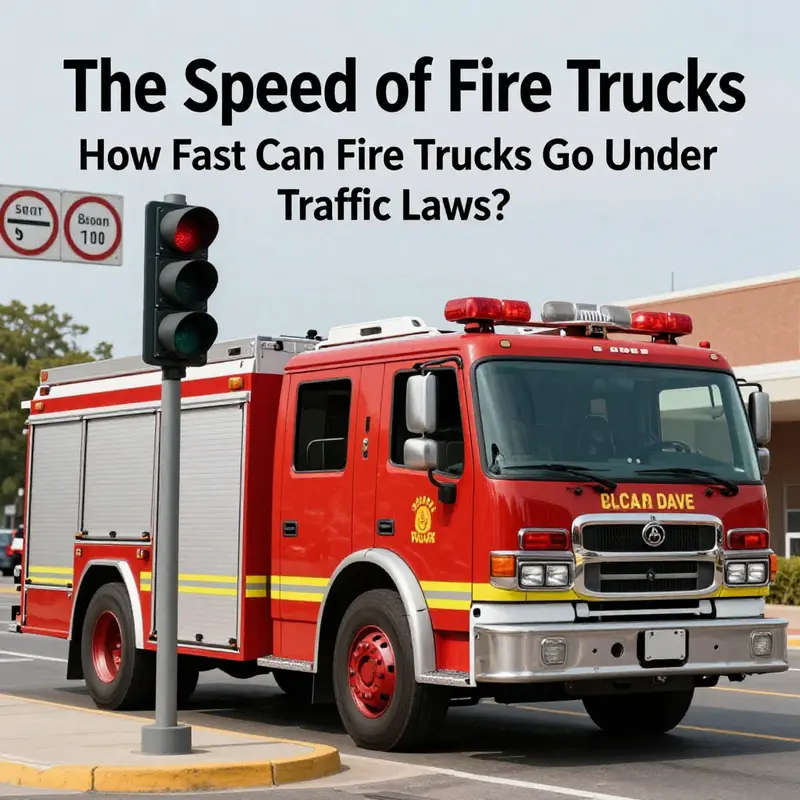
When a fire truck roars into a neighborhood with lights flashing and sirens wailing, speed becomes more than a number on a dial. It is a carefully layered decision, built on a legal framework that grants emergency vehicles a degree of latitude while demanding vigilance and restraint. The central tension is simple but acute: the mission is to arrive quickly, yet the road remains a shared space where the safety of the public and the responders themselves must be protected. The result is a nuanced portrait of speed that blends hard physics with hard rules, where every mile per hour is weighed against time, terrain, traffic, and the unpredictable dance of urban life. In the broadest sense, fire trucks can move faster than posted limits when responding to emergencies, but those limits are not erased; they are temporarily suspended under strict conditions. It is a legal and practical boundary that defines how fast a fire truck can go, and it is rarely a fixed ceiling so much as a set of guardrails guiding the response to its urgent purpose.
Across many jurisdictions, the core concept is emergency conditions. When the lights are on and the siren is audible, a fire department is understood to be in a mode of heightened priority. The law recognizes that the primary objective is to save lives and property, and that the alert state justifies faster movement. Yet this freedom comes with binding obligations. Fire crews must travel with due regard for safety, which means maintaining enough control to avoid creating new hazards on crowded streets. Agencies typically embed this caution in their internal guidelines. Even as they maneuver through intersections and around pedestrians, drivers are expected to balance speed with situational awareness, using lights and sirens to alert others while making space for safe passage. This balancing act is the silent backbone of fast, responsible emergency response.
Consider how this balance plays out in specific legal contexts. In California, the state’s vehicle code explicitly allows emergency vehicles to exceed speed limits and proceed through red lights where necessary for an emergency response. The caveat is clear: they must yield to pedestrians and other vehicles when it is safe to do so. The emphasis here is not a carte blanche to fly through traffic but a conditional permission grounded in safety. In New York, firefighters may also exceed speed limits as long as they do so without endangering life or property. The shared thread is the word “endangering” and the phrase “without endangering life or property,” which acts as a moral and legal compass for drivers who operate under pressure. These examples illuminate a broader pattern: speed is permissible, but it is never absolute. The law recognizes the urgency of the moment while reaffirming that speed cannot substitute for care, coordination, and judgment.
Speed under emergency conditions is not a simple function of light and siren intensity. It is shaped by a constellation of factors that vary from street to street, weather to weather, and call to call. Road conditions immediately constrain velocity; wet asphalt, ice, potholes, or uneven surfaces can dramatically reduce the practical speed a truck can safely maintain. Visibility plays a similar role—glare, darkness, or smoke can render swift acceleration hazardous as well. Traffic density and the behavior of other drivers are unpredictable variables that responders must quickly assess. A clear road in the early hours of dawn may allow faster progress than a congested boulevard at the height of rush hour, where every lane change becomes a calculated risk. The urgency of the situation itself matters. A town-wide fire in one neighborhood demands a different tempo than a smaller, quieter incident in a cul-de-sac. In all cases, the goal remains the same: get to the scene in time to prevent loss of life and minimize damage, while orchestrating movement in a way that reduces the chance of adding new emergencies to an already tense situation.
These considerations are echoed in the day-to-day operations of fire departments, where internal policies translate legal allowances into practical roadcraft. Even with the power to exceed speed limits, crews are trained to drive with measured speed, to anticipate the next cross street or a sudden pedestrian step, and to continually reassess risk as new information arrives from the scene and from nearby responders. The discipline of emergency driving is as important as the vehicle’s mechanical capabilities. It is not merely about how fast the wheels can spin; it is about how fast a crew can reach a scene while maintaining control, communicating clearly, and coordinating with traffic, pedestrians, and other emergency responders. In this way, the legal framework and the operational culture reinforce a shared norm: speed must be purposeful, disciplined, and safe.
The spectrum of vehicle capabilities adds another layer to this picture. Light and medium-fire vehicles, designed for agility and rapid urban response, can typically press toward higher practical speeds in appropriate contexts. They are optimized for quick acceleration, maneuverability, and efficient use of time at traffic signals and narrow streets. Heavier, larger apparatus—tanker configurations or big pumpers—carry substantial weight and dimensions, which translate into conservative speed profiles. The heavier the vehicle, the more its stability and handling are prioritized over peak velocity. Even so, the most specialized and high-performance emergency platforms push the envelope. They are engineered to achieve rapid acceleration and high top-end speeds under controlled circumstances, a critical capability when minutes can determine outcomes. In this context, the modern fleet sits at a crossroads: the capability to go fast exists, but it is cued by the same strict safety calculus that governs all emergency driving.
One often-overlooked but crucial part of the speed story is how this speed is managed within the broader emergency response system. When speed is a strategic asset, command and communication must harmonize with field driving. The coordination of units, the timing of alarms, and the dynamic assessment of risk all contribute to how fast a truck can safely advance toward a scene. This is where the idea of having robust, adaptable command systems becomes indispensable. Traditional wisdom holds that speed without coordination can backfire, creating bottlenecks or compounding dangers. Therefore, agencies invest in training and protocols that emphasize not only how to go fast but how to go fast with precision. The aim is to ensure that when a truck accelerates toward a critical incident, every decision along the way is informed, deliberate, and in service of the mission’s safety as well as its speed. For readers who want to explore how command structures support safe, rapid responses, the discussion of challenges and solutions in fire command systems offers deeper insight into the connective tissue that binds travel speed to on-scene effectiveness: overcoming-challenges-in-fire-command-systems.
As with any complex system, the practical takeaway is not a single number but a nuanced range shaped by context. In real-world practice, the most common picture is that fire trucks operate at speeds that reflect safety as a baseline, with emergency allowances offering a calculated overhead when urgency demands it. The broad ranges indicated in research show that light and medium-duty vehicles are often used for quick urban response, reaching higher nominal speeds when the environment allows. Heavy and large apparatus, by contrast, are generally more restrained, prioritizing stability and safe handling that protects both the crew and the public. Airport fire response vehicles, which function under a somewhat different set of criteria, exemplify how specifications can tilt toward speed without sacrificing crucial control. They often require rapid acceleration to reach a runway or critical incident location, with performance characteristics that emphasize fast start-up and rapid progression to operating speed, even while maintaining regulatory and safety guardrails. In all cases, it is the blend of vehicle capability, regulatory latitude, and on-the-ground conditions that ultimately defines what is possible at any given moment.
The regulatory framework, then, is not a ceiling but a guiding continuum. It permits speed when the situation calls for it, imposes discipline when the situation warrants it, and relies on the professional judgment of firefighters to navigate the gray areas where law and logistics intersect. This chapter has sketched the terrain—the legitimate speed allowances during emergencies, the safety-centered constraints, and the real-world factors that modulate how fast a fire truck can move while performing its essential service. The practical takeaway is clear: speed is a tool, and like any tool, it must be wielded with skill, responsibility, and a thorough understanding of the landscape in which it operates. As we move to the next part of this exploration, the conversation will return to the broader question of how these dynamics interact with public safety, urban design, and the evolving needs of modern fire protection.
External reference: For a detailed legal framework underpinning emergency exemptions to speed limits, see California Vehicle Code – Section 21652, which clarifies when emergency vehicles may exceed speed limits and how other road users should respond: https://leginfo.ca.gov/california/vc/21652.html
Internal link for further context on command and coordination in emergencies: overcoming challenges in fire command systems
Fast, Not Frenzied: Real-World Velocity of Fire Trucks in Emergency Situations
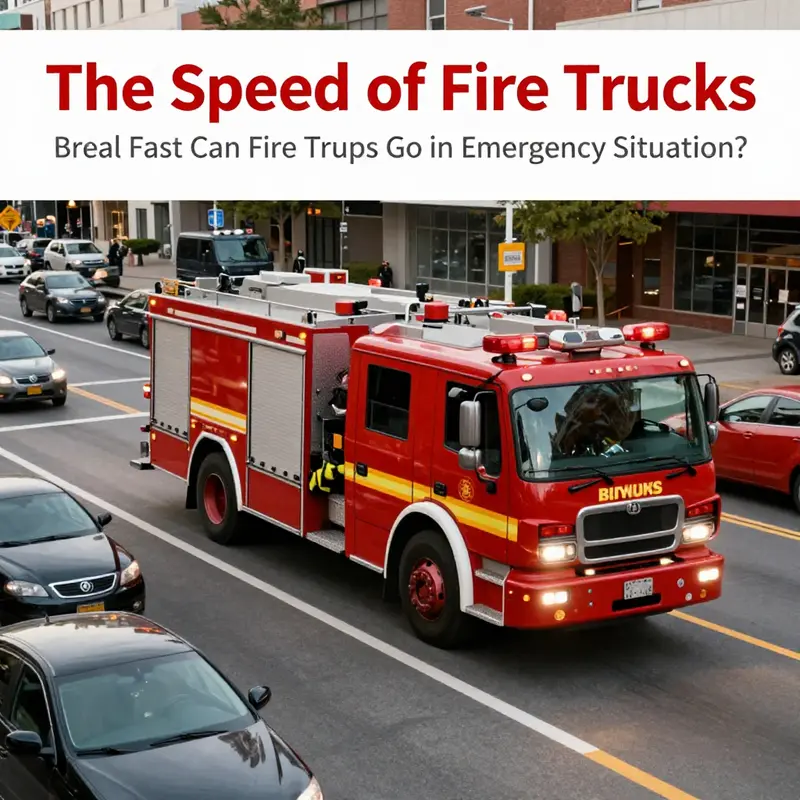
When the siren begins its wail, the clock on the dashboard seems to accelerate. Fire departments must navigate a narrow line between urgency and control, driven by the need to reach the scene quickly while preserving the safety of crew, pedestrians, and other motorists. The question of how fast a fire truck can legally and safely travel is not simply a matter of engine power, but a complex interplay of vehicle class, road design, weather, and human judgment. In the broad spectrum of fire apparatus, speed capabilities vary with size and purpose. Lighter, more agile units built for rapid urban response can push toward upper speeds in the vicinity of 90 to 100 km/h, occasionally edging past if the road is straight and dry and the crew judges the risk as acceptable. Heavier, larger pumpers and water tenders, with their extra weight and longer wheelbase, typically cap around 80 km/h or less, a deliberate choice to keep handling predictable and braking distances within safe margins. The most specialized configurations, designed to deliver both speed and payload, can reach higher velocities on open stretches—still a minority, and always contingent on a safe terrain and a clear path ahead. In open-country corridors or highways, a few high-performance designs may approach or exceed 140 km/h on very favorable surfaces, yet the practical use of such velocity is constrained by stability limits, tire performance, and the structural dynamics of a vehicle carrying hoses, pumps, and protective gear. Even those exceptional cases illustrate a core truth: a fire truck is not a speed machine but a mobile platform engineered for immediate, reliable delivery of equipment and water, with safety as a first-order constraint. Emergency-response speed is further tempered by the realities of station to scene time, dispatch signaling, and the critical need to maintain control through demanding maneuvers. Urban and suburban relays often force a firm speed ceiling. A typical urban response rarely exceeds 65–97 km/h (40–60 mph), and often settles closer to the lower end when traffic density or school zones are a factor. In neighborhoods where pedestrians and crosswalks are frequent, the crew’s attention must shift to sightlines around parked cars, stoplights, and street furniture. The study of curve speed warning systems, completed in 2025, sheds a sharp light on how drivers negotiate the toughest sections. Data from that work show that, when alone, crews may approach curves at speeds that unsettle even well-trained responders. The introduction of a CSWS, however, changes the calculus: drivers reduce speed as they near a bend, apply the brakes more smoothly, and benefit from visual and audible cues that alert them to risk. Importantly, the study notes that this reduction in curve speed does not meaningfully erode response times, because the warnings are designed to integrate with dispatch timing and roadway geometry to preserve overall efficiency. In other words, speed must be managed with intelligent systems that help crews stay within safe margins without sacrificing rapid arrival at the incident. The lesson extends beyond the pedal; it rests on the judgment and training that accompany every emergency run, a judgment refined by crews who practice with realistic simulations and who rely on vehicle dynamics information to calibrate their choices before the wheels even turn toward danger. This balance between speed and safety is also a focus of research into fire command systems, which must translate fast movement into coordinated action on the ground; Overcoming challenges in fire command systems. On urban streets, the architecture of risk imposes another logic: pedestrians, cyclists, bus lanes, and unpredictable vehicle behavior create dynamic obstacles. Even with sirens on, other drivers may not immediately clear the way, so speed must be matched to the volume and rhythm of the street. Traffic signals, road works, and wet pavement can all demand instantaneous speed modulation. The CSWS study emphasized that, with such technology, drivers respond to curve hazards more predictably, reducing the likelihood of abrupt braking or loss of control that might cause a chain reaction. Without such guidance, crews are more prone to hard braking or late lane changes, which not only slow the critical run but also heighten accident risk. It is a sobering reminder that speed is not an end but a means to a higher end: getting the right tools to the right place at the right time, with all personnel intact. In rural or remote settings, especially in wildland-urban interface zones where roads can be uneven and the surface rough, trucks frequently travel at lower speeds, yet their importance is magnified by payload that may include foam concentrates, additional hoses, and heavy rescue gear. In these territories, travel distances stretch, and the need to arrive with equipment ready to engage often takes precedence over chasing the clock. The moral is not to minimize speed but to contextualize it: velocity is a function of the mission, the terrain, and the vehicle’s ability to sustain momentum through varied conditions without compromising stability. The reality is that a truck’s capacity to accelerate after a turn or an uphill grade depends on engine torque, transmission gearing, and how the crew manages weight distribution as the load shifts with every bend. Even under favorable weather, a slick road can transform what feels like a minor curve into a moment of serious loss of control if the driver does not maintain tension in the steering wheel and use the correct braking technique. Across all settings, the practical speed envelope sits above what ordinary traffic would tolerate in normal conditions yet far below the potential top speed of the best street machines. Most responses fall into a corridor—roughly between 70 and 80 km/h in many departments when the siren is active and the best path ahead is straightforward. In more congested urban corridors, the range tightens, and even that mid-80s mark can be unrealistic on a busy street with pedestrians and cyclists. The operator cannot simply step on the accelerator and hope for the best; he or she must constantly interpret the scene, apply the vehicle’s dynamic controls, and anticipate the next turn while the dispatch center tracks time sensitivity and resource availability. The training programs that accompany modern apparatus emphasize payload-aware driving. The crew learns to compensate for the vehicle’s length, the lack of rearward visibility, and the longer stopping distance that comes with heavy equipment. They learn to anticipate how a turn at 60 km/h will feel in a real-world corner and how quickly they must decelerate if the approach angle changes or if a sudden obstruction appears. In effect, speed becomes a disciplined skill rather than an impulsive impulse. Forward-looking departments also rely on technology to expand their safe speed envelope. Anti-lock braking, electronic stability control, and traction management are not mere luxuries; they are required to preserve steering control when a load is perched on a chassis that wants to push wide during a swerve or a rapid lane change. The curve speed warning system is one of several tools that modern crews use to translate high-performance capabilities into reliable, predictable responses. When a driver receives a warning about an upcoming bend, the safest response often involves easing off the accelerator and selecting a more controlled line through the corner rather than forcing a straight-line dash. The study’s takeaway is clear: technology can help crews maintain rhythm and tempo without sacrificing the mission. It is about enabling fast arrival without inviting catastrophe. Finally, a note on scope and the bigger picture. The relationship between speed and safety is not simply about the chassis or the engine; it is about coordination among dispatch, on-scene officers, and the crew. A fast truck is as dangerous as a slow one if the chain of command is not synchronized, if traffic flow is not anticipated, or if the incident command system lacks situational awareness. The same research that highlights the value of CSWS also underscores the importance of training, standard operating procedures, and well-designed urban infrastructure—considerations that affect every run from the moment the alarm calls to the moment the last hose is hung. For further technical detail about performance metrics and material properties in modern apparatus, readers may consult the Fire Truck Apparatus Guide by NFPA. External resource: https://www.nfpa.org/News-and-Research/Research-and-Statistics/Fire-Truck-Apparatus-Guide.
Fast Forward on the Frontline: How Modern Innovations Redefine Fire Truck Speed
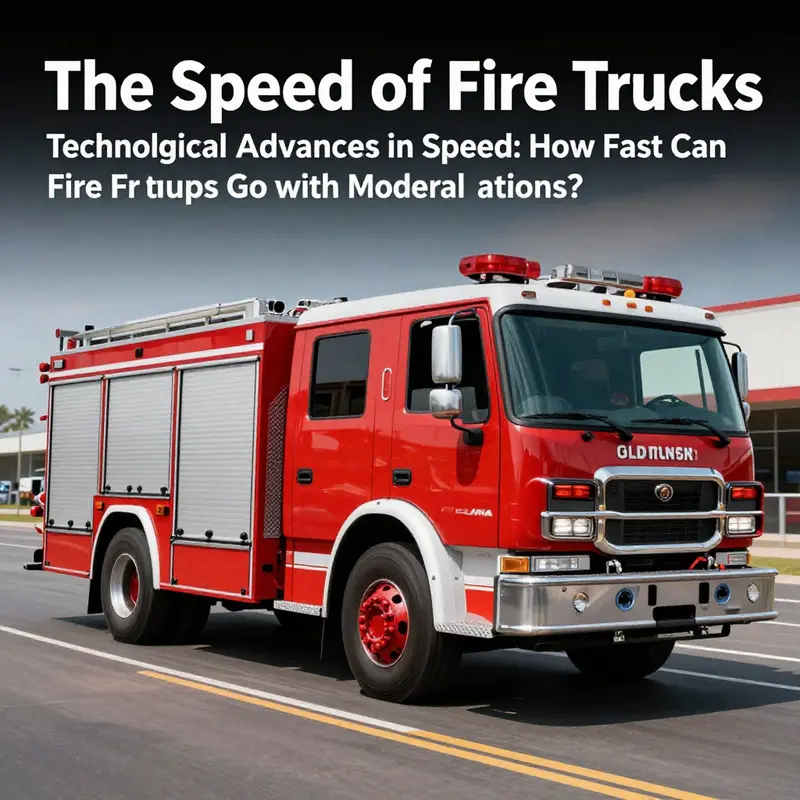
When a fire call bursts into a city street, every fraction of a second matters. Speed, in this arena, is not merely a matter of top velocity but of acceleration, reliability, and the ability to reach a site with the right mix of power, stability, and control. The research surrounding how fast a fire truck can go reveals a spectrum influenced by vehicle class, mission profile, and the choreography of a coordinated response. Light and urban-focused apparatuses prize nimbleness and rapid launch, and they commonly operate in the 60 to 80 km/h range on real streets, with rescue variants edging toward slightly higher figures when clearance and road geometry permit. On the highway, heavier units designed to move large amounts of water, equipment, and personnel face a different calculus. Their mass and size do not simply dampen speed; they demand careful balance to maintain braking efficiency, steering precision, and tire contact with the road. In practice, water tankers and large pumpers tend to hover around 80 to 100 km/h, depending on a vehicle’s configuration and the demands of a particular response. These numbers are not just about thrill or bragging rights; they reflect a design philosophy that prioritizes stability, braking performance, and the perception of control under siren and lights.
What transforms these numbers from variable to reliable capability is a convergence of engineering choices and connected systems that have taken a city’s emergency response from a purely mechanical problem to a coordinated, data-driven operation. The most visible evolution is in hybrid power systems. By introducing electric motors to assist with acceleration, particularly during the critical initial launch phase, firefighters gain faster response times without sacrificing the heavy-lifting that a pumper or tanker must perform once in motion. The electric assist reduces the peak strain on a large diesel engine during the moments of greatest demand. It helps the vehicle achieve a brisker start in dense urban corridors where stoplights, pedestrian activity, and narrow lanes complicate a straight run. Yet, the aim is not to chase highway velocities through a congested city; it is to reach the incident point as quickly and smoothly as possible while preserving maneuverability and the ability to carry essential equipment. This synergy of combustion and electric propulsion is paired with advanced multi-gear transmission systems. These transmissions are designed to maintain optimal engine performance across a wide spectrum of speeds and load conditions. At low speeds, strong torque ensures a confident launch from a standstill or a slow crawl through a crowded block. As the vehicle transitions to highway pacing, the gears harmonize with the engine’s torque curve to deliver efficient cruising. The effect is a more seamless response, where acceleration feels deliberate rather than abrupt, and fuel and energy management are more predictable in high-stress moments.
Beyond propulsion and gearing, the modern fire truck increasingly relies on intelligent routing and real-time data to translate capability into practical speed. Urban streets are dynamic ecosystems, and a vehicle that can navigate them safely must anticipate and adapt to the flow of traffic, incidents, and road conditions. Real-time traffic analysis, GPS-guided route optimization, and dispatch integration allow an emergency vehicle to chart the fastest path to an incident, sometimes choosing routes that minimize exposure to heavy congestion or sharp turns that could destabilize a heavily laden chassis. This is not mere geeky add-on technology; it changes the fundamental rate at which a call is answered and a crew is deployed. When deployed correctly, these smart systems can shave precious seconds from a response by selecting a path that keeps the siren’s impact on surrounding traffic as humane as possible while preserving the urgency of the mission. The narrative shifts from a driver chasing a top speed to a system guiding a formidable machine along a corridor of least resistance, around obstacles, and toward the point of need with a clarity that would have been unimaginable a generation ago.
Aerial ladder trucks, with their own specialized demands, illustrate how speed remains tethered to weight. Ladders and booms contribute substantial mass, and the speed profile becomes a careful compromise. Vehicles under roughly 6,000 kilograms can reach speeds above 100 km/h, a figure that emphasizes the agility required for rapid deployment of vertical reach in tight urban settings. Heavier aerial platforms, which can approach 12,000 kilograms, are designed to maintain at least 90 km/h to ensure they can position themselves quickly while still preserving the stability needed when fully extended. The takeaway is simple: speed and reach are not independent variables but interacting constraints shaped by payload, geometry, and the physics of motion.
In the realm of specialized and high-performance models, discussions often float toward the edge of possibility. Experimental concepts and prototype work tease the imagination with headlines about very high speeds or novel propulsion ideas. Some of these developments flirt with speeds that would redefine the scale of an emergency response, even approaching extraordinary numbers like 700 km/h in theoretical or research-only contexts. These figures, while fascinating to engineers and policymakers, lie outside the realm of practical field deployment. The current state of practice emphasizes reliability, safety, and the ability to respond promptly and effectively to emergencies rather than chasing unattainable velocity. The reality is that dependable performance comes from a layered approach: robust propulsion options, precise transmission control, responsive braking systems, and a digital framework that harmonizes every part of the vehicle with the real-world conditions it will face.
The practical implications of this technology mix are not only about raw speed. They are about how speed translates into life-saving outcomes. Faster acceleration and smarter routing reduce the time it takes to reach a scene, which in turn increases the window for controlling a fire, mitigating hazard, and preserving life and property. Yet the operating environment reminds us that speed must be tempered by safety. Road quality, weather, daylight, and urban density all shape how fast a fire truck can legally and responsibly travel. Firefighters must balance urgency with the need to avoid accidents that could complicate a response or endanger the public. The constraints are not merely regulatory; they are ethical and operational. Training, vehicle maintenance, and clear communication protocols all intersect with speed to ensure that a rapid response does not become a reckless one. The modern system thus becomes a mesh of smart software, reliable mechanicals, and disciplined human practice.
In this ecosystem, the trail from concept to practice is navigated with standards and governance. Official guidelines and performance standards—such as those published by national safety and fire protection bodies—frame what is permissible and expected in the field. These standards ensure that innovations in propulsion, transmission, and routing integrate safely with the broader mission of emergency services. They also anchor the improvement cycle in measurable outcomes, so that a faster top speed does not come at the expense of braking distance, stability, or handling. The chain from research to real-world impact is sustained by ongoing validation, training, and feedback from the frontline. The result is a steady, disciplined uplift: vehicles that can reach the point of need more quickly, guided by data, supported by robust mechanics, and driven by the courage and preparedness of the crews who operate them.
For readers who want to explore ideas beyond the daily practice, there are avenues to consider that anchor this discussion in accessible, ongoing conversations about the profession. One such resource is the Fire Truck Blog, which curates discourse around evolving technologies, case studies, and field experiences. It offers a lens into how departments are integrating new systems and how those changes ripple through response times and operations. It provides a practical link for readers seeking real-world context. Fire Truck Blog
As the street becomes the stage for rapid response, every innovation contributes to a clearer, faster path to the incident. Yet speed itself remains a means to a larger end: protecting communities and saving lives with precision and care. The future of fire truck speed will likely continue to hinge on integrated power trains that blend electric assist with traditional propulsion, intelligent transmissions that tailor performance to the task at hand, and a networked ecosystem that uses real-time data to navigate the urban landscape with greater confidence. Deepening this capability will require not only engineering ingenuity but also rigorous adherence to safety standards, thoughtful urban planning, and sustained investment in training. The conversation about speed is, in essence, a conversation about resilience: how quickly we can mobilize the right resources, how effectively we can reach those in need, and how carefully we can balance velocity with the responsibility that comes with maneuvering large, powerful machines through living, crowded environments.
Ultimately, the question of how fast fire trucks can go is answered not by a single metric but by a composite of speed, control, and purpose. It is a dynamic balance, achieved through hybrid power systems, sophisticated gearings, smart routing, and disciplined practice. The numbers offer a frame—urban speeds in the sixties to eighties, highway-like pace for larger rigs, and higher aspirational figures for lighter or specialized aerial platforms—yet the true measure lies in the ability to transform speed into effective action on the ground. In a world where every moment counts, modern innovations provide the leverage that allows emergency responders to reach scenes sooner, deploy the right tools faster, and move with a confidence that comes from a fusion of technology, training, and shared purpose. For researchers, policy-makers, and practitioners alike, the continuing challenge is to expand that reach while preserving the safety and integrity of the response, so that speed becomes not a thrill of velocity but a deliberate, dependable capability on the frontlines. External reference for standards and further reading can be found at https://www.nfpa.org/.
Final thoughts
Fire trucks play a crucial role in emergency services, and their speed is intricately linked to their design, regulatory environments, and real-world challenges. Understanding the factors that influence how fast these vital vehicles can go helps us appreciate the complexities involved in firefighting. As technology continues to evolve, so too will the capabilities of fire trucks, ensuring they remain effective and efficient in protecting lives and properties throughout our communities. Embracing innovation will undoubtedly lead to improved performance and response times, making our firefighting heroes even more equipped to tackle emergencies swiftly.