
Understanding how much water a fire truck can carry is crucial for anyone engaged with firefighting—be it enthusiasts, aspiring professionals, or seasoned experts. Fire trucks come in various shapes and sizes, tailored for unique operational needs and terrain challenges. From the nimble small trucks cruising residential streets to the robust water tankers tackling large-scale emergencies, their water capacities significantly vary. In the following chapters, we will explore the water holding capabilities of small, medium, and large fire trucks. This journey illustrates the critical role each type plays in firefighting, enriching our appreciation for these incredible machines and the life-saving missions they embark on.
Small But Steady: The Water Carry of a Compact Fire Engine and Its Implications for Early Firefighting
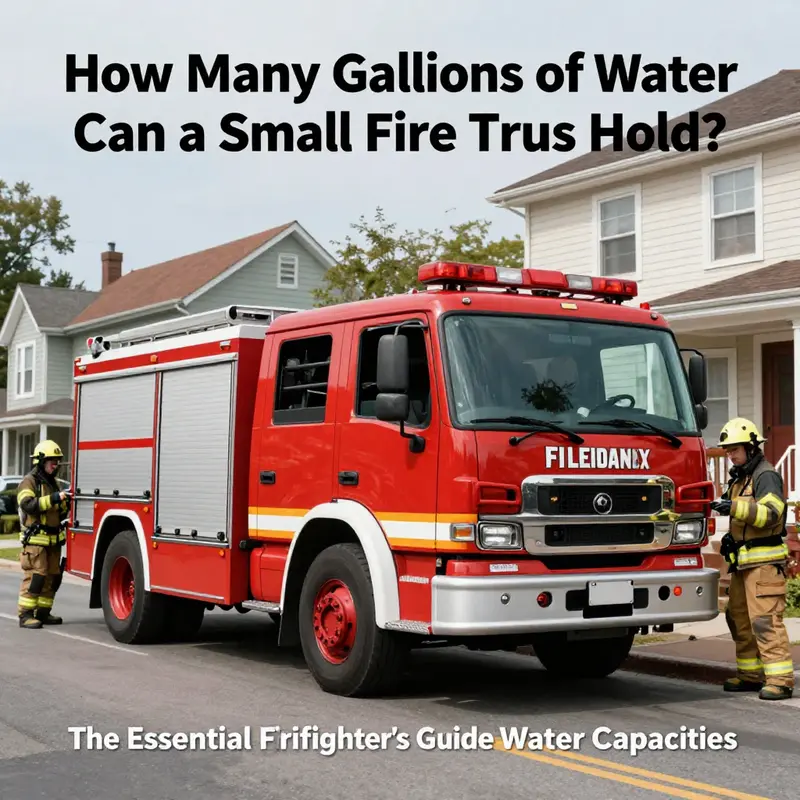
When people ask how many gallons of water a small fire truck can hold, they are touching a question that sits at the crossroads of engineering, tactics, and urban logistics. Water is the lifeblood of firefighting in the first minutes of an incident. Yet the amount aboard a vehicle depends as much on its mission profile as on its chassis. In the context of a small fire truck, the official picture is a range rather than a single number: somewhere between five hundred liters and three thousand liters of water, translating to roughly one hundred thirty-two to seven hundred ninety-three gallons. This span matters because it marks the boundary between a nimble, fast-to-arrive response unit and a more capable vehicle that can press the fire lines a bit longer before larger engines take over. To understand why the capacity sits where it does, we must look at design goals, weight constraints, and real-world tactics that shape how small engines are used in everyday firefighting.
A quick conversion helps anchor the discussion. One liter of water weighs about one kilogram. Therefore, five hundred liters equate to about five hundred kilograms of water—roughly eleven hundred pounds. Three thousand liters amount to about three thousand kilograms, or nearly six thousand six hundred pounds. When you add the weight of the truck itself, its crew, hoses, tools, and pumps, the total mass rises quickly. Weight is not just a number on a spec sheet; it directly affects acceleration, braking, cornering, and tire wear. The heavier the water load, the more each movement becomes a controlled negotiation between momentum and stability. This is one reason why many small fire trucks deliberately cap their water tanks lower than medium or large engines. The aim is not to punish fire suppression with a light load but to preserve maneuverability and payload capacity for equipment and crew.
The GB 7956.1-2014 national standard from China, which defines the range for small fire trucks, reflects these practical constraints. It places a ceiling on water carrying capacity for smaller platforms while acknowledging that the precise figure hinges on the vehicle’s intended role. In practice, a compact unit destined for dense urban districts or residential neighborhoods prioritizes rapid response and surfacing near hydrants. Its water tank might sit closer to five hundred liters, enough for a quick knockdown of initial flames and to create a line of defense until a larger unit arrives. In contrast, a slightly larger or more purpose-built small truck could approach three thousand liters, enabling a longer sustained attack before external water supply is secured. The distinction is not glossy marketing; it is a thoughtful balance among speed, reach, and the ability to carry essential equipment along with water.
To picture how this plays out in the field, imagine a typical urban alleyway incident. A small truck with a modest water load wheels up, its pump surging to life, and its crew deploying pre-connected handlines. The immediate objective is to create a defensive wedge around the fire and prevent it from advancing toward nearby structures. With a tank near five hundred liters, responders rely on their lines to pull water from a hydrant swiftly or to draft from a nearby source, if hydrants are not immediately accessible. If the incident escalates or the fire involves larger volumes of combustible material, the crew must transition to larger apparatus. The water on board is not a stand-alone solution; it is the first tool in a larger toolbox, a bridge to larger resources that can sustain suppression efforts beyond the initial minutes.
This is where the design philosophy behind small engines becomes clear. They are not just scaled-down versions of larger apparatus; they are specialized tools optimized for speed, manueverability, and rapid deployment. In many municipal configurations, a fleet includes a mix: several small engines for quick hits and tight streets, paired with medium and large pumpers for longer battles and bigger volumes of water. The small units provide a front line that can reach a scene quickly, begin cooling and containment, and then call in support. Their limited water capacity is actually an advantage when the objective is rapid intake, assessment, and the establishment of a perimeter before the scene becomes too volatile to manage with a rapid, light footprint. In this sense, capacity is a design choice as much as a metric—an expression of tactical philosophy.
The numbers tell a story, but they do not tell the whole one. The true measure of a small fire truck’s effectiveness is how its water capacity integrates with pumping capacity and the broader water supply network. A compact unit might have a pump capable of delivering several hundred gallons per minute, enough to maintain a steady stream while other actions unfold: forcing doors, creating safety lines, and laying down a protective water curtain to keep fire from spreading to unburned areas. The speed at which the crew can deploy hoselines and pre-connect appliances is equally critical. A high tank capacity without a proportionate pump rate offers limited utility in a fast-moving blaze; conversely, a high pump rate with too little water onboard can lead to frequent water replenishment pauses and a slower suppression progress.
The tactical implications of water capacity extend into the procedural world of firefighting as well. Initial attack strategies rely on the concept of a quick, controlled knockdown: the goal is to lower flame impingement on critical exposures and to reduce the heat load so that victims and firefighters can operate safely. In many urban scenarios, this means establishing a water supply from a hydrant or other external source while the crew assesses the scene and coordinates with incoming units. A small engine with a middle-range tank—closer to the upper end of the five hundred to three thousand liter spectrum—can maintain a more aggressive initial attack while awaiting reinforcement. In remote or rural settings, where hydrants may be sparse, the same small unit can rely on drafting or the use of tank-shade operations with additional water carried on trucks further back in the response chain. Either way, the water on board is a starting point, not a terminal solution.
The nuance behind the numbers also reveals why a single specification rarely suffices for a fleet. Fire departments weigh several interlocking factors when selecting a small fire truck: street geometry, typical incident types, and the prevailing water infrastructure. Narrow streets, tight corners, or low-clearance alleys may tilt the preference toward smaller dimensions and lighter water loads to preserve maneuverability. Conversely, neighborhoods with higher fire risk or limited hydrant density may justify a slightly larger water reserve on a small platform, recognizing that the extra kilograms must still be manageable within the vehicle’s overall weight budget. The end result is a spectrum rather than a single target: a family of small engines designed to cover a range of urban and peri-urban environments. This variability, far from being an obstacle, actually reflects a deliberate strategy to tailor equipment to local conditions while preserving the broader capability of the firefighting fleet.
Another layer worth considering is the evolution of firefighting tactics alongside tank capacity. In the earliest moments of a fire, the priority is to establish a water shield and to prevent backdraft or flashover from propagating. A compact unit with enough water to fiercely blanket a couple of ignition points can disrupt the fire’s growth curve, enabling firefighters to reach hot zones with less risk. As the incident develops, the operations pivot to laddering, ventilation, and eventual overhaul, with larger engines and water tenders arriving to sustain suppression over longer durations. In this dynamic, the small engine is not a mere filler for a larger deficit; it is the frontline, the machine that buys precious time and creates space for a coordinated, multi-vehicle response.
This is precisely why the literature and standards recognize a spectrum rather than a fixed figure for small fire trucks. The Chinese standard’s range embodies the professional judgment that varies with context. It acknowledges that the on-board water is a resource within a larger system, and that the value of a small engine lies not only in its tank’s capacity but in how quickly and effectively it can deliver water to point of need. When a truck with five hundred liters arrives, the crew has a tool to initiate suppression and to begin the complicated choreography of incident command. When a truck approaches three thousand liters, it can sustain efforts longer, reduce the number of separate water sources required, and contribute to larger, more continuous attack lines—an advantage when time and space are at a premium.
As readers of this article will note, the broader landscape of fire apparatus includes many different configurations and mission profiles. The numbers for small engines are not meant to set a universal standard for every city or every country. They are a snapshot of a tested range under specific guidelines that reflect real-world needs and constraints. The take-away is straightforward: the water capacity of a small fire truck is a meaningful, highly contextual metric. It informs tactics, influences vehicle design choices, and shapes how departments stage their response. It also underscores a broader truth about firefighting: success does not depend on a single metric but on a well-orchestrated sequence of actions, in which water is the central tool, and timing is the critical variable.
For practitioners, this means recognizing that the smallest engine in the fleet can still play a pivotal role. It can be the spark that holds a line, the first force against a spreading fire, and the early signal that more capable units are en route. For planners and designers, it means that every liter loaded into a compact chassis must justify its weight through improved response times, better access to critical interiors, and a reliable platform that remains controllable under load. The interdependence of tank size, pump performance, hose layout, and crew efficiency becomes a living system, and the figures on the tank are just one part of a complicated, high-stakes equation.
For readers who want to tie these ideas back to the practicalities of learning and engagement, consider exploring resources that discuss the daily realities behind the equipment. The Fire Truck Blog offers accessible discussions on equipment choices, maintenance, and the realities of fighting fires with diverse fleets. You can visit the blog to see how departments translate abstract specifications into on-the-ground decisions that protect communities. (Fire Truck Blog: https://firetruck.space/blog/)
Beyond the immediate scope of the small engine, it is useful to situate these capacities within the larger ecosystem of firefighting resources. Medium and large fire trucks, often holding between three thousand and twenty thousand liters, extend the reach of initial suppression. They bring to bear higher water volumes, greater pumping capacity, and the ability to lay long-distance water supply lines. Some specialized or remote supply vehicles can carry ten times as much water as a compact unit, designed to sustain operations in areas with limited access to hydrants or in disaster scenarios where rapid, mobile water logistics become essential. The difference between these classes is not simply a matter of scale; it is a reflection of tactical philosophy, terrain, and the likelihood that responders can rely on a steady, local water supply or must build one from the ground up.
In the end, the question of how many gallons a small fire truck can hold is answered not by a single number but by an interplay of design, role, and environment. The five-hundred-to-three-thousand-liter range captures the practical choices that compact engines embody: speed, agility, and just enough water to start the fight and buy responders time while larger units and water supply networks take their place on the stage. It is a reminder that every liter of water is weighed against the cost of weight, the need for space, and the imperative to arrive fast, established to protect life and property. The best small engines are the ones whose water capacity is matched to their mission—capable enough to begin the work, but light and nimble enough to reach the scene quickly and reposition as the fire evolves.
External resource on standards and capacities can provide additional context for readers who want the official benchmarks behind these numbers. For precise national standard references, consult the GB 7956.1-2014 Fire Trucks National Standard. This document codifies the expectations for water tank sizes in various truck classes and emphasizes how these figures interact with other critical system components to deliver effective firefighting performance. https://std.samr.gov.cn/gb/search/gb_detail?gbCode=GB%207956.1-2014
Capacity Under Pressure: How Many Gallons Does a Medium Fire Truck Carry—and Why It Matters
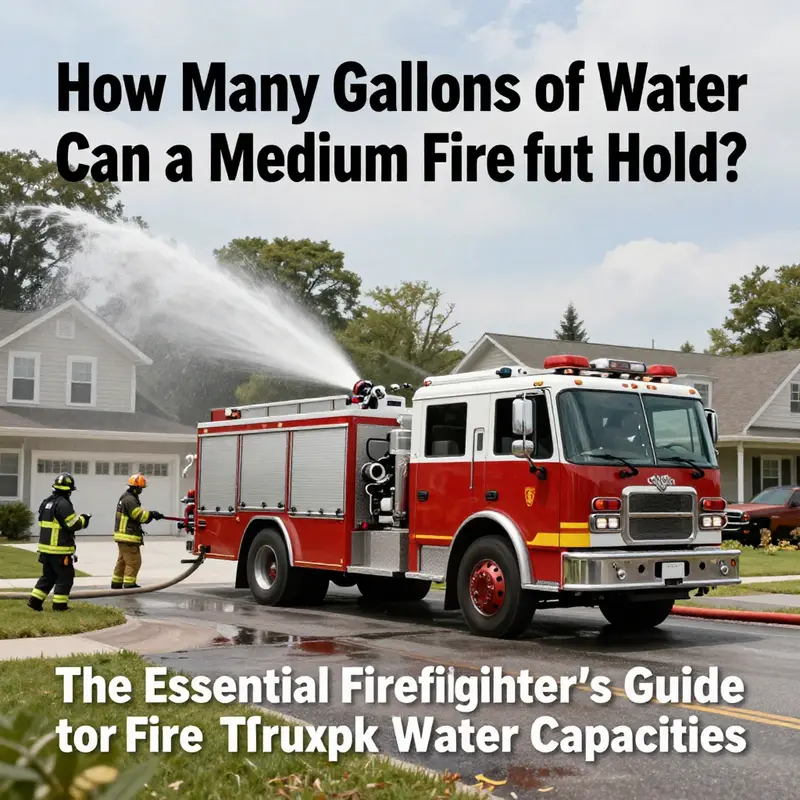
When a fire truck screeches into a scene, the immediate question that often surfaces in the minds of onlookers is practical and almost symbolic at once: how much water does this machine actually carry? The answer, surprisingly, is not a single number but a spectrum that reflects a unit’s role, its design, and the firefighting strategy it is meant to support. In the world of fire service logistics, a medium fire truck sits at a crucial junction. It is large enough to tackle a significant blaze, yet compact enough to maneuver through urban streets and rural lanes alike. Its water tank represents a deliberate balance between carry capacity and mobility, a balance that can shape what happens in the first critical minutes after ignition. The capacity of these mid-sized workhorses generally falls in a range that makes them reliable for initial suppression, reassures departments facing budget constraints, and complements the water supply strategies that teams rely on when hydrants are scarce or far away.
To frame this discussion with precision, a typical medium fire truck carries water in a range that sits between roughly 1,000 and 3,000 gallons. This bracket is not arbitrary; it reflects the practical realities of urban and rural deployments where these vehicles are used. On the one hand, 1,000 gallons is enough to begin a controlled attack on a small to midsize fire, especially when the incident is discovered early and access is straightforward. On the other hand, 3,000 gallons provide a more comfortable cushion as firefighters work to establish a steady water supply while larger units arrive or while hydrants are identified and connected. The mid-point of this range—around 1,500 gallons—often represents a common configuration for many mid-sized firefighting fleets. It provides a workable compromise: a tank large enough to initiate effective suppression without sacrificing too much in the way of maneuverability or pump responsiveness.
Within this framework, the exact capacity of a medium truck depends on several intertwined design choices. The tank size is the most obvious, but it sits alongside the chassis architecture, the pump’s capability, and the supplementary systems that a department chooses to install. A typical mid-sized unit may be built on a versatile chassis designed for urban and rural use alike, one that can be paired with a pump capable of delivering water at a rapid rate when the nozzle is opened. Many of these vehicles also incorporate foam systems that blend foam concentrate with water to expand the fire-suppressing effect, particularly on fuel or mixed-composition fires where plain water alone may not suffice. A fire monitor—a high-velocity nozzle on a swiveling platform—extends reach and allows a single operator to direct a powerful stream toward the heart of the blaze. In several configurations, a monitor might offer a range of at least 45 meters, enabling controlled, long-distance application without requiring the crew to place themselves within the danger zone. These features, when combined with a robust engine, contribute to the truck’s overall effectiveness and safety profile.
A concrete example helps translate abstract numbers into real-world implications. Consider a mid-sized, 1,500-gallon water tank mounted on a standard 4×2 or similarly versatile chassis. In terms of power, such a unit is frequently equipped with a reasonably sized internal combustion engine—commonly around 190 horsepower in configurations designed for mixed urban-suburban use. This power is not exclusively about speed; it relates to the truck’s ability to sustain a strong pump flow, maneuver through traffic, and carry a full load of water while negotiating steep grades or rough terrain. The water tank itself becomes a mobile reservoir that the crew can rely on in the opening moments of a fire. The 1,500 gallons translate into thousands of pounds of water, each gallon weighing about 8.34 pounds. It is easy to see how even a mid-sized unit can amass a substantial load: 1,500 gallons sit in the tank and contribute roughly 12,500 pounds of water weight. That weight is not merely a statistic; it affects vehicle handling, acceleration, braking, and the confidence of the operator as the apparatus navigates tight corners or uneven surfaces. The crew must account for traction, braking distance, and the risk of overloading axles when the tank is full, just as they must consider the potential for water surge when the vehicle accelerates or decelerates.
The question of capacity also intertwines with firefighting strategy on the ground. A medium truck with a 1,000 to 3,000-gallon tank is typically deployed for initial suppression or as a second line of attack when the first engine arrives with more water and equipment. In a small-to-mid-sized fire scenario, this truck can lay a solid foundation—laying supply lines, pulling handlines, and applying water where the flames are most intense while awaiting larger, more persistent resources. In larger urban structures or more complicated incidents, the same truck may be relied upon to establish a quick knockdown, protect exposures, or perform defensive operations as part of a broader coordinated effort. Its cargo capacity shapes the choice of tactics. If hydrants are nearby and the crew can swiftly connect to a municipal water supply, the truck’s tank can act as a temporary buffer, delivering steady suppression while hydrants fill the gap. If hydrants are scarce, the vehicle’s capacity becomes part of a larger water-shuttle strategy, in which tankers or remote supply units transport water from distant sources to a staging area and then transfer it to the local units.
This interplay between tank capacity and strategy is not merely academic. When a fire chief and the incident commander evaluate a scene, they weigh the available water against the fire’s performance and growth, the building’s construction features, wind conditions, and the proximity of other units. A mid-sized engine with a 1,500-gallon tank might be the first on the scene to hit the flames with a solid flow, while the nearby larger engine delivers additional water through longer lines and higher flows. The outcome can hinge on those few thousand gallons—whether they arrive in a moment of urgent need or require a few extra minutes to be transferred through hydrants or shuttle operations. In practice, that translates into faster knockdown, reduced exposure for firefighters, and a more controlled escalation of resources as the incident evolves.
The chassis and the tank are not the only pieces that influence performance. A medium truck’s pump capability, though not quantified here in precise gallons-per-minute terms, determines the rate at which water is available at the nozzle. A higher pump capacity means more water can reach the fire in a shorter time, which matters when the flames are aggressively advancing and the structure is at risk. At the same time, the tank must be robust enough to withstand the dynamic forces of pump operation, water surge, and vehicle motion. The foam system adds another layer of complexity: foam can improve penetration into hidden spaces or on certain fuels, but it also adds to the weight, equipment complexity, and maintenance considerations.
In the broader landscape of firefighting apparatus, the medium truck occupies a middle ground between small, highly maneuverable units and large, bulk-water carriers. Small trucks excel in tight spaces and rapid response, but their water capacity may be insufficient for substantial fires without external support. Large water tenders—the specialized, remote-supply vehicles mentioned in many departments—provide enormous volumes of water on scene but are slower to deploy and physically larger to maneuver. A well-planned fleet uses the medium truck as a linchpin: it can push into the heart of a developing fire, begin suppression, and bridge the supply gap while the larger and remote units come up to speed. This multi-tier approach to water supply is a common feature of modern firefighting operations.
The practical implications of a 1,500-gallon figure are also visible when considering the realities of maintenance, deployment, and aging infrastructure. In regions with aging hydrant systems or long travel distances between water points, departments may favor larger tanks or supplementary water tenders, recognizing that time lost waiting for water is time lost in suppressing the fire. Conversely, in dense urban cores where maneuverability is at a premium and streets may be narrow or heavily trafficked, a slightly smaller tank that preserves acceleration and cornering performance can be a deliberate, strategic choice. In both cases, the mid-sized tank’s capacity remains a core determinant of how a unit is tasked on the fire ground and how it interacts with other units and water sources. It is this synergy—the combination of tank size, pump capability, foam and monitor options, and chassis design—that defines the practical utility of a medium fire truck on any given call.
To give readers a sense of how these numbers translate into real-world equipment, consider how a typical medium unit might be equipped for a variety of tasks. A 1,500-gallon tank on a versatile chassis can be paired with a capable pump and a monitor that allows the operator to manage a long-reach stream from a relatively safe position. The crew can set up a water relay, connecting to a hydrant further away and pumping water through supply lines to a rear or front discharge. They can also utilize a foam system for mixed-rate suppression on specific fire types, and they can adapt the setup to the building’s layout and the fire’s behavior. The result is a flexible tool that can handle a range of scenarios while staying within the operational envelope of a mid-sized apparatus. These configurations, while not universal, illustrate how a single capacity figure—1,500 gallons—can be the anchor for a suite of tactical choices.
For readers who are curious about how the market currently interprets and provisions these mid-sized machines, there is a marketplace context to explore. The available configurations show a spectrum of customization. Some departments opt for slightly larger tank capacities to extend suppression time in the absence of hydrants, while others prioritize compact form factors to improve response times in crowded streets. In all cases, the underlying principle remains consistent: water capacity is a fundamental constraint that shapes the fire attack plan, dictates how quickly a team can begin suppression, and influences how much external support will be required to complete the job. The responsibility rests not only on the shoulders of the firefighters who operate the truck but also on the engineers and manufacturers who must balance weight, space, and safety with performance and reliability. And while numbers provide a framework, the skill, teamwork, and situational awareness of the crew ultimately determine the outcome on the ground.
As you trace the contours of capacity, it becomes clear that the question—how many gallons can a medium fire truck hold?—is not simply about a tank’s capacity in isolation. It is about how that capacity interacts with the urban fabric, the incident’s timing, and the evolving flow of water across a scene. A medium unit with a 1,000-to-3,000-gallon range embodies a pragmatic approach to firefighting—one that prioritizes rapid access to water, reliable delivery, and seamless coordination with other units and water sources. This approach respects the realities of modern fire behavior, the built environment, and the logistical complexities of emergency response. It also echoes a broader truth: the value of a fire engine lies not only in how much water it carries, but in how effectively that water is deployed, managed, and supplemented as the incident unfolds.
For readers who want to situate this discussion within a broader procurement or fleet-planning context, it’s helpful to view capacity not as a static statistic but as a dynamic parameter that informs choices about equipment mix, training, and maintenance. Fleet managers weigh maintenance costs, spare parts availability, and the long-term life-cycle of tanks against the immediate tactical needs of their communities. They consider the differences in terrain, climate, and fire risk, as well as the anticipated evolution of water supply technologies, such as more efficient monitors, faster hydrant networks, or the emergence of new pumping and foam solutions. In this way, the precise capacity of a medium truck becomes part of a larger conversation about resilience, readiness, and the ability to respond effectively to a rotating roster of threats—from kitchen fires to high-rise incidents, from wildland margins to industrial complexes.
For those following the topic closely, a practical takeaway emerges: if you are evaluating a medium fire truck for a department, you should start with the mission profile. Ask where the truck will be expected to operate, what water sources are closest, and how the unit will integrate with larger engines and remote supply assets. Then translate those needs into a tank size that supports the expected flow while preserving maneuverability. In many communities, 1,500 gallons is a meaningful reference point—large enough to provide a solid initial attack and small enough to keep the vehicle nimble. If the mission calls for longer suppression periods without hydrants nearby, a larger tank or a planned water shuttle scheme could be justified. If the need is rapid response in tight streets, a smaller tank with strong pump performance and reliable support from nearby units could be the wiser choice.
Engaging with the evolving market, with its spectrum of configurations and options, often leads departments to consider secondary sources of water as bridges rather than replacements. The concept of a water supply network on the ground—hydrants, mobile water supply apparatus, and interagency coordination—becomes a critical extension of the vehicle’s inherent capacity. In practice, that means the tank’s gallons are not simply a standalone attribute; they are an input into a larger, collaborative system designed to maximize efficiency, safety, and effectiveness on scene. The medium fire truck thus functions not as a single tool but as a node within a broader network of equipment, crews, and procedures designed to bring water to the fire in the most direct and controlled way possible.
If you want to explore current options in the market, you can investigate available configurations and procurement pages that discuss mid-sized firefighting platforms. For readers seeking a sense of how these machines are positioned in the market today, the topic is anchored in the broader ecosystem of fire apparatus for sale, with multiple variants and customization paths that reflect regional needs and budget realities. This is not only about the tank; it is about the entire package—tank, pump, foam system, monitor, chassis, and the after-sales support that ensures those components function reliably when called upon. The dialogue between capacity, capability, and cost continues to evolve as cities and towns recalibrate their firefighting strategies to accommodate changing risk profiles, population growth, and infrastructure investments.
The practical implications of understanding the 1,000 to 3,000-gallon range for medium trucks extend beyond the immediate fire scene. Fire districts and municipalities use these figures as benchmarks when planning response times, deployment patterns, and mutual-aid agreements. A 1,500-gallon mid-size unit offers a reasonable compromise that supports rapid arrival and effective early suppression, while still allowing for a well-coordinated handoff to larger resources as the incident escalates. This approach aligns with a philosophy that emphasizes modularity and scalability: the ability to adapt on the ground as the fire grows or recedes, the ability to connect to external water sources when needed, and the capacity to augment the initial attack with additional tanks and larger pumps as the situation dictates.
For readers interested in the practical, on-the-ground realities of a mid-sized water tank, consider this picture: a crew arrives, hooks up to a hydrant or begins water shuttle operations, and begins applying water through a handline or a monitor while other units establish a longer-term water supply. The water in the tank is not simply a comestible resource; it is a strategic asset that buys time, enables rescue operations in the building’s interior, and helps prevent the fire from expanding to adjacent rooms or floors. The balance between capacity and maneuverability means that the truck can operate in a variety of settings—from a narrow street in a dense neighborhood to a rural lane that winds toward a distant hydrant. In every scenario, the tank’s capacity interacts with the crew’s decisions, the fire’s behavior, and the scene’s overall dynamics to shape the outcome.
In closing this reflection on capacity, it is worth returning to the broader theme of the article: how many gallons can a fire truck hold? For the medium category, the answer is a spectrum, not a single figure. That spectrum—roughly 1,000 to 3,000 gallons, with the common anchor around 1,500 gallons—captures a practical balance of water-on-scene capability and mobility. It is a reminder that the most important number is not merely the tank’s volume but the way that volume is integrated into a complete system: the pump, the foam options, the monitor reach, and the crew’s training and coordination. When all these components work together, a medium fire truck can become a reliable and adaptable cornerstone of a community’s firefighting capability, ready to suppress a blaze in its early stages or to support a rapid escalation in concert with larger, more water-rich units. This is the essence of capacity under pressure—a dynamic, context-driven equilibrium that keeps water flowing where and when it is needed most.
For readers who want to explore the broader market context and potential purchasing options, there is a window into today’s availability and configurations that aligns with this discussion of capacity and utility. Fire-truck marketplaces and sales platforms often present the spectrum of mid-sized configurations, highlighting how a 1,500-gallon tank can be integrated with different chassis, pump sizes, and additional systems to meet diverse use cases. This is a living landscape, one that evolves with technology, maintenance practices, and the shifting realities of fire risk across communities. The capacity figure, then, becomes a practical anchor—a reference point around which departments organize training, plan response strategies, and engage in thoughtful discussions about fleet evolution. In this sense, capacity is not merely a specification; it is a hinge on which the effectiveness of firefighting operations pivots, especially when every second counts and every gallon matters.
If you would like to explore current market options for mid-sized fire apparatus, a good starting point is to review available listings and product pages that contextualize the 1,000- to 3,000-gallon range in real-world terms. This helps bridge the gap between numbers and operational outcomes, reinforcing the idea that a truck’s capacity is a catalyst for tactical choices rather than a standalone measure of power. For readers who want a concrete example to study alongside the broader discussion, consider examining how a mid-sized, 1,500-gallon configuration operates within a typical incident, from initial attack to water provisioning and eventual handover to larger resources.
For further reading and practical context, an external resource that illustrates the specificities of a 1,500-gallon mid-sized unit can be found at an industry listing describing a multi-purpose fire fighting truck with a similar capacity. External resources like this provide a tangible sense of how the tank size translates into features, performance, and the overall value proposition that departments weigh when evaluating their fleets. External link: https://www.alibaba.com/product-detail/Dongfeng-4X2-Fire-Fighting-Truck-with-1500gal1600778693782.html?spm=a2700.1.root.dtitle&source=yandex_search&searchType=product. In addition, readers seeking market options can explore current offerings at Fire Trucks for Sale, which aggregates a range of mid-sized firefighting apparatus and emphasizes how capacity fits into broader procurement decisions. Internal link: Fire Trucks for Sale
Hydraulic Power and Onboard Capacity: What a Large Fire Truck Really Holds During Industrial Fires
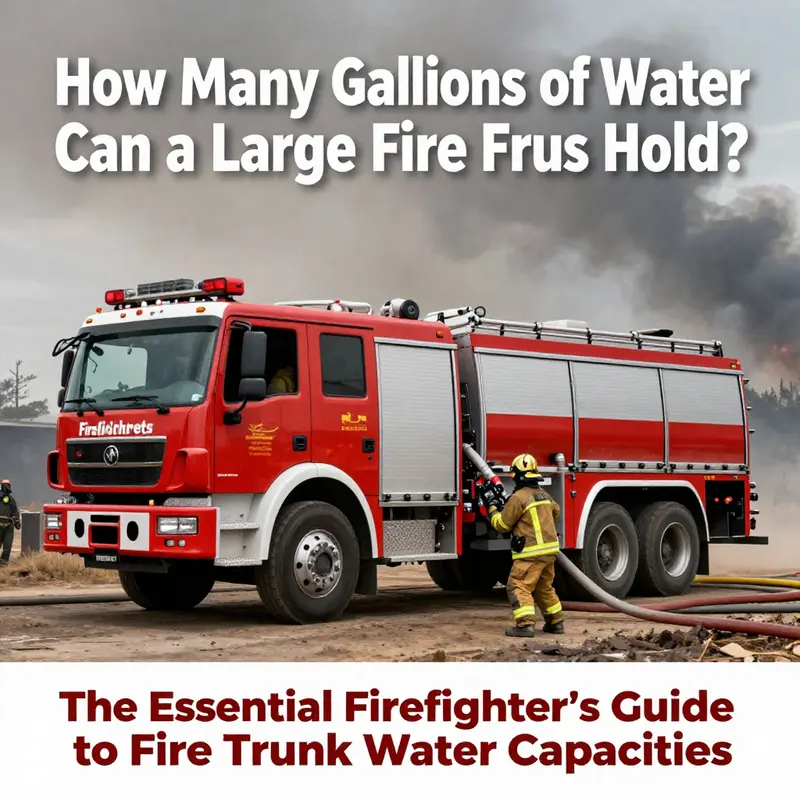
When industrial fires flare in refineries, chemical plants, or sprawling manufacturing complexes, the question of water capacity becomes a decisive element in the firefighting strategy. Fire trucks designed for these environments operate under a different set of constraints and demands than city engines. Their onboard tanks are typically smaller, yet their pumps are capable of delivering water at extraordinarily high rates. In this context, a large fire truck often carries between about 500 and 1,000 gallons of water in its onboard tank. That handful of thousands of liters is not a limitation so much as a design choice that reflects how these vehicles must work within a broader system of water supply, high-pressure delivery, and rapid attack. The pumps on these rigs are engineered to move water quickly—commonly in the range of 1,000 to 2,000 gallons per minute (GPM)—to create an initial burst of suppression when every second counts and the flame fronts are aggressive. This combination of moderate onboard volume and high pumping capacity is what enables them to confront intense fires where swift, sustained delivery matters more than a vast built-in reserve of water.
The difference in approach between this class of large industrial truck and a city-based, high-capacity tanker is instructive. A city pumper or a conventional aerial often carries far more water on a single chassis, sometimes several thousand gallons, to support longer firefighting operations in areas with constrained or inconsistent water supplies. In contrast, the industrial big rig is optimized for rapid, high-flow attacks with a strategic emphasis on water management beyond the tank itself. The onboard amount—500 to 1,000 gallons, roughly 1,900 to 3,800 liters—may seem modest, but the real edge lies in the ability to push water at 1,000 to 2,000 GPM from the moment the nozzle hits the fire floor. Those two capacities work in tandem: the operator can lay down sudden, heavy streams that arrest the fire’s growth, while the rest of the operation sources additional water from nearby hydrants, dedicated supply lines, or remote water tenders.
To understand how this plays out in practice, consider the kind of environments these machines are built to handle. Refineries, chemical plants, gas terminals, and large manufacturing facilities demand rapid suppression of high-challenge fires. In such settings, a single large stream can overwhelm a flame front, cool exposed structures, and reduce heat release enough to permit interior teams to advance and search more safely. The onboard 500–1,000 gallons are thus not a bulk fuel for a long fight; they are a launch pad. They enable a robust first attack, a critical sprint that buys precious time for establishing external water supply, setting up relay lines, and deploying additional equipment or crews. The high-flow pumps, delivering water at up to 2,000 GPM, are essential for maintaining that pressure and volume as crews work to confine the fire and prevent escalation.
This configuration also reveals the interplay between onboard capacity and water planning. The engine and pump are designed to maximize immediate impact, but operators must rapidly assemble a broader water strategy. In many industrial sites, the first engine on scene will begin an aggressive attack from a standpipe or hydrant, then quickly transition to a water supply plan that draws the bulk of its inflow from external sources. The crew may draft from a standpipe system, connect to a nearby hydrant, or receive water via a relay from a stationary supply point. In some cases, a dedicated water tender or remote supply unit becomes a critical partner in the operation, shuttling water from a distant source to sustain the firefighting effort. This modular approach—strong initial attack, followed by sustained supply from external sources—keeps the operation flexible and resilient in the face of large, complex fires.
The weight and size constraints that come with this class of vehicle shape its design in important ways. With a fixed onboard tank of 500–1,000 gallons, engineers must balance the water load against payload, equipment, and the vehicle’s maneuverability. Heavy pumping demands, hydraulic systems, hoses, and ancillary tools all add to the mass that the crew must manage. In industrial settings, where access can be tight and ground conditions uneven, the ability to deliver high-volume water quickly from a compact, maneuverable chassis is a real advantage. The result is a vehicle that can surge water into a fire scene with authority while still threading through plant access routes, dockyard lanes, or refinery roadways. The emphasis is not just on how much water is onboard, but on how effectively that water can be delivered and sustained through a coordinated supply network.
Tactics on these scenes often rely on a staged approach. The initial assault piece is the boldest, aimed at knocking the head of the flame down and cooling critical structures to prevent flashover. A stream at 1,000–2,000 GPM can achieve this rapid reduction in heat release, buying time for interior teams to advance with handlines, search for victims, or apply foam blankets as appropriate. Yet the firefighting team cannot depend solely on the onboard reserve. A well-practiced water supply plan is essential. Standpipe connections, hydrant taps, and relay configurations are established quickly, with engines positioned to bridge the gap between the source and the attack line. In many plants, multiple hydrant points or dedicated water lines exist, and the large industrial truck serves as the anchor for dispersing large volumes of water through high-pressure lines to attack crews positioned throughout the scene. The ability to push water at high velocity through a small but steady onboard reservoir is a hallmark of this class of apparatus, illustrating a design philosophy that prioritizes speed, pressure, and coordination over sheer onboard capacity.
The concept of cooperation is further reinforced by the role of remote supply units and water tenders in industrial firefighting. While the onboard tank provides the initial push, remote supply units can deliver sustained water flows to keep the attack front strong. This arrangement makes the fire scene highly scalable: as long as water is available, the combination of high-flow pumps and properly managed supply can maintain effective suppression. A truck with 500–1,000 gallons can be a critical piece of a larger system, enabling rapid initial attack while the rest of the fleet and supply chain—hydrants, pumpers, tankers, and tenders—works in concert to sustain the operation. The practical upshot is that the value of onboard capacity should be understood in the context of the entire water delivery ecosystem at the scene.
To illustrate how this all translates into real-world outcomes, it helps to connect the numbers to the timing of a suppression operation. If a large industrial truck holds 1,000 gallons and is pumping at 1,500 GPM, the onboard reserve would be exhausted in roughly 40 minutes in a continuous stream scenario—though in practice, the crew would not rely on the onboard tank for the full duration. More typical is a scenario in which the onboard supply is rapidly delivered to the attack line in bursts, while a steady external supply is established. In the first few minutes, a high-volume burst—not a full tankful—often suffices to suppress or control the most dangerous aspects of the fire, enabling a transition to longer-term water management. The math becomes a practical guide for decision-making at the scene: how many lines to deploy, how many engines are needed to sustain flow, and where to position tenders for relay operations. The crew remains focused on rapid, decisive action that reduces heat, protects exposures, and creates space for interior operations, with the onboard water acting as a catalyst rather than a final resource.
This approach—sharp initial impact followed by a carefully managed supply chain—helps explain why the onboard capacity of 500–1,000 gallons does not undermine expectations for effectiveness. On the contrary, it underscores a deliberate design choice: the most critical moment in many industrial fires is the first surge of water, which can arrest the growth of the fire and create a window for broader tactical efforts. When combined with high-pressure pumping, this onboard capability becomes a lever that shifts the balance toward safety and control. The interplay between the tank and the pump is not simply a matter of numbers; it is a reflection of how modern industrial firefighting teams think about risk, time, and space on the ground. The capacity of the tank, the velocity of the pump, and the reliability of the water supply network together determine how quickly a fire can be brought under control and how safely crews can operate within a compromised setting.
From a historical perspective, the evolution of large industrial firefighting apparatus tells a story of specialization. As facilities grew more complex and the fires they could produce grew more intense, manufacturers and fire departments adopted configurations that favored rapid water delivery, robust high-flow performance, and modular supply strategies. The result is a fleet of large, purpose-built machines in which onboard water serves as a crucial launching platform rather than the sole engine of suppression. Within this framework, the number of gallons inside the tank becomes a meaningful but not exclusive metric. The real measure of capability lies in how quickly the crew can unleash high-volume water, how effectively they can source additional supply, and how well they can integrate that supply into a cohesive attack plan. This holistic view helps connect the concrete figures to the strategic decisions that drive successful outcomes on the scene.
For readers who want to explore the technical nuance of large-capacity, high-flow firefighting in greater depth, a closer look at the pump and tank pairing can be illuminating. The combination of 500–1,000 onboard gallons with 1,000–2,000 GPM pumps exemplifies a class of equipment designed specifically for environments where rapid, aggressive water delivery is essential but where a single truck’s tank is not the sole source of water. In many ways, this reflects a broader principle in firefighting equipment: effectiveness is increasingly defined by how well a crew can coordinate water supply, manipulation of streams, and tactical decision-making under pressure. The tank size acts as a trigger point for action—the moment when the crew can commit to a strategic attack with confidence that the rest of the water supply network will sustain the effort.
The topic remains nuanced and context-dependent. When planning for industrial fire responses, departments weigh the trade-offs between onboard capacity, maneuverability, payload, and the ability to deliver water at high pressure over long distances. The result is a fleet that can function as a core element of a broader water-delivery system. The onboard tank provides a rapid initial effect; the pump’s high flow ensures immediate efficacy; and the external water supply network provides endurance. In concert, these elements enable large industrial fires to be met with a disciplined, scalable response that prioritizes life safety, property protection, and the preservation of critical facilities.
If you’re curious about how these design choices fit into the wider landscape of firefighting equipment, a resource that digs into apparatus capabilities and performance offers a comprehensive lens on large trucks’ roles in complex settings. For a deeper technical context, see the external reference that follows. And for related discussions on the internal hardware that supports these capabilities, you can explore materials on steel fire apparatus, which highlights the structural and operational considerations of heavy-duty firefighting platforms. Steel Fire Apparatus.
External reference: For a detailed technical treatment of large-fire-truck capacity and performance, visit Fire Engineering’s article on understanding large fire truck capacity and performance: https://www.fireengineering.com/fire-trucks/understanding-large-fire-truck-capacity-and-performance/.
Final thoughts
The water capacities of fire trucks, varying from small to large units, play a pivotal role in firefighting efforts. Small fire trucks, with capacities ranging from 500 to 4,000 liters, are essential for nimble maneuvers in tight urban spaces. Medium trucks offer further support with 3,000 to 6,000 liters, vital for more significant firefighting demands in towns. Large tankers are the giants of the fleet, often exceeding 10,000 liters, ready for serious emergencies. Recognizing these variations enhances our understanding of fire service capabilities and highlights the logistics involved in firefighting strategies. Equipped with this knowledge, we can better appreciate the intricate planning and execution that goes into ensuring safety during fires, encouraging more support for local fire services.