
Fire trucks serve as critical lifelines in emergencies. Knowing how many gallons a fire truck can hold helps understand its firefighting reach, duration, and operational tactics. From compact rural units to large water tankers, capacity informs decisions about suppression strategies, incident command, and safety margins for both firefighters and communities. This guide explores small fire trucks, standard pumpers, large tankers, design considerations, and the real-world impact of water volume on firefighting effectiveness. Each section builds toward a clear picture of why gallons matter on the fire ground.
Sizing the Water on Wheels: How Much Can a Small Fire Truck Carry and Why It Matters
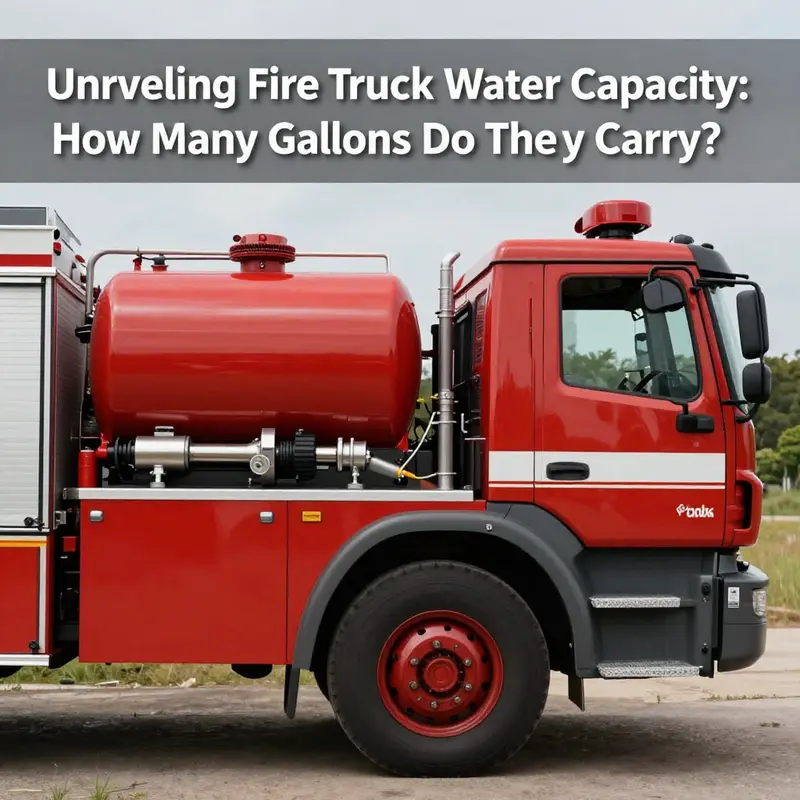
Small fire trucks are nimble tools designed for crowded streets and narrow lanes where larger engines struggle to maneuver. They represent a different approach to firefighting—one that prizes speed, agility, and the ability to reach places a standard pumper cannot. Because they serve varied environments—from dense urban cores to dusty rural roads—their water capacity does not follow a single standard, and the numbers behind a tank are best understood as a spectrum shaped by mission, terrain, and the wider system of water supply. The question of how many gallons a small fire truck can hold invites a more nuanced answer than a fixed figure, because the capacity is a product of design choices, not a universal rule. This nuance matters not only to firefighters on the ground but also to chiefs planning fleets, to city councils budgeting for emergency response, and to residents who want to understand the resources that may arrive at a scene.
Within the family of small fire trucks, Type 2 and Type 3 configurations are common in many departments. Type 2 trucks are built for rugged terrain and areas where infrastructure may be uneven or limited. They emphasize mobility and traction, so they can position themselves close to a fire without getting hung up in mud or sand. Type 3 models push the envelope further for off-road capability and larger onboard water storage, reflecting their role in rural or remote locations where hydrants are scarce and water must be carried in. In both cases, the aim is fast access to the fire scene, but the strategy for water on board is tailored to the terrain and the distance to the next reliable water source. The result is a practical balance between weight, maneuverability, and the risk that more water on board adds stress to the vehicle’s structure and braking performance in tight environments. Departments decide which blend of nimbleness and capacity best matches the geography they serve, and they adjust over time as urban growth or new water supply options shift the calculus.
Water capacity among small trucks varies widely. Typically, they hold between 150 to 1,000 gallons of water, a span that reflects the trade-off between keeping the vehicle light and nimble and providing enough water to begin an initial attack or support a larger engine that arrives later. At the lower end, the truck remains highly maneuverable in tight streets; at the higher end, crews gain a meaningful margin to apply water before their supply needs replenishment. This range also accommodates the realities of hydrant distribution in smaller jurisdictions, and it allows these rigs to support larger units when mutual aid or longer operations are required. When hydrants are sparse, the higher end of the small-truck spectrum becomes crucial for stabilizing a scene while awaiting tanker support or additional pumpers to shuttle in full loads of water.
Specialized models designed for extended operations or demanding terrain may push toward the higher end of the small-truck spectrum. In these configurations, the water tank might approach near-1,000 gallons, giving crews a more sustained frontline reach before a refill is possible. The exact capacity, of course, varies by manufacturer, the layout of the tank and pump, and how the vehicle is intended to be used on a typical shift. Manufacturers also balance the tank with the vehicle’s weight, transmission, and braking system so that the overall performance remains suitable for quick responses in dense neighborhoods or winding backcountry roads. In practice, this balance means that even within a small class, two trucks of similar dimensions can carry noticeably different water loads based on tank shape, baffle design, and whether extra compartments or compartments for foam concentrate are included—the last factor being more common in some limited-use setups than others.
To put these numbers into perspective, it helps to compare them with larger engine companies that show up when hydrant pressure is uncertain or when a fire exceeds the capacity of a smaller unit. Large water tankers and larger pumper trucks, designed for broader operations, can hold from 1,000 gallons to well over 5,000 gallons. Some figures in the literature cite volumes in the neighborhood of 8,000 liters—roughly 2,100 gallons—for specialized missions. Even within the class of small trucks, the line between 600 and 1,000 gallons demonstrates how designers push for added endurance without sacrificing the core advantages of a compact platform. A typical urban pumper might stock around 300 gallons, a useful baseline for planning in dense areas where hydrants are plentiful and the mission involves rapid, repeated relay shifts rather than long, interior operations on a single fill. The contrast highlights how the fire service tailors its equipment to the water geography of a given district.
Beyond the numbers, the operational reality is that water is an element of a dynamic system. The pump capacity and hose layout, the crew size, the availability of backup water supplies, and the route to a hydrant all interact with tank size to determine how quickly a fire can be controlled. In a city with abundant hydrants, a small truck might begin the job and then rely on additional engines to continue the effort, reloading water along the way. In more remote settings, a small truck with a near-1,000-gallon tank can hold a frontline line for longer, reducing the number of trips to a limited water source and letting the team focus on preventing spread and protecting exposures until help arrives. This is why the firefighting fleet is built as a cooperative system rather than a collection of independent, one-off tools. Fleet managers must assess projected call volumes, geography, and mutual aid agreements to determine the mix of small trucks and larger tankers that will preserve response times under stress.
Within the practical world of training, procurement, and fleet management, readers may wish to explore what kinds of small trucks are circulating on the market. A quick look at public listings or dealer catalogs reveals configurations that emphasize maneuverability, payload, and water storage—often with options to tailor the tank-to-truck balance to a community’s terrain and budget. For readers who want a sense of what’s available, a visit to the market can provide a snapshot of options and configurations aligned with this spectrum of capacity. See Fire trucks for sale for broader context and choices across jurisdictions. fire trucks for sale.
Finally, for those who want to dive deeper into technical specifications, the external resource provides a closer look at how a compact firefighting chassis handles water, pump, and tank integration. While the exact figures vary by design, the underlying principle remains consistent: the most effective small truck is one that can deliver water when and where it is needed without compromising safety or reliability. It is the practical expression of a strategy that blends mobility, capacity, and the discipline of firefighting to protect communities across varied landscapes. Across jurisdictions, this adaptive logic is reflected in how training emphasizes not just how many gallons are on board, but how those gallons move through the system—from the moment the siren sounds to the moment water flows onto a burning pane of glass. In practice, the exact tank size can determine decisions about response routes, staging areas, and how mutual aid requests are phrased in the incident command. Fire departments continually recalibrate their fleets as new threats emerge, new water sources are developed, and the weather or topography challenges evolve. The question of capacity remains a practical, situational question rather than a theoretical one.
External resource for deeper technical detail: https://www.sinotruk.com/en/products/fire-fighting-truck/howo-4×2-fire-fighting-truck.html
Holding the Line: Understanding Water Capacity in Standard Pumper Trucks
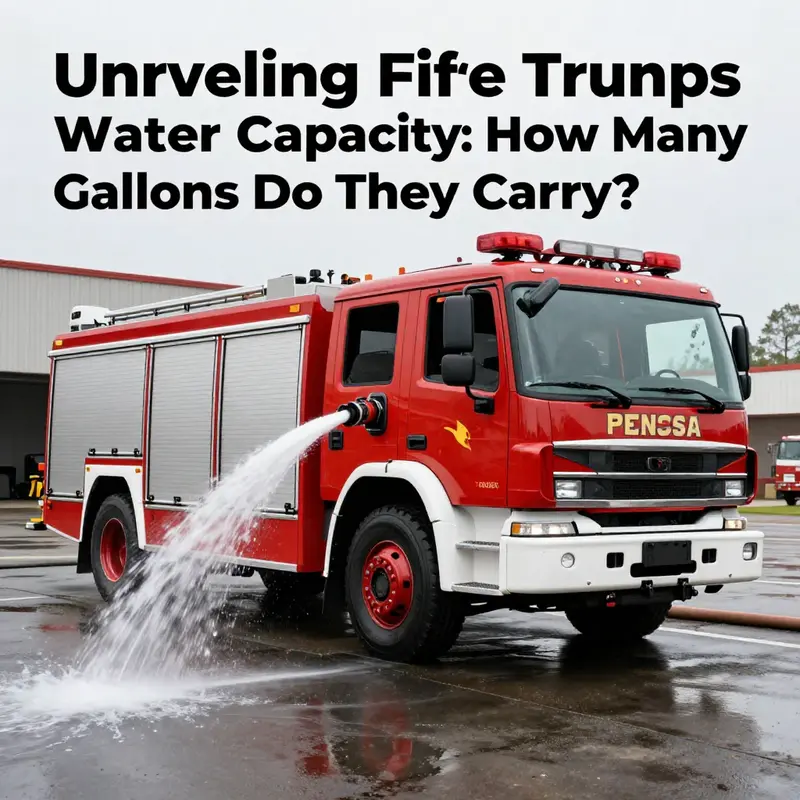
When the call goes out, every second counts, and the equipment on the arrival line translates urgency into action. A fire truck that can deliver water the moment it stops becomes not just a vehicle but a crucial part of a life-saving plan. At the heart of that plan sits the onboard water tank, a reservoir that must balance volume with weight, shape with space, and reliability with responsiveness. This chapter looks beyond the siren and the ladder to the numbers that truly define capability: how much water a standard pumper carries, how that water is moved under pressure, and how firefighters use those gallons to establish an immediate knockdown while planning longer-term access to more water if hydrants are scarce or out of reach. The story of onboard capacity is a story about ignition and momentum—about turning potential into a controlled, steady stream of action the moment a truck arrives on scene.
Standard pumper trucks are built around a core idea: carry enough water to begin suppression without waiting for an external source. Their onboard tanks form the initial bridge between a fire’s onset and a reliable water supply, while a pump system channels that water through hoses to the nozzle. The capacity they carry is not a single fixed number; it varies with model, purpose, and the terrain these vehicles are designed to serve. In practical terms, that means that a given department might operate a family of pumpers, each tuned to a different environment—urban, suburban, or rural—and each with a different onboard carry capacity that shapes how quickly crews can start applying water and how long they can maintain a steady stream before refilling becomes necessary. The numbers matter not merely as a statistic but as a reflection of the department’s tactical approach and the kinds of fires it primaries to fight.
From the numbers in typical fleets, onboard water supply for standard pumpers generally sits in the range of five hundred to a thousand gallons, a band that represents a practical compromise between keeping weight manageable and ensuring the first attack line can form rapidly. In many departments, a 500 to 1000 gallon figure is the working benchmark for a typical urban or suburban pumper. Some larger or specialized standard pumpers can hold around 1,500 gallons, a level that pushes the limits of what a municipal vehicle can carry while still maintaining acceptable handling and mobility. It is not unusual to encounter a mid-range configuration around 750 to 1,000 gallons as the everyday norm, with the understanding that lighter, more maneuverable units may hover closer to 500 or 600 gallons when agility takes precedence over volume. Those who deploy in areas with limited or difficult hydrant access may see even higher onboard capacities in select configurations, though such capacities are less common and come with proportionally heavier chassis, stronger suspensions, and tighter operating envelopes. The takeaway is clear: onboard tank sizes range broadly, and this range directly informs how a crew will approach a fire in its earliest seconds and minutes.
To translate those gallons into street-ready capability, you also have to consider the pump and the plumbing that channels that water to the nozzle. The pump system on a standard pumper is designed to deliver water at high pressure, a feature essential for overcoming friction losses along long hose stretches and through complex urban layouts. It is not unusual for these pumps to achieve well over 1,000 pounds per square inch (psi), a pressure level that enables effective fire control even when nozzle operators face variations in hose diameter, line length, and the turbulence of a live fire. Water duty in a firefighting context is a balance; the moment hydrants are unavailable or distant, onboard water must fill the gap while crews establish a more sustainable supply. That is why the tank and the pump work in tandem. The tank provides the initial charge, and the pump maintains a targeted flow that can be modulated to support different tactics, from direct attack to defensive management of exposures.
Design choices behind a standard pumper reflect a set of nuanced tradeoffs. The department’s typical response profile, local water sources, and the geography it serves all shape the final configuration. Heavier water loads demand more robust structures and better suspension, and they impose constraints on acceleration, turning radius, and fuel economy. The practical upshot for most readers is straightforward: bigger onboard capacity translates into more water available immediately, but that same larger volume adds weight that must be carried, maneuvered, and replenished. In rural or wildland contexts, fleets often soften this constraint by pairing pumpers with tenders or tankers that shuttle water from a distant source, creating a blended capability that can sustain sustained flows across large fires. The interaction between onboard capacity, supplemental water sources, and the pump’s performance becomes a core element of tactics, dictating how a room-and-contents fire is fought and how quickly crews can reach a safe staging area or a water refill point. The balance of these factors shapes the vehicle’s role on any given engine company, and it is the reason why no single number can define a “one-size-fits-all” standard.
For readers seeking a practical lens on how these decisions unfold in the field, consider how capacity informs the early stages of a response. A pumper with 750 to 1,000 gallons is typically able to sustain an aggressive interior attack for a meaningful period before refill operations begin, especially if hydrants are within a reasonable distance. In a dense urban grid with multiple hydrants and parallel hydrant feeds, the onboard tank can serve as a reliable buffer. The crew can begin a direct attack while a separate team secures a hydrant and perhaps initiates a water shuttle plan to ensure a continuous supply as the fire evolves. In rural districts where hydrants are sparse or non-existent, a higher onboard capacity may be advantageous, but it is not a substitute for a well-planned water supply system, including the use of tenders that ferry water from a reliable source to the scene. The operational reality is that capacity shapes timing and strategy—how quickly a first line can be established, how long it can sustain a knockdown, and how soon a reliable refill stream can be brought to bear.
That operational logic has a broader implication for the fire service’s equipment decisions. The tank’s shape, internal baffling, and the method by which water is fed and emptied affect weight distribution and how easily a crew can maneuver the vehicle in tight spaces. If a department must operate for extended periods without hydrants, it will favor configurations that balance higher onboard volumes with reliable refilling capabilities and compatible pump performance. Conversely, in settings where streets are narrow, and agility is paramount, a more compact pumper with a modest but well-structured tank becomes a strategic choice. In all cases, the numbers—500, 600, 750, 1,000, and beyond—serve as a shorthand for a broader tactical calculus: how quickly water can reach the fire and how long it can be sustained before the scene shifts to life safety and property protection responsibilities.
For readers who want to explore the practical market side of this topic, there is real value in reviewing current listings and configurations. If you’re curious about available options and how departments balance capacity with other requirements, the fire-trucks-for-sale page offers a spectrum of possibilities that reflect the ongoing negotiation between water volume, vehicle weight, and maneuverability. fire trucks for sale.
In the end, the water capacity story for standard pumpers is about more than gallons. It is about the pace at which a fire can be engaged, how early water can begin to control the scene, and how a team maintains that momentum as conditions evolve. The onboard tank provides the initial power to begin suppression, the pump sustains the flow, and the return to a refilled supply—whether from a hydrant or a tanker shuttle—determines how long that power can be sustained. When these elements align, a fire crew has the means to turn fear into a plan, hiding complexity behind a simple, steady stream of water and a well-executed sequence of actions. For a broader perspective on selecting the right configuration for a given department or jurisdiction, see the linked guide that discusses best practices for choosing fire truck models and how capacity interacts with other design considerations. External reference: https://www.firerescue1.com/fire-truck-features/articles/guide-to-choosing-the-best-fire-truck-model-for-every-need-1246941742/
Holding Waters at Scale: Understanding How Giant Fire Tankers Store Gallons When Every Drop Counts
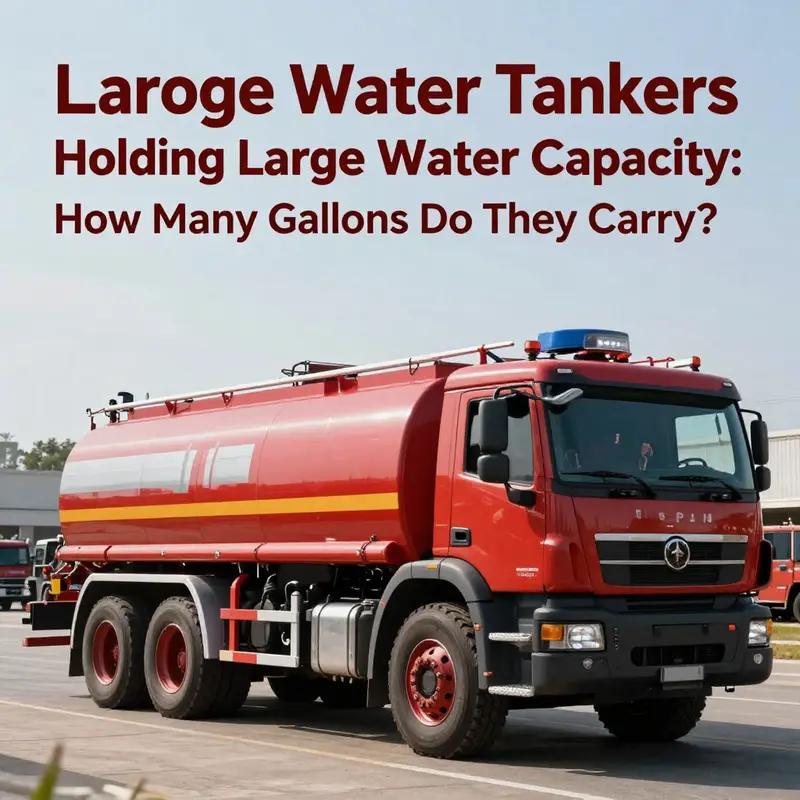
Across firefighting fleets, large water tankers sit at the edge of the action like mobile reservoirs, ready to pour life into a scene when hydrants are scarce or absent. They symbolize a different kind of firefighting, where scale matters as much as speed. The simple question, how many gallons does a fire truck hold, opens into a range of answers that depend on purpose, terrain, and strategy. These investments in water capacity are not about luxury; they are about ensuring a sustained stream of water where access to water sources is limited, or where a fast, sustained attack is required before a solid supply line can be established. In rural districts, remote forestry zones, and sprawling industrial sites, the need for a sturdy, dependable water reserve on wheels becomes obvious. The numbers you see on the door of a tanker are more than digits; they signal the vehicle’s potential to bridge gaps between a fire and a reliable source of water. The interplay between capacity, distance, and pumping power shapes how a crew organizes a response from the moment the siren sounds and the scene is revealed.
Most large water tankers range from about 2,000 to 10,000 gallons of water in their permanently mounted tanks. In practical terms, that means they can act as a rolling reservoir, delivering large volumes directly to the nozzle and supporting other apparatus with a steady feed. In search of hydrantless terrain, the tanker often serves as a mobile main supply, shuttling water from a distant hydrant, a pond, or a crude source until a reliable supply line is established. Each trip back to the source refills the tank and lengthens the window of the attack. The numbers translate into field realities: a larger tank lengthens the time before a refill is necessary, reduces the number of interruptions for water, and allows crews to concentrate on applying water rather than chasing it. The operational advantage grows with distance from a dependable hydrant and with the intensity of the fire you are trying to suppress.
Design considerations influence how well a tanker performs on a given mission. The tank is fixed, so the volume cannot be rearranged on the fly; the body is built to resist impact and to withstand the vibrations of long hauls. The pump, sized to move water from that tank to the lines, must be rugged enough to push a high volume against pressure and friction. These trucks carry not only water but also a minimal set of gear to support their unique mission: large storage, rapid discharge, and a dependable supply chain that survives the fatigue of a long deployment. Because the weight of thousands of gallons is heavy, the route, road type, and weight limits become practical constraints. Steep grades, tight turns, and bridges with load restrictions shape what size of tank a department can effectively operate in its geographic area. In many districts, you will see a mix of smaller tankers and larger water tenders, each designed to fill a specific niche in the firefighting system and to enable mutual aid when a region faces a particularly daunting blaze.
Remote or wildland fire zones complicate the equation further. When access to portable water sources is limited, a large tanker can stand as a mobile main supply, with its pumps delivering water through long stretches of hose to the line. The ability to move quickly between water sources and the point of attack is a defining feature of these vehicles. It’s not just about raw capacity; it’s about reliability, maintainability, and the ability to deploy water efficiently under stress. NFPA standards address these priorities by spelling out how tanks, pumps, and hoses must be designed and tested for safety and performance. The result is a framework that helps fire departments evaluate configurations that balance cost, service life, and operational needs. The numbers themselves—2,000 to 10,000 gallons, sometimes more in regions that rely on specialized water tenders—translate into real-world decisions about crew training, maintenance cycles, and mutual aid arrangements. In practice, a department’s survival after a long call often hinges on the discipline with which those gallons are managed, not on the bravado of a single burst.
Another layer of complexity comes when you consider how tankers integrate with other equipment at the scene. A water tender does not operate alone; it partners with attack engines, ladder trucks, and support units to deliver a coordinated water supply. The crew on the tanker must manage the intake, the discharge, and the safety of the entire operation. They communicate with the backing crew who are drafting water or connecting to hydrants, and they coordinate with command to keep the flow steady and safe. In practice, the most effective deployments rely on a combination of precise pump operations, disciplined hose lines, and backup capabilities to prevent interruptions in water flow. The goal is to create a networked flow of water that can adapt as the fire evolves, rather than a single, heroic surge that risks draining the source or overloading a single pump. In this sense, the tanker’s role is less about showmanship and more about sustaining a scalable water supply that can be scaled up or down as the fire demands.
For readers curious about market options, the conversation often shifts to configurations rather than a single magic number. In many departments, a mix of capabilities—2,000, 5,000, and 10,000-gallon configurations—creates resilience across varied landscapes. The decision is a balance of need, cost, and ongoing maintenance. Departments consider not only the initial purchase price but also fuel efficiency, operator training, and the fate of aging fleets. Water capacity sits within a larger ecosystem of apparatus, each chosen to complement the others and to ensure that when a call goes out, the right tool arrives with the right amount of water at the right moment. If you want to explore broader options in the market, you can browse Fire Trucks for Sale.
Beyond the rhetoric of capacity lies the question of safety and standards. The NFPA guide on fire service water tenders outlines the expectations for how these vehicles are built, tested, and operated. It ties together tank size, pump performance, nozzle configurations, and crew safety into a coherent framework that guides procurement, training, and mutual aid agreements. By grounding the discussion in standards, departments avoid chasing numbers alone and instead pursue reliable water delivery that stands up to the pressures of real emergencies. The capacity figures are not arbitrary milestones but practical thresholds that enable a controlled, predictable response under stress.
Ultimately, the chapter on large water tankers is about the practical arithmetic of firefighting at scale. It is a reminder that every gallon carried on a rolling chassis has a purpose: to buy time, to protect crews, and to keep water moving toward the hottest flames until a sustainable supply arrives. The landscape of fire apparatus is diverse, and capacity is one line in a larger ledger that includes pump speed, hose length, and the strategic placement of resources across a response area. As fire departments plan systems of equipment to serve communities, the choice of tanker size becomes a thoughtful compromise between immediate water demand and the broader goal of long-term resilience. For deeper standards and guidelines, see the NFPA guide on Fire Service Water Tenders: https://www.nfpa.org/Code-Development/Committees/Fire-Service-Water-Tenders.
How Design Decides Gallons: The Engineering Behind Fire Truck Water Capacity
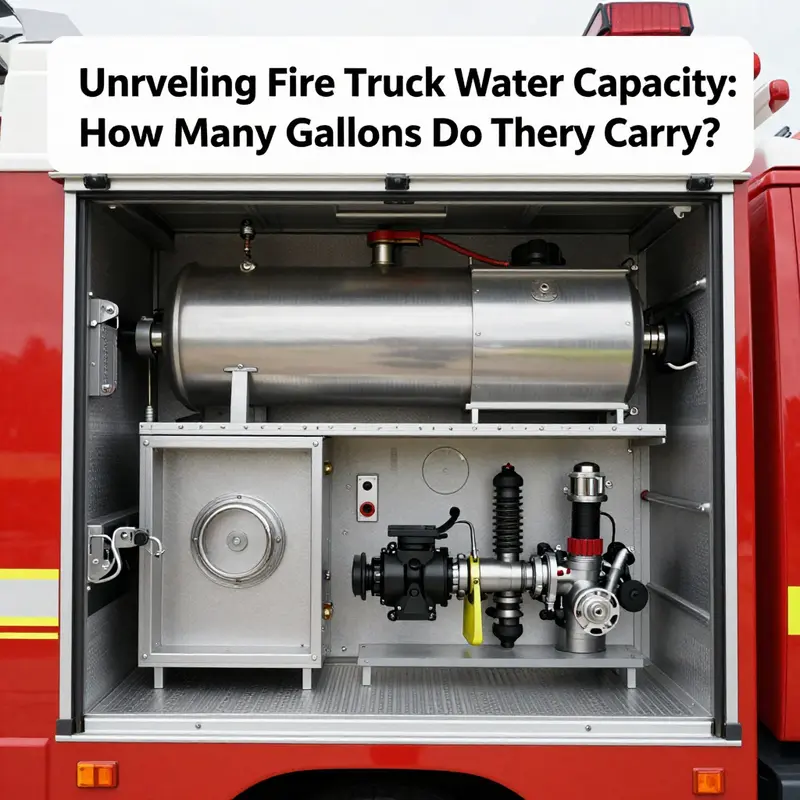
Fire trucks are more than engines and hoses; they are purpose-built water delivery systems. The amount of water a fire truck can carry is not an arbitrary figure. It is the direct result of design choices that balance payload, stability, durability, and mission profile. Understanding how these choices translate into gallons clarifies why capacities range so widely—from a few hundred gallons on a nimble pumper to several thousand on a heavy tanker—and why a single number cannot define “how many gallons does a fire truck hold.”
At the heart of the capacity question is material selection. Tank and body materials set limits on how much weight a chassis can support without undue fatigue or safety risk. Traditional metals like high-strength steel and aluminum remain common because they offer predictable strength, repairability, and resistance to the wear of daily service. Steel delivers excellent load-bearing performance, while aluminum trades some strength for significant weight savings and corrosion resistance. Choosing aluminum can free up several hundred pounds of chassis allowance, which often converts directly into extra water capacity or additional equipment. In recent years, composite materials such as carbon fiber-reinforced polymers have begun to reshape the conversation. Lightweight composite tanks can reduce tank weight by a large margin, allowing designers to increase the water volume carried without exceeding legal gross vehicle weight limits. A tank that saves weight while still holding 900 gallons can translate to improved mobility, extended range, or extra foam concentrate. These gains are especially important for departments where road weight limits or bridge ratings constrain how much a vehicle may legally carry.
Tank geometry and placement influence capacity more subtly but no less decisively. A tank’s shape must maximize usable volume while preserving a low center of gravity and maintaining clearance for suspension and drivetrain components. Designers often opt for rectangular or toroidal shapes tucked between frame rails to make the most of available chassis width. Internal baffles are integrated into modern tanks to reduce slosh. Slosh increases dynamic loads, destabilizes handling, and transfers momentum to the chassis in corners or during braking. Baffles break up liquid movement and protect structural attachments from fatigue. On off-road-capable models, baffle arrangements become particularly important: uneven terrain can otherwise cause violent slosh that compromises vehicle control. Thus, a tank that appears similar in volume on paper may deliver very different real-world performance depending on internal baffling and reinforcement.
Vehicle class and mission profile are the guiding constraints around which materials and tank geometry are chosen. Urban pumpers prioritize quick response and agility; they usually carry a few hundred gallons, often around 300, because hydrant networks are expected to supply most of the water needed for interior fires. Rural and wildland units, however, must be self-sufficient for extended periods and over rough terrain. These units are engineered to carry larger tanks while retaining off-road mobility. Heavy industrial or municipal water tenders push the scale further still. When suppression must be sustained at high flow rates away from reliable water supplies, tanks jump into the thousands of gallons. Large tenders dedicate much of their chassis and suspension capability to supporting this mass and often pair it with high-capacity pumps. This specialization means that a single department might operate vehicles that carry 300 gallons for structure protection and another that carries 4,000 gallons for remote-area support.
Chassis architecture and suspension design govern how much mass can be carried safely. Reinforced frames, multi-axle layouts, and heavy-duty suspensions distribute liquid weight more evenly and reduce stress on any single component. Multi-axle configurations enable larger tanks without overstressing axles or violating weight-per-axle regulations. For example, adding a tag axle or using a 6×4 drivetrain spreads the payload across additional contact points, permitting higher safe water capacities. The trade-off is less maneuverability and often higher fuel consumption, which is acceptable for tenders and heavy apparatus intended for sustained operations rather than tight urban streets.
Pump capacity is another design element that interacts with water capacity. A pump’s rated output defines how quickly carried water can be delivered. A truck carrying 300 gallons with a 1,000 GPM pump can empty its tank rapidly if hydrants are not available, making the truck useful only for short bursts unless refilled. Conversely, pairing a large tank with a high-capacity pump allows long-duration, high-flow operations. Designers therefore aim for a balance: pump size must match tank volume and mission needs. In industrial settings, where suppression requires large continuous flows, pumps exceeding 2,000 or 3,000 GPM are paired with tanks that can sustain those flows for extended periods.
Integration of auxiliary systems also shapes how many gallons a truck can hold. Foam systems, auxiliary tanks, and transfer pumps add capability while consuming space and weight allowance. Foam concentrates and their mixing systems are particularly valuable in industrial contexts, but they occupy volume that could otherwise be devoted to plain water. Designers must decide whether to prioritize sheer water volume or versatility. In many modern rigs, a modular approach is used: compartments can house portable tanks, skid units, or foam gear when the mission demands, while other configurations maximize onboard water for long-haul tenders.
Operational constraints further refine design decisions. Road regulations set gross vehicle weight limits and per-axle restrictions. Departments must conform to these legal bounds while meeting tactical needs. A lightweight composite tank may allow a department to legally carry more water on existing roads without upgrading infrastructure. Maintenance and repairability also matter; composite tanks can be lighter but may require different repair skills and tools compared with metal tanks, affecting long-term lifecycle costs and downtime. Fire departments thus weigh upfront performance gains against sustainment realities.
Advances in safety and ergonomics have influenced capacity indirectly. Anti-slosh technology, improved mounting systems, and better chassis bracing allow designers to plan for larger tanks without sacrificing crew safety. Electronics and telematics provide real-time weight distribution and stability monitoring, enabling dynamic adjustments in how a vehicle is used. These tools can permit higher practical capacities because they mitigate risks associated with heavy liquid loads.
Finally, cost and procurement realities are always present. Large-capacity vehicles are more expensive to purchase and operate. Departments evaluate call volume, geographic layout, and hydrant availability to determine the most cost-effective balance between many smaller agile units and fewer, larger-capacity tenders. Some regions prioritize a fleet mix, combining pumpers with modest tanks and dedicated water tenders to cover both urban and rural needs efficiently.
Design decisions determine gallons by defining what the vehicle must do, where it must go, and how it must perform while carrying liquid mass. Materials, tank shape, chassis layout, pump sizing, auxiliary systems, and legal limits all converge to set the final number. For a practical sense of how design translates into marketed specifications and to see a real-world example of a high-capacity foam-capable chassis, review a representative vehicle listing that details water volume and foam capability: https://www.alibaba.com/product-detail/Dongfeng-1208-6×4-Foam-Fire-Truck-with_1600567782922.html. For a closer look at the role of metal structures in apparatus bodies and how they support tank mounting and longevity, explore this discussion of steel apparatus design: steel fire apparatus.
Water on the Front Line: How Fire Truck Capacity Shapes the Fireground
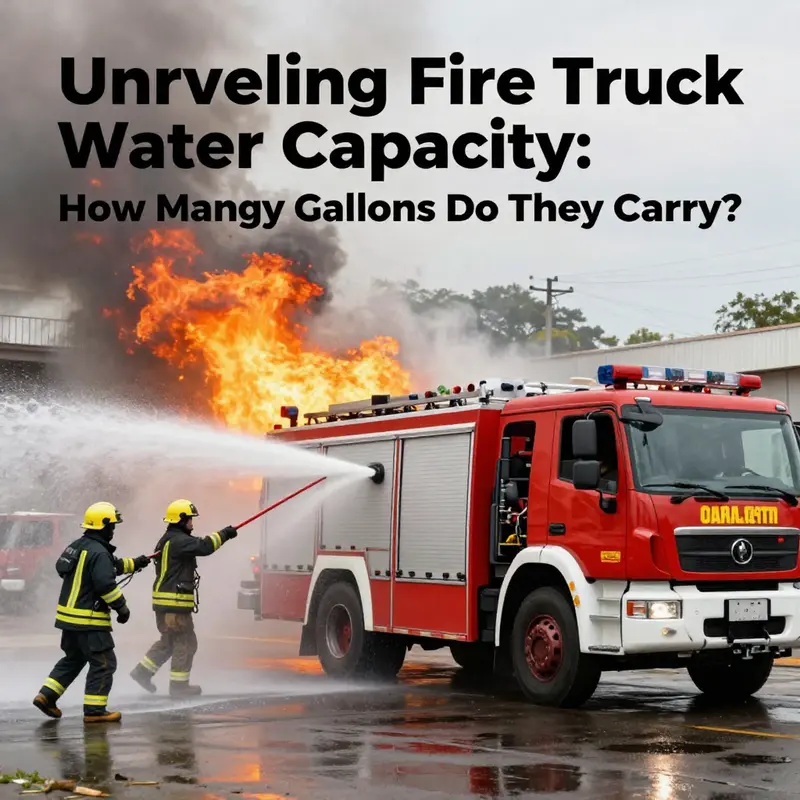
Water is more than a resource in firefighting; it is a tempo, a limit, and a signal of readiness all at once. The capacity of a fire truck—the volume of water it can carry and the rate at which it can deliver that water—directly shapes how crews approach a fire scene, how long they can sustain suppressive efforts, and how rapidly they can transition from a first attack to a broader, coordinated response. In practical terms, capacity determines how long a team can hold a line before they must refill, and it influences the confidence with which engineers and captains plan the initial attack. This is not a single, one-size-fits-all number. Fire trucks come in a spectrum of configurations designed for different environments and mission profiles, from compact urban units to large, surface-splitting tankers meant for rural landscapes or areas with limited hydrants. Numbers cited in field guides vary, but a core thread runs through them: water capacity is foundational to effectiveness, yet it must balance other operational demands, such as maneuverability, weight, and the availability of external water sources.
A quick frame of reference helps: small, municipal or rural-response trucks—often labeled Type 2 or Type 3 in many regions—tend to carry relatively modest onboard water supplies, roughly in the 150 to 300–gallon range. These vehicles are built for speed, for rapid deployment in neighborhoods where space is tight and hydrants are frequent but response time matters. They are intended to begin a disciplined attack and to buy time until larger forces can arrive. In contrast, standard pumper trucks, which form the backbone of many structural fire responses, typically carry around 300 gallons of water in their tanks and are paired with a pump capacity often cited near 400 gallons per minute. This combination provides a steady, controllable flow that helps crews stabilize a scene while keeping the option open to pull additional water from nearby hydrants or pressurized supply lines. The mismatch between the amount of water on board and the immediacy of a growing fire underscores a central tension in fire apparatus design: you want enough water to start an effective assault, but not so much weight that the vehicle becomes unwieldy in tight streets or on poor road surfaces.
The landscape shifts again when larger, specialized water-carrying units enter the scene. In large-scale incidents, such as major structural fires in water-poor districts or wildland-urban interfaces where supply lines are scarce, tank capacities rise dramatically. You’ll find vehicles capable of carrying anywhere from roughly 1,000 gallons to more than 5,000 gallons, with some extreme configurations approaching the upper end of that spectrum. Even broader comparisons are possible if you measure in liters, where a 1,000-liter onboard tank translates to about 264 gallons. Such differences are not mere trivia; they translate into hours of suppression time, the risk calculus at incident command, and the need for logistics plans that coordinate tanker shuttle operations, hydrant usage, and on-scene refill strategy. In many agencies, the decision to field a large-capacity unit is driven by geography and water access: rural districts with sparse hydrants or long distances between reliable water sources rely on tankers to keep operations moving until external supply can be established.
But capacity is not just about raw volume. It interacts with pump performance, the rate at which water can be discharged, and the practical realities of fire ground tactics. A nominal 300-gallon tank on a pumper paired with a robust pump can deliver a steady stream to the nozzle for a meaningful period, especially when the incident remains within a single room or a contained structure. As fires grow and the need for rapid knockdown intensifies, the response often shifts to larger-capacity vehicles, which can sustain higher flow requirements for longer intervals. Yet even these high-volume trucks face limits: added gallons mean additional weight, which can hamper maneuverability on narrow streets, steep gradients, or unstable surfaces. The balance is delicate. Departments routinely perform a complex calculus that weighs the benefits of longer supply against the realities of roadway geometry, turning radius, tire load, and crew fatigue. Portable systems, including lightweight water bladders that can be deployed at the scene, further alter this equation by extending effective water capacity without permanently increasing the vehicle’s weight footprint. These flexible aids are designed to be filled quickly from nearby sources and then deployed to the hottest zones, giving crews more time to apply strategic cooling and knockdown while larger accommodations are organized.
An important dimension of this discussion is the role of initial attack versus sustained suppression. In dense urban cores or settings with ready hydrants, an efficient combination of onboard water and external support is often sufficient to control early flames, to prevent rapid flashover, and to safeguard neighboring exposures. A smaller, nimble unit can begin the fight, create a line of defense, and create a window for larger resources to arrive and establish a longer-term water supply. In more remote locations, or during wildland-urban fires where water sources can be far apart, the capacity of larger tankers becomes the critical engine that keeps the flame front from spreading. In these scenarios, the tactical value of water capacity is matched by strategic water management—planning for supply lines, shuttle operations, and the distribution of water to multiple points of use across a wide incident footprint.
From a systems perspective, water capacity also interacts with technology and logistics. Modern firefighting strategies increasingly incorporate temporary water bladders and similar portable solutions to give incident commanders a broader toolkit for meeting demand where it exists. A bag under ten kilograms can be deployed rapidly, filled from a hydrant or a portable pump, and placed in hot zones to extend the effective water reservoir at the point of need. This capability can be particularly valuable when a firefight is concentrated on a single portion of a structure or when crews must advance through conditions that restrict access to fixed water supplies. In practice, this means the best-equipped departments plan for both the fixed onboard capacity of their trucks and the flexible, on-scene augmentation afforded by portable systems. The math of firefighting is never static, and capacity is a moving target—what the truck can carry, what it can pump, and what it can sustain under evolving conditions.
To the practical observer, it is clear that capacity is just one of many interlocking factors that determine a fire department’s effectiveness. A high-capacity tank is valuable, but it must be paired with appropriate pump capacity, reliable supply lines, and an organizational mindset that anticipates the need for rapid water replenishment. A smaller unit, deployed with precise tactics and well-timed support, can outperform a larger truck in certain environments when the variables align—the street layout, the presence of hydrants, and the speed with which a crew can deploy hoses and coordinate with other units. This nuanced balance underscores why there is no single standard capacity that fits every mission. The best fleets are those that can adapt their water strategy to the incident at hand, leveraging onboard tanks and external sources in a way that keeps firefighters in control of the scene rather than chasing a rising thirst for water.
For those exploring the practical realities of acquisition or upgrade, the market for firefighting apparatus offers a spectrum of options shaped by community needs and funding realities. Agencies often evaluate whether to emphasize larger onboard tanks for extended suppression or to prioritize agile, smaller units that can respond quickly and function effectively in complex urban environments. Even when a department intends to field a larger-capacity unit, the decision is tempered by factors like gas mileage, maintenance costs, and the physical feasibility of operating heavy water loads in the given streets. The interplay between water capacity and vehicle design is a reminder that firefighting is as much about planning and systems thinking as it is about courage and skill at the nozzle.
As this chapter moves toward a broader view, it becomes evident that capacity forms a baseline expectation for what a fire truck can do. It is a foundational element of readiness that interacts with pump performance, distribution of water through attack lines, and the overall tempo of the incident. It is also a reminder that the most effective responses rely on a network of resources, from hydrants and water tenders to portable bladders and rapid refills, all coordinated under a single command structure. The numbers will always evolve with technology, funding, and the changing landscapes in which fires occur. What remains constant is the principle that water, in its many forms and configurations, governs the rate and scope of suppression—and that capacity, carefully matched to mission and terrain, remains a central pillar of firefighting effectiveness. To learn more about the broader standards that guide vehicle specifications, see the authority responsible for fire safety standards and vehicle design guidelines. For direct access to up-to-date codes and standards, consult the NFPA resources on Fire Department Vehicle Standards. You can explore the official guidelines here: https://www.nfpa.org/codes-and-standards.
Internal reference for practitioners and enthusiasts looking at market options is also useful; for those curious about purchasing options in the current market, there are platforms that summarize and categorize available fire apparatus, including used and new inventory. When considering a shift in capacity, it is prudent to review a broad spectrum of configurations and to align choices with local incident types, response times, and water infrastructure. As a closing thought, capacity is not a solitary gauge of capability. It is part of a broader system that includes crew training, rapid water supply, and the ability to adapt tactics to whatever flames and conditions present on the ground.
Final thoughts
Water capacity is a core capability that shapes firefighting outcomes. By examining small trucks, standard pumpers, large tankers, unpacking design influences, and the practical impact of water volume, we gain a clear understanding of how many gallons are needed in different scenarios and why every drop matters in the mission to save lives and property.