
Fire trucks are indispensable in emergency scenarios, often becoming the heroes of rescue operations in blazing buildings or precarious heights. As fire truck enthusiasts, young aspiring firefighters, and emergency service professionals, understanding the capabilities of fire truck ladders is vital. This article explores how high fire truck ladders can reach, diving into the maximum heights achieved by the latest models, the innovative technologies that enhance their climbing capabilities, safety considerations for their use during emergencies, and a comparative analysis across different fire truck regions and models. By the end, you’ll not only appreciate the incredible advancements in firefighting technology but also gain insights into how they apply in the real world.
Skyward Reach: The Engineering and Real-World Limits of Fire Truck Ladders
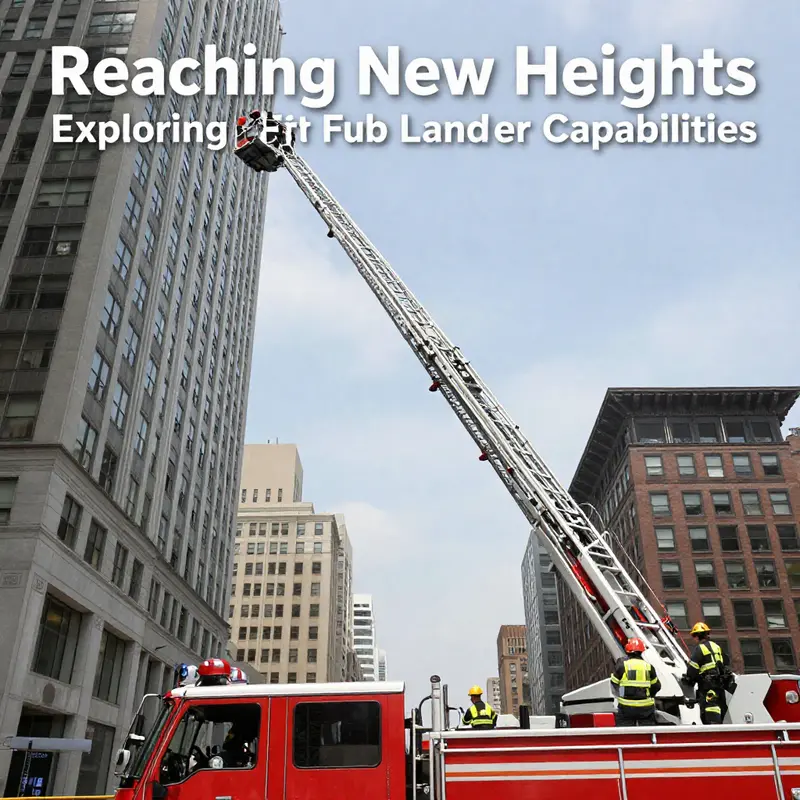
In the landscape of urban firefighting, a ladder is more than a tool; it is a doorway to the upper floors, a line that threads through glass canyons, a beacon for rescue in seconds rather than minutes. The question of how high a fire truck ladder can reach is not simply a matter of numbers. It sits at the intersection of architectural scale, mechanical ingenuity, and safety discipline. The tallest apparatus currently in service push the envelope of height, while the everyday firefighting ladder performs the practical dance of reach, stability, and water delivery across a broad spectrum of building heights. At the pinnacle, modern fleets include elevated platforms that extend far above the fifth floor and into ten-story, twenty-story, even skyward corridors where people may be trapped or where fires advance with unpredictable fury. The skyline itself becomes a dynamic challenge, shaping how ladders are designed, deployed, and constrained by physics and policy. When a department asks how high a ladder can reach, it is really asking: what is the maximum safe access point for rescuing lives, delivering water, and unloading aerial suppressive power from a stable, controllable pose under real-world conditions?
The answer begins with a taxonomy of the apparatus. Fire service ladders come in several flavors, each tuned to different mission profiles. Elevated platforms and aerial ladders are the two broad families most often discussed. Elevated platforms combine a long, articulating or telescopic reach with a fully operable platform at the end, which can suspend firefighters and convey water or foam as needed. Aerial ladders emphasize maximum vertical reach and the ability to extend a boomed ladder with multiple joints to access irregular facades, sometimes with a dedicated hose line or integrated pump system for elevated flows. The most extreme configurations are built as self-contained units with outriggers and leveling systems that compensate for uneven ground and the tilt of the apparatus as the boom stretches toward the upper stories. They are designed to be deployed rapidly, yet their length, weight, and the forces they generate demand meticulous coordination between the driver, the officer using the controls, and the ground support crew.
Within this framework, height is a function of several interdependent factors. The actual maximum operational height of a ladder is not a single number but a composite outcome of the apparatus design, the extension configuration, and the constraints imposed by terrain and weather. A broad example set highlights the scale: some of the tallest elevated platforms in contemporary fleets push toward 100 meters and beyond, while other, trailer-mounted aerials can exceed 130 feet in reach when deployed in suitable conditions. To translate the metric into day-to-day firefighting, a 100-meter reach roughly translates to access around the upper floors of very tall buildings in many cities, while a 130-foot, or about 40-meter, reach may extend to mid- to high-rise windows or the interstitial levels where rooflines meet façades. The practical implication is clear: the taller the ladder, the greater the potential exposure to wind forces, torsional loads, and the risk of destabilizing the rig if not countered by ballast, outriggers, and precise operator input.
In the most elevated examples, a 112-meter platform stands as a benchmark in global terms. Such a height corresponds to about 367 feet and roughly thirty-five stories, placing it squarely in the category of rescue-focused, skyscraper-oriented capability. This class of apparatus is engineered not merely to reach height but to deliver a controlled, safe working space for firefighters at extreme elevations. The platform must support movement, rotation, and a stable stance while allowing the crew to operate water cannons, lighting, and rescue equipment. The engineering challenge is multi-layered: the hydraulic and electronic controls must synchronize with the platform’s position, wind-induced sway must be dampened, and the weight of the operator and any attached gear must remain within the load envelope even as the boom extends, arcs, and articulates. In practice, height alone does not guarantee capability; height must be balanced with stability, reach geometry, and the capacity to maintain a safe working pressure and trajectory for water streams.
The landscape also includes milestones like very tall, single-vehicle configurations that showcase ingenuity within safe confines. For instance, a 101-meter model has appeared in public demonstrations and commemorations, signaling a willingness to push boundaries while remaining anchored to disciplined testing and regulatory frameworks. These demonstrations often emphasize the specialized nature of such equipment: it is not a standard-issue solution for every building type, but rather a strategic asset for cities with towering skylines and complex evacuation or firefighting needs. In parallel, there are substantial, purpose-built machines around 91 meters that illustrate how manufacturers engineer long, multi-axle platforms to achieve both reach and stability. These units typically feature five axles and sophisticated stabilization systems, underscoring the importance of robust chassis design and precise weight distribution when the boom is fully extended.
Even at lower extremes, ladder reach remains critically important. A 55-meter aerial ladder, by far more common in many departments, can access about seventeen stories and is routinely used for rapid entry, exterior attacks, roof operations, and evacuation scenarios. These ladders exemplify how height is integrated into the broader tactical doctrine: shorter reach does not imply lesser significance, but rather a different role in a layered response, where the ladder complements other tools such as fog streams, ground monitor nozzles, and interior stairwell operations. The variability across apparatus types is not accidental. It reflects a deliberate alignment of design priorities with the architectural realities of cities, the expected kinds of incidents, and the constraints of responding crews. A longer ladder is not inherently better if it cannot be stabilized or if its weight and mechanical complexity render it impractical for routine deployment.
The design decision between telescopic and articulating configurations lies at the heart of reach versus maneuverability. Telescopic booms provide straightforward extension with fewer joints, which can simplify load pathways and maintenance. Articulating booms, conversely, offer greater flexibility to navigate around obstacles and to position a basket or platform precisely where needed on a high-rise face. Both approaches rely on a sophisticated array of outriggers and leveling mechanisms. Outriggers, extended on the ground to create a wider base, counterbalance the tipping moment that occurs when the long arm reaches outward and upward. A compact chassis carrying a long, multi-jointed arm must be expertly calibrated to maintain a horizontal reach while resisting wind gusts and dynamic loading as the platform tilts, rotates, and climbs. The result is a system that balances reach with controllable stability, a synergy that is only achievable through a combination of precise hydraulics, advanced electronics, and operator training.
Beyond the mechanical core lies the integration of water delivery—an essential capability when this reach translates into firefighting power. Elevated platforms are usually equipped with high-flow water cannons and onboard pumps that can deliver substantial water or foam at significant distances from the ground. This combination of reach and water output creates a versatile tool: the firefighters can suppress flames from an elevated vantage point, knock down radiant heat before interior operations, and support rescue teams working on upper floors. Yet water pressure and hose management at height introduce additional constraints. The combination of turbulence, spray losses, and the geometry of the platform must be accounted for to ensure the nozzle remains effective while the crew maintains visibility and control. In practice, the best outcomes arise when crews blend elevated water application with ground-based lines, interior access, and coordinated ventilation strategies. The height, in other words, expands the range of tactical options rather than substituting for methodical, multi-modal response.
A notable implication of these realities is that the theoretical maximum height is not the sole determinant of usefulness. In real emergencies, conditions such as building geometry, wind, and the availability of supporting ground resources shape what height can be operationally exploited. Even a 112-meter machine sits at the mercy of the wind. Professional operators evaluate the combination of ladder angle, reach, and stability in the context of live conditions. They also consider the structural integrity of the building envelope and the risk of damaging façades or causing unintended collapse. These are not trivial concerns. They reflect a culture of safety that governs every engagement with extreme-height equipment. National standards reinforce this culture by requiring rigorous testing, certification, and ongoing maintenance for aerial devices. The practical takeaway is clear: height is a powerful capability, but it is one piece of a broader risk management framework that prioritizes firefighter safety, building stability, and mission success.
For readers who imagine the skyline as a playground for extremes, the reality remains grounded in the physics of balance and the disciplines of training. The wide-reaching apparatuses are, at their core, instruments designed to extend human reach into spaces that would otherwise be inaccessible or hazardous. The crews operating these devices must synchronize a complex choreography of movement, position, and purpose. They monitor the outer limits of climb and tilt, calibrate against wind-induced sway, and constantly adjust the platform to maintain a safe, steady position while performing tasks at height. In this sense, the ladder is not merely a measure of vertical ambition but a demonstration of the careful engineering that translates potential energy into effective, controlled action at many stories above the street.
For those curious about market availability or potential fleet upgrades, a practical path is to explore the broader equipment landscape. Fire departments often balance lead times, budget constraints, and regional needs when evaluating whether to pursue a taller platform or a more versatile ladder. A point of reference for those exploring options is the online marketplace that aggregates fire apparatus offerings, where prospective buyers can compare features, maintenance histories, and deployment suitability. This resource helps align the demand for extreme height with the realities of procurement and lifecycle management. If you are considering equipment that can push the envelope, you can learn more at Fire Trucks for Sale.
The discussion ultimately circles back to standards and safety that govern how high any ladder can be responsibly used. Regulatory frameworks and performance criteria guide every aspect of design, testing, and operation. In particular, standards bodies require comprehensive evaluation of structural integrity, stability margins, dynamic loads, and environmental factors before a ladder earns certification for service in high-rise contexts. These frameworks ensure that when a ladder reaches its maximum intended height, it does so with predictable behavior, enabling firefighters to work with confidence rather than improvisation. They also provide a common language for manufacturers, departments, and inspectors to collaborate on performance, maintenance, and safety improvements over time. While the air above a city can be a realm of impressive reach, the safety protocols below keep the mission grounded in accountability and discipline. The end result is a firefighting capability that can address extreme heights without compromising the fundamental requirement to protect responders and occupants alike.
External resources and standards help frame the broader context for these capabilities. For authoritative details on specifications and safety standards, refer to the NFPA 1917 standard: https://www.nfpa.org/Code-Development/All-Codes-and-Standards/Document-Details?code=1917
Reaching New Heights: The Evolution of High-Height Fire Ladder Technology
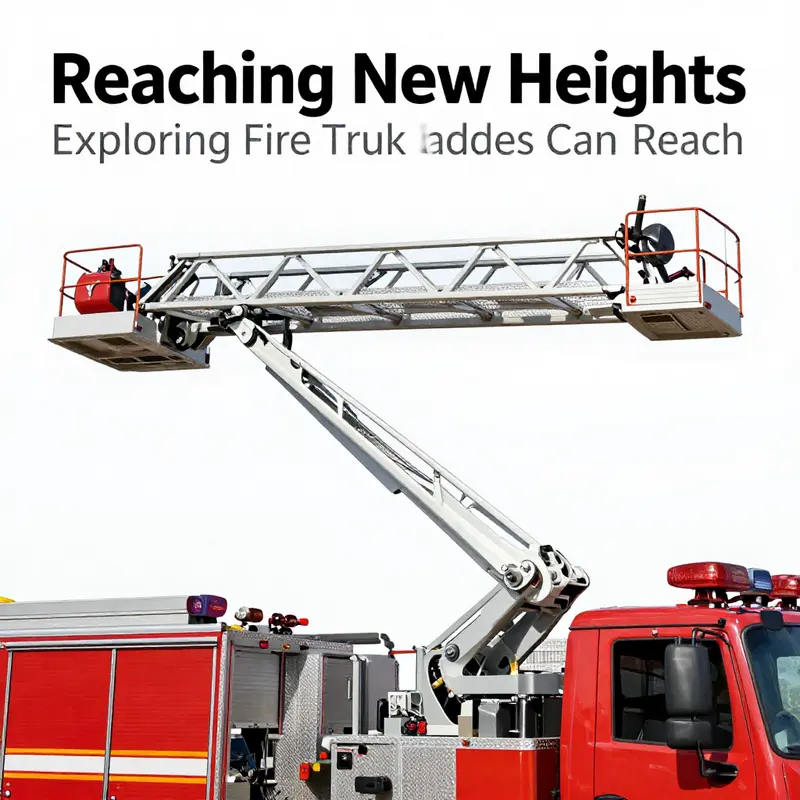
Cities reach toward the sky, and so do their emergency response tools. The image of a fire truck ladder extending toward upper floors is not just drama; it is a lifeline that determines how quickly firefighters can reach people in danger. Height has long defined capability, yet the last decade has shown that reach must be paired with stability, maneuverability, and smart control if it is to save lives in modern urban environments.
Today’s aerial ladders span a range that includes mid height workhorses around 55 meters and the ultra-long platforms that clear the uppermost façades. In practice, 50 to 60 meters covers many mid-rise incidents, while 100 meters and beyond unlock exterior access to the tallest towers. The newest systems hover in the 110-meter class, offering exterior firefighting, rescue at height, and complex water application from a height that used to belong to science fiction. Yet height alone rarely tells the full story; the ladder must remain controllable, stable, and precise as it climbs into wind and over obstructions.
The architecture of long-reach ladders is a study in balancing weight, stiffness, and travel width. Booms are built as multi-joint articulating structures that fold for road transport and unfold with laser-like precision at the scene. Lightweight materials—advanced aluminum alloys and composite materials—yield higher strength-to-weight ratios, allowing longer booms without compromising the vehicle’s handling. This combination of reach and mobility ensures the apparatus can be positioned safely and then deployed quickly when time is critical.
Sensing and intelligence now color every ascent. IoT sensors monitor position, joint stresses, hydraulic pressures, wind speed, and the ladder’s temperature profile. Real-time diagnostics help crews anticipate component wear and avoid surprises during a mission. Centralized data views support incident commanders with a common operating picture and enable more deliberate coordination between exterior operations and interior teams. The result is not just more meters, but more reliable performance under pressure.
Artificial intelligence and advanced analytics are moving predictive maintenance from the workshop to the field. AI can forecast when parts will reach end-of-life, optimize control parameters for different elevations and wind loads, and simulate rescue scenarios to guide decisions in real time. The practical effect is higher readiness, reduced downtime, and stronger safety margins for crews working hundreds of feet above street level.
Beyond the hardware, the value of these ladders rests on how well they integrate into daily practice. Training emphasizes choreography: command assessment, precise deployment with sensor feedback, alignment with building geometry, and tight coordination with water supply and ground crews. Drills simulate real wind, variable loads, and the heat of response to ensure that the ladder becomes a trusted reach point rather than a risky exposure. This alignment of engineering excellence, sensor-driven reliability, and disciplined operation is the backbone of modern exterior firefighting.
Economic realities and equity considerations shape where ultra-high ladders appear. They demand substantial capital, maintenance, and footprint considerations that not every department can meet. For many cities, a balanced fleet that includes both longer and shorter ladders remains the most practical strategy, enabling broad coverage while preserving flexibility and budget discipline.
Looking ahead, the global landscape of aerial ladder innovation continues to evolve through new hydraulic architectures, materials science, and smarter control systems. Industry analyses point to a future where height is increasingly a programmable parameter, with predictive diagnostics and intelligent stability control enabling safe operation at greater elevations. The trajectory favors safer, more reliable systems that can operate across a wider range of conditions while delivering rapid, targeted responses to life-safety challenges. External resource: https://www.marketsandmarkets.com/Market-Reports/aerial-ladder-fire-truck-market-273868543.html
Ascending to Danger: The Real Reach of Fire Truck Ladders and the Safety Equation in High‑Rise Emergencies
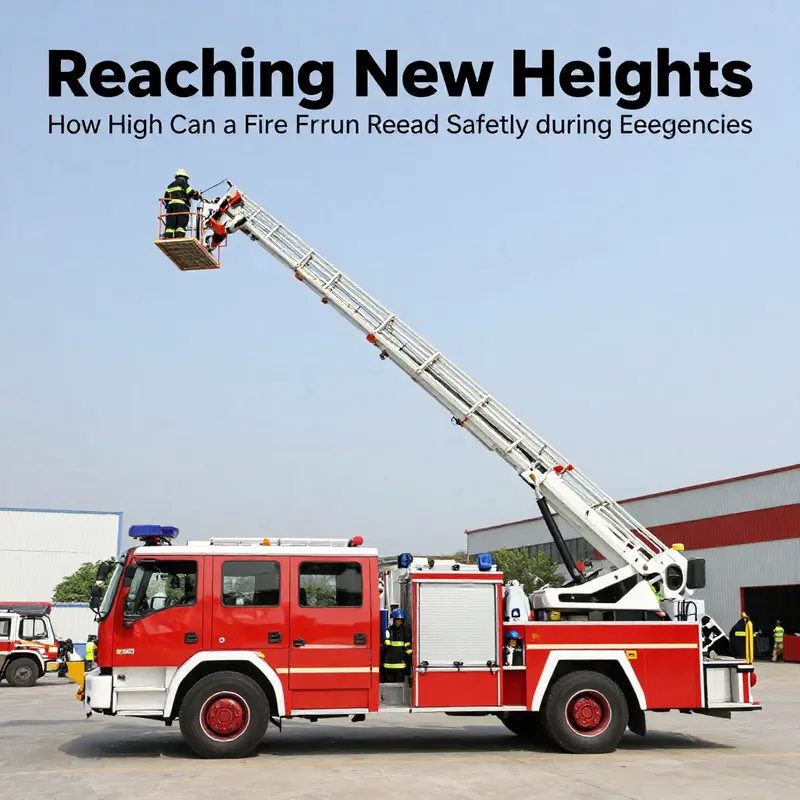
Height has long obsessed builders and responders alike, but in a fire emergency it is only one part of a much larger safety calculus. The question of how high a fire truck ladder can reach is not answered by numbers alone; it is answered by engineering, weather, ground conditions, and the disciplined execution of a rescue plan. In modern firefighting, the tallest operational platforms reach impressive heights, yet the safe working height—where firefighters can perform tasks without compromising stability or the integrity of the vehicle—usually sits well below the vehicle’s maximum extension. This distinction matters when a city faces the twin demands of rapid access to upper floors and the unpredictable variables that accompany real-world emergencies. As research and field experience show, a ladder may be able to extend beyond a building’s upper facade, but the critical question remains whether occupants can be rescued, hoses can be aimed with accuracy, and the crew can maintain balance and control under wind and load. Safety, in this sense, is not a cap placed on capability; it is the boundary that ensures that capability can be used effectively when minutes count and lives are at stake.
The current landscape of high-reach firefighting equipment reveals a spectrum of capabilities. The tallest operational platforms in service today are around 112 meters tall, which translates to roughly 367 feet. This is not a casual figure but the apex of contemporary design—an achievement built for rescuing people and suppressing fires in extremely tall structures such as skyscrapers. The height, in itself, signals possibility—an architectural challenge met with a machine designed to approach it. Yet even at this extreme, operators must contend with wind gusts, sway, and the sheer mechanical demands of extending a multi-section arm and stabilizing it under load. In the public eye, such heights feel almost cinematic, but in the cab the procedures are precise, repeatable, and deeply conservative. The vehicle’s base, outriggers, hydraulics, and control systems work in concert to keep the operator within a safe envelope of motion, even as the boom stretches outward and upward toward a distant window or balcony.
Beyond this apex, there is a more customary picture that guides most urban operations. There are high-reach units designed for rapid access and personnel evacuation, typically in the 55-meter class, capable of reaching the upper floors of roughly 17 stories. These platforms blend speed with stability; they are designed to deploy quickly, extend smoothly, and maintain a wide raft of safety features—multi-joint articulating booms, automatic leveling mechanisms, and precise load management systems. In practice, they provide dependable access to mid- and high-rise heights, allowing crews to perform interior rescues, exterior ventilation, and water application from a secured elevation. The 72-meter range represents another important benchmark on the spectrum, often cited as a practical ceiling for more advanced aerial platform models used in dense urban cores. These vehicles deliver a robust operating window—enough reach to engage mid-to-high floors while maintaining the stability that keeps a ladder from becoming a liability in the wind or under dynamic loads.
The most striking of the recent demonstrations, however, come from the upper ranges. A 101-meter elevated platform has been publicly showcased during national campaigns and press events, marking a milestone in what is reachable under controlled conditions. While such demonstrations are informative, they are not interchangeable with everyday operations. In the field, crews respect the difference between a staged display and a live incident where wind, structural movement, and the weight of people and water alter the equation. In that sense, the 101-meter figure represents the edge of technological possibility, not the everyday standard for emergency response. Yet it also serves as a reminder that design goals continue to push the envelope, enabling responders to address fires in towers that would have seemed unreachable in decades past. It is the same drive that yields a 91-meter five-axle platform elsewhere in the fleet, a configuration chosen for its balance of reach, stability, and maneuverability in intricate urban layouts where space for a wide base is limited yet access high enough to reach many floors.
To understand how these heights translate to actual operations, it is essential to consider how the equipment is built to withstand both the forces generated by the extension and the unpredictable environment outside the building envelope. The mechanical core—the outriggers, the base, the joints, and the counterbalancing systems—must absorb the sway and absorb the energy of wind, while the boom itself must maintain alignment under gravity and dynamic loading. The most stable systems tend to limit the amount of sway to a few centimeters even at full extension, ensuring that water cannons and other tools can be aimed with accuracy. This is not a trivial achievement. A boom that wobbles excessively is a hazard to firefighters, to residents, and to the structure itself. Hence, the design philosophy leans toward a conservative posture: extend only when conditions permit, level the base meticulously, and maintain operator control that prioritizes safety over extra height. In short, reach without reliability is not a feature; it is a risk.
From a practical operational perspective, there is a clear bifurcation between the maximum theoretical reach of these platforms and the safe working height for ongoing rescue or firefighting tasks. The maximum safe working height for curved-arm articulating aerial platforms—the kind designed to maneuver around obstructing balconies and narrow corridors—has reached up to about 101 meters in the most favorable conditions. In these configurations, the vehicle can access buildings as tall as 33 to 34 stories, with careful planning and ground support. The edge here is not the ability to reach the topmost point of a skyscraper, but the ability to operate safely at significant elevations, with a stable platform, controllable water flow, and clear visibility for the firefighter directing the operation. The same class of machines, renowned for their flexibility, can only ensure safety if wind speeds remain within predetermined limits, if stabilizers are fully deployed, and if the operator remains within training parameters that govern extension, retraction, and load management.
In the broader urban context, two additional realities shape how high crews push their ladders in emergencies. First, weather is a perpetual variable with an outsized influence on safety at height. Even a modest gust can translate into lateral movement of the boom, complicating the alignment with a target window. Wind loading ratings, therefore, are a central design consideration, and they define operational ceilings that may differ from day to day, hour to hour. Second, the building itself imposes a practical ceiling. The escape route, window geometry, exterior cladding, and surrounding parapets all influence where firefighters can position the platform and how much water can be delivered without compromising bystanders or the rescue subject. These factors drive the need for meticulous incident command, with decisions about extending the ladder based on the evolving scene, the location of occupants, and the probability of basement or interior access needing ventilation or entry. In this sense, the height is only as useful as the coordination surrounding it, and the most effective operations are rooted in rehearsed procedures that anticipate conditions before crews arrive on scene.
A further layer of complexity concerns water application. Theoretical reach can extend far beyond the altitude at which a crew can safely operate with people on the platform. Some water cannons mounted on high platforms are capable of projecting streams well beyond structural limits under ideal stability assumptions, reaching 130 to 140 meters in certain simulations or controlled tests. Real-world practice, however, is less forgiving. Wind, weight, and platform dynamics render such extreme reach impractical for direct firefighting or for rescuing people from upper floors. The practical boundary remains much closer to the upper end of the typical working range, where a combination of stable elevation and precise targeting allows crews to direct water and foam efficiently. The distinction between theoretical reach and safe operational height is not merely academic; it is the line that preserves the safety of firefighters and residents alike while preserving the integrity of the vehicle and the surrounding infrastructure.
In this continuum of capability and safety, planning and training emerge as the decisive factors. Fire departments design training programs to simulate a spectrum of conditions: varying wind speeds, different building layouts, and dynamic loads on the equipment. Operators learn to read the environment, to judge the moment when extending the boom ceases to be advantageous, and to coordinate with ground crews and incident command to shield occupants and safeguard the operation. A well-practiced team will know when it is safer to deploy a lower, more stable platform to carry out rescue operations or to perform exterior ventilation, even as a taller but more challenging option sits idle. This disciplined approach is how height is converted from a statistic into a lifesaving capability. It also helps cities prepare for the future, anticipating taller buildings and more intricate rescue scenarios that demand both reach and restraint.
The numbers, then, are a map rather than a destination. The maximum reach of the tallest platforms in the fleet hints at what is feasible in the most extraordinary circumstances. Yet the everyday truth is more nuanced. The safe working heights for emergency operations cluster in a range that favors reliability, control, and the safety of the crew. Typical operations commonly occur somewhere between the mid-30s and the lower 70s in meters, a band that accommodates most high-rise scenarios without inviting instability. The uppermost 100-plus-meter targets remain the province of rare, specialized missions, carried out only after exhaustive assessment and with a level of contingency planning that exceeds routine practice. The goal is not simply to chase height but to ensure that any height gained translates into effective rescue and controlled firefighting, with minimal risk to all involved.
For readers seeking a broader context on the equipment and practices shaping this field, a recent industry discussion highlights how equipment safety is framed in practice. firetruck.space/blog/ offers insights into the real-world considerations that govern operating limits, from stabilization to wind management, and from crew training to incident command. This repository of knowledge reinforces a simple truth: height is a powerful tool, but it is most effective when grounded in safety, discipline, and a rigorous understanding of the environment. The interdependence of engineering capability and operational judgment is what ultimately defines the practical reach of a fire truck ladder, guiding crews to choose the right tool for the task and to deploy it in a way that preserves lives while respecting the constraints that nature and physics impose.
A note on the numbers helps anchor the discussion in reality. The most extreme configurations described here—112 meters in service, a 101-meter platform demonstrated publicly, and a 91-meter five-axle variant—are not everyday fixtures in every city’s fleet. They reflect a spectrum across the modernization of rescue capabilities. A 55-meter ladder, by contrast, is a common sight for rapid access and evacuation tasks, and many cities rely on such platforms to bridge the gap between ground access and the higher floors, particularly where turning radius, street congestion, or building setbacks restrict the use of longer booms. In all cases, the objective remains consistent: provide safe, effective access to those in peril while maintaining the stability of the platform, the precision of the operator, and the integrity of the operation itself.
The practical takeaway for readers and practitioners is clear. High reach is a critical asset, but it functions within a tightly constrained safety envelope. The maximum theoretical reach is interesting and informative, yet the safe working height—the height at which firefighters can operate efficiently and with minimal risk—defines the daily reality of high-rise firefighting. In most circumstances, that safe operating window sits at roughly 32 to 72 meters, with higher reaches reserved for the rarest emergencies and executed only under the most stringent control measures. Understanding this nuance helps the public appreciate the skill and discipline behind every aerial deployment and helps residents recognize why responders may take longer to reach a rooftop or a high balcony in a sprawling skyscraper, even as the ladder inches ever higher.
External resource for further context on practical limits and equipment development can be found in comprehensive industry reporting: https://www.pacificautomotive.com.cn/news/20260120123456.html. This material complements the discussion here by detailing how official recommendations, testing standards, and field observations coalesce to guide what is considered safe, reachable, and reliable during real emergencies.
Reaching for the Sky: A Global Perspective on Fire Truck Ladder Heights and Urban Firefighting
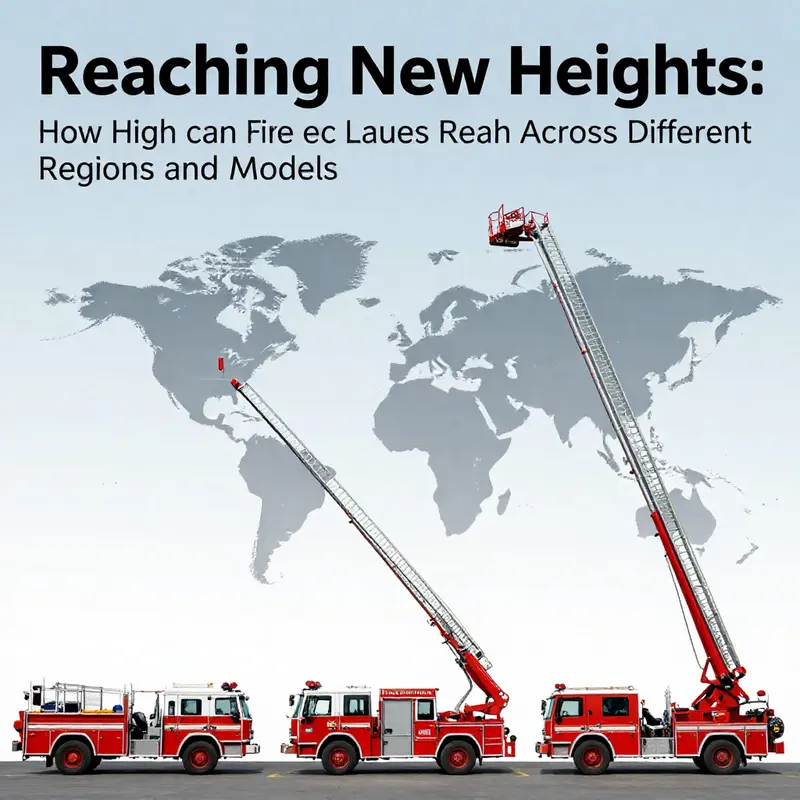
The city sirens rise, and with them the question that haunts every high-rise incident commander and every recruit who climbs into a truck cab: how high can a fire truck ladder reach, and what does that reach mean for saving lives and safeguarding structures? The answer is not a single fixed number. It depends on the design philosophy of the apparatus, the terrain of the city, and the specific mission profile the crew anticipates. In practice, ladder height is a blend of vertical extension, mechanical stability, and the operator’s ability to maneuver a long, heavy, articulated structure into position while delivering water or rescue services. Across the spectrum of modern fire apparatus, the tallest operational ladders are found in the 100 plus meter class, where the ladder itself, plus the platform, can ascend well above the upper floors of most skyscrapers. In this tier, a figure around 112 meters often marks the upper bound of what is currently deployed, translating into access to the uppermost levels of many towers and providing a vantage point and reach that were once unimaginable. To understand what these heights mean in practical terms, it helps to distinguish between working height, maximum extension, and the real-world constraints that accompany operating at extreme altitudes. Working height describes the vertical reach at which firefighters can perform tasks with confidence using water streams, rescue gear, or patient care equipment. It does not tell the whole story, because the addition of a platform or a nozzle, the need to stabilize the chassis, and the curvature of the ladder arc all limit what you can safely accomplish at that height. The maximum extension, meanwhile, is the pure mechanical length of the ladder when fully deployed, a number that can imply capability but not necessarily operational feasibility. And then there is the context of the urban landscape: the street width, the slope of the terrain, the proximity to power lines, and the availability of stable ground for outriggers. Taken together, these factors explain why two cities with similar skylines may rely on different configurations of the same overarching ladder category while achieving related, though not identical, outcomes in fire suppression and rescue.
The global landscape of ladder heights is surprisingly uneven, shaped by how cities grow, how fire services invest in technology, and how manufacturers push the engineering envelope. The tallest-class apparatus in service today belongs to a tier that is almost exclusively built for high-rise rescue and complex firefighting in dense urban cores. The top tier commonly features an aerial system that can achieve approximately 112 meters of extension. This height is not just a metric; it is a practical threshold that makes it possible to place rescuers near the uppermost floors of even the tallest towers and to deliver water from a safe height into top-floor fire zones when interior access is blocked or compromised. The effort to reach such heights relies on a suite of advanced features: multi-joint articulating booms that can bend and coil while maintaining a robust, level platform, automatic leveling to hold a stable stance on uneven surfaces, and integrated water delivery systems that allow firefighters to commence cooling or knockdown operations without descending to the ground.
Alongside these 112-meter giants, other nations have pushed into the 100-meter range with units designed for dense urban environments. A number of 101-meter class platforms have become notable for their height and their role in high-rise operations during public demonstrations and urban safety campaigns. While the exact configurations vary, the core concept remains: a high working height paired with precise hydraulic control and reliable stabilization enables a response that can reach the upper floors of mid- to large-scale towers, often without lengthy internal access routes. A different but related line of development sits at around 110 meters, a height that reflects domestic innovation aimed at closing the gap with international leaders while leveraging local manufacturing ecosystems. In this space, a 110-meter unit demonstrates how national industries are expanding their capabilities from raw horsepower to integrated systems: independent chassis architecture, a self-contained hydraulic system, and a level of automation that reduces the crew’s physical burden during deployment.
Yet even within the tallest families, there is a wide spectrum of capability. A common mid-range high-lift configuration, around 55 meters, remains ubiquitous in many urban areas because it aligns with the typical building heights encountered in a broad range of cities, while still offering rapid deployment and efficient vertical access. These 55-meter aerial ladders, capable of reaching roughly 17 stories, provide a practical blend of reach, speed, and maneuverability. They are commonly equipped with multi-functional capabilities such as onboard water pumping, high-flow water cannons, and stabilized platforms that enable rescue operations and fire suppression with a high degree of precision. The technology behind all these machines—whether a 55-meter ladder or a 112-meter platform—rests on a core principle: the ladder is not merely a beam; it is a carefully engineered system designed to maintain balance, maintain reach, and maintain control as it spans a building or a street that presents multiple engineering challenges.
The salient differences in ladder heights across regions crystallize when we look at domestic capabilities and the developmental arc within a single country. In extensive urban centers where high-rise growth is prolific, emergency services anticipate a demand for very tall access, and manufacturers respond by elevating both the ceiling and the sophistication of the system. In this sense, height becomes a signal for the level of complexity the apparatus can manage: the combination of an elongated, articulated reach, robust stabilizers, independent control systems for each axis of motion, and a platform that can maintain a stable environment for firefighters. In some markets, a core line of development centers on fully independent intellectual property in chassis and boom control, which reduces reliance on external components and enhances reliability under stress. The result is a family of machines that can operate at extreme heights while maintaining the safety margins required by law and by the realities of urban firefighting.
The domestic setting reveals a different trajectory. In several large economies, the typical maximum working heights of standard, frequently deployed units hover in the 50 to 70 meter range. This reflects a strategic emphasis on versatility, speed, and cost efficiency for most urban fires and rescues. In these contexts, the 50 to 70 meter class is crucial because it aligns with the upper limits of many mid-rise structures and provides a buffer that supports rapid response without sacrificing the ability to perform complex operations when needed. Within this framework, there has also been a push to push the envelope with domestically developed platforms that approach or exceed the 100-meter mark. The idea is not to replace the 55-meter ladder but to expand the range of capability for special circumstances, such as the tallest structures in the city grid or industrial facilities with extreme elevations. The evolution here is not solely about height; it is about integrating height with a broader system of mobility, water delivery, and rescue workflow that keeps pace with the most challenging urban environments.
Interwoven with these developments is the broader question of how urban infrastructure and emergency service philosophy shape ladder design. Regions with dense, high-rise fabric invest in taller ladders because the potential for upper-floor exposure and the need for rapid vertical fire control are more acute. Regions with different urban geometries may prioritize rapid deployment and ground-level versatility, balancing ladder reach with trainable maneuverability across narrow streets and tight corners. The future, then, is not a single champion ladder that crushes all challenges; it is an ecosystem of platforms whose heights are matched to the city’s vertical profile, its building codes, and the available means to support a safe and effective operation at height. This dynamic has already given rise to significant domestic achievements, including multi-functional elevated platforms that claim a maximum operating height in the neighborhood of 110 meters, illustrating a maturity in engineering that rivals the tallest international configurations while underscoring the importance of local design, supply chains, and maintenance sensibilities.
Within this landscape, the engineering choices behind ladder height are as important as the height itself. The chassis, for instance, has moved from simply carrying a heavy ladder to becoming a sophisticated foundation that can absorb the forces generated when the boom is fully extended. Advanced hydraulic systems, powerful stabilization outriggers, and precision leveling mechanisms work in concert to ensure that the ladder can be positioned accurately even on uneven ground. This is essential not only for reaching a distant window but also for ensuring that a nozzle or a rescue platform can deliver water or services without compromising the safety of the crew. The integration of onboard pumps and water cannon systems with the ladder boon adds another layer of capability. It enables the crew to establish a water flow while the ladder remains elevated, a feature that is particularly valuable when interior access is compromised or when the fire demands immediate cooling on upper floors. The result is a device that blends mechanical reach with operational efficacy, turning a high-altitude position into a safe and productive platform for intervention.
From a practical standpoint, the height of a fire truck ladder is contingent on more than the ladder itself. Road geometry, sidewalk clearance, overhead wires, and street width all influence where a 112-meter tower can be safely deployed. The crew must assess the surroundings, anticipate wind effects on a tall, slender structure, and design a plan that aligns with the water supply, the interior layout, and the occupant locations. In some cases, the most critical factor is not how far the ladder can extend but how effectively it can be placed near the target window or balcony. A longer ladder, if not properly positioned, may offer limited operational value. The artistry of high-altitude firefighting lies in balancing reach with placement, enabling a precise, stable, and accessible platform that makes it possible to reach trapped occupants, deliver cooling water at the fire source, and conduct rescues with the maximum degree of safety.
This point brings us to a central theme that threads through the chapter: the height race is not merely about taller ladders; it is about smarter, safer systems that can operate at altitude under pressure. In cities with very tall buildings, a ladder’s height becomes a critical element of mission readiness. Operators train extensively to steward the balance between reach and stability, and maintenance crews ensure that every joint, hose, and stabilizer can perform under the duress of a real event. The willingness of national industries to invest in self-reliant chassis and integrated control technologies also matters because it reduces downtime and enhances the predictability of performance when every moment counts. In contrast, cities with a more varied skyline may prioritize a versatile set of platforms that can cover the majority of structures with speed while reserving the option to call upon taller assets for the rare, extreme scenario.
In the broader narrative, these developments also reflect the ongoing evolution of firefighting as a field. High-rise fires demand not only courage but also engineering that makes it possible to work at improbable heights with a degree of certainty and safety that matches what crews expect on the ground. The most advanced systems carry with them a philosophy of redundancy and automation: multiple axes of motion controlled by precise electronics, configurations that can compensate for dynamic wind loads, and countermeasures designed to prevent drift. The human operators, trained to interpret a complex tapestry of indicators, coordinate with teams on the ground to ensure that evacuation, rescue, and suppression tasks unfold in a synchronized sequence. The ladder becomes a conduit for both life and fire control, its height a measure of potential reach that must be matched by the certainty of placement and the reliability of supporting systems.
For readers who want to explore the construction and materials that undergird these tall machines, the structural backbone is a telling indicator of capability. The choice of steel alloys, the way joints are engineered for bending while maintaining stiffness, and the design of rotation and extension mechanisms all contribute to a platform that can withstand the stress of extended operation at height. This is not merely a feat of hydraulic power; it is a sophisticated orchestration of materials science, fatigue analysis, and precision manufacturing. The result is a ladder that can be extended, aimed, and stabilized in a controlled manner, giving firefighters a dependable tool when time is scarce and danger is high. For readers who want to dig deeper into the structural and material side of firefighting apparatus, a close look at steel-based configurations provides valuable context for why some ladders reach farther than others and why maintenance routines are intricate yet essential. See the detailed discussion in steel-fire-apparatus.
The chapter closes not with a single verdict but with a picture of a landscape in motion. Height is not an absolute measure of capability; it is a passport to potential that must be earned through careful design, rigorous testing, and disciplined operation. As cities continue to rise, as climates push emergency services to confront new kinds of threats, and as manufacturers refine the balance between reach, weight, and reliability, the question of how high a fire truck ladder can reach becomes a living question rather than a fixed fact. In the near term, the tallest operational ladders hover in the 110 to 112 meter range, with a family of capable platforms around 100 meters that can address the majority of high-rise tasks while remaining practical for daily deployment. Beyond that, innovations in chassis engineering, hydraulic control, and on-board water delivery promise to extend both the horizon and the reliability of the response. This evolving panorama highlights a core truth: taller ladders empower crews to act earlier and with greater scope, but their true strength lies in the seamless integration of reach, stability, and precision across the entire firefighting workflow.
External references provide deeper resonance for the numbers and developments discussed here. For a broader sense of how the top tier is described in the technical literature and industry reporting, the following external resource offers a detailed specification perspective on the leading 112 meter class platforms: https://www.e-one.com/products/cyclone
Final thoughts
Understanding how high fire truck ladders can reach is crucial for anyone interested in firefighting and emergency response. The advancements in technology have allowed these machines to extend their reach significantly, enabling firefighters to effectively combat fires and save lives at unprecedented heights. By leveraging innovations in safety and mechanics, modern fire trucks are equipped to tackle the challenges posed by towering structures and their inherent risks. Whether you are an enthusiast admiring these machines or a future firefighter planning your career, this knowledge empowers you to appreciate the vital role these tools play in keeping our communities safe.