
Understanding whether fire trucks stop at red lights is crucial for enthusiasts, aspiring firefighters, and professionals within firefighting. Fire trucks are not merely vehicles but essential tools for saving lives during emergencies. This article aims to dissect the legal framework that governs their operations at traffic signals, the safety protocols they follow to ensure every response is safe, and how response times can impact their emergency operations. Additionally, we will delve into how public awareness and education play vital roles in ensuring that everyone on the road understands the importance of yielding to these emergency vehicles. Each chapter will build upon these foundations, providing insights that will enrich your understanding of this critical topic.
Red Lights, Rapid Response: Navigating the Legal Landscape of Fire Trucks in Emergency Traffic
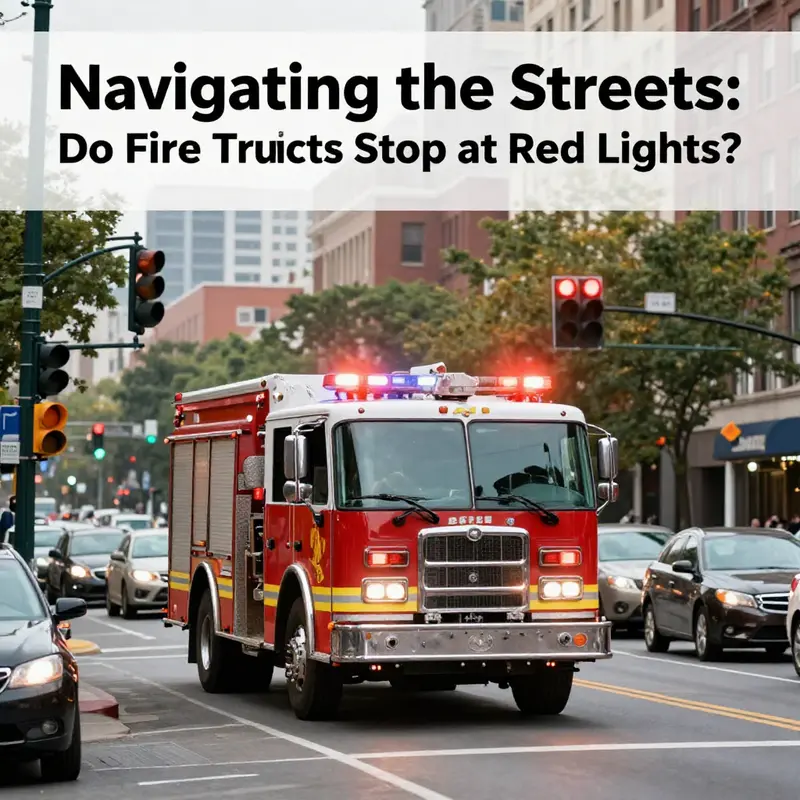
When the sirens begin to wail and the lights flare, the clock becomes a weapon. Firefighters race toward the scene where a life, a home, or a neighborhood is depending on their prompt arrival. Yet the sight of a red light does not automatically become an obstacle in their path. The legal framework that governs emergency vehicle operations is a careful calibration between speed and safety, urgency and responsibility. In the United States, fire trucks are not simply free to ignore the rules of the road; they are granted a specialized status that allows them to treat red traffic signals as yield-instead-of-stop controls under tightly defined conditions. This status exists to minimize the delay between dispatch and doorstep deployment, yet it is bounded by a code of safety, discipline, and accountability. The dynamic is not a license for recklessness. It is a structured practice built on training, coordination, and a culture of extreme caution. The chapter that follows examines how this legal framework works in real life, how it shapes the behaviors of those behind the wheel, and how communities balance the need for speed with the imperative to prevent harm at busy intersections.
In broad terms, the emergency-vehicle privilege is a legal recognition that when a fire truck travels with lights and sirens activated, far more is at stake than a single driver’s convenience. The most common approach in many jurisdictions is to treat a red light as a stop sign or as a signal that can be disregarded only if the operator can proceed with due regard for safety. This means headlights, sirens, and the distinctive acceleration of the apparatus are not a carte blanche to plow through traffic. They are a system of alerts and safeguards designed to communicate intent while prompting other road users to yield in predictable ways. The rules are codified in state vehicle codes, and while the core idea is consistent—the emergency vehicle may continue through a red signal under certain emergency conditions—the specifics can vary from state to state, city to city. The overarching principle remains: speed must not override safety. The operator must continually assess reachability, line of sight, the behavior of other drivers, pedestrians, and the possibilities of cross-traffic conflicts. In practice, that means approaching intersections with heightened awareness, verifying that the way is clear not just in front, but on all sides, and pausing when visibility is compromised or when traffic conditions render passage unsafe. Digital dispatch and human judgment work in tandem to determine whether a green-flag moment exists at a red signal or whether a safer alternative route is warranted. The legal framework is thus not a script for fast driving but a guideline for responsible, rapid response.
This balance—speed without recklessness—rests on a set of clearly delineated responsibilities. Fire truck operators are required to maintain safe standards of operation that align with professional guidance and public safety expectations. The requirement to proceed with extreme caution translates into practical behaviors: signaling intent clearly through horns, lights, and smooth, predictable motion; slowing to assess the intersection before entering; and adjusting speed to the traffic environment as soon as the truck clears the crossflow. When conditions are unfavorable—low visibility, heavy traffic, or unusual weather—the same rules that grant the emergency privilege can necessitate a temporary pause. The law does not permit abandoning the intersection to chance; it demands deliberate, cautious decision-making. A driver who chooses not to proceed through a red light because the scene cannot be reached safely can be following the same protective instinct that governs ordinary driving. The difference is that, in an emergency, the decision may be time-critical, magnifying the consequences of every choice.
Legal privileges and responsibilities thus walk hand in hand. Fire apparatus operators are obligated to operate with due regard for the safety of all road users, including pedestrians and the occupants of nearby vehicles. The concept of due regard is a enduring thread through public safety doctrine: it binds legitimacy to accountability. If an operator cannot navigate an intersection safely, the law does not compel a reckless rush toward a scene. When safety is achievable, the privilege can fast-track a response, reducing the delay that can prove decisive in a fire, a medical emergency, or a hazardous materials incident. Yet the consequences of misjudgment are serious. Civil liability can arise from preventable collisions, and criminal charges can accompany egregious disregard for traffic controls or a pattern of dangerous driving. The legal landscape is thus designed not only to empower but also to discipline, ensuring that the power to bypass a red light does not become a license to endanger.
The operational decision at every intersection is aided by the equipment in the cab, the training of the crew, and the guidance embedded in national and local standards. NFPA guidelines occupy a central place in shaping how emergency vehicle operations are taught and evaluated. The NFPA’s standards emphasize safe handling of apparatus, accountability for crew performance, and a disciplined approach to driving in emergency modes. They insist that, even with the sirens and flashing lights, firefighters must execute a drive with controlled speed, clear visibility, and a readiness to slow or stop if the risk of collision becomes unacceptable. The emphasis on safety is not secondary to speed; it is a precondition for speed to be meaningful and sustainable in a dangerous environment. The Fire Service learns to blend the urgent tempo of an emergency with the methodical caution of a high-stakes road operation. The result is a practice that looks, to the casual observer, almost choreographed: a fleet of engines and ladder trucks moving in concert with street rhythms, shaped by the constraints of traffic and the inevitability of human error.
A critical dimension of this landscape is the dynamic interplay between law and practice at the level of individual intersections. Dispatch decisions, which determine the route and timing of a response, are the first layer of control that can reduce or intensify the risk encountered en route. The routing philosophy aims to minimize time in high-conflict zones while preserving the fastest possible arrival to the incident. When a red light presents a clear, controlled passage—meaning the crossing traffic has yielded and the intersection is visible from all approaches—the emergency vehicle can continue in a straight, predictable arc rather than weaving through lanes. Conversely, when a crossing appears risky—perhaps because cross-traffic is aggressively proceeding or a pedestrian crossing is poorly observed—the crew may opt to request a different route, even if that means a longer time to the scene. The goal is not to maximize speed blindly but to maximize the probability of a safe, rapid arrival. In this calculus, the human factor—training, vigilance, experience, and teamwork—carries weight equal to the legal framework.
Communications within and between agencies further anchor safety in the moment of crossing a red signal. The dispatcher’s role is not merely to relay a location and a fire code; it is to provide a tactical backdrop: what the intersection looks like, what traffic patterns are in play, and what back-up resources are nearby. Firefighters, in turn, rely on their mutual understanding of procedures for entering traffic, crossing lanes, and coordinating with other responders such as police units, who might be controlling traffic at the same intersection. The synergy between dispatch, command, and field crews helps ensure that each crossing is predictable, auditable, and, above all, safe. This is where the practical reality of emergency vehicle operation diverges from a simple rule of law. The rules exist to guide behavior; the actual practice emerges from a shared mental model that arises from hours of training, repeated drills, and the tacit knowledge of how traffic machines and human drivers respond under stress.
The public’s role in this system is both protective and reactive. Drivers must recognize the emergency signal, slow down, and yield the right of way. Pedestrians must be aware that a red light does not guarantee a stationary crossing; instead, a driver in emergency mode may still cross when it is safe to do so. This mutual awareness creates a dynamic trust: people learn that when they hear a siren, their first obligation is to create space, then to observe the approach of the apparatus, and finally to proceed in a way that preserves safety for everyone. Communities that cultivate this awareness—through education, signage, and consistent enforcement—help ensure that the legal allowances granted to emergency vehicles translate into safer roads rather than reckless shortcuts. The sense that law and practice are aligned is essential; it reassures the public that the privilege to pass red lights is not an invitation to disregard others, but a carefully bounded power used in the service of saving lives and protecting property.
In addition to the ground-level realities, there are structural elements that can shape how red lights are treated in emergencies. Some departments implement traffic-signal preemption or similar technologies in certain jurisdictions, which can alter the behavior of traffic signals to create a safer corridor for an approaching unit. The presence of such systems does not erase the foundational rule of due regard; it complements it by reducing the likelihood of conflicting movements at critical moments. Even with preemption, the operator remains accountable for the decision to proceed, and the intersection must still be navigated with careful observation and speed that is controlled rather than reckless. The law is not a permit; it is a framework for disciplined action. The department’s policies and training programs articulate how crews should respond to a red signal in different contexts—whether they are navigating a dense urban core, a suburban arterial, or a narrow street with parked cars and limited sightlines. These policies echo the NFPA guidance, which underscores that the primary obligation is to reach the scene as quickly as possible while preserving the safety of the public and responders alike. The phrase “rush mode” often appears in training and doctrine, but it is paired with a countervailing imperative: never let urgency trump safety.
The ethical texture of emergency vehicle operation is an essential counterpoint to the mechanics of law and procedure. It invites reflection on accountability, risk, and public trust. When an intersection is crossed under red, and an accident occurs, the line between legitimate emergency response and negligent conduct can blur. Jurisdictions rely on robust records—dash-cam footage, radio transcripts, and incident reports—to adjudicate such events and to refine protocols. The push for accountability does not mean second-guessing every moment spent at a red light; it means ensuring that every decision is justifiable, that the risk calculus is transparent, and that the public understands why certain actions were taken. A culture of continuous improvement emerges from this transparency: after-action reviews, training updates, and, where appropriate, changes to traffic-management strategies that reduce exposure to risk. The aim is to maintain the legitimacy of emergency privileges while strengthening the social contract that requires responders to act with prudence, care, and professional restraint even under the most challenging conditions.
For readers seeking a deeper sense of how these elements converge in real-world operations, consider how the field integrates command systems and frontline execution. A chapter dedicated to the challenges of fire command systems can illuminate how communications, dispatch tactics, and field decisions cohere into a unified response strategy. See a thoughtful discussion on overcoming challenges in fire command systems for a practical look at how on-scene judgments are shaped by the larger command structure. Overcoming challenges in fire command systems.
Ultimately, the legal framework surrounding fire trucks and red lights is a nuanced ecosystem designed to balance competing demands. It recognizes that time matters, but so does the safety of the public and of those who answer the call. It recognizes that the mere fact of an emergency does not absolve drivers from responsibility; rather, it elevates the duty to perform with skill, discipline, and accountability. As the next chapters of this article explore broader themes—how command and control shape the response, how communities procure and maintain firefighting capability, and how responders prepare for the wide range of terrains and conditions they may encounter—the core message remains clear. Red lights are not just barriers to be ignored; they are thresholds that, when navigated properly, become gateways to saving lives. The legal latitude granted to emergency vehicles exists within a continuum of safety practices, professional standards, and a public commitment to responsible urgency. It is a sober reminder that speed and safety are not mutually exclusive but deeply interdependent facets of an emergency response that must always keep people at its center.
For readers who want to explore federal guidance that informs these state and local practices, the National Highway Traffic Safety Administration (NHTSA) provides comprehensive resources on emergency vehicle safety standards and federal guidance. See the official site for more details: https://www.nhtsa.gov.
Red Lights, High Stakes: The Delicate Balance Fire Trucks Strike Between Speed and Safety
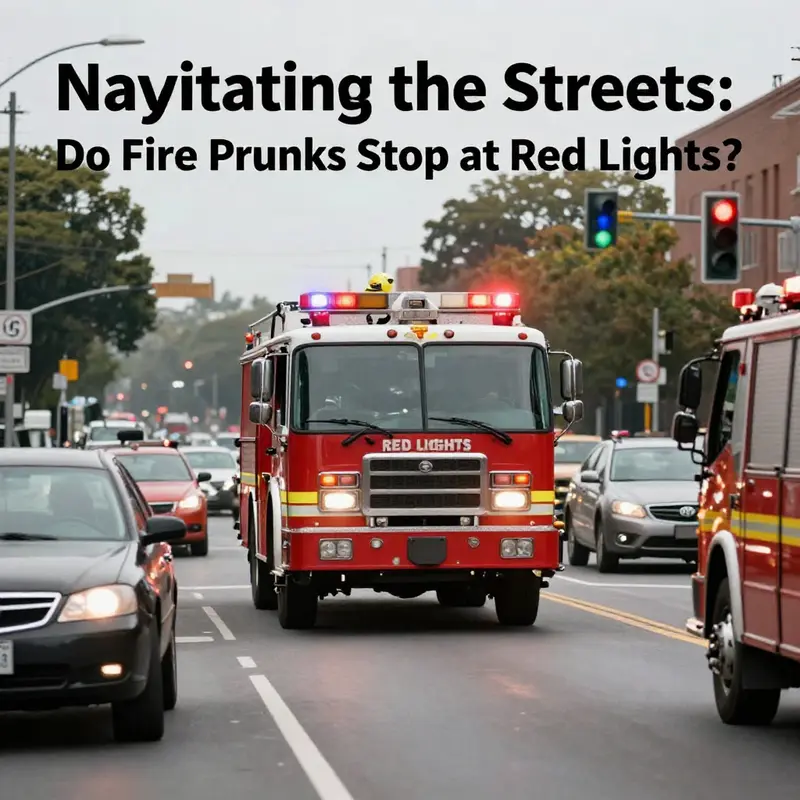
When a fire alarm erupts in a city, every second matters. The sound of a siren slices through the ordinary traffic rhythm, and a fire apparatus becomes more than a machine; it is a moving assertion of urgency. Yet the urgency is not a license to abandon caution. The question that underpins the entire enterprise—do fire trucks stop at red lights?—has no simple yes or no. In most jurisdictions, emergency vehicle status allows them to pass through red signals when responding to emergencies. But this right is tethered to a demanding discipline: the driver must weave speed and safety into a single, deliberate act. It is a choreography of judgment, training, and responsibility, where the goal is to reach the scene swiftly without creating new hazards along the route. The public’s trust rests on that balance, not on raw power or blind compliance with traffic signals.
The legal latitude granted to fire apparatus reflects a broader aim in modern emergency response: reducing the time from call to intervention while preserving life and property. The exception to stopping at red lights acknowledges the realities of firefighting, where every delay can permit a fire to grow, a collapse to worsen, or a victim to remain trapped. Yet those exemptions are not a carte blanche to ignore traffic. They are conditional, anchored in protocols that demand vigilance, clear visibility, and anticipation. When a truck approaches a red light, its crew does not abandon the intersection to fate. Instead, they enact a calculated assessment in real time, balancing the need for speed with the certainty that speed alone cannot guarantee safety. The siren and flashing lights are not a free pass to sprint through; they are cues that alert others to staggered responses and potential hazards, inviting drivers and pedestrians to yield, pause, and proceed with care if and only if the path ahead is clear.
The core of this practice rests on a practical, shared understanding of how intersections work under emergency conditions. Drivers must envision the cross traffic, not from the vantage point of a closed cab but from the perspective of an approaching threat. They scan for oncoming vehicles, bicycles, and pedestrians, and they interpret signals that may be malfunctioning, obscured by weather, or obscured by the intricate web of urban design. The process begins the moment the apparatus signals its intention. Emergency lighting increases the visibility of the vehicle, but it does not replace the need for a human eye to gauge cross traffic and turning movements. In many ways, the intersection becomes a dynamic chessboard where the options are constrained by physics and ethics as much as by law. The driver’s responsibility grows with the risk: the best course may be to slow and stop if the path is uncertain, even when a sign says go. The driving decision is not a surrender to red lights; it is a strategic choice to minimize exposure to harm while preserving the capacity to respond when the path becomes unequivocally safe.
Training and standard operating procedures play a pivotal role in shaping these decisions. Fire departments invest heavily in drills that replicate the ambiguity of real intersections, guiding crews to translate policy into action with confidence. The aim is not to create a rigid ritual but to engrain a flexible reflex: when to accelerate through a red and when to decelerate, how to position the apparatus to shield pedestrians, and how to coordinate with other responding units so that crossing paths do not lead to confusion or collisions. NFPA guidelines, particularly those captured in NFPA 1710, illuminate the way. They emphasize that fire crews must use their best judgment to determine whether it is safe to proceed through a red light. This judgment is grounded in verification of the path, maintenance of vehicle control, and readiness to stop if new information surfaces. The crew’s vigilance extends beyond the driver’s seat. All personnel onboard must stay alert, ready to assist in any sudden maneuver that a dynamic emergency might demand. This shared attentiveness helps transform a potentially dangerous moment into a controlled risk and, when possible, a rapid arrival at the scene.
In practice, the approach to a red-light intersection begins with a deliberate, outward-looking assessment. The driver must verify that the lane of travel is unobstructed, that cross-traffic has either stopped or is yielding in a predictable pattern, and that pedestrians are not stepping into the vehicle’s intended path. The use of sirens and emergency lighting serves to alert others to the approaching danger and to prompt a reconfiguration of traffic flow around the intersection. Yet the signals from the surrounding drivers must be interpreted just as clearly as the signals from the truck itself. A car may hesitate at the last moment, a cyclist may weave, or a pedestrian may misjudge the truck’s speed. All of these possibilities require the operator to be prepared to adjust, slow, or even halt before committing to a crossing. The driver’s control of the vehicle—staying within a protected travel lane, maintaining a steady yet adaptable speed, and using the vehicle’s mass to shield other road users—becomes a practical demonstration of professional restraint. In this sense, the safety protocols at red lights are less about winning a race and more about preserving the integrity of the transport corridor through which life-saving intervention must occur.
The ethical dimension of this practice cannot be overstated. Firefighters are entrusted with giving their best to the community under stress, but that trust is earned through consistent, transparent safety behavior. The decision to proceed through a red light is never a reflex; it is the outcome of a structured risk evaluation. If confronted with a potential collision, the crew will adjust course, craft an alternative path, or momentarily halt to let a more favorable window emerge. This is not an abdication of duty; it is a disciplined execution of duty under pressure. The same discipline translates into how the vehicle is operated as it moves through the intersection. The apparatus is steered with precision, its turning radius calculated to avoid encroaching into neighboring lanes, and its speed modulated to allow for a clear, measurable margin of safety. The driver’s hands, feet, and eyes are coordinated with the team in the back, where crew members scan the surrounding environment, communicate potential hazards, and ready themselves to take action the moment conditions shift. The mental readiness required here is a constant state, a form of professional rhythm that keeps the entire crew prepared for the unexpected without sacrificing the urgency of the mission.
Public safety hinges on a reciprocal awareness: drivers of other vehicles must respond appropriately to emergency signals, while responders must remain predictable and communicative. The hum of tires on pavement, the glow of flashing lights, and the cadence of sirens all contribute to a shared, evolving sense of safety. Drivers who are unfamiliar with emergency protocols may react unpredictably, underscoring the need for broad public education and ongoing community engagement. When the public understands the purpose and limits of running red lights, it becomes easier to foster cooperative behavior that reduces risk. Fire departments routinely emphasize the importance of drivers yielding to emergency vehicles by moving to the right and stopping, even when they themselves are licensed to proceed. This reciprocal behavior reduces the likelihood of mid-intersection conflicts and supports the orderly flow of traffic around the emergency corridor. The net effect is a city that can still function during a crisis, where the priority is protection of life while minimizing harm to those who must share the road with less predictable responders.
For crews, the intersection is also a site of continuous learning. Real-world experiences accumulate as evidence about what works and what does not. The lessons learned feed back into training, updates to protocols, and even how departments design urban response plans. The aim is to refine the balance between speed and safety, ensuring that the guidelines remain responsive to changing traffic patterns, road work, or new infrastructure that may alter visibility or response times. In this ongoing process, the emphasis remains on judgment, accountability, and clear communication. When an incident occurs at an intersection—for instance, a close call or a misread signal—the incident command system often initiates a review to determine whether procedures were followed and what adjustments could prevent a recurrence. Through this lens, the red-light protocol is not a static rule but a living framework that evolves with experience and with the city it serves. This is why the integration of operational guidelines with on-the-ground practice matters so much: it transforms abstract safety theory into concrete, reliable behavior under the pressure of real emergencies.
The practical takeaway for readers who may never operate an emergency vehicle is simple and powerful: respect the red light, but recognize why it is not a simple rule for fire trucks. The interplay of law, safety, training, and public cooperation creates a system in which speed is achieved without sacrificing safety. It is a fragile balance, a line drawn in a crowded city where pedestrians, cyclists, and other drivers each bring their own uncertainties. The emergency vehicle’s task is to move through that uncertainty with as much precision as possible, guided by protocols that prioritize the safety of the public and the responders alike. For those who want to explore the topic further, a discussion of how organizations navigate complex decision-making under pressure can be found in resources such as Overcoming Challenges in Fire Command Systems, which delves into the cognitive and procedural aspects that enable rapid, safe decision-making in critical moments. Overcoming Challenges in Fire Command Systems.
The broader takeaway is that red lights do not disappear in emergency response; they are transformed into opportunities to demonstrate professional judgment, to maintain control of a heavy vehicle in unpredictable conditions, and to uphold the trust that communities place in their responders. When people understand that the gap between a red light and a timely arrival often hinges on careful attention and disciplined practice, the tension between speed and safety becomes less a thorn and more a shared commitment. The emergency vehicle operator is not simply a fast driver; she or he is a navigator of risk, a steward of public safety, and a member of a team that must work in concert with the stubborn physics of streets and signals. In that sense, the red-light moment is the arena where firefighting’s core value—saving lives with skill and care—takes concrete shape on every intersection the truck encounters.
External resources offer deeper context for those who want to ground this discussion in formal standards. The National Fire Protection Association provides authoritative guidance on vehicle operations at intersections, including the standards and best practices that inform day-to-day decisions at fire departments around the world. For readers who would like to explore these standards in more depth, a reliable starting point is the NFPA’s official site. It is through such standards—developed through consensus, testing, and field experience—that fire services continually refine the balance between speed and safety, ensuring that every response is as effective and as safe as possible. https://www.nfpa.org/
Red Lights and Sirens: The Real Mechanics of Emergency Vehicle Response
Responding to an emergency places fire crews at a crossroad of urgency, law, and risk. Emergency vehicle status permits crews to proceed with sirens and warning lights, but it does not grant carte blanche to ignore safety. The decision to pass through a red light is a deliberate, context‑dependent judgment made by the officer in command and the driver, guided by training, dispatch information, and local policy.
Sirens and lights are designed to alert other road users and to create a window of opportunity to move safely through intersections. Yet the safety net is still the driver’s ability to assess gaps, confirm that cross traffic is yielding, and adjust speed to maintain control of the apparatus. The goal is to reach the scene quickly enough to save lives and property while avoiding additional harm.
Standard operating procedures, pre‑emption technologies, and disciplined crew communications help manage this risk. Preemption can prioritize a path through a signal, but it requires a clear view of the crossing and predictable behavior from other drivers. Lacking certainty, crews slow and scan, balancing the time saved against the potential for a collision.
From a policy perspective, jurisdictions differ in how they regulate emergency responses. The common thread is a shared responsibility: get there fast, but arrive safely. Training, incident command, and continuous performance feedback are designed to keep the use of red lights and sirens a calculated risk, not an impulsive one.
Empirical studies generally show that shorter response times can improve outcomes when safety is not compromised, but the relationship is nuanced. Speed beyond the limits of safety often yields diminishing returns and can create new hazards for pedestrians, cyclists, and other motorists. The practical takeaway is a system‑level balance: optimize dispatch, routing, and signal priority so that the last mile is as efficient as possible without elevating risk.
Ultimately, there is no universal rule that fits every location. The right approach depends on traffic patterns, road design, time of day, and the specific incident. The aim is consistent: reach the scene quickly and safely, guided by professional judgment, standard procedures, and a commitment to protecting everyone on the road.
Red Lights and Rapid Response: How Fire Trucks Navigate Signals to Save Lives
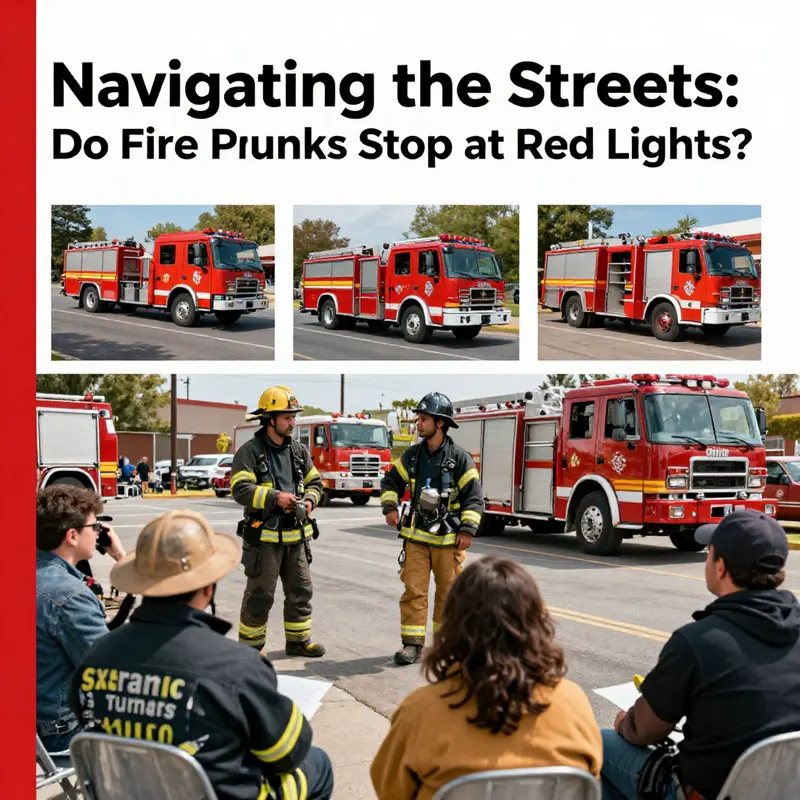
When a siren starts to wail and red lights flare, the road shifts from routine to urgent in moments. The question many drivers ask in those split seconds—do fire trucks stop at red lights?—is less a simple yes or no than a study in responsible risk and the ethics of speed. In most places, fire apparatus are designated as emergency vehicles with special privileges that allow them to disregard standard traffic signals under specific, controlled conditions. Yet this is not a license to rush heedlessly into danger. It is a carefully calibrated practice that blends legal authority, professional training, and relentless attention to safety. The public often imagines a pure, unimpeded sprint through intersections. In reality, the choreography is more intricate: fire crews must balance the imperative to reach a scene quickly with the equally important obligation to avoid creating new emergencies along the way. The result is a nuanced understanding of how red lights interact with the physics of speed, the geometry of intersections, and the human dimension of sharing the road with responders in harm’s way.
From a regulatory standpoint, the core idea is straightforward: emergency vehicle status grants certain exemptions from normal traffic control rules. Most jurisdictions acknowledge that fire trucks may proceed through red signals when responding to active emergencies, provided sirens and lights are active and the driver determines it is safe to do so. This framework exists precisely because every second counts in life-threatening situations, whether the incident is a blazing building, a serious medical event, or a dangerous hazardous-material scenario. But exemptions are not a carte blanche. They come with a strict expectation: operators slow down, scan the cross streets, and anticipate the unpredictable behavior of other road users. The operating premise is safety first, speed second. The NFPA’s guidance on emergency vehicle operations emphasizes that even as responders compress time, they must never abandon caution. They must create the maximum possible margin for error in environments that are inherently noisy, complex, and filled with competing demands for attention.
For drivers sharing the road, the message is equally clear and equally nuanced. Yielding to an emergency vehicle is not a one-note instruction but a disciplined practice that begins the moment you hear a siren. The standard response is to pull over to the right and come to a complete stop, allowing the fire engine to pass. This rule is reinforced by public education campaigns because it serves a dual purpose: it clears a safe corridor for the responders and it reduces the chance that a vehicle will impede the apparatus, forcing a costly or dangerous maneuver later in the route. As narratives from the field illustrate, ordinary vehicles should swerve away and let fire trucks pass first. Yet the practical application of this rule depends on the specific layout of the road, the presence of other vehicles, and the timing of the incident. In congested urban corridors, for example, the act of pulling over becomes a decision point that requires quick judgment about whether there is a safe space to maneuver. In rural or less predictable environments, responders may encounter different constraints—curves, grade changes, and slower traffic that can complicate the safe passage of an emergency vehicle.
Public awareness of these dynamics is not merely about obeying a rule. It is about understanding the rationale behind the rule and translating that understanding into actions that protect both responders and the public. Yielding to a fire truck is never a passive act. It is a proactive engagement that begins long before the apparatus arrives on the scene. Drivers should check mirrors and blind spots, signal their intentions, and maintain a steady, controlled stop. Once the emergency vehicle has passed, it is essential to wait until the roadway is clear and the responding crew has regained control of the area before resuming travel. This sequence—see, yield, wait, proceed—reduces the risk of secondary collisions that can occur when drivers misinterpret temporary gaps or misjudge the speed of an approaching engine. In other words, the red light rule is not strictly about the light; it’s about the life saved by timely, predictable, and orderly behavior.
The public’s understanding of this topic is reinforced by public safety campaigns that frame traffic flow around emergency operations as a shared responsibility. Local authorities frequently deploy traffic control measures during major incidents. A fire department may block a road with fire apparatus and redirect or turn back motorists to maintain a secure perimeter around the scene. These actions illustrate a broader principle: emergency vehicles are not simply vehicles; they are moving command posts that coordinate with police, dispatchers, and hospital partners to shepherd a scene from the moment a call is received to the moment care stops and law enforcement clears the area. The purpose of such traffic control is twofold. It protects responders from being impeded or endangered by oncoming traffic and, just as importantly, it reduces the chances that a scene will require a second arrival due to a preventable delay. The public must recognize that these traffic-control actions are not about punitive measures or personal discomfort; they are about preserving every possible second for people in crisis.
This understanding also matters for motorists who routinely travel through areas with frequent emergency activity. Public education materials stress practical steps that citizens can take in everyday driving: anticipate the possibility of an approaching emergency vehicle even if you cannot see it yet, move as far to the right as safely possible if you are in a multi-lane roadway, and avoid abrupt lane changes that could destabilize your vehicle or others nearby. These steps are particularly important at intersections, where the interaction of cross traffic, turning vehicles, and the approaching fire apparatus creates a high-stakes sequence. In such moments, the conventional habit of stopping at a red light does not automatically translate into an abrupt halt for a fire truck, especially if the light is not yet in its standard state or if the intersection is controlled by a system designed to prioritize emergency response. The essential skill for drivers is to observe, assess, and execute with accuracy, recognizing that the legality of bypassing a signal hinges on the context and their ability to maintain a safe trajectory for everyone on the road.
The public discourse around fire truck movements also intersects with broader conversations about traffic laws and emergency protocols. It is true that, in many places, a red signal can be disregarded by an emergency vehicle when responding to an urgent call, but the vehicle must proceed with extreme caution. This caution includes audible and visual warnings, continuous proximity assessment, and the discipline to pause when cross-traffic presents an imminent hazard. The driver’s decision to proceed through a red light is a calculated risk, one that weighs the urgency of the mission against the potential for collision. Training programs for firefighters emphasize this balance, teaching apparatus operators to interpret signals from the road and from the environment, to anticipate the actions of other drivers, and to recover quickly if a miscalculation occurs. The aim is not to minimize danger by speed alone, but to optimize overall safety through disciplined orchestration of movement and communication.
The educational emphasis extends beyond the cockpit. It invites a broader cultural shift in how communities perceive emergency response. A well-informed public understands that the rules governing fire trucks are not arbitrary. They reflect a long-standing commitment to saving lives while maintaining the integrity of the road system. Public awareness campaigns supported by law enforcement and transportation agencies articulate this message through accessible language, real-world scenarios, and practical demonstrations. They teach people to respond not out of fear but out of an informed sense of duty to protect those who run toward danger when others are urged to step aside. This educational work is ongoing; it is reinforced by annual reminders, school programs, community events, and digital campaigns that translate complex regulations into actionable behavior for drivers, pedestrians, and cyclists alike.
For readers who crave a more formal anchor, the guidance from national standards and federal resources provides a framework that educators and policymakers draw upon when designing curricula and public messages. The National Fire Protection Association’s Emergency Vehicle Operations standards, for instance, offer detailed expectations for training, vehicle operation, and the interaction between responders and the public. They emphasize that while the emergency vehicle can disregard signals under certain conditions, the operation is still governed by the overarching obligation to avoid collisions and to maintain control over the vehicle’s path. Public education materials mirror this balance, presenting scenarios that illustrate both the speed necessary to save lives and the caution required to prevent accidental harm. In practical terms, this means that when you hear a siren, you should look for the emergency vehicle, slow down, and prepare to yield, even if you believe you are several lights away from an intersection. The intent is to create a predictable environment in which responders can move rapidly without inviting unintended consequences on the road.
To connect these ideas with concrete actions, many communities have turned to storytelling and community engagement as a means to internalize the rules of the road around emergency operations. The goal is not to sanitize the experience of an emergency response but to demystify it. People who have witnessed a fire engine navigate an intersection often report that the experience is less about spectacle and more about the careful, collaborative choreography of hundreds of small decisions made in rapid succession. These decisions—how quickly to brake, how slowly to accelerate, when to signal, when to pause for a gap in traffic—are the practical expressions of a larger philosophy: speed in service of safety. The public, in turn, grows more confident in the system when it understands why the rules exist and how they are applied in real time.
For readers seeking further insight beyond the general principles, a number of resources can illuminate the specifics of emergency vehicle operations and the legal landscape that supports them. Public-facing materials and professional training resources emphasize that even though fire trucks may proceed through red signals when appropriate, any deviation from standard flow is earned through professional judgment, verified by crew experience and reinforced by ongoing education. The intersecting layers of law, training, and public expectation all aim to create a resilient system where emergencies are addressed with speed and with as much forethought as safety allows. If you want to explore the topic further through practitioner-oriented perspectives and case studies, you can consult the Fire Truck Blog for reflections on how communities negotiate these complex moments in everyday life and during extraordinary events. the Fire Truck Blog
In winding down this exploration, it is helpful to recenter on the core question: do fire trucks stop at red lights? The answer is both yes and no, and the distinction is essential. They may legally proceed through a red signal when responding to an emergency, but they do so under a framework that prioritizes safety, speed, and the careful management of risk. The public’s behavior—yielding promptly, avoiding sudden maneuvers, and maintaining awareness of the broader traffic context—helps ensure that the system works as it should. The result is not a dramatic spectacle but a disciplined practice that saves lives by combining the best of law, training, and civic responsibility. This chapter has sought to illuminate that practice by weaving together regulatory principles, field realities, and the everyday actions that ordinary drivers can take to support responders when every second counts. For communities committed to continuous improvement, the message remains clear and actionable: understand the rules, act with caution, and respect the dedicated work of those who race toward danger so others may live.
External resource for deeper regulatory context: https://www.transportation.gov/traffic-safety/emergency-vehicles
Final thoughts
In navigating bustling streets, fire trucks play a vital role in our safety. Their ability to move through red lights, backed by legal authorizations and strict safety protocols, ensures they respond promptly to emergencies. Yet, the responsibility doesn’t solely rest on the shoulders of firefighters; public awareness and education are paramount. By understanding these protocols and laws, we can work together to create safer roadways for everyone. From enthusiasts to future firefighters, each one of us has a role to play in respecting the urgency these heroes carry.