
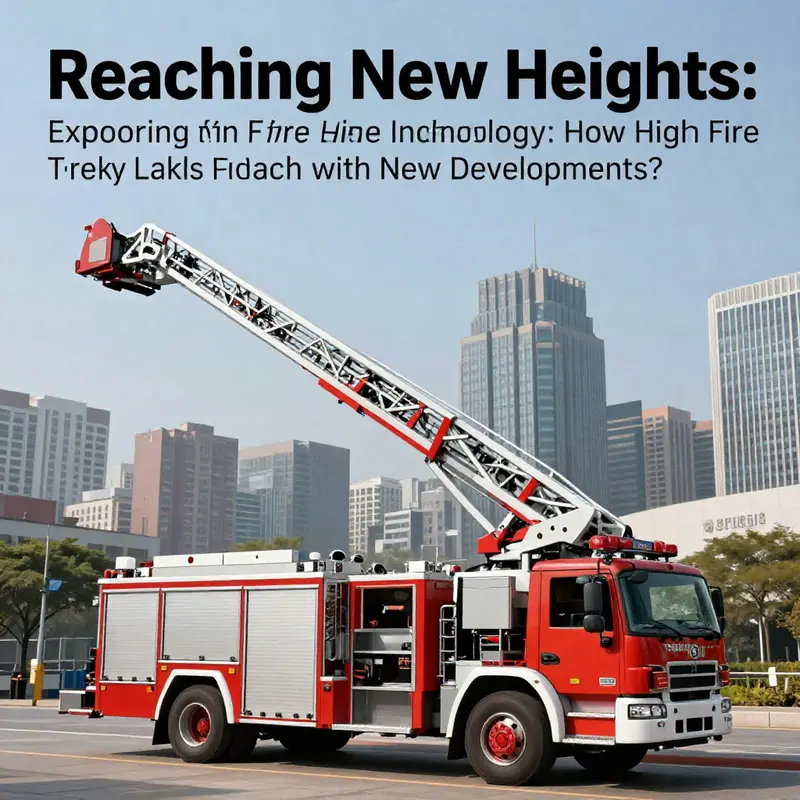
Firefighting has evolved into a high-tech endeavor, with modern fire truck ladders boasting impressive reach and capabilities. From standard aerials to advanced models designed to tackle the challenges posed by ultra-high-rise buildings, how high can fire truck ladders really go? This article explores various heights that fire truck ladders can achieve, beginning with standard applications, then shifting focus to high-capacity models, global variations, water discharge capabilities, and the latest innovations that push these limits even further.
Ascending the Skyline: The Real Reach of Fire Truck Ladders in Modern Firefighting
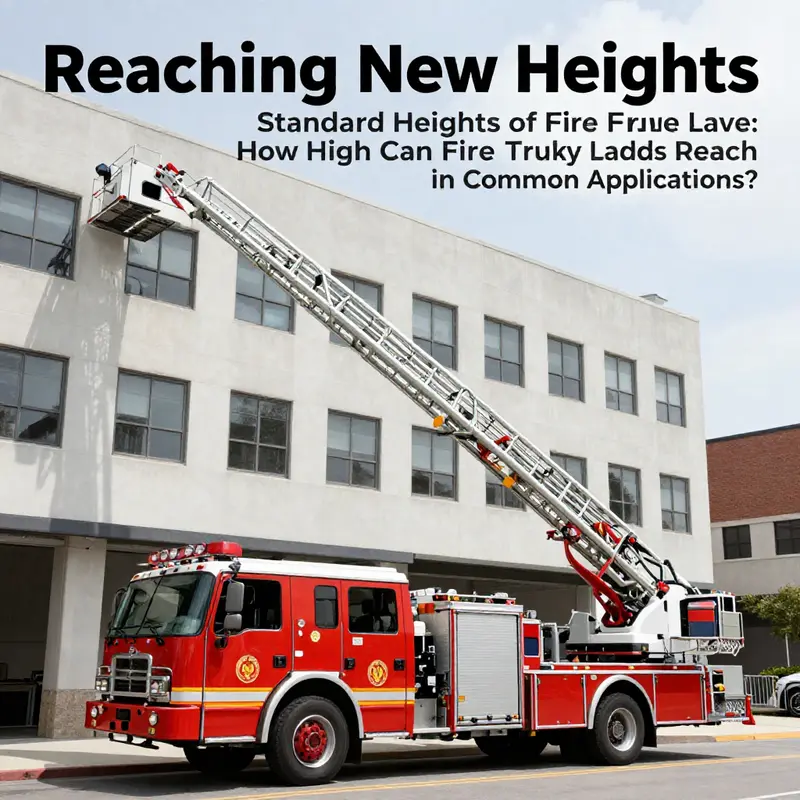
Urban firefighting relies on ladders and platforms that extend reach while maintaining stability. Regular aerial ladders typically extend roughly 70 to 135 feet (21 to 41 meters), enabling mid-rise operations and select high-rise rescues. The actual usable height depends on approach angle, vehicle stability, load, and wind. Specialized platforms can exceed standard ladders, often surpassing 130 feet (40 meters) and in some deployments approaching 150 feet (46 meters). These baskets allow closer work to walls and provide better ventilation access, reducing exposure for ground crews. Even as numbers rise, practical operation is limited by ground conditions, obstructions, and wind, which can affect reach and water application. Standards and testing govern maximum reach, load, and safety features, ensuring equipment remains within safe operating envelopes. Planners weigh factors like building height, occupancy, and egress routes to determine the appropriate mix of reach and agility. In sum, reach is the product of engineering, safety protocols, and strategic planning, not just a single measurement. For readers seeking specifics, procurement discussions address setup time, weight limits, upkeep, and parts availability.
Reaching New Heights: The Science, Limits, and Real-World Impact of High-Capacity Fire Truck Ladders
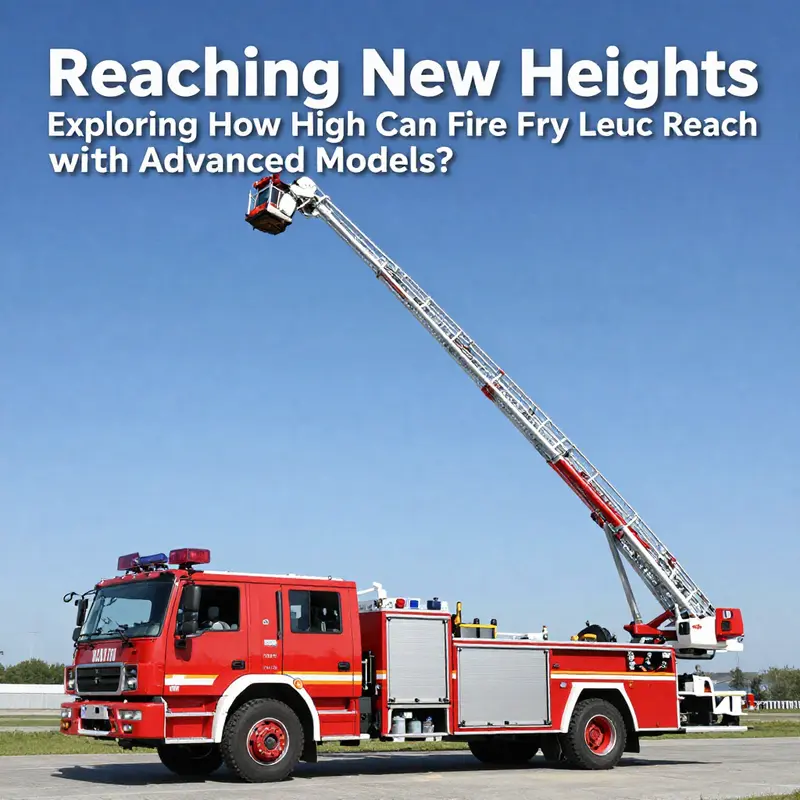
The height of a fire truck ladder is more than a number on a spec sheet; it is a crucial link between a blazing skyline and the people trapped inside a building, a line of defense that can transform a chaotic, high-stakes rescue into a controlled operation. Firefighting technology has long depended on telescoping booms and aerial platforms to extend reach beyond the reach of ground crews. In cities with dense, towering architecture, the demand for higher, steadier, and more capable apparatus has driven a steady push toward taller and more versatile ladders. The standard picture remains familiar: a ladder that unfurls to roughly 30 to 60 meters in many urban settings, enough to access mid-rise floors, ventilate roofs, and lay water lines from an elevated vantage point. Yet the modern city’s vertical scale is changing, and the ladder is evolving in tandem with it. The most advanced concepts in contemporary firefighting push the boundary well beyond routine calls, and this evolution has rippling effects on rescue strategies, incident command, and even the way cities plan for emergencies. The practical implications begin with design: a ladder or an aerial platform must combine reach with stability, responsiveness with safety, and mobility with the capacity to deliver water or foam from a height. Engineers have achieved this by refining hydraulic booms, adding extendable sections, and integrating rigid stabilization systems that counteract wind forces and dynamic loads. In a high-rise scenario, every meter of reach translates into more accessible floors, more predictable angles of attack, and more flexible options for firefighters entering from the exterior. The resulting platforms often look like a blend of sculpture and machine, capable of gliding a trained operator into the upper stories while simultaneously supporting monitors, nozzles, and lighting that illuminate a dark upper corridor and reduce the time to begin suppression. The height figures themselves tell a story of gradual escalation, with standard aerial ladders commonly achieving tens of meters of extension. Engineers and fire departments have learned to balance the arithmetic of height with the geometry of buildings and the physics of wind, weight, and loads. In practical terms, that balance means keeping the vehicle’s center of gravity within safe limits while extending the ladder outward and upward, a dance that requires meticulous maintenance of the stabilizers, outriggers, and chassis integrity. In dense urban cores, even modest increases in reach can redefine engagement zones on a fire ground—allowing crews to shorten the distance to victims, reduce the intensity of interior smoke exposure by creating better exterior access points, and position monitors at angles that maximize their effectiveness while minimizing backdraft risks on the ground. The results of these design choices are sometimes dramatic. High-capacity aerial platforms, even when not at the absolute extreme of height, provide dozens of additional meters of reach compared with traditional ladders and open the possibility of accessing upper floors that would otherwise require a long interior ascent or time-consuming interior searches. In several major cities around the world, there are models designed to extend beyond the standard range, reaching levels once thought impractical for rapid exterior operations. These configurations do not simply extend the ladder; they often incorporate a suite of integrated tools. A platform might include a built-in water monitor, a high-intensity lighting array, and a surveillance or thermal-imaging system that can guide crew actions as soon as the aerial reaches a target level. The synergy of reach and integrated tools accelerates decision-making at the critical moment when a window is found, a victim is located, or a fire line needs to be established from above. The height and hardware are not ends in themselves; they are enablers of decisive, efficient action on the fire ground. In this sense, the real transformation is not merely about elevating a ladder higher but about raising the level of safety and capability for every operation. It is a shift from line-of-sight firefighting to an integrated system that combines access, water delivery, lighting, and situational awareness in a single, deployable platform. A higher reach is most valuable when it translates into safer, faster rescues and more effective control of the fire environment on upper floors. Beyond the firefighting mechanics, height-capable ladders reshape the way incidents are planned and executed. Fire departments increasingly map their urban footprint with a clear eye toward vertical reach, ensuring that apparatus fleets include vehicles capable of addressing the tallest structures within their jurisdiction. Urban planners and emergency managers have learned to align building codes, fire protection systems, and area coverage so that taller ladders have clear access routes, adequate staging space, and predictable maintenance intervals. This alignment is essential because the highest ladders are not just tools of rescue but also platforms from which water, foam, and other suppression agents can be directed with precision. The most advanced concepts go even further by incorporating wind and weather considerations into the operating envelope. Real-world performance is a product of not only the height itself but the stability, hydraulic pressure, and counterbalancing that allows the operator to maneuver safely in gusts that would render a less capable system unstable. In some compelling demonstrations, a ladder can extend to heights that approximate the upper floors of very tall buildings—together with 30-story rescue capabilities, such configurations begin to speak to the future of firefighting in megacities. While height often dominates headlines, another dimension of effectiveness emerges when the ladder becomes a conduit for suppression resources at altitude. A ladder that reaches a distant window can deliver water or foam through a built-in monitor, reducing the need for interior entry in certain situations and limiting the spread of heat and smoke toward adjacent floors. The interplay of reach and water application creates a practical duality: height enables access, and the platform’s integrated tools enable rapid, substantial suppression, beginning from the exterior. Yet these capabilities come with tradeoffs. Higher reach means greater mass, more complex hydraulic systems, and a heavier footprint on the street. Outriggers and stabilizers create a broader base, but they also require careful placement and coordination with power lines, traffic, and nearby structures. Winds, temperature, and gusts become more influential as the apparatus extends, demanding precise operator training and thorough weather assessments. The question of cost inevitably accompanies technical capability. Deploying high-capacity aerial platforms requires significant investment in maintenance, training, and fleet planning. Departments must weigh the benefits of higher reach against other strategic priorities, such as rapid interior response for conventional fires, flood rescue capabilities, or parametric upgrades for emergency medical services. Even with abundant funding, the ultimate value of a high-reach ladder is judged by its performance on real calls rather than its performance in demonstrations. In this regard, the urban fire service benefits from a holistic view that considers incident type, building construction, and population density. For taller buildings, a high-reach platform can be a critical force multiplier, enabling responders to stage, suppress, rescue, and ventilate from a position that minimizes risk to both civilians and firefighters. It also helps spread the load of a fire incident away from the interior stairs and corridors, reducing the probability of flashover and enabling faster search patterns when time is of the essence. The evolution of ladder height, then, is inseparable from the evolution of building design. As cities evolve upward, ladders must evolve upward in tandem, but not at the expense of safety or reliability. The best outcomes arise when taller ladders are paired with rigorous maintenance practices, skilled operators, and a comprehensive incident command approach that respects the constraints of wind, weight, and water delivery. For readers exploring the practical implications of these developments, the landscape is best understood as a continuum rather than a single milestone. The range of heights—from standard to advanced—reflects a spectrum of needs across different urban environments. A municipal fleet may rely on mid-range ladders for many day-to-day operations, while a separate, specialized platform might be reserved for the most demanding high-rise scenarios. The dialogue between fire protection engineers, city planners, and front-line crews continues to refine what qualities matter most: reach, stability, speed, water delivery efficiency, and, perhaps most importantly, safety. The question of “how high can fire truck ladders reach?” thus answers itself in a layered way. The physical ceiling is dictated by physics and engineering constraints, but the practical ceiling is determined by how well the system can be deployed in real emergencies. When a ladder extends toward a fifteenth or sixteenth floor with a clean line of sight and a stable base, rescue operations can be initiated in minutes rather than hours. When it extends to a higher elevation with a monitor delivering a steady stream of water, suppression begins with unprecedented immediacy. And when combined with a well-coordinated incident command and rapid interior access, the ladder becomes not only a tool for reaching up but a catalyst for reaching down into fear and uncertainty with clear, decisive action. For readers who want to explore the broader landscape of firefighting equipment in action, a relevant entry in the catalog of available equipment showcases how fleets adapt to different markets and terrains. Fire departments frequently examine options online to tailor their purchases to local needs, balancing price, reliability, and maintenance cycles. For readers curious about current inventory options, a practical starting point is available here: Fire Trucks for Sale. This link provides a window into the kinds of equipment that fire services commonly evaluate as they plan for growth, modernization, and the sudden demands of urban expansion. Internal linking to such resources helps connect the abstract engineering discussion to the on-the-ground decisions that shape a department’s capabilities. As the field continues to innovate, future ladders may push even higher, integrating smarter stabilization, advanced sensors, and autonomous assistive systems to augment operator control. The core reality remains: height is a means to strategic end. It enables safer access, more efficient suppression, and swifter rescues in some of the most challenging environments. The best outcomes, however, come from combining height with discipline—careful planning, rigorous training, and a judgment about when exterior reach is the best tool for the job. In the end, the story of high-capacity aerial firefighting is a story about cities, their architects, and the brave responders who translate engineered possibility into human safety. External reference: https://www.bbc.com/news/world-asia-china-68587994
Scaling the Skyline: Global Variations in Fire Truck Ladder Heights and the Real Reach of Aerial Rescue
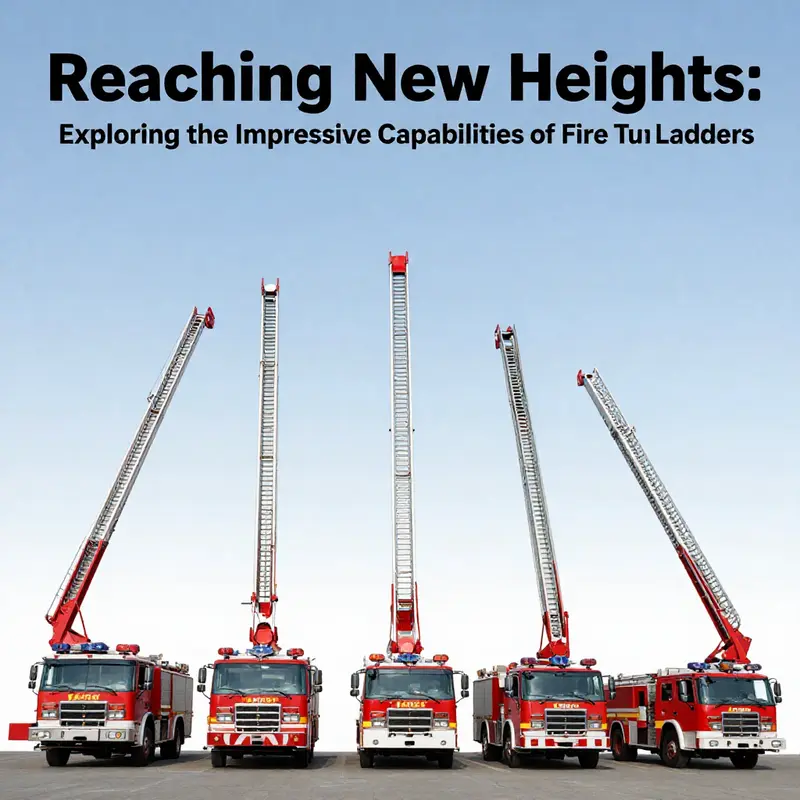
The question of how high fire truck ladders can reach is not a single number, but a spectrum shaped by city scale, building regulations, and the evolving demands of urban firefighting. Across the world, departments rely on a range of aerial devices, from standard ladders to purpose-built high-reach platforms, each chosen to match the skyline they serve. In many cities, routine operations hinge on ladders that extend roughly twenty to thirty meters, enough to access upper floors of the most common high-rise structures and to deploy crews to rescue occupants or connect water streams where ground access is blocked. Yet as towers grow taller and ground-based approaches become less practical, fleets increasingly include devices designed to push past the traditional limits. When the need is to reach higher elevations and maintain safe, controlled operation, high-reach platforms extend the ladder arc, sometimes dramatically, to meet the demand. The global picture thus includes both familiar, everyday reach and occasional forays into the extraordinary. In practical terms, standard aerial ladders commonly range from about 23 to 30 meters (roughly 75 to 100 feet). These heights cover a broad swath of modern urban fire scenarios, where a sizable portion of tall residential and commercial buildings can be accessed without specialized equipment. But the urban environment keeps pressuring manufacturers and fire services to test the boundaries. In major metropolitan areas where high-rise construction is routine, departments deploy high-reach apparatus capable of more ambitious leaps, with ladders that can extend to approximately 40 meters or more. The upper bounds of frequently deployed fleets vary, but some cities have integrated systems that push toward the 35- to 40-story range, translating to roughly 110 to 135 meters in height, depending on the precise geometry of the platform and the configuration of the rise. It’s important to note that these are not universal; they represent a capacity band tailored to urban density, building codes, and the cost-benefit calculus that governs fleet composition. The most extreme configurations are rare and highly specialized, designed to address ultra-high-rise conditions. Water application adds another layer to the conversation about reach. Even when wind and weather conspire against the direct vertical ascent of a water stream, the jet from a roof monitor or a ground-based nozzle can extend a considerable distance beyond the ladder’s physical height. In favorable conditions, the effective discharge height can approach 130 to 140 meters, underscoring how a firefighting operation can influence fire behavior at elevations well above the ladder’s top. This dynamic is not just about altitude but about the geometry of the spray, the nozzle, and the pressure delivered by the pump system. The hose and monitor arrangement, combined with the height and angle of the lift, create a combined capability that can enable water or foam to be directed toward upper floors even when the fall of the building limits direct engagement from below. In practice, this means a rescue or a suppression scenario can be handled by using a combination of elevated reach and controlled water application, with the aim of containing fire spread until access is possible or until interior teams can intervene. The global variations in ladder heights reflect more than just technical capability; they reveal how cities design their firefighting architectures around the realities of their skylines. In many European and North American contexts, the emphasis on stability, wind resistance, and operator safety has driven the development of aerial platforms that can withstand the challenges of elevated operations. The engineering lives in the details: the center of gravity, the outriggers through which the apparatus anchors to the ground, and the hydraulic systems that extend and retract the ladder while maintaining the ruggedness needed in adverse conditions. A platform designed to reach higher elevations must balance reach with stability, so crews can perform rescues, deploy monitors, and maneuver on uneven or wind-swept roofs without compromising safety. These considerations shape not only what is technically possible, but also what is deployed as standard in municipal fleets. They also influence training regimens, because operators must be prepared to handle the asymmetries that can accompany substantial elevation changes, including crosswinds and the subtle tilt of the vehicle on a rooftop or a sloped street. The urban imperative to reach higher floors has a direct influence on how responders think about tactics. When ladders extend to the upper tiers of tall buildings, rescue planning emphasizes staged engagement: crews may ascend to provide access points, establish communications lines, and work with interior teams to evacuate occupants. Aerial hardware is frequently equipped with integrated firefighting tools, including monitoring equipment, nozzles, and lighting that improves visibility at height. These enhancements broaden the scope of what can be accomplished from an elevated position, allowing teams to execute searches, monitor fire spread, and deliver suppressants with a degree of precision not possible from ground level alone. The integration of these tools into high-reach systems illustrates how modern firefighting blends structural access with water delivery and scene illumination to maximize effectiveness during critical missions. The result is a more versatile platform that supports both rescue and suppression, particularly in dense urban quarters where access from the ground is impeded by traffic, debris, or the sheer scale of a burning edifice. To make sense of the global landscape, it helps to consider how standards and professional networks shape what is feasible in practice. International and national bodies establish performance benchmarks, safety criteria, and operational guidelines that govern how these systems are designed, tested, and employed in real events. From the perspective of knowledge exchange and ongoing adaptation, practitioners look to a blend of technical specifications, field experiences, and peer-reviewed safety frameworks. In this sense, the conversation about ladder reach is inseparable from the broader discourse on structural fire protection, command decision-making, and interdepartmental coordination during urban incidents. For those who want to follow the latest developments and standards, official sources provide a stable reference point and an informed backdrop for evaluating how city needs translate into equipment choices. Readers curious about updates and methodological discussions can explore further in public-facing industry outlets and practitioner resources such as the Fire Truck Blog, which collects reflections and case studies from the field. Fire Truck Blog. As cities continue to rise and architectural ambitions push toward ever taller silhouettes, the capabilities of fire truck ladders will remain a moving target. The mean height that departments plan for may shift as new design approaches emerge, and as urban safety requirements evolve in tandem with building dynamics. The key takeaway is that ladder height is not a fixed ceiling but a function of how a city constructs its firefighting ecosystem. It includes vehicle design, elevation mechanics, stability systems, water delivery options, and the training pipelines that prepare crews to operate at extreme elevations. This holistic view helps explain why some departments invest in exceptionally tall, specialized platforms while others optimize their fleets around more customary ranges. Each choice is a reflection of a broader strategy to protect lives and property against fires in increasingly vertical neighborhoods. For readers seeking authoritative context on standards and performance, consult the established regulatory and professional resources that compile current expectations and future directions. The conversation about height is anchored in safety, reliability, and the practical realities of rescuing people at height. It is not solely about the maximum number a ladder can reach but about how that reach translates into real-world capability—how it supports rapid access, controlled water application, and safe operations in weathering winds and urban constraints. The continuous refinement of designs, testing, and procedures ensures that when a call goes out, responders can trust that the apparatus in their fleet can reach the needed height with the necessary stability and control. In the end, the question of “how high” is answered not by a single figure but by a spectrum of heights tailored to the skyline the fire service protects, the occupants it serves, and the demands of the incidents it faces. For ongoing reflections and deeper dives into equipment and tactics, refer to the Fire Truck Blog and keep abreast of updates from industry standards organizations. Fire Truck Blog. External resources that illuminate these standards and their practical implications offer a complementary lens. For authoritative confirmation and technical specifics, the NFPA maintains comprehensive guidelines and specifications that inform the design, testing, and use of aerial rescue devices. See the NFPA portal for current standards and related resources: https://www.nfpa.org/
Skyward Rescue: How High Fire Truck Ladders Reach and What It Means for Firefighting Effectiveness
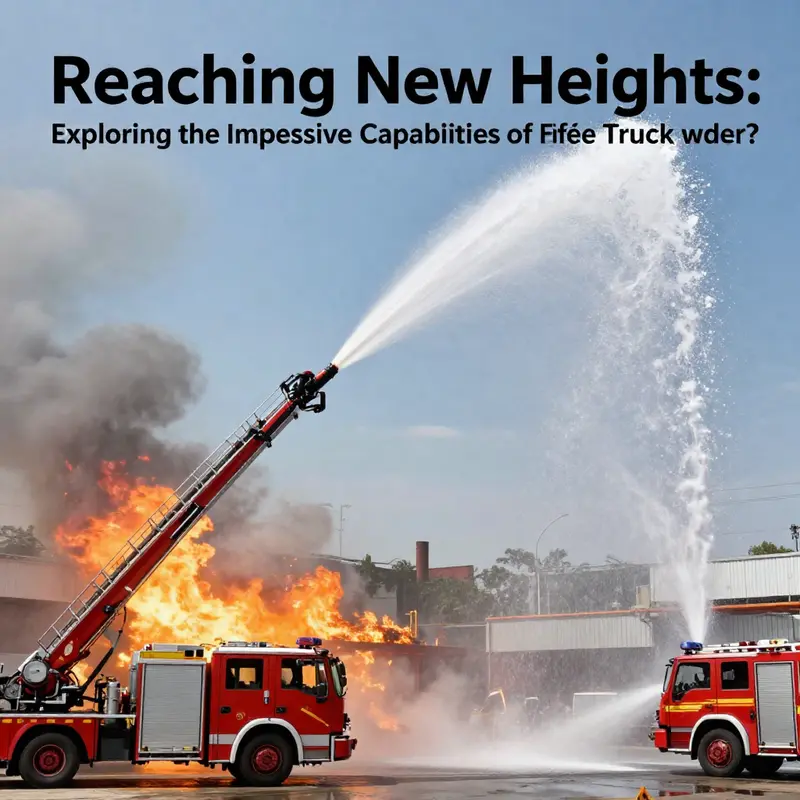
When a fire erupts in a city, the height of a ladder becomes as crucial as the engine’s pump pressure or the crew’s training. Firefighters are trained to read a building the moment they arrive: where is the fire most intense, where can occupants be found, and how can water reach the flames without compromising safety. Height is not an abstract metric; it translates directly into time saved, lives protected, and property spared. The range of ladder and platform heights reflects a spectrum of urban realities—from the common high-rise with dozens of floors to the glass towers that define a city’s silhouette. The question, how high can fire truck ladders reach, has a layered answer that blends physics, engineering, and tactical necessity. In practical terms, standard aerial ladders typically extend into the range of thirty to fifty meters. This is enough to cover the majority of mid-rise structures, where rescue routes exist at multiple levels and where the first lines can reach through windows or over parapets. Those height figures, while sufficient for many emergencies, tell only part of the story. For rescue and suppression at the extreme end of urban height, fire departments rely on high-reach platforms and specialized elevated systems designed to work with ultra-tall buildings, their booms and hydraulics engineered to extend much further while maintaining stability and control. It is common to hear that top-of-the-line high-reach units can approach heights well beyond fifty meters, and in some urban centers, apparatus can reach upwards of eighty-five meters. These platforms are not mere ladders lifted higher; they are articulating systems with telescoping sections, canted booms, and counterbalanced supports that enable operators to place water, foam, or dry chemical precisely where needed. Yet height alone does not guarantee effectiveness. The most important measure of firefighting performance remains how water reaches the fire and how long responders can stay in control under demanding conditions. In favorable wind conditions, the effective discharge height can extend beyond the ladder’s physical reach. Water can be projected by monitors or nozzles at angles that optimize trajectory while compensating for gravity and drag. In some circumstances, this can translate to an effective height of one hundred and thirty to one hundred forty meters from ground to the furthest point of attack. The physics behind this distinction is straightforward: a steady water stream gains elevation as it leaves the nozzle, the nozzle geometry shaping the jet’s initial velocity, and the stream’s ultimate arc is determined by pressure, nozzle design, and atmospheric conditions. Engineers and crews must balance two objectives at once: maximizing reach and preserving the integrity of the stream. If the goal is to strike a flame from a distance, a longer, more open-jet spray may be harnessed to reach higher elevations, albeit with a trade-off in straight-line penetration. If the aim is to deliver water directly into a doorway or window opening, a more compact, higher-pressure jet becomes preferable. This duality—reach versus focus—drives the ongoing evolution of firefighting hardware and tactics. Standard aerial ladders top out in the lower to mid-range of height, typically around fifty-two meters in many urban operations, which roughly corresponds to seventeen stories. This figure is a working benchmark used by departments to gauge station placement, fleet mix, and training. But the skyline keeps changing, and so does the equipment designed to meet it. In contemporary fleets, there are high-reach aerial platforms that extend dramatically higher, with maximum working heights approaching eighty-five meters. These units are predominantly deployed in large metropolises where tall, densely packed towers are the norm. They are designed to deliver direct access to upper floors for rescue and to provide external water application when interior lines are blocked or unavailable. When fleets are compelled to operate at even greater heights, specialty apparatuses enter the picture. Some regions employ specialized, ultra-high-reach configurations capable of elevating the crew to heights that challenge the assumptions of urban firefighting. In these cases, the height is only one dimension of capability. The real measure of effectiveness lies in the apparatus’s operational height, reach, and water-discharge performance working in concert with the building’s geometry, the fire’s behavior, and the wind profile. It is here that the distinction between a ladder’s physical extension and an effective water attack becomes apparent. A long ladder might touch a high floor, but the fire’s location—whether it’s a balcony, a corridor, or a smoke-logged stairwell—will dictate how the crew positions the nozzle, how they anchor the platform, and whether they can maneuver the monitor without compromising stability. The dynamics of wind and elevation mean that even with an 112-meter class platform, the practical attack height can be constrained by exterior turbulence, the distance to the target, and the horizontal reach required to place water where it is most needed. In practice, departments allocate a spectrum of apparatus to address the full range of structural challenges. Standard pumpers and water-tankers provide robust water supply and reach up to about thirty to fifty meters, serving routine scenes across neighborhoods. Elevated-platform and aerial-ladder trucks fill the mid-range niche, offering direct access to floors and corridors that stairways may not serve quickly enough. On ultra-high rises, specialized high-reach platforms form part of a targeted strategy to conduct rescues and apply water at significant elevations, often with multiple crew members deploying simultaneously from the basket and the shoulder gear. The interplay between height and water application is not merely about distance. It involves an orchestration of pumps, hoses, and nozzles, all tuned to the geometry of the fire building. The water flow rate, pump pressure, and the nozzle size determine how much water can be projected and at what height the stream maintains its integrity. In a high-rise scenario, the design of the monitor—the water cannon or nozzle that can be swiveled and elevated—becomes critical. A well-configured monitor can pivot and rotate to track the fire as it migrates across façades, sometimes extending beyond the ladder’s own reach by virtue of the jet’s trajectory. But the higher the water is projected, the more sensitive the system becomes to wind. A gust can deflect a jet, creating a horizontal drift that pushes the water away from the target and complicates control for the operator in the basket. This is why training and experience are essential. A firefighter in the aerial platform must read the wind, estimate the jet’s arc, and anticipate the building’s response to the water’s impact. It is also why coordination with interior crews, building management, and, when possible, water supply engineers is indispensable. The modern firefighting toolkit is, at its core, a synthesis of capability and context. Height provides a critical ceiling for rescue operations and external attack, but effectiveness persists only when crews can align their reach with the building’s geometry, the fire’s behavior, and the prevailing environmental conditions. Authorities and manufacturers alike emphasize that official specifications—whether from national safety standards bodies or from regional emergency management ministries—present the framework within which fire services plan their fleets and training. These standards clarify what a ladder or platform can reasonably be expected to achieve in a controlled, tested environment and how that performance translates to real-world operations. For researchers and enthusiasts seeking deeper context, the discussion often circles back to the balance between the ladder’s physical height and the water’s actual reach. The nuanced takeaway is that the ladder’s maximum height is not the sole determinant of success in a high-rise incident; rather, it is the synergy of height, water delivery, crew training, wind, distance, and building geometry working in concert. Readers who want to explore more on firefighting vehicles and the knowledge ecosystem surrounding them can turn to the Fire Truck Blog for accessible discussions that bridge theory and field practice. Fire Truck Blog In addition, standards and broader context are outlined by established safety organizations, which provide essential guidelines for equipment performance and operation under varied conditions. For reference on standards and best practices, see NFPA resources: https://www.nfpa.org/.
null
null
Final thoughts
The advancement of fire truck ladder technologies has revolutionized firefighting, emphasizing the importance of height capabilities in urban emergencies. From reaching standard operational heights to extraordinary feats achieved by high-capacity models, these tools are indispensable for modern fire departments. The evolving landscape of firefighting apparatus not only enhances rescue efforts but also aids in effective firefighting strategies, determining the future of emergency response. Understanding these developments helps both enthusiasts and professionals appreciate the significance of fire truck ladders in protecting lives and properties.