
Introduction
Firefighting is not just a job; it’s an adrenaline-pumping adventure that plays a crucial role in safeguarding our communities and saving lives. For fire truck enthusiasts, every siren blare and flashing light signals more than just emergency responses; it represents the robust engineering that battles against the flames. One of the most vital aspects of any fire truck is its water capacity; after all, when it comes to extinguishing fires, having enough water on hand can make all the difference.
Typically, a fire truck can carry between 500 to 1,500 gallons of water, depending on its design and purpose. This capacity is critical; a dedicated fire truck with a significant water load can effectively combat a blaze during the first, crucial minutes after arrival, which is often the difference between containment and a full-blown inferno. Understanding the water capacity of fire trucks shines a light on the engineering marvels that these vehicles are.
In this article, we delve into the particulars of fire truck water capacities, explore different types of fire trucks, and highlight how their sizes and specifications enhance firefighting efforts. Join us in appreciating these colossal protectors who are always ready to answer the call of duty! For those interested in acquiring one, you can check our listings for fire trucks for sale.
Types of Fire Trucks and Their Water Capacities
Fire trucks come in various types, each designed with specific water capacities suited for different firefighting missions. Here’s a comparison of some common fire truck types along with their water capacities and typical use cases:
| Fire Truck Type | Water Capacity (Gallons) | Typical Use Cases |
|---|---|---|
| Light-Duty Pumper | 500 – 1,500 | Urban firefighting, quick response |
| Medium-Duty Pumper | 1,500 – 2,500 | City main stations, suburban firefighting |
| Heavy-Duty Pumper | 2,500 – 3,500 | Large-scale incidents, structural fires |
| Fire Tanker | 3,000 – 5,000 | Rural firefighting, long-duration operations |
| Foam Tender | 500 – 4,000 | Industrial fires, hazardous materials |
| Wildland Fire Engine | 2,000 – 3,000 | Bushfires, rough terrain |
These capacities can vary significantly. For example, specialized fire trucks can be designed to carry up to 50,000 gallons for extensive wildland fire suppression, which you can learn more about here.
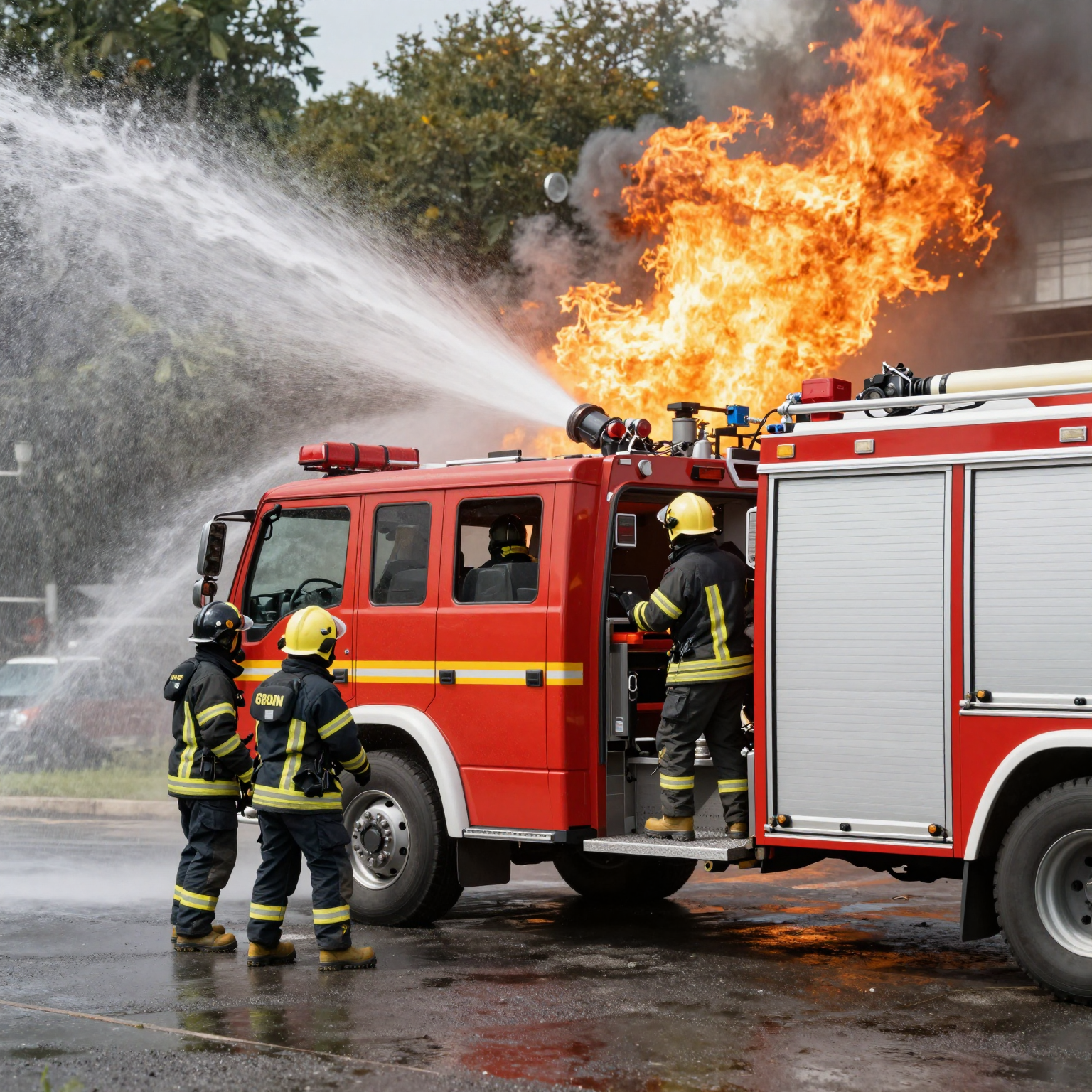
For a visual guide, check out the illustration below showing various fire trucks and their water capacities in action:
Average Water Capacity of Fire Trucks
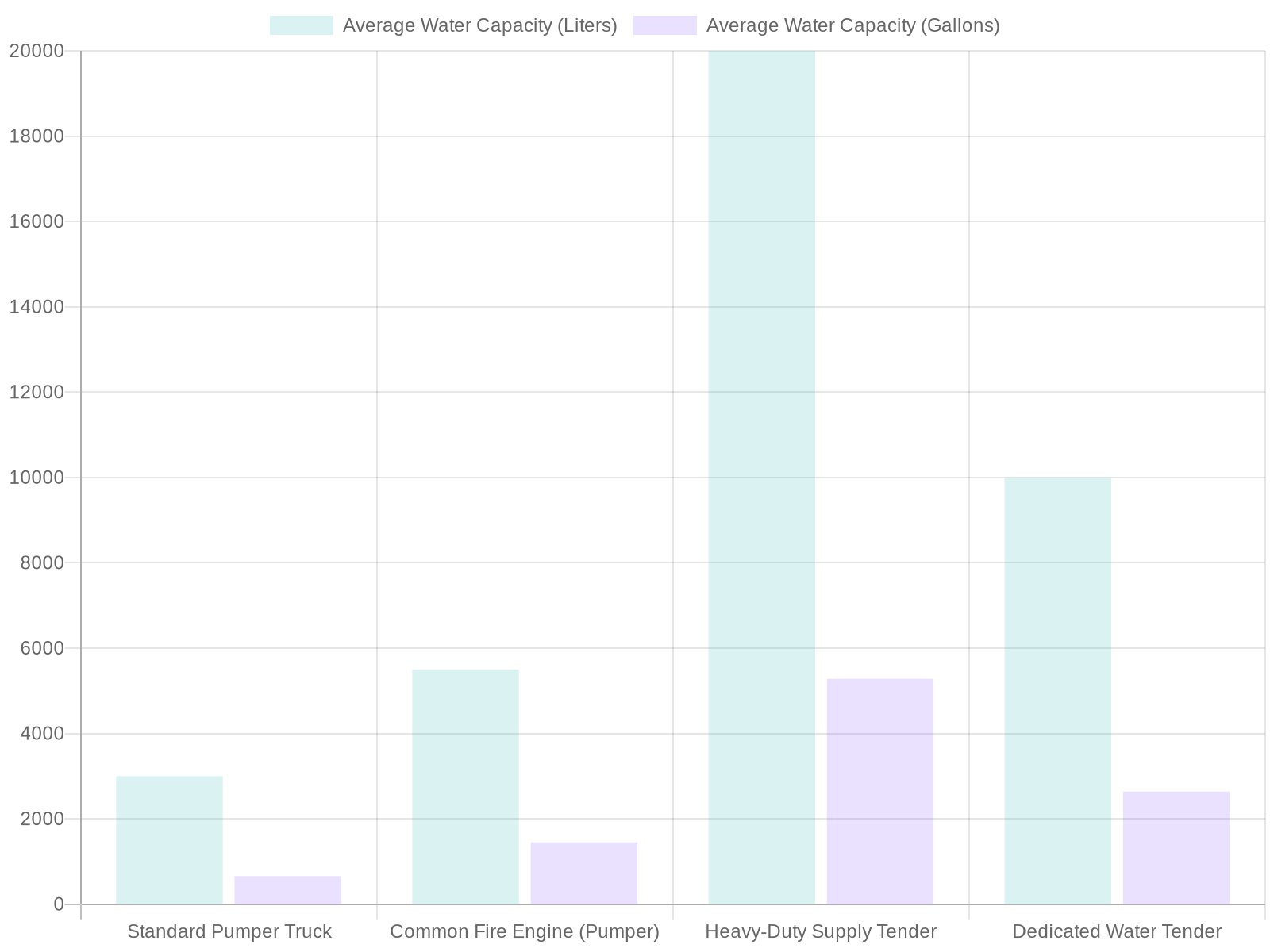
Fire trucks play a crucial role in firefighting operations, and their water capacity can significantly impact their effectiveness in emergency situations. The average water capacity of fire trucks varies based on the type and purpose of the vehicle.
Typical Water Capacities
- Standard Pumper Trucks: Typically, the average water capacity ranges from 1,000 to 4,000 liters (about 260 to 1,055 gallons). These trucks are the backbone of urban and suburban firefighting operations, offering a balance between mobility and on-site water supply.
- Common Fire Engines (Pumpers): Most common fire engines carry between 3,000 and 8,000 liters (approximately 790 to 2,110 gallons). These engines provide a robust capacity suitable for various firefighting scenarios and allow fire crews to initiate an attack efficiently.
- Heavy-Duty Supply Tenders: For significant incidents, such as wildfires, these specialized vehicles can hold up to 20,000 liters (or 5,280 gallons). Their large capacity enables sustained firefighting efforts, especially in remote areas without quick access to water supplies.
- Dedicated Water Tenders: In contexts requiring extended operations, certain tenders are designed to store over 10,000 liters (around 2,641 gallons), which is essential for continuous fire suppression efforts.
Factors Influencing Water Capacity
Several factors influence a fire truck’s water capacity:
- Design Purpose: Fire trucks designed for urban environments tend to have smaller water tanks for maneuverability, while those for rural or wilderness areas may be larger to facilitate prolonged operations.
- Type of Fire Response: Specific operational demands, like those encountered in wildfires or industrial incidents, necessitate varying water capacities to ensure firefighters are adequately equipped.
- Weight and Regulations: Fire trucks must comply with weight restrictions for safe operation on roads, which can limit the size of the water tanks.
Impact on Firefighting Efficiency
The water capacity directly influences firefighting efficiency. A larger water tank allows for prolonged firefighting efforts without the need for frequent refills, which can save crucial time in emergencies. Conversely, smaller tanks tend to favor quick maneuvers but may limit sustained firefighting capabilities. Fire departments must balance these elements based on their service area needs and specific response challenges.
To delve deeper into the various fire trucks available, check out our fire trucks for sale or learn more about a specific model like the American LaFrance Fire Engine.
Correlation Between Water Tank Size and Firefighting Effectiveness
Understanding the relationship between the size of water tanks in fire trucks and their effectiveness in firefighting is essential for enhancing operational capabilities. As fire departments increasingly focus on efficiency, larger tanks have been found to significantly impact the speed of suppression operations.
Chart: Water Tank Size vs. Firefighting Effectiveness

The chart above illustrates the correlation between water tank size (in liters) and firefighting effectiveness (in % increase in suppression speed). The data used for this illustration is based on recent findings, which indicate:
| Water Tank Size (Liters) | Firefighting Effectiveness (%) |
|---|---|
| 500 | 50 |
| 1000 | 60 |
| 1500 | 65 |
| 2000 | 70 |
| 3000 | 85 |
| 4000 | 90 |
| 5000 | 95 |
Summary of Findings
According to Fire Engineering Magazine, fire trucks equipped with tanks exceeding 3,000 liters exhibit significantly enhanced firefighting capabilities. Here are some insights:
- Fast Suppression: Larger tanks allow for quicker suppression of structural fires, with trucks having capacities beyond 3,000 liters able to reduce suppression time by up to 40% compared to smaller tanks.
- Operational Flexibility: Vehicles like the Isuzu 700P, carrying a 3.55-ton capacity, improve response times during critical situations, especially in environments lacking adequate hydrant access.
This information reinforces the understanding that investing in larger water tanks not only boosts emergency response effectiveness but also ensures better preparedness in tackling intense firefighting scenarios.
Specialized Fire Trucks and Their Unique Water Supplies
Firefighting is a diverse field, with a variety of scenarios necessitating specialized vehicles to meet unique challenges. Specialized fire trucks, such as wildland fire trucks, aerial trucks, and foam tenders, significantly differ in water capacity and operational capabilities compared to standard fire engines.
Water Capacities of Specialized Fire Trucks
Wildland Fire Trucks: These trucks are designed for rugged terrain and typically carry large water tanks, ranging from 1,000 to 3,000 gallons (3,785 to 11,356 liters). They enable extended operations in remote areas without fire hydrants but face challenges such as reduced mobility on steep slopes and the need for constant water sourcing from nearby natural bodies.
Aerial Trucks: Also known as ladder trucks, these vehicles often come equipped with water tanks that hold about 500 gallons (1,890 liters) of water. Their primary function is high-rise rescue, but they face challenges like height limitations and structural interference due to wind, which can complicate their reach during emergencies.
Foam Tenders: These specialized units hold between 1,000 to 2,000 gallons (3,785 to 7,570 liters) of foam and are used to combat flammable liquid fires. While they excel in situations involving hazardous materials, they require regular replenishing of foam concentrate and pose environmental hazards if not managed impeccably.
Tanker Trucks: These can carry upwards of 3,000 gallons (11,356 liters) and are crucial in rural areas lacking hydrant access. Despite their capacity, they need constant refills and often face logistical challenges during long-distance travel from water sources.
Unique Operational Challenges
Specialized fire trucks encounter numerous operational challenges which can significantly impact their effectiveness. Here are a few key challenges:
- Mobility and Maneuverability: With varying terrain-ranging from rugged hills to urban environments-specialized trucks can sometimes struggle to navigate effectively, unlike standard fire engines optimized for quicker urban responses.
- Weight and Balance: Many of these trucks are heavier due to larger water capacities. This weight can limit their speed and handling, increasing the risk of accidents in difficult conditions.
- Environmental Concerns: Vehicles that use chemical suppression systems may face restrictions based on environmental laws, particularly concerning foam content and disposal practices.
- Maintenance and Durability: The unique features of specialized fire trucks, such as foam systems and heavy machinery, often require specialized maintenance, increasing operational costs and downtime.
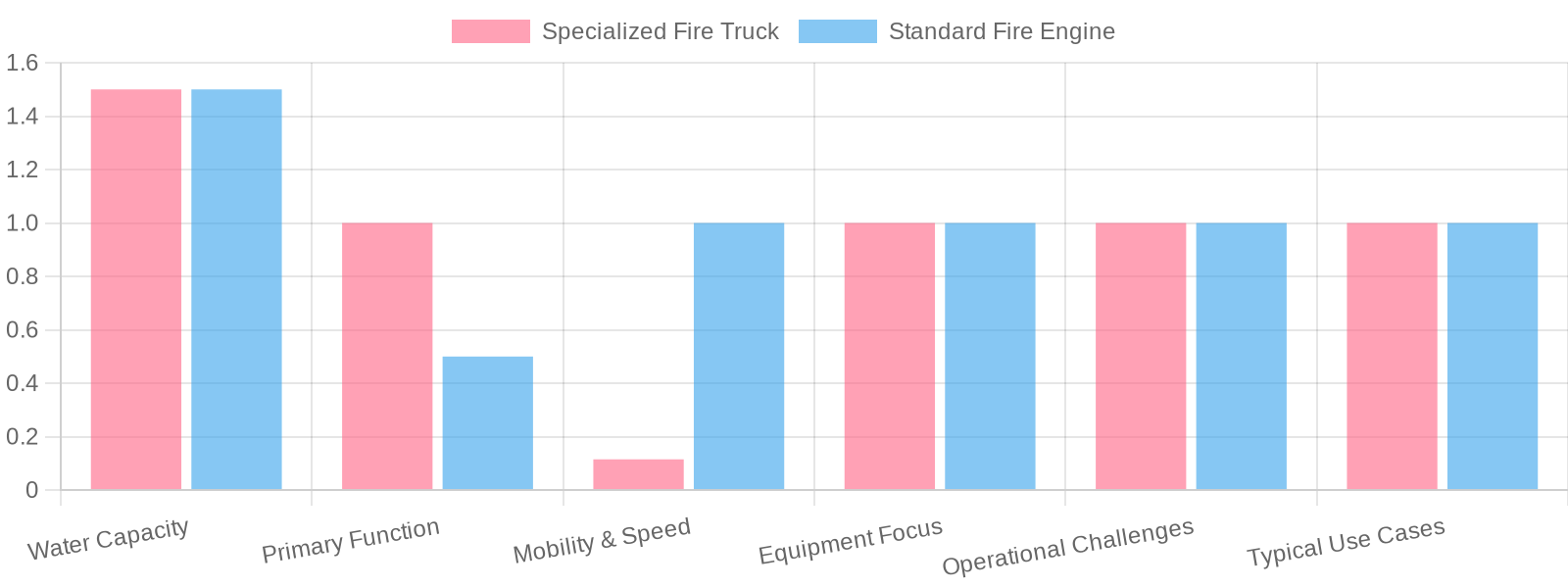
To further illustrate the differences in capacity and challenges, see the following comparison chart:
Conclusion
Understanding the unique water supplies and operational challenges of specialized fire trucks is crucial for aspiring firefighters and firefighting professionals. These vehicles, each tailored for specific situations, reflect the evolving demands of fire service operations.
For those interested in acquiring specialized fire trucks, check out our available options.
“The water capacity of aircraft and ground-based systems is one of the most critical determinants of firefighting effectiveness. Without sufficient water volume, even the most strategically placed drops cannot cool down hotspots or create effective firebreaks. In high-intensity wildfires, a single drop of 2,000 gallons may be insufficient if it doesn’t cover enough area-our models show that sustained water delivery over time is what truly suppresses flame spread.”
- Dr. Michael G. Mullen, Senior Wildfire Modeling Expert, National Interagency Fire Center
Learn more about firefighting strategies
In the firefighting world, the capacity of water resources available can make a decisive difference between controlling a blaze or watching it escalate. This principle underscores the significance of understanding how much water a fire truck can carry and its impact on firefighting operations.
Key Factors Affecting Fire Truck Water Capacity
When it comes to the water capacity of fire trucks, several key factors come into play:
- Type of Fire Truck: Different trucks, such as pumpers and tankers, have varying capacities, with pumpers generally holding 500 to 1,000 gallons and tankers capable of carrying over 3,000 gallons.
- Chassis Size: The overall size and design of the truck chassis significantly influence the maximum tank size that can be accommodated.
- Use Case: Trucks designed for urban areas typically have smaller tanks compared to those used for rural firefighting where water sources are scarce.
- Regulatory Standards: Local and national regulations often dictate minimum water capacities based on the truck’s classification and intended use.
- Additional Equipment: If a truck includes integrated systems such as foam or high-pressure pumps, this can reduce the available space for water storage.
- Terrain Considerations: Trucks operating in rugged or remote areas may have enhanced capacities to ensure sustained operations without needing immediate replenishment.
By understanding these factors, one can better appreciate the complexities involved in fire truck design and functionality.
Understanding the water capacity of fire trucks is not just a technical detail; it is a cornerstone of effective firefighting operations. As discussed, these capacities can range widely-from smaller urban units with capacities of approximately 1,000 liters to substantial tanker trucks that can carry over 20,000 liters. This knowledge is crucial for ensuring that fire departments are adequately equipped to respond efficiently in various scenarios, whether combating a fire in a crowded urban area or addressing wildfires in remote locations.
The initial moments of a fire are critical, and having the right amount of water available can mean the difference between quick suppression and a devastating situation. According to the National Fire Protection Association (NFPA), every fire department must ensure that their vehicles can deliver a continuous water flow for at least 30 minutes to effectively tackle emerging emergencies.
Moreover, an understanding of water capacities allows for smarter resource deployment. Modern fire trucks are now integrated with advanced monitoring systems that help track water levels in real-time. This enables incident commanders to make informed decisions about resource allocation, as they can be assured that their crews have enough water to sustain operations when it matters most.
In conclusion, appreciating the complexities of fire truck water capacities is vital for anyone involved in firefighting-be it enthusiasts, aspiring firefighters, or professionals in the field. With the right knowledge, we can ensure that our firefighting efforts are not only effective but also safe. Emphasizing skillful management of these water resources ensures that we are prepared for the challenges ahead and enhances the safety of our communities.
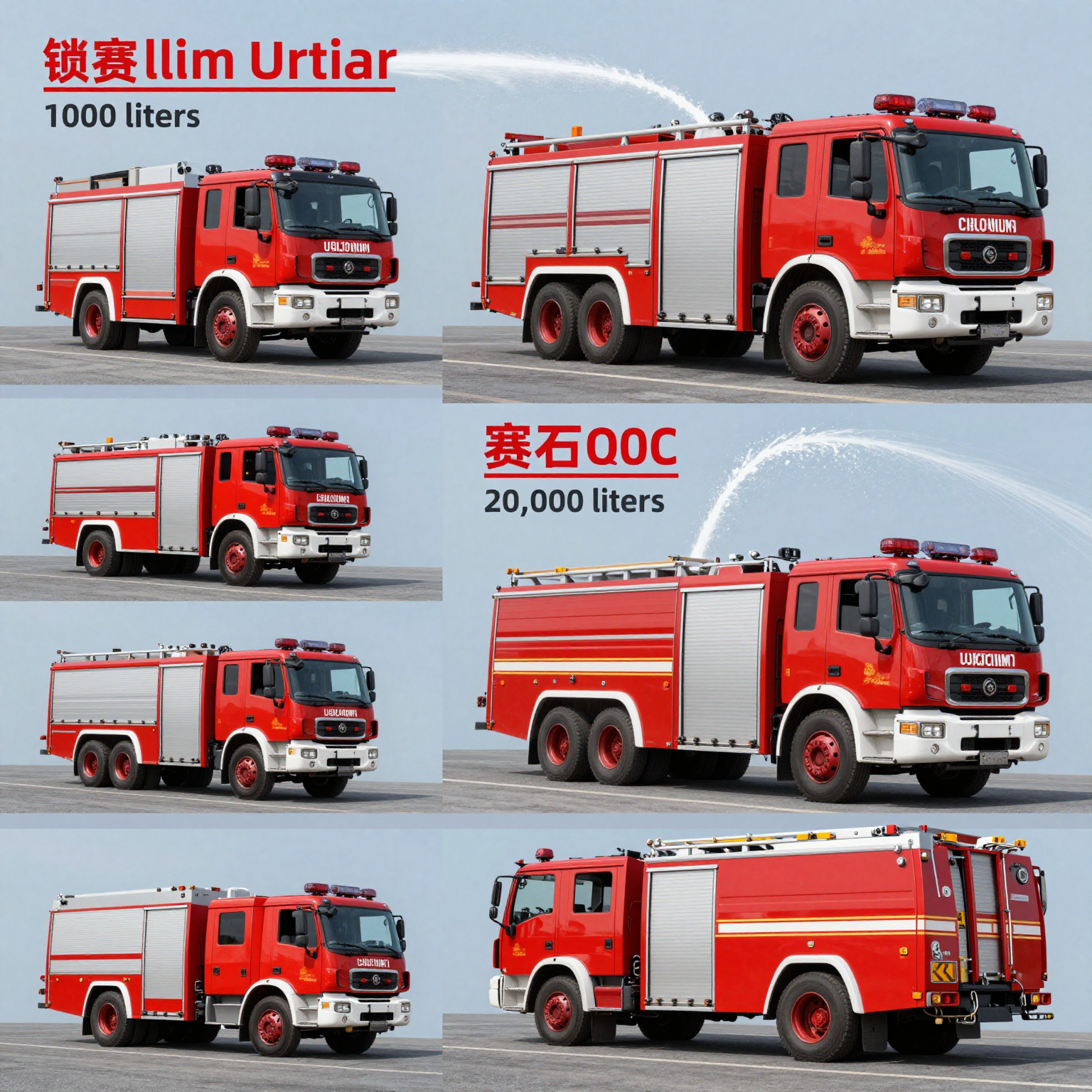
Understanding fire truck water capacities is essential for effective firefighting.
Let’s continue this vital discussion and advocate for better resource management in firefighting operations!
Customization is Key! Enhance Your Fire Truck Today!
Are you ready to take your firefighting capabilities to the next level? Customizing your fire truck can dramatically enhance both its functionality and visual appeal. With tailored features, you can ensure that your vehicle meets the unique demands of your emergency response team while standing out on the scene!
👉 Explore options for adding specialized equipment, like water tanks, ladders, and advanced communication systems, designed to improve your operational efficiency.
👉 Personalize your fire truck’s design-choose colors, logos, and layouts that reflect your department’s pride and spirit.
Why wait? Discover a range of customization solutions that are perfect for both modern emergency services and vintage firetruck restorations! To learn more about how you can enhance your fire truck, check out our customizable fire truck solutions today!