
Fire trucks are not just vital for combating blazes; they’re symbols of bravery and innovation in firefighting. If you’ve ever dreamt of owning one, whether as a collector, an aspiring firefighter, or a professional in the emergency services, the remarkable journey of acquiring a fire truck begins here! This article guides you through the exciting process of purchasing a fire truck, detailing the varieties available, their pricing dynamics, customization options, and crucial compliance regulations. Let’s dive into this world and see just how accessible fulfilling your fire truck dream can be!
From Catalog to Street: Navigating Availability, Varieties, and Realities of Buying a Fire Truck
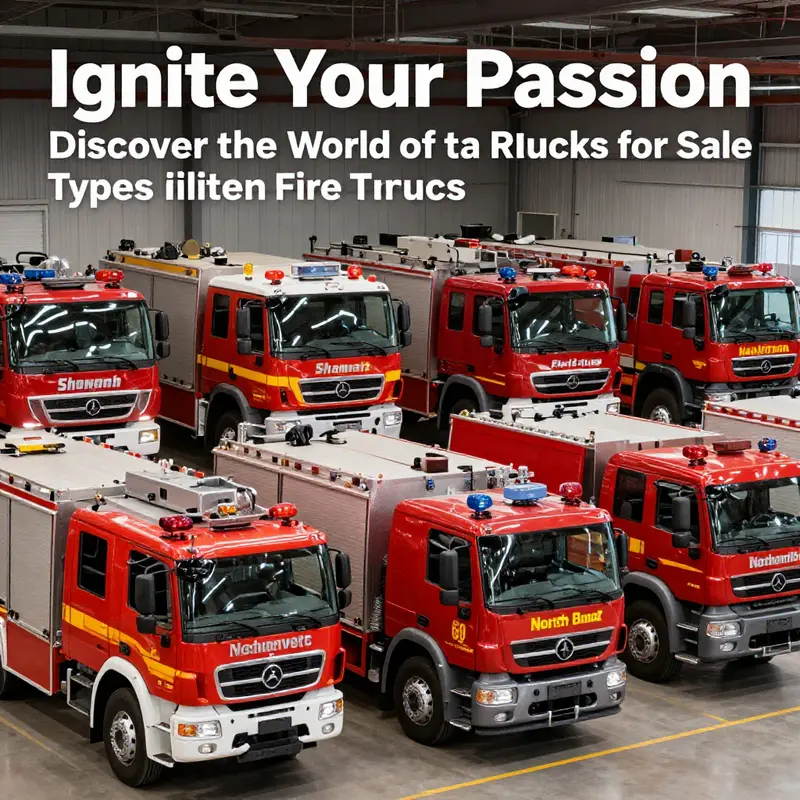
A fire truck is not a private toy, but it is something a growing fire department, a private service, or a dedicated organization can purchase and deploy. The question isn’t simply whether you can own a fire truck; it’s how one moves from the idea to a road-legal vehicle that fits a very specific mission, budget, and regulatory framework. In markets around the world, the path from imagination to cold steel is paved with choices about size, purpose, and the ultimate responsibilities that come with a firefighting machine. The landscape is broad enough to be exhilarating and complicated enough to require a clear strategy. On one hand, you can find a range of manufacturers and suppliers offering fire trucks, including options produced to meet international standards and tailored to a wide array of environments. On the other hand, the process demands thoughtful planning about capacity, equipment, and compliance. The result, when done well, is a vehicle that can be counted on in moments of crisis and duty, rather than a distant showroom dream slipping into obsolescence.
Types of fire trucks available for sale map onto the tasks they are expected to perform and the terrains in which they will operate. The most common category is the water and foam fire truck, designed to carry substantial volumes of water along with foam concentrate for rapid suppression of various fire types, especially liquid fires. In practical terms, these trucks offer a balance between pump capacity, water storage, and foam application systems. For buyers exploring this category, the practical reference points include a range of capacities and configurations. A typical example cited in market literature is a 10-ton class vehicle with a 15,000-liter water and foam combination. While exact specs vary by market and manufacturer, the core concept remains constant: you need enough water on board to make a decisive initial attack, plus a reliable foam system to address hydrocarbon and other foam-compatible fuels. In the same family, a 4×2 or 4-ton platform might appear as a more affordable option for smaller jurisdictions, events, or private institutions with limited space and budget. The key decision is not just weight or volume, but the intended response profile—urban suppression, rural reach, or the ability to operate in mixed-fire scenarios where speed and maneuverability join water delivery as critical capabilities.
A second broad family you’ll encounter is the multi-functional or emergency rescue truck. These vehicles are designed for more than just extinguishing fires; they carry a combination of water tanks, foam tanks, and dry powder rescue supplies. The appeal lies in versatility: a single platform can couple suppression with search and rescue, debris removal, and scene stabilization. For buyers, the practical implication is a higher capital outlay and a more complex maintenance footprint, but with the payoff of a flexible tool capable of adapting to diverse emergencies without the need for a separate fleet of specialized units. Market discussions often point to configurations like a twelve-ton chassis with a substantial water and foam capacity, optimized for rapid response and versatility across incident types. The takeaway is that emergency response is increasingly about modular capability—systems that can be added, swapped, or tuned to match evolving risks while preserving reliability and return on investment.
Beyond the lighter and mid-weight options lie the heavy-duty and specialized models. These are built to tackle demanding environments, whether rugged terrain, high-speed road support, or sustained operations that test pump performance, off-road capabilities, and resilience. The 6×6 fire rescue concept, for example, illustrates a class of high-performance vehicles designed to maintain mobility and operational integrity in challenging conditions. Such platforms emphasize durability, fuel efficiency for long patrols, and robust pump and foam infrastructure. The trade-offs, of course, include higher upfront costs, more complex maintenance needs, and the necessity for driver training and operational planning that accounts for weight, steering, braking, and the added weight of water and equipment on rough terrain. For buyers, this category represents an emphasis on mission assurance in demanding environments rather than a minimal footprint or a straightforward urban response.
A final tier within the market encompasses lighter duty and mini fire trucks. These compact platforms prioritize agility, maneuverability, and lower purchase price, making them attractive for narrow streets, campus environments, events, or small communities where space is a premium and the fire risk profile is relatively modest. The mini variants typically feature smaller water or foam capacities but can still be equipped with essential ladders, hoses, and compact foam systems. While their role is not to substitute for full-size suppression assets, they provide a valuable supplementary tool to extend coverage in constrained urban contexts where larger apparatus would be impractical. It’s important to frame these options as part of a holistic fleet strategy rather than standalone purchases, ensuring that your operational design accounts for both the strengths and the limitations of smaller platforms.
In describing these categories, it’s useful to imagine a spectrum of capabilities rather than isolated gadgetry. Manufacturers, often working with international suppliers, present configurations that target different regulatory and climate realities. The market emphasizes adaptability; buyers frequently seek OEM (original equipment manufacturer) or ODM (original design manufacturer) services that allow the vehicle to be customized for the climate, road conditions, and local fire codes that define how a truck must perform when it hits the street. A common path to ownership involves engaging with a manufacturer or distributor who can propose a baseline platform and then tailor details like pump performance, tank volumes, foam delivery rates, and the arrangement of compartments and compartments’ security features. Depending on your jurisdiction, this customization may also extend to siren types, lighting, communications equipment, and on-board safety systems to meet local standards.
Where you shop for these vehicles matters as much as what you buy. Buyers across regions leverage a diverse mix of channels—from specialized equipment manufacturers to global online marketplaces that aggregate factory direct options. These routes vary in terms of lead time, customization depth, after-sales support, and the granularity of technical detail available before purchase. The procurement journey typically begins with a needs assessment: the volume of water or foam you must deploy in a typical incident, the types of terrains you expect to encounter, and the time frame within which you must be able to respond. This assessment shapes every subsequent decision, from chassis configuration to pump performance and foam system integration. After you define the requirements, a dialogue with suppliers centers on a shared understanding of performance targets, warranty terms, and maintenance commitments. Warranties commonly span around a year, with longer warranty options available for certain components or extended service packages. The maintenance ecosystem—parts availability, technician training, and diagnostic support—often becomes a decisive factor, especially for private or civil organizations serving remote or high-demand communities.
A practical, actionable piece of the purchasing puzzle is the price spectrum. The market’s pricing dynamics reflect capacity, complexity, and the level of customization. Smaller, lighter-duty models frequently come in a range around the mid-to-upper tens of thousands of dollars, depending on capacity, chassis choice, and included equipment. Mid-range water and foam trucks with around ten tons of capacity and roughly fifteen thousand liters of tank volume can span a broad band, typically wider than one might expect, because component quality, pump ratings, and foam systems vary significantly across manufacturers. In many catalogs you’ll encounter a wider spread, with the lower end often representing simpler configurations and the higher end incorporating more robust pumps, higher foam output, enhanced safety features, and bespoke outfitting. Heavy-duty, high-performance platforms begin at more substantial price points and escalate quickly as off-road capability, high-speed response, and advanced rescue tools become part of the package. The essential message for buyers is straightforward: the sticker price is a reflection of capacity, reliability, and the breadth of systems integrated into the vehicle. It is rare to find a one-size-fits-all price; instead, expect a tailored quote that aligns with defined mission requirements and the regulatory environment.
The purchase process also carries a regulatory dimension that cannot be overlooked. Vehicle registration, safety standards, and operation permissions vary by country and even by locality within a country. Civilian or private use introduces a set of compliance considerations that differ from those for municipal fleets. Prospective buyers should verify that the selected truck meets local roadworthiness criteria, environmental standards, and any certifications necessary for carrying out firefighting tasks. The procurement mindset thus becomes a balance: you weigh the immediacy of your firefighting needs against the longer arc of regulatory readiness, warranty coverage, and service accessibility. OEM/ODM options present a practical route to align the vehicle with local standards while preserving a direct line to the supplier for ongoing maintenance and potential future upgrades.
As with any major fleet investment, the decision to purchase a fire truck should be anchored in a careful, disciplined planning process. Start with a clear operational concept: what kinds of incidents will the vehicle address, what is the expected response time, and how will it integrate with existing assets and incident command workflows? Next, translate that concept into tangible specifications: water and foam capacity, pump capacity, crew size, and the types of compartments and equipment to be carried. Then build a cost model that accounts for purchase price, customization, commissioning, training, warranties, and ongoing maintenance. A well-structured plan will also consider lifecycle costs, including fuel efficiency, spare parts availability, and the logistics of field repairs. While it is tempting to focus on the wow factor of a high-performance unit, the wisest buying decisions emphasize reliability, compatibility with local infrastructure, and the ability to sustain operations over years rather than months.
For readers seeking a starting point in the broader marketplace, there are catalogs and platforms that compile offerings from multiple manufacturers and suppliers. These platforms are especially useful for comparing baseline configurations, evaluating what can be customized, and understanding the range of pricing in a given market. When you explore options online, you’ll encounter typical filters around chassis type, tank volume, pump rating, and the presence of auxiliary systems such as dry powder or rescue equipment. But even with an online catalog, the real work happens through direct supplier conversations. A detailed inquiry can reveal the exact build time, the terms of the warranty, availability of after-sales support, and the scope of customization you can request. Ultimately, buying a fire truck is an act of aligning a technically capable tool with a precise operational need, then safeguarding that investment with solid service arrangements and a thoughtful upgrade path.
If you want a broad catalog of options, explore Fire Trucks for Sale. This resource provides direct access to listings and inquiries that can help you compare configurations and prices across different manufacturers, while preserving the ability to negotiate customization and service terms. The key is to approach the process with a clear mission profile, a realistic budget, and a plan for how the vehicle will be maintained over time. In the end, the road from purchase to deployment is a journey of engineering, logistics, and adaptation—one that turns an ambitious idea into a dependable, road-ready asset that can save lives and protect property.
External resources can supplement this journey by offering global marketplace context and supplier networks. For a broader view of international manufacturing and procurement options, platforms like Made-in-China provide access to a wide range of fire truck configurations and customization services, illustrating how the global market converges on practical firefighting solutions: https://www.made-in-china.com.
Buying a Fire Truck: Price, Purpose, and Practical Realities
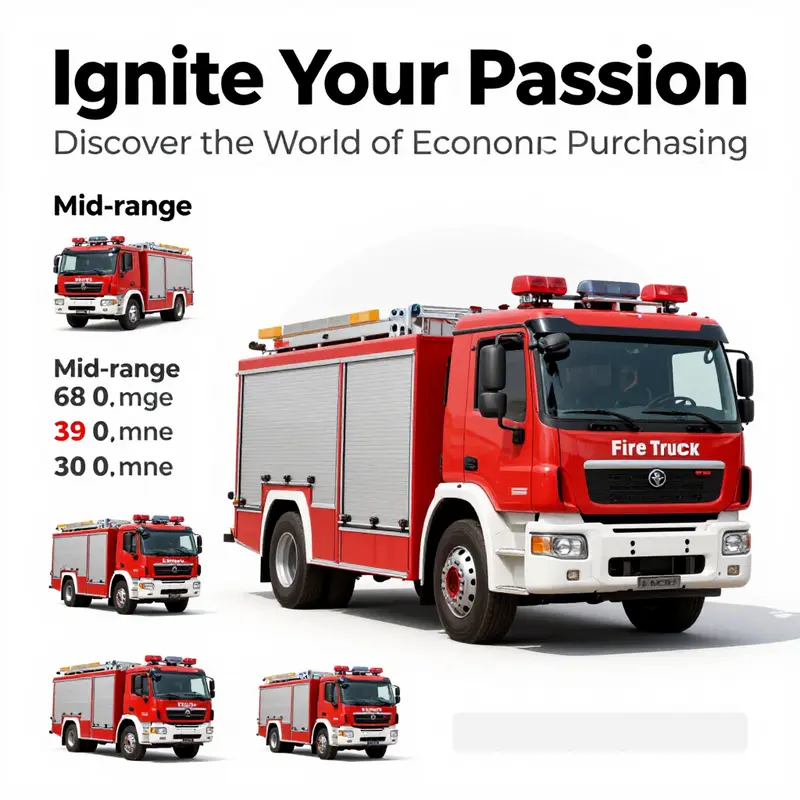
Purchasing a fire truck is not as simple as buying a standard vehicle. It is a decision shaped by purpose, space, jurisdictional rules, and a long horizon of operating costs. The spectrum of buyer needs ranges from private facilities that want rapid response to fires on large properties to niche responders handling hazardous materials or extreme terrains. Because of this breadth, the price and the ecosystem around the vehicle can look almost inscrutable at first glance. Yet the core logic remains straightforward: align the truck’s capabilities with the tasks it must accomplish, then weigh the upfront cost against the inevitable ongoing costs, the reliability of service, and the long-term value the vehicle will deliver.
First, the purpose of the vehicle largely dictates its configuration. For a basic firefighting task on moderate terrain or in areas with straightforward response needs, a simple water tank truck with a modest tank can be a practical entry point. Such models, which prioritize straightforward pumping and water delivery, typically sit at the lower end of the price spectrum. In practical terms, that means a broad range where a lean setup might be priced roughly in the mid tens of thousands of dollars. When a buyer begins to add features—such as a dual water-and-foam system, a larger tank, or additional compartments for tools and rescue gear—the price climbs quickly. The market separates these configurations into distinct tiers: the basic water-tank workhorse, the more capable water-and-foam combination, and the heavy-duty multi-function platform that can include multiple tanks, different pump configurations, and advanced lighting and communication systems. The highest end—premium imported or specially engineered units capable of off-road operation or extreme payloads—will push close to or beyond six figures in many regions, depending on size and customization.
Even within a single configuration class, capacity makes a decisive difference. A compact 4×2 chassis with a 5,000 to 6,000 liter water tank offers an affordable, fast-response tool for controlled environments such as campuses, industrial plants, or rural stations lacking large fleet budgets. When foam agents are added to improve performance on hydrocarbon fires, engineers must also configure foam proportioners and additional plumbing, which can increase both upfront cost and complexity. As the capacity grows—to 10 tons or more and a 15,000 liter tank or larger—the corresponding systems require more powerful pumps, more robust chassis, and better corrosion protection. The result is a higher price, but with a vehicle that can reach more distant sites, sustain longer firefighting operations, and carry extra equipment for rescue and hazardous materials response.
The market also demonstrates a clear line between off-road capable and city-bound vehicles. A six-by-six chassis, designed to handle rough terrain or uneven surfaces, carries added weight and an engine more suited to demanding conditions. The advantages are real in certain geographies—industrial yards with unpaved approaches, remote facilities, or wildland-urban interfaces where access is not a given. The cost premium for such capability is substantial, reflecting increased maintenance needs, specialized tires, and a heavier drivetrain. For buyers who operate in challenging environments, the extra expense can produce a meaningful return in reduced response times and mission success, even if the initial sticker shock is higher than a standard road-going unit.
In terms of economics, the sticker price tells only part of the story. The total cost of ownership must factor in maintenance, fuel, insurance, parts, and the availability of qualified technicians. A vehicle built for high-power performance and specialized tasks will carry higher ongoing maintenance costs than a basic water-tank unit. Conversely, some platforms offer modular systems that can simplify routine servicing or part replacement, potentially lowering life-cycle costs. The decision, therefore, is not simply what you pay at purchase but what you expect to pay over the vehicle’s working life. Production origin also factors into this equation. In many regions, new, affordable apparatus come from manufacturers with extensive export experience, often from large-volume production centers. These vehicles frequently carry warranties and after-sales support that cover the critical first year of operation, though buyers should verify the scope of coverage and whether extended service plans are available.
For prospective buyers who want a quick sense of current market offerings, it can be instructive to explore existing listings and inventories. A direct route to such options is a dedicated marketplace that curates fire-trighting apparatus for sale, providing a snapshot of what is available across configurations and price points. This is not a sales pitch, but a practical reality: a catalog of options helps clarify what features truly move the needle for your needs. If you are curious about what those listings look like, you can browse fire trucks for sale. This resource gives you a sense of the diversity in size, capacity, and equipment packages that buyers typically consider as they plan a purchase.
As buyers compare options, it is important to keep in mind that many vendors offer customization and design flexibility. OEM and ODM services are commonly available, allowing buyers to tailor pump types, foam systems, ladder placements, lighting arrays, and cab configurations to their specific use case. But customization carries a cost, and it can extend lead times. A standard, off-the-shelf configuration may arrive with a shorter delivery window and a lower up-front price, while a fully customized unit may require longer development cycles and higher upfront expenditure. Yet the upside is significant: the vehicle better fits its intended role, which translates into faster response, greater operational efficiency, and improved safety for the crew and the public they serve.
The financial decision also hinges on the market structure. Buyers can source new units, which tend to come with warranties and the promise of reliable performance for a defined period, or they can explore the used market, where price—and risk—varies more dramatically. Used apparatus may command significantly lower prices, but potential buyers must conduct thorough due diligence to assess condition, age, mileage, and the quality of prior maintenance. The choice between new and used is often a function of budget, risk tolerance, and the availability of a capable service network in the buyer’s region. Financing and trade-in options can ease the burden of a large upfront payment, opening a path to acquisition that aligns with organizational cash flows and capital planning. In markets where procurement is tightly regulated, buyers may also need to navigate licensing, registration, and compliance hurdles that can affect delivery timelines and total cost.
The regulatory and safety landscape adds another layer of consideration. Fire apparatus destined for civilian use or private enterprises must meet local safety standards and vehicle registration requirements, which can differ from place to place. Buyers should assess whether the chosen unit will need specialized certifications, specific pump ratings, or adapted lighting and communications equipment to integrate with existing incident command or dispatch systems. While many vendors offer an initial compliance package or guidance, the responsibility for ensuring regulatory alignment is ultimately with the purchaser. In this regard, it pays to treat compliance not as a burden but as a design constraint that shapes the most practical and durable choice. The right configuration will deliver reliability under pressure, while also facilitating maintenance, parts availability, and future upgrades.
For anyone navigating this decision, a disciplined approach helps slow the impulse to chase the most powerful or the newest feature set. Start with a clear operational picture: how many personnel, how much water, what kinds of incidents, and what terrain will you encounter? Translate these questions into target specifications: tank capacity, pump capacity, foam proportioning, hose complement, and the minimum crew safety features. Then translate those specs into a price range, mindful of the possibility of overruns due to customization or unforeseen delivery delays. It is also prudent to assemble a short list of reputable suppliers and to request transparent quotes that itemize base price, customization costs, warranties, and after-sales service terms. A pragmatic buyer looks not only at the price tag but at the reliability of the supply chain, the ease of obtaining spare parts, and the geographic reach of the vendor’s service network. When these factors align with the need, the result can be a fire apparatus that serves as a robust, dependable tool rather than a transient asset.
In the end, the decision to buy a fire truck rests on balancing capability with cost and ensuring compliance with the practical realities of operation. The vehicle you choose should amplify your readiness to protect people and property, not impose unsustainable financial or logistical burdens. The range of options—from compact water tanks to heavy-duty, multi-function platforms—exists precisely to fit different missions and budgets. The path to ownership starts with a clear statement of purpose, a sober appraisal of lifetime costs, and a willingness to engage in a careful, sometimes lengthy procurement process. For many buyers, that process yields not just a vehicle, but a dependable partner in public safety and community resilience.
External resource: For broader context on standards and safety considerations that influence fire-apparatus specification and maintenance, see NFPA guidelines. https://www.nfpa.org
Can You Buy a Fire Truck? Navigating Customization, Warranties, and Global Supplier Services

A practical question at first glance, can you buy a fire truck? opens a broader conversation about how specialized emergency equipment is built, sold, and supported. Yes, you can purchase one, but the market is global and the process blends engineering with budgeting. Readers should focus on three pillars: customization, warranties and after-sales support, and supplier services that turn a sale into a durable partnership.
In customization, buyers choose chassis, tank size, pumping capability, and interior layout to fit local regulations and mission needs. Options range from light-duty 4×2 platforms to heavy-duty 6×4 or 6×6 configurations, with tank volumes from thousands to tens of thousands of liters. The intended use dictates pump capacity, foam systems, and hose and ladder arrangements. Interior compartments, safety features, and command systems can be tailored to improve operator efficiency and safety.
Warranties typically cover essential components such as pumps and chassis for a baseline period, often one year, with some programs offering extended terms or service plans. Buyers should review exclusions like wear-and-tear, routine maintenance, or user-induced damage to understand true coverage.
Supplier services matter as much as the craft. After-sales support, training, remote diagnostics, and reliable spare-parts supply help minimize downtime. In a global market, verified suppliers with multilingual support and in-country logistics reduce risk and speed delivery. Regulatory compliance, financing, and total cost of ownership are also critical considerations to ensure the asset remains mission-ready for years to come.
To find a good fit, buyers compare listings, request detailed specifications, and assess the supplier’s ability to meet timelines and sustain parts availability. A well-structured inquiry will spell out chassis type, tank capacity, pumping configuration, and any specialized equipment, along with expectations for warranty and maintenance. Ultimately, the best choice balances performance, price, and ongoing support to deliver a dependable tool for responders when it matters most.
Buying a Fire Truck: Navigating Regulation, Certification, and Safety for Private Buyers
Buying a fire truck is not simply a matter of choosing a color and a pump size. For private buyers, the dream of owning a fully equipped, ready-to-roll apparatus can quickly become a study in regulation, safety, and feasibility. The road from curiosity to road-ready vehicle winds through a landscape of standards, certifications, and careful due diligence. A truck listed for sale on international markets may seem accessible, but compliance is not a bonus feature. It is a prerequisite for legal operation and safe duty performance. In this sense, the purchase becomes as much a compliance exercise as a procurement decision, shaping every choice from chassis and capacity to the legal route the vehicle must travel to reach your garage or training yard.
Regulatory compliance begins long before a price tag is signed. Import rules set the framework. Buyers outside the country of manufacture must navigate tariffs, customs duties, and the sometimes intricate maze of emissions and safety standards that national authorities demand. A fire apparatus built to one country’s specifications may fail to meet the requirements of another, and that gap cannot be bridged simply by driving a different color onto the body. The practical implication is clear: before any financial commitment, you should map the regulatory terrain in your jurisdiction. This means understanding whether your authorities require a formal type approval, what documentation is needed to prove conformity, and whether the vehicle will require a special inspection or licensing to operate on public roads.
Within many regions, emergency vehicles rely on a certification framework that ensures reliability under extreme conditions. In the United States, for example, standards focus on the guidance provided by a national body that publishes a dedicated specification for fire apparatus. The emphasis is on performance, safety, and interoperability of critical systems—pump capacity, water tank integrity, ladder stability, and the dependent safety features that protect crew and bystanders alike. While this chapter cannot duplicate the full standard, the principle is universal: a vehicle made for firefighting must be evaluated against recognized benchmarks to be deemed usable for its intended emergency role. When a vendor offers a truck produced for another market, expect a diligence checklist that includes an assessment against your local standards, potential adaptation work, and a path to certification, if required.
Registration and licensing are not mere bureaucratic hurdles; they are practical determinants of whether a vehicle can legally traverse public streets and respond to calls. Even if a truck clears customs and passes the most stringent import controls, it still must be registered with the appropriate motor vehicle authority. The registration process often probes safety and emissions compliance, vehicle identification, and proof that the equipment installed on board—water tanks, pumps, hoses, ladders, and foam systems—meets the applicable safety codes. In some places, firefighting vehicles receive special registration privileges or exemptions, but those privileges come with obligations—emergency lights and sirens, operator qualifications, and sometimes a mandatory inspection regime before the vehicle can be operated in civilian traffic. The key message is straightforward: compliance is not optional, and the path to operation depends on where you intend to deploy the truck.
Safety, at its core, is non-negotiable. Fire trucks are designed to perform under pressure and in the worst of conditions. They are not ordinary vehicles; they are high-stress platforms where structure supports, braking systems, steering geometry, and stability controls must endure repeated, sudden loads. Buyers should scrutinize the structural integrity of the chassis as well as the mounting of the firefighting apparatus. The water tank, the pump, the foam system, ladders, and hoses require verification that they have been installed and tested according to recognized protocols. Any alteration to the original configuration should be performed by qualified technicians who understand the interplay between the vehicle’s weight distribution, braking force, and rollover protection. This is not a place for “jury-rigging” or improvised modifications, because a minor fault in a critical system can turn an emergency response into a risk scenario for the crew and the public.
The safety equation extends beyond the hardware to the human element. Operator training is an essential companion to the purchase. A fire truck may be a marvel of engineering, but its effectiveness depends on the people who drive and operate its systems. Driving a firefighting vehicle has its own set of handling characteristics, notably when the load includes heavy water tanks and specialized pumps. Training programs—whether embedded in the purchase package or arranged afterward—should cover routine operations, incident scene procedures, equipment checks, and emergency driving techniques. Certification and ongoing refresher training help ensure that a single person and a coordinated crew can respond predictably under stress. A well-trained operator is, in effect, the best safety feature a buyer can acquire.
For private buyers, the pursuit of a fire truck often begins as a market search for options that fit a defined mission profile. The market offers a spectrum—from compact, lighter-weight configurations that may suit training or demonstration purposes to mid-range vehicles suited for certain types of firefighting tasks, to large, heavy-duty platforms designed for complex deployments. Prices reflect this spectrum and the level of customization involved. Basic, small-scale models with around four-ton capacity and modest tank volumes may land in the lower price brackets, while mid-range configurations with larger tanks and dual-system capabilities tend to occupy mid-range price points. Heavy-duty, high-performance variants commanding substantial capabilities typically start well above the mid-range. The variability in price highlights a simple reality: the more a buyer demands in terms of payload, range of pump operations, foam or water-cooling systems, and mission-ready equipment, the more the price and the regulatory steps grow in tandem.
In any case, the purchase decision should be anchored in a clear statement of use. Will the truck serve as a training tool, a display asset, or a functional, emergency-response platform? Each use case implies different compliance needs and different levels of pre-use testing. A truck intended for public demonstrations on private property may still require registration and insurance, but the scrutiny of its emergency equipment and the verification that it can be safely operated in traffic may be less onerous than for a vehicle intended to respond to real incidents. Yet even for demonstrations, safety remains paramount, and the equipment must be maintained in a state that reflects legitimate readiness and reliability. The practical upshot is that buyers must articulate not only the specifications they want but also the regulatory pathway they intend to follow, and they should be prepared to invest in compliance as part of the project plan.
As part of a thorough procurement process, many buyers begin by exploring listings of fire trucks for sale. These listings offer a starting point for understanding what configurations exist, what capacities are typical, and what kinds of support structures accompany the purchase—warranties, service networks, and potential customization options. The language of such listings often hints at the alignment between a vehicle’s capabilities and its intended use. For a buyer who values compliance and safety, those early conversations should also probe the vendor’s ability to provide documentation that demonstrates testing, certification status, and post-sale support. It is reasonable to request build sheets, hydrostatic test results, proof of component certifications, and a clear statement about who will perform any required modifications and testing before the vehicle is considered ready for operation. When engaging with sellers, it is prudent to seek a partner who can offer OEM or ODM customization without compromising the integrity of the safety features or regulatory alignment. This is not merely about fitting your needs; it is about ensuring that every installed system remains compliant with the standards that govern emergency vehicles in your jurisdiction.
The practical journey from inquiry to acceptance also involves logistics and post-sale realities. International procurement introduces considerations around shipping, warranty validity across borders, and access to parts and service where you are located. A vendor who can provide a robust maintenance plan, a clear service timetable, and readily available replacement components can be worth more than a deeply discounted price. It is essential to verify whether the warranty terms are comprehensive enough to cover critical components like pumps, tanks, and safety systems, and whether the warranty is honored in your country. In addition, buyers should assess the vendor’s capacity to deliver training materials and on-site instruction, a factor that can shorten the timeline to safe operation and reduce the risk of misuse or misinterpretation of the equipment.
The procurement path may also require a candid assessment of the need for local adaptation. Some jurisdictions may require modifications to lighting and siren configurations, or adjustments to meet local noise and visibility standards. In other cases, the vehicle may require compatibility work with local electrical and hydrological systems, drop-down steps, or ladders that meet regional weight and reach specifications. Any such changes should be planned with both the vendor and a qualified local technician who understands the interplay between the vehicle’s original design and the regulatory framework that governs its post-sale transformation. In short, the purchase should be viewed as a collaborative project: the buyer, the seller, and local compliance professionals working together to ensure that every element—from the chassis to the nozzle and from the control panel to the tires—contributes to a platform that is not only capable but legally and safely operable.
For readers who want to start the exploration with a concrete path, consider treating the search for options as an invitation to compare more than price: look for vehicles that come with strong safety documentation, transparent testing records, and a willingness to support the buyer through the regulatory journey. The decision to buy hinges on trust as much as on torque. A vendor who can articulate a clear regulatory roadmap, provide the necessary certifications, and stand behind the safety performance of the vehicle will be a valuable ally in the complex process of bringing a firefighting machine from a listing to a reliable asset on your property. If you are at the early stage of considering options, a practical next step is to examine the broader marketplace and, as a first live test of fit and value, explore the general listings of fire trucks for sale to gain a sense of what configurations align with your mission and budget. This is a starting point, not a conclusion; the real work comes later, as you navigate the approvals, tests, and approvals that turn an acquisition into a usable tool for protection and rescue.
In the end, the question “Can you buy a fire truck?” has a straightforward answer: yes, you can. The more nuanced question is, can you buy and operate it legally, safely, and effectively in your jurisdiction? The answer rests on a disciplined approach to regulatory compliance, rigorous safety validation, and an honest appraisal of what your use case truly requires. The process rewards buyers who treat compliance as a design constraint rather than an afterthought—and who understand that the best path from curiosity to capability is paved with documentation, testing, and professional guidance. For those ready to take the next step, the journey toward ownership begins with a careful, safety-forward assessment of needs, followed by a transparent, standards-aligned procurement path.
If you are exploring options, you can start by looking at available listings and engaging with sellers who demonstrate clear commitments to safety and compliance. A trusted phrase to keep in mind is that compliance is part of the performance package. When you find a partner who can offer transparent specifications, verified testing, and post-sale support, you will be better positioned to move from interest to operation with confidence. For standards and detailed guidance on the regulatory frameworks that shape fire apparatus, you can consult official resources from recognized authorities. See the external reference below for further study.
External reference: https://www.nfpa.org
Note: Always consult local authorities and qualified professionals before purchasing or attempting to operate a fire apparatus on public roads. This chapter provides a framework for understanding the regulatory landscape and safety considerations. It is not a substitute for jurisdiction-specific guidance.
If you want to explore practical examples of current listings in the market, you may start with general fire-truck listings to gauge the variety of configurations available, while keeping in mind that every purchase decision should be anchored to regulatory and safety compliance in your area. As you gather information, remember that the real value of a fire truck is not only its pump capacity or tank size, but the confidence that it can be operated safely, legally, and effectively when it matters most. The path from curiosity to capability is built on careful questioning, verified documentation, and a commitment to the highest safety standards for everyone who depends on the vehicle in times of need.
Final thoughts
Purchasing a fire truck isn’t just about acquiring a vehicle; it’s about embracing a commitment to safety and service. Whether you’re a collector, a future firefighter, or a professional in emergency services, understanding the availability of fire trucks, their pricing structures, customization options, and the regulatory landscape is essential. As you visualize your new fire truck, remember that every step taken in this process heightens your connection to the brave work of firefighting. Let passion guide you as you embark on this adventure!