
Owning a fire truck is more than just a dream for enthusiasts and aspiring firefighters; it’s a commitment to community, history, and fun. Whether you’re a collector drawn to the nostalgia of retired apparatus, a young aspiring firefighter seeking inspiration, or a seasoned professional looking to augment your emergency response capabilities, understanding the legal, financial, and operational aspects of fire truck ownership is crucial. In the chapters that follow, we’ll dive into the legal considerations, insurance requirements, maintenance costs, and the myriad of benefits that come with owning a fire truck, providing you with a comprehensive roadmap to navigate this unique venture.
From Bid to Badge: Navigating the Legal Terrain of Fire-Truck Ownership
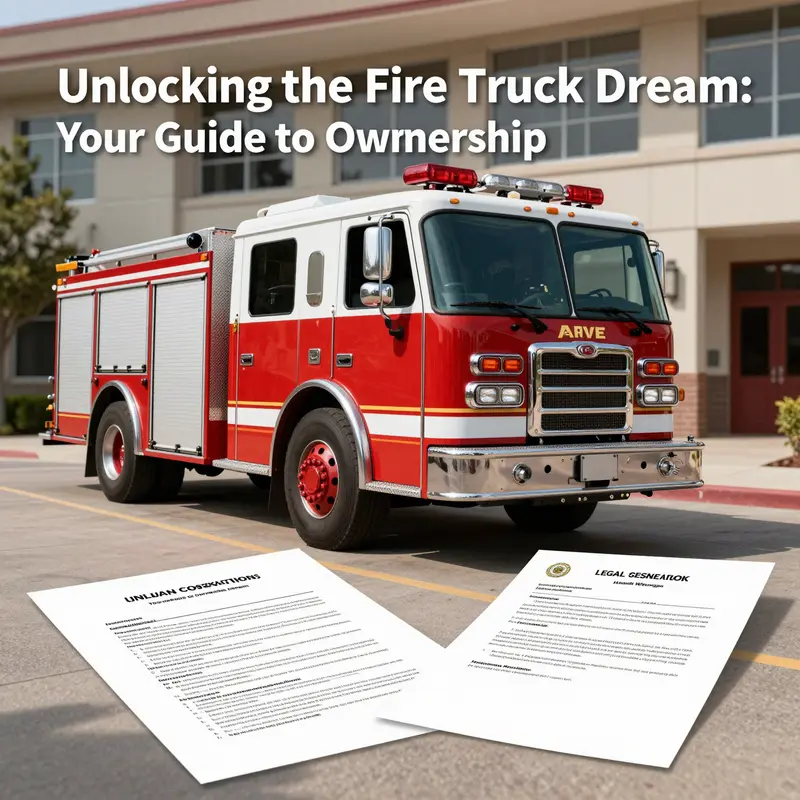
Owning a fire truck is less a casual shopping decision than a journey through a dense landscape of regulations, safety standards, and pragmatic responsibilities. For many, the idea starts with a surplus sale or an auction and ends with a gleaming engine in a private driveway. Yet the path from bid to badge is paved with legal requirements that treat these monsters of the road as more than just big trucks. They are emergency apparatus by design, built to carry weight, equipment, and an obligation to public safety. Understanding this terrain is essential not only to avoid legal trouble but to ensure that any private ownership remains a responsible, sustainable commitment rather than a costly novelty. The core of the journey lies in recognizing that ownership involves more than possession; it entails compliance with a framework that spans registration, insurance, operation, and ongoing maintenance, all of which are shaped by national standards, local ordinances, and the terms of any funding that helped acquire the vehicle in the first place. The narrative that follows weaves together these strands, showing how the legal frame both constrains and enables legitimate, safety-minded ownership.
A practical starting point is acknowledging how a fire truck typically enters private hands. In many regions, decommissioned apparatus become surplus assets through government programs, auctions, or private sellers who once served municipal or volunteer departments. The prospect can be alluring: a vehicle with unmistakable presence, a powerful engine, and a storied history. But the moment a private buyer crosses the threshold into ownership, the clock starts ticking on regulatory compliance. Fire trucks are not standard passenger automobiles; their size, weight, and purpose push them into the commercial or specialized vehicle category in the eyes of licensing authorities. That classification triggers a cascade of requirements: registration with the appropriate motor vehicle department, designation as a fire apparatus or emergency vehicle, and periodic inspections that ensure the vehicle remains roadworthy while upholding public safety standards. The exact rules vary by jurisdiction, yet the underlying theme is consistent: a fire truck must meet more stringent criteria than a typical car, partly to reflect its potential to operate under emergency conditions and partly to safeguard the public as it shares the road with everyday traffic.
The registration and licensing phase cannot be rushed. The process often demands documentation that confirms the vehicle’s purpose, its equipment configuration, and its compliance with safety standards that govern emergency vehicles. In many places, the presence of sirens and emergency lights triggers additional legal considerations. There are laws about when those features may be activated during travel and who may operate them, even if the operator is a private owner rather than a professional firefighter. The practical upshot is that a private owner must approach registration not merely as a paperwork formality, but as a declaration of intended use and a commitment to ongoing compliance. This is not a one-and-done step; it is an ongoing relationship with regulatory bodies that may require periodic inspections, updated insurance terms, and proof of maintained equipment.
Within this regulatory frame, compliance with established safety standards takes on a central role. The NFPA, a leading authority in fire safety, issues standards that influence how apparatus should be designed, built, and tested. Among these, NFPA 1917, which outlines the design, construction, performance, and testing requirements for new fire apparatus, stands as a benchmark. While a privately owned, decommissioned vehicle may not be considered “new” in the strictest sense, many grants, insurance policies, and public safety evaluations look for adherence to NFPA standards as a marker of reliability and safety. Noncompliant apparatus can become a legal liability, inviting fines, enforcement actions, or the withdrawal of funding support. A key theme, then, is diligence: even if a vehicle once served a department and is now yours, its continued legal viability often depends on how closely its current state tracks NFPA expectations, and whether the vehicle has undergone the necessary inspections and modifications to align with those standards.
Insurance represents another critical pillar of the legal landscape. A fire truck’s inherent exposure to risk—whether in routine travel, private events, or demonstrations—means that standard auto insurance is rarely sufficient. Most private owners must pursue specialized commercial or antique vehicle insurance that contemplates the unique hazards associated with emergency equipment. Insurers will probe the vehicle’s intended use, storage arrangements, and the frequency of operation. They may require regular maintenance logs, proof of driver training, and confirmation of proper storage to minimize theft or vandalism. The premiums can be higher than ordinary vehicle coverage, reflecting the vehicle’s size, operational complexity, and the potential liability tied to its use. Importantly, failure to maintain appropriate insurance isn’t merely a bad idea; it can expose the owner to substantial legal exposure in the event of an incident, complicating liability issues and potentially jeopardizing future ownership or funding.
Beyond registration and insurance, the question of usage looms large. Some jurisdictions impose clear restrictions on how a privately owned fire truck may be used, even when equipped with emergency lights. Parades, charitable events, or promotional appearances might be permissible only with explicit permits, route clearances, and sometimes the presence of an on-duty professional or trained volunteer operator. In others, private operation under non-emergency conditions could be tightly limited or even prohibited. These constraints are not merely bureaucratic niceties; they reflect the core public-safety purpose of emergency apparatus and the risk calculus that regulators perform when a large, powerful vehicle traverses streets not designed for it. For owners who want to blend the vehicle’s public-relations value with ceremonial roles, this often means navigating a patchwork of local ordinances, insurance terms, and grant covenants that specify permissible uses, maintenance schedules, and reporting obligations. In practice, many owners find value in channeling their apparatus into educational programs, museum displays, or community fundraisers, where the vehicle’s presence can inspire interest in fire safety while remaining squarely within the bounds of lawful use.
The ownership structure itself is an important consideration. Some fire trucks remain under the formal ownership of a department or a nonprofit, even when physically placed with a private owner or a collector. In such arrangements, grant agreements or transfer terms may dictate who bears responsibility for maintenance, insurance, and licensing. Violating these terms can have real consequences: the loss of grant funds, termination of a lease, or even legal action. For individuals contemplating outright private ownership, it is crucial to understand any provenance-linked restrictions that might accompany the vehicle. If a truck came with financing, a grant, or a restoration program, there could be stipulations about how the vehicle is used, how often it must be inspected, or what modifications are permissible. These terms may shape the practical life of the vehicle just as much as the legal statutes do.
The educational and historical value of privately owned fire apparatus should not be overlooked. Many owners leverage their trucks for beneficial purposes—display at museums, participation in charity events, or as part of educational initiatives that teach children and adults about fire safety. When pursued with proper legal counsel and transparent governance, such uses can align with public-interest objectives while still respecting the regulatory framework. Yet even in these beneficial contexts, a careful approach is essential. Any public-facing activity should be preceded by a review of local permits, insurance coverage for demonstrations, and a clear plan for safety oversight. In other words, the privately owned apparatus becomes a vehicle for education and community service only when operators and owners respect the boundaries that law and standards set.
The financial dimension of ownership flows from the legal framework as well. The purchase price is only the beginning. Maintenance costs for a fire truck can be substantial, reflecting the vehicle’s specialized systems, hydraulic components, pump configurations, and outsize tires. Regular, professional maintenance is not optional; it is a requirement to prevent mechanical failures that could endanger an operator or bystander. Fuel economy, while not a primary concern in firefighting, still matters for a private owner who keeps a vehicle in circulation. Parts availability can be a challenge as older models or decommissioned vehicles leave active fleets. The ownership decision therefore hinges on a realistic appraisal of ongoing costs, the availability of qualified technicians, and the owner’s capacity to secure spare parts. A thoughtful buyer will map out a preventive-maintenance plan, identify trusted service partners, and establish a routine for inspections that mirrors the discipline of an active department, even if the vehicle will rarely be used in an actual emergency.
The decision to pursue ownership is ultimately a decision to embrace responsibility. It is a choice to treat a large, complex machine not as a collectible or novelty but as a piece of public safety history that carries with it real obligations. The legal framework exists not to dampen enthusiasm but to ensure safety, accountability, and sustainability. Therefore, prospective owners should approach the process with a clear plan: identify the vehicle’s intended use, ensure alignment with local licensing and designation requirements, verify that insurance coverage is appropriate for the intended use, and confirm that the vehicle can meet ongoing inspection and maintenance standards. This is a prudent, eventually practical, and legally compliant way to engage with a vehicle that embodies the spirit of emergency response while remaining in civil society.
For readers who are curious about the buying process and the kinds of listings that commonly appear, there is a practical pathway to explore options while keeping the legal considerations front and center. The buying journey often begins with trusted surplus channels or reputable auctions where decommissioned apparatus enter the market. From there, due diligence becomes the compass. Buyers should seek a full mechanical history, a clear title, and a scrupulous inspection record. A vehicle with a documented service history and a recent certification is far more likely to pass the regulatory gauntlet than one with patched repairs and uncertain provenance. The balance of risk and reward hinges on the owner’s ability to step through the due-diligence steps without rushing into a purchase that could entangle them in compliance issues later.
As part of this conversation about legality and practicality, consider the broader ecosystem that supports private ownership. Government surplus sites and reputable listings can provide a starting point, but seasoned buyers often enlist legal counsel or a compliance expert to translate local ordinances into a concrete ownership plan. The real value lies in translating the vehicle’s emergency heritage into a safe, lawful, and educationally valuable presence in the community. A responsible owner keeps the public in the loop, ensuring that neighbors understand when and where the vehicle may be driven or displayed, what safety precautions are in place during demonstrations, and how the vehicle’s presence contributes to fire-safety education rather than presenting a hazard to the streets or to onlookers.
For readers who want a quick touchpoint on the practical side of buying, many of the most useful resources emphasize the same core messages: verify regulatory alignment before taking title, secure appropriate insurance, plan for ongoing maintenance, and be deliberate about the vehicle’s use. If you are exploring how to approach a sale from a consumer standpoint, you can find consolidated information on our dedicated listings page. It offers a structured way to assess options, compare configurations, and gauge the potential for legally compliant use in your area. If you’re drawn to the idea of owning an apparatus with a storied past and you are prepared to meet the legal responsibilities, the path forward blends historical appreciation with a disciplined, safety-first ownership model. The result can be a meaningful addition to a family or community effort around fire safety and education, rather than a risky, impulsive purchase that falls outside the boundaries of the law.
In sum, owning a fire truck as a private individual is feasible, but it is not a casual acquisition. It is a commitment to navigate a legal framework that prioritizes safety, accountability, and community responsibility. The journey from bid to badge is thus both a legal expedition and a practical apprenticeship in vehicle stewardship. By approaching registration and licensing with meticulous care, aligning with NFPA standards, securing appropriate insurance, respecting use restrictions, and planning for sustainable maintenance, the private owner can transform a surplus asset into a responsible and valuable instrument for education, display, or charitable activity. The chapter of ownership that follows a successful purchase is not a triumph of shopping but a testament to governance, safety culture, and the enduring duty to serve the public good. For those who decide to take the step, a well-crafted plan can turn an extraordinary vehicle into a durable, lawful, and inspiring presence in the community.
Internal resource note: for those exploring how to approach listings and the buying process, see our dedicated page on fire trucks for sale.
External resource: for authoritative standards and ongoing regulatory context, consult the NFPA’s standards on automotive fire apparatus, including updates to NFPA 1917 at https://www.nfpa.org/Code-Updates/NFPA-1917/2024-Update.
Guarding the Flame: Insurance Realities of Owning a Private Fire Truck
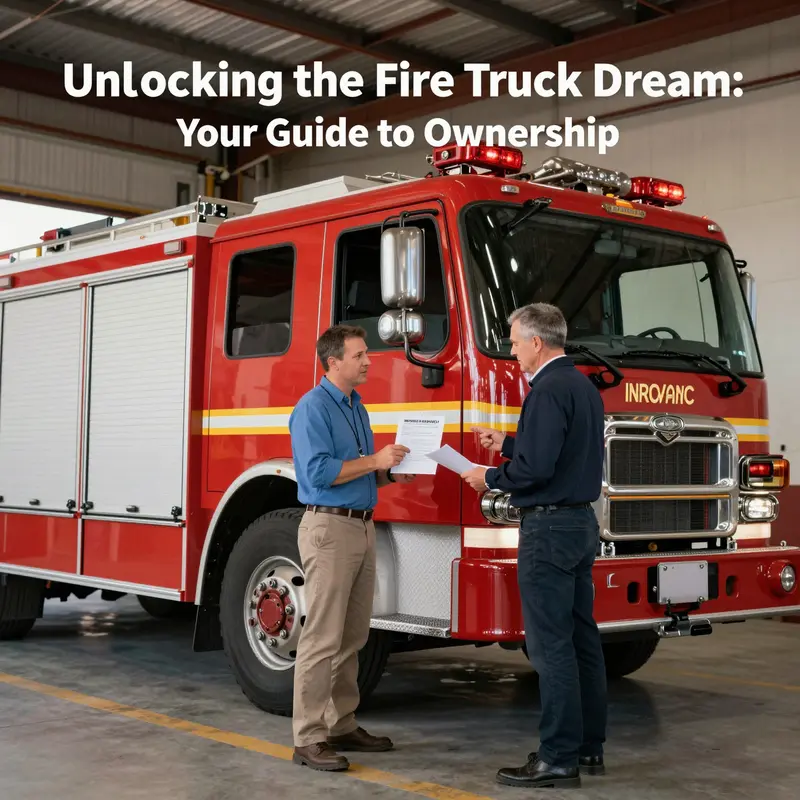
Owning a fire truck sits at the intersection of passion and practicality. Insurance is the gatekeeper that determines what ownership can be legally and financially sustainable. In most places a retired fire apparatus can be bought, but insuring it as a private, non-commercial vehicle requires careful planning and specialist coverage. Insurers assess the risk based on size, equipment, and intended use, often treating the vehicle as high risk and applying higher premiums or exclusions. A common path is to reclassify the truck as a non-commercial or personal-use vehicle if it falls under a weight threshold, but even then many carriers require specialized collector or vintage policies with strict storage and usage rules. The intent of use—display, charity demonstrations, or sanctioned events—drives the exact terms and pricing, and non-compliant operation can invalidate coverage. Costs extend beyond the premium to storage, maintenance, and potential licensing or permitting requirements.
Private ownership thus becomes a balance: enjoy the historical and educational value of the apparatus while meeting the conditions that insurers and regulators require. Practical steps typically include consulting a broker who understands specialty vehicle coverage, compiling documentation of provenance, condition, storage, and intended usage, and obtaining quotes that compare scope of coverage and exclusions, not just price. For many, the outcome is a workable policy that covers liability, theft, and physical damage while aligning with legal use, storage standards, and ongoing maintenance. While not inexpensive, the right plan can make a private fire truck a responsible, enduring tribute to public service rather than a risky indulgence.
Balancing Firepower and Finances: Maintenance, Costs, and Realities of Owning a Fire Truck
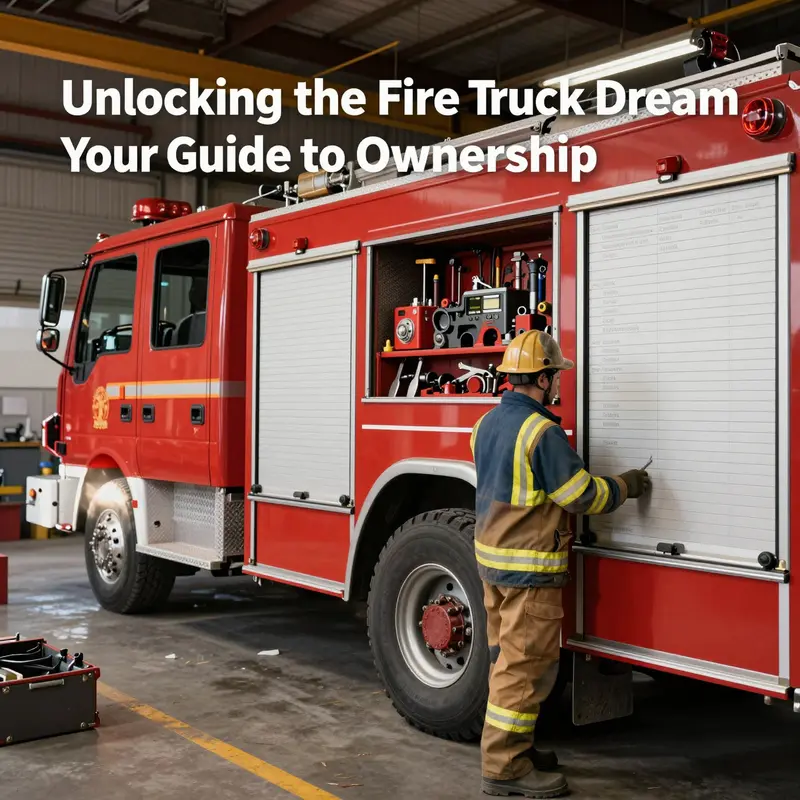
Owning a fire truck out of a public fleet is not a retirement plan detached from responsibility; it is a serious financial commitment wrapped in the expectations of readiness, reliability, and safety. The idea may hover in the realm of novelty for some, but the truth lands quickly: the more capable a vehicle is, the more it costs to keep it capable. When readers step from the realm of possibility into the realm of ownership, they encounter a layered landscape where maintenance is not a one-time investment but a continuous obligation. The machinery that makes a fire truck perform—its heavy engine, its hydraulics, its pumps and monitors, and the myriad safety systems—requires discipline, planning, and a conservatively funded budget. This is not merely about purchasing a surplus asset; it is about turning a specialized machine into a sustainable part of a private operation, a tribute to craftsmanship, and a careful service to the community if the vehicle ever serves in any public-facing role.
From the outset, routine maintenance forms the backbone of the ownership experience. Fire trucks operate in harsh conditions and under demanding duty cycles. Routine engine servicing is not simply about keeping an engine quiet or passing a simple inspection; it is about preserving a system designed for peak performance during emergencies. The engine, which powers not only the chassis but also many hydraulic and electrical subsystems, benefits from regular oil changes, filter replacements, and performance diagnostics. The maintenance cadence for these machines often rests on hours of operation and miles traveled rather than calendar days, reflecting the reality that a fire apparatus lives more in the realm of service hours than in the ordinary rhythms of consumer vehicles. Regular checks of the hydraulic system, especially the aerial apparatus if the truck includes a ladder, are non-negotiable. A minor hitch in a hydraulic line can become a major failure under load, compromising both safety and response capability. The hydraulic pumps, hoses, and cylinders demand thorough inspections for wear, leakage, and proper lubrication. This is not a task to be postponed; a compromised hydraulic system can render the truck immobile at the moment it is needed most.
Brakes and tires, the contact points between machine and road, deserve a level of scrutiny that exceeds standard passenger-vehicle practice. The braking system of a fire truck bears greater stopping power and different dynamics when fully loaded with water and equipment. Brake inspections must be precise, with attention to pad wear, rotor condition, and the integrity of the hydraulic booster system. Tires must be matched to the vehicle’s heavy weight and high operating pressures; replacements should consider load ratings, tread depth, and the unique wear patterns that trucks in active service exhibit. Regular tire maintenance is not vanity; it is essential to safety, stability, and control, particularly when negotiating urban streets, rural roads, or steep drive approaches during an incident. The cost implications accumulate quickly: higher license cycles, potential downtime for shop visits, and the specialized nature of parts can push simple maintenance into a multi-faceted budgeting exercise.
Beyond routine care, the maintenance universe expands with special equipment that makes a fire truck function in emergencies. Pumps, monitors, nozzles, lighting systems, and onboard communications gear are not decorative add-ons; they are critical lifelines during calls. Pumps must deliver reliable water flow across a range of pressures, while monitors and nozzles must perform under conditions of wind, heat, and pressure fluctuations. Lighting systems must remain functional to illuminate scenes safely, and communication devices must maintain clear channels in chaotic environments where every second counts. Each of these subsystems demands regular inspection, testing, and calibration. Preventive maintenance for special equipment is often more intricate than routine engine work because it integrates electrical, mechanical, and hydraulic disciplines. The costs of parts, specialized tooling, and skilled technicians accumulate rapidly, especially when components age or when a truck has seen extensive use in demanding environments.
Unexpected repairs are the inevitable counterweight to the predictability of routine maintenance. No fleet, private or public, escapes unplanned work. A collision, a hard stop, or a heat-soaked circuit board can yield surprises that demand immediate repair. The financial impact of these incidents can be substantial: replacement components, labor from specialists, and the potential downtime that leaves a vehicle out of service when it is most needed. The challenge for owners is to anticipate these events without surrendering to fear of the unknown. A prudent approach builds a reserve that reflects historical experience, risk assessment, and the likelihood of parts scarcity for aging apparatus. When a fire truck sits idle in a garage, the cost is not just maintenance invoices; it is the opportunity cost of not having a capable vehicle ready for deployment, which in turn translates into risk to the communities the truck was meant to serve.
Operational costs extend far beyond daily maintenance. Fuel consumption is a fundamental line item, and the real-world appetite of a fire truck is unmistakable. The engines powering heavy apparatus consume significantly more fuel than standard passenger vehicles, and the appetite varies with engine size, gearing, and duty cycles. The budget must accommodate fuel price volatility, especially in regions where response patterns involve long urban runs paired with stationary incident support. Insurance premiums follow the vehicle’s value, usage, and risk profile. Fire trucks are high-value assets with exposure to heavy use, potential accidents, and liability concerns. Insurance for a private owner can be markedly higher than for ordinary cars, reflecting both the vehicle’s replacement cost and the specialized training needed to operate it safely. And then there are the personnel considerations. Even when an owner is not actively responding to emergencies, the vehicle demands skilled operators or at least trained drivers who can maneuver it safely, perform routine tests, and respond to alarms or service needs. The economics of hiring or contracting trained personnel—whether for operation, maintenance, or event appearances—can be substantial. If the ownership is tied to a small personal collection or a museum display, the costs shift again toward security, stewardship, and insurance for a static exhibit; if the vehicle is operated for demonstrations or charitable events, there are additional considerations around permits, liability, and compliance with local regulations.
Budgeting and financial management for a private fire truck purchase thus becomes a story of layered costs and disciplined planning. The total cost of ownership includes purchase price, storage and security, routine maintenance, unexpected repairs, insurance, fuel, and personnel. Importantly, the financial picture is not static. As the vehicle ages, parts become scarcer and more expensive, and shop rates may increase. A rigorous lifecycle analysis, sometimes called a total cost of ownership, helps owners avoid sticker shock and set realistic expectations for the long haul. The question is not only what it will cost today but what it will cost over the next five, ten, or twenty years. A transparent plan might incorporate a depreciation schedule, a dedicated maintenance reserve, and a clear understanding of the vehicle’s potential resale value. Even with careful budgeting, the reality remains that ownership places a premium on stewardship: the owner becomes the caretaker of a complex, high-stakes machine that must perform when called upon and be protected when at rest.
These financial dynamics are not abstract. They shape the ways owners source a vehicle, the choices they make about use, and the communities they serve. In most jurisdictions, the legal framework surrounding private ownership of emergency apparatus imposes registration and licensing requirements that differ from standard passenger vehicles. The vehicle may require special permits for operation, even if the owner does not intend to respond to emergencies. The safety implications are equally tangible. Operating a fire truck demands formal training, both for the driver and for any other personnel who might be involved in the vehicle’s use. Improper operation can lead to accidents, injuries, or legal exposure. The owner, therefore, becomes not only a manager of a machine but a steward of a duty to use it responsibly and within the boundaries of the law.
From a practical standpoint, many private owners decide to use their trucks in contexts that honor the vehicle’s history and capabilities without subjecting it to the rigors of actual emergency response. Museums, educational programs, charity events, or ceremonial displays provide meaningful avenues for engagement while reducing wear and tear and limiting exposure to operational risk. In these settings, maintenance remains essential, but the cadence can be adjusted to accommodate the vehicle’s role as a showcase rather than as a frontline tool. When owners do pursue hands-on use, a structured program is essential. Regular drills, fuel management plans, and a predictable maintenance schedule help ensure reliability. Even with a well-planned program, the realities of ownership require ongoing attention to the balance between keeping the vehicle in peak condition and managing costs.
For readers considering this path, the practical takeaway is clear: owning a fire truck is not a casual hobby. It is a long-term investment in a piece of public safety infrastructure, carrying responsibilities that echo public service even when the vehicle sits in a private driveway. The decision process should be anchored in a realistic budget, a plan for routine and preventive maintenance, and a safety framework that respects legal constraints and community expectations. If the possibility of owning a fire truck remains compelling, prospective buyers should explore the broader ecosystem—surplus auctions, skilled mechanics with experience in heavy apparatus, and long-term storage solutions that protect the investment. The practical route often begins with research and a clear cost framework that outlines every major component of ownership—from engine maintenance to hydraulic inspections, tire management, and the upkeep of pumps and lighting systems.
As readers navigate this terrain, a note on sourcing can help shape expectations. While this chapter centers on maintenance and costs, it is worth acknowledging how the market presents opportunities to obtain a surplus apparatus. Government surplus channels and private sales can offer a path to ownership, provided the buyer approaches with due diligence and a sober financial plan. The key is not only to acquire a vehicle but to secure the knowledge, the parts supply, and the service ecosystem that will sustain it over time. A practical step is to examine the condition of critical systems, confirm the availability of spare parts, and assess the potential for future investments in upgrades or refurbishments that align with the owner’s intended use. If the storyline of ownership leads toward a purchase, readers can begin with a search that surfaces viable options and then proceed with a cautious, cost-conscious due diligence process. For those who want to explore options in a structured way, a visit to a dedicated marketplace for fire apparatus can reveal a range of possibilities, including vehicles that have already proven their value in public service and are now offered with detailed histories and mileage data. In any case, the decision to own should be anchored in a clear, transparent financial plan that accounts for all contingencies and frames the vehicle as a sustainable asset rather than a fleeting curiosity. A well-prepared owner will bring a balance sheet that reflects not only the capital cost but the ongoing commitments that keep a fire truck ready for action, whether that action is a staged demonstration or a legitimate call for service.
For readers who want to connect the dots between purchase, ownership, and ongoing use, a practical navigation path emerges. Begin with education about the vehicle’s lifecycle costs and maintenance requirements, then map out a realistic budget that incorporates routine service, unexpected repairs, and the long-term reserve needed for major component overhauls. Consider the staffing reality: even if you do not intend to operate the vehicle as part of a daily dispatch, you will likely need trained personnel to drive, inspect, and operate the apparatus safely during any public events or demonstrations. The financial plan should reflect this reality, ensuring that the vehicle can be moved, tested, and, when necessary, operated in a controlled manner by qualified individuals. In this way, ownership becomes a disciplined practice, built on preparedness and stewardship rather than the unbridled thrill of possession.
As a practical matter, those who are curious about buying a surplus apparatus should turn their attention to reputable marketplaces and to the due-diligence process that governs any significant purchase. It is essential to examine the vehicle’s maintenance logs, inspect structural integrity, verify the condition of pumps and hydraulics, and secure a clear understanding of any modernization needs. In the end, the maintenance and cost story is not about restricting enthusiasm but about channeling it into a sustainable, responsible approach to ownership. A well-maintained fire truck owned by a private individual can serve as a powerful reminder of the connection between public safety history and private stewardship, while the financial discipline behind that ownership protects both the owner and the broader community. If the journey moves toward acquisition, readers may wish to explore current listings in the market and consider how a particular vehicle’s history aligns with their maintenance capabilities and budget. For a direct glance at available options, see the listings under Fire Trucks for Sale, which offers a snapshot of surplus and private-sale opportunities and the potential for further discussion with sellers and specialists in heavy apparatus.
External resource for guidelines and best practices: NFPA Fire Department Vehicle Maintenance Guidelines
Internal resource for readers exploring buying opportunities: Fire Trucks for Sale
From Surplus to Service: The Real Benefits and Boundaries of Private Fire Truck Ownership
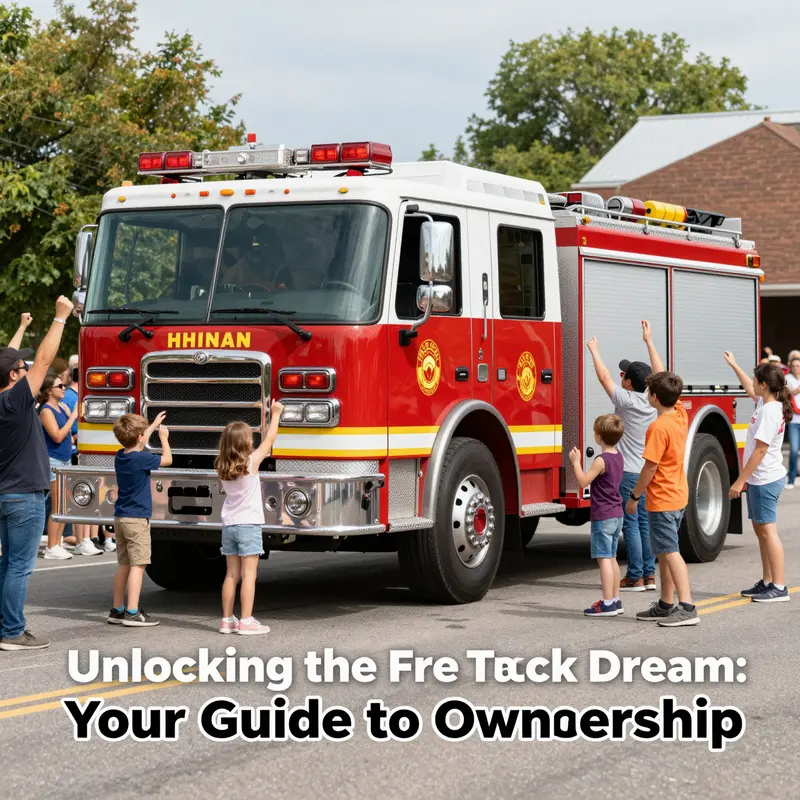
Owning a fire truck is not a simple fantasy of display and nostalgia; it’s a practical proposition that sits at the intersection of service, safety, and responsibility. In many places, surplus apparatus from retiring fleets becomes available to private buyers through auctions and private sales. The idea may spark visions of a gleaming engine at a private museum, a dramatic centerpiece for a charitable event, or even a personal collection that honors the first responders who risk their lives daily. Yet beneath that allure lies a web of obligations and realities that can be as complex as the vehicle itself. A fire truck is not a conventional car; it is a purpose-built tool for emergency response, with all the horsepower, weight, and specialized systems that implies. A comprehensive understanding of both benefits and boundaries helps separate the wish from the workable, ensuring that ownership advances public safety and personal stewardship rather than inviting unforeseen legal or moral hazards.
The most obvious benefit of owning a fire truck lies in its core capability: rapid, decisive action at the scene of emergencies. A well-equipped apparatus serves as a mobile platform for firefighting operations, a compact command post, and a reservoir of rescue tools all in a single, drivable unit. When a structural fire breaks out, a dedicated engine (the pumper) is designed to deliver water with the needed pressure to suppress flames quickly. In high-rise environments, a ladder truck extends a reach into upper floors, enabling ventilation and rescues that ground apparatus cannot accomplish without dramatic time penalties. Technical rescue units, built around hydraulic jaws, cutting tools, and stabilization equipment, complement this mix by tackling vehicle extrication, confined spaces, or trench collapses that demand precise coordination and diversified toolkits. In rural or forested settings, specialized wildland engines provide off-road capability and large water reserves, allowing responders to address brush fires far from paved streets where traditional pumps would struggle. The array continues with industrial and ARFF (airport rescue and fire fighting) units that address hazards unique to large facilities and aviation environments. Each model’s strength aligns with a distinct operational niche, and a private owner who understands these alignments can contribute meaningfully to local resilience.
This benefit extends beyond the immediate firefighting act. A fire truck operates as a strategic asset on the scene, offering a portable command center that supports situational awareness, communications, and safety oversight. Modern apparatus often carry technologies that enhance crew safety and decision-making, such as thermal imaging cameras that reveal hidden heat sources, or monitors that track crew temperatures and air quality. When integrated with a coordinated response plan, these tools help prevent escalation, reduce exposure of civilians to danger, and protect property more effectively. The value of having a versatile, dedicated platform becomes clearest when a city or town experiences a range of incidents—from a stubborn kitchen fire to a technical rescue that requires precise tethering, patient stabilization, and rapid transport to a medical facility. The right apparatus doesn’t just show up; it enables firefighters to act with confidence and clarity, which translates into lives saved and property preserved.
Yet the benefits are not purely operational. Private ownership can deliver community-facing advantages that echo well beyond the scene of a fire. A surplus fire truck can become a powerful educational tool, preemptively reducing risk by helping residents understand fire science, rescue procedures, and safety best practices. In museum-style settings or at community firehouses, restored or preserved units can provide tangible connections to the history and craft of firefighting, inspiring younger generations to pursue training, volunteerism, or public service. At charity events, a fire truck’s presence draws attention to important causes and can mobilize community support for service programs, smoke-alarm installation drives, or home-safety campaigns. The public-facing role of a privately owned vehicle, when framed as a resource rather than a spectacle, strengthens trust between residents and responders and underscores the shared responsibility for safety.
The practical benefits also rest on the adaptability of the truck’s configurations. Engine workhorses, ladder platforms, rescue units, and wildland engines each embody a different service model, and the choice of configuration signals how ownership will fit into local needs. For someone seeking a hands-on project, a retired unit can be a lab for learning maintenance, fabrication, and vehicle systems engineering. For a collector or a private museum, the emphasis may shift toward preservation, documentation, and accurate restoration to convey the historical arc of firefighting technology. In all cases, the model’s function — the intended use on the public road and at incidents — anchors decisions about registration, insurance, maintenance, and training.
Still, the appeal of private ownership comes with clear boundaries and responsibilities. A fire truck is not a toy or a casual accessory; it is a specialized vehicle with heavy mass, complex hydraulics, and high-powered pumps. Its maintenance demands can rival a small commercial fleet. Engines are built to deliver water or foams under high pressure, often with multi-stage pumps, intricate plumbing, and robust electrical and hydraulic systems. Regular service by trained technicians is essential, not optional. The maintenance schedule typically includes pump testing, brake and suspension checks, hose and nozzle inspection, and preventive work on transmission and chassis components. Fuel consumption can be substantial, and spare parts are often specialty items that require careful sourcing. In other words, keeping a fire truck road-ready and mission-capable can be a financially and logistically intensive undertaking, even when the vehicle is technically decommissioned.
Legal and regulatory considerations form another crucial boundary. Because fire apparatus is designed for emergency response, many jurisdictions treat ownership, registration, and operation differently from standard passenger vehicles. You may need special permits to operate the vehicle on public roads, or to use certain hoses, pumps, or siren configurations in a non-emergency context. Some regions restrict non-emergency usage to events that have formal authorization, require a licensed professional to operate the vehicle, or impose strict liability for any accidental damage, injury, or misuse. This is not a mere formality; the truck’s weight, braking profile, and response screws can create unique risk profiles that require heightened oversight and compliance. A thoughtful owner prepares for these realities by engaging with local authorities early, as they can explain the necessary steps for proper registration, annual inspections, and operating permits. When a jurisdiction requires that only licensed emergency personnel handle certain operations, ownership still has value, but it must be integrated with community safety goals and defined limits that are respected by all involved.
Alongside regulation comes the need for appropriate insurance. A standard auto policy typically excludes the specialized equipment and exposure inherent in a fire truck. Owners often pursue commercial vehicle policies tailored to heavy-duty apparatus, with coverage for liability, physical damage, and, crucially, fleet restoration or replacement in event of a total loss. Insurance pricing reflects the high replacement costs, the potential for operator error, and the risk profile associated with high-speed emergency-style driving on public roads. The right policy also contemplates loss of use, which recognizes the impact on ongoing public service if the vehicle is out of service during repairs. Given the complexity of the vehicle systems, some policies require the owner to demonstrate training and certification for operators or to maintain certain safety programs. Although this may add to ongoing expenses, it is a prudent investment toward responsible ownership and public accountability.
Storage, maintenance, and the operational footprint of a fire truck further shape the ownership equation. These vehicles are large and heavy, requiring secure, adequately vented storage with space for refueling, hose drying, and routine checks. A typical garage or trailer setup is insufficient for long-term storage; owners may need a dedicated lot with access to power outlets, a maintenance bay, and protective measures against weather and vandalism. The pump and hatch equipment require careful handling to prevent corrosion and ensure readiness. The driving behavior of a fire truck is also a lived constraint. They are optimized for controlled, purpose-driven missions rather than everyday commuting. This means that daily use is often impractical, and many owners reserve their truck for scheduled demonstrations, training sessions, and community events. If a private individual is drawn to the idea of driving a fire truck through town for publicity, the reality is that many jurisdictions restrict such operation to authorized personnel or permit holders who can prove a legitimate public safety purpose, with clear legal liabilities for misuse.
Within that framework, the market for owning a fire truck is a blend of accessibility and discipline. Many buyers enter through government surplus channels, where decommissioned apparatus are offered at prices that reflect their remaining life while factoring in the substantial costs of refurbishment and re-certification. The opportunities are real, but the pathway is specific. Prospective buyers learn that the timeline from purchase to active readiness can be lengthy, depending on the vehicle’s condition, the local regulatory requirements, and the availability of qualified technicians who can inspect, refurbish, and certify the unit for road use. A responsible approach to this market begins with a clear plan for how the truck will be used and who will operate it. It also means recognizing that a surplus unit can be a project as much as a public-safety asset, and budgeting accordingly for upgrades, safety systems, and training.
For those who want to explore the practical side of procurement, the market offers a variety of sources. Private sellers sometimes list retired apparatus that may require extensive refurbishment; public auctions and surplus platforms present another route, often with documentation about the vehicle’s historical service, mileage, pump hours, and maintenance history. Regardless of the channel, due diligence matters. Prospective owners should verify the vehicle’s mechanical condition, pump certification status, and compliance with current safety standards. They should also consider whether the vehicle’s configuration aligns with the intended use. A four-door passenger chassis adapted into a fire engine carries a different risk and maintenance profile than a purpose-built aerial platform or a dedicated rescue unit. The better the fit between the vehicle’s capabilities and the buyer’s stated goals, the smoother the transition from purchase to lawful, beneficial use. And because many buyers are attracted by the public-good potential of these machines, there is a natural emphasis on transparency, documentation, and community-friendly use.
In the end, ownership hinges on three interlocking questions: What is the vehicle’s intended role in your plans for public safety and education? Can you meet the regulatory, insurance, and maintenance requirements without compromising safety or fiscal stability? And will the ownership model you pursue promote a constructive partnership with local responders and residents? When answered with candor, those questions help an owner choose a path that honors the spirit of firefighting—speed, courage, and service—while maintaining the rigor and accountability that communities expect from anyone who wields a machine designed to conquer fear and save lives.
If you’re exploring the practical aspects of buying and owning a fire truck, a thoughtful approach can help you move from curiosity to constructive contribution. The process often starts with a careful assessment of needs and constraints, followed by a realistic budget for acquisition, refurbishment, inspection, and ongoing maintenance. It also involves a plan for training and certification, because even a surplus unit demands a driver familiar with its hydraulics, braking dynamics, and emergency protocols. A good owner coordinates with local fire departments, emergency management offices, and safety regulators to ensure that every step—from registration to routine inspections—meets the standards that keep public safety at the forefront. This is not merely a financial venture but a stewardship mission, one that can yield meaningful returns in public awareness, educational impact, and the everyday readiness of a community to respond when danger arises.
For readers drawn to the idea because of the dramatic potential and the symbolic resonance of a fire truck, there is a useful reminder in the practicalities. The vehicle’s capacity to contribute to safety hinges on disciplined management, ongoing investment, and a clear community-facing purpose. On a day-to-day level, that means no casual testing on public roads, no improvised use in parades or private events without proper authorization, and no shortcuts on maintenance or operator training. It means approaching ownership as a serious project—one that blends asset management, legal compliance, and meaningful service to neighbors who may never see a fire call, but who benefit from a well-prepared, educated, and safety-conscious community that can respond when time matters most. If that framework resonates with your goals, you’ll find that the journey from surplus to service is both challenging and deeply rewarding.
As you weigh the decision, consider how a private fire truck could integrate with public safety efforts rather than stand apart from them. The most responsible paths involve collaboration with local emergency services, transparent reporting on activities, and a commitment to education and public benefit. If your aim is to support resilience and preparedness, you can anchor your plan in practical steps: identify a suitable unit, assess refurbishment needs, secure the necessary insurance and permits, arrange for operator training, and design a program that uses the truck for demonstrations, safety clinics, and outreach that bolsters the community’s readiness to respond. In short, ownership should amplify a community’s ability to protect and preserve life, property, and the well-being of its most vulnerable members.
For readers who want to explore the market further, the options can be navigated with a clear-eyed view of risk and return. If you’re curious about current availability or want to see examples of how others have repurposed surplus trucks for public safety benefit, you can browse the broader market here: fire-trucks for sale. The key is to approach each listing with questions about maintenance history, pump certifications, and the specific role the vehicle would play in your plans. Remember that this is not a casual purchase; it’s an asset that, handled responsibly, can contribute to safety education, emergency preparedness, and a deeper partnership with your community. As a final practical checkpoint, consider connecting with a local fire department or emergency management office to map out requirements, share a candid assessment of your capabilities, and ensure that any ownership plan aligns with public safety norms. The collaboration you build now can shape how effectively you translate private ownership into public benefit, turning a surplus asset into a living tribute to the people who safeguard our communities every day.
External resource: https://www.govdeals.com
Final thoughts
Owning a fire truck can be an exhilarating and rewarding experience, enabling you to connect with the community, honor firefighting history, and even serve as a functional resource. The path to ownership may be filled with legal and financial hurdles, but with careful planning, knowledge, and passion, you can navigate the journey successfully. So, whether you’re looking to preserve a piece of firefighting history or utilize a vintage truck for community events, understanding the ins and outs of ownership will set you up for success. Embrace this opportunity, safeguard your investment, and enjoy every moment of owning your very own fire truck!