
California’s commitment to environmental standards is unyielding, even when it comes to essential services like firefighting. Despite stringent regulations on vehicle emissions, fire trucks remain operational, supporting the state’s emergency response needs. In this article, we delve into the intricate balance California maintains between enforcing emission standards and ensuring that its fleet of fire trucks continues to serve effectively. We will first examine the regulatory landscape that governs fire truck emissions, assess the implications of these standards on their operations, and finally, look at how the fire service is innovating by transitioning to cleaner technologies. Each chapter will uncover a critical aspect of this significant topic, specifically focusing on the ever-relevant question: Did California stop fire trucks for emissions?
When Emission Rules Meet Emergency Needs: California’s Fire Trucks Roll On
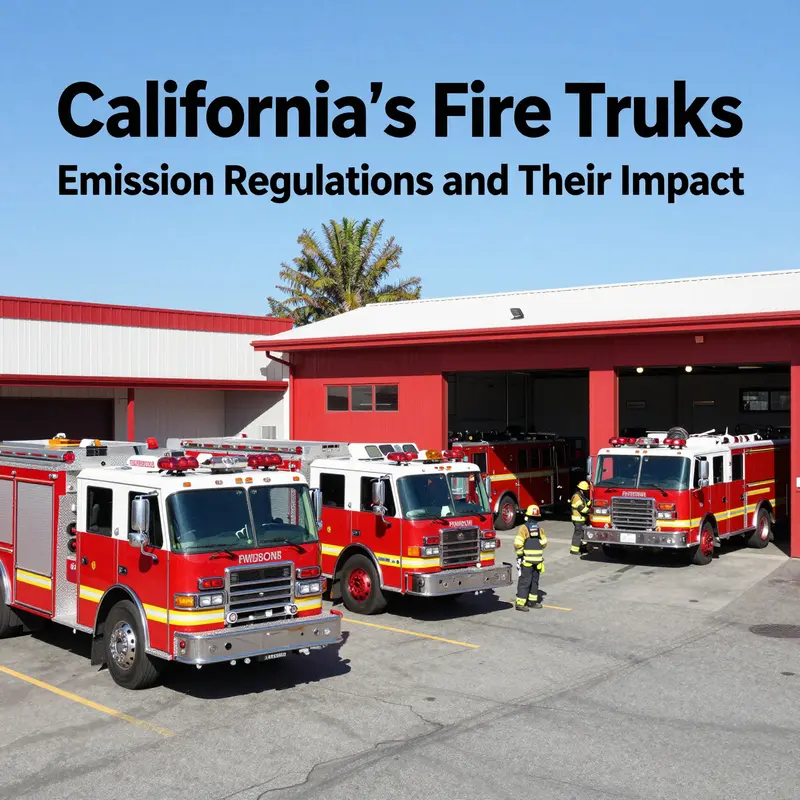
California has not halted fire department operations in the name of cleaner air. The flame of urgency that guides a firefighter is not dimmed by a regulator’s pen, but shaped by it. The state’s emission standards apply to the vehicles that move people and equipment through crowded streets, including emergency response vehicles. Yet the operational reality is clear: fire trucks continue to respond to calls, to save lives, and to protect property. The policy architecture surrounding these emergency assets seeks a balance between reliability and responsibility. In practical terms, that balance translates into a phased, deliberate transition rather than an abrupt halt. The result is a story of compliance without disruption, a story of safeguards that keep the sirens singing while the sky grows cleaner over time. This chapter unpacks how California navigates that terrain, why fire trucks are not blocked from duty, and how the state pursues a zero-emission future without compromising readiness when every second counts.
California’s emissions framework targets the broader fleet of medium- and heavy-duty trucks, a category that naturally includes the heavy rigs used in firefighting. The overarching aim is straightforward yet ambitious: to curb pollution without undermining essential services. The California Air Resources Board, or CARB, administers these standards with a mandate to protect air quality in urban centers and beyond. CARB’s work recognizes that engines with higher horsepower and heavier footprints contribute disproportionately to smog-forming pollutants and particulate emissions. It also recognizes that emergency vehicles exist in a rarified category where the imperative to respond must be weighed against the environmental costs of operation. The policy response is not to shut down operations but to drive a transition toward cleaner propulsion systems as soon as practicable. In other words, the state conditions the way fire trucks operate, not their ability to operate.
The public record emphasizes that no immediate retirement mandate shadows existing fire fleets. Instead, the path forward is a careful, staged approach that respects both public safety needs and environmental aspirations. In California, the phrase “phase out” is paired with “phase in.” The emphasis is on gradual replacement, not abrupt retirement. Fire departments—organized, trained, and mission-driven—are expected to keep the emergency response capability intact while the fleets are modernized. This is not a concession to convenience; it is a deliberate design choice aimed at maintaining the highest standards of readiness in tandem with rising clean-air expectations. Each city and county contends with different timelines, budgets, and terrain, but the shared target remains clear: reduce emissions where feasible while preserving the speed, reliability, and reach that define modern firefighting.
A central feature of the policy framework is a phased transition to zero-emission vehicles (ZEVs). CARB has laid out milestones that chart a long arc toward a cleaner transportation ecosystem. The plan envisions a future in which a large portion of medium- and heavy-duty trucks operate as zero-emission vehicles. The target is aggressive: a broad mandate that aims for 100% zero-emission trucks on California roads by 2045, with a significant shift beginning earlier, as the state bans new sales of such vehicles by 2036. The state’s logic is not punitive; it is anticipatory. By planning to retire new purchases of combustion-powered heavy-duty trucks and guiding the market toward electric and other zero-emission technologies, CARB seeks to avoid a wrenching overnight conversion and instead shepherds the transition through technology maturation, infrastructure development, and fleet replacement cycles that often outlast political terms.
The practical implications for fire departments are framed through what industry observers call a “lead-time and stability” approach. A landmark agreement reached in July 2023 between CARB and the Truck and Engine Manufacturers Association (TEMA) codified four years of lead time before new requirements take effect, complemented by three years of regulatory stability. This arrangement acknowledges the realities of procurement cycles, maintenance planning, and the long service lives of fire apparatus. Fire trucks are not created equal to ordinary heavy-duty trucks. They must be mission-ready, resilient in extreme conditions, and reliable under pressure. The CARB-TEMA framework therefore provides a cushion that keeps existing fleets in service while inviting a gradual, orderly conversion to cleaner technologies. In this sense, the regulations are not a prohibition on operation; they are a scaffold that supports an orderly migration toward zero-emission capabilities where feasible.
Operationally, this means that fire departments are not mandated to retire their current fleets immediately. The emphasis is on compatibility and continuity of operations. The fleets can roll forward, but with a growing expectation that new purchases and replacements align with emission standards and technology readiness. Old engines may remain in service, provided they meet safety and performance criteria and are maintained to a high standard. The rules encourage districts to retire vehicles at the end of their service life rather than before, recognizing the costs and risks involved in scrapping complex, life-critical equipment ahead of schedule. By allowing this kind of flexibility, California preserves the immediacy of fire response while nudging departments toward cleaner solutions as opportunities arise—from retrofits and upgrades to demonstrations of electric and hybrid propulsion in suitable contexts.
The transition is not just about powertrains; it is also about systems integration. Fire trucks are among the most complex working tools in public safety. They rely on robust electrical systems for pumps, communication, and lighting; hydraulic systems for ladders; and onboard computers that manage diagnostics and navigation. Shifting toward zero-emission platforms means ensuring that all these subsystems remain dependable and that charging or fuel infrastructure can support routine operations and extended missions. It is no small feat to ensure that a modern hybrid or all-electric fire apparatus can deliver the same performance as a traditional vehicle under the stress of real-world emergencies. Consequently, the policy framework supports pilot programs and staged demonstrations where departments work with manufacturers to validate reliability, durability, and serviceability in the kinds of environments where fires, rescues, and disaster response unfold.
From a broader perspective, the aim of California’s emissions regulations is to improve air quality, particularly in dense urban areas where firefighting often occurs near hospitals, schools, and other sensitive populations. The case for cleaner emergency vehicles grows stronger when one considers the cumulative impact of frequent siren-driven runs, the exhaust plumes from fuel-burning engines, and the occupational exposure faced by firefighters who operate in the cab and near the exhaust. Yet these benefits must be weighed against the need to respond rapidly and decisively. The state’s policy response has been to pursue decarbonization without compromising readiness. If a fire department cannot count on a vehicle to start its pump, pump its water, or bring vital equipment to the scene, the environmental benefits would be overshadowed by risk. By contrast, a strategy that aligns clean-energy progress with robust maintenance routines and proven reliability can deliver both safer skies and safer streets.
Even as departments move toward cleaner technologies, the policy framework encourages thoughtful consideration of the practicalities of conversion. It recognizes that different regions and departments have distinct capabilities and constraints. A small municipal department with a tight budget and a limited charging network may need longer timelines or targeted pilots to test electric apparatus in a specific municipal climate. A larger district with a broader tax base and more resources might move more quickly, leveraging early-adopter lessons to scale up. The shared thread across these varied circumstances is the acceptance that the end goal—zero-emission medium- and heavy-duty fleets—is achievable without sacrificing life-saving response times. The path to that future is paved with careful planning, steady procurement, and continuous reference to safety standards that must never be compromised.
Within this framework, the relationship between policy and practice is also transparent about the work still to be done. The transition requires not only cleaner vehicles but also a reimagining of readiness, maintenance, and command systems. Fire departments must coordinate with manufacturers to ensure spare parts availability, trained technicians, and standardized procedures for charging, battery management, and emergency operations during a transition. They must also consider the reliability of power sources in events that test the electrical grid, from heat waves to wildfires that strain infrastructure at the very moments when trucks are needed most. These considerations are not speculative but are actively addressed through regulatory guidance, interagency coordination, and the sharing of best practices as the state tests, refines, and scales cleaner emergency responses.
The content above helps answer the central question—did California stop fire trucks for emissions? The answer remains a carefully hedged no. The operation of fire trucks continues unimpeded by the emission rules, with a clear preference for ensuring that the existing fleet remains safe and capable while the state and its partners explore cleaner alternatives. In the realm of public safety, the rule is simple and unwavering: response time saves lives, and certainty in that response is non-negotiable. The regulations are designed to preserve that certainty while gradually reducing the environmental footprint of the very vehicles that carry resilience into communities under threat from fires, floods, or other emergencies. This combination of steadfast readiness and forward-looking reform is the core reason why California’s approach to fire truck emissions remains practical rather than punitive, and why the journey toward zero-emission firefighting is not a retreat from duty but a disciplined evolution of duty itself.
For readers seeking a direct line to more technical details about the emissions framework, the California Air Resources Board maintains comprehensive information on Zero Emission Medium- and Heavy-Duty Vehicles. This resource provides the regulatory background, timelines, and associated guidance that inform how emergency vehicles are treated within the broader transition. The chapter’s synthesis draws from those official sources to present a coherent narrative of how public safety and environmental goals can advance in concert rather than collision. As regulations mature and technologies improve, the narrative will continue to unfold—with fire departments adapting, upgrading, and refining their fleets while remaining prepared to answer every call that comes through the dispatch center. In this sense, the fire service embodies the very virtue regulators hope to cultivate: responsibility that protects public health without compromising courage in the line of duty.
For a deeper dive into related readiness and systems topics, you can explore resources dedicated to overcoming practical challenges in modern fire command systems, which offer insights into how agencies maintain interoperability as fleets evolve. Overcoming challenges in fire command systems.
External resource: For official regulatory details on zero-emission vehicle timelines and requirements, see the California Air Resources Board page on Zero Emission Medium- and Heavy-Duty Vehicles: https://ww2.arb.ca.gov/our-work/programs/zero-emission-vehicles/zero-emission-medium-and-heavy-duty-vehicles.
Racing Toward Zero: How California’s Emission Standards Shape Emergency Response, Fire Trucks, and the Policy Balance
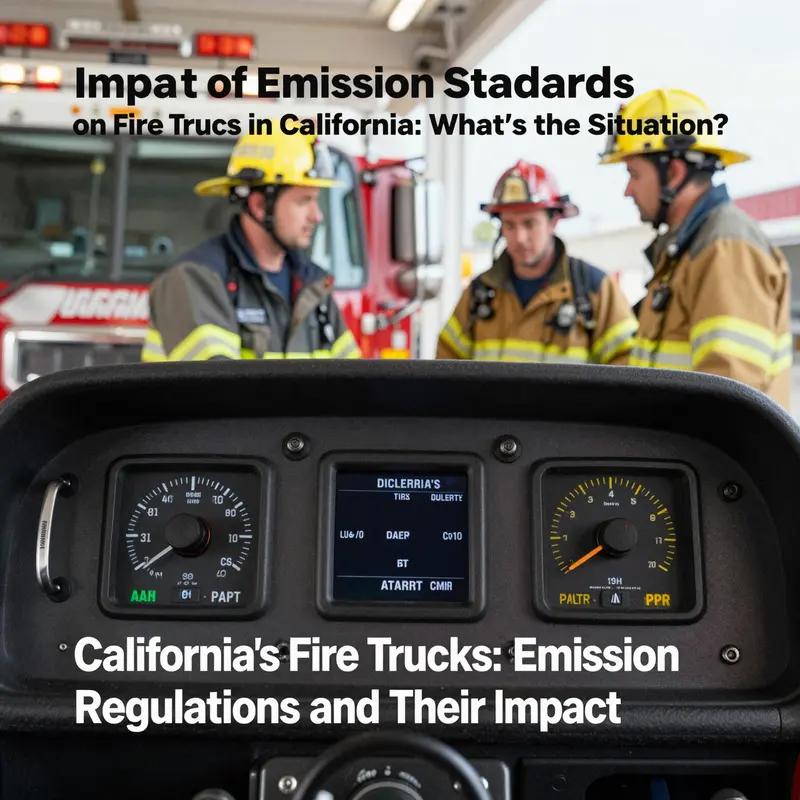
California’s air-quality ambitions run parallel to its insistence that emergency services remain swift, reliable, and ready. In public debates, it’s common to hear a simplification: emissions standards threaten to slow or halt the deployment of new fire-trucks. Yet the reality inside policy rooms and firehouses is more nuanced. California has not paused or blocked fire departments from operating due to emissions; rather, the state has woven stringent emission requirements into a broader framework that governs all medium- and heavy-duty vehicles, including those dedicated to emergency response. The California Air Resources Board (CARB) leads this effort, crafting rules designed to curb pollutants that worsen urban air quality, especially in densely populated areas where the frontline of firefighting intersects with crowded streets and vulnerable residents. This approach underscores a core tension: protect public health by reducing pollution while protecting public safety by ensuring that emergency vehicles remain available, responsive, and capable under the demanding conditions of real-world operations. The resulting policy landscape is not a ban on fire trucks but a disciplined trajectory toward zero-emission propulsion for new vehicles, paired with pragmatic accommodations for the unique needs of firefighting fleets.
At the heart of the matter is the regulatory timetable. CARB has established a long-range vision that, in stages, steers the fleet composition of California’s emergency services toward zero-emission alternatives. Specifically, the rules set a target that all new medium- and heavy-duty trucks sold in the state be zero-emission by 2036, with a planned complete transition to 100% zero-emission fleets by 2045. This is not a prohibition on existing trucks that are already in service, nor is it an immediate withdrawal of combustion-powered engines from emergency duties. Instead, it is a strategic mandate about new purchases and replacements. Fire departments continue to rely on their current fleets, but when they replace aging apparatus or add new units, those replacements must conform to zero-emission standards. The practical implication is a steady, deliberate modernization of the fleet over time, rather than a sudden disruption of emergency response capabilities. The policy balance aims to maintain readiness while driving down emissions that have outsized impacts on urban air quality, where the overlap between ambulance bays, fire stations, and city streets creates both environmental and public-health stakes.
The regulatory framework is not static. It has evolved in recognition of the realities of emergency response technology. CARB’s coordination with the broader federal and industry landscape reflects a deliberate approach to ensure that the transition is technically feasible. As part of a negotiated agreement in mid-2023, CARB aligned with the U.S. Environmental Protection Agency’s less stringent 2027 nitrogen oxide (NOx) emissions standards and provided manufacturers with at least four years of lead time and three years of regulatory stability before new rules take effect. These concessions, arrived at through collaboration with the Truck and Engine Manufacturers Association and other stakeholders, were designed to avert abrupt shifts that could compromise reliability or leave departments with insufficient time to adapt. They acknowledge that the most challenging segment of the market—emergency-response apparatus—will require technical maturation, new charging or fueling infrastructure, and careful logistical planning before a full transition can be achieved. The negotiated timeline also aims to preserve the essential operating status of fire services while pushing the industry toward cleaner propulsion technologies as quickly and safely as practicable.
The practical reality, however, remains complex. Fire trucks are not ordinary vehicles. They demand extraordinary reliability, robust performance under extreme conditions, and the ability to operate for extended periods in the field, often at high power, with rapid response times. Zero-emission alternatives—electric propulsion and hydrogen fuel-cell technologies—have evolved markedly, but questions persist about whether they can meet the precise and demanding requirements of firefighting work. Batteries must deliver high power for pumping operations, rescue tools, and lighting, while still offering long-range endurance. They must survive repeated rapid charging cycles, tolerate high ambient temperatures, and remain durable through vibrations and rough terrain. Hydrogen systems—while offering fast refueling and high energy density—pose their own challenges in terms of safety, infrastructure, and vehicle footprint. In short, the transition must demonstrate not only a clear environmental benefit but also a demonstrable parity with, or improvement over, conventional diesel- or gas-powered platforms in terms of uptime, readiness, and maintainability.
To navigate these challenges, CARB has prioritized collaboration across the supply chain and the firefighting community. The agency has engaged with industry participants, infrastructure developers, municipal fleets, and research bodies to map out what a feasible transition looks like for emergency apparatus. This cooperative approach recognizes that a successful shift requires more than a rulebook; it requires a functioning ecosystem of batteries with sufficient energy density, charging and fueling infrastructure that can operate under station constraints and mission fluctuations, and maintenance regimes that keep specialized equipment in peak condition. In this sense, the transition to zero-emission fire apparatus is as much an investment in the support systems around the vehicles as it is in the vehicles themselves. The state has therefore encouraged pilots, trials, and early deployments to gather real-world data on performance, durability, and total cost of ownership. Cities such as Los Angeles and San Francisco have begun to test and deploy electric or hybrid fire apparatus in controlled settings, learning how to integrate these machines into existing fleets, incident command structures, and shift schedules.
The pilots illuminate a core dynamic: the need for infrastructure and planning to keep pace with technology. Fire stations must be equipped with charging or fueling capabilities that minimize downtime and do not compromise readiness. This includes strategic placement of charging ports, the integration of energy management systems that can balance peak electrical demand with the overarching mission of keeping crews fully capable at all hours, and the development of maintenance routines tailored to electric or hydrogen-powered platforms. These operational considerations extend beyond the station walls. Fire departments interact with mutual aid networks, neighboring jurisdictions, and regional emergency response plans. When a multi-alarm incident or a large-scale disaster stretches resources, the imperative to move quickly and reliably is uppermost. Any transition plan must account for such exigencies, ensuring that zero-emission replacements do not produce a bottleneck at the worst possible moment.
The regulatory and operational landscape is further shaped by the evolving picture of technology readiness. Industry observers note that the electrification of heavy-duty and specialty vehicles, including those used in emergency services, depends on breakthroughs in battery durability, fast charging, and the ability to sustain high-power operations for extended durations. These are not merely technical hurdles; they influence fleet procurement strategies, budgeting cycles, and the pace at which departments can retire aging units. CARB has responded by framing the transition with phased milestones, aligning state rules with federal standards to provide manufacturers with a predictable horizon. This reduces the likelihood of sudden price jumps or supply gaps that could otherwise complicate a department’s ability to plan long-term capital investments. The four-year lead time and three-year stability window are not trivial concessions; they are a recognition that the road to zero-emission emergency equipment is a marathon, not a sprint. The result, ideally, is a gradual but resolute modernization that preserves safety margins while reducing air pollution.
As the conversation continues, it is important to acknowledge the public health context that motivates California’s stance. Fire emissions—from diesel exhaust to idling engines near schools, clinics, and residential neighborhoods—contribute to respiratory issues, cardiovascular stress, and other health challenges, particularly for vulnerable populations. By pursuing zero-emission solutions in all new medium- and heavy-duty vehicles, the state is addressing a significant portion of urban air pollution sources. The question is not whether these diseases will be cured overnight, but whether the policy framework can accelerate cleaner technologies fast enough to improve air quality in the near term while ensuring emergency services do not experience unacceptable delays or reliability gaps. The answer, so far, points to a cautious optimism: zero-emission alternatives are increasingly capable, the regulatory runway is designed to prevent abrupt disruptions, and pilot programs are actively testing the limits of what is feasible in real-world emergencies. In this sense, California’s approach is less about freezing the status quo and more about reconstructing it—layer by layer, station by station, with vigilant attention to performance, resilience, and the public good.
The story of transition also invites reflection on the broader trajectory toward a cleaner transportation future. California has long positioned itself as a laboratory for environmental policy, often testing ambitious standards and then exporting lessons to other states and regions. While the exact timelines may vary across fleets and municipalities, the underlying principle remains clear: the state seeks to decouple the growth of transportation emissions from the need for reliable emergency services. This means acknowledging the special value of emergency vehicles and building the technologies and systems around them to ensure continuous operation. As the state presses forward, these efforts will require ongoing data, transparent reporting, and iterative policy adjustments that respond to field experiences. The Fire Department, the fleet manager, engineers, and policymakers must all contribute to a shared vision in which zero-emission technology is not a substitute for capability but a catalyst for greater reliability, even under duress.
For readers seeking a current snapshot of how the transition is unfolding at the ground level, industry observers point to early deployments in major California cities as instructive case studies. These pilots explore several critical questions: Can an electric or hydrogen-powered apparatus deliver the same rapid acceleration and sustained pumping power as its combustion-engine predecessor? How will batteries perform during prolonged operations across back-to-back alarms, and what will be the implications for maintenance cycles and spare parts inventories? How will fire stations be reconfigured to accommodate charging needs without extending response times or compromising safety routines? These questions do not have one-size-fits-all answers, because each department faces unique constraints—station locations, building infrastructure, electrical service capacity, local climate, and the diversity of incident types. Yet the very process of asking and answering them marks progress toward a future in which zero-emission specs align with the non-negotiable demands of emergency response. The evolving evidence base, including field data from pilots and careful monitoring of performance metrics, will inform policy refinements and procurement guidance in the years ahead.
In this landscape, the role of public communication cannot be overstated. Fire departments, city planners, and environmental agencies must speak clearly about expectations, timelines, and the practical realities of the transition. Transparent reporting about uptime, reliability, charging times, maintenance costs, and mission readiness helps to build trust with communities and with personnel who perform some of the most demanding work imaginable. It also helps to demystify the perceived trade-off between environmental stewardship and emergency readiness. When communities hear that policymakers are aligned with engineers, manufacturers, and frontline crews in a shared pursuit—zero emissions without compromising speed and safety—the dialogue moves from fear of disruption to confidence in progress. The public can then see that California’s emission standards are not an obstacle to help but a transformative program that seeks to deliver cleaner air without compromising the ability to respond when minutes count.
One way to understand the current phase of this transition is to consider the practical aspects of how a department plans for replacement and augmentation of its fleet. Budget cycles, capital planning, and long-term asset management all factor into the decision to purchase a new zero-emission unit. Departments must estimate total cost of ownership, including purchase price, charging or fueling infrastructure, energy costs, maintenance, and parts supply. They must also plan for maintenance staff training, diagnostic tools, and the availability of qualified technicians who can service advanced propulsion systems. The potential for operating in multiple jurisdictions, especially during mutual aid events, further complicates the calculus, as fleets may travel across varying electrical grids or fueling ecosystems. In this context, the four-year lead time referenced in regulatory negotiations is not simply a legal requirement; it is a practical cushion that allows departments to align funding, training, and logistics with the introduction of new technology. It also gives manufacturers time to scale up production, refine product designs to meet firefighting needs, and work with fleets on installation and commissioning processes that minimize downtime.
In addition to infrastructure and technical readiness, there is a human element to the transition that deserves equal attention. Firefighters and command staff must adapt to new vehicles that behave differently in the field. The touchpoints—how a crew negotiates turnouts, how a pump engages, how electrical systems interface with rescue tools—become crucial training topics. Crew familiarization with the interface, safety protocols for high-energy systems, and contingency plans for battery thermal events are all part of the educational fabric that accompanies any new technology introduction. The culture of resilience that characterizes firefighting also supports the adoption of cleaner propulsion; crews who are accustomed to improvising, adapting, and overcoming challenges bring a pragmatic sensibility to the testing and adoption of zero-emission rigs. And as with any complex operational shift, peer learning matters. Departments that share experiences, data, and lessons learned can shorten the learning curve for others who are at earlier stages of transition, reducing the risk of costly missteps while maintaining a consistent standard of readiness across jurisdictions.
All of this does not occur in a vacuum. The public policy conversation around emissions and emergency response is embedded in a larger environmental justice framework and a broader climate strategy. California’s cities often contend with high population density, vulnerable neighborhoods near major roadways, and the health burdens associated with air pollution. Reducing diesel exhaust and NOx emissions thus translates into tangible public health gains, including fewer asthma attacks, improved respiratory outcomes for children, and lower cardiovascular stress for communities living in close proximity to traffic. The policy choice to align emergency-vehicle procurement with zero-emission standards signals a commitment to cleaner air not only in general but in places where it matters most—areas with heavy traffic, schools, and clinics. As emissions standards tighten over time, the challenge will be to ensure that emergency services maintain peak readiness, a task that requires robust data collection, ongoing technology assessment, and careful staging of fleet modernization alongside infrastructure investments. The narrative that emerges from this work is not a simple yes-or-no about banning combustion engines; it is a nuanced account of how a state negotiates toward a cleaner transportation ecosystem without compromising the speed, reliability, or reach of essential services.
For readers who want to dig deeper into the current state of policy and practice, industry discussions and official updates provide valuable context. The FireTruck Space blog offers ongoing commentary on how departments are approaching fleet modernization and the practical realities of transitioning to cleaner propulsion in emergency-service environments. firetruck.space/blog/ can offer readers a sense of the kinds of questions, strategies, and experiments that accompany real-world adoption. While the specifics of each department’s journey will differ, the broader arc is consistent: a measured push toward zero-emission alternatives, anchored in a recognition that emergency response must remain unimpaired at every step. As these pilots mature, the hope is that the lessons learned will illuminate a path forward for other states, municipalities, and emergency services seeking a balance between environmental stewardship and public safety.
In closing, California’s approach to fire trucks and emissions is not about stopping emergency response; it is about ensuring that one essential service can operate within a healthier environment. The state’s framework acknowledges the urgent needs of firefighters and the communities they serve while driving innovation through regulatory clarity, industry collaboration, and phased timelines that reflect technical and logistical realities. The progress to date—pilot programs, staged procurement, and ongoing performance evaluation—indicates a future in which zero-emission fire apparatus play an increasing role without compromising command, control, or capacity on the scene. As with any ambitious policy, the journey is iterative, data-driven, and deeply collaborative. The ultimate objective remains clear: equip the first responders who defend lives and properties with the most advanced, clean, and capable tools available, and do so in a way that keeps the air in California as clean as the response to its most urgent calls. For the latest official framework and updates, readers can refer to CARB’s ongoing guidance and status reports at the agency’s website, which anchors the evolving story in regulatory substance and real-world accountability.
External reference: https://www.arb.ca.gov
Urgency Without Stalling: California Keeps Fire Trucks Rolling While Cleaning the Air
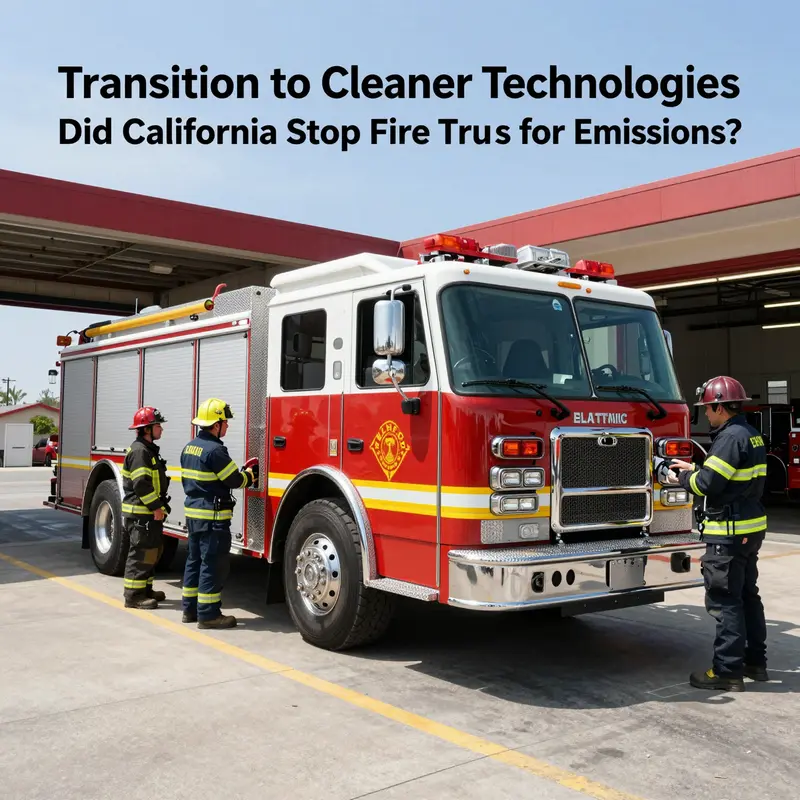
When people ask whether California stopped fire trucks for emissions, the answer is both simple and nuanced. California did not lock fire trucks out of service for air quality reasons. It did not issue a blanket ban on emergency vehicles, nor did it suspend the obligation to respond to calls. Instead, the state pursued a strategic path: regulate emissions with a focus on the broader fleets that power commerce and transportation, while preserving the near instantaneous response that communities rely on in moments of crisis. This approach reflects California’s larger climate and air quality agenda. It treats emergency response as an essential public service that must remain operational, even as the state presses hard to reduce pollution from the vehicles that contribute most to urban air pollution over the long term. In practical terms, this means fire departments continue to respond to fires, medical emergencies, and rescue calls, but they do so within a framework that gradually shifts the overall vehicle mix toward cleaner technologies where feasible and reliable.
To understand the balance California seeks, it helps to sketch the policy landscape. The California Air Resources Board, CARB, enforces a suite of emission standards that cover a wide swath of vehicles, with particular emphasis on medium- and heavy-duty trucks that power freight and district distribution. The objective of these standards is clear: lower nitrogen oxide and particulate matter emissions, improve ozone and fine particulate air quality, and reduce the health burden borne by urban residents, especially children and seniors. The policy toolkit is designed to bend the emissions curve without compromising the safety net that emergency services provide. In that sense, the regulatory strategy functions like a long arc: it includes timelines, flexibility, and technical feasibility considerations that allow the emergency sector to operate uninterrupted while gradually transforming the fleets that pose the most systemic pollution risk.
A pivotal element of the current trajectory is the 2036 agreement with the Truck and Engine Manufacturers Association, a key milestone in California’s broader zero-emission vehicle program. This agreement targets new diesel-powered medium- and heavy-duty trucks, setting a staged path toward 100 percent zero-emission trucks on California roads by 2045. The mechanism is deliberate: it provides manufacturers with lead times of at least four years and aims for regulatory stability for a minimum of three years. It also aligns California’s standards with federal regulations where appropriate, including the EPA’s forthcoming nitrogen oxide rules. The structure of this plan makes room for industry readiness, supply chain development, and the evolution of charging and fueling infrastructure—all without halting essential services. In other words, the state is saying to fleets and manufacturers, we will push forward, but we will do so with predictability and a clear timetable that supports investment in technology, testing, and workforce training.
Crucially, fire trucks themselves sit outside the immediate target of those medium- and heavy-duty truck rules. The regulation’s focus is squarely on the long-haul and freight segments that drive the most sustained emissions over a typical day and across a fleet’s lifecycle. Emergency response vehicles are a different category, categorized by their mission-critical role and unique duty cycles. They require instant readiness, maximum reliability, and the ability to operate in harsh conditions, including extreme heat, cold, and rain. That reality shapes how fire departments approach modernization. Rather than treating all vehicles the same, agencies weigh the benefits of cleaner technologies against the realities of practice. The outcome is not a ban or a forced retirement of existing apparatus, but an ongoing assessment of when and where cleaner technologies can be deployed to the fleet without compromising capability.
In the field, this translates into a measured, iterative modernization program. Where options exist that do not compromise reliability, departments trial cleaner propulsion platforms in parallel with traditional diesel equipment. For instance, several departments have explored electric and hybrid fire apparatus in specific roles—the pumper that serves a district with moderate call volumes, or the ladder truck used in areas with robust electrical infrastructure and reliable charging access. The key is practicality: the vehicle must be able to perform a full shift, carry a water load or equipment payload, and respond without delay. It is not enough for a vehicle to be clean at idle; it must stand up to the heat of a sustained response, the vibrations of a long drive, and the rigors of routine maintenance in a busy station. This is why the transition tends to be incremental. It seeks to create a path toward cleaner options where the physics and the economics line up with public safety.
There is another layer to the story, one that sits at the intersection of procurement and public communication. Fire departments operate within communities that value rapid response, transparency, and accountability. When the public reads headlines about emissions and enforcement, worry can crop up that life-saving services might be compromised. In reality, the process hinges on rigorous risk assessment, reliability testing, and a clear understanding of duty cycles. A modern emergency vehicle, even when clean propulsion is in use, still must meet stringent performance criteria: hydraulic reach, pump capacity, water pressure, onboard power needs, and the ability to operate in hot climates or at high altitude. These requirements shape the pace at which new technologies can replace legacy diesel platforms. They also drive the demand for robust support networks—charging or fueling infrastructure at fire stations, spare parts supply chains, and the training needs of crews who must operate and maintain unfamiliar propulsion systems.
The practical implications extend to the broader market for firefighting equipment and the choices agencies make about replacement and modernization. In the public discourse, it is easy to imagine a wholesale swap from diesel to electric overnight. The real-world path is more gradual, built on staged replacements, pilot programs, and careful budgeting. For departments contemplating cleaner fleets, the market offers a spectrum of options, including new equipment that emphasizes energy efficiency, load management, and regenerative braking, as well as retrofits that can extend the life of existing platforms. This is not merely a technical shift; it is a financial and logistical planning exercise that must align with labor agreements, insurance constraints, and the cadence of grant programs that support capital investments in emergency services. The outcome is a fleet landscape that grows cleaner in steps, while preserving the continuity and reliability that communities count on in moments of crisis.
A closer look at the energy transition framework clarifies the relationship between public policy and daily operations. CARB, in shaping the statewide approach, recognizes the value of a predictable roadmap for manufacturers and local agencies alike. The four-year lead time embedded in the TEMA agreement, the commitment to three-year regulatory stability, and the alignment with federal rules all serve to buffer the industry from abrupt shifts. In practical terms, a fire department evaluating a new cleaner platform can forecast when incentives or mandates will take effect, what performance standards the vehicle must meet, and how the vehicle will be integrated into a station’s existing workflow. For personnel, this predictability reduces the uncertainty that can derail modernization plans. When crews know that the goal is zero-emission trucks by a given year, they can anticipate training needs, station upgrades, and maintenance planning. The outcome is not only cleaner air but a smoother, safer transition for the people who operate in the most challenging conditions.
Social considerations also frame this transition. Urban air quality matters profoundly to residents who live near busy corridors and freight corridors. Studies consistently show how reductions in NOx and particulates can yield tangible health benefits, including fewer asthma attacks and improved lung function, particularly among children and the elderly. Yet these benefits only come with thoughtful implementation. In areas where emergency response demand is high, the priority must remain rapid, reliable dispatch. California’s approach acknowledges this balance. It seeks to reduce pollution while maintaining or enhancing response times. Every decision about when and where to deploy a cleaner vehicle is weighed against the potential impact on response readiness. The net effect is a measured optimism: progress toward cleaner air without sacrificing the public safety lifeline that responds when danger threatens.
Procurement and public communication are also central to the story. Departments must explain their modernization choices to city councils, voters, and taxpayers. They must justify higher upfront costs for cleaner engines with the long-term savings from reduced fuel use, lower maintenance, and potential grant support. They must also reassure the public that the emergency services guarantee remains intact. In this context, practical visibility matters. The community learns about clean technology not as a distant policy doodle but as a tangible upgrade that improves station energy resilience, reduces environmental footprint, and demonstrates a forward-looking commitment to public health. When a department adds a new cleaner platform, it can point to improved air quality around the station, quieter operation during certain shifts, and a sharper understanding of how duty cycles influence energy needs.
The broader climate objective in California reaches beyond the fire service. By targeting medium- and heavy-duty trucks for clean propulsion, the state aims to transform the backbone of the freight system. The vision is ambitious: a trucking sector that advances toward zero-emission operations while still delivering goods efficiently. The plan embraces flexibility—recognizing that a one-size-fits-all mandate would be neither technically feasible nor economically prudent. The 2036 phase-out target, paired with a 2045 horizon for full market penetration of zero-emission trucks, reflects a staged migration. It allows manufacturers to scale production, expand charging and hydrogen infrastructure, and refine battery and fuel-cell technologies. For agencies on the ground, the message is clear: the transition will arrive in steady, measurable increments, not as a sudden disruption to life-saving services.
This is not a narrative of erasure or neglect. It is a narrative of calibrated progress, where the demand for clean air guides policy, and the absolute necessity of emergency response anchors practical decisions. California’s approach makes room for innovation while protecting the indispensable functions of fire and rescue. The state acknowledges that emergency vehicles are a special class with a unique mission profile and that upgrades must be thoroughly vetted before deployment. It also recognizes that failure to modernize responsibly can leave communities more vulnerable in the long run, both to environmental hazards and to the risks that come with aging equipment. The result is a carefully managed evolution—one that keeps engines ready and roads cleaner.
For readers invested in the broader equipment ecosystem, the modernization impulse is not an abstraction. It intersects with the market for new and used apparatus, the structure of funding programs, and the evolving standards that govern vehicle design. Agencies are increasingly looking at the full lifecycle of a vehicle: from the initial purchase through maintenance, training, upgrades, and eventual replacement. Each of these stages is shaped by the regulatory environment, but also by the demands of the mission. A clean propulsion option that fails during a long response is worse than a diesel option that performs reliably under load. The logic of risk management thus favors a measured approach: invest in cleaner technologies that prove robust under firefighting duties, while keeping proven diesel platforms in active service as long as they meet safety and performance expectations.
The public discussion often gravitates to the headline question of whether fire trucks are prohibited by emissions rules. In truth, the policy landscape is about aspiration and discipline. Aspiration pushes cities and the state toward cleaner fleets and better air quality. Discipline ensures that emergency operations remain unimpaired. The two aims are not in opposition; they are mutually reinforcing when managed with clarity and care. In this sense, the California model offers a blueprint for other states and nations striving to reduce transport emissions without compromising readiness. It shows that emissions policy and emergency service resilience can grow together, with each reinforcing the other and neither being sacrificed for the other’s sake.
As communities and departments continue to navigate this transition, the practical realities will continue to shape decisions. Highway corridors, port districts, and intercity routes will test the scalability of cleaner propulsion in high-demand contexts. Rural agencies, facing different infrastructure constraints, will chart their own trajectories toward cleaner options that fit their service requirements. The core principle remains: do not let the quest for cleaner air erode public safety. But also recognize that cleaner fleets represent a legitimate and valuable path to healthier neighborhoods, lower climate risk, and a more sustainable future for those who depend on emergency services every day.
For those curious about the procurement and deployment side of this shift, the evolving market for firefighting equipment offers a window into how cleaner solutions are being introduced. Fire departments exploring upgrades or new builds frequently consult the broader page of equipment options and market listings, including sections that cover the availability and specifications of gear and apparatus described in public-facing resources such as the fire trucks for sale pages. These pages, while not a substitute for technical standards, give practical context about what is feasible in current market conditions and how agencies plan transitions in tandem with infrastructure upgrades at stations. fire trucks for sale serves as a point of reference for understanding the breadth of choices that departments weigh as they pursue cleaner technologies without compromising readiness.
Ultimately, the California narrative on emissions and emergency response is about stewardship and prudence. It is a story of how a state can press forward on climate and air quality goals while honoring the essential, time-critical work performed by firefighters, EMTs, and rescue teams. It is a reminder that policy design matters as much as policy intention. When rules are transparent, flexible where necessary, and anchored by real-world performance requirements, progress can be meaningful, measurable, and defensible. The road ahead will require continued collaboration among policymakers, manufacturers, fire departments, labor unions, and communities. It will require investment in training, infrastructure, and research into propulsion technologies that can reliably meet the demanding duties of emergency response. It will also require clear communication so the public understands that cleaner air and safer streets are not competing priorities but mutually reinforcing aims.
For readers who want to see the logic of this balance demonstrated in official policy, the zero-emission vehicle program and its related negotiations offer a concrete example of how California approaches complex transitions. It shows how a state can articulate a bold environmental vision while maintaining the public health and safety protections that people expect from their government. It demonstrates that policy is most effective when it is a living framework—one that evolves with technology, industry readiness, and the daily realities of emergency services. And it illustrates a broader principle: forward motion on climate and air quality does not require a halt in critical public services. Instead, it can be achieved through careful sequencing, targeted standards, and a shared commitment to both a cleaner future and a safer present.
External resources provide additional context for readers seeking official details. The California Air Resources Board’s zero-emission vehicle program outlines the regulatory framework and negotiated timelines that shape the transition for medium- and heavy-duty fleets. For a comprehensive overview and the latest updates, see the official CARB material linked in the external resources below. This coverage complements the narrative here by offering a formal lens through which to view the policy decisions, timelines, and implementation considerations that influence every fire department’s modernization plan.
External resource: CARB Zero Emission Vehicle Program. https://ww2.arb.ca.gov/vehicles/zero-emission-vehicle-program
Final thoughts
The intersection of environmental stewardship and emergency services spotlighted the evolving landscape of fire truck operations in California. While stringent emission regulations might raise questions about the future of fire trucks on the road, they haven’t halted operations; rather, they have spurred innovation. Fire departments are actively adopting cleaner technologies to meet these standards while ensuring that they remain able to provide vital services to communities. This ongoing transformation not only aligns with California’s ambitious goals for zero emissions but also champions the crucial role of fire services in public safety. The dialogue on emissions is no longer viewed merely through the lens of restriction but as a catalyst for opportunity and technological advancement, reaffirming that firefighters will always have the tools they need to protect and serve.