
The overt urgency associated with fire trucks racing to save lives is matched only by the need for clear paths in their way. Many fire truck enthusiasts and future firefighters may wonder: can fire trucks actually turn traffic lights green? The answer lies in advanced technologies that facilitate smooth and swift emergency responses. This article will take you through the mechanics of how these vehicles interact with traffic signals, the critical systems like Emergency Vehicle Preemption (EVP) in play, how infrastructure supports these interactions, benefits for public safety, and remarkable implementations worldwide. Join us on this enlightening journey to understand how fire trucks can effectively ‘turn’ those lights green.
Green Waves on the Move: The Technology That Lets Fire Trucks Move Through Intersections

When an alarm sounds and a fire truck surges toward an intersection, the question that often arises is whether the vehicle can literally “turn” a red light green for its path. The instinctive answer is no—the truck cannot simply override a traffic signal by force of will. What enables a rapid, safer passage is a sophisticated set of technologies collectively known as Emergency Vehicle Preemption (EVP) or Traffic Signal Preemption. This is not a single gadget but a coordinated system that links the emergency vehicle, the traffic signal controller, and the broader roadway network. The result is less a magical switch and more a precisely choreographed shift in signal timing designed to clear a route for the first responders while protecting everyone else on the road. In many urban areas EVP is standard equipment, a quiet backbone of modern emergency response that keeps pace with the city’s traffic patterns and safety rules. The idea behind EVP is straightforward in principle: give the approaching fire truck a signal that prompts the traffic lights along its route to accommodate its passage, ideally creating a green corridor that minimizes intersections, stops, and the opportunity for conflicts with other vehicles or pedestrians. But the practical reality of EVP rests on a careful marriage between vehicle-mounted hardware, intersection equipment, and city-wide traffic management protocols. It is this integration that makes the “green light” come to life for an eager, traveling ladder company, a truck crew racing to a blaze, or a medic unit moving toward a critical call, all while keeping risk to a minimum for bystanders and motorists alike. At the core of EVP is a simple sequence: detect, transmit, receive, and preempt. The emergency vehicle’s driver or onboard control system triggers a preemption signal. Depending on the system, that signal may be delivered by a flashing infrared beacon on the vehicle roof or by a dedicated radio transmission. The signal travels to the intersection’s traffic signal controller via a receiver mounted at or near the signal heads. When the controller recognizes the preemption signal, it executes a preplanned sequence that prioritizes the approaching direction. Typically, the intersection will switch to a green for the lane or approach the fire unit is using, while other directions experience a red or red-amber phase to clear the crossing. The result isn’t a mere flick of a switch but a carefully timed progression that aims to produce a seamless passing through a possibly multi- intersection corridor. This is how a city moments into a run can appear to create a “green wave” for emergency vehicles, smoothing the path ahead and reducing the risk of a collision with cross traffic or pedestrians who may be crossing. The effectiveness of EVP is in its consistency and reliability. When the system is properly designed and maintained, it can provide a significant reduction in response times and in the total time to reach the incident. It’s worth noting, though, that EVP is not an omnipotent tool. It does not erase the laws of physics or eliminate the need for careful driving, situational awareness, and prudent speed management. EVP shifts signal timing; it does not abolish stop signs, crosswalks, or the principle that intersections must be navigated safely. In practice, the technology operates within a framework of safety protocols. The preemption sequence is designed to prevent conflicting green lights from appearing on the same cross streets, which would increase the risk of a crash. Pedestrian phases remain a critical consideration, with crosswalk timings and walk signals designed to ensure safe crossing even as a fire apparatus nears the intersection. The system also includes safeguards to avoid unintended activations, such as false signals from weather, environmental interference, or equipment faults. Maintenance is a recurring requirement; sensors, beacons, and controllers must be tested regularly to confirm they respond correctly to legitimate EVP transmissions. The result is a dependable, resilient mechanism that supports rapid response without compromising safety. For those who want to understand EVP within the larger framework of traffic management, it helps to view it as part of a networked ecosystem. Modern EVP often meshes with centralized traffic management systems, which coordinate preemption decisions with other priority modes such as dispatch-controlled public safety scenarios, bus rapid transit, or incident management during large-scale events. Within this ecosystem, the traffic signal controller becomes more than a simple timer. It becomes a smart node that can orchestrate a sequence of green phases along a corridor, optimized for the needs of emergency responders while maintaining traffic order for surrounding vehicles and pedestrians. The human element remains indispensable. Firefighters, dispatch operators, and traffic engineers must work together to designate routes that can benefit from preemption, to set appropriate preemption priorities, and to maintain clear protocols for when and where EVP is permitted. In many jurisdictions, this collaboration is backed by standards and guidelines developed by federal and state agencies. A robust EVP program is anchored in documentation that explains how signals respond to preemption events, how intersections are sequenced, and how potential conflicts are resolved. It also describes how cross street traffic is managed during an incident, and how timing plans are tested and updated as street networks evolve. The importance of standards becomes even clearer when considering the scale of modern cities, where dozens or hundreds of intersections may lie along a single emergency route. In such cases, the goal is not only to “turn greens” but to maintain a smooth, predictable rhythm across multiple signals, avoiding the risk that one intersection’s green could create a green for a cross-traffic flow just as another is turning red. This is where the traffic management layer matters. EVP protocols are designed to be interoperable with the broader signaling framework so that preemption signals can be correctly interpreted by different controllers and at different intersections, even when they are managed by separate agencies or vendors. The scientific precision of EVP is balanced by the human and political realities of city planning. Funding priorities, maintenance budgets, and inter-agency agreements all shape how widely EVP is deployed. Yet in many major cities around the world, EVP is a standard feature that supports faster, safer emergency response. The U.S. Department of Transportation has published authoritative guidance on how EVP works and how it’s implemented in roadway networks. The guidance outlines the key components, the signaling logic, and the safety considerations that keep the system reliable under diverse conditions. For readers who want to delve deeper into the technical and policy dimensions of Emergency Vehicle Preemption, the official documentation provides a solid foundation for understanding how this technology has evolved and how it is applied on the ground. See the linked public resources for more precise specifications and deployment strategies. As the narrative of EVP continues to unfold, it is clear that fire trucks do not simply flip a switch; they participate in a sophisticated dance with the city’s traffic signals. The result is a safer and faster journey to emergencies, enabled by carefully engineered systems, disciplined standards, and the ongoing collaboration of responders, engineers, and policy makers. For broader context on how these systems intersect with the challenges and opportunities of modern command operations, see the discussion on overcoming-challenges-in-fire-command-systems. This broader frame emphasizes that EVP is part of a larger shift toward integrated, data-informed emergency response, where every signal, sensor, and siren contributes to a safer, more effective public-safety landscape. For readers seeking official guidance or more detailed specifications, the National Highway Traffic Safety Administration provides extensive resources on this technology and its implementation across the United States. Their materials help illuminate how EVP functions within the legal and safety frameworks that govern emergency response. NHTSA EVP resource.
Green Lights on the Move: How Emergency Vehicle Preemption Shapes Fire-Response Timelines

Many people wonder if fire trucks can simply cause all signals to turn green. The answer is more nuanced. Emergency Vehicle Preemption (EVP) systems coordinate with traffic signal controllers to extend green time or create protected windows along a preplanned route, rather than overriding every intersection at will. The result is a safer, faster corridor that reduces stops and exposure for crews and the traveling public.
At the heart of EVP is a simple idea: once a vehicle with EVP enters an enabled area, it becomes part of a signaling ecosystem that temporarily alters the standard cycle. Dispatchers, incident commanders, and the navigating crew rely on that ecosystem to minimize stops, reduce acceleration and deceleration, and keep cross traffic at red. Transmitters mounted on the vehicle send a token to compatible controllers, which adapt timing to favor the approaching unit.
The practical effect is a moving “green wave”: successive intersections extend or advance green intervals ahead of the vehicle. Seconds saved per intersection multiply across a corridor, yielding measurable improvements in response time, patient care, and operational readiness. In dense urban areas, even a few seconds can make a critical difference.
EVP systems are part of a broader safety and mobility strategy. They are supported by GPS routing, digital mapping, and real-time dispatch updates that help crews stay oriented and aware of pedestrians and other road users. As technology evolves, interoperability standards and robust testing help ensure consistent performance across cities and jurisdictions.
Public safety and driver training remain essential. Operators receive instruction on when and how to use EVP, how to balance urgency with awareness, and how to respond if timing windows change due to traffic or incidents. The goal is a predictable, safe progression toward the scene, not a reckless sprint.
Looking ahead, EVP is likely to become more standardized, sensor-enabled, and integrated with broader urban mobility initiatives. Cities that invest in coverage along high-demand routes can realize meaningful gains in reliability and safety, even as traffic networks continue to evolve. For readers seeking deeper technical context, resources from standards bodies and public safety agencies offer detailed guidance on how EVP programs are designed, tested, and evaluated.
null
null
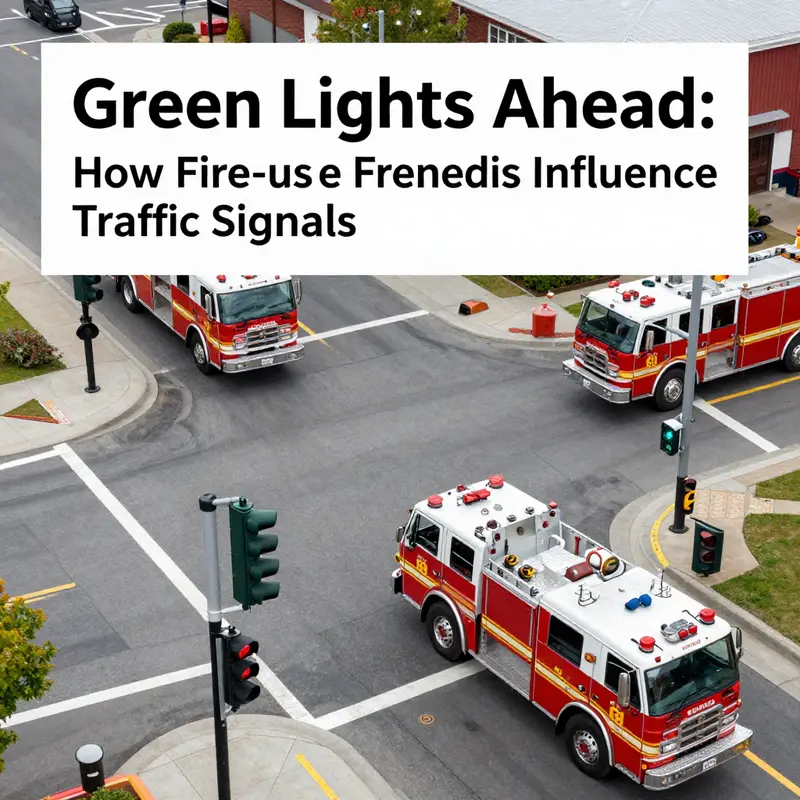
Green Lights on the Move: How Preemption Accelerates Fire Response
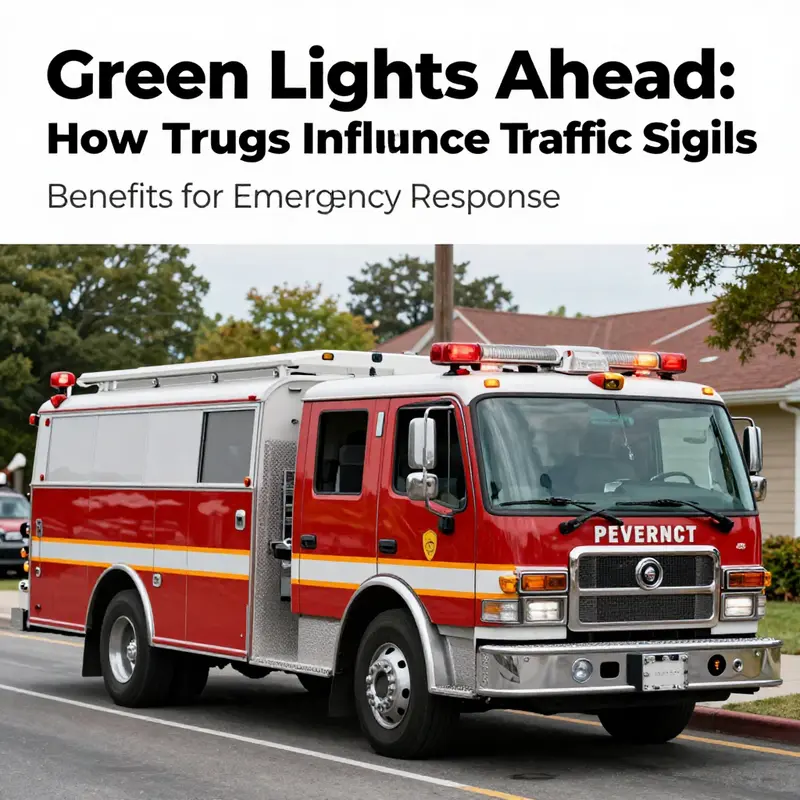
Green light preemption turns a city intersection into a coordinated corridor for emergency vehicles. It relies on approved equipment and protected signal phases to let a fire unit approach with minimal delays.
When a preemption request is received, traffic controllers adjust timing ahead of the vehicle so the path ahead remains green through multiple intersections.
The result is a controlled green wave that shortens the route and reduces start stop cycles, cutting fatigue for crews and lowering exposure to dense traffic.
Studies have reported improvements in response times ranging from roughly 15 to 30 percent depending on city layout and technology maturity.
The safety benefit comes from predictable signal changes and preserved cross traffic gaps, helping pedestrians and other drivers anticipate the move.
Implementation requires compatible hardware, routine maintenance, and clear public information so road users understand what to expect during an activated window.
Policy makers view GLP as infrastructure that can improve outcomes without relaxing traffic laws, provided systems are designed with failsafes, interoperability, and ongoing training for responders and the public.
Emerging Traffic Powers: How Emergency Vehicles Influence Signal Timings

Emergency vehicle preemption EVP synchronizes traffic signals with the approach of fire and medical units. Fire apparatus carry transmitters that send coded preemption requests to nearby controllers. Intersections adjust their cycles to shorten green or extend it along an approaching corridor, creating a smoother green wave for the emergency fleet while maintaining safe traffic operations for others.
Case studies in large cities show practical gains. Chicago has integrated adaptive signals with preemption and reports meaningful improvements in response times and safer street movement. The networked system can align signal timing with multiple approaching units to create a continuous green corridor along a corridor, reducing the stop time faced by responders.
Phoenix demonstrates how multiple sensing modalities can be combined, including radio frequency, infrared, and GPS based triggers. This flexibility allows tailoring of timing strategies to local street layouts and traffic patterns, delivering shorter travel times for responders.
Beyond the technical setup, EVP relies on robust data and governance. Modern deployments use real time data, strong security, and clear procedures to preserve safety. The broader trend is to integrate preemption into smart city traffic management rather than treat it as a standalone feature. As cities adopt AI assisted detection and predictive models, EVP aims to improve reliability while preserving balance with regular traffic and incident management.
In practice EVP is a system level solution. When implemented well, it shortens travel time, reduces exposure for responders, and increases the odds of a successful outcome for patients and communities. The field continues to evolve with improvements in sensing, communication, and controller logic, all within a framework of interoperable standards and governance.
Final thoughts
Understanding how fire trucks can turn traffic lights green is crucial for improving emergency response systems. The technology behind Emergency Vehicle Preemption not only enhances the safety and efficiency of fire services but creates a stronger safety net for the communities they serve. From uniting infrastructure with innovative technology to inspiring global implementations, each of us has a role in ensuring that these roads remain clear for our firefighters. So, the next time you hear the siren of a fire truck nearby, remember that this critical technology works behind the scenes, transforming the traffic lights to green and paving the way for rapid responses.