
Fire trucks, iconic symbols of courage and readiness, employ cutting-edge technology to enhance their responsiveness during emergencies. One vital component of this advancement is their ability to interact with traffic lights through Emergency Vehicle Preemption (EVP) systems. This article delves into how these systems enable fire trucks to gain priority at intersections, ensuring they can reach their destinations swiftly and safely. From understanding the mechanics of traffic signal control to the real-world implications on response times and the challenges faced during implementation, we will illuminate the journey of fire trucks as they navigate city streets. Additionally, we’ll explore potential future innovations that promise to further optimize emergency response operations.
Green Waves in the Urban Grid: The Quiet Collaboration Between Fire Trucks and Traffic Signals
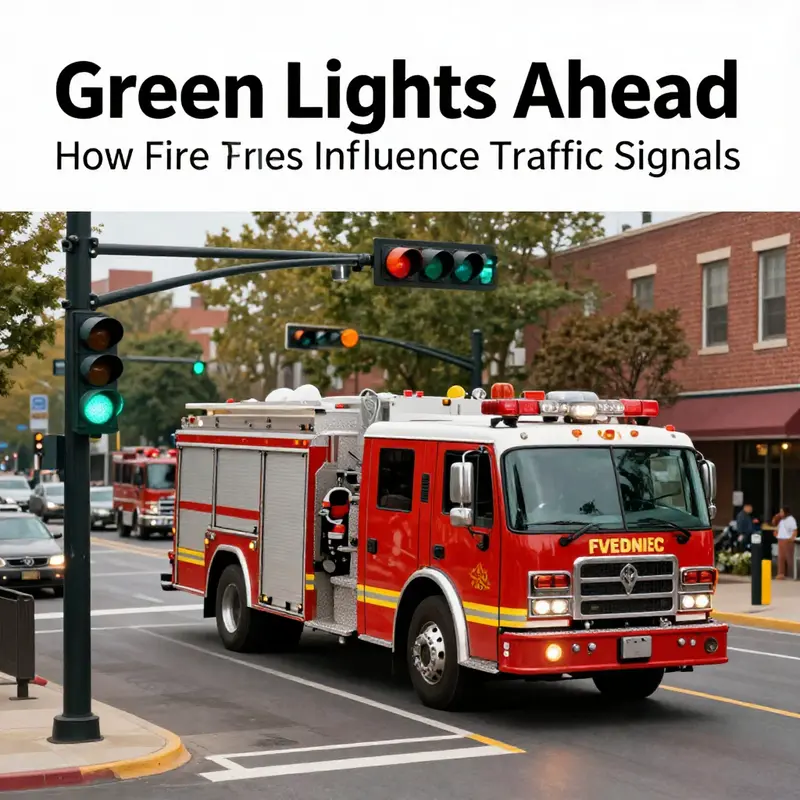
When sirens slice through a city thrum and the first echoes of a call reach a traffic signal’s controller, a hidden choreography begins. Fire trucks do not merely race through a maze of streets; they enter a carefully balanced system that respects safety, other road users, and the fastest possible arrival at the scene. The question—can a fire truck truly control a traffic light?—is nuanced. The answer lies not in autonomous domination but in a refined partnership. Emergency Vehicle Preemption (EVP) or Traffic Signal Priority (TSP) mechanisms give approaching fire apparatus a way to request priority, while the traffic management system coordinates that request with the broader flow of the city. The result is a dynamic, context-sensitive sequence that helps the emergency vehicle advance with minimal delay and with a controlled impact on the rest of the network. It is a signal of modern urban engineering rather than a simple, unilateral override, and it rests on a layered set of technologies, procedures, and safeguards that together create what responders experience as a swift, predictable path to the incident scene.
At the heart of EVP is a simple but powerful idea: the closer a fire truck is to an intersection, the more the signal system should assist its movement. The truck carries a device—a transmitter or beacon—that emits a coded signal as it approaches an intersection. The intersection itself is outfitted with a receiver that listens for that signal and, upon detecting it, prompts the local signal controller to adjust its phase in a way that favors the emergency vehicle’s path. In the most straightforward implementation, the system will turn the fire truck’s approaching lane’s light green, hold red for the opposing direction, and, in some cases, extend the green phase long enough for the vehicle to pass through a couple of cycles without stopping. The goal is clear: reduce stop-and-go time, minimize the risk of rear-end collisions caused by sudden braking, and ensure that the responders can arrive with the maximum amount of control during a high-stakes drive through a complex urban environment.
There are different flavors of EVP, and the method chosen by a city often depends on existing infrastructure, budget, and the level of coordination the local traffic authority is prepared to implement. Radio-based systems are the most common in many places. A fire truck can carry a small transmitter that beams a signal toward a receiver installed at the intersection’s controller. When the receiver detects the signal, it triggers a pre-programmed sequence in the traffic light. The sequence is designed to alter the signal in favor of the approaching vehicle while ensuring that vehicles in other directions are not endangered by a sudden, unanticipated change. Infrared beacons provide another approach; mounted on the truck, an IR beacon directs a beam toward sensors at the intersection. This method can be highly effective, but it relies on uninterrupted line-of-sight and can be sensitive to obstructions like large vehicles or weather conditions. GPS-based systems offer yet another option, especially in areas with dense intersections or where wire-based solutions would be difficult to deploy. In each case, the preemption logic is embedded in the city’s broader traffic management framework, so the truck is not a rogue operator; it becomes a mobilized signal that must still fit within the city’s safety thresholds and traffic policies.
The practical effect of EVP is often summarized as green waves and smarter phase changes. When a fire truck is in the approach lane, the system can trigger a green wave along the path, ensuring that several consecutive intersections align to support a continuous flow. If the signal at the next intersection is red, the controller may shorten the current phase for other directions, switch to green for the truck, and then return to normal sequencing as the vehicle clears the intersection. In some deployments, the system extends the green time to allow the Fire Truck to pass through multiple intersections without stopping, a feature that can dramatically shorten response times in congested corridors. Yet, and this is crucial, the control logic remains resident in the city’s traffic management system. The truck is a requestor—a very important one—whose efficiency hinges on how well the system interprets and accommodates its urgent needs without compromising safety for others using the road.
From the standpoint of a responding crew, EVP translates into a tangible reduction in delay and a more manageable approach route. Studies summarized by national transportation authorities indicate that EVP can significantly reduce average delay at intersections during emergency passage, with the potential to cut time lost to red lights by substantial margins. The broader benefits, beyond mere speed, are meaningful and measurable. When a vehicle moves through signals with fewer stops, there is less acceleration and braking, which translates to smoother travel, lower fuel consumption, and less wear on the vehicle’s drivetrain. This is not only a matter of speed but of maintaining control perception for the driver. A smoother trajectory through a signalized network reduces the likelihood of abrupt maneuvers that could pose risks for firefighters, their crew, or nearby pedestrians and motorists.
The implementation details matter a great deal. EVP systems can be integrated with radio, infrared, or GPS-based technologies, each with its own operational profile and limitations. Radio-based EVP is robust and familiar in many systems but requires careful calibration to avoid false triggers that could disrupt traffic flow or create safety hazards. Infrared beacons promise targeted, line-of-sight preemption, which can be effective in dense urban cores where radios might struggle with multipath signals or shielding. GPS-based EVP can leverage the precise positioning available from modern navigation and fleet-management suites, enabling preemption decisions tied to location rather than just proximity. In practice, cities often deploy a hybrid approach that aligns with the geography of their road network, the age and type of traffic signals, and the readiness of their maintenance programs. In all cases, the operational reality is clear: the fire truck requests priority, the intersection controller evaluates the request within the context of its current phase, cycle time, surrounding traffic, and safety constraints, and then makes a decision that is logged, auditable, and continually monitored by trained personnel.
That last point—the role of human oversight—belongs at the core of EVP. The technology is designed to support, not bypass, the traffic management ecosystem. Dispatchers and field supervisors retain responsibility for the broader response, the sequencing of multiple emergency units, and the safe coordination of cross-street movements. The preemption event is a momentary adjustment in the traffic cycle, a targeted alteration that allows the fire truck to gain critical time, while the overall plan for the corridor remains intact. This relationship between vehicle and controller is essential to understand when considering the question of control. Fire trucks do not drive the lights themselves; they engage with a system that already exists to manage the city’s traffic. In turn, the city’s system maintains visibility over the event, tracks the changes, and ensures that the change in signal behavior is reversible and doesn’t introduce new hazards as soon as the vehicle passes.
With this understanding, it is possible to appreciate both the practical benefits and the governance challenges of EVP. When a vehicle approaches an intersection, the detection mechanism is a point of reliability, and the signal controller’s response is the measure of the system’s safety and effectiveness. The reliability of detection depends on the stability of the communication channel, the absence of interference, and the integrity of the sensors. The safety implications are not merely theoretical. The initiation of a green phase for the fire route must be carefully coordinated with opposing traffic to avoid creating blind spots or forcing unexpected movements. The system must handle scenarios such as a second emergency vehicle entering the same intersection from a different direction, or a normal vehicle that fails to clear the crosswalk in time. These are not trivial concerns; they are why EVP is designed as a collaborative tool rather than a unilateral power granted to fire crews.
For readers seeking a deeper perspective on how such systems fit within broader command and control structures, a closer look at the challenges and solutions in fire command systems can be instructive. See Overcoming challenges in fire command systems for a discussion of how signal preemption interacts with multi-agency coordination, data sharing, and the human factors that influence on-scene decisions. The point is not that EVP solves every problem, but that it introduces a dimension of urban resilience. When EVP is well-integrated, it acts as a force multiplier for the entire emergency response apparatus. It reduces the time to reach the scene, but it also anchors that time within a framework of safety, accountability, and situational awareness that allows responders to adapt as the incident evolves. In this sense, EVP embodies a broader truth about modern cities: the most effective emergency response emerges from a network. The fire truck does not operate in isolation; it navigates, in real time, a city’s traffic signal fabric, which itself is a living system—dynamic, data-driven, and capable of reconfiguring in the face of risk.
The practical realities of deployment remind us that EVP is not a silver bullet. Its effectiveness depends on the alignment of several pieces: compatible signal controllers, well-maintained sensors and communication pathways, up-to-date preemption algorithms, and ongoing training for operators who must understand when and how to rely on the system. It also depends on public education and awareness, since other road users must anticipate the possibility of brief, coordinated changes in signal timing that can lead to unusual traffic patterns. Yet when these pieces come together, the payoff is visible in the clock-and-road time preserved for critical responses, reduced fuel consumption, and the minimized exposure of responders to high-speed urban driving hazards. The picture that emerges is not one of control in the sense of domination, but of calibrated influence—a carefully balanced hand on the exception in the traffic control logic, exercised for a purpose that is as urgent as it is life-saving.
In the long arc of urban evolution, EVP represents a maturation of how cities think about mobility during emergencies. It reflects a shift from treating traffic signals as purely local devices to viewing them as parts of a larger, shared infrastructure that can accommodate extraordinary demands. The headlights of a fire engine illuminate not just a path through the city but a corridor where time, safety, and coordination converge. The result is a form of governance that acknowledges the needs of the many while honoring the rights and safety of the few who share the road alongside emergency responders. This is the essence of EVP: not a blanket command from a single vehicle to a grid, but a negotiated, auditable, and reversible adjustment that aligns technology, policy, and practice toward a common aim—the fastest, safest arrival at the scene where help is needed most.
For those who want to explore the topic further in the context of broader fire service and traffic systems, the discussion can be enriched by looking at how EVP fits within the spectrum of emergency communications and the evolving model of unified command in emergencies. The link between preemption technology and incident command is not accidental; it is a deliberate integration that helps maintain situational clarity even as pressure rises on the streets. The future may bring more sophisticated, trajectory-based preemption, tighter integration with vehicle-to-infrastructure communications, and more seamless interoperability among agencies. But the current state of EVP already embodies a fundamental principle: effective emergency response depends on seamless collaboration between mobile responders and the fixed infrastructure that governs urban mobility. The city’s traffic signals are not obstacles to be bypassed; they are partners in the mission, ready to align their timing with the urgency of the moment while preserving safety for all.
External resources provide additional grounding for these ideas. For a foundational overview of EVP systems and their performance metrics, refer to the Federal Highway Administration’s guidance on Emergency Vehicle Preemption Systems at https://www.fhwa.dot.gov/traffic/evp/.
Green Waves as Lifelines: The Subtle Power of Traffic Signal Priority for Fire Trucks
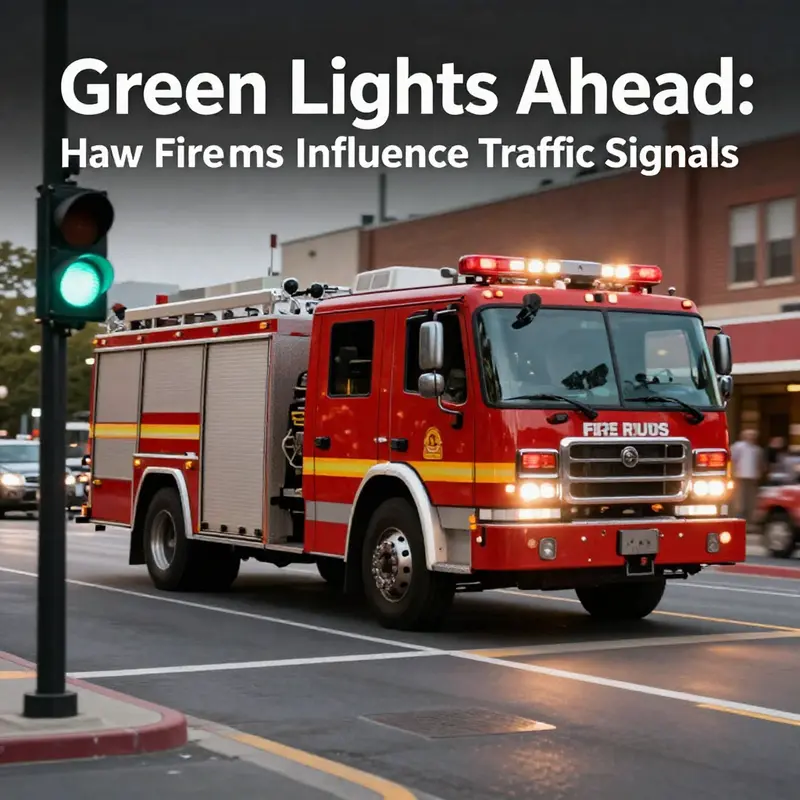
When a fire truck tears through a city corridor, the image is electric: sirens sing, the wind of speed, and a line of red and green lights blinking in a choreography that seems almost intentional. The truth, however, is both simpler and more sophisticated than it appears. Fire trucks do not wield a manual override at each intersection. Instead, they engage with a networked system that makes traffic signals cooperate with their urgent mission without turning the city into a free for all. The heart of this capability is traffic signal priority, a development that falls under the broader umbrella of emergency vehicle preemption. It is a design choice that respects the complexity of urban traffic while seeking to tilt the odds in favor of life and safety when seconds matter. The science behind this is not about force but about synchronization, about aligning the motion of an emergency vehicle with the rhythm of a city’s signalized streets so that the vehicle can move swiftly and predictably through dense traffic. In practice, the fire truck carries equipment that can be detected by the intersection’s controller: a beacon, a transponder, or a radio signal that conveys the vehicle’s approach. The signal at each intersection, in turn, has a receiver ready to recognize that signal. When the moment arrives, the intersection’s logic executes a pre programmed sequence designed to help the truck reach its destination faster and with improved safety. The sequence can manifest in several ways. A favored outcome is the green wave, a continuous stretch of green lights that lets the fire truck glide from one intersection to the next without unnecessary stopping. If the light is red on arrival, the system can shorten the red phase or switch the phase to green as soon as possible, effectively giving the truck priority without creating chaos. In some designs, the green may be extended, allowing the vehicle to pass through multiple intersections with minimal interruption. The overarching aim is clear: reduce travel time while maintaining orderly traffic behavior for all road users. Yet the reality of EVP and TSP is nuanced. The city’s traffic management system remains the authority, determining how and when to grant priority. The preemption is not a blanket permission for every emergency vehicle on every street. Instead, it is a targeted, orchestrated intervention that respects the larger flow of city traffic, balancing the needs of the responder with the safety of the public. This balance is not abstract. It translates into tangible improvements in response times and, crucially, in safer, more predictable operations for drivers who encounter an approaching emergency vehicle. The nuance matters because it shapes how officers, dispatchers, and operators think about response strategies in daily life and during the worst hours of crisis. Consider the data now emerging from high fidelity field studies. In Qingdao, China, researchers tested an advanced Emergency Vehicle Signal Coordination approach, a system that links traffic signals and emergency vehicle movements through an integrated control framework. The results were compelling. Travel time for fire trucks along an eight-intersection corridor dropped by nearly 27 percent. That is not a marginal gain; it is a substantial leap in the velocity at which responders can reach the scene. More importantly, the study found that this improvement did not come at the cost of general traffic efficiency. The network was designed to preserve orderly traffic patterns outside the emergency corridor, maintaining overall flow while granting priority where it counted most. The lesson from Qingdao is not only about raw speed. It is about the deliberate, data-informed design of signal timing that can harmonize the needs of an urgent mission with the realities of a busy urban corridor. For those who navigate multiple signals on a typical response—six to seven crossings are common—the net effect of TSP can be dramatic. When a vehicle enters a corridor engineered for EVP, the typical sequence may involve short, well-timed green intervals for the approaching path, with red-times for other directions shortened or rationalized to minimize stopping and reacceleration. The result is a smoother journey through the network, and a reduction in the cognitive load on the driver who no longer bears the weight of negotiating every traffic signal manually. Field observations from deployments in various locales reinforce this narrative. In one jurisdiction that has implemented a robust EVP strategy, responders report a measurable improvement in arrival times, with the safety of both responders and other road users enhanced by the more predictable movement through intersections. The technology does not operate in isolation. It is embedded in a broader ecosystem of intelligent transportation systems, vehicle-to-infrastructure communication, and data analytics that inform ongoing optimization. As traffic volumes shift with time of day, incidents, and special events, the EVP system can adapt, recalibrating green windows, extending clearance times, and updating priority queues to ensure the roadway remains navigable for those who need it most. The approach also mitigates what could otherwise be a dangerous dynamic: emergency vehicles attempting to beat red lights or forcing their way through intersections by sheer speed. In the era before EVP, the impulse to outrun a red signal could create risky moments for drivers and pedestrians. EVP reframes that impulse by providing a safer, more controlled method to reach the same destination with fewer hazards. It is a shift from improvisation to coordination, from the heroic image of sprinting through darkness to the disciplined reality of synchronized signals and predictable behavior. The difference may seem subtle, but it is fundamental. It speaks to a broader philosophy of urban resilience, where critical infrastructure is designed not for the exceptional day alone but for the regular, everyday uncertainties that cities face. The study from Qingdao, among others, illustrates how national and municipal contexts shape implementation details. It is not a one-size-fits-all technology; it requires careful integration with street design, signal timing policies, and the operational protocols of fire services and traffic agencies. The value lies in designing an EVP system that respects the urban fabric while delivering concrete gains in responsiveness. In Hawaii, for instance, a specific implementation of an emergency vehicle preemption system has demonstrated effective prioritization of green lights for approaching engines, ensuring that signals ahead will favor the responder and reduce the likelihood of delays caused by conflicting signals. The Hawaii experience complements the broader narrative of how EVP operates within an ITS framework, where data sharing, real-time decision making, and cross-agency coordination become the core determinants of success. Such deployments underscore an essential truth: the real power of traffic signal priority lies not in forcing vehicles through intersections at all costs but in orchestrating a safe, efficient, and reliable passage that benefits everyone on the road. The safety implications, in particular, deserve emphasis. By reducing the necessity for drivers to take aggressive or unlawful actions to clear a path, EVP lowers the risk of collisions and makes the overall driving environment safer. Pedestrians and other drivers gain clearer expectations about how intersections will behave when a fire truck or other emergency vehicle is near, which reduces confusion and improves compliance with traffic signals. The design intent is to narrow the window of uncertainty rather than to expand the possibilities for risky maneuvering. It is a disciplined approach to speed and safety, implemented through a shared digital language among vehicles, sensors, controllers, and operators. This language is the product of years of engineering, testing, and real-world refinement. It is also a reminder that the ability of fire trucks to move quickly hinges on the reliability of a network that supports their mission. The claim that fire trucks directly control every signal would misrepresent the system’s architecture. The actual control logic sits in the city’s traffic management center, where authorities tune policies, monitor performance, and ensure that the technology serves the public good. The fire service provides the demand signal—the vehicle approaching, the urgency of the call—while the traffic system provides the capacity to execute a carefully considered response. This division of labor is not a weakness but a strength. It ensures governance, accountability, and safety, while still delivering substantial performance enhancements on the ground. The implications for future city planning are significant. As communication technologies mature and data analytics become more sophisticated, EVP and TSP can be fine-tuned to different corridors, weather conditions, and incident profiles. The best designs will likely feature adaptive algorithms that learn from past responses, adjust green windows in real time, and coordinate across neighboring intersections to maintain a smooth, safe corridor for emergency vehicles. This evolution aligns with a broader vision of resilient cities, where critical services are embedded in flexible, responsive infrastructure that can adapt to today’s demand while preparing for tomorrow’s uncertainties. The overarching takeaway is both simple and powerful: traffic signal priority is not a gimmick or a shortcut. It is a carefully engineered capability that enhances the speed and safety of emergency response while preserving the integrity of urban traffic. It is a practical embodiment of how modern networks can align with urgent human needs, translating the bravery of first responders into measurable improvements in response times and, ultimately, lives saved. For readers who want to explore the technical literature behind these findings, the Qingdao study provides a rigorous, data driven perspective on how coordination between signals and emergency vehicles affects performance in an urban corridor. It is a reminder that even in the most high stakes contexts, thoughtful design and disciplined implementation can transform a city’s arteries into a more resilient, safer, and more responsive system. To learn more about the broader implications and to see how other regions are adapting their command practices to this technology, consider the related discussions on overcoming challenges in fire command systems, which offer practical perspectives on integration, governance, and the human factors involved in emergency response with signal priority. Overcoming Challenges in Fire Command Systems. As these developments continue, the conversation around EVP and TSP will likely deepen, spanning policy, urban design, and the daily decisions of dispatchers and drivers. The next chapter will look at how these systems interact with evolving vehicle technologies and with new forms of data sharing across agencies, revealing a landscape where every intersection becomes a potential ally in the mission to save lives. For a deeper scholarly context, one can consult the study on traffic signal coordination for emergency vehicles in Qingdao, which offers a rigorous assessment of the performance gains and the methodological approaches that underlie these conclusions. External resource: https://doi.org/10.1109/itsc.2014.6957683
null
null
null
null
Final thoughts
The integration of Emergency Vehicle Preemption technology has revolutionized how fire trucks navigate urban landscapes. By allowing these essential vehicles to gain priority at traffic signals, it not only enhances their response times but also contributes to the safety of entire communities. As we look to the future, ongoing innovations in traffic signal control promise even greater improvements in emergency response effectiveness. For fire truck enthusiasts, aspiring firefighters, and emergency professionals alike, understanding and supporting these advancements is crucial in our ongoing mission to protect lives and property.