
When we think of fire trucks, our minds often conjure images of bold red and flashing blue lights illuminating the night. However, an intriguing aspect often overlooked is the presence of green lights on these emergency vehicles. Understanding this unique feature opens up a world of knowledge about internal communication strategies, command hierarchy, and regulatory standards in firefighting operations. This article will delve into the critical functionalities of green lights in fire trucks, illustrating their importance for fire truck enthusiasts, young aspiring firefighters, and emergency services professionals. From internal communication dynamics to the guidelines established by the National Fire Protection Association (NFPA), we will uncover how green lights serve an essential purpose beyond what is visible to the public eye.
Green Signals, Clear Command: Reexamining Fire Trucks’ Internal Communication Strategy
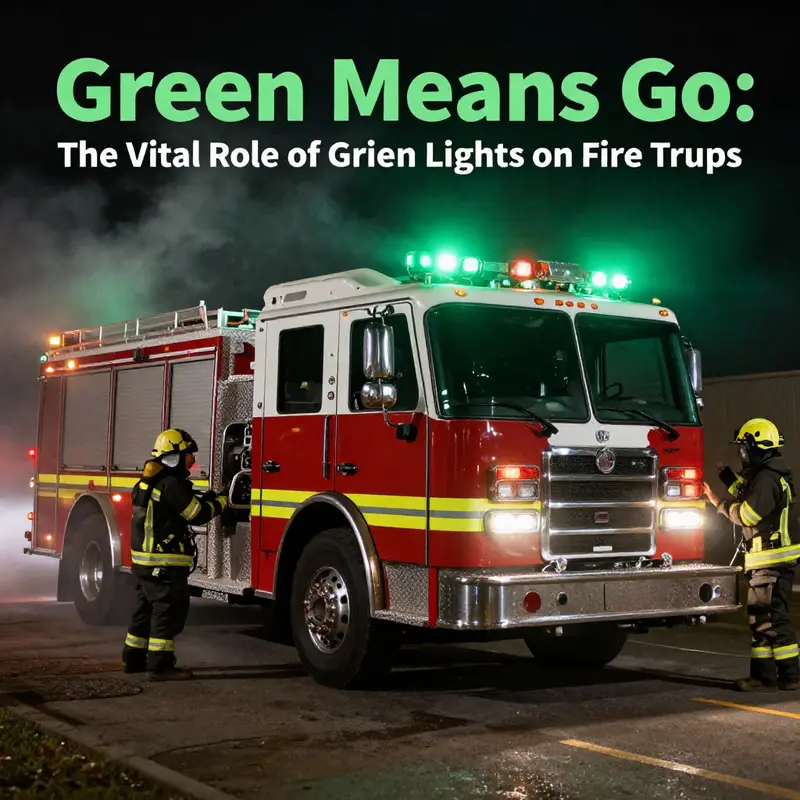
Green lights on fire trucks often raise more questions than answers. To the casual observer they can seem like a curious anomaly in a world where red and blue are the loudest signals of danger and authority. Yet this chapter does not aim to sensationalize a color choice. Instead, it threads together perceptual science, command architecture, and field practice to explore why some fire departments use green lighting as a tool for internal communication. The question at the heart of the discussion—why do fire trucks have green lights—touches a deeper, more practical layer of emergency response: how leaders and teams coordinate under pressure, with limited visibility, and in environments where every second counts. In large incidents, where dozens of units and hundreds of personnel converge, the ability to identify leaders, supervisors, and command vehicles at a glance matters as much as the siren or the radio channel you rely on to relay orders. Color in emergencies is rarely accidental. It is a language. Red, blue, amber, white, and green are not simply aesthetic choices; they carry implicit meanings shaped by training, standards, and the realities of the field. The public-facing signaling colors—red for stop, blue for law enforcement, amber for caution—are designed to convey immediate, universal signals to drivers and pedestrians. Internal signaling, by contrast, operates behind the scenes. It is the quiet choreography that helps a command post hold together when the scene is loud with alarms, smoke, and the competing demands of triage, water supply, and ventilation. In this quiet domain, color can function as a cue for recognition, a shorthand for role assignment, and a visual anchor for situational awareness. The color green, when used in this way, aims to separate the leaders’ presence from the rest of the kit on the ground, reducing the cognitive load on responding crews who must parse a rapidly changing environment while following standardized incident command procedures. The literature on fire apparatus lighting often emphasizes external visibility and road-safety signaling. Truck-mounted warning lights, barricade beacons, and scene-approach indicators are discussed in terms of glare, visibility distance, and electronic control systems. The research on green lighting within this space has tended to focus on external devices—such as green lights used on certain work vehicles to reduce glare or to mark specific external roles on a worksite. One Missouri study, for example, examined green-only lights on truck-mounted attenuators, highlighting how such lights can reduce disability glare but may offer lower overall visibility compared with amber or white alternatives. That study’s context was external warning and collision avoidance for construction environments, not the interior command dynamics of an emergency vehicle. The results underscore a key insight: color choices in lighting are not universally better or worse; they perform differently depending on whether the audience is the general public or the responders who must interpret signals under stress. This distinction matters because it helps illuminate why the green color might appear to be a surplus or an unnecessary luxury when discussed in the abstract, but could be a practical instrument when deployed for internal coordination in the right context. What the existing body of published material makes clear is a gap rather than a contradiction. Fire trucks, as a class, are described as robust, multi-storied instruments designed to transport crews, pumps, hoses, and rescue gear to the site of a fire or other emergency. The technical literature tends to foreground engines, pump technology, steering, and acceleration profiles, along with the ergonomics of cab design and the reliability of incident management tools. The chapter of Green Lights in Fire Trucks’ Internal Communication Strategy, then, sits at the intersection between perceptual science and organizational behavior. Existing sources do not strongly support a widely adopted, standardized practice of using green lights exclusively or primarily for internal command signaling within fire apparatus. They do, however, invite us to examine how such an approach might function in a system designed around clear command and unity of effort. There is a broader theoretical frame that helps explain why a department might adopt a green cue inside the vehicle without publicly advertising its usage to all road users. In the incident command system and unified command concepts that anchor modern emergency response, the leadership structure must remain legible to the responders who operate at the scene. When dozens of vehicles converge on a single incident, the ability to distinguish a chief officer’s unit, a command vehicle, or a liaison unit from the rest of the fleet becomes essential to maintaining the integrity of the command stack. The color-coded cue serves as a visual banner that helps crews orient themselves to the command layout without interrupting radio traffic or interrupting the flow of tactical actions. This is not about signaling to the uninvolved public; it is about preserving a fast, accurate shared mental model among the responders who share the same physical space and the same intense time pressure. The practical logic behind any color-coded internal cue rests on a blend of perceptual psychology and operational procedure. Green, as a color in the visible spectrum, has a set of perceptual properties that can be exploited in smoky, dim, or night conditions. It can be distinct from red and amber when viewed against the clutter of emergency lighting and reflective surfaces on a working scene. In a high-contrast environment—a smoke-filled room or a dark roadway—green lights on a designated portion of the vehicle or on specific indicators can become a recognizable signature for those who know what to look for. The cognitive load involved in scanning for leadership figures is reduced when the cue is unambiguous and consistently deployed. In a way, this use of green light is an example of how emergency services borrow from human factors science to design environments that support quick, accurate decision-making under pressure. It is a recognition that, beyond radios and commands, the physical ambi ance of the scene—lights, silhouettes, color cues—still matters to the human operators whose lives depend on rapid recognition and correct action. But the reality of internal signaling is also tempered by potential drawbacks. Any signaling scheme that differentiates internal roles runs the risk of confusion if it is inconsistently applied or if field personnel encounter green lighting in unfamiliar contexts. If a city uses green lights for a particular chief officer’s vehicle in one district and uses a different scheme elsewhere, the confusion risk multiplies at the moment of need. This is why, even in the absence of universal standardization, some fire departments may adopt rigorous standard operating procedures that codify when and where green lighting is deployed for internal signaling, and how it should be interpreted by all crew members inside the ladder truck or engine company. The literature points toward a broader policy implication: internal signaling should be built on standardized training, cross-crew drills, and explicit, published procedures that everyone at the incident understands. The value of such a system lies not in the color’s beauty but in the reliability of the interpretation that color affords during chaos. A central question arises: if green lights are not a public-facing signaling convention, how do they coexist with the external color vocabulary that commuters and bystanders have come to recognize? The reality is that the two signaling streams—internal and external—operate on different planes. The internal stream has its own language, reinforced by training, radios, hand signals, and the shared tacit knowledge of how an incident is orchestrated. In practice, green lighting may be used in conjunction with other internal indicators, such as illuminated badges, dashboard markers, or position lights that identify command roles inside the cab and on the exterior of the vehicle visible to on-scene personnel. The aim is not to confuse the public but to simplify the choreographic complexity inside the vehicle and on the line of duty where many players must synchronize their actions. This speaks to a broader principle in emergency response design: different audiences require different cues, and a well-functioning system tailors its signals to the needs of the people who must respond, not just to those who observe. In exploring these ideas, it is important to acknowledge the gap between theory and field reality. There is no conclusive, widely disseminated evidence that green lights are a standardized internal signaling feature across fire departments. The Missouri study on green external lighting for TMAs demonstrates how color choices can influence perception in specific contexts, but it does not prove that green is superior for internal command signaling in fire apparatus. Still, the absence of strong, published evidence does not equal absence of practice. Fire departments often rely on tacit knowledge—what senior chiefs and veteran captains have learned through years of calls, drills, and real incidents. They may experiment with color cues as part of an overall strategy to reduce confusion during complex responses. In such settings, the green light can function as a nonverbal cue that complements the trained instincts of the crew and the procedural memory embedded in the incident command framework. If we look ahead, several practical considerations emerge for departments contemplating or refining an internal green-light strategy. First, any signaling approach must be documented within standard operating procedures and integrated into training curricula. Crews should practice in drills to interpret the green cue correctly under different lighting conditions, smoke density, and vehicle configurations. Second, cross-vehicle consistency is crucial. A chief officer’s unit should be consistently marked across the fleet so that a responding team does not misread the signal when procedures shift mid-incident or when units from different jurisdictions converge. Third, attention must be paid to redundancy. Visual cues should be complemented by radio discipline and clear command messages. Relying solely on color signals can be risky if visual conditions degrade or if personnel become fatigued. A robust internal signaling system uses color as a first, rapid identifier and pairs it with reliable communications and standardized hand-offs between units. In this sense, the green-light practice can be seen as part of a larger suite of internal coordination tools rather than a singular solution. It sits alongside radio channel designations, advanced scene management principles, and structured command hierarchies that valorize unity of effort. The goal is to ensure that when a supervisor steps forward as the incident commander or when a lead officer designates a specific unit to assume a critical task, the on-scene team can locate and align with that leadership quickly and confidently. The color, then, becomes a cue within a broader, multi-modal system designed to foster clarity amid complexity. The result is a scene where leadership presence is not merely inferred by the loudness of a siren or the proximity of a vehicle, but identified through a combination of visual identifiers, procedural discipline, and disciplined communication. To connect this discussion back to the larger arc of the article, it is helpful to view green lighting not as a standalone feature but as a case study in how emergency services use signaling to support command and control. It invites us to consider how internal communication strategies are developed, tested, and refined over time to improve operational effectiveness. It suggests that what matters most is not the color itself but the reliability of the interpretation that color affords and the consistency with which it is applied across crews and incidents. The broader takeaway is that internal signaling strategies—green lights among them—are part of a careful balance between perceptual design, procedural rigor, and human factors engineering. They remind us that the human element remains central to emergency response, and that even small choices—such as the color illuminating a dashboard or a marker on a vehicle—can ripple through the decision-making process in meaningful ways. For readers who want to explore how these ideas sit alongside formal standards and guidelines, the discussion closes with a note on official resources. Standards evolve through consensus and field experience, and the official NFPA framework on fire apparatus lighting offers a foundational reference point for the broader conversation about signaling and visibility. While the NFPA 1917 standard does not prescribe a universal internal color code for leadership signaling, it provides the context, expectations, and governance around emergency vehicle lighting and signaling that shape how departments think about color, placement, and interoperability. Those who seek a deeper understanding of the standards and their implications can consult the official source to see how lighting guidance interacts with safety, performance, and incident management practices on a national scale. External resource: https://www.nfpa.org/codes-and-standards/all-codes-and-standards/available-codes-and-standards/nfpa-1917 In the end, the question of why fire trucks have green lights becomes a window into how emergency services design internal coordination systems. It is not a claim about public signaling but a reflection of the careful attention agencies pay to how leadership is identified, how teams orient themselves in the most challenging conditions, and how signaling tools—color among them—support a disciplined, well-executed response. The green light is one thread in a larger fabric of command and control, training, and field experience. It embodies a pragmatic approach: use perceptual cues to reduce cognitive burden, but never rely on cues alone. The most effective internal signaling strategy is always the one that is learned, practiced, and reinforced through consistent procedures, drills, and real-world deployment. When those conditions are met, the small green glimmer on a vehicle becomes a reliable beacon for those who must move quickly to save lives and property, even as the scene swirls with smoke, noise, and urgent demands. For further exploration of how command structures shape emergency response in practice, you can delve into broader discussions on unified command and its role in coordinating diverse resources during crises. This broader exploration helps illuminate how internal lighting cues interlock with human factors, training, and standard operating procedures to create a cohesive and effective response system. By understanding these connections, readers gain a more nuanced view of how seemingly minor choices—like the color of a light—fit into the complex dance of leadership, teamwork, and life-saving action in the fire service.
Emerald Beacons: The Quiet, Coordinated Role of Green Lights in Fire-Command and Forest Fire Tactics
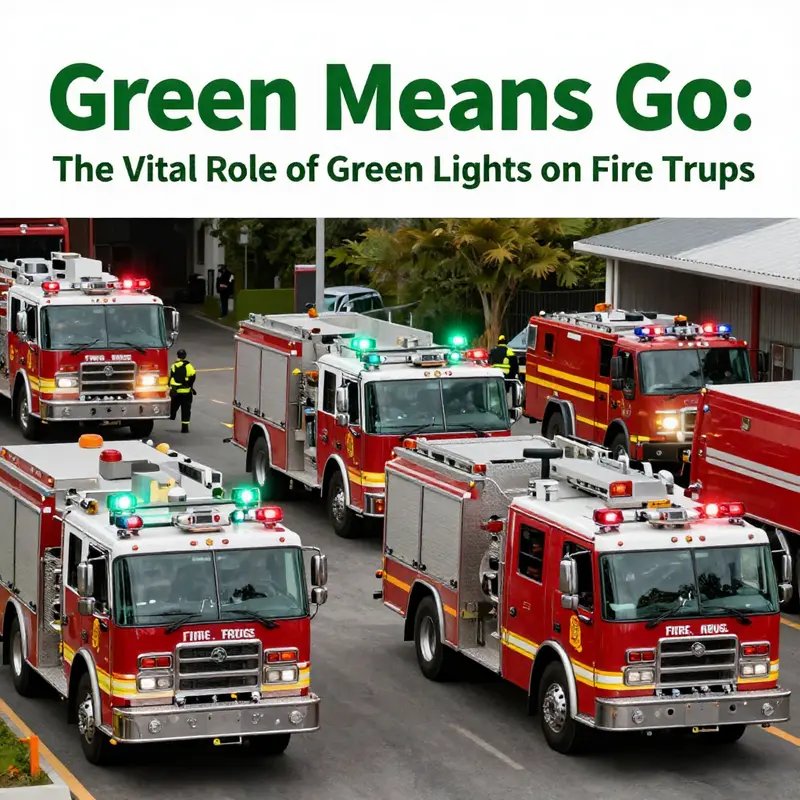
When a fire season tightens and smoke swirls, the colors on a fire apparatus become far more than mere flash. They are a language, a code that translates chaos into coordinated action. In the daylight and in the squinting glare of night, when every second counts and every decision ripples through dozens of lives, a green beacon on a fire truck signals something precise and essential: the vehicle is part of the command structure, an anchor point for leadership in the midst of disruption. This is not about the color that grabs attention from bystanders; it is about the color that helps crews inside the incident scene discern authority, align tasks, and sustain a shared mental map of the unfolding operation. The practice of using green lights for internal command purposes has deep roots in the convergence of human factors, environmental practicality, and the evolving standards that govern emergency response. It is a modest color choice with outsized impact on how teams communicate when visibility is compromised and time is scarce.
To understand why green lights find their place on certain fire vehicles, it helps to start with a simple premise: in an emergency, clarity of command underpins safety and effectiveness. Red and blue lights, long associated with signaling to the public and to other road users, carry with them a heavy, almost universal semantics of stop, yield, or bow to the hazard. Those colors are tuned for public visibility and public behavior. They alter how drivers perceive urgency and direct appropriate reactions from bystanders. However, in the controlled, high-pressure space of an incident command post and on the fire line, that public-facing signaling can create confusion if it appears on vehicles that have non-public roles. Green, by contrast, is a cue that has historically served internal signaling purposes, distinguishing leadership units from the rest of the response fleet without triggering the external traffic responses that red or blue can incite.
This distinction between internal and external signaling becomes especially important in the kinds of operations where forest and wildland fire suppression dominate attention. Forested terrains, with their shifting winds, uneven terrain, and patchy smoke, present a set of sensory challenges that can overwhelm even seasoned crews. In those settings, color coding must maximize quick recognition among team members who are focused on tactics, objectives, and the next directive rather than on public perception. A green beacon on a chief’s vehicle or an incident command unit becomes a live, visual shorthand. It allows a firefighter or supervisor to single out the command point in a dense tableau of apparatus, hoses, and personnel, much as a conductor seeks the exact moment when a baton must signal the orchestra to adjust tempo. In practice, that means the green light is not about drawing attention to a vehicle from the street; it is about ensuring that the people directing the work can maintain a consistent, shared sense of where authority sits on the ground.
Beyond the strictly tactical advantages, there is a deeper, more nuanced logic that informs the use of green lights in fire service practice. It aligns with ecological and environmental considerations that have become more prominent as departments adapt to a broader set of challenges. The forest environment, by its very nature, invites a sensitivity to wildlife, flora, and the overall health of the landscape during suppression, as opposed to purely rapid vehicle movement through a civilian traffic network. Green lighting can blend more harmoniously with natural surroundings than a harsher red or blue, reducing the likelihood of startling wildlife and diminishing visual disruption for observers who share the terrain with firefighters. While the primary aim of any emergency signaling remains safety and command efficacy, this ecological awareness helps thread sustainability into the fabric of modern firefighting culture. Some departments have even extended the green motif to equipment finishes and ancillary gear as part of a broader environmental stewardship program, underscoring an evolving ethos that sees operations as part of a landscape rather than an isolated clash with it. This does not imply that green is universally used in every forest or urban incident, but rather that its selective application reflects a deliberate balance between visibility, coordination, and ecological responsibility.
The operational logic of green lights thus rests on several interlocking pillars. First, there is the simple but powerful need for rapid recognition of leadership on the ground. In chaotic scenes—whether near a wildfire’s edge, a wind-driven flare line, or a rapidly shifting incident perimeter—knowing where the incident commander or a division supervisor is located becomes a matter of immediate, life-preserving consequence. The green beacon makes that person or unit instantly identifiable among the sea of equipment and responders. Second, the color helps delineate command channels in a way that is resilient to smoke, low light, and high noise. The incident commander may need to communicate with multiple divisions, with task forces arrayed along a shoulder of the fireline, or with a headquarters team miles away at a staging area. A clear visual cue that marks the core leadership vehicle supports faster, more reliable handoffs of assignments and situational updates, reducing the cognitive load on every responder who must infer structure from a rapidly changing field map.
This clarity is not achieved by chance. Training programs and standard operating procedures in many fire departments emphasize how to interpret color cues and how to react to green signals when they are encountered on the ground. The practice dovetails with formal standards that govern emergency vehicle lighting and signaling, including the guidelines commonly referenced by fire service professionals. The goal is to maintain a disciplined color code while avoiding the perception that green is a universal warning color to the public. The nuance matters: green lights identify interior command roles rather than signaling a stop or yield to traffic, and thus they stay within the realm of internal workflow, even as they contribute to overall public safety by making command lines visible to the responding team. The distinction between internal and external signaling is an important boundary that helps keep the system coherent across a wide variety of scenes and jurisdictions.
Within forest fire operations, the specific value of green extends into perceptual reality. In dense woodlands, standard red or blue beacons can appear as glaring flares that momentarily blind the eye or wash out the contours of the terrain in smoky conditions. Green light, with its particular spectral characteristics, can stand out against the dappled greens and browns of a forest backdrop without producing the same dazzling effect. This perceptual advantage translates into quicker recognition by trained crews who must read the scene, identify who is in command, and begin translating orders into action—sometimes within a handful of seconds before a change in wind or fuel loading alters the fire’s direction. It is not that green is inherently more attention-grabbing to the public; it is that it can be more legible to responders who need to lock onto leadership amidst a shifting canvas of variables on the ground.
The concept of leadership visibility through color is complemented by policy and standards that guide how green lights are used. The National Fire Protection Association, along with other regulatory bodies, outlines expectations for emergency vehicle lighting and signaling. Their standards frame the use of green as a means to support internal command, rather than to replace the more universally recognized cues aimed at public drivers. In other words, green lights are not a substitute for red or blue in the public traffic signaling language; they are a parallel tool designed to serve the response team during the most demanding phases of an operation. This separation preserves public safety while enabling commanders to marshal resources with greater confidence and speed. When crews understand the intended use of green signals, they can interpret the entire color ecosystem of the response with greater fidelity, minimizing miscommunication and allowing for smoother handoffs as conditions evolve.
In discussing the practicalities of this signaling choice, it is useful to hold in view the broader context of how color becomes embedded in the culture of emergency response. Color coding in vehicles, equipment, and roles is a long-standing technique that helps reduce ambiguity across teams that may include personnel from multiple agencies, pressures from evolving command structures, and the unpredictable rhythms of a live incident. Green, in this sense, functions like a tag that indicates domain ownership within the operation, notably the command segment. It signals, without requiring a long explanation, who is responsible for decisions at the moment and who to approach for updates, assignments, or to relay critical information. The benefit is a lean, fast, and predictable information channel. The cost, if any, is the risk of misinterpretation if a local practice diverges from broader standards; hence the emphasis on clear documentation, consistent training, and ongoing alignment with recognized guidelines.
The field realities also reveal a layer of complexity that makes the case for green lights particularly compelling. Fire response often involves incidents that cut across jurisdictional boundaries, involve multiple agencies, and demand rapid scaling of operations. In such environments, ad hoc signaling schemes can become a bottleneck, forcing teams to relearn who holds authority under pressure. A standardized, internally oriented color cue provides a stabilizing constant in a very dynamic landscape. It reduces the friction associated with identifying the incident command post, the division leads, or the air operations supervisor when those roles are most critical for coordinating the complex choreography of suppression and containment efforts. In practice, this means fewer moments of hesitation, a lower chance of mixed signals, and consequently faster and safer acts of suppression, as well as smoother transitions as the operation expands or contracts in response to shifting fire behavior.
To further appreciate how these signaling choices emerge, it is instructive to consider how a typical forest incident unfolds. A command vehicle bearing a green beacon appears at the edge of the ignition site or at a strategic choke point along a firebreak. Within seconds, crew members orient toward that point, cross-validate other visual cues—radio calls, the position of water tenders, the status of air support—and begin translating orders into tactical actions that reflect real-time conditions. A few turns later, a division supervisor may need to shift tactical priorities; the presence of the green command beacon makes it visibly clear where new directions originate, and how they ripple through the line of action. This subtle but meaningful enhancement to situational awareness demonstrates why such color coding persists in the field, even as other aspects of the operation—like tactics and resource allocation—continue to adapt to evolving circumstances.
The broader significance of green lights also intersects with ongoing conversations about environmental stewardship within emergency services. Some departments have turned the color story into a broader ethos, using green as a visual symbol of sustainability and responsibility alongside ecological practices in suppression. This might involve green-colored pumps or other equipment finishes that signal a commitment to minimizing environmental impact during firefighting operations, including considerations of soil contamination and runoff. While these eco-conscious initiatives operate on a different axis from command signaling, they reinforce a common thread: the fire service is continually seeking ways to harmonize efficacy with stewardship. In that sense, green lights become a small but meaningful nexus where operational discipline and environmental mindfulness meet, reminding responders that leadership on the ground can coexist with a respectful approach to the landscapes they fight to protect.
The practical and perceptual rationale for green command lighting is reinforced by formal guidance that frames how color should be used in emergency vehicle signaling. While the core purpose remains internal coordination, the standardization of color cues across agencies helps ensure that responders from different jurisdictions can work together with minimal ambiguity. The standards emphasize that color coding should support rapid recognition by trained personnel and should not confuse or mislead members of the public who are not part of the incident. In this way, the color system becomes a shared language across a diverse fleet of vehicles and operators, maintaining coherence even when responders arrive from multiple regions or agencies to assist a large-scale incident. The conversation around these standards is ongoing, reflecting new technologies, evolving incident types, and the growing importance of sustainable practices within the fleet.
The narrative above points to a crucial practice for any reader who might encounter these signals in real life. When you see a green beacon on a fire truck, it is a cue that you are watching an element of the internal command system rather than a signal that your presence on the road must be paused or redirected. It is a cue for responders to focus on leadership, strategy, and coordination, ensuring that the operational tempo remains aligned with the incident’s objectives. This subtle distinction is essential for maintaining the integrity of the response and the safety of everyone on the ground. The integration of such color-coded cues, understood by trained personnel, enhances mutual trust and the ability to execute complex plans under pressure. It is a reminder that in emergency response, the most effective tools are not only the engines, hoses, and ladders, but the shared understanding that allows people to work together under stress.
For readers who seek a path to deeper comprehension of the color strategies that underpin emergency response, a closer look at the governance of color in emergency vehicles can be enlightening. Unified command structures, standard operating procedures, and multi-agency coordination all contribute to a coherent approach in which colors like green quietly support leadership visibility and operational clarity. If you would like to explore a broader framework of how color codes function within emergency operations, you can explore further details about Unified Command in Emergencies. https://firetruck.space/unified-command-in-emergencies/
Ultimately, the question of why fire trucks have green lights touches on a broader truth about modern emergency response: success hinges as much on how people read, interpret, and act on information as on the raw power of engines and water. Green lights are a small but meaningful instrument in a larger system designed to move people, equipment, and decisions through a scene with precision and care. They reflect a deliberate balance between visibility, command clarity, ecological sensitivity, and interagency cooperation. They acknowledge that leadership in crisis must be legible to those who carry out the daily, dangerous work of defending lives and landscapes. And they remind us that the color language of the fire service—in its most careful, practical modulations—says something about who we are when we respond to fire: a profession committed to coordination, safety, and stewardship, even in the most uncertain moments. For practitioners, the green beacon is a reminder to stay aligned with the chain of command, to read the scene with disciplined attention, and to move as one disciplined body toward containment, repair, and recovery.
External resources for broader context can further illuminate how color coding has evolved across emergency services. For additional authoritative insight, see the IFCA Emergency Vehicle Color Guidelines: https://www.ifca.org/emergency-vehicle-color-guidelines
Green Signals, Clear Command: How Fire Truck Lighting Serves Internal Coordination Under NFPA Standards
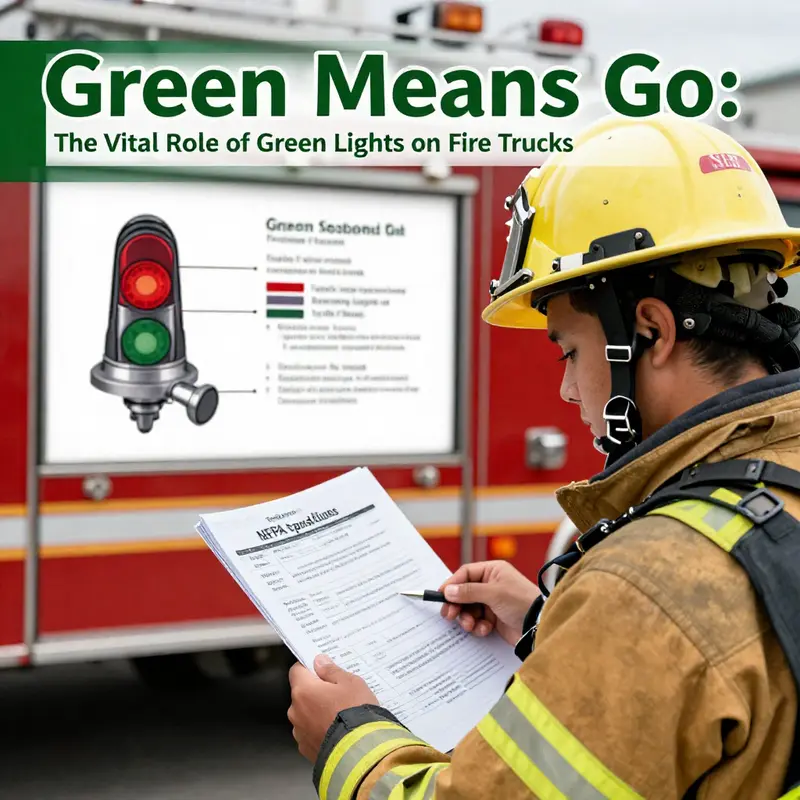
When people ask why fire trucks sometimes carry green lights, the first instinct is often to assume a public signaling purpose. In truth, green lights on fire apparatus are rarely about catching the public eye. They function as a nuanced internal cue system that helps the incident command structure breathe, coordinate, and adapt in the most demanding moments. The imagery of green signals appearing among red and amber warning lamps can feel counterintuitive, but it makes sense once you step inside the scene, where visibility is compromised, decisions must be rapid, and the chain of command must stay unambiguous. The presence of green lighting is a reminder that emergency response is as much about organization as it is about forceful action. It sits at the intersection of human factors, equipment design, and formal standards that guide how every instrument on a fire apparatus speaks a common language under stress. At the core, green lights are about leadership identifiers, situational awareness, and the preservation of a clear command hierarchy when the environment is enveloped in smoke, heat, and uncertainty.
To understand the logic behind green lighting, it helps to separate internal signaling from public signaling. Public signaling is the language that informs other road users to yield, stop, or proceed with caution. This language relies primarily on red and blue warning systems, widely understood and legally recognized in many jurisdictions. Fire departments must align with those expectations to ensure predictable behavior from drivers who encounter emergency vehicles on the road. Yet the on-scene dynamics extend far beyond what a driver behind the wheel can perceive at a glance. Once the apparatus arrives at a chaotic incident, the immediate need is not only to alert the public but to convey, in a crowded, low-visibility space, who is in charge and where crucial actions are taking place. Green lighting, in many departments, serves as a discreet on-scene cue that marks leadership or a particular functional role within the incident command system. This distinction helps firefighters and command personnel identify the responsible unit in real time, minimizing hesitation and reducing the chance of duplicative actions or miscommunication as multiple units converge on the scene.
The institutional backbone for this practice lies in how emergency lighting is standardized and regulated. The overarching framework comes from NFPA standards, which are designed to ensure visibility, safety, and operational effectiveness across a broad spectrum of fire apparatus and emergency response scenarios. The centerpiece for lighting on fire apparatus is NFPA 1917, the Standard for the Design, Manufacture, and Performance of Fire Apparatus. This standard specifies how warning lights should be selected, where they should be placed, how bright they must be, and what flash patterns are used to command attention under diverse conditions. A crucial detail within NFPA 1917 is color and placement. The standard mandates that primary emergency warning lights must be red or amber (yellow), with red being the most common for primary signaling. The intent is to maximize visibility to others who share the road and to ensure a consistent public-facing signal that is universally legible across jurisdictions and weather conditions. The requirement for 360-degree visibility around the vehicle is not incidental; it ensures that a passerby, a patrol unit, or a nearby responder can detect the presence of the apparatus from multiple angles, even in cluttered environments. The emphasis on color and placement is part of a broader design philosophy that seeks to reduce ambiguity on the street and at the incident scene.
But NFPA 1917 also recognizes the practical limits of a single color language when the operation shifts from street carriage to on-scene management. The standard’s prescriptive approach to red and amber for primary warnings does not forbid the adoption of additional colors for internal use. Rather, it reflects a structured hierarchy: the public-facing signals remain standardized to ensure predictable behavior by other road users. Within that framework, many fire departments designate secondary cues—such as green lights—for internal roles. Green is not intended as a universal signal to civilians; it is a targeted cue to assist those who must operate within the incident command system. The reason for this restraint is practical and safety-centered. When multiple units arrive, and when teams are working in close quarters with limited visibility, any attempt to reuse public color codes for internal purposes risks misinterpretation. By reserving green for internal use, fire departments create a compact visual shorthand that reduces ambiguity for crew members and helps maintain the efficiency of the command structure.
The on-scene reality explains why such a nuanced system matters. A typical fire scene can unfold in seconds yet extend over minutes or hours. A single corridor of smoke can transform a schematic plan into a dynamic, shifting mosaic of priorities. Command officers must parse incoming information, assign responsibilities, and adapt tactics as conditions evolve. In this environment, the ability to quickly identify who is leading, who is responsible for safety, and which unit is designated to coordinate a specific sector can be more valuable than any single action. Green lighting, when used for internal identifiers, supports this imperative by providing a quick visual cue that sits alongside radios, maps, and ballistic safety markers. The collective effect is a scene where command lines remain intact, roles remain clear, and the overall tempo of response remains synchronized rather than fragmented by confusion.
Within the NFPA framework, the other dimension of this practice concerns system integration. Lighting does not exist in a vacuum; it is part of the vehicle’s broader electrical and signaling ecosystem. The NFPA 1917 standard requires that lighting systems be integrated with the vehicle’s electrical architecture and designed to operate reliably under strenuous conditions, including high heat, vibration, and rapid switching on and off. This integration ensures that the lighting not only grabs attention but also remains dependable as the incident evolves. The standard also addresses the practical realities of testing and certification. Equipment must undergo rigorous testing to meet NFPA requirements, including performance metrics such as light output measured in candelas and the endurance of systems during peak load times. The emphasis on reliability avoids scenarios where a critical signal could fail just when it is most needed, an outcome that would erode trust in the visual cues that departments depend on during complex operations. In other words, NFPA 1917 treats lighting as a safety-critical subsystem that must function under pressure, and it provides the guardrails that keep internal signaling from becoming a liability.
The use of green lights for internal cues does not exist in isolation from other tools and practices that shape successful command. On a busy scene, radio communication remains a primary artery for information flow. Visual cues, including the color-coded lighting, complement radio discipline by offering an immediate, non-verbal way to recognize roles and intentions. The result is a more fluid handoff of tasks, fewer cross-communications, and a tighter alignment between the actions of different units. Yet as with any color-coded system, it requires disciplined training and ongoing reinforcement. Firefighters learn to interpret the entire signaling ecosystem in concert: the red and amber front-line warnings, the green internal cues, reflective PPE, and signage that marks hazard zones and escape routes. The strongest practices combine these elements into a coherent operating picture where every participant knows where to look and what it signals without needing to second-guess the information in a high-stress moment.
The subtlety of green lighting highlights a broader truth about emergency response: effective coordination is as much about restraint as it is about force. The decision to use an additional color for internal cues reflects a calculated risk management approach. It acknowledges that while more signals can be helpful, too much signaling can become noise. The NFPA framework helps manage this balance by maintaining a clear public color language that is widely understood, while allowing departments to carve out internal signaling space where it is safe and beneficial to do so. For leadership on the ground, this distinction translates into faster recognition, reduced delays, and more precise execution of tactical plans. The incident commander can, at a glance, identify key personnel or vehicles responsible for critical tasks, and that recognition translates into faster, more confident decisions in real time.
An important nuance is the recognition that green lighting, as used by some departments, is not universal. The adoption of internal green cues varies by jurisdiction, agency culture, and local regulations. In some places, the color may be readily visible to the average observer, while in others it may be more discreet or directed in only certain lighting configurations. This variability underscores the role of training, standard operating procedures, and interagency coordination in ensuring that the internal use of green signals remains effective rather than confusing. Departments must consider how green cues interact with other local signaling rules and how mutual aid agreements might harmonize these cues when multiple agencies operate at the same incident. Without careful alignment, the well-intentioned internal signaling could become a source of misinterpretation across agencies or among civilians who have reason to observe the scene from different vantage points.
Beyond the on-scene benefits, the rationale for green internal signals also connects to broader themes in emergency management. One such theme is the evolution of command structures as incidents grow in complexity. Modern emergency response increasingly relies on unified command concepts that coordinate disparate units and agencies under a common strategy. For readers exploring this topic, the concept of unified command in emergencies—an important node in the on-scene decision network—offers a lens through which to view lighting as part of the broader communication fabric. Internal cues like green lights can support a unified command approach by enabling rapid visual identification of leadership roles within a multi-unit, multi-agency landscape. For a deeper exploration of how unified command operates in practice, consider the resource on unified command in emergencies. It provides a concrete view of how leadership and coordination can be synchronized as response requirements scale up, and it helps connect the dots between visual signaling and organizational structure on the ground. Unified Command in Emergencies.
In a broader sense, the topic of internal signaling reminds us that public safety is a synthesis of people, machines, and systems that must work in concert. The NFPA 1917 standard emphasizes the reliability of the lighting system itself, but it also implicitly invites departments to think about how different signaling modalities—sound, sight, and radio—tuse together to reduce cognitive load on responders. Green lights do not replace radios or radios do not replace color-coded cues; instead, they complete the triad of signals that keeps people oriented when the environment is hostile to clarity. The disciplined integration of such cues, reinforced by formal training and drills, translates into fewer errors during critical moments and more efficient task resolution. It also encourages safety culture, which values redundancy and resilience in high-risk operations.
Public perception is not entirely incidental to this discussion. Communities benefit when responders operate with a predictable rhythm and a transparent visual grammar on scene. The public-facing color code for emergency signals remains intentionally restrained, but awareness of internal signals can be part of community education in a way that does not confuse or mislead. When civilians observe a green cue within a controlled and well-marked incident perimeter, the signal is less about instructing the public to move and more about signaling who holds authority in the room and who is coordinating critical activities. In this sense, green lighting becomes part of a larger system of situational awareness that, when executed well, reduces the potential for miscommunications that can escalate risk.
As departments refine their on-scene practices, there is a continuous loop between design standards, field experience, and training programs. NFPA 1917 provides the architectural blueprint, describing how lights should be mounted to ensure 360-degree visibility, how bright they must be, and the patterns that grab attention in varying lighting conditions. It also anchors the expectativa that the lighting system must integrate with other vehicle subsystems and remain dependable when under stress. The practical reality is that green internal cues, where used, require careful governance. They should be limited to specific roles or units, clearly documented in standard operating procedures, and reinforced through routine drills. Only with such rigor can the potential advantages—faster recognition of command, improved coordination, and smoother task allocation—be realized without compromising the universal understanding that red and amber lights provide to road users.
For readers seeking the sources behind these insights, the NFPA 1917 standard serves as the foundation. It outlines not just the colors and placements but the entire lifecycle of lighting systems on fire apparatus—from design and manufacture to performance and ongoing verification. The standard is a living document, updated to reflect new research, evolving practices, and the changing realities of emergency response. Professionals rely on it to ensure that critical equipment performs as intended when every second counts. While the chapter has dwelled on the functional rationale for green internal cues, the larger takeaway remains consistent: standardized color usage for public signaling and thoughtful, restrained use of internal cues for leadership and coordination together create a safer, more effective response environment.
In the end, the reason fire trucks bear green lights on occasion is simple in its practical elegance. Green is not about transforming a public signal into something else or about replacing the well-worn language of red and amber wherever other road users are concerned. It is about enabling the people who run toward danger to see, instantly, which unit is responsible for leadership in the moment, which crew is charged with safety oversight, and how tasks are aligning within a rapidly shifting incident landscape. The green cue is a compact, human-centered tool that complements radios, maps, and safety protocols. When used judiciously and consistent with NFPA 1917, it contributes to a more coherent, agile, and safer operational tempo. Departments that adopt such internal signaling do so with a clear understanding of the boundary between public signaling and internal prioritization, ensuring that both strands of communication reinforce rather than confuse one another.
For those who want technical depth and regulatory grounding, the primary external reference remains NFPA 1917. It offers the official standards for color, placement, intensity, and operation of the warning lights on fire apparatus, along with the broader context of how lighting integrates with the vehicle’s total safety system. Those who study and implement these standards gain a more robust sense of how seemingly small choices in equipment signaling can ripple through the entire incident response, from the first arriving unit to the final demobilization and after-action review. The careful balance between standardized public signaling and internal cueing, embodied in the use of green lights for leadership roles, exemplifies the broader discipline that underpins modern fire response: rigorous design, disciplined practice, and a constant eye toward safer, more effective teamwork on the front lines. External resource for further details: https://www.nfpa.org/codes-and-standards/all-codes-and-standards/available-codes-and-standards/nfpa-1917
Final thoughts
The green lights on fire trucks are more than just an unusual feature; they serve as critical tools for internal communication and command efficiency in emergency situations. By ensuring that key personnel are easily identifiable, these lights help coordinate efforts during high-stress incidents without adding confusion for the public or other road users. For fire truck enthusiasts, young aspiring firefighters, and seasoned professionals alike, understanding the role of green lights enhances appreciation for the intricacies of firefighting operations. As you consider the next flashing light you see on a fire truck, remember that not all lights are designed for the public eye, but each fulfills a vital role in saving lives and managing emergencies.