
Understanding the dimensions of fire trucks is crucial for enthusiasts, aspiring firefighters, and emergency professionals alike. The width of a fire truck not only affects its design but also its ability to navigate urban environments and respond efficiently during emergencies. In the following chapters, we will explore typical fire truck widths, regulatory standards governing these dimensions, and the necessary operational clearances needed for effective emergency response. Whether you’re a collector admiring the craftsmanship of these vehicles or a future firefighter gearing up for a career, this comprehensive guide sheds light on what makes fire trucks a vital part of our emergency service apparatus.
Wide Streets, Narrow Crises: The Dimensions That Define Fire Trucks and Their Urban Duty
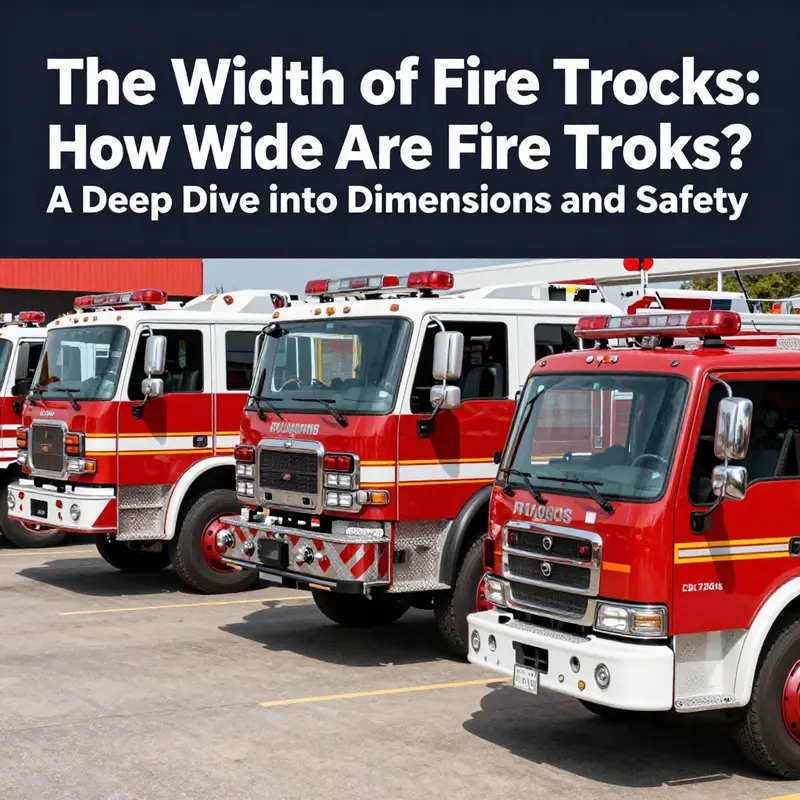
When a fire call erupts into the morning quiet, width becomes more than a measurement. It is a limit on possibility and a gauge of speed. The success of a frontline response rests not only on water or foam or hoses, but on the ability of a vehicle to move through streets designed for ordinary traffic yet tasked with extraordinary tasks. In the universe of fire apparatus, width matters because it constrains maneuvering, access, and the range of equipment that can be carried. The most common fire trucks used for everyday emergencies—whether they are water tankers, foam tenders, or dry chemical units—tend to hug a narrow band of dimensions. In practical terms, their bodies are usually about 2.4 to 2.7 meters wide, roughly 8 to 9 feet. This range is not arbitrary; it is a compromise between carrying essential gear and fitting through the lanes most cities depend on for routine travel and rapid response. The width allows crews to work in confined spaces while still leaving room for the driver and the officers to move around inside the cab, as well as for the deployment of exposed equipment on the vehicle exterior. Yet within this band there is variation that mirrors the diversity of fire service needs. A typical foam fire truck, which carries specialized suppression agents, often lands toward the wider end of the spectrum, around 2.47 meters. A rescue vehicle, built to haul personnel and carry rescue tools, hovers near 2.4 meters in many fleets. A high-reach or ladder truck tends to be a touch broader, commonly around 2.55 meters, reflecting the extra apparatus and the structural elements of the extended aerial apparatus that must be housed within the chassis footprint. These numbers are not mere trivia; they are the practical heart of how cities plan streets, bridges, and tunnels around the vehicles that must traverse them under pressure. The width of the vehicle is only part of the story. The space a truck can use on the road is a function of both its own footprint and the surrounding environment. Roadways in dense urban areas often present lanes that are just sufficient for standard traffic flow. In many jurisdictions, the national or local standards skew toward a maximum that prevents misalignment with railing, curbs, and overhead clearances. The maximum legal width for a fire truck in many regions sits around 4.5 meters. This figure is seldom reached in practice for routine fleet operations, because a too-wide vehicle becomes a liability in narrow streets. A more common, operative ceiling is closer to 3 meters. When fleets design for urban navigation, they routinely target widths well under that threshold, ensuring the vehicle can pass through alleyways, under low bridges, and around tight corners without the need for specialized escort or road closures. Even with a body that is, say, 2.6 meters wide, the crew must consider space for stabilization and for the equipment that can extend beyond the body in operation. In many depots and incident scenes, the practical width of a moving apparatus is never read as a single number. It is a combination of the body width, the undercarriage clearance, the mirror projections, and any equipment that protrudes during transit. The result is a vehicle that behaves differently on transit than on the bay floor. The math of maneuverability becomes a choreography: the driver steers toward the centerline, while the rear wheels track a little differently from the front, and the side panels must clear obstacles that can intrude into the rendering of a straight line. Because urban streets vary so widely—from broad avenues to constricted cul-de-sacs—emergency response fleets must balance a spectrum of operational realities. The official dimensions often cited in training manuals reflect this balance: a typical wheelbase and body width that fit within a road lane while offering enough room for interior space, equipment, and crew movement. In this context, the width of the vehicle is a guardrail of safety. It governs the approach angle a driver can take toward a turn, the radius with which the vehicle can sweep through a bend, and the space available for other vehicles to yield or pass. It also affects the positioning of the truck within a fire lane during a live operation. A lane must be wide enough not only for the truck’s body but for the space that the crew needs to operate the pump, to deploy hoses, and to set up stabilizers or other safety devices without encroaching into adjacent traffic or endangering bystanders. This is why fire lanes and access corridors often require minimum widths that exceed the vehicle’s body alone. A common standard is a clear width of around 4 meters to permit safe passage and maneuvering during emergencies. That clearance is the practical floor beneath the more abstract maximum widths. The interplay between the vehicle and the street is also a consideration of infrastructure. Bridges, overpasses, and even low-hanging signage can impose restrictions on which models can safely pass. The width, then, influences procurement choices and route planning alike. It shapes the design of new fleets and informs retrofits to existing streets, because a fire truck does not exist in isolation. It is embedded in the geometry of the city itself. When authorities and fire chiefs decide what kind of apparatus to deploy, they weigh not only the fire containment capability but also the physical reality of the city’s road network. The constraints are rarely solved by a single dimension; they are solved by a range of dimensions and by a deep understanding of how those dimensions interact with the built environment. In the real world, the measurement of width becomes an operational standard rather than a mere spec sheet entry. Parts of a fire truck extend beyond the chassis in the form of mirrors, ladder racks, and other equipment. Even when the primary width is within the 2.4 to 3 meter band, these add-ons can alter how the vehicle sits within a lane. The idea of a “nominal width” thus becomes something of a moving target that must be validated with official documentation, especially for agencies that must demonstrate compliance with road safety and vehicle regulation authorities. For those seeking precise figures, the best source remains the official vehicle data sheets provided by manufacturers and the certification bodies that oversee compliance. These documents reject ambiguity, aligning the physical product with the expectations of road engineers and fire service operators. While product summaries may not always list every dimension explicitly, the underlying engineering and certification processes ensure that the final width remains within the intended design window. It is worth noting that even with standardized widths, the actual space a fire truck uses on a given street can differ depending on the equipment configuration and the incident scene. A vehicle tasked with heavy pumping or with extended ladders may require additional room at the curb for stabilization devices or for the swing of the ladder assembly, which could briefly broaden the footprint during deployment. These dynamic elements explain why line officers often specify more comprehensive clearance requirements for a scene than the static vehicle width alone would indicate. The broader picture thus combines a knowledge of typical widths with a disciplined approach to space management on-scene. In practice, many fleets lean toward a conservative design philosophy: keeping the vehicle within a mild width range to maximize the probability that it can navigate the majority of streets without impediment. This approach is not merely about fitting through a standard door but about ensuring that a rapid response is not compromised by the geometry of a road network. The regulatory landscape reinforces this approach. Governments and international bodies set broad limits and guidelines to reduce the risk associated with large emergency vehicles sharing space with other road users. A widely recognized ceiling is around 4.5 meters in width, but fleet operators generally adopt more modest targets to maintain agility in dense urban corridors. The result is a practical triad: width that is sufficient for equipment and crew but restrained enough to maintain passage through standard streets; lane widths and clearances that reflect the need for safe operation; and compliance with national and international standards that guide the development of road vehicles intended for emergency service. For anyone seeking to translate these principles into actual practice, the path forward is grounded in specifications and vigilance. The chapter of a city’s traffic engineering plan that deals with emergency response corridors is never isolated from the fire department’s vehicle width. Streets are designed or adapted with this knowledge in mind, and the design of new neighborhoods or redevelopment zones often contemplates the transit radius of the widest vehicle that might need to operate there. Consequently, width becomes a shared responsibility across public works, urban planning, and fire leadership. The practical upshot for communities is straightforward: knowing the typical width of fire apparatus helps planners design better roads and helps responders reach crises faster. It also informs water supply planning, incident command logistics, and the deployment of auxiliary resources at large scenes. When people ask how wide fire trucks are, the answer is that there is a standard range, but the real-world figure depends on the vehicle family and its mission. The family commonly centers on about 2.4 to 3.0 meters, with ladder-centric configurations nudging toward 2.55 meters. Yet the urban street still demands four meters of clear space to safely maneuver during an emergency. As these dimensions propagate through planning documents and training manuals, they become more than numbers; they become a language for discussing urban resilience, resilience that is tested in every call where a city must swallow a large vehicle and still clear a path for life-saving work. Those conversations are echoed in the way fleets are described in industry literature and in the way incident scenes are managed, even down to the choreography of wheels and stabilizers. The exact width a department selects is a strategic decision rather than a purely mathematical one. It reflects the city’s street diet, the type of incidents anticipated, and the pace at which crews must arrive to mitigate risk. For researchers and practitioners, the dimension acts as a hinge point between engineering constraints and field demands. It is where the physics of motion meets the sociology of urban space. The interplay between a truck’s footprint and a city’s road network is a tangible reminder that emergency response is not a single action but a coordinated system. When a truck slides into a street, it is not just the vehicle turning; it is the entire network of traffic, pedestrians, utilities, and civilians that must adapt in real time. In the end, understanding how wide fire trucks are is about understanding how cities work under pressure. It is about the careful balance between equipment readiness and street versatility. It is about the design philosophy that keeps a vehicle within a lane while offering enough space for equipment to be deployed swiftly and safely. It is about consistent practice with real-world constraints so that when the siren wails, the road itself becomes a partner in the mission rather than a barrier. For readers who want to dive deeper into the practicalities of the physical dimensions and their regulatory underpinnings, the broader literature and standards provide a reliable map. The discussion here borrows from established guidelines and the observation that, practically, widths cluster in a familiar band. Real-world application continues to evolve as cities green-light wider lanes in some neighborhoods and adopt tighter urban cores in others. The tension between wider response corridors and the tight geometry of historic districts remains a live issue for planners and responders alike, shaping how new apparatus are designed and how existing streets are upgraded. For those curious about how these standards translate into everyday practice, a broader reading is helpful. On one hand, the idea that most standard fire trucks fit within a 2.4 to 3-meter width resonates with fleet procurement and insurance considerations. On the other hand, the insistence on a minimum clearance of roughly 4 meters at incident scenes keeps the operational picture safe and practical. The two numbers—widths and clearances—work together to ensure that when minutes count, the apparatus has a compatible home on the road and room to perform. The synthesis of these considerations guides an efficient, safe, and reliable emergency response, and it helps explain why city streets are planned and modified with emergency access in mind. For readers seeking a concise anchor to the world of standards, the International Standards Organization’s road vehicle dimension guidelines provide a robust reference point, framing the conversation about width within a global context of safety and interoperability. This chapter’s figures reflect a synthesis of typical practice rather than a universal decree, and they underscore the importance of consulting the certified data sheets and regulatory documents for exact numbers. In the end, width is not merely about the truck itself; it is about how a city can sustain speed and safety when every second matters. The road test of a fire department’s responsiveness is the degree to which its fleet can align with the city’s geography. Where wide urban boulevards exist, the trucks glide with minimal hindrance. In tighter quarters, crews lean on training, careful positioning, and a shared expectation that space will be made for life-saving work. This is the practical reality behind the numbers: a balancing act between a vehicle’s capacity to carry critical tools and the street’scapacity to accommodate that vehicle in a way that protects both responders and the public. For readers who want to explore more about how wider vehicles might affect service delivery in different contexts, the Fire Truck blog offers a forum for ongoing discussion and case studies. You can learn more by visiting firetruck.space/blog. The topic remains dynamic as cities evolve and as new designs emerge, but the core premise endures: width matters because it is a limit that shapes speed, access, and the very possibility of a successful intervention. External reference: international standards on road vehicle dimensions provide a baseline for these discussions and remind us that engineering and urban planning share a common goal—keeping emergency operations swift, safe, and adaptable to a changing world. For a foundational overview of the dimension and safety requirements that guide road vehicles globally, see ISO road vehicles: dimensions and safety requirements. https://www.iso.org/standard/75997.html
Width on the Line: Navigating Regulatory Boundaries and Real-World Roads for Fire Trucks

Width is a deciding factor in the life of a fire truck long before the siren starts. It determines not only how much water a vehicle can carry or how many tools it can stow, but also which streets it can reach, which intersections it can clear, and how fast it can respond to an emergency. When people think about the fire service, they often picture a blaze raging through a city block and a bold machine rushing toward the danger. What they may not immediately appreciate is how the width of that machine shapes every moment from dispatch to the final takeover of a fire scene. In practice, the width of a fire apparatus sits at the intersection of engineering, urban design, and public safety. It is a constraint that firefighters learn to work with, an instrument that can be tuned to different environments, and a standard that keeps responders moving with confidence through a shared system of rules.
Most fire trucks fall within a fairly narrow band, measured in meters or feet, yet that band hides a surprising amount of variation. Across the common categories—water tankers that ferry large volumes of water, foam tenders that extend reach with specialized fluids, and dry chemical units that carry fast-acting extinguishing powders—the typical external width hovers in a familiar range. In practical terms, many standard fire trucks are about two to three meters wide. When converted to feet, that means roughly eight to nine feet across the vehicle’s widest points. Specific configurations illustrate that range: a standard foam fire truck is typically around 2.47 meters wide, a rescue vehicle commonly around 2.4 meters, and a high-reach rescue or ladder truck often closer to 2.55 meters. These numbers are not arbitrary. They reflect a balance between the need to accommodate equipment, personal protective gear, and the operator’s space inside the cab, and the equally critical requirement that the chassis can negotiate urban streets, residential neighborhoods, and rural byways without becoming a hindrance to progress.
To add a layer of regulatory gravity, these widths are set against formal limits that exist to keep incident response timely and predictable. In the United States, the federal framework begins with the highway system. The Federal Highway Administration (FHWA) establishes vehicle width limits that apply on interstate highways and, more broadly, on most public roads designed for general use. The practical ceiling for many vehicles, including fire apparatus, aligns with an 8 feet 6 inches cap, which equates to about 2.59 meters. This is not simply a number plucked from a bureaucrat’s desk; it is a compromise that recognizes the realities of road design, the diversity of urban and rural infrastructure, and the specialized mission of fire services. The NFPA’s standards reinforce this practical boundary. In many contexts, the NFPA standard maximum allowable width for a fire truck is specified as 102 inches, or 8.5 feet, equivalent to 2.59 meters. That alignment with federal width restrictions helps ensure that a fire truck can navigate most public roads safely while carrying the gear needed to perform its duties.
But the real world rarely conforms to single numbers. Widths vary depending on the model, configuration, and the local jurisdiction’s particular rules or permissive allowances. Custom modifications play a significant role in certain communities. In cities with older street grids, narrow lanes, or tight intersections, departments may opt for variants that shave a few centimeters off the legal maximum to ease maneuverability. In other places, where infrastructure and regulatory oversight allow, a department might operate a slightly wider vehicle under a special use permit, especially when the urban footprint is dense and the need for rapid, versatile access is paramount. These realities remind us that the law and the street are not always perfectly matched, and that fire service leaders must balance compliance with performance.
The relationship between a fire truck’s width and its operating space hinges on more than the vehicle’s outer edge. A truck’s bed or body width tells only part of the story. It must also account for mirrors, bumpers, fenders, and sometimes extendable components that add to the overall swept width when folded or retracted. For example, when the apparatus is stationary and ready to depart, the side mirrors may extend outward, increasing the effective width by several centimeters. In operation, some equipment might swing or extend during deployment, such as stabilizing outriggers or the undercarriage equipment when the truck is in action. All of these factors contribute to a more dynamic understanding of what “width” means in practice, especially in tight urban contexts where every inch matters.
Beyond the vehicle itself, the space required to operate safely is a separate but related consideration. The guidance commonly specifies that fire lanes and clearances should be at least about four meters wide to allow safe passage and maneuvering during emergencies. Put differently, even if the truck’s own width sits within the approximately 2.4 to 3.0 meter band, the street or lane through which it travels needs room to spare for hands-on operation, crew movement, and or the positioning of additional apparatus or equipment. This requirement matters during pre-incident planning, when fire departments map out how a particular block can be accessed, how employees will move through the space, and where stairs, elevators, or building entrances will be used to support evacuation and rescue efforts.
Width also interacts with other dimensional considerations. The lane width a fire truck can comfortably traverse is not the same thing as the road’s overall width. A single lane on a busy urban street might measure approximately 3 meters, but the effective usable width can be reduced by parked cars, curb extensions, bike lanes, or street furniture. For a fire department, this underscores the importance of anticipating worst-case scenarios: a truck that has to navigate a narrow alley, a cul-de-sac, or a street with parked vehicles on both sides. In those moments, the width becomes a live constraint that shapes tactics. Two familiar tactics emerge from the physics of width—careful steering and precise positioning. The former helps the driver avoid encroaching on neighboring lanes or striking curb edges; the latter enables crews to deploy hoses and ancillary gear without creating new hazards for pedestrians or other emergency responders. In many jurisdictions, training emphasizes these skills not just as driving a vehicle, but as commanding space in a sprawling, crowded operating theater where width is a constant factor.
When we look more closely at the types of apparatus, we see that width is not a fixed attribute across the board but a spectrum that reflects the mission profile. A water tankers’ primary function is to carry large volumes of water to a scene where a supply may be limited. Their width tends toward a compact, efficient profile that can still accommodate hoses, pumps, and a robust chassis. Foam tenders share similar constraints but incorporate additional reservoirs or foam application equipment, which can nudge width upward by a small margin. Dry chemical units, designed for rapid response with specialty extinguishing powders, also fit within the same general range, but their configurations sometimes include equipment stowed in ways that alter the exterior silhouette slightly. Rescue vehicles, tasked with extraction and rapid access to victims, often have widths in the tighter end of the spectrum to maximize reach into confined spaces. High-reach or ladder trucks, due to their extended booms and stabilizing equipment, may push toward the upper end of the commonly observed range. The practical upshot is that while 2.4 to 2.7 meters serves as a working rule, a department’s choice of vehicle type directly informs its width in any given fleet.
The regulatory framework, then, becomes a set of guardrails rather than a single straight line. The NFPA 1917 standard, which governs the specifications for new automotive fire apparatus, provides a comprehensive framework for dimensions, performance criteria, and safety features. It ensures that new apparatus designs are consistent in ways that support broad interoperability, safe operation, and reliable maintenance. The standard helps ensure a parity of safety features across different manufacturers and configurations, which is essential when different vehicles must operate in tandem during complex emergencies. Yet even with a standard in place, the reality on the ground remains nuanced. Local authorities may adjust, interpret, or apply the rules in ways that reflect climate, terrain, or urban design. The result is a landscape where a general width target persists, but the actual numbers in a given city or region can reflect the geometry of its streets and the priorities of its responders.
This nuanced landscape is not merely a matter of numbers; it has practical implications for everyday operations. Fire departments engage in careful planning that incorporates road geometry, vehicle width, and the time it takes for crews to deploy. The width of a truck affects dispatch decisions, the routing of a response, and even the tactics used once a vehicle arrives on the scene. A wider truck may bring more system capacity to a large, complex fire, but it may also require longer stretches of unobstructed road to reach the building’s entrance. Conversely, a lighter, narrower vehicle may have quicker access to narrow courts or older tenement blocks, enabling rapid initial actions that can stabilize a scene while larger units arrive. In some cases, the choice of a particular fleet profile becomes a matter of balancing speed with capacity, with the understanding that height, weight, and length must also be considered when crossing bridges, negotiating tunnels, or entering multi-story structures.
The practical dimension of width becomes especially vivid when we consider urban planning and infrastructure. City streets have evolved over decades, reflecting changing vehicle sizes, traffic patterns, and land use realities. In modern city design, planners recognize that the width of the street influences not only vehicle movement but also the safety and efficiency of emergency response. A street designed with generous widths and clearly delineated lanes can accommodate multiple emergency vehicles simultaneously, enabling a coordinated approach to a multiple-alarm incident. In contrast, a narrow historic street can become a bottleneck, where even a correctly sized fire truck must rely on precise positioning and, sometimes, pre-arranged access points such as alleyways or service roads. The width concept thus threads through policy, engineering, and daily practice, shaping how communities prepare for, respond to, and recover from fire events.
As technology and design evolve, there is room for further refinement in how width is addressed. Advances in chassis design, turning geometry, and ergonomic layouts inside the cab influence both the perceived width and the actual maneuverability of a vehicle. Engineers continually test how to compress volume without compromising the capacity to carry essential equipment. They seek to minimize the width needed to house the same amount of gear, without sacrificing safety margins in cornering, braking, or visibility. The trend toward modular, adaptable interiors can also influence exterior width indirectly. If compartments and tool storage are redesigned for compactness, the overall footprint can sometimes be trimmed while preserving or even expanding the functional reach of the apparatus. But even as innovations promise tighter silhouettes, the basic regulatory framework remains a grounding force, ensuring that any new design remains compatible with the lanes it must traverse, and the people who depend on it in moments of crisis.
This chapter, while anchored in the specifics of width, ultimately points to a broader truth: width is inseparable from access. The speed of a response is not only a function of engine power and crew readiness but also of whether the vehicle can even reach the street in the first place. A department’s inventory, staffing, and geographical footprint all hinge on understanding width in a practical sense. In dense urban cores, width becomes a variable that must be managed through planning, drills, and coordination with traffic control and public works. In rural or suburban zones with different constraints, a department may lean toward different configurations to maximize reach and reliability. The shared objective across all settings is clear: to ensure that, when the alarm sounds, the path to the scene is as unimpeded as possible, and every effort is channeled toward saving lives and protecting property.
To bring this closer to the reader’s practical experience, imagine walking along a street as a fire truck approaches during peak traffic. The truck’s width is not just a line on a spec sheet; it is a real factor that determines whether the vehicle can hug the curb, how much space a driver has to navigate a tight bend, and how the crew will deploy hoses without stepping into oncoming lanes. The width informs whether a second apparatus can parallel park in the same block or if a single, well-positioned unit must handle a larger portion of a complex incident. It informs the coordination among units and the choreography of a multi-vehicle response. In this sense, width is not a sterile measurement but a living constraint that guides tactical decisions, informs training, and shapes a city’s emergency response culture.
For readers who are curious about the practical options for acquiring or comparing equipment within these width constraints, there is value in looking at market listings and fleet options. A broad catalog of available fire trucks can be explored here: fire-trucks-for-sale. While shopping or inventory browsing does not replace the rigors of spec sheets and field testing, it offers a tangible sense of how width considerations appear in real-world choices. The catalog can help illuminate how departments balance width with other operational needs, such as pump capacity, water tank size, and the mobility required to navigate a city block or a rural road. It also can illustrate how different configurations maximize efficiency within a fixed width envelope, from streamlined chassis choices to compact storage layouts and modular equipment deployment systems.
As a closing reminder, the width figure—generally in the neighborhood of two to three meters for most standard vehicles, with a strict cap around 2.59 meters by regulatory standards—exists to protect both responders and the broader traveling public. The numbers matter not just in the abstract, but in the concrete experience of a day’s work: the time to reach a scene, the ease of moving through a crowded intersection, and the confidence that comes from knowing a vehicle can operate safely within the streets it serves. In the dance of fire response, width is a choreographic constraint that, when understood and respected, enables every other element of the operation to move in concert. The NFPA 1917 standard and federal limits provide the framework, while local practice fills in the details. Together, they define how wide a fire truck can be, and how wide it must be, to protect people, property, and the communities that rely on swift, reliable response.
External resource for context and standards: https://www.nfpa.org/codes-and-standards/all-codes-and-standards/available-codes-and-standards/nfpa-1917
Width on the Frontline: How Fire Truck Dimensions Shape Access, Safety, and Emergency Response
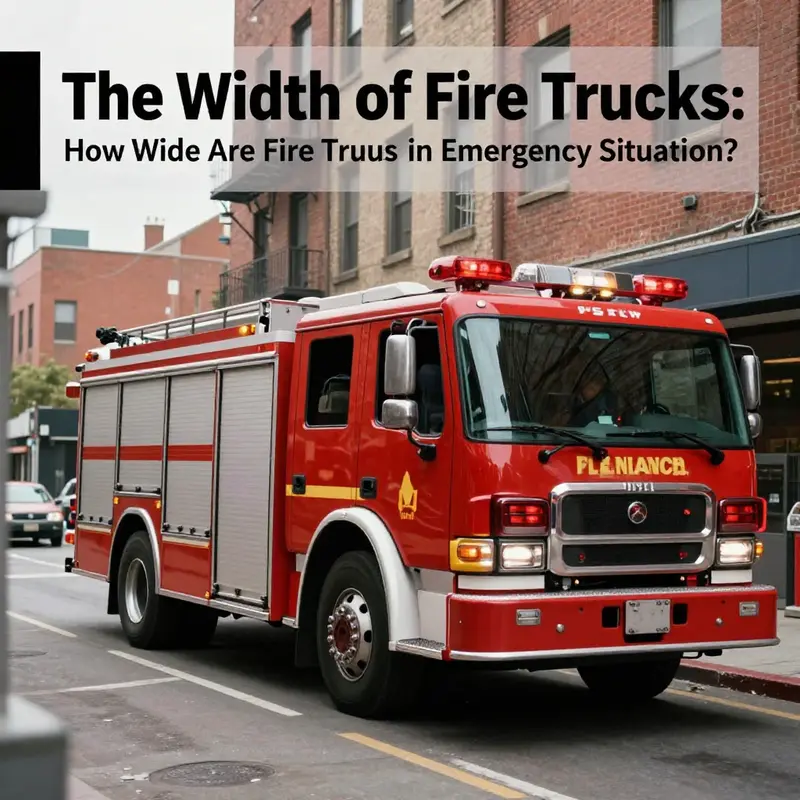
Every emergency response begins with access, and access is first defined by width. The chassis, the body, and the equipment carried by a fire truck create a footprint that can be as consequential as the water it carries or the ladder it deploys. In practice, width becomes a practical constraint that governs where a vehicle can park, how close it can approach a structure, and how safely crews can operate without placing bystanders or other responders at risk. The more we learn about how width matters, the clearer it becomes that the number on the spec sheet is not just a measurement; it is a statement about maneuverability, urban design, and the choreography of rescue work. Across the fleet, there is a familiar cadence. Most common fire apparatus sit within a footprint that translates to approximately eight to ten feet of width in the street, which is about 2.4 to 3.0 meters. This range is not a single rule but a working standard that balances the need to carry essential equipment with the necessity of threading through tight urban avenues, residential blocks, and narrow industrial corridors. When the apparatus is resting on a fire station apron or pulled into a driveway alongside a row of townhouses, the width is a matter of staging as much as it is a matter of terrain. Yet when the sirens wail and the crew accelerates toward an urgent incident, width translates into a ceiling on where they can operate and how quickly they can begin work.
The spectrum of width expands when we look at specific types of apparatus. A standard foam fire truck, built to deliver foaming agents as well as water, typically presents a width close to 2.47 meters. A rescue vehicle, designed to carry cutters, spreaders, and stabilization gear, tends to be around 2.4 meters wide. A high reach rescue vehicle, often equipped with a long aerial ladder and associated platforms, usually measures about 2.55 meters wide. These figures remind us that the width of a truck is not a fixed universal value but a family of related footprints, each tuned to the mission profile of the equipment it carries. Yet even within this family, the lateral footprint remains a critical constraint, because width is inseparable from the road and the roadside geometry that responders encounter every shift. In other words, the vehicle may be designed to carry a given load, but the space it needs to operate is always bigger than the body itself.
Regulatory and planning considerations further shape what is deemed acceptable or practical. The regulatory maximum width for a fire truck is generally set at 4.5 meters, a ceiling that acknowledges the occasional need for oversized apparatus in specialized roles while aiming to keep response credible on common streets. In typical urban practice, many standard fire trucks are designed to be no wider than about 3 meters. This cap is not arbitrary; it reflects the reality that a city street must accommodate two-way traffic, parked cars, and the chance that the vehicle will need to be parked at an angle to reach a hydrant or a doorway. Beyond the vehicle itself, the space in which the truck operates—especially in emergency lanes—matters immensely. Fire lanes and clearance zones are commonly specified to be at least 4 meters wide, a rule that helps to ensure safe passage for the vehicle and room for responders to deploy hoses, set up equipment, and work around the apparatus without crowds closing in or colliding with the truck as it moves or pivots. Taken together, the vehicle being eight to ten feet wide and the surrounding clearance of roughly four meters creates an operational envelope that is narrower than one might intuit when watching a dramatic rescue on television, but far more consequential in dense urban settings where every centimeter matters.
What happens when the equipment is deployed is a practical illustration of how width interacts with function. In the operational world, standard fire apparatus are designed so that their width remains within the 8 to 10 feet range even when fully deployed. This is because the most critical components—engine, pump, hoses, water tanks, and rescue tools—are arranged to minimize lateral expansion. When added equipment such as a retractable light tower is extended, the height may rise, and the vertical profile increases, but the lateral footprint is largely controlled through careful layout and folding mechanisms. The light tower, when stowed, is compact enough to stay within the body’s width; when deployed, it may necessitate additional space around the vehicle, particularly in constrained environments where adjacent trees, poles, or power lines creak under the weight of a passing apparatus or the sway of a gusty wind. In such moments, the issue is not only the width of the machine but the clearance around it—the distance to closest obstacles, the angle at which the truck can be parked, and the space needed for hoses to unwind without kinking on a curb.
In narrow urban environments, the width question suddenly becomes a question of mobility rather than mere chassis size. Urban street geometry, parking patterns, and the presence of street furniture force responders to plan routes with precision. The crew must consider options for approach, the sequence of deployment, and the possibility of need to reposition the vehicle to gain a better angle into a doorway or along a long row of facing buildings. The deployment of stabilizers or outriggers introduces another layer of width management. While these outriggers serve to stabilize the vehicle during pumping or elevated work, they also extend equipment laterally in some configurations. The clearing around the truck must account for these extensions, reinforcing why the recommended clearance zones—often several meters beyond the visible edges of the chassis—are more than precautionary boundaries. The discipline of maintaining a safe perimeter is not about keeping spectators at distance alone; it is about giving the crew the space to move, to operate hoses and hydraulic tools, to swing ladders, and to connect to water supply without the risk of entanglement or collision with nearby structures or vehicles.
Professional practice in firefighting emphasizes that modern apparatus are designed with compactness and maneuverability in mind. The emphasis on more agile designs reflects a recognition that urban and suburban landscapes can present a labyrinth of narrow lanes, tight driveways, and cluttered intersections. Even though some modern trucks push the envelope with compact footprints, safety protocols insist on maintaining a minimum clearance zone around the vehicle to prevent accidents involving bystanders, other emergency units, or structural elements. The realities of a crowded environment require planners, engineers, and responders to think about width not as a single dimension but as a dynamic constraint that shifts with the scene. A truck that can slim down to the threshold of 2.4 meters in ideal conditions may still need to carve out space when confronted with a tree line, a parked car, or a low-hanging utility line during a restricted response corridor. This tension between the ideal width and the practical width on scene is a recurring theme in emergency response planning, and it underscores why width is treated as a design parameter with real consequences on arrival times, attack strategies, and the safety margins that protect both responders and residents.
Within the procurement and operating framework, the market for fire apparatus is shaped by the same geometry that defines the streets they navigate. While the core widths remain anchored in the eight-to-ten-foot band for versatility, jurisdictions often codify a preferred maximum width to ensure that the fleet remains compatible with the widest streets in the system, while still being able to venture down narrow alleys and through gateways when needed. Carriers and designers recognize that the space around a truck matters almost as much as the truck itself. The width is a determinant of how many crew members can work in proximity to the vehicle without jostling equipment, how easily hoses can be laid out for a rapid attack, and how quickly a rescue operation can begin without delay caused by crowding. In practice, this means a vehicle that is within the 2.4 to 3.0 meter breadth range is easier to position, easier to maneuver, and easier to stabilize in challenging environments. Yet there are occasions when a broader platform provides a needed capacity—such as certain high-rise or complex rescue scenarios—where a wider vehicle can deliver the necessary reach or equipment payload, provided there is a suitable corridor and a disciplined approach to traffic management. For those studying or shopping for apparatus, the landscape is nuanced: one must weigh the operational benefits of a broader platform against the realities of route access, turning radius, and incident-specific demands. And for readers curious about current inventory and options, a practical starting point can be found in online listings that curate available machines across markets, including dedicated sections for fire apparatus such as those cataloged under fire-trucks-for-sale. Fire trucks for sale portals can offer a sense of the range of widths, configurations, and equipment packages that responders weigh when planning a response strategy and a long-term equipment plan.
From the perspective of street design and emergency services planning, width also informs the way cities and districts are built and reconfigured. Fire lanes are not merely lanes; they are responsive arteries designed to accommodate the tempo of emergency response. The four-meter minimum clearance inside these lanes is a rule of thumb that allows for safe passage and the sweeping action of hoses and outriggers, while still leaving space for other vehicles to pass if necessary during nonemergency conditions. When street designers consider hydrant placement, curb radii, and the width of parking lanes, they must weigh the needs of everyday traffic against the insistence that an arriving crew has a stable, unobstructed stage from which to operate. These decisions ripple into the realm of budget and policy because the width constraints influence where and how new fire stations are sited, how street trees and utility poles are positioned, and how municipal fleets are sized to meet service level expectations. The bottom line is that width is a governance issue as much as a mechanical one: it binds the aspirations of emergency response to the realities of urban form and traffic management.
When we step back from the immediate scene and view the issue through the lens of training and drill, the importance of width becomes even more apparent. Rehearsals in controlled environments allow crews to practice lane changes, anchoring, and the deployment of ladders and platforms within a defined footprint. In these exercises, instructors emphasize the relationship between the truck’s width and the space available for the attack line, the placement of the water supply, and the safe positioning of personnel around the vehicle. The drills reveal that even small changes in width—say a truck measured at 2.95 meters instead of 3.05 meters—can cascade into slightly different tactics and a reshaping of entry angles into a building or through a doorway. In other words, width is not only a metric for the physical fit on a street; it is a catalyst for the tactical geometry of a response, influencing where hoses are laid, how a pump panel is accessed, and where a team sets up a rescue platform to protect firefighters as they operate at height.
To connect this discussion to the broader narrative of the article, consider the core question: how wide are fire trucks, and why does that width matter in the real world? The practical answer is that standard front-line apparatus sit in a narrow band that prioritizes maneuverability and rapid deployment, with eight to ten feet as a typical operating width and a broader practical footprint that accommodates deployed equipment and stabilizers. The regulatory ceiling of four and a half meters keeps the fleet within a universal ceiling while still preserving sufficient versatility for specialized missions. The common practice of keeping many trucks under three meters in width helps fire departments navigate dense neighborhoods, busy avenues, and congested incident sites without losing much in the way of capability. Yet the intent behind these dimensions is not merely to fit into tight spaces. It is to create a safe operating envelope in which responding teams can act decisively, keep crowds at a respectful distance, and execute aggressive firefighting and rescue tactics without the impediment of a misaligned or oversized vehicle. The interplay of width, deployed equipment, clearance, and patrol routing thus becomes a silent but constant undercurrent of how we design our cities, build our response fleets, and train our responders to act with speed and safety in emergencies.
As the discussion turns toward procurement and policy, the practical takeaway for communities is clear. Width matters because it governs access. A city with narrow streets and dense development benefits from a fleet that remains within the 2.4 to 3.0 meter range, paired with defined clearance zones that give crews the room to work. A city with broader boulevards and fewer obstacles may accommodate slightly wider platforms, provided the rest of the street geometry and traffic management plan can support that choice. In either case, the overarching principle is the same: plan for width not as a single static metric but as a dynamic constraint that informs where a fire truck can operate, how quickly it can arrive, and how safely it can begin work the moment it stops. For readers pursuing deeper insights into equipment standards, deployment, and organization, the NFPA standards (as reflected in references like NFPA 1710) provide a framework that translates these real-world considerations into enforceable guidelines and tested performance metrics. These standards are not merely bureaucratic; they are a practical codex that helps ensure consistency, interoperability, and safety across departments and jurisdictions. To explore practical inventory and community-facing options, many readers will find value in examining current listings for fire apparatus such as those found under fire-trucks-for-sale, which often reveal the range of widths and configurations in service across regions. This kind of market awareness can inform planning, budgeting, and ongoing fleet modernization while keeping the focus on the essential goal: ensuring every emergency vehicle can reach the scene and operate effectively within the environmental constraints it encounters.
In closing, width is not a standalone characteristic; it is an intrinsic part of how we design, regulate, and deploy emergency response. The eight to ten foot band captures the essential compromise between carrying capacity and reach, while the four meter lane clearance and the 4.5 meter regulatory ceiling frame the broader safety and mobility context in which fire crews perform. The practical effect is that while a truck’s width may seem like a fixed specification, it is really a proxy for the wider system of urban design, traffic management, equipment layout, and safety protocols that allow firefighters to do their jobs under pressure. When crews pull onto a street, width becomes a live variable that shapes not only where they can stand or park but how they lay lines, how they operate at the doorway, and how they move within a scene to protect life and property. That is the core truth about how wide fire trucks are: width matters because it directly shapes access, speed, and safety in every emergency encounter.
For readers who want to explore current inventory and options in a practical, market-ready context, the search for fire-trucks-for-sale can provide tangible examples of how these dimensions translate into real-world choices and configurations. And for those seeking the authoritative standards that govern these dimensions and their deployment, the NFPA guidelines offer a comprehensive reference that helps ensure consistency and safety across the fire service. See the linked external resource for more on deployment standards and apparatus size guidance.
External reference: For more on standards that guide apparatus size and clearance, see NFPA 1710: Standard for Fire Department Organization and Deployment.
Final thoughts
The width of fire trucks is not merely a dimensional statistic; it plays an integral role in their functionality, safety, and navigability in emergency situations. By understanding typical dimensions, regulatory standards, and the importance of operational clearance, both enthusiasts and professionals can appreciate the careful engineering that goes into these lifesaving vehicles. As we continue to evolve our emergency response strategies, knowing how wide fire trucks are—and why it matters—will remain a key component of effective firefighting and rescue operations.