
Fire trucks are more than just striking red machines; they are the beating heart of firefighting and rescue operations. For firetruck enthusiasts, young aspiring firefighters, and seasoned firefighting professionals, understanding what a fire truck is can foster a deeper appreciation for these powerful vehicles. This exploration will cover four key chapters: the definition and purpose of a fire truck, the distinction between fire trucks and fire engines, the equipment and features housed within, and the pivotal role fire trucks play in emergency response. Each chapter is designed to build a comprehensive picture of these vehicles, emphasizing their significance in our communities.
Beyond the Siren: Unraveling the Fire Truck’s Role in Firefighting and Rescue
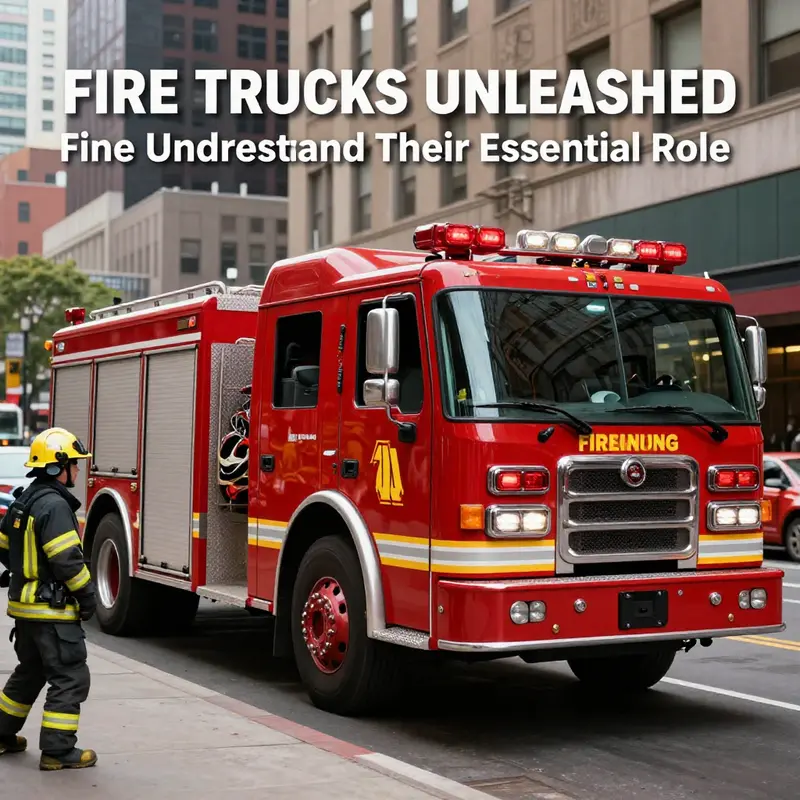
A fire truck does more than announce a scene with a red beacon and a chorus of sirens. It is a carefully engineered blend of mobility, reach, and tools that supports a commandable response to threats that range from a kitchen fire to a multi-floor rescue. In many people’s minds, a fire truck is the sequined centerpiece of a dramatic response, carrying brave firefighters to the front lines. In professional practice, it is best understood as a versatile platform that augments water delivery, enables vertical access, and stabilizes complex operations until danger subsides. To grasp what a fire truck is and why it matters, it helps to move beyond the visual drama and into the function that underpins every emergency scene. The vehicle is built to preserve speed, safety, and effectiveness when seconds count, and it accomplishes that through a deliberate balance of capacity, reach, and tools that can be deployed in a variety of environments.
At its core, a fire truck is a large, specialized vehicle designed to carry firefighters, equipment, and, in many configurations, water to the site of a fire. In American English, the term “fire truck” is widely used in everyday speech, while in some other regions the same vehicle may be referred to as a fire engine. The distinction that matters in professional practice, however, is not just about vocabulary. It is about purpose: the fire engine is focused on delivering water and suppressing flames, while the fire truck concentrates on access, rescue, and technical operations that extend the department’s capabilities beyond simply putting water on a fire. The laddered, wheeled workhorse that reaches upper floors is the emblem of this broader mission, and it bears a set of expectations that shape design, crew placement, and the sequence of response during an incident.
The visual identity of the fire truck often communicates its role even before crews arrive. A bright red gloss is common in many regions, chosen for visibility and tradition, though colors can vary with local standards. The vehicle wears flashing lights and a siren to clear traffic and create a corridor for rapid movement. Yet once it arrives, the true value lies in the equipment stowed within and the way it is organized for quick access. A firefighter boarding a fire truck expects to retrieve a potent mix of water-related gear and rescue tools in seconds. The truck must accommodate high-pressure pumps, a suite of hoses of varying diameters, and an extendable ladder that can reach substantial elevations. Inside, compartments are arranged like a well-planned workshop. Each tool has a defined home, a purpose, and an immediate path to the nozzle, the jaws of life, or the breathing apparatus that protects a responder in a smoke-filled environment.
Among the essential features, powerful pumps stand out as the mechanism that makes water do its job. A fire truck houses a pump capable of moving water at high pressure, a requirement that ensures a steady, reliable flow when firefighters connect to hydrants or other water sources. Depending on the department and the mission profile, the water on board may be limited, relying on hydrant connections for sustained supply. The hoses that accompany these pumps vary in size and length, allowing crews to respond to fires in tight spaces, open lots, or high-rise stairwells. Where the engine focuses on delivering water, the truck brings the reach and versatility that enable firefighters to attack from angles, to ventilate buildings, and to perform rescues that require physical access to upper floors. The ladder, often the most recognizable feature, can extend to remarkable heights, enabling access to upper apartments, roof vents, or windows that would otherwise be unreachable. The extendable arm is more than a length of metal; it is a conduit for safe entry, for directing air and water where they are needed, and for placing firefighters and equipment in positions that minimize risk to both occupants and responders.
The truck’s interior is also a mobile workshop containing a diverse toolkit. Hydraulic rescue equipment, sometimes labeled as the “jaws of life,” can pry open doors or collapse barriers when victims are trapped in wreckage. Breathing apparatuses create a breathable zone within smoke-filled spaces, allowing crews to operate without succumbing to dangerous atmospheres. Thermal imaging cameras scan for heat signatures through obscuring smoke, guiding supprt operations and helping to locate people who may be hidden behind walls or debris. Axes, pry bars, cutting torches, and a range of cutting and spreading tools enable selective and precise manipulation of building components, vehicles, or debris. These tools are not incidental; they are central to a modern fire truck’s ability to assist in rescue, stabilize dangerous conditions, and support medical or hazardous-material responses when needed. All of this is deployed while maintaining a coherent workflow with other responding units, so that ventilation, search-and-rescue, and fire suppression can occur in a synchronized sequence.
Within the broader family of fire trucks, there are several configurations designed for specific roles. Ladder trucks, also known as aerial apparatus, are uniquely equipped to provide access to upper floors and to perform complex rescues. Their hallmark is the large, extendable aerial ladder that can reach heights well beyond a person’s normal reach. The ladder’s span allows crews to establish a vertical path for evacuation and for directing water from above. Pumper trucks, the workhorse of water delivery, emphasize robust pumping capacity and hose deployment. They are often the first to arrive at a fire scene to establish a reliable water supply and to begin suppression, especially in areas with fire hydrants that must be connected and managed for continuous flow. Rescue units, meanwhile, emphasize extrication and patient care. They carry a spectrum of tools for widening doors, lifting heavy components, and stabilizing structures during collapse scenarios. Specialized units exist for hazardous materials, technical rescues, and other unique emergencies, each tailored to the kind of incident a fire department anticipates and trains for.
The role of the fire truck in emergency services extends beyond the immediate act of extinguishment. It is a platform that supports rapid response, ensures safety for both the public and responders, and enables a broader range of interventions than water alone can achieve. At a scene, the truck’s presence signals an organized, multi-faceted approach: a crew poised to perform access, rescue, ventilation, and equipment deployment in a coordinated sequence. This integration with other units—often including a firefighting engine, an EMS response, and various command and support roles—illustrates how a modern incident unfolds as a team effort. The truck helps shape decisions on how to approach the building, how to deploy water effectively, and how to manage hazards that can evolve quickly, such as stairwell collapse, backdraft risks, or shifting fire behavior. In critical moments, the ladder platform becomes a temporary stage for life-saving actions, a vantage point for assessing the interior and exterior fire dynamics, and a bridge between the people inside and the responders outside.
To understand why these vehicles look and function the way they do, it is helpful to consider the design choices that govern their operation. Size, weight, and maneuverability all influence where and how a fire truck can operate. A balance must be struck between carrying the necessary equipment and maintaining a vehicle that can navigate urban streets, alleys, and narrow driveways. Turn radius, ladder stability, and the weight load of water and tools affect how crews position the truck on arrival. Rapid access to compartments, clear sightlines from the cab, and predictable handling during emergency maneuvers are all products of careful design and rigorous testing. The vehicle’s resilience matters, too. It must endure exposure to heat, dust, and vibration while remaining reliable enough to perform repeatedly under demanding conditions. This reliability is not merely about the mechanical health of the truck; it also reflects the quality of its crew’s training. Firefighters practice drills that simulate the exact sequence of actions at a real incident: arriving on scene, establishing command, laying lines, deploying ladders, and executing rescue operations. The truck’s systems—pumps, water supply lines, ladder operations, and safety features—must synchronize with human decision-making under stress.
The concept of “definition and purpose” for the fire truck thus sits at the intersection of hardware, tactics, and training. Its primary purpose is not to replace a firefighting engine but to complement it by expanding reach, enabling access, and providing specialized rescue capabilities. This complementarity is evident in how departments plan their fleets and in how crews allocate roles at a scene. The crew assigned to a ladder truck may have different responsibilities than those on a pumper: while the engine might focus on knocking down flames and maintaining water supply, the ladder crew concentrates on getting people out, ventilating to reduce heat and smoke, and supporting broader incident stabilization. This division of labor does not imply a rigid separation; rather, it reflects a cooperative dynamic where each vehicle contributes its strengths to a common objective: to save lives, protect property, and manage risk.
In discussing the fire truck, it is also worth acknowledging the practical realities that shape its use in different communities. Fire departments operate in diverse geographies, with varying building types, population densities, and infrastructure. A city with towering high-rises will rely heavily on ladder trucks configured to reach upper floors and to respond quickly to vertical evacuations. Rural areas might emphasize longer water supply lines and rugged rescue capabilities, with equipment suited to uneven terrain and longer response times. The concept of a “one-size-fits-all” apparatus does not apply here. Instead, departments tailor their fleets to the most likely challenges they will face, balancing cost, maintenance, and readiness. Even the most carefully chosen configurations must be maintained through regular checks, preventive maintenance, and periodic testing to ensure that every component—pump, ladder, tools, and safety devices—performs when needed. The NFPA and other professional bodies provide guidelines that help standardize these practices, ensuring a consistent level of capability across departments while allowing for regional adaptations.
For readers who want a concise sense of how these vehicles come together in practice, imagine a multi-story building fire. The engine arrives first to establish a reliable water supply, the pump hums into action, and hoses unfurl to blanket the lower floors with water. A few blocks away, the ladder truck positions itself to extend its aerial ladder toward a window or balcony, offering a stable ladder line for evacuees and a vantage point for interior crews. The rescue tools on board are checked and prepared for rapid use, while breathing apparatus and thermal imagers are brought forward in case conditions change. If occupants need help beyond what water and ventilation can provide, the crew on the ladder truck uses its tools to pry open doors, create access routes, and stabilize the structure so other responders can work safely. In moments like these, the truck is a critical link in a chain of actions designed to protect life and limit the spread of danger.
The discussion of fire trucks would be incomplete without acknowledging the public-facing aspect of these vehicles. Their distinctive silhouette and the thrum of their engines communicate a swift, organized response even to observers who know little about firefighting. The visibility is intentional: it helps ensure the quickest possible clearing of traffic and the fastest approach to a scene. But beyond appearance, the real impact lies in the preparedness and coordination the vehicle enables. The equipment carried on board is a portable toolkit for a dynamic environment, allowing responders to adapt to evolving conditions from the moment they reach the site. In this sense, the fire truck embodies a philosophy of readiness: a mobile platform that does not merely carry gear but carries the capacity to improvise, adjust, and respond with precision as the situation unfolds.
As with any specialized machine, the journey from concept to readiness involves decisions about procurement, fleet planning, and ongoing maintenance. Departments may discuss the availability of different configurations, the total number of trucks needed, and how best to deploy them in a way that keeps neighborhoods safe while respecting budget constraints. In practice, these discussions often touch on the broader ecosystem of fire-service equipment and how a community prioritizes preparedness. For those curious about how fleets are sourced and configured in a market that blends tradition with modernization, a look at current listings and options can be illuminating. Fire Trucks for Sale can offer a sense of how departments balance capabilities, costs, and logistical realities when expanding or refreshing their fleets. The realities behind the scenes—the training, maintenance, and mutual aid partnerships—are seldom visible to the public, but they are essential to ensuring the truck remains a reliable ally at every call.
For a formal, standards-based overview of how fire trucks are used in emergency response—and for a broader picture of the roles and expectations placed on these vehicles—an external reference that researchers and professionals consult is the NFPA’s Fire Truck Overview. This resource sketches the way fire trucks fit into the larger framework of fire protection and emergency services, linking the technical aspects of design with practical outcomes on the ground. It offers context for the numbers and specifications that often appear in departmental profiles, and it helps explain why certain configurations are favored in particular settings. For readers seeking a deeper, more formal explanation of the vehicle’s place in fire service, the NFPA resource provides a thorough baseline to compare with local practices and innovations.
External resource: NFPA Fire Truck Overview
Ascending Purpose: Unraveling the Distinct Roles of Fire Trucks and Fire Engines in Modern Firefighting
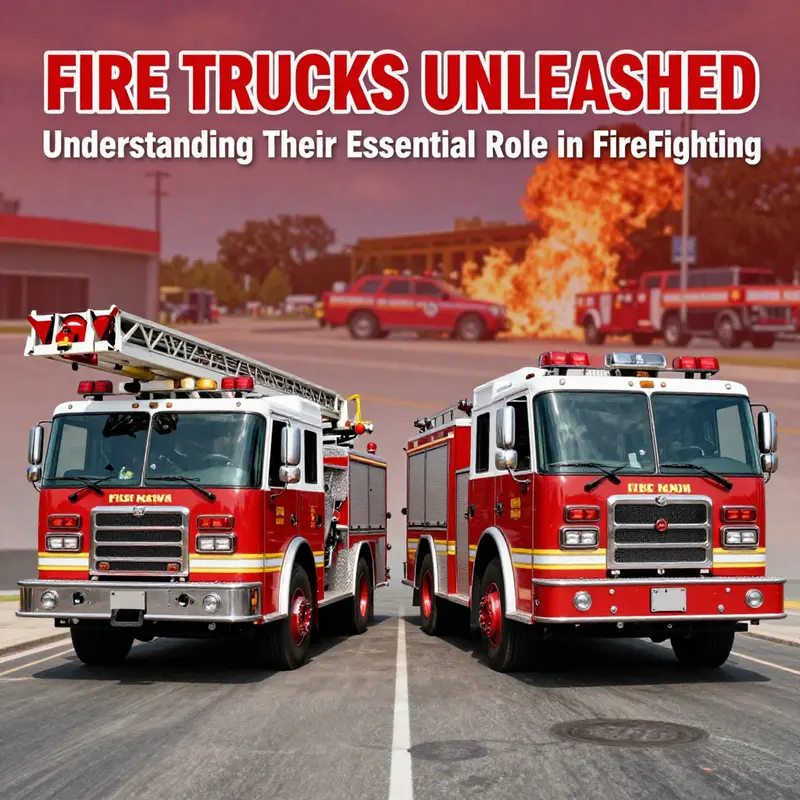
When an emergency call rips through the quiet, the fire department responds with a choreography built on purpose and training. The first responders arrive not as a single monolith but as a coordinated team of specialized vehicles, each carrying a different toolbox for a different challenge. In everyday speech, people often blur the lines between a fire truck and a fire engine. Yet in the fire service, the distinction is more than terminology; it is a reflection of two complementary lines of work. One vehicle is optimized to bring water to the fire as quickly and reliably as possible. The other is designed to reach places people cannot, to rescue, to ventilate, and to support complex operations at height or in confined spaces. Together, they form a fleet that can adapt to a broad spectrum of dangers, from downed power lines in a kitchen blaze to a high-rise stairwell filled with smoke. Understanding their separate roles helps illuminate how modern firefighting is less about myths of heroism and more about the mechanics of coordinated action, the science of access, and the art of rescue.
To begin with the core task of suppression, the fire engine—often the most recognizable machine in a blaze—occupies a central position in the early minutes of an incident. Its primary design is to deliver water, not just to pour it but to drive it under pressure through a network of hoses to the seat of the fire. The engine carries a powerful pump, a substantial water tank, and extensive hose lines that allow firefighters to deploy multiple attack lines as needed. The water tank is not a decorative feature but a preloaded reserve that buys time while the crew secures additional sources of water, such as hydrants or other water sources on the scene. In many departments, the engine is the first unit to arrive because of its speed and its ready-made capability to begin applying water, which can slow the spread and buy space for other tactics. The cadre of personnel aboard the engine also carries out the critical tasks of laddering, staging, and coordinating with other units on the ground. Their work is grounded in the responsibility to establish a reliable water supply, connect hoses to the pump, and pressurize water streams so that nozzles can reach flames with sufficient force to disrupt the fire’s heat, fuel, and oxygen balance.
In parallel to this water-delivery engine, the fire truck, sometimes called a ladder truck, presses a different set of capabilities into service. The defining feature of the fire truck is the extendable aerial apparatus—a hydraulic ladder that can reach upward and outward to access upper floors, rooftops, and other elevated spaces. The ladder is the tool that makes vertical rescue possible where stairs or egress routes fail or are overwhelmed by heat and smoke. Elevating the ladder opens new routes for occupants to escape or be retrieved, and it provides a vantage point for firefighters to assess the building’s interior structure, ventilation needs, and potential hazards above the reach of ground-level observation. The truck’s role extends beyond vertical access. It carries hydraulic rescue tools, ventilation equipment, extra ladders, breathing apparatus, and other specialized gear that is crucial when the situation involves collapse risk, entrapment, or complex rescues in confined spaces. Even when a fire does not demand a rescue, the truck’s gear supports the broader strategy of safety—creating openings in roofs or walls to release heat and smoke, or providing forced entry and rapid access for searching compromised areas.
The practical distinction between these two vehicles becomes most evident in the way they behave on scene. The engine moves with speed and purpose toward the source of flame, establishing a reliable water supply as the cornerstone of suppression. It is the workhorse that initiates fire knockdown, cools fuels, and reduces the chances of rekindle. Its hoses, pumps, and water management systems are engineered for rapid deployment, enabling crews to establish a therapeutic flow of water that can be modulated to the evolving conditions of the fire. This is not merely about drenching a flame but about controlling the thermal environment, limiting hostile conditions for occupants and responders, and creating a safer zone in which other tactics can unfold.
The truck, by contrast, is a specialist in three interdependent tasks: access, rescue, and ventilation. Access refers to reaching locations that are otherwise difficult to reach with ground ladders or by climbing stairs. The aerial ladder opens up vertical corridors for movement, enabling firefighters to reach windows, balconies, or rooftop entresols. In occupancies with multiple levels, the ability to ascend and descend safely becomes a critical factor in survival economics. Rescue is the second pillar. The hydraulic rescue tools—often referred to in the public vocabulary as heavy-duty cutting and spreading devices—allow responders to pry open doors, lift fallen debris, and manipulate structural components that block egress. While the terminology can vary, the essential idea remains the same: the truck brings the mechanical advantage needed to free trapped people and to gain access to spaces that would otherwise be sealed off by fire, smoke, or collapse hazards. Ventilation completes the trilogy. By deploying fans and strategic openings, firefighters remove heat, control airflow, and improve visibility for those still inside or near the scene. Proper ventilation reduces the rate at which smoke and heat travel, which in turn lowers the risk to occupants and responders and helps the engine’s water streams reach the fire more effectively.
These functions are not isolated. The engine and the truck operate as a paired system, with each unit’s strengths compensating for the other’s limitations. The engine can deliver water, but it cannot always bring firefighters to elevated positions or remove hazards above the floor level. The truck can reach those elevations and provide access, but without a constant supply of water, the operation could stall in heat and smoke. The interplay between water delivery and rescue access is why contemporary fire departments maintain both types of apparatus and train them to collaborate in real time. The dynamic is almost like a duet in which tempo and phrasing must be perfectly synchronized. A successful response often depends on how quickly the engine can establish a solid water flow while the truck begins to reach and expose the heart of the problem from above, behind, or inside a compromised space. The commander on scene evaluates conditions and calls for the next instrument in the chorus—perhaps a second engine for additional water, or a larger aerial unit if a high-rise scenario demands greater reach and more robust rescue capabilities.
In terms of equipment loadouts, the engine’s inventory is dominated by water-handling hardware. A typical unit carries a powerful pump, a substantial water tank, and a system of hoses designed to deliver water efficiently across a range of pressures. The exact capacity can vary, but engines commonly bring several hundred gallons of water in reserve, ready to deploy immediately. The emphasis on hose lines and pump capacity reflects the central mission: to bring water to the fire and maintain a steady, controllable stream that can be intensified or reduced as the situation dictates. Firefighters on the engine practice a sequence of actions that begins with size-up and progression to attack line deployment, followed by maintaining water supply and coordinating with other units to ensure that additional resources arrive as needed. The engine operators must balance speed with precision, ensuring that hoses are properly stretched and charged so that the water reaches the nozzle with enough pressure to overcome the fire’s momentum.
The truck’s responsibilities create a different set of operational muscle memories. The aerial ladder’s reach is a constant reminder of the vertical dimension of fire safety in urban environments. In a multi-story building, this reach translates into a safer laddering process and a more efficient rescue plan. But the ladder is not merely a reacher. The aerial platform, when used in conjunction with stabilizers and carefully staged positioning, provides a stable base for rescue operations, allowing firefighters to work above heat and smoke with a controlled, protected line of sight. The hydraulic rescue tools, with their digging, prying, and spreading capabilities, unlock spaces that the team cannot otherwise access. They enable quick entanglement release, window or door prying, and debris removal, which are essential when occupants are pinned or when structural members have failed and threaten others below. Ventilation fans, sometimes perched atop the truck or positioned near critical openings, contribute to a more dynamic and safer interior environment, directing heat and smoke away from rescue paths and from areas of potential collapse.
Public understanding often underestimates the breadth of a fire truck’s mission. People see the ladder and imagine a dramatic ascent, which certainly features in many incidents. Yet the truck’s true value is the combination of access, rescues, and interior management that supports suppression operations as they unfold. Conversely, many audiences romanticize the engine as the sole hero because it is the mechanical heart that delivers the water power fueling the firefighting effort. In reality, the two vehicles are pieces of a single strategic system. The engine provides the water-based backbone of suppression, while the truck supplies the elevated vantage, the rescue capacity, and the ventilation that allow suppression to proceed with greater safety and effectiveness. Some departments even train their crews to arrive with a hybrid mindset, ready to switch gears rapidly as conditions evolve. When a room fills with heat and smoke, the engine operator may adjust the nozzle to a cooling position while the truck crew evaluates the best path to evacuate occupants or to remove heat-laden air through deliberate ventilation.
In discussions about terminology, the line between fire truck and fire engine grows blurrier in casual conversation, particularly in regions where language does not rigidly differentiate these roles. Yet the professional language serves a practical purpose: it creates a shared mental model that aligns with the equipment on hand and the tactics required for a given scene. This alignment matters because it informs how resources are allocated, how incidents are commanded, and how the public can most effectively respond when the emergency unravels. When the sirens rise and the fleet disperses, people on the street hear a single sound, but the response they witness is a layered operation. The engine and the truck do not simply arrive; they establish a pattern of action—one that prioritizes water delivery, another that prioritizes vertical access and rescue—that together shapes the outcome for both strangers and neighbors in danger.
As firefighting technologies and tactics continue to evolve, the fundamental logic of the engine-truck partnership remains. The water-based engine must be reliable, fast, and capable of sustaining a high-pressure attack while the ladder-equipped truck must maintain access to elevated spaces and deliver critical rescue tools when seconds count. The precise configuration of a department’s fleet reflects local conditions—urban density, building heights, water supply, and the nature of common hazards. Some communities lean toward larger aerial platforms to maximize reach, while others emphasize rapid water delivery through compact, agile engines. Regardless of the distribution, the core principle endures: the right tool for the right job, coordinated through clear communication and practiced teamwork. The result is a firefighting operation that can adapt to evolving circumstances, protect more lives, and minimize structural damage wherever possible. In practice, the distinction between fire truck and fire engine is less about what each vehicle is called and more about how each vehicle is built to fulfill a specific, essential function within a shared objective—saving lives, protecting property, and reducing the risks that heat, smoke, and flames pose to both civilians and responders on the scene.
For readers curious to observe how these principles extend into public-facing resources and inventories, many departments share catalogs or newsroom descriptions of their apparatus. A glance at publicly available listings reveals the kinds of configurations that communities may consider when planning for future capabilities. If you are exploring the broader landscape of firefighting equipment, you can also consult established safety standards and guidance from respected authorities in the field. For a deeper dive into the framework that guides apparatus roles and safety expectations, see the National Fire Protection Association’s resources at https://www.nfpa.org. This external reference provides widely recognized standards that shape how fire departments select, maintain, and deploy their fire engines and fire trucks in ways that prioritize both effectiveness and safety. Additionally, for those seeking a snapshot of available apparatus in the market or desiring to compare fleet options, public-industrial listings such as fire trucks for sale offer a practical glimpse into the diversity of configurations and capabilities that departments consider as they plan for the future of their firefighting fleets.
In sum, the distinction between a fire engine and a fire truck mirrors a broader truth about emergency response: success is rarely the result of a single instrument, but rather the coordinated performance of a well-murnished ensemble. The engine delivers the essential life-blood of suppression through water, while the truck opens doors—literally and figuratively—to reach, rescue, and ventilate when every second counts. This partnership, grounded in training, equipment, and shared purpose, remains at the heart of modern firefighting, enabling responders to confront flames with a comprehensive set of tools and a unified sense of mission. It is a reminder that the glow of a single ladder or the surge of a pump is really the shine of teamwork made practical, precise, and life-saving in the moment when a community needs it most. https://www.nfpa.org
Inside a Fire Truck: The Tools, Systems, and Design That Make Rapid Rescue Possible
Inside a Fire Truck: The Tools, Systems, and Design That Make Rapid Rescue Possible
A fire truck is more than a large vehicle with lights and a ladder. It is a carefully engineered mobile workstation built to deliver water, tools, medical care, and command capability into chaotic environments. Every compartment, hose bed, and control panel serves a purpose. Together they enable firefighters to arrive, assess, access, and act with speed and precision. This chapter walks through the equipment and features you are likely to find on a modern fire truck, explaining how each element contributes to firefighting and rescue operations.
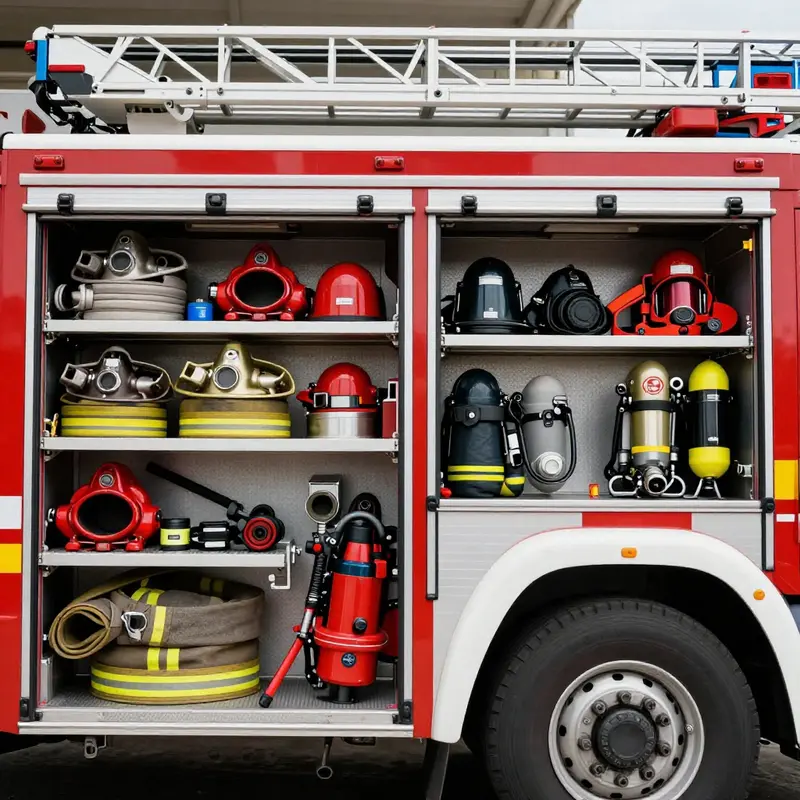
The heart of many apparatus is the pump. Mounted in the chassis, the pump converts engine power into a forceful, controllable flow of water. Pumps allow crews to tap an onboard tank or connect to an external source such as a hydrant. The pump panel houses gauges, valves, and controls so a trained operator can set pressure and flow for one or multiple lines. Pressure must be steady: too low and hoses deliver insufficient water; too high and hoses or nozzles risk damage or injury. From the pump, water moves into attack lines—hoses of various diameters designed for specific purposes.
Hoses and nozzles are deceptively simple but essential. Attack lines are typically lighter, flexible hoses that firefighters carry into structures to fight flames at close range. Supply lines are larger diameter hoses used to move huge volumes of water from hydrants to the pump. A fire truck often carries hose packs preconnected to the pump so crews can deploy quickly; these preconnects reduce the time spent on setup and allow for an immediate initial attack. Nozzles fit on hose tips and let firefighters shape the stream, switching between narrow, concentrated jets for reach and penetrating power, or wide fog patterns for cooling and steam control.
For situations demanding massive flow, master streams and deck guns come into play. These are high-capacity devices mounted on the truck or operated from the ground to deliver thousands of liters per minute. Master streams are valuable when attacking large exterior fires, protecting exposures, or creating a protective water curtain. They free personnel from having to hold heavy charged lines and provide sustained flow that would be impossible with hand-held hoses.
While water and pressure are vital, tools and hand equipment enable access and rescue. Fire trucks carry a curated inventory of axes, Halligan bars, pry tools, and sledgehammers. The Halligan in particular is a multipurpose forcible-entry tool that, when paired with an axe, allows firefighters to breach doors, pry window frames, and create openings quickly. Circular saws and hydraulic cutters handle metal and composite materials, indispensable during vehicle extrications or building penetrations.
Hydraulic rescue tools—known colloquially as the “jaws of life”—are mounted on many trucks. These powered spreaders, cutters, and rams can separate vehicle roofs, push apart crushed structures, and free trapped victims. They are light years faster and safer than purely mechanical methods when time is critical. Complementing cutting tools are ventilation fans and smoke ejectors. Proper ventilation clears toxic gases and smoke, improves visibility, and reduces heat. Portable lighting systems and thermal imaging cameras further assist by revealing hotspots, locating victims, and guiding crews through obscured interiors.
A fire truck’s storage philosophy reflects a philosophy of redundancy and quick access. Compartment layouts are planned so the most-needed tools are reachable within seconds. Equipment is often mounted on slide trays or quick-release brackets. Items are labeled and stowed in logical sequences so crews can operate by muscle memory in low-visibility, high-stress conditions. Storage also includes breathing apparatus lockers. Self-contained breathing apparatus (SCBA) bottles and masks are kept ready so personnel can enter hazardous atmospheres without delay.
Safety and crew protection extend into the truck’s finishes and external features. Paint and reflective striping improve daytime visibility and dramatically increase recognition at night. Materials used on surfaces and compartments resist heat, abrasion, and the corrosive effects of firefighting chemicals. Warning lighting systems and electronic sirens ensure the vehicle can transverse traffic quickly and warn pedestrians. Modern apparatus often include scene lighting that illuminates work areas without blinding oncoming traffic, allowing firefighters to operate safely once they arrive.
Communication and command capabilities are integrated into the cab and body. Radios, mobile data terminals, and incident command boards allow crews to receive dispatch information, map hydrants, and access building preplans. Some trucks include onboard computers linked to dispatch centers for real-time data exchange. These systems help coordinate multi-unit responses, track resources, and document actions taken during an incident. Intercoms and passenger-side controls let the officer relay instructions and operate lights or pumps without leaving the cab.
Cab design itself is a piece of safety engineering. Modern cabs provide secure, ergonomically arranged seating with SCBA storage either on the seats or in compartments behind them. Quick-don straps and integrated harnesses allow firefighters to remain belted during travel and quickly put on gear upon arrival. Climate control, noise dampening, and vibration reduction all contribute to reducing crew fatigue and preserving readiness.
Beyond the immediate firefighting suite, many trucks carry specialized equipment for diverse missions. Rescue trucks are loaded with shoring materials, rope systems, confined-space gear, and extrication tools for complex technical rescues. Wildland units carry compact pumps, slip-on tanks, and all-terrain capabilities to fight brush and forest fires. Airport firefighting vehicles feature foam systems and crash-resistant pumps designed to combat fuel and chemical fires. Departments choose apparatus mixes based on local risks—urban centers favor ladder-equipped trucks for vertical rescue, while rural districts may opt for tankers with large onboard water supplies.
Fire trucks also incorporate systems for hazardous materials and medical support. Some apparatus include basic decontamination showers, spill containment equipment, and air-monitoring devices to detect toxic atmospheres. Many trucks carry advanced medical kits and stretchers to provide immediate care before EMS arrives. This multipurpose capability allows firefighters to stabilize patients and manage hazards simultaneously.
Maintenance and testing features are built into the apparatus. Pump test ports, built-in foam proportioners, and easy-access valves allow routine checks and rapid troubleshooting. The reliability of these systems is critical: a pump failure at a major incident can endanger lives and property. Departments schedule regular inspections and preventive maintenance to ensure hoses, pumps, and tools perform when needed.
Design choices also reflect considerations of crew size and local infrastructure. Compact rescue-pumper designs combine the pump, a modest water tank, and a range of tools into a single unit ideal for departments with constrained budgets or narrow streets. Larger ladder trucks include heavy-duty aerial systems, outriggers for stability, and extensive storage for long ladders and rescue gear. Each configuration balances weight, capacity, and mobility.
Ergonomics and human factors play a quiet but critical role. Handles, step heights, and the deployment angle of ladders are engineered so firefighters can operate quickly with minimal strain. Controls at the pump panel are arranged for intuitive use under stress. Lighting and color coding reduce the chance of errors during night operations. These design choices translate to seconds saved—often the difference between life and death.
Finally, the modern fire truck is evolving with technology. Integrated vehicle telemetry allows fleet managers to monitor vehicle health remotely. Night-vision and thermal cameras become more compact and affordable, bringing advanced sensing to every crew. Foam systems and water-saving devices improve extinguishment efficiency. Even as materials and electronics evolve, the underlying principle remains unchanged: to equip crews with reliable, accessible tools so they can control hazards and rescue people quickly.
For a clear visual summary of the components and anatomy of a fire truck, consult an illustrated breakdown that maps these systems on a single apparatus: https://www.fireengineering.com/articles/the-anatomy-of-a-fire-truck-infographic. If you’d like to explore broader articles, maintenance tips, and community stories about these vehicles, the firetruck.space blog offers additional insights.
Understanding what is inside a fire truck reveals why these vehicles are central to emergency response. Beyond hoses and ladders, they are rolling toolboxes, mobile command posts, and life-support platforms. Each element—pump, hose, tool, or communication system—interacts to form a cohesive capability ready for the unpredictable demands of firefighting and rescue.
Lifelines on Wheels: The Transformative Role of Modern Fire Trucks in Emergency Response
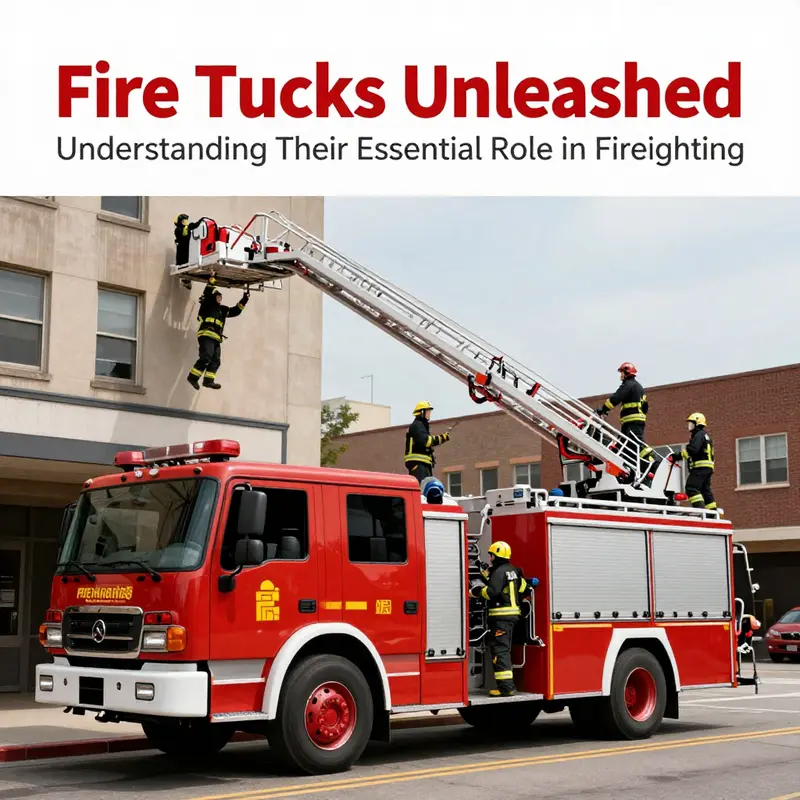
The fire truck is more than a single tool or a symbol of emergency response; it is a moving, living platform that coordinates people, equipment, and strategy at the moment a call goes out. In the choreography of a modern incident, the fire engine often arrives first to establish a water supply, while the fire truck follows with a different set of capabilities that expand the response beyond suppression into rescue, access, and complex incident management. This distinction matters because it reframes a fire department’s approach to a blaze or a multifaceted emergency. The truck’s primary contribution is not merely to prop up a ladder but to serve as a mobile command post, a portable workshop, and a bridge to the people who need help most. It brings together the human element—trained personnel—with the tangible tools that keep them safe and effective: hoses, breathing apparatus, medical gear, cutting and lifting instruments, and the digital lifelines of modern communication systems. In this light, a fire truck is a force multiplier that extends the reach of the initial engine and shapes the trajectory of the entire response.
The distinction between fire engine and fire truck, while simple in theory, has real consequences on the ground. The engine is the water-delivery workhorse, engineered to pump large volumes of water through hoses and into the heart of the fire. It bridges hydrants or other water sources, sustaining a steady stream that can suppress heat, overpower flames, and prevent rapid spread. The truck, by contrast, is designed to gain vertical and horizontal access to the scene, to maneuver through damaged spaces, and to create safe pathways for occupants and responders. In many situations, this duality is what makes the difference between a chaotic scene and a controlled operation. The modern truck is engineered to operate inside and outside the hazard zone, allowing crews to reach upper floors, search for victims, and ventilate structures in ways that would be impractical or dangerous from a ground-level ladder.
A central feature that elevates the truck’s role is its high-reach apparatus. When a building towers over the street, the extendable ladder and its associated platform become a lifeline for both firefighters and civilians. Early versions offered a straightforward ladder to reach a single floor; today’s high-reach apparatus are sophisticated, capable of extending in multiple sections with synchronized controls. They serve not only as a means of rising to the right level but also as a platform for safe, controlled output. The best of these platforms function like a transformer on the fireground: a multi-section arm that can be deployed and retracted with precision to position firefighters where they are most needed while maintaining a safe distance from the danger at ground level. In the most advanced configurations, such a platform can reach significant heights, enabling a line of water to strike a fire from outside the most volatile zones and from angles that offer superior visibility for assessing structure integrity. This combination of reach and range transforms tactic, allowing crews to attack with accuracy while preserving their own safety.
Beyond the ladder, the typical fire truck carries a broad suite of essential resources. Standard equipment includes not only hoses and nozzles but also breathing apparatus, lighting, and rugged communication systems that keep teams in constant contact with the incident commander and with EMS units. Onboard medical supplies and life-support gear ensure that responders can begin triage and stabilize patients even before arrival at a hospital. Hydraulic rescue tools, often referred to as the jaws of life, enable extrication from crushed vehicles or collapsed structures. These tools are not mere add-ons; they define a critical capability for preserving life in rapidly evolving scenarios. In addition, many trucks are outfitted with tools for forced entry, cutting, ventilation, and stabilization, all of which support swift, decisive action when seconds matter. The vehicle becomes a portable workshop where crews can perform essential tasks on site, from reorganizing equipment to engineering temporary solutions that keep the scene stable as a longer-term response unfolds.
The most striking demonstration of a modern truck’s capability is not simply its ladder length but its ability to strike from a distance with high precision. The high-reach platform, in particular, changes the dynamics of high-rise incidents. It is not unusual to see a fully articulated arm extend toward the upper floors of a building, with firefighters maintaining positions on the platform while streams of water are delivered through a controlled nozzle. This arrangement keeps crews outside the immediate danger zone and allows for safer rescues, controlled ventilation, and more measured interior operations. The reach and fluidity of the platform enable a more deliberate approach to a fire, where crews can observe fire behavior from above, coordinate with ground crews, and execute a rescue plan with fewer improvisations in the most perilous parts of the structure. The horizontal water range associated with such platforms—comparable to the distance a ball travels across a football field—provides a strategic advantage in pushing back flames from exterior walls, Windows, and openings, thereby protecting both occupants and first responders as interior operations ramp up.
The integration of the truck into incident command is another crucial dimension of its contribution. Firefighting is rarely a single-branch effort; it is a coordinated operation that blends suppression, rescue, medical care, and recovery. A modern truck acts as a force multiplier by delivering specialized personnel, equipment, and situational awareness to the scene. Its onboard computers, radios, and data-sharing capabilities allow it to feed real-time information into the command system, supporting rapid decisions about ventilation, entry points, and staging zones. As incidents grow in complexity, the truck helps unify different units—engine crews, EMS teams, and rescue specialists—into a coherent response. This alignment reduces confusion, speeds up critical tasks, and enhances safety for both civilians and responders. The effect is a smoother flow of information and resources that makes the overall response more efficient and predictable, even in the face of uncertainty.
To appreciate the breadth of a modern fire truck’s involvement, consider the broader field of high-reach, multi-functional platforms. In some advanced configurations, a 65-meter, fully articulated, large-span aerial platform stands at the frontier of firefighting technology. Such a system can extend through six folding sections and one telescoping section, reaching heights that were once deemed inaccessible. The sheer reach enables operation from outside the most dangerous zones, allowing attackers to stabilize and extinguish fires on upper levels while preserving the integrity of the structure and providing safer avenues for occupants to evacuate or be rescued. The design supports both vertical and horizontal maneuvering, opening lines of attack in façades with limited ground access and enabling fire control from angles that optimize the trajectory of water and the placement of ventilation efforts. The horizontal spray distance, often described as spanning multiple football-field lengths, demonstrates how modern platforms extend a responder’s reach, turning what would be a dangerous reach into a controlled, measured application of suppressive energy.
The implications of this technology reach beyond a single incident. Fire departments reorganize training to reflect the operational realities of high-reach systems, teaching crews how to deploy the platform swiftly, coordinate with ground teams, and maintain safety while working from elevated positions. Maintenance becomes a central discipline, as the same systems that extend capability also demand rigorous inspection, testing, and preventive care. Skilled operators must be proficient not only in steering and positioning but also in interpreting structural behavior and weather-related factors that influence stability and performance. In practice, this means continuous learning, simulation exercises, and a culture of readiness that keeps the entire fleet prepared for the unexpected.
Technology and tactics aside, the truck’s contribution also embodies a public-safety philosophy: rapid, reliable access to people in danger, and rapid, reliable delivery of resources where they are most needed. A modern fleet is a system, with the truck acting as a key node in a wider network that includes water supply infrastructure, emergency medical services, and the logistics discipline that keeps a city resilient in the face of disasters. In this sense, the dispatch of a fire truck signals not just a response to a flame, but a structured, intelligent approach to incident management. It says that the community values quick access, coordinated action, and the protection of both life and property through well-designed mobility and capability.
As municipalities contemplate the evolution of their fleets, they often weigh procurement decisions against budgetary constraints and the anticipated needs of their communities. The discussion frequently turns toward the availability of used and new platforms, signaling the need to balance capability with cost. For those exploring options, a practical entry point is to consider capabilities in relation to the kinds of emergencies most likely to arise in a given area. A fleet that emphasizes high-rise response will weight its investments toward extended reach, stabilization tools, and ventilation methods, while a community with frequent vehicle accidents and confined spaces may prioritize hydraulic rescue tools and rapid access gear. Integrating a truck within a broader system—where engines deliver water and responders move swiftly between roles—produces a cohesive, adaptable response that can be scaled to fit local realities. When a department contemplates refreshing its lineup, it may find itself guided by conversations around availability, scheduling, maintenance, and the ongoing training required to harness the full potential of these sophisticated platforms. In such cases, the practical question becomes not only what can be bought, but how it will be operated, maintained, and integrated with the rest of the emergency response ecosystem. The goal is a fleet that can adapt to both the familiar and the unforeseen, a fleet that remains a reliable anchor amid the shifting tides of any incident. External resource: for a deeper look at the cutting-edge aerial platforms that are reshaping firefighting, see the external article on the 65-meter aerial platform and its transformative impact on fire response at https://www.sohu.com/a/742908176_121078.
Final thoughts
Fire trucks are a testament to human ingenuity and commitment to safety. In understanding their purpose, distinguishing between fire trucks and fire engines, recognizing their vital equipment, and acknowledging their contributions to modern firefighting, we can truly appreciate the role they play in our communities. For enthusiasts and professionals alike, these vehicles not only represent safety but embody the spirit of community service and readiness to respond in our times of need. They are not merely vehicles; they are vital lifelines in emergencies, reminding us of the bravery and dedication of those behind the wheel.