
Fire trucks are iconic symbols of courage and emergency response, often easily recognized by their vibrant red hue. But why red? The answer is a tapestry woven from historical whims, economic factors, cultural values, and modern-day debates on visibility. From the impactful decisions of early fire brigades to modern studies suggesting alternative colors, each chapter of this article dives deep into the reasons behind this striking choice. As firetruck enthusiasts, aspiring firefighters, and emergency services professionals, understanding this legacy enhances our appreciation for these brave vehicles. Let’s delve into the historical, economic, cultural, and visibility narratives that explain why fire trucks are red and why this color remains engrained in our minds and society.
The Red Signal: Unpacking the Deep History Behind Fire TrucK Color and Civic Identity
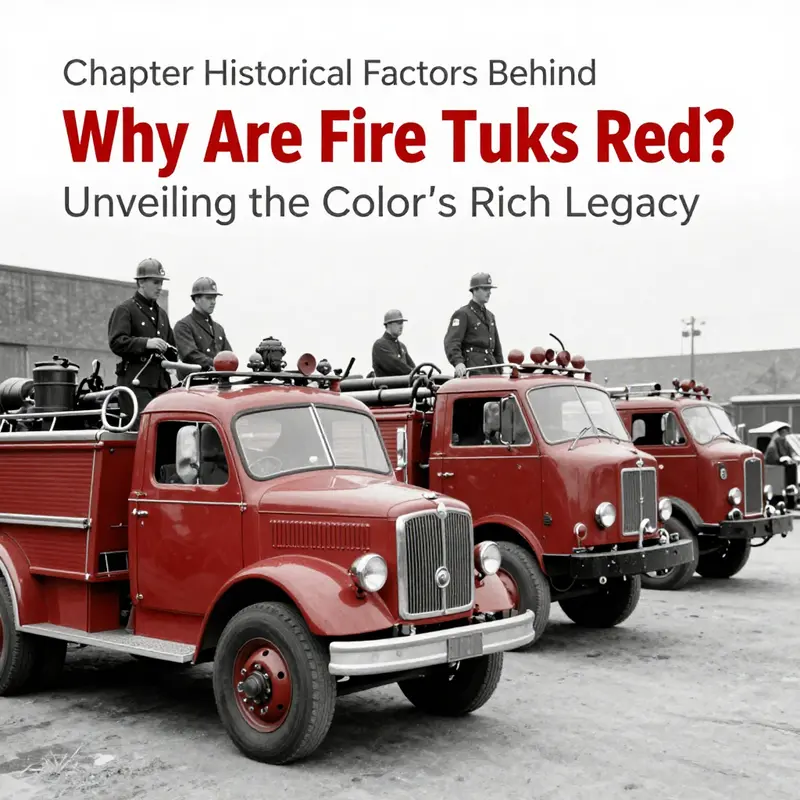
Color is rarely merely a cosmetic choice on a fire engine. It is a signal, a memory, and in many places a declaration that a city or a town is ready to respond to danger. The question, “why are fire trucks red?” invites a layered answer that threads practicality, economy, competition, and culture into a single hue that has endured for more than a century. In tracing these threads, we move beyond the surface of color and into the social fabric of emergency response. The origin story that most often finds purchase starts not with a strategic study of visibility but with a moment when safety equipment, urban pride, and the economics of pigment intersected in the early days of organized firefighting. It is tempting to imagine a single decisive factor, a neat experimental result, or a decisive policy shift. Yet the history of red in fire apparatus is better understood as a cascade of reasons that reinforced one another until red became the default emblem of alarm, resilience, and service.
In older eras, when fire departments were still forming their identities in many towns and cities, the color decision often followed the most practical path. Large metal vehicles, built to withstand the punishment of daily use and a rough road network, required durable finishes. In the late nineteenth and early twentieth centuries, pigments were expensive, and the cost of paint was a significant line item in municipal budgets. Red pigments, for reasons tied to the chemistry and supply chains of the time, were among the more affordable options for coating heavy equipment. The decision to paint a new apparatus in red was frequently a straightforward budgeting choice. It was not simply about visibility in daylight; it was about getting a long-lasting finish that could resist corrosion, weather, and the wear of a working vehicle. The practicality of red made it an attractive default in a period when departments stretched every dollar and yet needed to project readiness on every street corner.
Alongside economics, a mood of civic competition infused the color choice with symbolic meaning. In many towns, volunteer fire brigades were part of a broader contest for reputation and prestige. The bright color of a brigade’s apparatus became a visual banner of pride and competence. Red stood out at a distance, creating a powerful silhouette against the urban landscape, and it carried a message: this group is ready, and this group is present. In places where municipal color schemes were evolving, bold reds could help a department distinguish itself from other mounted services and everyday traffic. The color carried a social utility as well as a practical one. To a citizen who needed help during a crisis, a red engine was an unmistakable beacon, a signal that help was near. The historical record tracks these competing narratives of pride and public service, and red consistently appears as a symbol around which communities could rally.
Cultural associations long linked red with danger, urgency, and immediate action. The hue appeared in firefighting paraphernalia, warning signs, and emergency devices across many sectors. The color’s psychological resonance gave it a natural fit for vehicles meant to interrupt the normal flow of traffic and demand attention. This resonance helped implant red into the public imagination as the color of emergency response. Over time, the public began to associate red with firefighters not merely as a practical choice but as a social identity. The color became a language through which communities spoke about courage, readiness, and service. Even as color science evolved, red retained its iconic status because the public recognized and trusted it as a signal of help arriving in a moment of peril.
Yet, the history of red is not a simple record of what was easiest or most visible. It is also a story about how color choices become entrenched through institutional memory. Once a department settled on red, the decision echoed within its ranks. New recruits learned to identify with the color as part of a broader tradition. The public came to expect red on fire trucks, and as long as the color continued to convey the right associations—speed, dependability, and courage—departments faced little external pressure to change. When a city’s color palette was revised, the change was often met with public resistance. The red engine had become more than a tool; it had become a symbol of a community’s readiness to confront danger. In this way, tradition itself acted as a force reinforcing the color choice across generations.
Moving into the mid-twentieth century, the question of visibility found new angles. The rise of standardized fleets, the expansion of municipal services, and the increasing complexity of traffic signaling all intensified concerns about how a fire apparatus should appear on the street. The practical challenge was not only to be seen but to be distinguished quickly from a wide array of moving objects. Early studies and field experiences suggested that certain color choices could improve recognition in specific lighting conditions. However, the evidence was not uniform, and the search for the “best” color did not yield a single obvious winner. In many regions, the red fire truck endured in part because it was familiar and part of a longer tradition that stakeholders valued. Visibility remained a factor to be balanced with budget, historical identity, and the expectations of the public, who had grown up with the sight of a red engine rumbling toward an alarm.
In contemporary discussions about color and safety, research has pointed to a nuanced view of visibility. Some studies indicate that lime-yellow or fluorescent lime-green shades can be spotted more quickly in low light or fog, particularly at a distance. This complexity challenges a purely functional defense of red as the optimal color. It is one thing to claim that a color provides better detection under certain conditions, and another to claim that a color should be universal across all contexts. The modern fire service has to consider not only raw visibility but also the cost of repainting fleets, the impact on brand identity, and the expectations of communities accustomed to a traditional look. The tension between evidence-based practice and cultural symbolism is not easily resolved. It is a quiet drama that plays out in fleet management meetings, community outreach events, and the everyday work of firefighters who must navigate both traffic and tradition.
Even as some departments experiment with alternative hues or reflective coatings, red remains the most visible reminder of the historical arc that has shaped emergency response in many places. The persistence of red is less a stubborn refusal to adapt than an artifacts-based continuity. It reflects how institutions absorb and preserve color-coded meanings that have proven useful far beyond their original rationale. A red engine has become a moving emblem of emergency service that people recognize instinctively, which in turn supports trust and legitimacy in crises. This dynamic — where a practical decision becomes a cultural constant — underscores why visual choices in public fleets are rarely neutral. When a city looks at its fire apparatus, it is looking at a story: a story of budgets navigated, of neighborhoods protected, of volunteer brigades proving their mettle, and of a public that seeks reassurance in a familiar, commanding color.
To understand how these stories survive into the present, it helps to consider the channels through which color meanings spread. Public signage, media portrayals of firefighters, and the branding of emergency services all contribute to a shared visual language. In many places, the red engine appears in films, news reports, and civic commemorations, reinforcing the association between red and readiness. Public recognition is a form of social currency. When residents see a red engine, they summon a set of expectations about speed, competence, and solidarity. This recognition is not purely aesthetic; it translates into a sense of security at crucial moments. The color becomes less a question of optics and more a social asset, a quick shorthand for trust during a moment of fear.
Of course, the story is not uniform across the globe. Different countries and jurisdictions have experimented with color schemes and markings to suit local climates, vegetation, and traffic patterns. In some regions, transport networks and regulatory guidelines made alternative colors more practical or cost-effective. These experiments are not mere curiosities; they illuminate how color decisions sit at the intersection of function, policy, and culture. They remind us that what works in one place may be less effective in another, and that color choices are always embedded within a particular ecosystem of operations, budgets, and public expectations. Yet even in places that experiment with yellow or lime hues, the red engine often remains a recognizable benchmark. Its constancy offers a sense of continuity as fleets change around it, a stabilizing thread in an ongoing evolution of technology and procedure.
To bring these strands into a single view, the modern question becomes not simply whether red is the most visible color, but what red has represented across generations. It has stood for courage under pressure, for a city’s readiness to respond, and for the bravery of volunteers who gave their time to protect neighbors. It has signaled a call to action with a visual clarity that can be understood across language barriers and cultural differences. The color’s endurance is a testimony to the way communities shape and sustain their public services. It is a reminder that in the choreography of an urban emergency, color is not a decorative afterthought but a component of the choreography itself. The visible shorthand of red carries with it expectations about speed, competence, and solidarity, and those expectations can calm as well as alarm, reassure as well as warn.
In reflecting on these layers, it is useful to recognize how historical choices continue to echo into policy and practice. When a department contemplates repainting or restyling a fleet, it weighs the cost against the value of continuity with a widely recognized symbol. When the public discusses fire safety, the color of the fire trucks is often part of the mental map of danger and reassurance. The decision is rarely purely aesthetic; it sits at the intersection of memory, identity, and everyday life. This is how a color, chosen more than a century ago for practical reasons, becomes a living cultural artifact that still informs how communities interpret danger and trust the people who respond to it. The story of red thus becomes a narrative about the resilience of public institutions—their capacity to honor history while continuing to serve in a changing world.
Our tour through the historical landscape of fire-truck color would be incomplete without acknowledging a core thread: the role of professional standards and official guidelines in shaping practice. National and international safety organizations have long curated norms that keep fleets legible and last longer on the road. These guidelines do not erase local tradition, but they provide a framework within which departments can operate when facing difficult choices. For readers who want to explore how official standards translate into day-to-day color decisions, resources and guidance from safety and fire-protection bodies offer a map of the long arc from pigment chemistry to urban safety. The balance between tradition and evidence-based practice remains a live conversation in many communities, where color is discussed alongside training, equipment, and response time.
In the end, the persistent question is not simply about the physics of light or the chemistry of paint. It is about what a color conveys to a city in distress and about how a public institution communicates its readiness to help. The red fire engine travels more than asphalt; it travels through memory, trust, and civic belonging. When a town assembles its firefighting fleet, the shade chosen is a signal to residents that safety is a shared responsibility and that the people who serve are part of the community’s ongoing story. The color thus becomes a hinge between past and present, between budget lines and bold declarations of service, and between a street’s ordinary rhythm and the sudden, urgent pulse of an emergency. The history of red, in this light, reveals as much about public life as it does about paint: a continuous negotiation of visibility, identity, and meaning in the moments when help is most needed.
For readers who want to continue exploring the arc from pigment to policy, practical fleet considerations, and the social life of emergency vehicles, a broader look at the current state of fire apparatus and their procurement journeys can provide a practical complement to the historical narrative. From modernization efforts to the practical realities of maintaining a uniform fleet under budget constraints, the color question remains a lens through which we can view how communities organize, prioritize, and remember. As you reflect on why fire trucks are red in your own city or town, consider not only the historical accident but the enduring logic of visibility, tradition, and trust that continues to shape public safety on every street corner. And if you are curious about how modern fleets are evolving in practice, you may find it enlightening to examine contemporary discussions on fleet customization and procurement strategies available in related industry resources, including a comprehensive overview of current market offerings at fire-truck-focused platforms.
For readers seeking a direct entry point to ongoing fleet discussions, one accessible path is to explore a catalog of available vehicles and engineering perspectives that sit at the intersection of tradition and innovation. You can learn more about the broader market and the evolving landscape of fire apparatus by visiting a section dedicated to fire-trucks for sale, which offers a snapshot of how departments balance legacy colors with new design approaches. This exploration can deepen understanding of how a color choice, once driven by pigment and pride, now sits among a wider set of considerations that define public safety fleets today. fire-trucks-for-sale
In the final accounting, the red fire truck is not merely a color but a narrative line that connects centuries of practical decision-making, community identity, and the ever-present demand for prompt, reliable response in times of danger. Its persistence invites us to ask larger questions about how public services carry forward the best parts of their history while also adapting to new evidence and evolving urban landscapes. The answer to why fire trucks are red, then, lies in a layered résumé of economics and identity, of symbolic urgency and institutional memory—a story painted in a shade that has become synonymous with readiness, service, and the immediate presence of care when it is needed most. The color endures because it works in multiple registers: it works on the ground as a recognizable signal to drivers and pedestrians; it works in the public imagination as a symbol of protection; and it works in the archives as a reminder of a time when communities defined themselves through the bold assertion of preparedness. And as technologies, safety research, and urban needs continue to evolve, that color will keep moving through time, carrying with it the weight of history and the promise of help on demand.
External reference for further context and standards: https://www.nfpa.org/
Economic Implications of Why Fire Trucks Are Red
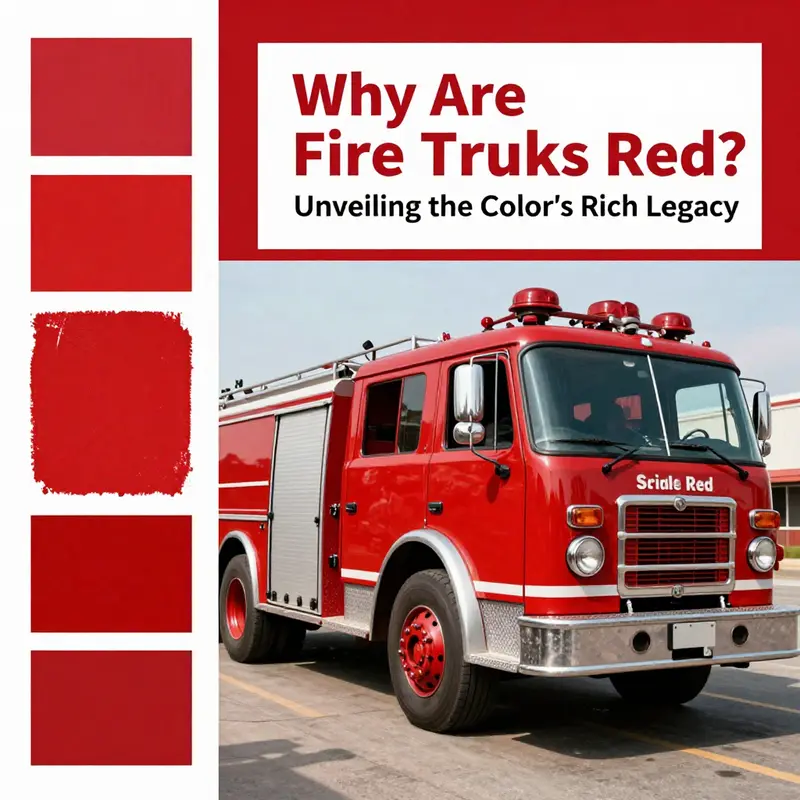
When we ask why fire trucks are red, the instinctive answer tends to trace to visibility, tradition, and a dash of human psychology. Yet beneath those surface explanations lies a more intricate economic story. Color is not merely an aesthetic choice; it interacts with procurement budgets, fleet management strategies, insurance dynamics, and the public’s willingness to support emergency services. The red that adorns fire apparatus is, in many ways, a case study in how a single design decision travels through the machinery of government, philanthropy, and industry, shaping costs, risks, and the very perception of safety in a community. In this sense, understanding the economics of red extends beyond firefighting technique and enters the realm of public finance, risk management, and the long arc of organizational identity. The color matters because it becomes part of a broader system that translates a moment of danger into a predictable pattern of costs and benefits, a pattern that communities rely on when they choose to invest in protection, preparedness, and resilience.
Historically, red’s ascent as the color of choice for fire apparatus sits at the crossroads of visibility and practicality. In the early part of the twentieth century, many fleets faced a harsh calculus: paint was a material commodity with variable availability and price, and large metal vehicles demanded durable finishes that could withstand corrosive elements, weather, and the daily wear of emergency response. Red pigments, at least in certain eras and markets, offered a favorable blend of affordability and durability. The economics of paint—how long a color lasts on a heavy vehicle, how often repainting is necessary, and how maintenance cycles align with fleet replacements—often trumped any abstract claim about aesthetics. As departments standardized on red, production lines adapted, suppliers optimized, and the market learned to expect red as the default. What began as a practical decision gradually hardened into a standard that signaled reliability, authority, and readiness. The long-run economic effect of this standardization is not merely a matter of color preference; it is a matter of supply chain discipline, inventory planning, and the economies of scale that come from a mass market adaptation.
From a safety perspective, red offers a perceived advantage rooted in human factors. Red has stood for urgency in public life for more than a century, and that cultural association brings real communication value on the street. When a driver looks up and sees the familiar blaze of red, reaction times can be faster because the eye and brain have learned to recognize the silhouette and the menace of that color in traffic patterns, especially in daylight and near intersections. This recognition translates, in theory, into shorter intervals between detection and action, potentially reducing the duration of a fire attack and limiting the spread of damage. But the modern economics of fire service suggests that visual salience is only part of the equation. The broader cost-benefit calculus includes the downstream effects of faster response: less property damage, lower disruption to local commerce, and fewer casualties, all of which carry implicit economic benefits for a community. Fewer and less severe losses can translate into lower insurance premiums, smaller claims, and a quicker return to normal economic activity after an incident. In this way, color choice becomes part of a municipal risk management strategy, where the color of a vehicle is one variable among many in the social calculus of resilience.
A key economic thread in this narrative is the impact of color on property loss and insurance dynamics. When a fire truck is easier to identify and to respond to, the chain of events that follows a call—alarm, mobilization, arrival, and containment—plays out with more confidence. Property owners, insurers, and local governments all have a stake in these dynamics. If response times improve even modestly, the expected cost of fire-related losses can decline. Property owners may file smaller claims, and insurers may adjust their risk models for communities that standardize on highly recognizable, red emergency vehicles. The economic logic here is cautious, not sensational: marginal improvements in timeliness compound over many incidents, yielding measurable savings in the aggregate. These savings, while sometimes difficult to isolate on a single incident, accumulate when evaluated across years and across the entire fleet. Public budgets, in turn, reflect these expected savings in more favorable cost-benefit calculations for prevention, staffing, and fleet modernization.
Yet the urban economics of color is not only about the color on the side of the vehicle. It also embraces the realities of standardized manufacturing and procurement. The persistence of red across multiple departments has created a robust, repeatable demand signal for manufacturers. Standardization lowers unit costs for the emergency vehicle category: suppliers can optimize materials, streamline painting processes, and negotiate better terms for bulk pigments and coatings. In turn, these efficiencies can reduce the upfront capital expenditure required to equip a new unit and the ongoing upkeep of an entire fleet. The budgeting logic, therefore, rewards the color that most fleets already trust to perform reliably over the vehicle’s lifespan. The continuity of color reduces the complexity of fleet management: maintenance crews become familiar with corrosion resistance requirements, repaint cycles, and warranty structures tied to the finish. While modern color science might advocate for lime-yellow in terms of visibility under certain conditions, the economic inertia created by decades of red usage means that any significant shift would require a deliberate, multi-year investment plan, a thorough cost-benefit analysis, and, crucially, broad political and public buy-in.
The cost of paint and materials, once a foundational element of the argument for red, remains a practical tie between color and economy. Red paints, in the era of heavy metal bodies, often represented a favorable balance of price and durability. While today’s coatings have evolved with advances in nanotechnology and protective finishes, the price gap between red and other colors for a modern fleet is not the sole driver of the decision. Instead, the total ownership cost—how long the finish lasts between repaints, how much labor the repaint requires, how long a vehicle spends out of service for maintenance, and how the color choice affects resale value—becomes the more meaningful metric. Wide fleets can realize meaningful savings through consistent color choices because repaint intervals are predictable, and the procurement pipeline aligns with a steerer’s calendar for decommissioning and replacement. In parallel, the public’s recognition of red reinforces a brand-like fidelity; residents intimately understand what a red fire vehicle represents, and that recognition translates into a smoother acceptance of budgetary requests from fire departments in the annual appropriation cycle.
Another economic thread concerns community engagement and the social license to operate. Red, as a symbol of emergency response, carries intangible value that translates into practical outcomes. Public trust—built through visible, familiar sightlines of red engines arriving at a scene—supports fundraising for equipment, training programs, and capital campaigns. A community that associates red with reliability tends to respond more enthusiastically to appeals for volunteers, for additional apparatus, and for investments in safety education. Those social funds, while not always captured in a balance sheet, enable departments to secure grants, solicit in-kind support, and mobilize citizen energy for safety campaigns. In this sense, red becomes a form of soft capital. When a color anchors a city’s or town’s perception of protection, it reduces the frictions involved in public investment and fosters social cohesion around emergency preparedness. The economic advantage here is diffuse and long-term, but as any public official will attest, such social capital can lower transactional costs in future policy and capital decisions.
Furthermore, the global market for emergency vehicles has learned to prize predictability and reliability in color conventions. A consistent color across fleets means standardized training for drivers and responders, easier recognition by nearby agencies during mutual aid, and smoother joint operations in complex incidents. This standardization reduces the risk of misidentification under stress, a factor that can compound costs in high-pressure scenarios. The procurement ecosystem—ranging from municipal fleets to regional consortia—benefits when color remains a constant. A predictable color palette supports maintenance protocols, spare-part inventories, and service cycles; and suppliers, recognizing this demand stability, organize production lines with fewer disruptions. The economic story here is about risk reduction and the certainty that comes with conventional practice. Even when newer color science suggests a different hue might improve visibility in some environments, the cost of changing decades of infrastructure, signage, and training often outweighs the marginal gains in detection on a foggy highway.
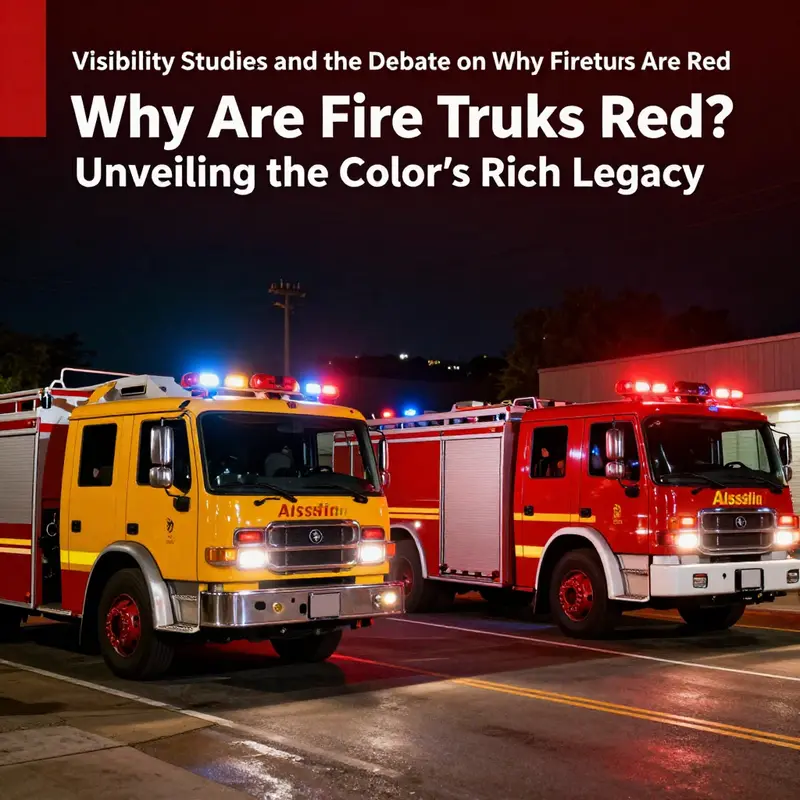
The discussion would be incomplete without addressing the nuanced, if contested, science of visibility. Modern research challenges the idea that red is the most legible color in every situation. Studies have shown that lime-yellow hues can be detected more quickly, especially in low light and through smoke, languages of perception that matter when a truck must be found in a crowded scene. The economic implications of this finding are not straightforward. A shift to a lime-yellow palette would require retooling paint suppliers, repainting entire fleets, and altering public signage, branding, and maintenance schedules. The capital expenditure required for such a transition is substantial, and the payback—measured in faster recognition and shorter response times—must be weighed against disruption to ongoing operations and the opportunity costs of fleet modernization elsewhere. In practice, many departments decide that the status quo provides enough reliability and public trust to justify the continued red; others conduct pilot programs, measuring real-world response improvements against the costs of conversion. The bottom line is that color selection sits at the intersection of empirical evidence and institutional habit. Economically, this means adopting a color is as much a decision about risk appetite and organizational inertia as it is about the physics of light.
Procurement narratives illuminate another facet of the economics of red. When departments plan a fleet upgrade, they face a portfolio decision: replace now with the least disruption to service, or pace replacements over several years to align with budget cycles and depreciation schedules. In such calculations, color is a fixed element of the fleet’s identity and a signal to the market that drives supplier relationships. The consistency of red across many agencies supports a stable market for used and new apparatus, with predictable resale values and clearer maintenance histories. Those resale values, though subject to depreciation and market demand, contribute to the total cost of ownership. A fleet with a well-documented red finish and a proven maintenance record can attract higher resale offers and faster turnover, thereby reducing the net cost of ownership over the vehicle’s life. Conversely, a sudden shift in color policy could depress resale value temporarily as buyers weigh the compatibility of a mismatched hue with their own fleet standards. In short, the color choice circulates through the entire lifecycle of emergency equipment, influencing acquisition timing, depreciation profiles, and the speed with which a department can refresh its capacity.
Within this economic mosaic, the role of the online marketplace for equipment—where municipalities, fire districts, and volunteer groups shop for appropriate apparatus and components—also comes into relief. The availability of red-equipped fleets, the cadence of listings, and the terms of sale all shape procurement outcomes. For readers curious about how markets respond to color conventions, the sourcing landscape offers a practical reflection of the economic weight of tradition. The emphasis on red in listings communicates stability and a sense of continuity that many buyers prize when aligning with legacy departments. This is not merely a marketing cue; it is a signal about risk, reliability, and the assurance that a given vehicle has stood up to the expectations built into decades of public service. For those who want to explore current market options, the marketplace at fire-trucks-for-sale provides a window into how color, condition, and price cohabit in the real world of emergency-vehicle procurement. fire-trucks-for-sale helps illustrate how color associations translate into market dynamics, and how buyers weigh the costs and benefits of red when evaluating a fleet’s readiness and its financial footprint.
No discussion of color and economics is complete without looking to the broader question of what happens if a jurisdiction contemplates a color change. The decision to alter a long-standing convention entails more than repainting schedules and paint budgets. It invites a reexamination of community identity, brand consistency, and the public’s tolerance for disruption during a critical period of adaptation. A color change can become a political economy issue, provoking debates over symbolism, visibility science, and the competing priorities of safety and cost. In these moments, the economic analysis must incorporate not only the direct costs of painting and logistics but also the indirect effects on morale, volunteer recruitment, and the willingness of taxpayers to support risk reduction investments. The calculus becomes more complicated when multiple departments with diverse histories must harmonize their policies under a common standard, but the potential payoff—more precise visibility in certain conditions and a refreshed sense of mission—may justify the investment over the long horizon. The balance between financial prudence and cultural significance is where the economics of color becomes a study in governance as much as in pigment chemistry.
As we pull the threads together, the practical takeaway is that red’s entrenchment is economically sensible in a multi-layered way. The color signals reliability, reinforces brand-like trust within a community, and aligns with supply-chain realities that favor standardization and predictability. While newer research continues to refine our understanding of visibility, the decision to maintain red is anchored in a composite of opportunity costs, risk management, and social capital. In other words, red persists not solely because it is most eye-catching in every light, but because it has functioned as economic glue—holding together fleets, markets, and the public’s confidence in emergency response for generations. For policymakers, fire chiefs, and procurement officers weighing the next fleet upgrade, the most enduring lesson is that color is not a cosmetic afterthought. It is a lever in the budget, a signal to the marketplace, and a variable in the balancing act between protection, resistance, and resilience. The color, in this sense, becomes a pragmatic instrument of fiscal stewardship as much as a cultural emblem of service.
External reading offers a concise reminder of the science behind color visibility, a counterpoint to the narrative of tradition. For those who wish to connect the economic discussion with the empirical literature, see the National Highway Traffic Safety Administration’s examination of emergency vehicles and color visibility. This resource brings the scientific perspective into dialogue with policy and practice, helping frame how decisions about color interface with real-world outcomes. https://www.nhtsa.gov/vehicle-safety/emergency-vehicles-and-color-visibility
Crimson Signals: How Red Fire Trucks Became a Cultural Icon of Urgency and Courage
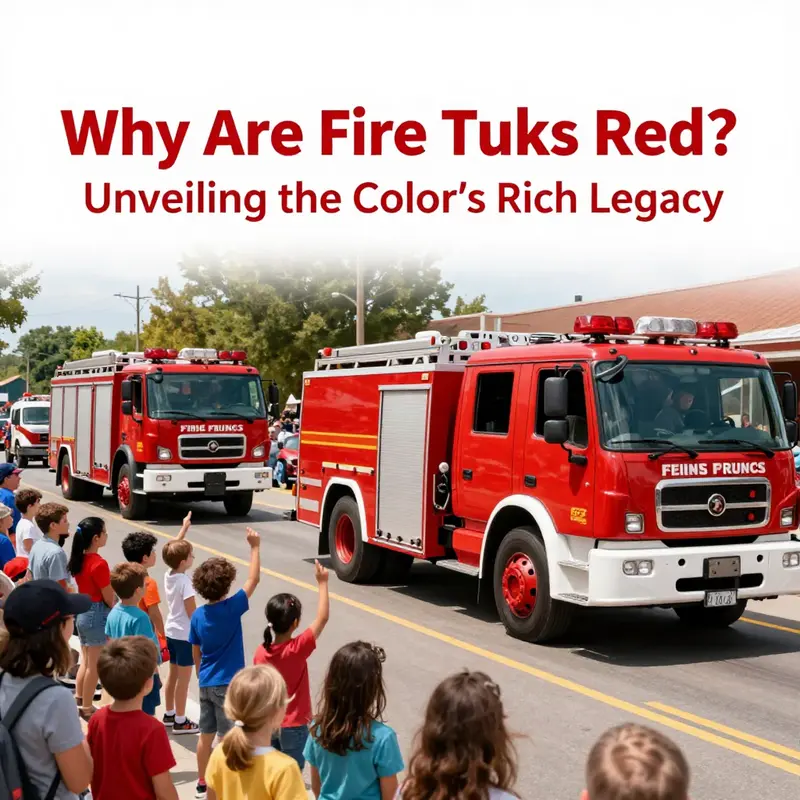
Around the world, when a fire engine roars into view, its color does more than cosmetics. The bright red of the truck is a visual statement that travels ahead of the crew, a signal that urgency is unfolding and help is near. This chapter follows a thread that winds through history, psychology, and tradition, showing how a simple choice about color evolved into a powerful cultural icon. It is a story not only about visibility but about identity, trust, and shared meaning that binds communities to those who rush toward danger when others would run away. The color red, in this sense, functions as a language spoken without words, a shorthand that agencies, drivers, pedestrians, and bystanders recognize instantly. What begins as a practical choice about recognition becomes a symbol of protection, bravery, and public service that crosses national borders and generations.
The historical narrative often presented in popular retellings centers on the early twentieth century, a moment when the sight of a sea of black automobiles dominated the road. In this telling, fire departments painted their apparatus red to stand out against the black, to catch attention in the heat of an emergency, and to convey a sense of urgency that could not be ignored. It is a narrative that sticks because it plays into the drama of progress and the romantic image of firefighters as fearless responders in a world of fast-moving machines. Yet scholars caution that this anecdote may drift toward folklore more than fact. The truth is nuanced: color choices were influenced by a complex mix of visibility, cost, durability, and tradition, and the red we associate with fire trucks grew partly from chance and partly from deliberate signaling.
What we can say with greater confidence is that the 1920s marked a turning point in practical terms. Paint technology and material costs made red paint a durable and affordable option for large metal vehicles like fire engines. In a time when departments faced the realities of maintenance, exposure to weather, and the need to project authority, red offered a reliability that fewer contenders could match. The practicality of red paint became a stepping stone toward a broader cultural commitment. As departments adopted red with routine regularity, the color began to crystallize into a standard. This standard did not emerge in a single electrifying decree but through a slow accretion of choices, habits, and the public’s growing association of red with emergency response.
Yet the story does not end with practicality alone. The symbolic resonance of red runs deeper. In many communities, bold reds were historically used by volunteer companies to distinguish themselves from rival groups, signaling not just readiness but pride and strength. The color thus carried social meaning beyond its function on the road. It was a badge of identity, a banner under which crews could rally. As the color circulated through parades, public displays, and the rituals of emergency response, it embedded itself in local memory and national imagination alike. The red fire truck became not only a tool but a symbol—a portable emblem of protection, civic duty, and collective security that people could point to with a sense of shared reassurance.
In contemporary discussions, the visible power of color faces a challenge from the science of perception. Modern research has tested the assumption that red is the most noticeable color in all conditions. Human vision is most sensitive to yellow-green light under many everyday circumstances, particularly in low light or fog. Studies and reports from safety and human factors organizations have shown that lime-yellow and other high-visibility colors can be detected faster than red in certain contexts. This line of inquiry suggests a crucial distinction: visibility is not a static property of a color but a function of lighting, weather, and the observer’s vantage point. Even so, the red standard persists in many departments, not because it is the optimum for every situation, but because it is a deeply entrenched convention that people recognize instantly. The color carries a cultural gravity that outlasts the latest scientific finding.
To understand why the red remains dominant, it helps to consider the psychology of color in emergency settings. Red evokes urgency, alarm, and action. It taps into a long-standing cultural grammar that links red with danger. This association makes red a quick cue for drivers, pedestrians, and bystanders to yield, slow, or make room for an apparatus that is about to perform a critical intervention. The psychological response to red is not just a matter of instinct; it is reinforced by design practices, signage, and the consistent color coding of emergency equipment such as extinguishers and warning devices. In this way, red forms part of a shared, almost universal vocabulary that communities around the world recognize. It is a language of safety that can be read at a glance, even by someone who has never lived near a fire station.
Beyond psychology, the cultural significance of red fire trucks also owes much to tradition and the rituals of the firefighting profession. The color has traveled through generations of departments, boards, and volunteers who have inherited a sense of caution and courage through the hue. Whenever a town hires new personnel or when a department expands, the color of the apparatus is part of the ceremony of joining the family. It signals a continuity with those who came before—the men and women who trained, fought fires, and stood watch in long nights of duty. In this sense, the red truck is not merely equipment; it is a vessel carrying memory and collective responsibility. It binds new recruits to a lineage, connecting the modern incident with centuries of practice and service. The symbolism of red becomes a thread that threads through community life, touching schools, local parades, and public commemorations of resilience.
This interplay of history, practicality, and symbolism shapes how people perceive red fire trucks today. In many places, the color is no longer simply a matter of whether a color is easier to see on the road; it is a statement about the identity of the service and how communities want to be seen during emergencies. The image of a red engine entering a neighborhood is a visual cue of reassurance as much as it is a call to action. People recall not just the physical presence of emergency crews but the stories that accompany them: the siren’s wail, the pounding of boots on the station floor, the hush that follows the moment the crew secures a scene, and the gratefulness of those who are saved. The red vehicle becomes a character in these narratives, a familiar and trusted protagonist in times of fear and uncertainty.
At the same time, the conversation about color keeps evolving. The modern fire service increasingly explores design choices that optimize visibility across different times of day, weather conditions, and regions with varied terrain. Some departments experiment with high-contrast combinations or additional reflective elements to ensure a strong profile at night and in rain. Yet even as alternative palettes gain attention, the red standard persists in many places because it is so deeply embedded in public memory and professional identity. To abandon that color would feel like breaking a generational pact between firefighters and the communities they serve, even if science suggested a different hue might reduce collisions in daytime or foggy conditions. The emotional resonance of red—the sense that emergency responders are present and listening—remains a compelling reason to preserve the tradition.
The broader cultural impact of red fire trucks extends beyond the road and into media, education, and civic life. Films, television, and literature have reinforced the image of red engines as the quintessential symbol of emergency response. In classrooms and community events, the sight of a red truck is a familiar hook that invites conversations about safety, preparedness, and teamwork. The color thus becomes part of public pedagogy, teaching people, from a young age, to recognize danger cues and to value urgent, organized action. This cultural reach strengthens public trust in fire services, creating a feedback loop: as trust grows, communities are more likely to cooperate during drills, to support funding for equipment, and to participate in safety campaigns. The red truck’s symbolism becomes a social glue, a shared reference point that helps diverse neighborhoods align around common values of protection and resilience.
In telling this story, it is important to acknowledge that color is not the sole determinant of a department’s effectiveness. Skill, training, equipment quality, and command systems matter just as much as hue. The color that marks a vehicle is a first impression, a signal that initiates a sequence of coordinated actions. Yet the enduring appeal of red lies in its capacity to evoke a response before any spoken instruction is given. It is a visible promise that something important is happening, that time is of the essence, and that help is arriving with purpose. The enduring practice of painting fire apparatus red, then, can be understood as a culturally embedded decision that blends safety physics with social meaning. It is how a community says, without words, that it values readiness, courage, and the willingness to face danger on behalf of others.
For those curious about the science behind color perception and its relevance to public safety, a more technical view is available through safety-focused research that examines how colors perform under various lighting and weather conditions. The findings emphasize that there is no single “best” color for every scenario. Instead, the effectiveness of a color is contextual. Red offers visibility in many common settings, but lime-yellow, white, or other high-contrast choices can improve detection in specific situations. The takeaway is not a simple verdict on one hue over another but an appreciation for how design choices intersect with human factors, road design, and the lived realities of emergency response. This nuanced picture helps explain why red remains a cultural mainstay even as departments remain open to evidence-based adjustments in vehicle livery.
As with any cultural symbol, the red fire truck exists at the intersection of memory, function, and ritual. It is easy to overlook the extent to which color shapes behavior until you consider communities where red is not the chosen standard. In places where different colors or patterns dominate, people grow up feeling the same assurance that comes with a recognizable emergency vehicle, even if the hue differs. The universality of urgency can thus be seen in the way people respond to the sight of an apparatus, no matter what color it carries. Nevertheless, the strong historical arc toward red in many places has created a shared visual language—one that firefighters and the public continuously reinforce through daily practice, ceremonial occasions, and the steady cadence of drills and rescues.
In weaving together history, psychology, and tradition, we gain a richer understanding of why fire trucks are red beyond a purely technical explanation. The color is a long-standing emblem of readiness, a badge of service, and a symbol that traverses continents and generations. It tells a story of communities choosing to invest in a color that stands out, endures, and remains legible in the minds of people who may need help at a moment of crisis. The red fire truck is not merely a vehicle; it is a moving artifact of public safety—a sign that, in the face of danger, society unites to answer the call with speed, structure, and heart. This layered significance is what makes red a durable cultural icon. It is a reminder that the urgency of emergency response is not only about physics or visibility but about shared values and the trust that binds citizens to those who run toward danger so others can stay safe.
For readers seeking a concise entry point into the broader conversation about fire truck color and visibility, the Fire Truck Blog offers accessible reflections on how color choices are debated and understood in practice, linking history with contemporary design sensibilities. See the discussion here: Fire Truck Blog.
External resource for further reading on the science of color visibility and safety design: https://www.asse.com/.
null
null
Final thoughts
Understanding why fire trucks are red offers a fascinating glimpse into a blend of history, economics, and culture, defining the identity of firefighting services. While foundational stories and economical choices have led to this colorful legacy, modern visibility studies cast a fresh light on the conversation. Nonetheless, the resilience of the traditional red fire truck continues, symbolizing bravery, readiness, and community trust. As we appreciate these remarkable vehicles, we celebrate not just their hue but the heritage, pride, and purpose that fuels their ongoing role in our lives.