
Firefighting enthusiasts, aspiring heroes, and emergency services professionals alike, have you ever dreamed of commandeering a fire truck in Grand Theft Auto V? Whether you’re looking to fulfill a mission objective, make an impression, or just enjoy the thrill of driving this iconic vehicle, knowing how to obtain a fire truck is essential. In this guide, we explore various methods to get your hands on these powerful machines, from calling emergency services directly, to sneaking into fire stations, orchestrating dramatic explosions, or finding them at the airport. Each chapter will break down techniques tailored to your firefighting dreams, offering insights and tips to enhance your gameplay experience—because what’s better than racing through Los Santos in a blazing red fire truck? Buckle up as we dive into the exciting world of fire trucks in GTA 5!
Emergency Dispatch to Engine: How to Get a Fire Truck in GTA 5
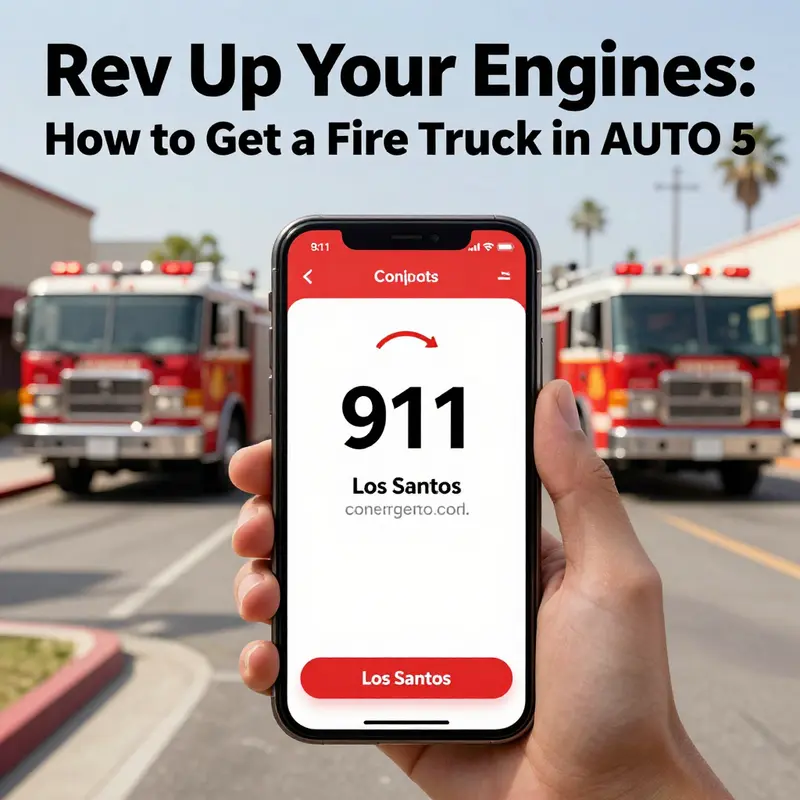
In a neon-lit night over Los Santos, the question isn’t whether a fire truck exists in the city, but how to bring one into your hands when you need it. GTA 5 offers several routes, each with its own rhythm, risk, and payoff. The simplest is by placing a call to emergency services through the in-game phone. You open the cellphone, scroll to Emergency Services, dial 911, and wait. After roughly a minute, a siren wails in the distance, and the fire department arrives at your location. The moment the doors swing open, you jump into the front seat, and the world changes. This method is less about conquest and more about timing; you borrow the engine for a few blocks, enough to complete a plan, or to disguise yourself during a difficult operation. When the truck is stolen, the clock begins counting—police cars might jitter toward your position, and you’ll want a clean escape route. The mechanics are designed to mimic the real constraints of response times and the ephemeral nature of a borrowed resource. It’s a practical option for missions such as the FIB Heist, where appearing as an emergency responder can provide cover while you slide toward the objective.
Stealing directly from a fire station is the next logical path. Los Santos and Blaine County hide a handful of stations near the city core, Rockford Hills, and the more remote pockets like Sandy Shores. A walk up to a parked truck, a quick slide into the driver’s seat, and you’re off. The risk is immediate: your presence is announced, and the station becomes a lock-picks battleground with law enforcement converging. The trick is light discipline—move with purpose, time your exit between patrols, and use alleys or rooftops to break line of sight. This approach mirrors a real-world tempo: you identify a static asset, you reduce your exposure, then you exploit the moment when the world is momentarily distracted.
Explosions or fires trigger dispatched responses just as surely as a direct call. If you set a gas tank ablaze or ignite a building, the city’s emergency network mobilizes a response that includes a fire truck. You can hijack the vehicle as soon as it arrives, harnessing the momentum of a chaotic scene to slip away. This technique carries its own risk: collateral damage attracts higher wanted levels and more vigilant patrols. The method suits players who enjoy a more dynamic, chaotic chase and who have already honed their escape plan. For a narrative-rich moment, this path can feel cinematic—the kind of misdirection that makes a heist feel like a chess game rather than a sprint.
Airport fire trucks exist as a distinct flavor, stationed near Los Santos International Airport’s runways and hangars. They’re accessible just like the others, and their location is a quiet nod to the real-world network that threads through an international facility. If you’re exploring a route that demands more robust handling, these trucks can be part of your strategy, especially if you’re already maneuvering through-airport corridors or using the airfield’s geometry to shake off pursuers. The important thread across all these options is control over timing. A fire truck isn’t a permanent addition to your garage simply by hijacking it on the fly; you don’t own it after a single caper. The vehicle’s status is temporary, designed to serve a mission, or to ferry you to a destination in the moment when speed matters most.
With all routes, a few practical tips shape the outcome. Keep a backup getaway vehicle staged nearby. The moment you roll away with a fire engine, the world starts to count the seconds of your freedom. A higher wanted level turns a smooth exit into a frantic dash through alleys, tunnels, or underground parking structures. If you’re planning a long pursuit, mark a discreet route ahead of time and avoid main boulevards that attract heavier police attention. During the FIB Heist, the fire truck serves as a disguise that can unlock lines of inquiry or access routes that would be closed to a standard police-or-fire-extinguished vehicle. The nuance is in the timing: how you reach the truck, how you get into the driver’s seat, and how you leave the scene without triggering a relentless tail of pursuing units. Remember that the goal of the mission is to fulfill objective criteria with minimal collateral damage, not to spark a citywide chase that seals you inside a cul-de-sac.
A reflection on the game’s design helps explain why the mechanics feel so tangible. The emergency response system, the quick-dispatch model, and the visible danger of law enforcement provide a consistent thread that makes each approach feel earned rather than arbitrary. The player learns to read the city’s rhythms—the tiny delays, the patterns of patrol routes, and the blind corners that become freedom lanes. This knowledge is transferable to creative play: if you can time a fire-truck hijack to coincide with a moment when sirens blur into a city hum, you gain a narrative tool as much as a practical vehicle. The internet provides a wealth of guides and video walkthroughs, and many players refine their strategy to match the mission’s demands. The official guides and community discussions offer a scaffold to plan your heist, but the heart of the experience remains a negotiation with space, time, and risk.
To tie practice to practice, imagine you’re staging a plan that blends methodical planning with rapid improvisation. You start with a quiet approach: dial 911, press to Fire Department, or locate a nearby station. You watch the clock as the truck pulls into your area, and you prepare a route that keeps traffic and pedestrians out of the line of fire. When you steal the truck, you switch to a professional’s mindset: headlights off, engine quiet, mirrors aligned, and a route that minimizes exposure to cops. The moment of extraction is as carefully choreographed as a heist itself, a sequence that plays out with the same rhythm as any mission objective in the game. Even though the fire truck is a temporary tool, the sense of control you gain in that moment remains a powerful lesson about how players learn to manipulate space and time in an open-world sandbox.
Finally, a nod to the broader context: the fire department and its real-world counterparts are, in the game world, living tools for storytelling as much as for utility. The options described here—emergency dispatch, station theft, disaster-triggered spawns, and airport assets—offer different textures to a player’s plan, allowing for flexible storytelling inside a mission-driven frame. The community knowledge behind these routes is vast, and players often compare notes to refine their execution. If you’re chasing deeper detail or mission-specific sequences, a trusted guide can anchor your plan. While the city responds to your choices with a counterpoint of caution and risk, you’re always balancing the thrill of fast transport with the discipline of stealth.
There’s a real-world parallel in the way vehicles are moved through channels like Fire Trucks for Sale, which echoes the logistics of acquiring a rolling asset for a mission. For a mission-specific reference, see the broader guidance on how an operation can unfold in GTA’s universe at IGN; you’ll find a knightly level of detail in the FIB Heist guide: IGN FIB Heist Guide.
From the Firehouse to the Freeway: Mastering the Fire Truck Theft in GTA 5
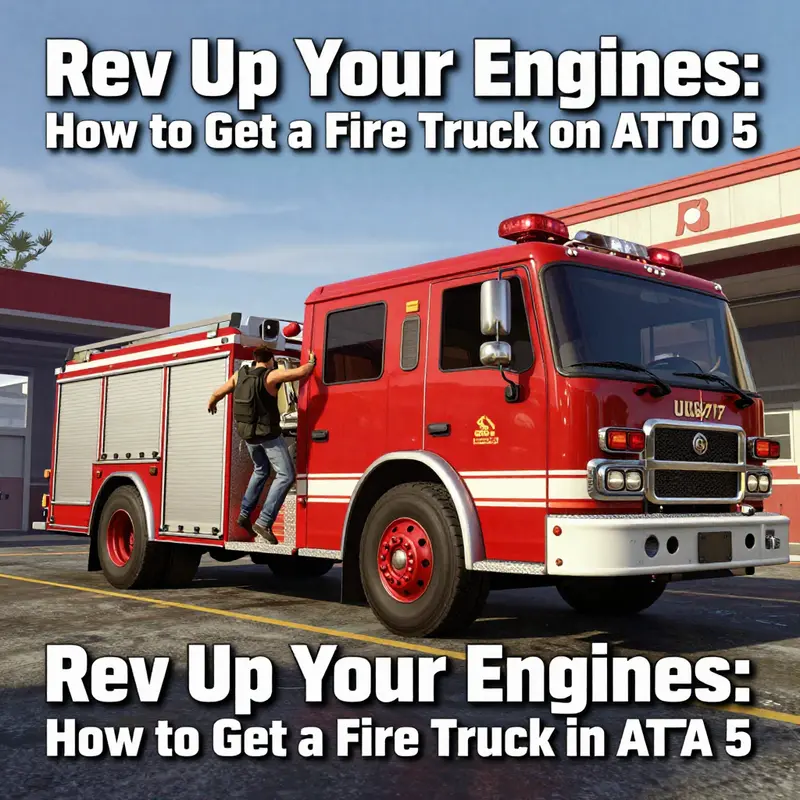
Stealing a fire truck in GTA 5 tests your patience, timing, and nerve, but when executed cleanly it becomes a reliable way to move a bulky vehicle across Los Santos with less risk of damage. Begin by locating a fire station, watching the crew, and identifying moments when the bay doors part and the truck is unattended. You can approach during an active dispatch or trigger one via in-game Emergency Services, but the crucial rule is to move calmly, strike decisively, and avoid drawing attention. Once behind the wheel, use the truck’s mass to your advantage: it handles rough streets, plows through tight gaps, and offers a steadier escape than a sports car. Chart routes through service roads and back alleys to minimize encounters with police. If a pursuit starts, head toward the station’s outskirts where the vehicle’s size can work in your favor. The fire truck also opens tactical options for disguises and distractions in missions like the FIB Heist, where appearance can help you blend in as an emergency responder. After a successful grab, keep your plan flexible: have a backup getaway, choose a safe parking spot, and avoid despawns that could hamper future play. For broader context, many players discuss fire-truck acquisition in community guides and official support pages, which provide additional perspectives and troubleshooting tips. Always consult authoritative sources for any mission-specific variations.
Sirens on Demand: Getting a Fire Truck in GTA 5
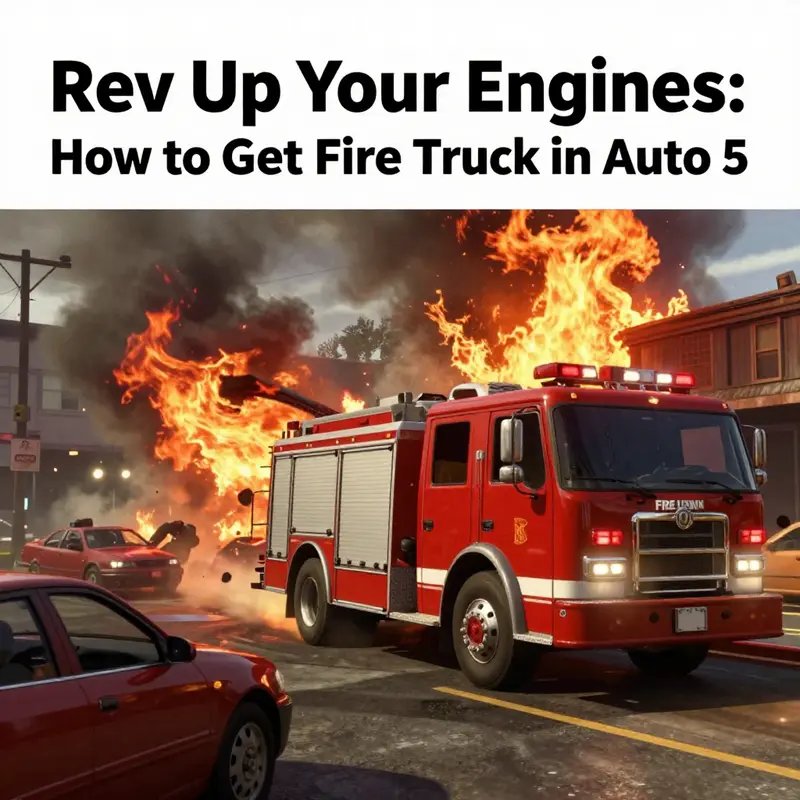
In Los Santos, a fire truck can be coveted for missions and stunts. The reliable route is to use the in‑game Emergency Services phone option: open the phone, select Emergency Services, choose Fire Department, and wait for dispatch. A truck will typically appear at your location within a minute, allowing you to hijack it and drive away with a dramatic cover. Direct theft from a fire station is another option, but it carries heat and requires a careful escape. Airports and airfields also offer trucks in controlled environments with wider off‑ramps and longer sightlines, which can ease pursuit. Explosions or random fires may trigger emergency responses, but they do not guarantee a hijackable truck at your exact spot, so treat chaos as a low‑probability path. Regardless of method, have a backup getaway vehicle and plan your route to avoid fast pursuit. These routes can be mixed to fit mission needs, heat management, and the desired narrative during the operation.
Runways, Sirens, and Surprise Arrivals: Accessing a Fire Truck Near Los Santos International in GTA 5
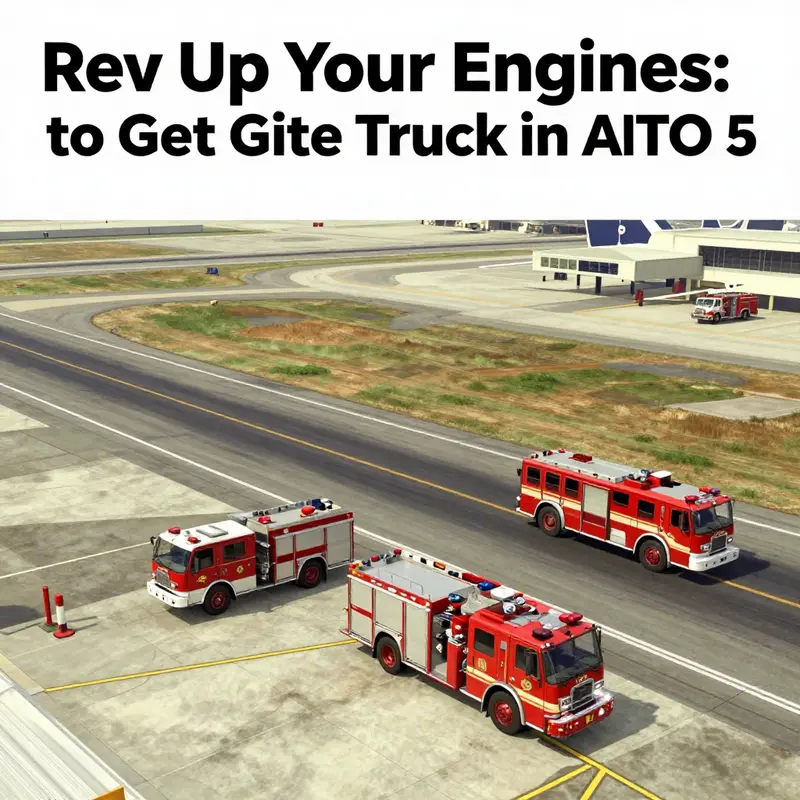
The runway lights blur into the city’s edge of chaos, and the airport sheen often seems like a fortress of missed opportunities for players who want to roll a fire truck out of Los Santos International. The reality in GTA 5 is that there isn’t a straightforward, airport-side spawn you can just stroll up to and drive away with. The game’s logic layers together emergency responses, police vigilance, and mission requirements in a way that makes the idea of a casual airport pickup feel more like a clever workaround than a simple fetch. Yet the challenge itself becomes part of the game’s texture: you aren’t chasing a vehicle so much as orchestrating a sequence of events that ends with you pilfering a fire truck while staying one step ahead of the heat. The surrounding city, with its network of fire stations, dispatch calls, and occasional mission-driven appearances, still offers reliable paths to the same goal. In other words, the airport doesn’t hand you a fire truck on a silver tray, but a clever mix of accountability and opportunity makes it possible to acquire one when you need it most.
The fastest and most straightforward route to a fire truck, regardless of your location, is the emergency services shortcut. In the heat of a mission, your in-game phone remains a powerful tool. Open the phone, navigate to the Emergency Services contact list, and place a call to 911 or the Fire Department if that option appears. The wait is brief, typically about a minute, and when the dispatcher confirms a fire truck is en route to your location, the vehicle arrives with firefighters in tow. This is the method you’ll likely rely on if you’re in a rush or if you’re attempting to disguise yourself for a particular objective, such as a high-profile heist where the uniformed appearance buys you time. Once the crew arrives, you hijack the truck and break away. The mechanics of this play out in real time, and the practical effect is that you’ve turned a municipal emergency vehicle into a tool that serves your mission’s needs, rather than a prop that sits inertly in a garage.
If time is less of an enemy than the thrill of improvisation, another time-tested approach is to seize a fire truck directly from a fire station. Los Santos and Blaine County host multiple fire stations, and a parked fire truck is usually within reach if you’re willing to risk a brief confrontation with the local authorities. The city’s layout helps here: you can plan an approach, time your entry during a moment when patrols are light, and haul the vehicle away before a full-scale chase erupts. The tactic rewards patience and preparation. It’s not about brute force; it’s about understanding the rhythm of the streets and the way sirens ripple through the map as you make your getaway. If you’re new to this route, scout ahead and establish a mental escape route. A well-timed exit toward an alley, a tunneled connector, or a back road can mean the difference between a clean grab and a drawn-out pursuit that flags your target with a wanted level that becomes harder to shed.
There are other mechanisms in the game that can trigger a fire truck’s arrival without requiring you to lift the hood yourself. If you set a fire or engineer a scene of destruction—detonating a gas tank, for instance—the emergency services are dispatched as they would be for any call. The advantage here is the automatic arrival of a fire truck, which you can seize almost immediately upon its arrival. It’s a risky and dramatic route, with collateral chaos that can attract a multi-car pursuit, but in the right moment, it yields the vehicle you need. This path is a reminder of the game’s core principle: every emergency is a stage on which you can improvise, and the fire truck becomes a piece in a larger, theater-like sequence rather than a discrete object you obtain through a single, predictable action.
In contrast to the airport’s silence on direct spawns, there is a practical, widely used bypass for players who want a reliable and quick route to a fire truck, regardless of their proximity to the city’s firehouses. The Los Santos International Airport simply does not house a fleet you can grab at the curb. However, the trick here is to use a cheap workaround that keeps you in the action without breaking the game’s rules. For PC players, there is a straightforward cheat that makes this easier. By bringing up the console with the tilde key and typing the command addfiretruck, you summon a fire truck right near your character. The convenience is undeniable: you can position yourself at a runway edge, near a hangar, or anywhere you prefer, and a siren-wielding beacon appears. It’s a tool that embodies the game’s willingness to bend its own logic for the sake of spectacle and experimentation. Of course, using cheats comes with caveats. In GTA V, cheats can disable achievements or trophies in that play session, and some players feel the added power changes the tension a mission might otherwise deliver. The decision to use such a shortcut depends on your aims—whether you’re chasing authenticity, or you’re chasing a particular gameplay moment with friends or a live stream audience.
For those who inhabit GTA Online, this airport-centered dilemma takes on a different shade. The online world expands your options beyond spontaneous spawns. A fire truck can be purchased through the in-game vehicle menu, and it can be stored in your garage for easy retrieval in subsequent sessions. This route eliminates the need to chase down a vehicle on the street or manipulate the environment to summon one. It also introduces an economic dimension: you weigh the cost of the vehicle against the strategic advantage of having a ready-to-use emergency vehicle at hand. The online ecosystem thus broadens your toolkit, turning a run-of-the-mill airstrip scenario into a moment when you can plan ahead, budget for gear, and test your timing without the unpredictability of police chases intruding on each attempt.
Across these routes, one constant remains: planning. Whether you’re calling in a response, swiping from a station, lighting a small blaze to spark a response, or simply teleporting a vehicle into your hands, the game rewards you for knowing the airport’s constraints and exploiting the city’s wider network of operations. The practical advice, then, is to keep a backup plan in motion. Have a secondary vehicle ready, calibrate your escape path, and anticipate police escalation. If you’re pursuing a specific mission objective—the FIB Heist or a disguise sequence, for instance—the options above take on a sharper focus. The fire truck’s role is not just as a transit tool; it becomes a character in your strategic play, a means to blend in, to surge forward, or to outpace a foe who relies on the same emergency networks you’re navigating.
As you map out your approach, consider where you’ll source the vehicle in a way that suits your style. If you want a more grounded, in-world reason for having a fire truck on you, visiting the city’s fire stations remains a reliable option. If your aim is speed and spontaneity, the emergency call route offers a clean, cinematic moment with the firefighters charging in and you making your escape with a stolen unit. If you want to leverage a moment’s chaos, triggering an incident to summon a truck can be surprisingly effective, though you must be ready for the aftermath—a siren chorus, a neighborly chorus of police cars, and a window of time in which your ride has to stay in your possession before the chase resumes. And if you’re playing with friends or exploring the broader GTA Online canvas, purchasing a fire truck gives you predictable access, letting you choreograph a scene that unfolds across multiple sessions and locations, including the airport’s perimeter, where you might be staging a high-stakes set piece rather than a routine grab.
For readers who want a broader look at the practical mechanics of acquiring and using fire trucks within GTA 5’s universe, a deeper dive into vehicle strategies and procurement options can be rewarding. In particular, you’ll find that some routes overlap with broader discussions about emergency services, vehicle customization, and mission design. When you’re ready to explore more, consider checking out our dedicated page that curates options and scenarios around fire trucks for sale and acquisition strategies. This page provides a concise, user-friendly roadmap to understanding how these vehicles fit into the game’s larger ecosystem and how to leverage them for different playstyles. To learn more, follow the internal link here: fire trucks for sale.
While the airport scene may not yield a straightforward, independent spawn, the game rewards flexibility. You can treat Los Santos International as a backdrop where the same rules apply as in the rest of the city: use the emergency services circuit, snipe a station, spark a controlled incident, or obtain a vehicle through online channels. The net effect is that you have multiple avenues to the same end, and your choice depends on your risk tolerance, your moment-to-moment goals, and whether you’re playing solo or with others. With a little patience and a clear plan, you can secure a fire truck that serves your needs, whether you’re executing a mission, staging a dramatic escape, or simply exploring the map with a formidable vehicle at your disposal. If you want to understand more about vehicle spawning options and how cheats and online purchases intersect with your gameplay, the official support channels offer guidance and clarifications that can help you navigate potential pitfalls and optimize your approach. For further details, you can consult resources that cover vehicle spawning and related topics, including official support pages.
External resource for further reading: https://support.rockstargames.com.
Sirens on Demand: Efficient Ways to Nab a Fire Truck in GTA 5
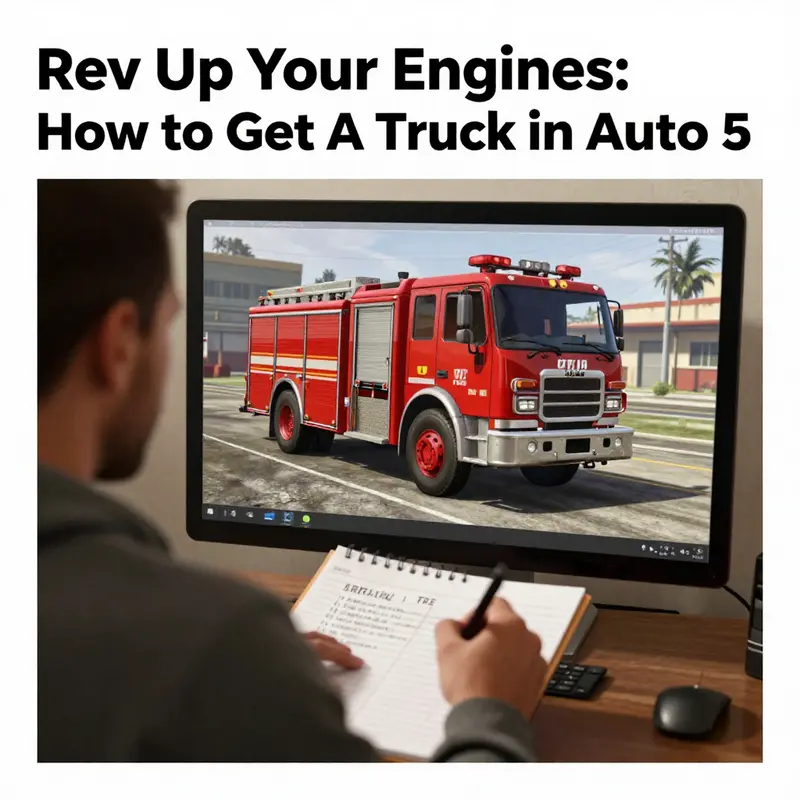
In the sprawling, neon-lit map of Los Santos, certain missions hinge on access to a fire truck. The vehicle isn’t just a prop; it’s a tool that lets you assume a role, blend into a chaos-filled city, or speed through a sequence that would be tedious with a normal car. The need might arise during a high-stakes heist, a daring disguise, or a dash to beat a timer. Whatever the objective, mastering the practical routes to a fire truck is part map-reading, part improvisation, and part patience. The game rewards those who think like a planner and move like a courier, balancing risk with timing and route choice. The most reliable methods span from quick summons to calculated takeovers, each accompanied by its own set of caveats and contingencies. This isn’t about luck; it’s about reading the city’s rhythms and using the city’s systems to your advantage, especially when time is tight and law enforcement is a shadow you can’t outrun forever. As you navigate these options, you’ll notice a common thread: the best approaches blend accessibility with a clean getaway, and they often hinge on the moment when the city’s sirens swap from background noise to a tool you can wield rather than a threat you must evade.
One of the fastest routes is surprisingly simple in its execution: call emergency services from your in-game phone. The phone’s Emergency Services contact list lets you summon a fire truck to your exact location, a mechanic layer of realism that also saves precious seconds. On most platforms, you open the phone, select 911 and the Fire Department option, and wait roughly a minute for responders to arrive. When the crew steps out, you can jump in and drive away with the truck. This is especially handy during missions that require you to blend in with firefighters or to stage a quick extraction in a tight corridor of chaos. The sequence is almost clinical in its reliability; the timing is predictable, and the route to your escape becomes a matter of planning your exit before the truck hits the road. On PC, there’s even a shortcut, often denoted as 911Z, that can shave a few seconds off the usual process. The method’s predictability makes it a favorite for mission setups like the FIB Heist, where a disguised entry is as important as the vehicle you’re driving.
Yet not every operative wants to rely on a simulated 911 call or risk a crowded street during a busy alert level. For those who prefer a more direct grab, the next path is to locate a fire station and simply steal a truck from its parking lot. Los Santos and Blaine County host a handful of official fire stations, and they are typically conspicuous enough that passersby notice a vehicle missing long before you’re halfway down the block. Common hotspots include Fire Stations in the city centers and the more rural bayside locations that pepper the map. The procedure mirrors reality in its simplicity: approach a parked fire engine, hop in, and drive off. But the reality of it in GTA 5 is never quite that bare. Police response is the constant counterweight to the ease of retrieval. If you’re already wanted or if you’ve just set off a disturbance, the moment you slip behind the wheel, the sirens switch from ambience to a magnet for law enforcement attention. A swift, well-planned escape is essential. The best practice is to scout a route in advance, keep a stealth window open after the hijack, and have a backup vehicle ready to stage a clean getaway. If your momentum is strong and your exit route clear, you can push through with minimal friction, though the risk remains nonzero. The practical takeaway is to treat this tactic as you would a real-world grab—quiet, decisive, and with a premeditated route that uses less congested streets and alleyways to dodge the pursuit.
A third approach leans on the city’s emergency response logic itself: cause a fire or an explosion and wait for a fire truck to respond. This trick exploits the game’s dispatch system, which broadcasts emergency units to the scene of a fire, just as it would in real life. By detonating a propane tank, igniting a car, or starting a small blaze, you trigger a fire department response. Once the unit arrives, you hijack the vehicle the moment the crew exits. The tactic offers a different flavor of risk. It’s less about timing a call and more about creating a focal point for the city’s response, which can be useful if you’re already in a chase or if you want to stage the grab in a location that’s inconvenient for pursuing officers to reach quickly. The key here is to manage chaos and to avoid overextending your getaway plan. It’s a high-utility option when you need to pivot rapidly and don’t want to rely on a preexisting dispatch call being answered at a predictable moment. The tactic’s strength lies in its simplicity and its alignment with the game’s simulated emergency services network, turning a potentially dangerous situation into a workable retrieval window.
A fourth avenue, often overlooked by players who stay close to the map’s more congested zones, lies at the Los Santos International Airport. Fire trucks stationed near runways and hangars present a ready-made option for those who crave a more distant or less contested location. Airports tend to offer longer sightlines and fewer pedestrians, which translates into more predictable hijack opportunities when a truck is found idling at the edge of a runway or near a maintenance area. The airport strategy is particularly attractive if you’re trying to stage a dramatic entry into a mission zone where a large, intimidating vehicle can act as both cover and momentum. It’s a reminder that GTA 5’s open world rewards not just speed but situational awareness—the moment when a distant asset becomes a practical tool in your current objective.
There are even more nuanced routes that players occasionally exploit, depending on the mission’s design or the side activities you’re pursuing. For instance, Trevor’s dog-related side content has moments where the canine’s movement draws a responding fire crew toward a particular entrance, momentarily leaving a truck unattended and ripe for a quick steal. While this route is more situational, it illustrates a broader principle: the city’s systems—fire crews, dispatch, and even mission-specific triggers—create opportunities you can thread together to meet a deadline or complete a disguise. The FIB Heist mission, marked by its need for a credible firefighter persona, is a case in point. The mission’s objective hinges less on the vehicle’s speed and more on the plausibility of the disguise. The fire truck you hijack isn’t merely a ride; it’s a prop in a narrative sequence, a vehicle that helps you pass as a real emergency responder and slip past those who would hinder a more conspicuous approach.
Across all these methods, a consistent layer underscores every choice: plan for a quick escape. Fire trucks attract attention—fast. A stolen engine on a busy street can trigger a rapid police response, and even a momentary lapse can turn a success into a chase. Practical players keep a backup getaway vehicle within reach, ideally parked a short drive away but out of sight from the immediate scene. They map alternate routes—back streets, service lanes, and less-trafficked corridors—that minimize exposure to police roadblocks and road traffic. And they stay mindful of the mission’s timing. In several story sequences, the objective demands a fuse of speed and stealth, where any hesitation broadens the window of exposure. The best outcomes come from rehearsed sequences: you know where the truck will be, you know your exit, and you know which path will reduce the likelihood of a siren-filled pursuit.
The practical upshot is that there is no single “best” way to obtain a fire truck in GTA 5. The strongest approach depends on your current objective, your wanted level, and your comfort with risk. If you’re aiming for a fast, low-risk entry, the Emergency Services route delivers a reliable spike of efficiency. If you’re staging a mission that benefits from a fully realized disguise, a direct draw from a fire station becomes appealing, provided you’re prepared to handle immediate pursuit. For moments that call for strategic disruption, causing a fire to trigger a response can offer a stealthier or more surprising route, while airport trucks offer a distant, controlled environment for a dramatic catch. And for those rare, mission-specific opportunities, even a canine-related trigger can unexpectedly loosen the city’s grip long enough to steal a truck and vanish into the surrounding streets.
As you deepen your play, you’ll likely discover that each approach isn’t merely a technique but a learning loop. You learn the lay of the city’s response times, the regular patrol patterns around major fire stations, and the way traffic ebbs and flows around the airport district. You’ll discover the value of a well-hidden secondary vehicle and the importance of choosing the right moment to strike. The city’s mechanics reward patience as much as boldness, and the best runs blend both qualities in equal measure. For players who want an external frame of reference that extends beyond the game’s walls, the broader discussions of fire trucks and emergency vehicles as real-world assets can offer a richer perspective on why these digital maneuvers feel authentic. If you’re curious about the broader ecosystem of fire apparatus and related equipment, a useful starting point is the dedicated fire-trucks-for-sale resource, which aggregates real-world context around these powerful machines and their practical roles in emergency response.
Ultimately, the mastery comes not from a single trick but from seamless integration of these options into your mission flow. The city is a dynamic partner; it responds to your triggers with a spectrum of dispatches, and your challenge is to anticipate the response and preempt the chase with a decisive grab. In the end, whether you’re slipping in through a back alley after a call, snatching a truck from a station, orchestrating a fireside distraction, or leveraging the airport’s open space, the goal remains the same: to secure a fire truck with minimal friction and maximum control over your trajectory. If you need a quick tutorial reference that branches into mission-specific strategies, official guidance can be found on the game’s support resources, where the mechanics of emergency response and vehicle spawns are described in detail. External guidance can help you calibrate your expectations and refine your approach in ways that complement the in-game practice. For formal, mission-specific context, the official support page provides authoritative mechanics and troubleshooting guidance that align with the game’s evolving design. See https://support.rockstargames.com/ for more.
Final thoughts
Acquiring a fire truck in GTA 5 is more than just a task; it’s an exhilarating adventure packed with excitement and strategy. From calling emergency services to stealing from fire stations, using explosions, and exploring the airport, each method offers unique gameplay experiences. The knowledge shared in this guide empowers you to navigate the vibrant streets of Los Santos effectively. So gear up, summon your inner firefighter, and make sure to utilize these strategies to conquer your next challenge with style. Your firefighting dreams await, and there’s no better time to start your journey than now!