
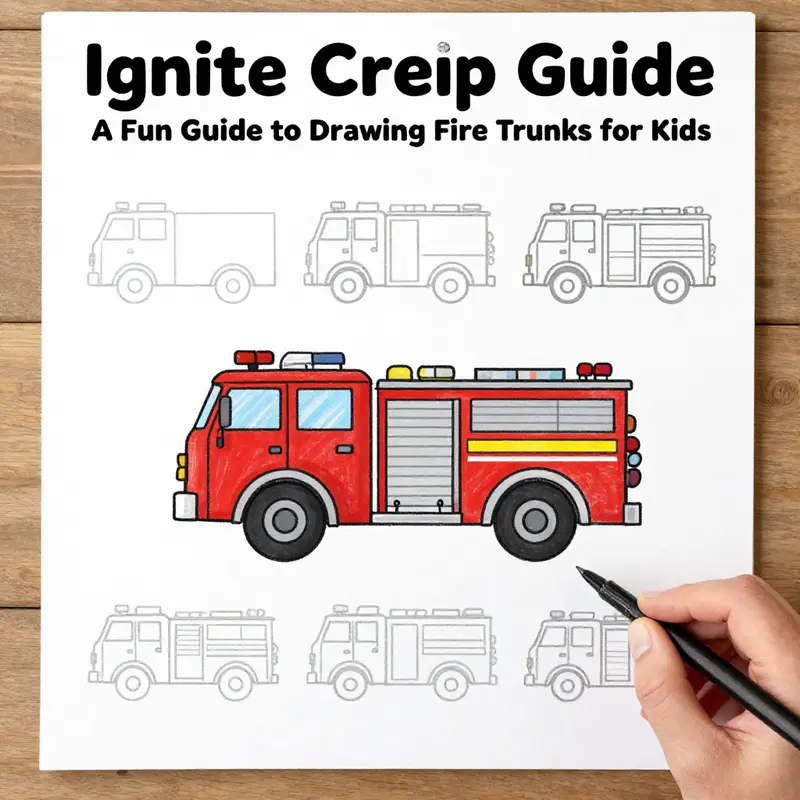
Drawing a fire truck can be a thrilling and imaginative activity that engages young minds. Fire trucks are not just vehicles; they are symbols of bravery and heroism. For firetruck enthusiasts, young aspiring firefighters, and professionals in the emergency services, drawing a fire truck can be a delightful way for kids to connect with the spirit of firefighting. This guide will provide you with a comprehensive step-by-step approach to drawing a fire truck, ensuring that children of all ages can participate creatively. In the chapters that follow, we will explore detailed drawing techniques, tips for engaging kids in the process, essential supplies for creating a vibrant masterpiece, and interactive resources that will amplify the drawing experience.
null
null
Engaging Young Artists: A Story-Driven Path to Drawing a Fire Truck
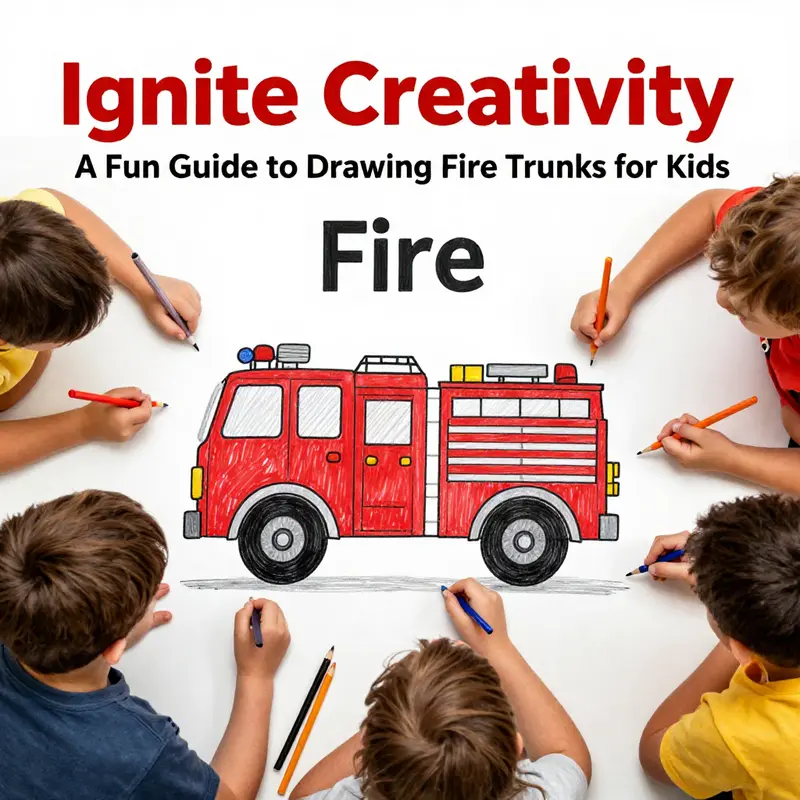
Drawing a fire truck becomes more than a simple art project when it’s framed as a small, story-filled mission. For many kids, especially those aged 3 to 6, pictures are gateways to understanding the world, and a fire truck offers a vivid, reassuring symbol of action, safety, and teamwork. The approach described here invites children to observe, imagine, and create in a way that mirrors how they learn best: through contexts they can see, hear, and feel. Rather than presenting a strict recipe, the process unfolds like a gentle journey from recognition to representation, from the bright red shell of a vehicle to the ladders, hoses, and lights that give it purpose. The aim is to blend simple drawing with meaningful play, so that every line drawn feels like part of a larger story they are helping to tell.
Begin by grounding the child in the visual cues that make a fire truck instantly recognizable. A bright red body, prominent wheels, a tall cab, and the long ladder on the side are features that quicken a child’s recognition. In the classroom or at home, bring in a small, safe mock-up of a fire truck or a high-quality image that shows the side profile. Use this as a launch point for a conversation about what a fire truck does and why it looks the way it does. Ask questions that connect perception with function: Why is the body long? How does the ladder reach high places? Why do firefighters need bright lights and a loud horn? Each question nudges a child toward active observation and purposeful drawing.
As the conversation deepens, invite the child to translate what they observe into simple shapes. A fire truck can be rebuilt on paper with a big rectangle for the body, a smaller rounded box for the cab, and circles for the wheels. The ladder can emerge as a straight line with evenly spaced rungs. In this stage, the goal is not photorealism but recognition. The shapes should be large, friendly, and easy to color. If the child is younger, suggest tracing or using stickers to outline the main parts. If the child is ready for more control, guide their hand as they draw the outline, then step back to let them decide where each component sits on the page. This blend of guidance and autonomy mirrors how children learn best: through supported exploration that gradually becomes independent discovery.
The color logic of a fire truck provides another avenue for learning through color, texture, and emotional tone. Red is not merely a hue; it reads as a signal—assurance and urgency rolled into one. Talk with the child about the psychology of color—how red helps a vehicle stand out in traffic and during emergencies. Then offer color choices that reinforce the story they are building. Perhaps today the truck is a heroic fire engine ready to rush to a quiet neighborhood fire drill; tomorrow it becomes a rescue vehicle speeding toward a playground incident. The specific shade of red, the gleam of yellow or white on the lights, and the black of tires and hoses can all be used to sculpt a character on the page. Encourage experimentation: different pressure with the crayon to show the gleam on the metal, or a dotted line to imply a reflective stripe running along the side. These small decisions invite the child to consider texture and scale in a way that makes the drawing feel tangible rather than flat.
A key element of this method is making the drawing a window into a story rather than a single artifact. To that end, weave a tiny narrative into the drawing session. The driver sits in the cab, the ladder leans along the side, and the hose curls behind, ready to unfurl. If the child asks who the driver is, invite them to imagine a little firefighter already inside the cab, perhaps with a helmet resting on the seat or a little glove flopping at the edge of the window. The more the child can animate the scene in their mind, the more expressive the lines on the page become. The act of storytelling—however simple—transforms the act of drawing from a mechanical task into a living moment where imagination and perception meet. When a child can narrate their own picture, they are learning to observe, interpret, and translate those observations into lines, shapes, and colors that carry meaning.
In practice, the session moves with the child’s pace and interests. If the child is curious about the ladder, the session may pause to draw an extended ladder with several rungs, then discuss how ladders help firefighters reach higher floors. If the child wants to focus on the lights, the session may emphasize circles on the roof or in front, with a bright yellow or white glow to convey motion and alertness. It’s important to balance structure with freedom. A gentle structure might be the “main body first, then the cab, then the ladder,” but within that frame, allow the child to decide where to place each element and how to style it. Some days, there will be a lot of scribble and experimentation, and that is a sign of cognitive growth as the child tests ideas about balance, symmetry, and proportion. Other days, the drawing may align quickly with a neat, tidy composition, which still serves as a milestone in fine motor control and spatial reasoning.
To extend the learning beyond pencil and paper, incorporate a light, sensory dimension that reinforces memory and engagement. For younger children, a cardboard cutout of a fire truck with flaps can mirror the wheels, cab, and ladder, allowing hands-on exploration as they “drive” the truck and point to its parts. You can also create a simple storybook page by page: the truck arrives at a pretend scene, the driver signals with a shout of “Go!” and the ladder unfolds. The physical act of manipulating a model, followed by translating that motion into drawn lines, helps solidify the child’s comprehension of the vehicle’s purpose and the sequence of actions firefighters take during an emergency. The kinesthetic element makes the learning multi-sensory, which research indicates is highly effective for early learners, especially when paired with visual cues and verbal narration.
Incorporating guided discussion after the drawing reinforces language development as well. Use prompts that connect the image to real-world safety concepts and social values. For instance, you might ask, “What would you tell other children to do if they heard a fire engine coming?” or “What part of the truck helps firefighters save people?” These questions encourage reasoning, empathy, and a sense of civic responsibility. The goal is not to teach children to imitate professional jargon but to foster a confident, curious voice that can describe their own work and its purpose. As they answer, they practice sequencing—first the truck arrives, then the ladder extends, then the water hose is ready—and they begin to articulate cause and effect in a way that sits naturally with the visual plane they have just drawn.
An often overlooked but powerful element of engaging children is the social dynamic of drawing. When a child works with a partner or a small group, the drawing becomes a collaborative story. One child might sketch the chassis while another adds the ladder, and together they negotiate space on the page. This joint problem-solving mirrors real-life teamwork on a fire crew and teaches cooperation, listening, and respectful sharing of ideas. It also invites the child to practice communication skills as they explain why they placed a certain line there or why the ladder should be longer to reach a pretend blaze in a higher tree. Even quiet kids can benefit from the social backdrop, as their cues—eye contact, nodding, or handing a crayon to a peer—become forms of participation that build confidence and belonging.
As with any activity designed to engage a child’s imagination, it is important to set a pace that respects individual rhythms. Some children want to draw for twenty minutes; others are content with a brief sketch and a flood of questions about how engines work. The teacher or caregiver should adapt to this rhythm, celebrating small victories—an extra line that adds depth, a new color that makes the truck feel lively, a perfect straight ladder rung—without rushing the process. A relaxed tempo lets the child internalize what they are seeing and creating, which in turn strengthens focus and retention. The practice then becomes less about producing a perfect image and more about building mental models of the world through art and play. The result is a draw-and-learn experience that resonates with a child’s curiosity and lays a foundation for more complex drawing projects later on.
For adults guiding this process, a gentle, scaffolded approach works best. Start with a big idea—“a fire truck is a brave helper”—and let the child translate that idea into a visible form. Use simple language, short phrases, and plenty of praise to reinforce effort rather than perfection. Offer options rather than demands: “Would you like the ladder to be longer or shorter?” or “Do you want two lights or three?” By giving choices, the adult keeps the child in control of their creative process, which is essential for maintaining motivation and joy in drawing. When the child finishes, celebrate the whole scene, not just the deliverable. Acknowledge the story, the color choices, and the courage implied by the firefighter on the page. This holistic appreciation helps young artists see art as a means of communication rather than a classroom assignment.
If you’re seeking additional ideas or a broader sense of how drawing activities can integrate with storytelling and hands-on exploration, you can explore related resources for inspiration. For more kid-friendly drawing ideas and practical tips, visit firetruck.space/blog/.
The path from initial observation to expressive drawing is a gentle arc: see, imagine, translate, and narrate. When conducted with warmth and patience, it becomes a small but meaningful lesson in perception, hand-eye coordination, language, and social learning. This is not merely about teaching a child to replicate an object; it is about helping them to inhabit a world where images carry stories and where their own ideas contribute to the unfolding tale. The fire truck on the page becomes a vehicle for imagination, a symbol of community helpers, and a mirror in which a child can reflect their growing sense of agency and curiosity. As they color, trace, and modify, they also practice focus, problem-solving, and fine motor control. These are transferable skills that will support future learning in drawing, writing, and beyond.
In the broader educational landscape, this kind of approach aligns with research on immersive, scenario-based learning and role-play, which suggests that children retain information more effectively when they actively participate in meaningful situations. The live context of a fire truck—its role on the street, the teamwork of firefighters, the urgency of the moment—gives students a frame that makes abstract concepts tangible. When a child acts out “receiving a call,” “driving to the scene,” and “extinguishing flames” with a pencil as their prop, they are rehearsing cognitive steps in a safe, controlled environment. The drawing then becomes a memory anchor, a visual shorthand for the actions and concepts they explored through play. This synergy between story, play, and art is the heart of a holistic early-learning experience where creativity and comprehension grow in tandem.
As you move forward with future sessions, remember that consistency and variety are your allies. A recurring routine—brief observation, simple drawing, gentle storytelling, and a touch of role-play—helps children build confidence and anticipation for what comes next. Rotate topics subtly to keep the engagement high: perhaps one day the class draws a smoke-free rescue truck with a shining silver hose, and another day they design a friendly, perhaps cartoonish version with exaggerated wheels and a choir of tiny lights. Each variation expands their vocabulary of shapes, colors, and narratives, empowering them to express themselves with increasing clarity while staying anchored to the core idea of a brave, helpful vehicle that protects the community.
For additional guidance and perspectives on storytelling and play-based methods in early-childhood education, consult external resources that emphasize narrative-driven exploration and safe, interactive learning environments. External resource: How to Teach Kids About Fire Trucks Using Storytelling and Play.
Palette and Play: Safe Colors and Smart Tools for Kids’ Fire Truck Drawings
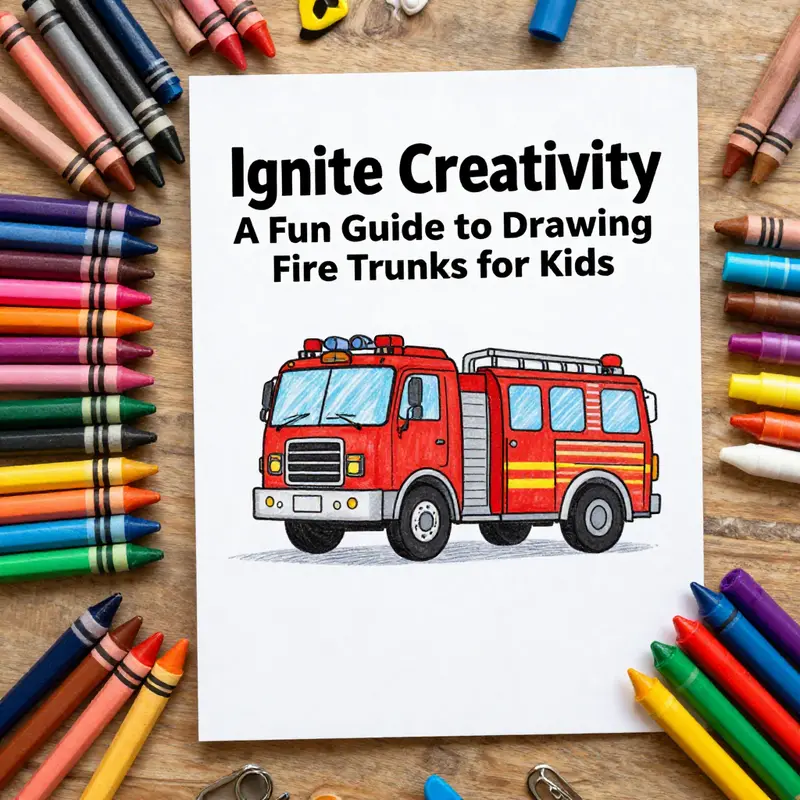
Choosing colors and tools for a child’s fire truck drawing is more than picking a pretty red. It is about building confidence, encouraging experimentation, and keeping things safe and simple enough for little hands to enjoy. The color choices shape how a child perceives the vehicle and its energy on the page. A bold red body instantly signals a fire truck, but the magic happens when a child adds bright accents, clear windows, and a sturdy, readable outline. The goal is not a perfect replica but a picture that feels alive to a growing artist. To achieve this, start with a clear plan: a bright main color, a few well-chosen accents, and materials that are easy to handle and easy to clean up. When kids feel safe and supported, their pictures become a window into their growing imagination, and their hands become confident storytellers on the page.
Among the most important decisions is how to choose a primary color. Red is the unmistakable heartbeat of a fire truck, the shade most kids recognize and respond to with excitement. But red comes in many tones—from warm, tomato reds to cooler, cherry hues. For younger children, a single, vivid red is often perfect. It reduces confusion and makes it easier to stay within the lines while the child learns the basic shapes of the truck. As kids gain confidence, you can introduce a second, contrasting color to suggest details like the ladder rungs or the reflective stripes along the side. The simplest way to think about it is to pick one strong color for the body and then use smaller swatches for accents. This keeps the drawing readable and visually satisfying.
Color harmony is not about sophistication at the outset but about clarity. A bright yellow or fluorescent yellow is ideal for accents such as the ladder, warning stripes, and the emergency lights. These hues pop against red, guiding the eye to important features and helping children practice contrast. Blue or light blue can be a gentle choice for windows and small details, providing a cool counterpoint that makes the red feel warmer. Gray or black anchors the piece by giving weight to the wheels, tires, and metal components of the ladder. When used thoughtfully, these colors help teach basic color relationships without overwhelming younger artists. The idea is to create a balanced palette that feels cohesive yet simple enough for a child to manage. If you see the page starting to look busy, it’s a cue to revert to fewer colors and stronger shapes.
Having a plan for materials is just as vital as choosing colors. The tools should match the child’s age, grip strength, and comfort with drawing. For the youngest beginners, crayons provide a safe, forgiving option. They are easy to hold, produce rich, opaque color, and resist digression from the lines because they don’t require precise pressure. A bold red crayon can form the truck’s body and invite the child to fill large shapes with confidence. For children who want sharper lines and more control, washable markers offer bright, consistent color and a quick way to define edges. Markers are particularly useful for crisp outlines, which can help a young artist see the distinction between the truck and the background. They also simplify shading, as the bold color stands out clearly against a white or lightly colored page.
Colored pencils strike a balance between control and color depth. They allow layering and gentle shading, great for adding subtle shadows along the truck’s curves or beneath the chassis. The fine tip of a colored pencil helps in refining small features like door handles, the ladder rungs, or the grill on the front of the cab. For older kids who crave more nuance, blending with colored pencils can create smooth gradients that suggest metallic surfaces or light reflections. Watercolors, when used with supervision, offer soft washes and gentle transitions. They can be perfect for a sky background or for adding a faint glow around emergency lights. The key with watercolors is a light touch; too much water can warp the page and muddy the bright colors that make a fire truck recognizable. A practical approach is to start with crayons for the main body, then layer with markers for edges, and finally use colored pencils to add shading and texture. This combination gives a child multiple textures to explore while keeping the process approachable.
Beyond the a priori color and tool choices, there is a practical rhythm to drawing that helps young artists stay engaged. Begin with broad, bold shapes. A large rectangle or an elongated oval forms the truck’s body. A smaller shape on top becomes the cab. Four circles below become the wheels. Once these shapes are in place, a child can focus on identity—where the ladder belongs, where the hose rests, and where the lights should sit. With tools that are easy to maneuver, the child can explore these placements without fear of making a mess. It helps to set up a small, dedicated workspace: a smooth surface, a sheet of scrap paper for test strokes, and a clear palette of two to three main colors plus the chosen accents. The structure of the task—shape first, color second—gives the child a sense of accomplishment at each stage, which fuels the desire to continue.
Safety and cleanliness are not just rules; they are the foundation of a positive artistic experience. Choose non-toxic, child-friendly supplies, and keep a damp cloth handy for quick cleanups. If paints are used, supervise closely and encourage your child to work in a contained area with a shallow tray to catch spills. It is also helpful to teach a routine: put away markers when a break is taken, cap crayons after use, and return pencils to a small container. This routine builds responsibility and makes the activity feel like a game rather than a chore. Storage matters, too. A simple pencil case or a labeled box keeps colors organized and easy to reach, which reduces frustration and keeps the focus on creativity.
When introducing color and materials, it helps to frame the activity as play rather than a rigid task. Celebrate each attempt with supportive language. If a child says, “I want my ladder to be blue,” encourage exploration: discuss how blue contrasts with red and how it affects the overall balance of the drawing. If spacing feels off, remind the child to view the page as a whole and to consider the proportion between the cab and the body. The moment a child smiles at a completed section—the red body with a yellow ladder, the blue windows catching the light—that is the moment the child begins to see themselves as an artist. The dialogue surrounding the choices matters as much as the choices themselves. It reinforces a growth mindset: colors can be changed, edges can be refined, and every stroke adds to a story the child wants to tell.
Incorporating a touch of imagination can transform a simple exercise into a small adventure. The child may want to add sparkles around the lights, or draw a tiny firefighter figure inside the cab to suggest a story behind the vehicle. The key is to encourage expression while keeping the design recognizable. A safe and simple path is to propose a few creative additions that do not overwhelm the primary shapes. A few sparkles can imply motion or magic; a tiny flag on the ladder can show pride in the firefighting team; a friendly grin on the cab’s windshield can give the truck personality. By inviting these narrative elements, the activity becomes more engaging and meaningful.
For parents and educators who want to extend learning, a quick reference can be helpful. A short explainer on color relationships—how warm hues advance and cool hues recede—can deepen a child’s understanding of visual storytelling. A simple exercise might ask the child to switch the accent colors and observe how the truck’s mood changes. With practice, a child can recognize that bright yellow accents make the ladder pop and that blue windows bring calm contrast to the bold red body. The process becomes a gentle introduction to color theory that remains accessible and enjoyable.
To connect this hands-on activity to broader creative exploration, consider linking it to a simple field of inquiry. A child could observe real fire trucks, discuss the roles of lights and hoses, and then translate those observations into color choices on the page. Where is the light coming from? How does the firefighter’s gear reflect on the metal surface? These questions give the child a reason to think critically about color and form, while keeping the exercise focused on play and imagination. A well-chosen set of materials supports this inquiry, offering clarity and joy as the child learns to observe, imagine, and express.
As you guide a child through this creative process, a useful resource for selecting safe, age-appropriate art materials can be a helpful companion. For a concise, practical guide to art supplies for young artists, you can explore an established resource that compiles considerations such as safety, grip, and color performance. This guidance aligns with the emphasis on non-toxic options and easy handling, helping caregivers make informed choices without sacrificing fun. You may also find value in visiting a general fire truck-focused blog to stay inspired by the real-world context of these vehicles. Fire trucks offer a rich canvas for color and shape exploration, and the drawing session can become a doorway to broader curiosity about design, engineering, and teamwork. Fire Truck Blog can be a starting point for curious readers interested in the broader world of these emergency vehicles and their community impact.
A practical note on resource use follows naturally from this discussion. Start with a small, curated set of tools and colors, then add more options as the child grows more confident. A 6–8 color palette is often plenty for a beginner: red for the body, yellow for accents, blue for windows, and black or gray for wheels and metal parts. Keep a separate area for testing color mixes, but encourage children to apply color directly to the truck once they feel sure of their choices. The aim is efficiency and delight. By limiting choices at the outset, you reduce overwhelm and invite the child to build language around color and composition. Over time, the same simple setup becomes a reliable launching pad for more complex projects—different vehicles, more complex scenes, or even dynamic action images like a truck racing toward a call for help.
If this approach appeals, you can deepen the experience by exploring linked resources that treat color selection and materials with a child-first lens. The recommended guide on art supplies emphasizes safety, accessibility, and clear communication of color choices, which resonates with the goals of drawing for kids. It reinforces the idea that color is more than decoration; it is a medium for expression, discovery, and personal growth. By embracing this mindset, caregivers can turn a straightforward drawing activity into a meaningful practice that supports cognitive and emotional development while keeping the focus on fun and curiosity. External resource: https://www.thecraftycrow.com/choosing-art-supplies-for-kids/
Interactive Learning on the Page: Apps, Videos, and Guides that Help Kids Draw a Fire Truck
Drawing with children is more than a simple doodle session; it is a shared exploration of shapes, colors, and stories that bring a familiar machine to life on a page. When kids pick up a crayon or a marker and begin to translate a fire truck from memory or imagination, they are practicing coordination, spatial reasoning, and control. They are also engaging in a kind of storytelling where a red, ladder-wielding vehicle becomes the hero of their own tiny world. The activity invites them to notice details—the long ladder leaning along the side, the wide wheels gliding beneath the body, the gleaming lights that mark the truck as something more than a plain box on wheels. The beauty of this drawing task lies in its flexibility: it can be as simple or as intricate as a child’s curiosity allows, and it can be woven into a broader moment of play, learning, and conversation about safety, teamwork, and community helpers. In short, drawing a fire truck becomes a bridge between art and understanding, a playful rehearsal for real-world noticing and naming.
To begin, many young artists approach the task with the simplest possible base: a large rectangle or an elongated oval that forms the core of the vehicle. This base is not a final shape but a scaffold. It gives the child a sturdy stage on which to place the rest of the vehicle’s features. The idea is not to chase an exact replica but to cultivate confidence in making a recognizable form through a few prominent shapes. A larger rectangle set low on the page serves as the main body, while a smaller, blockier form sits above it as the cab where the driver sits. The two shapes together create the basic silhouette of a fire truck, something a child can immediately identify and embellish. As the artist continues, the next steps unfold almost like a gentle rhythm, with each addition reinforcing the growing perception of a complete machine rather than a random collection of lines.
Wheels follow as the natural next step. Four circles, evenly spaced and aligned with the truck’s sides, anchor the vehicle to the ground. The wheels are not mere circles; they are the ground that keeps the truck in motion in the child’s imagined world. They offer a tactile moment for the young artist to practice symmetry and spacing. If a child wants to adjust, a light eraser or a gentle redraw helps teach that drawing is an act of revision as well as creation. Once the wheels are in place, a sense of momentum settles in. The truck begins to look less like a shape on a page and more like a vehicle ready to roll toward a pretend emergency call. This is the moment when the drawing becomes a story in motion, and the child’s eyes light up with the possibility of action and purpose.
Details are where the design comes alive. Small touches—a pair of round lights on the cab, a tiny horn tucked near the front, and a circular siren on the roof—signal the vehicle’s role and identity. A long ladder running along the side, with rungs marked by short horizontal lines, transforms the flat figure into a climbing tool that can reach high places. The hose, drawn as a thick line trailing away from the back, adds the element of function and play-acting risk management that fire trucks are known for. Each detail invites a new decision: how big should the lights be? Should the ladder have more or fewer rungs? Where does the hose originate from? The child’s choices shape the narrative and, in turn, reinforce fine motor skills as small adjustments demand careful control.
Color offers its own language of meaning. Bright red remains a natural first choice for the body, but children can experiment with accents of yellow, white, and silver to convey flashing lights and metal fittings. The lights might glow yellow or white, while the siren can be painted in a contrasting color to emphasize its role as a beacon. The ladder can be highlighted with a lighter tone to suggest reflection, while the wheels are typically shaded in black or deep gray to convey weight and ground contact. Color choices become a conversation about visibility and safety, reminding children that the real thing is designed to help people notice and respond quickly in an emergency. At this stage, the drawing is less about perfection and more about the feel of the vehicle—its stance, its energy, and its readiness to respond to a call for help.
As children grow more comfortable with the basics, the activity expands into an opportunity to personalize the scene. They can imagine a firefighter inside the cab, perhaps waving to a family or guiding a pet to safety. They might add a tiny window with a friendly face or draw a cartoonish flame in the distance to illustrate a challenge that the truck helps to overcome. The point is not to imitate a specific model but to celebrate the idea of rescue and teamwork. Encouraging imaginative touches, like a small badge on the door or a symbolic emblem on the side, invites kids to create a story around the truck’s mission. In turn, this storytelling strengthens narrative skills, while the steady practice of drawing strengthens hand-eye coordination and the ability to translate a mental image into a physical mark on the page.
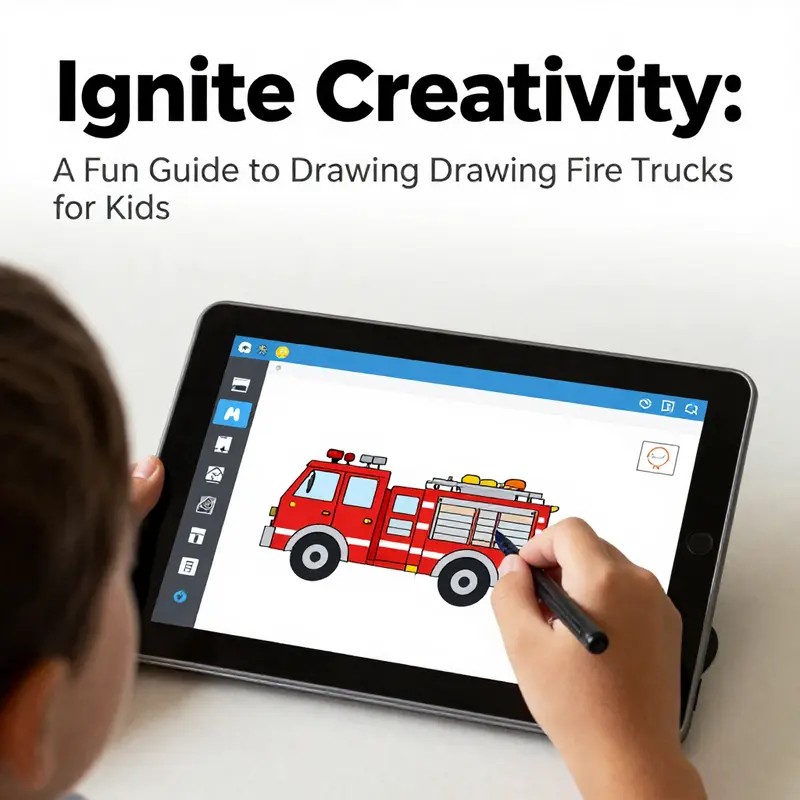
Throughout this process, the world of interactive learning subtly enhances the experience without subtracting from the initial joy of drawing. Digital tools can provide a guided environment where children see a fire truck formed in layers, from the simplest block shapes up to the finished figure with all its details. A well-designed app or digital tutorial can break the task into manageable steps, mirroring the steps a parent might take during a traditional drawing session. The digital pathway helps children test ideas and trace lines with a finger or a stylus, offering repetition and reinforcement that can strengthen fine motor control while preserving the charm and spontaneity of a handmade drawing.
At the same time, video tutorials and kid-friendly demonstrations offer a visible, patient model for learners who benefit from seeing the process in action. When a friendly host shows how to start with a simple shape, then add a cab, then lay in the ladder and hoses, the child gains a concrete reference for each stage. The gentle pace and repetition make it easier to pause, imitate, and adjust. The real value of these multimedia approaches lies not in replacing traditional drawing but in enriching it. They provide a safe space for experimentation, where mistakes are part of exploration rather than failures. Children learn to view errors as steps toward a more confident hand and a clearer idea of how a fire truck is put together.
For families seeking to blend these experiences, a small but meaningful bridge exists in the form of online resources that compile tips, visuals, and activities into a single, kid-friendly ecosystem. A trusted blog resource, for instance, offers practical ideas for turning a simple drawing session into a broader learning moment. You can explore such ideas through a handy entry point here: Fire Truck Blog. The blog emphasizes play-based learning, creative shaping, and the way stories and safety themes can be integrated into art time. The link serves as a gentle invitation to families to expand the practice beyond a single drawing session and into a longer, more engaging learning ritual that keeps curiosity alive.
Beyond individual practice, this chapter’s broader theme centers on the vitality of guided play. When a caregiver or teacher frames drawing as part of an ongoing conversation—about shapes, lines, functions, and colors—the activity becomes more than artistic exercise. It turns into a deliberate, reflective moment where children learn how to observe, interpret, and communicate what they see. This approach aligns with how interactive learning resources are designed: to invite exploration, support gradual mastery, and celebrate small victories. The narrative of building a fire truck on paper—beginning with a base shape, adding a cab, dropping in wheels, then layering in details—parallels the way many educational tools present concepts: in simple steps, with visual cues, and in a context that makes sense to a child. In this sense, the page and the screen work together, not in competition, but as complementary avenues for curiosity to flourish.
For caregivers who want a more structured yet gentle framework, it can help to think about drawing as a mini-lesson in observation. Count the wheels, estimate the length of the body, imagine the slope of the roof of the cab, and consider how the ladder must balance on the side of the truck. These small, tangible questions train attention and memory. They also invite dialogue: Why does the ladder extend upward? How do the lights help in a real emergency? What does the hose do, and where does it store when the truck is parked? Such prompts turn art time into a multi-layered experience that blends science, math, and storytelling with creativity. The chapter’s core message remains constant: when kids draw a fire truck, they are becoming more attentive, more deliberate, and more confident in expressing what they know and imagine. This is the heart of interactive learning in action, where the hands, the eyes, and the imagination collaborate to build a shared vision on the page.
As the session draws to a close, the focus shifts from the finished drawing to what comes next. The same base can be revisited for a new scene, perhaps a night-time rescue with police lights blinking in the background or a sunny daytime parade where the fire truck goes by to greet a crowd. The flexibility of the activity means it can be revisited whenever curiosity returns, offering repeated opportunities to refine technique, expand vocabulary, and deepen understanding of how real vehicles function. The real payoff lies in the child’s own sense of accomplishment: a recognizable fire truck, drawn with care, that reflects a growing capacity to observe, plan, and create. In this way, a single drawing becomes a doorway to broader learning, one that invites ongoing exploration, imagination, and joy.
External resources extend this invitation beyond the home or classroom. A well-curated, public-facing educational repository offers printable worksheets, lesson ideas, and guided activities that align with early learning standards. While these resources vary, the underlying principle remains the same: to support children as they translate observation into art, and art into a richer understanding of the world around them. For educators and families seeking a wider library of ideas, exploring reputable online learning collections can be a helpful next step. External resource: https://www.pbslearningmedia.org
Final thoughts
Drawing a fire truck is not just a fun activity; it serves as an enchanting way for kids to explore their creativity while learning about a vital community service. By following the step-by-step guide, engaging with innovative tips, selecting the right colors and materials, and utilizing interactive learning resources, children can create their fire truck masterpieces with joy. Encourage a love for art and the firefighting spirit as they draw their way to creativity. Remember, every stroke of the pencil brings them closer to becoming the heroes they admire!