
Fire truck ladders are vital tools for firefighting and rescue operations, designed to reach towering buildings and save lives. Understanding the height range of these ladders not only excites firetruck enthusiasts, but it also informs aspiring firefighters and emergency services professionals about their capabilities and specifications. This article provides an in-depth exploration of fire truck ladder heights, ranging from 20 to 32 meters. Each chapter unpacks critical aspects such as technical specifications, comparative heights across various models, and essential safety considerations, offering comprehensive insights for anyone interested in the firefighting domain.
From Street Level to Skyline: How High Fire Truck Ladders Actually Reach

Understanding the practical height of a fire truck ladder means more than quoting a single maximum figure. Modern aerial ladder systems span a broad spectrum of capabilities. Typical municipal telescopic aerial ladders extend roughly from about 20 meters (65 feet) up to the 30–34 meter range (approximately 100–110 feet). These heights meet most urban firefighting needs—reaching upper floors, roofs, and exterior rescue points on medium-rise buildings. Yet the technical ceiling for ladder reach is far higher when specialized apparatus enter the picture.
Across the globe, manufacturers have engineered aerial devices that push operational boundaries. Some heavy-duty platforms and tower ladders can reach several dozen meters beyond standard municipal models. In certain engineered cases the working height can soar past 80 meters and even approach triple-digit values expressed in meters. That said, such extremes are usually reserved for specialized rescue and industrial applications rather than everyday city fire response.
What matters in real-life incidents is the difference between a ladder’s theoretical maximum and its effective operational height. A manufacturer’s stated working height describes the device in ideal conditions: a stable, flat surface; calm wind; proper setup of stabilizers or outriggers; and an unobstructed swing radius. Once a scene introduces wind, confined access, degraded ground conditions, or limited space for outriggers, the usable height can fall sharply.
Wind is one of the most limiting environmental factors. As an aerial extends, its exposed cross-section grows and its vulnerability to gusts increases. Departments typically follow strict wind-speed charts supplied by the manufacturer; these charts show the maximum allowable wind speeds at different extension angles and configurations. In practice, a ladder that is rated to reach the top of a tall building on a calm day may be limited to half that reach in stronger winds. The combined effect of wind and angular extension also reduces the rated load a platform can carry at height, which restricts the number of people and equipment that can be safely lifted.
Ground conditions and stabilization requirements are equally important. Most aerial rigs deploy outriggers or stabilizers that spread the vehicle’s load over a larger area. The amount of footprint required depends on the apparatus design and the height to be achieved. For taller operations, the recommended clear working area and ground bearing capacity escalate. In practice this means high-reach deployments often require at least a flat area of several meters in each direction and ground that can support heavy point loads. If the ground is soft, sloped, or obstructed, crews may need to use cribbing, pads, or alternative placement, which can further limit the ladder’s maximum safe extension.
Payload capacity at height typically drops as extension increases. A platform that can carry a substantial load at ground level may be able to support only a fraction of that weight when fully elevated and fully extended. That matters for rescues that involve moving multiple people, heavy tools, or patients on stretchers. Reduced payload at peak extension is a calculated trade-off: engineers balance reach against strength and stability, accepting lower payloads to achieve greater height. This reduction is carefully specified in manufacturer documentation and must be respected in field operations.
Apparatus type is another key determinant of height. Telescopic ladders—those long, segmented booms that extend in-line—offer rapid extension and compact stowage. Articulating or tower-type systems use multiple hinged sections and often include enclosed platforms that provide more flexible positioning around building features. Each architecture has a different center-of-gravity behavior, reach profile, and load characteristic. The tallest aerial devices on record tend to be multi-section telescoping or multi-jointed tower platforms, which combine hydraulic control with larger stabilizer systems and sometimes vehicle chassis designed specifically for this purpose.
Standards and classification shape what most fire services purchase. Codes and standards set by recognized bodies provide both minimum requirements and safe operating practices for aerial apparatus. These standards influence maximum routine working heights offered in commercial markets; equipment that exceeds the standard upper limits is usually marketed for specialist contracts and receives extra scrutiny during procurement, insurance, and training.
Operational constraints also include spatial restrictions in urban canyons. Narrow streets, overhead wires, trees, and neighboring structures all limit where a truck can park and how its ladder can swing. In dense environments, a ladder with a longer theoretical reach may still be less useful than a shorter, more maneuverable unit that can be positioned closer to the target. Fire departments balance fleet composition with local geography: a city with many mid-rise buildings will prioritize different ladder heights than a jurisdiction facing high-rise clusters.
Deployment speed and reliability are practical considerations that affect the usefulness of a ladder’s height. Some aerial systems are designed to extend quickly so crews can establish high-angle streams or rescue routes sooner. Others favor controlled, slower extension for precise positioning, especially when rescuing patients or working near fragile structures. The time it takes to set outriggers, calibrate levels, and extend the aerial to a given height can influence tactics and outcomes as much as absolute reach.
Training and human factors complete the picture. Reaching high is only half the mission; the crew must be confident in positioning, stabilizing, and operating the aerial under stress. Regular drills, simulator training, and familiarity with manufacturer limitations ensure safe use of the ladder at height. Crews trained to recognize the environmental and structural cues that limit safe extension reduce risk and deliver rescue or suppression more effectively than relying on raw maximums alone.
When departments plan for equipment purchases or deploy to complex incidents, they must consider the interplay among height, payload, stability, and local constraints. A vehicle that can reach a hundred meters on paper may require a wide, stable parking area and calm conditions before it can do so. Conversely, a 20–30 meter ladder that can be deployed rapidly from an alleyway can sometimes deliver faster rescues or effective ventilation on the same structure. This trade-off is central to fleet design and tactical decision-making.
Research and case studies also reveal that while extreme-reach ladders are impressive, real-world incidents often rely on combinations of tactics: ground ladders, roof access, interior operations, and aerial placement used together. Aerials provide unique vantage points and access, but they rarely function alone in a complex rescue. Understanding the ladder’s reachable envelope helps commanders plan operations that match device capabilities with tactical needs.
Beyond the immediate operational environment, logistical and regulatory factors matter. Insurance, maintenance regimes, and certification standards for high-reaching platforms can be more stringent and costly. Departments purchasing taller apparatus must budget for specialized training, heavier maintenance loads, and potentially higher depreciation and service expenses. Those trade-offs are weighed against the benefit of extending rescue and suppression capabilities to taller structures.
The balance between theoretical reach and usable reach is what defines effective aerial operations. Modern engineering has made astonishing heights possible; yet environmental forces, ground support, payload limits, and urban realities often constrain that potential. When fire services evaluate ladder height, they look beyond a single top-line number and consider the full spectrum of operational realities.
For further reading on how command-level decisions and scene management influence aerial deployment and operational limits, see this piece on overcoming challenges in fire command systems: overcoming challenges in fire command systems.
For authoritative standards and guidance on aerial device performance, stabilization, and safe operating practices, consult the National Fire Protection Association: https://www.nfpa.org/.
How Tall Is a Fire Truck Ladder: The Technical Specs That Define Reach and Performance
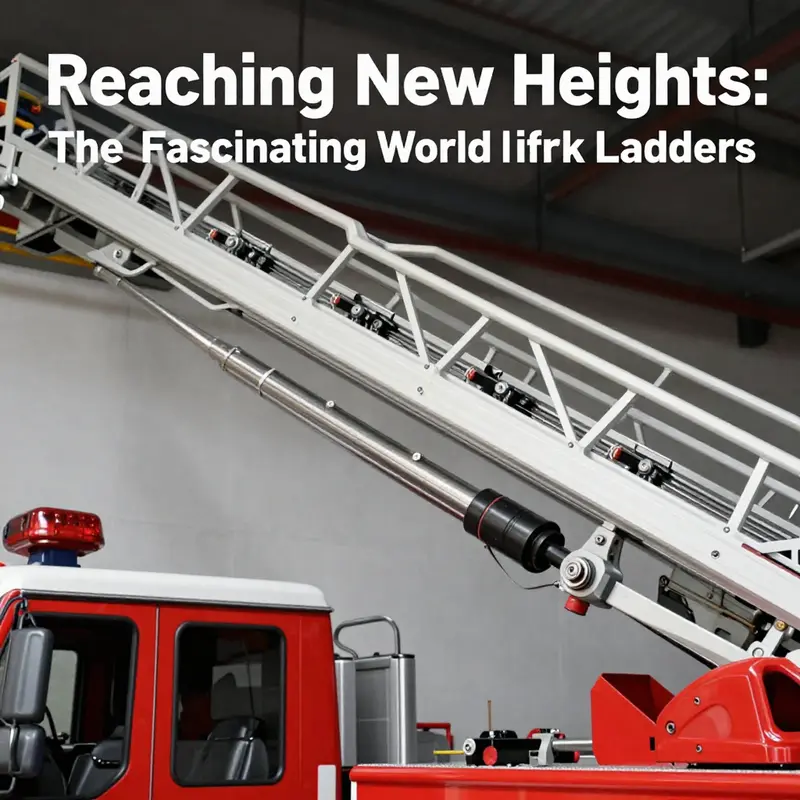
Key technical features that determine ladder height and performance
When someone asks “how tall is a fire truck ladder,” the most accurate answer is: it depends. Aerial apparatus are engineered to meet many competing demands—reach, stability, load capacity, maneuverability, and durability—so ladder height is one variable in a complex design equation. Modern telescopic aerial ladders commonly used by municipal fire departments typically extend from about 20 meters (roughly 65 feet) up to around 32 meters (about 105 feet). Larger aerial platforms and specialty units can go higher, with some systems designed to exceed 50 meters (roughly 164 feet) for high-rise operations. Those headline numbers, however, only begin to explain how ladders perform in the field.
Reach and usable height are distinct from a simple extended length. The maximum physical extension may be 30 meters, but usable working height depends on factors like stabilizer placement, nozzle and platform attachments, and the angle of operation. For a straight telescopic ladder, the vertical reach is influenced by the vehicle’s mounting height and the rotation point of the boom. Aerial platforms with buckets or cages add a few meters of reach because the platform sits above the tip of the boom. Meanwhile, articulated booms offer more positional flexibility but sometimes sacrifice a marginal amount of absolute vertical reach in exchange for access around obstructions.
Ladder types shape expectations for height and flexibility. Telescopic ladders are straight, rigid booms that extend in sections. They are efficient for direct vertical access and are common on trucks assigned to rapid vertical penetration. Articulated booms incorporate joints that allow the ladder to bend, swing and duck under obstacles or reach around corners. These are especially valuable in congested urban areas, where trees, awnings or narrow alleys block a straight line from truck to window. Aerial platforms, or bucket-equipped booms, place the firefighter on a stable work surface. This design often trades off a small amount of raw extension for safety and operational versatility since crews can work and perform rescues directly from the platform.
Material choice drives both height and durability. Ladders are usually built from high-strength aluminum alloys or reinforced steel. Aluminum provides a favorable strength-to-weight ratio, which allows longer booms without excessive mass that would overburden the chassis. Steel variants, or components reinforced with steel, offer exceptional resistance to fatigue and impact. Materials are selected not only for static strength but also for thermal resilience and corrosion resistance. Finishes and protective treatments help maintain structural integrity in coastal or chemically aggressive environments. Those choices also define maintenance cycles and long-term reliability.
Hydraulics, controls and power systems are the invisible forces that make controlled extension possible. Hydraulic rams and cylinders generate the force to extend, retract and articulate the boom sections. Those systems are designed with redundancies and pressure relief devices to prevent catastrophic failure under heavy loads. Precision control is delivered through joysticks, proportional valves and electronic feedback systems, enabling fine, incremental positioning even at full extension. Power for hydraulics is typically taken from the vehicle engine through a power take-off, or from dedicated drive systems integrated into the apparatus. Electrical systems supply sensors, limit switches and operator displays that inform safe operation.
Stability systems determine whether the ladder can be used at its full theoretical height. Outriggers and leveling jacks spread the load of the truck over a larger footprint. Proper stabilization reduces chassis roll and prevents tipping when the boom is extended laterally. Modern apparatus often include automatic leveling and interlocks that prevent deployment if acceptable stabilizer conditions are not met. Sensors monitor tilt, load, and wind speed; control logic enforces safe working envelopes and will limit boom movement if preset conditions are exceeded. Those safeguards make the difference between a ladder that is merely long on paper and one that is safely usable in the field.
Load capacity and wind tolerance are critical performance parameters. Designers calculate load ratings to account for firefighters in full gear, rescue victims, tools, and the additional weight of water flowing through monitors or hoses mounted on the ladder tip. Maximum allowable loads reduce with increased extension and with lateral outreach. Wind load is a common limiting factor: sustained winds and gusts can create bending moments on an extended boom, so operational charts often include wind-speed limits at various outreach positions. Testing protocols subject ladders to static and dynamic loads, checking for deflection, fatigue, and resonance that could compromise safety.
Tip equipment affects how ladders are used. Nozzles, monitors and cutting tools at the ladder tip allow a direct firefighting attack from an elevated position. Integrated lighting provisions enable night operations, and power and communication outlets in the bucket support radios, thermal imagers, and other mission-critical electronics. The presence of a nozzle that pumps water adds important mass and forces to the tip, and designers account for that when establishing load charts. Whether the tip carries a rescuer, a victim, or a 200-gpm monitor, those attachments influence both the functional height and the way crews plan operations.
Durability and maintenance influence how the height capability holds up over years of service. Repeated extension cycles, exposure to heat and water, and frequent road travel demand routine inspections and preventive maintenance. Manufacturers specify service intervals for hydraulic fluids, seals, and structural inspections. Welds and joint tolerances are periodically checked for crack initiation. Corrosion control and lubrication of sliding sections preserve smooth operation. A ladder that has been properly maintained will reliably reach its certified height and meet its rated load limits.
Operational training is another silent specification. Equipment is only as effective as the crews who operate it. Firefighters are trained to read and respect load and wind charts, deploy outriggers correctly, and position the vehicle to maximize usable height while minimizing risk. Techniques such as skewing the truck to gain extra reach, or placing outriggers on cribbing to extend effective stabilization, are part of the practical knowledge that translates an engineered height into a real-world rescue capability.
Standards and testing underpin everything about ladder design. Industry standards define minimum strength, testing protocols, and required safety features. Those standards set benchmarks for static load testing, dynamic fatigue testing, and operational features like fail-safe brakes and emergency lowering systems. Compliance demonstrates that a ladder has been evaluated against rigorous criteria for performance and safety. For departments, understanding which standards apply helps match apparatus capabilities to the hazards they are likely to face.
Design trade-offs are constant. Increasing length makes the unit heavier and changes vehicle dynamics. Adding articulation adds complexity to hydraulic and control systems, and can increase maintenance burdens. Choosing a platform for improved rescues may sacrifice a few meters of vertical reach compared with a straight telescopic boom. Fire service planners weigh these trade-offs against typical building heights in their service area, response times, and budgetary constraints to select apparatus that best meet local needs.
Finally, the numbers people ask about—20 meters, 32 meters, 50 meters—are useful markers, but they should be understood as part of a broader system. A 30-meter boom that cannot be stabilized at a steep angle, or that loses too much load capacity in crosswind, will not meet operational needs. Conversely, a 20-meter ladder that is easy to deploy, stable, and equipped with integrated tools can be far more effective in many urban scenarios. The interaction among materials, hydraulics, stabilization, tip equipment, load capacity, and standards produces the real-world reach of an aerial ladder.
For further reading on the engineering and regulatory expectations that shape these technical specifications, consult authoritative standards and resources such as the guidance on apparatus design and testing. Manufacturers, fleet managers, and training officers rely on these documents to ensure that theoretical ladder heights translate into safe, dependable performance in the field. To learn more about materials and structural choices used in modern apparatus, see the discussion on steel and other constructions in the fire apparatus context at steel fire apparatus. For the official standards that govern design, testing, and performance of aerial apparatus, refer to the National Fire Protection Association’s guidelines at the NFPA website: https://www.nfpa.org/
Sizing the Reach: Comparing Fire Truck Ladder Heights and Operational Tradeoffs
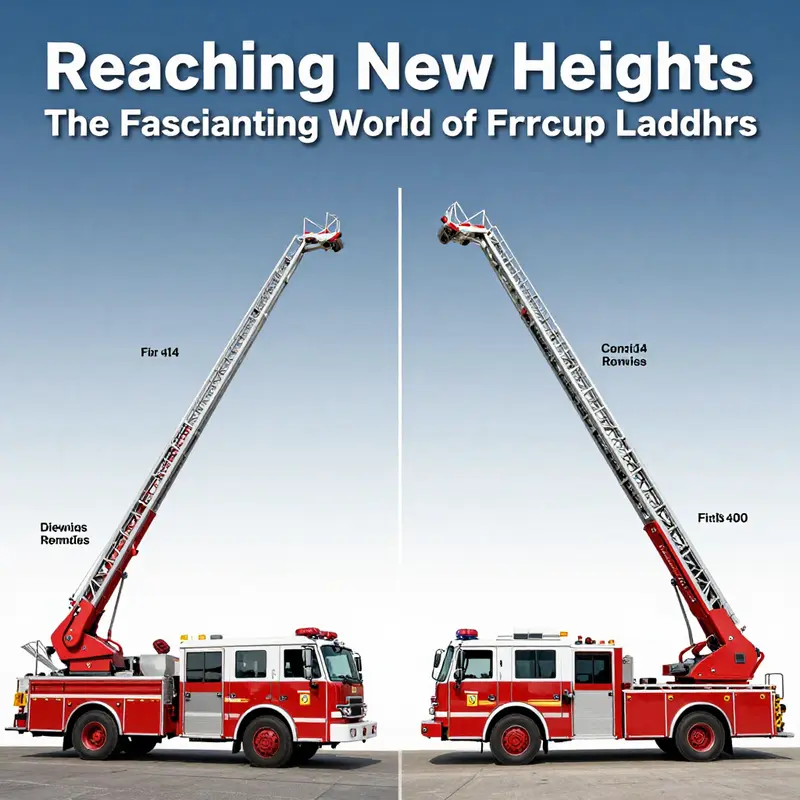
Understanding ladder reach through design and purpose
Fire truck ladder heights are not arbitrary. They reflect a balance between what firefighters must reach and what a vehicle can safely and reliably carry. Modern aerial ladders range widely, from roughly 20 meters (about 65 feet) to around 32 meters (about 105 feet). Each step up in height brings new capabilities and new operational demands. The crucial difference is not only how high a ladder can climb, but how it performs when deployed, how quickly it can be set up, and how it integrates with on-scene tactics.
Aerial ladders fall into broad families. Tractor-drawn aerials offer the longest reach. Platform aerials give a protected working area at elevation. Smaller, custom-built ladders serve support roles. Across these families, design choices determine vertical height, horizontal outreach, platform capacity, and onboard firefighting tools. Those elements, more than a single height figure, shape what a ladder truck can do for a crew.
Tractor-drawn aerials are built to reach the tallest structures. Their booms commonly exceed 30 meters and, in many fleets, surpass 100 feet. This extreme reach makes them valuable in dense urban cores with tall residential or commercial buildings, or where positioning space is constrained. Their longer booms are mounted on a trailer chassis pulled by a separate tractor, which lets engineers design for length without the limits of a single-frame vehicle.
That additional reach comes with tradeoffs. Tractor-drawn units require two distinct vehicles and a crew trained to deploy and operate the trailer safely. Setup can be slower than single-chassis trucks. They also demand more storage space and incur higher maintenance overhead. Departments choose them when extreme vertical reach is essential for their risk profile, especially in metropolitan areas with many multi-story structures.
Platform aerials, often called aerial towers or snorkels, emphasize safe, stable work at elevation. These units usually do not match tractor-drawn models for raw vertical height, but they excel in providing a controlled workspace. A hydraulic boom terminates in an enclosed platform large enough to carry several firefighters and equipment. That platform creates a secure position for rescues, ventilation, and sustained suppression operations.
The platform’s value appears when crews must remain at height for extended intervals. The enclosed bucket protects personnel from fall risk and wind, and it often includes integrated equipment: monitors, nozzles, scene lighting, and control panels. These features let crews fight fire or evacuate occupants while maintaining a safer posture than climbing or operating from a straight ladder. Platform aerials are especially useful for operations that require work at the window line, rooftop access, or precise positioning for rescues.
Smaller, custom-built ladder systems occupy a pragmatic niche. They are compact, lightweight, and often mounted on rescue or light pumper chassis. Their heights tend to be modest compared to full-scale aerials, often intended to supplement the main aerial ladder. These ladders are useful for attic rescues, low-rise access, or for departments constrained by budget or infrastructure. They lack the reach and integrated features of larger aerials, but they contribute valuable flexibility.
Beyond type, two technical distinctions shape real-world capability: vertical height versus horizontal outreach, and load-bearing capacity at full extension. A ladder’s stated height usually refers to the maximum vertical reach when the boom is angled near vertical. Outreach—the horizontal distance a ladder can reach at a working angle—is often more relevant during rescues or ventilation. A ladder that reaches 32 meters vertically may provide significantly less safe horizontal reach when extended at a low angle.
Load-bearing matters equally. An aerial designed to support multiple firefighters and heavy hose lines will behave differently at full extension than a boom rated for light loads. Platform aerials typically have higher safe working loads at height, while long-reach ladders that prioritize extension length may carry lighter loads at maximum outreach. These relationships influence tactics: a crew that needs to raise a heavy monitor and a team to a window will prefer a boom with a higher working load.
Operational environment also dictates ladder selection. Urban centers with thick building stock and tall structures favor the longest-reach apparatus. Suburban or rural departments may prioritize rapid response and multi-role vehicles over maximum vertical reach. Narrow streets, overhead wires, and limited scene footprint constrain where a large aerial can position itself. In those environments, ladder height alone does not guarantee improved outcomes.
Stability and wind resistance are safety drivers tied to height. Taller booms expose crews and equipment to wind loads that can affect control. Platform aerials include stabilizing outriggers and engineered booms to manage those forces, allowing safe operation under higher winds. Tractor-drawn ladders must account for trailer stabilization and ground conditions. Solid engineering, correct setup, and strict adherence to load charts maintain safety at height.
Maintenance and inspection cycles scale with complexity. Longer booms have more moving components and require rigorous inspection routines. Hydraulic systems, telescoping sections, and turntable bearings all demand scheduled checks. Departments with limited maintenance resources may prefer simpler systems. The goal is reliability: a ladder that rarely operates is less valuable than one that functions dependably when needed.
Training is another cost and capability multiplier. Crews need practice in positioning, stabilizing, and extending ladders. Rescue techniques from a platform differ from those on a conventional ladder. Aerial operators must understand how height, angle, and load affect stability. Departments must weigh the investment in training against the operational benefit of taller ladders. A high-reaching boom is only useful when a well-trained crew can deploy it safely and effectively.
Procurement choices can also reflect broader strategy. Some agencies invest in a small number of long-reach apparatus for mutual aid in the region. Others equip every station with mid-range aerials that match the typical local building profile. For departments exploring options, resources listing available apparatus provide insights into market offerings and configurations. Those researching apparatus and buying considerations can review local inventory and specifications through reputable marketplaces focused on emergency vehicles, such as listings for fire trucks for sale.
Standards and codes influence ladder design and acceptance. National guidelines outline testing protocols, safety margins, and performance requirements. These standards set expectations for stability, load capacity, and manufacturing practices. Compliance ensures interoperability and a baseline of safety across different makes and models. When departments compare ladder heights, they should also evaluate how a design meets regulatory expectations and field-proven criteria.
Ultimately, ladder height is one axis among many when assessing aerial capability. The maximum vertical reach provides a headline number. Yet outreach at working angles, platform safety, load ratings, setup speed, maintenance demands, and crew training define practical usefulness. A 20 meter ladder installed on a versatile, easy-to-position chassis might serve a community better than a far taller boom that cannot be reliably positioned or maintained.
When departments choose apparatus, they match objectives to available designs. For intense urban risk, longer booms and tractor-drawn solutions may dominate. For operations requiring safe, sustained work at elevation, platform aerials will often be preferred. For budget-conscious or distributed systems, smaller ladders supplement other capabilities. Across all choices, careful analysis of height, reach, load, and operational context yields the most resilient decision.
For technical specifications, testing protocols, and equipment performance criteria, officials reference industry standards to confirm compliance and safety. The NFPA standard for automotive fire apparatus provides a baseline for design and function, and is a primary resource when validating apparatus specifications: https://www.nfpa.org/Code-Updates/NFPA-1917
Beyond Height: How Safety and Operations Define a Fire Truck Ladder’s Real Reach
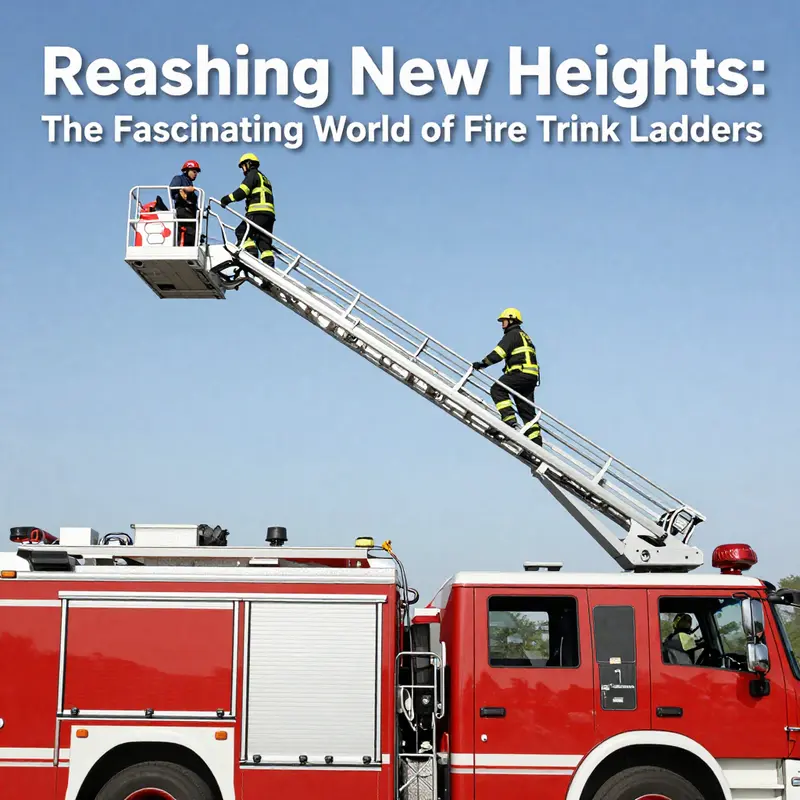
Safety and Operational Considerations for Fire Truck Ladder Heights
When someone asks “how tall is a fire truck ladder,” the quick answer lists feet or meters. A telescopic aerial ladder can extend from roughly 65 to more than 100 feet. Yet raw height alone does not determine whether firefighters can reach a window, place a handline, or perform a rescue. Safety margins, stability, environmental forces, and the truck’s systems shape the ladder’s effective reach. This chapter explains how those forces interact, and why operational decisions often limit how high crews place their ladders.
Aerial ladders and tower platforms are engineered to provide both reach and a safe work area at height. Telescopic booms, articulating arms, and enclosed platforms carry tools, water lines, and crews. Each configuration brings trade-offs. A longer boom provides access to higher floors. But added length increases leverage and wind exposure. That changes the way the apparatus behaves. The truck’s center of gravity shifts, outriggers carry more load, and control precision becomes critical. Operators must balance the desire to reach with the need to remain within tested limits.
Stability is the foundational safety concern. Manufacturers and standards bodies define maximum safe extensions and load ratings based on laboratory and field testing. Those tests assume specific ground conditions, correct outrigger deployment, and limits on personnel and equipment in the bucket. In practice, real scenes rarely match laboratory idealizations. Uneven ground, soft soil, and confined urban settings can reduce stability. That is why proper deployment begins with a ground assessment. A level set of outriggers on firm footing lets the aerial perform near its rated capability. If the surface is sloped, the crew may have to reduce extension, relocate the vehicle, or use cribbing to secure support. Each choice reduces the ladder’s available reach.
Wind is another decisive factor. A long boom catches significant wind force, which increases with elevation. Even moderate gusts can induce oscillation or add lateral load to the apparatus. Manufacturers publish wind limits for various extension levels and platform loads. Operators must heed those limits. Training teaches crews to observe gust patterns and to retract when gusts exceed safe thresholds. Night work complicates the picture further. Reduced visibility makes it harder to judge wind effects and to spot hazards. Lighting systems and careful communication between the bucket crew and the driver are essential when operating in darkness.
Load capacity at height depends on extension angle and boom length. As a ladder reaches out horizontally, its ability to carry weight decreases. Load charts translate extension and angle into allowable personnel and equipment weight. Overloading a ladder or platform near its maximum extension risks structural stress and instability. Firefighters must therefore make load decisions with precision. That may mean staging extra personnel or tools on the ground rather than in the basket. It also means planning rescues with backup ladders or aerial apparatus when multiple victims are involved.
Water delivery adds a layer of complexity. Aerial ladders and platforms often carry monitor nozzles and water lines. Delivering water from elevation requires accounting for friction loss, nozzle pressure, and pump capacity. Longer hose lines and higher elevation demand greater pump pressure to maintain effective flow. Some engines can supply 1,000 to 2,000 gallons per minute, but effective aerial flow is limited by hose length, friction losses, and the apparatus’ onboard waterway design. An aerial nozzle’s effective reach in terms of stream pattern and penetration depends on water velocity and elevation head. In many high-rise operations, interior standpipes and stairwell systems are preferable for sustained water supply, while the ladder provides access and elevated ventilation.
Setup considerations often determine where a ladder can be placed. Urban scenes present obstacles: parked cars, overhead utility wires, sidewalks, and narrow streets. Overhead power lines are particularly hazardous. Even if a ladder can reach a height above the lines, operating near energized conductors creates a threat of arcing. Standard operating procedures normally require a safe separation distance or coordination with utility companies. Sometimes the best option is to position the apparatus farther back and extend the boom at a steeper angle, trading horizontal reach for vertical clearance.
Operational tactics also shape how height is used. Rescues at window level require careful planning to match ladder position with building egress points. A ladder that can technically extend to a certain floor may not be able to reach the exact window if the building’s projection, decorative cornices, or rooftop parapets block access. Firefighters pre-plan favorite placements on common building types. They practice rapid deployment to get a ladder into the correct position while maintaining a safe angle and proper footing. That preparation shortens the time needed on scene and reduces the temptation to overextend the aerial.
Training and human factors are central. Operators learn to read load charts and to understand how extension, angle, and wind interact. They also train in communication protocols so crews in the bucket can inform the driver of perceived movement or instability. Regular drills build muscle memory for safe deployment, relocation, and retraction. Experience teaches restraint; when doubt exists, crews operate within conservative limits. This discipline becomes lifesaving in complex rescues or when other risks are present.
Maintenance and inspection directly affect how safely an aerial can be used. Regular checks catch hydraulic leaks, worn pins, or structural cracks before they become catastrophic. Routine inspections of the ladder’s bearings, rollers, and extension segments reduce the chance of lockups or sudden failures. Outriggers and stabilizers must receive equal attention. An outrigger that fails under load reduces the entire system’s margin for error. Departments that prioritize preventative maintenance sustain operational readiness and ensure their rated heights remain safe to use.
Regulatory guidance underpins these practices. Standards for aerial apparatus set minimum testing and performance requirements. These regulations define stability tests, wind resistance thresholds, and operational guides. They also prescribe documentation, labeling, and training requirements for safe aerial operation. Departments rely on these standards when procuring apparatus and when writing their operating procedures. Using standards-based practices helps ensure that a ladder’s published height translates to a predictable, safe service envelope during real incidents. For authoritative technical detail, refer to the National Fire Protection Association’s guidance on automotive fire apparatus: https://www.nfpa.org/codes-and-standards/all-codes-and-standards/list-of-nfpa-codes-and-standards/detail?code=1917
Scene command decisions integrate ladder capabilities into a larger tactical plan. Aerial ladders are one tool among many. Incident commanders weigh ladder reach against other assets, such as additional ladder trucks, high-rise packs, and aerial platforms. They factor in building construction, occupant load, and fire behavior. The commander may order a ladder to stay in a standby position for rescue while interior crews attack the fire. Or they may task the aerial with ventilation or elevated master stream operations. Clear objectives and role assignments limit unnecessary ladder exposure to risky conditions.
Environmental and situational constraints occasionally force creative solutions. In tight urban canyons, mutual aid or aerial placement on adjacent buildings may extend functional access. In areas with soft soils, teams use cribbing and mats to spread loads under outriggers. Some operations use shorter ladders in combination to create a stepped access route. Each workaround requires careful risk assessment and coordination. Those tactical choices reflect the core truth: height is useful only when it can be applied safely.
Finally, pre-incident planning extends the effective use of ladder height. Surveying buildings to note window dimensions, roof access points, and potential obstructions saves critical time. Departments that map known ladder placement spots and share that information across shifts reduce on-scene guesswork. Pre-plans also identify where aerial apparatus may face access or stability problems, prompting earlier mutual aid or alternate tactics.
In short, the numeric height of a fire truck ladder is only the starting point for operational thinking. Structural design gives every aerial a tested limit. But real-world use depends on ground conditions, wind, angle, load, water delivery needs, and human judgment. When crews understand and respect these constraints, ladders deliver lifesaving reach reliably. If those factors are ignored, even the tallest ladder becomes a hazard. Effective aerial operations combine engineering limits, disciplined training, and sound incident command to turn possibility into safe, predictable performance.
For practical discussions on improving command and coordination during complex operations, departments can explore lessons learned and systems approaches in resources covering tactical decision-making and incident command, such as articles about overcoming challenges in fire command systems: overcoming challenges in fire command systems.
Final thoughts
Determining the height of fire truck ladders reveals their essential role in effective emergency response and firefighting strategies. With heights typically ranging from 20 to 32 meters, these ladders provide the versatility needed to tackle challenges presented by high-rise structures. Understanding their specifications, comparing various models, and recognizing safety protocols are essential for enthusiasts, professionals, and future firefighters alike. As technology advances, so too will the capabilities of fire truck ladders, empowering responders to handle emergencies more efficiently. Equip yourself with knowledge about these impressive tools that save lives and protect communities.