
Understanding how much a new fire truck costs is a crucial aspect for firetruck enthusiasts, aspiring firefighters, and professionals in the firefighting and emergency services industries. With price ranges varying widely based on size, type, features, and even the manufacturer, selecting the right fire truck goes beyond just looking at the sticker price. This comprehensive guide will delve into various factors that influence fire truck costs, regional pricing variability, and essential budgeting considerations, ensuring you’re equipped with all the knowledge necessary to make informed decisions as you navigate this exciting terrain.
null
null
Counting the Cost of Readiness: How Size, Features, and Manufacturer Shape a New Fire Truck’s Price
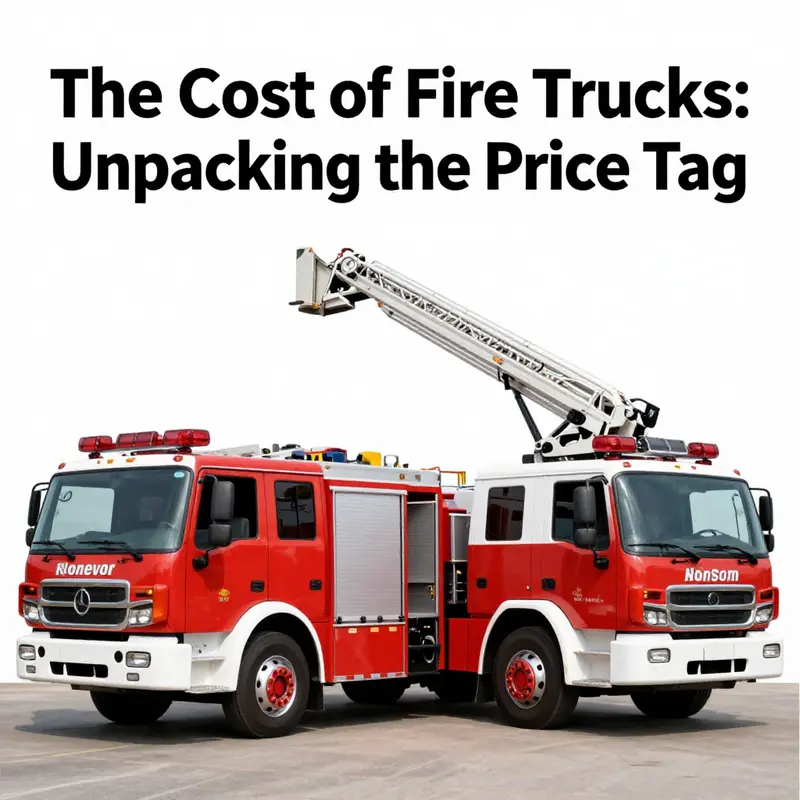
Budgeting for a new fire truck is less a single wholesale number than a careful weighing of trade-offs that directly affect response effectiveness and long-term sustainability. Departments must balance the urgency of fast, reliable on-scene performance with the practical realities of financing, maintenance, and fleet lifecycle management. The cost landscape for new fire apparatus is not uniform; it stretches from compact, purpose-built units designed for quick access in tight streets to large, highly specialized machines built to perform under extreme conditions. Three core levers drive the final price more than any others: size, features, and the choice of manufacturer. Understanding how these levers interact helps decision-makers translate mission needs into a price that reflects both immediate capability and long-term value.
Size is the first and most tangible price lever. A fire truck’s heart is its chassis, pump, water tank, and the ancillary systems that enable it to perform on the ground. When the vehicle scales up from a small, nimble unit intended for rapid initial suppression to a larger platform capable of sustained firefighting and complex rescues, the costs rise correspondingly. The engineering of a bigger chassis must accommodate larger water or foam capacities, more powerful pumps, and a broader set of safety and rescue tools. In turn, this scales the cost in predictable ways: more material, more complexity, and more testing to ensure reliability under demanding conditions. The result is a price ladder where compact, city-focused units sit at the lower end and large, multi-role platforms command substantially higher investments. The difference is not merely about size; it is about how much water and how fast it can be delivered, how quickly it can reach difficult locations, and how robustly it can handle extended operations in challenging environments.
A unit’s features form the second major axis of pricing. Modern fire apparatus carry a suite of technologies and equipment that go well beyond the basic ability to pump and hose. Extendable ladders, advanced onboard computers, integrated safety systems, and a wide array of rescue tools add layers of capability—and cost. Each feature adds both a purchase price and a footprint in terms of maintenance, training, and spare parts. Some departments prioritize speed-to-suppress through rapid deployment, while others emphasize complex rescue or hazardous-material response capabilities. In those cases, the pricing impact of features grows because the equipment must be reliable under high demand, operate in a wider range of scenarios, and be supported by sophisticated diagnostics and repair workflows. The more capable the truck in terms of reach, reach stability, and on-board systems, the more significant the investment.
The choice of manufacturer is the third pivotal factor. Known manufacturers often command a premium, not merely for brand prestige but for perceived reliability, performance history, and the breadth of after-sales support. A manufacturer with an established service network offers reduced downtime and faster maintenance, which translates into lower life-cycle risk and more predictable operating costs. In practice, the premium for brand-name products can be weighed against the department’s tolerance for risk, its access to qualified technicians, and the availability of local service agreements. Additionally, some manufacturers specialize in industrial, ARFF (Aircraft Rescue and Firefighting), or other demanding platforms. These specialized builds—crafted to withstand extreme conditions, hazardous materials, or unique mission requirements—tend to sit at the higher end of the price spectrum because of their rugged construction and the bespoke nature of the engineering.
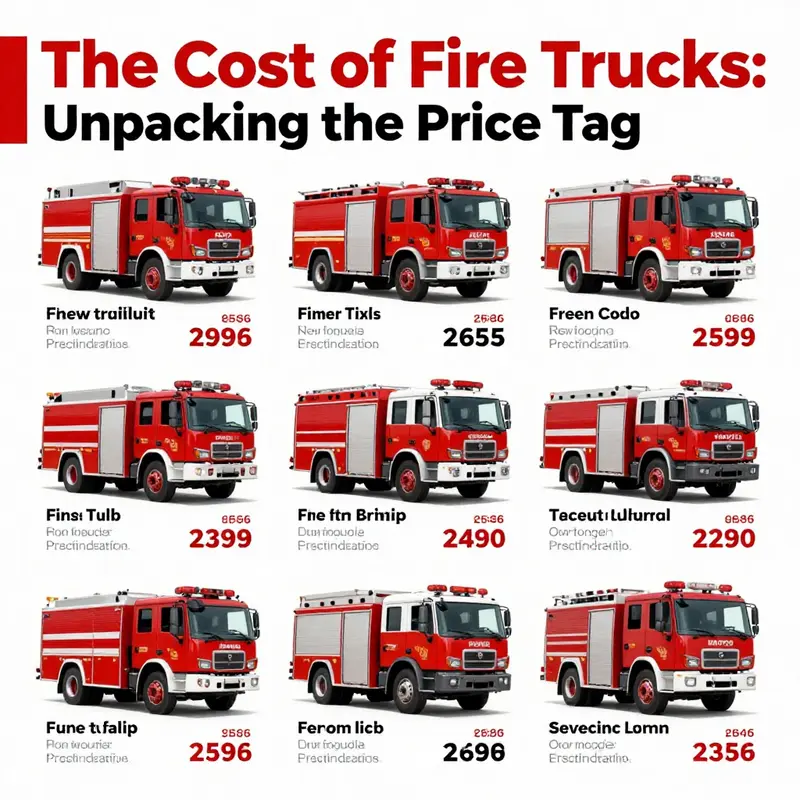
To put those axes into a practical frame, consider the range of price signals typically observed in current market contexts. At the lower end, compact, purpose-built units designed for rapid response in tight urban or suburban layouts are priced in the region of a few tens of thousands to mid-twenties thousand dollars per unit. These are usually smaller, lighter, and designed for quick entry into narrow streets, with a focus on speed and maneuverability rather than heavy sustained suppression. The next tier moves toward mid-size, more capable platforms that balance size, water or foam capacity, and modular equipment packages; these often begin in the mid-thirties to the low five figures in thousands, depending on the exact configuration and any custom outfitting. Finally, for truly large, multi-purpose platforms—especially those featuring aerial capabilities, extended reach, or specialized rescue and hazard-control equipment—the price can climb into six figures and, for the most robust, fully equipped units, well into the several hundreds of thousands of dollars. In a market populated by diverse manufacturers and a spectrum of configurations, those figures are not merely aspirational; they reflect the complex engineering, materials, and testing that support life-saving performance on the ground.
The decision-making process also needs to account for ancillary costs that can materially affect total ownership expense. Shipping, import duties, and delivery logistics are common early-stage considerations for departments evaluating national or international suppliers. Beyond procurement, outfitting a chassis with the full suite of firefighting gear—hoses, nozzles, foam systems, extinguishing agents, rescue tools, lighting, communications gear, and diagnostic equipment—adds layers of cost that can vary widely by specification. Maintenance and spare-parts availability matter as well. A truck that benefits from a broad service network, readily available parts, and structured warranty coverage can reduce downtime and keep fire crews ready, even if its upfront price is slightly higher. In practice, those lifecycle considerations can narrow or widen the apparent differential between competing configurations when the long-term cost of operation is examined alongside the initial purchase price.
The market context also means that the value proposition of a given truck cannot be judged on sticker price alone. Some departments face a tension between maximizing current response capabilities and preserving funds for future fleet renewal. In such cases, procurement teams weigh how much capability is necessary to meet current demands and how much reserve capability should be funded to accommodate population growth, evolving hazard profiles, or climate-driven risk shifts. That balance naturally shifts the price envelope over time, as purchase decisions ripple through maintenance cycles, operator training, and strategic fleet planning. The decision is therefore not simply about “how much does a new fire truck cost?” but about “what is the right level of capability and resilience for this community, and what does it cost to sustain it over the vehicle’s service life?”
For readers exploring the marketplace and evaluating concrete options, online listings and dealer pages illustrate the breadth of available configurations. The spectrum can range from compact, electric-powered units designed to deliver rapid initial suppression in tight corridors to mid-size platforms optimized for versatile operation across a spectrum of urban and suburban responses. And for departments that require maximum reach and redundancy, a larger, multi-role platform with advanced rescue tools becomes a strategic asset, even though the upfront investment is higher. When shopping, it is helpful to review current market listings to gauge typical price bands, what features tend to accompany those price points, and how installation, testing, and commissioning are factored into the total cost. As a practical entry point, consider perusing the broader market through the fire-trucks for sale pages, which summarize a range of options and can help departments align their needs with realistic price expectations. fire-trucks for sale
Beyond the numbers, the literature on cost determinants emphasizes the same three factors with a refined justification. Size drives not only the physical footprint but also the hydraulic capacity, pump pressures, and water handling efficiency that a department requires for its specific response profile. Features translate directly into higher reliability, faster deployment, greater situational awareness, and improved crew safety, all of which carry both upfront and ongoing costs. Manufacturer influence captures the reality that a well-supported product line backed by strong service ecosystems and durable engineering can reduce downtime and lifecycle costs, even if the initial price is higher. In practice, these dynamics help explain why two trucks that appear similar on paper may diverge substantially in total cost of ownership over a 15–20 year service life. They also underscore the importance of aligning procurement with long-range fleet planning, training capacity, and the department’s mission mix.
The discussion about cost drivers is not merely academic. It connects directly to how departments design their training programs, how they structure maintenance schedules, and how they approach upgrades to meet changing risks. A larger, feature-rich platform may demand more sophisticated operator training, more frequent system checks, and a larger stock of spare parts. Each of those requirements translates into budget lines that must be anticipated at the outset. Conversely, a smaller, simpler unit may deliver excellent value in the right setting, especially if it can be maintained with the existing workshop capabilities and local service network. The essential takeaway is that price is not a fixed ceiling but a reflection of a truck’s capacity to deliver the right mix of speed, reach, resilience, and reliability for a given community and its anticipated needs.
For readers who want to dig deeper into the factors shaping new-fire-truck pricing, there is a widely cited industry analysis that links procurement cost to engineering choices, scale, and the reliability profile of manufacturers. The article outlines a framework where three primary cost drivers—size, features, and manufacturer—interact with market dynamics, supply chain conditions, and regulatory expectations to determine final prices. While the specifics vary by region and by contract, the underlying principle holds: cost is a function of purpose, scope, and support. This integrated view helps explain why identical-looking trucks can differ in price by a wide margin and why a department’s long-term costs can diverge from initial quotes even when upfront equipment appears similar.
In closing, the price of a new fire truck reflects more than a price tag. It embodies the department’s risk tolerance, its service-life expectations, and its ability to leverage a manufacturer’s knowledge and network for the sake of reliability on the ground. The interplay of size, features, and maker determines not only what the truck can do today but what it will cost to keep it performing tomorrow. Departments that approach the procurement with a clear view of this triad—size for capacity, features for capability and safety, and manufacturer for service and durability—stand a better chance of securing an apparatus that serves as a steadfast instrument of readiness for years to come. For readers who want a concise snapshot of current market options and price signals, the broader market page linked above is a useful starting point to see how configurations translate into dollars. External analysis of cost drivers further enriches this understanding and provides a structured lens for comparing offers across different vendors and regions: https://www.fireapparatusmagazine.com/what-determines-the-cost-of-a-new-fire-truck/.
Price Across the Map: How Regional Markets Shape the Cost of New Fire Trucks
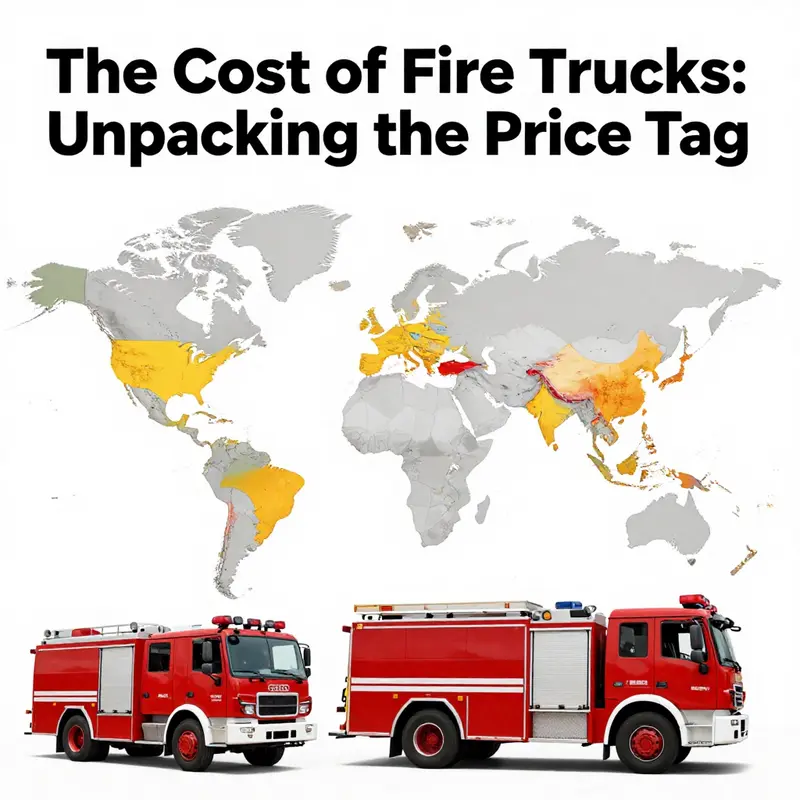
Prices for a new fire truck are not a single number but a spectrum shaped by place and purpose. The sticker price a city or rural district pays is filtered through local regulations, climate and terrain, economic conditions, and the level of technology that decision-makers expect from a modern fleet. When you step back from the top-line figure, what you see is a map of cost drivers that can swing the price by hundreds of thousands of dollars between neighboring regions.
A regional lens helps organize the story into three intertwined layers: regulatory and technical requirements, economic and logistical realities, and the mission profile that fleets must support. In regions with stringent safety codes and bespoke testing regimes, manufacturers tailor equipment to meet exact standards. This can mean longer development cycles, more extensive documentation, and components designed to pass local inspections. In markets where import duties and value-added taxes are high, the landed cost rises even before the first unit leaves the factory. Currency fluctuations add another layer of unpredictability for municipal budgets that have to forecast multi-year procurement plans. All of these factors converge with broader market dynamics—supply chain resilience, local demand, and the pace of modernization—that shape the final price tag.
The price spectrum across fire-truck categories mirrors this regional mosaic. Small, compact units designed for quick access to narrow streets and rapid knockdown of early-stage fires tend to be the most affordable option, often priced in the lower tens of thousands of dollars. A compact firefighting vehicle with water and foam capability, when sold to a budget-conscious buyer in a region with lower import costs, might hover around the mid-20,000-dollar mark for a single unit. In places with higher regulatory expectations or where fleets demand certain energy efficiency standards, similar micro-trucks can carry a higher price, especially if buyers insist on electric propulsion or superior battery life. In many markets today, even a modest electric model can push toward the $35,000 range, particularly if the order size triggers volume-dependent discounts or if the supplier is meeting minimums required by a regional procurement policy. The exact price in these cases is a function of both the base capabilities of the vehicle and the terms of the sale, including minimum order quantities and installation or commissioning services.
Beyond the Sticker Price: A Lifecycle Perspective on Budgeting a New Fire Truck
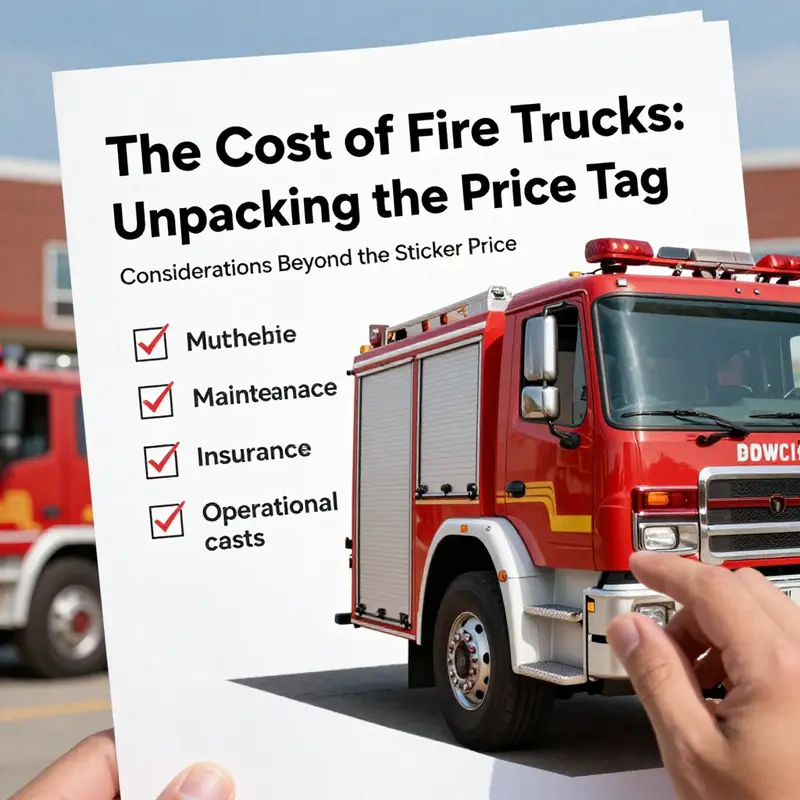
When a fire department evaluates a vehicle replacement, the sticker price alone rarely tells the full story. A new fire truck, regardless of its size or configuration, sits at the intersection of mission readiness and fiscal stewardship. The initial price reflects the core vehicle, its chassis, and the basic firefighting apparatus. Yet the real cost unfolds over years through maintenance, operations, training, and the inevitable variations that arise from local standards and evolving response needs. In practice, budget planning for a new fire truck demands a lifecycle approach. It requires tracing the financial trail from the moment the order is placed to the day the equipment is retired, and perhaps sold or repurposed into surplus.
To frame this, consider the spectrum of vehicle types that departments commonly evaluate. On the low end, compact units built for rapid access to narrow streets or during initial suppression phases carry sticker prices in the tens of thousands. These mini trucks, often designed for electric propulsion or small-scale water and foam capabilities, are attractive for their nimbleness and lower upfront cost. On the opposite end, large, heavy-duty apparatus with aerial ladders, extended reach, and substantial pump capacity command much higher base prices. They are engineered for complex urban environments and demanding rescue operations, and their financial profile reflects the added capability and reliability demanded by long-range missions. Across this spectrum, the base price is merely the opening chapter of a longer story about total cost of ownership.
The numbers that anchor this discussion are instructive. A representative heavy-duty model from a major manufacturer can be priced in a broad range that starts around the mid-five figures and climbs into the high five figures or beyond, depending on the configuration and optional equipment. A more specific illustration, drawn from industry procurement data, suggests a base price around $59,000 to $69,000 per unit for a standard, new chassis-and-pump combination when ordered in small quantities. This baseline excludes shipping, taxes, and any local modifications. The key takeaway is not the exact figure, but the reality that the sticker price is a starting point for a broader budgeting exercise.
Compact, purpose-built response vehicles may list at tens of thousands of dollars, or, in some markets, at even lower figures when the vehicles emphasize basic water delivery with limited pump capacity and foam or water-to-foam conversion options. Electric or hybrid configurations may begin in the mid‑thousands or low five figures in certain markets, though the more capable models with adequate range and payloads still hover at a higher price tier. It is tempting to treat these as fungible options—one budget line to replace another—but the differences in capability, reliability, and field performance carry long-term financial implications. For departments grappling with congestion, geography, or budget constraints, the decision often becomes a balance between the immediate capital outlay and the anticipated operational savings or costs over time.
Beyond the initial purchase price, several recurring cost categories shape the overall financial footprint. Operational costs, for instance, are influenced by the drive system. An electric or hybrid unit can reduce fuel or energy expenses and may offer lower maintenance costs in some areas, but it introduces different expenses such as battery management, charging infrastructure, and potential end-of-life battery replacement. Conversely, a traditional diesel-powered platform might exhibit higher fuel and oil costs, but it may benefit from a broader ecosystem of service providers and readily available replacement parts in many regions. In other words, energy costs are context-dependent, and a true budget plan should model multiple scenarios rather than assume uniform savings from any single technology.
Maintenance and repairs form a substantial portion of lifecycle costs. The vehicle houses a suite of specialized equipment—pumps, hoses, ladders, rescue tools, on-board extinguishing agents, and electronic control systems. Each component requires scheduled inspection, periodic calibration, and, eventually, replacement. The lifetime cost of these components can rival or exceed the original purchase price, especially when a department experiences extended uptime requirements or frequent use in harsh environments. The cost of downtime itself—lost readiness, delayed response, and the potential impact on community safety—must be weighed alongside the tangible parts costs. A robust maintenance program, a reliable supply chain for spare parts, and trained technicians are essential to avoid cascading expenses that erode the value of a new truck over its service life.
Equally important are staffing and training costs. A new fire truck is not useful without personnel who know how to deploy its capabilities safely and effectively. Training expenses include initial certifications for operators and drivers, ongoing refreshers for specialized equipment, and drills that integrate the new vehicle into existing command and control workflows. These training investments persist throughout the truck’s lifespan and often reflect the quality of the department’s safety culture. Insurance premiums, too, trend with risk profiles shaped by the vehicle’s capabilities, mission scope, and the local regulatory environment. Insurance acts as a hedge against liability and loss, but it also represents a predictable recurring cost that must be budgeted alongside maintenance and fuel.
Customizations and compliance add another layer of complexity. Agencies frequently tailor a platform to meet local safety codes, environmental regulations, and documentation requirements. Compliance considerations span widely—from ISO or quality-management standards to country-specific certifications such as CCC, CE, EPA, and RoHS. Each standard imposes testing, documentation, and potential design adjustments that can affect both the upfront price and the lifecycle costs. The implications extend to integration with municipal and regional emergency response systems. Upgrading communications gear, software interfaces, or data-sharing capabilities may entail additional hardware, software licenses, and ongoing compatibility maintenance. The overarching lesson is clear: the value of a new truck rises or falls with its fit to a department’s operational ecosystem, not merely its horsepower and pump rating.
For departments weighing procurement options, it is helpful to consider the broader enterprise impact. A vehicle that aligns well with a department’s incident command structure, radio and data networks, and maintenance workflows can deliver lower life-cycle costs through higher reliability and faster return-to-service times. Conversely, a model that requires bespoke service pipelines, scarce specialized technicians, or frequent field-expedient modifications can incur hidden costs that accumulate after the initial purchase. When a department places a premium on interoperability and standardization, the liability and risk exposure associated with nonstandard equipment can also drop, producing a more predictable budget trajectory over time.
Incorporating these dynamics into a decision model often means conducting a formal lifecycle cost analysis. A 10- to 15-year horizon is common in municipal budgeting, and within that window, several factors should be weighed in parallel. Fuel or energy efficiency, reliability ratings, warranty terms, and possible resale value all shape expected total cost. A higher upfront price on a more durable, well-supported model may yield lower total ownership costs if it reduces downtime, minimizes emergency repairs, and extends service life without significant rework. On the other hand, a lower upfront price can be appealing, but it risks higher maintenance frequency, shorter service life, and more frequent capital cycles that complicate annual budgeting and capital planning.
To illustrate how these variables come together in practice, consider the scenario of a department evaluating a mid-range, heavy-duty platform that leverages a proven chassis and compact firefighting system. The base price for a new unit in this category could land in the $60,000 range, with the option to add larger pumps, higher-capacity water tanks, or advanced foam systems. The department’s counsel would then build a multi-year projection that includes fuel or electricity costs, planned maintenance milestones, and the anticipated cost of major component replacements. They would also account for training, insurance, and potential upgrades to meet evolving safety and regulatory standards. Even at this stage, the project’s economics become a balancing act: should the department opt for a slightly more expensive model with longer warranty coverage and lower maintenance needs, or should it select a more economical base with the expectation of more frequent service intervals and higher downtime?
Another dimension is the device’s integration into safety and response workflows. The modern fire truck often serves as a node in a broader system of incident management, dispatch, telematics, and on-scene data collection. The costs of such integration can be surprisingly substantial. Upgrades to communications infrastructure, software licenses, and data-security measures may be required to ensure seamless interoperability with neighboring agencies and county-wide or regional command centers. In some jurisdictions, these integration costs are funded separately from the vehicle purchase, but they must be acknowledged early in the budgeting process to avoid cash-flow gaps. The goal is not to maximize one metric—be it depreciation or energy efficiency—but to optimize overall readiness and resilience while staying compliant with the agency’s stewardship standards.
The procurement philosophy that best supports these goals emphasizes risk management and transparency. Departments should document anticipated life-cycle costs and justify selection decisions based on objective criteria such as uptime, mission-critical performance, and the total cost of ownership over a decade or more. A well-articulated rationale for the chosen vehicle can also streamline subsequent procurement steps, from add-on approvals to contract negotiations with manufacturers and dealers who understand the public safety context. In practice, this means building scenarios that test sensitivity to fuel price shifts, maintenance cost inflation, and regulatory changes that could affect warranties or required equipment. It also means considering resale value or trade-in potential, which can be influenced by market demand for mature fleets, regional funding cycles, and the department’s demonstrated track record in maintaining reliable equipment.
To deepen the procurement conversation, consider the way specialists and policymakers talk about the broader ecosystem of firefighting vehicles in developing contexts and varied terrains. In settings where budgets are tighter and terrains more diverse, the value proposition often centers on cost-effective, robust platforms that can be adapted to multiple roles. The literature on customized firefighting vehicles for developing countries highlights the importance of meeting diverse terrain and budget constraints without sacrificing core safety capabilities. For a detailed discussion, see the resource on comprehensive-customized-firefighting-vehicles-for-developing-countries-meeting-diverse-terrain-and-budget-constraints. This reference provides a framework for balancing local conditions, supply chain realities, and long-term maintenance commitments with the objective of achieving reliable performance across a range of emergencies. It reminds readers that budget decisions should consider not only the price tag but also how a vehicle performs day in and day out under the capricious demands of real-world incidents. comprehensive-customized-firefighting-vehicles-for-developing-countries-meeting-diverse-terrain-and-budget-constraints
In planning, departments often precede purchases with a careful assessment of risk, reliability, and life expectancy. They compare a spectrum of scenarios: from a modest, lower-cost platform that handles routine incidents to a fully loaded, high-end configuration that can perform in the most demanding urban environments. The middle ground—models offering solid reliability, reasonable operating costs, and compatibility with existing systems—often proves to be the sweet spot for many agencies. The crucial takeaway is not a single ideal price point but a disciplined budgeting process that name-checks every relevant cost, assigns ownership of each item, and tests how the truck’s performance aligns with the department’s mission in the years ahead.
The practical implication for decision-makers is clear. They should demand a structured, auditable cost model that captures initial costs, ongoing operating expenses, maintenance trajectories, and the residual value at expected retirement. They should also require evidence of supplier support in the form of warranties, parts availability, technician training, and spare parts inventory planning. Where possible, departments should seek to quantify tolls and downtime in terms of response readiness and community protection outcomes, turning abstract numbers into tangible service delivery metrics. In this light, the sticker price becomes one line item in a broader narrative about community safety, fiscal stewardship, and the department’s ability to meet evolving emergency challenges with confidence and continuity.
External guidance from national safety and public procurement authorities can further illuminate best practices. For organizations seeking a policy framework and procurement best practices related to fire trucks, resources such as the U.S. Fire Administration offer valuable context on standards, training, and lifecycle considerations. This external perspective complements the department’s internal budgeting discipline, ensuring that the chosen path remains aligned with recognized safety objectives and accountability standards. For deeper policy context, see https://www.usfa.fema.gov/.
In summary, the journey from sticker price to a sustainable budget for a new fire truck is a careful expedition through total cost of ownership. It requires recognizing the base price as a starting point, then forecasting maintenance, energy use, training, insurance, and regulatory costs over a 10- to 15-year horizon. It invites a decision-making posture that favors reliability, interoperability, and long-term readiness over singular upfront savings. By embracing a lifecycle view and grounding decisions in transparent, evidence-based scenarios, departments can secure equipment that not only meets today’s needs but also adapts to tomorrow’s challenges without compromising financial stability. The lesson is practical and transferable: smart budgeting for a new fire truck is less about chasing the lowest upfront price and more about ensuring predictable, durable performance that safeguards communities for decades to come.
Final thoughts
Navigating the price of a new fire truck involves understanding a myriad of factors, from the type and features of the vehicle to regional pricing trends and supplementary costs to factor into your budget. By leveraging this comprehensive overview, firetruck enthusiasts, aspiring firefighters, and emergency services professionals can make informed decisions that align their passion and professional requirements. Ultimately, staying well-informed is key to making a wise investment into the tools that support fire safety and community service.