
When the sirens wail and the stakes are high, fire trucks and ambulances roll out together, creating a formidable first response team. This collaborative approach is not just a coincidence; it is a critical strategy designed to save lives in emergencies. Across congested streets and remote areas, the swift arrival of firefighters complements the paramedic team, allowing for rapid and effective care for patients in distress. Understanding why fire trucks accompany ambulances involves examining factors such as response speed, the specialized training of first responders, the expertise firefighters bring in emergencies, and the systemic integration of our emergency services. Each chapter of this article will delve deeper into these elements, uncovering how this synergy significantly enhances emergency response effectiveness.
First Minutes, Lasting Impact: How Speed and Accessibility Shape Fire-Ambulance Co-Response
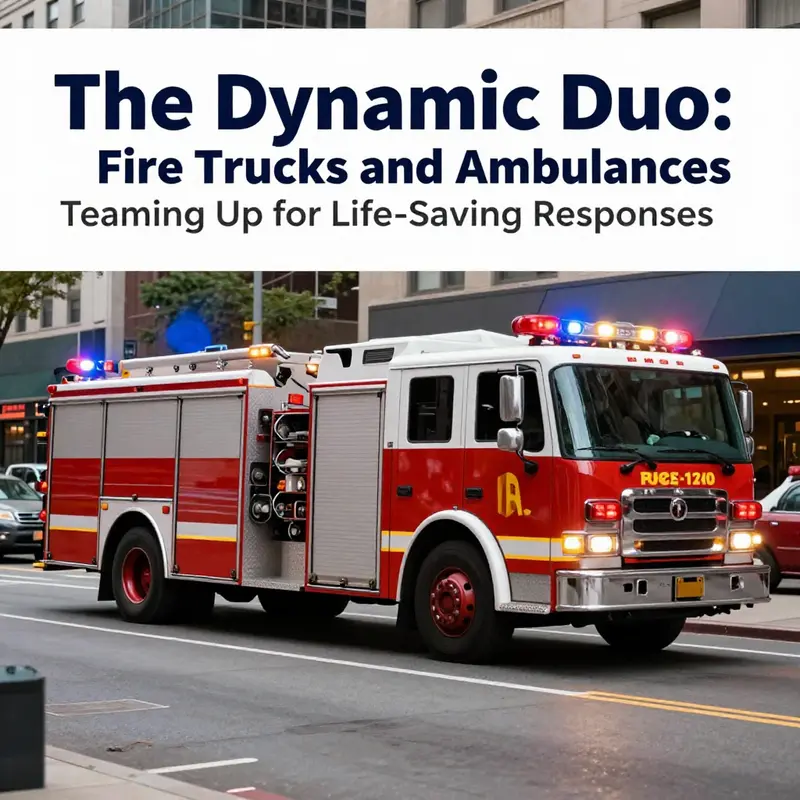
When a siren cuts through the night, it is not just urgency but a carefully choreographed collaboration. The clock starts ticking the moment responders hit the pavement, and those minutes can decide between life and loss. In many emergencies, especially large-scale or high-risk incidents or in difficult terrain, the partnership between fire and medical teams is a necessity. It rests on a simple premise: speed amplifies capability, and accessibility multiplies outcomes. The fire truck’s arrival is not a backstop for the ambulance; it is an extension of the medical team’s reach, a mobile platform for rapid intervention, and a safeguard against the unpredictable twists that any scene can take once responders arrive.
In urban corridors choked with traffic, in suburban cul-de-sacs with limited access, and in sprawling, remote environments where infrastructure buckles under strain, fire apparatus often holds the decisive advantage in reach and tempo. Firefighters are trained to navigate chaotic scenes with calm efficiency. They are prepared not only to suppress flames or contain hazards but to stabilize patients in the earliest moments of care. The quick arrival of a fire engine can mean the difference between a patient receiving a shock from a defibrillator within the golden minutes and the window closing on a chance at meaningful recovery. Emergency response is not a linear handoff from one vehicle to another but a continuum of care that begins the moment responders hit the pavement.
The mechanics of that continuum are straightforward on the surface, yet they rest on a sophisticated architecture of training and shared purpose. Firefighters often carry medical equipment and are trained in basic life support and, in many departments, advanced life support. This training equips them to perform CPR, operate AEDs, control bleeding, establish airways, and manage the early stages of resuscitation. These capabilities turn a fire engine into a mobile, on-scene medical unit that stabilizes patients while waiting for the ambulance to provide definitive care. The difference is not merely the presence of a defibrillator or a bag-valve mask; it is the speed with which those tools are deployed, the steadiness of the hands that wield them, and the clarity of the decisions made at the scene. In this sense, the fire truck does more than accompany the ambulance; it augments the medical team’s reach by shortening the path between recognition and intervention, a distinction that can be decisive in time-critical emergencies.
The synergy grows stronger when the environment adds complexity. In high-stakes incidents such as multi-vehicle collisions, structural collapses, or chemical releases, the fire crew provides scene control, rescue expertise, and the ability to access patients trapped in precarious positions. Hydraulic rescue tools, ropes, and extrication gear become part of the medical response, allowing patients to be freed and then stabilized in a continuous chain of care. The ambulance crew, trained to assess and treat, can focus on airway management, circulation, and rapid transport decisions, while the fire team handles hazards and the physical aspects of extraction. It is a division of labor that feels almost seamless because it rests on a shared objective: to protect life by any means necessary, without delay.
The effectiveness of this arrangement is the product of systemic integration. Modern emergency response systems increasingly integrate fire and medical services into unified response models. This integration is evident in places where joint response points exist, enabling ambulances to be dispatched from within fire stations or where dispatch centers coordinate a synchronized deployment of both units. The result is a streamlined chain of communication and a cohesive on-scene command that eliminates redundant steps and reduces the time to first intervention. In these frameworks, the fire engine is not a secondary responder but a deliberate extension of the medical team, equipped to address the environment while care proceeds. Such integration reflects a broader understanding that emergencies demand a robust and reliable network rather than a single capable vehicle.
In mining and other high-risk work sites, the emphasis on speed and accessibility takes on added importance. The on-site presence of fire apparatus provides rapid access to life-saving equipment and expertise. A dual-response approach ensures that if a situation escalates, on-site teams are ready to manage secondary risks while medical staff focus on casualties. This arrangement reduces the distance between patient and stabilization, accelerating the trajectory toward recovery. Cross-trained personnel, firefighters who can administer limited medical care and EMS professionals who can assist with scene safety, form a team that is adaptable to evolving hazards. The practical result is a faster, safer, more reliable response that can withstand the unpredictable dynamics of large-scale emergencies.
The framework that governs this performance includes unified command structures. When fire and medical units operate under a single on-scene leadership, decisions come faster and roles are clearer. In practice, the fire engine arrives with essential equipment, the crew begins care, and the ambulance arrives with definitive capabilities in place to continue treatment. The synergy becomes a practical example of time saved at the outset translating into better outcomes downstream.
To summarize, fire trucks accompany ambulances not to fill space but to ensure the most vulnerable receive care in the first moments, to leverage speed and maneuverability to gain time, and to anchor the effort in a system that treats response as a single mission. Firefighters bring access, authority, and technical rescue skills; EMS professionals bring medical expertise, decisive patient care, and transport capability. When these forces converge, the early hours of an incident become a continuous thread of care that carries a patient from first assessment through stabilization, extraction, and handoff to hospital-based treatment. Here speed is a defining feature and accessibility is the mechanism by which that speed translates into survival.
The Frontline Alliance: How First-Responder Training Shapes the Fire-Ambulance Partnership
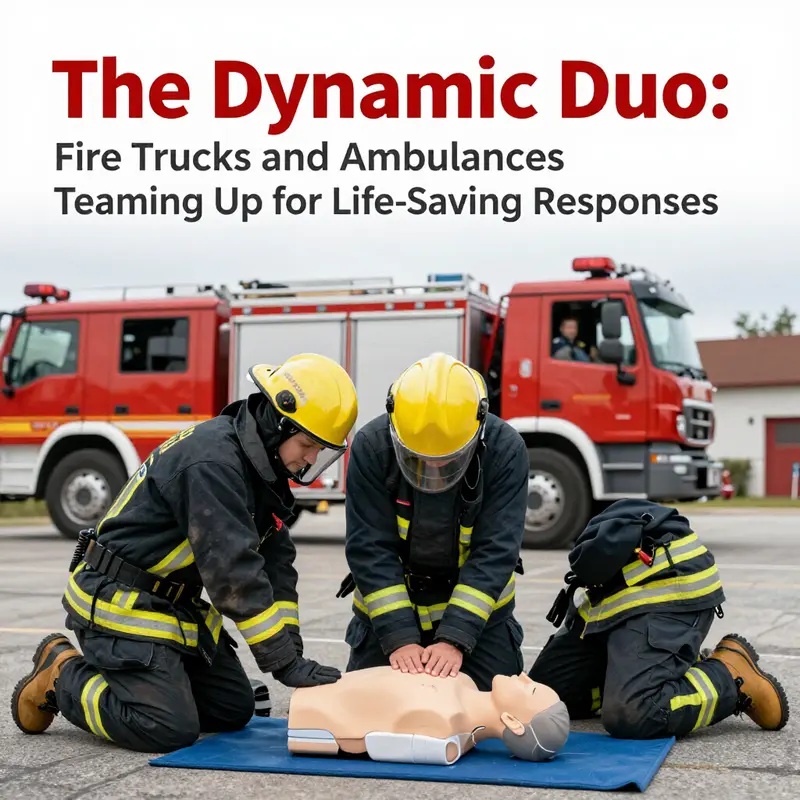
When a 911 call goes out for a life-threatening medical emergency, the first responders on the ground set the tempo for everything that follows. A fire truck arriving ahead of or alongside an ambulance is not merely a matter of speed or proximity; it is the practical living out of years of focused training designed to turn time into a performing ally. Firefighters who train as first responders bring a toolbox of skills that translate directly into the earliest moments of patient care. They are taught to see a scene with strategic clarity, to act with disciplined decisiveness, and to stabilize conditions in ways that can dramatically tilt the odds toward survival. CPR, the use of an automated external defibrillator, and rapid management of airway obstructions are not abstract concepts in their repertoire; they are core duties practiced every shift, in every type of incident, from a sudden cardiac arrest on a crowded street to a choking patient in a crowded building. This training is the backbone of a response system that recognizes time as a critical variable and treats it as a resource to be conserved, rather than a problem to be managed later.\n\nThe acceleration of care begins the moment the first engine doors swing open. Fire crews are trained to assess a scene for hazards, to identify potential secondary injuries, and to initiate stabilization even before a patient is fully exposed to medical personnel. This is not about making a medical diagnosis on the street; it is about enabling a safe, continuous flow of care. If a patient is in cardiac arrest, every second lost to moving or delaying attempts at resuscitation can reduce the likelihood of a meaningful recovery. Firefighters with BLS and ACLS training can immediately initiate high-quality CPR, apply an AED, and perform rapid airway management when appropriate. Their actions create a bridge to the paramedics who bring advanced life support, transport capabilities, and a broader medic structure. The outcome can hinge on the mood and pace of the first few minutes, and the training ensures those minutes are used to their maximum possible effect.\n\nThis early intervention matters not only in cardiac emergencies but across the spectrum of critical incidents. A trauma patient with uncontrolled bleeding may suffer from shock long before the ambulance arrives. Fire personnel are trained to control bleeding with direct pressure, establish airway patency, and manage the scene to prevent secondary injury. Those same skills extend to airway management techniques and the prioritization of interventions that stabilize breathing and circulation. The emphasis is on maintaining a stable clinical trajectory from the outset, so that when the EMS team arrives, there is a continuous line of care rather than a procedural gap. In that sense, the fire truck acts as a life-supporting extension of the medical team, ready to assume responsibility for initial stabilization and scene safety until the patient can be safely handed over to more specialized care.\n\nOf course, the value of fire-based first response is not solely in medical maneuvers. Fire crews bring a distinct set of operational competencies that complement medical actions in complex environments. Traffic collisions, building collapses, hazardous materials scenes, or multi-vehicle pileups require rapid hazard assessment, scene control, and patient extraction strategies that paramedics alone cannot execute without risking safety or delaying care. Firefighters are trained to use tools that facilitate safe extrication and rescue, to coordinate with other responders, and to establish a perimeter that protects the patient and the team. When a patient is entrapped in a vehicle, for example, hydraulic rescue tools and careful stabilization techniques can be the difference between a non-viable outcome and a life saved. The ambulances then provide the medical stabilization and definitive transport, building a seamless continuum of care rather than a sequence of disjointed events.\n\nThis cooperative model is reinforced by a systemic logic that binds training to practice. In many jurisdictions, there is a deliberate alignment of protocols between fire and EMS services, under a shared framework that governs dispatch, on-scene roles, and patient handoffs. The aim is not to blur the lines or obscure professional identities, but to create a shared language and a common standard of care. When fire and EMS teams operate under unified guidelines, they can communicate with precision, anticipate each other’s needs, and execute a coordinated plan with minimal delay. This is where the concept of integrated response becomes tangible: a fire engine that responds with its medical capabilities and a paramedic crew that complements those efforts with higher-level medical interventions—all while speaking the same clinical and operational language.\n\nA crucial dimension of this coordination is the ongoing training that keeps both agencies aligned. Firefighters rotate through recurrent drills that simulate real-world scenarios: a sudden collapse during a public event, a high-speed collision with multiple victims, a fall from height, or a collapse in a crowded venue. These drills emphasize not only technical skills but also communication and role clarity. What happens when a dispatcher assigns a unit equipped for rapid extrication and a crew ready to initiate airway management? How do teams decide who leads on a given scene, and how is information conveyed to hospital teams en route? The answers emerge from practice as much as from policy. Rehearsals of joint responses help normalize cross-agency expectations, reduce the friction that often accompanies multi-agency operations, and establish a culture of mutual trust. This trust translates into faster, more decisive action when every moment counts.\n\nThe importance of training extends beyond the initial response to the later phases of care. Once on the transport stage, the interaction between the on-scene responders and the ambulance crew continues to rely on shared competencies. The paramedics bring a depth of medical knowledge in pharmacology, advanced airway devices, and complex life support algorithms. The firefighters bring intimate familiarity with the scene, the environment, and the potential for evolving hazards. A patient handoff becomes not a transfer of responsibility alone but a transfer of a stable clinical trajectory. The EMS team takes up with the patient’s medical management, while the fire crew remains available to address any continuing scene concerns until the patient is safely inside the hospital setting. The continuity of care is preserved because both sides are trained to read the situation through the same lens and to react in concert rather than at cross purposes.\n\nA practical manifestation of this training-driven harmony is the adoption of common dispatch and communication practices. When an emergency call is answered, the dispatcher can cue both units to the precise location, the suspected mechanism of injury or condition, and the anticipated hazards. The crews then use a standardized set of handoff points, checklists, and patient assessment protocols. This standardization is not bureaucratic rigidity; it is the scaffolding that supports quick judgment under pressure. It helps prevent miscommunication, ensures critical data is collected and shared, and reduces the cognitive load on responders who must assess, decide, and act under stress. The effect is a smoother flow of information from the scene to the hospital, from patient to physician, and from responder to responder.\n\nWithin this framework of effective first-responder training lies an important insight: the system works best when training is ongoing and immersive. Initial qualifications are necessary, but the real strength lies in continuing education, joint exercises, and cross-training that keep the teams responsive to evolving medical guidelines and patient needs. Regular refreshers in CPR quality, defibrillation technique, airway management, and hemorrhage control ensure that essential skills do not fade between incidents. Joint drills that replicate the unpredictability of real emergencies help responders anticipate each other’s needs, align their mental models, and refine the operational choreography that saves time and reduces risk.\n\nThe narrative of the fire-ambulance partnership is also rooted in broader organizational and policy structures. Many regions have embraced the idea of fire-medical collaboration as a practical response to rapid urban growth, traffic congestion, and the realities of aging populations with rising emergency medical demands. In this vision, the fire truck is not an adjunct but a deliberate extension of the EMS mission. Its arrival signals access to rapid stabilization, hazard control, and hands-on care at a moment when any hesitation could have consequences. The ambulance remains the hub of advanced medical management and transport logistics, but its effectiveness is amplified by the readiness and capabilities introduced by the fire component on the scene.\n\nThe explicit connection between training and outcome is not merely theoretical. Public-health data, collective experience, and the testimonies of clinicians and responders converge on a simple, powerful truth: when first responders are well trained and operate in a unified framework, patients receive stabilizing care earlier, the likelihood of survival from cardiac arrest increases, and the chances of a favorable neurological outcome improve. These gains are most visible in crowded or challenging environments where time and access can be severely constrained. In such situations, the synergy of rapid access, early life support, and careful scene management becomes a decisive factor in whether a patient survives and recovers. The fire truck thus becomes a proactive contributor to life preservation, not a mere conveyance or a secondary asset.\n\nThe cultural dimension of this collaboration should not be underestimated. Trust builds over time through shared experiences, transparent debriefings after calls, and a common commitment to patient-centered care. When crews view each other as allies with complementary strengths rather than as competing systems, the psychological and operational barriers that can derail a response begin to dissolve. In practice, this means acknowledging the limits of one’s own discipline, listening to the other team’s assessments, and agreeing on the best path forward with the patient’s best interests as the guiding principle. It also means recognizing the emotional and mental demands placed on responders. Ongoing mental readiness and resilience training, supported by leadership and peer networks, helps maintain a team’s capacity to perform under pressure, recover after traumatic incidents, and return to duty prepared for the next call.\n\nAll of these threads—early intervention, scene safety, cross-disciplinary proficiency, unified command, ongoing training, and a culture of mutual trust—converge in a practical synthesis. The fire truck and the ambulance are not rivals in a race for priority; they are partners in a carefully choreographed sequence. Each unit knows what the other will do, what is expected of it, and how to adapt when conditions change. The patient benefits from this choreography as care transitions smoothly from stabilization to definitive treatment, and from prehospital care to hospital-based care. In the end, the question of why fire trucks accompany ambulances dissolves into a simple, powerful answer: because well-trained first responders, working in concert, turn a potentially chaotic moment into a structured and effective medical response, saving lives in those all-too-familiar, time-sensitive minutes.\n\nFor readers seeking a broader view of how these practices fit into emergent-care systems and the way cross-agency coordination is evolving, the concept of unified command in emergencies offers a useful frame. It anchors actions, aligns priorities, and facilitates mutual aid when the scene grows beyond the capacity of a single agency, which is precisely the context in which fire and EMS collaboration proves its worth. This alignment—where training informs practice and practice reinforces training—helps explain why a fire engine can be as vital as the ambulance that follows, and why, in the hands of well-prepared responders, the line between emergency response and lifesaving care is a carefully drawn, ever-improving boundary.\n\nAs the field continues to develop, ongoing attention to first-responder training remains essential. It is the bedrock that makes coordinated response not only possible but reliable under pressure. The data and experiences from varied jurisdictions show that when training is prioritized and shared across teams, the result is a more resilient emergency medical system overall. The patient’s journey—from the moment the call is placed, through the on-scene stabilization, into transport, and eventually into hospital-based care—becomes not a sequence of isolated interventions but a continuous, integrated effort. That is the heart of the fire-ambulance partnership: a durable alignment of skills, systems, and hearts committed to saving lives when every second truly counts.\n\nFor further exploration of how first-responder training grounds these efforts and supports cohesive emergency response, see the official guidance on first responders. https://www.nhtsa.gov/first-responders
Frontline as a Unified Front: How Firefighters Extend Ambulance Care with Complementary Expertise
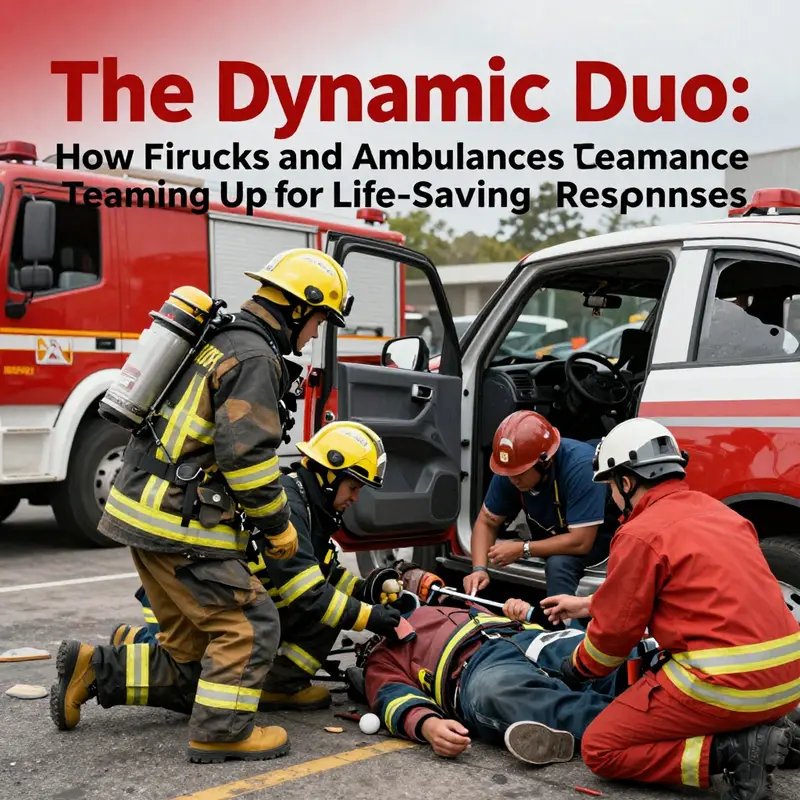
When an emergency call erupts in a bustling city street or a quiet rural lane, the clock starts ticking in earnest. Every second counts, and the people who arrive first do more than secure a doorway or clear a path. They begin to shape outcomes. In many settings, that first arrival is not a single vehicle or crew, but a coordinated surge that includes fire trucks arriving alongside ambulances. The result is not a contest of who saves the most lives, but a deliberate, integrated deployment of skills and tools that turns time into a tangible ally for patients. The chapter ahead traces how firefighters become an essential extension of the medical team, delivering immediate, life-saving interventions the moment responders reach the scene and continuing that care as the patient travels toward hospital care. It is a narrative of complementarity, not competition, where speed, training, and shared responsibilities converge to shorten the path from crisis to stabilization.
Speed and accessibility often set the stage for what follows. In congested urban cores, winding streets, or disaster zones where infrastructure has been compromised, fire apparatus frequently possesses a speed and maneuverability advantage over standard ambulances. This agility matters profoundly when a heart attack victim teeters on the edge of the golden four minutes, the window researchers repeatedly note as critical for improving survival and reducing neurological injury. Fire trucks can deliver a rapid on-scene assessment, initiate basic life support, and begin essential interventions while ambulances navigate traffic, blocked intersections, or rough terrain. The scene is not merely being reached more quickly; it is being stabilized sooner, and that early stabilization changes the trajectory of the entire medical response.
But speed alone does not explain why fire crews are present, ready to act in tandem with paramedics. The next layer of the story rests on training. Firefighters are often cross-trained in basic life support (BLS) and advanced cardiac life support (ACLS). They learn to perform CPR with precision, deploy defibrillators, manage airways when patients struggle to breathe, and control severe bleeding when injuries are catastrophic. These skills are not ceremonial badges; they are practical, practical acts of care that keep patients alive while a more definitive medical plan is assembled. The synergy grows from this shared foundation. When the ambulance crew arrives, the firefighter-paramedics or cross-trained firefighters seamlessly hand off care, having already established a stable airway, secured breathing, and ensured circulation. In many cases, the patient has already received effective chest compressions, defibrillation, or rapid hemorrhage control that buys critical minutes for the hospital team.
The complementary expertise extends beyond clinical procedures. In complex emergencies—multi-vehicle collisions, structural collapses, or scenes dotted with hazards—the fire crew brings a repertoire of tools tailored to scene safety, extraction, and stabilization. Hydraulic rescue tools, ropes, lighting equipment, and extrication gear become part of a broader medical strategy. While the ambulance team focuses on ongoing medical stabilization, the fire crew helps execute safe access, stabilize the patient, and maintain a secure environment so that the patient’s care remains uninterrupted during extraction and transport. The division of labor is not a tug-of-war; it is a carefully choreographed sequence in which each team contributes what it does best. The goal is a continuous thread of care that begins the moment responders arrive and extends through every heartbeat monitored, every airway managed, and every mile toward the hospital.
This collaborative logic underpins a systemic approach to emergency response that is increasingly designed for integration. In several regions, there are formal structures that place EMS within a fire-service framework, or vice versa, creating what some systems call a fire-medical model. In Hangzhou, for example, joint fire-medical response points reflect a deliberate design to synchronize dispatch, arrival, and on-scene action. Ambulances may be housed within fire stations, enabling immediate deployment alongside firefighters when a call is answered. The practical effect is a synchronized rhythm of response where the line between firefighting and medical care grows faint, and the patient benefits from a more fluid continuum of care. In such arrangements, the question shifts from who is arriving first to how to marshal the full spectrum of responders—trained in medical care and equipped for rapid access—to begin treatment at the earliest possible moment. When minds and machines move in concert, the tempo of care shifts in favor of the patient.
That harmonized tempo also rests on trust and coordination—principles that are learned and reinforced through dedicated inter-agency training. When teams train together, the language of the response becomes shared. They practice the sequence of events: recognition of the patient’s needs, rapid triage, airway management, hemorrhage control, and the safe transfer of the patient into the ambulance for transport. In routine scenarios, this joint preparation translates into a smoother handoff, with fewer interruptions and fewer questions along the way. In more chaotic environments, it becomes the difference between chaotic improvisation and a disciplined, deliberate response. The results across many jurisdictions have shown that when fire departments and EMS systems train side by side, response times shorten, and the likelihood of survival improves, particularly when minutes matter most.
The practical implications of this integration extend into the everyday realities of a busy emergency department. Paramedics, with their specialized medical training, must contend with variable patient needs, evolving conditions, and the unpredictability of the field. Firefighters, with their broader operational focus, bring an emphasis on scene safety, rapid access, and resource coordination. The overlap is where the real value lies: a shared commitment to the patient, a mutual understanding of priorities, and a common language for triage and stabilization. In many scenarios, the first minutes after a call are a race against time, and every responder is positioned to contribute. When a firefighter’s role includes airway management or defibrillation, the on-scene care becomes a continuous thread rather than a series of disjointed interventions.
The patient experience at the scene reflects this cohesive approach. A caregiver’s calm, a firefighter’s trained hands, and a paramedic’s medical judgment converge to produce a sense of purpose amid the urgency. Families observe a coordinated team that acts with speed and competence, reducing the cognitive load on bystanders and bystanders’ anxious questions. The staff at the hospital often receive a more coherent handoff, with a clear narrative of what occurred, what interventions were performed, and what remains critical for the arrival team to address. The chain of care thus begins not when the patient is placed in the back of an ambulance, but the moment responders reach the scene and begin to intervene with a unified plan.
An essential thread in this narrative is the broader systems perspective. Modern emergency response systems increasingly emphasize integration and interoperability. The idea is straightforward: when responders from different agencies can operate as a unified force, the outcome for patients improves. This is not theoretical; it is a practical model that has shown promise in densely populated regions and in areas where response times are stretched by traffic or geography. The concept extends beyond the immediate mechanics of rescue to encompass leadership, communication, and shared protocols. Trust-building exercises, joint drills, and regular cross-training create a durable bridge across agencies, so that when an incident unfolds, teams do not pause to negotiate roles or recount authority charts. They proceed with practiced confidence.
In telling this story, it is important to emphasize the fundamental point behind the coordination: the fire truck does not replace the ambulance, and the ambulance does not substitute for the fire crew. Each vehicle carries specialized capabilities, and when they are deployed together, they form a more robust, more flexible response network. The fire truck’s on-scene interventions are time-critical, and the ambulance’s medical expertise takes over as stabilization is achieved and the patient moves toward definitive care. The real strength lies in the integration—the alignment of tactics with medical priorities, the shared sense of urgency, and the capacity to adapt to the evolving needs of the patient and the scene.
This integrated approach is not only practical; it is also increasingly codified into the way emergency services think about staffing, dispatch, and resource allocation. In some jurisdictions, firefighters are cross-trained as paramedics, a model that accelerates the on-scene initiation of care and reduces the lag between the first assessment and the start of definitive medical management. The result is a shorter interval between collapse and stabilization, a factor repeatedly correlated with improved survival in cardiac arrest and trauma cases. And in places where structural boundaries between fire and EMS are less rigid, the system gains a resiliency that helps sustain coverage in times of surge or in the face of disruption, whether from weather, crowding, or mass-casualty incidents.
The broader takeaway is clear. Complementary expertise is not a label for a marginal advantage; it is a practical framework for designating how a modern rescue scene should function. Firefighters bring on-scene readiness, technical rescue capabilities, and the ability to secure the environment. Paramedics bring the medical assessment and the therapeutic interventions that define a patient’s trajectory toward recovery. When these two strands are woven together, the result is a sturdier, faster, and more reliable system of care—one that begins the moment help is called and carries forward with the patient through the critical minutes of transport and into the hospital corridor. The patient’s journey, from the first breath on the street to the first moments in the emergency department, benefits from this continuity. It is a testament to the idea that public safety infrastructure is strongest when it treats the patient as the central focal point and organizes every response around the aim of preserving life and reducing suffering.
For readers who want a more tangible sense of how these threads come together in practice, consider the concept of unified command in emergencies. When agencies work under a unified framework, decisions about who does what, when, and where are coordinated from the outset. This approach reduces confusion, speeds decision-making, and clarifies the roles of each responder. It is this clarity—alongside the shared training and joint operations—that makes the combined fire-and-EMS response a robust option in many communities. The real-world value of such integration is seen in faster on-scene care, more efficient use of equipment, and a smoother path to hospital care for patients in crisis. As systems continue to evolve, the aim remains steadfast: to begin care immediately, to maintain it without interruption, and to ensure that the patient’s crew of responders is as unified as possible on the road to recovery. https://firetruck.space/unified-command-in-emergencies/ In broader terms, this is how safety networks become more than the sum of their parts.
In closing, the narrative of complementary expertise shows that the presence of fire trucks alongside ambulances is not a simple matter of redundancy. It is a deliberate design choice that expands the reach of medical care in its most fragile moments. By leveraging speed, training, and shared purpose, firefighters and paramedics together push the boundaries of what is possible in field care. When these forces work as a coherent, trusted team, patients experience care that begins with the first responders and continues unfalteringly through transport and arrival at the hospital. The result is a system that treats time as an ally, not a threat, and that upholds the core aim of emergency medicine: to save lives with prompt, high-quality intervention from the very first moment care is needed.
External resource for further reading: https://www.nist.gov/publications/inter-agency-training-and-trust-building-emergency-services
Coordinated Lifelines: How Integrated Fire and EMS Response Accelerates Life-Saving Care

On the street, in the minutes after a crash, a heart attack, or a structure incident, two vehicles often arrive as if drawn to a single mission. A fire engine and an ambulance roll to the curb in quick succession, or sometimes in near unison, their lights blinking in a shared rhythm. The scene resembles a carefully choreographed dance, yet the steps are born from years of learning how to stretch life across the narrow gap between collapse and stabilization. The question of why fire trucks accompany ambulances is not a single, simple answer but a bundle of intertwined reasons rooted in speed, skill, and system design. When a serious emergency erupts, time is not a luxury; it is a critical factor that can determine whether a patient survives or recovers with fewer complications. Firefighters, when first on the scene, carry a toolkit that is as much about life-saving care as it is about scene safety: they bring CPR, defibrillation capability, airway management equipment, and protective systems that allow them to reach victims quickly, assess risks, and create a path for medical teams to do their work. The cadence of aid begins the moment they step through the door of danger, and it often continues long after the ambulance has joined the effort, forming the base of a joint enterprise that treats the street as a single medical highway rather than two separate lanes.\n\nThe shift toward integrated responses reflects a practical understanding of how emergencies unfold. Fire and medical services have historically trained for different endgames—one focused on stopping flames and injuries from spreading, the other focused on diagnosing and stabilizing medical conditions—but their missions converge far more often than not. Speed is one of the most persuasive arguments for this integration. In dense urban cores, on roads clogged with traffic, or in rural zones where every mile costs minutes, the fire engine’s reach can outpace an ambulance and ensure that critical interventions arrive in time to tilt the odds toward life preservation. The old divide softens when the clock becomes a shared adversary. The “golden minutes” belong to the patient, and the best way to protect them is to synchronize arrival, assessment, and action. This is not a theoretical ideal; it is a practical imperative supported by data, drills, and policy that treat the first responders as a single, coordinated front.\n\nThat synchronization rests on a core asset: trained responders who can deliver care at multiple levels of complexity. Firefighters often cycle through foundational medical training long before many ambulance crews are dispatched for routine calls. Cardiopulmonary resuscitation, mechanical ventilation basics in field settings, AED use, rapid control of bleeding, and airway management—all are part of the standard repertoire that public safety agencies cultivate. When a fire truck pulls up with its crew, the responders are not merely a fire suppression unit; they are a rolling extension of the emergency medical team. They can begin chest compressions, attach a defibrillator, establish an airway if needed, and maintain circulation while the patient’s core condition is stabilized. In many incidents, this early care buys precious seconds, minutes, or even hours of improved outcomes and helps to ease the burden on the ambulance crew that will assume definitive care.\n\nThe collaboration is deeper than speed and scope of practice; it is also about the complementary expertise that each service brings to the scene. Fire crews carry specialized equipment for complex or dangerous environments—hydraulic rescue tools for vehicle extrication, ropes and harnesses for urban or rural rescues, and robust lighting to illuminate murky spaces. In a multi-vehicle collision, the first obligation is to extricate victims who are trapped by metal or debris, while simultaneously ensuring they are not bleeding out, not losing oxygen, and not deteriorating en route to care. The fire team’s extrication and scene-management skills become a bridge to medical care, enabling patients to be reached and protected as soon as possible. Meanwhile, the ambulance crew focuses on medical stabilization, airway management, and continuous monitoring of vitals, all of which improve the likelihood of successful resuscitation and reduce the risk of secondary injuries during removal. The handoff is not a stark switch from one team to another but a careful transfer of responsibility, with the medical crew assuming primary care while the fire team clears debris, stabilizes the environment, and ensures safe access routes.\n\nThis integrated practice extends beyond the street into planning and policy. The modernization of emergency services increasingly promotes systemic integration, including siting decisions, joint dispatch, and interoperable communications. A growing body of research argues for co-siting ambulances with fire stations in some contexts to improve coverage and speed—without sacrificing the quality of care. Yet thoughtful planning also recognizes that ambulances do not have to be housed only within fire stations. A deterministic approach to siting—placing free-standing ambulance units at carefully chosen points in a city or region based on population density, traffic patterns, and historical incident data—offers greater flexibility. By decoupling ambulance stations from fire stations, planners can tailor the network to evolving needs, weather patterns, or road work that changes how quickly responders can arrive at a scene. This approach is not simply about saving minutes; it is about enhancing resilience. It creates a mesh of response options that can adapt to spikes in demand, such as mass gatherings, extreme weather, or structural incidents that disrupt normal routes.\n\nIn the moment of an incident, coordination is the operative word. Dispatch protocols, radio communications, and shared incident command structures connect fire and medical responders, creating a unified rhythm that reduces chaos. The modern approach emphasizes joint training, a shared language, and common equipment where feasible. The result is an operational ballet in which a report of a fall, a vehicle crash, or a building fire triggers a coordinated chain of actions. The fire engine arrives, checks safety, stabilizes the scene with extinguishing and extraction tools, and anticipates the medical needs that will follow. The ambulance arrives with the patient in its care, but the handoff is not a dramatic pivot from one team to another; it is a careful transfer of responsibility, with the medical crew taking over while the fire team helps maintain access routes, secures power shutoffs, and ensures that the patient’s condition is clearly communicated through concise, standardized reporting. The handoff is supported by shared terminology and a culture of calm, precise communication that minimizes delays and errors.\n\nSuch integration rests on policy and training that keep pace with evolving demands. Agencies invest in joint drills, cross-credentialing, and interoperable equipment that makes every member a capable contributor to the same mission. In practice, a firefighter may step off a truck with a portable suction device or a short airway adjunct, while an EMT or paramedic may request rapid extrication or a stair-rated carry as needed. Interoperability extends to data systems, which help crews learn from each call, refine responsivity, and calibrate siting decisions based on recent incidents. Public policy recognizes the societal value of a reliable, uninterrupted emergency response, even as social and economic tensions threaten service continuity. Communities have learned that maintaining continuous emergency services is essential for public trust and social welfare, especially during crises that strain health systems or disrupt transportation networks. The resilience of the system lies not in a single apparatus but in a network that can act in concert, preserving options for patients when every minute counts. The idea of adversarial constraints—budget cuts, staffing shortages, or maintenance delays—becomes a problem that the integrated system can absorb through redundancy, mutual aid, and flexible deployment.\n\nThe outcomes of integrated services begin to show in measurable ways across communities. Older adults, who face higher risks from falls, cardiac events, and sudden deterioration, tend to experience better trajectories when assessments and initial stabilization occur through integrated responses. Caregivers report less distress when they can place trust in a system that delivers rapid evaluation and a clear plan for next steps. Hospitals benefit from reduced admission pressures when early decisions in the field stabilize patients and direct them to appropriate care pathways, enabling smoother transitions into the hospital environment. The social and emotional benefits, too, are meaningful: a sense of security that emerges when responders can cross professional boundaries for life-saving reasons without delay. The science of integration continues to evolve as teams collect data, refine protocols, and expand training modules to reflect new challenges—from hazardous materials to complex rescues in tight spaces. This evolving practice is not merely about merging two fleets; it is about building a robust emergency response network that learns, adapts, and grows in response to community needs. It is also a reminder that resilience is a social construct as well as a technical one, and that public trust in the safety net depends on consistent, predictable performance.\n\nIn this broader picture, a practical example from Asia illustrates the ongoing push toward integration in real settings. A city that has embraced fire-medical joint response points treats ambulances as essential components of a fire station ecosystem. When a call comes in, an ambulance is dispatched in tandem with firefighters, arriving within minutes and sharing a common stance on scene safety and triage. This approach reduces duplication of effort, preserves precious time, and creates a uniform standard for life-saving interventions, all while preserving the autonomy of each service. The consolidation is not about erasing distinctions but about harmonizing capabilities so that the patient experiences a seamless, continuous line of care from the moment a call is logged to the moment they reach definitive care. The logic is practical and humane: every action in the first moments of danger should be aimed at prolonging life and reducing suffering. The interconnected system is an acknowledgment that city geography, demographic shifts, and climate trends all push emergency response toward more integrated, flexible arrangements.\n\nThe conversation about integration inevitably touches the realm of research and planning. A deterministic model for integrated siting demonstrates how data-driven decisions can optimize coverage and accelerate response in complex urban environments. By projecting population density, traffic load, and historical incident patterns into siting simulations, planners can identify where to place free-standing ambulances in ways that complement but do not duplicate fire-based coverage. This approach recognizes that ambulances can benefit from independent positioning while still drawing strength from the network of fire resources—an arrangement that improves both speed and flexibility. It also invites a broader question: how do we measure success when the aim is not only speed but the quality and continuity of care? The answer lies in outcomes that go beyond response time. For example, early clinical assessments performed in the field, faster triage decisions, and more effective handoffs all contribute to lower hospitalization rates and less caregiver stress, as studies suggest. The field continues to push toward models that quantify not only minutes saved but the clinical value of those minutes, and it invites continuous scrutiny of how these models translate into real-world improvements on the ground.\n\nPolicy and training support this shift by promoting interoperability, funding for training, and incentives for cross-agency collaboration. Clear roles, shared equipment, joint command structures, and continuing education help sustain the collaboration. The endurance of integrated services rests on trust among agencies, public health authorities, and the communities they serve. Public sympathy for responders who endure strain—whether during healthcare strikes or other disruptions—reflects the importance of continuity in emergency coverage. The societal expectation is straightforward: when danger arises, trained teams must be ready to respond together, no matter the hour or the weather. In short, the integrated system embodies a practical answer to a universal concern: how to bring high-quality life-saving care to those who need it fastest, no matter where they are. The chapter of integrated practice is not a finished report but a living process, constantly updated by evidence, experience, and the evolving language of command across agencies.\n\nFor those who want to follow the thread of this topic further, the literature points toward a growing archive of studies and case examples that examine how siting decisions, joint training, and coordinated protocols influence outcomes in cities around the world. The integrated approach is not a destination but a continuing practice, built on data, experience, and an enduring commitment to life-saving care. The path ahead may include expanding the toolkit of responders, refining the language of command across agencies, and expanding the geographic scope of integrated siting to capture new patterns of risk and demand. In this sense, society benefits from a robust architecture of response that can bend but not break when demands are greatest. External reading: Integrated Fire and Ambulance Siting: A Deterministic Model. https://www.mdpi.com/2071-1050/17/16/5432\n\nWithin this evolving landscape, one internal thread remains particularly instructive: the utility of unified command as a guiding principle for cross-agency operations. See the discussion on Unified Command in Emergencies for a concise treatment of how leadership roles align across fire and medical teams under a single incident framework, ensuring that priorities, resources, and communications converge toward the patient’s best outcome. Unified Command in Emergencies.
Final thoughts
The partnership between fire trucks and ambulances exemplifies a well-oiled machine in emergency response. Through rapid deployment, specialized training, and mutual expertise, first responders enhance survival rates during critical moments. This collaboration is not just about reaching a scene quickly; it’s about ensuring that life-saving care is provided from the very first arrival. Communities benefit greatly from this synergy, reinforcing the idea that comprehensive emergency services are essential for public safety. As technology advances and crime rates evolve, understanding the dynamics of this partnership is imperative for aspiring firefighters and enthusiasts alike.