
Fire truck lights hold a special place in the emergency services realm, serving as a beacon of hope and a call to action. The most recognizable colors, red and blue, are not merely chosen for aesthetics—they are selected for their visibility, effectiveness, and long-standing associations with urgency. In this vibrant exploration of fire truck lights, we’ll delve into the psychological impact of these colors, variations around the globe, the role of modern white lights, and exciting technological advancements enhancing the fire response. Each chapter will shine a light on key elements, collectively enhancing our understanding of what fire truck lights symbolize and how they keep communities safe.
Red and Blue in Action: Unpacking Fire Truck Light Colors and Public Safety
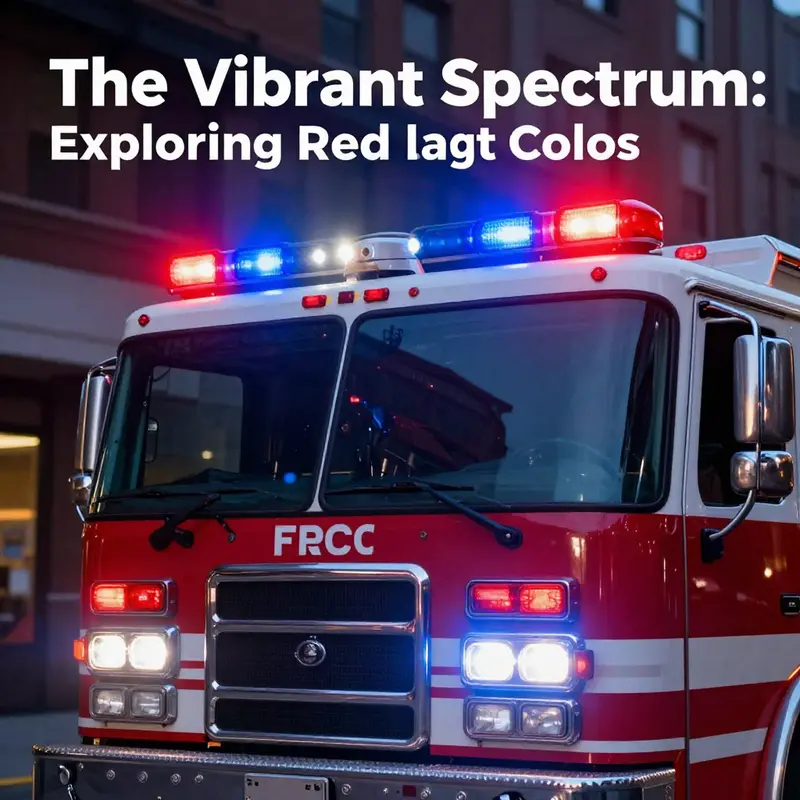
When you see a fire engine blazing by in the night, the instantaneous signal isn’t just the siren. It is a carefully choreographed language of color designed to cut through distance, weather, and distraction. Fire truck lights are a tool as essential as hoses and ladders, and their colors speak to a broad spectrum of drivers, pedestrians, and bystanders in moments when swift recognition can save lives. The dominant pairing of red and blue has become almost universal in many places, yet the full story behind those colors is nuanced, rooted in history, psychology, and evolving technology that keeps pace with the demands of public safety.
Red occupies a central place in firefighting lore and practice. Its long association with fire services is not merely ceremonial; it is grounded in practical visibility. In the crowded streets of the early 20th century, red paint on fire apparatus stood out against the more muted tones of vehicles and infrastructure. It offered a powerful contrast under bright daylight, when people are often moving quickly and attention is fragmented. In those days, red was also a pragmatic choice: the paint was affordable, durable, and retained a bold appearance after exposure to the elements. This combination of visibility, cost, and durability helped cement red as the color of firefighting identity. The cultural pull of red is reflected in how departments adopted logos, livery, and symbols that reinforced a communal sense of pride. Volunteer departments, in particular, leaned into the boldness of red to announce their presence and willingness to respond. This cultural layer gives red an emblematic weight that survives even as other options enter the market. Yet, within the language of modern emergency lighting, the practical value of red is tempered by ongoing research into visibility under varying conditions. While lime-yellow and fluorescent greens can surpass red in certain nighttime scenarios, the tradition of red remains deeply embedded in practice, media, and public expectation. Fire trucks continue to use red not because it is the flawless choice in every light, but because it remains the most recognizable symbol of emergency response across generations.
Blue arrives as a companion that complements red rather than replacing it. In many jurisdictions, blue is paired with red to create a high-contrast signal that remains conspicuous across both daylight and darkness, and it often registers more clearly in urban lighting where the color palette is crowded. Blue has a particular strength when visibility is challenged by weather or ambient light. Its shorter wavelength scatters less in fog and mist, which helps the vehicle stay legible to drivers who might otherwise misread signals in rain, drizzle, or haze. The psychological impact of blue is subtle yet powerful: it communicates urgency without the same heat-associated connotations as red, providing a crisp, cool counterpoint that punctuates the alert. The combination of red and blue thus works on multiple levels—color psychology, perceptual physics, and practical signaling—delivering a message that is instantly recognized even at a distance or during a fast pass through a congested corridor. Global practice shows variability in color pairings, but the red-and-blue duet has endured as a standard in many regions precisely because it balances visibility with a clear, unmistakable signal of emergency.
Technology has reshaped how color signals are emitted, too. Modern fire apparatus increasingly rely on LED lighting systems that can deliver a spectrum of colors with dynamic patterns. LEDs allow for strobes, pulsing sequences, and rotating patterns that keep the signal legible as the vehicle approaches, passes, and moves away. The ability to switch quickly between colors or to layer colors in different parts of the vehicle adds a dimension of clarity that older systems could not offer. White light has entered the scene as a supplemental color, boosting brightness and aiding crew visibility inside and around the engine as it navigates a scene. White is particularly effective in daytime conditions, where glare and sunlight can wash out other signals. When integrated with red and blue, white serves as a high-contrast beacon that helps responders orient themselves and witnesses to the scene, whether it’s locating a hydrant under a scorchingly bright sun or scanning for hazards at a smoke-filled edge of a building. The result is a more legible, more adaptable signaling system that can be tuned to local needs, weather patterns, and traffic environments.
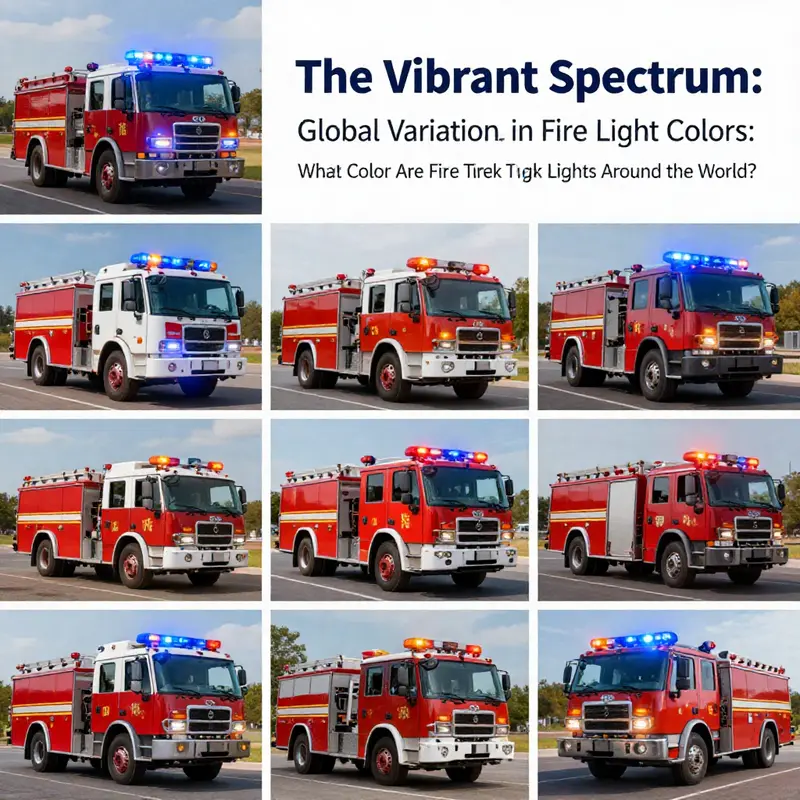
The global landscape of emergency lighting shows regional variation that reflects regulatory frameworks, cultural expectations, and infrastructure realities. In North America, red and blue are widely recognized as the emergency-dynamic signature for many police, fire, and ambulance vehicles, a standard reinforced by decades of collective experience and public education. In Europe, blue paired with white is common, a choice that aligns with the perceived brightness of blue against a pale backdrop and the relatively dense urban fabric in many cities. In parts of Australia and New Zealand, amber and blue appear in some settings, especially for non-emergency or high-visibility caution scenarios, underscoring how color symbolism can adapt to different traffic cultures and safety priorities. The technology behind these choices is not static either. LED systems, with their modular design, enable departments to tailor color sequences to the situation—static color, flashing cues for response, or rolling patterns that guide traffic through a corridor cleared for arrival. Across jurisdictions, the unifying thread remains attention capture: the need to arrest a viewer’s gaze, then guide it toward the next action—move out of the way, slow down, or pull over. The LED era helps by offering programmable, adaptive displays that maintain legibility in such complex scenes, ensuring responders can set the cadence of signaling to suit the moment.
To sustain public safety, communities also rely on consistent public messaging about what these colors mean. The red-and-blue blend carries a cultural script that most people recognize at a glance: danger, urgency, assistance. This shared understanding helps people react quickly in the moment, reducing hesitation that could cost seconds during a life-threatening event. However, this script is not monolithic. The public learns differently in different neighborhoods and countries, which is why some places audit their signals, adjust patterns, and emphasize driver education as part of broader emergency response strategies. Even with the strongest emphasis on color, people’s interpretation is mediated by context: the length of the emergency vehicle’s presence in a given lane, the pattern of the light, and the sonic cues that accompany the display. The color signals work in concert with the siren and with the vehicle’s movement through traffic to create a reliable, layered message. In some environments, this layering is essential because the visual field can be crowded with signage, construction equipment, or other flashing lights. The LED era helps by offering programmable, adaptive displays that maintain legibility in such complex scenes, ensuring responders can set the cadence of signaling to suit the moment.
For readers seeking a deeper dive into the historical and practical rationale behind red and blue lighting, the discipline has accumulated a rich set of case studies and historical analyses. These resources illustrate how the tradition emerged, how it was reinforced by practicality, and how modern design choices respond to new demands. If you want to explore ongoing conversations about fire equipment design, you can visit our Fire Truck Blog for perspectives on how color, form, and function intersect in real-world operations. Fire Truck Blog
As with any safety system, adaptation matters. The future of fire-truck signaling is not to replace red and blue but to augment them with smarter, more context-aware signaling. This means considering environmental factors such as lane geometry, pedestrian density, and the typical speeds of surrounding traffic. It may also involve refining how we present signals to other emergency responders in the same convoy, using color and pattern to coordinate movement and avoid confusion. In practical terms, this translates to more dynamic, energy-efficient lighting that maintains maximum visibility while minimizing distraction in non-emergency contexts. It also means accommodating regional preferences and regulatory changes as governments reassess standards in light of new data about visibility and cognition. The chapter you’re reading aims to illuminate why those choices matter, not simply to catalog them. It recognizes that color—a seemingly small detail—plays a decisive part in whether a driver stops, a pedestrian steps aside, or a bystander complies with directions during a high-stakes moment.
The conversation around color in emergency signaling is ongoing. Researchers continue to weigh the benefits and limitations of every hue, every flash rate, and every pattern. What remains clear is that red and blue provide a robust, time-tested basis for signaling in many settings, a baseline that communities can trust when speed and safety are intertwined. In some places, the fascination with flashy patterns and new LED configurations competes with the deep-rooted expectation of red and blue. Yet the overall trajectory leans toward more precise, more legible signals that still carry the essential meaning of urgency. In this sense, the tradition and the technology reinforce one another: red anchors identity and history, blue expands reach and recognition, white adds clarity, and LEDs allow the system to breathe in different traffic and weather conditions without losing the core message. The result is a signaling ecosystem that remains adaptable, credible, and recognizable across generations of drivers, pedestrians, and responders.
External resource: Why police lights are red and blue history and purpose: https://www.emergencyvehicle.com/why-police-lights-are-red-and-blue-history-and-purpose/
null
null
White Beams, Broad Reach: How White Lights Elevate Visibility on Modern Fire Trucks
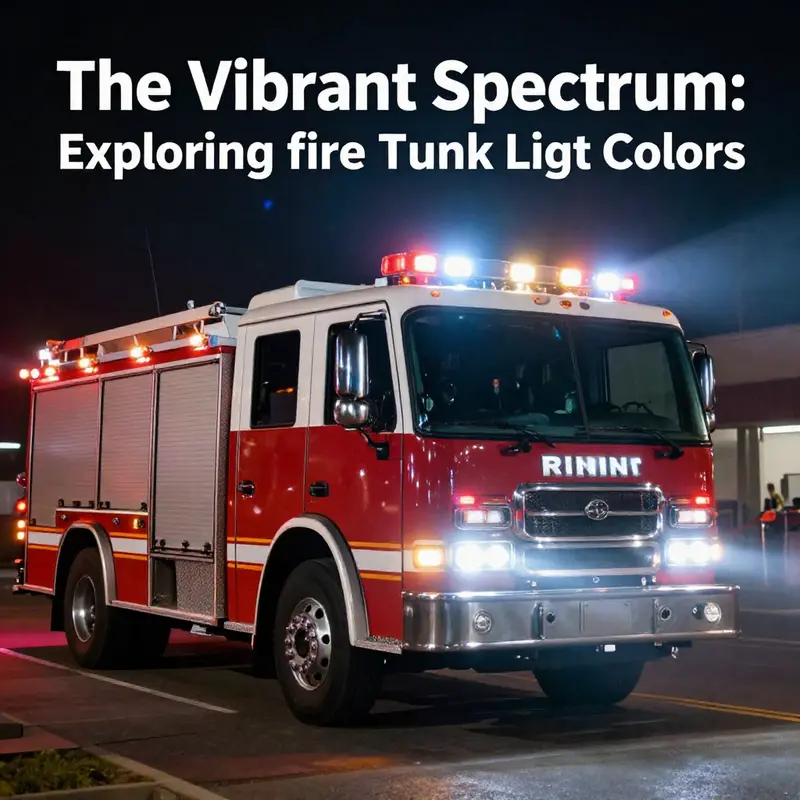
White lights often sit at the center of modern emergency lighting design, yet they are frequently the least discussed color in the public imagination. Their role is not merely to fill space on a vehicle’s roof; white light functions as a critical tool for visibility, safety, and operational clarity. As departments migrated from traditional incandescent lamps to LED arrays, the white component shifted from a basic illumination aid to a strategic element that enhances daylight visibility, reduces driver reaction times, and improves crew safety in a variety of conditions. The plain truth is that white LEDs do more than illuminate the scene; they provide a rapid, unmistakable signal that can be distinguished from the colored strobes while still integrating into the vehicle’s overall warning language. In daylight, where red and blue can be muted by ambient brightness, white light remains robust and legible, often cutting through glare and shadows with a crisp, true brightness that other colors alone cannot guarantee. This shift toward white as a primary contributor to visibility reflects both technological progress and an evolving understanding of how attention works under pressure.
The journey from tungsten filaments to solid‑state LEDs marks a turning point in efficiency and performance. Older systems squandered energy as heat, delivering limited light output relative to power consumption. Modern white LEDs, in contrast, convert a much larger share of electrical energy into visible light, surviving tens of thousands of hours under punishing duty cycles. This longevity matters not only for maintenance costs but also for reliable signaling during back‑to‑back emergencies. When a crew arrives on scene or responds to a core incident, the last thing anyone needs is a lighting system that dulls or flickers after a few thousand hours. White LED technology provides consistent brightness, which supports uniform visibility across the spectrum of viewing conditions—from bright sunlit avenues to dim fire lanes clogged with smoke or fog.
White light’s effectiveness hinges on its ability to mimic daylight and to maintain high luminance at various distances. A single lamp may not tell the whole story, but an array of white flashers can create a perception field that tells other road users precisely where an approaching unit is and how it intends to move. In heavy rain or fog, diffuse white flashes can cut through murk far more reliably than colored lights alone, helping drivers anticipate a vehicle’s path and adjust their speed and position accordingly. This capability is especially important when responders must navigate through crowded areas or complex traffic patterns where quick, unambiguous signaling can prevent secondary incidents. The practical outcome is not just faster response but greater safety for the public and for the responders themselves.
The versatility of white lighting goes beyond mere raw brightness. Modern white light arrays are highly programmable, capable of rapid pattern changes that convey specific messages to different audiences. For example, a white strobe can be synchronized with red and blue signals to create a cohesive, dynamic display that communicates urgency and intent without sowing confusion. In traffic control scenarios, white arrays can be choreographed to provide directional cues—illuminating lane boundaries, pinpointing the location of an obstacle, or guiding passing motorists away from the scene. This level of control is essential at complex incidents where responders must manage multiple streams of traffic while keeping pedestrians safe. The ability to tailor white light patterns to a given situation reduces cognitive load on drivers and bystanders, who can interpret the signaling more quickly and consistently.
Among the most compelling advantages of white lighting is its compatibility with advanced, intelligent lighting systems. These systems integrate white LEDs with red and blue components to deliver coordinated visual messages. By programming white arrays to operate in harmony with other color channels, dispatchers and on‑scene leaders can craft signaling schemes that are both informative and minimally distracting. This integration supports a more flexible approach to incident management, where the emphasis shifts from a static beacon to a responsive signaling toolkit. The result is a system that not only commands attention but also communicates intent. For those curious about how such integration sits within broader apparatus design, consider the broader engineering context of steel fire apparatus, where lighting, chassis, and bodywork are conceived as a holistic system. steel fire apparatus.
A critical aspect of white lighting’s growing importance lies in its ability to bolster crew safety through improved visibility for those operating nearby. White LEDs provide high color rendering and clarity, enabling responders to discern equipment, personnel, and potential hazards more readily. This is particularly valuable when the scene is cluttered with equipment, hoses, and debris, or when smoke obscures vision. The clearer visibility reduces the likelihood of trips, falls, or miscommunications during frantic moments. In high‑stress environments, the human eye benefits from the predictable, crisp signal of white light, which helps technicians perform precise tasks without inadvertently misinterpreting movement from other emergency vehicles in the vicinity.
Beyond general visibility, white light plays a protective role by enhancing situational awareness for drivers outside the immediate incident area. When white elements are bright, consistent, and well distributed across the vehicle, approaching drivers can detect a unit sooner, reset their expectations, and begin to yield in a more orderly fashion. This effect becomes especially important in urban settings where glare from street lights, storefronts, and other vehicles can blur perception. White lighting contributes to a more legible silhouette of the vehicle, enabling pedestrians to spot the source of danger and adjust their behavior accordingly. In this sense, white light is not merely a cosmetic addition but a safety instrument that supports a broad social imperative: reducing the risk of harm during emergencies by clarifying intent and path.
As lighting technology continues to evolve, the role of white light expands into more sophisticated territory. Programmable white light arrays can be synchronized with other signals to craft complex patterns tailored to specific scenarios—traffic control at accident scenes, navigation through crowded city streets, or rapid recognition of a responding unit in a partially obstructed environment. These capabilities rely on advances in LED emitters, control electronics, and software that manages timing, intensity, and color coordination. The result is a lighting language that is both precise and adaptable, one that can be tuned to the unique demands of a given jurisdiction or incident type. In essence, white light becomes a language of safety—clear, consistent, and capable of evolving as knowledge and technology advance.
From a regulatory perspective, the emphasis on white light as a core safety feature aligns with contemporary standards that recognize the value of daylight‑like illumination and rapid signal recognition. As researchers and practitioners push for better emergency signaling, white LEDs stand at the intersection of energy efficiency, durable performance, and perceptual clarity. This triad makes white lighting an essential element in modern fire apparatus design, not as a luxury but as a foundational tool that supports rapid, safe responses in a wide range of contexts. For readers seeking empirical grounding beyond theoretical discussion, the broader literature on emergency vehicle lighting highlights how combinations of red, blue, and white work together to maximize visibility and minimize response times across different environments. An accessible overview of related guidelines can be found in established fire service resources and professional associations, which emphasize the practical outcomes of lighting choices on real‑world operations.
In closing, white lights are more than a supplementary glow on a fire truck; they are an indispensable part of the signaling toolkit that makes emergency response safer and more efficient. Their upward trajectory—from basic illumination to dynamic, programmable arrays—reflects a broader shift in emergency response philosophy. The modern fire truck is a complex, integrated system where lighting contributes to perception, decision making, and action. White light’s daylight‑like quality ensures that responders and bystanders alike can quickly recognize the presence of a fire vehicle, assess its trajectory, and respond appropriately. When paired with red and blue, white light enhances the overall legibility of the unit’s intentions without drowning out the message conveyed by the other colors. The result is a more predictable, more navigable environment for everyone on the road, a small but critical improvement that keeps communities safer as the pace and complexity of emergencies continue to rise. For those who want to explore how this signaling language fits into the broader ecosystem of emergency vehicle design, the ongoing conversation around white lighting remains a vital and evolving frontier, where science, engineering, and public safety converge toward clearer, faster, and safer responses.
External resource: White Flasher Light: Performance, Specifications, and How to Apply It in Industry can provide technical depth on programmable white flashers and their role in high‑priority warning systems. https://www.emergencylighting.com/white-flashers-performance-specifications/
Color of Response: Fire Truck Lights and Visibility

Light color on fire trucks is a safety language designed for rapid interpretation by drivers, pedestrians, and other responders. Red signals urgency and command presence, blue can improve nighttime visibility, white provides high brightness and edge delineation, and lime-yellow often offers strong daytime detectability. Regulations vary by region, so many departments use a layered signaling approach that combines colors and patterns to communicate different meanings under different conditions. Modern LED systems enable dynamic changes, allowing vehicles to emphasize lime-yellow during daytime and switch to blue and white at night or in fog. The goal is not a single best color but a robust, legible signaling system that remains predictable across contexts, thereby supporting faster recognition, safer responses, and smoother traffic flow. Ongoing research continues to test visibility, cognition, and safety outcomes, guiding best practices toward redundancy, clarity, and regional adaptability.
Seeing Beyond Hue: How Modern Fire Truck Lighting Redefines Color, Brightness, and Response
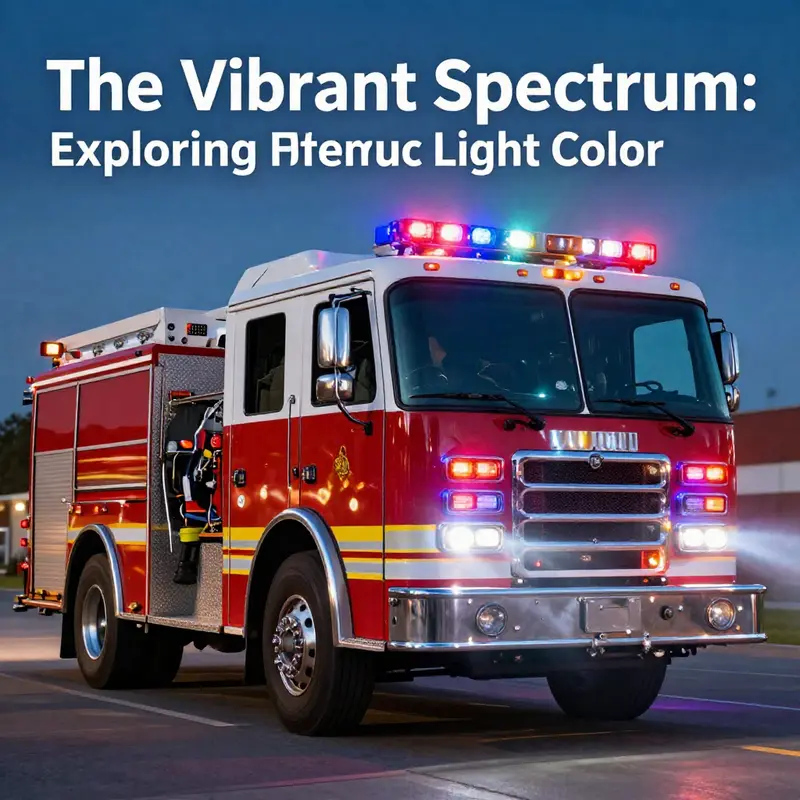
The question of what color fire truck lights are is a starting point, not a finish line. Long after the public learns to instinctively identify red and blue in an emergency scene, the deeper story unfolds in the technology that makes those colors work—how the lights perform, how they endure, and how they communicate with drivers, pedestrians, and the crew on the ground. In contemporary practice, color remains a crucial cue, but it travels alongside an entire spectrum of advances that amplify visibility, reliability, and safety. This chapter threads those threads together, showing how the color choices discussed earlier are supported and sometimes broadened by innovations in lighting technology, power efficiency, and system integration. The result is a more effective, safer emergency response where color gets amplified by brightness, pattern, and smart deployment rather than standing alone as a signal in the environment.
Traditionally, fire apparatus relied on incandescent lighting, a technology that converts electricity into heat and light through a tungsten filament housed in glass. The appeal was simple and familiar, but the energy cost was high and the lifespan modest. As much as 90 percent of energy consumed by the filament is lost as heat, and typical service life crawls in at a few thousand hours. The practical effect is more frequent maintenance, more frequent replacement of bulbs, and more vulnerability to failure during critical operations. The era of incandescent lighting left a clear lesson: color alone cannot compensate for light insufficiency or unreliability when lives are on the line. The shift toward more efficient solutions was not just a matter of chasing brighter light; it was about creating lighting that crews could rely on under a wide range of conditions—from blazing sun in daylight to the glare of city streets at night.
Enter modern LED systems, which have transformed nearly every dimension of fire truck illumination. LEDs offer dramatically longer lifespans, often surpassing two to four thousand hours of operation and sometimes more, along with energy efficiency orders of magnitude higher than incandescent bulbs. The efficiency translates into tangible operational advantages: lower electrical load on the vehicle, reduced fuel or generator demand, cooler operation, and less maintenance downtime. In the field, this translates into more consistent performance during long evolutions, fewer failures on critical calls, and the ability to equip vehicles with more lighting in a given footprint without compromising reliability. The brightness of LEDs is not merely a single, blunt beam; LEDs can be configured into arrays, parabolic patterns, and dynamic sequences that can be tailored to the scene. Modern lighting systems are designed to be robust in harsh environments, resisting vibration, dust, and moisture, which further enhances their reliability when every second counts.
A defining advantage of contemporary lighting is the flexibility granted by LEDs. A modern apparatus can run multiple color channels simultaneously, allowing for rapid color changes that convey different messages as the incident evolves. This capability extends the impact of color beyond the classic red and blue pairing. White light, often produced by LED arrays, serves as a powerful supplemental color. It offers exceptional daytime visibility and sharp, clear illumination of the scene, which helps crews see their surroundings, identify hazards, and work with greater precision during daylight operations or in cluttered urban environments. White can also be mixed with other colors to create high-contrast patterns that improve the visibility of the operating area for oncoming traffic and bystanders who might not be used to emergency signals at a distance.
One of the most visible demonstrations of technological progress is the adoption of retractable light towers. Mounted on many fire apparatus and command vehicles, these towers deploy vertically to cast broad, intense illumination over large areas and retract neatly for transport and storage. The space-saving design is not merely a matter of convenience; it’s a practical response to the constraints of vehicle design, allowing more room for equipment and personnel while still delivering powerful light when and where it is needed. The height adjustability of these towers means incident commanders can optimize coverage for a given scene, whether illuminating a collapsed structure, a rural landscape, or a crowded urban intersection. However, this mechanical sophistication comes with its own set of considerations. Regular maintenance is essential to prevent mechanical failure, and there can be weather-related restrictions on deployment, especially in freezing rain or high winds that might jam or misalign telescoping mechanisms. Height restrictions tied to vehicle clearance or overhead obstacles can also limit deployment in some environments. Yet when maintained well, retractable light towers provide rapid, reliable, and adaptable illumination that complements the color signals firefighters most rely on.
The way these technological enhancements intersect with color strategy has meaningful implications for how people perceive and respond to emergencies. Red and blue remain the most globally recognized combinations for North America, a convention reinforced by decades of visibility studies that highlight how these hues command attention in both daylight and darkness. Yet as lighting technology evolves, the practical role of white and versatile LED patterns grows in importance. White light improves daytime detectability and sharpness of detail, while programmable color sequences and strobes help differentiate incident phases, signal authority, or guide traffic around a scene without relying solely on language or instruction. In parts of the world where blue and white dominate, the same principles apply with slight regional adaptation, reflecting local regulations and cultural expectations. For example, some regions combine blue and white in their signaling, or pair amber with blue in certain situations, a reminder that color is a language defined by context as much as by hue. The net effect is a system that remains rooted in familiar color cues while embracing a broader toolkit of illumination strategies that heighten perceptual cues for drivers and pedestrians alike.
This broader toolkit extends beyond the light itself to the way lighting integrates with the broader command and control ecosystem. As incident complexity grows and response times shorten, there is a premium on lighting that can be deployed quickly, repositioned easily, and correlated with other signals on the scene. The path from light to action includes considerations of how signals are perceived against moving traffic, how patterns are interpreted by bystanders, and how crews coordinate with on-scene personnel. In practice, that means lighting systems must harmonize with scene lighting plans, radio communications, and the evolving layout of incident commands. It also means navigating challenges in fire command systems as agencies strive to ensure that lighting does not just flash but communicates clearly and safely. For those exploring this balance, a useful overview of the integration challenges and best practices can be found in discussions focused on overcoming challenges in fire command systems.
As remarkable as the hardware is, the real story is how it translates into safer, more efficient operations. The job of a fire crew is not only to reach a scene but to manage a dynamic environment with bystanders, other responders, and fatigued motorists adjusting to the sudden presence of emergency work. Lighting technology helps in three intertwined ways. First, the improved brightness and color versatility reduce reaction time for drivers who need to yield or maneuver around a blocked lane. Second, the ability to switch quickly between colors or to illuminate with white light improves crew safety by reducing blind spots, clarifying hazards, and enabling more precise use of tools in low-light conditions. Third, the rapid deployment and compact design of retractable towers help ensure that lighting arrives faster and remains stable even as the scene shifts. In that sense, technology acts as an amplifier for the age old wisdom of color signaling: the better the visual message, the quicker and more accurate the response.
The ongoing evolution of fire truck lighting is also a reminder that color is never chosen in isolation. Standards bodies and professional associations provide guardrails that guide how color, pattern, and lighting behave in different jurisdictions and under different conditions. These standards help ensure that the signal remains recognizable, that patterns do not create confusion at busy intersections, and that performance remains predictable across a wide range of weather and terrain. In the field, this translates into practical procedures for deploying lights during different phases of an incident, coordinating with traffic management, and training personnel to interpret the signals quickly and consistently. It also underscores the importance of maintenance, not only to keep the color elements vibrant but to preserve the mechanical integrity of features like retractable towers that can determine whether a scene is lit effectively or remains stubbornly dim in crucial moments.
For readers who want to explore more on standards and updates that shape how fire apparatus lighting is implemented, external resources from industry organizations and standards bodies provide deeper guidance and current recommendations. The broader arc of these developments points to a future in which color remains a signature of urgency, but brightness, reliability, and programmable signaling become equally essential to public safety. The chapter thus closes with an appreciation that the color one associates with a fire truck is part of a larger system—a system that makes urban and rural operations safer, more efficient, and more predictable under pressure. For those seeking a more technical dive into the standards and updates guiding these innovations, see the Fire Apparatus Lighting Update from the National Fire Protection Association.
https://www.nfpa.org/Code-Updates/2026/Fire-Apparatus-Lighting-Update
Final thoughts
Understanding the color of fire truck lights isn’t just about aesthetics; it’s a matter of safety, psychology, and technology. The iconic red and blue combination has been strategically chosen for its visibility and psychological impact, guiding both emergency services and the public. As we explore global variations and the introduction of white lights alongside technological advancements like LED systems, it’s clear that these colors play a vital role in conveying urgency and ensuring effective responses during emergencies. Fire enthusiast or aspiring firefighter, recognizing the significance of these colors enhances our appreciation for the bravery and dedication of firefighting professionals worldwide.