
In the heart of every community, emergency responders stand ready to tackle both fires and medical emergencies. One might often wonder why fire trucks and ambulances so frequently appear side by side during emergency calls. This article explores the integral relationship between these two essential services. First, we’ll uncover how fire trucks play a crucial role in ambulance services, equipped not just for firefighting but as mobile medical units. Next, we will delve into the cross-training of firefighters as EMS providers, showcasing how this comprehensive training enhances emergency response. Lastly, we will examine the strategic optimization of resources that ensures fire trucks can respond to medical emergencies, sometimes even quicker than ambulances. Together, these elements illustrate a well-oiled machine of emergency preparedness that communities trust.
Engine and Ambulance in Tandem: The Strategic Co-Deployment of Fire Trucks and EMS for Rapid Rescue
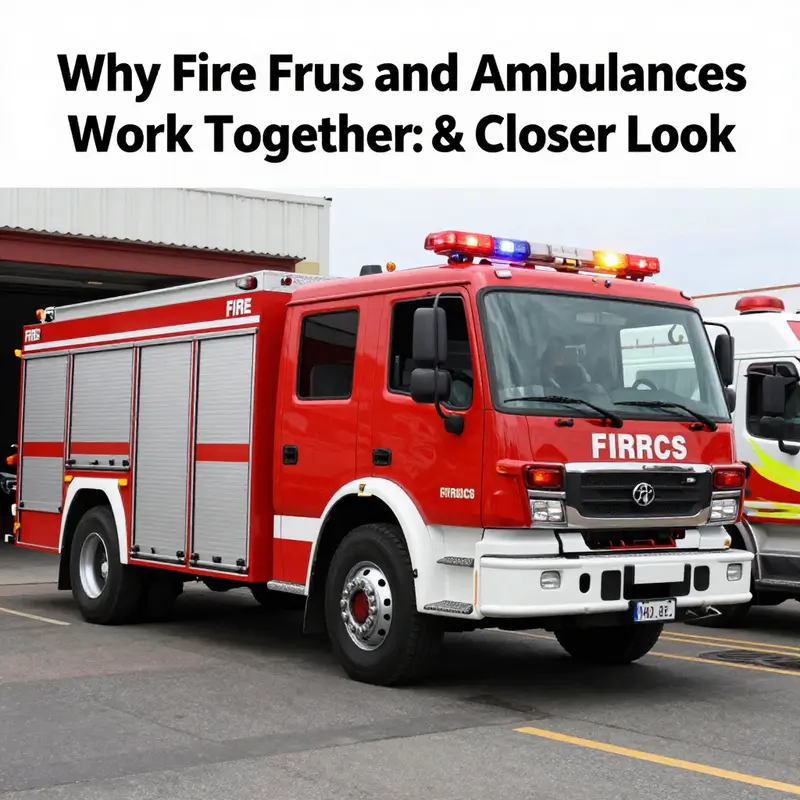
When people ask why a fire truck often accompanies an ambulance, they are touching a truth about modern emergency response: it is less about one vehicle carrying another than about a coordinated, multi-resource system designed to move faster and do more at the scene. Fire departments and EMS services have learned that speed is not only about who arrives first but about who can begin life-saving care immediately and sustain it until definitive care can take over. In many places, that blended capability has become the norm rather than the exception.
Fire engines bring more than hoses and water; they carry a breadth of medical equipment, oxygen supplies, monitoring devices, and trained personnel who can start interventions the moment they reach a patient. In urban settings, the call for help can involve overlaps between structural fires, vehicle crashes, hazardous material exposures, and medical emergencies. A single incident may demand door-to-door control of a burning building and continuous airway management for a patient who has stopped breathing. Firefighters are often cross-trained as paramedics or EMTs, enabling them to commence definitive life support while the ambulance is still en route. This cross-training is not a convenience; it is a deliberate design choice to reduce the delay between recognizing a life-threatening condition and delivering care that affects outcomes.
Beyond training, the physical reality of the fleet matters. A fire apparatus is typically larger and more robust than an ambulance. It can carry extensive medical equipment, including defibrillators, advanced airway devices, spinal immobilization systems, and a range of medications. The vehicle’s size also makes it suitable for carrying tools and supplies needed for rescue operations that accompany medical emergencies—flattened doors, trapped victims, or victims in awkward positions where patient movement requires stabilization. The result is a versatile platform that can toggle between firefighting, rescue, and medical stabilization without waiting for a second vehicle to arrive. The integration is therefore a geometric progression: the same crew, the same truck, the same station, all capable of performing multiple roles in rapid sequence.
Organizationally, modern EMS relies on the synergy of resource coordination. In many systems, dispatch centers do not simply send a single unit but orchestrate a tapestry of assets that might include a fire engine, an ambulance, an advanced life support unit, and sometimes nonmedical responders trained in first aid. The aim is to reduce response times and to ensure that the patient is stabilized within minutes. When a fire truck arrives first, the crew can begin basic and advanced life support, perform CPR, manage airway and breathing, control bleeding, and provide rapid triage. If the ambulance is delayed due to other calls, the fire crew maintains a bridge to care. If the ambulance is free, it becomes part of the same immediate team, creating a seamless continuum of care on arrival. In many jurisdictions, the operational model favors proximity and availability: the fire station is often located in or near neighborhoods and industrial centers, reducing travel distance and transportation time.
The Hangzhou model represents an important evolution in this logic. In the Fuxing Fire Rescue and Medical Emergency Joint Command Point, an ambulance is physically located within a fire station. This arrangement, instituted after the Zhejiang Province Pre-hospital Medical Emergency Regulations took effect on December 1, 2025, makes simultaneous dispatch the default rather than the exception. When a call comes in, the danger signal is escalated to both the fire team and the on-site medical unit at once, so the fire truck and the ambulance depart together from the same station. The result is a dramatic cut in the time between call and on-scene care. It is not that one vehicle carries the other, but that both vehicles are part of a single, synchronized response from the moment the alarm sounds.
Within this framework, the strengths of both services are on full display. The presence of doctors, drivers, and paramedics on site means that immediate medical attention can begin before the ambulance has fully joined the scene. The ambulances are not dispatched from a distant center after a delay; they begin their journey in parallel with the fire crew. The on-scene medical team can stabilize circulation, monitor vital signs, provide oxygen therapy, and prepare for advanced interventions, while the firefighters perform structural assessment, crowd control, and extraction if needed. The integrated infrastructure—shared alert screens, common communication channels, and real-time situational awareness—reduces fragmentation and confusion. The goal is to eliminate the bottlenecks that come from sequential, handoff-based responses and to replace them with a continuous care arc that starts the moment the call is received.
Policy and technology play equally important roles in this shift. The Zhejiang regulation provides the legal scaffolding that enables co-location within the same facility and the joint use of resources. The technical architecture—real-time screens, interoperable radios, and centralized command—ensures that information flows immediately to all players on the ground. In a system where every second counts, such synchronization is not a luxury but a necessity. The idea resonates with broader principles of emergency management, such as unified command in emergencies, in which multiple agencies coordinate under a common operational picture rather than competing for control. The practical upshot is a streamlined workflow and a shared sense of purpose that reduces duplication and lapses in critical moments. Unified command in emergencies is not just a slogan; it is a concrete blueprint for how diverse teams can function as a cohesive unit on the street.
Despite the clarity of the Hangzhou approach, it is essential to acknowledge that the co-location model is not a universal prescription. Different cities and regions face different constraints: urban density, hospital availability, funding levels, and political will all shape how EMS and fire services organize their operations. Some places rely on mutual aid agreements that permit a nearby fire station to dispatch an engine to medical calls only when an ambulance is unavailable or delayed. Others embed medical teams within fire departments as a standard practice, training firefighters to respond to medical emergencies with a higher level of medical competence. The common thread across these models is a shared commitment to reducing response times and to delivering care at the scene rather than waiting for a specialized unit to reach a hospital door.
From a public safety perspective, the logic is straightforward: the sooner a patient receives care, especially in cases of cardiac arrest or major trauma, the better the chance of survival and recovery. The fire department’s reach into neighborhoods, its ability to operate in hazardous environments, and its access to a wide array of tools create a backbone for rapid, on-scene stabilization. The EMS system, with its medical protocols and advanced equipment, provides the clinical horsepower needed to keep patients alive and stable en route to definitive care. The synergy arises not from a single miracle but from a consistent sequence of well-orchestrated actions. A call ends not with a single unit arriving but with a two-pronged entry: a fire crew performing the early stabilization and a medical team preparing for the long ride to hospital-level care.
Operationally, such integration also opens pathways for continuous improvement. Data-sharing between fire and EMS agencies enables better triage, resource allocation, and post-incident analysis. After-action reviews that involve both the fire department and EMS crews can pinpoint bottlenecks, improve protocols, and fine-tune the balance between firefighting and medical duties. Training programs increasingly emphasize high-performance teamwork, scenario-based drills, and joint certification for emergency responders. The goal is not to erode the specialization that each service provides but to enhance the default capabilities that every call demands: quick assessment, rapid command, decisive action, and clear communication. In this sense, the presence of a fire truck alongside an ambulance becomes a living laboratory for better public safety design, where lessons learned in the field are translated into policies, equipment, and training for the next call.
Broadly speaking, the co-deployment model embodies a shift from siloed operations toward integrated, adaptive systems. It acknowledges that emergencies are rarely pure firefighting events or pure medical emergencies; they are often hybrids that require both expertise and flexibility. Firefighters turned paramedics bring readiness to manage blood pressure, oxygenation, airway patency, and basic life support, while EMS crews bring expertise in advanced life support, pharmacology, and rapid transport decision-making. This complementary mix means that a station can be a hub of shared resources rather than a fortress of separate capabilities. In practice, it prompts a rethinking of how stations are designed, how dispatchers allocate units, and how crews train for a career that spans multiple professional lines. The aim is to keep the patient at the center of the response, with the least possible interruption between recognition of need and the provision of care.
Looking forward, there are practical opportunities to extend this model beyond the Chinese example and into wider adoption. Cities with constrained ambulance fleets could benefit from cross-trained fire crews that can begin life support while awaiting transport. Regions with uneven hospital coverage might apply co-location strategies to ensure that at least some level of stabilizing care is available immediately. The design challenge is to balance the resources, avoid overburdening crews, and maintain high safety standards while expanding capabilities. As technology and policy evolve, the potential for even more seamless interfaces between fire and medical services grows. The result could be a more resilient emergency response architecture that responds not to a single threat but to the spectrum of crises that public safety systems confront daily.
Ultimately, the question of why fire trucks come with ambulances is reframed. It is no longer a question of a vehicle joining another in transit; it is a narrative about how cities can orchestrate speed, skill, and situational awareness to save lives when seconds count. Co-deployment is a principle grounded in practical necessity, backed by policy and refined by technology. It reflects a public safety philosophy that prioritizes early medical intervention as a core function of every emergency response, not merely a subset of a fire operation. The sense that two highly capable units arrive together, with a common mission and a shared sense of urgency, encapsulates a future where emergency care is a seamless continuum rather than a string of disjointed handoffs. This is the trajectory toward which many leading systems are moving, and Hangzhou’s model stands as a concrete example of how to translate that trajectory into a workable, scalable reality.
Public perception is influenced by seeing multipurpose teams; communities come to expect rapid care; agencies must explain the model; proper signage and community outreach become part of the package; the risk of misinterpretation if one unit appears to be slow is reduced when two responders move as one. The integrated approach addresses that by showing a patient-facing rhythm rather than a staggered sequence. As policy and practice evolve, the line between firefighting and medical care blurs in a constructive way; the innovation will require ongoing research, training updates, and cross-disciplinary leadership. The real winners are the patients. Finally, the external reference below provides a concrete account of how the policy framework translates into everyday practice on the ground in Hangzhou, illustrating the regulatory logic that makes such collaboration possible. https://www.hangzhou.com.cn/news/20260129/1324877.html
Why Fire Trucks Come With Ambulances: The Integrated, Cross-Trained Heartbeat of Modern Emergency Response
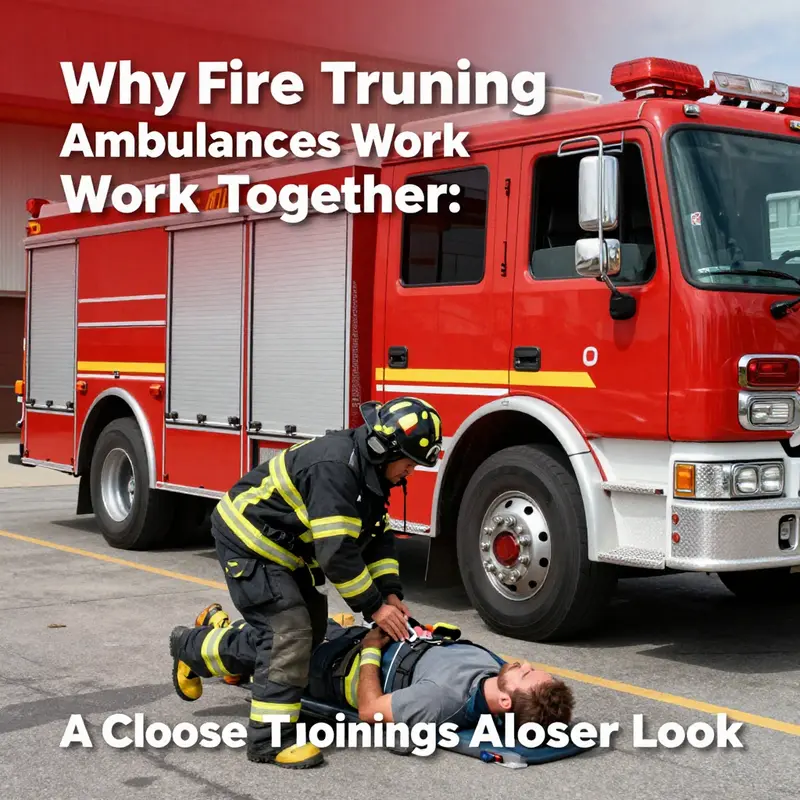
When people hear the siren and see a pair of responders arriving at a chaotic scene, the sight often includes not just one but two kinds of responders: a fire engine and a medical unit. The question—why does a fire truck arrive with an ambulance?—is no longer a curiosity about tradition or symbolism. It is a window into how contemporary emergency services have reorganized to save lives faster, more efficiently, and more comprehensively. The simple answer rests on a careful calculation of time, terrain, trained capacity, and the evolving scope of what an emergency response must do in its first minutes. Fire departments across many regions have embraced cross-training and expanded roles for their personnel, transforming what used to be a firefighting-only vehicle into a flexible, mobile emergency station that can stabilize patients, provide critical care, and still perform its primary mission when the danger is still burning or structurally unstable. In this expanded model, a fire truck does not merely arrive with water, extinguishing tools, or rescue gear. It arrives with a ready-made medical team, a stock of life support equipment, and the capability to begin life-saving interventions long before an ambulance can reach the scene. That convergence—speed, skill, and scope—forms the backbone of why a fire truck often accompanies an ambulance, especially in densely populated, traffic-choked, or geographically challenging environments.
To understand this arrangement, it helps to see the modern EMS ecosystem as a single, working organism rather than a constellation of separate, independent nodes. Firefighters who are cross-trained as emergency medical technicians (EMTs) or paramedics become the closest thing to a universal responder in many communities. They are trained to recognize life threats, deliver immediate care, and maintain patient stability while the hospital-based care continuum is established. Their presence on the first-arriving vehicle, the fire engine, ensures that the patient receives rapid assessment, airway control, hemorrhage management, and early defibrillation if needed. This is not about replacing ambulances with firetrucks; it is about layering response options so that, in the crucial minutes following a call, critical actions can begin almost instantly, while the dedicated ambulance teams navigate to the scene with advanced medical resources and transport capabilities.
The logistics behind this practice are practical and often data-driven. Fire trucks typically have a broader geographic footprint than ambulances. They are deployed to high-priority responses, staging areas during wildfires or large-scale incidents, and neighborhoods where call volumes are heavy. Because fire departments operate around the clock, the same personnel who fight fires can monitor, triage, and treat patients, sometimes providing higher levels of care than an ambulance would in the same moment. This dual function hinges on a core premise: time is life. When an EMS system can gain even a few minutes of early medical intervention—someone in cardiac arrest receiving CPR and early defibrillation, someone with a traumatic airway secured, someone with severe bleeding controlled—the chances of survival and recovery increase markedly. The fire engine’s arrival is thus not a redundancy but a deliberate, optimized part of the response timeline.
This approach is supported by substantial field experience and research. The National Fire Protection Association (NFPA) notes that a substantial majority of fire departments now carry personnel and equipment capable of providing EMS. The cross-training of firefighters into EMS roles has become widely normalized because it expands the pool of responders who can arrive quickly and begin care before an ambulance is fully on scene. In practical terms, this means that when you look at a call involving a cardiac event, a multi-vehicle collision, or a structural collapse with potential injuries, you may see a team of firefighters performing CPR, managing an airway, and applying a defibrillator—all while the ambulance crew completes a more advanced intravascular assessment, establishes intravenous lines, and makes arrangements for rapid transport. The combined effect is a smoother, faster, and more thorough initial phase of care that raises the probability of positive outcomes for patients who arrive at the hospital in the seconds and minutes after a life-threatening event.
A key benefit of this model lies in the ambulatory power and equipment load carried by the fire engine. Fire apparatus are designed to carry large volumes of equipment and a broad array of devices: oxygen delivery systems, defibrillators, airway management tools, spinal immobilization kits, and a range of trauma supplies. In many cases, they are also equipped with extra capacity for advanced EMS interventions that would not fit on a smaller ambulance. This combination makes the fire truck a robust, adaptable platform capable of initiating care immediately. When the ambulance arrives afterward, it can focus on transport, hospital communication, and continuing advanced life support without the initial delay of having to assemble or locate essential equipment. The compatibility between these two vehicles is not accidental but a deliberate design choice born out of years of experience about what works best for patient survival in the field.
The patient’s journey through the emergency system is therefore a story of parallel streams that merge at the point of care. On the street, the fire engine crew begins patient contact, performing rapid assessment—airway, breathing, circulation—and delivering interventions that stabilize the patient. They can slow bleeding, secure an airway, and monitor vital signs, while their colleagues on the ambulance side prepare for transport and for hospital handoffs. The normalization of this practice means that teams train together, communicate with the same vocabulary, and maintain a shared mental model of how care will unfold from the first moments to hospital admission. In such settings, information exchange becomes a critical advantage. The crew members swap crucial data about the patient’s condition, the actions already taken, medications administered, and the suspected cause of distress. This early information flow accelerates decision-making and helps the receiving ED team prepare the most effective care plan in advance.
The collaboration is reinforced by mutual aid arrangements and integrated dispatch systems. In many urban and suburban contexts, the fire department and EMS agencies operate under joint coordination to maximize resource availability. If an ambulance is occupied on another call, a nearby fire engine can respond to a medical emergency and bridge the gap until the ambulance can assume patient care. These mutual aid agreements are not ad hoc improvisations; they are formalized processes designed to preserve response times and outcomes when demand surges. In such a system, the fire engine is not a stand-in but a vital, interoperable participant in a wider network that shares goals and performance metrics—rapid on-scene care, seamless handoffs, and patient-centered transport planning.
Yet the reality of cross-training and the use of fire engines as EMS platforms is not without its challenges. Training standards must be rigorous, and the scope of practice must be clear to prevent role conflict or safety risks for patients and responders alike. Firefighters who undertake EMS duties must meet national or state-level certification requirements, maintain medical knowledge across evolving guidelines, and remain ready to return to firefighting tasks when needed. Fatigue, shift patterns, and the physical demands of dual roles can complicate readiness, so departments invest in comprehensive wellness programs, fatigue management, and ongoing competency checks. The operational picture also demands sophisticated incident command and unified communication systems. When a fire engine and an ambulance arrive together, incident command must rapidly integrate medical priorities with structural and hazard control tasks. This integration is encapsulated in unified command concepts and standardized radio and data-sharing protocols that ensure every unit speaks the same language under pressure.
From a patient’s perspective, the presence of a cross-trained fire engine arriving with an ambulance translates into tangible benefits. Immediate care for life threats becomes more likely, given that CPR, defibrillation, spinal stabilization, and hemorrhage control can begin without delay. Early airway management can be declared and stabilized sooner, which matters greatly when seconds count. The ambulance then transports with a head start on advanced interventions, and ED staff are prepared to resume care as soon as the patient reaches the doors. In this way, the integrated approach becomes an evidence-informed practice, not a philosophical stance about who does what first. Data from the field suggests that the quick, coordinated action of a cross-trained engine crew can improve survival rates and reduce the time to definitive care, which are among the most meaningful metrics in EMS performance.
The social and economic logic behind cross-training is equally compelling. Fire departments operate around the clock, with a broad footprint of response resources. By integrating EMS capabilities into this established network, communities can optimize coverage and reduce duplication of services. This does not erase the specialized strengths of dedicated ambulances, but rather expands the system’s capacity to respond when every minute matters. The approach helps balance the heavy demand for structural fire response with the equally urgent demand for medical care, especially in high-traffic corridors or neighborhoods where ambulance availability can be uneven. In essence, the fire engine becomes part of a multi-vehicle, multi-disciplinary response plan that aims to save lives by leveraging every available asset. The investment in cross-training, equipment, and interoperable systems, while substantial, is often offset by improved response times, better patient stabilization, and more efficient use of the broader emergency response network.
A further layer of nuance lies in how this model shapes the culture of the fire service and EMS alike. Firefighters trained as EMS providers bring a unique set of instincts to medical calls, born from years of experience with dangerous environments, rapid risk assessment, and the discipline of high-stakes teamwork. They are taught to recognize hazards beyond the obvious medical cues, to anticipate deterioration, and to communicate clearly with other responders and with hospital teams. This situational awareness complements the clinical skills they master in training rooms and on the job. It also reinforces public trust: communities see responders who embody a shared mission, one that treats every call as a moment to protect life and health, whether the crisis is a fire, a medical emergency, or a collapse. The cross-trained model reinforces that resilience by building redundancy—more responders capable of rendering essential care when it matters most. In this sense, the fire truck’s presence alongside the ambulance is a visible symbol of a resilient and adaptive EMS ecosystem, one that can pivot quickly to changing conditions on the ground.
A pragmatic glance at national data helps illuminate why this model has persisted and expanded. NFPA’s EMS capacity research highlights that a large portion of fire departments maintain EMS capabilities as part of their core mission. The numbers reflect a cultural shift in emergency services—from a siloed approach to a more integrated system designed to maximize patient outcomes. This shift is not simply about deploying more personnel; it is about deploying the right skills at the right time, in the right vehicle, with the right information. The practical implication is that a fire engine is not merely a vehicle of last resort; it is a crucial component of modern EMS architecture, capable of delivering life-preserving care when seconds count and providing a reliable bridge to hospital-based treatment.
In reflecting on the broader implications, one can appreciate how the cross-training strategy has reshaped emergency response narratives. It illustrates a move toward more flexible, multi-dimensional responders who can address a wider spectrum of emergencies without waiting for a separate medical unit to become available. The integrated model recognizes that emergencies do not come labeled as “fire” or “medical” in the real world. They arrive as complex scenes where every minute, every decision, and every tool matters. The fire truck’s preparedness to function as a mobile emergency station—capable of initiating care, supporting airway and circulation, and coordinating with transport—positions the entire system to respond more effectively to the unpredictable, high-stakes environment that defines emergency services. In short, the presence of an ambulance alongside a fire engine is the practical embodiment of a community’s commitment to rapid, comprehensive, and coordinated care, delivered by a workforce trained to meet the moment with courage, competence, and collaboration.
For readers who want to explore a broader dimension of the EMS evolution, the discussion of cross-training intersects with other innovations in trauma care and prehospital medicine. The idea that a fire engine can contribute to advanced trauma interventions reflects a broader trend toward expanding the scope of prehospital care. It echoes debates around prehospital blood products, rapid airway management, and evolving protocols that emphasize early hemodynamic stabilization and rapid, data-informed decision-making. These conversations are not mere theoretical exercises; they have real-world consequences for how quickly and effectively patients receive lifesaving interventions. The fire engine–ambulance pairing thus becomes a living example of how a system can adapt to new evidence, new technologies, and new expectations from communities asking for faster, better care.
In sum, the reason a fire truck comes with an ambulance is grounded in a shared purpose: to save lives by combining speed, capability, and coordination. Cross-trained firefighters expand the EMS front line, transforming a traditionally firefighting asset into a flexible platform for medical care. This transformation supports faster on-scene stabilization, better information flow to the hospital, and more efficient use of resources across the emergency response network. It is a practical solution born from years of experience, data-driven evaluation, and a steadfast commitment to patient outcomes. The resulting “mobile emergency station” on the streets stands as a testament to how emergency services have evolved—integrated, people-centered, and ready to meet any challenge with trained hands, well-equipped rigs, and a shared sense of purpose that unites fire, medical, and hospital teams in the common work of saving lives.
Whole-Blood in EMS revolutionizing trauma care
External resource: For a broader look at EMS capacity and how these cross-training models fit into national trends, see the NFPA EMS Capacity report at https://www.nfpa.org/News-and-Research/Statistics-and-research/Incident-Reports/Fire-department-EMS-capacity
Why Fire Trucks Accompany Ambulances: Optimizing Resources to Save Lives
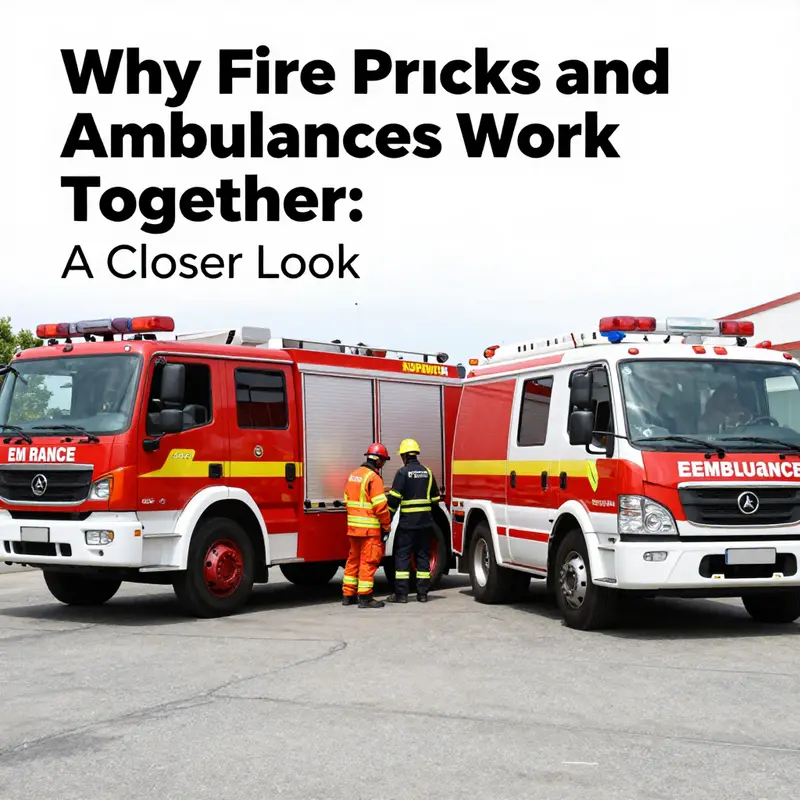
Resource optimization drives the routine pairing of fire trucks with ambulances. When seconds decide outcomes, deploying the right mix of people, tools, and vehicles together is not optional; it’s deliberate strategy. This chapter examines how that strategy works in practice, why it matters for patient survival, and how a coordinated response blends firefighting, rescue mechanics, and advanced medical care into a seamless first line of aid.
The presence of a fire truck at a medical scene often surprises the public. Fire engines are associated with hoses, ladders, and flames—yet they routinely arrive at heart attacks, car wrecks, and collapsed structures. That is because modern emergency response relies on complementary capabilities: ambulances provide focused patient care and transport; fire trucks bring manpower, heavy tools, scene stabilization, and often, advanced life support. Together they cover the spectrum of needs that a single vehicle cannot. This redundancy is not wasteful. It is efficient insurance against unfolding complexity.
A single emergency can present layered hazards. Consider a severe multi-vehicle crash. Victims may need immediate airway management and bleeding control, but many also are trapped by mangled metal. Hydraulic rescue tools—commonly called the “Jaws of Life”—and cribbing to stabilize vehicles are carried and operated by firefighters. While paramedics begin advanced life support, firefighters perform extrication and create a safe work area. Without a fire truck on scene, those critical tasks would be delayed until extrication resources arrived, costing precious minutes during the most critical period for trauma care.
Firefighters often arrive from stations closer to the incident than ambulance crews. Fire stations are distributed to optimize coverage for fires and technical rescues; this placement also favors early arrival at medical emergencies. Early arrival matters because initial interventions—defibrillation for cardiac arrest, airway control for respiratory failure, and hemorrhage management—have outsized effects on survival. Firefighters who are cross-trained as emergency medical technicians or paramedics can immediately provide these interventions. Their early action routinely bridges the gap between collapse and definitive care.
Beyond speed and proximity, fire trucks carry specialized equipment that complements ambulance inventories. Large oxygen reservoirs, portable ventilators, thermal blankets, and multi-personnel workspaces allow crews to manage complex patients on site. For incidents involving hazardous materials or structural instability, fire crews possess detection meters, protective gear, and expertise to mitigate ongoing threats. That capability protects both patients and medical staff. If an ambulance were to enter a contaminated environment without proper assessment, both patient care and responder safety would be compromised.
The integration of fire and medical services also aligns resources according to probability and consequence. Certain calls—structure fires, vehicle collisions, industrial accidents—have higher likelihoods of requiring both fire suppression and medical rescue. Dispatch protocols reflect that by routinely sending a fire unit with an ambulance on those call types. This anticipatory deployment reduces the need for repeated dispatches and prevents duplication of effort. It keeps specialized units ready for the next event, rather than waiting for a secondary call to originate when the scene demands more help.
Integration extends into human resources. Many fire departments cross-train personnel as paramedics. This model multiplies the number of clinicians available during a major incident. Instead of waiting for several ambulances, a single fire engine may bring two or three medically trained responders who can administer medications, interpret ECGs, and perform advanced airway procedures. That immediate expansion of clinical capacity is often decisive during mass casualties or when ambulances are delayed. It also levels the workload: while a paramedic aboard an ambulance prepares a patient for transport, firefighters can continue scene tasks or manage additional patients.
Operational coordination between agencies is another axis of optimization. Mutual aid agreements, joint training, and unified command structures ensure that fire and EMS personnel understand each other’s roles and can function under a single incident plan. This reduces duplication and friction. When teams share terminology and practice together, transitions—from extrication to patient packaging to loading—become predictable and efficient. Predictability matters. It lowers cognitive load during high-stress moments and shortens time to definitive care.
Data supports this integrated model. Studies and incident analyses show measurable improvements in outcomes when fire personnel provide early medical interventions. For example, jurisdictions that routinely dispatch fire units alongside ambulances report higher survival rates for critical cases. The National Fire Protection Association (NFPA) and other reporting bodies track response times, interventions provided, and patient outcomes. These data inform policy and resource allocation by linking early multi-discipline response to better survival odds and fewer complications.
Cost-effectiveness is often raised in debates about dual responses. At first glance, sending multiple vehicles to a single call seems costly. Yet when viewed through the lens of prevention and outcomes, the economics change. Faster interventions reduce hospital lengths of stay, lower the need for intensive care, and decrease long-term disability. Those downstream savings can offset the immediate costs of deploying an extra unit. Moreover, a standardized paired response reduces the need for emergency escalation—calls for additional apparatus that arise when a single vehicle initially dispatched cannot manage the evolving scene—thereby avoiding repeated dispatch costs and resource churn.
Operational resilience is another benefit. During large-scale events—natural disasters, mass casualty incidents, or multi-scene crashes—having mixed-capability units operating together provides surge capacity. Fire trucks can assume triage sectors, operate treatment areas, or provide lighting and power for prolonged operations. Ambulances can shuttle stabilized patients to hospitals while fire crews maintain scene safety and technical operations. This division of labor keeps patient flow moving and preserves the finite resource of transport units.
Standardizing the practice of co-dispatch also simplifies decision-making at the dispatch center. Rather than assessing nuance on a per-call basis, established protocols route an appropriate blend of assets for commonly recurring scenarios. This frees dispatchers to focus on outliers and complex coordination, rather than micromanaging every resource. Standardization also facilitates training, logistics, and interagency cooperation because roles and expected capabilities are consistent and repeatable.
A less obvious, but meaningful, advantage of pairing fire trucks with ambulances is psychological. The visible presence of multiple trained responders reassures patients and bystanders. That calm can reduce agitation, facilitate cooperation, and ease scene control. For family members and witnesses, seeing a comprehensive team arrive conveys authority and competence. That perception can make communication smoother, whether gaining consent for interventions or obtaining vital history.
Practical implementation requires careful planning. Agencies must agree on scope of practice, equipment lists, and joint training curricula. Cross-training is neither trivial nor inexpensive; it demands formal education, continued competency assessments, and credentialing processes. Departments must also manage wear and maintenance of equipment that may be used more frequently under a co-response model. Yet jurisdictions that have invested in these systems report smoother operations and fewer delays when complex needs occur.
Internationally, the model varies. Some countries maintain strictly separate fire and ambulance services, while others fully integrate them. Where integration exists, the benefits of pairing are clearer: rapid ALS-level care becomes a distributed capability instead of a scarce commodity. The United Nations Office for Disaster Risk Reduction has recognized integrated approaches as best practice for urban resilience, advising that mixed-capability responses reduce mortality in multi-hazard events.
Implementation nuances matter. Not every call requires both units, and indiscriminate pairing would indeed be wasteful. Smart dispatch uses call type, caller information, location, and resource availability to decide when a fire truck should accompany an ambulance. GPS-based availability systems, historical call analytics, and machine-assisted triage tools are increasingly used to refine those decisions. The goal is precision: send what is needed, where it is needed, as quickly as possible.
Real-world examples illustrate the principle. In major U.S. cities, protocols often dispatch a fire engine automatically to serious medical calls such as cardiac arrest, major trauma, or unconscious patients. Firefighters arrive, begin CPR or airway management, and prepare the scene for paramedics and transport. During incidents where hazards persist—smoke, fuel leaks, unstable structures—fire crews isolate the risks, allowing medics to operate inside a safer perimeter. This division of responsibility avoids exposing ambulance crews to harm and prevents interruptions in care.
Technology further amplifies synergy. Modern incident command systems, interoperable radios, mobile data terminals, and shared patient-care reporting allow teams to coordinate in real time. Fire apparatus with built-in generators supply power for medical devices and lighting during night operations. Thermal imaging cameras help locate victims in low-visibility conditions. These technological bridges make the combined response more than the sum of its parts.
Training determines success. Joint exercises, tabletop planning, and after-action reviews build mutual understanding. They expose gaps in equipment compatibility, clarify handoff points, and refine safety procedures. When trained together, firefighters and paramedics learn to anticipate each other’s moves. They synchronize timelines: when extrication begins, when packaging must finish, and when transport should commence.
Ultimately, the routine that places a fire truck alongside an ambulance is about reliability. It is an engineered redundancy that reduces the chance that any single deficiency will deny a patient timely care. In high-stakes moments, that redundancy buys time for clinicians to stabilize, for rescuers to free trapped victims, and for teams to manage hazards that could otherwise compound injuries.
For administrators, the imperative is clear: build systems that match community risk profiles with appropriate resources. Where high-risk incidents are common, integrated dispatch and cross-trained crews deliver measurable benefits. Where risk is lower, targeted protocols can still ensure fire support for the exceptional call. Either way, the core principle remains the same—deploy complementary capabilities together so people on scene can do more, faster, and safer.
One practical resource for agencies evaluating or refining this model is the body of response data and standards compiled by national organizations. These resources include incident reporting, response time analytics, and best-practice case studies that link co-response strategies with improved outcomes. For agencies seeking a starting point, the National Fire Protection Association provides public data and research that inform dispatch protocols and interagency planning: https://www.nfpa.org/News-and-Research/Statistics-and-research/Incident-reporting-and-analysis/Fire-Department-Response-Data.
To explore how unified response functions in complex incidents and command structures, see a practical overview of coordinated emergency leadership at Unified Command in Emergencies.
The routine pairing of fire trucks with ambulances reflects a disciplined choice: favor preparedness, speed, and layered capability over brittle, single-unit response. Where lives hang in the balance, that choice makes outcomes better, systems leaner, and communities safer.
Final thoughts
The collaboration between fire trucks and ambulances epitomizes the essence of emergency response, creating a powerful alliance dedicated to saving lives. The multifaceted role of fire trucks in providing essential medical support, coupled with the cross-training of firefighters as paramedics, enhances the efficacy of emergency responses. Furthermore, resource optimization allows for a seamless and rapid response in critical situations. By embracing this integrated approach, communities can ensure that they are prepared for whatever emergencies may arise. As we reflect on the importance of this partnership, let us advocate for continuous support and recognition of our emergency responders who stand ready at a moment’s notice.