
Fire trucks play a crucial role in emergency response, particularly through their ability to deliver water. Understanding the significance of their water capacity, pumping systems, and a variety of firefighting equipment can enlighten firetruck enthusiasts, future firefighters, and emergency services professionals alike. This article will navigate through the intricate design of fire trucks, how they utilize external water sources, the diverse range of firefighting tools, and the practical applications they serve during emergencies. Join us as we explore the heroic mechanics that empower these vital machines for fighting fires.
Water on Wheels: How Fire Trucks Carry, Design, and Deploy Readiness in Firefighting
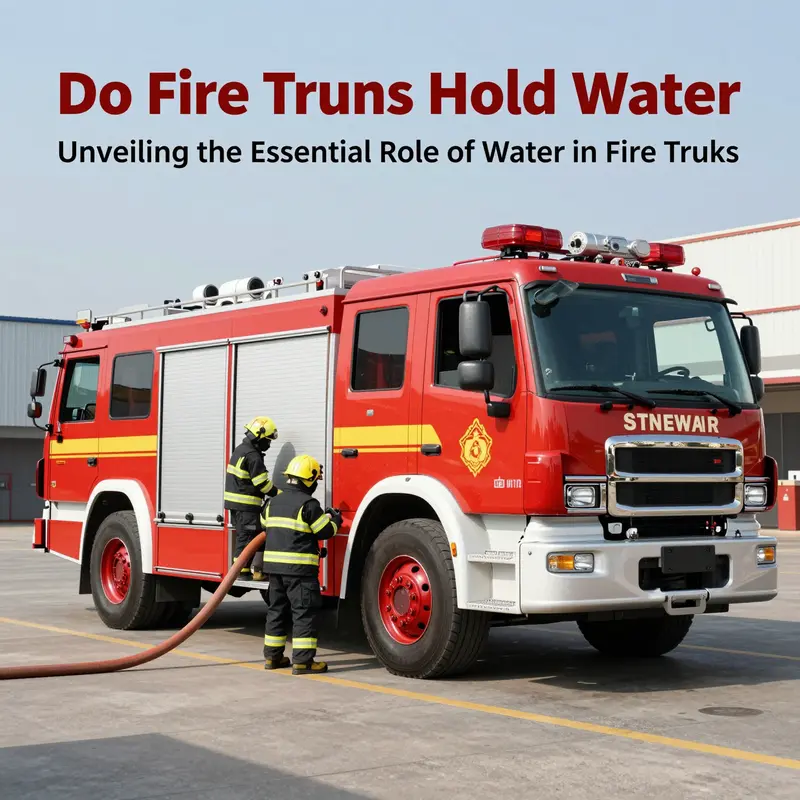
Water on wheels is not a mere metaphor; it is a foundational reality of modern firefighting. When a fire call comes in, every moment counts, and the onboard water supply of a fire truck becomes the first line of defense. The immediate availability of water allows firefighters to begin cooling, suppressing, and controlling the spread of flames even before external water sources are connected. In many incidents, this onboard reservoir can be the difference between rapid containment and a rapidly escalating situation. The tank acts as a portable, moveable source of potential energy for extinguishment, allowing crews to lay down a first line of defense, tempo-setting the tempo of the operation, and buying critical seconds while command coordinates with other units and resources. This isn’t a gimmick or a convenience; it is a core element of the vehicle’s design, planned from the outset to align with the realities of firefighting where hydrants are sparse, distant, or strained by demand. The onboard water tank, in short, is a practical answer to the question of how much water a firefighting unit can deploy immediately at the scene, and it anchors the entire approach to initial suppression and rapid stabilization.
The presence of water carried aboard shapes every other aspect of a fire truck’s design, from its size and weight distribution to its pump configuration and the types of hoses it carries. Tanks are mounted securely within the chassis, typically engineered to withstand the jolts of driving over diverse terrain and the physical forces generated when water is pumped at high pressure. These tanks aren’t flimsy plastic bladders; they are robust, corrosion-resistant vessels designed to endure the repeated cycles of filling and emptying that mark the life of a fire engine. They must also be integrated with the vehicle’s frame structure so that the added mass does not compromise stability or ride quality. In short, the tank is more than a container; it is a carefully engineered element that interacts with every other component of the apparatus to ensure safe, reliable operation under demanding conditions.
Tank capacity varies widely because fire trucks serve different missions and operate in varying landscapes. At one end of the spectrum, compact, maneuverable mini fire trucks carry around 1,000 liters of water. These smaller rigs are invaluable in dense urban environments or residential districts where tighter turning radii and rapid positioning matter. They can reach a scene quickly and provide an initial, controllable flow of water to begin suppression while larger units are on the way. In mid-range configurations, many standard 4×2 fire trucks carry about 5,000 liters, which provides a well-rounded balance between endurance and weight. These are often the workhorses of urban fire departments, capable of delivering sustained streams while still being nimble enough to navigate city streets and tight intersections. Then there are the larger, heavier-duty pumper and tanker configurations that carry roughly 10,000 liters or more. In rural areas, on large campuses, or in regions with limited hydrant networks, such a capacity can be especially vital, providing a substantial initial reservoir that supports longer attack durations and reduces the need for repeated water shuttles from a distant source.
Some specialized foam fire trucks add another layer of capability by carrying significant volumes of water mixed with foam concentrate. Foam is particularly effective for certain kinds of fires, such as those involving hydrocarbons or aviation fuels. In these roles, the volume of water may still be high, but the foam mixture is crucial for achieving the necessary smear and surface wetting to suppress vapors and prevent reignition. The exact volumes for foam-heavy configurations vary by model and mission, but it is common to see substantial water allocations in the same range as conventional apparatus, with foam agents blended to the stream as needed. Beyond pure water and foam, modern fleets often carry a range of accessories and auxiliaries that help maximize the effectiveness of the onboard supply—everything from inline foam-compatible adapters to dedicated nozzles and deck guns designed to optimize reach and control while working with a full tank.
The heart of water delivery lies in the pump system, which is designed to move water from the onboard tank to the scene through hoses at high pressure. Pumps in fire trucks are capable of discharging water at rates that typically fall in the range of 20 to 40 liters per second, depending on the model, the configuration, and the needs of the incident. This range provides a robust initial attack capability, enabling crews to begin cooling and knockdown rapidly while other resources are being arranged. The pump is often located at the front or rear of the truck and is connected to a pump panel that allows the operator to adjust pressure and flow with precision. The interface between tank and pump is more than a mechanical link; it is a dynamic system that requires careful calibration, regular maintenance, and a trained operator who understands how to balance nozzle pressure with the needs of the scene.
Operation from the truck’s onboard water supply typically unfolds in a carefully choreographed sequence. Upon arrival, firefighters may begin by establishing a water supply from the tank using a short, controlled discharge to create an initial knockdown effect that dampens the fire’s intensity. If a hydrant is readily accessible, a pumper can also draft water from the external source to supplement the onboard supply or to sustain longer attack operations. If the fire is in an area without hydrants, the tank may be the sole source of water for an extended period, and the crew will rely on efficient water management and hose deployment to maximize effectiveness. The design must accommodate rapid switching between internal and external sources, a capability that reflects the realities of field operations where every second can matter.
To support efficient water use, many trucks are equipped with multiple outlets and hose layouts. A deck gun or a set of high-capacity discharge outlets can be deployed to cover large areas quickly, often used for initial knockdown when distance and reach matter. Firefighters rely on a combination of attack lines, smooth-bore and rationally chosen nozzles, and the operator’s skill to adjust the flow to the evolving fire conditions. The onboard tank must therefore be matched to a competent pumping system and a versatile hose complement. In practice, the crew’s ability to blend the water delivered from the tank with water sourced from hydrants, drafts, or external tanks determines the course of the incident. The better the integration between tank capacity and pump capability, the more adaptable the apparatus becomes to a broad spectrum of fire scenarios.
Among the design considerations that influence capacity, weight management is paramount. A tank filled with water adds substantial weight, which affects braking, handling, and tire wear. Engineers must consider distribution inside the chassis to preserve stability during acceleration, climbing, and sudden lane changes. The tank’s shape, mounting points, and baffle design help control sloshing and dynamic load shifts. A well-engineered tank reduces fatigue on the chassis and improves operator safety during high-stress maneuvers. In addition, the material selection—often a corrosion-resistant metal or composite—must withstand the chemical environment inside the tank, which may involve repeated exposure to water, additives, and cleaning agents. These material choices are not cosmetic; they directly impact the life cycle costs, maintenance intervals, and reliability of the vehicle.
Maintenance and operational readiness are built around the water system as a whole. Regular cleaning of the tank, inspection for leaks, and checks on the pump’s performance are routine parts of a fire department’s maintenance calendar. Water quality is more than a matter of taste; it can affect pump performance, nozzle clogs, and the risk of corrosion. Departments often implement protocols to ensure that salinity, mineral content, and potential contaminants from municipal water supplies do not corrode the system or clog the lines. For rural or remote deployments, the ability to draft water from natural sources may be essential, and the pump suction system must be reliable in varied conditions. Training reinforces the team’s understanding of drafting, priming, and maintaining a steady water supply under pressure. This training is not a one-off event but an ongoing practice, reflecting the dynamic nature of firefighting where water needs can shift with the terrain and the fire’s behavior.
Beyond the mechanics of capacity and pump performance lies the strategic logic of water allocation. Fire services plan around anticipated demand, hydrant density, and the probability of needing prolonged attack operations. A larger onboard tank increases the time a crew can operate without a hydrant, but it also adds weight and may limit maneuverability in tight spaces. Departments balance these factors by selecting a mix of apparatus with varying tank sizes, ensuring that urban centers have agile vehicles for rapid knockdown and that rural or remote zones have tankers or pumpers capable of longer sustained operations. The result is a diverse fleet that can be deployed in a complementary fashion, letting smaller units handle initial scenes while larger ones establish a sustained water supply and support with heavier flows.
In the broader ecosystem of fire response, onboard water storage interacts with the marketplace of options for equipment. For readers curious about current market options, Fire Trucks for Sale offers a sense of what’s available, including configurations that combine high-capacity tanks with advanced pumping systems and foam capabilities. The emphasis across these designs remains consistent: water is the primary extinguishing agent in most cases, and the tank is the starting point for rapid suppression. Foam and other agents serve as supplements to water, expanding the range of conditions where fire can be controlled effectively. The interplay between tank size, pump performance, and the availability of external water sources creates a flexible toolkit for firefighting teams, enabling them to adapt to urban theaters and rural frontiers alike.
The topic of water capacity and design thus centers on a core principle: a fire truck must begin to fight the fire as soon as it arrives. The onboard reservoir is more than a component; it is a conduit for tactical choice, a critical variable in how quickly the first extinguishing actions can be launched. As the incident evolves, crews reassess whether to rely primarily on water from the tank, supplement with hydrants, or supplement with drafts from natural sources. Each decision hinges on the tank’s capacity, the pump’s capability, and the surrounding water infrastructure of the scene. In this sense, water on wheels is both a technical feature and a strategic enabler. It enables the first moments of suppression and supports the longer arc of containment, cooling, and eventual overhaul. This continuous interplay between storage, flow, and deployment reflects the thoughtful engineering that underpins the modern fire engine, ensuring it can perform reliably when every second counts.
External reference: Fire-Truck Water Capacity Overview (Scribd): https://www.scribd.com/document/578391249/Fire-Truck-Water-Capacity-Overview-PDF
Carrying Water on Wheels: How Pumping Systems and Water Sourcing Define Modern Firefighting
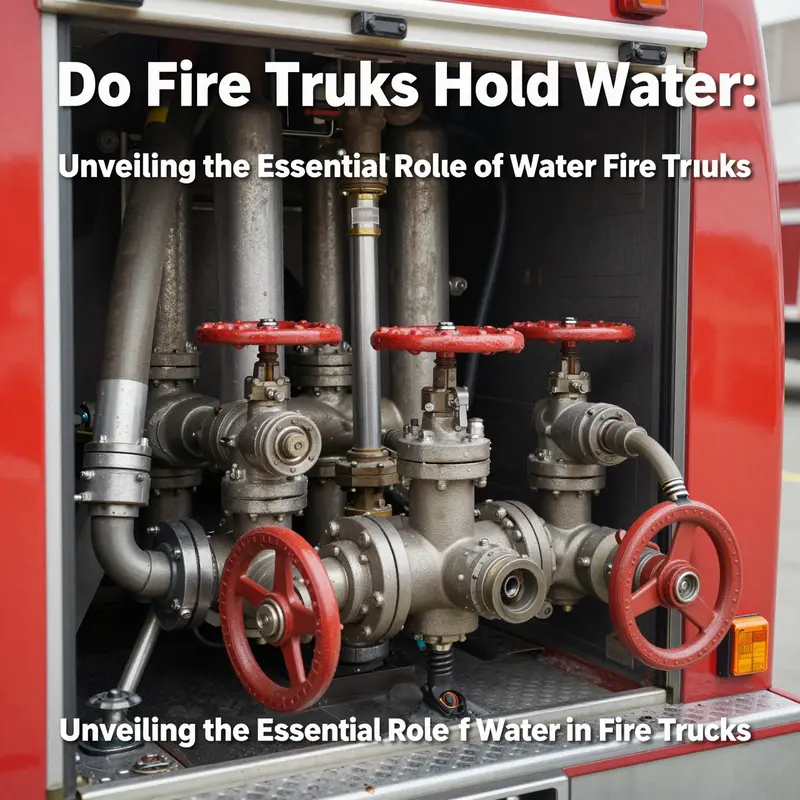
When a fire alarm crackles into life, the first seconds at the scene are a test of readiness, not just courage. The vehicle that arrives carries more than equipment; it carries a lifeline—the ability to deliver water where it is needed most, immediately. Fire trucks are not mere messenger vehicles for firefighters; they are self-contained firefighting systems. The onboard water tank, the pumping apparatus, and the ability to tap into external sources form a coordinated triad that powers suppression efforts the moment the crew steps off the cab. This integration is not accidental. It is the product of decades of design, testing, and real-world experience, converging on a single objective: to suppress fires fast, safely, and efficiently regardless of the environment. In this light, the question “Do fire trucks hold water?” evolves from a simple yes into a window on the hydraulic choreography that underpins modern firefighting.
Onboard water storage is the most visible evidence that a fire truck can begin work without waiting for a hydrant. The tanks that sit in the chassis or behind the cab are not decorative; they are purpose-built reservoirs. Across different apparatus configurations, the onboard capacity typically spans a wide range—from roughly a thousand gallons to well over three thousand gallons. When translated into metric terms, that is about 3,800 to 11,300 liters. In some contemporary designs, the emphasis shifts toward larger onboard reserves, with capacities around 10,000 liters or more, specifically to maximize operational flexibility. This is especially critical in rural or developing areas where hydrant density is sparse or pressure is inconsistent. A large onboard supply gives firefighters a vital window in which to initiate suppression, begin applying a knockdown, and begin lines lay-in, all while external water sources are being prepared or connected. It is the pragmatic acknowledgment that water is a finite resource on the scene, and speed in securing it can determine whether a fire grows beyond control or is contained before it spreads.
The heart of the system that harnesses this stored water is the pumping apparatus. Modern fire trucks rely on robust, high-duty pumps—often centrifugal in design—that can take water from the onboard tank and discharge it through the attack lines at high pressure. The pump is the governor of the entire operation: it converts potential energy in the tank into kinetic energy delivered at the nozzle. A key characteristic of these pumps is their ability to manage steady pressure and flow under demanding conditions. Fire suppression is a dynamic task; the water must reach the nozzle at a consistent rate even as operators adjust nozzle sizes, change the number of simultaneous streams, or navigate to distant parts of a structure. The pump’s performance must also adapt to other duties—drafting, where water is drawn from external sources rather than the onboard tank, and the ability to sustain higher pressures when fighting higher-rises or when coordination requires long lays of hose.
Drafting, in particular, expands the reach of the onboard tank from a fixed quantity into a flexible resource. When hydrants are unavailable or inadequate, the pump can draw water from static sources such as ponds, lakes, or other natural or artificial reservoirs. Drafting requires careful engineering: a sturdy suction system, reliable priming, and hoses that can withstand the suction pressures as well as the hydraulic demands of high-flow operations. The same pumping system that delivers water from the onboard tank can be configured to pull from an external source, effectively creating a single, continuous water supply loop. The interplay between onboard storage and external drafting is not a matter of either/or; it is a matter of ensuring that the pump can align with whichever source is most readily available at a particular moment. The ability to transfer from tank to external source, and vice versa, ensures that the firefighting effort maintains momentum from the moment the apparatus arrives until the scene is secured.
The practical implications of this design approach become especially evident in scenarios such as high-rise suppression. A 32-meter ladder apparatus, for example, may be required to reach significant upper floors, and its pump system must support the challenging hydraulics of delivering water through elevated elevations and long hose lays. The altitude at which water must be delivered, the friction losses along long hose runs, and the potential need to counteract heat-induced pressure drop all underscore why a powerful, reliable pump and a robust onboard reserve can make the difference between a controlled incident and a growing blaze. In such contexts, the pump’s role extends beyond simply delivering water; it ensures that the crew can sustain a reliable stream at the nozzle while firefighters position themselves for search, rescue, or fire attack. This holistic view—water in, water out, pressure maintained, and drafting capacity ready—defines how modern trucks are designed to operate as mobile fire stations rather than as static water carriers.
Water, as a primary extinguishing agent, remains the backbone of most firefighting efforts. Yet the tooling accompanying water—such as foam concentrates or inert gas extinguishing agents—has evolved to address specific fire types. Foam, for instance, can improve the spreading and coverage of water on surfaces flammable with liquids, while certain inert gases can be deployed in enclosed spaces to displace oxygen without harming occupants. Even with these specialized tools in play, water supplies the broad base of suppression capacity. The effectiveness of a given operation depends on the seamless collaboration of onboard water, pumping capacity, and external water sources. It is a choreography that demands precision: water must be delivered where needed, at the right pressure, and with a crew that can adapt to changing conditions on the ground.
From an engineering perspective, the durability of the pump and tank assembly is a central concern. Fire apparatus operate in environments of extreme heat, vibration, and rough terrain. Materials must resist corrosion, withstand heavy use, and maintain integrity when subjected to long hours of duty. The integration of the onboard tank with the pump system requires careful consideration of weight distribution, hose routing, and maintenance access. The entire system is designed to be rugged yet maintainable, with components that can be serviced and rebuilt to restore performance after heavy use or wear. The industry recognizes this necessity through testing standards and warranties that acknowledge the demanding life cycle of these machines. While specific warranty terms vary, the underlying message is clear: the pump and water storage systems are built to endure, and manufacturers back that claim with service expectations that align with the realities of frontline firefighting.
An important facet of the water-holding and pumping paradigm is how it informs operational flexibility for departments with limited hydrant access. When talk turns to rural fire service or smaller municipal fleets, the emphasis often shifts toward maximizing onboard water capacity and ensuring that the pump can reliably support drafting operations. In such contexts, the ability to rely on a substantial onboard reserve means a crew can begin a mitigation effort immediately—installing an initial water stream, knocking down flames, and creating a perimeter while awaiting additional water supply. This dynamic is not merely a matter of convenience; it is a strategic choice that can drastically alter the trajectory of a fire event and reduce the risk to responding personnel and civilians.
In recent industry discussions, there is a clear trend toward designs that prioritize larger onboard tanks for enhanced operational flexibility. The logic is straightforward: more water on board means more time to establish a water supply, more opportunity to connect to external sources, and more margin to sustain attack lines during the critical early minutes of suppression. As a result, new configurations seek to balance large-capacity tanks with the necessary pump performance, a combination that preserves maneuverability and reliability across a range of emergency scenarios. This emphasis on holistic capability—onboard water, robust pumping, and adaptable source utilization—reflects a mature understanding of firefighting as a dynamic, situational discipline rather than a static sequence of steps.
The interdependence of these systems is also evident in how fire service organizations think about training, maintenance, and readiness. Operators must be proficient at priming pumps, calculating the practical nozzle pressures for different flows, and coordinating with hose teams to ensure that the water reaches the fire with minimal loss and maximal effect. Maintenance routines focus on verifying pump acceptance, ensuring that intake and discharge pathways remain free of debris, and confirming that the onboard reservoir remains free of contaminants. The complexity of these tasks underscores why fire departments emphasize ongoing training and why manufacturers provide service documentation and warranty support. The preparation is continuous because conditions at a fire scene are anything but predictable. The equipment must respond with consistency, and that reliability rests on the careful calibration of tank size, pump capability, and the means to source more water when needed.
For readers who want to visualize the equipment in action, consider the broader category of steel-fire-apparatus that houses these systems. The rugged construction, the precise routing of hoses, and the way the pump acts as a heartbeat of the vehicle all reflect a design philosophy that marries strength with hydraulic finesse. The aim is not only to move water but to move it with control, precision, and resilience under pressure. You can explore a concrete example of how such apparatus is discussed within the broader discourse on equipment design and capability here: Steel Fire Apparatus.
Ultimately, the question of whether fire trucks hold water is less about a single answer and more about an integrated solution. Onboard tanks provide an immediate initial attack, with the pump translating stored potential into real, directed force. The ability to draft from outside sources extends the reach far beyond what a fixed hydrant network would permit, ensuring that even communities without abundant water access can mount effective suppression efforts. The resulting capability—immediate action followed by sustained supply—exemplifies modern firefighting’s blend of engineering, logistics, and frontline judgment. It is a system designed to adapt to location, occupancy, and fire behavior, rather than forcing every scenario into a one-size-fits-all protocol. In this sense, the water-holding and pumping paradigm is not just a technical feature of a vehicle; it is a central pillar of how contemporary firefighting organizes its response, protects lives, and minimizes property loss across diverse landscapes.
For readers who wish to explore the technical grounding behind these concepts in a broader, standards-based context, a comprehensive overview is available through a respected industry organization that codifies how fire trucks work, including water storage and pumping. This resource reinforces the practical observations described here and provides a framework for understanding how brigade-level decisions align with equipment capabilities on the ground. External resource: https://www.nfpa.org/About-the-NFPA/News-and-Research/Fire-statistics-and-research/How-fire-trucks-work
Onboard Water, Onset of Suppression: How Fire Trucks Carry Water and the Equipment That Makes It Work
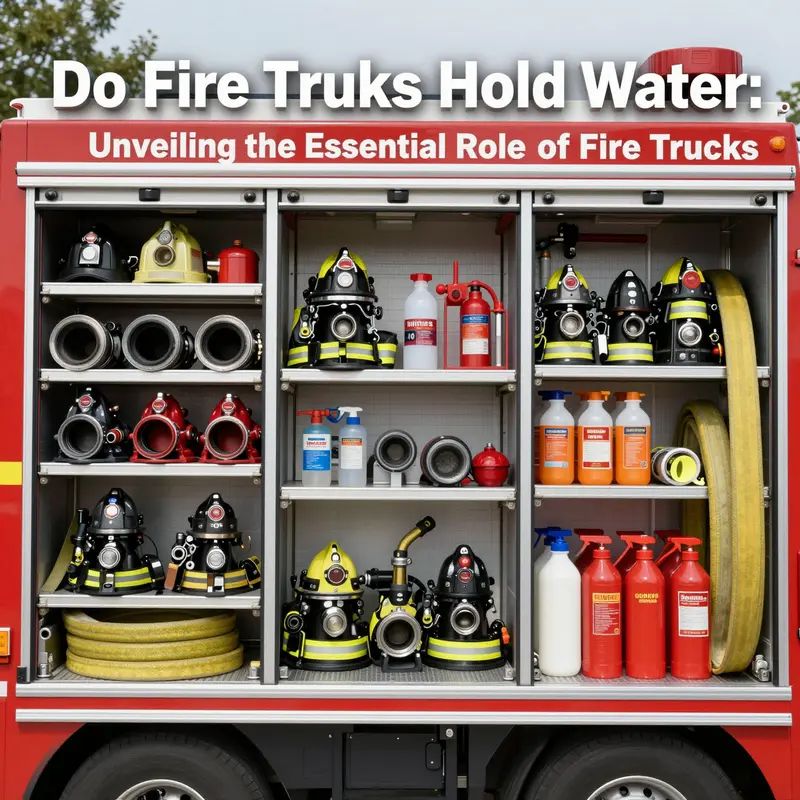
When a fire breaks out, the immediate instinct might be to seek a hydrant or natural source of water. Yet one of the most crucial advantages of modern firefighting is the onboard water held in the vehicle itself. Fire trucks are designed not just as conveyances to the scene but as mobile water stations, ready to begin suppression the moment they arrive. This onboard reservoir is more than a tank; it is a carefully engineered system that combines capacity, durability, and rapid deployment. The result is a firefighting cadence that starts with water already in the truck and continues as crews connect to external sources or draft water from nearby lakes, rivers, or other bodies of water. The logic behind carrying water on wheels is simple and powerful: every second saved in the earliest moments of a blaze reduces heat, slows flame growth, and improves the chances for rescuers and occupants. The value of that early water supply becomes even clearer when we consider the diverse environments in which fire crews operate. In rural settings where hydrants are sparse and distances to sources are longer, the capacity of a tank can mean the difference between rapid containment and a spreading, harder-to-control fire. In dense urban areas, where traffic, structure layouts, and high-rise demands push teams to a more complex rhythm, the onboard water reserve still provides the initial push needed to stabilize a scene before external water can be connected. The capacity and readiness of these tanks influence tactics, the tempo of water application, and even the selection of other tools that accompany the crew into operation.
Different fire service needs drive the variation in onboard water storage. Smaller, rural-oriented engines typically carry between 500 and 1,000 gallons of water, roughly 1,890 to 3,785 liters. These compact volumes are well-suited to the gaps between hydrants in less urbanized zones, enabling a quick knockdown while crews locate a more reliable supply. Larger, heavy-duty fire apparatus designed for urban environments or for intense multi-structure response hold significantly more water, commonly in the range of 1,000 to 2,000 gallons or about 3,785 to 7,570 liters. In some situations, especially where water sources are scarce or where long, unbroken lines of hose are planned, departments deploy even higher capacities. The exact size is influenced by local geography, funding, maintenance considerations, and the mix of calls that a department typically handles.
The tank itself is built for enduring service. Manufacturers select materials that resist corrosion and withstand the vibrational, spray, and impact conditions common to firefighting. Stainless steel and aluminum are favored for their strength-to-weight characteristics and long-term durability. The interior of a water tank is not simply a bare metal surface; it often incorporates features to facilitate cleaning, minimize sediment, and reduce the sloshing that can destabilize a vehicle during transit. Baffles—internal plates designed to interrupt free water movement—help control surge, keeping the load stable as the truck accelerates, brakes, or negotiates turns. A stable platform is essential for safety, maneuverability, and consistent water delivery when the pump is engaged.
Speaking of delivery, the onboard water system is powered by a robust pump that acts as the heart of the vehicle’s firefighting capability. This pump is designed to draw water from the tank and push it through a network of hoses, nozzles, and fittings with speed and precision. In many configurations, the pump can also draw water from external sources, including hydrants connected via large-diameter supply lines or drafting from natural bodies of water. Drafting is a skill and a science: the pump must create a suction force that overcomes gravity and maintains a reliable flow even when the water source is elevated or distant. The crew can manage this flow with a range of controls that adjust pressure and volume, delivering what is needed for a given scenario. The nozzle, a simple yet critical component, translates this pressurized water into a directed stream or a fog pattern, enabling suppression while protecting firefighters and occupants inside structures.
Beyond water alone, modern fire apparatus are equipped with a suite of tools and systems that extend their effectiveness across a wide spectrum of incidents. Water remains the principal extinguishing agent for most fires, but specialized agents are sometimes carried to augment or tailor suppression tactics. Foam concentrates, for example, can mix with water to blanket hydrocarbon fires or create a more stable blanket that cools and separates fuel from air. Carbon dioxide, although used selectively, can help suppress certain types of fires by displacing oxygen in confined spaces. The presence of these additions does not diminish the central role of water; rather, it expands the toolbox firefighters have at the ready. The core idea is straightforward: the water tank provides immediate, initial response, while the pump and hoses deliver the right amount at the right pressure, and optional agents offer enhanced performance for specific fuel types or environmental conditions.
The interface between onboard water and the external water supply is a choreography of connections and decisions. When hydrants are available, crews connect large-diameter supply lines to the pump, augmenting the tank’s water and enabling sustained, high-volume output. In water-scarce or rural settings, or when a structure demands rapid attack before a hydrant can be found, crews may engage in drafting. They position the apparatus at a safe distance from the fire and deploy the lift or portable pump to prime the intake and pull water from a pond, lake, or stream. Drafting demands careful selection of intake points, attention to pump priming, and ongoing monitoring of pressure. The crew must be mindful of the risk of air entrainment and suction loss, which can interrupt water flow at a moment when it matters most. In both hydrant-fed and drafting scenarios, the ability to access and manage water on the move gives responders a flexible, responsive edge that often shapes the incident’s outcome.
The design philosophy behind onboard water also carries implications for how fires are fought. The initial attack is typically a balance of speed, volume, and control. A larger tank can deliver a higher initial volume, enabling faster knockdown in the early seconds of an attack, which is crucial for limiting heat release and protecting interior occupants. Smaller tanks, while lighter and easier to maneuver, require a more rapid connection to an external supply or a quick transition to drafting, making team coordination and route planning essential. In all cases, the fire truck’s onboard water acts as a launchpad for suppression. It buys time, dampens the tempo of escalation, and enables firefighters to begin the process of salvage, exposure protection, and overhaul while more water arrives from external sources.
This ongoing efficiency depends not only on the tank’s capacity but on the entire system’s reliability. The pump must maintain steady, controllable pressure across the range of discharge rates, from a gentle stream for cooling and rescue to a full-throttle discharge for direct knockdown. Hoses, nozzles, and fittings must be rugged and straightforward to operate under stress. The crew’s ability to rapidly deploy multiple lines, switch between patterns, and coordinate with a nozzle operator and a pump operator defines how effectively water is applied. Even with sophisticated equipment, the fundamentals remain simple: water in the tank, water out through the nozzle, water sourced from hydrants or drafted, and water delivered with enough force to overwhelm the fire’s heat release and fuel supply. The choreography of this system is a testament to meticulous engineering, disciplined training, and the shared experience of countless fire service professionals who have learned to trust a truck’s onboard water as a dependable ally in the earliest moments of a blaze.
As with any heavy machine, maintenance and inspection are integral to preserving the reliability of onboard water systems. Routine checks ensure the integrity of tank seams, fittings, and gaskets; the pump’s seals and impellers are inspected for wear; and hoses are tested for pressure tolerance and leakage. Cleanliness is more than a matter of hygiene; it is a performance factor. Sediment in the tank can affect pump performance and water quality, which matters for downstream applications, especially when water must mix with foam concentrates or be routed through complex nozzle configurations. The overall condition of the apparatus, from its tires to its electrical systems that control fuel supply and pump operations, contributes to the certainty that the water will flow when needed and with the necessary force. This is the quiet backbone of firefighting readiness, the everyday diligence that keeps the dramatic moments of a call from becoming dependent on coincidence or luck.
In the broader story of firefighting equipment, onboard water is a dependable baseline that works in concert with a wide array of tools and technologies. The modular nature of modern apparatus means crews can tailor their configurations to match local needs, risk profiles, and climate realities. A truck that serves a community with long stretches between hydrants might emphasize larger tank capacity and drafting capabilities, while a city department might prioritize rapid water supply from hydrants and the ability to sustain a high flow with multiple lines. Yet regardless of variation, the common thread is a philosophy of readiness: water on board to begin the job without delay, supported by a pumping system that can scale from steady maintenance flows to high-volume applications, supported by rugged hoses, reliable nozzles, and, when appropriate, specialized agents that bolster the water’s effectiveness.
To visualize the practical impact of onboard water, imagine a building fire where the initial attack begins with a few thousand gallons per minute of water leaving the nozzle. The crew’s first seconds are spent controlling the stream, protecting entrants, and establishing a solid attack line while additional units bring extra water either from hydrants or from a drafted source. The tank’s size matters not just in the raw gallon count but in the rhythm it permits—how quickly the crew can begin cooling, how reliably they can maintain a steady discharge, and how long they can sustain their suppression until a larger supply can be established. In this sense, onboard water is not simply a convenience; it is a strategic asset that shapes tactics, safety margins, and the overall tempo of a response.
For readers interested in further exploration of fire-truck design and the diverse approaches to water storage on apparatus, this topic sits at the intersection of engineering, public safety policy, and field experience. The ongoing evolution of materials, pump technology, and combined agents continues to refine how water is stored, moved, and applied at the scene. While the core purpose remains constant—to deliver water where it is needed—the ways in which departments balance tank size, weight, cost, and maintenance reflect the unique challenges of their communities. In this sense, onboard water is both a practical function and a symbol of the broader capability of modern fire apparatus: a mobile, reliable source of suppression that travels with the responders, ready to engage a fire at its earliest, most dangerous moments.
Internal link to related equipment and construction concepts can provide a deeper look at how frame design and material choices support the stability and resilience of these vehicles in demanding operating environments. For a focused overview of steel-based configurations and the durability considerations that underwrite a fire apparatus’s overall robustness, see the discussion on steel fire apparatus here: steel-fire-apparatus.
In sum, fire trucks do hold water, and the significance of that onboard reservoir extends beyond raw capacity. It is the first line of defense, the early engine of suppression that begins the moment the first unit arrives. Alongside the pump, hoses, and nozzles, the water tank anchors a disciplined sequence of actions that defines a successful response. The tank’s size and conditioning, the pump’s reliability, and the crew’s readiness to connect to external sources or to draft water all come together to produce a coordinated attack on the fire. This integrated system—onboard water paired with a capable pumping arrangement and a toolkit of attachments—constitutes the backbone of rapid, effective firefighting.
For readers who want to delve even further into the practical specifications and applications of water tanks and pumping systems on fire apparatus, professional literature and manufacturer resources offer detailed analyses of capacity planning, water flow dynamics, and maintenance protocols. Such resources illuminate how a seemingly simple question—do fire trucks hold water?—unfolds into a complex interplay of physics, engineering, and frontline experience that enables fire departments to protect lives and property with confidence and speed. External resources provide additional context on how these tanks are sized and how they are integrated into broader response strategies, underscoring the importance of thoughtful design in safeguarding communities. For further details on water tank fire truck specifications and related considerations, an external resource offers a comprehensive overview of the topic: https://www.made-in-china.com/products-fs/468198815387.html.
Water on Wheels: How Onboard Tanks Shape Rapid Fire Suppression and Emergency Response
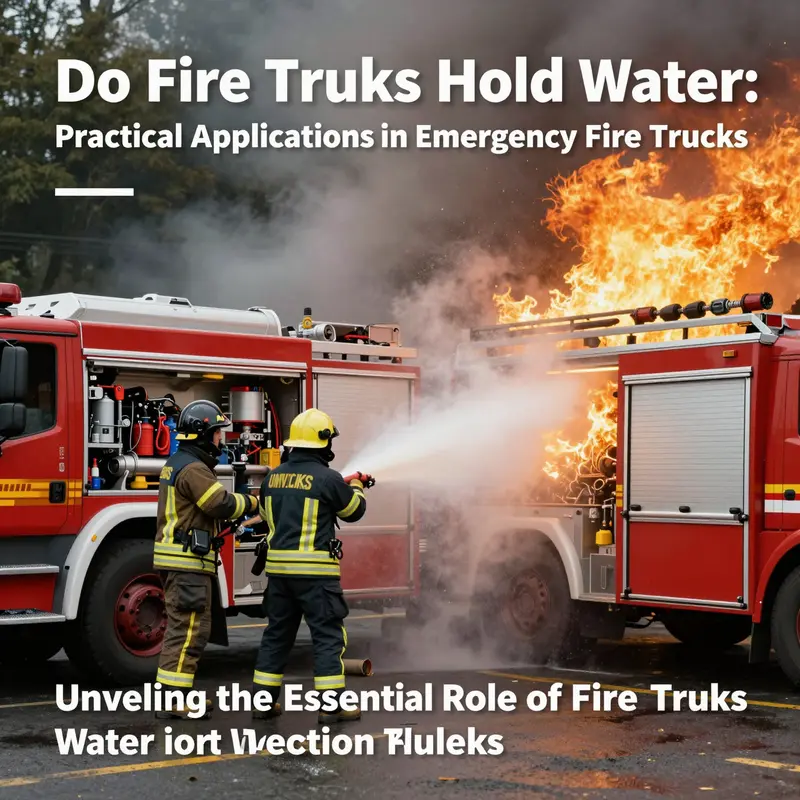
Water on wheels is not a gimmick or a luxury; it is the core enabler of a firefighter’s earliest actions at a blaze. When an alarm rings and response wheels begin to turn, the first measure of a successful suppression often rests on what the truck already carries. Onboard water tanks turn a scene from a waiting game into a direct, immediate intervention. In many situations—whether a rural outpost far from a hydrant, a wildfire racing across a sward, or an urban incident where streets funnel into a narrow corridor—the ability to unleash water within seconds of arrival can determine how quickly a fire is contained, how much fuel load is saved, and how safe the crew remains as they begin their work. The logic behind this capability is elegantly simple: water buys time and gives firefighters a controllable, adjustable toolset to begin the work while external water sources are assessed, secured, or connected. This is not a mere convenience but a carefully engineered design principle that underpins the entire operational philosophy of modern fire apparatus. The onboard tank is the first engine of effort, the seed from which a broader water management system grows, and it anchors the chain of actions that follow—from surge pressure to coordinated hose lines, from draft operations to eventual hydrant connections or natural-water pickups. The practical significance of carrying water on the chassis is felt at multiple scales, from the rural hilltop where a crew must fight a flame front with scarce external water, to the urban perimeter where traffic, blocked hydrants, or compromised infrastructure can delay traditional hydrant hookups. The onboard tank provides a reliable, predictable source of water at the outset, allowing suppression to begin immediately and reducing the risk that a fire will gain unstoppable momentum in those critical first minutes. It is in this decisive window that the design choices around capacity, delivery, and compatibility with allied systems become consequential. A typical onboard tank, across many fire service fleets, ranges from several thousand to tens of thousands of liters. While some regional configurations emphasize compact, rapid-response capacity, others emphasize larger volumes for sustained operations, especially in areas with sparse hydrant coverage or vast wildland interfaces. In practice, this means a spectrum of configurations, all aimed at ensuring the initial attack has water ready to flow through the nozzles the moment crews step from the cab onto the scene. The choice of capacity is thus a direct reflection of the terrain, the expected incident mix, and the logistical realities of the communities the fleet serves. Even among trucks with heavy water loads, there is a thoughtful balance to strike. A fuller tank translates into more weight, which in turn affects acceleration, braking, and steering dynamics. Fire service designers and manufacturers spend substantial effort on chassis integration, weight distribution, and suspension tuning to keep maneuverability and reliability intact, so that the water payload does not become a hindrance to rapid response or safe deployment. In this sense, water capacity is not simply a number; it is a constraint that informs every other element of the apparatus, from pump sizing and hose layout to compartment organization and crew placement. When a crew arrives on the scene, the onboard water is deployed through a high-capacity pump system that can deliver steady pressure and volume to a barrage of hose lines. These pumps are designed to draw water not only from the tank but also from external sources when needed. Drafting capabilities enable the vehicle to battlefield a fire where hydrants are distant or compromised. A pump operator can draft water from pools, streams, ponds, or rivers and then pressurize the supply so that multiple lines can be fed simultaneously. This capability is not a one-off trick; it is a foundational practice that requires precise coordination with the crew, the nozzle team, and the incident commander. The on-board drum of water and the external water sources work in concert, with the pump acting as the conductor of a symphony that includes hoses, nozzles, ladders, and rescue tools. In the earliest moments, when the fire is still a single squeeze on a wick of fuel and air, those lines can weave a path of suppression directly into the flame’s strongest zones. The ability to initiate an attack immediately—to apply water to the fire’s most vulnerable points—can alter the fire’s trajectory, limit heat release, and prevent rapid growth into more dangerous configurations. The practical applications of onboard water extend beyond the immediate blaze. In rural and wildfire situations, firefighters often operate in environments with irregular access to water. A large onboard tank becomes the primary and sometimes sole source of extinguishment until a more robust external water supply is secured. In these settings, the water’s availability shapes the tactics used: directional fog patterns, straight streams aimed at indirect cooling, and the calculated use of water to create fire breaks and slow flame front progression. In dense urban settings, where hydrants may be unevenly distributed, blocked by traffic, or damaged by the incident itself, the onboard tank remains a steadfast resource. It neutralizes the risk of delay while crews establish a connection to external water or seek alternative sources. The tank’s presence also reduces the cognitive load on the incident commander, who can rely on a predictable water baseline as the scene evolves and resources move toward stabilization and rescue. Yet onboard water is not the only tool in the toolbox. Many modern fire trucks carry foam concentrates or other suppressants along with water. Foam can be mixed with water to enhance suppression for fuel fires, where water alone would struggle to displace the hydrocarbon layer or rapidly cool a surface while starving the fuel of contact. Foam and water create a mixed stream that blankets the fuel surface, detaches vapors, and reduces the likelihood of reignition. The use of specialized suppressants becomes especially valuable in incidents involving flammable liquids, where water’s cooling effect must be augmented to break the chemical chain reaction that propagates the flame. Even as water remains the primary extinguishing medium in most emergencies, the option to deploy foam or other agents expands the versatility of the onboard system and broadens the types of incidents a crew can safely manage from the outset. The hardware that carries, stores, and delivers this water is equally important. Modern tanks are engineered with materials designed to resist corrosion, withstand fluctuations in temperature, and balance weight with durability. Materials such as high-density polyethylene, certain fiberglass-reinforced polymers, and coated steel offer different mixes of longevity, maintenance requirements, and safety considerations. The choice of material influences not only the tank’s life cycle cost but also its maintenance schedule, weight distribution, and susceptibility to damage from road debris or rough terrain. The tank’s interior finish affects cleanability and the risk of biofilm formation, a practical concern in urban and rural environments with varying water quality. The exterior design, including the shape and mounting, interacts with the vehicle’s overall stability during movement and firefighting operations. When observers talk about the tank, it’s easy to focus on volume and weight; yet the tank is part of a larger system designed to maximize reliability under stress. That system includes the pump, the piping, the valves, and the discharge outlets. It also includes the vehicle’s control architecture—how the operator commands flow, monitors pressure, and detects any anomalies in the water supply. In recent years, the integration of modular water systems and smart pump controls has begun shifting steadier, more proactive responses at the scene. These advances enable the pump operator to optimize discharge patterns, adjust for hose length and elevation, and maintain a stable pressure as the crew moves across the incident. A 2026 industry assessment highlights these enhancements as critical to improving both response times and suppression effectiveness in diverse settings. The implication for practice is clear: as water systems become smarter, the value of onboard water grows not only in volume but in the speed and precision with which water is delivered to the flame. The environmental dimension of water use also deserves attention. Fire suppression technology has evolved to reduce water consumption without sacrificing effectiveness. Techniques such as fine water mist, which uses an extremely fine spray to absorb heat and displace oxygen, demonstrate how modern crews can achieve extinguishment with smaller volumes of water. In larger fires, where environmental impacts and runoff are concerns, controlled mist delivery can limit water runoff and damage to property adjacent to the fire line while still achieving rapid cooling and flame reduction. This shift toward efficiency further reinforces why onboard water remains essential: it provides the initial, high-volume response that builds the conditions in which mist-based approaches can be employed judiciously and effectively. The interplay of onboard water, external water sources, and suppression technology is not only technical but deeply procedural. It shapes training regimes, incident command dynamics, and the way firefighters drill on the street and in the station. Operators rehearse drafts, priming the pump with the tank’s reservoir, calculating the pump discharge pressure needed for a given hose layout, and coordinating with crew members who will deploy lines, control nozzle patterns, and manage the water’s temperature and flow. The weight of a full tank also has practical implications for vehicle handling. A full, high-volume tank adds significant mass to the front or rear axles, depending on how the weight is distributed on the chassis. This effect influences braking distance, steering response, and tire wear. It also shapes how crews plan entry routes, ladder placement, and the sequencing of hose deployment. Training programs thus emphasize not only the mechanics of water supply but the physics of moving a vehicle under load, ensuring that the initial water application does not compromise safety or mobility. Looking across different communities, the divergence in on-scene practice often mirrors the local water landscape. In regions where hydrants are dense and reliable, onboard water acts primarily as a buffer, ensuring that a rapid, aggressive attack can begin before a hydrant is fully connected or when water supply chains momentarily falter. In sparsely hydrated landscapes, this tank becomes the lifeblood of initial suppression before drafts from natural sources are secured or alternative water supplies are established. Even in dense cities, where the physical act of moving a line through traffic and into a building can be time-consuming, onboard water provides a critical edge, allowing the crew to establish hydration, create a defensive perimeter, and manage the fire’s growth while the rest of the system is brought online. The story of onboard water is, at its heart, a narrative about resilience and the orchestration of multiple capabilities into a single, responsive unit. It is about turning space into opportunity—the space on a quiet street corner where a truck sits with a full tank, the moment of ignition when a stream arcs from a nozzle, and the sequence that follows as additional units, hydrants, and water sources converge to sustain suppression and rescue. As the fleet modernizes, operators increasingly see onboard water not as a fixed resource but as a proportional contributor to an adaptive approach. In this view, the tank is a platform for a spectrum of technologies—from heavier, more rugged pumps to lighter, more efficient delivery systems. It becomes a platform for smarter controls that ensure a stable, reliable flow, even as the scene evolves and conditions demand flexible water management. And it remains the visible symbol of readiness—the first asset that signals to the community and to the fire itself that help has arrived, water is within reach, and the firefighters have an immediate path to containment. For readers who want to explore related topics in greater depth, the discussion of tank materials and broader fire apparatus design can be extended through related pages on our site, such as a detailed look at steel fire apparatus and how materials choices shape performance in the field. Concurrently, for more information about larger system innovations, including modular water systems and smart pump controls, a broader industry perspective is available through the external technical resource linked at the end of this chapter. The practical takeaway is straightforward: water on board is not merely a convenience but a strategic, engineered advantage that translates to faster initial suppression, more versatile responses across diverse theaters, and a firmer foundation for the coordinated, multi-system efforts that define modern firefighting. The next chapters will continue to build on this theme, linking the hardware realities of onboard water with the evolving tactics, training, and policy considerations that shape how communities respond to fires today. In the meantime, a deeper dive into related materials on steel and related apparatus can provide a useful complement to this chapter, offering a tangible sense of how tank design integrates with the broader chassis and bodywork. The synergy between tank capacity, pump performance, and suppressive agents remains the heartbeat of effective emergency response. External references and continued research continue to refine these relationships, ensuring that fire services stay prepared for the full spectrum of incidents they may face. For those seeking a deeper technical context on water mist and modular pump systems, see the external resource cited here. Fire Engineering.
Final thoughts
Fire trucks are indispensable tools in firefighting, primarily due to their water-holding capabilities and advanced equipment. By understanding how these machines operate—from water capacity designs to the variety of equipment they carry and the ways they implement their pumping systems—we gain a greater appreciation for their role in safety and emergency response. Ultimately, the power of water combined with innovative technology equips firefighters to tackle emergencies effectively.