
When the sirens wail and the bright red fire trucks rush into view, it’s often alongside flashing ambulance lights. This coordinated effort has sparked curiosity among fire truck enthusiasts and aspiring firefighters alike. Why do fire trucks and ambulances show up together? The answer intertwines the essential roles that both these emergency services play in saving lives, especially in times of crisis. Whether you’re an aficionado of firefighting gear or have dreams of donning the firefighter’s helmet, understanding this teamwork is vital. It’s a well-orchestrated dance of emergency response aimed at providing the fastest and most effective help possible to those in distress. In this article, we will explore the fascinating reasons behind their synergy, shedding light on how these heroic vehicles collaborate to enhance community safety. Get ready to dive deep into the thrilling world of fire trucks and ambulances as we unravel the secrets of their partnership!
Historical Context: The Evolution of Emergency Response Vehicles
The development of emergency response vehicles, particularly fire trucks and ambulances, has significantly evolved over the centuries, reflecting societal advancements in technology and emergency medicine.
Early Beginnings
The journey of emergency response vehicles can be traced back to the late 15th century with the introduction of horse-drawn medical wagons. In 1487, these wagons carried injured individuals to hospitals, marking the inception of organized medical transport. Fast forward to the early 20th century, and the evolution of the ambulance began in earnest. By 1915, the Ford Model T ambulance was introduced, quickly becoming a standard for emergency medical services, illustrating the transition towards mechanized medical response.
The Rise of Fire Trucks
Meanwhile, fire trucks have a rich history of their own. Early firefighting efforts utilized hand-drawn water carts and were often manned by community volunteers. By the mid-19th century, steam-powered fire engines emerged, significantly enhancing a fire department’s ability to respond to blazes rapidly. By the 20th century, modern fire trucks began to take shape, incorporating powerful pumping systems and various firefighting equipment tailored for efficiency and quick response.
Combined Emergency Responses
As urban areas developed and the demand for efficient emergency services increased, the synergy between fire trucks and ambulances became evident. Both types of vehicles often work together at the scene of emergencies, each bringing specialized capabilities. Fire trucks are equipped to handle fire control and rescue operations, while ambulances provide medical care and transport for the injured.
This cooperation ensures that victims receive comprehensive care, underscoring the necessity and strategic importance of having both vehicles respond together. According to various sources, including CRRC Vehicles and Pocket Brain, fire trucks and ambulances arriving concurrently can be crucial in emergencies, enhancing medical response times and treatment effectiveness.
Impact on Society
Ultimately, the evolution of these vehicles is part of a broader narrative that includes advances in emergency medicine and public health. Today’s fire trucks and ambulances are equipped with advanced technologies, such as GPS for navigation and onboard medical equipment, transforming the landscape of emergency response. As we reflect on this history, it is vital to acknowledge how far we’ve come and the ongoing improvements that serve to protect and save lives in our communities.
This ongoing evolution is not just about upgrading vehicles but also about enhancing our capability to respond to emergencies effectively. For those interested in modern fire trucks, explore customizable fire truck solutions that cater to evolving emergency services worldwide.
Average Response Times for Fire Trucks and Ambulances
Understanding the coordination between fire trucks and ambulances in emergency situations is vital. Differences in response times based on location highlight the operational challenges and efficiency of emergency services. Below, we provide an overview of the average response times for both fire trucks and ambulances in urban versus rural scenarios:
Response Time Comparison Table
| Service Type | Urban Average Response Time (minutes) | Rural Average Response Time (minutes) |
|---|---|---|
| Ambulance | 7 – 10 | 13.3 |
| Fire Truck | 4.4 – 4.5 | Longer (exact figures not available) |
As illustrated, ambulances in urban areas typically respond faster than those in rural regions, highlighting the need for efficient coordination between services,
particularly in emergencies. For fire trucks, urban response times are notably quicker than in less densely populated areas as well. This disparity emphasizes the relevance of understanding unified command in emergencies to improve response effectiveness.
Additionally, these response time discrepancies can impact overall community health and safety; knowing how to thank first responders is crucial as well, acknowledging their vital role in saving lives.
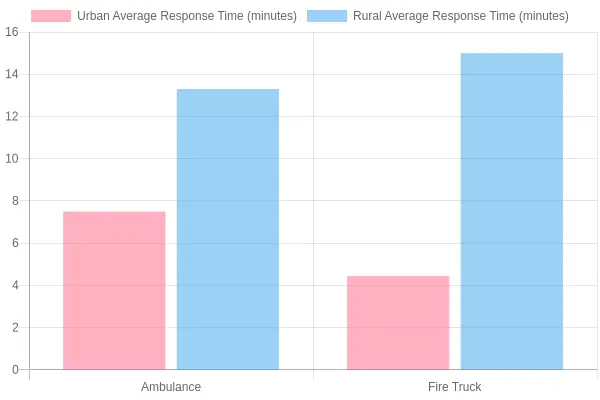
The chart above visualizes these average response times and underscores the operational coordination necessary between fire services and EMS personnel.
Operational Procedures: Coordinating Fire Trucks and Ambulances
When emergencies arise, it is crucial for fire trucks and ambulances to respond together, underpinned by established operational procedures that ensure efficiency and rapid response. Fire trucks often arrive before ambulances due to their wider distribution and ability to cover larger areas quickly; they typically have advanced medical training and equipment on board. This dual response is vital, especially in medical emergencies where every second counts. The National Fire Protection Association (NFPA) emphasizes the importance of interdisciplinary response teams, highlighting that fire service personnel are commonly trained as emergency medical responders, making them essential first responders even in medical instances.
Moreover, collaborative dispatch systems in numerous jurisdictions have been designed to optimize response times-this involves centralized communication protocols that allow quick determination of necessary resources, thereby ensuring the right teams are coordinated for incidents requiring both fire and medical expertise. This operational synergy not only enhances patient care but also maximizes the capabilities of emergency services, as fire trucks provide crucial logistical support, including securing the scene and offering additional manpower. This model of cooperation during emergencies reflects a comprehensive strategy, promoting safety and saving lives, thereby establishing an effective framework for emergency management.
To learn more about the coordination of emergency services, explore our detailed insights on unified command in emergencies and the essential role of first responders in crisis situations.
Both firefighters and paramedics must remain adaptable, reflect on past experiences, and actively participate in training exercises, ensuring they can provide the best possible outcomes in diverse emergency scenarios. Their collaborative effort enhances service delivery and sets a standard for excellence in emergency responses, reinforcing the vital partnership between fire and medical services.
“Teamwork is not just a slogan; it’s the lifeblood of public safety. When firefighters and emergency medical teams work hand-in-hand, we not only save lives but also build trust within our communities. Together, we are stronger and more effective in facing the challenges of emergencies.”
- Chief [Name Redacted], National Fire Academy Director
This quote emphasizes the vital importance of collaboration among fire services and medical teams, reinforcing our commitment to community safety.
In the world of fire services, the importance of teamwork cannot be overstated. When fire trucks arrive alongside ambulances at an emergency scene, it is the synchronized efforts of these teams that ensure a swift, effective response. For aspiring firefighters and emergency services professionals, understanding the dynamics of such collaboration is essential in building their future careers.
Benefits of Collaborative Response: Fire Trucks and Ambulances
Having fire trucks and ambulances on the scene of emergencies offers numerous benefits that significantly improve patient outcomes and enhance safety. Here’s a breakdown of these advantages:
-
Faster Response Times: With both fire trucks and ambulances arriving simultaneously, emergency response times decrease, allowing for quicker medical intervention.
-
Comprehensive Care: Firefighters are often trained as EMTs, enabling them to provide immediate medical assistance while paramedics prepare for transport, ensuring that patients receive the best care possible right from the start.
-
Additional Resources: Fire trucks carry equipment and personnel that can assist in medical emergencies-such as stopping bleeding, providing oxygen, or administering CPR-before the ambulance arrives.
-
Enhanced Safety: The presence of fire trucks increases the safety of both patients and responders by providing additional lighting, signage, and support in chaotic emergency situations.
-
Streamlined Communication: The collaboration fosters better coordination among emergency services, ensuring that everyone is on the same page about the patient’s needs and the response strategy.
-
Support for Critical Situations: In cases where multiple patients need attention (like a mass casualty event), the collaborative response efficiently manages resources, ensuring each patient receives the necessary care without delay.
Overall, having both fire trucks and ambulances work together not only enhances the quality of care that patients receive but also contributes to a safer emergency response environment. Learn more about the role of teamwork in emergencies.
Furthermore, studies show that collaborative responses lead to better patient outcomes; for instance, interdisciplinary teams can identify potential life-saving interventions more effectively (Penn LDI).
Community Impact of Fire Trucks and Ambulances
The presence of fire trucks alongside ambulances has a profound impact on community trust and perceptions of public safety. When emergency services respond in tandem, they not only provide a more comprehensive approach to handling emergencies but also enhance the trust that the community places in these vital services.
Building Trust Through Visibility
A coordinated response involving both fire trucks and ambulances signifies that the community’s safety is a top priority. According to a Cosumnes CSD article, this presence ensures immediate assistance and fosters trust among residents. When people see multiple emergency vehicles, it reassures them that they are in capable hands.
The Role of Statistics
Research shows that communities with a robust emergency response system perceive themselves as safer. A survey on public perception indicated that response times and the professionalism of first responders greatly influence public trust. Here’s a table summarizing community trust levels based on the presence of fire trucks and ambulances:
| Presence of Emergency Services | Community Trust Level | Source |
|---|---|---|
| Fire Trucks and Ambulances | High | Source |
| Fire Trucks Only | Moderate | Source |
| Ambulances Only | Moderate | Source |
| Absence of Both | Low | Source |
Anecdotal Evidence
Several anecdotes highlight these dynamics in practice. For instance, a community event in Bondi Beach aimed to rebuild trust between first responders and families affected by a previous traumatic incident, showcasing how engagement practices improve perceptions over time.
On a more routine basis, large emergency exercises, such as the one conducted at Russells Hall Hospital, underscore the importance of preparedness and inter-agency collaboration, reinforcing community confidence in emergency services.
Conclusion
In summary, the simultaneous dispatch of fire trucks and ambulances serves to bolster community trust while enhancing public safety perceptions. The visibility and cooperation of these emergency services not only assure residents during crises but also improve the community’s overall safety culture. As future firefighting and emergency services professionals look to foster these values, it is vital to understand and promote the integral role of this coordinated response.
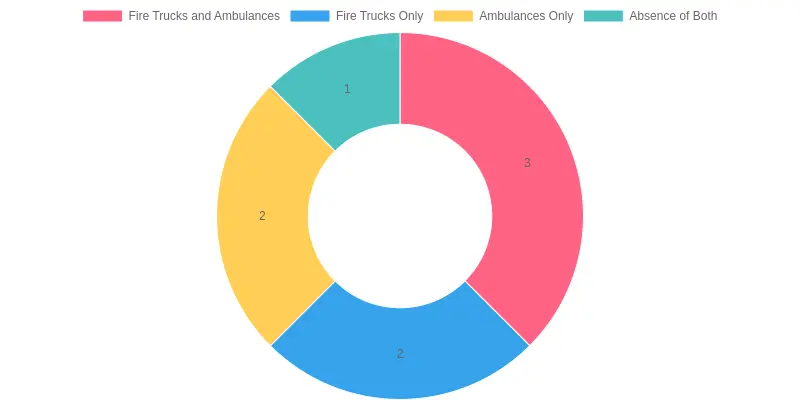
Figure: Community Trust Levels Based on Emergency Services Presence from a recent survey.
Types of Emergencies Requiring Fire Trucks and Ambulances
Understanding the operational overlap between fire trucks and ambulances is crucial for effective emergency response. The following chart illustrates how various types of emergencies necessitate the combined efforts of both services.
Emergency Response Distribution
| Emergency Type | Percentage of Total Emergency Responses (%) |
|---|---|
| Fire Incidents | 20% |
| Medical Emergencies | 40% |
| Vehicle Accidents | 25% |
| Hazardous Materials Incidents | 10% |
| Natural Disasters | 5% |

This chart emphasizes that medical emergencies are the most common, making up 40% of responses, highlighting the importance of immediate medical assistance in various situations. For more insights on the importance of fire trucks in emergency management, learn about unified command in emergencies.
Moreover, understanding the critical roles both fire trucks and ambulances play can help aspiring firefighters and emergency services professionals appreciate the complexities of emergency response operations. Whether it’s tackling a fire or providing life-saving medical care, these teams work hand-in-hand to ensure community safety.
Conclusion
The collaboration between fire trucks and ambulances is a vital aspect of emergency response that enhances the effectiveness and efficiency of saving lives. Fire trucks are outfitted to handle fire suppression and rescue operations, while ambulances focus on patient care and transport. Together, they provide a comprehensive emergency response, ensuring that every aspect of an incident is addressed promptly. As fire truck enthusiasts and emergency services professionals, it’s essential to recognize and appreciate the joint efforts that take place behind the scenes in these critical situations.
If you’re looking to elevate your knowledge or explore high-quality fire truck solutions, consider engaging with Summit Fairings, known for their precision-engineered products that meet the unique needs of emergency services. Join us in celebrating this incredible teamwork, and let’s continue to support our first responders with the best tools available. Your engagement can make a difference!