
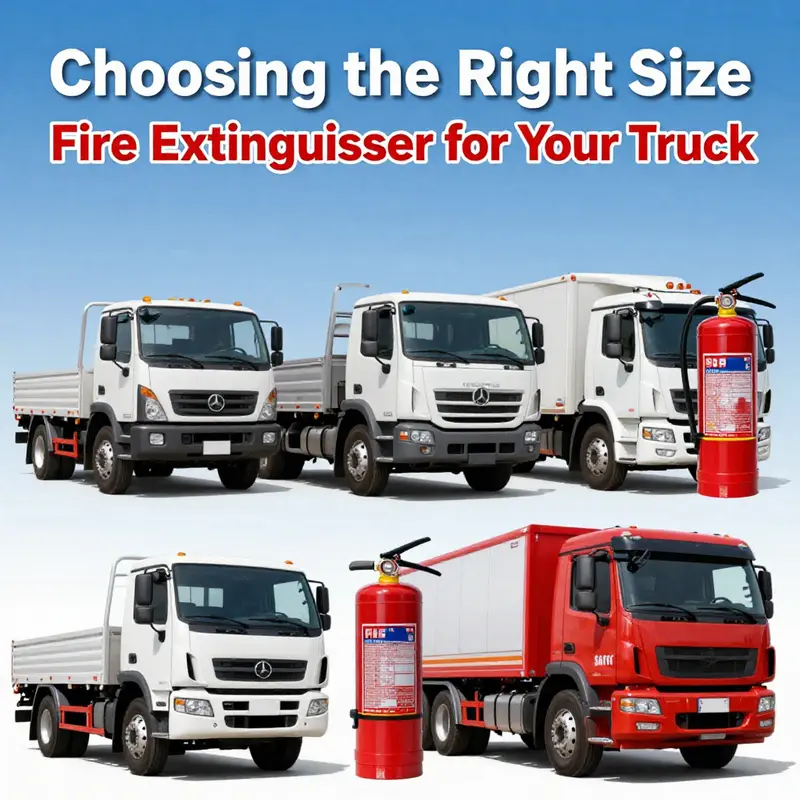
Fire safety is paramount, especially for truck owners and operators. With the significant role that fire extinguishers play in preventing tragedies and ensuring quick responses during fire-related emergencies, understanding the appropriate sizes for different truck categories is vital. This article delves into specific size recommendations based on truck type, outlines necessary regulatory compliance, and discusses best practices for effective extinguisher use, ensuring you are well-prepared in case of a fire incident on the road.
null
null
Sizing for Compliance: Navigating Fire Extinguisher Requirements and Truck Safety in Transit
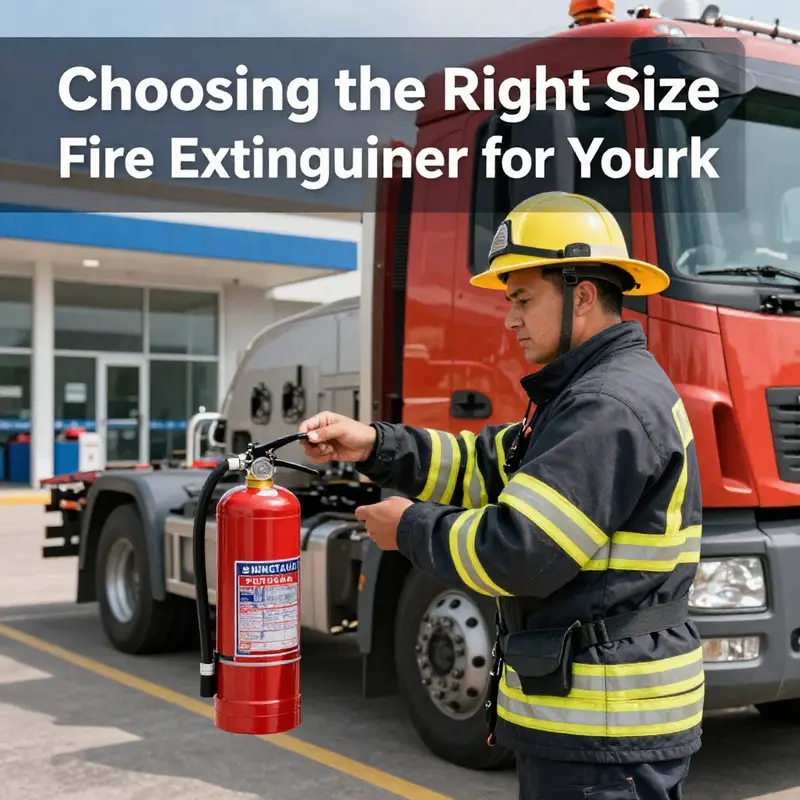
Fire extinguishers are small devices with outsized impact on road safety. In the realm of trucking, where drivers navigate complex routes, variable cargo, and the pressures of tight schedules, having the right extinguisher is not a luxury—it is a regulatory and practical safeguard. The size and number of extinguishers a truck must carry depend on multiple factors, including the vehicle’s weight, its intended use, the fire hazards it encounters, and the regulatory framework that governs safety on the road. This chapter weaves together the practical sizing guidelines with the governing standards, to offer a cohesive view of how a fleet operator, a driver, and a safety manager can align daily practice with formal requirements. The aim is to provide a clear understanding of not only what to carry, but why the chosen size matters for response time, effectiveness, and compliance under inspection and in real-world emergencies.
Regulatory compliance in this area sits at the intersection of federal transportation safety rules and fire safety standards. In the United States, the Federal Motor Carrier Safety Administration (FMCSA) places emphasis on equipment that protects life and limbs during transport, especially on long-haul journeys where fire hazards can escalate quickly. The applicable federal standard is codified in 49 CFR §393.95, which outlines the fire extinguisher requirements for commercial motor vehicles. The language of the regulation is precise about the necessity for reliable fire safety equipment, but it does not exist in a vacuum. It is reinforced by testing standards such as UL 299, which provides the classification and testing criteria for extinguishers, and UL 711, which governs the performance of extinguishing agents. These standards collectively define not only what qualifies as a safe extinguisher, but also how it must perform under pressure and temperature variations typical of highway operation. For operators, this means that the extinguisher cannot simply be any canister of foam or water; it must be a device that meets recognized performance criteria and remains dependable through regular use and environmental exposure.
The practical implications of these standards begin with the weight class of the vehicle. While the exact sizing rules may vary by jurisdiction and the vehicle’s role, a general framework emerges from careful reading of the regulations and the guidelines that safety officers rely on when configuring a truck fleet. In broader, long-standing practice, lighter vehicles on the road—those approaching or under about 2,000 pounds gross vehicle weight—are commonly equipped with a single compact extinguisher. In published guidelines that are frequently referenced in fleet safety planning, this unit tends to be an ABC-rated dry powder extinguisher with a nominal mass around 2 kilograms, designed to tackle small fires quickly without adding significant weight to the vehicle. The reason for the 2 kg size is twofold: it provides enough extinguishing capacity to arrest a typical early-stage fire, while remaining light enough to not impede maneuverability or raise the total load beyond what the vehicle can safely carry. This approach is particularly relevant for light-duty trucks and vans used for local service, delivery, or personal transport where the risk profile is significant but not dominated by bulk hazardous materials.
As the vehicle weight and application scale up, so too does the rationale for additional extinguishers or larger units. For medium-duty trucks, typically ranging from about 2,000 to 6,600 pounds gross vehicle weight, the guidance shifts toward redundancy and reach. The prevailing practice in many safety programs is to mount two extinguishers, each in the 4 kg class, to ensure that a single extinguisher loadout does not leave the cab or the cargo area without immediate fire-fighting capability. The rationale for two extinguishers is practical: in a mid-size vehicle, fires can occur in multiple compartments—the engine bay, the cab, and the cargo area—and the ability to deploy one extinguisher while a second is retrieved can be the difference between a minor incident and a more dangerous escalation. The 4 kg ABC dry powder option provides a broad spectrum of extinguishing ability across common truck fire scenarios, including Class A (ordinary combustibles), Class B (flammable liquids), and Class C (electrical fires). Dry powder extinguishers offer robust performance across a broad range of conditions, including oily environments, which are not uncommon in logistics settings where fuel, lubricants, and hydraulic fluids can be present.
For heavy-duty trucks—those exceeding roughly 6,600 pounds gross vehicle weight—the consequent safety configuration often mirrors a proportional escalation: three extinguishers, each around 5 kg, or an equivalent total capacity achieved through larger units, are commonly recommended or required in many official safety programs. This sizing responds to the reality that heavier trucks operate in more varied environments, carry more diverse loads, and present a greater fire risk in the engine bay, the cargo area, and, in some cases, in the cab itself. The larger extinguishers extend reach, allow for faster response in a multi-zone fire scenario, and reduce the need for drivers to reposition themselves or abandon their primary task to retrieve additional equipment. This is especially critical in heavy-duty road operations where a single fire can spread rapidly given dense traffic, high heat, and complex electrical or mechanical systems.
For large commercial trucks, buses, or vehicles carrying hazardous materials, regulatory emphasis tends to sharpen further. In many safety regimes, fleets of this scale must carry at least two extinguishers of a specified minimum size, with some rules requiring two 2-liter water-based extinguishers as an alternative or complement to the dry powder units. The water-based option is noted for its particular effectiveness against certain fire types and its suitability in scenarios where modern electric components are present. The emphasis here is not merely on the quantity or weight of the extinguishers, but on ensuring that the vehicle can be safeguarded in a range of plausible failure modes and fire sources, including those associated with high passenger or cargo loads. The core objective remains consistent: reduce the time to initial knockdown, keep occupants safe, and protect critical systems and cargo from rapid escalation.
A central theme across all these sizing considerations is the type of extinguishers themselves. The ABC-rated dry powder extinguisher is the workhorse for most trucking applications. Its versatility across A, B, and C classes makes it a pragmatic choice where fires may originate from a fluid leak, an overheated engine, or an electrical fault. Dry powder extinguishers offer broad applicability and are generally robust in dusty or humid environments, but they can leave a residue that requires cleanup and may be less forgiving on sensitive electrical components if the vehicle’s electrical systems remain active. Water-based extinguishers, on the other hand, offer certain advantages in terms of stain and residue and can be more effective against specific liquid fires, including some cooking oils and fats (Class F) fire scenarios. They may be particularly advantageous in electric vehicle contexts, where high-voltage components call for extinguishing approaches that minimize collateral damage while effectively interrupting the flame chain reaction. In practice, many fleets adopt a combination approach, prioritizing ABC dry powder for engine bays and cargo compartments while deploying water-based or foam-based alternatives where the risk profile justifies it and the vehicle’s design allows safe usage.
The certification and lifecycle aspects of extinguishers also feed into the sizing equation. A device that meets CCC certification in China, for example, signals adherence to a recognized quality and safety standard that aligns with local inspection regimes. In other markets, the analogous expectations involve a cradle-to-grave maintenance mindset: each extinguisher must have a service life that is clearly defined, usually around eight years for dry powder units under standard conditions, with annual inspections to verify pressure, seals, and overall operability. Regular maintenance is not merely a box to tick; it ensures that the gauge remains in the green zone, that the tamper seal is intact, and that there are no signs of corrosion, leakage, or physical damage that could compromise performance in a real emergency. The maintenance cadence reinforces the sizing logic—having more units of smaller size distributed strategically can be a superior risk management approach if each unit is consistently inspected and remains ready for use. The right balance between capacity, location, and accessibility thus emerges from a disciplined maintenance program as much as from the initial calculation of weights and numbers.
Placement and visibility are not cosmetic concerns. In a sudden fire, response time is critical, and the human factor—the driver, the co-pilot, or the loading crew—must be able to locate and operate the extinguisher without delay. Practical guidance emphasizes mounting extinguishers in clearly visible, easily reachable locations. Ideally, at least one extinguisher should be within the driver’s reach in the cab, with additional units placed in the cargo area where the fire hazards are greatest. The precise mounting height and orientation should align with the vehicle’s layout and the operator’s typical line of sight during routine checks. For vehicles that operate in multi-shift or multi-crew environments, complementary placement strategies can ensure redundant access for crew members, especially in scenarios where the operator must evacuate and the vehicle must still be safeguarded against a post-crash or post-impact ignition source.
In the broader framework of regulatory compliance, these practical considerations are complemented by official references that fleet operators and safety personnel should consult. The National Standard GB 7258-2017, for example, provides technical conditions for safe operation of motor vehicles in some jurisdictions and underscores placement, size, and quantity guidelines aligned with vehicle category and gross vehicle weight. It is enforced during vehicle inspections and is critical for ongoing compliance in commercial operations. For readers seeking the precise legal text—particularly those who must implement and document compliance within a fleet—the FMCSA framework in the United States offers a clear, enforceable baseline. The relevant rule, 49 CFR §393.95, sets forth the requirements for fire extinguishers on commercial motor vehicles, and it is complemented by the UL standards that guide the performance and classification of extinguishing devices. These sources together anchor the chapter’s recommendations in enforceable standards while acknowledging the practical nuances that arise from real-world truck operations.
The path from regulation to practice is not always a straight line, however. Fleet managers must interpret a combination of national and local rules, the vehicle’s role, and its operating environment. A local service truck that navigates congested urban streets may carry different configurations than a long-haul tractor-trailer or a heavy-duty dump truck that plies rural routes. In some cases, state, provincial, or municipal authorities impose additional stipulations that touch on extinguisher type, quantity, or placement. The overarching principle remains simple and uncompromising: extinguishers must be readily accessible, properly maintained, and capable of suppressing a fire long enough to allow occupants to escape and for responders to take control. This triad—accessibility, maintenance, and capability—translates into a practical sizing strategy that aligns with the vehicle’s weight class, its typical mission, and the larger safety culture of the fleet.
To support ongoing learning and broader perspectives, readers may explore extended discussions on road safety equipment and fleet guidance in the Fire Truck blog, which offers additional context on best practices for equipment readiness in diverse operations. Fire Truck blog.
In summary, the sizing of fire extinguishers for trucks is a careful balance of weight, function, and safety guarantees. While the exact numbers may vary across jurisdictions and vehicle classes, the core logic is consistent: match the extinguisher capacity to the scale and exposure of the fire hazard, ensure redundancy where risk is higher, and commit to a disciplined regime of certification, inspection, and placement. The regulatory backbone—anchored in 49 CFR §393.95 and reinforced by UL 299 and UL 711—provides the framework, while practical considerations of accessibility, environmental conditions, and maintenance determine the day-to-day reality of what a truck carries. When these elements align, drivers gain a reliable first line of defense that can slow or stop a fire, safeguard life and cargo, and keep the fleet compliant with the letter and the spirit of the law. For fleet operators who want to go beyond the minimum and adopt a proactive safety posture, the integration of these standards with a robust maintenance schedule and precise placement plan can yield tangible benefits in incident outcomes, regulatory peace of mind, and overall road safety.
External reference for formal requirements: For the exact legal text and official regulatory language, see the FMCSA standard referenced here: 49 CFR §393.95. https://www.ecfr.gov/current/title-49/subtitle-B/chapter-I/part-393/subpart-A/section-393.95
Sizing Up Safety on the Road: Selecting and Using the Right Fire Extinguisher for Trucks
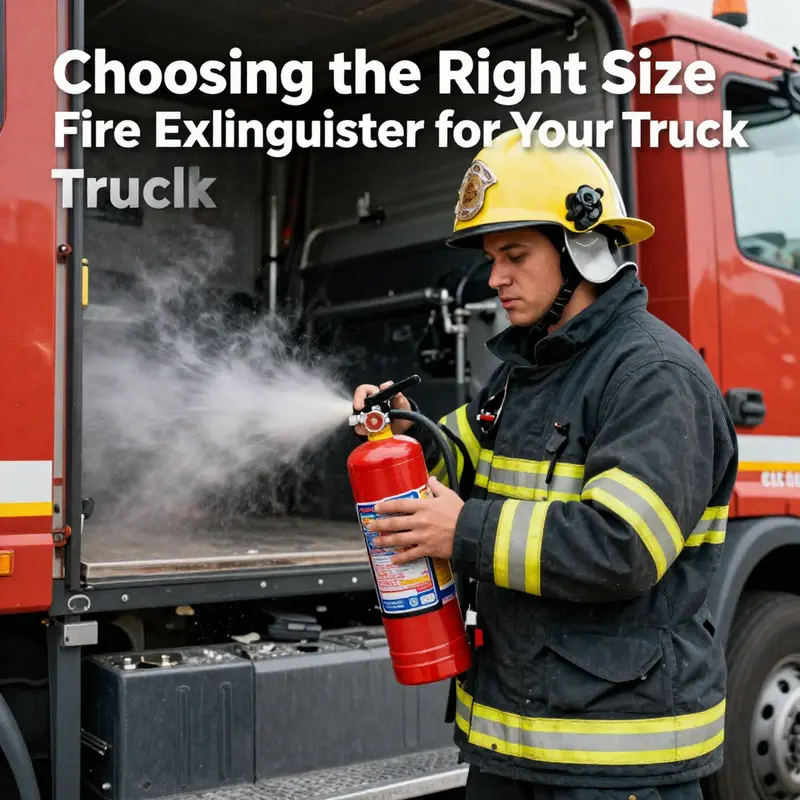
Choosing the right fire extinguisher for a truck is not merely a box to check on a safety form. It is a deliberate decision shaped by vehicle class, intended use, and the environment in which the truck operates. The size you select is a practical reflection of risk, not a curiosity about capacity stats. A driver or operator who understands the interplay between weight, reach, accessibility, and maintenance will be far better prepared to respond to a fire with speed and calm. The rules of thumb that apply to light, medium, and heavy trucks are not arbitrary labels. They map to how quickly a fire can grow in different settings, how much space there is to maneuver, and how much time a driver has to react before conditions become untenable. For light-duty trucks, those under roughly two thousand pounds gross vehicle weight, a single 2 kg ABC dry powder extinguisher is typically the baseline. It is enough to address small, early-stage fires that arise from fuel leaks or overheated electrical components in a compact cab or cargo area. The key here is accessibility and the ability to deploy quickly. A compact vehicle does not present as many compartments or as wide a spread of ignition sources as larger fleets, but it does demand readiness: the extinguisher must be within arm’s reach, mounted where it can be seen, grasped, and activated with minimal delay. In practice, this often means a mount near the driver’s seat or within the cab where the driver can reach it without shifting position or losing control of the vehicle. For those operating medium-duty trucks, weighing roughly two thousand to six thousand six hundred pounds, the guidance shifts toward redundancy and reach. Two 4 kg ABC dry powder extinguishers are recommended or required. The idea is straightforward: two devices provide coverage for dual-fire paths—one near the driver and one toward the cargo area—so that if a fire starts near the engine bay or in the cargo hold, there is a second extinguisher available if the first is not immediately effective or if the operator cannot safely reach it from the initial location. In a medium-duty context, you can imagine a configuration where one extinguisher sits in the cab and another is mounted in the rear area of the cargo bay. The distribution of extinguishers in this manner reduces the risk of a single failure in a single location turning into a major safety gap. The weight and balance considerations specific to larger vehicles also come into play. A heavier vehicle carries more mass, more potential energy in a fuel system, and more heat sources to threaten a rapid escalation. The inspection regime must reflect this increased risk. You need the extinguishers to be robust, with solid mounting brackets, reliable pressure gauges that show a green zone at a glance, and clear labeling so that an operator can identify the threshold at which an extinguisher is no longer ready for service. For heavy-duty trucks—those exceeding three tons, or six thousand six hundred pounds—the guidance typically calls for three 5 kg ABC dry powder extinguishers, or an equivalent capacity spread across larger units. In practice, this arrangement supports coverage throughout the vehicle, including the cab, engine compartment, and rear cargo area. It also provides a system of backup—an essential safeguard when time is of the essence and the vehicle may be stopped in an environment where delaying action could permit a fire to intensify. In many larger operations, especially those that transport hazardous materials or serve as mobile work sites, the standards tighten further. The vehicle may require at least two extinguishers of a smaller size, such as two 4 kg units, while some regulations still call for alternative configurations, including two 2-liter water-based extinguishers. The emphasis here is not to complicate the choice but to ensure there is adequate extinguishing capacity and multiple opportunities for the operator to intervene before the fire spreads beyond a controlled boundary. The emphasis on capacity is not merely about extinguishing power. It is also about ensuring the equipment remains accessible and functional in the event of a failure. For large commercial trucks, buses, or vehicles carrying hazardous materials, the rules tend to be stricter. In addition to ensuring the right number and size of extinguishers, operators must consider the classification of fires they are most likely to encounter. While ABC-rated dry powder extinguishers are versatile across Class A (ordinary combustibles), Class B (flammable liquids), and Class C (electrical) fires, some scenarios benefit from water-based options, especially when the risk of fuel ignition is lower and the need to protect sensitive electrical systems or battery components is higher. The choice of extinguishing agent should be guided by the vehicle’s layout and the types of fires most likely to occur in the real world operation. The literature on fire safety in vehicles increasingly recognizes the value of matching extinguisher type to the particular risk profile of the truck. Dry powder extinguishers offer broad applicability and are effective across a range of fire classes, but they can leave a residue that must be cleaned, and in some cases they can be less effective on certain cooking oil fires or in high-temperature environments without proper technique. Water-based extinguishers, while excellent for certain liquid fuel fires and for electrical incidents in modern vehicles, require careful placement to avoid splashing and to ensure that the nozzle directs the discharge to the base of the flame rather than onto nearby materials that could ignite. An emerging preference in some fleets is to combine these approaches, pairing an ABC dry powder unit with a water-based option in separate locations—balancing quick access and specialized capability. But the equipment choice is only part of the story. Certification is a non negotiable aspect of fire safety in trucks. In the context of China’s regulatory framework, the CCC mark signals conformity to the country’s compulsory certification standards. The extinguishers must be within their service life—dry powder units typically boast an 8-year life with annual inspections. These requirements are not decorative; they reflect the realities of vehicle operation where a failed extinguisher can turn a minor incident into a major hazard. The inspection routine is simple to perform but demands consistency. At a minimum, monthly checks should confirm that the pressure gauge is green, that there are no obvious signs of damage, rust, or leaks, and that the mounting hardware remains secure. The extinguishers must be accessible and free from obstructions, especially in the cab, where the driver’s immediate access to the device is critical for a quick response. The maintenance routine extends beyond the gauge. A visual examination should confirm the overall physical integrity of the canister, the presence of intact labeling, and the absence of corrosion that could compromise the unit’s performance under pressure. If any doubt arises about the extinguisher’s readiness, it should be recharged or replaced. Even when no discharge has occurred, time can erode the internal charge, and the only reliable defense against a stale or ineffective cylinder is a straightforward recharging policy. In this context, training becomes a critical complement to the hardware. It is not enough to install units and assume competence will follow. Every driver and operator should receive comprehensive instruction on the proper use of extinguishers. The PASS technique—pull, aim, squeeze, sweep—offers a practical, memorable method for deploying the device. But effective use goes beyond a mechanical sequence. It requires situational awareness. Operators must assess whether it is safe to confront a Fire, given the fuel source, the proximity of people, the wind direction, and the potential for escalation. If the fire cannot be contained quickly, or if there is any risk to life, evacuation and a call to emergency services are the prudent choices. This is where a well-structured safety culture enters the conversation. A single extinguisher in the cab is a start, but redundancy as well as clear protocols for dispatching help make a difference in outcomes. The practical realities of road operations also shape the decision of where to place extinguishers. They should be visible and readily accessible, yet not so prominent that they interfere with driving tasks or obstruct the driver’s line of sight. Placing a unit near the driver’s seat, or in the cab and the cargo area, provides two advantages: it reduces the time needed to deploy, and it creates a logical sequence of access that aligns with the vehicle’s spatial layout. In addition to placement, the mounting system matters. A sturdy bracket that can withstand vibrations, temperature fluctuations, and minor bumps is essential. A loose extinguisher jar can become a hazard itself and diminish the effectiveness of the discharge. When an operator considers procurement or retrofit, the choice of equipment is often tied to the broader topic of fleet readiness. You may be outfitted with multiple extinguishers, but if the fleet lacks a straightforward maintenance schedule or fails to train personnel, the safety gains risk being undercut. The decision to purchase or replace extinguishers should be integrated with a broader safety plan. That plan includes practical considerations, such as what to do with a used extinguisher, how to document inspections, and how to incorporate fire safety into daily workflows. It also considers the realities of the vehicle’s operational context. A short trip to a remote site might require a different balance of extinguishing capabilities than a routine urban route. In some cases, the best approach is to prepare for a range of scenarios by consulting publicly available guidelines and cross-checking with local inspectors. While the core standards lay out the minimum requirements, experienced operators recognize that a little extra capability can provide a margin of safety that is well worth the cost. The goal is not to accumulate extinguishers as a symbol of compliance, but to embed readiness into the life of the vehicle. This is why a practical approach to selection emphasizes not only the size and the type of extinguisher but also the human factors that determine effective use. How quickly can a driver locate the unit after a surprising loud pop or a visible flame? How well can a novice on a co-driver’s shift follow the PASS steps when they are under stress? How many seconds count when smoke begins to swirl inside a cab? These questions anchor the abstract numbers of weight and rating to real-world decisions. They remind us that the road safety story is not about a single device, but about a system of prevention, detection, access, and response. As you review the sizing guidance for different vehicle classes, you will likely encounter a recurring theme: the best extinguisher for a truck is not always the largest, nor necessarily the strongest on paper. It is the one that integrates smoothly into the vehicle’s design, aligns with the operator’s routines, and remains ready for action when the moment arrives. This is where the chapter’s central message emerges: match the extinguisher to the risk, but do not neglect the logistics that bring it to life in an emergency. The ideal configuration will harmonize with the truck’s size, work patterns, and maintenance cadence. It will be proven in practice through regular checks, steady training, and a culture that treats fire safety as a shared responsibility rather than a list of tasks. For operators who are outfitting a truck from scratch or upgrading an aging safety kit, there is value in thinking ahead about trails of use. If you are considering the broader landscape of vehicle equipment, you may find that a well-offered inventory of extinguishers, together with robust training programs and clear maintenance schedules, pays dividends in reliability and peace of mind. Resources and examples from within the industry illustrate how these components come together in real operations. When you assess a truck’s safety readiness, you are measuring not just the capacity of a cylinder but the reliability of a system designed to protect life and property. The whole conversation about extinguisher size is, in essence, a conversation about risk management on wheels. It asks, in a practical sense, how much protection do we need, where should it be placed, and how do we ensure it remains usable long after it is installed? The answers lie in pairing regulatory guidelines with on-the-ground realities and that is where the value of a thoughtful approach becomes clear. If you are evaluating options for a specific fleet or vehicle type, consider using the knowledge embodied in these guidelines as a starting point and then tailor it to the unique patterns of use. The result is a safer, more resilient operation that can respond quickly to an incident without compromising other critical functions of the vehicle. For operators who are actively updating their fleet or building a training program, the next step often involves practical procurement decisions. You may choose to review available equipment catalogs, consult with qualified safety professionals, and weigh the costs and benefits of different configurations. In that process, keep the core aim in mind: the extinguisher must be appropriate for the risk, easily accessible, and ready to perform when needed. To connect this planning to the broader world of vehicle safety, many operators also consider how to align fire protection with other safety systems. For example, a truck’s electrical architecture, its fuel delivery system, and its cargo handling equipment all interact with the risk profile that an extinguisher is designed to address. Understanding these interactions reinforces the logic behind the recommended sizes for different classes of vehicles and helps ensure that the extinguisher works as part of a cohesive safety strategy rather than as a standalone device. Where is the best source of confidence when you are deciding between a 2 kg unit, a pair of 4 kg units, or three 5 kg units? The answer is to balance the practical realities of your operation with the science of fire control and the rules laid out in official standards. It is about ensuring that the device exists where you need it, that it can be deployed before flames get out of control, and that you have a plan for maintenance and training that keeps the system robust year after year. A final reflection ties back to a larger principle that governs all safety decisions: preparation is a form of respect for the people who rely on your vehicle for daily work, for the passengers or cargo entrusted to its care, and for the members of a broader safety ecosystem who depend on timely responses to fires and emergencies. If you are looking for additional context on how these standards apply to real-world trucks, you may explore procurement resources such as the practical listings found in industry forums and marketplaces. For instance, you can explore opportunities to review available equipment and fleet options here: Fire Trucks for Sale. This kind of inquiry supports a more informed approach to safety, ensuring that the chosen extinguishers fit the truck’s geometry, weight distribution, and the operator’s workflow. As with any safety measure, the goal is to create a coherent, repeatable practice that can be taught, practiced, and trusted under pressure. The guidelines outlined here are intended to give you a solid foundation for sizing, placement, and maintenance that rises above mere compliance. They invite you to consider every purchase as part of a larger safety architecture—one that helps protect lives, protects assets, and supports the efficiency of daily operations on the road. In this light, selecting the right fire extinguisher becomes a practical act of foresight rather than a reactive choice born of fear. It is a decision grounded in data, reinforced by training, and activated by discipline. For those who seek further authoritative details, you can consult the National Standard GB 7258-2017, which specifies fire extinguisher placement, size, and quantity based on vehicle category and gross vehicle weight. This standard plays a critical role during vehicle inspections and in ensuring compliance for commercial operations. External reference: PHMSA Regulations provide official regulatory guidance that complements these practical guidelines. See https://www.phmsa.dot.gov/regulations for more information.
Final thoughts
Understanding the right size and type of fire extinguisher for your truck is crucial for effective fire safety. Compliance with regulations ensures that you are prepared for emergencies, while best practices enhance your readiness in crisis situations. By applying the knowledge gained from this guide, truck owners can foster a safer environment for themselves and others on the road, minimizing risks and promoting peace of mind. Remember, being proactive about fire safety can make all the difference when it matters most.