
Squad fire trucks play a vital role in firefighting operations, acting as the heartbeat of specialized response teams within fire departments. Unlike conventional fire trucks, the designation ‘squad’ emphasizes the vehicle’s connection to a specific crew and their unique mission. From rescue operations to hazardous material incidents, each squad fire truck is tailored to meet the rigorous demands of emergency situations. Through the chapters ahead, we’ll delve into the specifics of what constitutes a squad fire truck, the equipment they carry, their operational capabilities and how they stack up against other firefighting vehicles. Together, these insights will paint a comprehensive picture of squad fire trucks and their integral role in fire service operations.
The Squad Fire Truck: A Flexible Workhorse for Specialized Firefighting Tasks
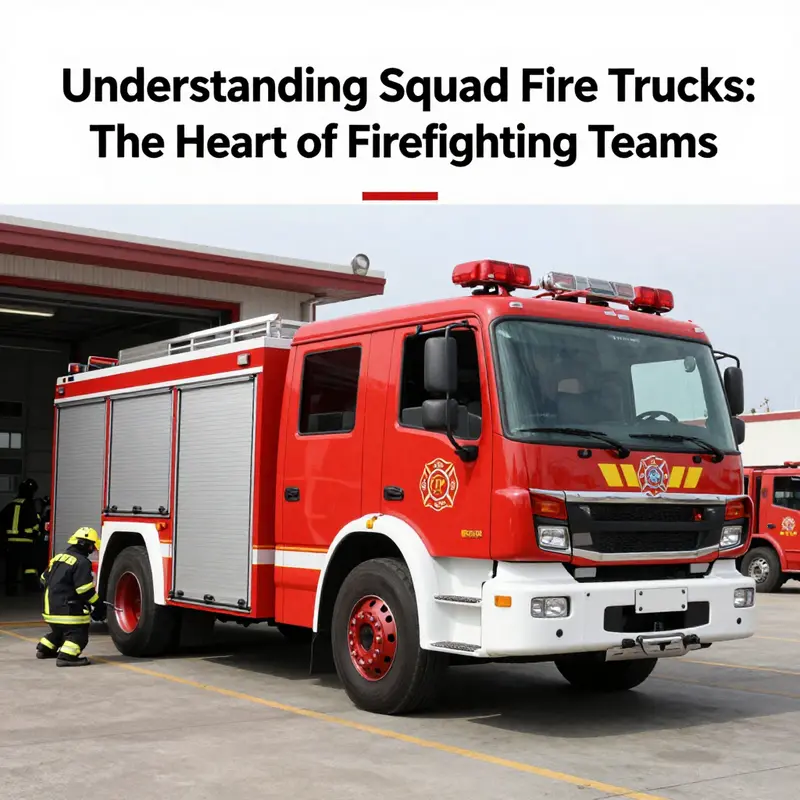
When people picture a fire truck, they imagine a rapid, siren-blaring beacon of power rolling toward a blaze. Yet within many fire departments, a different kind of vehicle carries the weight of a mission with a sharper focus. This is the squad fire truck—a term that isn’t a formal class in the fleet taxonomy but a practical way to describe a vehicle aligned with a specific squad’s responsibilities. In essence, the squad fire truck is the backbone of a disciplined, task-driven response. It is not defined by a single make or model but by its role: a platform selected and equipped to support the particular squad it serves, whether that squad handles hazmat incidents, urban search and rescue, or a vehicle rescue operation. In this sense, the squad fire truck operates like a specialized tool in a craftsman’s kit; it is the primary asset that enables a team to arrive ready to work, with the exact gear and configuration needed to execute their assigned duties.
In practical terms, this means the squad fire truck is chosen and configured to meet the concrete demands of a unit rather than to fulfill every firefighting scenario in a single package. Some departments assign a squad to handle rapid intervention and rescue, others to hazardous materials control, and still others to high-angle or confined-space operations. The vehicle thus becomes a focal point for mission-driven readiness. It may be based on a pumper chassis designed to deliver water and support hose lines, or it could be a rescue or specialized apparatus fitted to carry the tools and equipment a specific squad must have at the ready. The emphasis is on getting the right tools to the right place at the right time, with a setup that minimizes delays and maximizes operational safety.
This emphasis on mission alignment also shapes how crews think about mobility, protection, and access. The squad fire truck must be robust enough to perform in urban streets, rural roads, and challenging sites, yet specifically configured to bring the squad’s unique toolkit to the scene. The presence of long, ready-to-use hose lines—typically in the 100- to 200-foot range—underscores the vehicle’s role as an immediate water delivery platform. Alongside hoses, a standard suite of nozzles and fittings remains essential for adapting water application to different fire conditions. The chassis itself carries heavier loads than an ordinary pickup, with a design that supports rapid deployment and sustained operation under arduous conditions. This combination of water delivery capability and resilient mobility makes the squad fire truck a versatile workhorse, capable of serving as a frontline attacker or a supportive platform to facilitate rescue and stabilization work.
Beyond the basics, modern squad fire trucks are increasingly equipped with advanced safety and operational enhancements that extend a crew’s effectiveness while reducing risk. High-intensity lighting helps illuminate night scenes or smoke-filled environments. Thermal imaging cameras can pierce smoke to reveal hidden victims or hotspots, guiding teams to the most critical areas. Onboard communications systems keep everyone linked, a crucial factor when teams operate across noisy, chaotic scenes. Personnel monitoring devices add another layer of safety, allowing incident commanders to track the location and status of crew members in potentially hazardous environments. Forcible-entry tools are carried to gain access when doors or barriers obstruct essential work, and ventilation equipment helps control smoke and ambient air quality around the scene. The squad may also carry self-contained breathing apparatus, or SCBA, to ensure that team members can operate safely in contaminated atmospheres. Each of these enhancements is designed to support the squad’s specific mission profile, enabling a faster, safer, and more coordinated response under pressure.
The emphasis on capability is matched by a careful attention to standards and interoperability. Fire apparatus design is guided by rigorous guidelines from national organizations that set minimum requirements for reliability, performance, and compatibility across departments. Standards ensure that equipment is not only fit for purpose but also compatible with the broader ecosystem of emergency services. For squads with specialized tasks—such as high-rise operations, structural collapse response, or hazardous materials control—the configuration often reflects the needs of complexity and risk. In some cases, departments build on commercially available chassis to keep costs reasonable, while others pursue more customized platforms to address unique environments like industrial facilities or densely built urban cores. The result is a fleet that can be tailored to local realities while maintaining a cohesive level of capability across the department.
In this light, the squad fire truck stands as a flexible instrument rather than a fixed instrument. Its strength lies in how it concentrates essential tools and systems for a defined mission, while retaining the ability to adapt to changing conditions at the scene. The vehicle is designed to support a focused team of specialists—the squad—who bring specialized training and procedures to bear in high-pressure moments. It becomes the container that carries the tactical chessboard of a given operation: the water supply, the rescue tools, the entry and ventilation gear, and the sensing technology that helps locate victims or identify hazards. This approach matters because the squad’s success often hinges on quick access to the right equipment and the ability to maneuver through complex or constrained spaces. A squad fire truck, configured with this purpose in mind, functions as an extension of the team’s training and doctrine, translating strategy into action at the moment the alarm sounds.
To illustrate how such vehicles work in practice, consider a rescue squad focused on vehicle extrication and building entry. Their truck would emphasize forcible entry tools, cutting gear, stabilization equipment, and a compact but comprehensive payload of prying devices. An urban search-and-rescue squad might prioritize rigid-hose and rope systems, high-visibility lighting, and rugged stabilization gear designed for uneven surfaces and collapsed structures. A hazmat squad would carry specialized detection equipment, containment tools, and decontamination supplies arranged for rapid deployment. In each case, the squad fire truck’s core function remains water delivery and general support for firefighting, but its distinctive configuration enhances capabilities that are unique to the squad’s mission. It is this synergy between core fire response functions and mission-specific tools that makes the squad fire truck a vital, if sometimes underappreciated, member of the department’s fleet.
For readers curious about market options and how departments decide what to acquire, the decision often mirrors broader fleet planning. The squad vehicle is weighed against a spectrum of needs, from general response capacity to specialized capability. Departments assess the cost, maintenance, and lifecycle implications of different configurations, balancing the benefits of a highly tailored platform against the risks of overextension. What matters most is the alignment between the squad’s training, the community’s risk profile, and the available resources. In many cases, the squad fire truck serves as a practical compromise: it may not be a flashy, singularly specialized unit, but it is a dependable, mission-ready workhorse that can deliver tangible value across a range of challenging incidents. The result is a fleet that can respond decisively, with each vehicle carrying a story of preparation and adaptation.
As readers move through this chapter, they can take away a core point: the strength of the squad fire truck lies in its purposeful design and disciplined use. It is less about a single model than about a deliberate partnership between crew, equipment, and the environment in which they operate. This is why many departments emphasize standardization where possible, while preserving the flexibility to tailor a vehicle to local needs. The squad fire truck embodies that balance—an adaptable platform whose value emerges when the crew brings specialized training, consistent procedures, and a clear mission to every call. For those looking to explore further or to connect this concept with broader fleet strategy, consider the market offerings and the continuing evolution of fire apparatus design, which increasingly supports rapid, task-focused responses. Access to options such as fire-trucks-for-sale (https://firetruck.space/fire-trucks-for-sale/) can be part of a thoughtful planning process that keeps the squad ready for whatever the next incident requires.
External resource: https://www.nfpa.org/Standards/Fire-Apparatus-Standard-1917
How Squad Fire Trucks Strengthen Department Capabilities and Save Lives
Squad Trucks as Specialized Response Units
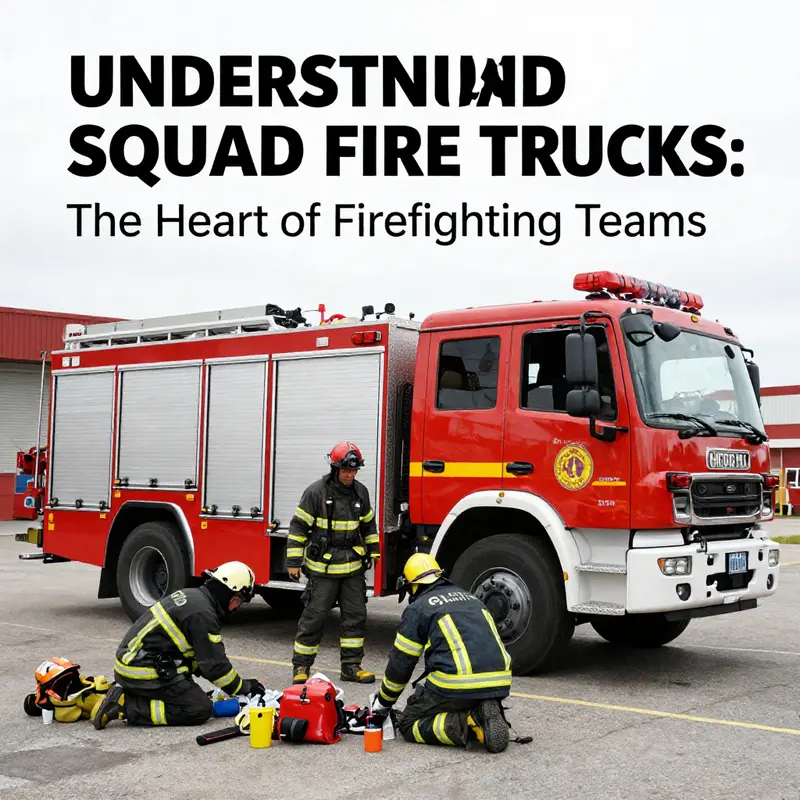
A squad fire truck represents more than a vehicle. It represents a focused, highly capable response element within a fire department. Rather than serving as a simple water-delivery platform, a squad truck brings advanced tools, technical training, and mission-specific equipment to the scene. This makes it a bridge between routine firefighting and complex rescue, hazardous-materials mitigation, and technical operations. The vehicle and its crew extend a department’s reach, speed, and precision when seconds matter.
Squad trucks are often assigned to teams called squads. These squads receive training beyond basic firefighting. Their skill sets include vehicle extrication, confined space rescue, rope and high-angle rescue, structural collapse intervention, and hazardous-materials handling. The trucks carry the gear these teams need. Hydraulic rescue tools, rescue struts and cribbing, portable lighting, ventilation fans, and thermal imaging cameras are standard. For hazmat incidents, they may store absorbents, containment booms, and chemical detectors. This variety of tools turns the squad truck into a mobile workshop and a tactical support unit.
Because of this equipment, the squad truck’s layout differs from a pumper’s. Compartments are organized around tasks, not just hoses and nozzles. Tool stowage, power systems, and access panels are designed for speed. On-scene technicians can reach the right tool without delay. Some squads operate out of mid-sized trucks with enclosed storage. Others use custom rescue rigs built on heavy-duty chassis. Regardless of configuration, the emphasis is the same: rapid access, safe stowage, and clear organization.
The squad’s operational role changes with the incident. At a vehicle crash, the squad focuses on patient access and stabilization. Hydraulic cutters and spreaders remove deformed metal. Rescue struts stabilize a compromised vehicle. Lighting and power supply enable medical teams to work safely. At a structural collapse, the squad switches priorities. They search the debris, shore openings, and support victim extrication. High-angle and confined space tools help reach trapped occupants. During a hazmat event, the squad establishes safe perimeters, assesses hazards, and deploys containment systems. This flexibility makes the squad truck indispensable during multi-faceted emergencies.
Integration with other units is a core strength. Squad crews work closely with engine, truck, and rescue units. A squad truck often functions as a tactical support node. It supplements a pumper’s water supply and a ladder’s access capabilities. It also provides specialized manpower and expertise. In complex incidents, the squad can lead a technical rescue branch while engines handle suppression. This division of labor improves efficiency and safety. Commanders can assign tasks knowing squads bring both tools and trained personnel.
Urban environments illustrate the squad truck’s value. Dense buildings and constrained spaces complicate rescues. Squad trucks carry compact, powerful tools that work in tight conditions. Thermal imaging helps locate hot spots behind walls and ceilings. Portable ventilation and cutting tools improve firefighter access. In older neighborhoods, where building collapse risk is higher, squad teams perform shoring and stabilization. Their presence shortens time-to-rescue and reduces secondary damage. In rural settings, squad trucks play a different but equally vital role. They bring equipment to remote sites where specialized resources are limited. Tanker and pumper resources might focus on suppression. The squad truck offers rescue capabilities that local departments may otherwise lack.
Training and crew composition are as important as the apparatus. A squad truck might carry four to six personnel with cross-disciplinary skills. Their drills include extrication, technical rope systems, confined space entry, and hazardous-materials containment. Regular scenario-based training ensures the crew works smoothly under pressure. Equipment familiarity is critical. On-scene improvisation can cost lives. A well-trained squad operator selects tools quickly and uses them effectively. This reduces scene time and improves patient outcomes.
Maintenance and logistics also shape squad operations. Specialized tools require routine testing and calibration. Hydraulic systems, air monitors, and electrical generators need regular servicing. Inventory control prevents missing or expired supplies. The department must budget for replacement parts and training. When a squad truck goes out of service, mutual aid agreements can fill gaps. Preplanned interoperability ensures other units can assume the squad’s role temporarily.
Beyond equipment, squad trucks influence incident command. They often act as mobile incident support. Commanders use the truck’s communications suite and scene lighting to coordinate efforts. This capability helps unify multiple agencies on complex scenes. For departments seeking to refine command systems, squad trucks can play a pivotal role. Information-sharing and coordinated tactics become easier when technical assets are collocated. For a deeper look at command coordination and operational challenges, see overcoming challenges in fire command systems.
Squad trucks also shape community expectations. Citizens assume that modern fire departments deliver both suppression and technical rescue. A visible squad presence reassures residents that the department can handle diverse emergencies. Public education and demonstrations reinforce this trust. Showing the community how squad tools work builds understanding and support for specialized teams.
Finally, the squad truck’s value is measured in outcomes. Faster extrication saves lives. Proper containment of hazardous releases reduces environmental damage. Efficient shoring prevents further collapse injuries. Each of these results depends on the match of people, training, and tools that the squad truck embodies. It is not a single-purpose vehicle. It is an adaptable force multiplier, ready for the unexpected.
External resource: https://www.firedepartment.org/squad-truck-role-in-emergency-response
Under the Hood of a Squad Fire Truck: Specs, Tools, and Mission-Ready Systems
Under the Hood of a Squad Fire Truck: Specs, Tools, and Mission-Ready Systems
A “squad fire truck” is best understood not as a fixed vehicle class but as the mobile backbone of a specific team. Whether assigned to a rescue squad, a wildland crew, or an engine company, the truck’s technical make-up and its complement of tools define what the squad can achieve on scene. This chapter examines the practical specifications and equipment that turn a heavy vehicle into a mission-ready platform, emphasizing how engine power, water and pump capacity, tool layout, and modern electronic systems work together to support a squad’s objectives.
At the core of any squad truck is its chassis and drivetrain. Heavy-duty fire apparatus commonly use reinforced frames and high-output diesel engines to handle the weight of water, pumps, ladders, and tools. Typical engine output for these trucks ranges into the high hundreds of horsepower, paired with transmissions designed to move heavy loads smoothly under varied conditions. Off-road capability matters for wildland and technical rescue units, so multi-axle and all-wheel-drive configurations are common. These drivetrains provide traction on unpaved terrain and steady power when operating pumps at full output. Robust braking systems and suspension tuned for load stability are equally important; a squad vehicle must carry weight safely without compromising handling in tight urban streets or steep rural approaches.
Water storage and pumping capability define a squad’s initial firefighting reach. Pumper-style squad trucks often carry several hundred to a thousand gallons of water on board. This buffer allows crews to apply immediate suppression while establishing a water supply or awaiting tanker support. The pump itself is sized to meet multiple simultaneous demands. Pumps rated for several hundred to a few thousand gallons per minute allow paired handlines, master streams, and portable deluge devices to operate concurrently. Integrated foam systems and proportioners are increasingly common for mixed-hazard responses, enabling effective suppression on fuel or chemical fires without relying solely on water.
Beyond water and pumps, hose and ladder systems provide essential reach and access. A squad truck will carry an assortment of high-pressure attack hoses in multiple diameters, preconnected to reduce deployment time. Extension and roof ladders are stowed for quick carry, and small-footprint telescoping ladders or folding attic ladders are included for confined-space access. For aerial-capable units, telescoping and articulating platforms defined by reach and load capacity enable crews to work above congested scenes and deliver elevated master streams. These platforms are engineered for stability, with hydraulic controls that enable precise positioning while maintaining safe payload limits.
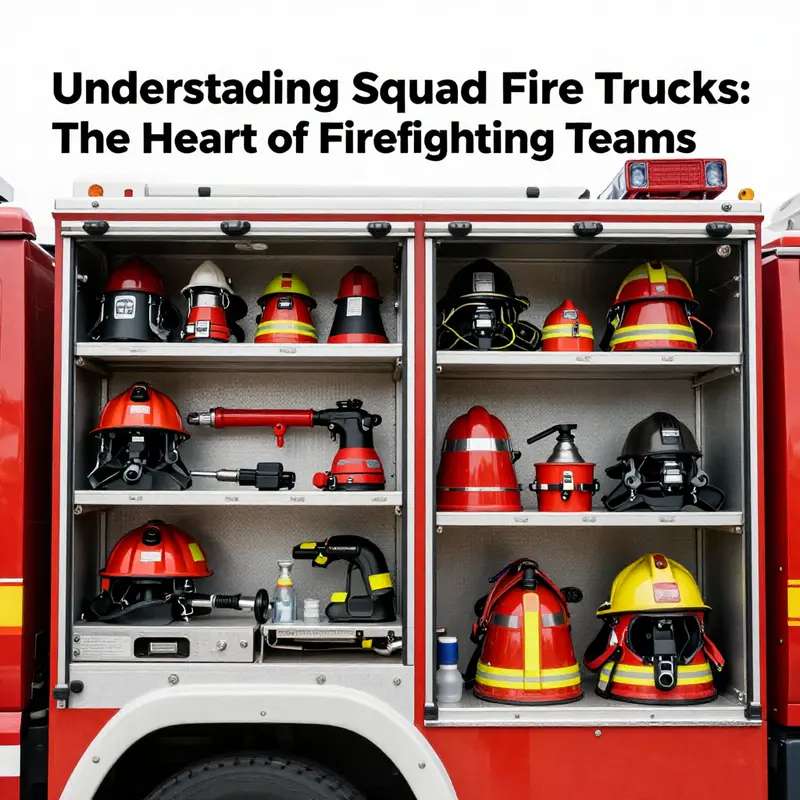
Rescue-oriented squad trucks prioritize tools for extrication and technical operations. Hydraulic cutters and spreaders, portable power units, and stabilization struts sit alongside battery-powered reciprocating saws and hydraulic rams. Equipment bays are laid out for ergonomic access, with weighted drawers and modular racks to prevent shifting in transit. Specialized compartments allow respirator masks, medical kits, and patient packaging gear to be reached without rummaging through unrelated equipment. For structural collapse or rope rescue missions, dedicated anchor systems, high-capacity winches, and webbing are stored in weatherproof containers to protect them from degradation.
Wildland-capable squad trucks look and operate differently. They combine off-road chassis, high-clearance suspension, and smaller, portable water tanks that enable rapid attack on brush fires. These vehicles often carry compressed air foam systems and pumps designed to draft from ponds or hydrants. Hand tools—pulaskis, rakes, and chainsaws—are essential for creating fireline and clearing fuels. The layout favors easy access to tools and rapid egress, since wildland crews frequently work away from the vehicle for extended periods.
Modern squad vehicles are increasingly defined by their electronics. Integrated communication suites provide encrypted radio channels, mobile data terminals, and GPS navigation. These systems keep the squad coordinated with incident command and neighboring units. Scene lighting systems—high-intensity LED arrays and portable floodlights—enable safe operations in low-light conditions while minimizing power drain. Thermal imaging cameras and personnel-monitoring technologies enhance safety by allowing rapid victim search and by tracking firefighter vitals and air supply during interior operations. These electronics are often tied to a vehicle-wide power management system that prioritizes battery-backed devices while the engine and generator supply high-demand tools.
Ergonomics and crew safety shape the physical design of the apparatus. Cab layout focuses on rapid entry and exit, with seating designed to accommodate full protective gear and seat-integrated SCBA brackets. Interior controls are simple and tactile so they can be used with gloved hands. Equipment compartments are lit and labeled, and slide-out trays reduce overhead lifting. Exhaust routing and thermal shielding prevent heat transfer to stored equipment. Personal protective gear, breathing apparatus, and decontamination supplies are stored to minimize cross-contamination between contaminated and clean gear.
Maintenance and modularity keep a squad truck effective over long service lives. Components such as pumps, valves, and control panels are designed for accessibility and standardized interfaces. This modular approach allows rapid replacement of a failed subsystem and enables customization for different squad roles. Regular maintenance schedules for engine systems, pump testing, and electrical checks ensure reliability. Many departments program preventative maintenance reminders into onboard diagnostics, which track hours and alert crews to required service.
Finally, training and simulation matter as much as hardware. Realistic drills require apparatus that mimic the weight, response characteristics, and equipment layout crews will face in the field. Simulation tools that model pump flows, aerial reach, and vehicle handling are used alongside live training to build muscle memory. This ensures that the squad knows the limits and capabilities of their truck before they rely on it in high-stress situations.
Taken together, these systems and choices illustrate why a “squad fire truck” is more than a label. It is a tailored platform engineered to support a team’s mission through deliberate specification of power, water capacity, tool sets, and electronic systems. Whether configured for urban suppression, technical rescue, aerial operations, or wildland attack, the vehicle’s design reflects the tasks the squad must perform and the environments they work in. For departments that need robust, adaptable apparatus, careful attention to these specifications ensures a truck that empowers its squad to act quickly, safely, and effectively on every call.
For a realistic depiction of how these elements come together in simulation, see a detailed example from a firefighting vehicle simulation title here: https://store.steampowered.com/app/1005800/FirefightingSimulatorThe_Squad/
Learn more about durable build standards and chassis considerations in practical apparatus design at this resource on steel fire apparatus: steel fire apparatus.
From Mobile Command to Rescue Toolbelt: What a Squad Fire Truck Actually Does
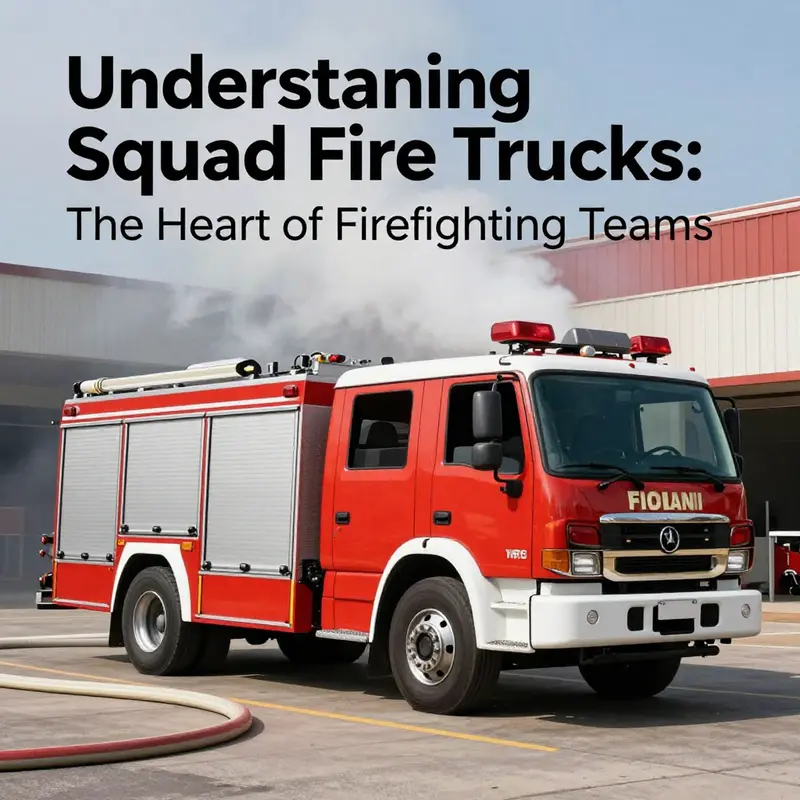
What a squad fire truck actually does unfolds as a story of flexibility, coordination, and lifesaving support. The phrase doesn’t name a single model of apparatus. Instead, it describes a vehicle that functions as the heart of a specialized team during emergencies. When a squad is dispatched, that truck must carry personnel, tools, systems, and the capacity to operate as an on-scene nerve center. Its value lies as much in its organization as in its hardware.
At the most basic level, the squad truck is a supply hub. It carries hoses, ladders, and breathing gear, but it also stocks tools for cutting, shoring, ventilation, and patient care. That variety reflects the unpredictable nature of modern incidents. A single call can involve trapped victims, hazardous materials, intense structure fires, or multi-vehicle collisions. A squad truck allows the team to arrive ready for multiple contingencies, rather than needing reinforcements for each new problem.
Beyond equipment, the truck is a tactical platform. It provides a place to stage crews, brief incoming units, and manage resources. During complex incidents, one firefighter may deploy attack lines while another operates ventilation fans and a third prepares hydraulic rescue tools for extrication. The vehicle’s layout supports that choreography; compartments are organized for quick access, and power supplies feed saws, lights, and other electrically powered tools. In essence, the truck converts stored hardware into coordinated action.
Specialized tools extend the squad’s capabilities. Thermal imaging devices reveal hidden victims and hotspots inside smoke-filled rooms. Hydraulic rescue tools free trapped occupants from mangled vehicles or collapsed structures. High-capacity ventilation fans and positive-pressure systems clear smoke and reduce heat for safer entry. Specialized extinguishing agents help crews tackle grease, chemical, or energized fires that water alone cannot control. Each tool narrows the gap between uncertainty and effect, enabling faster, safer outcomes.
Some squad trucks also host command and monitoring systems. On-scene coordinators use radios, mapping tools, and incident boards to assign tasks and track resources. Sensors and visual aids let crews monitor building conditions, smoke movement, and heat build-up in real time. This situational awareness reduces the risk of backdrafts and flashovers during interior operations. When multiple agencies are involved, the truck’s command functions help integrate efforts under a single operational plan, smoothing transitions and reducing duplication.
Vehicle dynamics matter, too. A squad truck often incorporates pumps and water delivery systems, aerial devices, or both. Pumps must sustain pressure during prolonged attacks, and aerials provide elevated access for rescues or master streams. The performance of those systems changes how a squad approaches a blaze; reliable pumping supports interior attacks, while aerial reach expands options for exterior control and victim removal. The truck’s chassis and driveability also affect response time and placement on scene, especially in urban streets and confined lots.
Safety equipment and protocols are integral to every action. Personal protective gear, breathing apparatus, and thermal monitoring keep firefighters viable longer in hazardous environments. The truck stores spare cylinders and rehabilitation supplies to rotate crews safely. Rigorous organization ensures that safety gear is accessible and that teams follow established entry and exit procedures. A well-run squad truck reduces human error by combining equipment layout with practiced routines.
Operational scenarios illustrate the truck’s versatility. In a residential structure fire, the squad may stretch hose lines, ventilate the roof, and use thermal imaging to search for occupants. At a highway crash, the same vehicle supplies hydraulic cutters and spreaders to extricate victims. A hazardous materials incident might see the squad provide specialized suppressants and detection tools while isolating exposures. In each case, the truck adapts, offering the tools and workspace the squad needs to execute its mission.
Coordination under pressure is a recurring theme. When multiple tasks compete for attention, the squad truck becomes the point where priorities are set. Teams assign roles—attack, search, ventilation, rescue—and the vehicle’s configuration supports those assignments. Clear labeling, standardized compartmenting, and preplanned checklists speed task allocation. Training around the truck’s layout ensures that firefighters know where gear lives, minimizing delays and confusion during seconds-critical moments.
Technology increasingly enhances those capabilities. Real-time thermal feeds, mapping overlays, and telemetry from building sensors provide data that shapes strategy. While such tools don’t replace judgment, they sharpen decision-making and improve firefighter safety. Training simulators and live drills build muscle memory for using these technologies under stress, so the truck’s systems become an extension of the team rather than a distraction.
Interoperability is essential when a squad truck supports multi-agency responses. Shared radio channels, incident command templates, and mutual-aid agreements ensure that the truck’s functions align with the work of police, EMS, and public works. This integration reduces friction during large incidents and allows the squad to focus on operational objectives rather than logistics. For insights into streamlining command and information flow, see this piece on overcoming command system challenges.
Ultimately, a squad fire truck amplifies a team’s reach. It groups tools, communications, and tactics into a compact package. Whether used to shore up a collapsing structure, to provide a mobile command point at a complex incident, or to deliver the right extinguishing agent to an unusual fire, the truck turns preparation into action. Its design reflects the realities of modern firefighting: varied threats, tight timelines, and the necessity of coordinated effort.
For technical specifications and further information on apparatus capabilities, consult the manufacturer’s resource at https://www.rosenbauer.com/usa.
How Squad Fire Trucks Stack Up: Realism, Roles, and Operational Edge
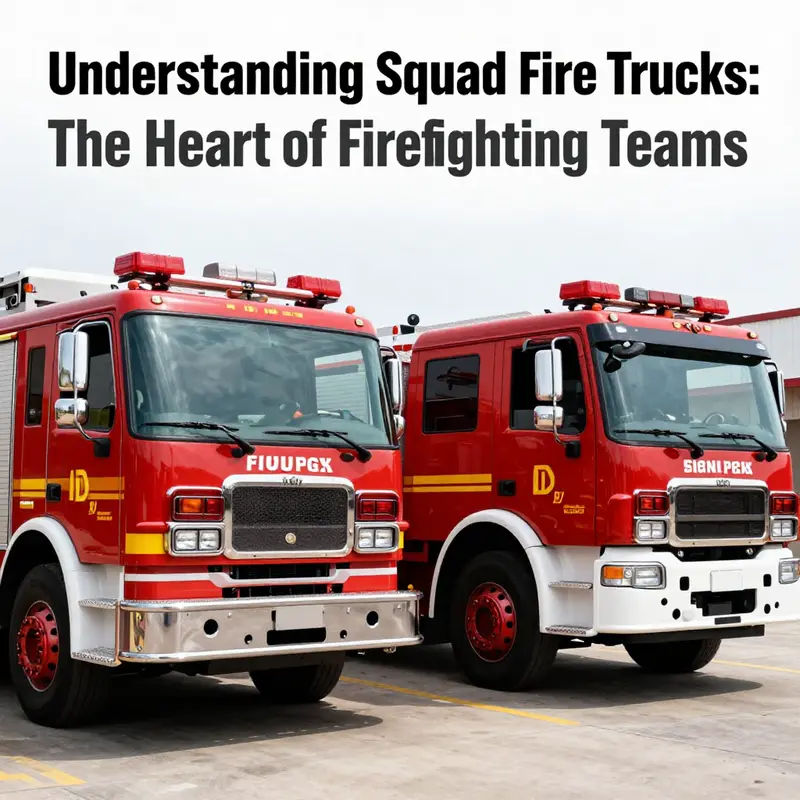
Comparing squad fire trucks to other firefighting vehicles
A “squad fire truck” is best understood as the primary vehicle assigned to a specialized team or crew. It is not a distinct chassis type in the way pumpers or aerials are. Instead, the term describes the relationship between a unit and its apparatus. That relationship shapes expectations for design, equipment, and performance. When you compare a squad truck with other firefighting vehicles, three themes emerge: authenticity of design, task-focused capability, and integration with operational context.
Authenticity matters because it anchors training and decision-making to real-world constraints. A squad vehicle that mirrors real apparatus in scale, weight, and systems forces crews to practice accurate positioning, hose deployment, and tool use. In simulations and in real life, subtleties such as pump response time, ladder reach, and hose reel layout influence tactics. Vehicles that are simplified for entertainment or cost reasons often reward unrealistic behavior. They permit aggressive placements and instant mechanical responses that a real crew could not sustain. A squad truck built to authentic standards, by contrast, demands that teams respect pump curves, consider center of gravity, and plan extra space for aerial setup. That demand builds operational habits that carry over to actual emergencies.
Functional diversity defines how a squad truck differs from other apparatus. Traditional categories—pumpers, tankers, aerials, and rescue units—each emphasize a core mission. A pumper supplies water and attack lines. A tanker carries large reserves where hydrants are absent. An aerial provides access and elevated stream capability. A rescue unit houses specialized extrication and medical tools. A squad truck often blends these functions to match the squad’s mandate. If the squad focuses on urban structural response, its vehicle will carry a high-capacity pump, attack line inventory, and an extendable platform for high-rise access. If the squad concentrates on technical rescue, the truck emphasizes stabilization gear, hydraulic tools, and confined-space equipment. This hybrid approach gives squads an edge in versatility. They can act as an attack engine, a rescue resource, or a support platform without waiting for multiple units to arrive.
Operational integration goes beyond the vehicle’s hardware. It includes how the truck behaves in an environment and how crews use it under stress. In complex settings—dense downtown cores, sprawling industrial parks, or mixed residential blocks—a squad truck must perform reliably while crew members manage risk. Realistic handling characteristics matter. Weight distribution affects braking and turning. Ground contact influences stability on uneven surfaces. Aerial deployment must consider wind and nearby structures. Vehicles designed with these constraints in mind force crews to practice measured tactics. That reduces reckless maneuvers and improves scene safety. By contrast, vehicles that feel like generic transports encourage shortcuts. Those shortcuts can translate to poor habits when real hazards present themselves.
Scale and environmental context dramatically influence a squad truck’s comparative value. In environments with tall buildings and narrow streets, an apparatus with a high-reach platform and compact cab can be decisive. In rural or industrial zones, a vehicle with a large water tank and robust pump makes the difference between controlling a blaze and watching it grow. A squad truck tailored to its home district offers targeted advantage. When departments or teams design their apparatus to match local risk profiles, response becomes faster and more effective. That tailoring often includes specialized compartments, hose complements, and tool mounts that align with common local incidents.
Training and crew coordination further separate a squad truck from other vehicles. Because a squad truck often carries mixed capabilities, crews must practice role transitions. One moment the vehicle may serve as a supply engine. The next minute it may become a rescue platform. Smooth transitions require standardized layouts and predictable equipment placement. When departments maintain that predictability, the crew spends less time searching and more time acting. In organizations without consistent equipment configuration, even advanced apparatus can underperform because valuable seconds are lost locating tools and deploying systems.
Maintenance and lifecycle costs also factor into the comparison. Vehicles with integrated multi-role capacity can reduce the need for multiple specialized units. That consolidation can lower procurement and upkeep expenses. However, it shifts complexity into one truck. A multi-capable apparatus often includes more systems to service and more components to fail. Departments must weigh the savings of fewer vehicles against the potential for single-point failures. Regular preventive maintenance and crew familiarity with routine checks help mitigate risks. When maintenance is neglected, even well-equipped squad trucks lose their comparative advantage.
Human factors are critical. A squad truck that emphasizes crew ergonomics, clear labeling, and rapid access to tools improves performance. Humans under stress revert to trained patterns. When those patterns are supported by intuitive equipment layouts, the whole team moves faster. Conversely, cramped compartments and awkward tool stowage slow operations and increase fatigue. Design choices that prioritize quick access and safe handling amplify a squad truck’s effectiveness compared to standard vehicles.
Finally, simulation and realistic training environments amplify the comparative lessons. High-fidelity simulations that model fire dynamics, structural behavior, and vehicle interactions teach crews to respect real-world limitations. When a virtual squad truck behaves like its real counterpart—matching weight, ladder dynamics, and pump behavior—training outcomes align closely with field realities. Crews learn to predict consequences and to make conservative, safer choices. That fidelity provides a meaningful advantage over training that relies on simplified or arcade-style vehicles.
For those exploring apparatus options or studying vehicle roles, resources that catalog available trucks and configurations can help inform decisions. Departments considering purchases or retrofits benefit from detailed listings and market overviews when planning replacements or upgrades. See a practical marketplace perspective at fire trucks for sale.
Real-world practice, thoughtful design, and role-specific equipment define what a squad fire truck brings to the table. Compared with single-purpose vehicles, a well-configured squad truck offers flexibility, specialized capability, and stronger integration with operational needs. It also demands disciplined maintenance and focused training. When those demands are met, the squad truck becomes more than transport. It becomes a force multiplier that raises the entire unit’s readiness.
For an example of how realistic vehicle modeling and integrated fire behavior can shape tactics and training in a large, varied urban environment, review a dedicated simulation resource: https://www.xbox.com/en-US/games/a/active-firefighter-simulator-the-squad
Final thoughts
Squad fire trucks serve as integral components of firefighting operations, enhancing the efficiency and effectiveness of emergency response teams. By understanding the characteristics and specifications of these vehicles, we acknowledge the specialized roles they play in various situations, whether it’s a medical emergency, fire rescue, or hazardous material incident. Firefighters rely on these versatile trucks to equip them for any challenge that may arise, underscoring their importance in protecting lives and property. As we admire the engineering and design behind each squad fire truck, let us remember the brave individuals who operate these vital tools of the trade.