
Fires involving trucks, particularly those vital to emergency services, can pose significant threats to safety and the environment. This article is a deep dive into understanding the causes of a truck on fire, the protocols for emergency response, the environmental impacts, and the cultural representations surrounding such events. Each chapter will not only explore these topics thoroughly but will also emphasize the importance of safety measures that can be taken to prevent these potentially catastrophic incidents. Firetruck enthusiasts, aspiring firefighters, and emergency professionals alike will gain valuable insights into how they can contribute towards a safer future on the roads.
null
null
Emergency Response to a Truck on Fire: Immediate Actions and Safety Principles
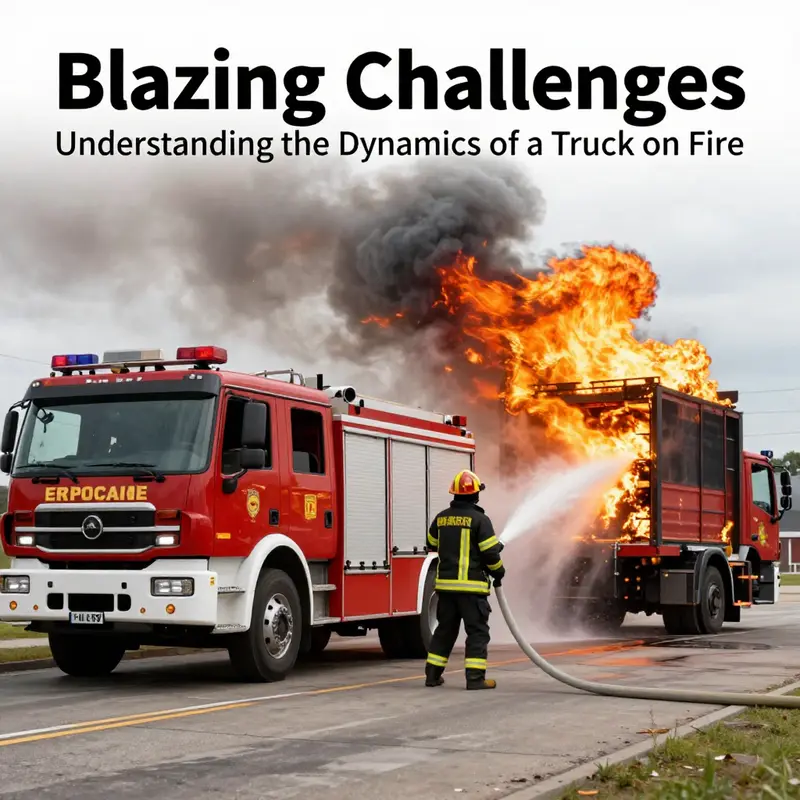
The moment a truck catches fire, responders face a tense, time-limited sequence that hinges on clear thinking and disciplined action. The first priority is to protect life, minimize exposure, and preserve options for a safe exit for everyone involved. This chapter outlines the immediate steps that bystanders, drivers, and responders can take, while emphasizing that personal safety and professional assistance come first.
Initial assessment and relocation: If possible, the driver should move the vehicle to a safe location away from traffic and fuel sources. Turn on hazard lights and place warning devices to alert other road users and create a perimeter. Do not put yourself in the line of danger to try to control the fire; instead, evaluate whether you can evacuate people safely and summon help.
Power down and isolate when safe: If safe to reach, turn off the engine and disconnect the battery to reduce ignition sources. Evacuate occupants to a safe distance upwind so they avoid toxic fumes and smoke.
Distance and evacuation: A practical safety distance is around 100 feet (30 meters) in open areas. Increase this in urban areas or if the cargo is hazardous. Bystanders should stay back and avoid filming or approaching the flames. Visibility and air quality improve when the scene is clear of curious onlookers.
Direct intervention if appropriate: If a small, contained fire and a suitable extinguisher (Class B for flammable liquids or Class C for electrical hazards) are available, a cautious, short-range attempt to extinguish may be possible using PASS: Pull, Aim, Squeeze, Sweep. Do not approach the flame head-on, and do not attempt to fight a growing fire alone.
When to wait for professionals: If the fire resists, grows rapidly, or threatens fuel tanks, stand down and call emergency services. Large fires can escalate quickly and create hazards such as explosions or toxic smoke. Evacuation and rapid notification remain the safest course.
Coordinated response and communication: Dispatchers should gather key details (truck type, cargo, known hazards) and relay them to responders. On scene, teams coordinate to attack from the safest angle, protect exposures, and maintain clear lines of retreat. Bystanders play a supporting role by keeping space, sharing observations, and avoiding interference.
Training, reflection, and continuous improvement: After an incident, training and drills reinforce documented procedures, situational awareness, and respect for the limits of individual capability. The goal is to translate each incident into improved guidance and safer outcomes for the next call.
When the Road Ignites: Environmental Safety in Truck Fires
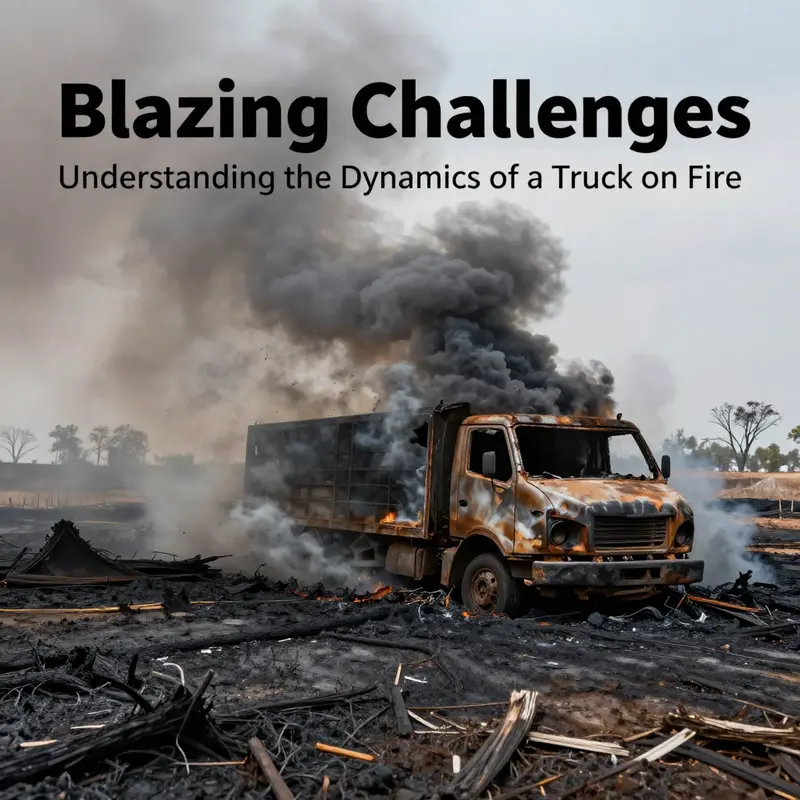
A truck on fire is a scene that demands urgent action from responders, but the flames also illuminate a deeper set of risks that extend far beyond the visible blaze.\n\nIn many cases, the vehicle carries cargo whose contents can interact dangerously with heat, oxygen, and water. A roadside fire may involve a freight truck carrying fuels, solvents, or industrial chemicals, and even cargo that seems innocuous at first can deteriorate into a source of toxic smoke as temperatures climb. The immediate danger is obvious—a rapidly expanding inferno, collapsing metal, and the potential for explosions. Yet the environmental stakes are equally critical. When a truck ignites, a chorus of hazards is unleashed into air, soil, and water systems that can persist long after the flames are extinguished. The environmental consequences are not abstract; they translate into air quality concerns for nearby residents, contamination risks for local ecosystems, and long term cleanup challenges that stretch budgets and timelines.\n\nAs the fire rages, the risk to soil and water becomes a pressing concern. Firefighting methods are a critical piece of the puzzle, but they can complicate environmental health if not managed with restraint and technical care. Large volumes of water or firefighting foam are routinely used to cool the vehicle and suppress the blaze. This runoff can transport contaminants away from the crash site and into streams, wetlands, or groundwater. In recent years, attention has grown around the presence of PFAS—per- and polyfluoroalkyl substances—in firefighting foams and their persistence in the environment. PFAS resist degradation, bioaccumulate, and can pose long-term health concerns for communities that rely on local water resources. Even when the foam itself is not loaded with PFAS, the sheer amount of water used can mobilize residues and form contaminant plumes that migrate with the watershed. The negotiation between rapid fire suppression and long-term environmental stewardship becomes a disciplined exercise in planning and execution, rather than a choice between two competing priorities.\n\nThe environmental footprint also includes soil contamination from leaked cargo and from the burning process itself. Spilled fuels, solvents, and other additives can soak into the ground, altering microbial communities and soil chemistry. In some cases, the heat degrades materials into new, potentially more mobile forms that can migrate toward surface water during rainfall. The sheer physical destruction that accompanies a truck fire—burned tires, shredded insulation, fragments of metal—creates a matrix of debris that can spread across the landscape. Steel fragments and packaging materials may be scattered along the roadside, complicating cleanup operations and posing secondary pollution risks if they harbor chemical residues. The ecological consequences of such debris are not limited to the immediate vicinity; local wildlife and aquatic ecosystems may experience exposure to contaminants that travel through habitat corridors or accumulate in sediments.\n\nFrom a public-health perspective, the environmental spillover matters because air, soil, and water don’t respect property lines. People living in nearby homes, farms, or recreational areas may experience exposure through inhalation of smoke, contact with contaminated dust, or ingestion of contaminated water or produce. Even when the incident is localized, the connected nature of environmental systems means that effects can drift beyond the immediate scene. Emergency managers therefore assume a broader obligation: to protect vulnerable populations, to monitor air and water quality, and to implement containment strategies that minimize the spread of pollutants. This requires coordination among fire services, environmental health teams, and local authorities. It also demands a transparent communication strategy so residents know when to shelter in place, avoid outdoor activity, or seek medical attention for symptoms that could be related to exposure.\n\nThe environmental response is not a passive afterthought; it is integrated into the firefighting and rescue operations from the outset. A core principle is to minimize environmental harm while preserving life and property. This means selecting suppression techniques that reduce runoff, using containment barriers, and deploying sorbents and absorbents to capture residues at the source. It also means careful planning around water capture, staging, storage, and treatment of runoff so that it does not become a secondary source of pollution downstream. In this vein, responders balance the need for rapid cooling and the responsibility to safeguard soil and water resources. The choice of tactics may involve trade-offs, but the overarching objective remains clear: to extinguish the fire with the smallest possible environmental impact while protecting public health and ecological integrity.\n\nTo connect practice with policy, it helps to view the incident as a learning opportunity for emergency command and control. Modern firefighting operations increasingly recognize that environmental safety cannot be an afterthought. The ability to coordinate suppression with containment, cleanup, and environmental monitoring hinges on robust incident command structures. This is where the discussion of challenges in fire command systems becomes essential. For responders, the integration of environmental risk assessments into real-time decision making can influence everything from deployment of crews to the selection of containment methods. The implementation of a coordinated, adaptive approach—one that coordinates firefighting assets with environmental protection measures—requires planning, training, and a culture that values ecological stewardship alongside rapid response. In this sense, the field evolves toward a more holistic model of disaster management, where protecting air, soil, and water is as important as saving lives and property. Readers who want to explore how command systems adapt to these demands can look to recent discussions about overcoming challenges in fire command systems, which offer a framework for balancing competing priorities in the heat of a scene. Overcoming Challenges in Fire Command Systems.\n\nThe environmental frame also invites reflection on firefighting chemistry and material science. The choice of suppressants, the evolution of safer foams, and the push toward PFAS-free alternatives have become central to reducing long-term impacts. While eliminating harmful substances from firefighting waters is a clear objective, the transition must be managed with care to avoid compromising safety in the moment of crisis. When possible, responders aim to use tactics that limit the generation of contaminated runoff, capture what is produced, and ensure that what cannot be contained is contained through rapid, staged actions. Even with the best practices, some level of environmental disturbance is inevitable during an uncontrolled fire. The task for responders is to minimize this disturbance and to implement thorough post-incident remediation that restores the health of affected ecosystems as quickly as possible.\n\nThe long arc of an incident includes careful aftercare. After the flames are extinguished, site assessment becomes essential. Environmental engineers and public health professionals undertake soil sampling, water testing, and ecological surveys to determine the extent of contamination and to guide cleanup. Remediation may involve removing contaminated soil, treating contaminated water, and monitoring for residual pollutants in sediments or groundwater. Community engagement follows, ensuring that residents understand what was found, what actions are being taken, and what steps they should take to protect themselves. The goal is not just to stop a fire but to repair the environmental scars it leaves behind. This process can be slow and expensive, yet it is necessary to reestablish safe living and working conditions for people who share the landscape with transport corridors and industrial activity. In literature and practice, this phase emphasizes collaboration among fire services, environmental agencies, and local communities so that remediation reflects local needs and respects the integrity of local ecosystems.\n\nIn the end, a truck on fire is a crisis with multiple dimensions. It tests the speed and courage of responders while challenging them to protect air, land, and water. It underscores the reality that transport is a lifeline and a risk—an interplay that demands rigorous safety planning, responsible firefighting, and proactive environmental stewardship. The story of every incident, therefore, becomes part of a larger narrative: that the road is not just a conduit for goods but a shared space where health, ecology, and resilience are continually negotiated. Through integrated practice, continuous learning, and community engagement, the emergency services ecosystem can reduce the environmental footprint of these fires while preserving the essential functions that transportation provides. For readers seeking a deeper dive into the environmental science behind these events, a comprehensive study on the environmental impacts of truck fires offers detailed evidence and analysis. External resource: https://www.sciencedirect.com/science/article/pii/S258963742300001X
When the Flame Becomes a Frame: Cultural Echoes of a Truck on Fire
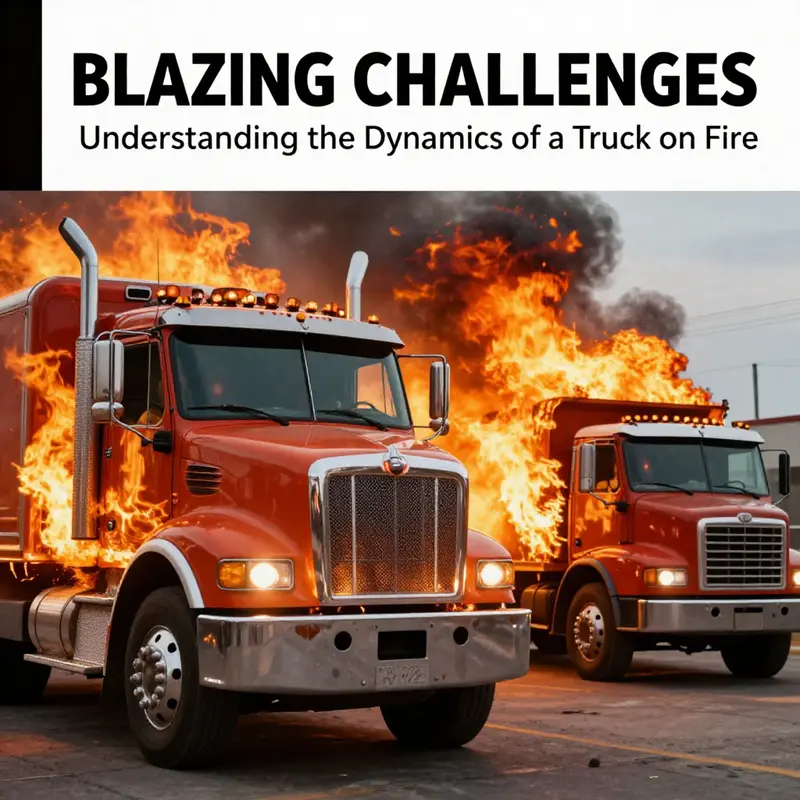
A truck on fire is not merely a scene of danger; it is a cultural image that travels beyond the flame and the siren. In the moment a vehicle becomes a blaze, a room of meanings opens up. The fire shifts from a threat to a symbol, from a hazard to a storytelling impulse. In that transformation lies a powerful lens through which communities interpret risk, resilience, and the fragile border between destruction and beauty. The chapter that follows does not pretend to settle the question of what a truck on fire means. Instead, it threads together observations about how such scenes travel through art, media, and everyday imagination, revealing how people collectively negotiate fear and awe when a familiar machine meets an unfamiliar inferno. The aim is to understand how cultural depictions of a fire-engulfed truck shape, and are shaped by, real-world responses to emergencies, rather than to glorify harm or overlook the stakes of the incident itself.
To begin, the image of a truck on fire sits at a paradoxical crossroads. Trucks are designed to move goods, to transport, to endure long hours on the road. They carry the weight of commerce, families, and communities. Fire, by contrast, is a force that disassembles and reshapes. When these opposing forces collide on asphalt, the scene becomes a powerful metaphor: endurance tested, systems stressed, and a community watching as a familiar machine becomes a furnace of color and motion. This tension is central to how people read such imagery. Some viewers see the immediate risk—the heat, the smoke, the danger to nearby homes and workers. Others glimpse a more abstract narrative—the sudden exposure of vulnerability in a world built on speed, supply chains, and predictable routines. The cultural response, then, oscillates between empathy for those in danger and awe at the spectacle of transformation.
The visual economy around a truck in flame is rich and varied. In artistic circles, such scenes are not merely documented; they are reimagined. An artistic practice circulating on social platforms has demonstrated how a fire truck can be transformed into a fluidly rendered canvas, where the flame becomes a choreography of color. The vehicle, a tool of rescue, is recast as a stage on which destruction and beauty perform side by side. This re framing does more than entertain; it invites audiences to confront the paradox at the heart of firefighting. If the primary mission of a fire truck is to extinguish flames, why does the image of one burning persist with an almost magnetic appeal? The answer lies in the human propensity to find meaning through art. By watching the fire truck become something other than a hazard—by watching it become a painting—the observer participates in a ritual of meaning-making that softens fear and heightens curiosity. The act of artistic reinterpretation, in this sense, can be a coping mechanism, a way to process collective anxiety without turning away from it.
This dynamic plays out vividly in digital culture, where imagery of a truck engulfed in fire travels quickly and multiplies in form. A single video can spawn comment threads, remixes, and interpretive captions that layer new meanings onto the original scene. The viral velocity of such content highlights a social hunger for rapid, visceral storytelling. In these micro-communities, the flame is not just a danger to be avoided; it becomes a catalyst for conversation about community, responsibility, and the limits of control. The flame invites reflection on how societies coordinate emergency response, how information spreads during crises, and how people recalibrate their sense of safety when confronted with dramatic, repeated imagery. It also underscores the role of media in shaping perception. Raw footage, broadcast graphics, and personal interpretations all contribute to a composite memory of the event, one that future viewers may recall even if they did not witness it firsthand.
The imagery of a truck on fire also engages the public in conversations about the human faces behind emergencies. A scene of flames can be easy to sensationalize, yet many depictions, at their best, honor the work of those who respond. The idea of first responders—paramedics, firefighters, and police who arrive on the scene—becomes entwined with the artwork and the reportage. In assessing culturally resonant depictions, it is essential to acknowledge the courage, training, and quick thinking of these professionals. Acknowledgment, however, does not erase the risk and trauma that accompany real incidents. In this tension between admiration and fear, the narrative gains depth: the public recognizes the danger, but also the discipline and solidarity that emerge in crisis. Communities often respond with gratitude and support for responders, a sentiment echoed in public statements, memorials, and community campaigns. Acknowledging responders publicly is not just ceremonial; it reinforces trust and fosters a culture of mutual aid. A related thread in the broader conversation emphasizes how society learns from incidents to improve safety, preparedness, and resilience. For readers who wish to explore how communities honor those who work at the edge of danger, a useful anchor is the work being done to recognize first responders and their mental readiness in service roles. The conversation often extends beyond a single event, reinforcing the idea that preparedness and care are ongoing commitments across many emergencies.
Cultural depictions do not just reflect what people fear; they also reveal what they hope for. The flame can symbolize renewal, transformation, and the possibility that damage yields insight. In visual art and narrative, fire can become a catalyst for reimagining space, time, and responsibility. A burning truck, viewed through a painter’s palette or a filmmaker’s lens, invites questions about human impact: how communities rebuild after disaster, how infrastructure can be designed for greater resilience, and how social ties endure in the face of disruption. When the same image appears across forms—news footage, short-form videos, street art, song, and sculpture—the shared vocabulary of danger and resilience expands. The collective interpretation is never fixed; it evolves as viewers bring their own histories, traumas, and aspirations to the scene. The multiplicity of meanings can feel exhilarating, but it also requires careful ethical consideration. Depictions that sensationalize harm risk normalizing danger, whereas those that foreground recovery and solidarity can empower audiences to engage constructively with risk and to support safety initiatives in tangible ways.
In examining specific instances of depiction, the line between documentary realism and artistic invention becomes a subject of study in itself. Some creators lean toward documentary precision, capturing the immediacy of the incident—the plume of smoke, the silhouettes of responders, the choreography of hoses and ladders. Others lean into metaphor, using the fire as a signal flare for larger concerns: climate volatility, aging road networks, or social fault lines that emerge when crisis tests a community’s capacities. A notable trend is the conversion of danger into beauty, not to romanticize harm, but to provoke reflection about the fragility and resilience of everyday life. This sensibility gently unsettles the viewer, inviting a slower, more contemplative gaze rather than a hurried, sensational one. It encourages audiences to acknowledge discomfort while also recognizing the possibility of renewal that can emerge from crisis.
The interplay of memory and imagery is another axis through which cultural depictions of a truck on fire acquire depth. Images embed themselves in public memory, shaping how people recall the incident months or years later. In some cases, the memory becomes a shorthand for a locality’s resilience, a marker of a community’s capacity to rally, improvise, and rebuild. In others, it becomes a cautionary tale that informs public discourse about safety standards, regulatory oversight, or urban planning. These cultural afterlives matter because they influence future decisions, from how towns communicate during emergencies to how engineers design safer, more robust transport and fire-suppression systems. The deeper point is that the image of a truck on fire becomes part of a cultural archive, a recurring motif that is reinterpreted with each new event, each new platform, and each new audience.
For readers who wish to explore a blended perspective on how such imagery circulates and what it means, a useful touchpoint lies in the broader literature and discussions hosted in community spaces. In particular, the ongoing conversation about how communities engage with fire-themed imagery can be found through the Fire Truck blog, which gathers reflections on culture, safety, and the role of emergency services in our shared stories. This resource provides a lens through which to consider both the artistry and the accountability that come with depictions of firefighting in public life. To connect with that ongoing dialogue, see the Fire Truck blog linked here: Fire Truck blog.
The chapter closes not with a verdict but with an invitation to look more closely at how cultural depictions of a truck on fire shape perception, policy, and practice. When we encounter such imagery, we are asked to hold two truths at once: the immediate, lived danger of a real fire and the longer, slower work of culture to interpret, endure, and perhaps transform that danger into meaning. These depictions can spark empathy for those who respond to emergencies, spark curiosity about how our built environment handles risk, and encourage creative expressions that remind us of human resilience. They remind us that fire, while destructive, also prompts a rethinking of what communities value, how they organize, and how they imagine a future in which safety and imagination can coexist. The visual and narrative energy around a burning truck, harnessed responsibly, has the potential to inform, mobilize, and inspire, turning a moment of crisis into a discipline of care and collective growth. An authentic engagement with this phenomenon also means acknowledging the real stakes involved—the people on the ground, the communities watching, and the frame through which we interpret the scene—and then translating that awareness into action that strengthens the social fabric that binds us when danger arises. For a concrete, real-time sense of how such imagery travels and is repurposed across media, consider the following external example of how art and accident intersect on a public platform: https://www.tiktok.com/@holliday.painting/video/7412345678901234567.
null
null
Final thoughts
Understanding the myriad factors surrounding a truck on fire—from its potential causes to effective emergency responses and preventive strategies—not only enriches the knowledge of enthusiasts and professionals alike but also highlights the need for teamwork in combating such incidents. Cultural reflections reinforce the significance of these events in our lives. As custodians of safety, whether through preventative measures or quick emergency responses, we all share a fundamental responsibility to ensure the roads remain safe for everyone.