
Fire trucks represent a vital part of our community’s emergency response system, racing to the rescue in moments of crisis. However, behind their sirens and flashing lights lies a pressing question: Are these essential vehicles exempt from emissions regulations? This inquiry not only highlights the interplay between public safety and environmental responsibility but also prompts us to examine the evolving design standards facing fire trucks today. In the chapters ahead, we will delve into fire trucks and their compliance with emission standards, the impact of these regulations on design innovations, and the broader implications of environmental stewardship in the firefighting sector.
Not Exempt, Yet Essential: Fire Trucks Navigating Emission Standards While Preserving Readiness
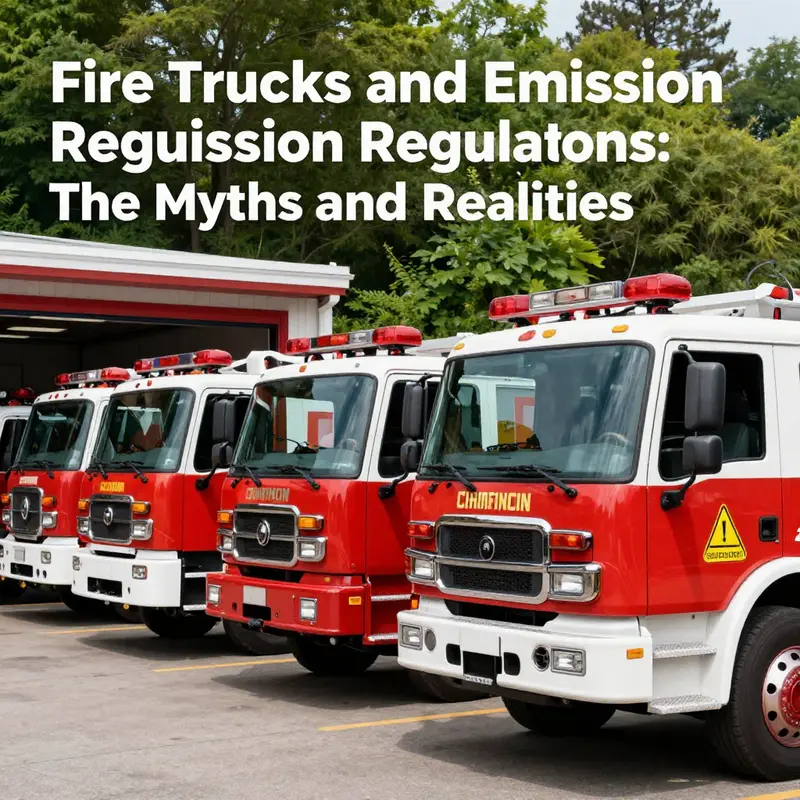
Fire trucks are the backbone of emergency response, forged in the crucible of urgency where every second counts. Because of that urgency, society often assumes too quickly that these machines ride in a special bubble, shielded from the environmental rules that govern everyday vehicles. The truth is subtler and more pragmatic: fire trucks are not exempt from emissions standards, but their path to compliance is shaped by the dual demands of rapid deployment and reliability. In the modern regulatory landscape, authorities recognize that firefighting is a public service with unique operational requirements. Standards are adjusted not to relax safety or speed, but to steer fleets toward cleaner technologies wherever feasible and cost-effective. The result is a quiet, ongoing transformation across departments and manufacturers—a transformation that preserves the distinctive capabilities of fire apparatus while reducing harmful pollutants that threaten air quality and public health. To understand this balance, it helps to trace the recent regulatory arc, from international emission norms to national plans that set the tone for the next generation of firefighting vehicles, even as fleets keep responding to the calls that arrive with sirens blazing.
At the heart of today’s conversation about emissions and emergency response lies a straightforward principle: the mission dictates much of the design, but the engine that powers the mission must comply with environmental targets. In practice, this means that fire trucks use diesel engines that are engineered to meet established emission standards, much like other heavy-duty machines that operate in demanding conditions. Across markets, regulatory bodies are tightening the screws on nitrogen oxides (NOx), fine particulate matter (PM2.5), and related pollutants. The intent is not to hinder life-saving work but to ensure that the air around emergency scenes—where vulnerable populations, responders, and survivors may gather—reflects cleaner standards. The most visible consequence is that new fire trucks increasingly arrive with emissions-reduction technologies, advanced fuels, and, in some cases, powertrains that blend internal combustion with electric or hybrid approaches. Yet the journey toward cleaner performance remains anchored in the same operational truths that govern firefighting: engines must deliver immediate, dependable power at full torque, pumps must operate under high loads for extended periods, and reliability must endure through the most extreme environments.
In the United States, regulatory momentum has coalesced around a pivotal federal framework. The Environmental Protection Agency (EPA) finalized a substantial step in its “Clean Trucks Plan” in December 2022, signaling a major shift for heavy-duty highway engines and vehicles. The rule, which became effective for planning and implementation ahead of the 2027 model year, imposes stricter NOx limits and anticipates broader reductions in PM2.5 and ozone formation. The regulation explicitly covers a wide array of vocational vehicles, including fire trucks, cement trucks, and coach buses. The implication is clear: manufacturers must pursue cleaner propulsion systems and more efficient architectures to remain compliant as fleets update. The 2027 horizon is not a distant المستقبل; it is a concrete deadline that pushes engineers to accelerate the integration of hybrid and zero-emission technologies into size-appropriate, mission-ready products. And while the EPA underscores the inevitability of this transition, it also acknowledges the practical realities of emergency response: the technology chosen must deliver rapid acceleration, enduring performance, and predictable service life under harsh conditions.
The broader regulatory narrative extends beyond one jurisdiction. International standards have become a global spine for the market, guiding what is technically feasible and economically rational for departments around the world. In global marketplaces, supplier catalogs and manufacturer lineups reflect a spectrum of emission compliance levels, from Euro 3 to Euro 4 and beyond. This international mix aligns with the reality that many fire apparatus are sourced from diverse regions, and fleets often operate on a cross-border basis for training, mutual aid, or shared procurement programs. The trend is unmistakable: the industry is moving toward designs that meet cleaner emissions while preserving the durability and reliability essential to firefighting. In markets where Euro 4 is normative, for instance, a fire truck may feature engine calibrations, after-treatment systems, and fuel-efficient components that reduce NOx and PM2.5 outputs without compromising the instantaneous power demanded by water pumping and aerial operations. In markets that still rely on Euro 3 or Euro 2 levels, improvements often come through retrofits, certified implementations, and ongoing supplier innovations that gradually elevate the baseline performance toward global norms while respecting local regulatory timelines and budgetary constraints.
The practical implications for fleet operators are nuanced. Fire departments face a balancing act between emissions performance and readiness. On the one hand, cleaner engines mean reduced exposure to pollutants for responders and civilians at the scene and along response routes. On the other hand, the imperative to deliver water, rescue, and rescue-critical functions under extreme conditions cannot be compromised by propulsion choices that favor low emissions at the expense of reliability or rapid response. This tension has driven a multi-pronged approach to compliance. First, the adoption of lightweight materials and energy-efficient systems has become an important enabler of lower fuel consumption and reduced emissions without sacrificing strength. Aluminum alloys, advanced composites, and high-strength steels contribute to overall vehicle efficiency, enabling more agile handling, longer ranges between refueling, and better maneuverability in tight urban environments where many incidents occur. Second, modular configurations have grown in popularity. Departments can tailor the chassis, pump configuration, and aerial devices to match local risk profiles while maintaining standard emissions-compliant platforms. This modular philosophy supports retrofit avenues—opportunities to upgrade propulsion and after-treatment systems as stricter standards come into force—without replacing the entire fleet at once.
Yet the technical landscape is not solely about powertrains and metals. The push toward cleaner fire apparatus also embraces smarter packaging of power and hydraulics. Modern designs optimize the energy flow between the engine, the pump, and any auxiliary systems such as electronic monitors, lighting, and communication gear. In many cases, this balance includes hybridization or even full electrification for certain operations. The rationale is practical: a hybrid or electric propulsion system can deliver high-torque performance at low speeds—precisely what is often required during urban response and initial positioning—while limiting emissions during idle or slow maneuvering. Electrification, however, does not emerge in a vacuum. It must contend with the demanding duty cycles of firefighting, the need for high-power pump operations, and the reliability of energy storage in harsh environments. Engineers respond with ruggedized battery architectures, high-discharge capabilities, and robust thermal management. They also work to ensure that charging infrastructure at fire stations is capable of supporting the demands of a fleet that may require simultaneous charging of multiple apparatus after back-to-back calls.
The market’s response is equally pragmatic. In search of compliant, capable platforms, fire departments and procurement teams increasingly evaluate a spectrum of powertrain options. Cleaner, more efficient diesels with advanced after-treatment systems sit alongside diesel-hybrid configurations, and in some regions, early-stage electric or plug-in hybrids are introduced in limited, carefully tested contexts. The procurement mindset emphasizes long-term life-cycle costs as well as upfront purchase prices. Emissions compliance is not a standalone criterion but one piece of a larger equation that includes reliability, maintenance cost, downtime, and the ability to sustain high-performance operations for decades. In this environment, fleets often upgrade through iterative steps. They might begin with engines that meet current standards while adopting modular hydraulic systems and lightweight bodies that improve efficiency. As regulations tighten, retrofits and upgrades to after-treatment devices, battery systems, or hybrid drives become more common, enabling departments to extend the usable life of existing chassis while aligning with evolving environmental expectations.
There is also a governance dimension to emissions compliance that touches safety certification and quality assurance. Internationally, conformity assessment programs and national certifications help ensure that emission-reducing technologies do not compromise the essential safety functions of fire apparatus. In certain markets, certifications such as CCC—China Compulsory Certification—appear on equipment, signaling adherence to safety and quality benchmarks that go hand in hand with environmental performance. The presence of such certifications helps to reassure departments that a cleaner powertrain or body configuration has undergone rigorous testing and meets defined standards. The consequence is a more predictable supply chain and a clearer path from design and manufacture to field deployment, which is critical when departments must replace aging fleets and maintain readiness for the next call.
From the perspective of a fleet manager, the move toward emissions-conscious fire trucks resembles a long, carefully plotted voyage rather than a rapid leap. It requires strategic planning around budgeting, maintenance, and training. Departments must anticipate the implications of new propulsion systems for service bays, workshops, and instrument panels that interact with advanced emission-control technologies. Training for technicians evolves as after-treatment systems, battery cooling strategies, and hybrid power rails introduce new maintenance challenges. The governance environment also pushes departments to retire older, higher-polluting trucks on a defined timeline while ensuring that replacements deliver the same, if not greater, reliability under stress. This is not simply a matter of replacing an engine; it is a comprehensive upgrade of how a vehicle is engineered, built, and supported across its lifecycle. The goal is to keep the essential mission capability intact while narrowing the environmental footprint, an objective that aligns with broader public health and air-quality initiatives without compromising the crucial safety role that fire services play in communities.
In this shifting landscape, even a single truck’s status can illustrate a broader truth: compliance is a dynamic target. A department may observe a fleet’s turning point when a new model entering service demonstrates that a platform can deliver full pumping capacity at peak load while meeting Euro 4 standards or an equivalent national standard. The same vehicle might be retrofitted with after-treatment devices later, as regulations evolve and funding allows. The choice is rarely about one component alone; it is about the sum of the vehicle’s attributes—weight, aerodynamics, pump efficiency, engine calibration, and the ability to scale power to the nozzle without excessive emissions. Because firefighting demands are unpredictable, and because the public expects the highest standard of safety, the industry tends to favor adaptable solutions. This adaptability is why the modular design approach—where engines, pumps, and chassis can be reconfigured with minimal disruption—has gained traction. It provides a practical pathway to cleaner operations without sacrificing the speed and power that the job requires. The upshot is a fleet that is not exempt from the rules so much as bound by them in a way that incentivizes innovation, collaboration, and disciplined investment across the entire ecosystem of manufacture, procurement, maintenance, and use.
For buyers contemplating how to navigate the market while prioritizing emissions compliance, the landscape offers both caution and opportunity. On one hand, the push toward cleaner emissions has raised the bar for what constitutes a modern, capable fire truck. On the other hand, the same push has created openings for technology-enabled platforms that deliver higher efficiency, lower operating costs, and improved air quality around incidents. The opportunity is especially apparent in markets where public funding supports cleaner fleets or where regional collaborations allow for shared procurement strategies that spread the cost of advanced propulsion systems. In practical terms, departments looking to acquire new equipment often begin with a broad assessment of operational needs: response times, pumping capacity, aerial reach, and the number of calls anticipated per shift. They then layer in emissions targets, life-cycle cost analyses, and maintenance assumptions to identify a set of compliant, capable configurations. The result is a careful synthesis that respects the urgency of firefighting while acknowledging the responsibility to keep communities healthier and cleaner for years to come.
Within this synthesis, a practical reminder can be found in how markets present available options. Prospective buyers and operators increasingly explore listings that showcase fire apparatus designed to meet recognized emission standards. Platforms that curate compliant equipment offer a transparent window into what is currently feasible, what is in pilot stages, and what may arrive in the near term. If you are navigating this market, an accessible pathway is through trusted listings that feature a range of configurations, from compact pumper trucks to larger water tower and foam-tank variants. Such catalogs give decision-makers a sense of the engineering choices that translate into cleaner performance on the street, while preserving the kind of reliability that emergency responders rely on when time is of the essence. As you browse these options, consider how a given configuration aligns with local codes, regional air-quality goals, and the station’s available electrical and charging infrastructure. The best choices marry policy alignment with operational soundness, ensuring that firefighters can perform every maneuver swiftly, with less environmental impact along the way.
For readers who want to explore concrete market examples without getting lost in brand names, consider how general categories of apparatus align with emission standards. A water-tower apparatus, designed to project large volumes of water from height, is often one of the most demanding on a fleet’s power and hydraulic load. A pumper truck, which delivers rapid water flow through a powerful pump, likewise stresses the engine and after-treatment system when every second on scene counts. A foam-tank vehicle introduces additional payload and complexity, requiring calibrated engine management to sustain performance under the unique demands of foam injection. In each case, the underlying theme remains consistent: more stringent emissions standards push for more sophisticated engineering, but not at the expense of the core mission. The path forward is about incremental improvements, careful integration, and a willingness to adapt old designs to new standards in ways that preserve lifesaving capability while diminishing the air-quality toll of firefighting operations. That balance, challenging as it is, reflects a broader trend in public safety: the arc of progress converges with accountability, drawing together engineers, policymakers, and frontline responders in a shared pursuit of safer, cleaner communities.
Markets and policymakers alike recognize a common truth: the path toward lower emissions does not erase the imperative of swift and certain response. As technology advances, the gap between environmental goals and the realities of emergency response narrows. Hybrid propulsion systems can offer quiet, low-emission operation during stationing or routine checks, while the engine remains ready to unleash full power when the scene calls for it. Lightweight construction reduces fuel burn and heat generation, which can improve both safety and efficiency. Advanced after-treatment technologies reduce NOx and particulates without diminishing performance, and careful thermal management ensures that engines perform under a wide range of temperatures and climates. The result is not a compromise but a reimagining of what a modern fire engine can be: a vehicle that is as responsive to the public health agenda as it is to the fireground itself. In this light, emissions compliance emerges as a normal part of a vehicle’s life cycle rather than a post-purchase imposition. It is a standard that informs materials choices, propulsion options, and even the shape and routing of exhaust systems, all aimed at reducing harm while keeping the critical functions intact.
If you want a clearer window into how this plays out in the marketplace, you can explore current listings that emphasize compliance with emission standards while offering a spectrum of configurations suitable for different departments. Fire apparatus buyers frequently cross-compare models that meet Euro 4 or Euro 3 standards, those that hold safety certifications, and those that promise robust maintenance support. Such due diligence helps ensure that a department’s investment yields both immediate readiness and long-term environmental benefits. It also helps departments avoid the temptation to choose equipment based on cost alone, which can result in higher life-cycle costs or operational risks down the line. The practical takeaway is simple: emissions standards are not barriers to action; they are guiding rails that steer departments toward smarter, cleaner, and more resilient fleets.
Ultimately, the trajectory of fire trucks in the emissions era is a study in disciplined progress. The industry is learning to reconcile the urgency of life-saving operations with the commitments to air quality and climate goals. This reconciliation is not a monolithic shift but a mosaic of decisions—from engine calibration and after-treatment technology to material science and inventory management. It is a narrative of evolution rather than revolution, one that honors the essential mission of firefighting while inviting each generation of apparatus to be cleaner, smarter, and more capable than the last. The future will likely unfold as a continuum of improvements, with incremental advances in propulsion, storage, and power management enabling fleets to respond with the same speed and reliability while emitting far less pollution around the scenes where communities gather in need. The result is a firefighting fleet that embodies both public safety and environmental stewardship, proving that high-stakes performance and responsible governance can advance together rather than pull in opposite directions.
For those seeking a tangible, current entry point into compliant equipment, an accessible starting place is the catalog of fire apparatus available on reputable marketplaces. These listings often highlight models configured to meet recognized emission standards, making it easier for departments to assess how new purchases will fit within regulatory expectations and budget cycles. As you scan these options, keep in mind the operational realities of your region, the schedules for fleet renewal, and the specific emergency profiles your department faces. At the same time, consider how the broader regulatory environment shapes procurement timelines and the incentives or funding opportunities that may be available to support cleaner technology adoption. The interplay between policy, technology, and practice is not a policy abstraction; it is an ongoing, practical conversation that influences the design of every new vehicle, the maintenance plan that keeps it on the street, and the training that ensures it can be used effectively in the heat of a crisis.
In sum, fire trucks are not exempt from emissions regulations. They are subject to the same fundamental environmental standards that govern other heavy-duty road and vocational vehicles, though the specifics of implementation reflect the particular needs of emergency response. The 2027 EPA rule and the global trajectory toward Euro 4 and beyond demonstrate a decisive shift toward cleaner propulsion options without eroding the readiness that communities depend on. Technological innovations—ranging from lighter materials to smarter powertrains—support this shift by reducing fuel use and emissions while maintaining, or even enhancing, firefighting performance. And yet the path is incremental, anchored in careful project planning, robust maintenance, and a willingness to adopt retrofit and upgrade strategies as regulations evolve. The result is a firefighting fleet that is simultaneously more environmentally attentive and more resilient in the face of the next call. This is not a story of compromise but of purposeful engineering: a public safety system that advances toward cleaner skies while continuing to save lives when time is of the essence.
To illustrate how market options reflect these shifts, readers can explore current listings that emphasize emissions compliance alongside the rugged capabilities required for firefighting. For example, you can browse available platforms that curate fire apparatus for sale and highlight models designed to meet recognized emission standards while delivering the required pumping power and maneuverability. A practical starting point is a listing in the market that aggregates compliant configurations across the spectrum of pumper, foam-tighter, and water-tower variants. Such resources provide a snapshot of what is technically possible today and what might be on the horizon as the regulatory timeline advances. Integrating these market observations with the regulatory context helps departments plan smarter, invest more efficiently, and align fleet modernization with both safety and sustainability goals. This alignment is not merely aspirational; it translates into real-world benefits for responders and civilians alike, reducing environmental exposure during critical events while preserving the effectiveness that communities rely on when danger threatens.
External resource for regulatory context: For the official regulatory details behind the discussion of cleaner heavy-duty engines and the 2027 model-year standards, see the U.S. EPA’s final rule documentation here: https://www.epa.gov/air-resources/epa-finalizes-step-one-its-clean-trucks-plan-tightening-emission-standards-heavy-duty-highway-engines-and-vehicles-starting-2027-model-year
Not Exempt, Yet Essential: How Emission Rules Redefine Fire Truck Design
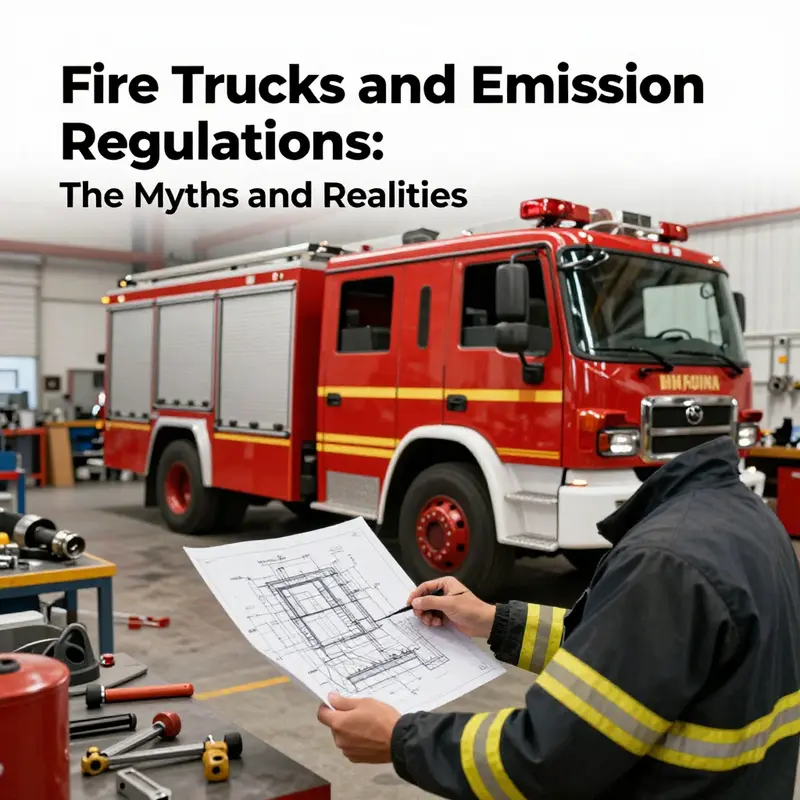
Not exempt, yet essential is a succinct way to describe how emission regulations intersect with the design of emergency fire vehicles. Fire apparatus must sprint into danger and then pull back into a dense urban environment where every breath of exhaust matters. The idea that a life-saving machine could bypass environmental standards runs counter to both public health goals and the practical realities of modern vehicle engineering. Emission regulations, first cast in broad terms for heavy-duty diesel engines, have evolved into precise technical mandates that influence everything from the choice of materials to the way exhaust is treated before it exits the tailpipe. Those standards, such as Euro 3 and Euro 4 in many jurisdictions, do not merely cap pollutants; they refract the entire design philosophy of a fire truck. In the contemporary marketplace, a fire fleet is not judged solely on its speed, its reach, or its pumping capacity. It is evaluated on how efficiently it converts fuel into power, how quietly it operates in congested neighborhoods, and how little it contributes to the pollution that its own crews and the public are trying to avoid. In this sense, emission rules become a catalyst for innovation rather than a bureaucratic obstacle, shaping a lineage of vehicles whose purpose is to protect life while preserving air quality for the communities they serve.
The regulatory landscape for fire apparatus is not a single document but a patchwork of regional standards that share a common goal: reduce the release of harmful exhaust while preserving the high-performance requirements that emergency missions demand. Across many markets, diesel engines powering large, ladder-equipped trucks must meet progressively stringent limits on nitrogen oxides (NOx), particulate matter (PM), and other pollutants. The Euro 3 and Euro 4 benchmarks referenced in supplier catalogs and procurement discussions illustrate a trajectory rather than a single destination. Euro 3 places a baseline constraint on emissions that affects fuel-system design, combustion optimization, and exhaust after-treatment. Euro 4 pushes even further, demanding more robust solutions such as advanced catalytic converters, particulate filters, and sophisticated engine calibration to balance power with cleaner exhaust. These standards apply to the same diesel-driven platforms that must haul water, lift ladders, and respond through traffic at high speed. The result is a design space where reliability, maintenance, and crew safety are integrated with environmental compliance.
A central thread in this evolution is the way materials are used to offset the additional constraints placed on powertrains. Lightweight, strong materials reduce overall vehicle mass, which in turn lowers fuel consumption and emissions for a given level of performance. In practice, this means more aluminum in the body structures and a thoughtful mix of alloys that preserve durability under the demanding loads of firefighting. A modern fire apparatus can feature a primarily aluminum body complemented by steel or composite reinforcements where rigidity and abrasion resistance are crucial. This material strategy yields tangible benefits: reduced fuel burn, improved acceleration and handling in city streets, and less stress on the engine and exhaust system during repeated deployments. The weight savings also translate into better climb performance on hilly terrain and the ability to carry larger water tanks or additional equipment without swinging the chassis toward higher emissions. It is a careful balancing act—never at the expense of reliability or rescue capability, but always with the awareness that heavier trucks demand more from their powertrain and thereby produce more emissions unless countered by cleaner technology and smarter aerodynamics.
Engine technology under regulatory pressure has undergone a parallel transformation. The performance envelope that fire trucks inhabit requires engines that deliver high torque at low and mid speeds, robust peak horsepower, and survived duty cycles that include long idling periods in depots, rapid acceleration to overtaking speeds in traffic, and sustained operation under heavy loads when fighting a blaze. The regulatory push has pushed manufacturers to couple high-output diesel engines with advanced after-treatment systems. Diesel Particulate Filters (DPFs) remove soot particles from the exhaust stream, while Selective Catalytic Reduction (SCR) systems reduce NOx by converting it into harmless nitrogen and water with the help of a urea-based additive. These technologies enable engines to meet Euro 4 requirements without sacrificing the quick response times and sustained power that firefighting demands. The engineering challenge is nontrivial: DPFs must be capable of long-harvest regeneration cycles that occur during operation, not just at idle, and SCR systems must be designed to perform reliably across a broad range of temperatures and operating modes. The integration of these after-treatment devices into a vehicle designed to live in the harsh environments of daytime city life, rural roads, and everything in between is a testament to how environmental regulation can drive resilience and uptime alongside cleaner exhaust.
The move toward cleaner exhaust also intersects with the health and safety of the crew who operate and live with these vehicles. Emission regulations broaden the sphere of responsibility beyond what leaves the tailpipe. Contemporary design practices increasingly address the quality of air inside the cab and within the crew compartments. In some studies and industry discussions, the health implications of diesel exhaust exposure for firefighters and station personnel have spurred designers to consider better cabin filtration, more effective ventilation, and strategies to minimize the inhalation of particulates during long shifts. These considerations align with a broader body of research on occupational health and environmental exposure, which is why the same regulatory lens that demands lower tailpipe emissions now encourages safer, cleaner air within the vehicle and at the fire station where crews prepare for the call. The result is a more holistic approach to design that does not treat emission compliance as a standalone constraint but rather as a driver for healthier work environments and more sustainable operations.
Technology choices in response to regulation are not limited to the engine and exhaust. Manufacturers are exploring how to push performance while meeting stricter limits on pollutants through intelligent system integration and smarter vehicle architecture. For example, the powertrain can be integrated with traction and stability controls that optimize energy use in dynamic firefighting maneuvers. Cooling systems are redesigned to handle high output without allowing heat and exhaust to degrade performance or crew comfort. Transmission calibration is tuned to maintain efficient torque delivery even as engine efficiency improves, ensuring that the vehicle remains responsive during a critical mission while still respecting emission caps. In urban contexts, where ground-level air quality matters to bystanders and responders alike, such design refinements become a form of public service in their own right. The design philosophy thus becomes twofold: ensure that a fire truck can reach, navigate, and operate at the highest level of performance, and ensure that the vehicle contributes as little as possible to air pollution during and after its missions.
The certification landscape underpins all these decisions. Where a vehicle is manufactured and marketed—whether for domestic fleets or international export—the presence of official certifications such as CCC, which attest to safety and quality compliance in certain jurisdictions, provides a crucial signal to buyers and operators. The CCC marks, together with Euro-era emissions compliance, create a framework within which architectural choices, supplier selection, and service planning are made. In markets where regulatory enforcement is strict, procurement tends to favor vehicles with robust after-treatment solutions and proven reliability. In others, the combination of power, speed, and lower emissions can influence a fleet’s long-term maintenance costs and environmental footprint. The practical implication is that not only must a fire truck demonstrate that it can perform during a crisis, but it must also prove that its emissions footprint aligns with the environmental commitments of the city, region, or country it serves.
The collaboration between design priorities and regulatory demands is also evident in the diversity of configurations. A fire apparatus is not a single, monolithic product; it is a platform that adapts to local requirements and terrain. The Euro 3 and Euro 4 frameworks often apply to diesel-driven platforms across a spectrum of sizes—from compact pumpers to large ladder trucks and water towers. The design choices, therefore, must accommodate a range of duty cycles, fuel economies, and emissions profiles. Some markets emphasize compactness and nimbleness for dense urban settings, while others prize reach and capacity for rural or industrial environments. Yet in all cases, the common theme remains: emission regulations shape the architecture of the vehicle right from the outset. They influence the selection of engine families, the location and design of the exhaust after-treatment package, the method of cooling, and even the route by which the vehicle is assembled and tested before it enters service. The engineering teams behind these machines operate with a continuous feedback loop, where real-world mission data informs subsequent iterations of engine mapping, after-treatment durability, and maintenance planning.
From a procurement perspective, the interplay between regulation and design can affect cost and lifecycle planning. While the initial price tag for a clean, compliant fire truck may be higher due to advanced exhaust systems and materials, the total cost of ownership can improve over time. Lower emissions often correlate with reduced fuel consumption to deliver the same performance, and proper after-treatment systems can extend engine life by reducing soot and sulfur exposure in exhaust streams. Additionally, improved materials and smarter construction can lower maintenance intervals and reduce wear on critical components, contributing to longer service life and more predictable budgeting for municipal fleets. In environments where firefighting equipment remains in service for many years, this long-term efficiency matters as much as the immediate capability to perform a dangerous, precision-driven mission.
To connect these design imperatives with the broader discourse on how fire apparatus fit within a changing climate, it helps to reflect on the public-facing implications of cleaner engines and lighter bodies. A city that invests in Euro 4-compliant vehicles is not only signaling its commitment to cleaner air but also acknowledging the occupational health risks faced by firefighters who operate in smoky, diesel-fueled environments. The design decisions driven by emission standards can lead to quieter engines, more effective cab filtering, and a broader cultural shift toward a proactive stance on air quality. This alignment matters because it reframes the mission of the fire service as not merely about rapid, bold response but also about stewardship—of both the urban atmosphere and the well-being of the crews who are called to protect it. In this light, emission regulations become a partner in the mission rather than an obstacle to it, guiding innovations that make the job safer, more efficient, and more publicly accountable.
The conversation around emissions and fire truck design also resonates with the global supply chain that underpins modern manufacturing. The presence of diverse regional standards means that vehicle builders must be ready to tailor configurations to meet local regulations without sacrificing core performance. This adaptability is facilitated by modular engineering, where core powertrains, after-treatment systems, and chassis architectures can be swapped or re-tuned to satisfy Euro 3, Euro 4, CCC, and other certification schemes. The global nature of the market is evident in supplier catalogs and trade pages that show a range of engines, exhaust solutions, and materials aligned with these regulatory frameworks. In practice, a fleet in one city may require a slightly different combination of components than a fleet in another, even when both are built on similar platform architectures. The ability to adapt—while maintaining compliance and reliability—has become a defining feature of modern fire apparatus design.
Importantly, the regulatory narrative is not solely about what cannot be done. It is equally about what is now possible because of cleaner technologies and smarter materials. The shift toward aluminum bodies, for instance, is not just about weight savings; it is about how a lighter yet durable structure can improve acceleration, cornering, and stability under emergency conditions. A lighter chassis benefits the entire system by reducing fuel consumption, enabling faster response times, and reducing the thermal and mechanical stress on the propulsion and exhaust system during rapid maneuvers. This holistic optimization—across structure, power, and exhaust—illustrates how emission rules can serve as the catalyst for safer, higher-performing vehicles rather than as a punitive constraint.
In considering the future trajectory of fire truck design under emission regulations, one can anticipate continued advances in after-treatment efficiency, materials science, and intelligent vehicle systems. Developments in hybrid propulsion, regenerative braking, and more sophisticated energy management may further reduce emissions while preserving, or even enhancing, the ability to perform in extreme conditions. As cities and regions push toward lower ambient pollution levels and improved public health outcomes, fleets will likely adopt a combination of cleaner combustion strategies, lightweight construction, and smarter mission planning to minimize the environmental footprint without compromising the speed and reliability essential to the public safety mission. This evolution will continue to unfold in response to the ongoing tabulation of emissions standards, the economics of procurement and maintenance, and the real-world demands of emergency response. It is a story of balance: honoring the duty to respond instantly while honoring the duty to protect the air that makes such responses possible in the first place.
The journey toward cleaner fire trucks is not an isolated technical pursuit. It dovetails with the broader conversation about how emergency services can modernize in ways that safeguard both responders and communities. As the design language of these vehicles becomes more refined, the line between transportation technology and public health policy becomes increasingly blurred in a productive way. The apparatus that races to a blaze carries with it engines that burn cleaner, bodies that weigh less, and systems that manage heat and exhaust with greater sophistication. The net effect is a fleet that remains fiercely capable while contributing less to the very pollution that can compromise public health and the welfare of those who put themselves in harm’s way. In this sense, emission regulations do not diminish the essence of firefighting; they reframe it. They push the craft of fire protection toward a future where speed, reliability, and environmental stewardship advance in lockstep, ensuring that communities are defended not just from flames but from the collateral hazards of air pollution.
For readers looking to see concrete examples of how these principles manifest in industry catalogs and market offerings, the evidence is visible in the range of models that advertise certification-ready configurations capable of meeting Euro 3 or Euro 4 emissions standards. These indications of compliance point to a broader pattern in which manufacturers design for modularity, durability, and serviceability. They show how suppliers balance strong powertrains with after-treatment equipment, how they select materials to optimize weight, and how they architect cooling and exhaust systems to withstand the rigors of real-world firefighting. The result is a family of vehicles that can be deployed in diverse environments—urban centers with tight streets, suburban communities with growing demand for rapid response, and rural areas where robust water pumping and reach is crucial—without compromising environmental responsibilities. As a closing reflection, the story of emission regulations and fire truck design is a narrative about how public safety and environmental stewardship can reinforce one another, enabling fire departments to meet today’s demands while preparing for tomorrow’s challenges.
External resource: https://www.alibaba.com/product-detail/CXFIRE-Water-Tower-Fire-Truck-6×4-drive_1600588795516.html
Internal link note: for a broader discussion about material choices in fire apparatus design, see discussions on Steel Fire Apparatus.
Emissions and the Frontline: Fire Trucks and the Stay-Ready Regulation
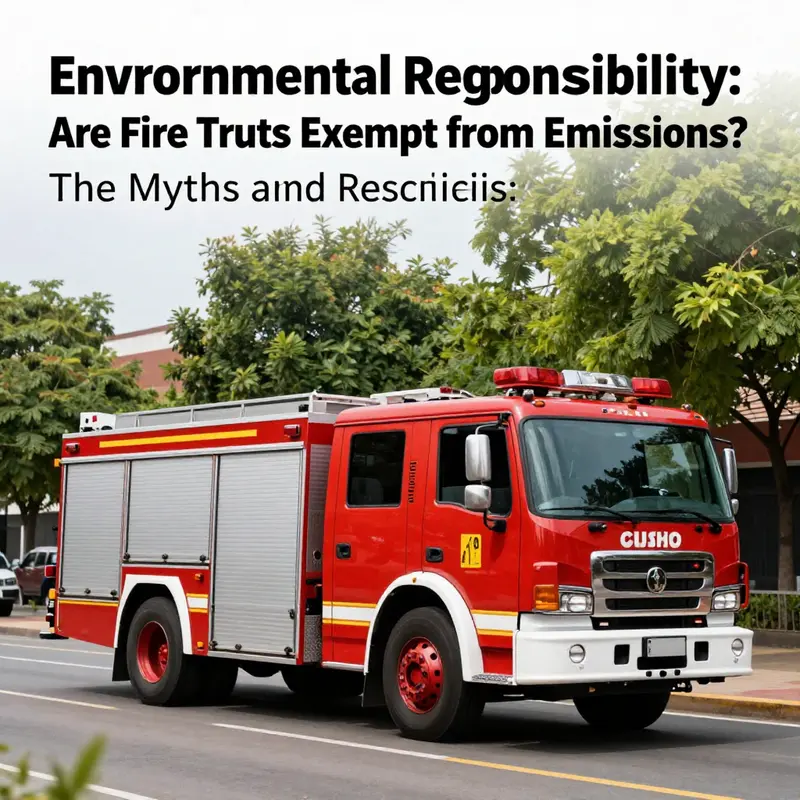
Across the urban night the fire truck is a symbol of urgent public safety. It is designed for speed, power, and reliability under extreme stress. Yet alongside the siren and the pump panel sits a set of environmental rules that cover nearly all diesel powered road vehicles. The question of exemption is not simple. Fire apparatus are not wholly exempt from emissions rules, but they do benefit from exemptions and waivers that recognize the special pressures of emergency operations. The result is a policy landscape that tries to balance readiness with cleaner air.
In the United States federal regulators have carved out a niche for emergency responders within the diesel emissions program. A partial waiver announced in a recent period relaxes some controls on emergency vehicles including fire apparatus and ambulances. The aim is to avoid any added risk during crisis that could come from overly aggressive pollution controls. The waiver is conditional and narrow in scope and applies only to specific systems and operating conditions. The practical effect is not a license to pollute, but a permission to avoid a critical failure mode during an emergency.
Even with waivers, the overall emissions picture remains active and evolving. Departments still pursue core standards for engines and aftertreatment and strive to upgrade to cleaner technologies where feasible. Fire fleets increasingly use engines with advanced exhaust aftertreatment, sensors, and control software that reduce pollutants while preserving peak torque and reliability. The policy guidance emphasizes readiness without surrendering long term air quality goals. The transformation happens gradually, patch by patch, engine by engine.
Euro standards provide a lens for understanding how emergency vehicles are designed worldwide. Euro 3 and Euro 4 have guided many fleets, but there is a trend toward higher standards where possible. Some regions maintain stricter requirements, others use calibrated exemptions during mission critical phases. The middle path favors both immediate response and ongoing improvements in emissions.
From the procurement and maintenance view, waivers help prevent delays in response. They do not remove the obligation to minimize emissions. Fleets pursue upgrades to aftertreatment and fuel systems and to engine calibration that lowers particulate and nitrogen oxide output during typical duty cycles. Local authorities retain responsibility for compliance and for balancing budgets, schedules, and mission priorities. The community benefits when responders are ready to act and air quality improves over time.
Policy makers, engineers, and fleet operators engage in a continuous dialogue about what is permitted and what should be expected in the future. The official announcements provide precise language about the scope and duration of waivers, and each department translates that into maintenance plans and training. Public discourse often frames the issue as a choice between speed and sustainability, but the real world is more nuanced. The aim is to preserve life saving capability while continually pushing for cleaner propulsion.
In practice, the frontline remains protected by a policy that blends urgency with accountability. Engagement with technology advances, better data from field performance, and evolving air quality science all shape the path. The result is a moving target where exemptions exist but are applied with clear conditions and ongoing measurement. As fleets modernize, they strive to keep response times high and emissions as low as feasible.
Official sources provide the authoritative guidance, and fleet managers monitor updates to ensure alignment with current expectations. The attention to maintenance schedules, calibration settings, and preventive care helps sustain readiness while reducing the environmental footprint. Specialist outlets and case studies on emergency vehicle technology offer practical perspectives on how different jurisdictions approach the balance between performance and pollution control.
The overall message is that fire trucks are not exempt in the absolute sense, but the regulatory framework recognizes the realities of emergency work. Exemptions are a carefully delimited tool that keeps frontline service ready while continuing the long term project of cleaner air. The story of modern firefighting is one of ongoing improvement, where policy, technology, and frontline experience converge in the service of public safety and environmental stewardship.
Final thoughts
As we navigate the critical intersection of fire safety and environmental stewardship, it becomes clear that fire trucks are not exempt from emissions regulations. In fact, their compliance with these standards plays a pivotal role in shaping their design and operational effectiveness, ensuring that their life-saving capabilities do not come at the expense of our planet. The ongoing evolution in fire truck technology reflects a broader commitment to sustainable practices, ultimately benefiting both our communities and the environment. Embracing this responsibility not only prepares aspiring firefighters and enthusiasts for the future of firefighting but also solidifies the essential role of fire trucks in protecting public health and safety.