
Dalmatians have long held a special place in the history of firefighting, not just as adorable companions but as vital helpers in the emergency response world. From their unique ability to clear paths in crowds to their calming influence on horses, these spotted dogs proved their worth in ways that went beyond mere mascot status. Audience interest in this fascinating relationship fuels a deeper understanding of Dalmatians’ roles in the past and their lasting legacy today. As we delve into the chapters ahead, we’ll uncover the historical significance of Dalmatians in firefighting, explore the depth of their bond with horses, examine their path-clearing abilities, and reflect on their enduring cultural legacy in fire departments across the globe.
Running Beside the Wagon: The Practical Bond Between Dalmatians and Firefighting
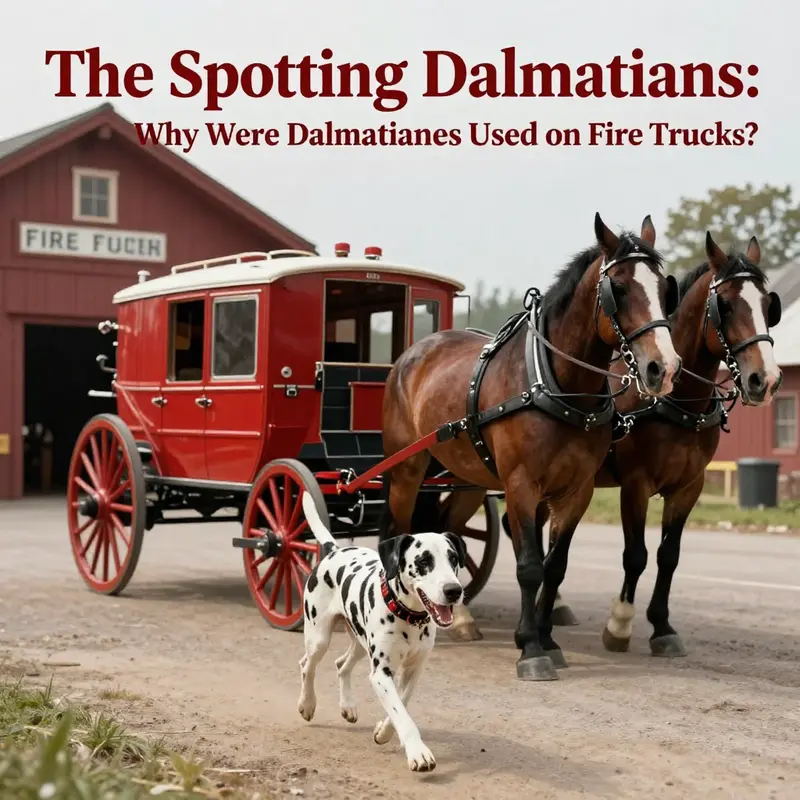
Dalmatians appear in firefighting history not because of modern marketing, but because their everyday attributes aligned perfectly with the demands of horse-drawn fire departments. In centuries when fire engines were pulled by teams of draft horses through crowded streets, speed was not a luxury; it was a necessity. Carriage dogs, including Dalmatians, were bred to run alongside carriages, guarding them from thieves and keeping pace with long journeys. This heritage translated naturally into the streets where early fire wagons needed a steady, fearless partner to accompany them from the moment a heat shimmer appeared on the horizon to the moment the final embers disappeared. The breed’s Croatian origin is more than a footnote here. It signals a lineage of endurance and loyalty that could be stretched to the limits of city streets, where lanes curved and pedestrians moved unpredictably while a siren-less call to action rose from the alarm bell. In that world, Dalmatians were not decorative add-ons; they were functional components of an emergent emergency-response system. Their stamina meant they could keep up with galloping horses over long distances, a capability that other breeds could not guarantee, and their natural alertness turned their bodies into mobile warning systems that helped coordinate the team before a first splash of water ever touched the flames.
The sight of a Dalmatian trotting beside a glowing wagon carried more meaning than a mere silhouette in a parade. When the alarm sounded, a Dalmatian would surge ahead of the fire wagon, barking to clear a path and warn bystanders to step back. There were no early sirens for the first horse-drawn engines, so the dog acted as a crucial, intuitive signal—an organic, four-legged traffic director that reduced chaos and sliced through crowded streets with surprising speed. In that role, the Dalmatian’s high energy and relentless drive became a lifeline for firefighters rushing toward a crisis. The dog’s ability to navigate crowds, dart between legs, and weave across a street blocked by onlookers was an asset in cities where pedestrians often stood frozen in fear rather than stepping aside. The dog’s presence reduced the number of missteps that could slow a team whose momentum hinged on every split second gained in the street run to the blaze.
Once at the scene, the Dalmatian’s contributions did not end with a single forward chase. Dogs of this breed were often placed at the front lines of the operation to do more than clear a path; they helped steady the horses who might panic at the sight of flames, smoke, and cascading sounds. The bond between dog and horse proved to be remarkably practical. A Dalmatian with a calm, assertive demeanor could calm a skittish horse, reducing the risk that a spooked animal would bolt or collide with gear and crew. The horses and the fire apparatus represented a precious and expensive fleet, and the dog’s guardianship helped safeguard both. In many ways the Dalmatian served as an early logistics manager, ensuring that the valuable wagons and the horses remained cohesive as a unit in the middle of a crisis.
Beyond their protective role, Dalmatians assumed duties that reflected a blend of guardian instinct and routine companionship. They would stake out a watchful position near the stables and wagon sheds, keeping thieves at bay and fending off stray animals that might disrupt a response. The presence of a Dalmatian heightened morale inside the firehouse as well. Firefighters, who trained together and faced danger side by side, found a loyal companion in these dogs, and the animals excelled at living in close quarters with horses, sometimes sharing the ground-floor stalls and kennels. This living arrangement reinforced the emotional bond that then translated into trust on the street. In retrospect, the Dalmatian’s function was less about a single job and more about an integrated approach to emergency response: speed, noise, vigilance, and resilience, all rolled into a single, dynamic partner.
As technology advanced and motorized fire engines replaced horse-drawn wagons, one might expect the Dalmatian’s practical role to vanish. Yet the symbol endured. Fire departments preserved the dog as a living link to the past, a creature that embodied courage, loyalty, and a steady, fearless presence in the face of danger. The Dalmatian’s status as a firehouse emblem grew not from a single heroic act but from a cumulative memory of countless small contributions: the early warning bark, the calming touch for frenzied horses, the steady lookout for the equipment, and the steady companionship that kept morale buoyant after a long night of sirens and smoke. In this way, the Dalmatian became a cultural touchstone—an emblem of service that carried into the era of modern fire apparatus. The animal’s image graces stations, parades, and public events, carrying with it a legacy that is as much about identity and belonging as about any tangible service.
The continuity of this tradition owes much to the way communities perceive and remember service. The Dalmatian’s presence in fire history helps link contemporary firefighters with a long arc of readiness, courage, and community protection. It also provides a narrative through-line that makes the work approachable and memorable for the public. When schools visit stations or families tour firehouses, the dog’s story becomes a gentle, compelling entry point into more complex questions about fire safety, teamwork, and resilience. This continuity matters because it fosters trust and respect for the professional who responds in moments of crisis. It reminds us that the most effective emergency response blends swift action with a humane, cooperative spirit—the same spirit the Dalmatian exemplified when it ran ahead, barked to clear the way, and stood watch over the team while engines performed their crucial tasks.
For readers curious about the broader historical context, exploring firefighting history through the lens of animal roles reveals how teams adapted to the technologies of their time. The Dalmatian’s partnership with the horse-drawn engine offers a window into a period when dogs were not merely pets but integral participants in public service. This perspective underscores a central theme of the overall article: that the evolution of fire response is as much about social and cultural adaptation as it is about machines and engineering. The Dalmatian’s legacy persists, not as a relic of a bygone era but as a living reminder of the values that drive public service: readiness, loyalty, and the willingness to work side by side with partners—human and animal alike—to protect the community. When the wagons no longer needed a canine companion to navigate busy streets, the symbolism endured precisely because it spoke to something fundamental about teamwork in crisis. In many ways, the dog’s contribution remains a quiet counterpoint to the loud crash of engines and the roar of flames: a steadfast, dependable presence that makes fast, coordinated action possible.
If you want to explore the broader arc of firefighting history and see how traditions are preserved in modern times, the FireTruck.space blog offers a wider look at related heritage topics and how communities keep these memories alive. FireTruck.space blog
For a concise, journalistic overview that places the Dalmatian’s role in context with contemporary understanding, you can consult external research that documents why Dalmatians became known as the official firehouse dogs and how their story continues to shape public perception of firefighting today. Live Science provides a thorough treatment of the historical partnership between Dalmatians and fire services, illuminating the practical and symbolic reasons behind the breed’s enduring association with firehouses: https://www.livescience.com/why-are-dalmatians-the-official-firehouse-dogs.html
Historical Significance Reimagined: The Dalmatian’s Role in Fire Wagons and the Making of a Mascot
The Dalmatian’s story in firefighting circles begins in a world of horse and wagon, a landscape where speed and maneuverability could determine whether a blaze was stopped before it consumed a street whole. Long before engines learned to roar, urban fire response depended on teams of horses yoked to heavy wagons. In this world, Dalmatians emerged not merely as pets but as allies bred for a shared rhythm with the horses. Originating in the Dalmatian coastlands and bred for the role of coach dog, these striking dogs learned quickly to run alongside carriages, watching for danger, protecting the wheels, and keeping thieves at bay. They were prized for their agility, endurance, and fearless disposition, traits that translated effortlessly to the demanding tempo of city streets where a delay could mean a longer blaze and a longer risk to neighbors and livelihoods. In those early days, the Dalmatian’s life was threaded into the daily routine of firefighting, a life built on trust between dog and rider, horse and handler, wagon and alert vantage point.
As fire services shifted from horse to horsepower, the dogs’ function did not simply drift away. When volunteer fire companies began relying on horse-drawn engines in the early nineteenth century, Dalmatians were welcomed into the fold with a practical fidelity. They became the lead runners, behaving like disciplined scouts who forge a path through crowded avenues and crowded emotions. They would often take to the front, barking and weaving through bystanders, steering crowds aside with a confident temperament that did not break the line but rather bent the line toward safety. Their speed and stamina allowed them to match the gallop of the horses, a cadence that kept the draft team coordinated and efficient at a moment when every second mattered. In this sense, the Dalmatian was less a mere companion and more a crucial component of a highly choreographed response system.
The synergy between dog and horse was not purely mechanical. It rested on an almost instinctive affinity—the kind of bond that develops through repeated, high-stakes collaboration. Dalmatians could sense the collective heartbeat of the team: the horse’s nerves before the dash, the wheeze of smoke in the air, the shriek of sirens that would soon become a constant soundscape. The dogs offered a calming counterpoint to chaos. Their presence helped steady the horses, who could grow skittish in unfamiliar crowds or when fire apparatus thundered through the town. This calm was not a passive thing; it was a trained response, achieved through early mornings and long drills, where dogs learned to anticipate the drivers’ cues and to move in harmony with hoofbeats and wheels. In this way, the Dalmatian did more than guide the wagon; it helped preserve the emotional balance required for a swift, safe, coordinated exit from danger.
Beyond the technical and emotional contributions, the Dalmatian’s role took on a cultural resonance that helped sculpt the very identity of firefighting as a community institution. In the firehouse, the dog and the horse lived alongside firefighters, forming a shared microcosm. The Dalmatian’s striking spotted coat, its alert eyes, and its undeniable energy became a symbol that the public could recognize and remember. Over time, these animals ceased to be merely functional partners and grew into living emblems of courage, readiness, and teamwork. The relationship extended into daily life at the station, where the dogs learned to greet new recruits, to ride out on ceremonial occasions, and to participate in the ritual of maintaining the team’s public image. The bond was intimate and enduring, a daily reminder that firefighting has always rested on the capable collaboration of many kinds of workers, human and animal alike. This tradition was so deeply embedded that the Dalmatian’s presence began to signify a history worth preserving, then evolving, even as technology moved the wagons from horse to motor-driven engines.
In the era of modern fire apparatus, the visible partnership between Dalmatian and engine persisted not as a practical necessity but as a ceremonial and educational bridge to the past. Firehouses adopted Dalmatians as mascots, celebrating a lineage that linked contemporary professionals to their predecessors. The dog became a living archive, a three-dimensional memory that can be observed, touched, and understood by communities, especially children, who learn about the history of service through the animal. The Dalmatian’s high energy and need for steady, purposeful activity also kept the modern station’s pace lively and healthy. Even as engines shifted to mechanical power, the Dalmatian’s presence continued to offer a tangible link to a period when speed, precision, and mutual trust between species delivered life-saving results in real time. In many stations, this continuity is reinforced by a practice that feels almost ceremonial: introducing Dalmatian puppies to retired fire horses. The gesture honors the long-standing kinship and sustains the social memory of firefighting as a cooperative effort between people, horses, and dogs. It is a quiet, ongoing ritual that anchors tradition in practice, ensuring that the flame of history remains visible in the present.
For readers curious about how modern fire apparatus have evolved, there is a natural curiosity about the broader ecosystem—the vehicles themselves, the crews who operate them, and the stories that connect yesterday to today. A broader exploration of the landscape of firefighting equipment and culture can offer context to the Dalmatian’s historical role. For those who wish to explore the current state of fire apparatus and related topics, a related overview can be found in ongoing discussions about fire-trucks-for-sale, which highlights how communities maintain readiness while honoring heritage. This link serves as a bridge between the historical partnership and the contemporary world in which equipment continues to advance and communities continue to rely on a shared sense of purpose and identity. fire-trucks-for-sale
The historical significance of Dalmatians in firefighting, however, remains more than a story of convenience. It reveals how a community builds meaning from practical needs and how a breed’s temperament can become a symbol that endures beyond the circumstances that first created it. The Dalmatian’s brisk pace, its capacity to stay near the horses over long distances, and its natural inclination to assert a clear, protective perimeter in the path of a fast-moving wagon all contributed to a system that valued speed without sacrificing safety. These traits created a durable model of teamwork that transcended time, allowing the image of a Dalmatian at the front of a line of wagons to become an emblem of vigilance, reliability, and duty. And as the story moves from the era of horse-drawn wagons to motorized fleets, the dog’s role persists, not as a necessity but as a reminder: the engine may change, but the need for a trusted partner—whether horse or handler, dog or driver—remains constant. This continuity is the heartbeat of the chapter, a reminder that symbols in public life often endure because they crystallize a shared memory of courage and cooperation.
Ultimately, the Dalmatian’s place in firefighting history invites us to see beyond the dog’s striking image and recognize the broader human-dog partnership that has shaped public service through generations. It is a narrative about trust, training, and timing—qualities that define not just a breed but any effective team under pressure. The Dalmatian’s legacy, preserved through stations that retain its presence and through rituals that honor the past, keeps alive a sense of communal identity. It invites communities to remember that the firehouse is more than a building with appliances; it is a living archive where stories about speed, loyalty, and courage continue to unfold every day. And as new generations learn these stories, they inherit not only a tale of a spotted dog but a template for how courage can be taught, shared, and cherished across the years.
External resource: https://www.firedepartmenthistory.com/dalmatians-firehouse-dogs
null
null
The Loyal Gatekeepers of the Engine: How Dalmatians Became Partners in Firefighting History
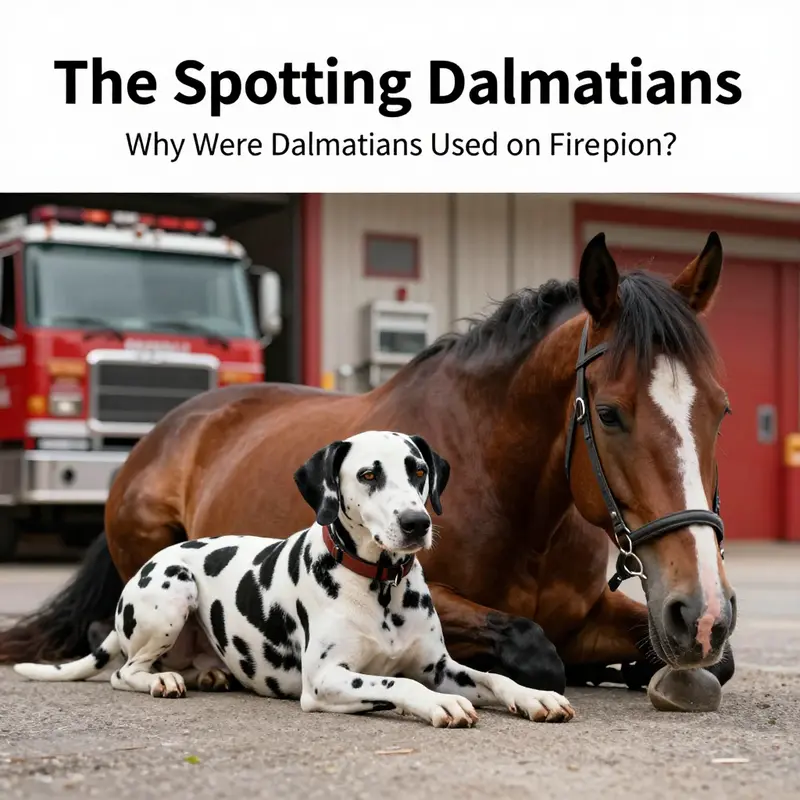
In the long arc of firefighting, the image of a spotted, galloping dog at the front of a wagon is not a mere flourish. It is a carefully chosen partnership born of need and trust. Dalmatians, with their glossy coats and boundless energy, occupy a place in firehouse lore that sits at the intersection of practicality and tradition. They were not simply pets in the era of horse drawn engines; they were working partners designed to help a team move swiftly through busy streets, reach a scene in time, and keep horses calm amid chaos. The story begins far from the fire station, in a region where the Dalmatian name itself points to the coast of Dalmatia, now part of Croatia. These dogs were bred as coach dogs, guardians and companions for camelot-like carriages and noble wagons, selected for stamina, tenacity, and an instinctive affinity for horse teams. Their purpose was to run beside the wheels, to be close enough to respond quickly, and to protect the precious conveyance from thieves and mischief, a function that already cast them as reliable, steady presence in busy streets. When those same dogs found their way into organized firefighting in the 19th century, their prior training translated into a new, urgent usefulness. The horse-drawn fire engine was a heavy, unwieldy instrument, and every second counted as a call to action pierced the air with urgency. A Dalmatian was not a decorative addition to a fire wagon; he was a working partner, a creature bred to move with rhythm and purpose alongside powerful horses. The practical role they played emerges most clearly in the moment when a siren screams, the crowd parts, and the team must navigate lines of pedestrians, carts, and street noise. Dalmatians would run ahead of the wagon, barking to announce the approach and weaving through onlookers so the team could pass unimpeded. Their speed and agility let them keep pace with galloping horses over long distances, a critical factor when fire scenes stretched across dense urban terrain. The dogs also acted as guardians for the horses themselves. In tense urban environments, horses could become skittish or reactive to the roar of flames and the uproar of a crowded street. A Dalmatian’s calm, confident presence helped steady the animals, reducing the chance that panic would ripple through the team. That trust ran both ways: the horses trusted the dogs to shield them from unexpected threats and guide them safely toward danger, while the dogs counted on the horses to pull the heavy wagons and carry them toward the scene. The chemistry of this bond—speed, stamina, and a knack for quieturing nerves—made the pairing all the more indispensable during emergencies when time mattered most. The narrative of the Dalmatian and the horse team is not simply about a clever work arrangement; it is about a shared rhythm. The Dalmatian would not outrun a horse, but he could match its pace, cut through congested lanes, and punctuate the march with a voice that signaled approach. The horses, accustomed to a steady, familiar partner, were less prone to spooking at the clamor of sirens or the glow of flames, because they learned to find calm in the presence of their devoted companion. This mutual trust grew into something larger than a practical protocol. In volunteer and municipal fire companies, the Dalmatian’s role began to symbolize reliability, courage, and teamwork. The dogs lived alongside the horses in the firehouse, forming bonds that went beyond duty. They shared space, duties, and a sense of shared purpose. Over time, the image of a Dalmatian at the front of a fire wagon transformed from a functional arrangement into a cultural emblem, a visual shorthand for the brave and disciplined life inside the fire service. Even as fire engines shifted from horse power to internal combustion and now to modern apparatus, the Dalmatian’s place in the story did not vanish. It persisted as a symbol, a living memory of a time when the response to a call involved a living partnership between man, horse, and dog. In many firehouses, the tradition continues in subtle ways. The bond between dogs and horses is commemorated through ceremonial practices and, at times, through the practice of introducing Dalmatian puppies to retired fire horses as a nod to the historical pairing. This continuity keeps alive a memory of a collaboration built on mutual dependence and trust, and it helps younger generations connect with a lineage that stretches back to a time before engines ran on fuel and hydraulics. The Dalmatian’s enduring presence in firefighting culture is also reflected in the broader iconography of fire service. The spotted coat and the dog’s posture at the front of wagons became a powerful image that has endured in parades, public events, and the storytelling surrounding firefighting heritage. It is not surprising that the Dalmatian remains a popular symbol for fire protection services around the world, a reminder of the early partnerships that made a dangerous job possible, and of the human and animal cooperation that transformed courage into a daily practice. The modern fire service has evolved in remarkable ways, with technologies that can predict paths of smoke and map hydrants with precision, but the core principle remains: effective response depends on a team that can act in harmony under pressure. The Dalmatian’s legacy underscores a larger truth about firefighting history. It was a craft born from a combination of human ingenuity, animal partnerage, and urban necessity. The dogs did not merely accompany the wagon; they facilitated the movement of the wagon, helped position the team for speed, and offered calm to the horses in chaos. That triad—humans, horses, and dogs—constituted a system that turned reactive emergency responses into coordinated, timely actions. Even as cities modernized and engines gained power and speed, the memory of this collaboration persisted in the culture and rituals of the firehouse. If one imagines a street scene from the era of horse-drawn rescue wagons, the Dalmatian’s silhouette against a plume of smoke would be a signal of disciplined readiness. It is a reminder that courage often travels with a companion, and that effective action hinges on trust between species as well as between people. For readers who wish to explore more about the historical arc of the Dalmatian as a firehouse dog, a detailed account is available through external historical resources. Those curious about the broader world of fire apparatus and its history can also deepen their understanding at the firetruck space blog. For a deeper dive into the historical account behind this partnership, see History.com’s article on the dalmatian firehouse dog history. External resource: https://www.history.com/news/dalmatian-firehouse-dog-history
Guardians of the Wagons and the Flame: The Dalmatian’s Role in Horse-Drawn Firefighting and Its Enduring Emblem
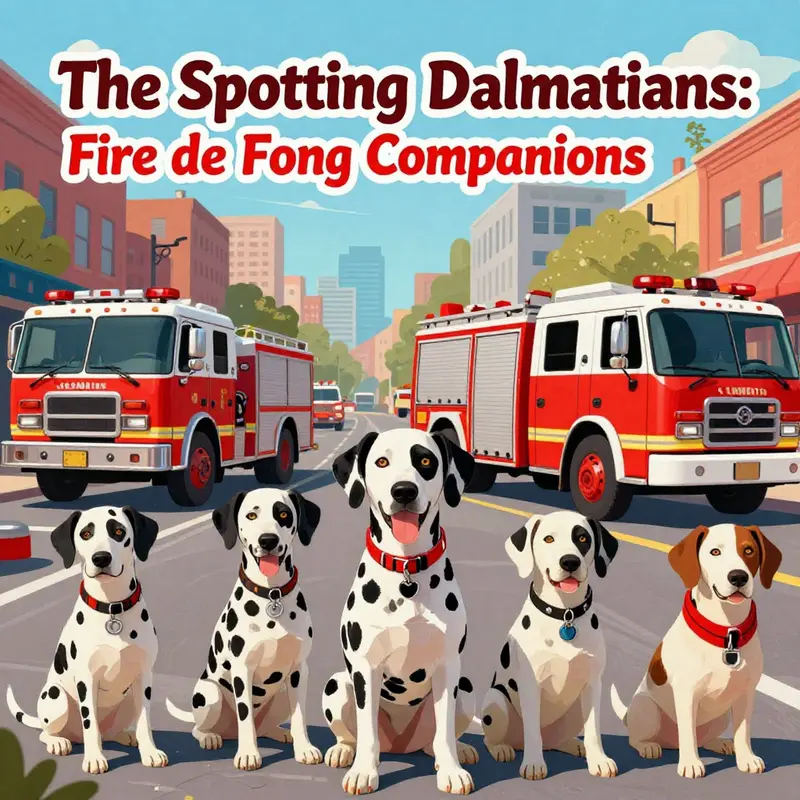
Across the silhouettes of city streets in the age before engines roared, a distinctive partnership formed between two unlikely teammates: the Dalmatian and the horse-drawn fire wagon. This alliance did not spring from a single moment of inspiration, but from a practical convergence of needs and traits that made the spotted dog an essential partner in urgent response. The Dalmatian’s long-standing role as a coach dog—bred to run beside carriages and protect the wheels, the horses, and the passengers—translated naturally into the firehouse where horse-powered apparatus still dictated the tempo and rhythm of emergency work. The fire wagon did not merely carry water and hoses; it carried risk, noise, and a pace that could outrun the confusion of a crowded street. In that setting, the Dalmatian’s instincts were not decorative; they were operational, guiding a team toward a faster, safer arrival at the blaze and back to the ready line after the smoke cleared.
To understand why this bond endured, one must picture the city as it was in the 17th and 18th centuries: narrow lanes, tight corners, gas lamps throwing pale light at dusk, and the sudden whiteness of sirens that announced danger. The horse team pulling a heavy wagon could be powerful, but it was also skittish in a way that would slow a critical response if not steadied. Dalmatians, with their high energy and remarkable stamina, could keep pace with galloping horses over the distance needed to reach a scene quickly. Their endurance was not just a matter of speed; it was a matter of maintaining a consistent tempo. And because they had evolved alongside carriages in Europe, they carried an intrinsic understanding of wheels, harnesses, and the choreography of moving vehicles through traffic—a knowledge base that translated well to fire wagons traveling through crowded streets toward a hazard.
The practical duties of the Dalmatian extended beyond mere companionship. In the early 1800s, as volunteer fire companies began to organize around horse-drawn engines, chiefs and volunteers saw in these dogs a natural solution for the friction and fear that could arise in emergencies. The Dalmatian would be the lead dog, running ahead of the wagon, barking to clear a path and weave through onlookers who crowded near the urgency of a fire scene. This barking was not aimless noise; it was a targeted signal to pedestrians, vendors, and other horses to give space, allowing the team to squeeze through a gauntlet of obstacles. The dog’s presence was a nonverbal command channel, a way to reduce hesitation and hesitation translates into seconds saved.
Equally important was the Dalmatian’s bond with the horses themselves. These dogs possessed a unique empathy with equine partners, an instinct to sense and soothe nerves in a chaotic environment. Sirens, flame glare, the clamor of the crowd, and the sudden, jarring movement of a crowd could unsettle the horses. The Dalmatian’s calm, confident demeanor could help stabilize the team, keeping the horses steady and less reactive to the sights and sounds that would otherwise derail a rapid response. The partnership became less a simple “dog with a job” and more a cooperative system in which the dog’s energy drove forward momentum while its quiet confidence anchored the horses. In that synergy, a street’s chaos could be met with a trained, measured pace rather than a disorderly stampede.
Beyond the mechanics of a fast arrival, the Dalmatian’s utility also encompassed the social and cultural texture of the firehouse. The dog lived among the horses, sharing the same space, forming a daily, intimate routine that bound animal to animal and human to animal in a shared mission. This daily companionship grew into a form of morale—an emblem of steadiness and loyalty that reinforced the values of the firefighting community. Over time, the Dalmatian became a familiar, almost ceremonial presence in public depictions of the fire service. The dog’s spotted coat, hoisted beside the red apparatus, came to symbolize courage and service in a way that mere equipment could not. The aesthetic of the Dalmatian—swift, sleek, and attentive—echoed the qualities the community most prized: readiness, resilience, and the willingness to confront danger for others.
As communities modernized, the practical need for a horse to pull a heavy wagon diminished with the advent of motorized fire engines. Yet the Dalmatian’s role did not simply vanish into folklore. The dog’s status as a symbol persisted, not only as a reminder of the era when firehouses were deeply connected to horses but also as a living link to the discipline and tradition of firefighting. In many towns and cities, the dog’s presence in the station house remains a bridge to history, an embodiment of continuity that helps newer generations connect with the service’s origins. The ritual of introducing puppies to retired fire horses, a practice cited by historians, preserves that lineage and keeps the emotional memory of the partnership alive even as technology transforms the tools of rescue. The Dalmatian thus evolves from a working partner into a cultural emblem—an icon that communicates endurance and fidelity at a glance.
The story of the Dalmatian in firefighting is not simply a tale of a dog’s loyalty or a horse’s steadiness; it is a narrative about how communities create durable cultural symbols from practical, on-the-ground innovations. The dog’s presence helped communities navigate the tension between urgency and order, between the loudness of a crisis and the need for cohesive action. In a city scene where a crowd might surge toward the blaze, the Dalmatian offered a visible reminder of calm purpose, a signal that the team was coordinated, focused, and ready to proceed. In this sense, the Dalmatian’s legacy extends beyond the street into the public imagination. The image of the spotted dog beside the apparatus became a shorthand for courage, loyalty, and collective service—a shorthand that persists in modern storytelling about firefighting even as the hardware changes.
For readers tracing the arc of this history, the trajectory reveals how practical considerations shape cultural memory. The horse-drawn era demanded a partner who could negotiate crowds, steadiness under stress, and a pace that matched the horsepower at the wagon’s core. The Dalmatian delivered on all counts, and the partnership proved robust enough to outlive the era of horse-drawn engines. The symbol it created endures because it captures a core truth about emergency response: success rests not only on brute force or clever machines, but on a disciplined relationship among humans, animals, and the vehicles that move them. The Dalmatian’s story thus becomes a case study in how ingenuity, companionship, and shared risk craft a tradition that outshines the exact forms of technology that made it possible.
Today, the thread continues in quiet, meaningful ways. When communities gather to celebrate local history, the Dalmatian stands as a bridge to memory, reminding people how far emergency response has come and how deeply rooted it remains in communal values. Those who visit firehouses may notice that the symbolic presence of the dog still resonates, not as a living mandate to imitate the past, but as an ethical reminder: service requires courage, unity, and a willingness to move with purpose through fear. For those curious about how such traditions survive, modern readers can explore the ongoing interest in authentic vintage equipment and the stories that accompany it, with a nod to the rhthm of a city’s heartbeat when a siren cries out and a team presses forward together.
If you’re drawn to how history informs present practice, you might encounter discussions of current firefighting culture and equipment that braid past legends with modern technology. The continuity of this symbol helps communities remember why the fire service exists in the first place: not only to fight flames, but to protect neighbors, reassure the frightened, and demonstrate steadfast teamwork in the face of danger. In that broader sense, the Dalmatian’s role on fire trucks becomes more than a footnote in a bygone era. It is a living reminder of the values at the heart of emergency response—the blend of speed and steadiness, of companionship and courage, that defines a profession built on service. And as the public continues to engage with the lore of the fire service, the dog’s legacy invites reflection on how communities generate meaning from practical history, preserving identity while embracing progress.
For readers who want to explore related conversations about fire service heritage online, practical resources and history-rich narratives remain accessible through community discussions and archival sites. As a nod to the era’s enduring spirit, many readers also look to current postings that connect people with the historical ambiance of fire services, including listings and discussions about vintage apparatus and the stories they carry. This ongoing dialogue helps keep the memory of the Dalmatian’s partnership with firefighting alive, even as technology and tactics continue to evolve. The tale of the Dalmatian teaches that a symbol can outlive a tool, and a partnership can outlive a century of change, precisely because both are rooted in a shared commitment to safeguarding life and community.
External resource: https://www.history.com/news/dalmatians-firehouse-dogs-history
Internal link: For readers curious about how today’s interest in authentic, historically resonant equipment persists, explore related discussions on fire-trucks for sale at this resource: fire-trucks for sale.
Final thoughts
The role of Dalmatians in firefighting extends beyond their time as physical helpers; they have become emblematic of tradition and resilience in the fire service. Their unique ability to clear the way for firefighting teams, along with their comforting presence, has forged a deep-rooted cultural legacy. From their practical use in the past to their revered status today, Dalmatians have dramatically shaped the identity of fire departments worldwide. This exploration into their historical significance and continued symbolism lends insight into the powerful partnership between humanity, animals, and the heroic efforts in fighting fires. Let us remember that in the world of firefighting, it’s not just the tools that make a difference but also the bonds we create.