
Fire trucks are iconic symbols of emergency response, but their sirens tell a rich story beyond mere noise. Each tone serves a unique purpose, enhancing communication and visibility during critical moments. For firetruck enthusiasts, aspiring firefighters, and emergency services professionals, understanding why fire trucks use different siren styles is essential. This article will explore the functions of various siren tones, their roles in different emergency situations, and the technological advancements driving these innovations. Through this exploration, we will unveil how effective siren use not only aids in immediate response but also enhances the collective safety of our communities.
Echoes on the Street: The Science and Strategy Behind Fire Truck Siren Variations
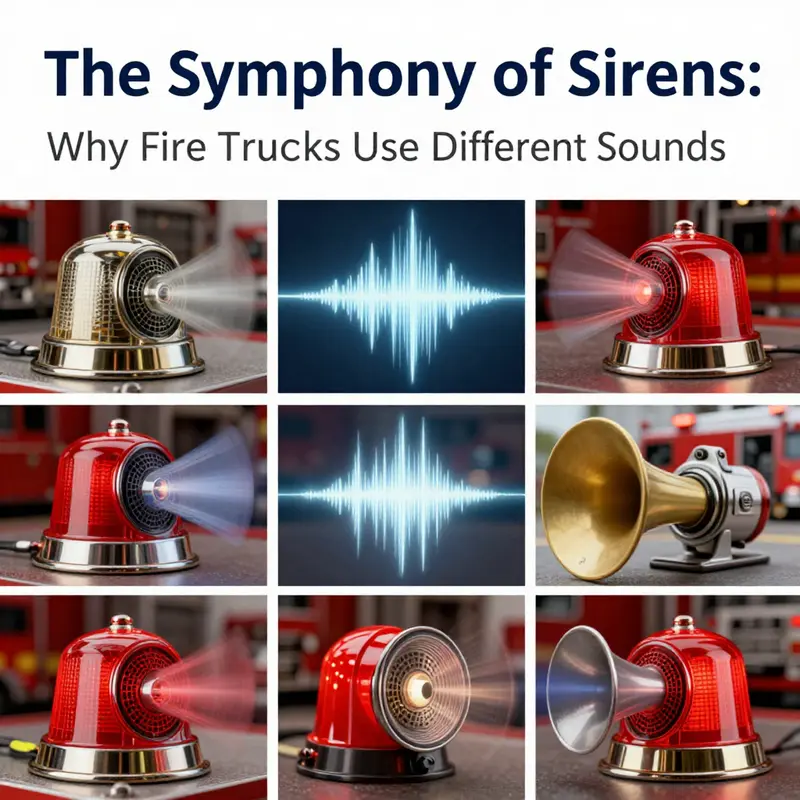
Siren sounds are not mere noise flurries hatched from necessity; they are deliberate instruments in a complex language built to move people, vehicles, and responses toward safety. When a fire engine appears on a crowded street, it announces its presence with a sound that has been engineered to cut through the orchestra of everyday urban life. Different siren tones do more than wake the neighbors or draw a passerby to a window. They act as context, signaling not just that something urgent is happening, but how urgent it is, where the danger might be, and who should respond first. In salons of acoustics and in the field where responders depend on every second, the reason for multiple siren styles becomes clear: variation is a tool, not a flourish. The chapter that follows explains how these sounds are chosen, how they function in different environments, and how the evolving science of hearing and perception informs the procedural choices departments make. It is a story about listening as much as about loudness, and about how cities, people, and engines learn a common vocabulary through sound.
Audibility sits at the heart of siren design. A long, rising and falling wail travels well on open roads and rural avenues, its cadence designed to sweep across distance and carry over a horizon of noise. In these settings, the goal is to maintain legibility at longer ranges, allowing drivers who may be far away to begin to react before the vehicle draws near. But urban terrain tells a different tale. City streets are a mosaic of horns, engines, construction, and conversations. Here, a rapid, high-pitched yelp rises above the din, slicing through traffic and ambient chatter. The quick, sharp changes in pitch and rhythm make a signal that the human ear can latch onto even when the mind is preoccupied by a dozen other stimuli. These patterns are not arbitrary; they reflect psychoacoustic research that shows certain frequencies and temporal sequences capture attention more effectively when stress, fatigue, and cognitive load are at play. In between these two extremes sits a family of siren patterns that blend components of both wail and yelp, a phaser or alternating tone that sweeps in a way designed to maximize intelligibility across a broader range of listening conditions. The idea is not simply to be loud, but to be precisely heard where it matters most.
The practical distinction among tones also maps onto how a siren guides awareness in space. Directional awareness is increasingly aided by sound design that provides listeners with cues about the approaching source. In many settings, alternating tones and rotating patterns create a sense of motion and direction, even if one cannot see the approaching vehicle through a crowd or inclement weather. This perceptual feature becomes crucial when visibility is limited—foggy mornings, heavy rain, or night-time operations where lines of sight are compromised. The aim is to leverage the ear’s natural capacity to triangulate a sound source amid reverberation and obstacle-laden environments. It is one thing to hear a sound; it is another to infer where it comes from quickly enough to react safely. Siren engineers and field supervisors work to align acoustic cues with the human system of spatial hearing so that the direction of travel becomes apparent in milliseconds, reducing hesitation and confusion that could lead to dangerous moments on the road.
Beyond audibility and directionality, siren tones assume specific roles within the choreography of emergency response. In large-scale emergencies, where multiple units converge on a single scene, the ability to distinguish between command vehicles, engine companies, and rescue units becomes a matter of operational clarity. Departments often deploy a mix of siren styles across their fleet to maintain a recognizable acoustic map on arrival. The sound become a form of shorthand: a different voice for each role, a signal that helps responders move into positions with minimal verbal instruction, while bystanders gain a clear sense of how the scene is being organized. This functional diversity is especially critical in chaotic or constricted environments where radio communications may be overwhelmed or delayed. When people learn the cargo of each tone—what it signifies in terms of vehicle type or command status—the overall tempo of the response becomes more cohesive and efficient. The result is not simply quicker progress through traffic but a better distribution of effort on the ground, with pedestrians and drivers who might otherwise freeze or retreat following a loud, unfamiliar sound now able to interpret intent with greater confidence.
The evolution of siren technology mirrors broader advances in acoustics, human factors, and safety science. Modern siren systems balance loudness, frequency content, and patterning to maximize effectiveness while safeguarding hearing health for first responders and the public alike. This balancing act acknowledges that excessive decibel levels or harsh high-frequency content can contribute to fatigue, startle responses, or temporary hearing impairment, especially for children or individuals with preexisting sensory sensitivities. The science behind this balance is not static; it continually informs how new equipment is programmed, how patterns are updated, and how departments train personnel to respond to the signals as a shared language. In practice, this means that the siren a truck deploys is not a single note but a carefully crafted suite that can adapt to different times of day, traffic conditions, and neighborhood acoustics. The goal is to preserve a robust wake-up capability without creating unnecessary stress or noise pollution in communities.
Regulatory and regional considerations also shape siren choices. Local ordinances, state codes, and national standards converge to define what is permitted and what is preferred in specific jurisdictions. While the public interface is the audible alarm itself, much of the decision-making happens in the backroom of equipment procurement, maintenance, and training. Departments may tailor their siren patterns to reflect regional preferences or historical experiences with particular sounds. They may train crews to expect certain tones on certain routes, thereby reducing confusion during fast-moving calls. This localization does not necessarily imply one system is superior to another; rather, it reflects a pragmatic recognition that the same signal may be heard differently in different urban ecologies. A highly urban corridor with dense traffic, reflective building facades, and heavy background noise might benefit from a louder, more rapidly pulsing yelp, while a suburban route with long sightlines and quieter streets could be served well by a pronounced wail that travels farther. In both cases, the underlying aim is consistent: to deliver timely, understandable alerts to the broadest possible audience without sacrificing the safety or efficiency of the responders.
From a public-safety perspective, siren design also intersects with pedestrians, drivers, and bystanders who may not be familiar with the nuances of emergency signaling. Children, elderly pedestrians, and people with hearing impairments represent important considerations for how sound is perceived and reacted to in real time. For these audiences, the timing and rhythm of a siren can influence whether someone looks up, moves aside, or remains uncertain about how to proceed. In addition to the audible signal, many fire services pair sirens with integrated lights or public information campaigns that explain what the different tones mean and how people should respond when they hear them. The goal is not to overwhelm or confuse but to clarify a pathway through the moment of urgency. The careful integration of sound with other sensory cues helps ensure broad interpretability in the midst of a dynamic emergency landscape, where every second can affect outcomes.
In this landscape of sound and response, reading the siren becomes part of a broader literacy—an understanding that what one hears is a guide to what one should do. Communities are invited to learn how to react to the typical patterns: for instance, yielding the right of way and pulling to the side for a passing emergency vehicle, or moving away from a blocked lane to reduce obstruction. The public-facing side of siren design therefore includes not only the engineering of the tones themselves but also the education and communication strategies that accompany them. Fire departments increasingly recognize that robust siren communication benefits from public-facing information that clarifies what different signals mean, how drivers should respond, and why certain routes might experience delays during crucial incidents. It is a continuous exchange: the more residents understand the sonic language, the more smoothly traffic flow can adapt under pressure, reducing delays and enhancing safety for everyone involved.
For readers who want to explore related conversations about how equipment design intersects with public safety, there is a breadth of thought on the topic in accessible spaces that host discussions about emergency vehicles and their role in modern urban life. You can explore such conversations and broader context through the Fire Truck Space blog, which gathers practical insights on equipment design, deployment, and safety culture. The idea is to connect the science of sound with the lived realities of street-level responses, linking technical choices to real-world outcomes and the daily work of responders and civilians alike. Fire Truck Space blog.
The arc from loudness to legibility, from directionality to coordination, is not a straight line but a network of decisions grounded in research, policy, and field experience. Fire departments continually refine their sonic palettes to account for evolving cityscapes, shifting traffic patterns, and new listening technologies. They track what works in dense urban cores and what travels best across open highways. They listen to community feedback, test new signal patterns in controlled environments, and monitor the real-world effectiveness of their sirens during a range of emergencies. In doing so, they acknowledge that the best siren is one that people can hear, recognize, and interpret quickly, without confusion or harm. This is the heart of why fire trucks carry different sirens: not a collection of arbitrary sounds, but a carefully curated set of voices that can speak clearly to a diverse and dynamic audience when time is of the essence.
Ultimately, the practice of selecting, configuring, and deploying sirens is a living process. It reflects a balance between the science of perception, the art of field operations, and the social contract that binds emergency services to the communities they serve. As cities grow, as transport networks become more complex, and as new generations encounter emergency signals differently, siren design will continue to evolve. The ongoing research and standards work—such as the guidelines offered by professional safety organizations—will keep shaping how these sounds behave in the collective ear. The goal remains constant: to make the moment of danger a little safer by ensuring that every siren voice is heard clearly and understood quickly. This is a quiet revolution of sound in public safety, an everyday technology that quietly guides countless actions with precision and care. External resources provide additional depth for those who wish to study the standards and their implications in more detail: https://www.nfpa.org.
Echoes on the Move: Decoding Why Fire Trucks Speak with Different Sirens Across Emergencies
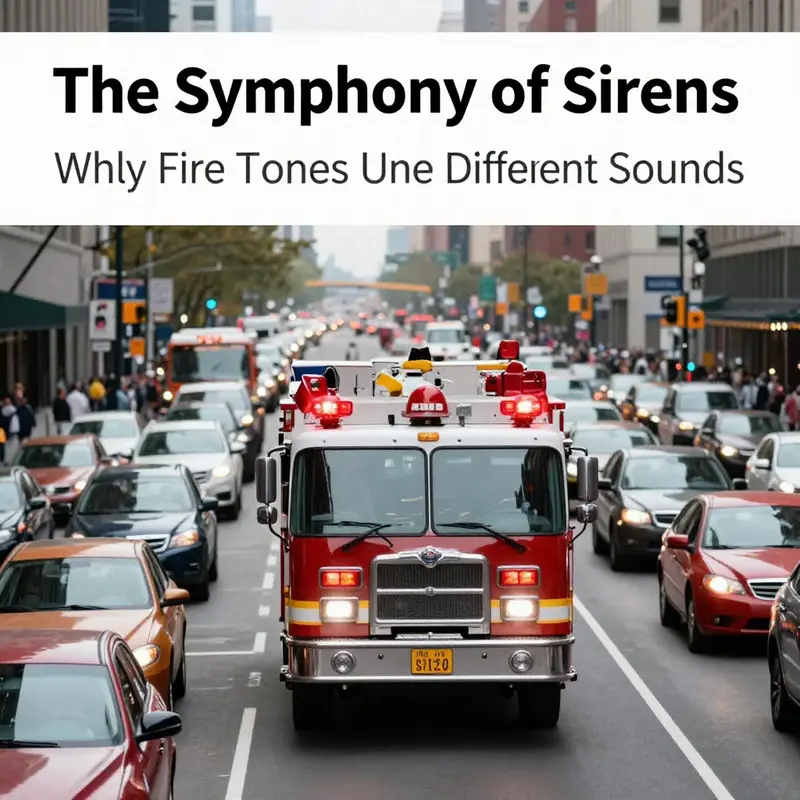
When a fire engine accelerates through a city street, the first signal isn’t only the flashing lights or the roar of the engine. It is the sound that travels ahead of the vehicle, the siren that announces urgency to every ear in its path. But these sounds are not interchangeable. They form a carefully curated repertoire, chosen to fit the moment, the place, and the people who hear them. In the broad tapestry of urban life and rural lanes alike, fire departments deploy different siren tones to maximize reach while minimizing confusion and delay. Understanding why fire trucks carry a diverse set of siren voices helps illuminate how emergency response is organized, tested, and trained for speed and safety. It is a story about acoustics meeting everyday life, about the way sound shapes behavior in moments when seconds matter and every action counts.
Siren tones are tools for communication as vital as brakes and hoses. They do not merely frighten or alarm; they steer behavior. A wail—a long, rolling cry—projects far on open terrain and through still air. It carries across long distances, signaling that something urgent is moving fast and may be visible ahead. Yet a wail loses its edge amid the clamor of the urban core, where horns, other sirens, and the rumble of traffic create a dense sound field that can swamp a single signal. In those settings, a yelp—a sharp, high-pitched cadence that alternates quickly—pierces background noise. It becomes the audible equivalent of a flashlight beam cutting through a crowded room: brief, bright, and attention-getting. A yelp may cue a driver to yield or a pedestrian to step back from the curb; its bite is in its tempo, its frequency sweep, and its ability to stand out in a sea of competing sounds.
Air horns, with their deep, piercing growl, offer another strategic advantage. They travel through walls, traffic, and the other barriers that urban soundscapes throw up. Their low frequency can reach pedestrians who are tucked behind parked cars or inside glass-fronted storefronts, making them a reliable choice for the heaviest traffic or the most urban canyons. Then there is the phaser or alternating tone, a hybrid that sweeps between registers, designed to capture the listener’s attention across a broad spectrum. The choice of tone, pattern, and cadence is not arbitrary; it reflects a careful balance of physics, physiology, and psychology. Fire service researchers and engineers have studied how different frequencies move through the air and how humans, under stress, hear and process sound. The net result is a voice-like system that can adapt as the environment changes. The interplay of tone and cadence is a dialogue between the vehicle and the street, a conversation intended to elicit the quickest, safest response.
The environment dictates the playbook. On open roads and in rural corridors, where the background sound is thinner and cars are farther apart, a wail can travel farther and remain intelligible. The long, sweeping arc helps the siren’s energy stay coherent as the vehicle approaches bends or cresting hills. In dense urban settings, with the din of engines, horns, and construction, the yelp or phaser tends to punch through the noise. The alternating struggle of sound energy across time and frequency creates a pattern that is easier for the brain to latch onto, even when a driver’s gaze is split between the road and a dashboard display, or a pedestrian is absorbed by the bustle of a storefront. The science behind this is not merely about being loud; it is about being heard at the right moment, in the right context, with enough time for a safe response. This nuance matters because the quickest, most accurate interpretation of a siren can translate into a safer crossing for a child at a crosswalk or a cleared lane for an ambulance behind.
Advances in acoustic research, including precise measurements of detectability distances, have shown that carefully designed siren tones can extend the range at which vehicles are noticed—by substantial margins—without simply amplifying annoyance. The art lies in balancing loudness with frequency content, power output, and the ambient noise profile of the environment. Human hearing is not flat across all frequencies; it exhibits heightened sensitivity in certain bands, especially around mid-range frequencies, which can be crucial when drivers are distracted or when cabin noise from a modern vehicle dampens perception. The concept of frequency windows guides siren design to ensure that the critical alert arrives where it matters most. In practice, this means selecting tones that align with those windows and with the acoustic realities of the environment. The potential payoff is not only earlier detection but also a more decisive moment for drivers to yield and for pedestrians to react. As cities grow louder and street networks become more complex, the margin gained from optimized tones becomes a tangible upgrade to everyday safety.
Technology adds a layer of sophistication. Modern fire departments are not passive custodians of fixed tones; they deploy patterns that adapt to the moment and sometimes to the region. Directional audio can shape how sound propagates, focusing energy toward anticipated lanes of traffic or toward sidewalks where pedestrians gather. Adaptive sound systems can adjust to time of day, traffic density, and even weather conditions that affect sound transmission. In practice, this means a siren pattern may be tuned differently in a crowded downtown corridor versus a suburban artery, reflecting both the geometry of the streets and the habits of local drivers. The flexibility extends beyond the vehicle itself. Training protocols emphasize recognition of patterns and the actions they imply. A driver who understands the signature of a phaser in a congested street can begin to move with greater confidence, while a pedestrian who recognizes a yelp as an imminent caution may step back from the curb well before the engine arrives. Across departments, the aim is a shared language that reduces ambiguity during moments of high stress. The more familiar the soundscape becomes, the quicker the decision chain—from hearing to yielding to proceeding—can operate with precision.
Sirens also serve a role in the broader network of emergency notification. In regions prone to natural hazards, for example, different siren patterns carry distinct meanings that trigger appropriate responses beyond the individual vehicle. A steady, continuous tone might indicate information or a general alert, while a rising or wavering pattern suggests imminent danger or a need to evacuate. These signals are part of a layered system that includes radio dispatches, traffic control measures, and public guidance channels. The goal is to present a quick, unambiguous cue that works even when a person cannot stop to listen to a detailed instruction. In some facilities and industrial settings, localized sirens warn workers and nearby communities of hazards such as leaks or security concerns. While these patterns are not identical to fire apparatus alerts, they share the fundamental purpose of commanding attention and guiding action across a diverse audience. The capacity to tailor the auditory cue to the audience—drivers, pedestrians, residents, and workers—reflects a broader ethic of safety: a signal is only as valuable as the clarity with which it translates into safe action across a crowded ecosystem.
The practical implications for traffic safety are significant. Drivers may not always recognize every siren, but if the tone conveys urgency, proximity, and direction, the likelihood of a safe response increases. Pedestrians benefit too when a cadence signals not only that a vehicle is approaching but that it will be changing lanes, turning, or passing by. In the cognitive moment when a person is deciding whether to step into traffic or pull back from the curb, a well-tuned siren reduces the need for guesswork. This is why NFPA guidelines emphasize not only the audible alert but also the integration with other safety protocols, including training that teaches responders to anticipate hostile environments and to adapt their approach accordingly. The synergy between audible alerts and visual cues—the flashing lights, the moving glow of reflective gear, and the predictable patterns of the response route—creates a robust system that supports rapid, safe clearance of intersections and pedestrians alike. The result is a safer street dynamic, one where sound and sight work in concert to yield the safest possible path for everyone involved.
When we reflect on the distribution of siren tones across a city, it is easy to imagine a single instrument tuning every street into compliance. In reality, the repertoire is designed to address a spectrum of conditions. The same city block that features a busy, multi-lane avenue can demand a different acoustic approach than a quiet residential street with parked cars and a narrow curb lane. Fire crews must decide not only how to communicate urgency but how to minimize disruption to daily life. They balance the demands of the incident with the rhythms of the city, the time of day, and the expectations of the community. This balancing act is part of a broader discipline—the science of emergency communication—that studies how messages propagate through complex acoustic environments and how the human ear translates those messages into action. In this sense, the siren becomes more than a mechanism for moving vehicles; it is a conveyor of situational awareness, a cue that links the moving apparatus with the static world of drivers, pedestrians, storefronts, and intersections waiting to yield. The discipline requires constant listening—both to the field realities and to the evolving body of research that tests which tones produce faster, safer outcomes in the real world.
As this chapter navigates the topic, it is helpful to connect to the practical discipline of command and control that governs how tones are deployed in the field. The choice of tone, cadence, and pattern is not simply a matter of personal preference or regional tradition. It is anchored in training, policy, and evidence about what reliably reduces risk and accelerates response. Operators study the findings from acoustic research and apply them in test drills and in live traffic. They observe how a specific urban canyon, a windy street, or a rain-slick avenue shifts the acoustic picture, and they adapt. The result is a living protocol that evolves with technology, urban planning changes, and the communities it serves. In some places, departments even coordinate with local media and public information officers to standardize terminology and ensure that residents recognize and understand the signals when they appear during drills or actual emergencies. This shared understanding helps to reduce confusion and to smooth the path of the emergency vehicle toward its destination. The conversation about sirens, therefore, is not purely technical; it is also civic, linking people to the street and to their own role in keeping traffic safe when danger is near. The ongoing collaboration across acoustics researchers, vehicle engineers, firefighters, police, and urban planners underscores a broader truth: sound is a critical component of urban resilience, and well-designed sirens are a quiet but powerful driver of safer streets.
The broader takeaway is that the variety of siren tones on fire apparatus is not a flourish or a mere tradition. It is a deliberate design choice grounded in physics, human perception, and the realities of the urban environment. It reflects an approach to safety that recognizes that sound travels, bends, and fades, and that our ears, often preoccupied with other tasks, require guidance. The siren becomes an instrument that orchestrates attention, time, and space. In a moment of crisis when every second counts, the difference between a siren that is heard and one that is heard clearly can influence outcomes. The choice to use different tones for different situations is an acknowledgment that one size does not fit all when it comes to emergency response. It is a nuanced practice shaped by research, regulation, and the lived experience of communities and responders alike. And it remains a living practice, one that continues to experiment with new patterns, new frequencies, and new ways to tailor the auditory message to the street it must traverse.
For those who want to dive deeper into the science, the literature on siren optimization offers concrete insights. Studies report that the right balance of frequency content, amplitude, and pattern can extend detectability while keeping nuisance and annoyance at bay. The concept of optimizing for specific frequency windows aligns with how human hearing best perceives alerting cues. This has practical implications for how we design not just the sounds themselves but the accompanying cues that help people interpret them quickly. The evolving field integrates psychoacoustics, environmental acoustics, and the realities of traffic engineering to craft alert signals that help saved seconds turn into saved lives. The Fire Service and the research community continue to refine these patterns through experiments, field tests, and feedback from operators in diverse environments. In doing so, they acknowledge that sound is as real a factor in emergency response as water pressure, ladder length, or incident command. Finally, a word on policy: NFPA standards provide a framework for how emergency vehicle sound systems should be configured and evaluated across jurisdictions, ensuring consistency where possible while allowing for local adaptation. Those seeking more details will find the official codes and standards at their disposal. To explore this further in one place, see the NFPA codes and standards resource.
The journey from concept to roadway is collaborative. Engineers, acousticians, firefighters, drivers, and planners contribute to a system that must work in real time, even as conditions shift from bright sunlight to rain-swept streets during a sudden downpour. The siren, in its many voices, becomes a collaborative partner that supports the mission of safeguarding life and property. It tells others where to look, when to listen, and how to respond, while the engine itself keeps moving toward the scene of danger. That synergy between sound design and operational practice is what makes the different siren tones not only useful but essential to the resilience of modern firefighting. It is a reminder that emergency response is not simply a matter of engine power or water flow, but also an ongoing conversation with the streets, the weather, and the people who choose to stop and yield when they hear the call to action. The next step for readers who want to understand the practical deployment of these concepts is to explore case studies and drills that illustrate how urban planners and fire departments test and refine siren patterns in real neighborhoods. In these exercises, the patterns are not abstract; they are tested against the behavior of drivers at intersections, the walking pace of pedestrians, and the rhythms of daily life. Such demonstrations reveal how a well-tuned siren system contributes to safer, faster emergency responses, enabling responders to reach people in need while minimizing the disruption to the communities they serve.
In sum, the array of siren tones on fire apparatus represents a sophisticated toolset that supports rapid, safe, and effective responses. The decision to use wail, yelp, air horn, or phaser patterns is driven by the situation at hand, the acoustic environment, and the human factors at play. As urban landscapes evolve and as communities demand more tailored public safety approaches, sirens will continue to adapt—balancing the need to be heard with the imperative to minimize disruption. The research cited above, along with ongoing field tests, helps ensure that the sirens of today can pair with the tactics of tomorrow to deliver faster, clearer warnings and, ultimately, better outcomes for those in distress. And for practitioners and curious readers alike, the conversation around sirens remains an exciting frontier where science, policy, and street-smart practice intersect—where sound is not background noise but a crucial, life-saving instrument.
To learn how this topic connects with broader emergency-response strategies and command structures, see the ongoing work on overcoming challenges in fire command systems. This link highlights how siren design and deployment fit into a larger framework of situational awareness and coordinated action: Overcoming challenges in fire command systems.
For the science behind siren optimization at a technical level, the study of increased detectability distances and balanced acoustic design provides a rigorous foundation. It offers a compelling look at how researchers optimize for human hearing in real-world environments, a detail that underscores why different siren tones matter in different settings. External researchers’ findings illuminate practical decisions for departments and manufacturers alike. The key takeaway is that sound design in emergency response is not an afterthought but a core element of mission success. For a deeper dive into that science, see: https://doi.org/10.1016/J.APACOUST.2012.12.007
Adaptive Sirens: The Evolution of Fire Truck Warnings
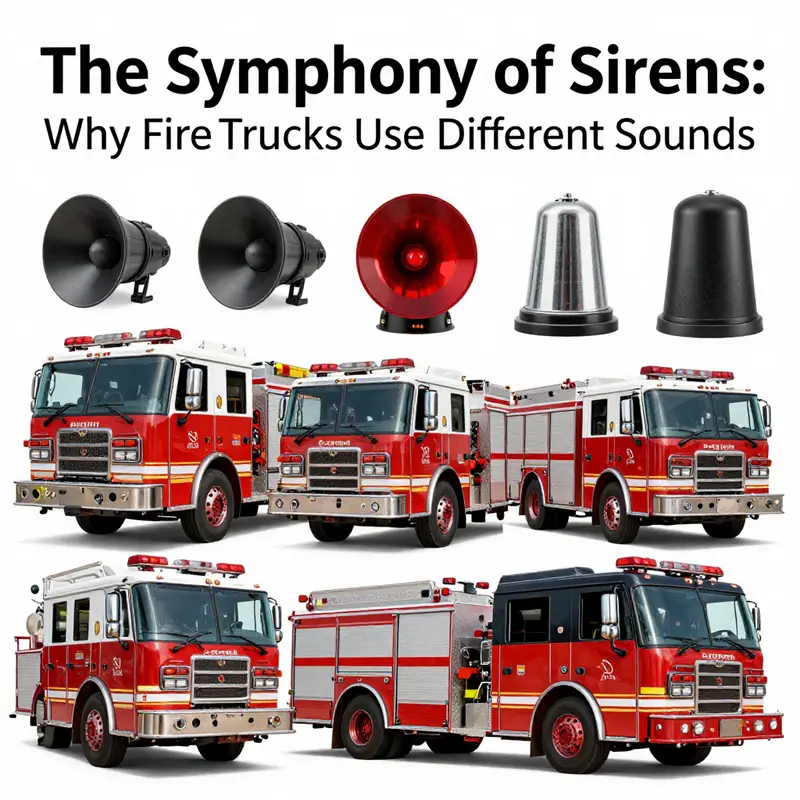
Sound is a public language in emergency response, spoken with purpose and urgency. Fire trucks use a carefully engineered array of sounds to cut through traffic, weather, and background noise, ensuring quick recognition and response.
Electric sirens offer flexible tones and patterns that can be tailored to urban, suburban, or rural environments. They can switch between wail, yelp, and phaser, and can blend these elements to maximize audibility without causing fatigue.
Mechanical sirens deliver high volume and long-range presence, which remains valuable in certain conditions or environments, but their tonal variety is limited and maintenance is heavier.
Air horns add a low-frequency layer that travels well through adverse weather and through dense traffic, complementing the electric or mechanical systems.
Modern sirens often combine these approaches with digital processing and smart controls, allowing agencies to optimize the warning in real time based on location, time of day, and traffic patterns.
Standards and regulations, including NFPA guidelines, shape how systems are designed, tested, and deployed, balancing effectiveness with the need to minimize noise disruption for communities.
Ultimately, sirens are not just loud noises; they are context-aware signals that help save seconds and lives by guiding drivers, pedestrians, and responders through complex environments.
Final thoughts
The evolution of fire truck sirens reflects a blend of tradition, technology, and practicality. From the wail that reaches far distances to the yelp that cuts through urban noise, each siren type has a distinct role in ensuring the safety of both responders and the public. As technology continues to advance, the ability of fire departments to tailor their siren systems to specific scenarios will only enhance their effectiveness. Understanding these elements enriches our appreciation for the vital tools first responders have at their disposal, elevating our support for their mission. Ultimately, by recognizing the significance of these sirens, we can better advocate for enhanced emergency response systems across our communities.