
The allure of fire trucks in GTA 5 draws in firetruck enthusiasts and aspiring firefighters alike. Whether you’re a collector looking to enhance your virtual garage or a burgeoning firefighter wanting to add authenticity to your gameplay, knowing how to acquire a fire truck can amplify your experience. In bustling Los Santos, these magnificent vehicles aren’t hard to find if you know the right approaches. Throughout this guide, we’ll explore four primary methods: calling emergency services directly for a fast response, triggering a fire to summon a truck automatically, visiting strategic fire stations to snag one, and dealing with GTA Online’s enticing purchase or theft options. Each chapter will equip you with knowledge tailored for every gameplay angle, so let’s dive right in!
Dial for Wheels: Summoning a Fire Truck Fast in GTA 5
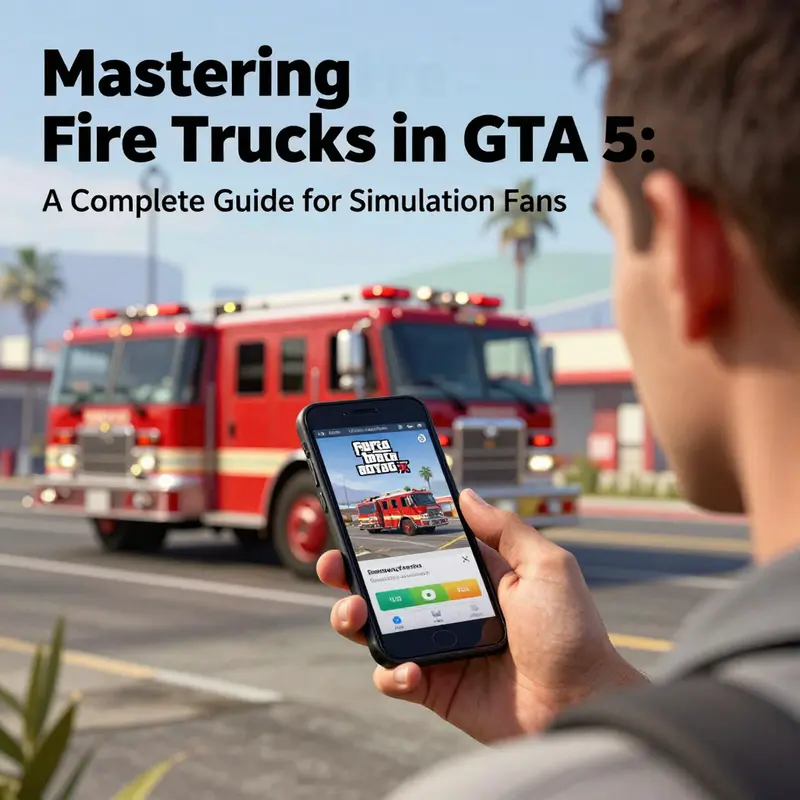
Calling emergency services is the fastest, most reliable way to get a fire truck in GTA 5. Whether you need the vehicle for a mission, a stunt, or just to roll through Los Santos with lights flashing, the in-game emergency dispatch system will deliver a rig to your exact location. This chapter walks you through the call step by step, explains what to expect when the truck arrives, and offers practical tips to avoid common hiccups. Read this and you will know how to summon a fire truck cleanly, how to handle the arrival, and how to use the truck effectively once you have it.
Start by bringing up your character’s phone. On controllers, press the up arrow on the D-pad. On PC, click the mouse scroll wheel or hit the phone key. The menu that appears mirrors a real smartphone. Tap or select the Contacts entry and scroll down until you find the entry for Emergency Services. This is the in-game 911. Selecting it connects you to an operator who asks which service you need. Choose Fire Department from the list. That small choice triggers a dispatch call tied to your current coordinates.
Once you place the call, timing matters. Expect the fire truck to arrive within about a minute. The game spawns the vehicle at or near your position and sends AI crew members along. If you are in a very remote area, the truck still appears, often driving in from a nearby road. If you call while moving quickly in a car, try to stop or slow down. The dispatch targets your current location. If you’re in the middle of a highway sprint, the truck may spawn behind you or at a junction, which makes boarding easier if you stop briefly.
A few useful constraints apply. You can only have one emergency vehicle dispatched at a time. If you call and a truck is already on its way, the game will not send a second. Wait for the first to arrive or cancel by hanging up and retrying, though cancelling sometimes wastes game time. There’s no fee for requesting help. The service is free and unlimited, so you can call again later if you lost the vehicle or abandoned it.
When the truck arrives, the firefighters will typically exit and handle a nearby blaze or remain near the rig. They do not aggressively chase you if you run away. You can walk up, open the doors, and hop in. In most cases the game does not prevent you from driving the rig away. If you want to keep the vehicle, be ready to act fast. Other NPCs and occasional AI traffic might collide with the truck as it pulls up, so grab the driver’s seat quickly.
There are practical tips to make the process smoother. Call while standing on a sidewalk or a broad stretch of road. Avoid tight alleyways or inside buildings; a narrow spawn point can trap the truck or cause it to clip through geometry. If you are on a mission, consider whether a vehicle spawn will interfere with mission scripting. In free roam, however, the truck’s appearance rarely disrupts anything critical.
The arrival is especially convenient when you want a fire truck without creating chaos. There’s an alternate method — setting a flame — that also triggers a response. But calling dispatch is cleaner and less violent. If you prefer drama, ignite a nearby car or wall and the system detects the blaze. A truck is dispatched automatically to the scene. The truck will remain after it arrives, allowing you to take it if you want a free rig. That method is useful when you want to justify a spontaneous emergency on-camera or create a diversion for a mission.
Be aware that some fire trucks are parked inside active fire stations. These trucks do not require a dispatch call, but their doors may be locked. In Los Santos and surrounding areas, a few stations hold trucks you can simply walk into and drive away from, while others keep their apparatus behind closed bay doors. If you prefer to collect rather than summon, visit known fire station locations. Otherwise, the dispatch call is universal and works across the map.
The behavior of firefighters and the truck’s AI is worth noting. Crew members may take a short time to exit and position themselves before you can move the vehicle. If they are busy fighting a blaze, they might not leave immediately. Wait a few seconds for them to clear or gently nudge the rig to encourage movement. If the truck stalls or gets stuck, restart it by exiting and re-entering. This simple reset often frees up a jammed vehicle.
Stealing the fire truck normally does not generate a wanted level. Unlike stealing a police car, taking the fire engine rarely triggers cops. You can drive it off with relative safety. However, reckless driving or causing damage while near law enforcement can still earn you a wanted level. Keep movement smooth and avoid attacking NPCs while in the vehicle if you want to remain low-profile. The truck can also be useful for blocking roads or protecting teammates during missions. Its large profile makes it an effective mobile barrier.
If you want to use the truck during scripted jobs or missions, coordinate the timing of the call. Some missions preclude using spontaneously spawned vehicles, while others accept them without issue. When a mission requires a specific type of vehicle, it sometimes spawns its own. In such cases, your personal summoning may be disregarded by the mission script. For free-roam objectives or custom scenarios, however, the summoned truck is usually fine.
There are other pragmatic considerations. In multiplayer, the behavior differs. In GTA Online, emergency vehicles are often unavailable as persistent player-owned assets. You can, however, find or buy a fire truck through in-game stores and garages, or procure one from a public station. Purchasing is more permanent, while calling emergency services is primarily a single-player convenience. If you want long-term access in online play, consider acquiring a truck through the game’s economy instead of relying on dispatch.
The summoned truck is an accessible prop for creativity. Use it to stage dramatic rescues, craft cinematic sequences, or block off enemy vehicles. It can be driven like any standard large vehicle, though its turning radius is wide and acceleration is sluggish. Anticipate slow response to steering input and plan maneuvers accordingly. Its size makes it ideal for clearing paths but poor for high-speed chases.
One common troubleshooting tip: if the fire truck never arrives, check your settings and proximity. Occasionally a truck can spawn on a nearby road but become hidden by terrain or map glitches. Teleporting, fast traveling, or moving a short distance and calling again often resolves the issue. Also ensure no other emergency vehicles are currently active near you. The call system limits overlapping dispatches to preserve performance.
Beyond the mechanics, there’s a playful side to using emergency dispatch. Call a truck when you want to add spectacle to an encounter. Deploy it during stunts to create impressive footage. Use its siren and lights for roleplay or to lead convoys. Because the service is free, you can experiment repeatedly. The truck’s appearance becomes part of your toolkit for shaping the world around your character.
Last, understand interactions with other systems. If you create a fire by arson or vehicle explosion, the fire department will show up in response to the hazard. Calling directly bypasses the need to create dangerous situations. Use dispatch for safety, as a deliberate spawn method, and as a way to obtain a clean, functional fire truck without escalating a scenario.
If you want to reference an external resource that explains the emergency dispatch mechanics in detail, consult the official support documentation for verification and deeper mechanics. For more about trucks and equipment in the real world, you might find broader industry perspectives on fire apparatus helpful; for example, the firetruck.space blog explores many real-world fire truck topics and can be a useful background resource for fans of firefighting vehicles.
External resource: https://support.rockstargames.com/hc/en-us/articles/360050871792
Internal resource: firetruck.space blog
With these steps and tips, summoning a fire truck in GTA 5 becomes predictable and repeatable. Use the phone, pick Emergency Services, select Fire Department, and wait. Position yourself to receive the rig, act quickly when it arrives, and leverage the truck’s size to your advantage during missions or free-roam adventures. Calling for a fire truck is a small in-game action with many creative uses. Master it, and you unlock a versatile tool for both practical and theatrical play.
Spark a Blaze and Drive Away: Getting a Fire Truck in GTA 5 by Triggering a Fire
Spark a Blaze and Drive Away: Getting a Fire Truck in GTA 5 by Triggering a Fire
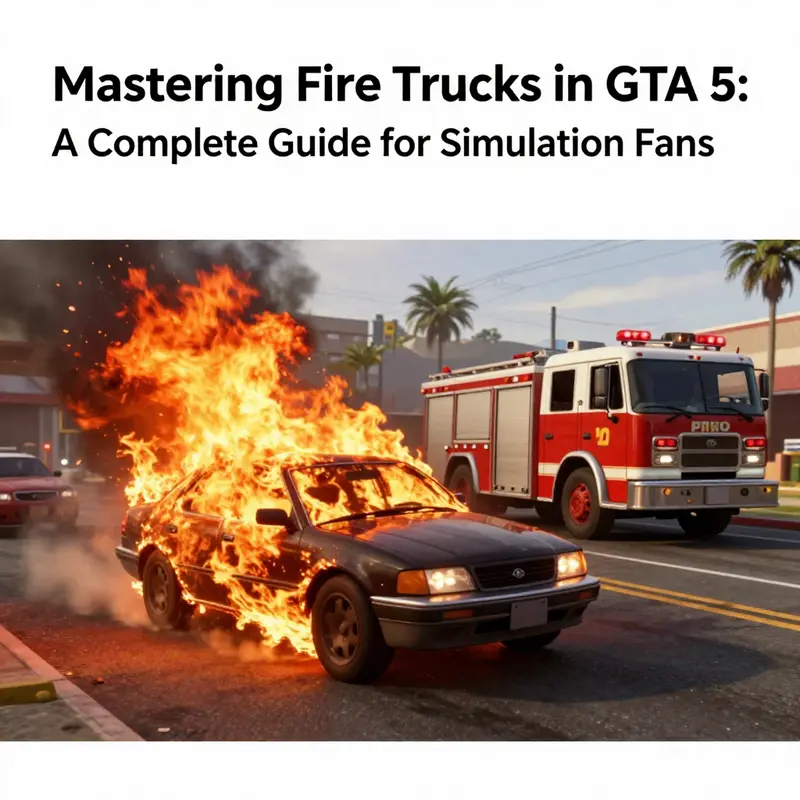
Knowing how to get a fire truck by triggering a fire in GTA 5 gives you fast, reliable access to one of the most attention-grabbing vehicles in the game. This approach is practical in single-player and works wherever emergency services can reach you. The idea is simple: create a legitimate emergency, wait for the fire department to respond, then walk up and take the truck once firefighters arrive. The following narrative unpacks the steps, timing, ideal locations, and in-game nuances. It focuses on safe execution so you can steal the truck cleanly and keep it for your own missions.
Start by choosing a location. Look for places with flammable targets. Parked cars, dumpsters, and small structures are the easiest to ignite and will reliably attract a response. Urban spots with lots of traffic can increase response time slightly, but they also give cover. Remote spots get help just as reliably; emergency services in GTA 5 will travel out into Blaine County. If you prefer minimal interference, pick a quiet street or the edge of a parking lot. The fewer bystanders, the fewer complications.
Next, prepare the ignition method. There are multiple ways to start a fire in-game. You can use the interaction menu to trigger the “Fire” option if your character has appropriate items. Alternatively, use throwable incendiaries like a Molotov, or simple gunfire to a fuel source. Explosives will also work. Keep tools that cause fire handy so you can act quickly. When you light the target, give the flames a moment to take hold. A single shot into a vehicle’s gas tank or a tossed incendiary will usually do the trick.
Once flames are visible, start the call for help if you want to speed things up. In single-player, you can open your phone and choose Emergency Services, then select Fire Department. This step is optional because the game’s AI will automatically dispatch firefighters to a real burning scene, but calling can shave precious seconds off the wait. If you choose to call, you do not need to stay next to the blaze. Keep an eye on the minimap to watch the approaching icon. In many cases, a fire truck will appear within one minute of the fire being noticed.
While waiting, manage your surroundings. If you created the fire in a busy area, police or other NPCs can cause unpredictable interference. Avoid engaging with civilians and steer clear of law enforcement. Setting fires usually does not immediately generate a wanted level, but collateral explosions or attacks can. If you draw police attention, the fire truck might still arrive, but your escape will be harder. A calm, controlled scene makes a clean theft more likely.
When the fire truck arrives, observe how the NPCs behave. Firefighters will often park close to the blaze and exit to fight the fire. They are focused on the emergency, and they rarely chase players. This window is your opportunity. Walk up to the truck while they are occupied, and use the interaction key to enter. If the truck is parked and the driver is out, you can normally hop in and drive away without resistance. If the firefighters are still inside, be ready to disrupt them quickly but cautiously. A quick press of the interaction key will take the wheel.
Stealing the truck is a balancing act. Be quick but avoid gratuitous violence. Firefighters act as neutral NPCs; attacking them can raise your wanted level. If stealth is important, wait for them to focus fully on the blaze. If you prefer a bold approach, cause a little chaos and use the opportunity to disable the crew before driving off. Remember that the game rewards creativity, but it also enforces consequences. A fire truck driven away after a quiet theft stays drivable and can be used for missions or roleplay.
Consider which fire truck you want. Most stations and emergency responses use similar models, but their condition and accessories vary. Some fire trucks have ladders and hoses that add visual flair. If aesthetics matter, visit a fire station first to scout available models. Otherwise, the truck that answers your triggered fire will be functional enough for driving and for some mission uses.
Choose your escape route before you jump behind the wheel. Fire trucks are large and slow to maneuver. Narrow alleys and tight turns become hazards. Plan a route with wide streets and few obstacles. Avoid freeway crashes, since stopping and turning a massive vehicle can attract pursuit. If you expect a chase, use open highways to maintain speed and clear turns. The truck’s weight makes it harder to evade police, so prioritize distance over speed. Park the truck somewhere safe if your next goal requires a smaller vehicle.
Be aware of in-game timing and behavior. Fire trucks typically respond in under a minute. The vehicle will usually park at the scene and remain driveable after the fire is controlled. Once you have it, you can keep or abandon it as needed. If you want to keep a fire truck permanently in single-player, move it to a safe garage or location. Some properties do not accept large emergency vehicles, so test parking spots first. In GTA Online, rules are stricter; standard garages may not accept oversized emergency vehicles.
If your goal is to use the fire truck in missions, plan accordingly. Certain missions require a fire truck or benefit from its presence. Aesthetically, a fire truck draws attention and can be useful in diversion strategies. It can block roads, shield cargo, or create a believable emergency scene for NPCs. Remember, the mechanics that let you acquire a fire truck by starting a fire apply to jobs that simulate real-world operations. Use the truck where it fits the narrative.
For players who want minimal risk, there is an alternative: set a small vehicle on fire instead of a building. A burning car is less likely to cause widespread chaos. It still summons the fire department. The resulting truck will park and hose the vehicle down. This method reduces collateral damage and keeps civilian reaction low. It is ideal for players who want a clean, fast pickup without drawing extensive police attention.
There are also strategic benefits to where and how you ignite the fire. Light a blaze near a fire station if you want the fastest possible arrival. If you prefer a little more action, choose a location between two busy streets to create dramatic visuals and a plausible reason for the fire truck to linger. Remote fires make the truck easier to grab and remove without bystanders. Choose based on whether you want drama, speed, or stealth.
If you play GTA Online, exercise caution. Other players may contest your claim to the vehicle. In that environment, a triggered fire can attract griefers who want to steal your prize. Use passive modes, a private session, or a secluded area to reduce interference. In single-player, the technique is fully reliable and predictable.
Once you have the truck, you can adapt your gameplay. Use it to roleplay as a rescuer, block roads during a heist, or simply enjoy the attention. If you plan to store it, be mindful that not all garages accept emergency vehicles. Test parking spots and consider temporary solutions like leaving the truck at a safehouse exterior. If permanence matters, drive the vehicle to a garage that supports large vehicles.
To recap the essentials in practice: pick a flammable target; start the fire; optionally call the Fire Department; wait for arrival; watch the firefighters; enter the truck while they fight the flames; and drive away using a planned route. Each step is straightforward, but the small choices you make affect outcome. Location, timing, method of ignition, and your post-steal escape all shape success.
If you want a deeper reference on vehicle spawns and firetruck access, consult a community guide that updates spawn locations and methods over time. For additional context about firetruck access and variations, see this guide: https://www.ign.com/wikis/gta-5/Firetruck(FiretruckAccess).
For players who enjoy exploring emergency vehicle options outside the game, an internal resource on fire truck availability and sales can provide background on different truck styles. One such resource is available at fire-trucks-for-sale. Use it to compare appearances and real-world inspirations for the in-game models.
Follow these tactics, and you will consistently secure a fire truck by triggering a controlled fire. The method is reliable, flexible, and satisfying. It gives you authentic access to a dramatic vehicle and expands how you use emergencies as an in-game mechanic.
Steal a Fire Truck Like a Pro: Visiting Fire Stations to Get a Fire Truck in GTA 5
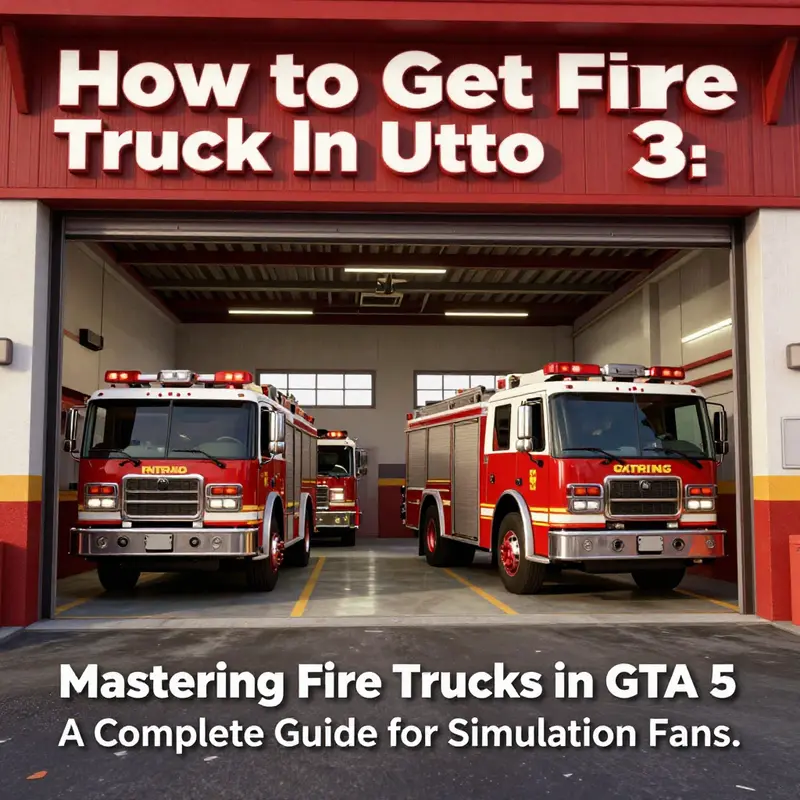
Finding a fire truck at a fire station is one of the most straightforward ways to add a heavy rescue vehicle to your garage in GTA 5. Rather than waiting for emergency services or creating a blaze, you can simply drive to one of several fire stations across the map and take a parked rig. This chapter walks you through the practical steps, useful in both single-player and many online contexts, and explains how to approach stations, what to expect when you arrive, and how to avoid complications after you acquire the truck.
First, know where to look. Los Santos and the surrounding county each have multiple fire stations, positioned where a city needs rapid response. The most commonly frequented stations are in central urban districts and near major transport hubs. When you roll up on a station, you will usually see one or more fire trucks parked inside or just outside the bay doors. In single-player, these vehicles are often accessible simply by walking into the bay and stepping into the cab. If a truck is available, enter it and drive away. The game treats the vehicle as stolen, so be mindful of your surroundings. The truck itself is heavy and slow, but robust. It handles differently from standard cars, and its size gives you a different driving experience. Use the truck’s heft to your advantage when you need presence and durability on the road.
Approach the station with a plan. If you roll in with wanted stars, firefighters and police may be present and ready to react. To avoid immediate conflict, clear any active wanted level first, then approach the station slowly. Sometimes the station doors will be open, and the truck will be visible and reachable. Other times, doors may be closed or the vehicle locked behind a bay. If a bay is closed, try circling the building to find an exposed truck. Some interior bays appear empty, while others hold a truck you can drive straight away. In rare cases, the game may not spawn a truck at a particular station due to timing or mission state. If you find no vehicle, return later or visit another station. The method is reliable overall but not guaranteed to work every single time.
Once you have the truck, expect it to be flagged as stolen. Fire trucks are desirable for disguises in missions and for moving large loads in some game modes, so police response can follow if you attract attention. After driving away from a station, remove yourself from major roads and avoid collisions that might attract witnesses. If police do notice you, escape to a secluded area and either lay low until your wanted level expires or use the usual evasion methods. The truck’s size can make quick getaways trickier, so plan routes with wide turns and open spaces. If you need to preserve the vehicle for a mission, park it in a quiet place or store it if the game mode allows.
Using a station-sourced truck in missions is a common tactic. Several missions and heist approaches require the presence of a fire truck, where it serves as a disguise and a practical shield. When a mission calls for a fire vehicle, driving one taken directly from a station can help you complete objectives that rely on blending in with emergency crews. Often, NPCs will react less aggressively to a vehicle that looks authentic in context. That said, the truck may still be flagged as stolen, so timing and the environment matter. If the mission requires driving the truck through crowded streets, use caution and avoid needless destruction that can spark police interest.
If a bay is locked or the truck looks inaccessible, you have options. One approach is to linger nearby and wait. The game can respawn vehicles and alter station inventories after some in-game time passes. Walk a short distance away, do a side activity, and then return. Alternatively, trigger a local event such as a small fire by attacking a nearby parked car. The arrival of the fire department in response to that blaze will often produce an accessible truck. This ties into another method for acquiring a fire truck, but it remains a complementary tactic when station access proves stubborn. When you force an emergency, remember that creating chaos may escalate wanted levels, so be ready to either use the response as cover or to escape cleanly after the truck arrives.
In GTA Online, the dynamic changes a little. Other players can interfere, so timing and location become more tactical. Fire stations still host trucks, but public spaces are less controlled. When you approach a station in online play, expect the possibility of player interaction—some players will help, others will harass. If you buy a truck, you can avoid risk entirely, but visiting a station is far cheaper. Some online jobs even require a fire truck for disguise or transport. If you plan to use a station-taken truck in a public job, consider moving it to a private session or safehouse first, where you can prepare without interruption. If the server allows vehicle storage of emergency rigs, saving the truck secures your investment for future missions.
There are a few practical considerations that will make this method smoother. First, understand vehicle persistence rules for your play mode. In single-player, a truck you take can usually be used freely and often survives basic saves, but it is not immune to mission resets. In online play, vehicle persistence varies by where you store vehicles and the platform’s rules. Second, be prepared for handling quirks. Fire trucks have high centers of gravity compared to regular cars. Take turns wide and slow down before sharp bends. Avoid high-speed chases in dense traffic. Third, keep damage in mind. The truck is heavy and forgiving, but catastrophic damage can render it unusable for mission-specific objectives. If you need the truck in near-perfect condition, steal it and then repair it at a service location if possible.
If you encounter locked doors inside a station, you can sometimes get creative. Use a vehicle to shove through gates, though this risks damage. Alternatively, park a small car behind the gate to block NPC fire crews, then force an interaction. These tactics can provoke a truck to exit the station, making it drivable. They are not guaranteed and can attract police attention, so weigh the benefits. Another simple tactic is to check multiple stations. One station may have a truck available while another does not. The urban center often has the highest likelihood of accessible rigs, but coastal and suburban stations can be less defended and easier to clear.
Beyond immediate acquisition, think about what to do with the truck. Some players use fire trucks for roleplay or to create cover in large fights. Their size and intimidating presence work well as mobile shields. Others use the vehicle as a mobile vantage point; the ladder and mounted equipment can offer line-of-sight advantages in certain situations. If you aim to keep the vehicle for repeated use, move it to a safehouse garage when game mechanics allow. This prevents the truck from despawning or being reclaimed by NPCs.
There are a few pitfalls to avoid. Do not assume all stations will yield instant access. Station inventories are subject to the game’s spawn rules. Avoid drawing attention while inside the bay; firefighters may be NPCs who react unpredictably. If you are trying to use the station to obtain a vehicle for a stealthy mission, test the route before committing to a plan. Also, remember that some scenarios may block vehicle theft for story reasons. For example, during certain missions, access to emergency vehicles is limited to prevent sequence breaking. If the station seems unusually empty, check your current mission status and any active in-game events that might affect spawns.
Finally, combine this method with the other ways to get a truck for a full strategy. If you need a truck urgently, calling emergency services or creating a small blaze will summon a rig to your position in about a minute. If you prefer a risk-free long-term solution in online play, buying a vehicle from an in-game shop provides guaranteed ownership. But when you seek a balance between speed and realism, visiting a station is often the best choice. It gives you a vehicle that looks authentic, is ready for many heist roles, and can be taken without the fanfare of dialing for help.
For further detail on where trucks spawn and how to access them in specific locations, a comprehensive guide lists station coordinates and nuances for truck access. That resource provides concrete spawn points and additional tips for tricky stations, and is worth consulting if you want precise maps and visuals: https://www.ign.com/wikis/gta-5/Firetruck_Access. Also, if you want to explore more about acquiring emergency vehicles and options for purchasing or storing them, consider reviewing a catalog of available rigs, such as the page on fire trucks for sale, which gives a broader look at different models and acquisition choices within a similar context: fire trucks for sale.
Using a fire station to get a fire truck in GTA 5 is a practical, reliable choice. It blends the authenticity of a real-world approach with the convenience of direct access. With a little patience and smart planning, you can have the exact vehicle you need for heists, distractions, or simply to cruise the city with a commanding presence.
Fire on Command: Navigating GTA Online’s Fire Truck Access Through Spawn Mechanics, Stealth, and Timely Events
In the sprawling digital world of GTA Online, the fire truck isn’t just a flashy collectible; it’s a practical asset that can reshape how you move, raid, or improvise during a job or a chaotic night in Los Santos. The routes to getting a fire truck online aren’t uniform, and they depend as much on timing and context as on your in-game ambitions. If you want a vehicle that can haul gear, clear a lane through traffic, or simply provide a solid, surprisingly sturdy ride for a stunt-filled video moment, the fire truck offers a blend of utility and spectacle that few other vehicles can match. The core arc of acquiring it online centers on three pathways that players routinely explore: summoning a truck via the Fire Department emergency service, triggering a controlled blaze to coax an arrival, and directly stealing one from an active fire station. Each path comes with its own rhythm, risks, and potential payoff, and understanding how they fit into your immediate goals can turn a random spawn into reliable access or, at the very least, a memorable slice of gameplay.
First, the classic, no-cost method—the Fire Department emergency call. The process is clean and straightforward enough to be almost ritualistic: you pull up your in-game phone, navigate to Emergency Services, and request a Fire Department dispatch. A fire truck will materialize near your location within a minute, ready to be claimed and driven away. The mechanic works consistently across Los Santos and Blaine County, which makes it the most dependable option when you want a quick ride without diverting from ongoing missions or manual scavenging across the map. The truck itself comes with the immediate advantage of bulkier mass and more cargo-carrying space than most standard cars, which can be a significant edge when you’re transporting equipment, moving contraband during a job, or simply trying to yank yourself out of a sticky situation with a grounded, hulking vehicle that’s hard to nudge off the road. The label of “free” here isn’t just about money; it’s about time and certainty. Unlike other spawns or risky thefts, this spawn is predictable, and it doesn’t demand you to court danger while your wanted level climbs in the process. In the context of a chapter that seeks to reconcile the thrill of discovery with the discipline of strategy, the 911 call stands out as a baseline for how to access a fire truck with minimal friction.
If you’re chasing a different kind of arc—one built on player agency and longer-term access—the next method sits at the intersection of impulse and blue flames: triggering a fire yourself and letting the department respond. In practice, this means deliberately setting a car or building aflame. The game’s AI then dispatches the fire department to extinguish the blaze, and a fire truck arrives on the scene within roughly a minute. What follows is a familiar pattern: the firefighters do their work, you have the opportunity to climb aboard, and the truck becomes yours to drive away. The practical use of this method goes beyond the momentary thrill. It gives you a reliable, if temporary, transport solution that you can park, customize in your garage, and deploy again in future sessions. The controlled-fire approach can be especially appealing if you’re experimenting with stunt sequences or trying to stage a dramatic entry for a video or a crew activity. Yet it’s important to keep the larger strategic frame in view: the fire response is a finite event, and the truck you steal via this route may not stay with you indefinitely unless you secure it through subsequent moves. The method embodies a classic GTA principle—cause-and-effect play—that rewards initiative and timing but asks you to accept a degree of volatility as the price of admission.
Another enduring option in GTA Online is more anchored to the map’s physical layout: visiting an active fire station to locate a truck that’s parked inside. Los Santos hosts several stations, each a hub of activity and a potential doorway to a reliable vehicle. The exact layout varies by neighborhood; some trucks are parked behind doors that require keys or access codes, while others are parked in open bays that you can simply enter and claim. The practical takeaway here is that, while you may encounter locked doors or doors that require a specific order of actions to bypass, the fire station method remains a steady second line of approach when you want a more tangible sense of “inventory” and control. The thrill of walking into a station, scanning the rows of gleaming apparatus, and choosing a truck based on proximity and condition captures a very different facet of the GTA Online experience. It’s a method that rewards patience, situational awareness, and a willingness to explore a few corners of the map that you might otherwise overlook during a high-speed chase or a mission corridor.
In parallel with these spawn-and-take routes, there’s a broader economic thread that players often consider: the question of long-term ownership. In the current online ecosystem, a direct, permanent purchase of a fire truck through the standard in-game dealerships isn’t a straightforward option. The practical consequence is that most players think in terms of temporary access or acquisition through mission design, limited-time events, or content updates that temporarily grant access to specialized vehicles. The upshot is clear: if you’re chasing a lasting, personal ownership experience for a fire truck, your best bet is to lean into opportunities that grant permanent storage or to participate in events that introduce new vehicles with similar capabilities. The dynamic here isn’t simply about money—it’s about how Rockstar’s evolving online calendar shapes availability and what counts as “permanent” within a living online world that’s subject to regular changes, patches, and seasonal content.
Crucially, certain collective activities and mission-based scenarios foreground the fire truck as more than a novelty. In heists and collaborative jobs, teams sometimes stage the use of a fire truck as a tactical element, whether to cut a path through smoke, move through a crowded environment, or orchestrate diversions. A notable example is a mission structure in which mode-specific vehicles become part of the plan, complementing players’ roles and timing. Such contexts reframe the fire truck from a simple transport to a tool that can alter the pacing and outcomes of complex operations. When you’re part of a crew attempting a coordinated objective, the ability to deploy a fire truck quickly can tilt the odds in your favor, providing a platform from which to stage quick rescues, rapid repositioning, or concentrated access to a space that would otherwise require a more circuitous route. The social dimension amplifies the value of access—sharing the vehicle with teammates during a session, synchronizing spawns with a planned approach, and balancing risk with the reward of a successful run.
If you’re still on the fence about which route best suits your style, consider the personal rhythm of your play sessions. The Fire Department spawn is the most reliable, stress-free option that preserves your focus for ongoing tasks. It’s fast, predictable, and doesn’t derail the flow of a mission. The fire-trigger approach gives you a little extra bite—an opportunity to engage with the game’s emergent AI while still securing a ride that you can reuse. Station-based scavenging is a slower, more exploratory path that rewards curiosity and map literacy and adds a tactile sense of discovery to your online adventures. And while the notion of a direct store purchase may seem appealing for its simplicity, the current online ecosystem leans toward temporary access framed by events and updates, not a straightforward, one-time purchase. This reality nudges players toward flexible planning: you might spawn a truck for a particular heist, stash it for a few sessions, and reengage as new content rotates into the store or roster.
To stitch these threads together, you’ll want to anchor your approach to your immediate objective. If you’re racing a deadline, the 911 spawn or a controlled-fire approach keeps you on the move with minimal friction. If your goal is long-term utility—owning a vehicle for multiple sessions or for sharing with a crew—the station route or participation in event-driven access becomes more attractive. And if you’re aiming to understand the vehicle’s full potential within the broader GTA Online economy, keep an eye on seasonal updates and limited-time promotions that may alter how access is granted or which vehicles take a front seat in ongoing content drops. In all cases, the fire truck adds a distinct flavor to your in-game repertoire: it’s a vehicle built for power, for drama, and for improvisation under pressure, and mastering how to obtain it online is as much about timing and context as it is about the act of getting behind the wheel.
For players who enjoy layering real-world curiosity onto their in-game endeavors, there’s also value in drawing connections between the game’s vehicle ecosystem and broader fire-service procurement themes. Real-world fire apparatus often circulates within a market of specialized dealers, manufacturers, and service channels, and that sense of scale can illuminate why the online game offers a compact, action-focused, episodic approach to access rather than a straightforward storefront purchase. If your curiosity extends beyond the game’s neon-lit skyline into the practice of emergency vehicles in the real world, you can explore the topic further through related resources and industry pages that document how fire apparatus are bought, stored, and deployed in varied contexts. This isn’t just trivia; it’s a reminder of how game design mirrors real-world workflows, offering players a simplified, high-stakes sandbox in which to experiment with mobility, control, and the psychology of command under pressure.
Within the loop of these methods lies a practical rule of thumb: start with the simplest, most reliable access—call the Fire Department and secure a free truck—then test the boundaries with a controlled blaze to see if you can harvest a longer window of use. If you’re bold and patient, you can work toward permanent access by leveraging in-game storage and event-based opportunities. Every method has its moment, and the best chapters in a GTA Online session often come from moving fluidly between them, reading the map, and coordinating with teammates to turn a basic fire truck into a strategic asset rather than a passing cameo. As you refine your approach, you’ll notice that the act of acquiring a fire truck isn’t merely a transaction; it’s a mini-lesson in how to navigate the game’s social and spatial ecosystems—how to read a spawn, how to time a response, and how to balance the thrill of immediate access with the long-game satisfaction of durable in-game assets.
A final note on nuance matters less to the engine and more to the experience: when you plan to steal a truck from a fire station, proceed with awareness of the game’s law-enforcement signals. A theft can trigger a wanted level, which in turn spurs a pursuit that can complicate the mission at hand or the session’s broader objectives. If you’re working within a crew, coordinate routes to minimize risk, designate a lookout, and rehearse how you’ll disengage from authorities before returning to your own space. The tactical nuance here isn’t only about getting a vehicle; it’s about how you manage risk, timing, and space—how you leverage the fire truck not just as a vehicle, but as a tool for strategic improvisation within a living online world that rewards spatial awareness and team coordination.
For readers who want to explore real-world parallels or practical discussions of vehicle procurement and deployment outside the game, there’s a broader ecosystem of resources and communities that discuss fire apparatus and related equipment. While the information here centers on GTA Online, you can connect with broader conversations via dedicated pages that aggregate listings and educational content about fire trucks and rescue vehicles. To add a real-world dimension to your in-game understanding, you might browse the real-world listings and discussions that accompany these topics. As you move from concept to practice, you may find that the discipline of coordinating a vehicle’s use—whether in a game or on the ground—shares core principles: plan ahead, respect constraints, and adapt quickly to changing circumstances. The fire truck, in both digital and physical forms, remains a powerful symbol of mobility, resilience, and the capacity to alter a scene with a single, well-timed drive.
Internal link note: for readers who enjoy exploring related topics about emergency-response vehicles beyond the game, you can visit the broader resource page dedicated to fire trucks and related equipment. This page offers a structured overview of how real-world fire-truck inventory and sales discourse unfolds, which can illuminate how players conceptualize their GTA Online spawns and thefts in a more grounded context. You can learn more at fire-trucks-for-sale, a resource that curates listings and insights about fire-service vehicles. This link is provided as a bridge to real-world discussions while you continue to navigate the GTA Online landscape: fire-trucks-for-sale.
As you weave through these options, keep your attention on what each method brings to the table: reliability, control, risk, and the opportunity to craft a memorable game moment. The Fire Department spawn is your anchor—fast, predictable, and forgiving of missteps. Triggering a fire adds a pulse-pounding layer of drama that can lead to a more robust, reusable asset. Station-based hunting rewards patient exploration and the thrill of discovery. And the broader online ecosystem’s current configuration—where direct, permanent purchases aren’t a default path—pushes you toward strategic experimentation and collaborative play. In other words, the fire truck isn’t a one-off toy in GTA Online; it’s a flexible asset that adapts to your goals, your crew’s dynamics, and the evolving rhythms of Rockstar’s online universe. If you relish the interplay of strategy, speed, and spectatorship—the kind of moment where a well-timed siren cut and a sudden burst of power can redefine a mission’s arc—then the fire truck becomes more than a vehicle. It becomes a small, dependable lever that you can pull to reshape the terms of a session, a heist, or a stunt, time and again.
For those who want a concise roadmap as a takeaway, remember this: use the Fire Department call for quick, free access; consider a controlled blaze to secure a repeatable, albeit temporary, ride; explore fire stations for reliable, nearby options while also testing your map literacy; and stay attuned to seasonal updates and events that may quietly extend your permanence or alter how these vehicles are granted. In the end, GTA Online rewards those who blend curiosity with discipline—tracking spawns, planning around police dynamics, and steering with confidence when the moment demands it. And as the community continues to evolve, so too will the choreography of how players obtain and deploy the fire truck, a vehicle whose presence on the streets of Los Santos always promises a story worth telling.
External resource for further details: https://www.ign.com/wikis/gta-5/HowtoGetFireTruckinGTA5Online
Final thoughts
Understanding how to obtain fire trucks in GTA 5 not only adds a dynamic element to your gameplay but also enhances the sense of realism for firetruck enthusiasts and aspiring firefighters. Whether you choose the swift method of calling emergency services, the adventurous route of creating a fire, the reliability of visiting fire stations, or the strategic purchase in GTA Online, there’s no shortage of options to suit your style. Get ready to drive these spectacular trucks across Los Santos and immerse yourself in the thrilling world of firefighting and emergency response!