
Fully equipped fire trucks are the backbone of firefighting efforts, crucial for saving lives and property. Their design and capabilities reflect their varied uses across different fire departments. In this article, we delve into the detailed spectrum of costs associated with these essential vehicles, providing insights for firetruck enthusiasts, aspiring firefighters, and professionals in emergency services. Each chapter will explore different facets, from standard and specialized truck prices to the effects of customization and key factors that drive costs, equipping you with a comprehensive understanding of how much a fully equipped fire truck truly costs.
Real Price of Readiness: How Much a Fully Equipped Fire Truck Really Costs
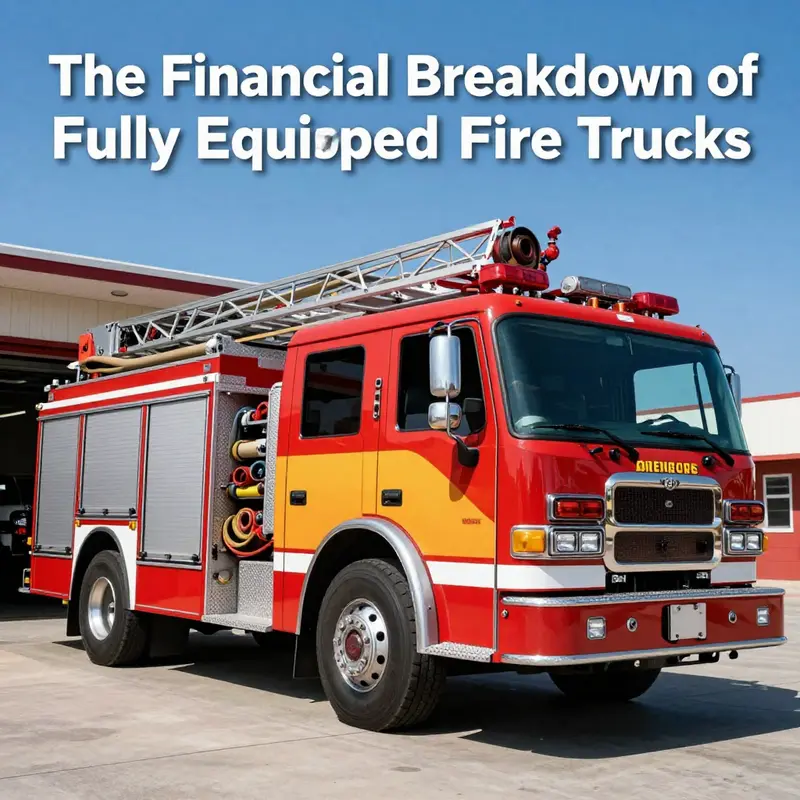
Understanding what a fully equipped fire truck costs requires looking beyond a single sticker price. A vehicle that sits ready to protect a community is a package of engineering, functionality, and mission-specific choices. The chassis, pump, water capacity, aerial reach, rescue tools, communications, and safety systems each add cost. So do customization requests and lifecycle support agreements. The result is a wide but explainable price range that reflects tradeoffs between capability, durability, and long-term value.
Start with the baseline. A typical frontline pumper, built to supply water and deliver firefighters and hose lines to structure fires, commonly falls in the lower half of the overall cost spectrum. As of recent industry data, a standard pumper can range from about $300,000 to $500,000, depending on chassis selection and pump capacity. But a fully equipped unit—meaning it arrives with SCBAs, ground ladders, rescue tools, radios, medical gear, hose loads, and turnout storage—will often push that figure higher. In many municipal procurements, the final delivered cost for a fully outfitted pumper sits between approximately $500,000 and $1,000,000. The gap exists because departments make choices about every subsystem.
One of the first major cost drivers is the type of apparatus. A pumper (or engine) focuses on water delivery and pump performance. Aerial apparatus, with hydraulic ladders or platforms that extend 75 to 100 feet and beyond, require sophisticated hydraulic systems, extended stabilizers, and larger chassis. Those complexities add substantial manufacturing cost and engineering hours. It is common for aerial trucks to start in the $700,000 range and climb past the million-dollar mark when high-end safety features, remote monitoring, and advanced controls are included.
Chassis and drivetrain selection set the foundation price. A heavy-duty chassis built for a 100-foot ladder differs greatly from a medium-duty chassis used for a brush truck. The chassis must support weight, provide stability during pump-and-roll operations, and meet local emissions and safety regulations. Custom cab layouts, seating for extra crew, integrated rollover protection, and command consoles add further expense. In many purchases, the chassis alone can represent 20–40% of the total apparatus cost.
Pump capacity, water tank size, and plumbing specifications follow closely behind as cost influencers. Pumps are rated in gallons per minute (GPM). A higher-capacity pump requires a more robust transmission and a larger, more powerful engine. Bigger tanks and additional onboard foam proportioning systems increase weight and the need for reinforced suspension and frame components. Hose storage solutions and reel systems that enable quick deployment also add to both purchase price and long-term maintenance costs.
Equipment integration is where customization and departmental strategy drive price variability. A department that prioritizes urban interior fire attack will specify different tools than one focused on wildland-urban interface responses. Interior-focused units may arrive with extensive ground ladder inventories, high-pressure breathing air systems, advanced thermal imaging cameras, and heavy extrication tools. Wildland apparatus emphasize lightweight bodies, high-flow pumps suitable for draft operations, slip-on skid units, and enhanced off-road suspension. Medical equipment, when included, ranges from basic first-aid kits to full ALS compartments stocked for prolonged care—each level increases the bill.
Communications, electronics, and safety systems have become major cost centers. Modern apparatus often include integrated command centers, multi-band radios, GPS, vehicle telematics, automated data logging for pump and engine performance, and camera systems that improve situational awareness. Safety features such as collision avoidance, enhanced scene lighting, remote-controlled master streams, and enclosed cab air systems for contaminant reduction add to the initial investment. Departments increasingly view these technologies as force multipliers that justify the added cost by improving firefighter safety and operational efficiency.
Manufacturer reputation and production volume affect price too. Established builders with long track records charge premiums for proven reliability and established dealer support. Limited-production or highly customized builds often cost more because of the labor intensity and engineering time required. Conversely, purchasing a well-specified but standardized model can save money compared to a one-off custom build. For agencies seeking acquisition cost savings, cooperatives and purchasing consortiums can help aggregate demand and reduce unit price.
Procurement choices also affect total program cost. Choosing a new truck with a factory warranty and a maintenance agreement often raises the purchase price but lowers risk and short-term repair expenses. Purchasing a used or refurbished apparatus reduces upfront cost but may increase lifecycle maintenance and downtime risk. Departments must weigh capital budgets against operational budgets and expected service life. A well-maintained apparatus can serve for 15 to 25 years, making lifecycle planning as important as the purchase price.
There are indirect cost considerations as well. Crew training on new equipment, tooling for specialized maintenance, and spare parts inventories all require funding. When a department adds new technologies, it may need to invest in training programs and software subscriptions. These recurring expenses can be significant over the vehicle’s life and should be included when comparing options.
Financial strategies influence whether a department can afford a particular configuration. Grants, state revolving funds, and federal assistance programs often subsidize apparatus purchases. Lease-to-own arrangements spread payments over time, easing immediate budget pressures but increasing total interest expenses. Many departments plan multi-year capital replacement schedules to smooth spikes in expenditure and to take advantage of trade-in allowances for existing apparatus.
Trade-offs matter. Spending more on a higher-specification apparatus can reduce response times and improve effectiveness in challenging scenarios. However, overspecifying for rare events can burden operations with excess weight, higher fuel consumption, and increased maintenance needs. Conversely, underspending can leave crews without essential tools, reducing safety and effectiveness. Good procurement balances present needs, foreseeable risks, and realistic budgets.
When considering resale and depreciation, apparatus values decline but not uniformly. Some specialty bodies and rare configurations retain value poorly, while well-maintained, widely compatible pumpers and aerials hold resale value better. A robust manufacturer support network and common component choices make a used apparatus more attractive on the secondary market.
For agencies or communities with limited budgets, alternative approaches exist. Smaller departments can opt for custom smaller rigs designed for specific missions, or retrofit older chassis with modern pumps and equipment. Mutual aid agreements, shared regional command vehicles, and mobile reserves can reduce the need for every station to possess every capability. These strategies change capital outlay patterns and can free funds for targeted upgrades.
Finally, transparency in specifications and honest discussion about expected operations help stakeholders understand why price ranges vary. A quote for an apparatus is not a simple number. It is the sum of design, engineering, materials, equipment, testing, delivery, and support. Comparing bids requires apples-to-apples specifications and careful attention to warranties, support timelines, and included training.
If you are exploring purchases or replacements, practical next steps include documenting mission profiles, listing must-have equipment, and identifying optional features tied to clear outcomes. Engage with vendors about lifecycle costs, not just the initial price. Consider regional partnerships to leverage purchasing power. And review secondary market options where appropriate; many departments find well-maintained used trucks offer strong value.
For a realistic frame of reference, industry guides and apparatus compendia provide detailed breakdowns of structure, material choices, and performance metrics. They help translate needs into specification language and offer comparative data on typical prices for different build choices. For more comprehensive apparatus cost and specification details, consult the external apparatus guide referenced below.
External resource for further reading: https://www.firerescue1.com/apparatus/articles/fire-truck-apparatus-guide-structure-material-properties-performance-metrics-2768433895/
Counting Firepower: The Real Price of a Fully Equipped Fire Truck
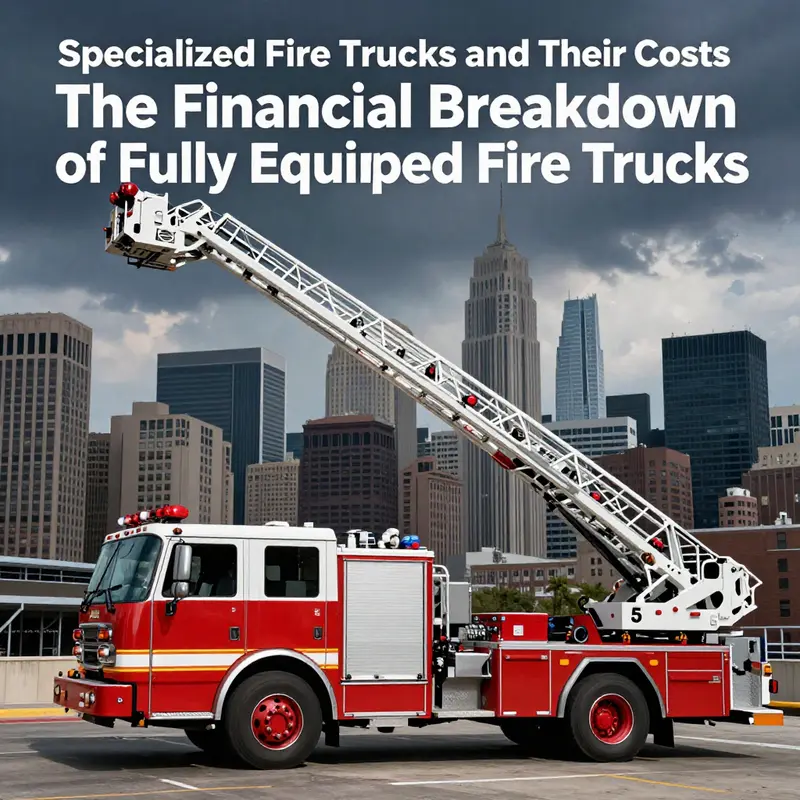
Prices for fully equipped fire apparatus do not settle into a single, tidy number. They hinge on a web of choices, technical requirements, and long-term obligations that stretch far beyond the initial price tag. A department’s decision about which chassis to rely on, how much water it can carry, what kind of pumping capacity is needed, and which ancillary devices are non-negotiable ultimately shapes the final cost in big and small ways. In practical terms, the spectrum begins with the most basic, sparsely outfitted trucks and widens through a succession of configurations that respond to local demand, terrain, and response philosophy. This is not merely a matter of hardware; it is a calculation of performance, reliability, training, and total ownership that can determine how a fire service delivers life-saving capability for years to come.
A useful starting point is to distinguish between a standard pumper, a workhorse for urban water supply and firefighting, and the specialized vehicles that extend the mission in more demanding environments. A standard pumper, which many departments rely on for everyday incidents, often lands in a broader middle range when fully equipped. In many markets, a modern pumper with a robust water tank, a powerful pump, and the necessary hose lays sits roughly in the low to mid hundreds of thousands of dollars. This is a practical implicit ceiling for departments that prioritize a balance of flow, reach, and maneuverability, while staying within the constraints of municipal budgets and long-term debt planning. The figure reflects not only the core firefighting capacity but also the integration with electrical systems, communications consoles, and safety features that keep crews protected during dangerous operations.
When the discussion turns to more specialized forms of response—such as aerial ladder trucks designed to reach upper floors, or hazmat and wildland units built to function in challenging environments—the price range expands dramatically. Aerial ladder trucks, with booms that extend hundreds of feet and sophisticated control systems, tend to begin in a higher tier and climb quickly as the height, reach, and precision of the apparatus increase. In many cases, the price can rise from the mid four-figure range into seven figures, especially when the equipment includes remote-controlled monitors, advanced hydraulics, and high-end safety technology. While these numbers may sound abstract, they reflect the reality that longer booms, greater load-bearing capacity, and more intricate operator interfaces require not just more metal but smarter engineering, longer validation, and more comprehensive maintenance planning.
Cost is also driven by how the vehicle is built around its core purpose. Basic fire trucks may start under a modest six-figure sum, but fully customized, high-capacity pumpers that can sustain a longer hose lay or deliver higher water flows to complex fire scenes move into a different space—often in the $250,000 to $400,000 range. The incremental cost from a basic model to a fully customized pumper is not merely the addition of equipment; it is the integration of a system that has to work in concert with the department’s preferred hose layouts, pump curves, and the geometry of the vehicle chassis. A number of departments will also opt for features like larger water tanks, enhanced foam systems for specific fire suppression needs, and specialized containment or recovery units when working with certain materials. Each addition adds not only to the sticker price but to the ongoing cost of maintenance and training.
Hazardous materials response and wildland firefighting units illustrate how specialization translates into cost. A hazmat vehicle, outfitted with decontamination capabilities, protective gear storage, and chemical detection systems, can exceed the $600,000 mark, reflecting the need for safe handling of dangerous substances, rapid decontamination workflows, and redundancy in life-critical systems. Wildland engines, engineered for rugged terrain and extended engine operations in outdoor or remote environments, typically sit in the $300,000 to $500,000 band, yet customizations for extreme climates or specialized off-road capabilities can push prices upward. Across these examples, the unifying thread is this: the more specialized the mission, the more sophisticated the equipment and integration requirements, and the higher the total outlay.
In practice, the bottom line is a blend of components and capabilities that align with a department’s strategic priorities. The chassis selection—whether it is front-line urban resilience, off-road capability for rural or mountainous areas, or a balance of both—matters as a foundational cost driver. Pump capacity and water tank size are not merely about raw numbers; they define the apparatus’s operational envelope in the first critical minutes of a response and influence the choice of auxiliary systems, such as foam injections or foam-capable monitors. Hose storage systems, ladders or aerial booms, and the level of integration with modern electronics and communication networks all contribute to the final price as well. When you factor in advanced safety technologies such as occupant protection, progressive braking systems, and driver-assistance features, the sticker price becomes a reflection of a broader safety and reliability philosophy rather than a single quantity.
To understand the financial picture, it helps to look at ongoing costs that accompany ownership. Maintenance of a highly engineered vehicle is not a once-in-a-decade event; it is a continuous cycle that requires routine inspections, component replacements, and software updates for on-board monitoring systems. Training is another recurring expense, ensuring firefighters are proficient not only in firefighting techniques but also in operating the complex equipment that resides on the chassis. Upgrades—whether through software refreshes, replacement of worn-out components, or incremental additions to the equipment array—are part of the life cycle. These ongoing costs amplify the total cost of ownership and must be weighed alongside a department’s annual operating budgets and capital improvement plans.
Budgeting for a fully equipped fire truck thus becomes a multi-year exercise. It is not enough to secure a single purchase order; departments must forecast maintenance contracts, anticipate potential technology upgrades, and align procurement with replacement cycles. In many urban departments, a typical life span for a specialized apparatus is aligned with standard replacement windows that consider wear, mission mix, and evolving fire service standards. A practical planning approach recognizes that the initial outlay is only the starting point of a longer arithmetic—one that includes upkeep, personnel training, and the updated footprint of the fleet over time. This larger view helps explain why some communities lean toward a gradual, modular build—adding capabilities piece by piece as needs become clearer and funding becomes available—rather than chasing an ultimate “do-it-all” vehicle from the outset.
Another aspect often guiding cost decisions involves the availability of new versus used or refurbished units. Some departments explore used or remanufactured options to stretch budgetary constraints while preserving operating readiness. The decision to purchase new or used is never purely financial; it also implicates warranties, remaining service life, residual performance, and the potential for retrofitting to the department’s standards. When choosing a path, agencies weigh the risk and reward of shorter warranty windows against lower upfront costs, then project long-term maintenance costs and the potential for earlier replacement.
In the real world of procurement, departments also consider the broader ecosystem that surrounds a vehicle purchase. The cost of ownership includes not only the truck itself but the infrastructure that supports it—workshops, parts supply, and trained technicians—ensuring that the fleet can be mobilized quickly when incidents arise. It also means planning for the interface between the truck and other emergency response assets, including communications networks, dispatch software, and incident command systems. A fully equipped fire truck is thus a node in a larger network of tools and processes that agencies maintain to deliver rapid, effective response. As plans are drawn, it helps to examine real-world inventories and market availability. For buyers exploring options, a practical avenue is to review current listings of fire trucks for sale and related equipment, which often presents a spectrum of configurations and price points to match different needs. This kind of market survey provides context for the assembly of a cost envelope that reflects both local conditions and broader market dynamics. For readers who want a glimpse into available inventory, you can explore examples on the dedicated sales page dedicated to fire-trucks-for-sale, which aggregates current offers and helps buyers compare features and prices across a range of configurations. fire-trucks-for-sale.
Of course, financial planning for a fully equipped fire truck also benefits from a candid alignment of expectations with what buyers actually receive. The most impactful cost drivers—such as chassis choice, pump capacity, and the presence of advanced protection and monitoring features—set the ceiling and shape the midrange of potential prices. The more you lean toward high-capacity pumping, larger tanks, or longer aerial booms, the more you should anticipate the cost to escalate. Simultaneously, design choices that emphasize modularity and standardization can help keep costs within controllable bounds, enabling departments to forecast maintenance and upgrade costs with greater accuracy. A thoughtful approach recognizes that this is not merely a purchase; it is a strategic investment in the resilience of the community and the safety of its responders.
For readers seeking a deeper dive into specific price ranges, the landscape is nuanced by both the type of apparatus and the degree of customization. Basic fire trucks exist at a noticeably lower entry point, but when all required firefighting and safety features are included, the price climbs into ranges consistent with the professional-grade equipment that urban departments rely upon. Aerial ladder trucks offer reach and versatility that justify higher costs, especially when coupled with sophisticated controls that allow precise operation under challenging conditions. Hazmat and specialized wildland units justify higher costs through the demand for containment, decoupling, and rapid access to hazardous environments. The common thread across all these categories is the recognition that cost is a function of mission, not merely mass or horsepower. When a department translates mission into specifications, the resulting price becomes a measured indicator of how well the vehicle will perform when time matters most.
In this context, it is useful to consider the broader market dynamics that influence pricing. Supply chain cycles, labor costs, and regional variations in wages and regulatory requirements all play a role in shaping final quotes. The procurement process also includes the supplier’s after-sales support, parts availability, and the potential for upgrades during the vehicle’s service life. Understanding these factors helps decision-makers frame a realistic budget that accommodates both the initial purchase and the downstream costs that accompany it. The goal is to secure a vehicle whose performance aligns with the department’s response philosophy while ensuring predictable maintenance and support costs over the vehicle’s lifetime.
As a reminder of the complexity involved, consider the wide spectrum of configurations described in the broader research on specialized fire trucks. Basic trucks may start at low six figures, but the leap to a fully customized high-capacity pumper or a multi-functional aerial platform can push the total well into the six-figure seven-figure territory, depending on height, reach, and integrated systems. The budgeting process must therefore accommodate both the immediate needs of current incidents and the anticipated evolution of firefighting tactics, including new technologies and safety standards that will shape the next generation of apparatus. In practice, communities that plan with a long horizon and a flexible cost framework tend to achieve higher operational readiness without sacrificing fiscal responsibility.
The overarching takeaway is this: a fully equipped fire truck is not a single investment, but a carefully calibrated package built to meet a community’s risk profile and response expectations. The sticker price reflects core capabilities, but the true cost is the sum of maintenance, training, upgrades, and the strategic value that a reliable, well-integrated vehicle brings to every call. Understanding this dynamic helps chiefs and finance officers communicate with their boards, align fleet modernization with capital plans, and ensure that every dollar invested translates into faster, safer responses when lives and property are at stake. For those exploring current market options, a practical next step is to peruse available inventory and compare how different configurations align with established needs and budget realities. This kind of market-aware approach is essential to translating high-level requirements into a durable, mission-ready fleet.
External resource for broader context on price ranges and supplier data can be found here: https://www.alibaba.com/showroom/fire-truck.html
Precision on Wheels: How Customization Shapes the Price of a Fully Equipped Fire Truck
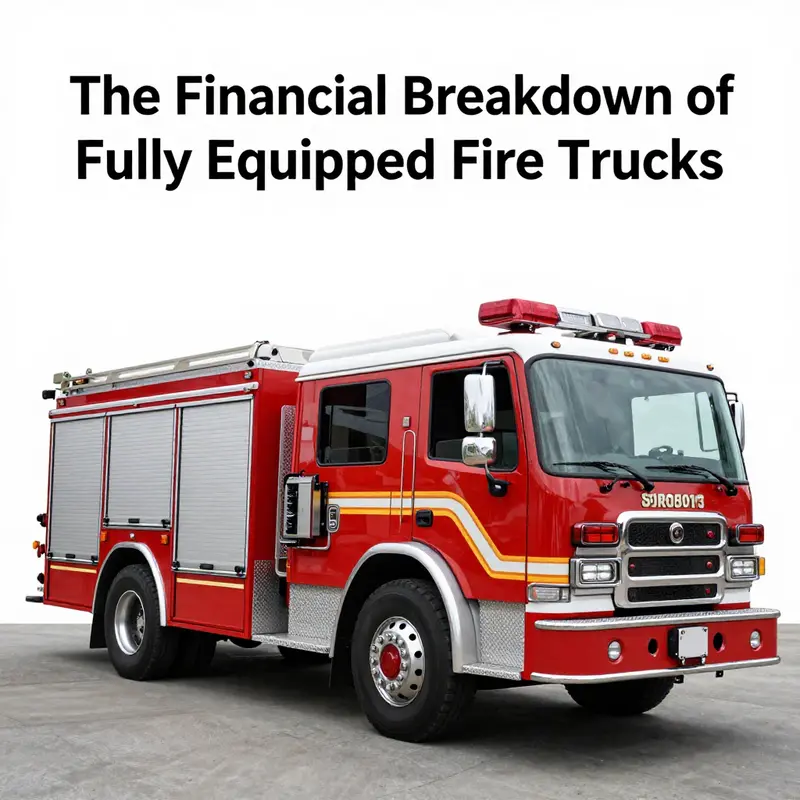
Customization is the single most consequential driver of cost when a fire department orders a fully equipped apparatus. It is not simply a matter of adding bells and whistles; it is about translating mission needs, terrain realities, and response expectations into a machine that can perform reliably under pressure, day after day. As of 2026, the market presents a broad spectrum. A standard pumper, the workhorse of water supply and initial firefighting operations, typically lands somewhere between three hundred thousand and five hundred thousand dollars. Yet the moment a department pivots toward more complex capabilities—an aerial ladder, extended reach, or specialist recovery and hazmat tools—the price tag begins to climb quickly. Industry data from that period show aerial and specialty configurations can push the total well beyond seven hundred thousand and in some cases past a million dollars, especially when high-end hydraulics, remote-controlled monitors, and sophisticated safety and communications technology are included. These figures are not merely numbers; they reflect the philosophy of modern fire apparatus as multi-function platforms designed to extend the reach, resilience, and interoperability of public safety fleets.
The final price of a fully equipped vehicle is therefore a function of both the base platform and the precise mix of features selected. A department might begin with a chassis choice—heavy-duty versus mid-size—each category influencing durability, payload, and the long-term maintenance footprint. Heavier chassis typically offer higher load capacity and a more robust duty cycle, but they also carry higher initial costs and greater fuel and tire expenditure over the vehicle’s life. The pump capacity, measured in gallons per minute, follows a similar curve. A pump that delivers 1,000 gpm might suffice for many urban responses, yet fire conditions in larger districts or high-rise complexes may demand 2,000 gpm or more. Each incremental upgrade in pump capability translates into costs not only for the pump hardware but for the powertrain, hydraulic cooling, and maintenance planning, all of which accumulate over the truck’s service life.
Ladder length is an especially visible determinant of price. Ladders in the 75- to 135-foot range cover a wide spectrum of firefighting and rescue operations, from foreground access in dense urban areas to building edge operations in medium and tall structures. Longer ladders require more substantial structural work, more complex stabilization systems, and often more sophisticated training for operators. The incremental cost of a longer ladder is not merely the metal and rungs; it includes extended reach, higher maintenance demands, and the need for more substantial aerial control systems. In parallel, specialized equipment—such as aerial platforms, rescue tools, and advanced communications or monitoring systems—adds layers of cost that compound quickly. Each item is not purchased in isolation but integrated into a cohesive system that governs how the truck will perform in real missions. In a fully configured vehicle, these specialized elements are designed to work in concert with the chassis, pump, and ladder, delivering an integrated platform rather than a bundle of disparate parts.
The customization options themselves span a wide range. Departments often request tailored body configurations to optimize space, weight distribution, and ergonomic access to tools. They may specify paint schemes that meet branding or visibility standards, or lighting packages that enhance night operations and incident scene safety. Beyond aesthetics, there is emphasis on safety and integration: enhanced cab and crew protection, better cabin ergonomics, and advanced communication and data-sharing capabilities that connect the fire truck to fire command centers and other responders on scene. Such features can be the difference between a routine shutdown and a mission-critical, streamlined response under duress. The financial consequence of these choices grows when departments pursue highly specific layouts or custom bodywork that requires unique fabrication, testing, and certification steps.
In many regions, the sum of all these choices resembles a balancing act between local needs and budgetary realities. A city with a dense urban core may prioritize ladder reach and faster response times over off-road performance, while a rural or semi-urban district could place greater emphasis on payload and reliability for long ratio of miles traveled between responses. The cost calculus must account for not only the upfront purchase price but the total cost of ownership. Maintenance, parts availability, fuel efficiency, and technician training all accumulate over the vehicle’s life. A more complex, feature-rich truck can require a longer learning curve for crews and a more extensive maintenance program, which translates into ongoing expenses that departments must anticipate when evaluating grant applications, depreciation schedules, and replacement timelines.
The composition and specifications that determine the final price are increasingly influenced by the integration of digital systems. Modern fire apparatus are not simply mechanical devices; they are mobile data centers that coordinate pumps, onboard monitors, truck-trailer communications, and incident command software. A sophisticated communications backbone, integrated with dispatch and on-scene situational awareness tools, improves efficiency and safety. But it also adds initial costs and compels departments to invest in training, cybersecurity, and ongoing software updates. The result is a vehicle that is as much a platform for information as it is a tool for fire suppression. This trend toward digital integration partly explains why two trucks with similar basic specs can have markedly different prices depending on the depth of control software, networked sensors, and remote operation capabilities included in the package.
Industry commentary and procurement data also emphasize the impact of chassis selection, pump capacity, and ladder length on the final price. The chassis choice, whether heavy-duty or mid-size, has cascading effects on the vehicle’s weight distribution, suspension needs, and accessory mounting options. A heavy-duty chassis often supports longer service intervals and higher dump payloads, but it comes with higher upfront costs and sometimes greater lifecycle expenditures. Pump capacity interacts with the drive-train and cooling requirements; higher flows demand more robust power management and can necessitate additional staffing considerations for operation and maintenance. Ladder length, while primarily a geometric factor, compounds the overall footprint of the apparatus. A longer ladder can influence turn radius, bay space, reach on scene, and even the way the vehicle is designed to maneuver through narrow urban canyons. Each of these elements is tied to a price; the longer the ladder, the more expensive the hydraulic and structural systems, the more specialized the maintenance, and the more complex the training required for safe operation.
In addition to these core technical factors, the procurement ethos of the department or agency plays a critical role. Some agencies pursue modular or phased build-out strategies to spread capital costs over multiple fiscal years, while others prioritize rapid deployment and invest in turnkey, fully loaded configurations. The availability of funding—grants, bonds, or strategic partnerships—can shape the scope of customization. Departments may also adopt a philosophy of durability and upgradability, choosing to include future-ready features that can be activated later with software updates or retrofit packages. Though this approach can raise the initial price, it can yield long-term savings by delaying full-scale replacement, reducing downtime, and enabling a smoother adaptation to evolving incident profiles.
To ground these considerations in practical terms, it helps to reference the broader research on fire truck composition and specifications. Industry commentary from 2026 notes that the price range for a fully equipped apparatus is widely divergent due to the customization spectrum. A mid-range configuration with essential firefighting and basic rescue tools may approach half a million dollars, while a highly engineered platform with advanced hydraulics, remote-control capabilities, and comprehensive safety and data systems frequently surpass the seven-figure mark. These figures reflect the reality that the market treats each customized build as a bespoke product designed to meet the specific operational math of a district: population density, building stock, response expectations, climate conditions, and financial constraints. The detailed breakdown of these specifications is summarized in industry resources that map how chassis, pump, ladder, and specialized equipment interact to shape the total price. For those seeking a structured guide beyond anecdotal estimates, a dedicated resource outlines how each customization option adds to cost and how to optimize value across a department’s lifecycle.
Beyond the numerical estimates, there is a qualitative story about how customization affects readiness and resilience. When a department commits to a fully equipped vehicle tailored to its risks, the payoff is not only in the seconds saved during response but in the adaptability of the crew to operate confidently under stress. A truck designed with a balanced layout reduces crew fatigue, a critical factor in long shifts or high-demand periods. Integrated safety features can mitigate risk during aerial operations, while robust onboard monitoring helps crews manage complex tasks at the incident scene. These qualitative benefits often justify the incremental cost, particularly when the alternative is a fleet with gaps in capability that could hamper response or require supplemental equipment from other agencies.
For readers seeking a regional perspective on customization and costs, consider exploring approaches that tailor fire apparatus to diverse terrains and budgets. The discussion highlights how different environments influence the mix of chassis, ladder reach, and auxiliary systems, illustrating how a single concept—customization—takes on many faces depending on where a fire department operates and how it funds its operations. One can see how some regions emphasize cost-efficient, rugged configurations designed to perform in challenging climates and rural landscapes, while others prioritize high-tech integration for urban command and rapid interoperability with neighboring agencies. The overarching message is that customization is not merely an aesthetic choice but a strategic decision with long-term implications for performance, maintenance, and fiscal planning. For a deeper exploration of customized solutions in developing countries, see Customized Firetruck Solutions for Developing Countries.
As with any large capital purchase, accurate forecasting and transparent cost breakdowns are essential. Madison Hill’s synthesis of fire-truck composition and specifications emphasizes that the final price is driven by a suite of interdependent decisions—chassis, pump, ladder, specialized equipment, and the scope of customization. Departments are encouraged to demand detailed bills of materials, clear maintenance projections, and realistic cost-to-operate estimates before committing to a build. When possible, engaging in a staged procurement, validating the interoperability of the selected systems, and pursuing scalable configurations can help align ambitions with budget realities. The end goal is a fully equipped vehicle that not only meets today’s firefighting demands but remains adaptable to tomorrow’s challenges. The conversation surrounding customization, price, and value is ongoing, and it benefits from cross-disciplinary input, including engineering, safety science, and financial planning, to produce a durable asset that serves the community effectively over decades.
For readers who want a more granular breakdown that connects each customization element to its price impact, a widely cited external resource offers a detailed ledger of costs and tradeoffs. This resource helps illuminate why two trucks with the same base chassis can diverge significantly in price once ladders, pumps, and electronics are configured to the department’s exacting requirements. External perspectives like this supplement the internal analyses and provide a benchmark for comparison across jurisdictions. External resource: Fire Truck Customization Costs.
In sum, the cost of a fully equipped fire truck is a reflection of complex tradeoffs. It is the result of deliberate choices about reach, power, resilience, and intelligence on wheels. It is the balance between immediate capital outlay and long-term operational value. It is the translation of local risk landscapes into a single, mobile, highly capable tool that must perform when every second counts. The figures—ranging from around $500,000 to over $1 million, and higher still for premium aerial and specialized configurations—mask a more important story: the ongoing effort to optimize a fleet for safety, efficiency, and community protection. And as technology evolves and communities diversify, the art and science of customization will continue to redefine what a “fully equipped” fire truck costs—and what it can do when it arrives on scene.
For those seeking a concise, field-ready reference to this balance, the ongoing dialogue between chassis engineering, hydraulic systems, ladder technology, and digital integration remains central. The composition, the design choices, and the long-term maintenance planning all converge to determine not just the price of a vehicle, but the price of preparedness itself. The journey from concept to crewmember-ready apparatus is a careful choreography of requirements, budgets, and technical feasibility, culminating in a tool that embodies a community’s commitment to safety and resilience. This is the essence of customization’s impact on cost: it translates needs into capability, while balancing the realities of funding, lifecycle maintenance, and the ever-present demand for rapid, reliable response.
To connect this chapter to broader conversations about regional adaptation and cost-effective resilience, explore the discussion on Customized Firetruck Solutions for Developing Countries, which examines how tailoring configurations to diverse terrains and budgets can yield effective firefighting tools without sacrificing safety.
External resource for further reading: Fire Truck Customization Costs.
Behind the Price Tag: What Truly Drives the Cost of a Fully Equipped Fire Truck
Understanding the Price Drivers
A fully equipped fire truck is more than a vehicle. It is a mobile system designed to protect people, property, and responders under extreme conditions. That complexity explains why prices vary so widely. When departments ask, how much does a fully equipped fire truck cost?, they are really asking how much it costs to meet a set of operational requirements, safety standards, and long-term service expectations. Several interlocking factors determine the final number on the purchase order, and each choice affects both upfront cost and lifecycle expense.
The first and most visible factor is the type and size of the apparatus. A pumper, often the backbone of many departments, focuses on water delivery and pump performance. These trucks are typically less expensive than aerials, which require elaborate booms, outriggers, and complex hydraulics. Rescue vehicles and specialty units, such as hazmat or wildland engines, are configured differently and have unique equipment loads. Size matters: chassis class, wheelbase length, and gross vehicle weight rating influence manufacturing complexity and therefore price.
Customization is the second major influence. Off-the-shelf units meet basic needs, but many departments specify unique compartments, tool layouts, or mission-specific systems. Adding a command center, integrated medical bay, or extra storage for technical rescue gear increases fabrication time and materials. Customization also extends into electronics, cab ergonomics, and climate control systems. Each bespoke build requires engineering, testing, and documentation—work that raises cost but delivers a vehicle tailored to a community’s risks.
Brand and manufacturer reputation play a role as well. Different manufacturers use varied chassis suppliers, metals, paint processes, and assembly techniques. Reputation matters because it often reflects quality control, warranty terms, and local dealer support. A higher upfront price can represent longer warranty coverage or better parts availability, which matters for uptime and total cost of ownership.
Pump capacity and water management are central to a pumper’s function and price. Pumps are rated in gallons per minute (GPM), and higher-capacity pumps cost more. Likewise, onboard water tank size affects weight distribution and chassis choice. Sophisticated pump-control panels, electronic monitoring, and remote water-transfer systems add cost but improve performance and reduce operator workload. Hose, nozzle, and couplings selection also contributes: high-quality, lightweight hose systems and automatic nozzle technology increase effectiveness but carry a premium.
For aerial units, ladder length and platform configuration are crucial cost drivers. A 100-foot aerial with advanced stabilization and remote controls is a very different engineering project than a 60-foot ladder. The materials used—high-strength steel versus aluminum or composite—change structural weight and expense. Platforms with elevated master streams or rescue baskets require reinforced hydraulic systems and additional safety redundancies. These features multiply cost quickly, which is why aerials often top the price charts.
Lighting, communications, and electronics have evolved from optional extras into essential investments. LED scene lighting, integrated public address systems, vehicle telematics, and multi-band radios all add to the build cost. Modern vehicles increasingly include vehicle health monitors, engine and pump telemetry, and integrated GPS dispatch interfaces. These systems reduce downtime, improve situational awareness, and help departments meet regulatory reporting obligations, but they also require ongoing software support and periodic upgrades.
Safety and rescue equipment likewise affect price. Thermal imaging cameras, extrication tools, cutting and hydraulic rescue systems, and on-board oxygen or medical support gear are expensive but mission-critical. Departments often balance carrying heavy technical rescue sets against the ability to respond quickly and safely. Storage solutions for these tools—like slide-out trays, power reels, and custom mounts—add fabrication complexity and cost.
Beyond the sale price, procurement teams must consider training, maintenance, and lifecycle costs. New systems frequently require operator and technician training. A truck with advanced pump automation or unique control layouts will need hands-on sessions and refresher training budgets. Maintenance contracts for pump and aerial servicing reduce in-house workload but represent an ongoing operating expense. Preventive maintenance, parts replacement, and planned overhauls are predictable costs that should be modeled alongside the capital purchase.
Financing and procurement strategy influence the apparent cost as well. Municipalities that lease or finance a vehicle face interest and administrative fees, but they may spread cost over years and align payments with budget cycles. Cooperative purchasing or piggyback contracts can produce price savings through volume and simplified procurement. Conversely, rushed purchases may cost more due to expedited manufacturing or shipment fees.
Resale value and long-term support also factor into decision-making. A well-built apparatus with a good documentation trail and available parts will usually achieve higher resale prices. Departments planning truck replacement cycles evaluate total cost of ownership, including residual value, to make a fiscally responsible decision.
Real-world cost ranges reflect these variables. A basic, municipally configured pumper with standard components will typically sit near the lower end of the mid-six-figure range. An aerial ladder with extended reach, advanced hydraulics, and integrated safety systems can push costs well into the high six figures or above. Specialized or highly customized rigs can exceed seven figures, especially when they include mission-critical equipment and advanced electronics.
Operational trade-offs shape choices. Choosing a heavier chassis for additional equipment lowers the need for aftermarket upgrades later, but it can increase fuel use and wear. Selecting premium materials reduces corrosion and long-term repair costs, but raises the initial purchase price. Departments must weigh immediate budget constraints against the benefits of reduced downtime and lower maintenance expense over the vehicle’s service life.
There are smart ways to manage costs without sacrificing mission capability. Standardizing apparatus across a fleet simplifies training and spare parts management. Prioritizing modularity—where tools and systems can be swapped or upgraded—extends functional life and controls future upgrade costs. Investing in high-quality, easy-to-service components may increase the initial price but reduce total lifetime spending. Cooperative purchasing agreements among neighboring jurisdictions can leverage buying power to secure better pricing and warranty terms.
Grant funding, capital improvement budgets, and capital improvement planning are practical levers most departments use to bridge the affordability gap. Grants can offset the cost of specialized equipment or green retrofit projects. Capital planning allows for predictable replacement cycles and the amortization of capital costs over many years.
When considering a purchase, departments should request line-item build sheets and lifecycle cost estimates from manufacturers. These documents clarify which features drive cost and which can be deferred to a later build or retrofit. Equally important is to evaluate local dealer support and training packages. A lower sticker price may be offset by higher downtime if parts and service are not readily accessible.
Finally, while the purchase price is the headline, stewardship of the vehicle across its service life determines the real value delivered to a community. Thoughtful specification, sensible customization, and a disciplined maintenance program keep apparatus reliable and cost-effective. The right balance between initial investment and long-term resilience depends on local risks, call volume, terrain, and strategic priorities.
For practical references and available listings to compare configurations and pricing, consult regional vehicle listings like those showing current inventory and specifications for comparison. For manufacturer-specific product details and potential cost guidance, see this resource: https://www.hoosierfire.com/
You can also explore peer listings and market inventory for context through resources such as fire trucks for sale listings, which can help departments benchmark prices and configurations when preparing specifications.
Final thoughts
Understanding the costs associated with fully equipped fire trucks reveals much about the firefighting industry as a whole. Pricing not only reflects the vehicle’s capabilities but also the investment required for public safety. Whether you’re a fire truck enthusiast, an aspiring firefighter, or a seasoned professional, recognizing these costs will enhance your appreciation and knowledge of firefighting resources. Fire trucks are more than just vehicles—they’re vital lifelines in emergency situations.