
Fire trucks are not just vital tools for firefighters; they are the backbone of emergency services and a source of fascination for enthusiasts and collectors alike. Whether you dream of becoming a firefighter, collect model trucks, or simply wish to understand the costs involved in these essential vehicles, this guide breaks down the various prices, specifications, and factors influencing fire truck costs. In the upcoming chapters, we will explore the basic costs of fire trucks and their specifications, delve into the world of advanced aerial and specialty units, and examine the myriad of factors that can sway prices in the fire truck market. By the end, you’ll have a thorough understanding of what drives fire truck pricing today.
The Price of Readiness: Navigating the Real Costs of Fire Trucks Across Size, Specialty, and Scope
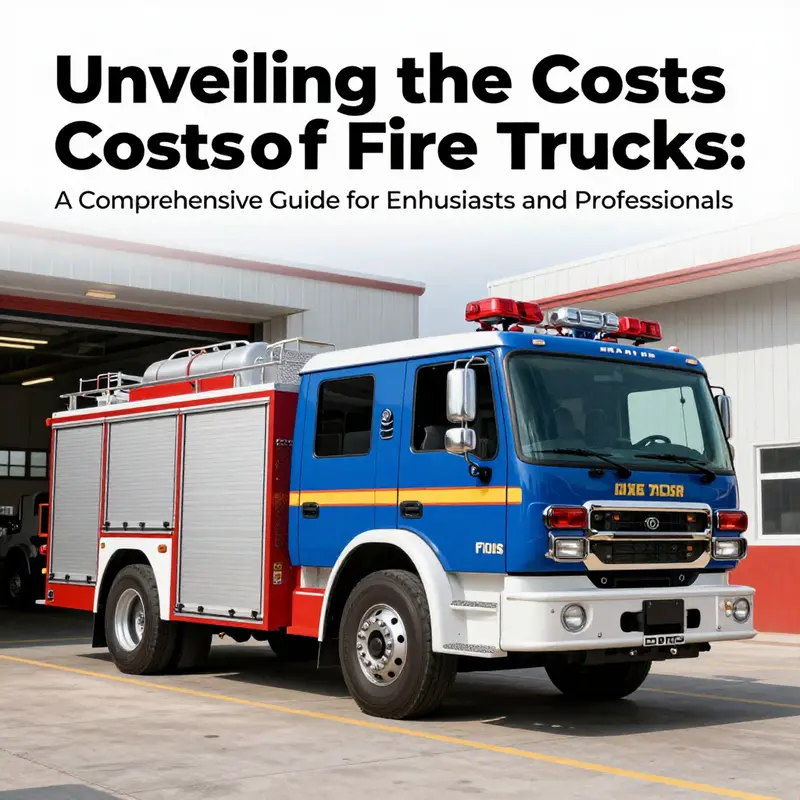
When communities evaluate fire protection, the price tag on a fire truck often becomes a focal point. Yet the sticker price is only part of a larger equation. A fire department does not purchase a single vehicle in isolation; it acquires a tool that embodies reach, resilience, and rapid response under a spectrum of emergencies. The question “how much are fire trucks?” invites a layered answer because cost is determined not just by the vehicle’s size, but by its purpose, configuration, and the operational context for which it is built. To understand why a basic water tender might hover near modest six figures while an aerial platform or specialized crash-fire apparatus can stretch into seven figures or more, one must trace how form follows function in the modern firefighting fleet. Prices vary, but they do so in a predictable arc linked to the core traits of each vehicle class: capacity, lift or reach, pumping power, onboard systems, and the level of customization demanded by deploying agencies and the environments they serve.
The most fundamental category, often called light-duty or standard water-tanker fleets, serves as the baseline in the pricing spectrum. These vehicles typically carry a reasonable volume of water and a modest array of pumping and foam capabilities. The advanced versions within this category still remain within a broad band—roughly from the low tens of thousands up to around a hundred and fifty thousand dollars. The lower end appears in markets where municipal or rural departments seek compact, economical responders that can arrive quickly, maneuver in tight streets, and perform basic suppression tasks. The mid-range reflects more robust pumps, better discharge capacity, and improved reliability. This is where many communities find the balance between initial cost and long service life. For organizations evaluating procurement against risk exposure, the message is that even the most modest modern standard water tender is a serious investment in community resilience.
Within the same family, there are variations that can push the price up or down by thousands, depending on configuration. A light-duty unit might be electric-powered or powered by a standard internal combustion engine, with differences in drivetrain, wheelbase, and cabin amenities that affect both purchase price and operating costs. In some cases, a department may opt for a compact model designed to operate in urban settings where street geometry and traffic demand agility. In others, the same class may emphasize payload capacity and range, accommodating longer response times or off-road conditions that require reinforced structures. Each choice carries a price implication, and buyers must weigh the cost against anticipated usage patterns, maintenance schedules, and the potential return on investment in terms of faster on-scene times and higher water delivery efficiency.
As soon as one steps beyond the basics, the landscape becomes markedly more varied. Specialized fire trucks constitute a second tier of cost consideration. Foam fire trucks, for example, incorporate an additional layer of complexity. They require integrated foam systems, precise proportioning equipment, and often larger tanks to support longer and more diverse foam operations. The resulting price premium reflects not only the materials but also the engineering validated for effective foam delivery, the monitoring systems that ensure proper mixture ratios, and the need for compatibility with a broader spectrum of suppression strategies. In many markets, a foam-focused configuration sits in the range from about one hundred thousand dollars up to two hundred thousand dollars for domestic builds, and it can rise toward or beyond three hundred thousand dollars for imported, higher-capacity variants. The premium is justified in environments where foam suppression offers clear advantages, such as fuel-fire incidents or complex liquids handling, but it remains a strategic choice tied to risk management and mission profiles.
Aerial ladder or platform trucks introduce a further step in both capability and price. These vehicles expand the department’s reach—literally upward—allowing firefighters to attack elevated fires and perform rescues where ground-based equipment cannot reach. Domestic examples in this category typically fall in the three-hundred-thousand-to-five-hundred-thousand-dollar range, reflecting the engineering required to raise, stabilize, and operate heavy ladders safely. When the conversation turns to imported or high-end models, the price escalates substantially. In some markets, advanced manufactured platforms with extended reach and sophisticated stabilization systems command five hundred thousand dollars to well over a million dollars. There are also extraordinarily tall or high-capacity configurations designed for niche or specialized operations, where the price can exceed the two-million-dollar mark. Even so, the core takeaway remains clear: the more height, reach, and precision the system provides, the more expensive the unit becomes, amid the costs of certification, training, and ongoing maintenance that accompany such specialized machinery.
Rescue and utility vehicles follow a parallel trend. These vehicles are designed to carry heavy cutting tools, extrication gear, medical supplies, and specialized equipment that enable a coordinated response to complex emergencies. Their price tag generally sits in a mid-to-upper range of the spectrum, roughly from one hundred thousand to three hundred thousand dollars, depending on the level of equipment, redundancy, and the extent of on-board life-support or trauma care provisions. The value here is not solely in the tools themselves but in the mission adaptability they provide. A rescue-utility vehicle can be a multipurpose asset in municipal fleets, offering flexibility across fire suppression, emergency medical services, and incident command support. The cost reflects this versatility, as well as the engineering required to fit diverse tools into a safe, mobile platform.
For operations with very particular risk profiles, airport crash-fire apparatus stands apart for its scale and specialization. Aircraft fire incidents demand high-speed approach, rapid deceleration, and the ability to sustain intense suppression operations in the aviation environment. As a result, the price point for these units can climb toward the upper reaches of the market, with dedicated units reaching the seven-figure domain and occasionally higher when multiple features or extreme duty cycles are involved. The justification mirrors the risk calculus of airport operations: aviation fuels, high temperatures, and the critical nature of protecting aircraft and passengers drive a premium in both capability and reliability. In the simplest terms, specialized units at this end of the spectrum are the long-term investments whose payoff rests in the capacity to reach and control complex incidents with minimal delay.
No discussion of cost would be complete without acknowledging the role of the used-vehicle market. Pre-owned fire trucks can present significant savings for smaller communities, volunteer departments, or districts with tight capital budgets. The price spectrum for used units typically runs from a few thousand dollars to several tens of thousands, depending on age, mileage, maintenance history, and the presence of essential equipment. The savings can be substantial, but the hidden costs of refurbishment, parts availability, compliance with updated standards, and the need for thorough inspection can offset some of the initial advantage. In the broader equation of fleet readiness, used vehicles often function as a bridge—an economical entry point that enables agencies to upgrade gradually as funding becomes available while still maintaining effective response capabilities.
The financial calculus behind any purchase goes far beyond the sticker price. Procurement teams weigh not only upfront costs but also lifecycle expenses, including routine maintenance, tire wear, pump replacements, and diagnostic systems. Modern fire apparatus increasingly integrates advanced telemetry, IoT monitoring, and remote diagnostics, all of which contribute to ongoing costs but offer potential long-term savings through predictive maintenance and reduced downtime. The initial investment must be evaluated against the expected service life, availability of parts, training requirements for personnel, and the department’s ability to support ongoing upkeep. A unit designed for decades of service may incur higher upfront costs but deliver lower annualized expenses and greater reliability in high-demand periods. Conversely, a cheaper, less capable platform may demand more frequent upgrades, misalignment with evolving standards, or greater downtime, ultimately eroding any initial savings.
In markets where international flows of equipment are robust, standards and compliance become a central driver of price. International standards for safety, performance, and reliability—such as various engineering and quality certifications—can increase the cost of production and export, but they also enhance the vehicle’s performance and interoperability with partner agencies. Buyers should consider certification as a form of value, not merely a regulatory burden. Where regulations require compliance with multiple standards, the added cost is often offset by the assurance of compatibility with a broader supply chain and the potential for easier maintenance across regions. In this sense, the price of readiness is not only about the machine on the ramp but about the ecosystem that surrounds it—parts supply, technician availability, and the ability to sustain advanced systems over time.
With these distinctions in mind, how should a community frame its purchasing decision? The answer hinges on risk assessment, financial capacity, and the operational tempo expected from the fleet. A district facing frequent structural fires in dense urban corridors may justify the investment in a higher-capacity aerial platform and specialized rescue units. A rural department with fewer high-rise incidents may prioritize a dependable and economical water-tender configuration that maximizes on-scene durability and response times. In either case, agencies benefit from a clear mapping between mission requirements and the configuration options that support them. This alignment helps avoid over-investment in capabilities that rarely translate into improved outcomes while ensuring that essential capabilities are not underfunded due to short-term budget pressures.
The practical implications extend to procurement processes as well. Public safety agencies frequently navigate long planning horizons, with procurement cycles that involve needs assessments, stakeholder reviews, and competitive bidding. The decision to purchase a particular class of vehicle is rarely about a single incident but about a programmatic approach to resilience, coverage, and mutual aid. Agencies often use a combination of funding sources, such as capital reserves, bond measures, and sometimes federal or regional grants, to spread the cost over several fiscal cycles. In this context, the unit price becomes a single data point within a broader forecast of fleet renewal, maintenance, and staffing needs. The goal is to ensure that the fleet remains capable of protecting lives and property while maintaining fiscal responsibility over the vehicle’s expected lifespan.
For readers seeking a sense of current market dynamics, it helps to consider how prices shift with scale, configuration, and geography. A basic fire truck may be relatively modest in cost, but once a department adds complexity—such as larger tanks, higher pumping capacities, or advanced rescue tools—the price curve rises steeply. When height and reach are added, so are the engineering challenges, safety systems, and operator training requirements. The geographic context matters as well. In some regions, import duties, local taxes, and distribution costs can push prices higher, while in others, domestic manufacturing with streamlined supply chains can offer cost efficiencies. The take-away is that price is inseparable from capability and service expectations. A thoughtful procurement strategy aligns the vehicle’s technical attributes with the community’s risk profile, ensuring that every dollar is directed toward meaningful improvements in readiness and safety.
From a practical standpoint, departments looking to understand the market frequently consult listings and industry briefings that catalog available configurations, options, and price ranges. The value of such resources lies in the ability to compare like with like across a range of manufacturers and to anticipate potential hidden costs. Buyers should examine not only the initial purchase price but also the long-term maintenance implications of a given configuration, the availability of parts in their region, and the vendor’s service network. A realistic approach recognizes that a fire truck is not merely a one-time purchase but an ongoing partnership with a maintenance ecosystem, training provisions, and supply chains capable of supporting dependable performance across years of operation. In short, the cost of readiness reflects a combination of engineering, supply chain reliability, and the strategic choices a department makes about risk, coverage, and resilience.
For readers who want a practical point of entry into pricing discussions, market comparisons often begin with a browse of current listings to gauge what is available within a given budget. As a stepping stone, many professionals direct attention to widely used marketplaces and procurement platforms that summarize typical configurations and price bands. In this context, it is helpful to explore a representative example of how such platforms frame the options. See fire-trucks-for-sale for a sense of how communities and departments collect data on vehicle configurations, capabilities, and price ranges in a centralized catalog. This reference point can illuminate what combinations of water capacity, pump power, aerial reach, and rescue equipment are currently feasible—and how those choices translate into budget planning and risk management.
In closing, the question of how much fire trucks cost is answered not by a single number but by a nuanced spectrum that mirrors the diversity of the emergencies they are designed to handle. Basic responders offer essential protection at a reasonable price point, while high-capacity, highly specialized platforms command premiums aligned with their extraordinary capabilities. Across all categories, the governing principle remains the same: procurement should be driven by the mission, the community’s risk landscape, and a prudent assessment of total cost of ownership. A well-considered fleet strategy acknowledges that price is a starting point, not a verdict. The true value of a fire truck lies in how reliably it performs under pressure, how smoothly it integrates into a broader system of response, and how effectively it helps public safety professionals protect lives and property over time.
External resource for further context: https://www.fireengineering.com/fire-truck-pricing-and-specifications/
Rising Ladders and Rolling Costs: The Real Price of Aerial and Specialty Fire Trucks
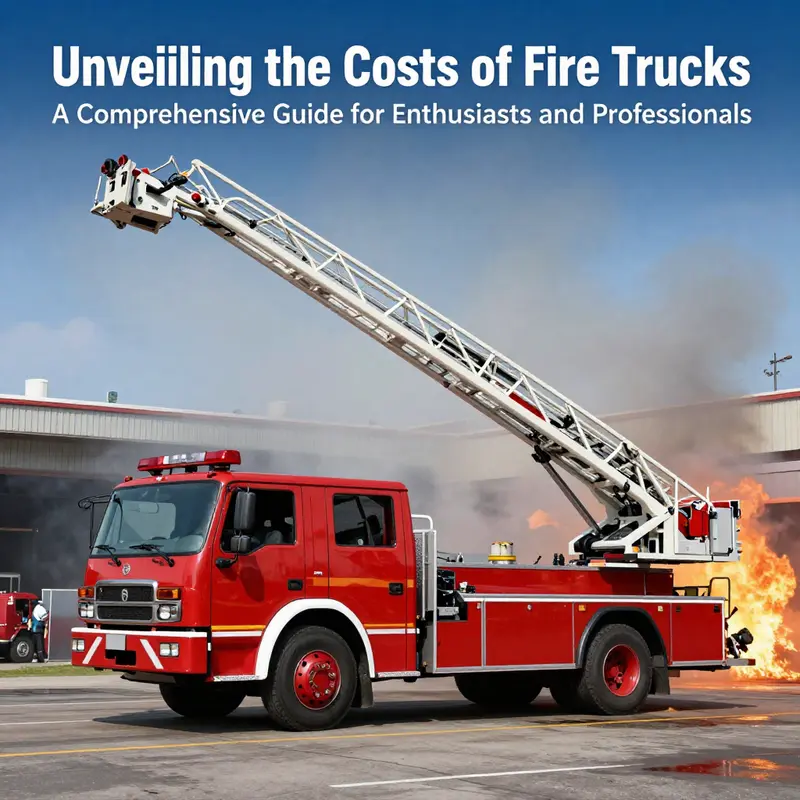
Prices for aerial and specialty fire trucks sit at the intersection of mission need, engineering complexity, and the realities of global supply chains. When a department asks what an aerial or a specialized unit costs, the answer cannot rest on a single figure or a single feature. Instead, the cost is built up from a chain of choices: how high the lift must reach, what kind of water delivery system is attached, how much rescue capability is embedded, and how the chassis is prepared to handle rugged terrain or urban driving challenges. The result is a spectrum that stretches from relatively modest sums for basic, small-scale platforms to six- and seven-figure investments for state-of-the-art rescue machines. To understand why, it helps to picture how these machines are designed and what buyers expect them to do in the field. Aerial platforms, for example, do more than just lift water or responders; they provide a stabilized, mobile workspace that allows crews to access elevated windows, search for occupants, and deliver water or foam with precision while maintaining the safety margins demanded by high-risk environments. The cost structure reflects this expanded scope of responsibilities.
One foundational factor in pricing is the overall size and reach of the unit. A basic aerial platform or ladder truck can offer a modest working height and a compact water system, making it suitable for smaller towns or districts with limited budgets. In real market terms, that kind of unit has shown price ranges that can begin in the low five figures when looking at older or heavily used equipment, but it is more commonly found in the lower end of the six figures when new or with moderate upgrades. The variation reflects differences in the fundamental platform, the length of the ladder or boom, and the presence (or absence) of a powered platform. A unit with a shorter reach and fewer sophisticated features will still perform essential rescues and water application, yet it does so with a simpler hydraulic package and fewer sensors. The result is a lighter price tag that is easier for a smaller department to justify, assuming a plan for ongoing maintenance and eventual replacement.
As the ladder height grows and the system becomes more capable, the price moves more decisively. An aerial ladder with extended reach and enhanced hydraulic performance introduces a different set of costs: a sturdier chassis, higher horsepower, more robust stabilization, longer ladder sections, and a platform designed to support a crew for longer operations. In market terms, mid-range aerial and ladder trucks typically sit in a broader band that many buyers consider acceptable for urban and suburban departments seeking higher reach without entering the most premium configurations. These units balance reach with water delivery, foam capabilities, and advanced rescue tools, delivering a platform that can execute complex rescues while maintaining reliability across a longer service life. The upcharge from mid-range to high-end reflects the additional engineering required to maintain stability with greater extension, the integration of sophisticated control systems, and the capacity to operate in more demanding environments.
In the upper tier, advanced aerial and specialty trucks are often built around specialized missions. A high-reach platform capable of delivering water and rescue operations at substantial heights, or a large hydraulic platform with a fully integrated foam or dry chemical delivery system, can push price tags well into six-figure territory, and for the most capable, into seven if one considers premium customization. The driver of these costs is not only the physical reach but the combination of on-board resources: the size of the water tank, the rate of water flow, the foam or retardant mix capabilities, the length and stiffness of the ladder or boom, and the sophistication of navigation, stabilization, and communication systems. When departments plan for a 60-meter or taller reach, the equipment becomes a complex integration of hydraulics, electronics, and structural engineering, all designed to keep operators safe while delivering precise water, foam, or rescue operations at height. In practice, the price range broadens accordingly, with some newer, high-performance units priced in the mid to high hundreds of thousands, and premium configurations climbing toward or beyond the $1 million mark only in exceptional export contexts or with bespoke customization.
Another important price driver is the chassis configuration and the ability to perform off-road or all-terrain missions. A 4×4 or off-road configuration is not a mere aesthetic choice; it represents a substantial engineering commitment to traction, weight distribution, suspension, and protection against the rigors of remote terrain. Off-road units are designed to deliver a dependable response in challenging access environments, from muddy rural lanes to mountainous regions where standard pumper trucks would struggle. The benefit is clear in terms of reach and rescue options, but the cost reflects the specialized components required to keep a vehicle mobile in difficult conditions. In the market, such off-road capable units can sit somewhere between the lower-cost, basic platforms and the high-end, highly capable aerials, with a price range that often falls in the mid-range to lower end of the six-figure spectrum for new entries. The point is that the more a truck is expected to do—whether that means traversing rugged ground, functioning in remote service areas, or fulfilling a dual role as a rescue and water-extinguishing platform—the more the price climbs, driven by those reinforced drivetrains, reinforced frames, and the need for electronics and spare parts that can stand up to harsher use.
A separate, equally important factor is the configuration and equipment package installed on the machine. Aerial platforms, by their nature, must integrate an array of systems: stabilizers that keep the platform steady on uneven surfaces, a tracked or wheeled base that can handle the weight and movement of the platform, a water system with a capacity appropriate to the expected scale of fire events, and a power pack that can operate pumps, lighting, and rescue tools. Add to that a foam or gel suppression system, a rescue basket or cage, a thermal imaging camera, and a suite of sensors and monitors that guide the operator. Each addition adds cost, and some departments might prioritize certain features over others. For example, a unit that emphasizes rapid water delivery and foam application for structural fires will have a different equipment emphasis—and cost—than a platform designed primarily for high-angle rescue or for use in critical industrial facilities. The market responds to these preferences with a variety of trims and upgrade paths, from enhanced pump sizes to better lighting packages, from more capable generator systems to advanced communications and data recording capabilities. The result is a spectrum where the same fundamental chassis and ladder can yield very different total prices, depending on the exact mix of capabilities chosen at procurement.
Another axis along which prices diverge is the social and regulatory environment in which buyers operate. International standards bodies and export controls shape both the feasibility and the price of certain configurations. Compliance with recognized standards for safety, performance, and reliability—along with the necessary certifications for export to different regions—adds both cost and lead time. In many markets, buyers must factor in compliance costs for ASME, ISO, SGS, BV, CCC, SONCAP, and similar regimes. Meeting these requirements often means additional testing, documentation, and quality-control measures, which translate into higher upfront prices and longer delivery schedules. For buyers in developing markets or for fleets that must operate across borders, the added compliance burden may be welcomed as a guarantee of performance, yet it inevitably raises the price of a turnkey, field-ready platform.
Beyond purchase price, the total cost of ownership (TCO) shapes the decision-making process in meaningful ways. Departments rarely recover the full purchase price in a single year; the cost is amortized over decades of service. TCO includes financing costs, but also maintenance, spare parts, and preventive service programs that keep the platform in peak working condition. Aerial and specialty trucks require regular hydraulic service, sophisticated diagnostics, and sometimes specialized technicians who understand both the ladder mechanics and the vehicle’s drive system. The availability of parts and service networks matters as well. A platform that can be serviced locally will reduce downtime and repair expenses, while a machine that must travel to distant service centers imposes hidden costs in terms of downtime and freight. The maintenance burden can be substantial because the equipment carries a heavy payload, has moving parts exposed to stress, and operates in environments where road salt, dust, heat, and humidity can accelerate wear. Budgets, therefore, should anticipate not only the upfront price but the ongoing maintenance cadence, warranty terms, part replacement cycles, and the cost of training crews and maintenance staff.
Another price determinant is the procurement path itself. Some departments opt for a straightforward new-build order, selecting a chassis, choosing a platform, and tailoring the equipment package to mission needs. Others may supplement or replace their fleets through refurbished or reconditioned units sourced from a broader market. Refurbishment can dramatically alter price and lead time, offering a bridge between older, cost-conscious fleets and the newest, most capable platforms. In practice, refurbished aerial units may come with reduced payload or reach, but updated control systems and safety features can make them viable for certain jurisdictions at a contained cost. The trade-off, of course, is that buyers must carefully evaluate remaining service life, structural integrity, and the condition of the hydraulic and electrical systems. A prudent evaluation weighs not just the purchase price but the likelihood of maintenance expenses and the risk of early retirement due to unforeseen component failures.
The global marketplace adds another dimension to pricing that buyers must acknowledge. Currency fluctuations, freight costs, and regional demand can create price differentials that seem to defy simple comparison. A unit designed for high-seismic tolerance and extreme climates may command higher prices in some regions, not only because of the engineering required but because of the premium attached to reliability in challenging environments. Conversely, markets with robust local production and strong after-sales support can deliver competitive prices, even for high-end configurations, by eliminating some import-related costs and providing localized service networks that shorten downtime. In either case, the buyer’s decision is less about chasing the lowest price than about acquiring a platform that can reliably meet mission goals, fit within operating budgets, and remain serviceable across multiple decades of use.
To illustrate the breadth of pricing that buyers encounter, consider a spectrum anchored by a few representative points drawn from marketplace data. An entry-level aerial platform with modest reach and a basic water delivery package can appear in the low six figures when new or late-model used. A mid-range unit with improved reach, larger water capacity, and a more capable rescue package tends to cluster in the mid to upper six figures. When the mission requires substantial height—sixty meters or more—and a fully integrated rescue and water delivery system with advanced controls, prices commonly rise into the high six figures and can exceed seven figures in scenarios involving top-tier customization or export-grade certification. A small but rugged off-road platform intended for remote response may stay in the lower six figures, reflecting its narrower scope and lighter duty cycle, yet still command a serious price when the chassis and drivetrain are prepared for tough terrain. In every case, the price tag tells a story about the anticipated use, the environmental conditions, and the degree of resilience expected from the apparatus.
Beneath the numbers lies a practical calculus that buyers must perform. A department assessing a potential purchase should start with a clear statement of mission: the types of fires and rescues likely to occur, the urban density or terrain, and the speed of response required for effective protection. Then comes a candid assessment of the total lifecycle cost, including training, spare parts, and the availability of qualified technicians. The decision should also weigh the impact on staffing, as higher-end platforms might demand more specialized operator training and maintenance oversight. It is not unusual for a city or region to budget for a mix of units—some with high reach and advanced rescue features for urban centers, paired with more cost-efficient, rugged units for rural areas—so the overall fleet can cover a broad range of incidents without compromising safety or response times.
For buyers who want to explore current market options, it helps to browse listings and compare features side by side, mindful of the distinction between price and value. An online marketplace often presents a wide array of aerial and specialty units, including several that are suitable for smaller departments and others that represent top-tier capability. While the raw price is important, the relative value depends on how well the platform matches anticipated operations, maintenance capabilities, and spare-parts access. Buyers should also examine the included equipment packages, such as water tanks, foam systems, platform platforms, rescue baskets, lighting, power generation, and onboard diagnostics. Each added feature shifts the value proposition and the total cost over the vehicle’s life, influencing not just purchase decisions but long-term budgeting for upgrades and replacements as mission requirements evolve.
In the end, the question “how much are fire trucks?” when directed at aerial and specialty units yields a nuanced answer. It is not a single figure but a range that reflects reach, capabilities, configuration, and the realities of the supply chain. For a department planning a modern fleet, the prudent approach is to map out mission profiles, estimate life-cycle costs, and align procurement with a long-range funding plan. The goal is to acquire a platform that can perform critical tasks safely and consistently, whether it is used to reach a high window in a dense city, deliver water from an elevated position to a distant blaze, or facilitate complex rescues in challenging terrain. The price, then, is not merely a sticker on a brochure; it is a reflection of what a community expects its responders to achieve and sustain over decades of service.
For readers who want to dig deeper into current market options, the following resource offers a breadth of listings and pricing examples that illustrate how diverse these platforms can be in practice: fire trucks for sale. This internal reference helps connect the discussion to concrete market signals while staying aligned with the broader narrative about cost, capability, and lifecycle considerations. Buyers can use such listings to calibrate expectations, compare configurations, and identify a range of acceptable choices that meet both budgets and mission demands. As a closing note on the practical budgeting side, it is essential to keep in mind the price anchors discussed here and to apply them within a structured procurement framework that accounts for maintenance, training, parts, and service access. A well-planned purchasing strategy can transform a daunting six- or seven-figure price tag into a strategically affordable investment that serves a community’s public safety needs for a generation.
External reference: https://www.alibaba.com/product-detail/Brand-New-Aerial-Platform-Vehicle-PM180F1_1600552546252.html?spm=a2700.190711.0.0
The Price of Readiness: How Equipment, Standards, and Market Forces Shape Fire Truck Prices
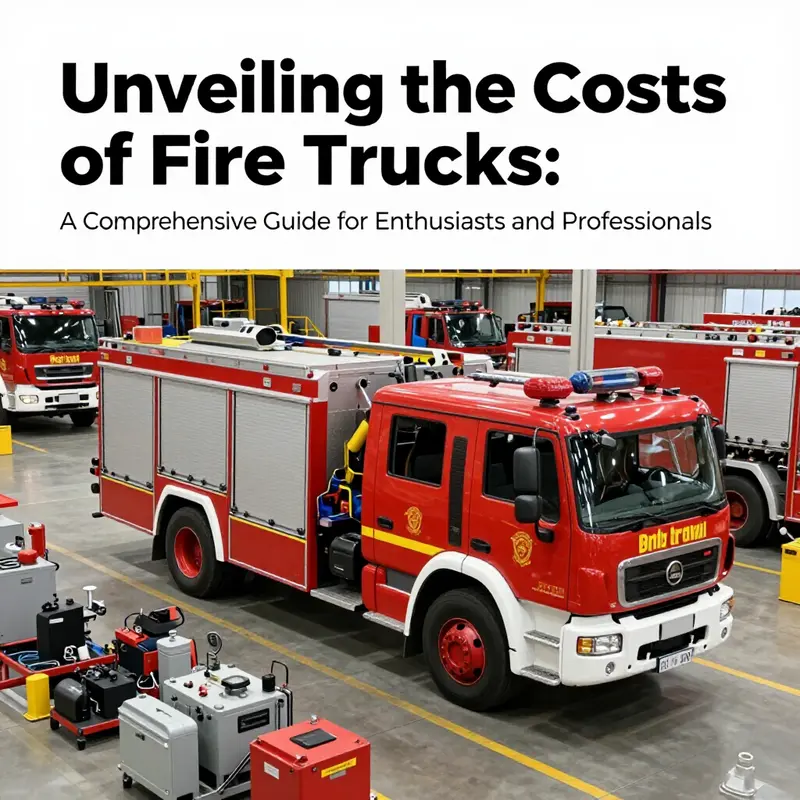
The cost of a fire truck is rarely a single number carved in stone. It is the product of a layered ecosystem where the engineering of each vehicle, the rules it must meet, and the rhythms of global markets all interact to determine what a department must pay to be ready for the moment of crisis. When we ask how much a fire truck costs, we are really asking how a fleet manager translates risk, capacity, and accountability into a price tag. The conversation begins with what the truck must do on the ground and ends with how those requirements ripple through the supply chain to affect every component, from the core pumping system to the tiniest fastener. In between, there are decisions about payload, geometry, and speed, about the environment in which the vehicle will operate, and about the financial health of the community that will rely on it. All of these elements shape not just the initial purchase price, but the long tail of ownership, maintenance, and mission readiness that follows a truck through decades of service. This is not a simple market for a commodity; it is a market for reliability, protection, and swift response under pressure, and those values come with a price that reflects both ambition and constraint.
At the core of pricing is equipment specification. A basic fire apparatus built to carry a reasonable amount of water and a standard set of hoses and tools can be priced around a hundred thousand dollars. That range encapsulates a vehicle that is fit for simple responses, training exercises, or rural settings where demand density is modest and the mission profile favors durability over high-end performance. Yet even within this baseline, there is a visible spectrum. The size of the water tank, the power of the engine, the capacity of the pump, and the design of the street chassis all contribute to a ladder of capability. When a department wants more water on board, or a faster pump, or a more agile platform for rapid intervention, the price climbs. The same scales apply when the truck must operate in challenging terrain or dense urban corridors where maneuverability and acceleration under load become critical. The incremental cost is not merely for bigger numbers but for the assurance that the vehicle will perform when the fire bell rings and every second matters.
Specialized firefighting apparatuses add another layer to the calculation. Pumps, hoses, ladders, and foam systems are not interchangeable parts but calibrated subsystems that must work in concert. A ladder apparatus, for instance, introduces a complex extension mechanism, hydraulics, and a platform that stows and deploys with precision. The 70-foot extension ladder, often cited in industry discussions, represents a class of equipment that expands the range of operations—allowing access to upper floors, rooftops, and elevated windows—and with that expanded reach comes a commensurate increase in maintenance complexity and risk management. The presence of a hydraulic platform, stabilization features, and safety interlocks all contribute to the cumulative price, reflecting the added value of higher operational versatility and the necessity of maintaining rigorous safety margins for crews. Customizations to fit department-specific needs—additional compartments, specialized equipment mounts, or reinforced frames to handle heavier payloads—do not merely tick a box on a spec sheet. They redefine the vehicle’s footprint, its center of gravity, and its lifecycle cost, weaving in considerations that extend well beyond the initial sticker price.
Even with a carefully defined specification, the market for fire trucks is not a free-floating price environment. Regulatory standards drive substantial portions of cost through the selection of materials, the design of critical safety features, and the end-to-end quality controls demanded by buyers and regulators alike. One facet of this framework is safety standards. These guidelines, often anchored by national bodies and reinforced by international norms, require that the truck meets stringent criteria for crashworthiness, occupant protection, and functional reliability under adverse conditions. The adoption of compliant materials, redundant safety features, and robust testing protocols translates into higher production costs, but it also yields a higher degree of confidence for departments that depend on these machines to operate in dangerous, life-critical situations. This premium for safety is not a luxury; it is a standard of care that asset managers must consider when forecasting total cost of ownership, training needs, and insurance implications.
Emissions and environmental standards further influence price trajectories. As jurisdictions increasingly emphasize cleaner engines and reduced greenhouse gas output, manufacturers must integrate more advanced exhaust aftertreatment, optimized fuel systems, and potentially alternative propulsion technologies. Each of these adjustments can alter engine performance, torque curves, maintenance intervals, and even the availability of service expertise in a given region. The net effect is a shift in price that correlates with the degree of regulatory stringency, the viability of compliant configurations in the local market, and the long-term operating costs associated with newer technology. Buyers who anticipate these regulatory paths often weigh the upfront cost against future savings in fuel efficiency, maintenance, and downtime, creating a nuanced calculation that differs from one department to another depending on climate, geography, and municipal policy.
Market dynamics complete the triad that shapes price. Raw material costs, especially for steel and aluminum, directly affect the base cost of hulls, frames, and structural components. A rise in commodity prices tends to push unit costs higher, with ripple effects across the entire supply chain. Likewise, supply chain disruptions—whether caused by geopolitical tensions, logistics backlogs, or scarce electronic components—can lead to longer lead times and higher shipping costs. When conversion of a customer order into production becomes a multi-layered orchestration across suppliers, fabricators, and OEMs, the price of the final vehicle grows to reflect risk, inventory carrying costs, and the opportunity costs of delayed delivery. Demand dynamics add another facet. In regions experiencing rapid urbanization or escalating public safety investment, demand for new fleets often tightens the market, compressing the window for price negotiation and increasing the willingness of vendors to deploy premium pricing. Conversely, during economic downturns or budgetary constraints within municipalities, the same market can tilt toward price reductions or more favorable financing terms as buyers search for ways to stretch limited resources further.
If one steps back from the numbers and looks at the market as a whole, the overarching pattern becomes clearer. The price of a fire truck is a reflection of the demands placed on the vehicle by the environment in which it will operate and the responsibilities it bears for human life and property. It is a negotiated balance between capability and cost, risk and return, long-term reliability and upfront affordability. The pricing structure is not static; it evolves as new materials become available, as safety and environmental expectations evolve, and as the market itself responds to shifting budgets and changing threat landscapes. In practical terms, this means that a department evaluating a potential purchase must not view the sticker price in isolation. They must consider the entire value proposition: how the equipment aligns with anticipated incidents, how the configuration reduces response times, how robust the safety and emissions compliance is under local inspection regimes, and how the vehicle will perform in the face of wear and tear over two or three decades of service.
This broader lens makes a real difference when a fire department or a procurement officer sits down to compare options on a page or a catalog. A typical question centers on whether to invest in a larger tank or a more powerful pump, or to prioritize a more extensive ladder system or a platform with advanced reach and stabilization. Each choice has a distinct cost profile and a distinct impact on operational readiness. A larger tank suggests longer water-on-scene capability, which can shortening water shuttle operations and reduce refill times; yet it also increases vehicle weight, affects acceleration, and can demand a stronger chassis and more durable tires. A higher throughput pump delivers higher discharge capacity but may elevate fuel consumption and maintenance complexity. An extended ladder or platform expands the truck’s heroic potential in high-rise firefighting but introduces additional weight, taller stowed lengths, and more sophisticated hydraulic systems that demand meticulous maintenance protocols and specialized technician skills. In this way, price and performance become a single narrative rather than disjointed numbers.
For readers interested in tangible pathways to procurement, the market also presents practical routes that blend price awareness with practical capability. Departments often explore a spectrum of configurations that balance core firefighting needs with budget realities. They examine end-to-end lifecycle costs, including maintenance, spare parts availability, and the availability of local service networks. They assess warranty terms and the likelihood of parts longevity in their climate and municipal regime. They also weigh the strategic value of using mid-range configurations with selective upgrades over premium suites that may exceed anticipated demand. In this sense, the pricing conversation becomes a disciplined exercise in risk management, where the objective is to secure the most reliable platform within the given financial envelope while preserving flexibility for future upgrades or expansions.
Choosing a path through this pricing landscape also involves considerations about accessibility and information flow. Prospective buyers naturally seek sources that translate the technical jargon into actionable guidance. They want clarity about what constitutes a fair price, what features are essential for their terrain, and how to evaluate total cost of ownership over the vehicle’s lifespan. This is where the marketplace for new and used apparatus intersects with public policy and community priorities. Buyers may look at used sale platforms for options that offer a lower upfront price but come with higher maintenance demands or shorter expected lifespans. Conversely, new models promise greater predictability, warranty protection, and alignment with current safety and emissions standards, but they require a larger upfront investment. In either case, the decision is best informed by a holistic understanding of how equipment, standards, and market conditions interact to set the final price.
The chapter of pricing also has a practical side for readers who may be curious about where to begin their own search for options. If you are in the market for a fire apparatus, a wide range of configurations and price points exist to fit different service profiles. The selection process increasingly emphasizes data-driven assessments: projected incident load, typical response distances, water supply patterns, and the expected maintenance footprint over the vehicle’s life. Departments that map their needs against the available options often find that smarter baselines—such as standardized components, modular designs, and careful attention to compatibility with local training programs—can yield superior value even if the initial price is modestly higher. For those who want to explore current listings and compare potential deals, consider looking at platforms that aggregate fire apparatus for sale, where entries span light, medium, and heavy configurations and can illustrate how small adjustments in specifications translate into meaningful differences in price. For a practical entry point, you can browse a range of options on the platform dedicated to fire truck sales here: fire trucks for sale.
Ultimately, the price a department pays for a fire truck is a reflection of a carefully choreographed sequence of decisions. The equipment must match the operational realities it will face, the regulations governing its manufacture and use must be satisfied, and the market environment must be navigated with foresight and prudence. The sum of those choices determines not just the sticker price but the true value of the vehicle over its service life. As a result, the question how much are fire trucks becomes more nuanced than a headline figure. It becomes a question of how a community prioritizes readiness, how it balances safety with fiscal responsibility, and how it positions its fire protection strategy within the broader framework of emergency preparedness. In this sense, price is inseparable from purpose, and the chapter on price ends up circling back to the core question of what it means to be prepared when minutes count and lives are at stake.
As market data continues to evolve, readers seeking a macro view can consult industry analyses that synthesize these dynamics and project pricing trends across different regions and segments. These analyses emphasize that while there are typical price ranges for basic versus highly equipped models, the actual price path for any given purchase will depend on how thoughtfully the buyer negotiates configuration, compliance, and lead times in concert with the supplier ecosystem. For a broader market perspective, see the industry market insights provided by external market research outlets. External resource: https://www.marketsandmarkets.com/Market-Reports/fire-truck-market-176548928.html
Final thoughts
Understanding the pricing of fire trucks is essential for enthusiasts, aspiring firefighters, and industry professionals. From basic models to advanced aerial units, prices vary greatly depending on specifications, equipment, and market conditions. Knowing what influences these costs can help you make informed decisions, whether you’re considering a purchase, a model for collection, or a career in firefighting. As the fire service continues to evolve, so too will the technology and pricing of fire trucks—making this a vital area of ongoing interest.