
The thunderous roar of a fire truck’s siren heralds the approach of emergency responders, serving as a critical communication tool in urban environments. For fire truck enthusiasts, young aspiring firefighters, and seasoned emergency professionals alike, understanding what makes these sirens so distinctive is essential. In this exploration, we’ll delve into the dynamics and patterns of fire truck sirens, their impact on emergency response, the variations in siren types, the fascinating Doppler effect, and their presence in media and culture. Each chapter promises insights that will deepen your appreciation for this vital aspect of firefighting.
What Sound Does a Fire Truck Make: The Anatomy of Siren Waves, Patterns, and Perception
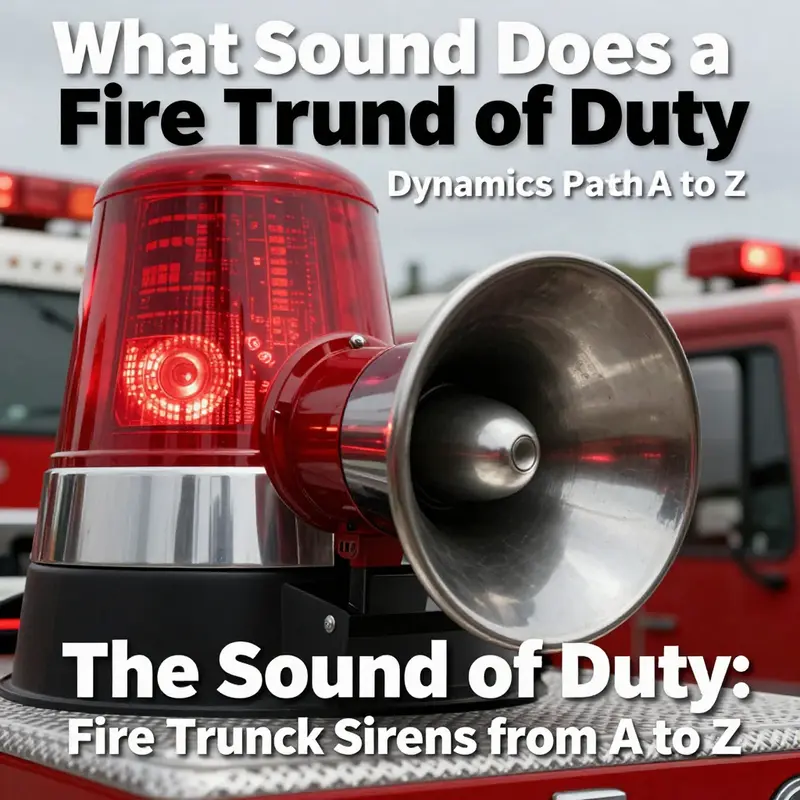
When a fire truck rounds a corner or bursts into an open street, the air itself seems to tremble with a signal designed to command attention. The siren is not an arbitrary blare but a finely tuned acoustic system. Its high-pitched wail and crisp yelp are crafted to rise above the city’s clamor and grab the ear of anyone behind a steering wheel, a storefront window, or a quiet living room. The goal is not merely to be loud; it is to be unmistakable, to cut through the chorus of noises that define urban life. The sound arrives as a package of tones and rhythms that, once learned, becomes almost instinctive. A listener recognizes the pattern even when the siren is far away or partially muffled by distance. In that sense, the fire truck’s sound is a public safety language, a universal cue encoded with urgency, proximity, and intent. The science behind this language rests on the siren’s dynamic patterns: the wail, the yelp, and the piercing notes that serve different purposes and different environments. In many modern fleets these patterns are driven by electronic sirens, which can switch between sequences in real time. The moment-to-moment choice of pattern is a strategic decision, a response to the urban terrain and the traffic that the responders must negotiate as they push toward the scene. The result is a soundscape that is variability itself: a spectrum of timbres and rhythms that can be tuned to the moment and the space in which the emergency unfolds.
The core elements of the siren—the wail, the yelp, and the piercing tones—have distinct functional roles. The wail is a long, smooth rise and fall in pitch. It travels well over longer distances, making it an effective early warning in wide, open corridors or when a truck must announce its approach to a broad, multi-lane roadway. The yelp, by contrast, is rapid and pulsing, a short-burst cadence that excel at dense urban environments where traffic is tightly spaced. The quick succession of highs and lows keeps the sound perceptible as it weaves through parked cars, bus stops, and pedestrians who may be momentarily distracted by their own rhythms of daily life. The piercing notes and even higher frequency elements add an edge that helps the siren land on the ear of someone who’s facing away or who is surrounded by noise, creating a moment of conscious recognition. In practice, many contemporary fire engines operate with electronic sirens capable of switching between these patterns at a moment’s notice. A crew can shift from a wail to a yelp in the middle of a siren sequence if the situation demands tighter traffic gaps or a louder, more abrupt cue to nearby drivers. This adaptability is not a mere convenience; it is a safety feature rooted in research about how humans perceive and react to urgent sounds.
Distance shapes the experience of the siren as much as it shapes the fire truck’s strategy. When the vehicle is close, the siren’s tone becomes intense, and the Doppler effect—the shift in pitch as the vehicle approaches and then passes—gives the listener a dynamic sense of proximity. The sound can feel almost tactile, a sonic push directing pedestrians to move away from the path and drivers to clear a lane. Up close, the siren is often bright and forward, sometimes slightly distorted by the immediacy of the proximity and the vehicle’s own mechanical systems. As the truck recedes, the sound recedes too, losing some of its edge, morphing into a fainter, more diffuse signal that lingers in the ears and memory. In quiet or rural settings, the siren can seem almost exaggerated by contrast, an audible beacon that marks not just an emergency but the path the responders will take. In city blocks, where ambient noise is relentless, the siren must punch through a dense acoustic environment. Here, engineers and safety researchers emphasize the frequency content of the signal as much as its amplitude. High-frequency components tend to be detected faster by the human ear, particularly when ambient noise sits in the mid- and low-frequency bands. This scientific insight helps explain why the siren’s characteristic pitch remains a defining feature of fire-truck sound—an audible signature that people can identify even when other cues are compromised.
The design choices behind sirens reflect a careful balance between effectiveness and comfort. The siren’s tones are selected not only for their attention-getting properties but for how they blend with other sensory cues. Emergency lighting provides a visual counterpart to the auditory pulse, creating a multi-sensory cue that reinforces urgency. The vehicle’s approach is often coordinated with traffic command and public safety protocols, so that the sound sequence aligns with the team’s tactical needs and the evolving layout of streets and intersections. In this context, the siren is part of a broader communication strategy, not a standalone artifact. It works alongside radio communications, traffic control measures, and the visible arrangement of lights and position on the road to tell bystanders what to do and where to go. The siren’s efficacy depends on more than loudness; it depends on the pattern’s recognizability and timing. Human factors research, including work by safety professionals, shows that the combination of volume, frequency, and cadence reduces reaction time and increases awareness. When a siren pattern is well understood by the public, responders can reach the scene sooner with less risk to themselves and to others.
The sonic language of a fire truck has also become a cultural signal within media and education. Royalty-free audio libraries and sample recordings circulate widely, offering educators, filmmakers, and game designers authentic references to the real thing. These resources give people a chance to study how a siren’s different modes express urgency, proximity, and intent without the unpredictable variables of live traffic. The practical value of this sonic repertoire is clear: it helps explain why a siren sounds the way it does, how it communicates under dynamic conditions, and why certain patterns feel instinctive in particular settings. For those exploring the topic more deeply, the Firetruck Blog serves as a repository of insights and discussions about the broader sonic landscape of emergency vehicles. The blog’s discussions illuminate how sirens have evolved alongside urban design, safety standards, and public expectations. This is not merely a technical catalog; it is a narrative about how communities learn to listen, respond, and share the road with responders in moments of crisis.
The science behind these sounds also connects to practical media usage. In classrooms, games, and news productions, authentic fire-truck siren sounds can be deployed to convey realism and intensity. The choice of pattern can shape a scene’s tempo and tension, and the awareness of which signals correspond to particular proximities helps performers and designers craft believable experiences. The siren thus operates on multiple levels: it is a tool for immediate safety, a cue that aligns with traffic control, and a cultural symbol of urgent response. It speaks not only to the ears but to the collective memory of cities where the wail and yelp have become a familiar soundtrack of emergencies. As communities continue to adapt to new technologies and new urban forms, the siren’s repertoire will likely expand, incorporating more adaptable electronic systems, smarter steering cues, and perhaps even personalized acoustic cues that calibrate to the listener’s environment. Yet at its core, the siren remains a carefully engineered signal: a high-pitched, attention-grabbing call that can be heard, understood, and acted upon in the critical seconds when every moment matters.
For readers who want to explore further, the broader sonic landscape surrounding fire apparatus is discussed on the Firetruck Blog, which offers a centralized hub for context, examples, and conversations about how these vehicles communicate through sound in busy streets. This chapter’s treatment of wail, yelp, and piercing patterns is intended to illuminate not just what the sound is but why it exists in the form it does, and how people perceive it in the real world. In the end, the siren’s power lies in its ability to be heard, recognized, and acted upon—an engineered signal that shapes behavior, safeguards lives, and remains one of the most enduring auditory cues of urban emergency response. For a deeper dive into the sonic nuances and to connect with related discussions, you can visit the Firetruck Blog. https://firetruck.space/blog/
External reference for further study: a concise exploration of siren dynamics and their acoustic characteristics is available here: https://www.tiktok.com/@firefightinginsider/video/7345678901234567890
Sound as Signal: Fire Truck Sirens in Urban Response
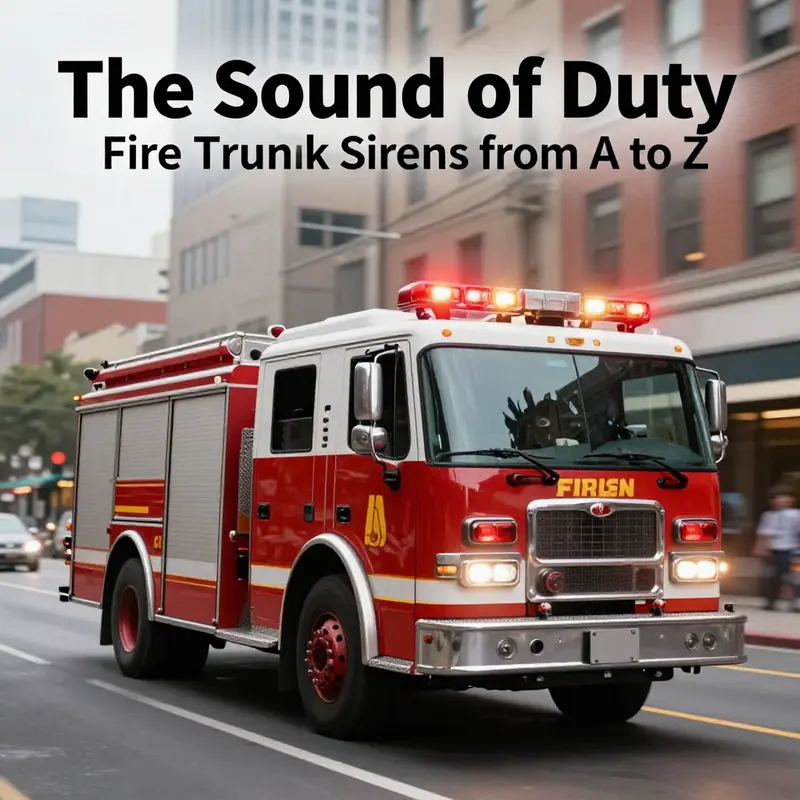
When a fire truck powers through city streets, the first message often comes from the siren. The piercing tones are designed to be heard over traffic, rain, and crowds, signaling urgency and inviting a rapid, predictable response. Engineers craft these sounds as a communication system: a repertoire of tones and patterns that drivers can recognize almost reflexively. The result is a shared auditory code that helps people yield, slow down, and steer toward a safer path. Sirens change with distance and environment, shifting in volume and timbre as the vehicle approaches or moves away. This sound design sits at the intersection of safety science and urban life, balancing immediacy with restraint to protect both responders and residents. In practice, the siren works alongside lights, driver training, and traffic norms to orchestrate a coordinated, life-saving movement through a busy city.
What Sound Does a Fire Truck Make: The Acoustic Engine Behind Emergency Response and Public Perception
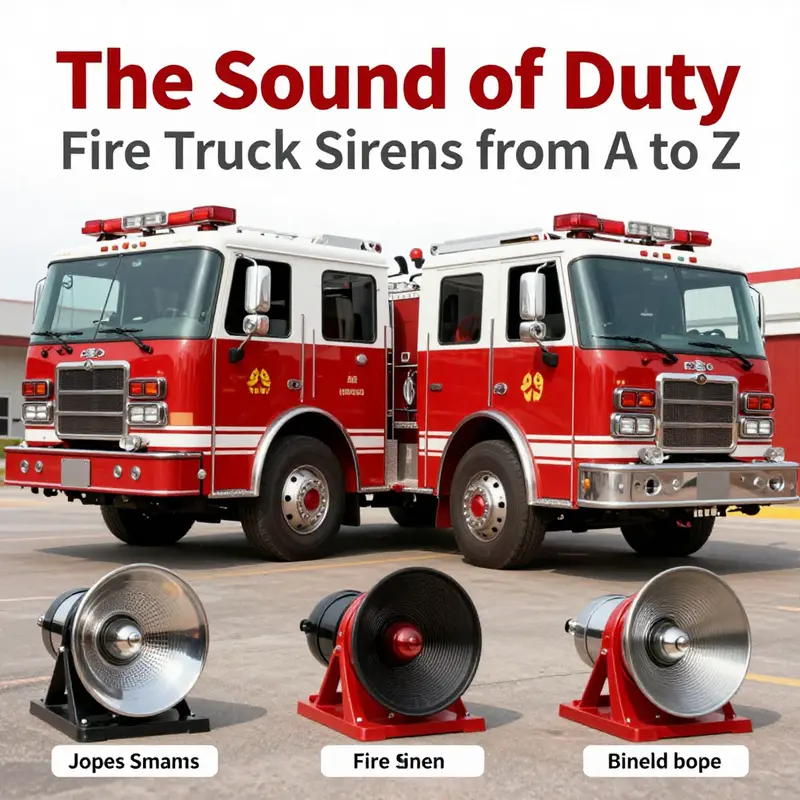
Few urban sounds are as immediately recognizable as the piercing wail of a fire truck’s siren. It is not merely noise; it is an engineered signal designed to cut through city clamor, to travel across glass and concrete, and to summon attention when seconds may decide outcomes. The siren is the frontline tool on the road, a moving beacon that must coexist with everything from honking taxis to the drone of subway trains, from the hum of air conditioning to nighttime crickets. The goal is simple in concept yet demanding in execution: to be heard clearly, to convey urgency, and to guide a mass of drivers and pedestrians toward safety and clearance, all without adding to the chaos that already swirls around an emergency scene. The sound is not uniform across every fire vehicle or every response, because the sonic demands shift with distance, environment, and the particular objective of the moment. A quiet, distant street at dawn can warrant different acoustic choices from a congested downtown corridor at rush hour. In each case, operators and sound designers balance audibility with the experience of bystanders, aiming for signals that are immediate and unmistakable, yet controllable enough to avoid listener fatigue during long shifts or frequent drills.
The siren itself is a composite of several technologies and patterns, each with a distinct acoustic fingerprint. The most familiar is the wail, a smooth, rising and falling interval that carries sound across long distances. It is engineered to project through the thickness of urban walls and over traffic noise, enabling drivers to react in time as the vehicle nears, passes, and then recedes. The wail’s long-range effectiveness rests on a dynamic interplay of amplitude, frequency, and the Doppler effect—where the pitch seems to rise as the siren approaches and fall as it moves away. This Doppler shift is not merely a curiosity; it is a proven cue that human listeners instinctively interpret, guiding decisions about when to brake, yield, or change lanes. In practice, the wail serves as the broad beacon, drawing attention from a distance and establishing the baseline urgency of the unfolding scene.
Yet the urban environment also demands more than a single tone. The Yelp, a rapid alternation between two high-frequency notes, excels at cutting through heavy city noise. Its sharp, insistent cadence heightens perceived urgency in cluttered traffic where a steady wail might blend into the background. The Hi-Lo or wah-wah pattern adds another layer of spatial awareness. By alternating between a higher and a lower pitch, this pattern provides strong directional cues, helping drivers judge the position and approach of the vehicle in narrow streets and intersections where acoustics are complicated by walls, parked cars, and pedestrians stepping into crosswalks. In crowded cores, where sound can bounce unpredictably, the Hi-Lo sequence can be more efficient at capturing attention without overwhelming nearby bystanders with a monotone surge of noise. The choice among these patterns is not arbitrary. Research in the field of human factors and fire service practice indicates that certain siren cadences are more effective at eliciting quick, compliant responses in noisy environments. The Yelp and Hi-Lo patterns, in particular, have shown advantages in urban contexts, where the acoustic landscape is dense and the potential for signal masking is high.
Beyond electronic sirens, many fire trucks supplement the audible spectrum with air horns or compressed air whistles. These devices deliver a deep, booming blast that carries far and cuts through barriers and urban reverberation. The air horn’s lower frequency content can pierce walls and physical obstructions that softer siren tones struggle to negotiate, giving responders a practical tool for close-range clearing when traffic is heavily congested or when vehicles are stationary near the incident. The combination of electronic sirens with air horns creates a layered sonic signature: a broad-spectrum alert that can be perceived at varying distances and through different acoustic environments. The synergy between these elements is part of a broader strategy to tailor sound to the setting, balancing reach with comfort for bystanders who may experience the siren for extended periods during drills or in routine city operations.
Distance matters in shaping the perceived character of the siren. Up close, the siren becomes a powerful, almost tactile signal—loud, piercing, and sometimes slightly distorted by the Doppler effect as the apparatus passes nearby. The human ear receives a rush of frequencies, and the brain interprets this complex signal as imminent action. At a distance, the siren is mellower, more muffled, and sometimes described as the distant fire truck sound—a reminder that the actual machine is still several seconds away but the alert has already begun to prime responses in the surrounding traffic. This dynamic is not just a philosophical observation. It informs the calibration of siren volumes, frequencies, and patterns so that the signal remains effective at different ranges and through various urban impediments, from glass storefronts to dense traffic lanes. The aim is a signal that remains intelligible across the cityscape, reducing the chance of misinterpretation or delayed action.
The modern approach to sirens increasingly embraces digital systems that allow departments to customize sounds based on the situation. Digital control can adjust the cadence, timing, and even the mixture of tones to suit specific urban neighborhoods, traffic densities, or weather conditions. This adaptability has implications for efficiency and safety. A digitally tuned siren may be more effective at triggering timely responses while also mitigating auditory fatigue for responders and bystanders who encounter siren noise repeatedly in the course of daily life. In embracing such technology, fire departments acknowledge that sound is a tool with cognitive and emotional dimensions. People don’t just hear sirens; they interpret and react to them, and those reactions help shape the behavior of drivers and pedestrians alike. The social dynamics of siren sounds extend beyond raw audibility. They involve trust, expectation, and learned patterns that communities associate with emergency response, shaping how people respond when a siren finally fills the air over a city street.
From a broader perspective, the study of siren types and their impacts sits at the intersection of engineering, psychology, and public safety policy. Organizations focused on safety performance, including the National Fire Protection Association, have documented how different siren cadences influence traffic clearance and driver behavior. The evidence suggests that a mix of patterns—balanced between wail, Yelp, and Hi-Lo—can maximize attention while minimizing auditory fatigue over repeated exposures. This nuanced understanding informs training, not just the operation of the vehicles themselves. Firefighters and drivers learn to anticipate how pedestrians and other drivers may respond under different metropolitan conditions, and they adapt their driving techniques to synergize with the audible cues they emit. The goal is not to frighten or overwhelm, but to create a predictable, rapid, and efficient flow of traffic that enables rescue operations to unfold with minimal delay.
There is a practical dimension tied to public education as well. The sounds of emergency respond to everyday experience. People who live near busy corridors learn to recognize the distinct rhythms of wail, Yelp, and Hi-Lo, and they develop a mental map of what a siren signal means in different contexts. This recognition supports safer behavior: yielding, pulling to the curb, or stopping in a way that clears passages for responders without escalating anxiety. In this sense, the siren acoustics contribute to a broader culture of safety, bridging the gap between field tactics and community behavior. For those who study or teach sound design in public safety contexts, the siren is a compelling case study in how auditory signals carry social meaning as well as mechanical purpose.
For readers who want to explore more practical, field-oriented materials on siren technology and standards, broader professional discussions often reference official guidelines and updates that shape how departments implement and upgrade their sound systems. The conversation is ongoing, reflecting both advances in digital sound synthesis and evolving expectations for urban soundscapes. If you are curious about the latest standards and how they inform siren design, a reliable starting point is the National Fire Protection Association’s recent code updates, which articulate the requirements and recommendations that influence siren configurations, sequences, and compatibility with other alerting systems. This evolving knowledge base helps ensure that the sirens of today remain effective without becoming intrusive or fatigue-inducing for communities that depend on them. For further details on siren technology and its operational impact, refer to the official guide published by the National Fire Protection Association: https://www.nfpa.org/Code-Updates/2024-Fire-Service-Standard-Updates
To connect with ongoing industry discussions and case studies that illuminate how these sounds are evolving in real-world settings, you can explore a broad range of resources and examples through the Fire Truck blog. For more on this topic and related developments, see firetruck.space/blog/.
In sum, the sound a fire truck makes is not a single, static signal but a carefully crafted sonic toolkit. It blends different cadences, frequencies, and devices to create a multi-layered alert that travels through the urban soundscape with clarity and authority. The wail, the Yelp, and the Hi-Lo each play their part in a larger choreography designed to protect lives and property. The integration of air horns adds an extra dimension of reach and emphasis when complexity and distance demand it. The effectiveness of these sounds hinges on more than loudness; it rests on perceptual psychology, environmental acoustics, and thoughtful policy that shapes how communities respond to emergencies. As technology advances and as cities grow louder and more intricate, the sonic signature of emergency response will continue to adapt—always seeking the delicate balance between urgent communication and respectful coexistence with the public it serves. The siren is, in every sense, a living instrument in the city’s emergency orchestra, tuned not only to be heard but to be understood, trusted, and acted upon when lives hang in the balance.
External resource: For official standards and updates, see the NFPA guidelines at https://www.nfpa.org/Code-Updates/2024-Fire-Service-Standard-Updates.
Echoes on the Road: Doppler Shifts, Perception, and the Fire Truck Siren
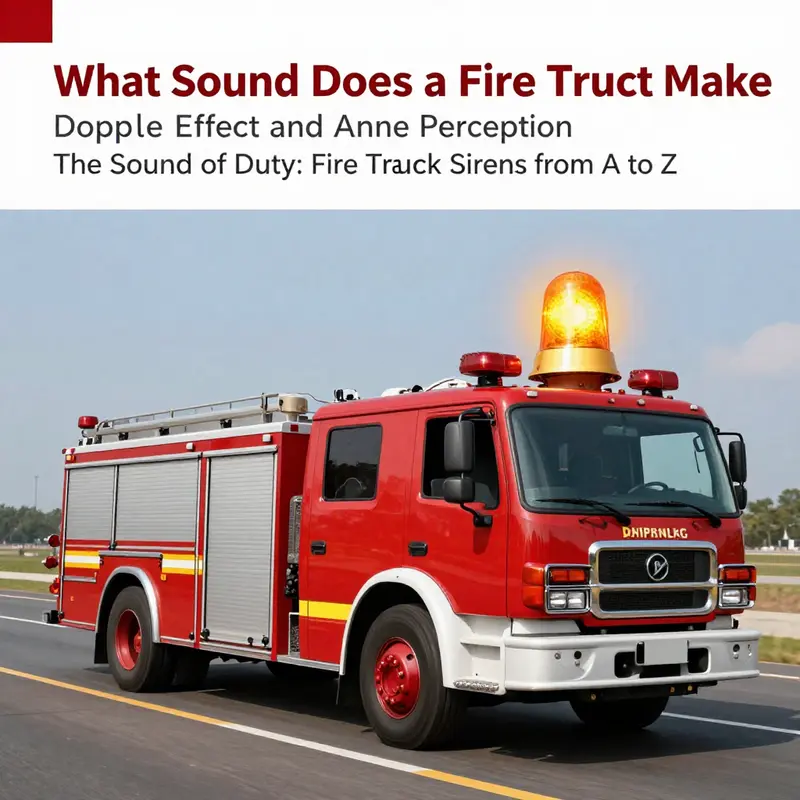
The moment the siren bursts into the street, the world seems to tilt a little toward sound. A fire truck’s call is not just loud; it is a carefully engineered signal designed to grab attention and compel action. The siren’s high-pitched wail or sharp yelp cuts through the chatter of city life, turning a busy avenue into a corridor that demands focus. This is not mere noise; it is a tuned instrument with a specific purpose. The sound is meant to rise above traffic, sirens, and crowds, urging drivers to yield, pedestrians to step aside, and witnesses to acknowledge that help is on the way. The engineering behind this sound is as much about psychology as it is about acoustics. It leverages human sensitivity to pitch and cadence, the way anticipation builds when a note climbs, and the way urgency is conveyed through rapid alternation of tones. In practice, many fire trucks employ dual-tone sirens that alternate between two pitches. The effect is not only a louder signal but a more complex one, harder to ignore because it moves in a pattern that feels almost alive. Separate from the pure siren, air horns or compressed air whistles can add depth, producing a deep, booming layer that helps the vehicle break through especially dense traffic or when it is near enough for close-range notification. Taken together, these components make the siren a multifaceted tool that serves safety as much as it does attention. The design priorities are clear: be heard, be unmistakable, and be quickly interpretable as an emergency signal. The human ear is remarkably good at picking out such cues, but the way we perceive them changes with distance and movement. As a truck advances, the sound does not stay constant. What you hear is a dynamic tapestry of frequency shifts, intensity variations, and directional cues that tell you where the vehicle is headed and how fast it is moving. The concept you experience most vividly is the Doppler Effect, a phenomenon that turns motion into audible change. The Doppler Effect arises because sound travels through air at a finite speed. When the source of the sound—the moving fire truck—approaches, the sound waves ahead of it are compressed. The compression means waves arrive more frequently at your ears, and the pitch climbs higher. The siren’s tone seems to rise as the vehicle closes in, and then, just as it passes and recedes, the waves are stretched out behind the truck. The result is a dramatic fall in pitch almost as soon as the siren has passed, followed by a tapering and eventual quiet as distance grows and the highway noise reclaims the soundscape. This shift from a piercing, urgent cadence to a lower, trailing note is not just a curiosity; it is a protective cue. It helps a listener discern whether the emergency vehicle is coming toward them or moving away, which can influence how one reacts in real time. The faster the truck approaches, the more pronounced the pitch change becomes. In a bustling urban setting, where echoes bounce off glass and brick, the Doppler-induced pitch sweep can feel even sharper. A listener standing on a street corner might first hear a high, almost electric wail as the siren grows louder in the approach, then a quick, almost musical descent as the vehicle passes and moves off. The pattern is not random; it is a predictable signal that people have learned to respond to. Our brains are wired to associate rising pitch with approaching danger and falling pitch with withdrawal, and while acoustic cues are not the sole basis for safety decisions, they are an essential one. The richness of the siren—its tempo, its tonal balance, the alternation between high and low channels—adds to the reliability of that signal. When a siren is loud enough to punch through the din of traffic yet modulated to preserve distinctness, pedestrians and drivers can track direction, distance, and velocity with greater confidence. This is especially important when visibility is impaired, as it often is in rain, at night, or on a crowded street where lines of sight are blocked. The human ear also relies on amplitude to gauge proximity. A siren’s volume tends to grow as the fire truck approaches, even before the Doppler shift makes the pitch more noticeable. But volume alone is not the whole story. A well-calibrated siren can be audible at greater distances without becoming fatigue-inducing, a balance that requires careful testing and iteration during the design phase. In practice, the soundscape of a city is a chorus. There are other alarms, other engines, voices of pedestrians and cyclists. The siren must cut through this chorus with a crispness that feels almost instantaneous, so a bystander can recognize it and react. This immediacy is why the frequency spectrum of the siren matters. A high-pitched tone carries farther and over ambient noise, while a lower tone carries weight, providing a sense of presence at closer range. The dual-tone approach leverages both properties: the higher tone often carries at a distance; the lower tone anchors the sound when the vehicle is near, adding a sense of immediacy as it closes in. It is also why some modern fleets incorporate air horns. The combination of a piercing siren and a deep, booming interlude creates a layered acoustic signature that is harder to ignore than a single tone could be. The auditory cues are then interpreted by listeners through the lens of context. A driver stuck in a traffic jam will not respond to a siren in the same way as a pedestrian stepping onto a crosswalk. The Doppler shift provides a time-indexed cue; the moving source betrays its approach or retreat, while the overall loudness and cadence guide urgency. This is why training for emergency response places emphasis on recognizing siren patterns. It also explains why engineers for emergency-vehicle design study acoustic perception in real environments, not just in a studio. Real-world testing takes into account how buildings, moving traffic, and weather modulate sound. The result is a siren that remains effective across a spectrum of conditions, from the echo-filled canyons of downtown to the open, wind-swept avenues of a suburban road. For readers who want to explore the practical side of sound design and perception further, the Fire Truck Blog offers accessible discussions about the roles of sound in everyday safety and civic life. Fire Truck Blog. Beyond the science of pitch and volume lies a broader truth: the way a sound is crafted and delivered is inseparable from how people respond to it. Sound is not passive; it is an invitation to action. The siren’s tempo and tonal balance are measures of intent as much as acoustic energy. They encode urgency, guide behavior, and even shape the choreography of traffic flow. When a city understands this, the siren becomes more than a sound; it is a move toward safety, a language that bridges machines and people in a moment of shared vulnerability and cooperation. The Doppler Effect makes the moment of encounter legible, a quick map drawn in pitch and rhythm that tells you not only that something urgent is ahead, but when to react. It is a language of motion, spoken through air, heard by trained ears, and interpreted by minds that know to pull over, pause, or yield. In such a way, the fire truck’s call is both a physical event and a social signal—a reminder that sound, motion, and perception are interwoven in the everyday acts of rescue and relief. External resource: a deeper physics explanation of how the Doppler Effect works with moving sound sources can be found here: https://www.physics.illinois.edu/teaching/physics100/doppler_effect.html
null
null
Final thoughts
Understanding the sounds of a fire truck serves not only to appreciate the engineering behind it but also underscores the importance of effective communication in emergencies. The siren—from its dynamic variations to its critical role in saving lives—remains a symbol of hope and urgency. For every enthusiast, aspiring firefighter, or professional in the field, there exists a shared recognition of the siren’s power. It is a sound that transcends mere noise; it is the embodiment of heroic action, calling for attention, cooperation, and respect.