
When it comes to firefighting, the equipment used can be just as important as the brave individuals behind the wheel. One crucial aspect of fire trucks that often gets overlooked is their length, which varies significantly depending on their purpose and design. Fire truck enthusiasts and aspiring firefighters alike are eager to learn about these unique vehicles, as understanding their specifications is vital for both appreciation and safety. Different types of fire trucks serve different missions, from urban firefighting to wildland suppression and high-rise rescues, each requiring specific length configurations to effectively meet their operational demands. In the chapters ahead, we will delve into how long fire trucks typically measure across various applications, illuminating the fascinating world of firefighting machinery.
Measured Reach in the City: Understanding How Long Fire Trucks Really Are
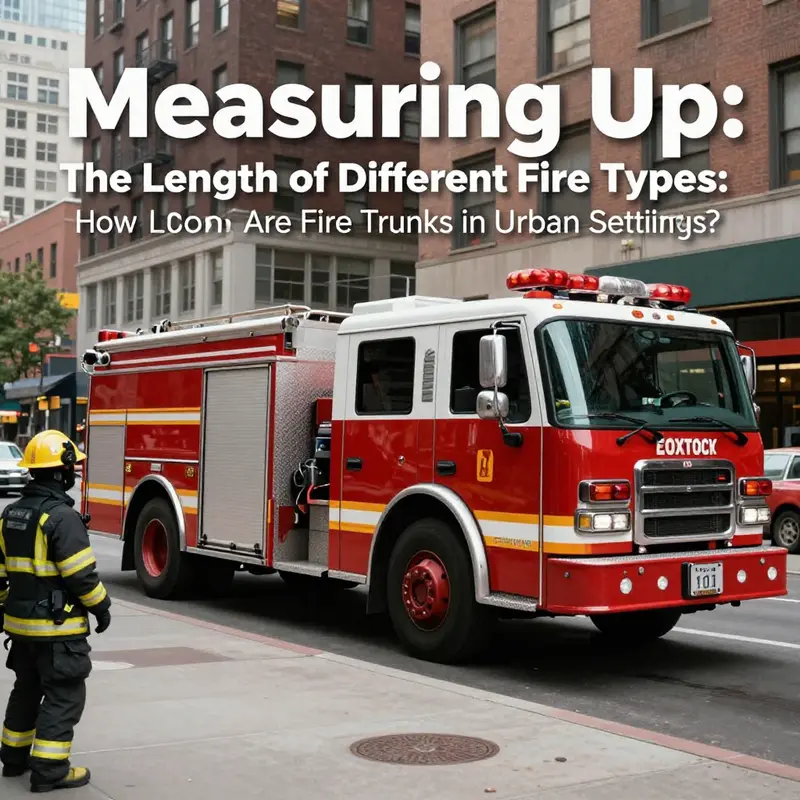
The urban firefighting landscape is a living map of constraints and possibilities. Narrow streets, crowded intersections, stacked parking, and compact garages push designers and fleet managers to think about one simple question: how long is a fire truck, and what does that length mean in practice? The answer is a spectrum shaped by purpose, chassis, and the heavy load of equipment each vehicle must carry. In cities, where every meter of street and every turning radius can determine a rescue or a delay, length becomes a strategic parameter as critical as pump capacity or ladder reach. The literature on urban fire apparatus makes this point: there is no universal length that fits all missions. Instead, there is a family of lengths that correspond to distinct roles, each tuned to local streets and response patterns. From the smallest, nimbler responders to the tallest ladder platforms, length travels with mission emphasis and urban geometry.
In practice, fire departments deploy a palette of vehicle types. Light and small trucks designed for quick entry into congested cores typically range from about 5.5 to 7.5 meters in length (roughly 18 to 25 feet). These compact units are built for speed, maneuverability, and rapid access to tight alleys. They are the city’s scouts, able to weave through traffic and reach the point of need with precision. For incidents in tall canyons, the ability to turn and reposition becomes as crucial as the kit on board. The urban pattern rewards a lighter touch with dimensions that fit narrow streets and tight dead-ends.
The standard pumper or water-tanker adds more length to carry water and essential gear. In most city fleets, these workhorses run about 9.6 meters long (roughly 31.5 feet). This length balances payload capacity, pump power, and the realities of city streets. It is long enough to carry a meaningful water supply yet short enough to negotiate typical street profiles. More length means more room for water and tools, but less agility in tight urban corridors. Departments often pair longer pumpers with shorter, agile vehicles to form a coordinated response fleet. This reinforces the idea that urban fire response is a fleet affair, not a single vehicle solution.
Aerial ladder and platform trucks push into the longer end of the spectrum. Commonly, they reach lengths of about 11.6 meters (roughly 38 feet), though larger models exist. The longer footprint reflects the needs for high reach and the balance between chassis, ladder, and stabilization systems. In high-rise districts, this reach is a lifeline, while in street operations it requires careful placement and pre-planned staging areas.
Rescue and heavy response vehicles can extend toward the upper end of urban lengths, sometimes about 13.4 meters (roughly 44 feet). The extra length translates to more compartments, more gear, and more careful consideration of how the vehicle will be placed and maneuvered. When missions demand heavy rescue or special operations capacity, length becomes part of the toolset, not merely a dimension. The urban footprint of such a vehicle is deliberate, designed to maximize toolkit access and operational reach while arriving promptly and position safely.
Taken together, these categories reveal a city-specific logic about length. In practical terms, most city operations rely on a balanced mix where frontline units cluster in the mid-range—roughly seven to twelve meters—as a workable compromise between reach, payload, and maneuverability. The exact numbers vary with local standards, fleet composition, street geometry, and garage layouts. An orderly fleet plan might emphasize shorter, agile units for initial access while longer platforms handle escalation or specialized missions. In this way, length becomes a strategic asset rather than a mere property of the vehicle.
For standards and guidelines shaping these decisions, NFPA and other safety organizations provide frameworks rather than a single length. Departments test geometry and fit, asking how far the bumper sits from a hydrant, how a rear extends into a loading bay, and how a platform can deploy without colliding with parked cars. In an era of advanced electronics and modular toolkits, the physical length of the vehicle remains a central design question, inseparable from urban streets and emergency rhythms.
Laddered Footprints: The Real Lengths and Reach of Aerial Fire Apparatus
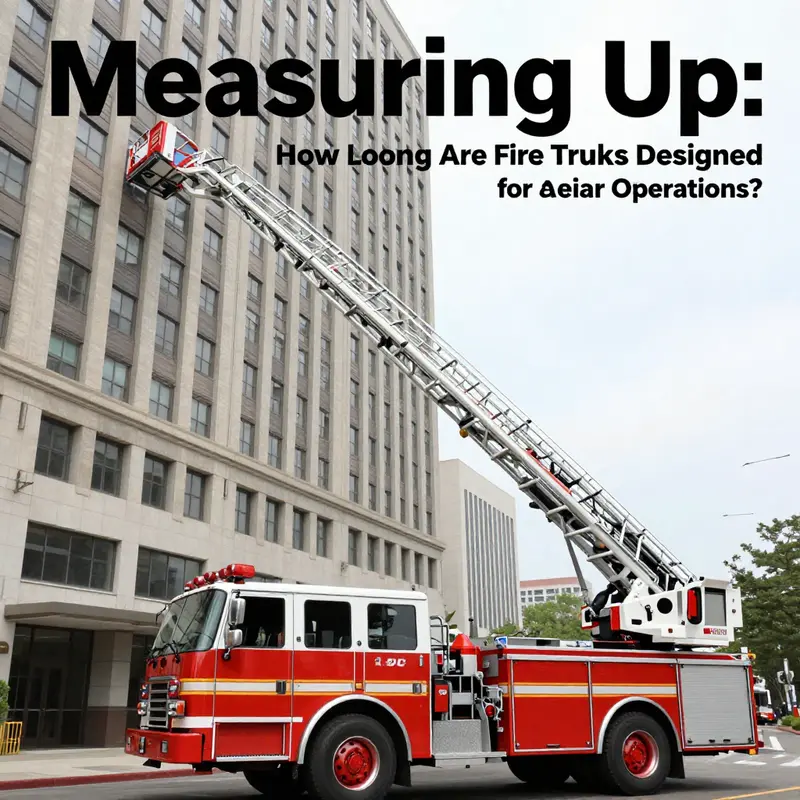
When rescuers tilt a ladder toward a scorching facade, the numbers on the spec sheet feel less like trivia and more like a map of what the city allows a team to reach. Aerial apparatus – the ladders, platforms, and their supporting trucks – are built to extend a firefighter’s reach without sacrificing stability or speed. The question of how long these machines are prompts a broader truth: there is no single length. Height and reach are paired with the vehicle’s footprint, balance, and deployment cadence. In urban landscapes where space is tight and visibility is everything, designers trade off between compactness and capability. They tune the chassis, the turn radius, and the stowed ladder to make sure a team can arrive, position, and work with the ladder in a fraction of the time it would take without such specialized engineering. The result is a family of aerials that vary in length, yet share a common purpose: to put firefighters where they need to be, at the height they need to operate, with enough stability to trust their lives to the next slice of time the fire demands. The baseline length of a typical aerial ladder truck sits in a narrow corridor between roughly 35 and 45 feet. That range reflects a balance struck by many departments: a chassis long enough to house a robust water capability, a compact cab that can slip through tight streets, and a ladder that can reach above gridded skylines without becoming an unwieldy behemoth on the street. Yet even within that band, the total length becomes a moving target once you account for the full package. The cab, the wheelbase, the apparatus body, and the base of the aerial assembly all contribute. If a department opts for a heavier hose complement, a larger water tank, or more tools tucked into the rear sections, the overall length climbs accordingly. And when a ladder is extended to its full working length, its presence adds further to the operational footprint, especially in narrow lanes or crowded avenues where a few extra feet can mean the difference between efficient access and a blind corner. The reach that accompanies this length – the critical measure of how high a ladder can extend or a platform can access – tells its own story. The maximum height and extension of the aerial system generally sits in the range of 70 to 100 feet, a span that translates to roughly 21 to 30 meters. That reach is not merely about lifting up toward a burning roof or a high window; it is about stabilizing a scene at height, aligning a platform to a precise point, and maintaining that position while crews operate under stress, wind, and shifting loads. In most ordinary municipal configurations, the ladder’s reach suffices for the vast majority of high rise and mid rise incidents, allowing firefighters to reach the upper floors without having to place themselves on dangerous or unstable access routes. Some specialized configurations, however, push even higher – up to about 130 feet (around 40 meters) – where the skyline demands more extensive vertical access, and where high rise firefighting scenarios become a test of the apparatus’s structural integrity as much as its height. Alongside these maximums, the practical length of the vehicle remains a constraint that operators must respect as they navigate real roadways. The total length becomes especially consequential in dense urban cores, where turns are tight, and parking lanes are precious. This is where the interplay between the aerial system and the chassis geometry becomes visible at a precinct level. Departments must choose a ladder length that fits their usual streets: broad avenues in sprawling downtowns, or narrow corridors in compact neighborhoods. The same family of apparatus can appear in different configurations, with some models optimized for rapid deployment, and others emphasizing hefty payloads of rescue tools or water misting capabilities. The engineering logic behind these choices is not purely about height; it is about how the machine behaves once rolling, how quickly it can stabilize, and how the crew can move from road approach to full operation with minimal delay. In practice, the longer the vehicle, the more critical the precision in steering and the outriggers’ deployment must become to guarantee a safe, stable platform at height. Material choices and construction philosophies also influence the final footprint. The geometry of the ladder, the thickness of the rails, and the distribution of weight across the chassis all shape the overall length and how the apparatus sits when parked. A modern, steel-centric approach to fire apparatus construction emphasizes durability and predictable weight characteristics, which in turn help determine how long the vehicle must be to maintain a safe center of gravity while the ladder is extended. In the realm of design discussions, you may encounter references to steel-based approaches as shorthand for robust, weight-conscious engineering that preserves geometry under load. For readers who want to explore this dimension in more depth, the topic is discussed in practical terms within specialized design resources. In the meantime, the way length influences operation is evident: longer ladders demand tighter control of the vehicle’s balance, heavier stabilization with outriggers, and a well-planned sequence for deployment that minimizes the risk of movement during critical work. Another layer to consider is the way capacity and equipment load interact with length. Aerial trucks are not just ladders; they are moving workshops with pumps, hoses, hydraulics, rescue tools, and, in some configurations, elevated platforms. The space for these components, including the cockpit and crew compartments, pushes the vehicle to a more substantial overall footprint. When a ladder is extended to its maximum, the visible line along the roof and side of the apparatus becomes a visual cue of capability, but the invisible weight and balance shifts require careful design. The industry’s emphasis on stability – especially in windy conditions or when the truck operates on uneven ground – means that the vehicle’s length cannot be viewed in isolation from its outriggers, ballast, and weight distribution strategy. In other words, a longer ladder is only as useful as the chassis can remain steady when the lift is in motion. This is why the conversation about length often feeds into broader questions of deployment tempo, resourcing, and the overall tempo of the incident command. For readers tracing the thread of how these machines actually behave in the field, it helps to imagine the ladder as a movable extension of the truck’s footprint rather than a separate piece of equipment. The act of extending, aligning, and locking the ladder into position is, in effect, a tailoring of the vehicle’s geometry to the scene at hand. The articulation of the ladder, the angle of approach to the building, and the platform’s orientation toward a window or balcony all depend on the fusion of reach and length. In practice, this means that an aerial with a longer reach is not automatically more agile; instead, it requires disciplined, precise positioning and a thorough understanding of street geometry, building setbacks, and the presence of pedestrians or other vehicles. The operator’s job is to translate the ladder’s theoretical capabilities into a safe, efficient on-scene operation. The result is a harmonization of height, length, stability, and speed that makes the aerial system a reliable, rapidly deployable tool rather than a cumbersome obstacle in a crowded street. If you want to see how these considerations translate into real-world design choices, a closer look at the broader category of steel-based construction and the way it informs geometry can be illuminating. The internal resource linked here highlights how material choices intersect with weight distribution and long-range stability in fire apparatus design. For those seeking standards that shape how these machines perform, the National Fire Protection Association outlines performance benchmarks and safety criteria that govern aerial reach, vehicle length, and deployment protocols. This framework helps ensure that a longer ladder does not come at the cost of stability or reliability, and that departments can rely on consistent behavior across different configurations and duty cycles. In practice, the choreography of length, reach, and stability becomes a disciplined craft rooted in tested standards, with the ladder’s reach serving as a critical safety and access tool rather than a mere metric. For a broader exploration of how these machines are positioned within fire service fleets and how departments determine the right balance between height, reach, and footprint, an additional resource on fire apparatus landscape and sales considerations can provide practical context. You can learn more about the market and selection criteria through an internal reference. And for a technical angle on materials and construction philosophies that influence geometry, the steel-based resource linked earlier offers a focused lens on the intersection of strength, weight, and length. Finally, for standards and performance benchmarks that govern aerial design, consult the NFPA’s official standards at NFPA.
null
null
null
null
Length by Design: How Specialized Fire Trucks Reflect Their Roles and the Environments They Serve
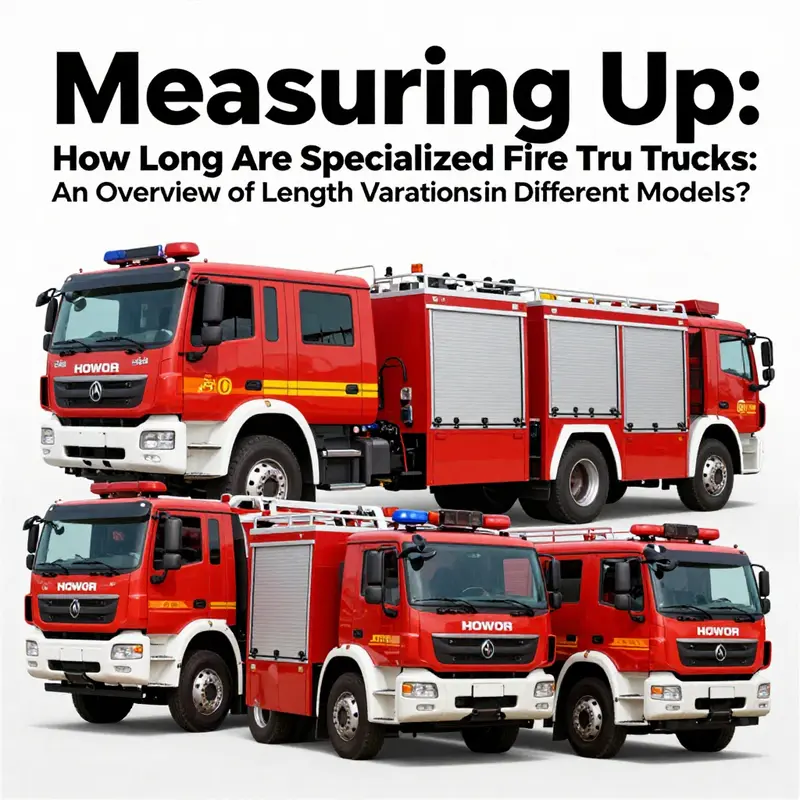
Fire trucks invite a closer look at how length encodes a vehicle’s mission. There is no single universal number; length varies with purpose, chassis size, tank capacity, ladder or boom requirements, and access constraints of the operating environment. In urban districts, pumpers are typically around twenty to twenty-five feet long, balancing water capacity with maneuverability through congested streets. When more reach or specialized gear is needed, manufacturers extend the chassis and body, sometimes adding a heavier rear section to accommodate larger pumps, additional compartments, or equipment. A longer length supports more volume but can complicate maneuvering at a busy scene or narrow street corner. This tension between capacity and agility drives fire apparatus engineering.
Aerial ladder trucks add length through long booms and platforms. The boom itself adds substantial length, and a stable chassis is needed to operate safely. Aerials commonly run longer than standard pumpers, often in the range of twenty-eight to thirty-five feet. The extra length affects weight distribution, turning dynamics, and ladder deployment in proximity to a building. In high-rise districts the longer wheelbase can yield steadier counterbalance as the ladder extends, but it can also limit steep-slope maneuvering or tight corridor navigation.
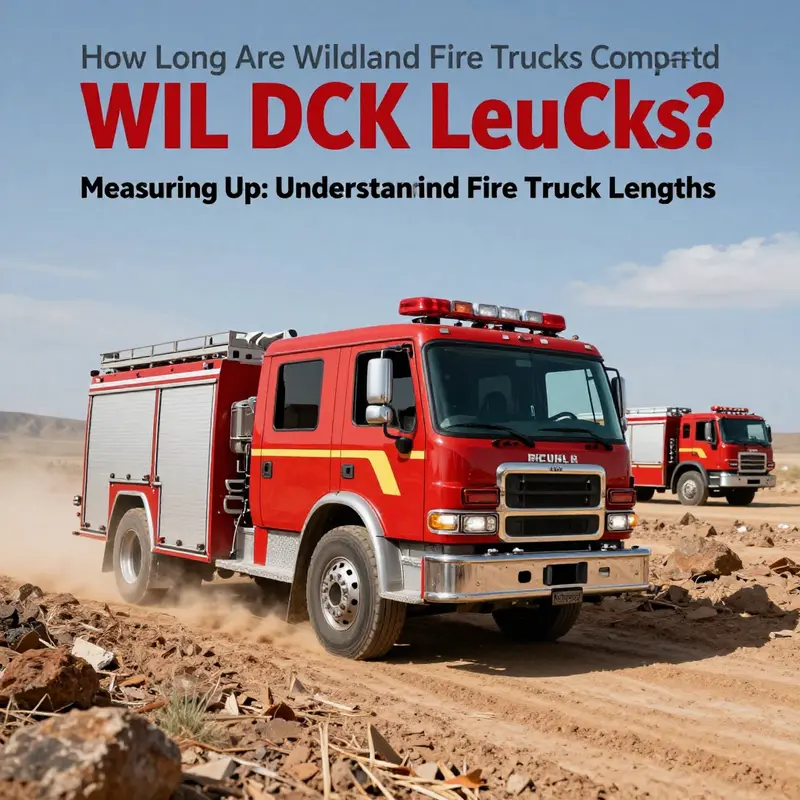
Wildland engines tend to be shorter and more compact, around eighteen to twenty-two feet, prioritizing off-road mobility. The streamlined design reduces weight and improves handling on rough terrain and forest roads. Shorter footprints support rapid positioning and reduce the risk of snagging on brush, with a trade-off in internal volume for tools and longer hoses.
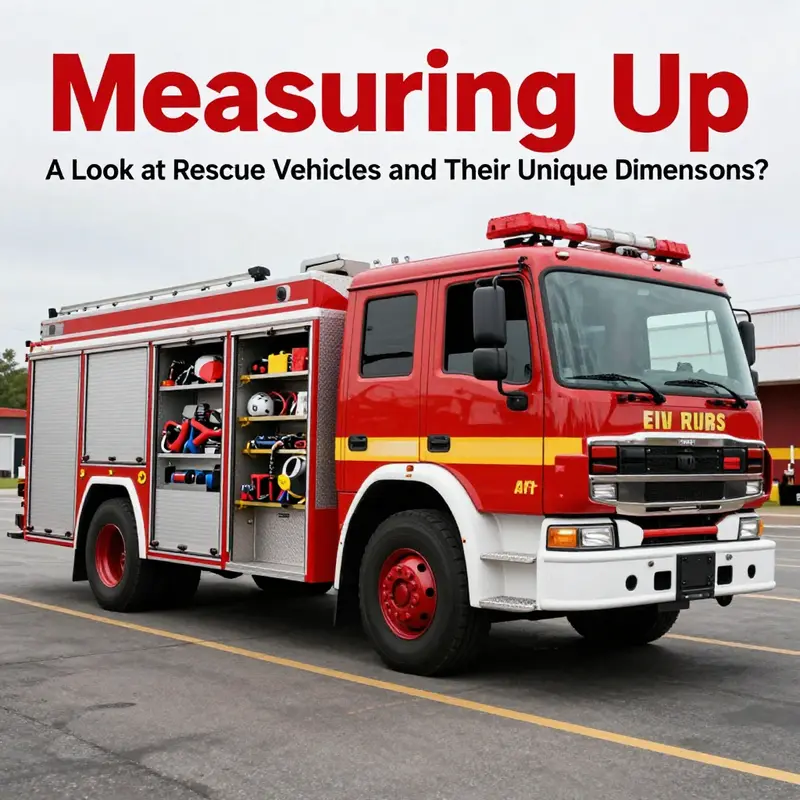
Rescue tenders and heavy rescue vehicles blend capacity with gear storage, often sitting between standard pumpers and aerials. They have extended rear sections, longer wheelbases, and larger compartments to house stabilization tools, extrication gear, and heavy lifting equipment. Length here emphasizes organizational efficiency and rapid accessibility to gear where seconds count.
Manufacturers treat length as a multi-dimensional design problem. Chassis size sets a baseline, but body layout, tank and pump capacity, hoses, and equipment drive final length. Even within a mission type, different model lines can differ by several inches due to cab design or the inclusion of options like a knuckle crane or dedicated aerial. The result is a spectrum rather than a single figure, tied to geography, budget, and operational tempo.
For practice and procurement, exact lengths come from official product sheets. General ranges help, but the precise figure should be verified against manufacturer specifications. Readers cataloguing options should request dimensional drawings to confirm clearance in tight environments. The goal is to match a truck’s length to the geography it serves and the pace of its crew.
In short, length is a function of mission, environment, and engineering philosophy. From compact off-road responders to extended platforms, the driver is balancing reach, capacity, and maneuverability. External resources and manufacturer specs fill in the exact numbers, while understanding why those numbers exist helps interpret them as new designs roll out to meet evolving challenges.
Final thoughts
Understanding the lengths of various fire trucks is essential for both appreciation and operational effectiveness in firefighting. Each type of fire truck—from pumper trucks that serve urban environments to specialized aerial and wildland engines—has distinct dimensions tailored to their specific missions. These lengths are not merely numbers; they represent careful engineering and design to ensure efficiency during emergencies. As fire truck enthusiasts, aspiring firefighters, and professionals in the field, knowing the specifications of these vehicles enhances our collective knowledge and respect for firefighting services. By demystifying fire truck lengths, we can better comprehend the critical role these machines play in serving and protecting our communities.