
Understanding the cost of a new fire truck is essential for firetruck enthusiasts, aspiring firefighters, and firefighting professionals. With a wide range of options available, the price of these vehicles can vary significantly based on various factors such as size, configuration, brand, and specific capabilities. This guide delves deep into the pricing landscape, providing an overview of different types of fire trucks, their features, and trends in the market. Each chapter will explore the variability in costs, offer comparative analyses, discuss influencing factors, and highlight trends between domestic and imported vehicles, ensuring you’re well-informed whether you’re considering a purchase or merely indulging your passion.
What It Costs to Answer the Call: A Comprehensive Look at the Price Spectrum of New Fire Trucks
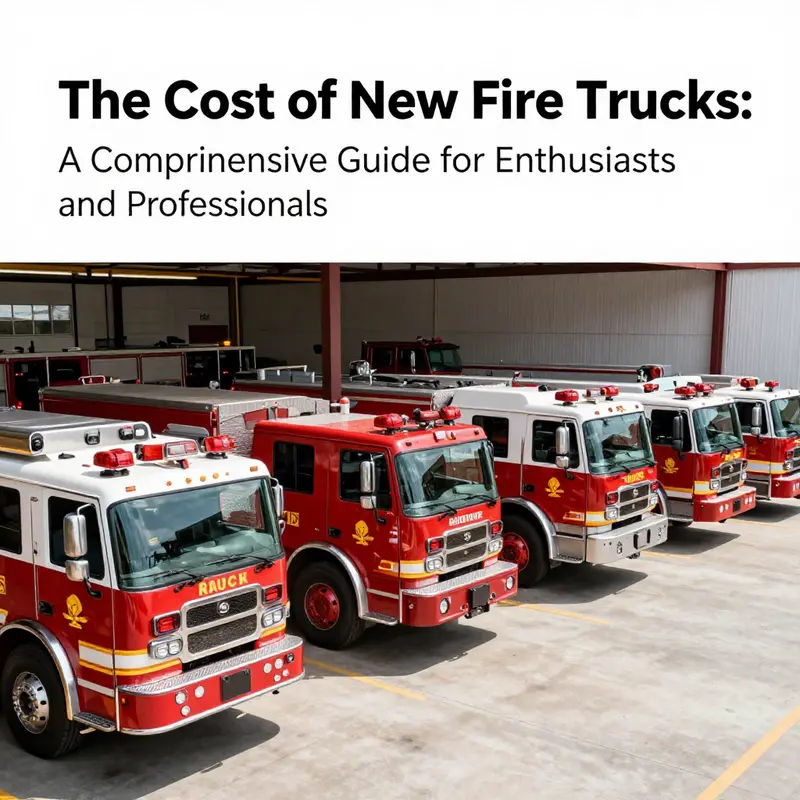
When a fire department contemplates a new apparatus, the question often boils down to price, but the answer is rarely simple. A new fire truck is not a single product but a family of vehicles designed for varied missions, environments, and response requirements. Price emerges from a carefully balanced equation that weighs size, capability, and reliability against the realities of a department’s budget, anticipated usage, and the long-term costs of ownership. Understanding this pricing spectrum begins with framing the most basic distinctions: the range of sizes and configurations that a modern fleet might deploy, and how those choices ripple through the bottom line. At the smallest end, basic firefighting trucks offer essential pumping capacity and water delivery with minimal additional equipment. These units, often built on standard chassis, deliver a practical combination of cost efficiency and operational usefulness for smaller communities or departments prioritizing straightforward response tasks. The sticker price for such entries can be surprisingly low, reflecting a configuration that emphasizes core function over expansive kit. Yet even within this tier the price can vary, not merely because of manufacturer name or country of origin, but because pump sizing, tank volume, and the quality of basic operational systems contribute disproportionately to the overall cost. In practical terms, a brand-new unit designed for light to medium duty, with a modest pump and a compact water tank, tends to occupy the lower part of the market, while still delivering the reliability expected in critical service. As the market evolves, suppliers frequently present a spectrum that begins in the mid-tens of thousands and can climb toward the upper end of a few tens of thousands for newer, basic configurations. This is not an accident of marketing; it is the reflection of how much containment, flow, and maneuverability a department truly needs, and how those needs align with maintenance and lifecycle expectations. A department weighing its first major purchase versus an upgrade will frequently consider a few benchmark figures that anchor the conversation: a basic new unit in a tighter budget range, a more capable but still economical model, and then the more feature-rich configurations that promise longer service life and greater versatility. Enter the middle ground, where most departments inhabit much of their planning space. Here, a standard 6×4 chassis with a 10,000-liter water tank, designed for steady urban and suburban responses, often appears as a practical baseline. The price band commonly associated with such configurations sits in a range that is accessible for many municipalities, reflecting a balance between robust water delivery, manageable maintenance costs, and the hydraulic efficiency needed to meet contemporary response expectations. While the exact price tag will vary by country, currency, and the specific configuration—such as pump size, hose complements, and the presence of basic foam or ladder systems—the central idea remains consistent: you pay for the ability to deliver a reliable, adequate volume of water in a timely fashion, with the assurance that support and spare parts are available locally. Moving up in capability, the market reveals a set of more advanced, mid-range models that broaden the scope of what a single vehicle can accomplish. A typical mid-range unit is still built on a 6×4 or similar platform, but its water tank grows, the pump capacity increases, and it often comes with a more substantial set of ancillary features. In many market segments the headline cost for these models sits in the low to mid five-figure range, with the added value of improved pump efficiency, larger water reserves, and sometimes enhanced foam capability. These advantages translate into better spray patterns, faster knockdown in challenging fires, and a greater margin of safety for the crew. For departments that require more specialized efficiency—whether water foam capability, larger capacity for long-duration operations, or elevated payload for rescue and incident command needs—the price trajectory climbs again. Specialized units, such as large, multi-axle foam-equipped fire trucks, exemplify the premium end of the spectrum. These vehicles combine high-volume water or foam delivery with extended pump performance, significant tank size, and often more sophisticated stabilization and chassis systems. The cost here is not just about raw power; it is about the confidence a department gains from a vehicle that can alter the course of a complex incident. In these configurations, tank capacity and pump capacity scale together, and the optional features multiply. A unit configured for extended operations—capable of sustained water delivery with integrated foam and perhaps rescue tools—will sit well into six-figure territory, and it can approach or exceed the upper end of seven figures in some markets when premium finishes and advanced maintenance packages are added. The variability, of course, is not limited to domestically produced equipment. The global market also includes imported models that command a premium. Vehicles sourced from advanced manufacturing regions may carry higher price tags, reflecting not only build quality and technology, but also the logistics of import duties, service networks, and longer lead times. Importantly, the price premium attached to such units is not merely a luxury; for some departments, the durability, reliability, and advanced diagnostics of these trucks can translate into lower lifecycle costs and higher reliability in extremis. Across this broad landscape, a consistent thread runs through the pricing story: the value of a new fire truck is a function of what it can do on the ground, not only how it measures up on a showroom floor. The most robust, feature-rich machines carry the price burden of multiple functions, where a single vehicle must perform as a fire pump, foam system operator, water carrier, and, in some cases, a mobile rescue platform. It is this multifunctionality that tends to command the higher end of the price spectrum, particularly for departments that anticipate prolonged incidents, challenging terrains, or the need to deploy a unit in regions with difficult logistics. Yet even within the high end, the landscape is nuanced. Some nations or regions that prioritize rapid deployment and high uptime will invest in premium or imported configurations, while others optimize for lower upfront costs by adopting locally manufactured or standardized platforms with modular add-ons. In both cases, the decision is tempered by annual maintenance costs, available technicians, parts supply, and the expected service life of the vehicle. All of these factors—pump capacity, tank size, chassis design, and the breadth of optional features—shape the price trajectory and the expected lifetime value of the purchase. For a department that must balance capital budgets with ongoing operating costs, the decision often resolves into a long-term view of return on investment. This includes not only annual maintenance and fuel efficiency but also the impact on crew safety, incident outcomes, and readiness. A well-timed acquisition can yield improved response times, enhanced water delivery efficiency, and reduced wear on aging equipment, which in turn translates into measurable cost savings over the vehicle’s service life. To support decision-making, many buyers rely on price bands that align with mission profiles and risk assessments. In practical terms, the spectrum runs from a modest, basic firefighting unit designed for small communities to highly specialized platforms that support complex urban rescues and hazardous environment responses. Across this spectrum, there is a common disclaimer: exact pricing is highly situational. The specific configuration, the chosen chassis, the pump horsepower, the tank volume, and any integrated systems will push the price up or down. For those evaluating options, a useful rule of thumb is to consider the median of the market for a reliable, modern vehicle as a starting point—roughly in the mid-range of typical new-fire-truck pricing—and then add or subtract based on the mission requirements, geographic considerations, and the anticipated lifecycle costs. In the end, the price is a proxy measure for the vehicle’s capacity to perform under pressure. A department will not only be paying for a piece of equipment but for a dependable partner in emergency response, a machine that must perform when minutes count and the stakes are high. If you are navigating current market listings to contextualize these numbers, you can explore a broader landscape of options through specialized marketplaces that aggregate current offerings, including dedicated pages for Fire Trucks for Sale. These listings provide concrete examples of how the market translates configuration into price in real time, helping buyers compare not just the sticker price but the value proposition of each build. For more context and direct access to current inventories, see the Fire Trucks for Sale page. In addition to market listings, it is important to recognize that global pricing dynamics affect all levels. Exchange rates, freight costs, and regional demand influence the sticker price once the vehicle leaves the factory floor. A unit purchased in one country may arrive at a markedly different price in another due to tariffs, subsidies, and the relative strength of local maintenance ecosystems. In short, while there is no single number to apply to every new fire truck, there is a reliable framework for understanding what drives price. Basic units offer affordability and simplicity, mid-range platforms deliver enhanced performance and versatility, and high-end configurations fuse power with specialized systems that expand the vehicle’s mission envelope. Across all tiers, the common thread remains the same: price reflects the expected performance, resilience, and total cost of ownership over the vehicle’s service life. As departments consider new purchases, they should regard price as a starting point in a broader conversation about readiness, resilience, and community protection. They should also recognize that, while a given configuration may carry a higher initial price, the downstream savings in maintenance, uptime, and incident outcomes can offset much of the upfront difference. If your aim is to understand what a realistic, ready-to-run new fire truck costs in your region, a practical approach is to request detailed quotes that explicitly itemize pump capacity, tank size, chassis configuration, pump testing, foam delivery systems, ladders, and any modular add-ons. This clarity helps avoid sticker-price surprises and supports a well-informed procurement decision that aligns with the department’s mission and financial plan. For those who want a broader view of current market dynamics and inventory, consider consulting dedicated listings and guides that compile multiple offerings in one place—a resource that can illuminate how fixed costs and add-ons translate into real-world price points. To read more about market listings and ongoing pricing, you can browse the summary pages at Fire Trucks for Sale. For a deeper dive into supplier options and current pricing in a global context, consult the international marketplaces linked through major procurement platforms, such as Alibaba. You can explore market options and learn how price bands align with capacity at https://www.alibaba.com.
Costs Across the Scale: Unpacking What a New Fire Truck Really Costs Across Light, Medium, and Heavy-Duty Options
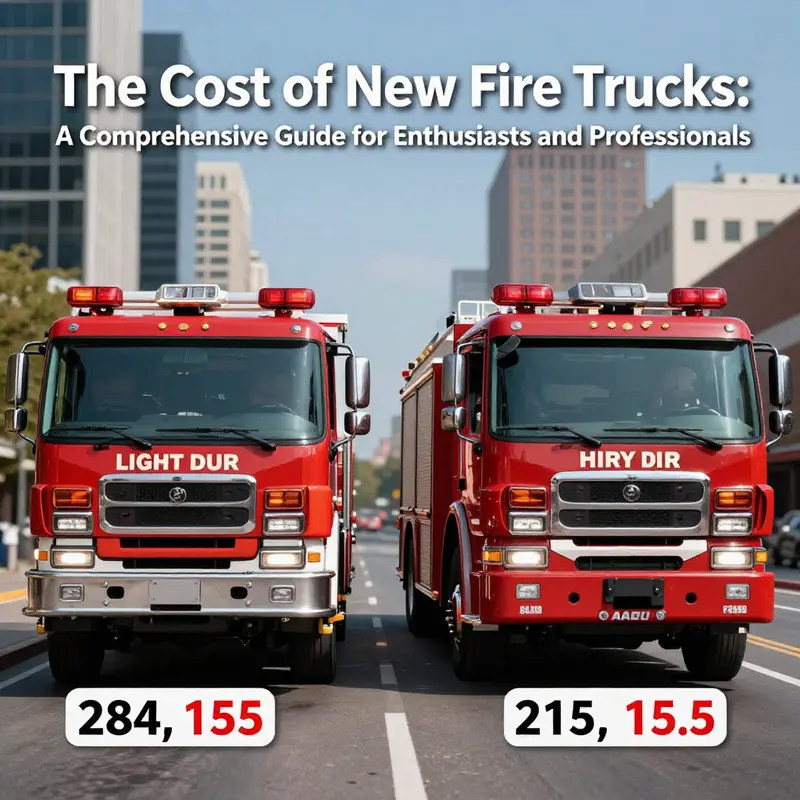
When communities ask how much a new fire truck costs, they are often surprised by how wide the answer can be. Prices hinge on a tapestry of decisions: the truck’s size, its configuration, the intended terrain, and the level of capability that a fire department needs. As of February 2026, the market presents a spectrum from economical urban responders to highly specialized platform vehicles built for challenging environments. The result is that the purchase price is only the opening line of the conversation. A true cost view includes ongoing maintenance, replacement parts, training, and even the fit of the vehicle to local standards and water sources. In this light, a single figure never fully captures the value a modern fire truck can deliver to a community.
Starting at the low end, even as markets globalize and manufacturers broaden their offerings, new light-duty fire trucks exist with price points that begin well below what some departments expect to pay for a single traditional pump. A basic light-duty model with a compact chassis and a modest water capacity illustrates this range. In the most affordable end of the spectrum, a compact 4×4 configuration can be priced in the tens of thousands, with certain basic pre-configured units hovering around thirty-eight thousand to forty-eight thousand dollars. These machines are designed for urban and suburban use, where space is at a premium and incidents call for swift, early intervention rather than extended high-volume operations. They typically carry smaller water tanks and rely on simpler pumping arrangements. In some market segments, you may encounter prices that appear even lower on paper when a department acquires a lightly equipped unit or brands it as a starter option. Yet the spread grows quickly as soon as you require larger tanks, higher discharge capabilities, or more sophisticated safety and communication features.
One notable reality behind the price spread is the wide variation in configuration. For example, a basic entry into a new fire engine might feature a 5,000 to 8,000 liter water tank and a compact pump, which keeps the sticker price in a more approachable zone for small departments or budget-constrained municipalities. But the same combustible mix can balloon, sometimes dramatically, if the truck is built with extra off-road capability, larger tanks, or specialized crew compartments. A few markets present examples where an entry model in a similar class stretches into the six-figure range because the vehicle is offered with advanced electronics, enhanced safety systems, or full compliance with a broad set of local standards. This explains why the range for light-duty new units can appear both surprisingly modest and unexpectedly expansive, depending on how a buyer defines “new” and what features are packaged into the configuration.
Moving up the scale, medium-duty fire trucks begin to illustrate the cost convergence between urban ease and rural robustness. A common 6×4 configuration with a substantial water reservoir and the capacity to carry foam can produce a better mix of reliability and versatility. In the observed market, a light-to-medium class with around ten thousand liters of water storage and medium-duty performance typically lands in a price corridor that sits in the mid-thirties to mid-sixties thousands. The foam-equipped variants command a premium, reflecting their enhanced suppression capabilities when facing fires involving flammable liquids or mixed hazards. These trucks often emphasize improved off-road performance and greater maneuverability in challenging terrain, which is why the price tag grows as you introduce features that expand the vehicle’s reach beyond the asphalt. The foam system, the higher-rated pumps, and the broader payload all translate into a more capable platform—but also into a price step up that departments weigh against their operational realities. The presence of additional equipment for communications and safety, as well as a more substantial chassis, helps explain why the medium-duty category typically sits higher than the light end but well below the most premium configurations.
A traveler through the market cannot ignore the heavy-duty end, where the scale of fire-rescue needs demands a different price calculus altogether. Here, the most conspicuous cost driver is the combination of power, reach, and versatility. A basic heavy-duty pumper, designed for high-capacity water transfer and sustained operations, may start at around half a million dollars. Yet this baseline quickly evolves as buyers seek more capable systems: larger volumes of water or foam, extended pump capacities, or hardened chassis ready for harsh environments. The ladder trucks and aerial platforms—the classic heavy-duty archetypes—are where price spikes into the multi-million range, particularly when you incorporate long-reach ladders, sophisticated stabilizing systems, and integrated command and control centers. In practice, a truly premium heavy-duty unit becomes a case study in the anatomy of modern fire service technology: the ladder mechanism alone, when extended and hydraulically controlled, adds a layer of engineering complexity and a requirement for rigorous maintenance. Pickup in the total cost follows not just the price of the vehicle but the lifetime costs of keeping a high-utility asset mission-ready.
The topic of imported trucks adds another layer to the conversation. In many markets, Japanese-made or other imported engines are considered premium options because of perceived durability and advanced technology. Prices for these import-oriented configurations often sit above domestic equivalents, with a premium that reflects not only the vehicle’s engineering heritage but the costs of import logistics and service networks. In the observed data, such imports sit above the more basic new-entry ranges by a meaningful margin, reinforcing the idea that the purchasing decision is as much about reliability and long-term support as it is about the initial sticker price. For departments balancing budgets with the need for dependable performance, the decision often comes down to a calculation of total cost of ownership, where the expected lifespan of the vehicle and the quality of the after-sales ecosystem are weighed against the upfront cost.
Beyond the numbers, a practical truth anchors this discussion: there is a distribution of price that mirrors the breadth of firefighting missions. In many communities, the typical market picture is that a new fire truck of any class can be found at a modest entry price, yet the average modern, reliable vehicle often lands in a broader band—roughly in the region of fifty to seventy thousand dollars—while high-specification models, tailored for particular hazards or urban densities, can eclipse six figures and extend far beyond. This reality highlights a central tension in procurement: a department’s immediate funding needs must be balanced against the strategic value of resilience and readiness. A vehicle that costs more upfront may reduce lifecycle disruptions and maintenance downtime, delivering value through uptime, reliability, and the ability to perform multiple roles in a single mission.
As buyers navigate these choices, the practical steps often begin with a clear articulation of mission requirements. The number of pumps and discharge capacity, the size of the water tank, and whether foam or dry chemical suppression is required will steer configuration. The engine horsepower, the presence of all-wheel drive for rough terrain, and the availability of integrated safety features and modern electronics are other major levers. The chassis and body design—long associated with a department’s response profile—determine not only the vehicle’s performance on the road but also its ability to be maintained locally and supported by a reliable parts chain. With each decision, the price tilts in a way that reflects the risk profile a department is prepared to assume and the operational tempo it expects from its fleets.
In the market, a practical way to explore options is to review current listings and catalogs. For readers who want a quick sense of what is on offer, the market features a wide set of models with varying degrees of configuration. A good starting point is the category of vehicles marketed for sale, which often includes a spectrum from compact urban responders to larger, more capable platforms. These listings can serve as a baseline for evaluating what a department can expect to obtain within a given budget, while recognizing that each platform’s price is not fixed but contingent on the exact configuration selected at the factory. In many regions, a department may engage with a supplier directly to tailor a vehicle to local water sources, pump requirements, and response protocols, and to negotiate terms that include warranties, maintenance packages, and training. The end result can be a vehicle that is precisely aligned with a department’s operational footprint and financial constraints, even if the sticker price reflects a premium for enhanced capability.
For readers who want to peer into market options online, a practical route is to browse the current inventories and model ranges at dedicated market portals. A widely used route is to consult listings that present a spectrum of new fire trucks for sale, with filters that cover capacity, drive configuration, and specialty equipment. If you’re curious about the breadth of options available in today’s market, you can explore the catalog through a marketplace that aggregates new fire-truck offerings and keeps an up-to-date pulse on what departments are purchasing at any given time. This kind of browsing helps situate the price ranges discussed here within real-world choices and helps illuminate how a department might balance price with performance when building a modern fleet.
To round out the picture, it is worth noting that while the headline price is a primary concern, it is only part of the discussion. A department must also account for ongoing costs: routine maintenance, parts replacement, and the lifecycle of mechanical and electronic systems. The longer a vehicle stays mission-ready, the more it justifies a higher upfront investment. Training for operators and maintenance staff, the cost of specialized equipment, and the potential need for upgrades to communications and incident command systems also factor into total ownership costs. The interplay of these elements—capability, durability, and support—often explains the broad spectrum of prices across light, medium, and heavy-duty categories.
For readers who want to jump directly to a live market listing and see what is currently available, the catalog of optioned units can be a useful, concrete reference. You can explore a marketplace for fire trucks with a focus on availability and specifications here: fire-trucks-for-sale. This link provides a snapshot of what buyers are evaluating in real time and helps connect the broader price discussion to real-world options.
In closing, the question “how much is a new fire truck?” does not yield a single answer. It yields a spectrum that reflects mission scope, geography, and the long view of how a department intends to use and sustain its fleet. Light-duty units offer a doorway into modern capability at a modest upfront cost, while medium-duty options extend reach and resilience, and heavy-duty platforms deliver the breadth of capability required for the most demanding incidents. The decision is less about a single price and more about aligning the vehicle’s profile with the department’s response philosophy, water strategy, and lifecycle planning. As a practical note, the market has demonstrated that most buyers can be guided toward reasonable ranges that both meet essential needs and respect budget realities, with more capable configurations commanding premium prices that reflect their added value and complexity. For a broader lens on market dynamics and pricing trends across global markets, readers may consult external market analyses that synthesize current data and projections. https://www.globaltradepage.com/
The Price of Readiness: How Size, Systems, and Market Forces Shape the Cost of a New Fire Truck
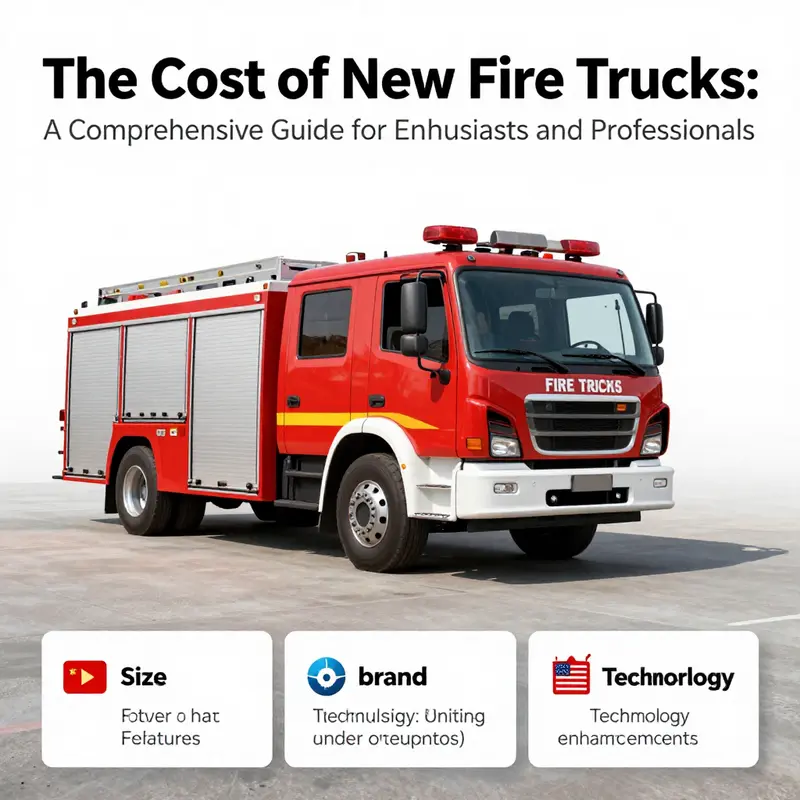
When communities ask how much a new fire truck costs, they are asking about more than a price tag. They are asking about readiness, reliability, and the ability to respond when every second counts. A single figure cannot capture the whole story, because the cost of a new fire apparatus is a moving target that shifts with the size of the vehicle, the equipment it carries, the technology woven into its core systems, and the market forces that govern supply and labor. In the broad spectrum of possibilities, the spectrum itself is a guide to wisdom: a small, basic, and highly specialized unit will sit at one end, while a large, multi‑mission, technology‑dense apparatus sits at the other. Between these two poles lies a continuum shaped by purpose, geography, and budget reality. The numbers presented in market summaries reflect this continuum, and they illuminate how different decisions ripple through the final price tag.
Size and type set the initial tone for cost. A lighter, more basic apparatus built to perform standard pump operations with a modest water capacity will usually be cheaper to manufacture and maintain than a heavy rescue platform or a foam tender tasked with complex foam delivery and high maneuverability in tight urban environments. In some markets, a new, standard 6×4 configuration equipped with a midrange water tank can be found in a price neighborhood around the mid‑thirties to low forties thousand dollars. That headline seems almost modest until you compare it to the needs of a modern, heavy-duty fleet that must handle high throughput, rapid acceleration, and robust safety features. As the apparatus grows in size and capability—whether it carries more water, houses a larger pump, or supports aerial operations—the capital cost climbs, often steeply. Larger or more specialized vehicles such as aerial ladder trucks or heavy rescue units demand not only bigger chassis and pumps but also the engineering of intricate hydraulic systems, stabilizers, and specialized payloads. When a department envisions such a vehicle, it should anticipate a price different from the basic pumper, because the design realities become increasingly complex and the bill of materials grows accordingly.
Within the framework of equipment and technology, the price arc continues its ascent. Modern fire trucks are not just metal shells and pumps; they are platforms of safety and information. The integration of advanced safety features, digital communication networks, onboard computers, incident command interfaces, and sophisticated firefighting equipment is a significant driver of cost. The more channels through which data travels—telemetry from pumps and tanks, real-time diagnostic feeds, integrated diagnostics for maintenance— the more electronics and software the manufacturer must install, certify, and warranty. This digital layer adds up quickly, especially as departments demand interoperability with external dispatch systems, regional command centers, and evolving standards for response data. A high‑tech interior is not merely about convenience; it is about reliability, crew safety, and the ability to make informed decisions under pressure. Those benefits come with price tags that reflect the complexity of the systems and the level of redundancy engineers build in to protect crews during a crisis.
Brand and manufacturer choice also shapes cost in ways that sometimes surprise new buyers. Across markets, well‑established manufacturers command premium pricing due to proven track records, longer warranty programs, and widely available service networks. In contrast, lesser‑known brands or regional manufacturers may offer lower upfront prices but can carry trade‑offs in terms of long‑term serviceability, parts availability, and resale value. The decision is rarely simply about price; it is about risk management, total cost of ownership, and the confidence a department has in its ability to keep the fleet ready for every shift. The cost difference between brands can be meaningful once maintenance, parts, and downtime are accounted for across the life of the vehicle. To district officials and procurement officers, this reflects a fundamental trade‑off: a bargain price today can translate into higher costs tomorrow if reliability or service support is inconsistent.
Customization is the next factor that bends the price curve. Fire trucks are not standardized consumer devices; they are tailored instruments designed for the specific landscapes and incident profiles a department faces. Customizations may include specialized pump capacities, tanker configurations, unique chassis layouts, strategic equipment placements, or nonstandard paint schemes for high visibility or regional identity. Each customization adds design work, engineering validation, and installation time, all of which extend lead times and increase price. When a department requests gear that must fit unusual maneuvering constraints, operate in harsh climates, or support unusual incident types, the value is clear to responders, but the cost can be substantial. A vehicle that arrives ready to perform its mission on day one saves the department from costly retrofit projects later, but the upfront cost is inevitably higher because the vehicle is built to order rather than assembled from off‑the‑shelf components.
Market conditions cast another layer of influence, and this layer has grown more pronounced in recent years. Markets shift with supply chain realities, labor availability, and the price volatility of raw materials such as steel and electronic components. When production lines adjust to incremental safety requirements, or when a supplier faces delayed shipments of critical parts, the price of a new apparatus can move in tandem. The pandemic era surfaced a cadence of price increases across many heavy equipment segments, and that rhythm has persisted in various forms: longer lead times, more intense customization requests, and the need for more robust warranty programs. In practical terms, this means departments should plan for variability and plan to synchronize procurement with current market realities rather than rely on static price expectations. Even with meticulous planning, a department may encounter price escalations that reflect not only the cost of raw materials but also the value of faster delivery and assured production capacity.
To ground these factors in data, consider distributions of costs across markets. In some regions, new basic 6×4 configurations with a sizable water or foam capacity can appear around the mid‑thirties to the upper forties thousand dollars. Yet the same research landscape notes that in the United States, the average cost of a new fire engine has climbed to well over half a million dollars, with high‑end, specialized models commonly exceeding one million when the full suite of capabilities is enabled. Even within the same broad category, one department may invest in a high‑performing, powerfully engineered unit with extensive on‑board technology, while another may opt for a more economical platform with essential features and a simpler electronics package. The divergence underscores a critical point for budgeting and governance: the price of readiness is not uniform; it reflects a deliberate choice about mission scope, resilience, and the strategic posture of the fire service.
There are also forces at the margins that shape price in tangible ways. Imported units can carry premium prices due to the costs of shipping, import duties, and the need for specialized aftersales support that may not be as readily available in some regions. In some markets, the price for imported, compact, or regionally specialized units can be distinctly higher, reflecting the complexity of maintenance in a cross‑border supply chain. Conversely, import strategies that emphasize modular design and standardized components can yield cost efficiencies, provided the department values the benefits of a broader service network and easier parts replacement. In the end, ownership costs—fuel efficiency, tire wear, hydraulic maintenance, and regulatory compliance—will interact with the upfront price to shape the overall financial footprint of the fleet.
The decision landscape tightens further when a department weighs the long arc of ownership. A fire truck is a capital asset that remains in service for decades under demanding use. Administering a fleet requires not just paying for a vehicle but budgeting for sustainability: ongoing maintenance, periodic upgrades to electronics and safety features, periodic pump and hose testing, tire replacement, and the inevitable modernization that keeps a unit operable in a rapidly evolving operational environment. The total cost of ownership can be substantial, and it often dominates discussions that begin with the sticker price. In some communities, the calculus is explicit: a higher upfront investment in a robust, serviceable platform can reduce downtime, lower maintenance costs over time, and keep crews mission‑ready without frequent mid‑cycle upgrades. In others, a leaner initial investment is aligned with a longer term plan for phasing in more capable replacements as budgets permit. Either way, the smarter purchase is frequently the one that aligns upfront options with long‑term reliability, community risk, and maintenance capacity.
For readers exploring current market offerings and real‑world inventory, a quick look at available listings can provide a tangible sense of what buyers encounter. Browsing such catalogs reveals the spectrum in a practical way: a smaller, less complex unit sits at one end with a modest price tag and simpler maintenance, while a larger platform with advanced foaming systems, integrated diagnostics, and heavy pumping capacity sits at the far end with correspondingly higher price points. Even within these listings, the choice between a purpose‑built, fully configured vehicle and a modular setup that can be upgraded over time becomes a strategic decision rather than a one‑time purchase. Those responsible for procurement must balance immediate needs against future growth, and the market offers a range of paths to fit that balance. If you want to view current listings and compare configurations, this page provides a sense of what is available in the market: fire trucks for sale.
Another practical consideration is the speed at which a department needs to move. Lead times can vary widely depending on customization levels and the depth of the specification required. A standard, ready‑to‑go platform can be available in a shorter timeframe, while a fully customized unit may require several months to a year from order to delivery. The time value of money is real in this equation: a longer lead time may delay the return on investment and push a department to adopt a staged replacement plan or a buy‑now, upgrade‑later approach. In high‑urgency environments, departments sometimes opt for a more modular strategy, prioritizing critical capabilities first and deferring nonessential customization until a later phase when the budget permits. The trade‑offs are clear: speed versus specialization, immediate readiness versus future adaptability.
To provide a rough frame of reference, consider several hypothetical baselines that researchers often cite when discussing pricing in different markets. In the broadest sense, a basic new 6×4 platform with a midrange tank might start in the high‑thirties to mid‑forties thousand dollars in some regions, but the same platform in another market can be priced much higher once import costs, local labor, and warranty coverage are factored in. As a rule of thumb, the United States market shows an average approaching half a million dollars for a new engine that can deliver robust performance and lasting reliability under demanding conditions, while premium, highly specialized models can crest well above a million. The contrast is not a contradiction so much as a reflection of purpose, scale, and market structure. A department facing a diverse array of fire scenarios may well justify a higher upfront investment to secure a vehicle with greater horsepower, advanced foam delivery, stronger protective features, and a longer warranty, all aimed at minimizing downtime and ensuring mission capability when it matters most.
For those navigating this complex landscape, it is useful to keep in mind the broader message: there is no single price for a new fire truck. There are price bands, each tied to performance envelopes, construction quality, and the completeness of the equipment package. The best decision for a community blends clear risk assessment with disciplined budgeting and an understanding of total ownership costs. It is about aligning the vehicle’s capabilities with the department’s operational priorities, while also ensuring that the fleet can be sustained over time with predictable maintenance, reliable parts access, and a service network that can respond quickly when a unit is in need of repair or modernization. In that sense, cost becomes a proxy for confidence—the confidence that when the fire alarm sounds, the crew will have a trusted vehicle beneath them, capable of delivering power, precision, and protection to protect life and property.
External data helps frame the discussion as well. A 2023 industry report highlighted a notable rise in the average cost of a new fire engine, with many departments reporting costs climbing beyond the $500,000 mark and some high‑end configurations surpassing $1 million. While regional variations remain, the overarching trend points to a market where capability and resilience drive price, and where the value of a reliable, ready fleet is realized in steadier response times, reduced downtime, and improved safety outcomes for responders and the communities they serve. For readers seeking a deeper dive into the pricing dynamics and the trajectory of costs, see the following external resource: https://www.firerescue1.com/fire-trucks/articles/2023-fire-truck-costs-rise-to-over-500k-17683498
In sum, the price of a new fire truck is not a single number but a spectrum shaped by mission, equipment, and market realities. A district that carefully weighs size, customization, brand, and ownership costs will arrive at a purchase that is not only affordable today but sustainable tomorrow. The chapter’s earlier figures offer a snapshot of the range, but the true story is written by the department’s strategic planning, its risk assessment, and its commitment to keeping crews effectively protected and ready to serve when every second counts. As procurement teams calibrate their expectations, they should also embrace the value of comprehensive cost planning, including maintenance, training, and the long arc of upgrades, to ensure that the initial investment translates into durable readiness for years to come. For anyone exploring how much a new fire truck costs in practice, the answer lies in understanding tradeoffs, aligning with mission, and recognizing that price is a reflection of purpose as much as it is of production.
Pricing Under Pressure: Domestic vs Imported Fire Trucks and What It Really Costs to Go New
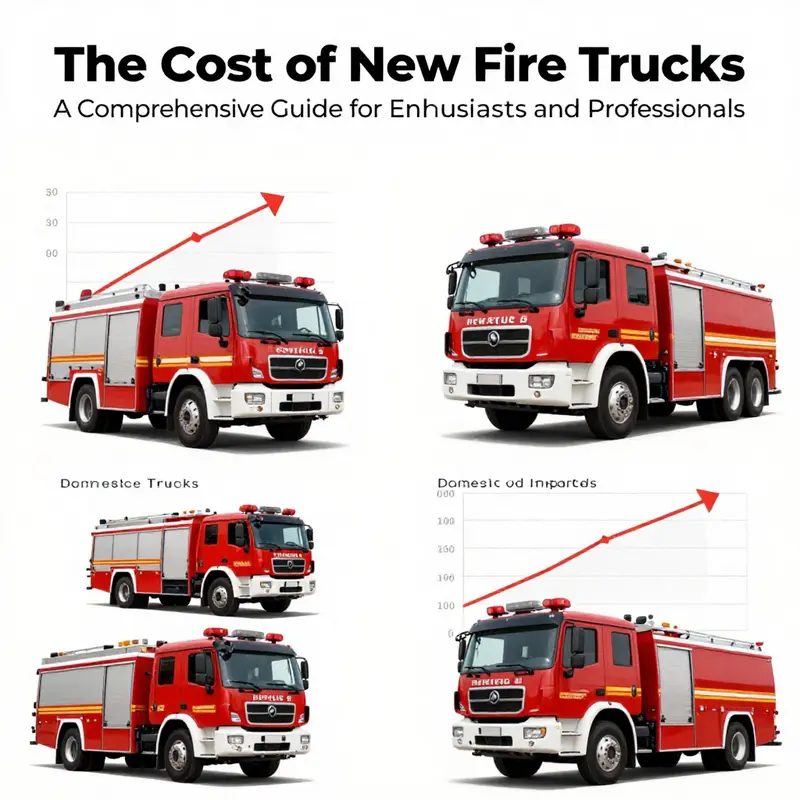
The price of a new fire truck is not a single number but a spectrum shaped by size, configuration, and the technology packed into the chassis and body. As of early 2026, buyers encounter a wide range of sticker prices that reflect the weight of decisions behind a purchase: what the vehicle is expected to do, how far it must travel to reach a scene, and how long it needs to stay in service before it’s replaced or upgraded. The most basic way to frame the landscape is to recognize that a compact, light- to medium-duty model with a modest water capacity can start in the lower tens of thousands when discussing a fresh, entry-level unit in certain markets, yet the more common, new, standard configurations—such as a 6×4 chassis with a substantial water tank—live in a much tighter band. A typical new 6×4 configuration with a 10,000-liter tank generally ranges from about $38,600 to $48,500. If a department needs a larger footprint—an 8×4 chassis paired with a foam system and a 16,000-liter capacity—the price can climb toward the upper sixty-thousand-dollar mark in many regions. The spectrum widens rapidly as capabilities expand: high-end, high-performance models with advanced hydraulics, foam delivery, rescue equipment, and enhanced powertrains can easily push prices into the quarter-million-dollar range, and in some markets, imported vehicles with premium features are priced well above that level due to technology content and branding. Even within the same country, the spread can be dramatic, with newer, more capable vehicles commanding premiums that reflect both hardware and the reputational value of the manufacturer. The numbers in play are not just about raw capacity; they reflect the cost of engineering, safety systems, reliability under demanding conditions, and the lifecycle economics that fire departments must manage over decades of service. In practice, the average price for a modern, reliable new fire truck tends to land somewhere in the $50,000 to $70,000 range for mid-range configurations in many markets, with high-specification models costing well over six figures when the most advanced features and larger capacities are involved. This emphasizes a key point for procurement decisions: price is only part of the story. Total cost of ownership—maintenance, parts availability, fuel efficiency, uptime, crew safety, and the potential for future upgrades—often sways decision-makers even when the upfront price is higher. To guide buyers, many departments seek a balance between upfront affordability and long-term value, aiming to minimize downtime and maximize readiness. Within this framework, the distinction between domestically produced and imported fire trucks becomes a central pricing lever, shaped by a blend of production costs, logistics, and policy.
Tariff pass-through is a decisive mechanism in markets with significant import duties. When a department opts for an imported vehicle, the duties can be fully or partially absorbed at the point of sale, translating into higher end-user prices. The effect of tariffs is not uniform; it depends on the relative costs of domestic production versus imports, the efficiency of the supply chain, and how tender processes allocate risk and cost. In large, tariff-heavy markets, the impact can be pronounced, nudging agencies toward domestic manufacturers that can deliver similar performance at lower landed prices, thanks to reduced logistics costs and avoidance of certain import duties. The practical consequence is that the headline price of an imported unit may carry hidden costs that offset some of the outward premium buyers associate with “premium” brands and advanced technology. An illustrative context—without naming specific brands—shows that several international suppliers export to markets like India, where the tariff structure and local content requirements can tilt the economics in favor of locally produced or regionally assembled options. In such contexts, top exporting countries often include a mix of Middle Eastern, European, and Asian partners, each bringing different cost structures and lead times. The tariff pass-through effect thus becomes a crucial consideration in any procurement strategy, particularly when budgets are strained or when a department is negotiating multi-year financing over the life of the truck.
Logistics and import duties are the other side of the coin. Domestic manufacturers benefit from shorter, more predictable logistics chains and, in some cases, favorable regulatory environments that simplify compliance and maintenance planning. When a country fosters localized production or assembly, it can offer more predictable delivery times, easier parts sourcing, and lower total landed costs—factors that translate into more stable pricing and better serviceability for municipalities and fire districts. For decision-makers, these dynamics mean that the price tag on a new unit is only a starting point; the true cost of ownership depends on how smoothly the vehicle can be integrated into an existing fleet, how quickly it can be deployed, and how readily spare parts and skilled technicians can be accessed.
Market trends reinforce these dynamics and shape the arithmetic of price. The global fire truck sector has grown steadily, with market analyses valuing the industry around USD 9.27 billion in 2025 and projecting a robust compound annual growth rate of roughly 13.6 percent from 2026 through 2033. This ascent is driven by expanding municipal fleets, increasing demand for safer and more capable firefighting systems, and the ongoing push toward greater automation, better ergonomics, and more integrated rescue capabilities. Yet growth is not a simple upward trajectory of price—the dynamics of competition, manufacturing localization, and the push to optimize cost efficiency can temper price escalation. Domestic manufacturers have a strong incentive to innovate around cost structures, to streamline production, and to tailor offerings to regional fire-rescue requirements, which can yield more affordable options in some markets. Imported vehicles, meanwhile, leverage the perceived advantages of international engineering, with brands that tout advanced safety and performance features often commanding a premium that reflects both technology and reputation. The tension between these strands—cost discipline on the factory floor and premium positioning for foreign-built units—shapes not just sticker prices but the financial planning that towns and departments undertake when replacing or expanding their fleets.
Government policy adds another layer of influence. Subsidies, grants, and tariff regimes can tilt the odds in favor of one path or another. Strategic public investment decisions—whether aimed at bolstering domestic industries or advancing national safety outcomes—can shift the calculus of which option a department should pursue. Policymakers must weigh affordability against quality and resilience, balancing the social value of a readily available, affordable fleet with the long-term benefits of cutting-edge technologies and proven performance in diverse conditions. The net effect is that the same market may see different price trajectories over time, depending on how policy levers are pulled and how global supply chains respond to shocks and disruptions. For buyers, this means that today’s price snapshot is not a static forecast; it is a moving target shaped by policy cycles, trade negotiations, and the evolving capabilities of both domestic and international manufacturers.
All of this feeds back into a practical frame for prospective buyers: the price you see upfront is a function of design intent and market environment as much as it is of manufacturer capability. A new fire truck with modest capacity and straightforward configuration may be affordable enough to fit within smaller municipal budgets, while the most capable, technologically rich units represent major capital investments that require long-range budgeting, financing arrangements, and rigorous justification based on risk reduction, response times, and resilience. The decision to pursue a domestic versus an imported solution becomes a question of not only price but supply chain reliability, local maintenance ecosystems, and alignment with a department’s operational philosophy. In periods of global growth and supply chain tension, this alignment often depends on an honest assessment of the fleet’s expected life, expected utilization, and the capacity to absorb lifecycle costs without compromising readiness.
For readers seeking practical benchmarks in line with the article’s broader inquiry—how much is a new fire truck—the numbers tell a consistent story. You can expect the majority of mid-range, new units to sit in the $50,000 to $70,000 range, with high-specification or specialized configurations climbing well beyond $100,000. These figures reflect not only the core apparatus but the many ancillary features that organizations consider: pump capacity, tank size, foaming systems, rescue tools, and communications and onboard safety packages. They also reflect regional pricing realities—tariffs and logistics in one market can raise costs enough to push a project from being economically viable to requiring alternative procurement strategies, such as phased fleet replacements or cooperative buying arrangements that spread risk and cost across multiple departments. The pricing conversation, then, is less about chasing a single magic number and more about aligning a vehicle’s capabilities with the community’s needs, budgetary realities, and long-term safety commitments. To explore current listings and practical options in the market, readers can consult fire-trucks-for-sale and examine how distributors present pricing and configuration choices in real time. This resource, anchored in the same market ecosystem discussed here, can illuminate how a department balances upfront price against fleet reliability and serviceability over the vehicle’s service life.
As the market evolves, the tug-of-war between domestic cost efficiency and imported technological prestige continues to shape prices in meaningful ways. A shift toward localized production, investments in domestic supply chains, and policy-driven incentives can compress the gap with imported options, while ongoing innovation abroad can sustain or widen price differentials where premium features and branding drive demand. In short, pricing is less a single-fixed line and more about aligning a vehicle’s capabilities with the community’s needs, budgetary realities, and long-term safety commitments.
External resource: For a broader market perspective on trends, growth, and pricing dynamics in the fire truck sector, see https://www.marketresearchfuture.com/reports/fire-truck-market-4484. Internal readers may also find current listings at fire-trucks-for-sale, which provide a practical sense of how prices translate into configurations in today’s market. (See also the related shopping context at fire-trucks-for-sale.)
Final thoughts
Navigating the landscape of new fire truck pricing reveals a fascinating world filled with options that cater to diverse needs. Whether you’re a firetruck enthusiast eyeing a collector’s piece, a young aspiring firefighter dreaming of the tools of the trade, or a professional in emergency services, understanding the factors behind pricing can empower you in making informed decisions. From the fundamental light-duty models to the robust heavy-duty trucks, each type offers unique capabilities that correspond to its cost. Recognizing market trends, price variability, and key influencers will not only equip you with knowledge but will also fuel your passion for these essential vehicles in public safety. So whether you’re here to refine your collection or help equip your team, one thing is clear: the journey begins with knowledge.