
In the realm of firefighting, the speed of fire trucks plays a crucial role in emergency response. Various types of fire trucks are designed with distinct speed capabilities tailored to their functions, loads, and operational requirements. From heavy water tankers to agile foam and chemical units, each type of truck has unique specifications influencing its speed. Whether you’re a firetruck enthusiast, a young aspiring firefighter, or a professional in the emergency services, understanding these dynamics can enhance your appreciation for the craft. In this exploration, we will delve into the speed characteristics of water tanker fire trucks, foam and dry chemical trucks, lightweight and mid-size models, as well as the heavy-duty units that operate with safety constraints while still serving their vital purpose.
Toward the Scene at the Right Speed: The Measured Pace of Water Tanker Fire Trucks
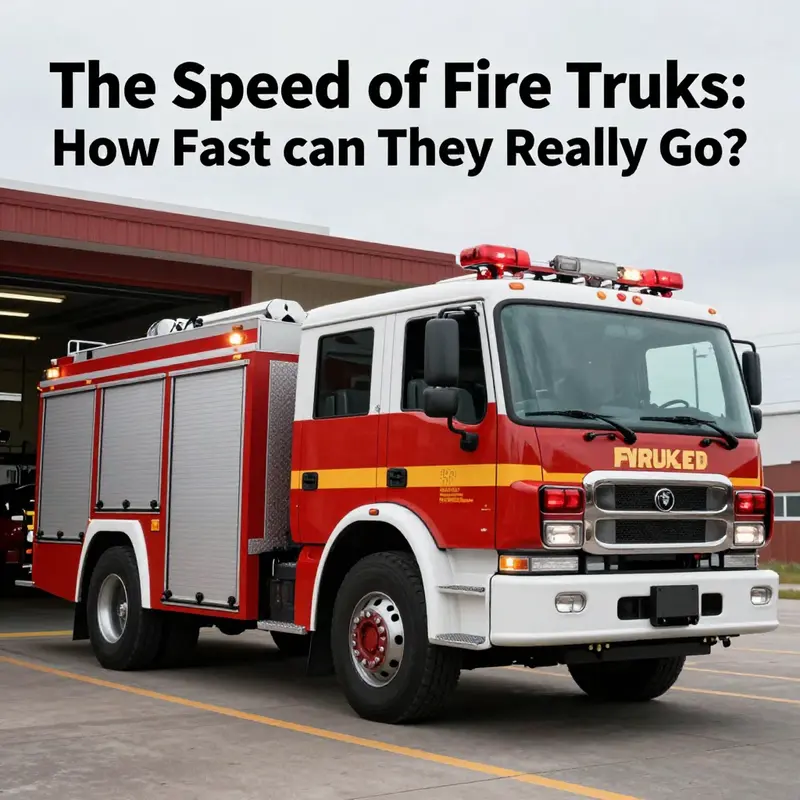
When a fire call comes in, every second matters. Yet for water tanker fire trucks, speed is never pursued as an end in itself. These vast, heavy vehicles are designed not to chase a race track, but to deliver a crucial, life-saving payload—water—while preserving control, stability, and crew safety. The speed that such a vehicle can and should achieve emerges from a careful balance between urgency and the physics of a weighted load, the geometry of the road, and the realities of urban traffic. In practical terms, water tankers typically top out in a narrow band, with maximum speeds commonly cited around 80 to 90 kilometers per hour (approximately 50 to 56 mph). This range is not a marketing boast, but a engineering consequence of managing mass, momentum, and the unpredictable variables that accompany every emergency response. A representative model in ordinary service might be limited to about 90 km/h, a figure that sounds fast until weighed against the demands of stability when fully loaded with thousands of liters of water and the gear needed to fight a fire. When the goal is to arrive with water on site and pumps primed for action, the last thing a crew needs is an unruly vehicle that tires the crew and endangers bystanders and operators alike.
To understand why water tankers rarely operate at the full speed ceiling of lighter or more specialized fire apparatus, it helps to picture the truck as a moving mass with a dynamic center of gravity. A water tank can slosh, and sloshing is not merely a nuisance; it is a real stability issue. The tanks are designed with baffling and compartments to tame the movement of water, but even so, a large load makes rapid steering or sudden lane changes more hazardous. The weight interacts with road texture, surface grip, and wind forces in ways that demand gentler acceleration and more measured braking than lighter units require. In an urban or suburban environment, where most initial firefighting happens, a truck that can attain 90 km/h in a straight line is rarely afforded wide-open stretches. City streets, pedestrians, parked cars, and cross-traffic impose a natural speed cap that keeps response times in check while safeguarding the crew and onlookers. In such contexts, the operational reality is that speed is a tool, not a primary objective.
Speed specifications for water tankers reflect this philosophy. Across many models, maximum speed hovers around 80 to 90 km/h, a band that recognizes both the need for rapid deployment and the constraints imposed by the vehicle’s configuration. This is not a single-number rule but a family of constraints shaped by the truck’s weight, its load, and the mission profile. A fully loaded water tanker, which could carry thousands of liters of water, behaves differently from an empty or lightly loaded chassis. The extra mass amplifies braking distances, demands more stable cornering, and reduces the acceleration rate needed to reach a safe cruising speed. In practice, drivers learn to modulate speed in response to the specific weight on board, road grade, and weather conditions. A light drizzle or a wet surface can transform a routine corner into a careful negotiation, while a long downhill run may tempt a driver to use gravity to assist speed but must be tempered by the braking system and tire condition. These everyday realities underscore why the “top speed” figure is only part of the story.
The design narratives behind water tankers illuminate why their speed envelope is what it is. Many water tankers utilize 4×2 or 4×4 drive configurations, and some employ manual transmissions in certain regions. The choice of drive layout and transmission reflects a philosophy of controllable, predictable performance rather than maximal raw speed. A 4×4 variant may offer superior traction on uneven or inclined terrain, yet the added drivetrain weight and mechanical complexity can influence acceleration and braking response. In addition, the braking system itself is a critical factor; high mass requires robust braking performance, including reinforced rotors, stabilized braking distribution, and, in some cases, enhanced electronic stability controls. These features contribute to the overall footprint of speed, ensuring that when a driver presses the accelerator, the vehicle responds smoothly and predictably rather than darting forward with momentum that could compromise control. The consequence is a kind of speed discipline that aligns with mission priorities: arrive quickly, arrive safely, and maintain ready capacity to deploy water and fight fire immediately upon arrival.
Operational practice further reinforces this disciplined pace. In the field, the fastest route is often not the straightest one. A truck crew weighs the trade-off between speed and routing risk, choosing streets with fewer sharp turns, steadier grade, and lighter traffic where possible. Traffic density, school zones, and construction zones all shape a route that prioritizes predictability and early water delivery over sheer velocity. The crew’s awareness of surrounding vehicles, bicyclists, pedestrians, and crossing signals becomes a daily exercise in risk management. Even when the sirens are wailing and the lights are flashing, the command is to maintain a controlled speed that lets the driver react to sudden changes in the environment. In essence, the “emergency speed” is a carefully choreographed tempo that blends urgency with restraint so that the mission outcomes—rapid water delivery and safe arrival—are achieved without creating new hazards.
A deeper layer of nuance comes from the water load itself. The weight of the water is not just a static number on a spec sheet; it actively informs the day-to-day choices of speed and handling. An eight-thousand-liter load, for instance, adds significant inertia and a different brake balance. The heavier the vehicle, the more grip is required at the tires to maintain the same stopping power, and the more cautious the driver must be when encountering bottlenecks or slippery surfaces. This weight also factors into acceleration: the vehicle cannot pretend it is a car in terms of rapid response to a call. Instead, it accelerates with a steady, linear cadence that preserves traction and steering feel, allowing the crew to anticipate and manage any surface irregularities. In some respects, the water itself imposes a slow-and-steady philosophy that aligns with the broader duties of firefighting—precision, reliability, and repeatable performance under pressure.
The vehicle’s design embraces these realities through a combination of geometry, chassis tuning, and auxiliary systems. The long, wide tank beneath the cab offers a substantial footprint, contributing to stability but also to a high moment of inertia. The suspension is tuned to minimize the pitch and roll that can accompany heavy loads during cornering or braking. Tires are selected for a balance of grip, heat resistance, and wear characteristics, with pressures adjusted to account for both payload and road type. Meanwhile, the vehicle’s transmission and driveline are optimized for predictable response rather than explosive torque. In practice, a water tanker’s maximum speed is a ceiling that the operator rarely intends to breach unless circumstances demand a controlled, clear path through unobstructed, open terrain. Even then, the driver’s foot remains a moderator, not a throttle bludgeon.
The broader context of these speed norms can be understood by comparing them to other fire apparatus classes. If a heavier, water-bearing vehicle competes with lighter, more agile units, the differences in operational tempo become readily apparent. The lighter machines, designed for rapid maneuvering and sometimes high top speeds, can reach higher velocities, but their fire-attack capabilities may differ—factors such as pump capacity, water-carrying capacity, and the presence of additional equipment shape what the mission requires. Water tankers, by contrast, embody a philosophy of distance-capped urgency: reach the beachhead of water supply quickly, then transition to water application with precision. This sequence—fast travel, controlled approach, powerful delivery—reflects a broader principle in firefighting logistics: reach the incident in good order, provide the critical resource, and do so in a way that keeps the team, the bystanders, and the scene itself safe.
The practical takeaway for those studying fire apparatus performance is that speed is a component of a larger system. The top speed figure exists to guarantee that, under ideal conditions, the vehicle can perform with sufficient authority while staying within the bounds of safe operation. In routine practice, however, the effective speed during firefighting is rarely the maximum possible. It is shaped by weight, road conditions, traffic, terrain, and the demands of a quick water delivery. The driver’s expertise—anticipating the next curve, the next intersection, the next forced stop—transforms theoretical speed into real capability. When a crew arrives and connects water supply lines to the pump, the speed metric has already delivered its value: the right speed chosen in the right moment to create a stable bridge from call to action.
For those unfamiliar with the specifics of any given model, a representative reference point in the field demonstrates the practical envelope. The maximum is typically around 90 km/h, with many configurations settling firmly in the 80–85 km/h range for everyday operations. Yet the actual velocity at which a water tanker travels en route to a fire scene is seldom the bargain-basement maximum; it is the measured, disciplined pace that respects weight, road, and risk. As a note of context, industry professionals sometimes point to listings and manufacturer documentation for precise numbers as they vary by region, regime, and safety standard. The critical thread running through all of these numbers is the shared consensus: speed, in these vehicles, serves the mission but never supersedes safety. In the moments before a nozzle is charged and a pump begins to push water to a flaming edge, the vehicle has already performed its most essential act—arriving with a stable, predictable platform from which to operate.
For readers who want to explore the physical and engineering choices that inform these speeds, consider looking at broader discussions of steel fire apparatus and their assembly. The steel-fire-apparatus page provides deeper context on how chassis dimensions, tank geometry, and weight distribution influence handling and performance in practice. That exploration helps reveal why even a heavily equipped tanker must prioritize smooth acceleration, steady braking, and conservative cornering. The realities of this work are not about chasing velocity but about managing risk while maintaining readiness for direct action once the water reaches its destination.
In the end, the speed of a water tanker is a story about balance. It is a narrative where urgency interacts with gravity, traction, and mass, and where the crew’s safety and the scene’s safety are the ultimate metrics. The top-end numbers tell only part of the tale; the real measure is how effectively the vehicle can be steered into position, how reliably it can deliver a steady stream of water under pressure, and how quickly the team can transition from travel to on-scene action. This is a pace that honors the mission’s stakes: to bring water to the fire in a controlled, predictable manner that ensures the safety of civilians and responders alike. For researchers and practitioners, the takeaway remains consistent. Water tankers must be fast enough to be responsive, but slow enough to be controllable; they must accelerate and brake with confidence, not with drama; and they must operate within a framework that places safety, stability, and reliability at the center of every decision about speed. In the calculus of emergency response, speed is the drumbeat that coordinates with strategy, training, and terrain, guiding firefighters toward the moment when a measured, trained flow of water begins to turn the tide of a blaze.
Internal link: For a broader discussion on how heavier, steel-built apparatus shape handling and performance, see the overview of steel fire apparatus.
External reference: An external resource that provides detailed specifications and model context can be found here: https://www.alibaba.com/product-detail/Qlsuzu-Fvr-Water-Tanker-Fire-Trucks-300HP_1600764667655.html
Velocity, Stability, and Readiness: The Speed Characteristics of Foam and Dry Chemical Fire Trucks
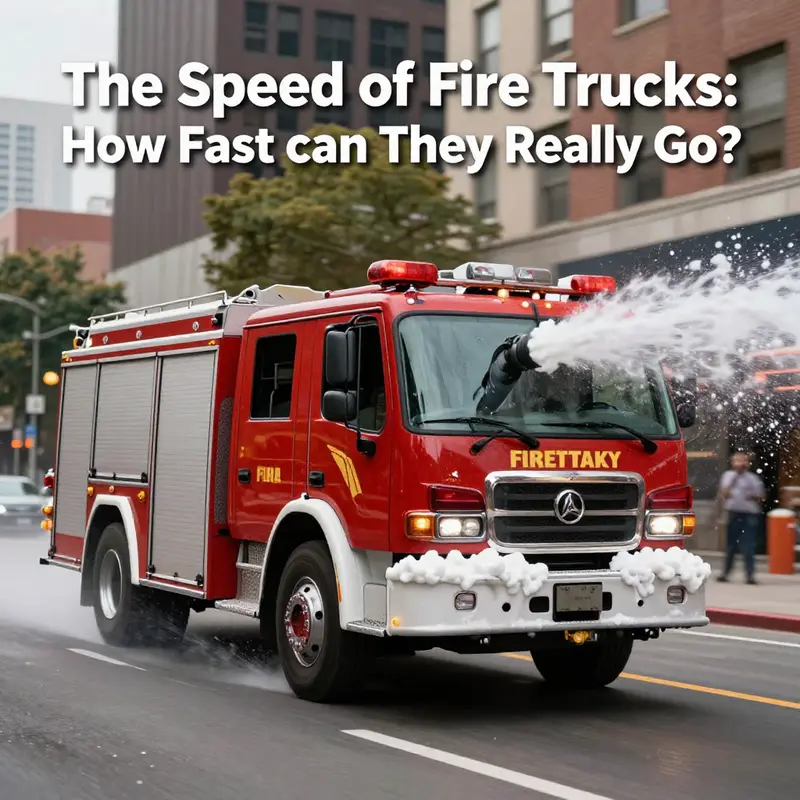
When a fire breaks out, the clock starts ticking, but the clock does more than tick—speed must be balanced with control, stability, and the practical realities of the route to the emergency. In the realm of foam and dry chemical fire trucks, velocity is an important metric, yet it is inseparable from the road, the load they carry, and the purpose that those vehicles serve. The generic question, how fast can a fire truck go, invites a spectrum of answers that reflect design priorities, mission profiles, and the environment in which these machines operate. Foam and dry chemical units illustrate this spectrum with a clarity that helps us understand why the number on the speedometer is not a standalone indicator of performance or readiness. It sits alongside stability, traction, pump capacity, foam delivery systems, and the safety margins that keep responders and bystanders protected while the siren sings its urgent note through urban canyons and rural lanes alike.
Foam fire trucks embody a distinct combination of capabilities. They are built to deliver substantial volumes of foam concentrate alongside water, a dual-pressurized task that serves as both cooling agent and fire-suppressant blanket. The presence of foam equipment, proportioners, and a reliable pump system adds mass and alters the vehicle’s center of gravity. In practical terms, this means foam units tend toward the higher end of speed within the urban emergency spectrum, but not at the expense of handling. Available data describe foam fire trucks as capable of reaching around 80 to 100 kilometers per hour (roughly 50 to 62 mph) in standard configurations. That range captures both the weight of the water and foam tanks and the need to preserve stability when the foam concentrate is in motion, sloshing tendencies are minimized, and the vehicle negotiates curves with predictable response. The balance is not about concealing raw top speed but about ensuring reliable acceleration, predictable braking, and a ride that remains controllable when the vehicle is loaded with water or foam agents and the streets demand tight turning radii and quick perception by the driver.
Within this category, there are variations that push the envelope for specific operational envelopes. Some high-performance foam delivery concepts designed for rapid proximity to a fire scene have been documented to achieve top speeds near 100 kilometers per hour, with certain specialized configurations reaching up to 120 kilometers per hour in controlled trials or non-standard, high-performance test contexts. Those elevated speeds are not typical for everyday urban responses; they arise in scenarios where the crew must cover intermediate distances quickly while maintaining the precision required to lay down foam lines, connect supply hoses, and deploy personnel in a coordinated fashion. The temptation to test the upper limits is tempered by the recognition that urban corridors, mixed traffic, pedestrians, and road surfaces introduce a spectrum of risk that heavier vehicles must manage. A representative perspective from practitioners emphasizes that the objective is rapid arrival at the scene, not the spectacle of fast travel. In practice, foam units may be designed to optimize acceleration and mid-range handling so that when the foam system is active, and the vehicle is loaded with equipment, the drive remains controllable and predictable rather than exhilarating.
Dry chemical fire trucks share some common ground with foam units but bring their own distinctive design considerations to speed. These vehicles are typically associated with specialized response types, including fires involving dry chemical powders, which require rapid deployment of specific agents and precise handling of equipment. The published performance expectations for dry chemical configurations often align with foam trucks when discussing high-end performance, but the general consensus in many operational contexts is that top-end speeds are somewhat more modest in routine configurations—often described as up to around 60 kilometers per hour in broader references. In other contexts, especially when the dry chemical platform is co-located with or part of a modular or mixed-mission fleet, estimates can reach into a higher band, approaching or matching the upper limits observed for foam vehicles, particularly in lighter, more agile variants. The discrepancy in reported values arises from differences in mission design, equipment load, and the particular balance a department seeks between raw velocity and the ability to manage a complex set of tasks during transit: deploying auxiliary systems, safeguarding the flow of dry chemical powders, ensuring that the vehicle’s distribution apparatus remains stable and accurate, and preserving the vehicle’s overall readiness for a swift on-scene operation.
What emerges from these numbers is a picture of speed that is contingent and context-aware. Dry chemical units, while often described within a similar speed envelope to foam trucks in some specifications, operate under a broader spectrum. In some references, dry chemical platforms are grouped with foam units in the sense that both types may reach the higher end of an urban-ops range, yet more conservative figures are applied in standard, everyday deployments. The difference is not merely about the size of the tank or the presence of powder handling systems; it is about how the rest of the truck’s systems—pump capacity, hose load, and the stability management mechanisms—are designed to support high-speed transit without compromising the ability to initiate an effective suppression operation immediately upon arrival. The design philosophy here is pragmatic: crews need to be able to move quickly when a target is far away but must also be prepared to slow and stabilize for a controlled approach, then stage, and finally deploy with precision.
To appreciate the full landscape of speed, it helps to consider the internal logic of how foam apparatus and dry chemical modules are organized within an emergency vehicle. Foam trucks typically carry pumps and foam tenders that must synchronize injection ratios with the water supply, requiring connected hoses and distribution lines that can become cumbersome if the vehicle moves too quickly with a full load. The risk of water and foam sloshing during acceleration can influence the drive geometry and the damping systems that a vehicle employs. Engineers address this through a combination of chassis design, suspension tuning, and electronic stability controls, ensuring that the foam delivery remains stable regardless of the vehicle’s speed on approach ramps, arterial streets, or curving off-ramps. In many modern configurations, the design priority is a predictable, linear response: the driver pushes the accelerator, the vehicle accelerates smoothly, and the foam and water systems engage in a controlled sequence that preserves balance and allows firefighters to control flow rates precisely as they gain proximity to the fire scene.
Dry chemical trucks demand a slightly different balance, since their primary payload relates to powders rather than a large foam mix or water volume. The weight distribution for dry chemical platforms can vary widely depending on the density of the powder and the size of the payload, as well as the other equipment carried for rescue or incident management. The top-end speeds for these vehicles, when reported, reflect a trade-off between nimbleness and mass. In many instances, a dry chemical platform will appear in the same ballpark as its foam counterpart, but the measured performance will be driven by how the powder handling systems are configured, how rapidly powders can be drawn and directed toward a point of discharge, and how quickly the crew can manipulate valves and hoses while maintaining the vehicle’s dynamic stability. There is a subtle but important nuance here: a dry chemical unit that is designed to move quickly must still ensure that the discharging mechanism remains consistent and precise as the vehicle changes velocity, and the air resistance caused by the powder container imposes its own aerodynamic and weight-specific constraints on the chassis. In practice, that means dry chemical platforms athletes often show a diverse range—some configurations that push toward the lower end of the speed spectrum in order to maximize stability and powder handling, and others that resemble foam platforms in terms of upper-bound capabilities when the mission prioritizes rapid approach and rapid engagement with a fire scene.
Across both foam and dry chemical families, the real-world speed that a fire truck can sustain is never a standalone measure. Road conditions, traffic, weather, and the presence of other responders all shape the velocity profile of an emergency response. Urban environments demand constant vigilance—pedestrians, intersections, and the proximity of buildings create a need to throttle speed, to brake with confidence, and to execute a controlled alignment with the access point or water supply. Highway-like margins are rarely needed in a city rescue, but when the mission requires rapid transit through less congested corridors to reach the outskirts or a staging area, those higher speeds become meaningful. The overarching philosophy remains simple: reach the scene quickly, but arrive with the level of control necessary to begin suppression operations immediately and to keep everyone on the scene safe. This is where driver training, vehicle dynamics software, and the experience of the crew intersect with the hardware to determine how fast a foam or dry chemical unit will travel under real-world constraints.
For readers seeking a more panoramic view of how departments think about performance and procurement, a practical point of reference is the broader coverage found in industry discussions and case studies, which often emphasize that speed must be framed within a spectrum of readiness. The emphasis on readiness helps explain why speed figures can vary across sources and why some high-performance configurations remain uncommon in routine deployments. The driver’s judgment, the route design, and the availability of a continuous and reliable water supply all shape the real-world velocity profile. In this sense, the important takeaway is not the single top speed but the speed envelope within which a foam or a dry chemical unit can operate safely and effectively. When crews are trained to optimize acceleration, stabilization, and deployment in sequence, the vehicle becomes more than its speed—it becomes a reliable instrument for delivering suppression precisely where it is needed, and with a pace that aligns with the incident’s demands.
Beyond numbers and classifications, the storytelling around speed in these specialized vehicles is enriched by how departments communicate about performance. The discussion often threads through a shared recognition: fast travel is valuable, yet safe and predictable travel is essential. This awareness informs maintenance practices, such as ensuring that the suspension remains tuned for the vehicle’s typical load, that the braking system can handle near-full loads, and that the steering geometry maintains a reassuring feel during high-speed maneuvers. The result is a fleet that can lean into the higher ranges when the situation warrants, but remains anchored to the principle that the mission determines the pace, not the other way around. For enthusiasts and practitioners alike, that clarity helps demystify the speed of foam and dry chemical fire trucks and highlights why the numbers you see on a spec sheet do not tell the entire story of how these machines perform in the field. If you want a broader view of how practitioners discuss vehicle performance in more general terms, the Fire Truck Blog offers accessible overviews and practical insights that connect the theory of speed to everyday operations. Fire Truck Blog.
In the end, the speed characteristics of foam and dry chemical fire trucks are best understood as part of a broader system. The maximum or typical speeds are constrained by stability, vehicle mass, equipment configuration, and the imperative to begin suppression swiftly and safely. The goal is to achieve a rapid, stable approach—an approach that preserves maneuverability and gives firefighters the time and control needed to apply foam blankets or precise dry chemical flows while keeping the crew protected. The numbers—80 to 100 km/h for many foam configurations, with occasional peaks toward 120 km/h in specialized setups, and a broader but often lower range for dry chemical platforms—describe a performance envelope rather than a universal law. They are the product of engineering trade-offs and field-tested wisdom that prioritize readiness and reliability above raw velocity. As cities grow and as the demands on emergency services evolve, these speed characteristics are likely to be revisited and refined, always with one steady aim: to ensure that when every second counts, responders arrive not just quickly but in a state that enables immediate, effective action.
External resource and standards provide a formal frame for these discussions, grounding the practical observations in recognized guidelines. For those seeking a standard reference on foam fire engines and the specific requirements that influence speed-related design choices, consult the official standard documentation referenced in industry materials and policy discussions. This external resource offers a formal articulation of expectations for foam-equipped engines and how those expectations translate into performance characteristics and safety margins at the point of deployment. https://www.sac.gov.cn/
Swift on Narrow Streets: Speed, Safety, and Urban Agility in Lightweight and Mid-Size Fire Trucks
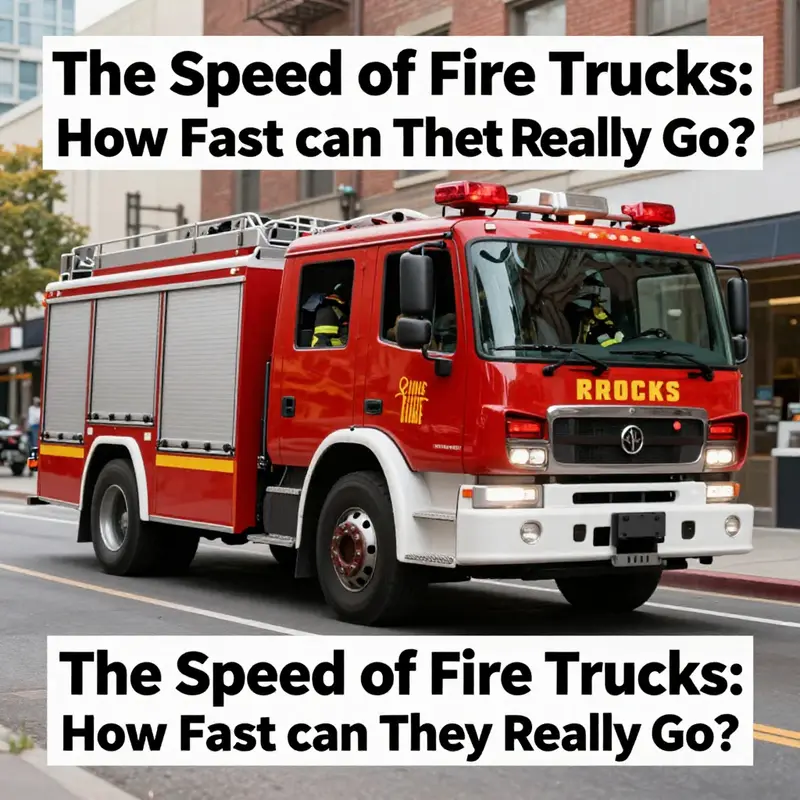
Speed, when asked about a fire truck, invites a first answer of maximum velocity. Yet the real story is more nuanced. For lightweight and mid-size fire trucks, speed is a carefully balanced attribute. It is the product of motive power, weight, aerodynamic drag, and the relentless need to stay stable while loaded with pumps, hoses, and water. In practice, these vehicles are designed to sprint through urban labyrinths, not to win a drag race. Their top speeds generally land between 80 and 100 kilometers per hour (roughly 50 to 62 miles per hour), with the exact figure depending on the model, the equipment carried, and the intended operational role. The key word here is not simply “how fast?” but “how fast safely and effectively in the environments they are built to serve.” The city presents a demanding stage. Fine-grained traffic patterns, frequent intersections, pedestrians, and varying road surfaces require a responsive, agile platform more than a vehicle tuned for raw acceleration. Lightweight and mid-size trucks are optimized for this stage. They must accelerate briskly enough to clear a congested intersection after the signal turns, yet they must recede speed at the right moments to maintain traction and control as they navigate curbs, medians, and a mosaic of street furniture. In essence, speed for these apparatus is a tool for rapid deployment, not a spectacle of velocity.
The design logic behind these classes of vehicles places a premium on agility. They are lighter than the heavy, water-filled behemoths that dominate rural or large-urban responses. This lighter mass translates into a lower inertia, which in turn improves maneuverability and braking response. A compact fire truck, geared for tight corridors and tight corners, can begin its mission faster simply because it has less mass to move and less resistance to overcome. Yet this same lighter construction still demands a thoughtful approach to stability. Water slosh—movement of liquid within a tank as the vehicle accelerates, decelerates, or corners—poses real challenges. The sloshing effect can shift the center of gravity, destabilizing handling and complicating steering inputs at high speeds or during sharp turns. Engineers mitigate this through careful tank geometry, baffles that interrupt water movement, and suspension tuning that keeps ride height and weight distribution within safe margins. The result is a platform that feels eager in speed differentials but remains composed through the corners of a city street.
When we dig into the specifications that distinguish lightweight from mid-size trucks, the variations become informative rather than contradictory. The broader category’s speed envelope spans 80 to 100 km/h, but the middle of that range tends to reflect a purposeful compromise. The compact, urban-oriented units can push toward the upper end—provided their bodywork and payload permit it without compromising control. A high-performance compact design, aimed at residential and dense urban environments, may reach up to 100 km/h, offering swift access to areas where every second counts. Mid-size models, often deployed as Type 2 pumper/engine trucks in municipal fleets, tread a similar line but with a touch more mass and equipment. They are generally capped around 90–100 km/h. The extra pounds typically come from additional hoses, an enhanced pump capacity, and perhaps a larger water tank footprint that enables longer on-scene operation before needing a refill. The balance is delicate: more water and more pump power deliver firefighting capability, but they also demand careful considerations of power-to-weight ratio, braking performance, and tire grip under a wide range of road conditions.
Industry standards across these classes reflect the same priorities: speed that supports rapid response while preserving control and stability. For urban and suburban deployments, the most meaningful speed metric is not the theoretical ceiling but the practical ability to reach a scene quickly and repeatedly throughout a shift. A fleet that can roll from station to incident with confidence in its handling, braking, and acceleration will typically perform better in terms of time-to-arrival than one that merely claims a higher top speed on a test track. The real-world dynamic is shaped by more than the air resistance at the radiator shell; it includes traffic density, signal timing, and people-friendly operation. For this reason, training emphasizes not only pushing the accelerator but listening for the cadence of the city. Drivers learn to anticipate red lights, yield to cross traffic, and select routes that shorten the path to the incident while maintaining the vehicle’s stability and the crew’s safety inside.
A practical implication of these constraints is that the fleet’s overall readiness relies on a continuum of factors beyond raw speed. The mid-size and lightweight class often carries a smaller payload than heavy units, yet the throughput of the vehicle—how quickly it can deploy water, pump, and hose lines—must align with the speed at which it can safely advance. A typical mid-size unit might carry a 250–500 gallons-per-minute pump, along with a 150–300 gallon water tank and optimized hose storage. Those numbers matter not only to firefighting capability but to the vehicle’s mass budget. The heavier the truck, the more traction management the tires demand, the more the brakes must manage, and the more careful the acceleration must be to avoid wheel spin on slick road surfaces. In urban settings, where pavement quality and curb heights vary, suspensions tuned for city operation also modulate how fast a truck feels it can travel through a block without jostling the crew or compromising equipment alignment. The interplay of payload, powertrain, and chassis geometry embodies the truth that speed in this context is a function of controlled energy, not unbridled horsepower.
The operational tempo during an emergency supports this philosophy. Fire services rely on speed to gain the critical advantage of time but must do so within a framework of traffic laws, local ordinances, and incident safety protocols. Even when a truck’s top speed exceeds 100 km/h, crews rarely drive at that limit in urban cores. The sirens and warning lights do help clear paths, but the audible and visual cues interact with the human driver and surrounding drivers in ways that make conservative speed management prudent. The goal is to minimize response time while preserving the ability to stop on a dime, maneuver through a narrow lane with parked vehicles on either side, and negotiate a crosswalk full of pedestrians. In many urban exposures, the top-end speed becomes a theoretical figure rather than the day-to-day operating speed. The planning horizon for a city-based unit is defined by the distance to the scene, traffic density, and the chance of encountering school zones, bus lanes, and pedestrians, not simply by how fast the engine can rev to the redline.
The urban environment also shapes the practical etiquette of speed. Drivers must absorb countless micro-decisions in real time: whether to accelerate before a green arrow opens or to hold a cautious pace through a turn where a pedestrian could spring from behind a parked car. These judgments rely on training, experience, and automated safety features embedded in the chassis. Anti-lock braking systems, stability control, and traction management modules help a lighter, more maneuverable truck maintain line and grip when it pushes toward the upper boundary of its allowable speed, especially on damp pavement or in mixed traffic. The interplay between driver skill and vehicle technology matters as much as the engine’s peak horsepower. A truck might theoretically be able to reach 100 km/h, but a prudent operator will modulate that speed to the conditions of the road and the crew’s comfort with the ride. Even more telling is how speed translates to effectiveness in a live scenario. Rapid acceleration to an exposed position at the edge of a neighborhood street is only valuable if the vehicle can then maintain direction through a series of turns, each with its own radius and surface grade. A well-calibrated lightweight or mid-size platform keeps momentum where momentum matters most, without sacrificing the steadiness of the crew and the integrity of the apparatus.
Within the broader ecosystem of fire apparatus, these capacities sit alongside a bustling market and a continuous push for smarter, safer designs. Buyers seeking agile, urban-ready fire trucks typically weigh how much speed they can responsibly rely on, given their city’s geometry, traffic norms, and incident profiles. A market perspective helps illuminate why compact and mid-size trucks frequently appear in modern fleets. They fill a niche that relies on brisk response multiplied by reliability and ease of maintenance. They carry enough water and pump capability to address many kinds of fires or emergencies while remaining nimble enough to reach traffic-choked corridors and fire-narrow streets that heavier vehicles would struggle to traverse. In this sense, speed is as much about reach as it is about the raw clock on the dial. It is measured in minutes saved between leaving the station and arriving on scene, in seconds shaved from a cautious, congested drive, and in the confidence that the vehicle can maintain control while the crew serves its public safety mission.
For readers who are curious about the commercial and procurement side of these capabilities, the market offers a range of options that emphasize different strengths. Some buyers prioritize ultra-compact designs, boots-on-the-ground agility, and rapid deployment. Others prioritize a balance between a robust pump capacity and a flexible water supply that can be extended during a longer operation. The guiding principle remains the same: speed is a means to an end—the end being the swift, safe arrival of trained personnel and equipment to protect life and property. Even when a truck’s top speed sits at the upper edge of the 80–100 km/h band, the value lies in how quickly, and how safely, the vehicle can be relied upon to arrive, set up, and begin suppressing a fire or delivering essential rescue services. The interplay of engineering, training, and urban dynamics makes every fleet’s speed profile unique, yet the core truth remains consistent across cities: the most effective use of speed is measured by reliability, control, and the power to execute the mission with precision.
Within this framework, a small but telling point stands out. The most agile units, those that perform best in dense urban settings, still operate within the same fundamental envelope as their larger siblings: they push toward the higher end of the speed range only when it is safe, and they throttle back whenever conditions demand. The difference between theoretical maximum speed and real-world performance is a gap filled by experience, by the careful design that avoids sacrificing stability for a few extra kilometers per hour, and by the respect for the complex reality of moving a crew and a load through crowded streets. This synthesis of design, operation, and geography explains why lightweight and mid-size fire trucks are valued not for the bravado of speed alone, but for the discipline that makes speed effective. In the end, the measure of speed is not the digit on the speedometer, but the speed at which a team can reach the scene, set up, and begin protecting lives with confidence and competence.
For readers considering the broader landscape of fire apparatus in practice, the market and the field agree on a core truth: speed matters most when it is tethered to safety, stability, and the capacity to perform. And in the urban environment, where streets are narrow, intersections many, and the pace of life constant, the appeal of lightweight and mid-size fire trucks lies not in breaking records but in delivering dependable, rapid, and controlled access to emergencies. If readers want a deeper dive into how industry benchmarks translate into day-to-day fleet performance, they can explore industry analyses that detail speed capabilities for lightweight and midsize fire trucks, which offer a rigorous context for understanding how these vehicles perform in real-world operations. For an additional perspective on speed benchmarks and testing, see the external resource linked below, which provides a broader view of how these vehicles behave under representative conditions: https://www.fireengineering.com/vehicles/lightweight-and-midsize-fire-trucks-speed-capabilities-2026. In the meantime, the practical takeaway remains clear: in the calculus of urban firefighting, speed is most valuable when it complements precise handling, reliable equipment, and a well-trained crew operating under careful safety protocols. Those elements together determine how quickly a fire truck can reach, reach efficiently, and contribute to protecting communities when every second counts.
Internal reference for further context: fire-trucks-for-sale. This link provides insight into how fleets source compact and mid-size units that epitomize the speed—a speed grounded in urban agility and disciplined operation rather than raw velocity alone.
Heavy Fire Trucks at the Edge: Balancing Speed, Stability, and Safe Arrival on Emergency Runs
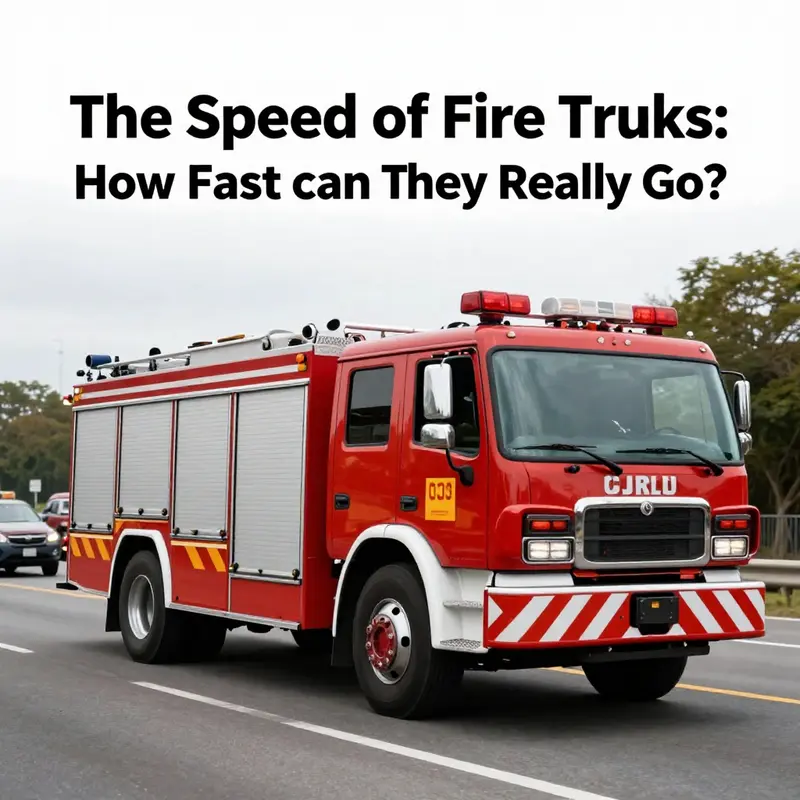
A moving fire truck carries far more than its crew, water, hoses, and tools, and that mass shapes the speed at which it can safely travel. Weight increases momentum, complicates braking, and asks for careful handling on curves and turns. Across appraisals of apparatus types, urban water tenders tend toward lower operating speeds for stability, while lighter foam or dry chemical units can push toward higher legal limits within safe margins. Curve navigation, road conditions, and weather drive the practical ceiling on speed far more than theoretical top speed, and many systems such as curve speed warning tools assist drivers without delaying response. The overarching message is that speed is a means to reduce response time, not a goal in itself, and the safest emergency action blends disciplined driving, vehicle design, training, and real time situational awareness to arrive promptly with the crew intact and the mission accomplished.
Final thoughts
Fire trucks are vital in ensuring safety, and their speed capabilities vary significantly across different types. Understanding the unique attributes of water tankers, foam trucks, lightweight units, and heavy-duty fire engines not only educates enthusiasts but also prepares aspiring firefighters for future challenges. By appreciating these vehicles’ specific roles and speed dynamics, one can better grasp the intricacies of emergency response operations. Each fire truck is a marvel of engineering, designed to balance speed with safety, ultimately ensuring swift action in life-saving situations.