
For fire truck enthusiasts, aspiring firefighters, and emergency services professionals, the speed of fire trucks represents more than just performance; it’s about saving lives. Fire trucks can achieve speeds that reflect their engineering prowess and operational requirements. However, the speed at which these heroes travel is not solely dictated by their engines but often regulated by laws and practical considerations. In this exploration, we’ll first look into the exhilarating maximum speeds of various fire truck types, followed by an examination of legal regulations that influence their speed capabilities, and finally, we will discuss the real-world scenarios that determine how fast these life-saving machines can operate effectively. Buckle up as we delve into the fast-paced world of fire truck velocity!
On the Edge of the Siren: Unraveling How Fast Fire Trucks Can Really Travel and Why It Matters
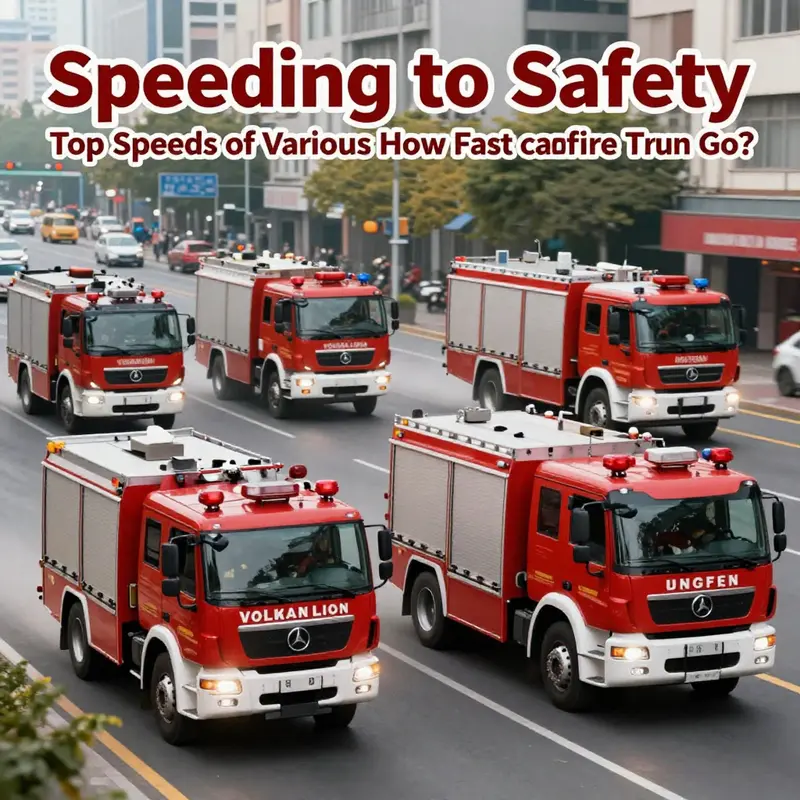
When a dispatch fires and a siren splits the evening air, the fire truck becomes more than a machine with hoses and ladders. It becomes a rolling question of speed, balance, and responsibility. How fast can these vehicles legally and practically go? The answer is not a single number. It is a spectrum shaped by the vehicle’s purpose, its design, the constraints of the road, and the fundamental need to protect the people who share the street with it. In normal operation, most fire apparatus move well within a broad corridor—fast enough to shave precious minutes from a response, but controlled enough to protect crew, passengers, bystanders, and the vehicle itself. The realities behind that corridor reveal a nuanced tension between urgency and safety that governs every turn of the wheel, every choice of route, and every moment when the right decision is to slow down rather than surge forward.
The class of fire trucks spans a wide range of forms and functions, and with that range comes a range of top speeds that seems deceptively simple at first glance. Yet the speed a fire truck can achieve in a given moment is never determined by engine power alone. It depends on how the truck carries its load—water, foam concentrates, rescue gear, and the lifting apparatus for high-rise work all add weight and alter handling. Water tankers, for example, are built for capacity and stability. The same mass that allows them to deliver large volumes of water during a fire also makes them more prone to water surge and sway if they are pushed to high speeds. As a rule of thumb, their urban speeds are typically kept lower—often in the range of sixty to eighty kilometers per hour—to maintain stability during transit and to reduce the risk of surging within the tank that could unsettle the vehicle.
Other categories of apparatus, such as those that carry foam or dry chemical powders for rapid knockdown and rescue operations, shed some weight compared to water-laden units and thus can push toward higher upper limits. Their top speeds commonly fall in the eighty to one hundred kilometers per hour window, enough to shorten drive times when the path is clear and traffic is light. Then there are emergency response units whose missions center on rapid deployment and quick reach to the scene. These vehicles are often engineered around agility—tight handling, responsive braking, and tires chosen to support quick acceleration and controlled deceleration. Their top speeds can routinely approach the century mark, with many urban and suburban fleets targeting speeds near or just above one hundred kilometers per hour under favorable conditions.
Yet there exists a stratum of high-performance or custom-built models that can exceed conventional expectations. In rare instances and under specific configurations, such units have been reported to reach speeds far beyond typical emergency-response norms. These extreme builds are not the everyday workhorses of most departments. They are exceptional, designed for special roles or demonstrations, and they operate under strict constraints that emphasize safety and control as much as outright speed. The existence of such machinery reminds us that the speed question for fire apparatus is not only a function of horsepower. It is also about the architecture of the vehicle, the way it weighs itself in motion, and the discipline of its operators.
Across the spectrum, the governing influence isn’t only the machine’s capability. Road conditions, traffic laws, and the situational demands of a response shape what speed is actually safe and permissible at any given moment. In many jurisdictions, tradition and regulation impose prudent limits that temper raw speed with public safety. Historical rules in some places limited speed through intersections or opposing traffic lanes to a few dozen miles per hour during emergencies, to ensure that the necessity of the moment did not collide with the safety of bystanders and other road users. Those rules still echo in modern practice, where drivers are expected to navigate with heightened awareness, using lights and sirens as a signal to others that an emergency is in progress, but not a license to abandon all caution.
To translate top-end potential into real-world practice, one must consider that speed is often a negotiated outcome rather than a fixed state. In urban environments, where streets narrow, pedestrians and cyclists abound, and traffic signals dictate flow, the fastest a fire truck can travel is rarely realized. Here the priority is to balance rapid arrival with predictable, stable handling. The vehicle’s weight, the distribution of ballast for stability, and the dynamic response of the suspension all contribute to how aggressively a driver can accelerate and how quickly a robust, emergency-ready vehicle can brake again. The driver’s training becomes a central factor; a seasoned operator learns to read traffic patterns, predict the movements of other road users, and adjust speed preemptively to avoid the need for abrupt maneuvers once the route is underway.
Across highway stretches and open rural roads, the speed equation shifts. In clear, unobstructed lanes with ample sightlines, the top end of a given apparatus might be reached more readily, provided the crew and their gear are secured, and the tires and brakes can sustain the load. On these routes, some departments aim for speeds near or above one hundred kilometers per hour when time is truly of the essence and the risk calculus supports it. Even there, the normal operating discipline remains thoughtful: the siren and lights alert, the engine maintains a brisk, controlled pace, and the driver continually scans for changes in the flow of traffic and road surface conditions. In other words, speed is a tool used with judgment, not an end in itself.
Within this framework, it is helpful to parse the spectrum by vehicle type without turning the discussion into a catalog of models. Water-tanker units, by design, emphasize stability and capacity; their top-end speed is a practical compromise anchored by the need to carry heavy loads and to avoid water surges that will unsettle the vehicle and endanger crew members. Foam and dry-powder configurations, which forego the mass of large quantities of water, often enjoy greater throttle response and higher practical speeds. Their role is fast-deployment in the early phases of a fire incident, enabling crews to arrive quickly with the right suppression agents to control or knock down a scene before the situation escalates. Rescue and emergency-response vehicles are engineered to shave seconds off the response time and to deploy personnel rapidly for complex interventions. The overall speed of these vehicles, while potent, must always be reconciled with the mission—a rapid arrival but with an emphasis on controlled, safe progression through urban corridors and interchanges.
The most striking reminder of the speed-versus-safety balance comes from the rarer, extreme ends of the spectrum. Some exceptionally configured or purpose-built machines push well beyond the typical range, tipping toward the upper echelons of speed. It is important to stress that such performance is not representative of standard practice. These are outliers, not the baseline. They illustrate what is possible when engineering concentrates on speed, aerodynamics, and the removal of nonessential mass, but they also underscore a crucial caveat: the operational environment rarely permits such velocities, and the safety framework surrounding emergency response is designed to prevent overreach. In practice, the fastest responses occur when the route is clear, the crew is well-drilled, and the vehicle is tuned for the specific corridor it must traverse—from a wide, unobstructed highway to a congested urban street.
The practical takeaway is that the speed of fire apparatus is a controlled compromise. Operators do not chase top speed; they pursue the quickest feasible arrival that keeps the crew intact and the public protected. This is where the legal and procedural layer becomes as important as the mechanical one. Traffic regulations, preemption technologies, and dispatcher routing all contribute to shaping the actual speed realized in any incident. Some departments rely on sophisticated routing and command systems to optimize paths and minimize exposure to high-risk scenarios, a topic that echoes broader discussions about how fire services manage incidents in real time. If you want to explore how command systems are evolving to support speed with safety, you can read more about these challenges and solutions in the Fire Truck Blog.
The basic numerical snapshot of speed in the field supports this reasoning. In general, most fire apparatus operate within a broad band of eighty to one hundred twenty kilometers per hour when moving between points of incident, with the lower end of that band often used in dense city centers where traffic density and cross-traffic demand caution. Water-tanker configurations tend to hover toward the lower end of that spectrum due to stability concerns, while more agile foam and dry-powder units sit toward the higher end, ready to reach a scene quickly and then adapt to the evolving demands there. The rescue and specialized response vehicles tend to be in the middle-to-upper range, balancing speed with the rapid deployment of personnel and equipment. In all cases, the real-world speed is a function of road geometry, traffic, weather, and the dynamic risk assessment carried out by the crew en route to the emergency.
This is not to deny the reality of high-performance dreams within the fleet. In rare instances, a customized or high-end variant can achieve startling speeds, but these are exceptional scenarios rather than the rule. The emergency services ecosystem recognizes that speed without control is a liability, and so any push toward higher performance is matched by enhanced training, meticulous maintenance, and a safety-first operating framework. The driver’s ability to maneuver, the vehicle’s grip on the road, and the responsiveness of the braking system all converge to determine the practical ceiling of speed in a given moment. The result is a disciplined choreography where ambition meets accountability, and where speed is a means to saving lives rather than a spectacle of power.
As part of the broader conversation about speed, it is worth acknowledging how speed calibrates with public policy and community expectations. The modern fire service is not simply chasing the fastest possible arrival; it is judged by the outcomes of the response: how quickly the team can begin a controlled, effective extinguishment, how safely the operation can transition from rapid advance to strategic positioning, and how well the crew can adapt to evolving hazards on the ground. That is why dispatch protocols, traffic management practices, and public safety education are integral to any discussion of fire truck speed. The vehicles themselves are important, but the systems around them—how cities plan routes, how drivers are trained, and how departments measure performance—are equally decisive in shaping the actual speed that reaches the scene.
For readers who want a broader view of the industry conversation and practical insights into how speed interacts with equipment, response strategies, and command systems, the Fire Truck Blog offers a repository of perspectives and case studies that explore these themes in depth. It provides a resource to understand how departments weigh speed against safety, how they design their fleets to optimize rapid response without compromising protection, and how evolving technologies are shifting what is possible on the street. The discussion in that space complements the technical overview offered here, providing a sense of how speed translates into real-world outcomes across diverse environments.
In closing, the question “how fast can fire trucks go?” has no single answer. It depends on the mission, the machine, and the moment. The fastest machines demonstrate what modern engineering can achieve when speed is aligned with stability, control, and sustained performance. The majority of operations, however, hinge on measured acceleration, prudent route selection, and disciplined driving that prioritizes safety above all else. The speed an apparatus can attain is always a reflection of the broader system in which it operates—the roads, the rules, the training, and the unyielding focus on protecting lives and property. For authoritative standards and guidelines that underpin these considerations, professionals refer to established codes and standards that govern apparatus design, performance, and safe operation on the public roadways.
External resources for a deeper dive into the standards that frame these discussions include the National Fire Protection Association’s fire apparatus guidelines. These standards help ensure that speed, when exercised, does so within a framework designed to minimize risk and maximize lifesaving potential. See the official standards for authoritative guidance and context on how speed, safety, and service come together in fire apparatus operation: https://www.nfpa.org/codes-and-standards/what-are-codes-and-standards/nfpa-1917.
Siren Velocity: Understanding How Fast Fire Trucks Can Legally and Safely Move in Real-Life Deployments
When people ask how fast a fire truck can go, the instinct is to think in straight numbers: the faster, the quicker the response, the safer the outcome. Yet the reality is nuanced. Fire trucks carry heavy water, rescue equipment, hoses, and specialized tools that add mass and weight to a chassis already tuned for rugged terrain and unpredictable urban streets. They are built for a balance between rapid response and controlled, safe operation. Their engines deliver bursts of power to move quickly, but the speed ceiling is not just a function of what the machine can do on an empty road. It also reflects the demands of the mission, the constraints of the road network, and the safety protocols designed to protect the public, the crew, and the vehicle itself. In practice, speed is a tool, not a substitute for strategy. It must be deployed with discipline, discipline that is shaped by law, training, and a deep understanding of risk in the moments just before the siren changes the rhythm of a city street.
Across various classes of fire apparatus, the potential top end of speed sits in a wide range. Some high-powered, multi-axle configurations designed for rapid response and off-road capability can approach the upper echelons of 140 km/h on favorable surfaces. In contrast, other large, heavier-duty vehicles, tasked with water delivery or high-rise access, tend to run at more conservative marks, often between 85 and 105 km/h, their power plants and transmissions optimized for towing loads and stability at speed rather than outright acceleration. Even within a single fleet, the top speed a crew might use on a given call depends on a constellation of factors: road grade, tire wear, suspension setup, and the density of traffic. On highways with smooth pavement and clear sightlines, a carefully managed upper-limb speed can shave precious seconds off a response time without crossing into unsafe territory. In city streets, the equation tilts toward caution. The same mass that helps a truck punch through a long hill can become a liability in a tight turn, a crowded intersection, or a curve with limited visibility.
To ground the discussion in practical terms, it is useful to consider broad categories. A modern heavy rescue or high-capacity water shuttle vehicle, designed to move quickly while carrying substantial payloads, may be capable of sustained speeds near the high end of the spectrum, provided the road conditions and traffic rules permit it. A standard pumper, optimized for delivering water and fighting fires, tends to optimize for reliability and control, with top speeds that comfortably hover around the century mark. Aerial ladder trucks, which must carry a tall, extending structure, inherently shoulder more weight and wind resistance, and thus typically settle into a lower top speed band. The design goals of each class are different: some prioritize compact turning radii and quick lane changes to weave through urban grids, while others emphasize stability and controlled acceleration to maintain steady water pressure and precise positioning for access to upper floors or distant hydrants. In summary, the speed spectrum reflects both the engineering realities of the vehicle and the operational realities of the missions they undertake.
Yet the raw numbers tell only part of the story. Even when a vehicle is technically capable of speeds well into the 100s of kilometers per hour, operators rarely explore these limits during routine emergency responses. Road conditions, traffic density, and the presence of pedestrians and cyclists make high-speed operation risky and impractical in most urban settings. Laws and policies act as guardrails here, translating the physics of speed into a framework of safety and accountability. In many places, fire departments are permitted to exceed standard speed limits when responding to emergencies, provided warning devices—such as lights and sirens—are in use and the vehicle is operated with heightened awareness and care. The principle is simple in theory but demanding in practice: speed must be earned through preparation, visibility, and a clear, imminent danger that justifies the risk.
A telling milestone in this safety framework is a regulation established in the early 2000s. In several jurisdictions, investigators and policymakers set a cap of 20 mph, roughly 32 km/h, for fire trucks when they are navigating into opposing traffic lanes or passing through intersections. The aim was to reduce the probability of high-speed collisions where visibility is compromised and maneuvering room is limited. Rollover risk, head-on collisions, and failed attempts to negotiate curves are the kinds of fatal outcomes this limit seeks to avert. It is a sober reminder that even the most urgent responses demand a disciplined approach to speed. The rule is not a blanket prohibition on increased velocity; rather, it is a calculated constraint that preserves safety at critical decision points, especially at intersections where public exposure is greatest and the uncertainties of other drivers’ behavior are highest.
The rationale behind such limits is reinforced by the broader data landscape in the fire service. The United States Fire Administration (USFA) has tracked the causes of firefighter fatalities and injuries with a focus on vehicle operations. In a notable finding from 2017, vehicle crashes emerged as the third leading cause of fatal firefighter injuries. Within that grim accounting, rollover incidents accounted for several fatalities, including those linked to awkward curves and precarious en route maneuvers. This data speaks in a language that speed can’t silence: speed alone does not guarantee safety, and the margin for error in emergency driving is slim. It underscores the importance of training, maintenance, and the adoption of proactive safety technologies that help crews manage speed without sacrificing their core objective—rapid, reliable rescue.
To translate risk into actionable practice, many departments have embraced a suite of technologies designed to support safe driving under duress. Curve Speed Warning Systems (CSWS) are among the more impactful innovations in this space. These systems monitor the vehicle’s approach to curves and provide real-time feedback to the driver when speed exceeds a safe threshold for the given radius and road condition. The effect is not to immobilize a response but to temper it, guiding drivers to reduce speed at the moment a corner becomes the defining risk factor. In studies evaluating CSWS, investigators observed that drivers reduced unsafe speeds approaching curves, demonstrated fewer instances of severe braking, and, crucially, did so without measurable increases in response times. The human element remains central—the data simply provides a calibrated instrument that supports better decision-making under pressure. Operators reported the system as helpful, effective, and useful, a testament to the potential of marrying human judgment with machine-guided awareness.
All of this unfolds within the larger ecosystem of emergency response. The speed at which a fire truck can travel is not merely a mechanical capability; it is a function of dispatch protocols, traffic management, and the coordination between responding units and the scene they are traveling toward. Dispatch centers, preemption devices that prioritize emergency vehicles at traffic signals, and strategic station placement all influence how quickly a unit can begin its journey and how swiftly it can maneuver through dense environments once it is en route. Even with a vehicle capable of high top speeds on a straightaway, the real-time decision to accelerate through an intersection or navigate a busy downtown corridor rests on a layered assessment: is the danger imminent and life-safety critical? Can the driver maintain control and maintain situational awareness for the next block? Is there a safe window to move through an intersection without endangering bystanders or other motorists?
This is where the concept of speed converges with strategy. Training programs emphasize not only the mechanics of acceleration and braking but also the social contract of emergency response. Drivers must read the street like a chessboard: anticipate the actions of other road users, anticipate the actions of oncoming emergency vehicles, and anticipate how pedestrians, cyclists, and parked cars will respond to the flashing lights. The vehicle’s capabilities must be matched by the operator’s judgment, the systems that support braking and stability, and the policies that govern when it is appropriate to push the envelope and when it is wiser to prioritize control. The tension between speed and safety, between urgency and restraint, is not a paradox but a continuous negotiation. Departments invest in driver training, simulator sessions, and real-world drill work to ensure every mile traveled under sirens is a mile that has been weighed and accounted for from the moment the call is received until the scene is secured and the apparatus is back in service.
The conversation about speed would be incomplete without acknowledging the standards that guide emergency vehicle operations. Resource documents from the national standards bodies provide a compass for what is permissible and what is recommended in terms of practice. They offer a framework that shapes the decisions of chiefs and line engineers as they calibrate vehicle performance against the realities of their service areas. In particular, the standards emphasize that while an emergency response can and should be rapid, it must be executed in a manner that preserves public safety and reduces risk to firefighters. The result is a culture that treats speed as a tool integrated into a broader safety system rather than a standalone objective. Within this culture, the actual operating speeds on the street are rarely the product of raw capability alone; they are the outcome of a deliberate, risk-adjusted calculus that balances mission urgency with the public’s safety and the crew’s welfare.
For readers who want to explore how these principles translate into day-to-day operations, a useful avenue is to review discussions about the challenges and solutions in fire command systems. These considerations are not abstract; they shape how information moves from dispatch to the cab, how the crew communicates with the driver, and how the vehicle interacts with the evolving landscape of a live incident. The link below points to a resource that frames the intersection of command, safety, and performance—a reminder that the speed of the truck is inseparable from the speed of decision-making and coordination on the ground. See more at Overcoming challenges in fire command systems (https://firetruck.space/overcoming-challenges-in-fire-command-systems/).
In the end, the question of how fast fire trucks can go does not have a single answer tied to a single number. It is a spectrum defined by vehicle architecture, mission profile, road topology, regulatory frameworks, and the ongoing evolution of safety technology. The top speed a department might officially permit on a given route is tempered by the likelihood of encountering hazards that escalate risk. The highest velocities, while technically feasible, become a strategic choice rather than a default setting. And as new safety innovations prove their value in reducing unsafe speeds and preserving response times, the balance tilts further toward smarter speed management rather than brute acceleration. This balance is not a constraint on ambition; it is a disciplined approach to saving lives and property while keeping firefighters safe as they perform one of the most demanding tasks in public service.
For readers seeking authoritative standards that anchor these practices, consult the NFPA’s emergency vehicle operations guidelines. The NFPA standards provide a comprehensive, ongoing dialogue about how fast emergency vehicles should move, under what conditions, and with which safety features to prioritize. You can find current guidelines and updates on the NFPA website: https://www.nfpa.org.
null
null
Final thoughts
Understanding how fast fire trucks can go helps illuminate the balance between necessity and safety in emergency responses. The speeds these machines can reach are indeed impressive, but they operate within a framework of regulations that prioritize public safety. With robust engineering and careful operational planning, fire trucks continue to serve as critical life-saving tools. Whether you’re an enthusiast fascinated by their capabilities or a young aspiring firefighter dreaming of joining their ranks, you’ll appreciate the careful design and regulations that make these vehicles vital to community safety.