
Fire trucks are the unsung heroes of firefighting, and one of their most essential features is their ability to carry water. Every fire truck is equipped with significant water-holding capacities tailored to different firefighting needs. Whether you’re a firetruck enthusiast, a young aspiring firefighter, or a professional in the emergency services, understanding how fire trucks carry and utilize water can illuminate the complexities of firefighting strategies. We’ll explore various chapters that delve into water capacity in fire trucks, the types of trucks available, the technologies used, their emergency response capabilities, and how water influences firefighting efficiency. This journey will not only deepen your appreciation for these vital vehicles but also enhance your awareness of their contributions to public safety.
How Much Water Does a Fire Truck Actually Carry and Why It Matters
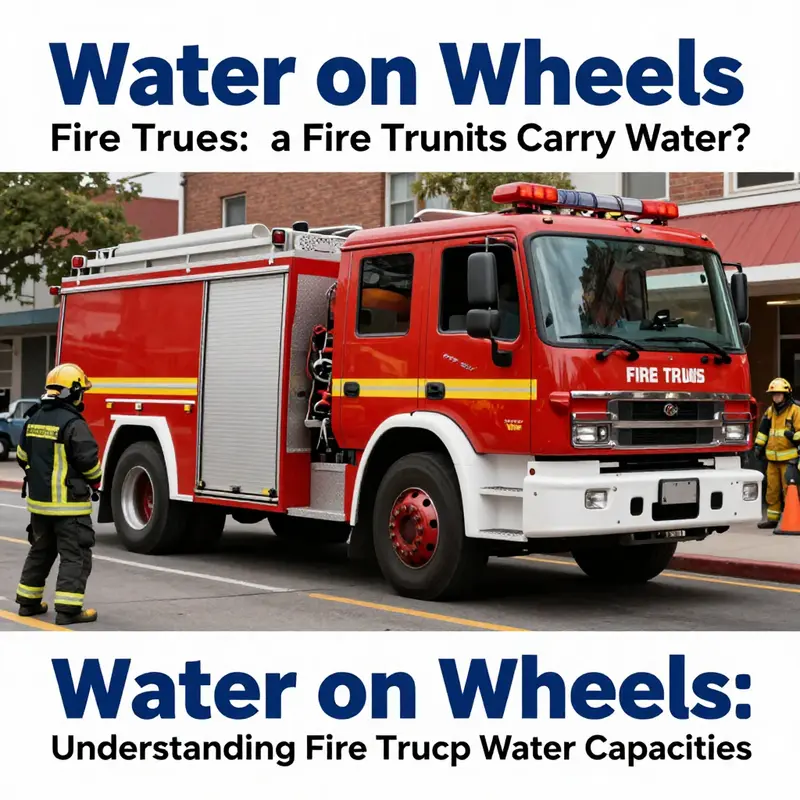
Fire trucks do carry water, but how much they carry and why it matters is shaped by design choices, operational needs, and the environment in which they work. At the heart of every pumper or engine is an onboard water tank that provides the initial supply firefighters need the moment they arrive. That immediate supply enables crews to begin suppression while other resources are being set up — for example, while a hoseline is stretched to a hydrant or a tanker shuttle is organized to resupply in a remote area.
Most modern fire engines are built around a balance: the tank size must be large enough to be useful, yet compact enough to preserve vehicle stability, maneuverability, and space for equipment and personnel. Typical municipal pumper trucks often carry between approximately 500 and 1,000 gallons of water (roughly 1,900 to 3,800 liters). Those gallons provide the pressure and flow needed for a rapid initial attack, delivered through integrated pumps that pressurize the water and push it through hoses. With a well-performing pump, that onboard water can be applied at effective flow rates until a continuous supply from a hydrant or other source is established.
Beyond standard pumpers, the fire service uses a variety of water-carrying vehicles tuned to different missions. Tender or tanker trucks are designed primarily to move large volumes of water over distance. Rural departments often rely on tenders to shuttle water between fill sites and the fire scene where hydrants do not exist. These vehicles can range widely in capacity: smaller tenders might carry a few thousand liters, while heavy-duty supply trucks can carry 10,000 to 25,000 liters or more. For large-scale incidents and wildland fires, specialized apparatus with stainless steel tanks and foam systems increase capacity and versatility, sometimes offering capacities measured in tons rather than gallons.
Not every fire apparatus emphasizes onboard water. Rescue-oriented units and vehicles designed for technical response may carry reduced water capacities to make room for tools, medical equipment, and personnel. Electric or compact urban units, designed for narrow streets and quick response, may also carry lower volumes—sometimes around 1,500 liters—while still retaining pump and hose systems to initiate suppression. This diversity reflects the trade-offs departments make: water volume, pumping power, hose length, and equipment storage must be balanced against chassis size, road access, and the types of incidents most commonly encountered.
Why are these trade-offs important? The answer ties to real-world firefighting needs. When crews arrive, the first minutes are often the most critical. A modest onboard supply gives firefighters the ability to control fire spread, protect exposures, and begin search and rescue without waiting for supply lines. In urban settings with reliable hydrants, the onboard tank serves as a buffer until hydrant connections are made. In rural settings, the onboard tank may be the primary immediate source, and tenders or shuttle operations provide continuous resupply. In wildland or mixed-terrain incidents, water carried at higher elevation or from helicopter buckets supplements ground-based tanks.
Pumping capability is as crucial as tank size. A truck that carries 1,000 gallons but has a weak pump cannot deliver effective streams at necessary pressures. Conversely, a powerful pump without sufficient water creates a limited window for operations. Fire apparatus designers therefore specify pumps and tanks together so that rated flow rates can be sustained for realistic durations. Departments planning purchases must consider local building densities, response times, hydrant availability, and typical call types to select apparatus with appropriate tank-and-pump pairings.
Foam systems complicate the picture but improve effectiveness. Certain vehicles carry foam concentrates in addition to water to enhance suppression on flammable liquid or deep-seated fires. A truck might have a foam tank measured in hundreds to thousands of liters alongside its water tank, with mixing systems that proportion foam into water streams. This combination extends the usefulness of onboard water by improving extinguishment per liter. For chemical incidents, apparatus may instead prioritize specialized agents, trading some water volume to carry those materials safely.
Operational strategies complement equipment choices. In cities, hydrant networks allow engines to operate on continuous supply, so smaller onboard tanks suffice for initial control. Departments may train crews to establish supply lines quickly, draft from static sources when needed, and manage multiple pumpers to relay water over distance. In rural districts, the tender shuttle system becomes a routine practice: dedicated tankers stage at the scene, and lighter engines perform attack and mop-up while shuttles bring water from distant fill points. Mutual aid agreements often fill gaps in capacity; neighboring departments can send additional tankers when demand exceeds a single department’s water resources.
The rise of new vehicle platforms and technologies is influencing how water is carried and used. Lighter and more maneuverable chassis, alternative fuels, and electric drivetrains create options for urban fleets that navigate tighter streets while providing respectable water volumes. Innovations in tank materials, such as stainless steel and composite designs, reduce weight and corrosion while allowing larger capacities on certain chassis. Portable folding tanks and high-capacity hoses also make it easier to establish temporary reservoirs near the scene, effectively increasing the usable water supply without permanently enlarging vehicle tanks.
Safety and stability concerns constrain maximum tank sizes. Water is heavy; every additional gallon increases vehicle mass and affects braking, cornering, and center of gravity. Designers must ensure that fully loaded apparatus remain stable under emergency maneuvers and comply with vehicle regulations. That constraint is one reason why extremely large single-vehicle tanks are rare in urban pumpers; instead, departments use a mix of apparatus types to meet volume needs while preserving maneuverability.
Choosing the right balance of water capacity, pump performance, and equipment is ultimately a local decision. Departments evaluate response distances, hydrant infrastructure, building types, staffing levels, and budget. For communities without hydrants, investing in larger tenders and training for shuttle operations is essential. For dense urban areas, engines with strong pumps and moderate tanks suffice because hydrants provide continuous supply. Many departments adopt hybrid strategies, combining engines with moderate tanks, dedicated tankers, and specialized units to cover the full spectrum of call types.
Understanding that fire trucks carry water and that capacity varies helps clarify how fire services tailor their fleets to meet unique needs. Onboard tanks deliver the crucial first minutes of suppression, pumps convert stored water into usable streams, and tenders or external sources sustain operations when fires demand long-term supply. This layered approach—applying immediate onboard water while securing continuous supply—explains why capacity matters as much as the systems that use the water. For readers seeking deeper technical standards that guide these design and operational choices, the National Fire Protection Association provides vehicle standards and guidelines that influence apparatus specifications and safe operation: https://www.nfpa.org/codes-and-standards/fire-protection-engineering/standards/nfpa-1917.
For departments, fleet managers, and communities making purchase or policy decisions, understanding these trade-offs supports practical choices. For the public, recognizing that fire trucks are not infinite water sources clarifies why firefighters may request hydrant access, tenders, or mutual aid. The visible presence of a water tank on a fire truck is one piece of a larger system designed to bring water where and when it matters most. For ongoing discussions about apparatus design, fleet options, and emerging vehicle types, see our detailed coverage on the fire service blog: https://firetruck.space/blog/.
Water on Wheels: How Fire Engines Carry and Deliver Water When Every Second Counts
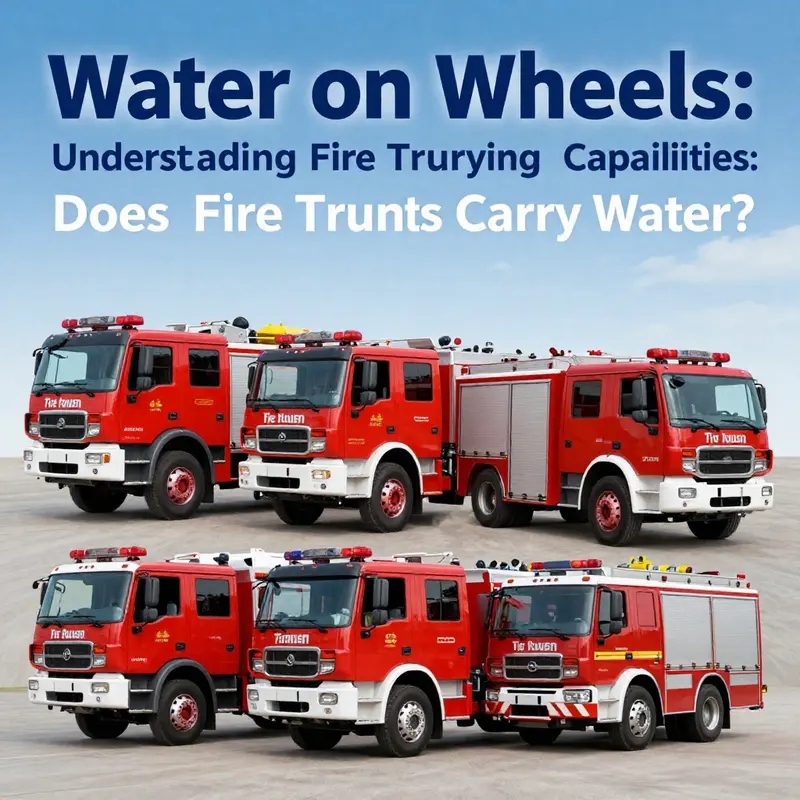
Water sits at the core of firefighting to begin with, and fire engines are built around that principle. A mid-airless moment after a bell rings is when a crew first drops hoses and attaches to a source, but the engine’s onboard water is what buys time. The onboard tank acts as a portable reservoir, a mobile scrim against the clock, allowing firefighters to make a first, targeted assault on flames even before a hydrant or a distant lake can be connected. This immediate water supply is not just a convenience; it is a strategic constraint that shapes attack plans, water management, and the sequence of operations on the scene. The tank and pump combination defines how quickly a unit can establish pressure, advance hose lines, and begin cooling, which in turn reduces heat release, protects exposures, and buys room to coordinate with other responding units. In this sense, the water carried by a fire engine is a physical lifeline that translates into safety and tempo for everyone involved.
The capacity of onboard water is not a one-size-fits-all figure. It scales with the vehicle’s role, size, and the environments in which it operates. Small fire engines, designed for tight streets or rapid response, typically carry enough water for initial attack and life-safety operations, roughly in the range of two to four tons, or about two thousand to four thousand liters. These compact machines are optimized for maneuverability, quick setup, and reliable pumping power, which makes them well suited to neighborhoods where hydrants exist but may be sparse or unevenly distributed. They must be ready to begin cooling and containment while crews assess the water supply situation and connect to a standpipe, hydrant, or other source.
Medium-duty fire engines step up the capacity to roughly six to eight tons, translating to six thousand to eight thousand liters. With more heft and a higher water load, these vehicles can sustain longer initial attacks, extend reach through higher flows, and support larger hands-on operations until a larger supply or a more powerful pump can be brought into play. The incremental increase in water mass also comes with considerations for stability and handling, which is where internal design features such as baffles and careful weight distribution come into play. The aim is to minimize slosh during transit and ensure the operator can maintain control while the apparatus navigates streets, turns, or uneven terrain under the stress of an emergency.
Large fire engines push the envelope further. Tanks on these rigs often range from ten to fifteen tons, or ten thousand to fifteen thousand liters. Some specialized configurations are designed to approach eighteen tons, reflecting the demands of heavy, sustained operations in urban cores, industrial zones, or remote sites where hydrants are scarce or can’t be relied upon for a continuous supply. These volumes provide a more robust buffer for the initial hours of a call, allowing crews to face high-demand fire scenarios with a greater margin for water flow while they work to create water sources or secure long-term supply lines. In practice, larger tanks mean that the truck can deliver longer strings of hose with fewer interruptions for water pickup, an advantage when every minute of continuous flow matters for knockdown and containment.
There are also supply and logistics fire trucks, designed not for rapid attack but for moving water from distant sources to the scene. These vehicles can carry more than ten tons and, in some configurations, exceed twenty-five tons. They act as water wagons for large incidents, rural areas, or regions with intermittent infrastructure. While they do not substitute for the quick, aggressive initial attack, these larger transports are essential for maintaining momentum as the incident unfolds. They help sustain teams that are performing hose lines over extended distances, filling remote operations with reliable water and reducing the need to shuttle back to a hydrant or water source every few minutes.
In addition to pure volume, the material and construction of the onboard tanks influence performance and durability. Some tanks are stainless steel, chosen for corrosion resistance and longevity in firefighting environments where water quality, foams, and additives interact with metal. Others are aluminum alloys or composite structures that balance weight with capacity. Regardless of material, many tanks incorporate internal baffling to reduce slosh, keeping the vehicle stable when accelerating, braking, or cornering at high speeds. A steady ride isn’t just about crew comfort; it’s a safety feature that helps maintain line integrity and protects delicate downstream equipment such as high-pressure pumps, valves, and discharge connections.
To understand how these tanks translate into real-world capabilities, consider the way a typical front-line unit is deployed. A compact, two-to-four-ton capacity might be enough to begin cooling and exposing a fire while engines draft from a nearby hydrant. A mid-size unit with six to eight tons engages with a broader reach and higher discharge pressure, extending attack lines while the incident commander assesses water supply options and coordinates with other responding units. A heavy apparatus with ten to fifteen tons of onboard water becomes a cornerstone of the first-attack team, offering sustained suppression capability while the scene evolves, and a dedicated water supply truck stands by to replenish or top off the tank. In large complex incidents, multiple tanks and pumps work in concert, with some vehicles dedicated to early knockdown, others to exposure protection, and still others to supply logistics and relay operations.
The design philosophy behind onboard water also informs how a fire engine can adapt to different fire types. For fires involving ordinary combustibles, streams of water can achieve rapid cooling and steam conversion that suppresses the flame’s heat release rate. When foam is available and appropriate, some units can blend foam concentrates with water, creating a blanket that cools and smothers fuels with a more versatile chemical approach. This dual capability is particularly valuable for mixed environments—where flammable liquids may be present alongside solid fuels—because foam can reduce surface tension and provide a visual, consistent blanket that can dampen vapor release and slow pool fires, buying precious seconds for an organized fight.
The vehicle’s pumping system is the other half of the equation. A robust onboard pump, coupled with a set of hoses and discharge outlets, transforms that stored water into a controllable, high-pressure stream. The crew selects the proper nozzle size and operates valves to deliver the desired flow rate and pressure. The ability to connect to external sources—such as hydrants, drafting from a lake, or drawing water from rivers—gives the unit a flexible, layered approach to water management. Early on, the pump provides a self-contained assault with the water already aboard. As the incident progresses, external water sources supplement the supply, and the entire operation hinges on maintaining adequate pressure while respecting the constraints of the system and the scene.
Even the design of a specific chassis matters for water-carrying capability. In some configurations, the tank itself is integrated with foam lines, auxiliary power, and a dedicated pump chamber. The layout must avoid interference with driver visibility and hose handling, while preserving structural integrity during full-load operation. In practice, this means considering not just the static capacity in liters but the dynamic behavior of water during transit and attack. The slosh is more than a nuisance; it can influence handling and response times, so engineers place internal compartments, baffles, and support structures to keep the water in place and the truck stable as it moves toward the fire ground.
A representative, non-brand-specific example helps illustrate how these features come together in the field. A diesel-powered fire engine designed for a broad urban and industrial footprint might be described as a four- to six-teen-ton class vehicle, capable of carrying a substantial water load, often with foam compatibility. The vehicle would feature an onboard pump with reliable discharge capabilities, a balanced distribution of water to different outlets, and a chassis tuned to maintain stability when full of water. On arrival, crews can begin delivering water immediately, then rapidly hook up to hydrants or other water sources to extend the attack. The advantage of such a system is not just raw volume but the capacity to initiate suppression almost instantly while a plan is formed to secure a larger, longer-lasting supply.
The concept of water on board is complemented by material choices and tank design that maximize durability and usefulness in a firefighting context. Some configurations emphasize steel tanks for durability and a longer service life, while others prioritize lighter materials to increase payload capacity or reduce weight on rough terrain. To balance these considerations, many operators refer to a range of configurations that optimize the trade-offs between weight, capacity, and resilience. For durability and tank design, some configurations use durable steel tanks, see Steel Fire Apparatus.
Beyond the numbers and the geometry, the real-world effect of onboard water is a matter of timing and coordination. Firefighting is a sequence of decisions under heat and pressure, and the water on the engine is the first instrument—the immediate force that begins to reduce heat and control the scene. The ability to deliver water quickly, maintain a reliable flow, and then scale up with external sources can determine whether a fire is contained in minutes or spreads to threaten more structures or lives. The balance between onboard storage, pumping capacity, and the efficiency of drafting from external sources shapes how an incident unfolds. In many districts, this balance is designed around a tiered approach: attack with what you have on board, then escalate with water supply vehicles and hydrant connections as the incident dictates. This layered system is what makes fire engines more than a simple vessel for water; they are a carefully engineered link in a larger chain of response that begins at the moment the bell rings and ends with a controlled, thorough suppression and a safe, thorough overhaul.
In sum, yes, a fire engine carries water, and its capacity, configuration, and integration with pumping and drafting systems determine how effectively it can respond in the first critical minutes. The water on board is not a static reserve but a dynamic resource that interacts with hoses, nozzles, foam, and external supply to form a flexible, responsive, life-saving toolkit. Whether deployed in a dense city block or a remote industrial site, these mobile reservoirs translate raw volume into strategic advantage, turning seconds into suppression, and danger into containment. For firefighters and the communities they serve, the onboard water supply remains a defining feature of the modern fire engine—a true lifeline that travels with the crew wherever a call may lead.
External resource: https://www.engineering.com/ArticleDetails.aspx?ArticleID=12345
Water on Deck: How Fire Trucks Carry, Store, and Deploy Water in Firefighting
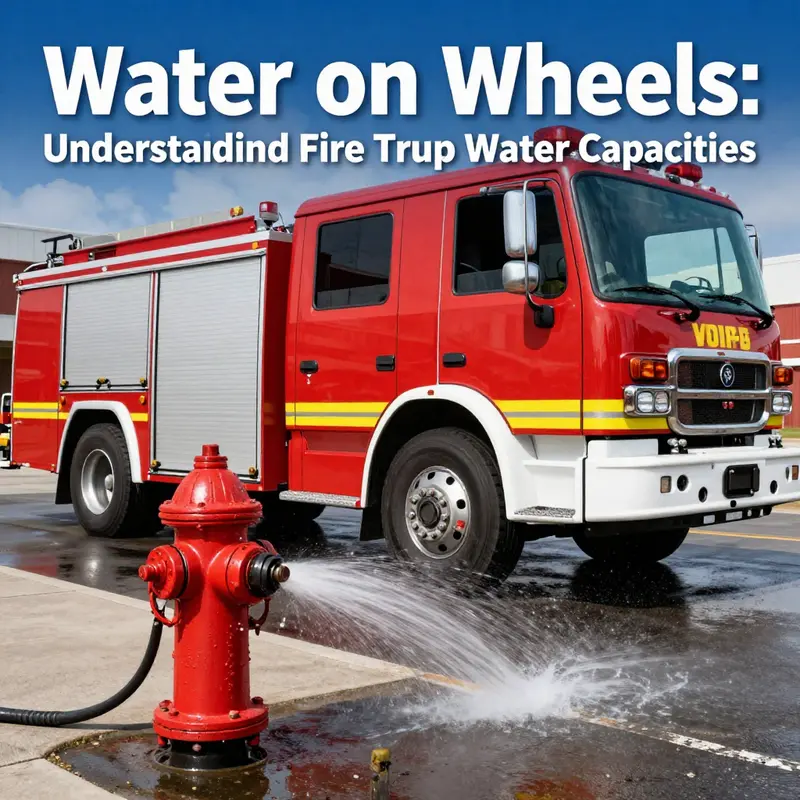
Water is the most fundamental tool in firefighting, yet its management at the scene is rarely explained in simple terms. A common question lingers in many communities: does a fire truck carry water? The answer is yes, but the story is more nuanced than a single tank on a single vehicle. Fire apparatus are built to respond quickly with an immediate water supply, while also connecting to external sources to sustain a longer attack. The capability hinges on the type of truck, the size of its onboard tank, the design of its pump and hose system, and the way it cooperates with hydrants, drafting scenarios, and aerial devices. In practice, water is both a stored resource and a dynamic supply chain that moves with the incident, adapting to the fire’s size, location, and intensity.
At the core, most fire trucks carry onboard water, but the quantity and purpose of that water vary widely. Small fire trucks may offer a modest reserve intended for rapid initial suppression and for enabling a quick attack while crews locate a hydrant or more substantial source. On the other hand, larger engines and specialized supply vehicles are designed to deliver far larger volumes, either to sustain a multi-alarm attack or to establish a reliable water corridor in environments where hydrants are sparse or distant. When you translate those capacities from tons into liters, the range becomes clearer. A 2 to 4 ton onboard water load translates to roughly 2,000 to 4,000 liters for smaller apparatus. Medium units typically carry about 6,000 to 8,000 liters, while large engines can exceed 10,000 liters and reach toward 15,000 liters or more. Some specialized supply or logistics trucks are even built to transport tens of thousands of liters, supporting long-duration operations or remote-site fires where a hydrant network cannot be relied upon. And there are innovations in materials and design—stainless steel tanks and even foam-capable configurations—that expand what onboard water can do under varying conditions. Even as a given vehicle carries a substantial tank, its real power comes from the combination of that stored water with the ability to draw additional water from external sources when needed.
The most common firefighting workhorse is the pumper, or engine, truck. These are purpose-built to carry water and to deliver it with force to the flame, typically through preconnected attack lines that allow crews to begin an immediate handline attack upon arrival. A standard pumper’s onboard tank usually sits in the neighborhood of 500 to 1,000 gallons, or about 1,900 to 3,800 liters. That amount serves as a confident first line of defense and a platform for rapid suppression. The water is not merely dumped onto the fire; it is pumped through hoses with a purpose-built pump that creates the pressure necessary to push water through long runs of hose and through nozzles that crews use in close proximity to the flames. The result is a controllable jet of water that can be aimed at the base of the fire, a technique essential for preventing the fire’s spread and for protecting surrounding exposures. The pumper’s role is thus twofold: to deliver water immediately and to maintain a steady flow while more water is brought to the scene.
Beyond the engine, rescue trucks expand the operational toolkit without primarily serving as a water delivery system. They are built to handle technical rescues, vehicle extrications, and confined-space work, yet many carry smaller water tanks in the range of 200 to 300 gallons, roughly 760 to 1,100 liters. That smaller reserve supports scene safety and provides a quick, limited suppression capability to protect personnel or to help control a developing fire while other apparatus are positioned. It’s a reminder that every vehicle on the scene is playing a part in the overall water strategy, even if the frame’s job is not to dump water on the flames from the outset.
In large-scale or specialized environments, other types of trucks redefine the water equation. Industrial and ARFF (Airport Rescue and Firefighting) trucks tackle specific kinds of fires, such as fuel fires at airports or heavy industrial flames. These vehicles typically carry substantial water volumes—often exceeding 1,000 gallons (more than 3,700 liters)—and they combine that capacity with specialized foams and chemical agents designed to tackle hydrocarbon fires. The emphasis here is not simply on water quantity but on the right chemical tools that, in concert with water, create faster, safer knockdown of certain fuels and reduced risk to crews.
There is also a place for the larger supply and logistics vehicles in this ecosystem. When a fire demands more water than a single engine can deliver or when a hydrant network is not readily accessible, these trucks act as water delivery trains. They are designed to haul significant volumes—10 tons or more—and some models push well past 25 tons. In practical terms, these vehicles arrive at the scene with a ready reservoir of water and a plan for transferring that water into the local attack system. This often involves dedicated pumps, large-diameter supply lines, and a network of connections to maintain a continuous flow at the right pressure. It’s a different rhythm from the quick, in-place attack of a pumper, but it is equally critical for saving lives and property when fires stretch across large footprints or across rural landscapes with limited hydrants.
The way water is sourced, managed, and deployed at a scene is as important as the water itself. An onboard tank provides the first push to begin the attack, but fire crews quickly connect to hydrants or draft from nearby bodies of water when available. Drafting—pulling water from a lake, river, or other source through a suction hose—requires skilled handling, precise equipment placement, and careful coordination. These tasks are not mere back-office procedures; they determine whether the initial lines remain charged and whether the water supply can be sustained as the incident evolves. In some settings, such as long rural routes or wildland-urban interfaces, the combination of pumping from a tanker’s onboard tank, drafting, and dynamically connecting to hydrants becomes a complex, rapidly shifting system. The goal is continuity: water never runs dry at the most critical moment, and the crew can adjust the mix of water from onboard and external sources to maximize suppression while maintaining safety.
Foam and other additives also influence how water is used. In many situations, water alone is insufficient to halt a fire’s advance, especially when fuels are involved. Firefighters may introduce foam concentrates to blanket the fuel and reduce surface tension. When used judiciously, foam can improve the effectiveness of water by preventing rapid runoff and improving coverage. Tank and foam combinations are part of the equipment mix that helps a crew adapt to the fire’s characteristics. Tank capacity remains the anchor, but the choice of additives can change how quickly a scene is controlled. The input from these moments—foam, water, and the pump’s pressure—becomes a narrative of efficiency and safety as crews move to knock down flames while protecting themselves and nearby structures.
A final aspect of this topic concerns the procurement and selection of fire trucks themselves. Fire departments weigh the needs of their communities, distances, and typical incident types when choosing apparatus. While the starting point is always water, the size of the tank, the pump’s capabilities, the presence of foam systems, and the ability to deliver water from multiple sources all factor into a decision. For readers curious about the practical side of equipment selection, the available options on the market provide a spectrum of capacity and specialization. If you are evaluating equipment for a department or a town, consider how a vehicle will interact with hydrants, how it will perform in non-urban landscapes, and how it can be integrated into a broader water-supply strategy across the fleet. The logistics of water supply are rarely about one truck in isolation; they are about how a carefully designed system of vehicles can work together to secure a successful outcome on scene.
For readers who want a broader look at current equipment options, a dedicated exploration of sales and purchase opportunities can offer practical insight into what is available and how it can fit a department’s needs. See the fire trucks for sale page for options and guidance on how to approach a fleet that balances onboard water with the ability to source additional water from hydrants or other bodies of water. This is not a mere catalog of tanks; it is the practical bridge between water as a resource and water as a managed, deployable tool on the fireground. The modern fire engine, with its onboard reservoir and its capacity to draw more water on demand, embodies a principle of resilience: a scene-ready system that adapts to geography, incident type, and crew strategy.
In summary, yes—a fire truck does carry water. Yet the heart of the matter lies not only in the volume it holds but in how that volume is integrated with pumps, hoses, drafting, and external sources. The smallest engines carry enough water to start an attack and to stabilize a developing scene, while larger engines and specialized units create a flexible network that can sustain suppression over hours in challenging terrains. The best-equipped fleets are those that imagine water not as a single bottle but as a flowing, connected supply chain that moves with the incident. As with every element of emergency response, success hinges on preparation, coordination, and the willingness to adapt to whatever the fire scene demands. And when readers want to explore how these choices translate into real-world options, the available fleet pages can illuminate what is practical and affordable for different departments and communities. For an accessible starting point, consider exploring the options on the fire trucks for sale page, which links to a range of apparatus designed to meet diverse needs. External resources can further illuminate best practices and procurement strategies for building an effective water supply strategy. For a broader context, see the external resource on selecting the best fire truck model for every need: https://www.firetrucks.com/guide-to-choosing-the-best-fire-truck-model-for-every-need/
Carrying Water, Carrying Progress: The Living Core and High-Tech Arc of Modern Fire Trucks
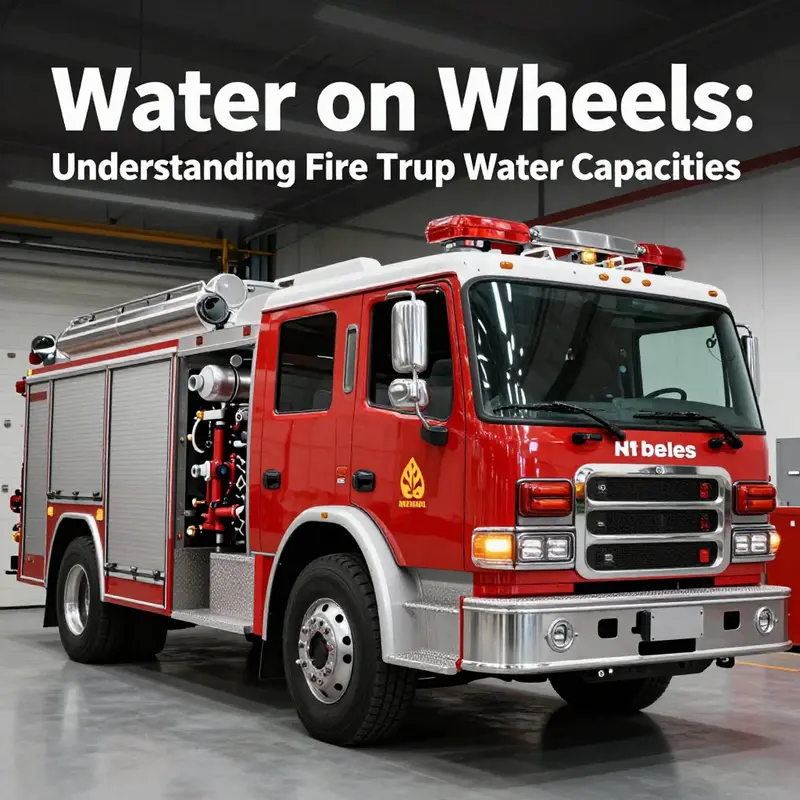
When flames flare in a city street or a hillside outpost, every second counts and every liter matters. The first responders arriving on scene rely not only on their training and courage but on the machine that carries the most immediate resource at hand: water. A fire truck does carry water, and for most emergency operations that cargo sets the tempo of response. Onboard tanks are designed to provide a rapid, initial assault long enough to begin a longer, coordinated effort. The simplest way to picture it is to think of these vehicles as mobile reservoirs that buy firefighters time. In terms of capacity, the landscape is varied. Small fire trucks commonly carry about two to four tons of water, which translates to roughly two to four thousand liters. These sizes are particularly useful for rapid response in dense urban grids or smaller incidents where access to water is swiftly established and the situation can be contained or escalated with additional sources. Medium-sized trucks push their onboard water supply higher, typically holding six to eight thousand liters. They stand as a bridge between rapid initial suppression and the arrival of larger, more specialized support. Large fire trucks, meanwhile, push into ten to fifteen thousand liters, with certain configurations capable of delivering as much as eighteen thousand liters in a single tank. In practical terms, those figures—about ten to fifteen tons of water for the largest conventional tankers—reflect a balance between reach, maneuverability, and the need to function in environments where hydrants are scarce or temporarily unavailable. For emergency planning, it is important to note that even these numbers do not capture every scenario. Some supply and logistics platforms are designed specifically to move water over long distances or to support operations in remote areas where hydrants are not readily accessible. These vehicles may push past ten tons and, in some cases, reach twenty-five tons or more, reflecting the demands of extended firefighting campaigns or large-scale incidents where water must be staged and moved efficiently to the scene. This spectrum—from a couple of thousand liters to tens of thousands—reaffirms a simple truth: water carriage remains a foundational function, paired with sophisticated distribution systems that begin the moment a bell rings and a crew begins to roll. The onboard tanks are only one half of the equation. Fire trucks are also equipped with high-performance pumps and an array of hoses that enable water to be delivered under high pressure to the fire scene. The ability to draft water from hydrants, lakes, rivers, or other external sources means that the water already in the tank is often just the initial quantity, a head start in a race that continues as the apparatus connects to external supplies and pumps water to the nozzle with precision and force. In practice, this means a truck can begin attacking a blaze even as it taps into a municipal water system, or even draw from a distant source if the fire is large enough to exhaust the local supply. The interplay between stored water and in-flow water is a core design principle. It creates a flexible and resilient system that can adapt to the realities of the terrain, weather, and infrastructure in which a fire occurs. The physical build of the tank itself also tells a story of engineering choices. Tanks are manufactured from a range of materials, with stainless steel emerging as a favored option in many modern configurations for its durability and ease of cleaning, especially in environments where foam and chemical agents may be used. Foam capacity, often paired with water, enhances the vehicle’s ability to blanket a fire and suppress the flame chemistry more rapidly. In some configurations, a significant amount of water can be carried alongside a substantial foam inventory, which allows crews to tackle certain classes of fires with targeted agents that work in concert with water to reduce heat and control vapor. The presence of foam is not universal across all trucks, but it remains a critical tool where its use can lower overall extinguishing time and reduce water consumption in long duration incidents. As the designs evolve, the material science underpinning these choices also evolves. Tanks in stainless steel, aluminum alloys, and composite materials reflect a broader industrial push toward longevity, corrosion resistance, and lighter weight for equal capacity. That balance matters for a vehicle that must carry heavy loads while still maintaining safe handling characteristics and reliable pump performance. The modern fire truck is more than a water carrier; it is a compact logistics platform with a robust backbone of hydraulics, electronics, and safety systems. The pumps embedded in these machines are designed to move water not just quickly, but with predictable pressure and surge control that helps maintain nozzle stability in a high-stress environment. The crew relies on gauges, digital readouts, and alarms to monitor water volume, pump RPM, and temperature, ensuring that the water delivered to the fire remains within the operational window. In advance of a hydrant connection or an external supply line, water on board acts as an emergency reserve that buys time for the team to set up a longer-term response. It is this capability—arriving with water already in the tank and a plan to source more—that has historically defined a pumpers’ role within the fire service. Yet the last decade has introduced bold new directions that broaden what it means to be a water-carrying platform without abandoning the core mission. The billiard-ball precision of modern engineering is visible in the emergence of high-rise firefighting concepts, where the need to reach elevated lanterns of flame demanded a rethinking of water delivery from the earth up to dozens of stories above street level. A five-axle, heavy-duty water tower concept debuted at a major industry exposition, setting a Guinness World Record by achieving a firefighting height far beyond previous expectations. With a reach of well over one hundred meters, such a tower changes the playbook for urban and industrial high-rise fires. The practical implication is clear: water delivery can occur at heights and distances that used to require multiple staged operations and long, risky hose lays. Yet even as these towering innovations stretch the horizons of what is possible, the backbone of firefighting—water carried in a tank and pumped through a hose—remains essential. The newer systems merely extend the reach, speed, and reliability of that core capability. Alongside these mechanical advances sits another leap: intelligent automation and autonomous fire-fighting aids that promise to reduce human risk while expanding response options. Smart rescue robots are now being tested and deployed in controlled environments, capable of detecting flames, navigating complex terrain, and performing tasks that previously required a human in the line of flame. These machines can operate across obstacles taller than thirty centimeters and gradients steeper than forty degrees, broadening the terrain over which water and fire agents can be applied. They do not replace the firefighter; they extend the reach of the team by performing reconnaissance, stabilization, and initial suppression tasks in situations that would be dangerous or impractical for a person to enter immediately. In this sense, the fire truck of today is not simply a bucket-on-wheels but a highly integrated platform that couples water storage with sensing, automation, and rapid water delivery to set the conditions for success on the ground. The integration of these distinct capabilities reflects a broader shift in emergency response: the emphasis on speed, safety, and adaptability. A modern fire truck can be imagined as a rolling hub that links the reservoir on board to the hydrant network on the street and to high-tech tools that extend the firefighter’s reach into a city’s uncertain, evolving landscape. It is this blend of tradition and invention—the time-tested practice of carrying water and the audacious possibilities of high-rise towers and autonomous bots—that gives the narrative its texture. For those who study or design firefighting systems, the lesson is not simply that water is carried; it is that carrying water well is a system conversation. It involves tank capacity, material choice, pump efficiency, and the near-term promise of autonomous assistance, all woven into the fabric of a single vehicle. As operations unfold, crews still rely on the predictable cadence of water delivery—the tank, the pump, the nozzle, the hose—and at the same time they benefit from the extended range and safer, smarter support technologies that expand what a truck can do before, during, and after water begins to flow. That is why the chapter can say with confidence that a fire truck does carry water—and that the story of that carrying is inseparable from the broader story of how emergency response has grown more capable, more intelligent, and more resilient in the face of increasingly complex fires. For readers seeking a deeper view into the latest architectural and machine-scale ambitions in water delivery, a contemporary resource on the topic is available at this external link: https://www.sanyglobal.com/en/products/fire-fighting-equipment/jp100-100m-water-tower-fire-truck. In the meantime, those curious about the evolution of materials and configurations can explore the evolution of construction choices in steel and beyond through dedicated industry pages, such as the page dedicated to steel fire apparatus: steel fire apparatus. This small but telling link reflects a broader trajectory from the era of heavy, utility-first frames to today’s graceful fusion of water capacity, mobility, and intelligent systems that define the modern firefighting landscape.
Tank of Readiness: How Onboard Water Capacity Shapes the Fire Truck’s First Attack and the Path to Suppression
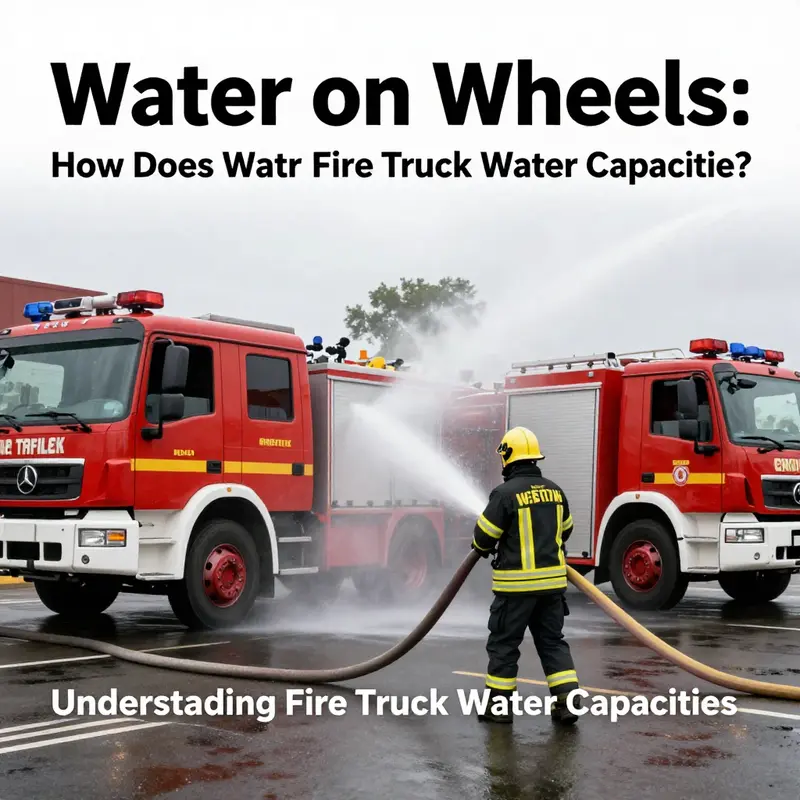
Water is not an afterthought in firefighting; it is the pulse that drives the entire operation from the moment the alarm sounds. In the heat of the moment, when a structure is newly ignited and every second counts, the amount of water a truck can carry on its chassis becomes more than a simple capacity figure. It is a practical measure of how much sustained attack is possible before external water supplies can be secured. The most immediate reality on a fire scene is that water must come from somewhere, and the fire truck stands between a growing inferno and a controlled, concentrated assault. The onboard water tank is the first line of defense, a portable reservoir that keeps the team engaged, keeps the nozzle flowing, and buys time for the relay systems, hydrants, or distant water sources to come online. As a result, the capacity of that tank directly shapes the tempo and effectiveness of early extinguishment, which in turn affects the spread of fire and the safety of occupants and responders.
Across the fleet, the size of onboard water tanks varies widely. Small fire trucks typically carry about 2 to 4 tons of water, equating to roughly 2,000 to 4,000 liters. This size supports rapid response and maneuverability in urban streets or tight sites where larger apparatus would be unwieldy. Medium units push higher, usually holding 6,000 to 8,000 liters, which expands the window of sustained delivery before a refill becomes necessary. Large fire trucks often feature capacities from 10,000 to 15,000 liters, with some specialized configurations reaching as high as 18,000 liters. The logic is simple: more water on board means a longer sustained attack before you must pause to refill, a crucial advantage when access to a hydrant is delayed or when a line needs to be extended to reach a distant or obstructed fire. In some programs, fleets include supply or logistics units designed specifically to transport water over longer distances, sometimes carrying more than 10 tons, and in the most extensive configurations exceeding 25 tons. These variations reflect a spectrum of mission profiles, terrain, and infrastructure realities that fire services must negotiate every day.
In addition to the size of the tank, the design of the water system on board is equally important. A modern pumper or tanker integrates a powerful pump with hoses and connection points that enable firefighters to draw water from external sources—hydrants, ponds, lakes, or rivers—and deliver it under high pressure to the fire scene. The same systems that pressurize water from a hydrant can also push it through large-diameter lines for relay pumping, where a sequence of vehicles creates a continuous supply to the front line while a distant source refills the tank. This combination of stored water and the ability to source water from outside the vehicle makes the overall firefighting capability robust and adaptable. In practice, the amount of water carried on board is not merely a metric of volume; it is a determinant of the incident’s early geometry—how quickly crews can lay an initial assault line, how many gallons can be delivered into the fire’s hottest sectors without interruption, and how long responders can sustain that effort before the next leg of the water supply is established.
The tradeoffs in tank size are not purely about capacity. Weight, vehicle dynamics, and the associated maintenance costs all shape what a department chooses for a given fleet. A heavier tank adds stress to the chassis, shifts center of gravity, and can affect maneuverability, especially in dense urban environments or on routes with narrow streets. For some applications—fire operations in remote or rugged terrain—an emphasis on larger onboard water capacity can be the difference between arresting a fire early and allowing it to spread. In contrast, urban settings with abundant hydrants may favor smaller, more versatile platforms equipped with rapid access to reliable external water sources. In either case, the pumps and hoses are the critical lifelines; they translate stored water into sustained pressure and reach, allowing crews to apply water where it is most needed and to sustain that application even as conditions evolve.
An important nuance in contemporary practice is the growing recognition that onboard water capacity does not exist in a vacuum. It interacts with the surrounding water distribution environment—the municipal water network, the topography of the firefighting district, and the density of hydrants. Studies focused on water distribution systems increasingly frame firefighting capacity in terms of the probability of delivering sufficient water to contend with multiple, potentially simultaneous emergencies. This concept, while often discussed at the infrastructure level, mirrors the logistics decision makers face on the fire ground: how much water should be carried on each vehicle, and how should the fleet’s water sourcing be structured to maximize reliability during peak demand? The takeaway is not just about bigger tanks; it is about aligning onboard capacity with the reliability of the broader water network that must support ongoing suppression and rescue operations.
The practical impact of onboard volume is perhaps most visible in training and routine operations that seek to simulate real-world conditions. A notable example is the water recycling pod used by a major metropolitan service, designed to hold around 5,000 to 6,000 liters. This concept represents more than a classroom fascination; it serves as a functional asset during drills and live responses, allowing crews to practice sustained water delivery over extended periods and to test the interface between tank water and external supply sources. In environments where hydrant coverage may be sparse or where a long relay is required to reach a distant seat of the fire, such a pod can stabilize the early attack by maintaining pressure and volume while the broader supply chain is established. The result is a more controlled, predictable start to suppression efforts, with less risk of the fire outrunning the initial attack and fewer opportunities for backdraft or flashover during the critical first minutes.
To appreciate the broader significance, it helps to consider the role of water capacity within the sequence of a response. At the moment the alarm is sounded, crews often have to decide which nozzle and which line will be deployed to create the initial front that halts the fire’s forward progress. A larger onboard tank makes it feasible to establish a two- or three-point attack rapidly, maintaining a concerted stream of water on the active flames while simultaneously developing a water supply plan through hydrants or relay lines. This reduces the time the fire is allowed to grow and, crucially, lowers the risk of uncontrolled escalation that can jeopardize occupants and firefighters alike. The overall efficiency of firefighting operations, then, hinges on a synergy: a well-balanced onboard water capacity paired with reliable external water sources and well-practiced relay pumping procedures. When the fleet can transition seamlessly from tank water to municipal or relay water, suppression can proceed with steadier momentum and greater predictability.
It is tempting to think that a single number—liters of onboard water—solves the problem. Yet the reality is more layered. In some specialized contexts, the emphasis shifts toward resistance to the demands of large-scale incidents or long-duration operations. A heavy-duty water supply vehicle that is designed to ferry water across distances can, in effect, serve as a mobile reservoir, delivering water to remote sites where hydrants are scarce or absent. In these cases, the tank capacity may exceed typical city-focused needs, and the mission profile may include foam, separation of water and foam concentrate, or other suppression aids. Conversely, electric or hybrid designs with smaller onboard volumes still play a vital role where maneuverability and access are paramount. A 1,500-liter capacity in such cases does not diminish effectiveness; it reflects a strategic choice to prioritize urban navigation, reduced weight, and efficient charging or fuel use, while still leveraging external water sources and robust pump performance. The diversity of configurations underscores a practical truth: water capacity is a tool calibrated to the local environment, incident type, and mission tempo.
As firefighting practice continues to evolve, the conversation around onboard water capacity remains tightly linked to the realities of field operations. The technician’s eye on a gauge, the captain’s decision about relay readiness, and the crew’s discipline in coordinating with nearby pumps all feed into a simple, enduring principle: water buys time. The sooner water is applied to the burning zone, the more likely it is that doors can be opened safely, ceilings can be protected, and suppressive action can reduce the thermal load to a manageable level. In this sense, tank capacity isn’t just a feature; it is a strategic asset that shapes how quickly responders can take control of a scene, how effectively they can protect lives and property, and how resilient the overall fire service becomes in the face of diverse emergencies.
For readers who want to explore ongoing coverage and further discussion on how water capacity intersects with vehicle design and incident response, see the FireTruck.Space blog. firetruck.space/blog/. The conversation continues to expand as fleets adapt to changing urban densities, climate-driven fire behavior, and evolving water infrastructure demands. On the research side, broader evaluations of water distribution systems illuminate the interconnectedness of vehicle capacity and system reliability, a reminder that the fire department’s success is rooted as much in infrastructure and collaboration as in the skill of individual firefighters. For a deeper dive into this dimension, the literature on Firefighting Capacity Evaluation of Water Distribution System offers a formal lens on how system-wide water availability influences suppression outcomes. This external source provides a rigorous framework for understanding why tank size matters not only on the individual apparatus but also in the context of the regional water network that supports every operation.
In the end, the question “does a fire truck carry water?” is best answered with nuance. Yes, every fire truck carries water, but the amount and the strategic use of that water tell a richer story about preparedness, adaptability, and the relentless pursuit of safety on every possible fire ground. The on-board tank is a critical asset, a portable reserve that allows an initial attack to begin without delay, while the broader water network and relay strategies are mobilized to sustain suppression. The synergy of these elements—the tank, the pump, the hoses, and the external water supply—defines the practical capacity to protect life and property when minutes matter most.
Final thoughts
Understanding whether fire trucks carry water and their capacity not only clarifies their functionality but also highlights their essential role in firefighting. With diverse fire truck types, technological advancements, and rapid emergency response capabilities, these engines are critical in protecting lives and property from fire hazards. The insights offered enrich our appreciation of the firefighting profession and the vehicles that serve as their backbone. Being a fire truck enthusiast or an aspiring firefighter means valuing this intricate relationship between water supply, technology, and efficiency in emergency response.