
Fire trucks are symbols of bravery and crucial tools in emergency response. Their water capacity varies substantially, reflecting the diverse challenges firefighters face. Small fire trucks carry just enough water for residential blazes, while large tankers are outfitted for wildfires and extensive incidents. In this exploration, we’ll dive into the specific water capacities of small, medium, and large fire trucks, emphasizing how these vehicles meet the varied demands of firefighting. Understanding these capacities not only intrigues fire truck enthusiasts and aspiring firefighters but is also essential for professionals working in firefighting and emergency services.
Small but Mighty: The Real Story Behind Water Capacity in Compact Fire Engines
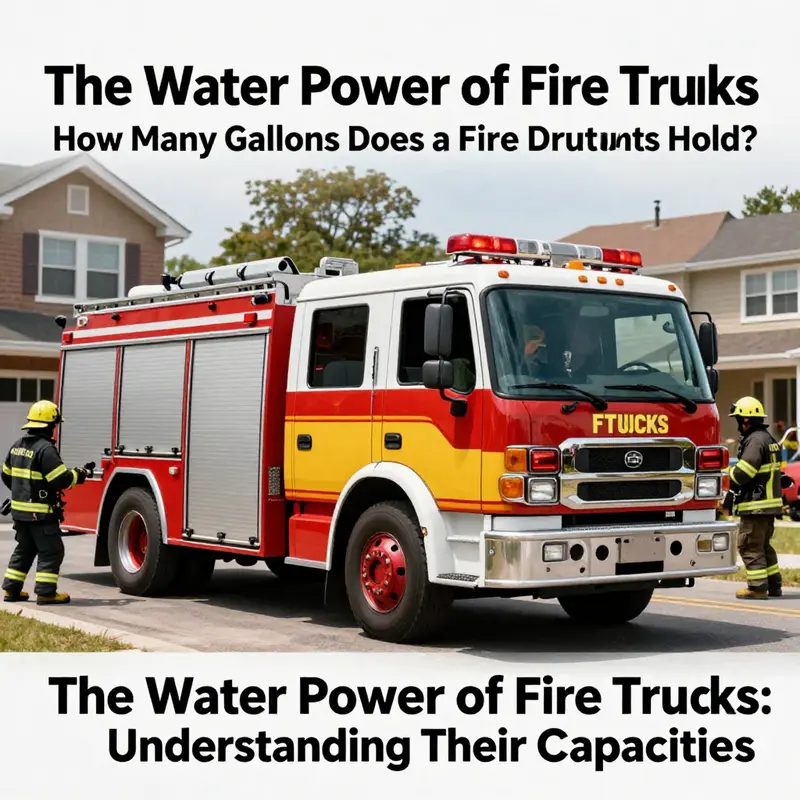
Water capacity on compact engines is a strategic lever, balancing mobility with the ability to start suppression quickly. Typically these units carry between five hundred and one thousand gallons of water, roughly two thousand to three thousand eight hundred liters. That range matters because it frames how much water can be applied before a refill or tanker shuttle is needed, which in turn shapes attack timing and hose-line strategy. In dense urban settings, a smaller tank favors rapid entry and easy maneuvering, while a larger tank extends the window for initial knockdown before external supply must arrive.
In rural or semi-rural environments, replenishment may take longer, so some compact engines operate with larger tanks or rely more on hydrant shuttles and drafting points. The tank size interacts with the pump capacity to determine the actual water-on-line flow that crews can sustain, influencing how long a crew can apply water before a refill becomes necessary. The goal is to maximize impact in the critical first minutes while staying flexible to switch to larger resources as the incident grows.
Understanding these numbers means recognizing that gallons and liters are proxies for tactical options: speed of arrival, reach of attack lines, and endurance at the scene. The pump and hose layout must harmonize with tank size, so the team can deliver a credible stream from the moment water is on, and maintain it through the first critical phase of suppression. This is why procurement decisions weigh both maneuverability and water-on-hand, and why departments plan for coordinated water supply as incidents unfold.
In short, the smallest fire trucks are designed to do one thing well: begin the fight quickly. Their water tank is deliberately sized to enable rapid response, not to replace larger systems that come later in the incident. Capacity remains a flexible tool that connects incident priorities with field realities: hydrants, tankers, drafting points, and the availability of larger apparatus all shape how much water a unit can contribute in the crucial opening moments.
Between Balance and Burst: How Medium-Sized Fire Trucks Hold Water and Shape Fireground Tactics
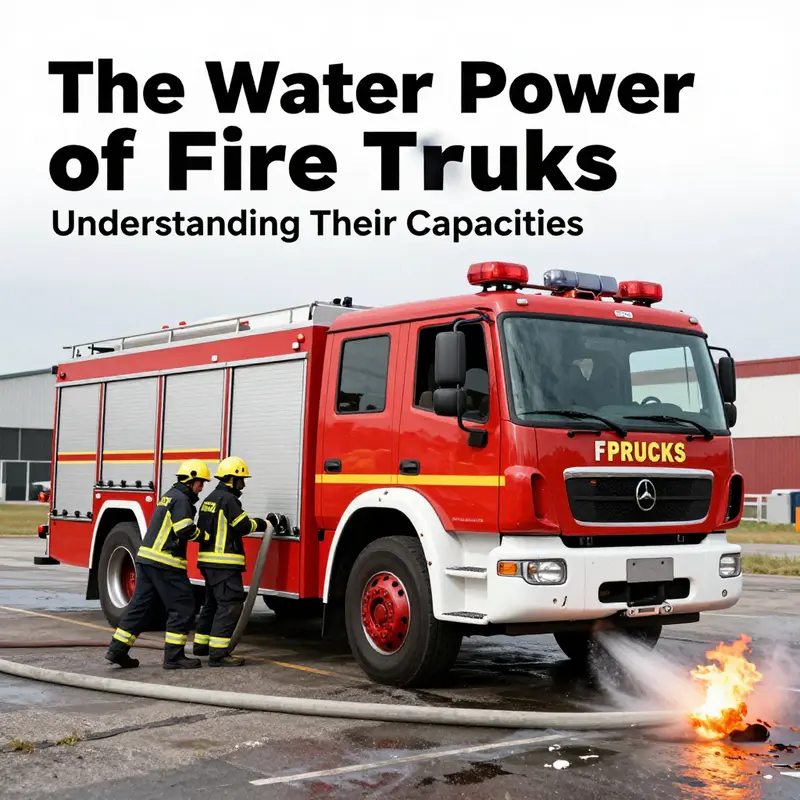
When a fire engine siren slices through a smoky street, the initial pace of firefighting often hinges on something as physical as it is invisible: the volume of water the vehicle can carry. Medium-sized fire trucks sit at a critical juncture in the firefighting fleet. They are not the nimble, quick-response units designed for tight urban corridors alone, nor are they the largest tankers built for remote wildfires. They strike a practical balance between maneuverability and water supply that makes them versatile across a spectrum of scenes—from crowded city blocks to industrial yards, and even at the edge of suburban landscapes where hydrants are a short drive away but not always immediately accessible. This capacity, and the way it translates into on-scene tactics, matters because water is the medium through which all fire suppression begins. A truck’s tank can be the difference between a controlled, contained incident and a scene that balloons into a multi-unit operation that taxes both crew endurance and fire department resources. In this sense, the medium-sized class embodies a core principle of firefighting logistics: effective water strategy is as much about flow management and distribution as it is about the engine and nozzle on the ground.
The water-holding capacity of a typical medium-sized apparatus is commonly cited in the range of 5,000 to 8,000 liters. Translating liters into gallons helps connect this specification to everyday firefighting discussions in regions that use the gallon as the standard unit. Five thousand liters equals roughly 1,320 gallons, while eight thousand liters translates to about 2,100 gallons. This broad interval is not arbitrary; it reflects the design philosophy that seeks to maximize usable water without compromising the vehicle’s ability to maneuver through congested streets or to operate in facilities with limited turning radius. In a practical sense, this means a medium-sized unit can deliver a significant initial push on a fire while keeping enough reserve to sustain a coordinated attack as more resources arrive. The distinction between 5,000 and 8,000 liters may also reflect variations in chassis design, pump configuration, and the availability of ancillary water-handling features such as foam tanks or dry chemical modules.
A vehicle at the lower end of the spectrum is typically built on a chassis that prioritizes tight turning and rapid deployment, making it ideal for municipal and industrial settings where access is problem-solving rather than supply dumping. At the upper end, eight thousand liters represents a robust platform that can engage larger exposures or begin a longer-duration operation before a water supply shuttle or hydrant network can be established. Yet even at its peak capacity, a medium-sized fire truck does not carry enough water to fight a major, long-duration blaze in isolation. Its role is to lay down an initial, forceful line of defense, to knock down flames that threaten critical structures, and to set up an orderly transition to additional units and water sources. In many departments, the strategy hinges on rapid deployment, followed by strategic water management—pulling from public hydrants, drafting from nearby water sources, or participating in a coordinated shuttle operation to deliver a continuous flow of water to the scene.
This balancing act—between water on board and the water that can be brought to the scene—drives the everyday configuration of medium-sized units. They are commonly equipped to handle not just water, but also enhanced capabilities that improve efficiency and safety. Foam systems, for example, can be integrated into the water stream to reduce the surface tension of water and improve penetration on certain fuel-vapor hazards. A foam-capable setup allows responders to stretch limited water further, an important consideration when hydrant access is limited or when the incident involves hydrocarbon fuels. Dry chemical modules add versatility for simultaneous suppression and rescue needs by enabling quick intervention against electrical or sensitive hazard scenarios, depending on the incident profile. Certifications and quality management systems, such as ISO 9001 and ISO 14001, are often highlighted in the procurement and maintenance of these vehicles. They signal a documented adherence to quality in manufacturing and environmental management in field operations. While such certifications do not alter the physics of water on board, they reflect a broader culture of reliability, maintenance discipline, and preparedness that translates into fewer unexpected issues during a critical operation.
From a tactical standpoint, the flow of water is only as effective as the crew’s ability to deploy it. The medium-sized platform often carries a pump that outputs water at a rate sufficient to establish an effective stream while the team manages nozzles, lines, and hose lays in a dynamic environment. The initial deployment typically involves securing a reliable water source nearby—whether by drafting from a hydrant or by establishing a short shuttle with other assets—and then transitioning to a sustained attack where the on-board volume becomes the first leg of a longer, multi-unit plan. The capacity range of 5,000 to 8,000 liters thus informs both the early phase of the response and the expected pattern of on-scene operations. It encourages responders to structure a two-stage approach: an aggressive initial strike to suppress flames and protect exposures, followed by a careful, staged handoff to additional units and water supply resources that can keep the fire at bay while firefighters focus on search, rescue, and prevention of line-of-fire spread.
The importance of this class also shows up in the way departments select vehicles for specific urban geographies. In dense city centers where street widths constrain access, the smaller end of the spectrum offers a nimble option that can still carry a meaningful amount of water to the scene. In mid-size cities with more varied topographies, or in industrial zones where large tanks are an asset but not always necessary, a 5,000 to 6,000 liter variant can deliver a practical compromise between capacity and maneuverability. In industrial parks and mixed-use environments where fires can involve complex hazards, the 7,000 to 8,000 liter configurations provide a more durable buffer against rapid escalation, allowing crews to maintain pressure and apply suppression tactics as other units and aerial apparatus converge to assist. Regardless of the exact figure within the range, crews must regulate water use with discipline. They practice disciplined water budgeting during the incident, ensuring that every liter contributes to controlling the fire while preserving enough reserve to sustain critical tasks such as ventilation, interior search, and exposure protection.
Manufacturers of medium-sized apparatus increasingly emphasize features that extend the effective water supply without increasing vehicle weight to impractical levels. For example, some configurations may include foam capabilities as a standard option, enabling foam concentrates to be mixed with water to improve blanket application and knockdown performance on certain fuel types. Others integrate dry powder systems that can be deployed in tandem with a water attack to address electrical hazards or sensitive equipment within the exposure, providing versatility during a complex incident. These enhancements do not change the fundamental capacity of the water tank, but they do change how efficiently the water is used and how quickly responders can establish a robust defense. In addition, the standardization and certification of the vehicle’s construction—often reflected in ISO 9001/14001 compliance—signal that the vehicle’s systems, including pumps, hoses, and safety interlocks, meet rigorous quality and environmental management criteria. This assurance matters in high-stress environments because it reduces the risk of equipment failure at a critical moment and helps ensure that the apparatus behaves predictably when it matters most.
What this means for readers who are weighing the importance of capacity in their own communities is that the answer to how many gallons a medium-sized fire truck holds is not a single number but a spectrum of operational realities. The 5,000 to 8,000 liter band translates to roughly 1,300 to 2,100 gallons, a significant reserve that supports immediate suppression while data-driven tactics guide later actions. It is a reminder that the sort of firefighting that people experience in daily life—where a small kitchen blaze or a vehicle fire can be addressed with rapid, targeted action—often relies on vehicles of this class to create the initial, decisive pressure on the flames. Yet the chapter does not pretend that capability exists in isolation. It acknowledges the critical role of hydrant networks, nearby reservoirs, and the potential for tanker shuttle operations to bridge the gap between on-board capacity and the far larger volumes required for sustained suppression at larger incidents. In this sense, the medium-sized unit is not merely a middle child in a fleet; it is a bridge between the speed and flexibility of light apparatus and the enduring water supply of the tanker.
For those exploring options on the market, the landscape is diverse, and readers may wish to examine current listings thoughtfully. If you are researching practical, on-site options for a city, town, or industrial campus, the fire-trucks-for-sale page can offer a window into available configurations, price ranges, and the tradeoffs that come with different chassis and tank sizes. Such explorations can illuminate how a given capacity band translates into real-world handling, maintenance demands, and long-term lifecycle costs. This practical perspective helps align fleet planning with anticipated incident patterns and available water sources, ensuring that the chosen platform contributes to efficient, effective response rather than creating avoidable friction in the field.
In sum, medium-sized fire trucks embody a crucial philosophy in firefighting: assemble enough water to suppress and protect, but maintain enough agility to exploit every tactical advantage on the ground. The 5,000 to 8,000 liter range is more than a specification; it is a design decision that shapes where a unit can operate, how quickly it can respond, and how long it can sustain an effective attack before additional supply arrives. Fire departments, engineers, and planners who appreciate this balance can better forecast resource needs, plan for water supply strategies, and train crews to optimize both the on-board resources and the external networks that keep those resources flowing. The result is not just a number on a spec sheet but a practical framework for delivering rapid, capable, and responsible fire protection to communities of all sizes.
Internalリンク: readers interested in exploring market options may consult the available listings on the fire-trucks-for-sale page to gauge current configurations and approximate asking prices, which can illuminate how capacity choices intersect with budget realities and regional needs. You can visit that page here: fire-trucks-for-sale.
For those seeking authoritative guidance on how these capacities fit into broader standards and specifications, external resources offer deeper technical context. The National Fire Protection Association maintains standards and code guidance related to automotive fire apparatus, including how equipment capacity integrates with performance requirements, safety features, and maintenance expectations. To review the official standards and details, see NFPA’s automotive apparatus guidance at https://www.nfpa.org/Codes-and-Standards/All-Codes-and-Standards/List-of-Codes-and-Standards/Detail?code=1901.
Giant Water Buckets on Wheels: Understanding How Large Fire Trucks Sustain Major Incidents
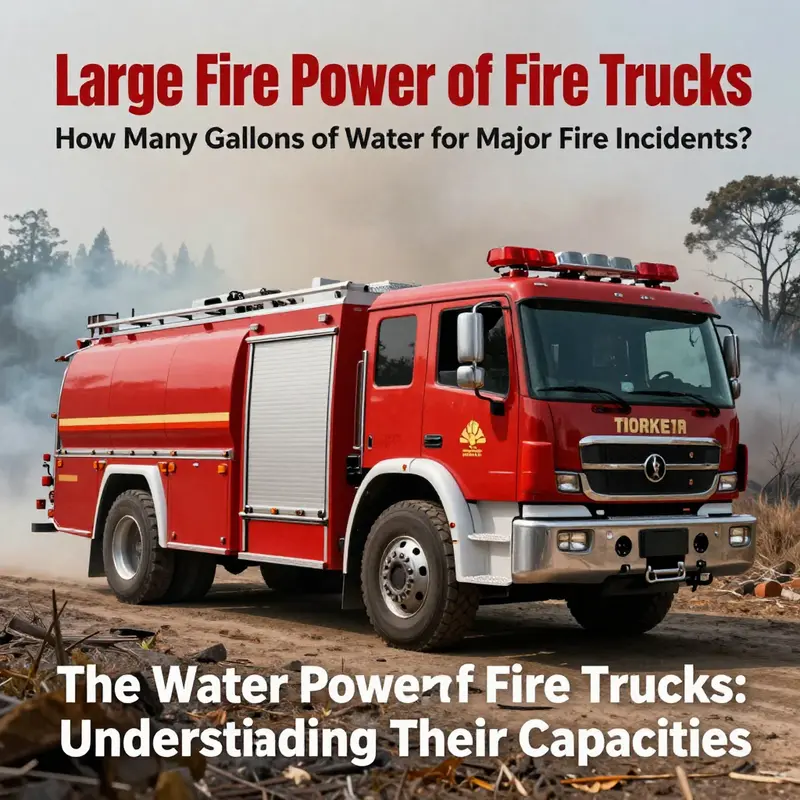
When flames rise to the scale of major incidents, the firefighting machine must rely on more than quick instincts and bravado. It relies on water—its most fundamental resource—carried, drawn, and recycled in a carefully choreographed sequence. Large fire trucks and tankers are not merely big vehicles with big pumps; they are deliberate, high-capacity lifelines that extend the reach of a fire department into environments where hydrants are sparse, water is far away, or the clock is running in a race against time. To grasp how many gallons these giants carry, it helps to begin with the broad spectrum of apparatuses that can be summoned to a scene and then drill into how capacity translates into sustained operations, strategic scenarios, and ultimately, firefighter safety. The numbers matter not as a simple tally but as a foundation for planning, logistics, and the choreography of attack lines, bridging hoses, and water shuttles that keep a scene from collapsing under heat, smoke, and momentum. In the real world, the capacity of a single vehicle is only part of the equation; the true measure is how the entire water system at a scene functions when the fire grows beyond the reach of a single hydrant or a single engine.
Within the family of large apparatuses, several distinct roles shape the way water capacity is defined and deployed. The most familiar of these are the tanker trucks, often called water tenders, whose primary purpose is to supply water to the scene when hydrants are distant or nonexistent. These tankers typically hold between 1,000 and 3,000 gallons, a range wide enough to support rural, wildland, and remote-area responses where a hydrant network simply isn’t nearby. Their portables are designed for rapid fill and efficient discharge, enabling long strings of progress toward fire control even when the next hydrant is miles away. But to imagine a system built solely around 1,000-to-3,000-gallon tankers is to miss the point of how large incidents stretch a department’s reach. When a fire intensifies, the initial handful of tankers must quickly be joined by larger supply units that can maintain a higher rate of water delivery for extended periods.
Across many departments, the next tier consists of large supply or draft tankers. These are the engines and tankers that can carry well beyond the 3,000-gallon mark, with capacities generally over 10,000 gallons and often in the 12,000-to-20,000-gallon bracket. Their purpose is twofold: to provide a steady, substantial water source and to act as a buffer against the inevitable water supply gaps that appear in sprawling incidents, industrial complexes, or areas where hydrants are off-limits or overwhelmed. When a major incident unfolds, these high-capacity units become the backbone of a water shuttle operation, where water is moved from a distant source to the scene in a relay, then distributed through a network of attack lines and relay pumps. In the most demanding circumstances, a tanker can push toward the upper end of the spectrum, approaching or exceeding 20,000 gallons, a level that translates into tens of thousands of liters and a correspondingly extended window for tactical engagement without frequent drops in water flow.
To complete the picture, there are specialized forest and heavy-rescue units whose capacities push toward even higher totals, sometimes reaching 20,000 gallons or more. These are not everyday responses; they are designed for extended operations in wildland conditions, large-scale industrial fires, or other extended-fire scenarios where long, steady water supply lines must be maintained over hours or even days. The distinction between ‘large’ and ‘specialized’ is not merely about vehicle size; it is about mission profile, terrain, and the degree to which water supply must be sustained without on-scene hydrants. In practical terms, this means that a major incident could involve a mix of pumper engines, medium and large tankers, and specialized high-capacity units, all wired together by a command structure that anticipates water flow, fill times, and the fatigue limits of hoses and pumps.
The numbers themselves are surprisingly concrete: the typical large tanker can carry more than 10,000 gallons, while many operations push toward 20,000 gallons. A handful of specialized units may reach or exceed 30,000 gallons for extended operations, though such configurations are the exception rather than the rule in most urban and suburban jurisdictions. Translating these figures into a practical sense, 10,000 gallons of water weigh roughly 83,400 pounds, and 20,000 gallons weigh about 166,800 pounds. The moment you add the weight of the truck, crew, gear, and the water in motion, the challenge becomes a matter of physics as much as strategy. The weight affects maneuverability, braking, acceleration, and the stresses placed on roadbed, tires, and suspension. It also constrains where and how the vehicle can operate, especially when navigating through narrow streets, steep grades, or residential neighborhoods with limited space for large apparatus.
Water capacity, however, is not a stand-alone stat. It interacts with the pump or discharge capacity, the duration of sustained flow, and the ability to refill quickly. A large tanker’s real power lies in how efficiently it can move water from a source to the nozzle, how many gallons per minute it can deliver under fire conditions, and how many times it can be refilled before the incident ends or before fatigue compromises the operation. The typical data point you will see in many standard references is the capacity in gallons, often paired with liters for regions that use metric measures. The conversion is straightforward: 1 US gallon is approximately 3.785 liters. This means a 15,000-gallon capacity translates to roughly 56,775 liters, a 20,000-gallon capacity equates to about 75,708 liters, and a 30,000-gallon unit covers around 113,562 liters. Those numbers aren’t just numbers; they tell the story of what a scene can be fed with water over time and how many engines can be kept working in a coordinated effort before running dry.
The decision to deploy a large-capacity unit is almost always driven by the specific geography and water infrastructure of the response area. In urban cores with a dense hydrant network, a single large apparatus might only serve as a supplemental supply, pushing water through multiple lines and bridging gaps as more engines arrive. In contrast, rural districts or forested landscapes may rely on water shuttle operations as a standard operating procedure. Here, a conveyor belt of tankers circulates between a water source, such as a pond or a dedicated water point, and the scene. Each vehicle acts both as a supplier and a consumer, refilling from the source and dispatching to the flow of hoses attached to a pump panel on the incident. The calculus is tactical as well as logistical: the aim is to minimize delay, maximize uptime, and ensure a sustained, controllable rate of water application to prevent backfiring, backdrafts, or the spread of embers that could reignite a cleaned area.
There is also a practical conversation about how many gallons you actually need in a given incident, which depends on the type of fire, the area involved, and how quickly firefighters can gain control over the structure or landscape. A large, heavily involved structure fire in a dense urban area may require a continuous supply of water for hours, making a high-capacity vehicle essential. In wildland or rural contexts, the exposure is different: you may have long distances to carry water from a source to the line, with the risk of supply breaks if a source is compromised, a technology failure, or a logistical bottleneck. In those environments, the ability to draft or shuttle large volumes of water becomes not just advantageous but mission critical. The interplay between capacity and strategy is also why many departments classify their apparatus by role rather than by sheer size alone. A 20,000-gallon platform may be labeled a large supply unit or a draft tanker, but its primary function is to sustain a robust water flow while the scene evolves and as additional equipment comes online.
In the framework of major incidents, a common narrative emerges: a few engines arrive on the scene, establish a water supply, and expose the bottlenecks in the system. The first critical step is to make sure the water is moving. A large tanker may deliver water to a hydrant or to a drafting site, where a portable pump can raise water from a natural source to a higher point of pressure. From there, a cascade of hoses runs out to outlets that feed the attack lines. The more water the system can move quickly, the more time is bought for investigators, for rescuers to clear heat, and for crews to gain control without being overwhelmed by advancing fire. This is where the bearing capacity of the apparatus converges with human courage. The payload of gallons becomes meaningful only when the crew can convert that payload into reliable, controllable water delivery at the nozzle. The equipment must be managed, with the pump panels opened just enough to sustain the desired flow, lines laid out to avoid kinks and friction losses, and the chain of responders carefully coordinated so that every gallon finds its way to the fire’s front rather than leaking into the ground or into a backdraft scenario.
To visualize the range and its implications, think of a chain of vehicles spread along a line between a water source and the fire. A 10,000-gallon large supply unit starts the relay. A 15,000- or 20,000-gallon tanker follows, replenishing the supply as the first truck’s water nears depletion. In some cases, a third or even a fourth high-capacity unit slots into the chain to prevent any disruption in the flow. Each vehicle contributes to the whole, and the entire system is designed around maintaining a continuous water feed. In the best-run operations, a crew on the ground monitors the progress at the nozzle and uses the water supply as a means to stress the fire with the least amount of water possible to achieve control—a reflection of the broader principle that efficiency can trump volume when water is applied precisely and strategically.
Beyond the scene itself, the presence of large-capacity units shapes the planning and training that precede an incident. Departments invest in drills that simulate water shuttle operations, drafting from alternative sources, and the management of a multi-unit supply chain. The goal is to anticipate failure modes—what happens if a hydrant fails, if a bridge or road is blocked, if a water source becomes contaminated—and to rehearse responses that keep the water moving under pressure. This preparation also influences how stations fleet their vehicles, how they assign roles to crews, and how they coordinate with mutual aid partners who bring their own long-term water strategies to the same fire ground. It is a system that relies on trust, shared protocols, and a common language about flow rates, fill times, and the timing of foamy suppressants and other additives when needed. And it reinforces a practical truth: the day a fire becomes oxygen-starved or blocked by heavy smoke is the day when a well-choreographed water operation can turn the tide, with gallons delivered in a rhythm that matches the fire’s pulse rather than fighting against it.
For readers curious about the practicalities of obtaining or updating large apparatus, the current market provides a spectrum of configurations and configurations that balance payload with maneuverability. When departments plan for the next fleet refresh or a new purchase, capacity remains a central criterion, but it is coupled with considerations of pump capacity, water tank shape, fill and discharge rates, and the reliability of the supporting infrastructure—tires and brakes rated for heavy loads, a chassis that can tolerate prolonged operation without excessive maintenance, and a crew layout that can sustain a long shift while maintaining the discipline required to manage large volumes of water safely. The numbers themselves are a reminder that the firefighting mission, at its core, is a logistical endeavor as much as a technical one. It relies on the convergence of water, engines, hoses, and people—an orchestration that must be understood, rehearsed, and refined so that when the sirens rise, the system answers with the authority of a well-tuned, high-capacity machine.
As the chapter turns toward a broader understanding of the topic, it is useful to connect this discussion to the wider ecosystem that supports the large apparatus in question. While a single vehicle can carry tens of thousands of gallons, the scene’s reality is a network of sources, shuttles, and crews that must synchronize their efforts to avoid bottlenecks and to maximize safety. The water on board is not a fixed asset; it is a dynamic, moving resource whose value grows when it can be replenished quickly and delivered consistently. The interplay between large-capacity tankers and the standard medium and small engines is where the system’s resilience truly shows. In this sense, the capacity figure is not an end in itself but a measure of the system’s potential to sustain life-saving operations under stress. It is a reminder that every gallon, every fill, every relay is part of a larger story about how communities prepare for the worst, how their responders marshal resources, and how they protect people, property, and the environment from the devastation of a major fire.
For readers who want to explore the current state of equipment and the throughline of how these figures translate into real-world options, a deeper dive into the market and current configurations can be illuminating. If you’re curious about practical options for large apparatus and how they fit into a department’s fleet strategy, you might explore the broader landscape of available equipment and configurations at fire trucks for sale. The knowledge is not just about buying gear; it’s about understanding how a department plans to meet its water supply needs in the long term, how it assesses the reliability and serviceability of a high-capacity unit, and how it tests the system to ensure it can respond effectively when water is the difference between containment and catastrophe. The goal is to connect the figures discussed here with the real-world choices that departments face as they balance demand, budget, and the unpredictable nature of fire emergencies.
In sum, large fire trucks and tankers occupy a unique position in the firefighting arsenal. They are not merely about carrying water; they are about enabling sustained, scalable operations in the most challenging environments. With capacities commonly ranging from 10,000 to 20,000 gallons and, in some cases, exceeding 20,000 gallons for extended operations, these vehicles provide a strategic backbone to major incident response. They enable water shuttle operations, support long-duration attacks, and bridge gaps where hydrants cannot, all while requiring careful coordination, rigorous training, and continuous assessment of how best to utilize every gallon. The relationship between capacity and performance is never static; it shifts with fire behavior, terrain, and the evolving needs of the incident. The result is a firefighting culture that treats gallons as a resource to be managed with precision, a system to be built and practiced, and a mission to be fulfilled with safety, efficiency, and courage. As the landscape of fire protection continues to evolve, the core principle remains unchanged: large water capacity, when integrated with intelligent planning and disciplined execution, can extend the reach of crew and structure alike, turning overwhelming flames into a controllable problem—and, ultimately, a solvable challenge.
External reference: For standards and specifications that frame how these apparatus are designed and tested, see the NFPA 1901 Standard for Automotive Fire Apparatus. This resource provides the authoritative basis for design, performance, and safety requirements that govern large fire trucks and tankers in professional practice. https://www.nfpa.org/codes-and-standards/digital-codes-and-standards/nfpa-1901
Internal resource: If you are exploring the practical marketplace and want to see current options, you may review available large apparatus listings at fire trucks for sale. This can give a sense of how capacities are realized in real equipment and how departments balance payload with maneuverability in a diverse urban-to-rural landscape. https://firetruck.space/fire-trucks-for-sale/
Final thoughts
Understanding the water capacities of fire trucks illuminates their critical roles in firefighting efforts. Small fire trucks cater to neighborhood fires, while medium and large trucks are essential for tackling larger blazes. These differences in water capacity not only dictate how effectively firefighters can respond to various emergencies, but they also underscore the importance of having the right equipment for every situation. Whether you’re an enthusiast, an aspiring firefighter, or an industry professional, having knowledge about fire truck capacities enriches your understanding of firefighting logistics and equipment.