
The dimensions of fire trucks can be as varied as the emergencies they respond to. Understanding how tall these powerful machines can be is essential for firetruck enthusiasts, aspiring firefighters, and professionals in emergency services alike. In this exploration, we’ll break down the general height ranges of fire trucks, delve into the height variability by type, and highlight key considerations that play into their dimensions. Each chapter will combine facts and insights to give you a comprehensive view of fire truck heights, greatly enriching your knowledge about these essential vehicles.
How Tall Are Fire Trucks? Understanding Typical Heights and Why They Matter
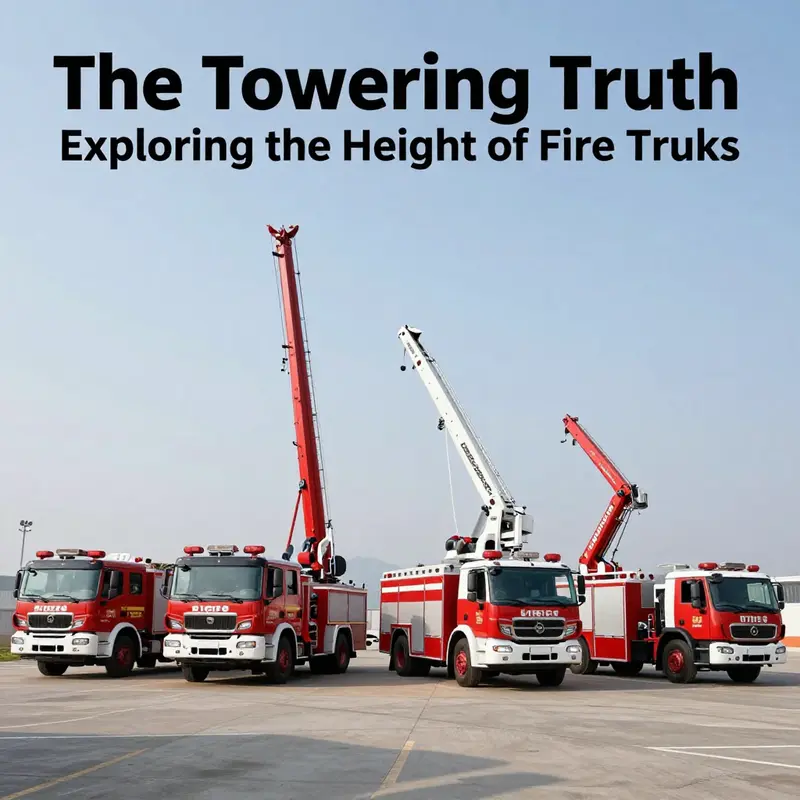
General Height Ranges of Fire Trucks and Why They Matter
Fire trucks are built to do work that ordinary vehicles cannot. Their size is a direct response to the tasks they perform: carry equipment, pump water, reach high windows, and move crews quickly. Height, in particular, is a defining dimension. It affects how a truck fits under bridges, enters parking structures, maneuvers beneath low wires, and positions itself at a fire scene. Understanding the general height ranges of fire trucks gives context for operational planning, roadway safety, and procurement decisions.
Most standard fire engines—commonly called pumpers—sit within a practical height band that balances capability with clearance. In typical urban configurations, these units measure roughly 2.4 to 3.7 meters (about 8 to 12 feet) overall. That dimension includes the chassis cab, the body, onboard water tanks, ladders mounted on the sides, and other equipment stowed on or above the body. Designers aim to keep these units low enough to pass beneath common overpasses and into most municipal facilities while still providing space for hose beds, tool compartments, and the breathing apparatus carried by crews.
Smaller trucks and specialized light-duty units generally fall below the upper end of that range. Light and medium-duty apparatus used for rapid intervention, wildland response, or in tightly packed urban neighborhoods are often under 3.2 meters (about 10.5 feet). Their lower height helps in narrow streets, low-hanging utilities, and older districts where overhead clearance is limited. These vehicles sacrifice some cargo volume or pump capacity in exchange for better access and maneuverability.
At the other end of the scale are vehicles designed to reach great vertical distances. Aerial ladder trucks and tower platforms are engineered to access high windows and roofs. The aerial device itself can extend dozens of meters, often beyond 30 meters (roughly 98 feet) for heavy urban units. Yet the retracted height of the truck—important for road clearance—usually remains between 3.5 and 4.5 meters (about 11.5 to 14.8 feet). Some aerial cabs and bodies are intentionally built taller to provide space for stabilizing hardware, hydraulic systems, and operator platforms, which raises the vehicle’s profile even when the ladder is stowed.
Imported models, particularly those originating from regions with different roadway standards, may present different nominal heights. European and North American chassis often range from 2.5 to 3.5 meters (about 8.2 to 11.5 feet) in standard configuration. That reflects regional choices about cab style, storage placement, and the compactness of components. Manufacturers tailor their builds to the driving environment and local regulations. Where tunnels and low-clearance routes are common, vendors routinely offer lower-profile options.
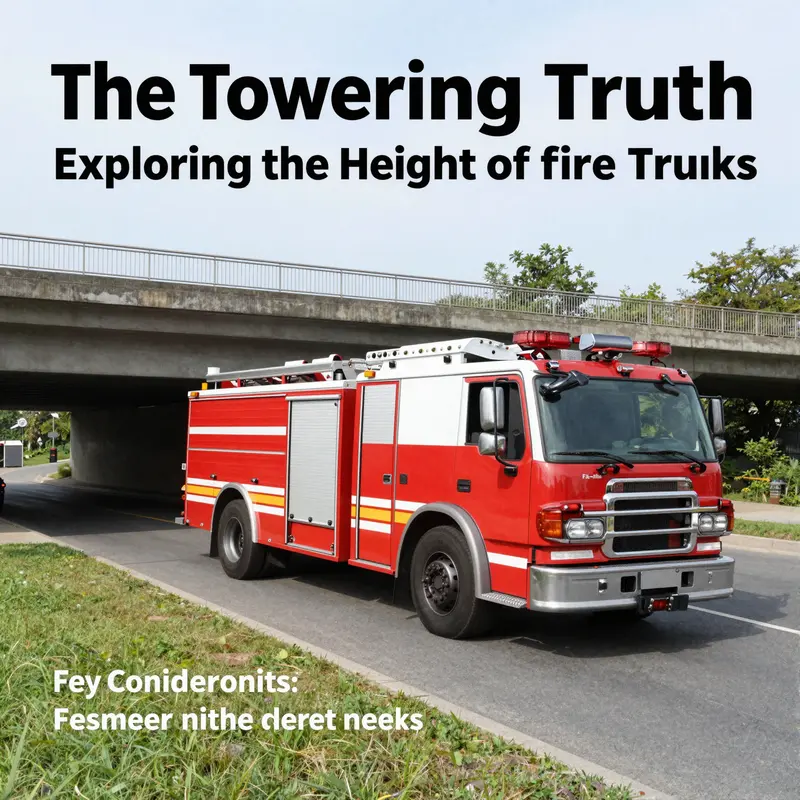
Why are these general ranges important? Clearance limits are a primary factor. Most fire departments, fleet planners, and municipal authorities observe a practical maximum height for routine operation. A commonly referenced limit is 4.2 meters (about 13.8 feet). This figure is not a legal universal, but it functions as a planning guideline to ensure that most units can traverse bridges, enter public garages, and respond across a jurisdiction without encountering vertical obstructions. Departments that expect regular routes under low structures must either select lower-profile apparatus or pre-plan alternate routes.
Beyond clearance, design variability explains much of the height differences among apparatus. The choice of chassis matters. A heavy-duty ladder platform built on a custom, high-ride chassis will sit taller than a standard pumper on a municipal chassis. Equipment placement—such as top-mounted water tanks, roof-mounted lights, and storage boxes—increases vertical profile. In some builds, air conditioning units, ventilation fans, and foam systems are roof-mounted for convenience and access, adding inches or more to the finished height. Even the style of cab—two-door, four-door, crew cab—alters roofline height and the height of the windshield, which can affect sheltering height during approach.
Operational constraints also shape height choices. An aerial platform might need a taller cab to provide clear sightlines when the boom is being deployed. A special rescue vehicle may incorporate a raised body to house winches, cutting tools, and heavy rescue equipment. Conversely, a wildland engine designed for rural trails may be intentionally compact and low to minimize top-heaviness and improve center-of-gravity characteristics on unpaved roads.
There are practical implications for daily emergency work. Dispatchers and incident commanders must know which units can get under specific bridges or into certain garages. Pre-incident planning often includes mapping routes with clearance data and documenting which buildings have low overhangs or are served by alleys with constrained vertical space. Firefighters and drivers learn to anticipate height restrictions during training and on shift, ensuring they do not expose apparatus to strikes on overhangs or damage while navigating tight streets.
Maintenance and storage considerations also hinge on height. Municipal fire stations frequently include drive-through bays and maintenance pits sized for the fleet. When a department acquires taller apparatus, it may need to renovate quarters—raising overhead doors, reinforcing floors for heavier axle loads, or changing bay lighting. These infrastructure costs can be significant, so fleet managers weigh vehicle capability against the expense of accommodating a taller unit.
Safety implications extend beyond physical clearance. A taller vehicle has a different wind profile and may respond differently in strong crosswinds. High-mounted equipment changes the center of gravity and can affect handling, especially when cornering or braking. Engineers compensate by widening axles, lowering certain components, or adjusting suspension. Still, training for drivers is critical; they must adapt techniques for braking distances, roll stability, and acceleration on grades.
When a department orders new apparatus, the procurement process balances many factors: height limitations along common response routes, the need for high-reach apparatus, garage and maintenance facility compatibility, and the kinds of incidents the unit will face. In some cases, departments choose modular or convertible bodies. For example, a chassis may be specified with a low-profile roof but with pockets or mounts to add portable equipment that serves similar functions without raising permanent height. This offers flexibility while respecting vertical constraints.
For jurisdictions with historic districts, low-clearance tunnels, or numerous overpasses, practical decisions often favor lower-profile apparatus. In contrast, dense downtown cores with high-rise buildings may prioritize aerial reach even if it means accepting greater clearance challenges. That trade-off is visible across regions: small towns may operate compact pumpers able to move quickly along country roads, while major cities maintain fleets of tall ladder trucks and tower platforms ready for multi-story rescues.
Another dimension is international variation. In some countries, roadway clearance rules and traffic infrastructure differ greatly from those in North America. Imported fire trucks sometimes require modification to meet local height limits or to integrate with regional equipment standards. Manufacturers often produce chassis variants to meet these requirements—shorter wheelbases, lower roofs, and different storage layouts—to conform to local realities while preserving as much operational capability as possible.
Finally, technological and design innovations continue to affect height trends. Advances in materials allow for lighter, stronger roofs that can be kept lower without sacrificing durability. Compact pumps and more efficient hose storage solutions reduce the need for high-profile compartments. Conversely, new capabilities—larger foam systems, integrated thermal imaging arrays, and expanded breathing air supplies—may require additional space, pushing heights upward in some builds.
Understanding typical height ranges is a practical starting point for anyone involved with emergency vehicle operations. It informs route planning, facility design, driver training, and procurement strategy. Recognizing the balance between a truck’s vertical profile and its mission ensures that decisions match operational demands and local infrastructure. For departments and communities alike, the best choice is the one that fits the environment while enabling crews to perform their critical tasks safely and efficiently.
For further reading on typical dimensions and practical considerations for fire truck height, see this overview from an emergency response resource: https://www.reliableemergenceresponse.com/fire-truck-height/.
For insights into buying, selling, and the variety of apparatus available, a company blog covering fleet options and market considerations can be a helpful reference: firetruck.space blog
From Pumpers to Platforms: How Fire Truck Type Shapes Height and Clearance Needs
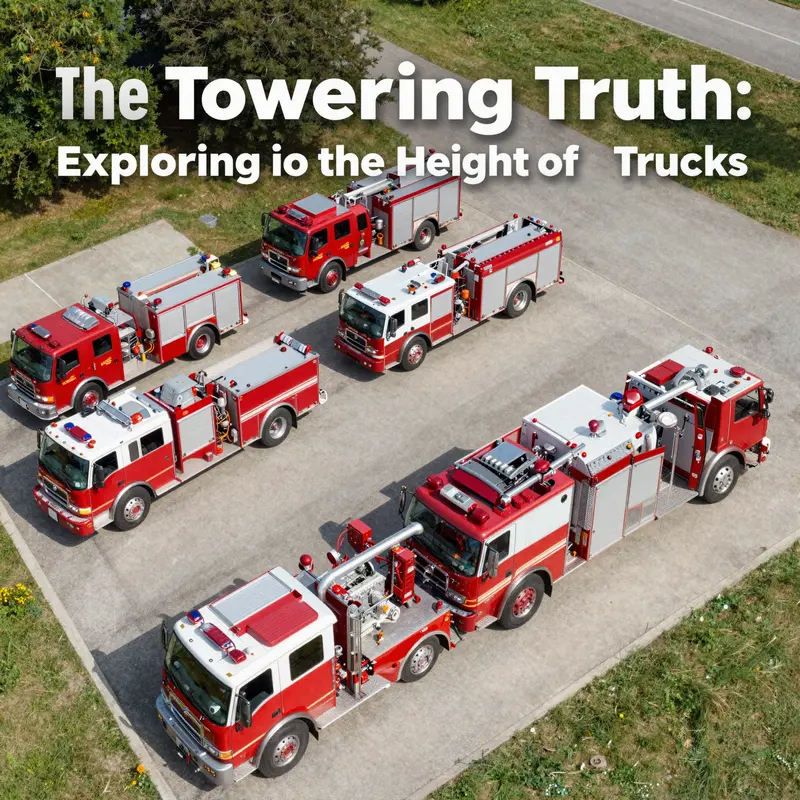
Height is not one-size-fits-all for fire trucks. The height of a fire vehicle reflects its mission, equipment, chassis, and the environments where it must operate. Across pumpers, aerials, and specialized apparatus, differences of a meter or more in static height are common. When ladders extend, the vertical reach can shift from a few meters to well over thirty. Understanding these variations helps planners, fleet managers, and firefighters make safer decisions about routing, station placement, and building access.
Fire truck types are designed around tasks. A vehicle built to pump and carry water focuses on stability and maneuverability. An aerial ladder or platform is built to reach high façades and support rescues. Rescue and foam tenders carry heavy gear and often feature bulkier bodies. Each requirement affects the truck’s profile and, crucially, its vertical dimension.
Start with the workhorse of most departments: the pumper. Pumpers, sometimes called engines, are the primary attack units at many emergency scenes. They carry hoses, a pump, and a water tank, and they must park close to the fire and remain steady while operating. As a result, pumpers are typically shorter than other apparatus. A common range is about 3.0 to 3.7 meters (10 to 12 feet) in height. This keeps the center of gravity lower and the vehicle able to negotiate urban underpasses, tight streets, and low-hanging obstacles. Lower height also aids in loading equipment stored under compartments and reduces wind sensitivity while traveling at speed.
Next come medium and light-duty units designed for rapid intervention or operations in constrained environments. These trucks are often built on lighter chassis and prioritize compactness. Their heights usually stay under roughly 3.2 meters (10.5 feet). That compact profile makes them suitable for narrow alleys, older city neighborhoods, and stations with limited door clearances. Compact units trade off capacity for access; they carry less water and fewer heavy tools but reach scenes where larger apparatus cannot.
Aerial ladder trucks represent one end of the spectrum. They are purpose-built to extend a staffed ladder or platform to upper floors for fire attack and rescue. The chassis must carry the base of that ladder, hydraulic systems, outriggers or stabilizers, and control systems. Even with the ladder retracted, these vehicles tend to sit higher than pumpers—commonly between 3.5 and 4.5 meters (11.5 to 14.8 feet). The real capability appears when the aerial extends. Fully deployed ladders and platforms routinely exceed 30 meters (98 feet), and some high-reach units surpass 100 feet. Because of that reach, aerial trucks face two distinct clearance considerations: static height during travel and dynamic height when the aerial is deployed. Both matter for safe operation.
Specialized apparatus, such as heavy rescue vehicles, foam tenders, and hazmat units, draw on differing design priorities. Foam tenders, for instance, carry large foam concentrate tanks and proportioning systems. Rescue units often include taller storage compartments to accommodate long tools and hydraulic rescue systems. These vehicles fall across a broader band of heights depending on equipment loadouts and chassis choices. Newer specialized units equipped with larger onboard systems or advanced electronics can push the overall height above that of a standard pumper. Designers must balance internal volume with external dimensions, ensuring interiors can store gear while keeping the vehicle stable and passable through typical infrastructure.
Manufacturers and departments make choices that influence height beyond type alone. Chassis selection sets a base ride height. Heavy-duty frames with larger suspensions and taller cabs raise the overall profile. Equipment mounting decisions—where pumps, tanks, and control panels sit—affect roof height and compartment geometry. Add-ons such as scene lighting, roof rails, and air conditioning units for crew comfort may add several centimeters, and in some configurations these extras accumulate to increase the total vehicle height by a noticeable margin.
Regulation and local standards shape those decisions. Many jurisdictions apply a practical maximum height for routine operations to avoid conflicts with bridges, tunnels, and municipal structures. A commonly observed operational limit hovers around 4.2 meters (13.8 feet). Departments generally avoid specifying vehicles taller than this threshold for regular duty routes, unless they have clear plans to manage restricted passages. Codes and standards from industry authorities also guide design dimensions to meet road safety and operational requirements. Despite standards, variability persists between manufacturers and between countries because of differing road rules and typical building stock.
Stability considerations tie directly to height. The taller a vehicle, the higher its center of gravity tends to be, particularly if heavy tanks or equipment sit high on the chassis. Manufacturers mitigate this with wider track widths, lower tank placements, and careful weight distribution. A height-to-width ratio is a critical parameter in design reviews. It ensures that the vehicle can brake, corner, and deploy equipment without risking rollovers or excessive body lean. Fire departments must weigh these engineering choices against operational needs; a department that values high water capacity might accept a slightly taller design if stability measures are in place.
Clearance planning extends beyond regulatory compliance. At the station level, bay door heights dictate the maximum vehicle profile that can be housed indoors. Many older stations were built for smaller, lower-profile apparatus. When departments acquire newer, taller units, they sometimes retrofit doorways or add protective features. Likewise, route planning for emergency responses frequently incorporates height data. Dispatch systems and vehicle pre-planning tools may flag low-clearance bridges or tunnels so fire units can avoid them en route to an incident. For aerial apparatus, deployment areas require flat ground for stabilizers and sufficient overhead clearance when the boom is stowed or partially raised near structures.
Another practical factor is intercity and international import. Imported vehicles from certain regions often come on chassis with different standards and thus different heights. Many European and North American designs, when brought into other markets, fall into a narrower height band—often between 2.5 and 3.5 meters (8.2 to 11.5 feet) in standard configuration. That compactness can be a deliberate design response to denser urban environments and tighter street grids common in older cities. When agencies import vehicles, they carefully check how those heights interact with local clearance constraints and whether any modifications are needed.
When considering aerial reach, remember the distinction between vehicle height and operational reach. Vehicle height refers to the static vertical measurement from ground to the highest fixed point when the vehicle is ready for travel. Operational reach refers to how far an aerial ladder or platform can extend during use. A compact aerial vehicle with a moderate static height can still achieve significant reach through telescoping ladders. This separation matters because static height influences mobility and storage, while operational reach dictates rescue and firefighting capability. Choosing a truck requires balancing both.
Technological advances affect height in subtle ways. Integrated systems for compressed-air foam, pumps, and electronics often require protected housings and ventilation that influence where equipment sits on the truck. Compacting equipment vertically through modern layouts can reduce roof height while retaining functionality. Conversely, adding specialized systems for environmental or medical response can increase the vertical profile. Fleet managers must evaluate trade-offs: retrofit solutions can change a vehicle’s height profile, and seemingly minor modifications may complicate clearance or stability calculations.
Maintenance and lifecycle planning also intersect with height concerns. Taller vehicles often require different maintenance infrastructure such as overhead clearance in service bays, specialized lifts, and safe access platforms. Inspecting roof-mounted equipment demands safe, stable walkways or retractable ladders. Departments should factor these needs into budgeting and station design. Overlooking the operational implications of a vehicle’s height can lead to costly retrofits or constrained readiness.
Operational tactics change as well. On-scene deployment of aerial platforms requires a clear understanding of overhead risks—power lines, tree canopies, and façade projections. Even a retracted ladder presents potential snag points in tight urban corridors. Crew training that includes spatial awareness and route pre-planning reduces the risk of accidental contact with overhead obstacles. For pumpers and compact units, tactical placement focuses on accessibility for hose lines and pump stability. The selected apparatus height influences where vehicles can safely park in relation to a fire scene and how quickly they can set up.
Finally, height choices reflect strategic priorities. A rural department with long travel distances might prefer larger tenders and heavy rescue units that increase height but improve on-scene capability. An urban department with tight alleys might favor lower-profile pumpers and compact ladders that trade water capacity or reach for access. A well-balanced fleet often mixes types, allowing each vehicle to work within its height and function envelope. This mix helps departments respond effectively across diverse scenarios without overcommitting to a single design philosophy.
For readers seeking official dimension guidance and regulatory context, refer to the relevant standards and technical resources provided by industry authorities. Those documents clarify recommended measurements, testing criteria, and safety requirements that shape how fire trucks are built and operated. For an accessible overview of vehicle dimension principles and operational limits, see the National Fire Protection Association’s guidance on apparatus dimensions: https://www.nfpa.org/.
If you want to explore broader discussions about fire apparatus types, fleet selection, and purchasing considerations, the department blog offers practical insights and case studies on vehicle choices and their operational impact: https://firetruck.space/blog/.
null
null
Final thoughts
Understanding the heights of fire trucks is more than just satisfying curiosity; it’s critical for safe operations, effective emergency responses, and the design choices that affect fire services. As we’ve seen throughout this article, fire truck heights vary widely depending on their type and purpose, while also being influenced by pertinent clearance regulations. Whether you’re a firefighter, enthusiast, or collector, knowing these details enhances your appreciation and knowledge of these crucial firefighting machines. Dive into the world of fire trucks with confidence, inspiration, and a clear understanding of how every inch counts in saving lives.