
Understanding the essential attributes of fire trucks sheds light on their pivotal role in emergency response. Central to their functionality is the capability to carry water, a lifeline during firefighting operations. For firetruck enthusiasts, young aspiring firefighters, and seasoned emergency service professionals, this article illuminates the incredible water-carrying capacity of these vehicles, the importance of water in firefighting, and the various types of fire trucks designed for different situations. Each chapter dives into aspects that build a holistic understanding of how fire trucks operate in action-packed emergencies.
Liquid Courage on Wheels: How Fire Trucks Carry Water to the Front Line
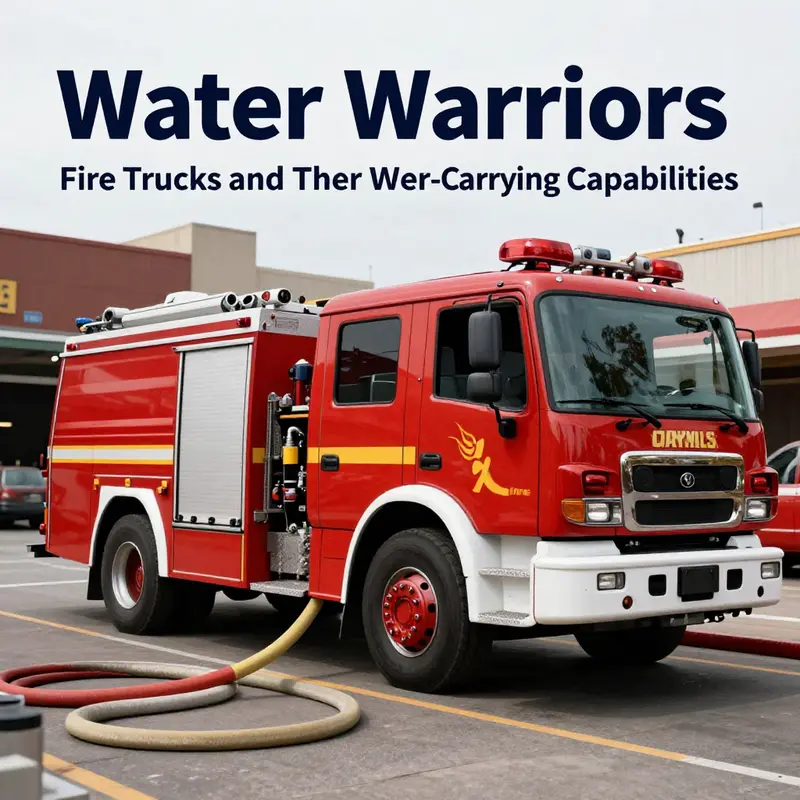
Water is the lifeblood of firefighting, a fact that becomes immediately evident when the sirens rise and a crew slides down the pole or steps off a modern cab. The question does not merely ask whether fire trucks carry water; it invites a deeper look at how the very physics of water, pressure, and distance shape every decision made at the edge of a flame. In the simplest terms, fire trucks do carry water, but the story behind that fact is layered, technical, and sensitive to the kind of fire they are called to fight. The equipment is designed not only to hold water but to deliver it with force and precision, transforming a static pool of liquid into an energized stream capable of driving back heat and protecting lives. When one reader asks whether a fire truck can start an attack immediately, the answer is yes, because many apparatus carry a ready supply in their tanks. But the broader truth is that water on wheels is part of a larger ecology of supply, pumps, hoses, and coordinated tactics that makes firefighting possible in environments as varied as dense urban cores, sprawling rural landscapes, and critical industrial sites.
To understand this fully, it helps to imagine the fire truck as a mobile water plant, a compact, purpose-built facility on four wheels that can sit at the edge of danger and begin work within moments. The vehicle’s water-carrying capability is not a single number but a spectrum, shaped by design choices and the realities of where the truck operates. In one context, a tanker or water tender roams rural roads with a large reservoir of water, while in another, a water ladder combines significant storage with aerial reach to attack a high-rise from above. Foam-equipped units add another layer, prepared to handle special hazards such as flammable liquids. And then there are the more modest, versatile rigs that provide potable water or support emergency relief, reinforcing that water supply is not a monolithic operation but a suite of complementary tools.
The most intuitive picture is the tanker, or water tender, a vehicle designed for places without reliable hydrants where water sources are scarce and the need for sustained flows is critical. These machines carry volumes that can range from roughly one thousand to three thousand gallons, a scale that can sustain a prolonged attack before a hydrant or other supply line can refill the tank. The capacity is not merely a number on a spec sheet; it underwrites a tactical approach. A tanker often comes with its own onboard pump and valve system, making it capable of drafting water directly from a pond, a river, or another natural source. In practice, a crew might shift water between the tank and a portable pump, using pre-connected hoses to feed the attack lines while the vehicle remains in place, a self-contained loop that buys precious minutes. The engineering behind this capability includes internal baffles that counteract the unsettling, wave-like motion of liquid inside a moving tank. Those baffles mitigate surge, letting the pump deliver a steady stream rather than an uneven pulse that could slow a discharge or cause line damage.
But the rural tanker cannot meet every scenario, because emergencies rarely conform to a single geography. In densely built urban landscapes, the need is equally urgent, but the playbook changes. Here, the interplay between fixed hydrants, municipal water supply, and the vehicle’s own stored water becomes a choreography. A common sight is a multi-unit operation in which a tanker parks near a hydrant or near an intake point connected to the city water system. In such cases, the tanker might supplement a larger, urban-driven attack by feeding water to a pumper at the tail end of a hose line that runs up the street and to the scene. The practical advantage is flexibility: even when hydrants are reliable, trucks still play a role in ensuring a continuous supply, and they can also stage water for backflow protection and to provide redundancy in the face of pressure fluctuations or damaged mains.
We should also imagine a second class of apparatus that blends water storage with aerial reach: the water ladder. These are not merely trucks with big tanks; they are precise, dual-function machines. They carry a moderate amount of water—typically somewhere in the range of five hundred to fifteen hundred gallons—and pair that reservoir with an elevated platform or aerial ladder capable of extending substantial distances into windows and courtyards. The effect is dramatic: a single vehicle can project water from above while firefighters maneuver from below, using elevated nozzles to reach into upper-story openings or to blanket a rooftop with cooling spray. The dynamic is not without trade-offs. A ladder truck’s size, weight, and the complexity of their aerial systems require specialized training to deploy safely. The hydraulic systems must be tuned for high pressure, and the operator must coordinate with ground crews to manage ladder angle, nozzle selection, and flow rate. In practical terms, this means that the water-carrying capability of a ladder truck is as much about reach as it is about volume. A large tank is valuable, but the ability to direct that water from a height can redefine what a crew can accomplish, especially when access points are constrained or when a fire threatens structural integrity.
Foam trucks further illustrate how water-carrying capability is tailored to the hazards a crew expects to face. For fires involving flammable liquids, plain water often cannot achieve the required penalty to vaporize and dilute, or to create a penetrating layer that interrupts the chemical reactions driving the blaze. Foam concentrates, stored on board, are proportioned into the water stream at controlled rates. The interaction between foam and water changes the physics of extinguishment by creating a more stable blanket and extending the cooling effect. These specialized units frequently operate in settings such as airports, refineries, and industrial facilities where the stakes are higher and the response must be nuanced to the material involved. The foam system requires careful maintenance and replenishment, because foam agents have shelf lives and performance can degrade if the mix is not managed properly.
Beyond the high-fire attack vehicles, there are more modest yet essential assets that underscore the multifaceted approach to water supply. Potable water trucks, for instance, carry water intended for human consumption or for non-fire use during disaster response. While these trucks do not attack fires directly, their role in relief efforts is indispensable, ensuring that responders and displaced communities have access to water for drinking, sanitation, and basic needs. The presence of potable water assets at the scene reduces logistical pressure and supports a broader mission that includes rescue, triage, and temporary shelter operations. The distinctions among these capacities—how much water is carried, how it is deployed, and what additional systems accompany it—reveal a philosophy of readiness. Fire departments procure a spectrum of apparatus precisely to handle the unpredictability of fires across terrain, climate, and urban design. A given incident may begin with a quick, short attack from a pump on a compact unit, but as the scene evolves, the same incident may rely on a tanker’s sustained supply or a ladder truck’s aerial delivery to reach a reprieve from heat and smoke that threatens occupants and firefighters alike. The production line of firefighting hardware mirrors the demands of the field: a continuous cycle of testing, refining, and adapting to new forms of risk.
The practical realities of these designs are tempered by standards that govern performance, safety, and reliability. The National Fire Protection Association’s standards for fire apparatus set the expectations that manufacturers and fire departments use to shape their fleets. These standards cover a broad swath of considerations—pump performance, water tank capacity, hose layouts, and the safety features that protect operators under duress. The aim is not to prescribe one perfect configuration but to ensure that, whatever combination a department selects, it has a dependable backbone of water supply and delivery. In the context of water capacity alone, a fire apparatus should be able to deliver a prescribed flow rate at a given distance and pressure, while maintaining the ability to refill from a water source without compromising the attack. The practical impact of these standards is that departments can plan for changes in urban density, aging infrastructure, and evolving fire risk.
The real strength of a well-equipped fleet lies in its integration with the broader water supply network and with the skills of the crew operating it. A tanker’s water may be drawn from a natural source, but it must be moved by pump and managed through a controlled sequence of operations. The pump operator, or engineer, is responsible for selecting the appropriate discharge setting, coordinating with the nozzle operator to maintain steady pressure along the attack line, and communicating with the incident commander about water availability and the need for additional sources. A ladder truck, with its elevated reach, depends on a precise choreography between the aerial system and the ground crews feeding water to the platform. Foam systems add another layer of complexity, requiring precise metering and timing to keep foam blankets consistent without starving the main water stream. Even the simplest potable-water support vehicle, which may seem secondary, is integrated into the same ecosystem when relief or contingency needs arise. This interdependence highlights a central truth: water on wheels is not a single capability but a holistic approach to supply, delivery, and manpower.
The economics of procuring water-carrying fire apparatus also shapes the landscape of what departments choose. The market offers a range of configurations, often summarized in terms of four-by-two drivetrains and a spectrum of water capacities from thousands of liters to several thousand gallons, each with its own cost and lifecycle considerations. A 4×2 chassis with a contained water capacity can start at a relatively accessible price point, inviting departments to consider options that balance budget, maintenance, and readiness. The decisions extend beyond purchase: maintenance, training, and resupply logistics determine how effectively water is used once the truck takes to the street. A tank’s capacity is only as good as the crew’s ability to refill quickly, connect hoses, check for leaks, and maintain the pump’s reliability under duress. In some jurisdictions, the addition of specialized equipment such as foam concentrate or high-pressure pump outfits is driven by the risk profile of the local environment, including the kinds of fires most likely to occur and the proximity to critical assets.
What all these considerations have in common is a central insight: water supply is a problem of space, time, and movement. Every gallon stored on a truck has to be delivered to the right place at the right time, while other water sources are being managed or secured. The optimization problem is a continuous exercise in crew coordination, vehicle design, and the strategic use of water as a finite, renewable resource during an incident. Even as technology changes—improving pump efficiency, refining nozzle patterns, or expanding foam recipe controls—the core dynamic remains the same. A fire company prepares with a plan for how to initiate water flow in seconds, how to sustain it without exhausting precious resources, and how to adapt when roads bend, hydrants fail, or rain complicates access. The chapter of firefighting told by water on wheels is thus not a single scene but a continuous narrative of supply, pressure, and teamwork that unfolds across the urban fabric and the rural horizon alike.
For readers who crave concrete details without losing sight of the big picture, a quick mental map helps. In a typical incident, a first-arriving engine may deploy its on-board pump to establish a water supply from the available source—whether that is a hydrant, a drafting point, or the suction at the back of the truck. The crew then advances hose lines to the fire, constrained by the need to conserve water while achieving the needed reach and penetration. If additional water is required, a second unit may backfill with its own pump, or a tanker may shuttle between a remote source and the scene, transferring water through pre-connected lines or by flowing directly into a portable pump. Urban and suburban settings often rely on hydrant networks to supplement or replace the water in the tank, while rural areas lean more heavily on the long game of drafting from natural sources and maintaining a steady cadence of refills. The foam option, when deployed, enhances the effect on specific hazards, while the ladder platform adds an extra dimension to reach and cooling. The potable-water support, though not a primary attack tool, ensures that responders and any displaced residents have access to clean water, a quiet but essential ingredient of resilience.
The question of whether fire trucks carry water is answered with a confident yes, but the more meaningful answer lies in understanding how water is distributed, pressed, and used to shape outcomes on the ground. The capacity of a tank, the power of the pump, the endurance of the crew, and the reliability of the water source all converge in a performance that is greater than the sum of its parts. When people reflect on the image of a firefighting operation, it is this orchestration—the seamless movement of water from tank to nozzle to flame—that stands out. It is a disciplined, collaborative, and technically sophisticated practice, grounded in standards that ensure safety and reliability while allowing for the flexibility demanded by different environments and risks.
In the end, water on wheels is both a simple statement and a complex truth. It is simple in its essential purpose: to carry and deliver water where and when it is needed. It is complex in the details—how much water, at what pressure, measured by time and distance, and integrated with other tools that respond to the scene. This complexity does not obscure the core fact: water supply is the heartbeat of modern firefighting, and fire trucks are engineered to sustain that heartbeat across a spectrum of terrains and challenges. What follows in the broader arc of this chapter is not a catalog of models but a portrait of how departments translate this capability into real-world actions. It is about planning, training, maintenance, and the unglamorous, essential work of keeping pumps primed, tanks topped, and lines charged so that when a call comes, responders can move with confidence, precision, and empathy toward the people who depend on them. And as cities evolve, so too will the arrangements between water sources and mobile reservoirs, ensuring that courage on wheels continues to flow where fire asks for it most.
To sketch a sense of practical connection for readers who want a gateway to more tangible examples, consider the ongoing demand in markets where water supply is a hinge point for public safety. Departments regularly review their fleets to ensure compatibility with the latest safety standards, assess the reliability of onboard and external water sources, and incorporate lessons learned from recent incidents. The choice of apparatus is never solely a technical decision; it is a governance decision anchored in risk assessment, community needs, and budgetary realities. In that sense, the water-carrying capability of fire apparatus is not only about how many gallons a tank holds but also about how well a department can coordinate water use with other critical functions—evacuation management, medical support, and post-fire recovery operations. The best systems are those that anticipate a range of scenarios and balance the urgency of a rapid attack with the discipline of a controlled, sustainable response.
As readers move from this narrative into related material, they may find themselves drawn toward examples of how different communities design their fleets to meet local hazards. Some regions prioritize high-volume, long-range support in rural expanses, while others emphasize compact, highly maneuverable units for dense neighborhoods. The common thread is the acknowledgment that water is the indispensable ally in every firefighting operation, and the means to deliver it must be as adaptable as the fires themselves. The road from the scene of a blaze to a fully engaged water stream is paved with hoses, valves, pumps, and the steady training that keeps those elements aligned under pressure. When a fire does finally yield to the water’s quiet, relentless force, it is only because the crew, the truck, and the community they serve have navigated a complex web of water supply with skill, foresight, and steadfast commitment.
If the reader seeks a practical entry point into the market and the possibilities for future fleet planning, one could explore the broader landscape of available configurations and how they translate to real-world outcomes. The most relevant considerations for someone assessing a fire department’s needs include the expected fuel of the fires in the jurisdiction, the density of structures, the distance to reliable water sources, and the availability of backup power for pump operations. The objective is not merely to equip a vehicle with water but to ensure that the water can be put to work efficiently, safely, and reliably the moment a call is received. In this sense, water on wheels becomes a philosophy of readiness—an ongoing effort to align equipment with the realities of risk, time, and human need.
External reference for standards and performance guidelines can be found in established fire protection standards, which help ensure that water-carrying capabilities are dependable across contexts and incidents. See the standards details for apparatus on the NFPA site for a rigorous framework that informs design, testing, and field operations. https://www.nfpa.org/Code-and-Standards/Detailed-Information-By-Code/NFPA-1917
Carrying Water to the Frontlines: How Fire Trucks Transport the Lifeblood of Modern Firefighting
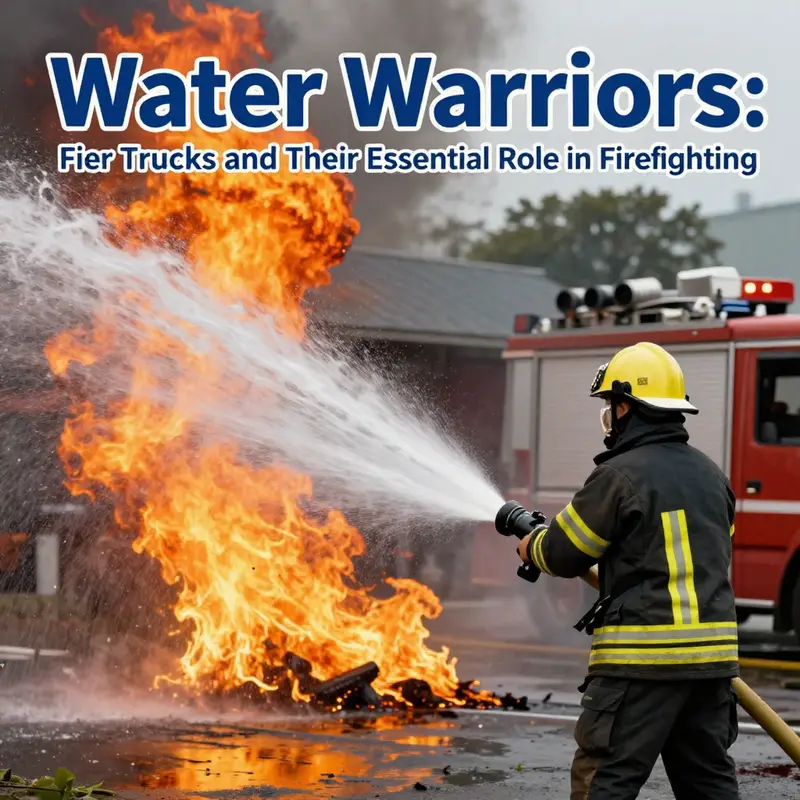
When sirens slice through the morning air and smoke threads its way around a skyline, the unglamorous truth about firefighting becomes evident: the first responder on the scene is often the vehicle that arrived with a full tank of water and an array of hoses. The question of whether a fire truck carries water is not a mere curiosity about equipment. It is a window into how fire protection works as an integrated system, where a tank, a pump, a crew, and a plan operate in concert to convert water into cooling, restraint, and life-saving action. Fire trucks are designed to transport water to firefighting scenes, especially in places where hydrants may be sparse, damaged, or overwhelmed by a massive demand. This is not incidental; it is fundamental to the speed, reach, and resilience of an urban or rural fire response. The water carried on a fire truck is not an afterthought. It is the very lifeblood that fuels early intervention, buys time for additional resources, and builds a bridge between a fire’s emergence and its ultimate control. What follows is a narrative woven from physics, infrastructure, and real-world practice. It is a narrative that makes visible why these vehicles carry water, how they deploy it, and what that means for communities in an immediate crisis and for the engineers, firefighters, and policymakers who sustain the system over time.
A fire truck’s water-holding capability is a central feature of its design, but it is only one thread in a larger tapestry. In most modern fleets, the tank capacity is paired with a robust pumping system, hose lines of varying diameters, and a set of tools that allow firefighters to deploy water precisely where it is needed. The engine that powers the pump is tuned to deliver pressure while maintaining volume, so that water can reach upper floors, basements, or distant corners of a burning structure. In many operations, the truck’s tank acts as a short-term reservoir. It provides immediate cooling and a continuous flow while crews connect to external water sources—hydrants, water tenders, or dedicated supply lines—that extend the reach of the initial load. The result is a workflow in which water is not a single act of application but a sequence: a measured intake, a pressure-managed delivery, and a sustained discharge that persists until the flames are controlled and the risk to occupants and responders is reduced.
From the moment a nozzle is opened, the physics of water becomes the governing force in how a fire is fought. Water’s cooling effect is central to suppression. It is not merely about wetting surfaces; it is about absorbing heat so rapidly that the temperature of fuel and surroundings falls below the ignition point. Water has a remarkable thermal profile. Its specific heat capacity is 4.186 joules per gram per degree Celsius, meaning that a small amount of water can absorb substantial heat as it warms. Even more dramatic is water’s latent heat of vaporization, about 2257 kilojoules per kilogram. When a liter of water absorbs heat to reach boiling, and then turns into steam, it sequesters a large portion of the fire’s energy. In practical terms, this means that every liter that turns to steam carries away a quantity of energy sufficient to slow or halt the combustion process in the local scene. The cooling effect is why early, aggressive water application remains a cornerstone of structural fire suppression. It is also why the supply system—the tank, the pump, the hoses, and the downstream water sources—must be trusted to perform under pressure in challenging conditions.
But cooling is only part of the story. Water also acts as an agent of smothering through the displacement of air. As water is applied to a fire, its vaporization creates a significant volume of steam. That steam, occupying many times the original liquid volume, blankets the combustion zone. This blanket has two effects: it reduces the availability of oxygen in the immediate vicinity of the flames and it slows the surface evaporation of fuels, which further interrupts the flame chemistry. In the context of firefighting, this smothering action complements the cooling work, making water a surprisingly capable universal extinguisher for a wide range of common fire types. The combined cooling and suffocating effects often operate in tandem, with the timing and placement of water application determining how quickly and safely a fire can be controlled.
The strategic use of water, however, depends on a reliable supply system. Fire hydrants are not simply convenient sources of water; they are, in effect, critical components of a municipal lifeline during major incidents. The absence, failure, or insufficiency of hydrants can transform a routine blaze into a protracted crisis. A real-world illustration from Guangzhou in January 2024 underscored this vulnerability. On that occasion, several hydrants were found to be dry, delaying extinguishment of a residential building fire and drawing legal scrutiny toward the responsible entities. The incident served as a stark reminder that when the water network falters, even well-equipped engines can lose precious minutes. It is precisely because a fire truck carries water that the reliability of the broader water supply system becomes an operational concern. The truck’s water is only as effective as the system that can replenish it and sustain the effort across a fire’s evolving phases.
This is where the architecture of fire protection systems enters the narrative. The water carried by fire apparatus is part of a larger chain: pumps, pipes, valves, storage tanks, and intelligent controls that must be designed, installed, tested, and maintained to function under extreme strain. Standards such as those codified in GB50974-2014 provide a rigorous framework for the design and testing of firefighting water supply and hydrant systems. The emphasis is not merely on having water on scene but on ensuring a reliable, predictable delivery path from source to nozzle, regardless of how challenging the environment may become. Regular testing, including pipe integrity checks, pump performance assessments, and verification of pressure at the most distant points of a system, is essential. It translates complex, often invisible engineering work into a quantifiable assurance that responders will have the water pressure and volume needed to stabilise an incident. In practical terms, it means that every water source on a fire ground—whether the hydrant network or a backup storage reservoir—enters service through a standardized, documented process that reduces the likelihood of failure at a critical moment.
In discussing why water is so central to firefighting, it is important to recognize that its effectiveness is highly context dependent. Class A fires, which involve ordinary combustibles such as wood, paper, and cloth, respond well to water’s dual role of cooling and smothering. The momentum of a blaze involving these fuels can be arrested by cooling surfaces to below ignition temperatures and by displacing enough oxygen to suppress flame propagation. However, water is not a universal solution. For Class B fires—those involving flammable liquids such as gasoline or solvents—water can spread the fire if it causes the liquid to splash or move. In electrical environments (Class C fires), water’s conductive properties pose electrocution risks, making water an inappropriate choice unless the power source has been isolated and all safety precautions are observed. In such cases, responders often turn to other extinguishing agents—foam blends to blanket volatile liquids, dry chemical powders to interrupt chemical reactions, or inert agents to displace oxygen in enclosed spaces. The careful selection of method hinges on an accurate assessment of the fire’s classification, the surrounding environment, and the available water supply. The fire truck’s role in these decisions is to provide the best possible access, control, and continuation of water delivery where appropriate, while recognizing the conditions under which alternatives are preferable.
The broader infrastructure that makes water delivery possible also includes the systems that ensure ongoing readiness. Fire protection is a living discipline that requires regular inspection, maintenance, and testing. The pipelines that feed hydrants, the pumps that pressurize water through hoses, and the storage tanks that hold reserve supplies all demand attention. A well-maintained network reduces the probability of an incident where the response is impeded by leaky pipes, corroded joints, or failing valves. Training and doctrine are equally important. Firefighters must understand not only the mechanics of their equipment but the physics of water in flames, the behavior of different fuels, and the spatial dynamics of a burning structure. The choreography of a successful water-based suppression operation rests on these foundations: a quick, reliable supply; a well-aimed discharge that maximizes cooling and smothering effects; and the capacity to adapt to evolving conditions on the ground. The chapter on fire logistics that follows will explore how command systems, communications, and situational awareness bind these elements together, but the current focus remains the elemental truth: water on a fire truck is water poised for action, and action is what transforms danger into manageable risk.
Beyond the technical and physical dimensions, there is a human element that lends meaning to the water cycle on a fire ground. Firefighters carry not only hoses but also a deep discipline rooted in judgment, pace, and restraint. The decision to deploy water is not a reflexive one; it is guided by an assessment of heat intensity, flame behavior, occupancy risks, and the potential for structural collapse. In this sense, water is both a tool and a signal. It signals that responders are ready to intercept the spread of the blaze, to cool critical points, and to protect life and property while other resources—more personnel, additional water, or specialized equipment—arrive. The water tank on a fire truck embodies a tactical promise: that the responders can begin making headway immediately, even as the larger city’s water system is located elsewhere or temporarily strained. In this sense, carrying water is a practical manifestation of preparedness, a physical embodiment of the abstract commitments that guide public safety.
The practical implications of water-carrying capability extend into policy and planning as well. Communities must invest in robust water supply networks, ensure that hydrants remain accessible and pressurized, and maintain the fleets that carry the life-sustaining liquid to the scene. This is not a one-time expenditure but an ongoing cycle of investment, inspection, and improvement. It is about keeping the chains intact—from source to nozzle—and recognizing that a single weak link can ripple into slower response, reduced cooling capacity, and greater risk to life. The choice to pursue continuous improvement is, ultimately, a choice to broaden the reliability of firefighting operations in a world where urban growth, climate variability, and aging infrastructure intensify demands on the system. The water in the tank is a finite and precious resource, but with thoughtful stewardship, it becomes a reliable catalyst for rapid, effective action when every second counts.
In sum, fire trucks carry water not as a mere transport function but as a carefully integrated element of a larger suppression strategy. Water’s cooling and smothering powers, amplified by precisely engineered pumps and hoses, enable responders to seize control of a fire scene quickly. The success of this approach rests on the reliability of the entire water supply chain—from hydrants and pumps to storage and control systems—and on the training that equips responders to apply water with judgment in the face of varying fire types and environmental conditions. The Guangzhou example, the GB50974-2014 standards, and the everyday routines of inspection and maintenance all underscore a common truth: water is a strategic resource, and fire trucks are vessels designed to deliver it when it matters most. As we move forward in this exploration, the subsequent chapters will examine how command and coordination, technology, and community investment further enhance the effectiveness of water-based firefighting and help ensure that the lifeblood on wheels flows where it is needed, when it is needed.
For those curious about how fleet composition and equipment evolve over time, a closer look at the broader landscape of fire apparatus, including the market for new and used units, can illuminate how cities balance capacity, cost, and terrain requirements. See the discussion of fire trucks for sale for more context on how departments refresh and adapt their fleets to changing risks and budgets. fire trucks for sale
In the spirit of connecting practice with infrastructure, the ongoing attention to water supply systems and the disciplined use of water on the fire ground remains essential. The interplay between a loaded tank, a responsive pump, a reliable hydrant network, and the trained judgment of firefighters is what keeps water moving toward the fireline rather than away from it. This integrated approach is the reason fire departments can respond rapidly and sustain that response across the critical hours of suppression, rescue, and recovery. It is a reminder that the seemingly simple question — does fire truck carry water? — opens onto a broader narrative about how communities build resilience around the unpredictable and perilous work of fighting fire. The road from tank to nozzle is, in truth, a road from preparedness to protection, and every mile traveled by water carries with it the promise of safety gained and lives safeguarded.
External resource: For authoritative technical standards referenced here, see GB50974-2014《消防给水及消火栓系统技术规范》. https://std.samr.gov.cn/gb/13574171
Carrying Water on the Move: How Fire Trucks Store and Deliver the Lifeblood of a Fire Response
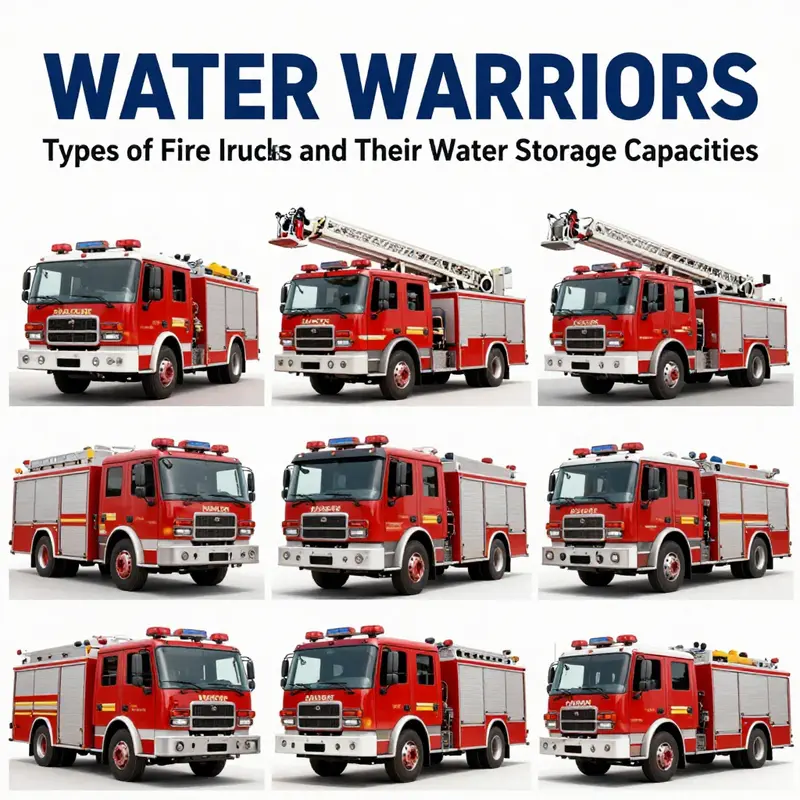
Water is the lifeblood of firefighting, and the fire truck is engineered to keep that lifeblood moving from the moment crew boards and the siren begins to wail. The question does not merely ask whether a vehicle carries water; it asks how those volumes, pumps, and hoses are arranged to meet a scene that can change in minutes. Across urban streets and rural landscapes, fire departments rely on a spectrum of specialized machines. Each type carries water in a way that matches its mission, its terrain, and the speed with which it must respond. In practice, water storage on board a fire truck is not a single feature but a system of choices, with capacity, weight, pump capability, and even the placement of tanks all designed to deliver the right amount of water at the right moment. This approach is what makes the fleet capable, flexible, and surprisingly resilient in the face of unpredictable emergencies.
Pumper fire trucks sit at the heart of most urban responses. They are the workhorses that combine a water tank with a high-capacity pump and an array of hoses. When a call comes in, a pumper can begin delivering water even before it has connected to a hydrant, drawing from its own onboard reservoir to establish an attack line. The onboard tank in a typical pumper ranges roughly from five hundred to two thousand gallons, translating to about nineteen hundred to seven thousand six hundred liters. That range is not arbitrary; it reflects a practical balance between keeping enough water on board and preserving space for a robust pump, hose lines, additional equipment, and crew comfort. In densely built environments, a pumper’s steady supply acts as a temporary bridge, buying critical moments until a hydrant can be secured or a larger water source is available. The early advantage is not merely the water itself but the pressurized stream the pump can deliver through the nozzle. The ability to initiate suppression quickly is a defining feature of these vehicles, especially in districts where hydrants are plentiful and road conditions permit rapid deployment.
In contrast, tanker or tender trucks are designed to ferry water to locations where hydrants are scarce or nonexistent. Their mission centers on volume and reach rather than rapid access to a fixed supply. Tankers carry larger tanks, typically ranging from about one thousand to three thousand gallons, which is roughly three thousand eight hundred to eleven thousand four hundred liters. The logic is simple: in rural areas, on large complexes, or in disaster zones where water sources are depleted, the ability to shuttle water across distances becomes essential. A tanker can repeatedly fill from a hydrant or natural source, then drive back to the fire line to deliver another dose, all while a pumper at the scene simultaneously receives water from the tanker and continues the attack. Some specialized configurations push these capacities even higher, reflecting the needs of large-scale incidents or regions with extended travel times to reach a sustainable water source. The emphasis here is not on speed alone but on endurance—ensuring that a sustained water supply is available for hours if needed and that firefighters can maintain a continuous stream on the fire while searching for passive protection opportunities or conducting rescues.
Aerial ladder and platform trucks add a different dimension to water application. Their primary role is visibility and access—reaching high-rise windows, pulling lines to upper floors, and enabling rescue or evacuation operations. Yet they still carry water in onboard tanks, typically around five hundred to one thousand gallons, or roughly nineteen hundred to three thousand eight hundred liters. The practical reality is that the aerial stream is often a supplementary mode of attack; the water carried onboard is frequently used to establish an initial line or to support a coordinated multi-point attack, while the main water supply comes from a pumper that remains on the ground. The combination is deliberate: the aerial unit provides elevated placement and protection, while the ground unit delivers the power and volume needed to control and extinguish the fire. This teamwork is why fire departments train for integrated water delivery, with multiple vehicles and crews working in concert rather than as isolated responders.
Foam and water tanker trucks represent a specialized class designed for the most demanding fuels and liquids. They go beyond plain water by carrying foam concentrate that, when mixed with water, creates a foam solution capable of blanket coverage and improved cooling. In these configurations, water capacity remains substantial, often exceeding ten thousand liters, while foam concentrate is stored separately in large quantities. The use of foam is essential for fires involving gasoline, oil, or other hydrocarbons, where plain water can be less effective or even hazardous. A common practical setup involves a large water tank coupled with an independent foam system that can be deployed rapidly when the incident type requires it. In some configurations, the water tank alone can be sizable—on the order of fifteen thousand liters in certain heavy-duty designs—allowing extended suppression without the immediate need for frequent refilling. The foam component, stored separately, ensures that responders can adjust the suppression strategy to the specific fire scenario. This kind of vehicle illustrates how modern fleets blend raw water capacity with chemical aids to broaden the spectrum of safe, effective responses to difficult flames.
Rescue and emergency response vehicles occupy a different end of the spectrum. Their primary repertoire lies not in delivering vast quantities of water but in enabling rapid, safe technical operations. They may carry smaller water supplies, often less than five hundred gallons, to provide an initial line or to protect the scene as crews work. The emphasis in these vehicles is on tools that can free trapped people, stabilize hazardous environments, or manage the aftermath of an incident. Hydraulic cutters, spreaders, stabilization devices, and medical kits dominate the equipment list. Water in these units serves as a temporary measure or a means to reduce heat in a confined space, but the core mission is extraction, stabilization, and safeguarding lives. Yet even here, the presence of water on board maps to the broader philosophy of fire vehicles: every unit is a mobile platform designed to bring the right resource to the right place, exactly when it is needed.
The way water moves through a fire service fleet is a study in optimization, and capacity is just one axis of that optimization. Engineers must balance the weight of full tanks, the space available for pumps and hose reels, and the crew’s ability to maneuver the apparatus safely. A full tanker, loaded with hundreds or thousands of gallons, shifts the vehicle’s center of gravity and requires careful handling via the driveline and suspension. The pump’s capacity also constrains how quickly water can be pushed through hoses, but that performance must be harmonized with the hose layout, nozzle selection, and the pressure needed at various points along the line. The result is a fleet whose components complement one another; a pumper’s quick pull from its own tank can bridge the gap until a hydrant is secured, a tanker ensures that the line remains fed over time, and an aerial unit can place water where ground access is limited or visibility is obstructed. In practice, the team is often orchestrating a water choreography where different pieces of equipment contribute in a coordinated sequence, a process refined by training, experience, and the unique demands of each district.
Hydraulics and water supply are, at their core, a story about reliability. When a fire breaks out, the first few minutes determine whether the flames are contained or spread. The onboard tank capacity is a component of that reliability, but so too are the depot and hydrant strategies, water shuttle operations, and the staging of multiple lines. A modern fleet will often include a mix of pumper, tanker, and aerial units to ensure that the fire department can adapt as conditions evolve. In densely populated cities, the emphasis might be on rapid deployment and versatile crews who can switch swiftly between attack lines and high-elevation operations. In rural or industrial settings, the capacity to shuttle water for long distances may dominate the response plan, making the tanker’s volume a more critical feature. The overarching principle is flexibility backed by dependable math: capable pumps, predictable water flow, and accurate weight management are the technical underpinnings that let firefighters focus on what matters most—saving lives and protecting property.
From a planning perspective, the total water drawn from all sources during a response is a function of several moving parts: the initial supply from an onboard tank, the speed of connection to hydrants, the distance to refill points, and the ability to maintain pressure across the attack lines. In many districts, a common pattern unfolds where a pumper reaches the scene first and begins a stream from its tank while another unit secures a hydrant. If hydrants are scarce or far away, the tanker steps in to provide the water shuttle that sustains the attack until a larger, more permanent supply can be established. This is a practical balance between immediacy and endurance, a balance that makes the difference when a fire lasts longer than anticipated or spreads through challenging terrain. The figures—five hundred to two thousand gallons for pumpers, one thousand to three thousand gallons for tankers, five hundred to a thousand gallons for aerial units, and ten thousand liters plus for specialized foam configurations—embed a logic of purpose. They are not random quantities; they reflect the demands of real-world operations and the constraints of equipment design.
If you are exploring the practical aspect of these configurations, a quick look at the market for fire apparatus can be informative. For readers curious about the market, options, and the various vehicle layouts, consider exploring listings and discussions at Fire Trucks for Sale. This resource can provide a sense of how departments balance budget, terrain, and response expectations when choosing equipment with different water capacities. While every department must tailor its fleet to its specific challenges, the underlying engineering philosophy remains consistent: water on wheels is a tool, and its value grows when it is paired with the right pump, the right crew, and the right strategy. The capacity figures described here are more than numbers; they reflect a disciplined approach to emergency response. They show how departments design for speed, for range, and for the ability to sustain suppression in the face of evolving fires. The result is a fleet that can adapt to both the immediate fire line and the longer arc of an incident, always with water as the central actor in the drama of rescue and containment.
For a broader historical and technical context, readers may wish to consult external resources that document how water delivery systems evolved in firefighting. These sources offer a deeper look at the innovations in pump technology, foam applications, and the logistics of moving water through a fleet across varied landscapes. External resource: https://en.wikipedia.org/wiki/Fire_engine
Final thoughts
The journey through the water resources of fire trucks reveals their indispensable role in effective firefighting. Water not only empowers firefighters to extinguish flames but also represents the very essence of readiness in emergency situations. By understanding the different types of fire trucks and their water-carrying capabilities, we can truly appreciate the intricate mechanisms that protect our communities. Whether you’re a budding firefighter, an enthusiast, or a professional, you now have a deeper insight into how these giants of the road serve as vital tools in safeguarding lives and property.