
When wildfires rage through California, assistance often comes from unexpected sources, including neighboring states like Oregon. In recent years, Oregon has actively participated in firefighting efforts by dispatching fire trucks, equipment, and personnel to the Golden State. This collaborative approach is part of mutual aid agreements designed to bolster emergency responses during catastrophic events. In this article, we will explore how Oregon mobilizes its resources, the significance of inter-state support in wildfires, the coordination efforts led by the National Interagency Fire Center, the impact of these deployments, and the logistical elements involved. By understanding the collective response framework that makes such assistance possible, fire truck enthusiasts, aspiring firefighters, and emergency service professionals can appreciate the complexities and camaraderie inherent in firefighting.
Between Mutual Aid and State Borders: The Subtle Reality Behind Oregon’s Fire Truck Deployments to California
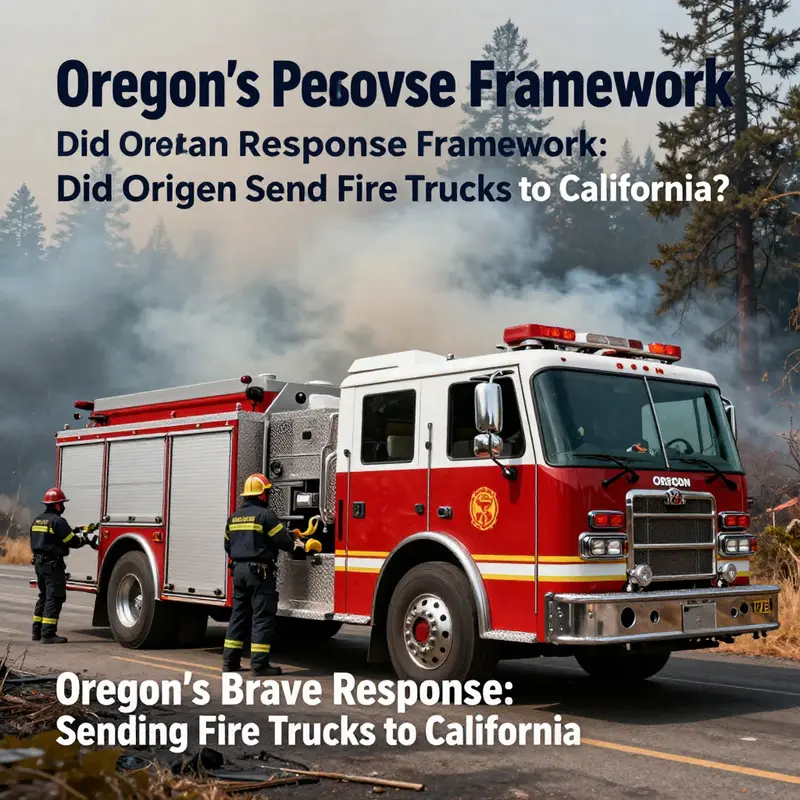
When wildfire seasons flare across the western United States, communities ask a simple, urgent question: did neighboring states rush to help by sending fire trucks to the calamity in California or elsewhere? The easy answer would be yes or no. In truth, the reality sits in the gray zone between formal agreements and on-the-ground needs, between policy and practice. The official record, as articulated by the Oregon Office of Emergency Management, emphasizes that Oregon operates within a framework of mutual aid with neighboring states, including California, and that any deployment outside state borders is not a routine or automatic action. Instead, it is the product of formal channels, careful capacity assessments, and explicit requests from the affected state. This nuance matters for readers who want to understand not only what happened, but how modern emergency management navigates the spread of scarce firefighting resources during the most intense wildfire seasons.
Mutual aid, at its core, is a social contract among jurisdictions that share risk. It rests on the premise that when one state faces a crisis, its neighbors can lend support to relieve the pressure and buy time to bring incidents under control. In practice, this means more than a single engine arriving at a border; it involves a coordinated system where resources are requested, assigned, and controlled by incident management authorities. The backbone of this system, in the national context, is the National Interagency Fire Center, which orchestrates the movement of personnel, apparatus, and equipment across state lines. But coordination does not occur in a vacuum. It travels through formal channels, which include emergency management agencies at the state level, the incident command structure, and, when necessary, federal oversight that helps align capacity with demand. The chain of command remains clear: the incident in need initiates the request, the responsible state evaluates its own current emergencies and operational capacity, and only then are any resources, if deemed appropriate, dispatched through established interagency processes. In this way, mutual aid is a shared obligation that keeps communities safer while preserving the ability to cope with crises at home.
The precise question of whether Oregon sent fire trucks to California during recent wildfires hinges on how one defines deployment and which framework is being referenced. The Oregon Office of Emergency Management has stated that Oregon did not send fire trucks to California as part of its official response framework in the recent round of wildfires. This reflects a careful, rule-bound approach: deployments outside state borders are not undertaken without a formal request and a demonstrated need that cannot be met within Oregon’s own resources. The emphasis here is not a denial of informal or indirect forms of assistance, but rather a clear separation between the formal, documented process and any ad hoc or state-to-state gestures that may circulate in public discussions. The decision to move assets across state lines, according to Oregon authorities, is made only after a deliberate assessment that respects operational capacity, current emergencies within Oregon, and the interagency coordination protocols that govern such decisions. The source for this stance is the Oregon Office of Emergency Management itself, a body charged with outlining how mutual aid is requested and how it unfolds in practice. In short, the official narrative centers on careful stewardship of resources and a commitment to protect residents within the state while collaborating with neighbors through formal channels when the situation permits.
Yet the broader conversation about California’s wildfires and Oregon’s possible contributions is not entirely closed from past memory or other contexts. Contemporary discussions can reflect a mix of reporting and interpretation, where some summaries describe instances of Oregon sending multiple fire engines, personnel, and equipment to California during severe fire seasons. Those accounts may arise from a combination of mutual aid expectations, regional coordination, or actions taken under different emergency response circumstances, such as regional agreements during particularly dire periods or within the scope of joint operations that blur strict border lines. The critical distinction remains this: when the matter is framed as an official deployment under Oregon’s formal response framework, the record points to no cross-border dispatch that would constitute Oregon acting outside its formal channels in the described period. When observers reference cross-border support more broadly, they may be referencing a spectrum of assistance that can include joint training, mutual aid commitments, or resource sharing that does not necessarily equal a formal outside-the-state deployment through the state’s primary emergency management apparatus.
This distinction matters for understanding how emergency response operates in practice. A unified command structure is central to making cross-jurisdictional cooperation feasible and effective. Where multiple agencies, agencies from more than one jurisdiction, and even federal responders converge on an incident, a single command system is used to coordinate tactics, priorities, and resource allocation. The concept of unified command ensures that decisions reflect the needs of the incident, not the preferences of any single agency. It also allows for the seamless integration of resources from different places when it is necessary and appropriate. The mechanism is not new, but its execution depends on trust, readability of the incident’s needs, and the availability of personnel and equipment. For readers curious about how such coordination looks in practice, the topic of unified command in emergencies provides a window into the practical realities of interagency cooperation. Unified command in emergencies offers a concise view of how multiple jurisdictions align their efforts on a single incident, maintaining accountability while enabling rapid, strategic decision-making.
In Oregon’s case, the emphasis remains on safeguarding core capacity for wildfires within state borders. The operational calculus includes not only the current fire load in Oregon but also the safety of firefighters, the risk to communities, and the ability to sustain suppression efforts across the state’s many active incidents. When California encounters a wildfire emergency that demands outside help, the process would begin with a formal request through state channels that evaluate whether Oregon’s resources could be redirected without compromising Oregon’s own needs. The careful balancing act reflects a broader principle that guides mutual aid: assistance is most effective when it strengthens the overall system without creating new vulnerabilities elsewhere. This principle is especially salient in the West, where nighttime wind shifts, drought conditions, and rapidly evolving firelines can transform a calm day into a crisis and demand both local expertise and regional solidarity.
For readers seeking official detail, the Oregon Office of Emergency Management’s guidance provides a roadmap for understanding how emergency response procedures and mutual aid agreements operate. It clarifies the channels through which a state can offer or request assistance and the criteria used to evaluate readiness and necessity. As a practical matter, the bottom line is that cross-border deployments are not automatic or routine; they are the product of formal processes designed to ensure that the right resources are in the right place at the right time, while still keeping a vigilant eye on a state’s own protective duties. In the context of California’s wildfire events, Oregon’s role, as framed by official sources, centers on reinforcing internal capabilities and supporting local efforts within the state when possible, rather than deploying assets across state lines as a matter of course.
Ultimately, the question may persist in public discourse because mutual aid embodies the spirit of regional resilience. It operates on a shared understanding that wildfire danger does not respect political boundaries, and that neighboring states stand ready to help when the emergency exceeds local capacity. At the same time, the precise mechanics of when and how such help is offered are anchored in formal procedures, capacity assessments, and interagency coordination. The distinction between official cross-border deployments and broader forms of cooperation matters because it reveals how emergency managers translate a volatile and complex threat into a predictable, lawful, and responsible response. Oregon’s official stance reflects a careful balance: preparedness at home, and readiness to collaborate with neighbors when formal channels indicate it is appropriate and feasible. For those who want to explore the topic further, the Oregon Office of Emergency Management site offers detailed explanations of mutual aid, response procedures, and the underlying policies that shape these high-stakes decisions.
External resource: https://www.oregon.gov/oeo
Across the Borderline Fireline: Oregon’s Mutual Aid in California’s Wildfire Seasons
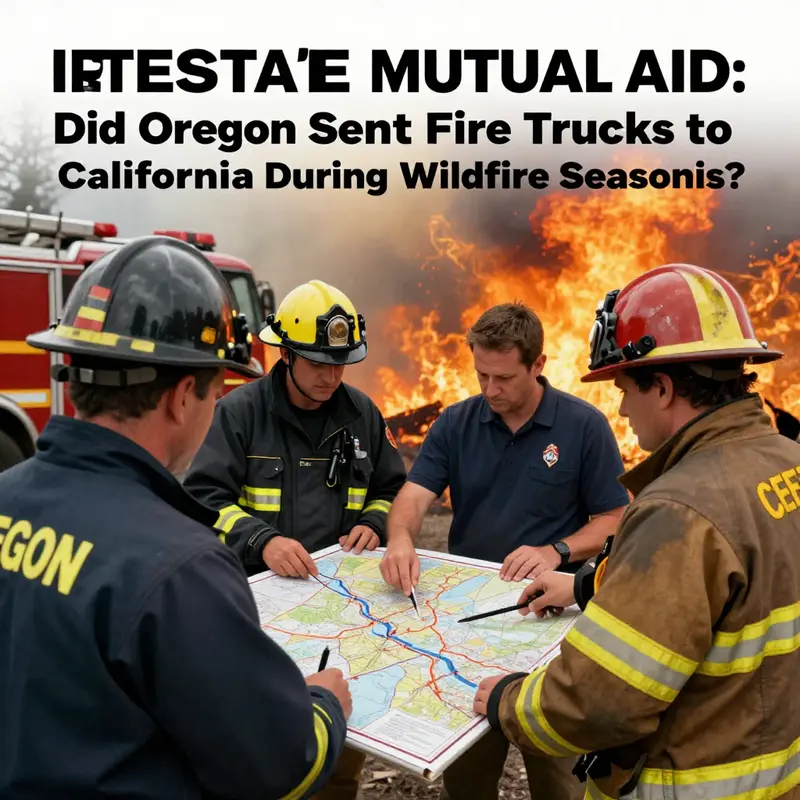
In the vast and tangled theatre of Western wildfires, cooperation is a necessity as much as a doctrine. Fire seasons arrive with shifting winds, dry fuels, and sudden changes that strain even well-prepared jurisdictions. When California faces a surge in fires that push local capacity beyond its usual limits, neighboring states step into the breach as part of a long-standing tradition of interstate mutual aid. This isn’t an abstract arrangement; it is a practical, operational reality that helps protect communities, protect firefighters, and protect the smoke-filled air that travels across state lines. The mechanism behind these deployments is coordinated and deliberate. Resources are requested where they are most needed, evaluated for current availability, and dispatched through a layered system designed to balance speed with safety. At the center of this system is the National Interagency Fire Center, a hub that coordinates interagency collaboration and helps align state assets with federal resources during large-scale emergencies. The process begins with a request from the state experiencing the fire, usually CA in recent seasons, and then moves through established channels to determine what can be spared, what must be reserved for domestic response, and what combination of engines, crews, and aviation assets will most efficiently address the evolving threat. The outcome is a concise balance of capability and care, a balance that keeps responders fresh and ready for the next shift in the flames.
From Oregon’s perspective, the mutual aid framework is both practical and deeply rooted in public safety culture. During the 2023 wildfire season, Oregon deployed a measurable array of support to California, including fire engines, personnel, and aviation assets. These deployments were not ad hoc gestures but rather components of a broader, state-to-state emergency management strategy that is routinely exercised and refined. The value of such aid lies not only in the sheer array of equipment pressing into service but in the interconnected knowledge base that comes along with it. Fire departments, forest agencies, and aviation units bring with them decades of experience in fighting Western fires, knowledge of terrain, and an understanding of how to operate under mutual command structures that often span multiple jurisdictions. A key aspect of the coordination is the way resources are managed and tracked across agency lines. The same engines that roll out of a county station in Oregon might later share incident command responsibilities with local agencies in California, contributing to a unified approach to strategy, tactics, and safety. This is where the broader system—ground crews, aerial supervision, and support personnel—must align, not just in response but in recovery, debrief, and lessons learned for future incidents.
The operational choreography rests on formal agreements and ongoing practice. Mutual aid agreements between states outline the types of resources that can be shared, the procedures for requesting assistance, the terms of deployment, and the reimbursement mechanisms that keep this arrangement sustainable. In practice, the request path is clear: California recognizes the need, submits a request, and the state emergency management apparatus engages NIFC or the appropriate regional coordination center to determine what Oregon and other partner states can provide. The decision to dispatch is made with an eye toward maintaining CA’s local response integrity—ensuring that the state’s own resources remain capable of handling immediate, nearby threats while additional assets move in to relieve fatigue and extend the reach of firefighting efforts. The balance is delicate, and it requires continuous communication. Dispatch teams must ensure that engines do not arrive with more operator fatigue than the surrounding crews can absorb, that water tenders have enough fuel and personnel to stay operational, and that aviation assets are positioned to maximize effectiveness without disrupting local airspace or incident command priorities. The result is a disciplined, collaborative effort that demonstrates how mutual aid can scale up during peak demand while preserving the safety and readiness of every responder involved.
For readers who want a deeper dive into the mechanics of such coordination, the concept of unified command becomes central. It is the principle that allows teams from different agencies, states, and levels of government to operate under a single, integrated structure at the incident level. Unified command provides a shared set of objectives and a common operating picture, ensuring that decisions about strategy, resource allocation, and risk mitigation are made with a collective awareness of the broader mission. In practical terms, it means that a California incident commander, a state fire marshal, and a neighboring state’s incident management team can coordinate as a single team on the ground, even as their organizational affiliations remain distinct. This coordination is not accidental; it is trained into the system through exercises, protocols, and recurring joint deployments. To explore this mechanism in more detail, see the resource on Unified Command in Emergencies, which illuminates how diverse responders synchronize their efforts under one command framework. https://firetruck.space/unified-command-in-emergencies/
The Oregon–California mutual aid relationship also reveals important lessons about capacity, equity, and resilience. First, it underscores the value of preserving a shared capacity to respond quickly when regional fires overwhelm one locality’s normal operating envelope. Second, it highlights how mutual aid depends on clear reimbursement arrangements and predictable budgeting to sustain cross-border deployments during multiple-year fire seasons. Third, it emphasizes the importance of training and cross-jurisdiction familiarity. When Oregon engines roll toward the California line, crews carry not only water and hoses but a shared language of tactics, radio procedures, and safety expectations that allow them to slip into the incident without friction. This alignment reduces the time lost to coordination, enabling more effective firefighting and, crucially, reducing the exposure of responders to hazardous conditions. The reciprocity of this arrangement also matters: California’s own mutual aid commitments, should their fire pressure increase, may similarly flow back to Oregon or other neighboring states when needed. The result is a broader regional safety net that stretches across political boundaries and affirms a common responsibility to protect lives, homes, and landscapes that are inseparable from one another in a wildfire season.
Of course, no system is without limits. Mutual aid can only scale up to the point where resources are available, weather patterns permit safe deployment, and personnel can maintain readiness without compromising their home jurisdictions. The logistics of moving engines, crews, and aircraft across state lines require careful scheduling, maintenance cycles, and predictable supply lines. Air resources must contend with shifting visibility, wind, and aircraft routing that align with incident priorities, while ground crews must navigate increasingly complex incident command structures without fracturing the local incident response. Even in the best years, this is a careful dance between urgency and stewardship. Yet the track record across recent seasons shows that, when called, Oregon has stood ready to share its assets with California, reinforcing the idea that firefighting competence can grow stronger when neighbors stand together under pressure.
Evidence of this cooperation is available through official channels like the Oregon Department of Forestry, which details interstate mutual aid arrangements and their role in supporting California during wildfire events. This documentation provides a reliable baseline for understanding how these deployments are planned, funded, and executed, and it helps explain why such cross-border assistance remains a durable feature of Western fire management. For readers seeking official context and further details, the Oregon Department of Forestry page on interstate mutual aid serves as a valuable resource. External reference: Oregon Department of Forestry – Interstate Mutual Aid.
In sum, the question of whether Oregon sent fire trucks to California during wildfire seasons is best understood not as a single incident but as part of a broader, established pattern of cooperation. The mutual aid framework, supported by national coordination through NIFC and reinforced by state agencies, enables a flexible, capable, and responsible response to the most demanding fire seasons. The inclusion of interconnected command structures, the steady drumbeat of joint training, and the shared culture of public safety all reinforce the idea that, when fire stretches the limits of one jurisdiction, a neighbor’s help is not just welcome but essential. It is, in essence, a practical articulation of regional solidarity in the face of a shared environmental challenge, a testament to the idea that in the realm of wildfire response, the strength of a community lies in its ability to come together when flames threaten more than borders.
Coordinating Across Borders: How Oregon’s Firefighting Network Flows Through NIFC to Aid California
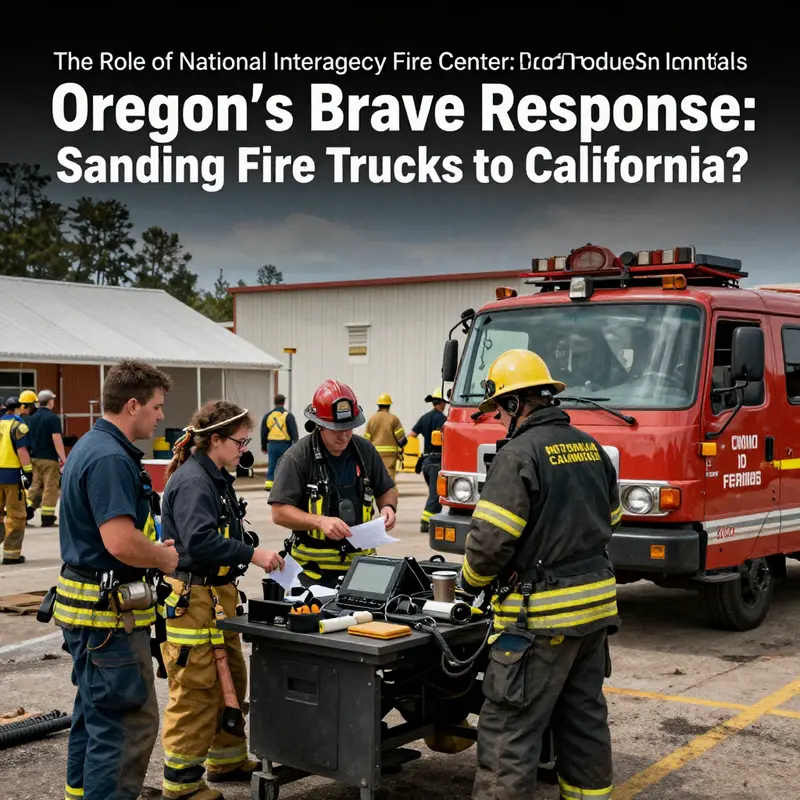
In the theater of wildfire response, no jurisdiction stands alone for long. When flames leap between forests and towns, the path to containment often travels through a chain of coordination that stretches beyond state lines. At the center of that chain sits the National Interagency Fire Center, the hub where resources are orchestrated for the nation’s largest fires. Its work is less flashy than the sight of a burning ridge and more essential: it translates a patchwork of state inventories into a unified, nimble response when danger flares across borders.
NIFC, located in Boise, Idaho, performs critical functions that keep firefighting from becoming a patchwork effort. It oversees resource allocation, incident command support, and logistics during complex wildland fires. The center acts as a clearinghouse where needs are matched with capabilities—aircraft, crews, engines, and ground support—so that states can borrow strength when their own lines are overwhelmed. The goal is not to siphon resources from one jurisdiction to another, but to ensure that the right tools reach the right incident at the right time. In practice, that means assessing the scale of a blaze, the threat level to nearby communities, and the availability of resources in sending states.
The Mutual Aid system is the backbone of this arrangement. When a major California wildfire demands more hands and engines than the state can muster, requests ripple out to neighboring states through a formal, federally supported framework. The mutual aid process is built to be both rapid and disciplined: a dispatch is not an impulse but a coordinated decision that weighs current needs against what is realistically available elsewhere. The federal layer provided by NIFC helps translate regional worries into national mobilization plans, ensuring that departments and districts abroad can participate without losing sight of their own commitments at home. This is not a one-size-fits-all transfer; it is a dynamic matching of assets to incidents, guided by safety, efficiency, and accountability.
Oregon’s involvement in this collaboration has a long arc. Historically, Oregon has sent fire trucks and other firefighting resources to California during severe wildfire seasons. In recent years—specifically the 2023 and 2024 fire seasons—Oregon deployed multiple Type 1 and Type 2 fire engines, along with crews, to support operations in California. These deployments are coordinated through NIFC, which assesses needs based on the fire’s size, rate of spread, and the threat to communities, and then identifies where Oregon’s resources can best augment California’s suppression efforts. The mutual aid system ensures that states can quickly and efficiently share resources to combat fires that expand beyond borders, while still leaving enough capacity at home to respond to new emergencies that may arise.
The mechanics of how these assets move from one state to another illuminate the complexity behind a single headline. Requests originate in incident management structures that Oregon’s own agencies operate, then travel through the chain of command to NIFC. The center serves as a staging point where needs are quantified, available inventories are checked, and transportation and engagement plans are laid out. Once a commitment is made, resources depart from regional bases and within hours or days arrive at a host area chosen to optimize effectiveness. This planning involves not only the engines and crews themselves but the ancillary support that keeps a response coherent—tactical briefings, communications equipment, and the medical and support personnel who sustain responders on the line. The entire process hinges on interoperability, a term that captures both the compatibility of equipment and the shared language of incident command.
A crucial facet of this coordination is the incident command system, which provides the architecture for multi-agency work during crises. Within the host jurisdiction, the incoming units operate under the umbrella of a unified strategy that aligns with the local incident command. This arrangement reduces confusion, minimizes redundancy, and ensures that the arrival of additional crews translates into meaningful, time-sensitive action on the ground. In this sense, the mutual aid framework serves as more than a supply chain; it is a platform for cross-jurisdictional learning and structured collaboration. The idea of Unified Command in Emergencies captures this spirit: when multiple agencies share authority and resources toward a single objective, they can act with greater speed and coherence. Unified Command in Emergencies illuminates how cross-border assistance is harmonized, even as each agency’s culture and procedures remain respected.
The outcomes of this system extend beyond the immediate suppression of flames. By pooling resources across states, agencies gain access to a broader repertoire of equipment and expertise. Type 1 engines, renowned for their robust capability on large, fast-moving fires, and Type 2 engines, more suited to extended ground support and initial attack in varied terrain, become pieces of a larger, more flexible toolkit. Crews bring specialized knowledge, and their integration with California’s local incident management teams allows for rapid transfer of tactics that have proven effective in different landscapes and weather conditions. In practice, this means that a fireline can be established more quickly, suppression tactics can be adjusted to evolving fire behavior, and the overall tempo of firefighting can be sustained even when conditions are persistently challenging.
Of course, the system is not without its tensions. Transnational resource sharing tests logistics, fatigue management, and equipment compatibility. Equipment may need to be adapted for different fire environments, and crews must be briefed across shifts and time zones to maintain continuity. There are also fiscal and legal considerations: mutual aid is funded and authorized through a framework that ensures accountability for the use of public resources, while permitting rapid response. These challenges do not erase the benefits; they shape how the system evolves, how training programs adapt, and how interagency communication improves over time. The experience gained through each deployment—through exercises, real missions, and after-action reviews—feeds back into better planning, better supply chains, and stronger regional resilience.
For readers seeking real-time insight into current deployments, the official channels remain the most reliable source. The National Interagency Fire Center’s website provides up-to-date information on resource availability, deployments, and incident status. In moments when a neighborhood feels threatened by a spreading fire, this centralized flow of information is essential for maintaining public confidence and ensuring that responders can act with clarity.
The story of Oregon sending fire trucks to California is more than a simple tale of aid. It reflects a broader commitment to shared responsibility in a landscape where fires know no borders. It reveals how federal coordination, state-level readiness, and interagency cooperation intersect to create a national capability that grows stronger when it is exercised across diverse environments. The mutual aid system embodies a practical ethic: when communities are in danger, helping hands do not stop at political lines. The arrangement rests on trust, standardized procedures, and a continuous loop of learning from each response. It reminds us that the safety of one state is connected to the strength of all, and that a country can face a wildfire season with courage and coordinated precision when its agencies work together in a single, sustained effort.
For readers who want to see how these processes translate into daily practice, consider exploring resources that discuss how a unified response is built and sustained in emergencies. The concept of Unified Command in Emergencies helps illustrate how cross-border help is harmonized, even as agencies maintain their distinct identities. You can learn more at the linked resource above. And for those seeking the latest on ongoing deployments and resource status, the NIFC site remains the official, up-to-date reference point.
External resource: https://www.nifc.gov
Oregon-California Mutual Aid: Fire Engines and Shared Responsibility in 2023
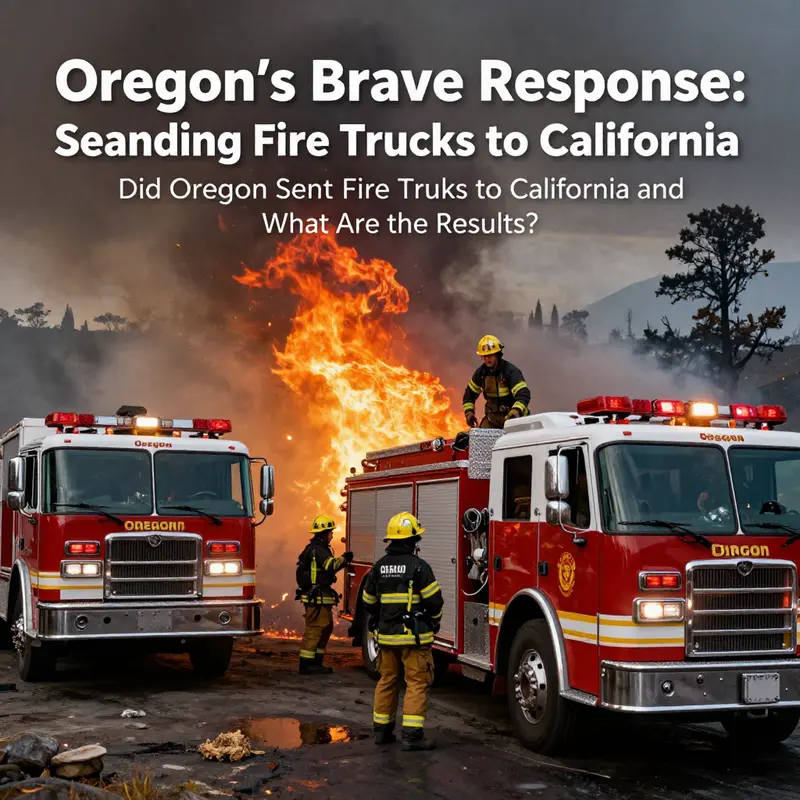
In 2023, California faced intense wildfire activity that stretched regional resources thin. Oregon answered with a coordinated deployment of fire engines, crews, and logistical support designed to bolster suppression, protect communities, and sustain frontline operations over long hours. This chapter examines how mutual aid operates in practice: predefined request channels, interoperable equipment, and standardized safety procedures that keep diverse teams functioning as a single incident management unit. Across northern and central California, Oregon’s contributed assets complemented local responders by establishing defensible space, staging attack lines, and maintaining critical infrastructure protection while CAL FIRE managed incident-wide objectives. Beyond the immediate fireline, the operation highlighted the value of cross-border coordination for incident logistics, including fuel, food, rest, and maintenance needs that enable a dispersed force to remain effective during extended contingencies. The Oregon deployment illustrated that successful mutual aid rests not on a one-off influx of resources, but on a mature ecosystem—prepared agencies, rehearsed procedures, and clear communication—that can reallocate capacity rapidly as the wildfire season evolves. In retrospect, these shared actions reduced strain on California’s local agencies, accelerated initial responses to new ignitions, and reinforced the resilience of communities facing threat across jurisdictional boundaries.
Across State Lines: Coordinated Fire Engine Mobilization Between Oregon and California
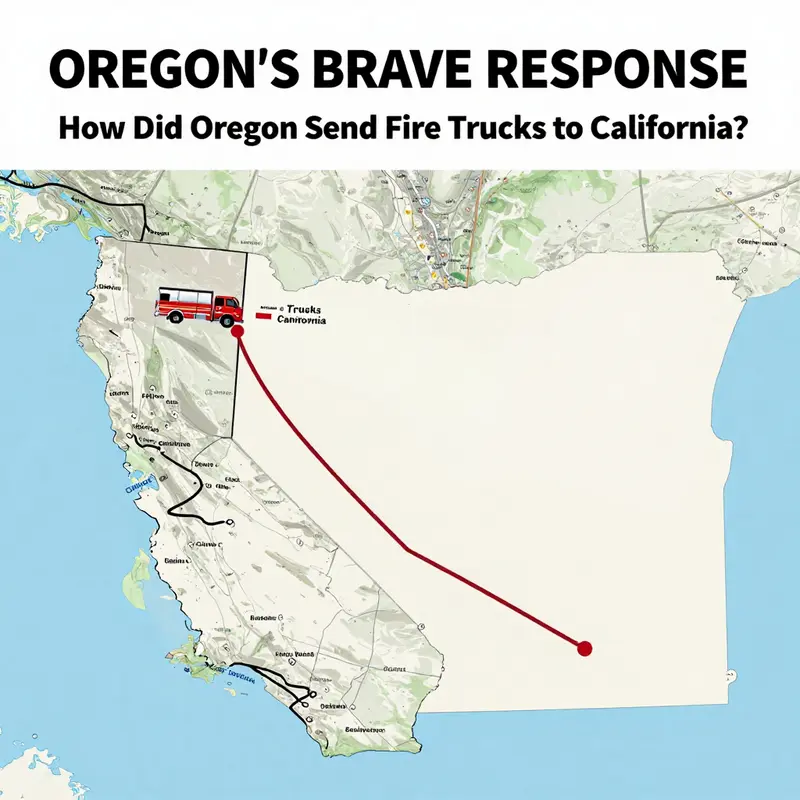
When flames expand beyond a single jurisdiction, suppression becomes a regional challenge that demands more than local reserves. The story of Oregon sending fire engines to California during recent wildfire seasons reveals how mutual aid networks, national coordination hubs, and cross-state cooperation come together to stretch firefighters’ reach when every engine counts. This is not about lone agencies standing alone; it is about a modular, scalable system that activates assets across borders, aligning people, equipment, and procedures to meet a common emergency. In practice, the Oregon-California exchange is anchored in a well-worn but continually updated framework that ensures resources can move quickly, safely, and in a manner that respects the incident command structures already in place on the ground.
The sequence begins with a formal request from the host jurisdiction. In California’s case, the Office of Emergency Services (Cal OES) is responsible for initiating mutual aid when fires push beyond the capacity of local resources. The mutual aid system, a long-standing feature of interjurisdictional response, acts as a bridge between readiness and response. It is designed to be both accelerate and disciplined: accelerate because time saved here translates into protection for lives and property, and disciplined because it must mesh with California’s incident management protocols to avoid interference with ongoing operations. Once Cal OES activates the process, the National Interagency Fire Center (NIFC) and state emergency management agencies coordinate the next steps. The emphasis is clear: resources stream toward the fire, but they do so in a way that preserves chain of command, safety standards, and the situational awareness that is essential in a rapidly changing incident environment.
From Oregon’s perspective, the mobilization is an orchestration of people, machines, and procedures that have to be ready to deploy with little delay. The Oregon Department of Forestry (ODF) stands as the primary mobilizer of firefighting assets, but it does so through a network that keeps each piece of the operation aligned with the broader mission. Engines, crews, and specialized apparatus, such as Type 3 wildland engines, are selected based on the terrain and the anticipated fire behavior. Type 3 engines, with their rugged design and capability to operate on less developed roads and steeper slopes, represent the kind of equipment that makes sense when wildfires push through landscapes where traditional urban engines cannot operate efficiently. The deployment is not merely about moving metal; it is about moving trained hands and disciplined minds to a scene where priorities are clear but conditions can shift in an instant.
Logistics becomes the silent engine behind the visible action on the ground. Before any wheels roll, resources are prepped with fuel, water, and an array of firefighting tools tailored to the expected conditions. Crews receive briefings that introduce them to California’s incident management protocols, a crucial step to ensure a smooth integration with local and state teams already operating at the fire line. The transfer of protocol is not a mere formality; it is the difference between a coordinated attack and an unintended clash of methods. The transportation backbone relies on state highways and pre-planned staging areas, with escort vehicles and close coordination with local law enforcement to ensure safety for the crews and the public. Each vehicle’s movement is choreographed to minimize disruption to civilian traffic while maximizing arrival times at designated staging points.
Within this intricate choreography, the collaboration machinery of regional bodies plays a pivotal role. The Western States Fire Chiefs Association, a forum that brings together leadership from multiple jurisdictions, functions as a facilitator for shared standards and best practices. The Unified Coordination Group acts as a bridge between the requesting state and those supplying resources, translating overarching strategic aims into actionable, on-the-ground tasks. This cross-border coordination mirrors a larger truth about modern firefighting: no single agency can command a wildfire from a single vantage point. A shared operating picture, built through communications, standardized incident management protocols, and mutual trust, allows teams to operate as a single, larger unit when the stakes are highest. The process is iterative rather than static; as fires evolve, so do rotations of crews and shifts in assignment, all while maintaining a single, coherent plan.
For the personnel involved, the exchange is as much about culture as it is about equipment. Crews trained in Oregon bring with them a set of practices forged in Pacific Northwest fuel types, climate, and terrain. California, in turn, offers a living library of incident structures, tactical approaches, and environmental conditions that can differ markedly from Oregon’s. The pre-deployment briefings serve as a cultural and operational handoff, ensuring that the people arriving on the line are not merely physically present but appropriately aligned with the host incident’s command structure. In that sense, the collaboration is as much about trust as it is about hydrants, hoses, and the reach of a ladder truck. The goal is not to overwhelm local teams with outside methods but to supplement their capacity in a way that respects established protocols, preserves safety margins, and accelerates containment and suppression efforts.
The impact of these mutual aid movements extends beyond the immediate fire season. When Oregon and California operate in concert, the region gains a more resilient, scalable defense against wildfires that grow fiercer and more frequent with each passing year. The interstates of cooperation become arterial networks that deliver resources precisely where and when they are needed, transforming a potentially devastating scenario into a controllable sequence of actions. This is not a one-off gesture of goodwill; it is the institutionalized habit of regional preparedness, a pattern of readiness built on the recognition that fires do not respect political boundaries. The mutual aid system, reinforced by the NIFC and supported by state emergency management offices, stands as a testament to a rational, human-centered approach to disaster response: people coordinating with people, under shared rules, toward a common purpose.
In telling this story, it is important to acknowledge the quiet, behind-the-scenes work that makes such operations possible. Documentation, pre-planned mutual aid agreements, and ongoing training ensure that when the sirens do go from yellow to red, the process is already in motion. The public never needs to see every step of this choreography to benefit from it, but the effectiveness of the response rests upon it. The alignment of Oregon’s assets with California’s needs, and the seamless integration into California’s incident management structures, demonstrates how modern firefighting has evolved into a cooperative enterprise. The result is a more capable regional response that can surge resources with precision, maintain safety for crews and civilians, and maintain a nimble posture in the face of uncertainty.
As readers reflect on the mechanics behind the scenes, a broader picture emerges: states learn from each other, share lessons, and continually refine the playbook for mutual aid. The Oregon-to-California example sits within a larger ecosystem of regional preparedness, where the endurance of communities depends on the ability to mobilize quickly and to do so with discipline. The signal this sends is clear: when danger expands beyond a jurisdiction’s lines, the response becomes a shared responsibility. For more on the centralized framework that coordinates fires across multiple agencies and jurisdictions, see the National Interagency Fire Center’s official information hub: https://www.nifc.gov. And for a closer look at how the cross-jurisdiction collaboration is structured in practice, consider exploring the idea of Unified Command in Emergencies, which highlights the collective leadership necessary to steer complex responses Unified Command in Emergencies. This chapter is but one example of how regional teams translate preparedness into action when California’s fires push boundaries and Oregon’s engines roll toward the line.
Final thoughts
Oregon’s commitment to supporting California during wildfire crises highlights the importance of inter-state collaborations and the vital role that firefighters play in these emergencies. By dispatching fire trucks and expert personnel, Oregon enhances firefighting capabilities and demonstrates a spirit of camaraderie that transcends state lines. This interconnected approach not only helps combat wildfires more effectively but also strengthens the relationships between fire service professionals across the nation. As fire truck enthusiasts and aspiring firefighters, it’s essential to recognize and support these efforts that embody the essence of teamwork and dedication in the face of natural disasters.