
Fire trucks are more than just eye-catching emergency vehicles; they are heroes on wheels, equipped with essential tools to combat the flames. One of the most crucial aspects of a fire truck’s functionality is its ability to carry water. In this article, we will investigate whether fire trucks truly carry water, shedding light on the significance of their onboard water supply, the technical specifications of water tanks, and how these vehicles ensure firefighting efficiency. Join us as we delve into the heart of fire trucks and discover the intricate role they play in emergency response.
Liquid Lifelines on Wheels: How Fire Trucks Carry Water to the Scene
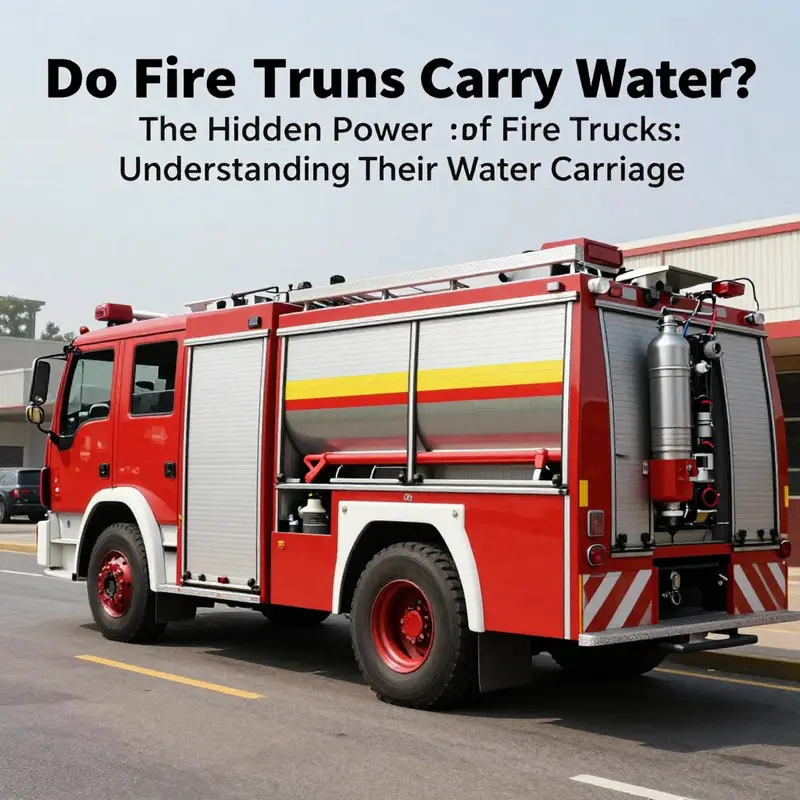
When a fire alarm rings, seconds count and every tool on the responding rig is aimed at turning fear into safety. One of the most fundamental questions observers ask is whether fire trucks carry water, and if so, how that water actually gets to the flames. The answer is yes, fire trucks do carry water, and carrying it is not an afterthought but a core function that underpins rapid response and early suppression that save lives and property.
A typical engine, often called a pumper, sits at the heart of this water-delivery system. The onboard tank is its primary reservoir, designed to transport and deliver large volumes of water. Across departments, onboard tanks can range from roughly 500 to 1,000 gallons, which translates to about 1,900 to 3,800 liters. That range reflects differences in urban, suburban, and rural operations, as well as evolving firefighting doctrine. In dense urban settings with newer hydrant networks, a larger onboard supply provides a quick, direct attack while crews seek to connect to the municipal water system. In more remote areas, the same principle holds but the emphasis shifts toward sustaining an initial push with the onboard water while seeking additional sources or preparing to draft from a distant water body.
The mechanics of how that water is deployed are straightforward in concept but sophisticated in practice. Water sits in the tank until the pump is engaged. The pump draws water from the tank and pushes it through hoses, nozzles, and valves that firefighters operate with trained precision. The water is then discharged through handlines or master streams, depending on the fire’s size, location, and tactics chosen by the incident commander. Master streams deliver large volumes for scale-up on structural fires; handlines provide mobility and accuracy in close quarters where a fixed stream would be impractical.
Drafting, the process of pulling water from a non-pressurized source such as a pond, lake, or river, adds another layer of capability. It requires specific pump types, hoses, and priming gear to remove water from the source and pressurize it for delivery. Drafting can be a lifeline when hydrants are unavailable, but it introduces extra time, setup steps, and environmental considerations that crews manage with training and discipline. In many operations, drafting is complemented by portable tanks and water tenders that shuttle fresh supplies to the scene so firefighters can maintain a steady attack.
The size and composition of onboard water storage reflect thoughtful trade-offs. Urban departments may favor larger tanks to ensure an initial knockdown before hydrants or tenders can fully support the attack. Rural departments balance tank size with drafting capability and off-road access, recognizing that water may need to be fetched from natural sources. Ladder trucks and other support units carry smaller onboard quantities for convenience, rescue, ventilation, and additional water when needed, but their primary role is not sustained suppression.
Across contexts, water on the truck acts as a flexible, portable resource that buys time for setup, positioning, and the transition to external water sources. It is not merely a quantity in a tank but a carefully managed part of a broader supply chain: water on board begins the fight, and refilling and supplementing water occur through hydrants, tenders, or drafts as the incident evolves. Ultimately, the onboard reservoir embodies readiness: a compact, dependable source that enables firefighters to begin suppression quickly and to sustain the effort until larger external water supplies can take over.
Water on Wheels: The Lifeblood of Early Fire Suppression and the Global Thread Behind Fire Truck Water Supply
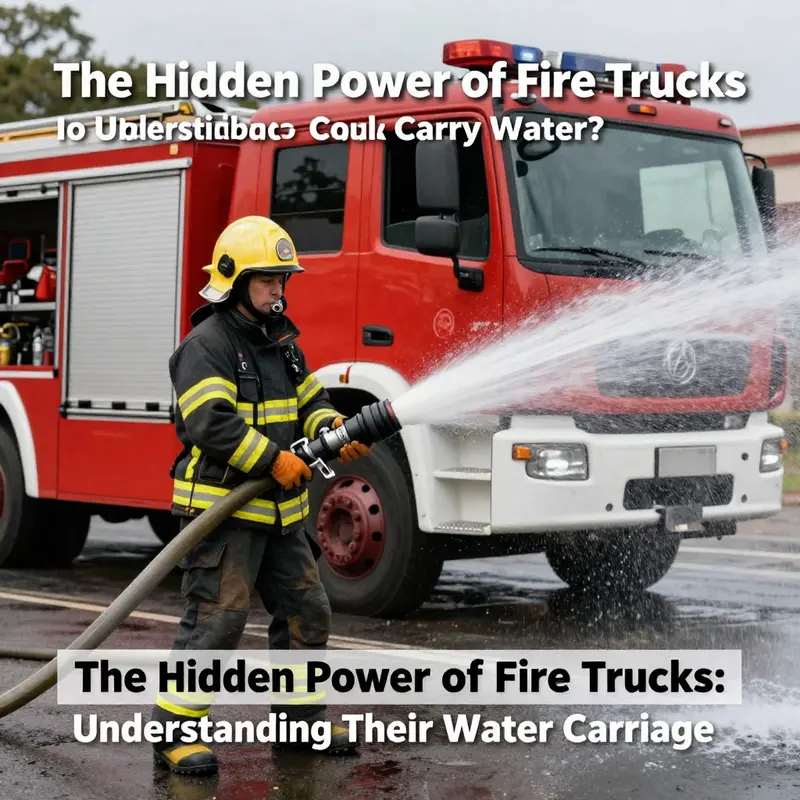
When people ask whether fire trucks carry water, the answer is both simple and essential: yes. Water on board is not an afterthought in firefighting; it is a central capability that shapes how teams respond, how quickly they can begin to control a blaze, and how they manage the often uncertain ground between danger and rescue. The onboard water held in the tank of a fire apparatus is designed to buy firefighters time. It is the initial force that steadies a scene while crews work to establish a steady, longer-term water supply from hydrants, lakes, rivers, or other sources. This capacity is the quiet engine behind the loud drama of a first attack, a practical truth that remains constant whether firefighters are navigating a dense urban grid, a sprawling rural landscape, or a developing city where water infrastructure is a constant variable. The question, therefore, is not merely whether water is present, but how much water is carried, how it can be delivered swiftly, and how the logistics of supply shape the course of a fire’s early minutes and beyond.
The core fact is that onboard water supply is a defining feature of many firefighting vehicles. In the most common urban and suburban configurations—typically categorized in the broader “3–5 ton” class of water tankers—the tanks are sized to hold several thousand liters. A typical range for these vessels sits around three thousand to five thousand liters, roughly eight hundred to one thousand three hundred gallons. That quantity is enough to initiate a focused, aggressive attack that can slow or stall a blaze while firefighters secure a more reliable external source. The onboard tank acts as a bridge: it provides immediate suppression capability and reduces the lag time between arriving on scene and beginning to apply water to the flames. In a high-stakes moment, that bridge can mean the difference between a rapid containment and a longer, more volatile incident.
The interplay between onboard water and the other tools in a fire truck is deliberate and purposeful. Pumps on board are not mere accessories; they are the active force that converts stored water into kinetic pressure that pushes through hoses toward the fire, overcoming friction, turning corners, and raising the stream to where it is needed most. The system is designed to work in concert with external water sources. Firefighters may tap a hydrant, or draw from a nearby natural source, with a suction and drafting setup that connects the on-board reservoir to a larger, municipal water network or an external supply. The ability to draw from hydrants remains a mainstay—an almost universal capability in many developed areas—yet the onboard tank ensures the response is never stranded by the absence or delay of an external source. In rural or remote locations, where hydrants may be sparse or non-existent, the onboard quantity becomes the primary, sometimes sole, water lifeline until a reliable supply is secured.
This arrangement also defines how crews plan their attack and manage a scene. The initial minutes are among the most critical in firefighting; the fire’s growth potential, the heat load, and the risk to occupants and responders all escalate quickly if water is not applied promptly. The onboard tank sets the stage for that early, decisive action. It allows firefighters to begin cooling and controlling the fire while the team assesses layout, access points, and potential hazards around the structure. As soon as the truck arrives and water begins to flow, the crew can establish a base of operations, lay out attack lines, and begin a coordinated suppression effort that evolves as the water from hydrants or other sources becomes available. This synergy—onboard supply plus external replenishment—constitutes the core strategy of many firefighting operations that confront the initial, often uncertain chapter of any blaze.
Beyond the immediate tactic of using onboard water, the sector’s broader dynamics shape how these vehicles are produced and distributed. Global manufacturing trends have positioned a particular region as a hub for the 3–5 ton water tank category. In the current landscape, a leading role is played by major manufacturing ecosystems in certain parts of Asia, where industrial clusters support a seamless flow from chassis modification to tank fabrication and pump integration. These clusters enable faster prototyping and, notably, reduced lead times by significant margins compared with more decentralized production models. The consequence is a fleet of fire apparatus that can be tailored to diverse urban footprints, budgets, and terrain—still anchored by the same fundamental principle: water on board provides essential agility on the frontline.
The regional strength in water-tank firefighting vehicles is underpinned by a capacity to scale production while maintaining the rugged reliability demanded by emergency response. In recent years, industry observers have highlighted the dominant regional role of certain provinces where the manufacturing ecosystem supports integrated supply chains for the critical components of fire apparatus—from the chassis to the pump to the water tank. The net effect is a set of vehicles that can be configured to meet a wide array of needs, while preserving the core advantage of an onboard water supply. This manufacturing model helps explain how fire departments around the world can access reliable, cost-effective fleets that are broadly compatible with global standards and emergency response protocols. The implication for frontline crews is that, regardless of geography, and regardless of the size of a city or the density of its development, the water tank on a fire truck remains a constant and essential resource that informs both tactics and procurement decisions.
From a field perspective, the onboard tank intersects with a broader ecosystem of equipment and practice. Hoses, nozzles, and ladders work in concert with the water supply to form an attack plan that can be adapted as conditions change. The onboard water is not a single solution but part of a larger system that includes the ability to draft or pump from external sources, the capacity to sustain the attack as long as water continues to flow, and the strategic decisions about when to switch from an initial, rapid application of water to a sustained, draft-driven supply. This operational choreography matters: early suppression buys time and reduces heat release, which in turn improves ventilation possibilities, reduces flashover risk, and ultimately helps preserve life and property. The water tank’s presence is the quiet anchor in that flow of decision-making—a tangible resource that has to be designed, maintained, and deployed with precision.
As readers consider the practicalities of this water-centric design, the market reality becomes worth noting. The scope of onboard water capability is shaped by intended use, geography, and the expected demand on a given vehicle’s life cycle. Urban fleets can rely on hydrants and a well-maintained municipal water system, while rural fleets may rely more heavily on the truck’s own reservoir as a primary source, with drafting from natural water bodies as a frequent fallback. These considerations feed into longer-term discussions about fleet composition, maintenance regimens, and the training that firefighters undergo to optimize water usage, from selecting the right nozzle flow rate to coordinating with other units on the scene. In every case, the water tank on the truck stands as a practical, adaptable, and indispensable anchor for both strategy and operation.
For readers curious about market options and the latest configurations in the field, there are ongoing discussions in the industry about how these vehicle platforms are evolving. See the broader market view in resources that catalog current options in fire apparatus availability, including listings for fire trucks for sale. This reflects how demand, budget constraints, and regional needs drive a spectrum of configurations that share one essential feature: water on board remains the centerpiece of early-fire response. You can explore market options here: fire trucks for sale.
In sum, the simple question—do fire trucks carry water?—unfolds into a layered answer about readiness, reliability, and the logistics of water delivery in the first minutes of a fire. The onboard tank is more than a tank; it is a carefully engineered resource that, in concert with a truck’s pump, hoses, and crew, enables an immediate, decisive first attack. It also aligns with broader industrial and regional dynamics that keep these critical vehicles available to fire services around the world. From urban blocks to remote towns, from the planning stage to the first moment of action, water on wheels remains a defining factor in firefighting strategy and a steady denominator in the life-saving math of emergency response.
External resource: for a broader look at the global manufacturing and sourcing context for water-tank firefighting vehicles, see the following external reference: https://www.globalsources.com/industry/government-public-safety/fire-fighting-vehicles/2025/12/7/
Carrying the Flow: How Onboard Water Systems Shape Firefighting Strategy
When a call rings and firefighters race toward a blaze, every decision in those opening moments can determine how quickly flames are tamed and what danger remains for civilians and responders. Central to that critical window is the onboard water system, a feature that turns a fire truck into a moving source of power rather than a mere transport. The onboard water tank is not an afterthought. It is a deliberate, mission-critical element designed to deliver water to the scene without delay, to maintain momentum when hydrants are not yet available, and to set a workable pace for the rest of the operation. In practice, the water tank is the first line of defense a crew deploys. It anchors the firefighting approach, guiding how quickly crews can apply water and how aggressively they can begin an initial attack. This is not simply about pouring liquid onto flames; it is about translating the vehicle’s mass, the crew’s coordination, and the pump’s discipline into a controlled and effective stream. The science behind this capability blends engineering with the hard-won experience of countless responses, making the tank and pump system the heartbeat of modern firefighting during those early, high-stakes minutes. The result is a platform that can initiate knockdown, protect exposures, and buy precious seconds for additional water supplies to arrive from hydrants, lakes, or tanker shuttles that might follow later in the incident sequence.
The practical importance of onboard water becomes especially evident when considering the varied environments in which firefighters operate. Urban structural fires typically demand a larger volume of water in the first minutes of attack, as buildings may contribute significant fuel load and create complex flows that challenge containment. In contrast, wildland or rural incidents often require a different balance: maneuverability and fuel-efficient design can be more valuable than sheer tank size, because the terrain and distance to water sources dictate different attack tactics. Understanding these differences helps explain why tank capacities span a broad range—from several hundred gallons up to a few thousand liters—and why the choice of tank size is tied to the truck’s intended mission profile. In essence, onboard water is not a one-size-fits-all feature; it is a tailored capability that supports the engine’s role as the first responder and the crew’s ability to begin control even before external water arrives.
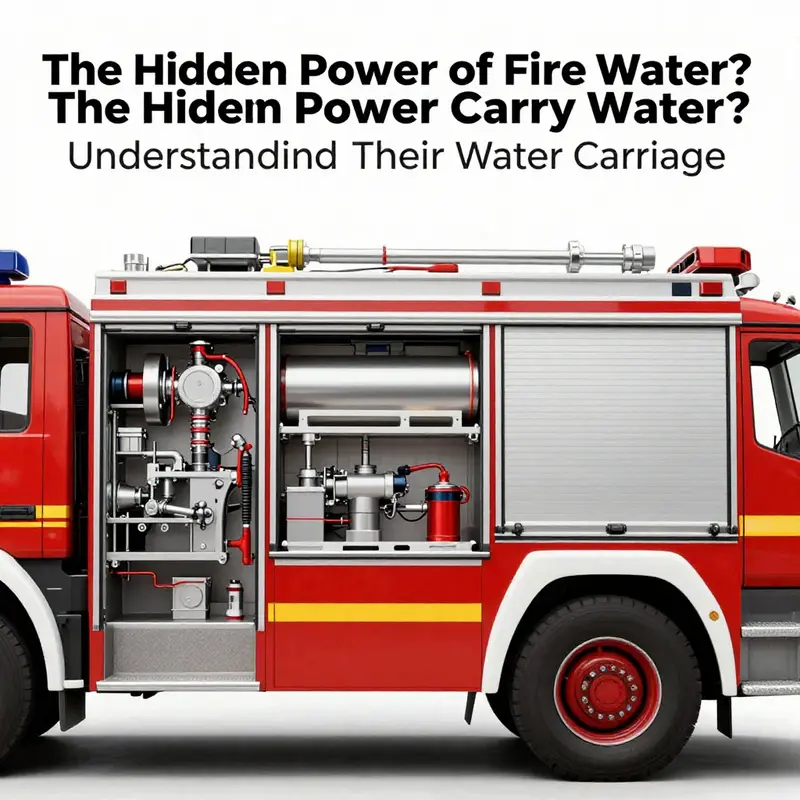
From a design perspective, the water contained on a fire truck is housed in a tank that becomes part of the vehicle’s core architecture. In most models, the tank is mounted on the chassis and engineered to withstand the stresses of rapid acceleration, abrupt braking, and the harsh conditions of a fire scene. The materials—typically steel or fiberglass—are chosen for durability, corrosion resistance, and the ability to resist damage from heat and physical impact. Steel tanks offer rugged resilience and long service life, while fiberglass tanks can provide a lighter weight option and corrosion resistance that helps longevity in some environments. The tank’s configuration is linked to the truck’s overall geometry, ensuring that weight distribution, center of gravity, and suspension behavior support stable handling when the vehicle is loaded with water. This integration matters because the way the tank interacts with the drive train, pump, and hoses influences how reliably water can be drawn and delivered under the stress of an emergency. The result is a cohesive system where the tank, the mounting framework, and the chassis work in concert to ensure water is always ready to flow.
The pumping subsystem is the bridge between the tank and the hoses that reach the fire. A fire truck’s pump draws water from the onboard tank and pushes it through a network of lines at high pressure. In operational terms, this means the system must reliably draw from the tank, maintain consistent flow, and generate sufficient pressure to overcome the combined friction losses and nozzle resistance encountered along a hot, obstructed line. In many configurations, the pump can deliver water at pressures that exceed one hundred pounds per square inch, a benchmark that reflects the need to push water through long hose lays, around obstacles, and into the flame front. The pump’s performance is a function not only of its mechanical components but also of the operator’s ability to manage the valve settings, monitor pressure gauges, and choreograph the movement of multiple hose lines. Firefighters rely on this precise orchestration to convert the raw mass of water in the tank into an effective, controllable jet or spray that can cool, separate, and suppress heat. It is this delicate balance between power and control that defines how well the onboard system translates potential energy into actual, disciplined water application on the fire scene.
What makes onboard water truly transformative is how it interacts with the broader firefighting toolkit. While the pump and tank provide the capability to generate water at the site, the truck’s hoses, nozzles, and fittings determine how that water is applied. A typical response combines aggressive, direct application with strategic flow management—adjusting nozzle patterns to achieve a dense fog for cooling or a solid stream for knockdown, depending on the fire’s character and the structure involved. Ladders, forcible-entry tools, and search-and-rescue equipment sit alongside hoses, complete with the redundancy and flexibility that firefighters rely upon when facing shifting conditions. In other words, onboard water does not operate in isolation. It is embedded in a complex, dynamic operation where every team member’s actions, hydrants’ availability, and the evolving geometry of the fire shape how the water is used. This is why the onboard water system is designed to be as reliable as possible, because any delay or failure in water delivery cascades into slower progress toward containment and greater exposure risk.
From a field perspective, the choice of tank capacity is guided by the mission profile the vehicle is meant to serve. Urban engines, for example, often feature larger tanks to sustain initial attack until a hydrant connection can be established. The larger volume helps sustain a continuous water stream during the critical early minutes, reducing the need to pause for refilling while firefighters establish a water supply. Conversely, in environments where off-road access and maneuverability take precedence, smaller, more compact tanks can be advantageous. These configurations reduce weight, preserve traction, and enable quicker repositioning through tight urban cores or rugged terrain. In either case, the tank’s capacity is always a calculated compromise between mass, space, and the anticipated rate of water discharge required to achieve a safe and effective entry into the firefighting operation. The essence of onboard water lies in its ability to empower the initial attack while the larger, community-wide water system—hydrants, ponds, lakes, or tanker-shuttle operations—comes online to sustain the effort.
To connect these ideas to the physical vehicle, consider the integral packaging of the tank within the steel or composite chassis. The overall system is designed so that the water remains readily accessible to the pump operators, while also safeguarding it from the heat, vibrations, and sudden loads of a responding emergency. The tank’s mounting is engineered with structural reinforcements that align with how the chassis bears weight when full of water, reducing the risk of deformities or failures during high-speed maneuvers or on uneven surfaces. The external shell is typically finished to minimize corrosion and facilitate cleaning after fires, where residues and contaminants can be corrosive. In practical terms, this means that every gallon stored in the onboard tank has to be readable, controllable, and ready to deploy. The station-like routine of refilling, pressure checks, and system diagnostics becomes second nature to crews who rely on these numbers to guide their decisions in the field. This is where the training and experience of the firefighting team merge with the hardware—so that water, when called, becomes a precise, predictable force rather than a volatile commodity that requires improvisation under pressure.
In addition to its primary role, onboard water also influences how a fire department plans its supply strategy for any given incident. If the local water system is robust and hydrants are plentiful, crews can leverage shorter hose lays and quicker transitions to external water sources, conserving the onboard tank for initial attack and rapid knockdown. In contrast, in districts where hydrants are sparse or the landscape challenges traditional pumper operations, the onboard tank becomes even more critical. In those contexts, some apparatus are designed to shuttle additional water from nearby sources through portable pumps or auxiliary tanks, creating a chain that maintains water flow toward the fire while workers establish a more stable and sustainable supply. This collaborative approach, combining onboard capabilities with external resources, defines how modern firefighting teams translate a truck’s mechanical prowess into effective, real-time strategies on a fire ground where every minute counts.
For readers seeking a deeper technical grounding, the discussion of how steel and composite platforms support integrated water storage and delivery is explored further in the dedicated technology overview on steel-fire-apparatus. This resource offers a detailed look at how the chassis, tank mounting, and structural reinforcements work together to enable reliable onboard water systems while preserving performance across a range of mission profiles. steel fire apparatus provides greater context on how these vehicles are engineered to carry and deploy large volumes of water under demanding conditions.
In the end, onboard water is more than a convenience. It is a foundational capability that shapes the tempo, tactics, and safety of firefighting operations. The tank’s capacity, the robustness of the pump, and the skill with which crews handle the flow of water combine to create a responsive, disciplined attack that can begin before external supplies arrive and adapt as needs change on the scene. The water stored in the truck is the first instrument in a broader orchestration, a prelude to the cooperative, multi-resource effort that often follows. As incident commanders assess the evolving fire ground, the onboard system remains a constant, dependable source of force, enabling an immediate response that buys precious seconds and lays the groundwork for a successful, coordinated suppression strategy. For those who study the science behind emergency response, this readiness is no accident; it is the result of deliberate engineering choices, field-tested practice, and an understanding that water carried to the scene must be as trustworthy as the crew who carries it.
External reference for deeper technical details: https://www.fireengineering.com/fire-truck-water-tanks-technical-specifications/
Water on Wheels: The Lifeline of Firefighting—Why Fire Trucks Carry Water and Drive Emergency Response
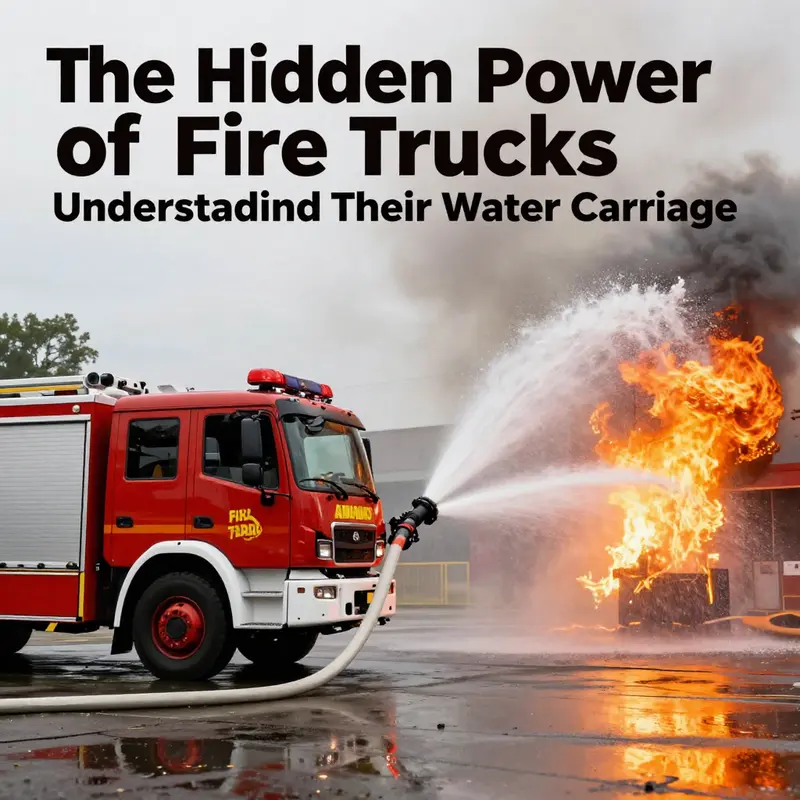
When the alarm sounds and a fire truck rushes toward danger, a chain of decisions unfolds in seconds. Among the most consequential is immediate access to water. Do fire trucks carry water? The straightforward answer is yes, and this capability is foundational to how they function. Onboard water is not an afterthought; it is built into the chassis, the pump, and the crew’s operating doctrine. That water isn’t just cargo; it is the first line of defense, a tangible resource that can cool, dilute, and block flames while responders set up more robust supply lines. The onboard tank is the first stage of a larger system that links a mobile reservoir to a network of hoses, nozzles, and strategic tactics.
Engine trucks, designed around rapid water delivery, carry tanks with thousands of gallons ready for action. The size of these tanks reflects a core priority: time. When a call goes out, seconds count. A truck loaded with water can begin an attack immediately, instead of waiting for a hydrant connection or a water tender to arrive. This immediacy is especially valuable in areas where hydrants are sparse, inaccessible, or located outside the fire’s reach. The water on board serves as a buffer, allowing firefighters to apply water pressure gradually and methodically as they work to establish a steady external supply.
From tank to nozzle, the journey is powered by a pump capable of moving water at high pressure. The onboard pump takes water from the tank itself or from an external source via a hydrant or other water body. The water is drawn through suction until the pump is primed, then discharged through a network of hoses to nozzles that convert the flow into a controlled stream or spray. The firefighter at the nozzle adjusts the flow, pressure, and pattern to match the fire, its location, and the evolving interior conditions. The pump must be robust enough to push water through long lines and across obstacles, while the hoses and couplings stay secure under duress. This hydraulic partnership—tank plus pump plus hose—turns a heavy vehicle into a mobile fire engine, capable of wetting the fire as crews work on separate tasks like search, rescue, and ventilation.
While onboard water is crucial, it is not the sole source of life-saving water at the scene. Fire departments typically couple the onboard tank with a water supply network that includes hydrants, portable tanks, and in some cases alternative water bodies such as lakes or rivers. When hydrants are nearby, crews may lay a supply line from the hydrant to the engine, complementing the onboard water and extending the effective volume. In other words, water on board buys crucial time to connect and secure an uninterrupted flow. Refilling the onboard tank can then occur as the operation evolves, with water tenders or pumpers shuttling water from a ready source to the general area of operations. In rural or remote environments, where hydrants might be scarce, the importance of the onboard tank grows, and an entire tactical approach known as a water shuttle can emerge, moving water from a distant source to the fire scene using multiple trucks.
Beyond the hydraulic core, the equipment that surrounds water delivery shapes how effectively firefighters can marshal that resource. A pumper’s front end may also include a high-capacity pump, a set of hoses of varying diameters, and a cascade of adaptors to fit different hydrants and hydrant layouts. Firefighters choreograph their water attack through a blend of straight streams and fog patterns. The straight stream delivers a focused, high-velocity jet that can reach through walls and into windows, while the fog pattern cools air and creates a safer protective blanket around crews. The choice of pattern depends on factors like fuel type, compartmentalization, and the structural integrity of the building. Meanwhile, the truck’s ladders, ground ladders, and ventilation tools enable crews to open compartments that allow more water to reach the source of ignition, all while keeping heat and smoke from forcing rescues into more perilous paths.
Strategic considerations underscore the centrality of onboard water to response efficiency. Early application of water can constrain flame growth and reduce heat release, buying time for a coordinated attack. In dense urban environments, where water supply can be secured quickly from hydrants, the onboard reserve still matters because it provides a buffer during the moment of arrival, during initial scouting, and during the setup of a steady supply. In rural contexts, where there may be no hydrants at all, trucks with sizable onboard tanks become the primary water source. The contrast highlights a broader system where mobility, speed, and volume intersect to shape outcomes.
Historically, the design of firetrucks around water is also a design story of optimization. Engineers balance weight, payload, and handling with the size of the onboard tank. They consider pump capacity, hose length, and the engineering of the chassis to ensure that the vehicle remains maneuverable while carrying heavy loads of water. Even the materials used in the apparatus contribute to the overall mission: a truck must be rugged enough to survive hard use, fire, and exposure to heat, yet reliable enough to deliver water repeatedly across shifts. Readers who explore technical guides on choosing the best fire truck model for every need will discover how these considerations translate into practical choices on the ground. For example, the field emphasizes how different configurations respond to diverse scenarios—structural fires, car fires, wildland interfaces, or campus emergencies.
The everyday reality of firefighting is that water comes not only from the truck but from a network of routines and readiness that keep that water accessible. Fire departments drill on connecting to hydrants, priming pumps, and laying supply lines under pressure. The process requires coordination between engine operators, pump operators, and ladder crew, a teamwork that ensures water flows where needed and at the right pressure to sustain an attack. Some discussions of apparatus materials highlight steel frames and reinforced tanks and how these design choices contribute to safety and performance. In this vein, the discussion around steel fire apparatus sheds light on how resilience informs reliability at the scene.
Consider a realistic scenario: a two-story residential fire in a neighborhood with accessible hydrants. The engine arrives, its onboard tank holds water, and firefighters begin to knock down flames from the exterior while others initiate a rapid search. The pump operator monitors pressure, adjusts the valve, and ensures a steady flow as the hose line advances. Then crews connect to the hydrant to replenish, maintaining a continuous supply that supports an extended interior attack. That sequence demonstrates how onboard water acts as a bridging resource—enabling immediate action while external water supply becomes stable. It also highlights the discipline required to transition smoothly from a quick, direct attack to a sustained, coordinated operation.
Beyond the incident itself, water logistics influence policy and resource planning. Communities with fewer hydrants or larger wildland interfaces lean more on water-carrying capabilities and on training that ensures efficient water shuttle operations. The equipment’s ability to refill quickly and to deploy multiple sources helps keep suppression moving, while limiting delays that let flames advance. At a strategic level, this means ensuring that apparatus with adequate tank size, pump performance, and hose reach are part of emergency response plans, along with mechanisms for rapid water shuttle and for predesignated routes to known water sources. This is not just about the raw power to spray water; it is about the speed, reliability, and adaptability of a response that scales from a kitchen fire to a community-wide emergency.
Finally, the integration of onboard water with modern command systems matters. Unified command, radio discipline, and data-driven situational awareness help determine how and where water is allocated on the fly. The ability to coordinate multiple units—engine, ladder trucks, and water tenders—depends on a shared understanding of water availability and fire growth. In this sense, onboard water is a literal and metaphorical lifeline that binds tactics to reality.
To explore how these design principles translate into practice, readers can consult broader guides on fire-truck models and their many configurations. For further reading, an external resource provides a comprehensive overview of choosing the best fire truck model for different needs: https://www.firerescue1.com/fire-truck-articles/choosing-the-best-fire-truck-model-for-every-need/
Water on Wheels: The Hidden Logic Behind Fire Trucks Carrying and Replenishing Onboard Water
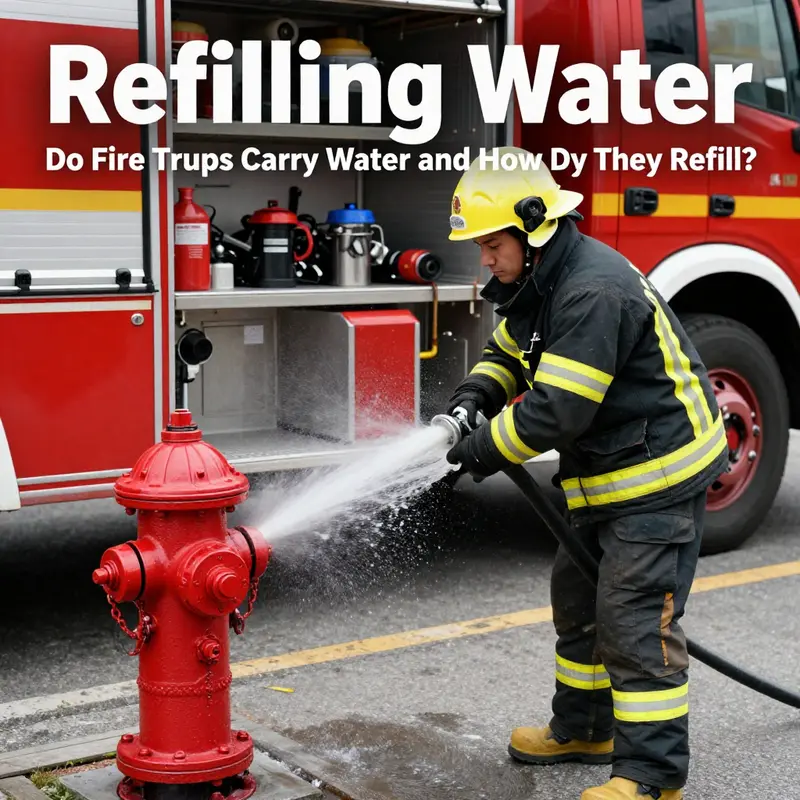
Fire trucks live at the intersection of speed, practicality, and physics. They are designed to bring water to the flame faster than the fire can spread, and every element of their build serves that purpose. The heart of this capability is the onboard water tank, a reservoir that lets crews begin the suppression effort as soon as the siren hits the street. Across the fleet, these tanks vary widely in size, but they commonly range from about a thousand to several thousand liters. That translates to a few hundred gallons on the smaller end and into the eight hundred gallon territory on the larger side. This onboard supply is not a luxury but a fundamental requirement for rapid initial action. In many urban situations, even when a hydrant is nearby, the time it takes to connect, drain, and pressurize can be the difference between containment and escalation. The onboard water gives firefighters a head start, enough to create a controlled, layered attack while additional water is sourced from the outside world. In rural or resource-limited settings, that onboard volume becomes even more critical. It can buy precious moments while crews navigate to a distant hydrant, arrive at a natural water source, or coordinate with support units that carry even larger quantities of water. The concept is simple in theory, but its execution depends on careful planning, steady equipment performance, and disciplined tactics that keep the water moving toward the fire rather than leaking away in transit. The practical reality is that water, while abundant in many places, is not infinite in the heat of a growing incident. A tanker might roll up with thousands of liters, yet no single truck can sustain a long, complex burn without refilling. The challenge, then, is not only to have water on the scene but to move it efficiently from wherever it is sourced into the hose streams that actually cool and smother the flames. This is why the onboard tank is only part of a larger system that includes pumps, hoses, valves, nozzles, and, crucially, a network of refilling options. The goal is to keep the water flowing to where it matters most: the point of attack, the place where heat is fiercest, and the area where firefighters must establish a stable, controllable environment for rescue and recovery. In practical terms, a typical water tank fire apparatus is designed to be ready to respond with water in the tank before it ever leaves the station. The emergency call path often begins with the pump operator or engineer engaging the onboard pump and starting the water flow to the front lines as soon as hose lines are laid out. The crew then relies on a combination of fixed equipment and supply strategies to sustain that flow as the incident unfolds. The interplay between onboard water and external supplies shapes the overall approach to suppression. It is a balance between immediate capability and long-term logistics, a balance that defines the tempo and outcome of most firefighting operations. To understand how that balance is achieved, it helps to look closely at the four primary refill strategies that modern departments employ when they need to replenish a truck’s onboard reservoir. Each method has its own place in the field, its own set of strengths, and its own set of limitations, all of which must be weighed in real time as conditions on the ground evolve. Direct connections to hydrants form the backbone of urban operations. In city and town environments, there are extensive networks of municipal hydrants designed to supply large volumes of water at high pressure. When a pumper needs to refill, it simply parks near a hydrant, a hose is connected to the external supply, and the vehicle’s onboard pump draws water into the tank. This process is reliable and fast, which makes hydrants the preferred source whenever they are available and in good repair. The advantages are straightforward: high-volume water, predictable pressure, and a relatively simple set of procedures that most firefighters practice routinely. The limitations, however, are not negligible. The system depends on the hydrant and the surrounding infrastructure to function correctly. A hydrant that is blocked, damaged, or poorly maintained can impede refilling or even introduce contamination risks if the connection is not properly sealed. Leaks at the hydrant connection or at the discharge port can disrupt the vacuum required to draw water efficiently, reducing suction and slowing the refill. Procedural discipline matters here, because even a small leak in the system can undermine the rapid replenishment that firefighters rely on to sustain an attack. The second method leverages natural water sources. When hydrants are not readily accessible or when a fire occurs in a rural or remote setting, crews may draft water from lakes, rivers, ponds, or other bodies of still water. Drafting relies on a principle that sounds almost intuitive: the pump creates negative pressure that sucks water up from the source through a submerged intake hose and into the tank. The physical reality is simple but effective: the water surface must be above the pump intake at all times, and the intake hose must stay fully submerged to avoid pulling in air. The strainer or intake keeps debris from entering the pump while the hose maintains a continuous seal. This approach can be incredibly efficient once established, but it requires careful positioning and stable water levels. If the water is too deep, the strainer may not reach; if it isn’t deep enough, the intake can draw air and stall the pump. Drafting also demands a certain patience and precision from the crew. It often involves positioning the apparatus so the intake remains submerged even as wind shifts and as the water body’s surface fluctuates with traffic, wind, or wildlife. The third strategy can be described as logistics on wheels: water tender vehicles, or water tankers, that transport large quantities of water to the scene and transfer it to other fire apparatuses. This method is a lifeline in wildland firefighting or in sprawling regions where hydrants are sparse or nonexistent. Water tenders carry sizable volumes that can complement or replace the onboard tank, delivering sustained flow to the engine and the handlines. The process of transfer is straightforward: the tender’s own pump or a connected hose system delivers water through a supply line to the receiving truck, which then uses its own pump to feed the attack lines. The benefit is clear: a dependable, mobile source of water that can bridge significant gaps between water-rich locations and the fire scene. The fourth option is relay pumping, sometimes called chain supply, where multiple fire apparatuses are positioned along a route between the water source and the fire. In this arrangement, the leading truck draws water from the source and drives a portion of the water toward the fire, while the next truck in line picks up from that vehicle and continues the transfer, and so on. Relay pumping extends the reach of a single water source and helps overcome distance constraints that a single engine cannot cross alone. It requires coordination and precise pump sequencing, but when executed well, it becomes a reliable conduit for sustained water delivery. These refill strategies are not isolated ideas; they routinely operate in a complementary fashion within a single incident. Firefighters prepare for this by ensuring the onboard pump, valves, and hoses are in good order, and by maintaining a conscious awareness of water management on the fireground. Water is a finite resource in the moment of crisis, and every liter saved is a liter available to cool a flame, stabilize a structure, or rescue a life. Beyond the mechanics of refilling, there is a broader discipline that governs how water is used. Firefighters are taught to use water efficiently, modulating nozzle pressure, segmenting streams, and deploying the most effective tactics for the given scenario. They do not waste water by default; they conserve where possible, using larger streams only when necessary and keeping direct, high-energy applications focused on critical areas. This efficiency is not a luxury but a necessity of field operations. It interacts with refill strategies in important ways. If the refilling workflow is slow, crews must adjust their attack to maintain control. If drafting is the chosen method, they must account for flow rates and potential delays in setting up the intake. If a water tender is involved, coordination with the transport timing, staging, and piping becomes part of the day’s choreography. In all cases, the objective remains constant: sustain a consistent water supply to the point of attack without creating downstream vulnerabilities. Hydrant safety and system integrity are integral to this objective. When connecting to a hydrant, crews investigate for leaks and ensure a tight seal, both to preserve vacuum and to prevent contamination or misdirection of water pressure. Leaks at the attachment point can compromise suction and lead to a cascade of inefficiencies, especially when pressure dynamics are critical to the performance of downstream equipment. The same vigilance applies when drafting from a natural source. Debris and silt can threaten the pump if the intake is not protected, and wind or movement can affect the positioning of long suction lines. The chain of actions—deploying the water, maintaining the intake, coordinating towlines or relay lines, and defending against pressure loss—requires a calm, practiced team. It is the kind of expertise that grows from years of real-world responses, drills, and a shared understanding of how to balance speed with reliability. The interplay between onboard water and external sources is not a glamorous spectacle but a careful, engineering-driven solution to a fundamental problem: water must be in the right place at the right time, and that place is often not where the truck sits. To that end, the crews lean on a reservoir of knowledge, guidelines, and best practices that help them decide when to refill, which method to choose, and how to execute the refill while sustaining momentum on the fire line. For readers who want a deeper dive into the standards that shape these practices, a broader look at technical guidance is available through leading safety organizations, which provide structured approaches to water supply, pump operations, and scene management. This framework ensures that refilling is not happenstance but an integrated part of a deliberate strategy to control the incident. If you would like to explore further context and professional commentary on fire engine water supply systems, you can follow the Fire Truck blog for ongoing discussions and explanations Fire Truck blog. These discussions illuminate how seemingly ordinary tasks—the act of refilling a tank—are in fact critical moves in the larger choreography of firefighting. The practical takeaway is simple and powerful: fire trucks carry water not as a final resource but as a starting point, a first line of defense that buys time, creates options, and supports the eventual resolution of the incident. The infrastructure around that onboard capacity—hydrants, natural sources, water tenders, and relay networks—forms a robust channel that keeps water moving where it is needed most, even when the landscape or the fire itself demands rapid adaptation. In this light, the image of a fire engine with a full tank takes on new meaning. It stands not only as a symbol of readiness but as a practical assertion of capability: a mobile, adaptable platform that translates a city’s water network, a rural stream, or a distant tanker into a controlled, deliberate, and ultimately effective suppression effort. The full story of water on wheels is thus a story of systems working in concert—onboard storage, field skills, and external supply networks that together sustain the response until the flames are out. External guidance from professional safety organizations adds a vital layer of rigor to this narrative, reminding us that the water a fire truck carries is not just a quantity but a carefully managed resource supported by procedures, checks, and continuous learning. As the incident evolves, crews rely on precise timing, reliable equipment, and disciplined water management to keep the suppression work moving forward. These are the small but decisive components that, when combined, create the larger outcome: safety for civilians, protection of property, and a successful conclusion to the emergency. External Resource: https://www.nfpa.org
Final thoughts
The water supply carried by fire trucks is not just a feature; it’s a lifeline that empowers firefighters to combat blazes effectively and efficiently. Understanding the onboard water capabilities of these remarkable machines helps us appreciate their role in emergency response. From their technical specifications to the seamless refill processes, fire trucks are equipped to deliver water where it’s needed most, ensuring that every second counts during firefighting operations. Fire trucks truly are a vital component of community safety, and their water-carrying ability is a testament to their critical function in protecting lives and property.